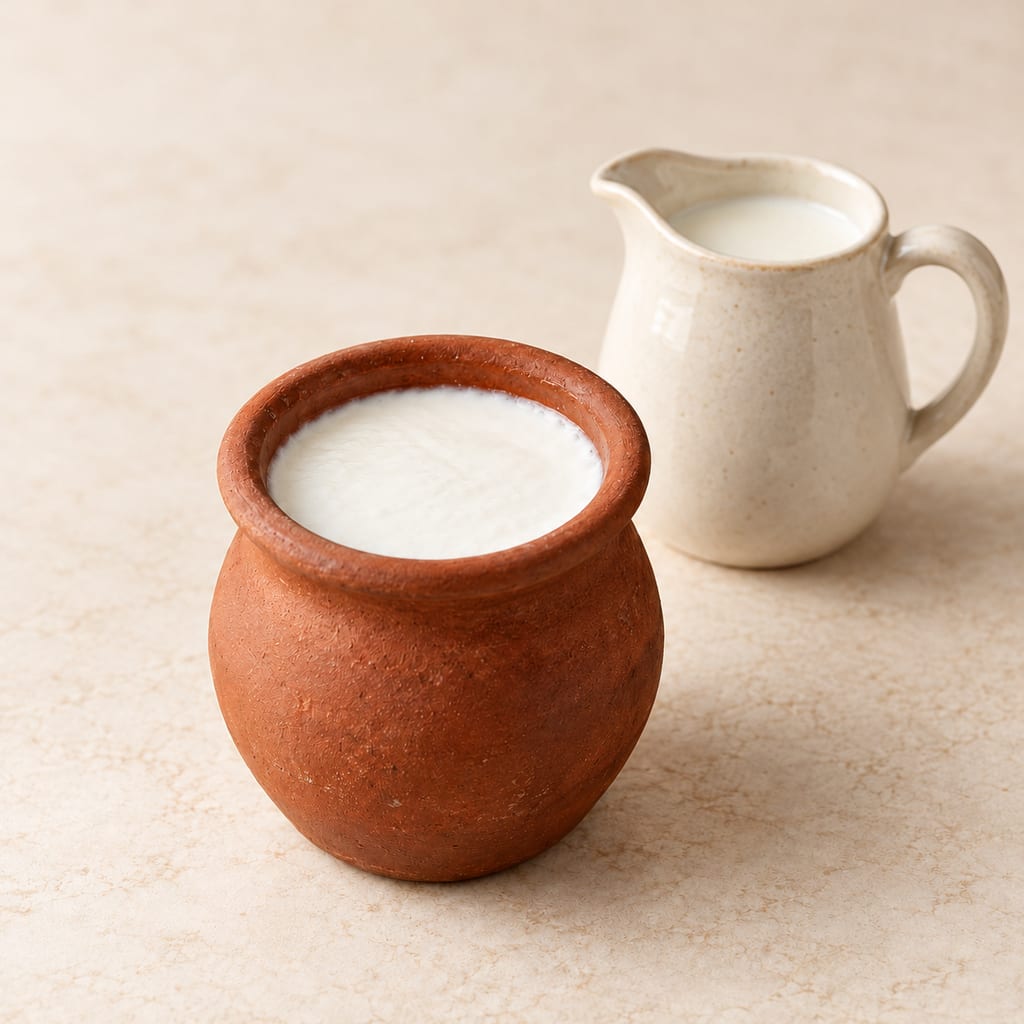
Matsoni with a countertop culture
A commercial countertop-culture version of matsoni, a Georgian cultured milk. Its room-temperature method differs from the warmer Georgian production process.
 FermenteaWhere food goes to change
Traditional method
Катык · Katyk · Katik · Katık · Katuk · Qatiq · Qatıq · Qatik · Катык · Ҡатыҡ · Қатық · Қатиқ · Gatyk · Oyotkan · Ойотҡан · Oyotqan · Soso katyk · Sey katyk · Ese katyk · Açı katık · Fermented boiled milk · Turkic cultured milk
Katyk is a traditional fermented milk of Turkic-speaking peoples, made by souring heated milk with lactic bacteria, often with a spoonful of the last batch, into a thick, sour curd.
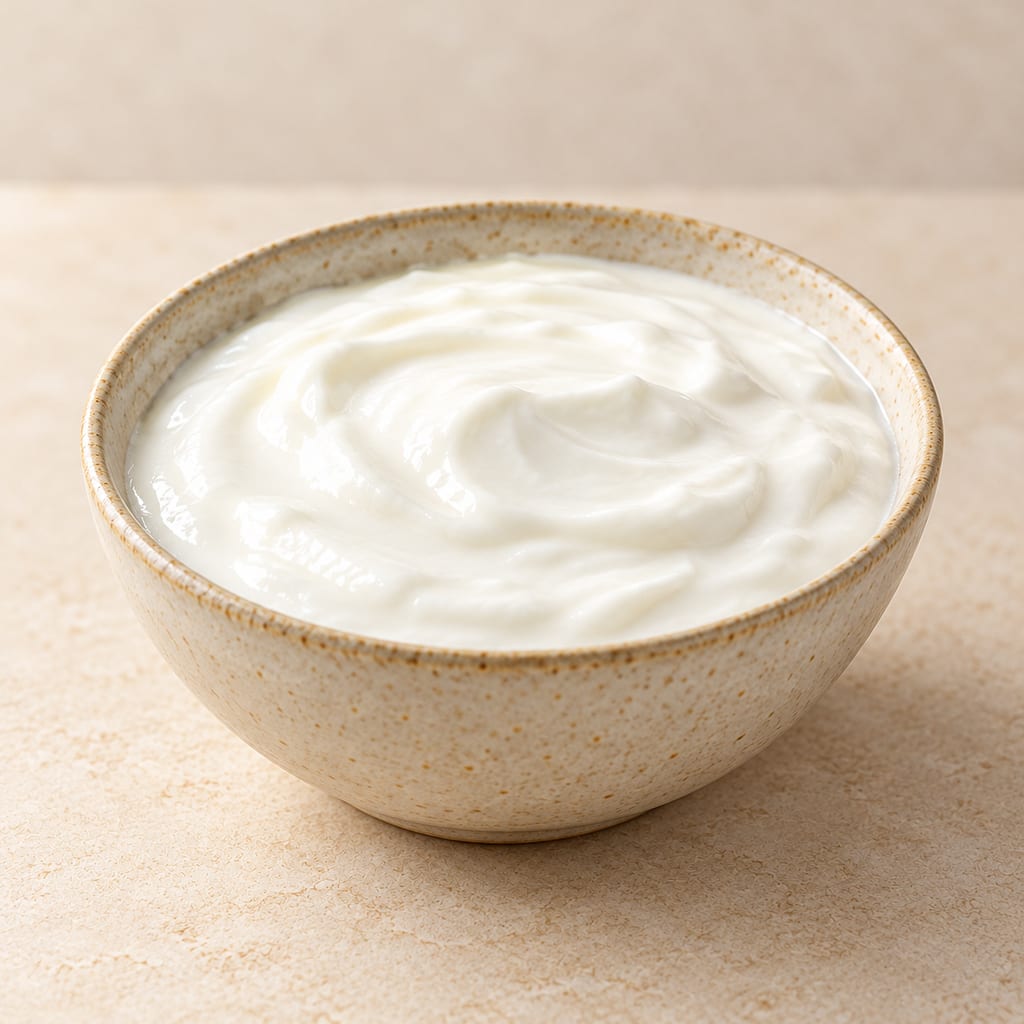
Katyk is milk that has been heated, cooled to a little above body warmth and soured with lactic acid bacteria until it sets. The finished food is clean and sharply sour, often with a cooked-milk note, and its texture ranges from a firm curd that holds its shape in the bowl to something soft enough to stir and drink. The name belongs to Tatar, Bashkir, Uzbek, Azerbaijani, Kazakh and other Turkic-speaking communities, and it does not mean exactly the same thing everywhere.
The spellings give a first sense of the spread: катык in Tatar, ҡатыҡ in Bashkir, qatiq or қатиқ in Uzbek, qatıq in Azerbaijani, қатық in Kazakh, gatyk in Turkmen. They belong to one linguistic family but not to one recipe. Azerbaijani qatıq is an everyday word for yoghurt-like cultured milk. Tatar katyk tends to stress heating or even concentrating the milk first. Bashkir oyotkan is a local name found in the south-east and the mountain-forest districts of Bashkortostan.
Two ingredients define it, milk and a living starter. Cow's milk is usual, though other milks appear in regional practice. Heating changes the milk proteins and cuts the starting microbial load, and in some methods it also drives off water so that the solids are more concentrated. The starter supplies the bacteria that ferment lactose and lower the pH. For generations households kept back a spoonful of one batch to start the next, a method called backslopping. Dairies now use defined cultures, typically Streptococcus thermophilus with Lactobacillus delbrueckii subsp. bulgaricus.
Katyk is not a general name for every Central Asian soured milk. Ayran is the diluted drink made from it, and suzma or suzbe is the thick curd left after the whey is drained away; both can start from katyk. Kefir carries a different mixed community that usually includes yeasts. Altai chegen is a close relative with its own methods and its own measured microbes, and it deserves a separate page. A source that compares katyk, chegen and matsoni is noting a family resemblance, not proving the foods interchangeable.
Milk spoils fast, and heating, souring, draining and drying were the ways pastoral and farming peoples of Central Asia and the Volga–Ural region kept it past the day it was drawn. Keeping part of an earlier batch to inoculate the next gave a household a working culture without buying anything. These practices fit the region's long dairy history, but they do not show that any one people invented katyk, or that every food carrying the name has a common origin.
The best-dated early source is volume II of the second edition of Vladimir Dal's Russian dictionary, printed in 1881. It describes katyk as a Crimean Tatar sheep's-milk preparation in which the milk was boiled and churned for butter and the leftover buttermilk was soured. That is not the thick whole-milk product people now picture, and its value is that it shows the word covering different foods. A regional record from the Orenburg area dated 1893, quoted in a later dialect dictionary, calls katyk sour milk without added water. These establish the word in the nineteenth century. They do not date the food.
F. L. Sharifullina's 1991 ethnography of the Kasimov Tatars describes thick katyk from boiled or baked milk, started with rye bread, curd cheese or an earlier portion of katyk. It was eaten on its own, added to soups and potatoes, or thinned into ayran. This preserves one local tradition, not a Tatar standard. In 1999 the Kazan Medical Journal published a study of katyk made by traditional Tatar technology, which looked at how prolonged heating changes the amino acid make-up of the milk.
The most detailed recent account is by the ethnologist Margarita Suleymanova, who in 2023 described Bashkir katyk and oyotkan for the International Association of Agricultural Museums: boiled milk, retained starter, warm fermentation, a forming curd left undisturbed, then cool storage. She also records serving customs and the use of fermented milk in the spring Karga tuy ritual. The ritual is called archaic, but that label gives the preparation no precise date.
Industrial history is easier to pin down. A Russian patent filed in January 2004 and published in December 2005 sets out a controlled katyk process with long heating, measured starter and thermophilic fermentation. In November 2024 Tatarstan's agriculture ministry noted a Zelenodolsk dairy making katyk by concentrating heated milk and adding a lactic starter. Claims that katyk is thousands of years old, or that a medieval state invented it, have no product-specific evidence behind them, and archaeological proof of ancient dairying cannot identify the finished food.
Katyk is a lactic fermentation. The bacteria draw energy from lactose and leave lactic acid, and the acid changes both taste and structure. Nearly all the thick versions begin with milk that has been boiled, pasteurised or held hot for a long time. Heat cuts the original microbes and alters the proteins so that the gel set by acid comes out firmer. The final texture therefore depends on how the milk was treated as much as on the culture.
No single culture stands behind every katyk. The Russian patent calls for Streptococcus thermophilus with a smaller share of Lactobacillus delbrueckii subsp. bulgaricus. A 1983 study of experimental katyk used Streptococcus thermophilus, the organism then called Streptococcus lactis subsp. diacetylactis, and another thermophilic lactobacillus. These describe particular production systems. They say nothing certain about what lives in a given family's traditional starter.
The bacteria split lactose with beta-galactosidase and run the sugars through glycolysis, then reduce pyruvate to lactate by lactate dehydrogenase, which regenerates the NAD+ the cell needs to keep going. Homofermentative strains make mainly lactic acid; heterofermentative members of a mixed culture can add acetate or carbon dioxide. Bacterial proteases and peptidases free peptides and amino acids from the milk proteins, feeding growth and adding to flavour. Suitable cultures can make diacetyl and acetaldehyde, but how much a katyk carries depends on its actual organisms and conditions.
As the acid climbs, calcium phosphate in the casein micelles dissolves and the micelles lose stability, then link into a network that holds water and fat. Casein reaches its isoelectric region around pH 4.6. Earlier heating unfolds whey proteins such as beta-lactoglobulin, which attach to the casein and change firmness and water retention. Where the milk was evaporated first, protein and fat are more concentrated simply because water has gone, which explains why reduced-milk katyk can be thicker than an otherwise similar cultured milk.
A 2022 sequencing study shows why related products need separate records. Two matsoni-like samples gave 97.7 and 74.3 per cent Streptococcus reads, the second with 25.6 per cent Lactobacillus. Two chegen samples were dominated by Lactobacillus at 61.1 to 89.1 per cent, with a lot of Lentilactobacillus in one. The matsoni-like samples were not authenticated katyk, so their numbers cannot be assigned to katyk. The authors tied the differences partly to fermentation temperature, which points to process-dependent selection rather than one organism common to every named product.
The ingredients are milk and an active starter. The milk supplies lactose, casein, whey proteins, minerals and fat; the starter supplies the organisms that make enough acid to set the curd. Traditional starters include reserved katyk, sour buttermilk and other household cultures, and commercial production uses selected strains. They are not interchangeable between methods, since the same amount of a different culture changes the speed of souring and the flavour.
Heating comes first. The Bashkir account describes boiling the milk, cooling it to roughly body warmth, and stirring in earlier katyk or locally named starters such as oyotkos and oyotmos. The mixture is then left warm and undisturbed, and a little of the result is saved for next time. No universal quantity, starter share, temperature or time is fixed, so this is living household practice and not a controlled process.
An Uzbek dairy-science textbook is more exact. Ordinary qatiq is made by boiling milk, cooling it to 35 to 40 C, adding 3.5 per cent starter, fermenting four to six hours and cooling to 8 C. A commercial variant with selected lactic streptococci ferments five to seven hours. A Nakhchivan cookery book from Azerbaijan uses about a spoonful of existing qatıq to a litre of boiled milk, mixed with a little milk and a pinch of sugar, set in two to three hours; the sugar belongs to that recipe and is not needed for the bacteria to work, and no incubation temperature is stated.
The patented Tatarstan process holds the milk at 95 to 99 C for four to five hours, cools to 37 to 39 C, adds 3 to 10 per cent prepared starter by volume and ferments four to seven hours to a set titratable acidity. Long heating develops cooked flavour, changes the proteins and concentrates the milk; incubation does the souring; cooling afterwards slows it. Those figures belong to that patent, not to household katyk.
The household method here comes from a 2010 Krasnoyarsk State Agrarian University textbook: one litre of whole milk heated gently, with stirring against scorching, until it takes on a reddish-yellow colour. It is cooled to about 40 C, 100 g of cooled earlier katyk is stirred smooth and mixed in thoroughly, and the covered vessel is wrapped in insulation and left alone in a room that is not cold for roughly 6 to 8 hours. Then it goes into the cold. No heating time, volume lost, fat percentage or incubation temperature is stated for it. Pasteurised milk is the modern safety adaptation, and the textbook does not call for it.
Whichever method is used, heating and fermenting stay separate, and the milk must cool to the starter's working temperature before inoculation, since heat kills the culture. Stirring at the start distributes the bacteria, and leaving a set ferment still lets the gel form unbroken. Cooling limits further acid and steadies the texture. Backslopping carries a culture forward but also lets unwanted organisms accumulate. A manufacturer's Ivan-Pole katyk starter, with pasteurised baked milk and set times, is a distinct modern formulation and is not mixed into this one.
Tatar katyk is linked with milk boiled, baked or concentrated before fermenting. The 2024 Tatarstan announcement describes the Zelenodolsk plant heating milk without vigorous boiling, evaporating up to a third of its water and adding a lactic starter, and the 1999 Kazan study looked at katyk made with prolonged high heat. These are two documented modern Tatar processes. They do not show that every older household reduced its milk to the same degree, and Kasimov ethnography records rye bread and curd cheese as other starters.
In Bashkortostan katyk and oyotkan overlap, though oyotkan belongs especially to south-eastern and mountain-forest communities. Suleymanova separates younger, milder katyk, called soso katyk or sey katyk, from older, sourer ese katyk. Backslopping is common, and sour buttermilk and other local materials also serve as starters. Age, acidity, starter history and intended use matter as much as the name.
Uzbek qatiq is a wide category. The Uzbek textbook separates ordinary qatiq from Mechnikov-style qatiq, which uses thermophilic organisms including the Bulgarian yoghurt bacterium, and from a southern form carrying yeasts as well as lactic bacteria. So some things called qatiq ferment in mixed ways, while ordinary katyk is best understood as a lactic ferment. Strained product, suzma, is a further preparation and not a spelling variant.
Azerbaijani qatıq is usually made by seeding heated milk with an older batch, but practices differ. Ethnographic work on the Ingiloy communities records ordinary inoculated qatıq and a spontaneously soured raw-milk product called çuma qatıq, and the historical use of blackberry leaves in starting a culture. This is local knowledge, not validated safe starter practice. Cow, buffalo and sheep milk are all used, and their fat and protein change the texture.
The Kazakh word қатық needs care. A tourism source describes a fermented, often concentrated milk and its role as the base for suzbe, while Kazakhstan's national history portal records katyk as a more concentrated, salted and drained preparation kept in a cleaned stomach container, with dried versions. These should not be merged into a single Kazakh yoghurt. Altai chegen is a separate record too: Slow Food documents smoked willow material, wooden vessels and a shorter warm fermentation, and the 2022 microbiome study found a very different bacterial profile from warm-fermented matsoni-like products.
Katyk is eaten as it is and used as an ingredient. A set product is spooned from a bowl, and a softer or stirred one is drunk. Its sourness suits bread, cooked grains, meat and rich food. In Bashkir homes fresh young katyk is eaten alone, with bread or crackers, and sometimes with berries, sour cream, sugar or muesli, according to the 2023 account, which describes present-day habits and not one unchanging historical menu.
Older, more acid katyk has another job. The Bashkir source describes using it to season fatty soups and meat dishes. The same account describes thinning katyk or oyotkan with water into ayran, a cooling drink for warm weather. Water changes the consistency, so ayran should be a linked preparation and not treated as identical to katyk.
Tatar practice is much the same. Sharifullina records katyk as a food in its own right and as an accompaniment or seasoning for soups, stews and potatoes, and ayran made by diluting it with water or boiled milk. Straining katyk through cloth gives suzma, a thicker curd eaten directly or used in other dairy foods. Draining whey concentrates protein and fat in the curd; it is a physical separation after fermentation, not another bacterial stage.
In Azerbaijan qatıq turns up in cold and cooked dishes. A Nakhchivan recipe for qatıq aşı combines cooked grain, chopped herbs and thinned qatıq, added once the cooked mixture has cooled, with regional differences in grains and herbs. Kazakh sources link katyk to suzbe and describe a salted, concentrated form prepared for longer keeping, which differs from soft fresh fermented milk in moisture, acidity and salt and needs its own record. Here the subject is the plain lactic ferment; ayran, suzma, suzbe and dried products are linked downstream foods.
A good set katyk smells cleanly of sour milk and has a fairly uniform curd. The Uzbek textbook describes ordinary qatiq as a dense white curd with no gas or separated whey. Tatar katyk from baked or concentrated milk may be denser and taste more cooked. A product that pours easily is not defective if it was stirred or diluted on purpose, so judge texture against the process and not against a single standard.
Milk that does not thicken may have had too little live starter, been seeded at the wrong temperature or not been kept warm long enough. Starter added to milk that is too hot is damaged, and a thermophilic starter held too cool works slowly. Uneven heating can give a weak gel, and irregular lumps point to poor mixing or a curd that was moved while setting. The Bashkir account stresses stirring the starter in thoroughly at the start and then leaving the vessel alone.
Whey separation, or syneresis, happens when the protein network squeezes out liquid. It can follow stirring, over-acidification or long storage. Heavy separation in something meant to stay set suggests a weak gel. Milk concentrated by evaporation holds more solids and usually gives a firmer gel. None of this can be read without knowing whether the milk was boiled, evaporated, homogenised or fermented with a particular starter.
Gas bubbles, growing mould, putrid or sharply off smells and pronounced bitterness mean the batch should be thrown out. Ordinary lactic katyk is not meant to ferment vigorously with alcohol. A southern qatiq in the Uzbek literature does carry yeasts and tastes different, but that is a named variant, not licence to accept gas in an ordinary yoghurt-type product. A poor batch must not be repaired by warming it again and again or by adding starter of unknown character.
Souring is the control that matters, and taste is not a measure of it. Utah State University Extension advises controlled fermentation with an appropriate starter and a pH of 4.6 or lower within the process time for cultured dairy. That applies to validated procedures and does not establish that every historic katyk is safe. A pH meter finds a failed fermentation better than appearance does, but a low pH does not prove pathogens or preformed toxins are absent. Titratable acidity, reported in degrees Thorner in regional dairy literature, is a different measurement from pH.
Raw milk and repeated backslopping add risk. The CDC lists raw milk as a possible source of Campylobacter, pathogenic E. coli, Listeria, Brucella and Salmonella, and acid cannot be assumed to remove them. Starters can drift over successive transfers if contamination enters. The 1999 Kazan study found that prolonged high-temperature processing changed the essential amino acid content of its sampled katyk; heating alters nutrition as well as texture, though the finding does not apply to every katyk. A modern batch needs pasteurised milk, a known starter, a verified acid endpoint and refrigeration.
The word is recorded in the nineteenth century; earlier origins are not securely dated.
Raw milk may carry Campylobacter, pathogenic E. coli, Listeria, Brucella and Salmonella; traditional fermentation does not guarantee their removal.
Hazard sourceA portion of earlier katyk holds a variable mixture of microbes and can bring in unwanted organisms or lose activity.
Hazard sourceThe method relies on insulation and a warm room with no stated temperature; if the culture is not supported, souring may be late or fail.
Hazard sourceMilk held warm without enough lactic acid can support unwanted growth; thickening and sour taste do not verify acidification.
Hazard sourceUtensils, vessels, hands or starter can recontaminate heated milk.
Hazard sourceHeating until the colour changes can burn milk solids if stirring is poor; scorching is a defect, not controlled cooked flavour.
Hazard sourceKatyk is a perishable, high-moisture dairy food; poor cooling allows continued microbial activity.
Hazard sourceUse commercially pasteurised whole milk.
Control sourceKeep equipment and handling clean through heating, cooling, inoculation and fermenting.
Control sourceUse an active food-grade lactic starter with known handling; follow the supplier for a controlled adaptation.
Control sourceCool the milk before adding the starter.
Control sourceMeasure acidification with a calibrated pH meter.
Control sourceRefrigerate the finished product promptly.
Control sourceDiscard failed batches instead of extending uncontrolled warm fermentation.
Control sourceThis preserves a documented regional method; its combination of backslopped culture, room conditions and 6 to 8 hours has not been independently validated.
The source gives no controlled fermentation temperature.
The 6 to 8 hour estimate is not a guaranteed safe fermentation period.
Use pasteurised milk; boiling at home is no reason to use raw milk.
Do not use spoiled milk, visibly contaminated katyk or an unidentified spontaneously soured product as a starter.
Not every product labelled katyk or qatiq contains the same bacteria.
The 100 g backslopping quantity applies to this formulation and cannot be swapped for 100 g of an unrelated commercial starter.
A pH below 4.6 does not prove a batch free of pathogens or toxins.
Do not rescue milk that failed to acidify by adding more starter after long warm holding.
Discard on unexpected gas, mould, offensive smell or odd colour; some dangerous contamination cannot be seen or smelled.
No validated refrigerated shelf life exists for this formulation.
This is one documented method, not all Tatar, Bashkir, Uzbek, Azerbaijani or Kazakh preparations.
Altai chegen is a distinct fermented milk and should not be made with these quantities or temperatures.
Region-level; no locality of origin is claimed.
Region-level.
Attests a Crimean Tatar sheep's-milk form of the word, not the origin.
Records one local Tatar tradition.
Qatiq made from heated milk with lactic starters; country-level.
Azerbaijani qatiq, a related regional form.
The name may denote a more concentrated or drained product in other Kazakh references.
A commercial countertop-culture version of matsoni, a Georgian cultured milk. Its room-temperature method differs from the warmer Georgian production process.
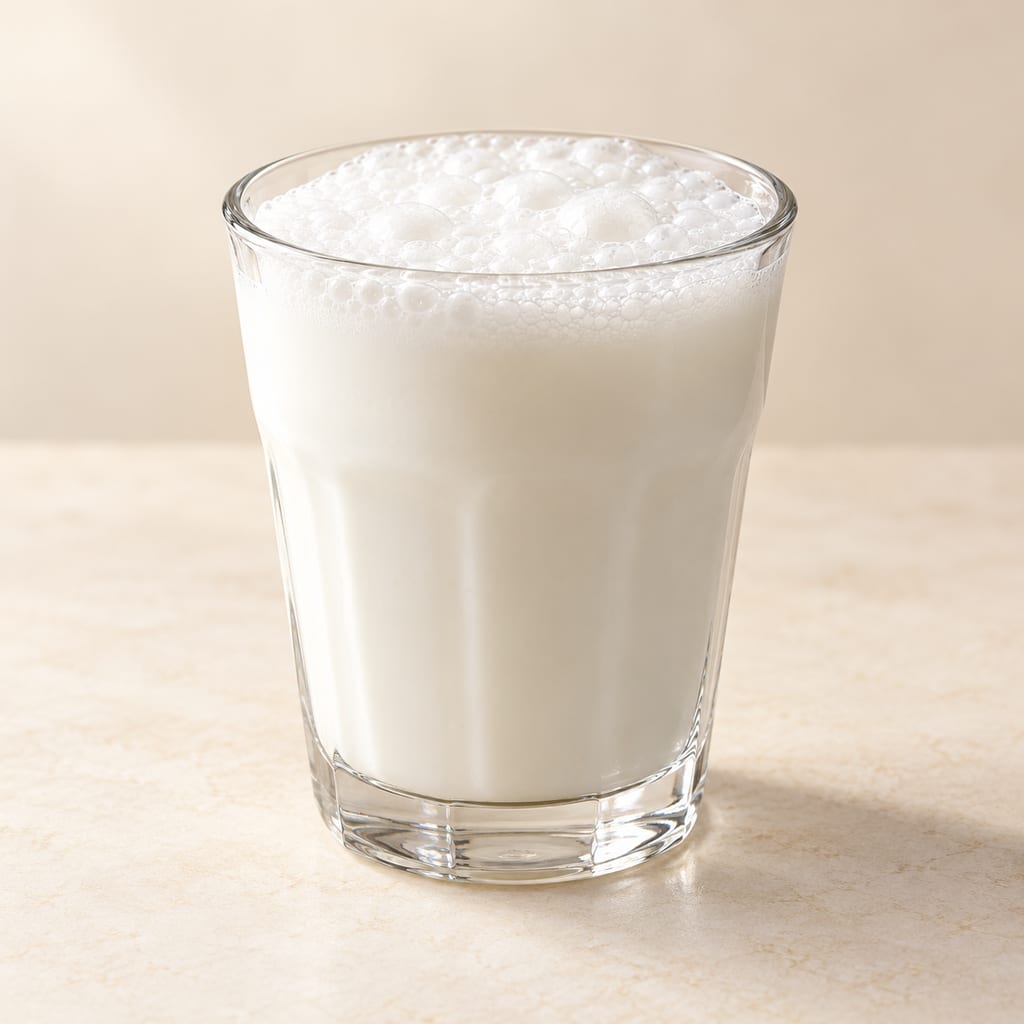
Ayran is Turkey’s cold, savoury yogurt drink: plain yogurt is loosened with water and lightly salted, then whisked smooth or aerated into a soft cap of foam.
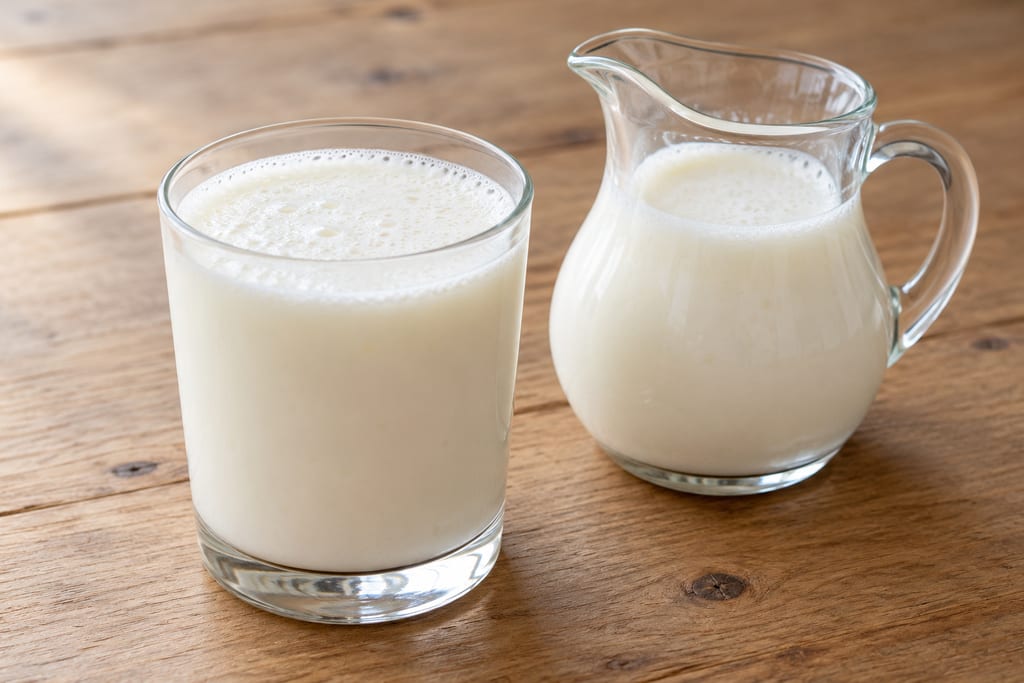
Khurunga is a traditional Buryat fermented milk made with a kept mixed bacteria-and-yeast starter, giving a sour, lightly alcoholic and often fizzy drink that is also the base for milk spirit and curds.
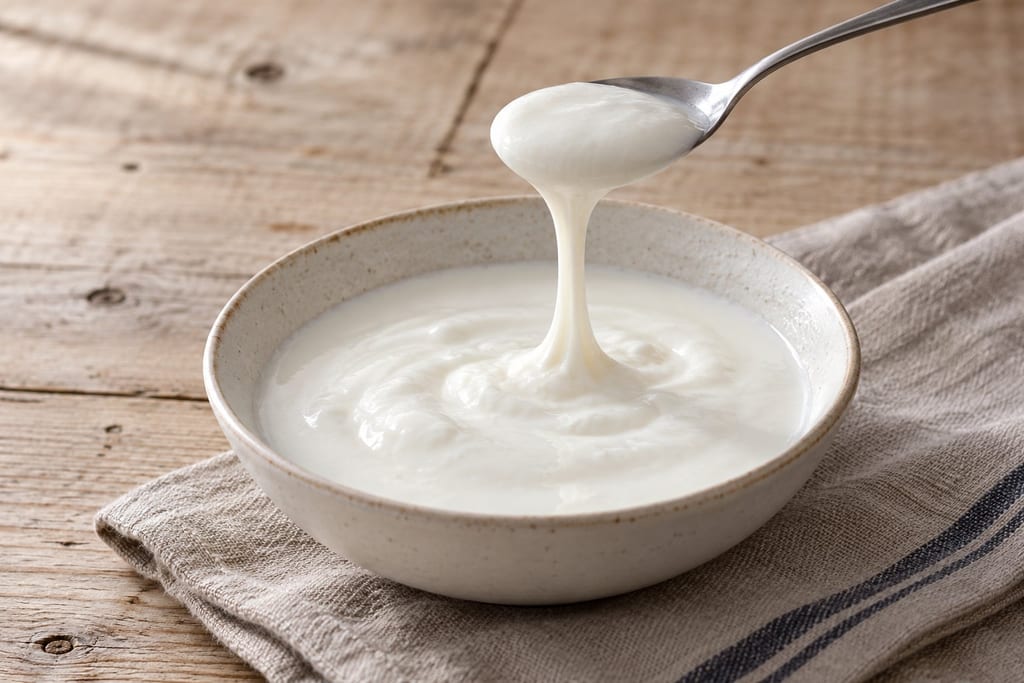
Långfil and tettemelk are traditional Swedish and Norwegian cultured milks with a mild sour taste and a stretchy texture produced by ropy lactic acid bacteria.
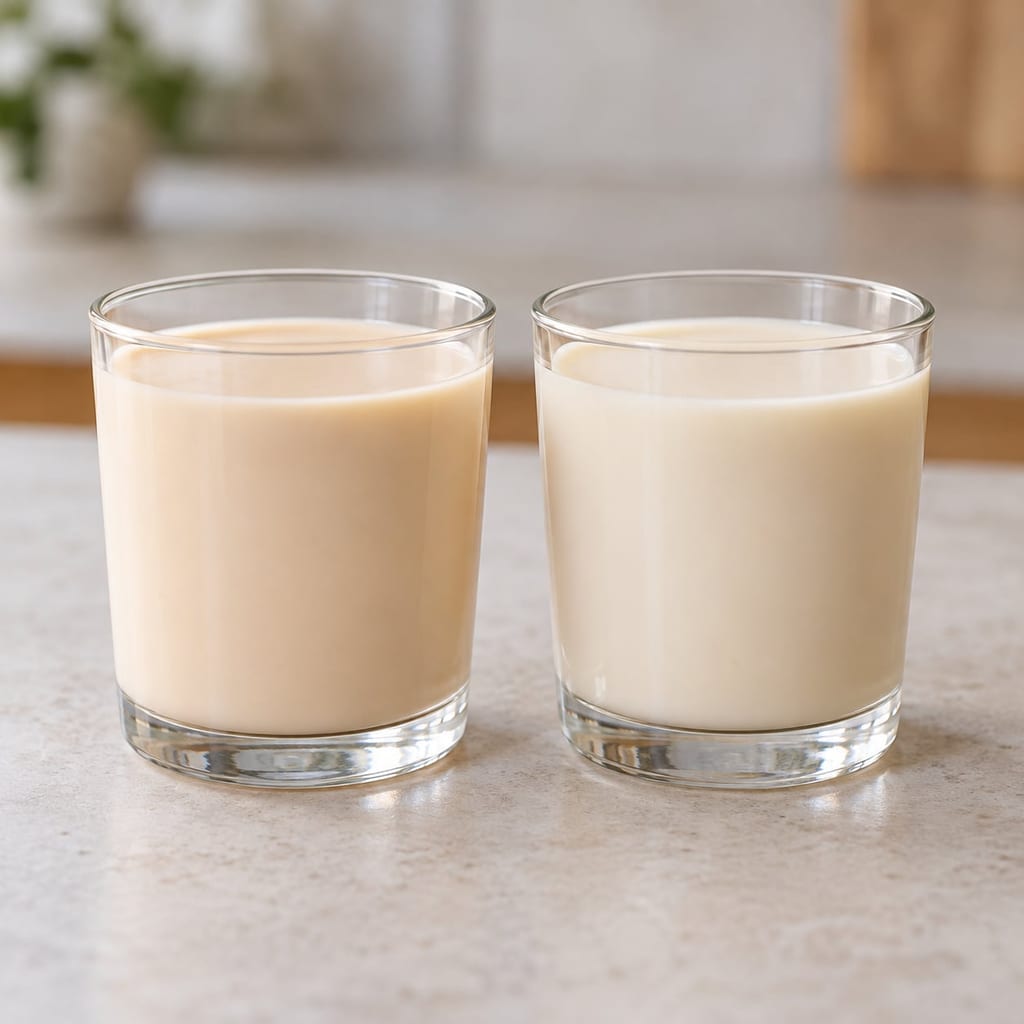
Ryazhenka is a Ukrainian and Russian cultured milk made from long-heated, baked cow's milk, cream-coloured and gently sour; varenets is its close relative with a shorter heat treatment.
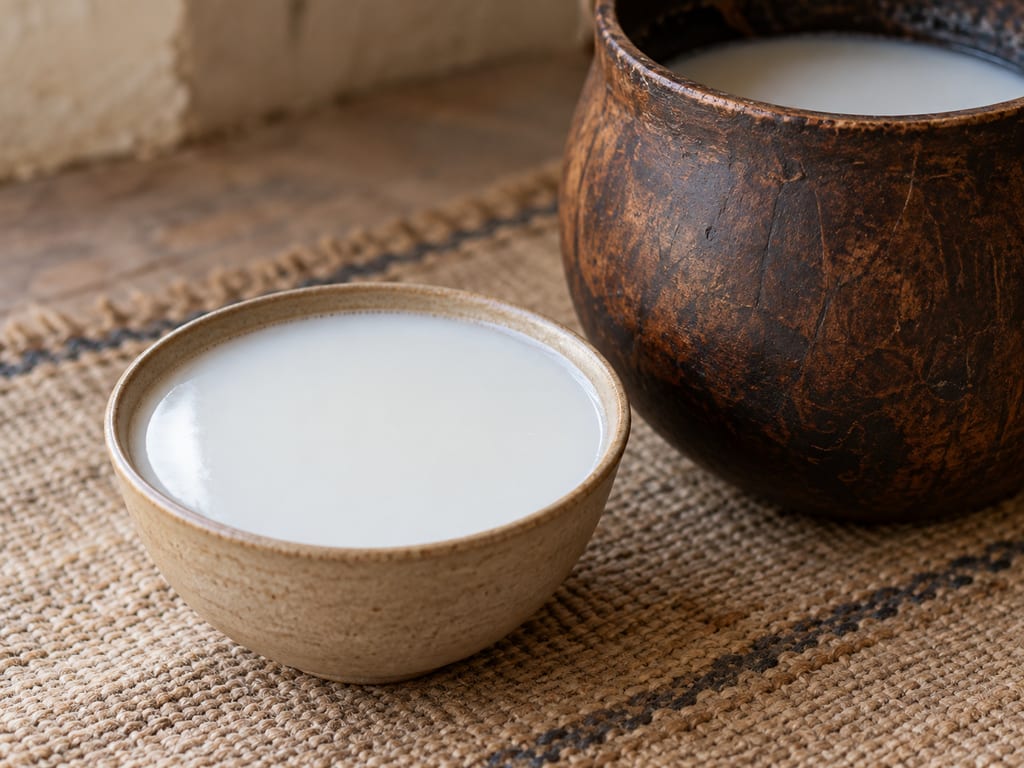
Suusac is a traditional fermented camel-milk drink of Somali pastoral communities in Kenya and Somalia, soured spontaneously in smoke-treated vessels into a thin, acid, smoky milk.
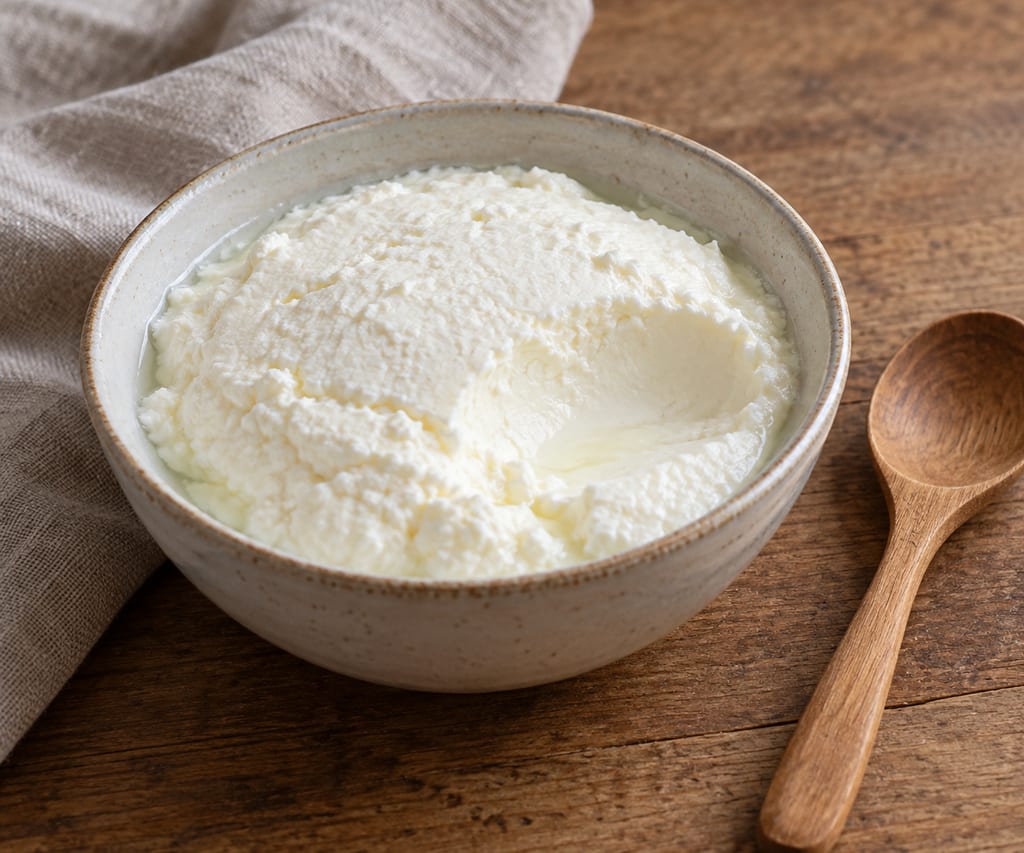
Tarag is a traditional Mongolian fermented milk made by culturing heated cow, yak, sheep or goat milk with a retained starter into a sour, softly set or drinkable yoghurt.
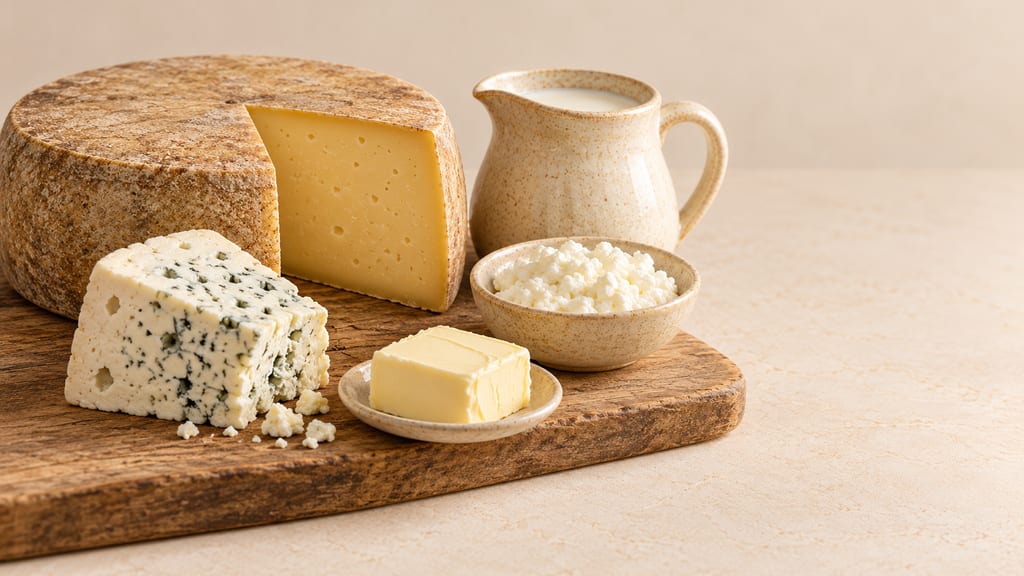
Follow milk into cheese, cultured drinks, butter, dried curds and sweets: a journey through the animals, seasons and household decisions behind the world's dairy foods.
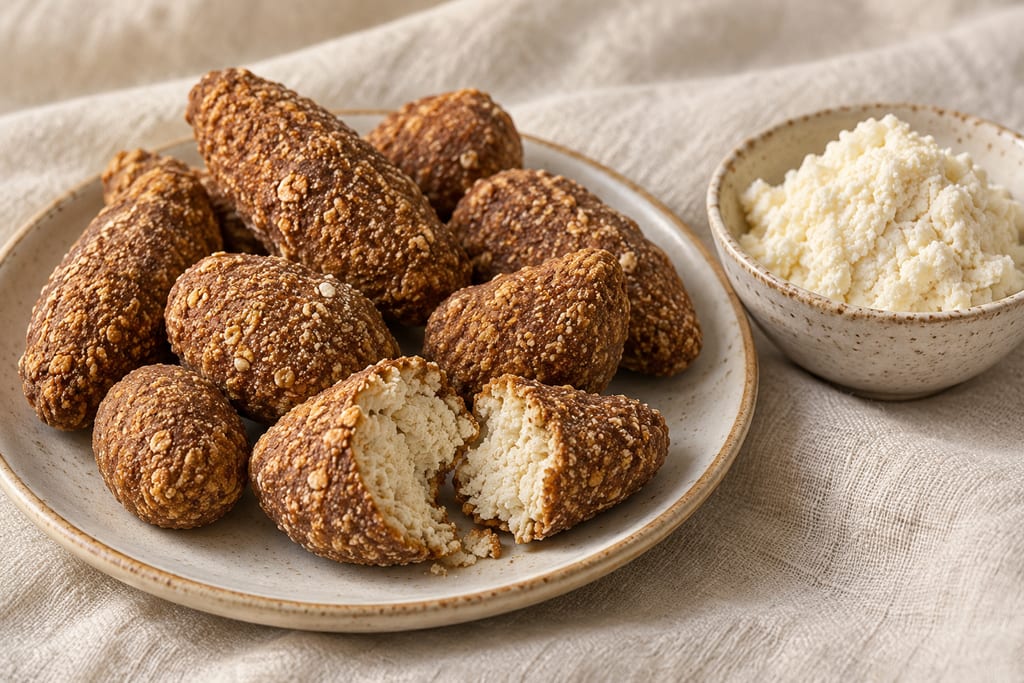
A two-stage Altai dairy preparation: sour chegen is heated into soft aarchi, then portions are drained, pressed and traditionally smoked into firm kurut.

Adygean salt is a seasoned table salt associated with Adygea and the wider North Caucasian culinary tradition. Salt is blended with garlic and a variable selection of herbs and spices; the exact mix depends on the named style and maker.
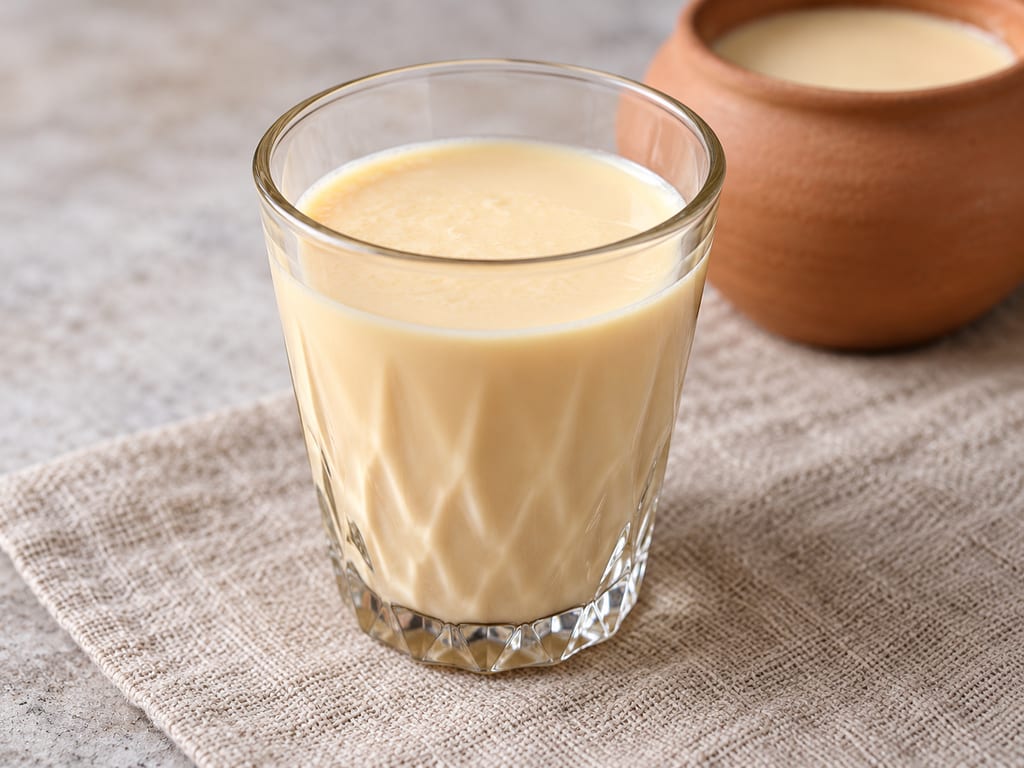
Baked milk is an Eastern European preparation of milk held at high heat for hours until it turns cream-coloured with a cooked, mildly sweet flavour, without any fermentation.
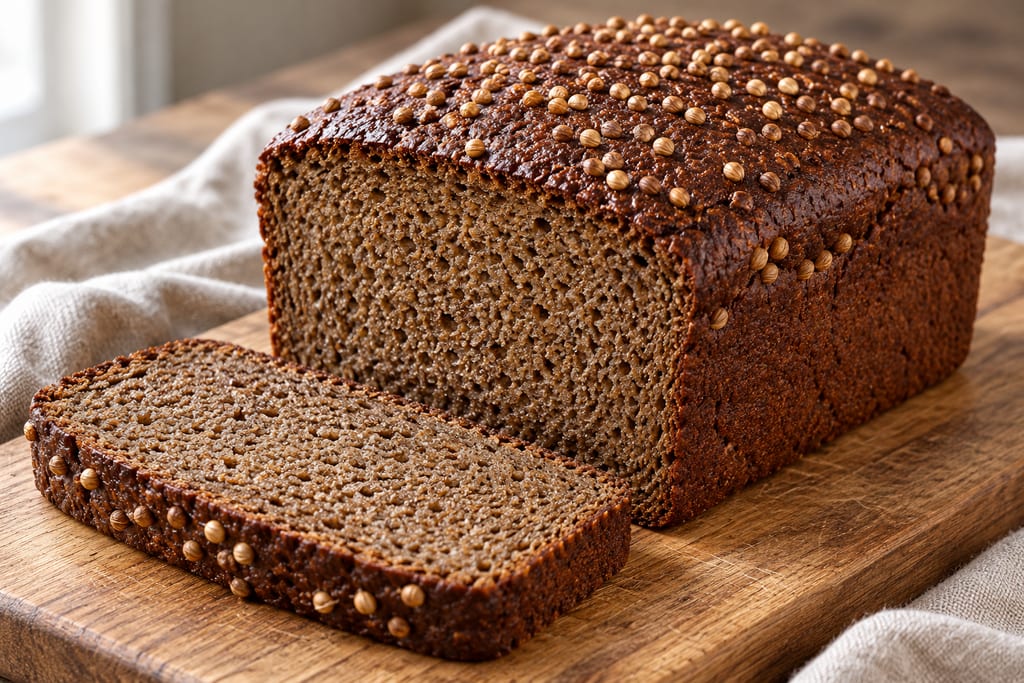
A dark rye sourdough with coriander and roasted barley-malt scald, based on Lily McCann's measured Borodinsk-ish home formula.
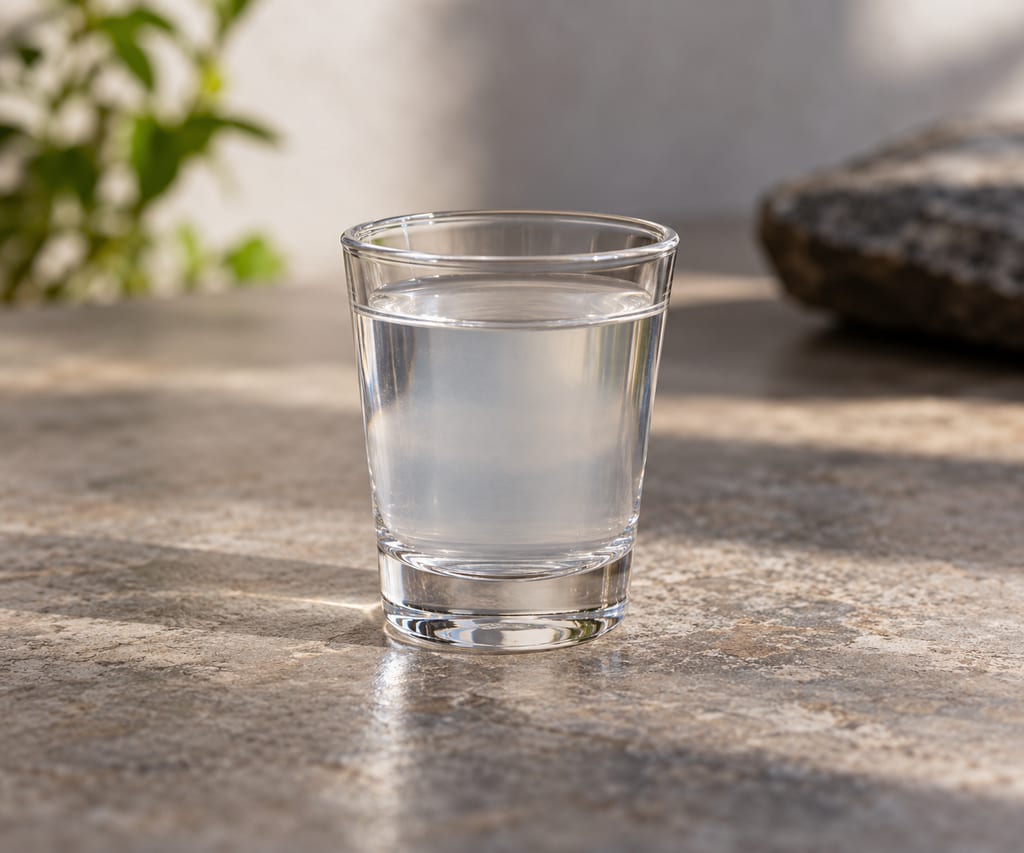
A Buryat milk spirit distilled from khurenge, the backslopped sour dairy ferment, in a cauldron still: a distillate that keeps milky and cheese-like aromas from the dairy it came from.

Mochenye yabloki are whole apples held under prepared liquid for several weeks. Russian sources from 1892 and 1959 describe the method. It is not the same as vinegar pickling.
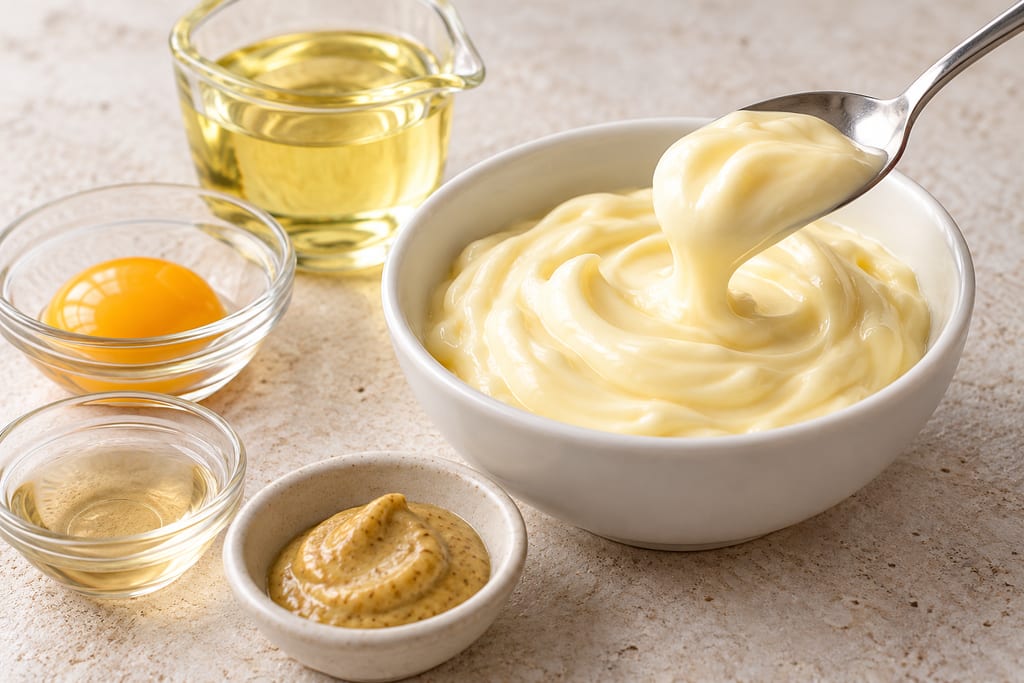
A plain mayonnaise of 200 g refined neutral oil emulsified into pasteurised yolk, vinegar, water and a little Dijon mustard: a clean base for tasting, comparing and flavouring.

Salted mushrooms are a traditional wild-mushroom preserve, especially of Finnish and Russian milk caps, made by layering boiled mushrooms with coarse salt or keeping them under brine, and kept cold.
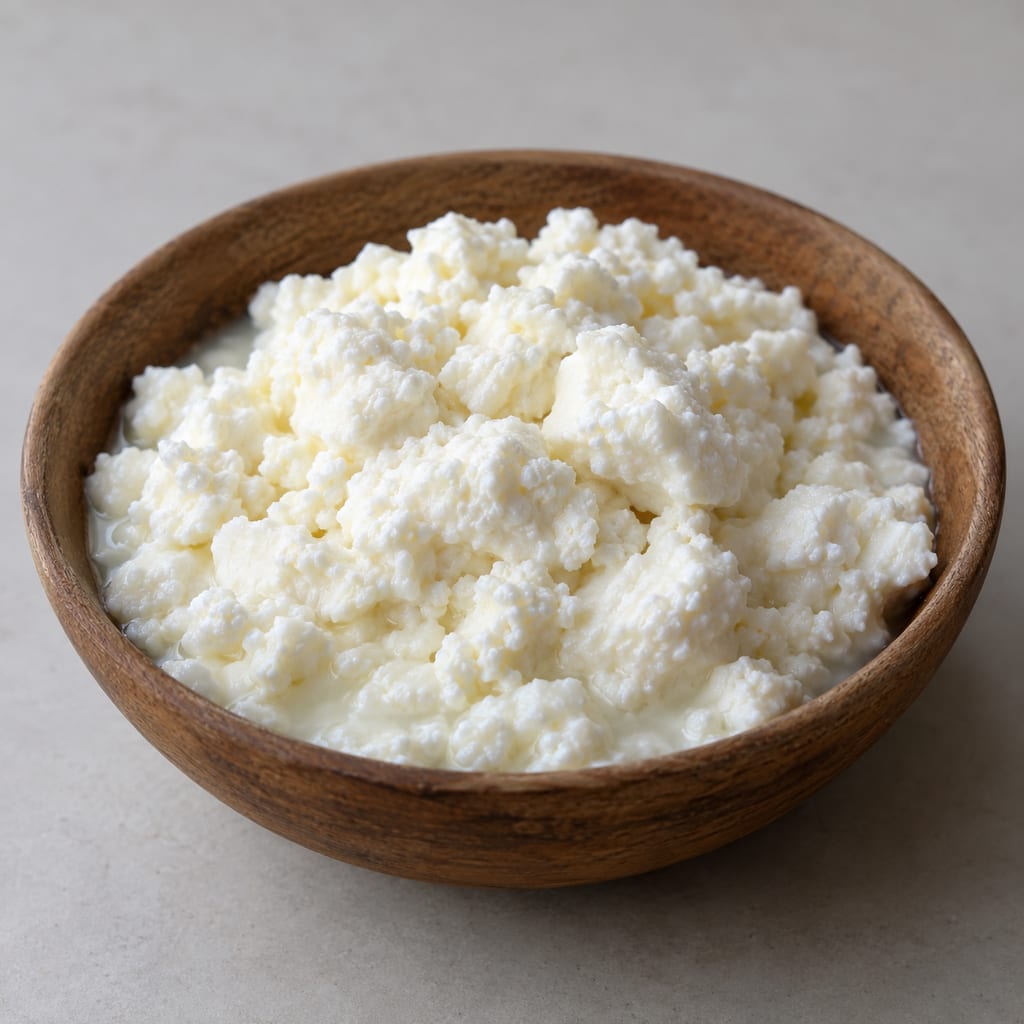
Aarts is a soft Mongolian curd made by draining boiled fermented yogurt; it remains wet, unlike aaruul, which is dried.
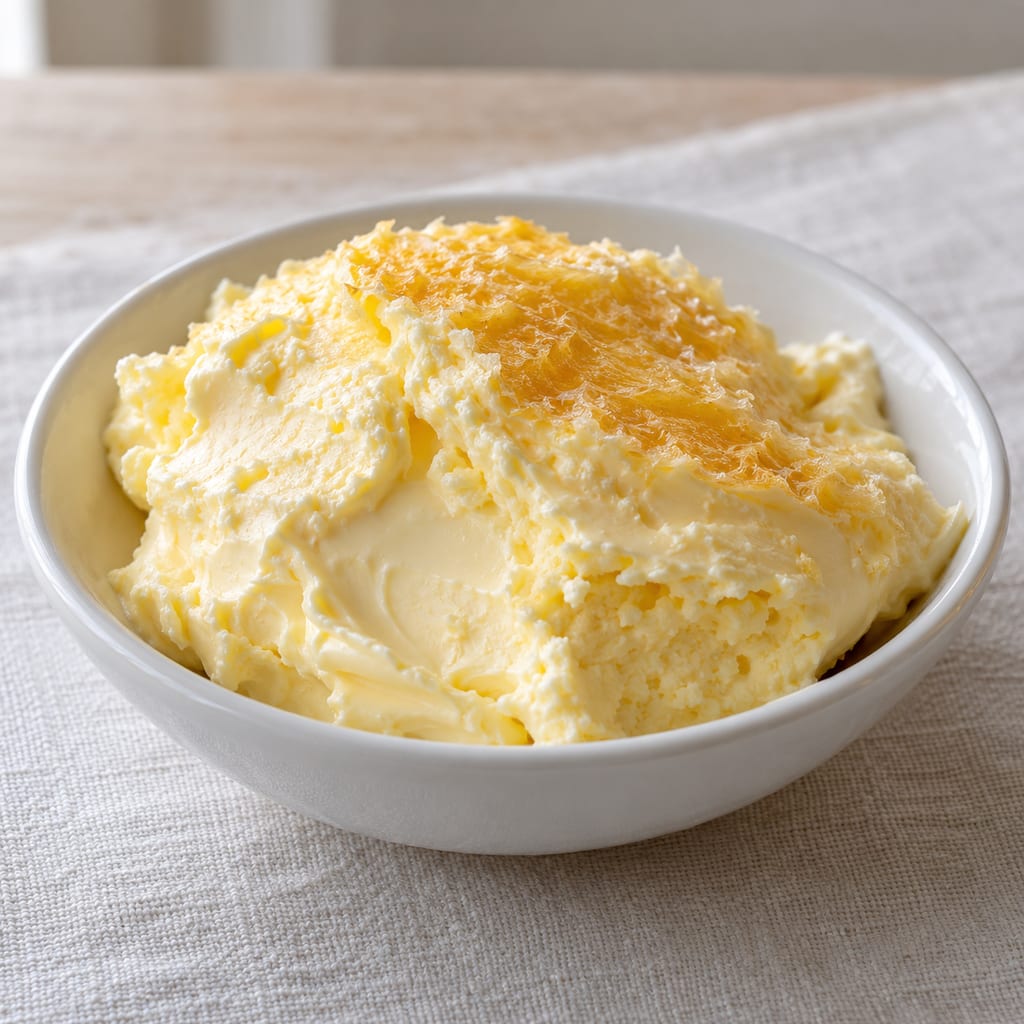
High-fat cream scalded below boiling for at least an hour until a thick crust forms, then cooled hard so the crust sets and the cream beneath thickens.
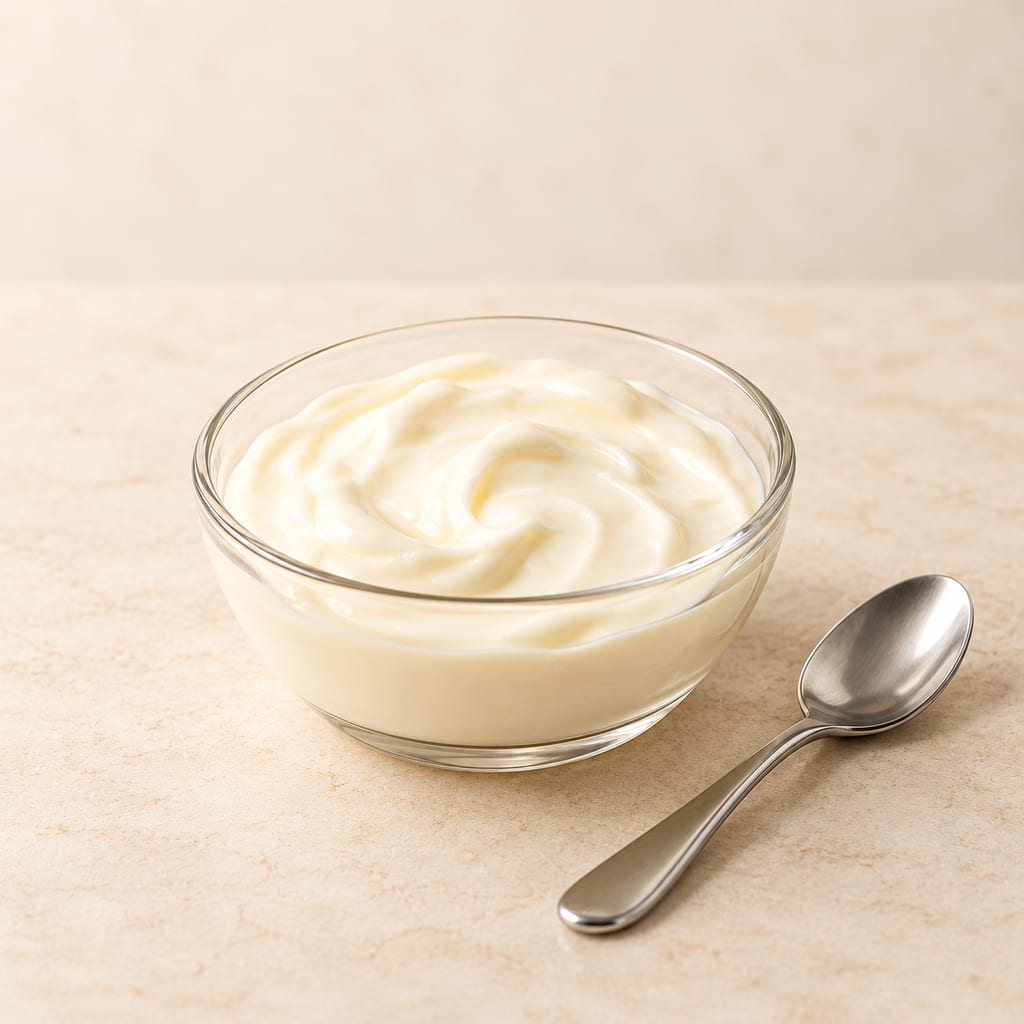
Crème fraîche is cream soured by lactic cultures into a thick, mild topping. It suits fruit and desserts as well as soups, sauces and other savoury dishes.
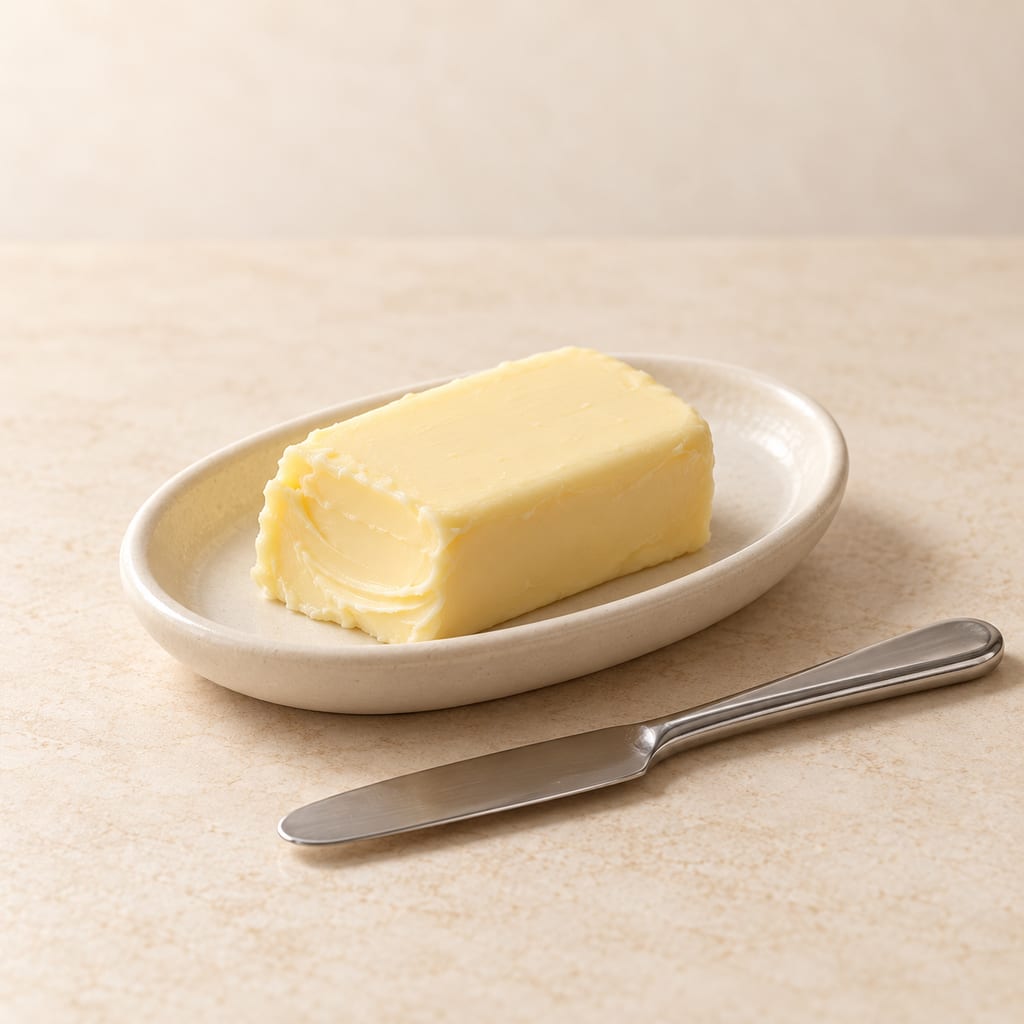
Cultured butter is churned from cream soured with lactic cultures. Its lightly tart flavour comes from the cultured cream, which separates into butter grains and buttermilk.
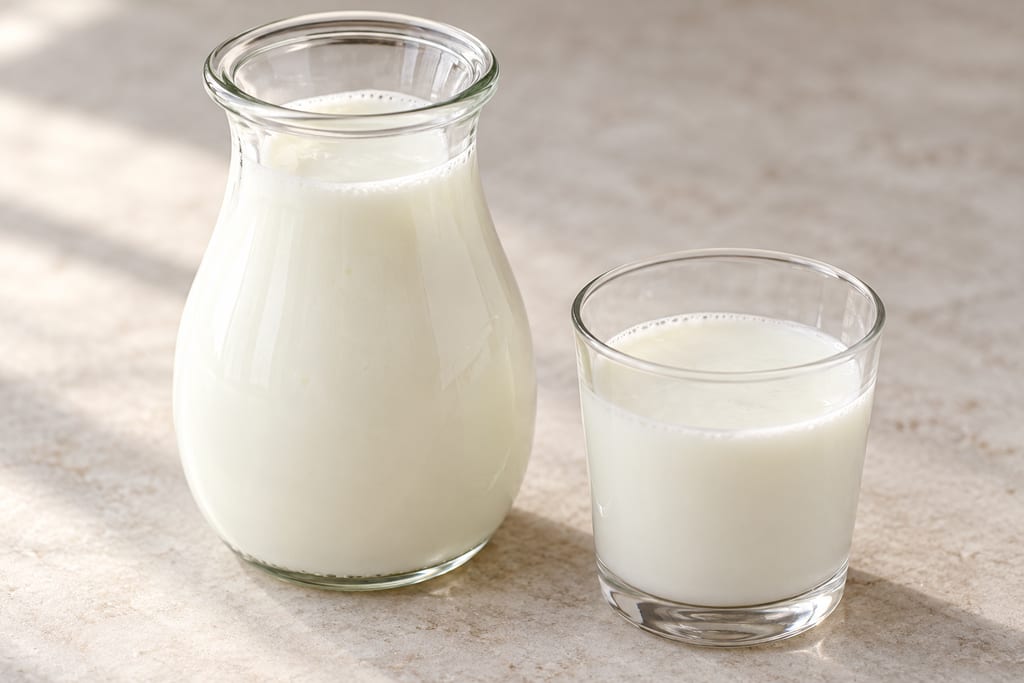
Cultured buttermilk is skim milk soured with a lactic starter into a tangy drink. This Canadian home method sets the milk without churning cream.
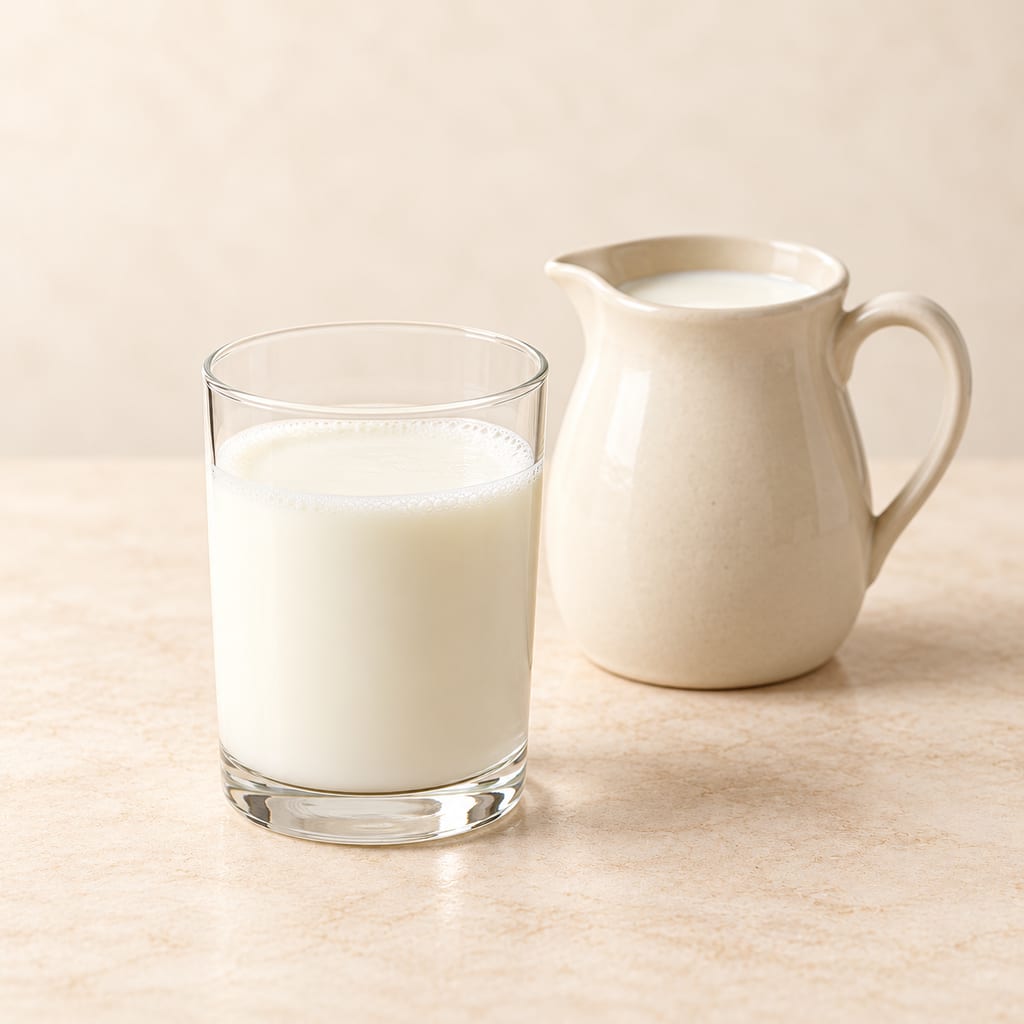
Milk thickened with a packet of buttermilk culture makes a tangy drink and a baking ingredient. This warm-incubated version uses whole milk.
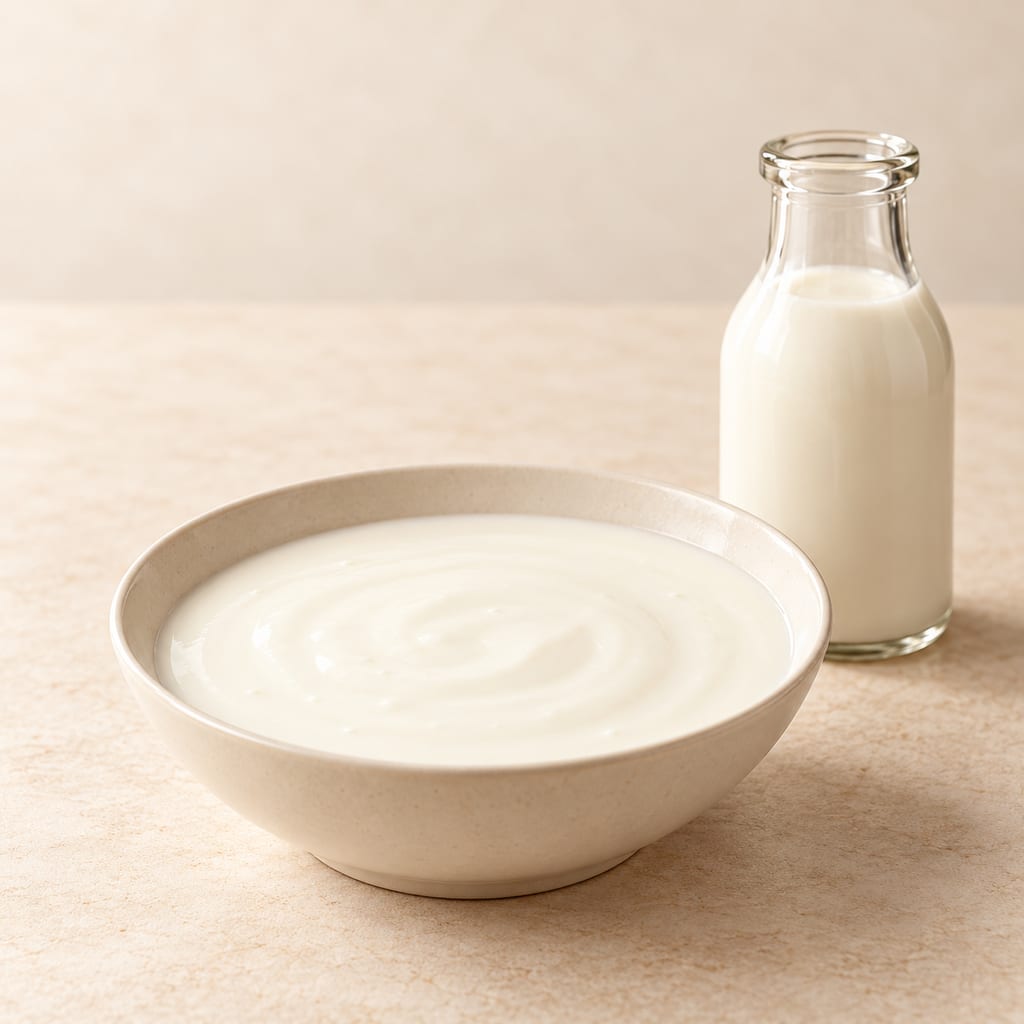
Filmjölk is a Swedish cultured milk with mild acidity and a spoonable body. This recurring batch uses filmjölk from the previous batch to culture fresh milk.
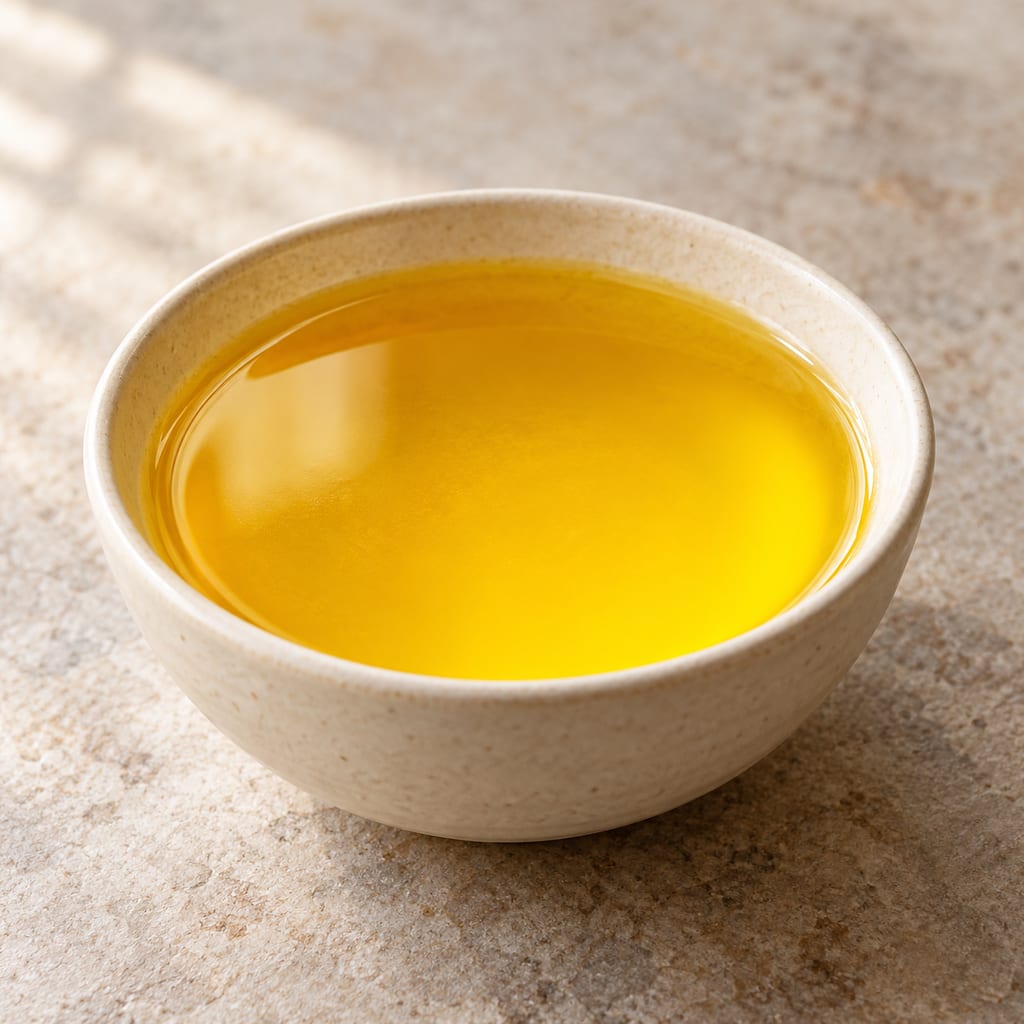
Butter heated until most water leaves and the milk solids separate, giving a fat that keeps far longer than butter. Rendering applies the same heat to animal tissue to make lard and tallow.

A Cap-Pelé boucanière is an Acadian herring-smoking building. The documented Willie Niles example is a one-storey wood-frame structure with a ridge smoke vent and interior bays for hanging fish-bearing cannes.

Achcharu is a family of Sri Lankan vinegar pickles made with mixed vegetables or seasonal fruit and a piquant spice dressing. This version is a quick, refrigerated, non-fermented mixed-vegetable pickle.

The acocote is a long, hollowed and dried gourd used to draw aguamiel from a mature maguey. It is a harvesting tool: the sap is transferred to a separate vessel before it ferments into pulque.

Adrak murabba preserves young ginger in sugar syrup, a sweet South Asian preparation recorded in Indian cookery and food-processing sources.

Parkia biglobosa seeds are fermented into regional West African seasonings, including nététou, iru, dawadawa and soumbala. The yellow fruit pulp is a separate food, and names and methods vary by place.

Japanese reddish-brown vinegar from sake lees matured about three years, turned to vinegar by acetic bacteria; the vinegar of Handa and Edomae sushi rice.

A refined common-wheat flour blended for a broad range of baking; its protein and behavior vary with wheat, milling and market.

The almond mushroom, Agaricus subrufescens, was cultivated in eastern North America in the 1800s, lost its market, and returned as a cultivated mushroom from Brazil, where it is grown under several names.
No community contributions have been published for this entry yet.
Sign in to contribute. Published comments and photos are free to read.
Krasnoyarsk State Agrarian UniversityMethod
Нетрадиционные молочные и кисломолочные продуктыhousehold katyk recipe: 1 litre whole milk and 100 g earlier katyk
heated until reddish-yellow, cooled to about 40 C
insulated, undisturbed fermentation of about 6 to 8 hours, then cold
acid katyk as soup seasoning; strained katyk as suzma
Cited in: How it is made and why each step is there
International Association of Agricultural MuseumsMethod · History · Use
The Bashkir dairy food katyk or oyotkanBashkir methods: boiled milk, retained starter, warm undisturbed fermentation
katyk and oyotkan names; young and acid katyk
serving customs and ayran
Karga tuy ritual
Cited in: What katyk is; What the record shows about its past; How it is made and why each step is there; Regional variations; At the table; Reading results and problems
Ivan-PoleMethod
Катык — закваска бактериальнаяmodern manufacturer formulation with baked milk and a dry starter sachet
distinct from backslopping
Cited in: How it is made and why each step is there
Russian patentMethod · Science
RU2266008C2: Method for producing cultured milk product Katykmilk held at 95 to 99 C for 4 to 5 hours
inoculation at 37 to 39 C with 3 to 10% starter, 4 to 7 hours
Streptococcus thermophilus with Bulgarian lactobacilli
Cited in: What the record shows about its past; What the bacteria and the heat do; How it is made and why each step is there
Kazan Medical Journal, 1999History · Science
Hygienic estimation of the cultured-milk product produced by traditional Tatar national production technologystudy of traditional Tatar katyk
prolonged heating changed essential amino acid content
Cited in: What the record shows about its past; What the bacteria and the heat do; How it is made and why each step is there; Regional variations; Reading results and problems
Ministry of Agriculture and Food of the Republic of TatarstanHistory · Method
Tatar national drink entered the TOP-100 best products of RussiaZelenodolsk plant: milk heated without vigorous boiling, up to a third of water evaporated, lactic starter added
Cited in: What katyk is; What the record shows about its past; How it is made and why each step is there; Regional variations
MicroorganismsScience
Microbial Communities of Artisanal Fermented Milk Products from Russiamatsoni-like samples dominated by Streptococcus; chegen by Lactobacillus
fermentation temperature as a driver of community
Cited in: What katyk is; What the bacteria and the heat do; Regional variations; Reading results and problems
WikisourceHistory
Толковый словарь живого великорусского языка, 2-е изд., т. II (1881), с. 108katyk as a Crimean Tatar sheep's-milk buttermilk ferment
Cited in: What the record shows about its past
djvu.onlineHistory · Use
Ethnography of the Kasimov Tatars (1991)katyk from boiled or baked milk started with rye bread, curd cheese or earlier katyk
eaten alone, in soups and potatoes, or as ayran; strained into suzma
Cited in: What the record shows about its past; Regional variations; At the table
arm.ssuv.uzMethod · Variation
Uzbek dairy-science textbook on qatiqordinary qatiq: boil, cool to 35 to 40 C, 3.5% starter, 4 to 6 hours, cool to 8 C
commercial streptococcal variant 5 to 7 hours
Mechnikov-style and yeast-containing southern qatiq
Cited in: What katyk is; How it is made and why each step is there; Regional variations; Reading results and problems
AQRAMethod
Naxçıvan mətbəxi (Nakhchivan cuisine)one spoonful of qatıq to a litre of boiled milk, a pinch of sugar, set in 2 to 3 hours
Cited in: How it is made and why each step is there
nuhcixan.azUse
Naxçıvan mətbəxi: qatıq aşıqatıq aşı of cooked grain, herbs and thinned qatıq
Cited in: At the table
multikulturalizm.gov.azVariation
Ingiloyların maddi mədəniyyətiordinary inoculated qatıq and spontaneously soured çuma qatıq; blackberry leaves in starting a culture
Cited in: Regional variations
Visit East KazakhstanVariation · Use
National gastronomy of East Kazakhstanқатық as fermented, often concentrated milk and the basis of suzbe
Cited in: What katyk is; Regional variations; At the table
e-history.kz (Kazakhstanika)Variation · Use
Katykkatyk as a concentrated, salted, drained preparation; dried versions
Cited in: Regional variations; At the table
Slow Food Foundation for Biodiversity, Ark of TasteVariation
ChegenAltai chegen: smoked willow material, wooden vessels, shorter warm fermentation
Cited in: Regional variations
Utah State University ExtensionSafety
Homemade Fermented Yogurtstarter handling and controlled incubation
pH 4.6 or lower
prompt refrigeration
Cited in: How it is made and why each step is there; Reading results and problems
Utah State University ExtensionSafety
Tips to Safely Ferment at Homemeasure acidity; time and temperature control
limits of sensory checks
Cited in: Reading results and problems
US Centers for Disease Control and PreventionSafety
Raw Milkpathogens in raw milk
choose pasteurised milk
Cited in: How it is made and why each step is there; Reading results and problems
US Food and Drug AdministrationSafety
Safe Food Handlingclean equipment
preventing contamination after heating