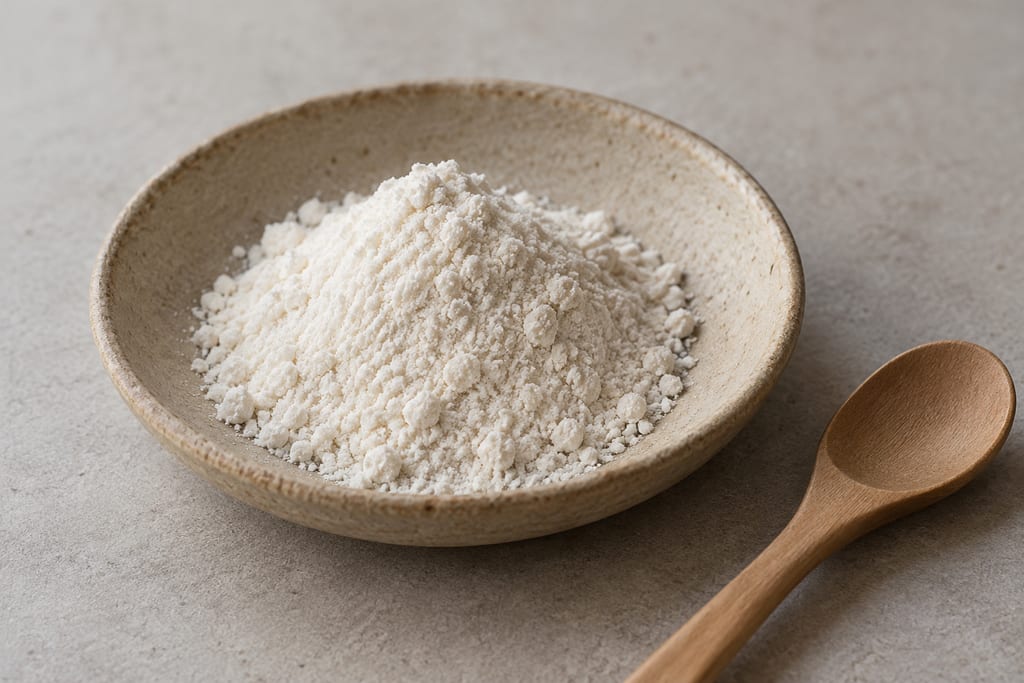
Turep starch (Ainu lily-bulb starch)
Starch released from giant woodland lily bulbs by pounding, washed out in water, settled and dried: the refined fraction of an Ainu process that also yields fermented cakes from the residue.
 FermenteaWhere food goes to change
Modern adaptation
Бородинский хлеб · Borodinsk-ish
A dark rye sourdough with coriander and roasted barley-malt scald, based on Lily McCann's measured Borodinsk-ish home formula.
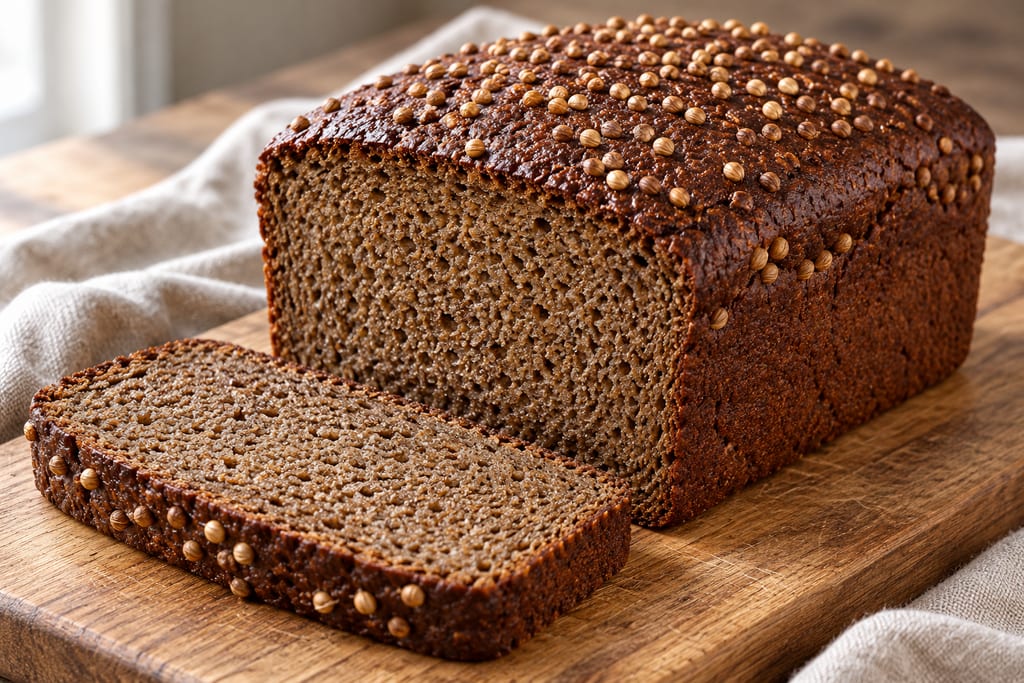
Borodinsky bread is associated with Russian rye baking. Lily McCann's article on its history says its origin stories are competing legends and reports that the earliest written recipe she found dated to 1933. She also describes the ingredient proportions and scalding method of Soviet standard GOST 5309-50, while noting that later rules were less prescriptive.
The recipe here is McCann's own home adaptation, published by the Real Bread Campaign as “Borodinsk-ish.” It uses a rye sourdough, roasted barley-malt scald, coriander, molasses and a long staged fermentation. The method is useful as one measured version; it does not establish a universal formula or current compliance with a historical standard.
The source lists 30 g malt flour, 90 g rye flour and 300 g water for the scald (420 g total), then calls for 370 g of scald in the pre-ferment. It does not account for the remaining roughly 50 g; the formula above keeps the published source quantities and notes the gap rather than adjusting them.
Lily McCann describes Borodinsky as a well-known Russian black rye bread and says its origin legends are not established. Her article reports that the first recipe she found was dated 1933 and discusses the Soviet GOST 5309-50 formula. The selected home recipe is titled “Borodinsk-ish” and should not be treated as a canonical or current standards-compliant formula.
Yield 1 loaf in a 1 kg tin · Scaling: source batch only
Rye and wheat flours are uncooked before the loaf is baked; do not taste the raw dough.
Hazard sourceDo not taste the raw dough; bake the loaf as directed and wash hands, bowls, utensils and work surfaces after handling flour or dough.
Control sourceThe source gives a visual colour and pan-release cue but no measured internal-temperature endpoint. Do not infer a validated doneness temperature.
The recipe author presents this home adaptation as inspired by classic Russian Borodinsky rye bread; the source does not identify a narrower regional origin for this formula.
Starch released from giant woodland lily bulbs by pounding, washed out in water, settled and dried: the refined fraction of an Ainu process that also yields fermented cakes from the residue.
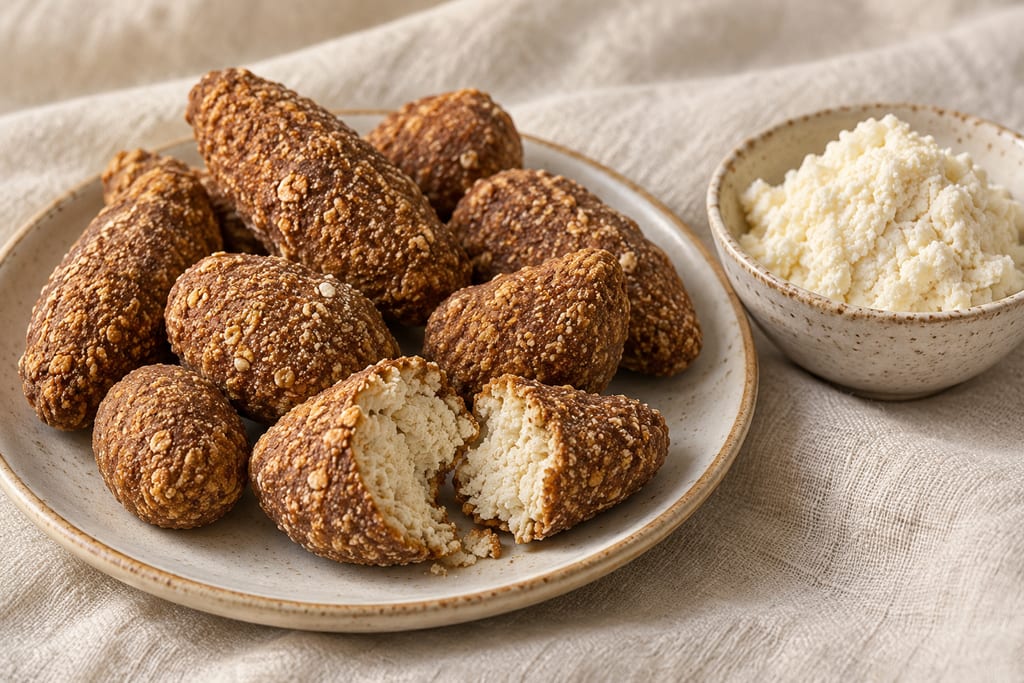
A two-stage Altai dairy preparation: sour chegen is heated into soft aarchi, then portions are drained, pressed and traditionally smoked into firm kurut.

Adygean salt is a seasoned table salt associated with Adygea and the wider North Caucasian culinary tradition. Salt is blended with garlic and a variable selection of herbs and spices; the exact mix depends on the named style and maker.
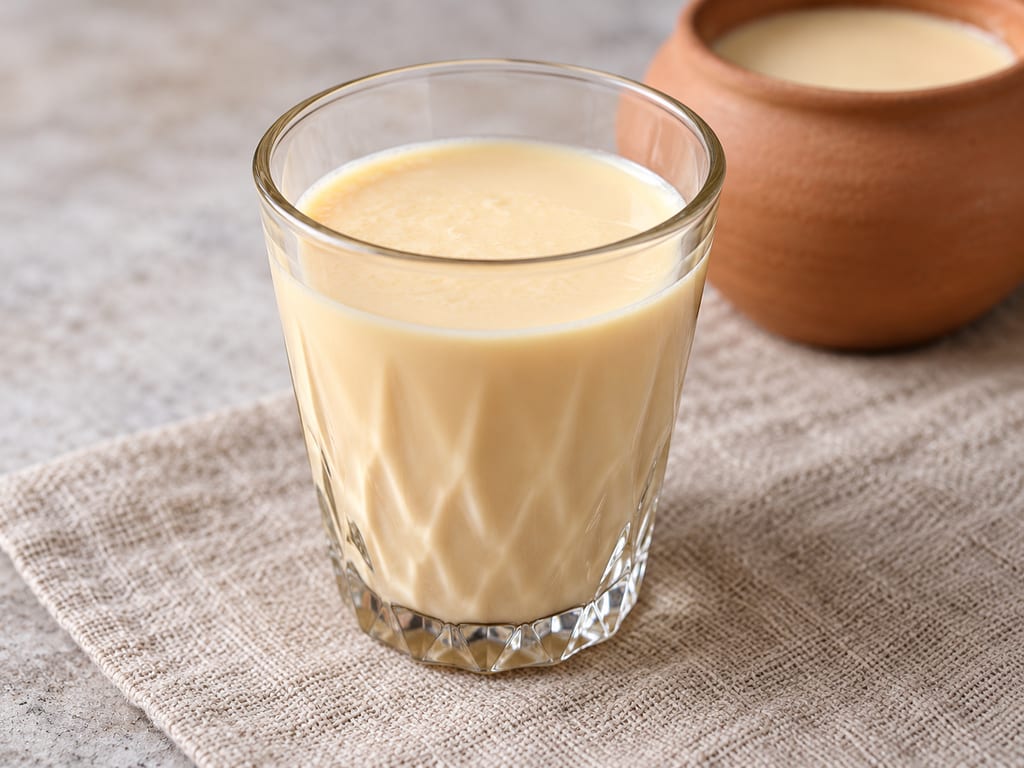
Baked milk is an Eastern European preparation of milk held at high heat for hours until it turns cream-coloured with a cooked, mildly sweet flavour, without any fermentation.

A Buryat milk spirit distilled from khurenge, the backslopped sour dairy ferment, in a cauldron still: a distillate that keeps milky and cheese-like aromas from the dairy it came from.
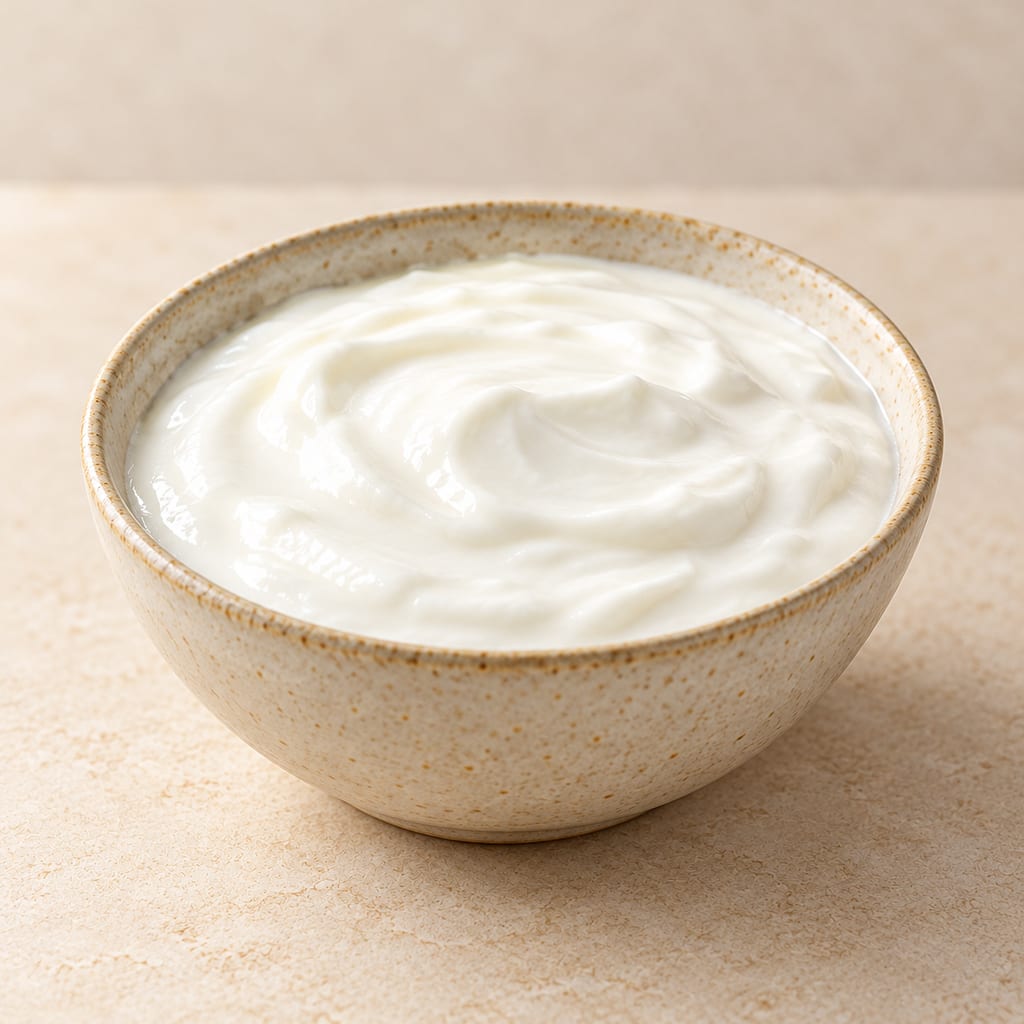
Katyk is a traditional fermented milk of Turkic-speaking peoples, made by souring heated milk with lactic bacteria, often with a spoonful of the last batch, into a thick, sour curd.
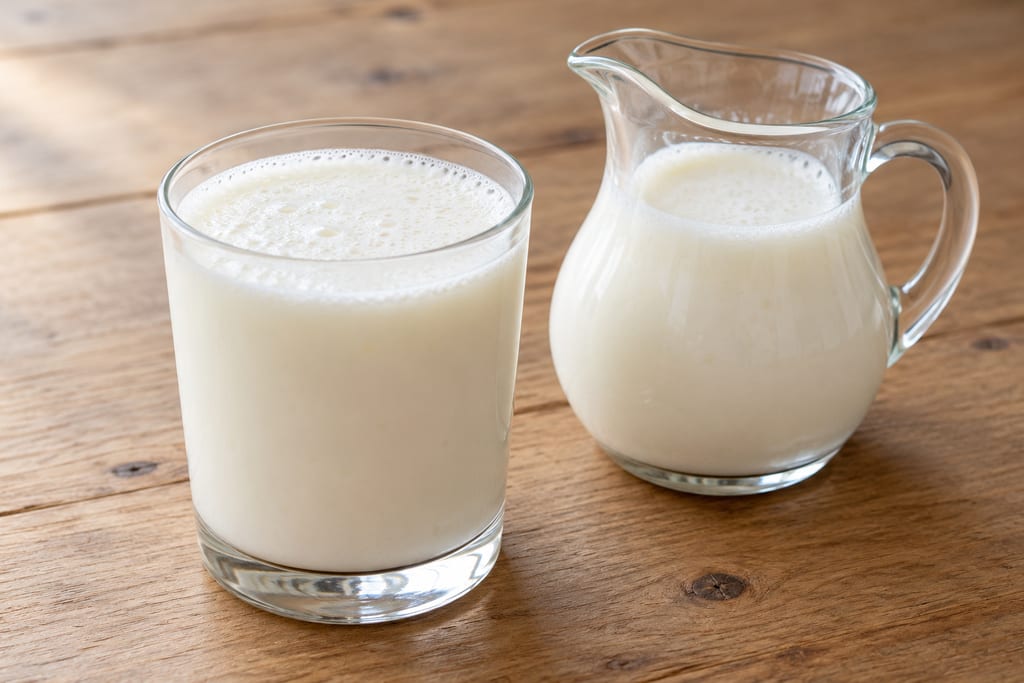
Khurunga is a traditional Buryat fermented milk made with a kept mixed bacteria-and-yeast starter, giving a sour, lightly alcoholic and often fizzy drink that is also the base for milk spirit and curds.

Mochenye yabloki are whole apples held under prepared liquid for several weeks. Russian sources from 1892 and 1959 describe the method. It is not the same as vinegar pickling.
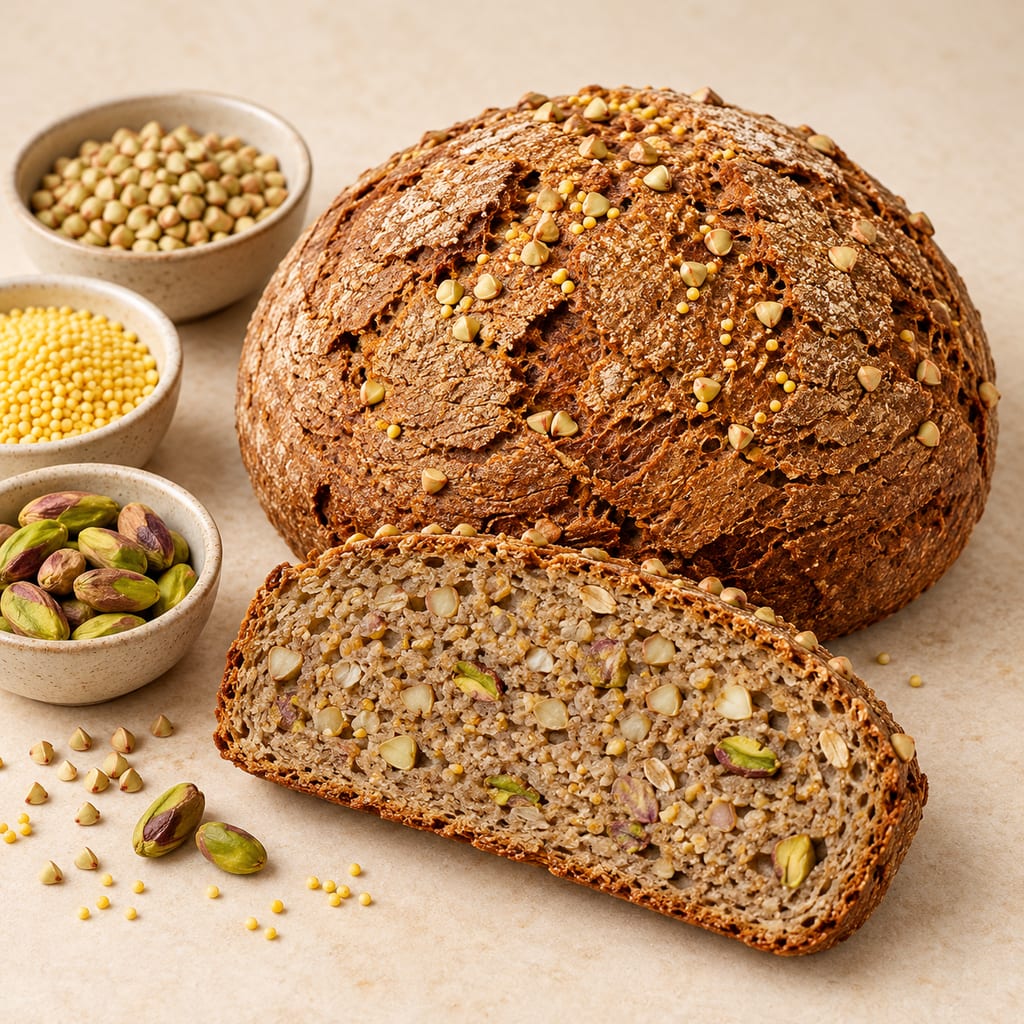
A gluten-free sourdough loaf of about 1 kg. A buckwheat and quinoa starter leavens a dough with cooked whole buckwheat groats, millet and a dark gluten-free bread mix, baked in a lidded pot.
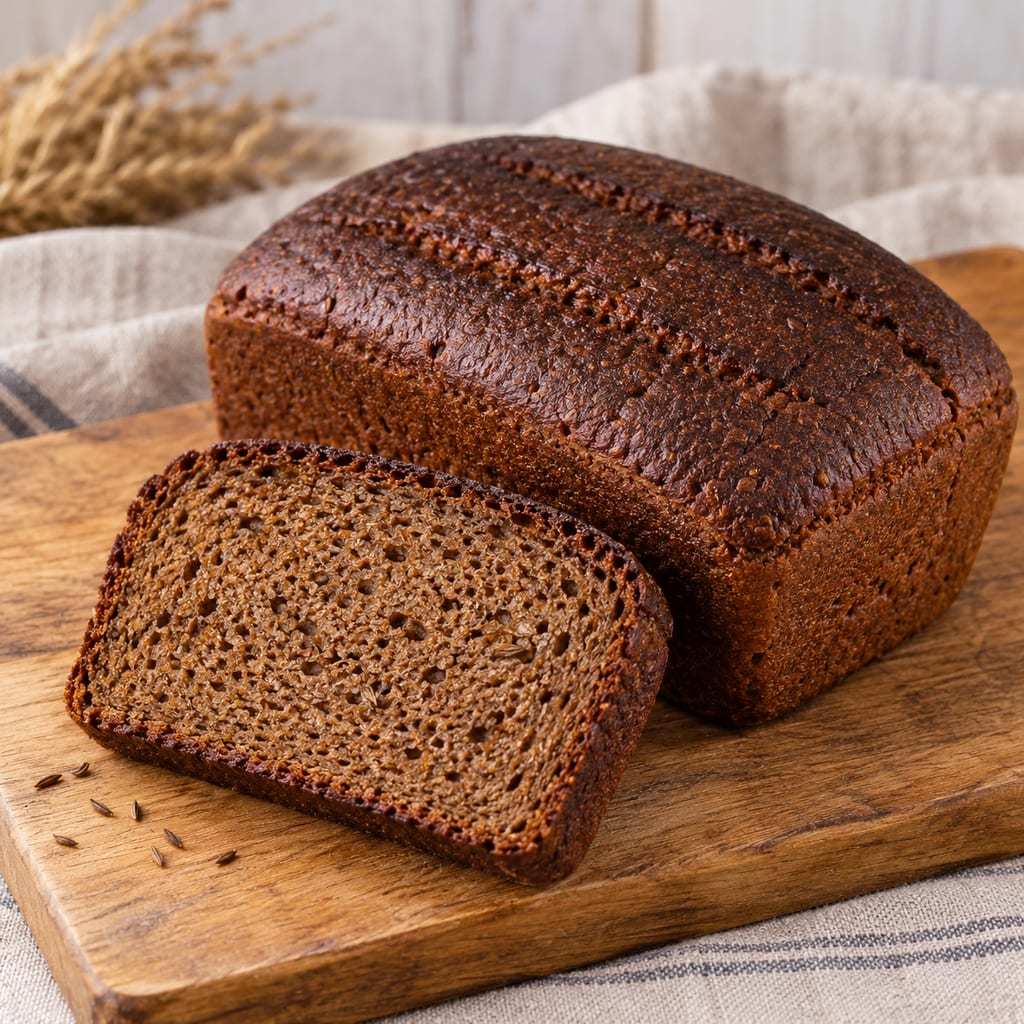
A Lithuanian dark rye loaf made with an overnight rye preferment, caraway, honey and sugar, then proofed in a loaf pan and baked in two stages.
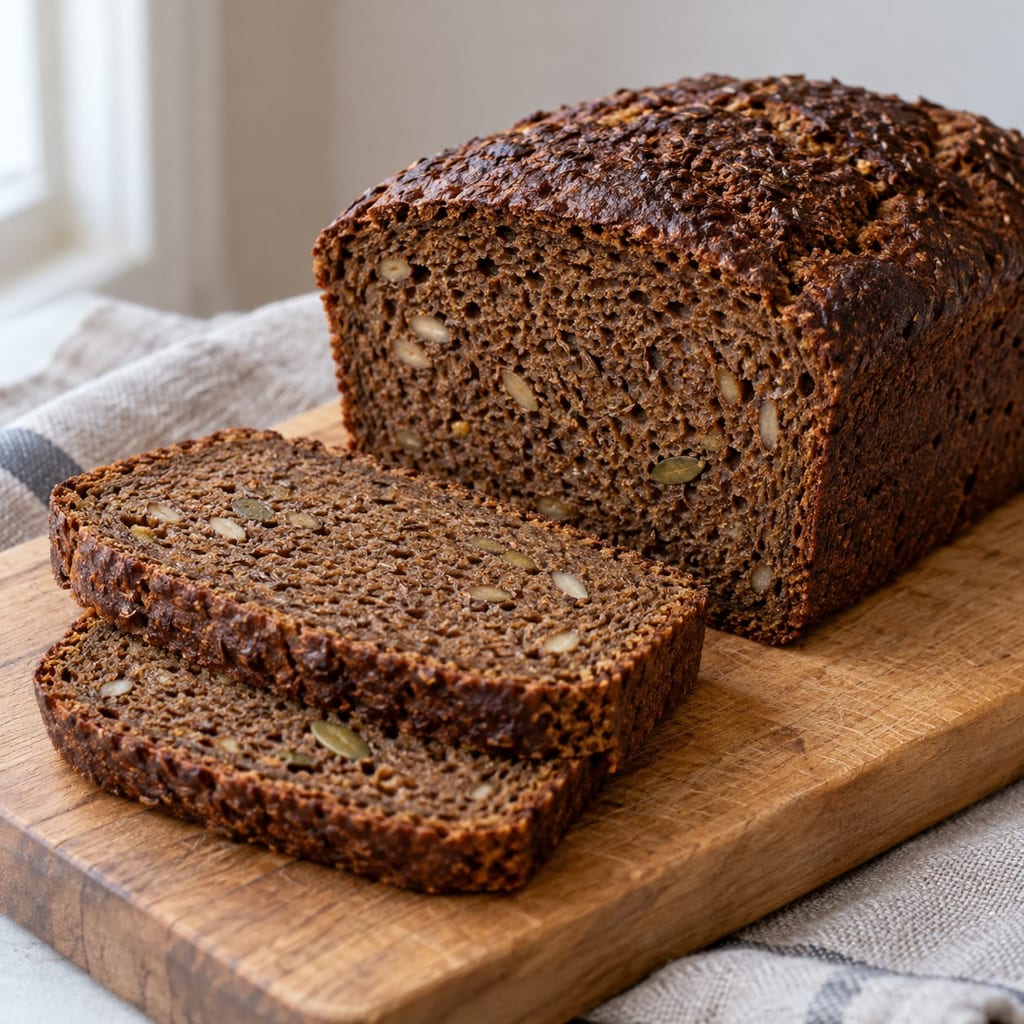
This Estonian rye loaf uses a sourdough preferment, a rye scald and soaked seeds, with a small amount of baker’s yeast. Two tins bake through a staged hot-to-moderate oven schedule.
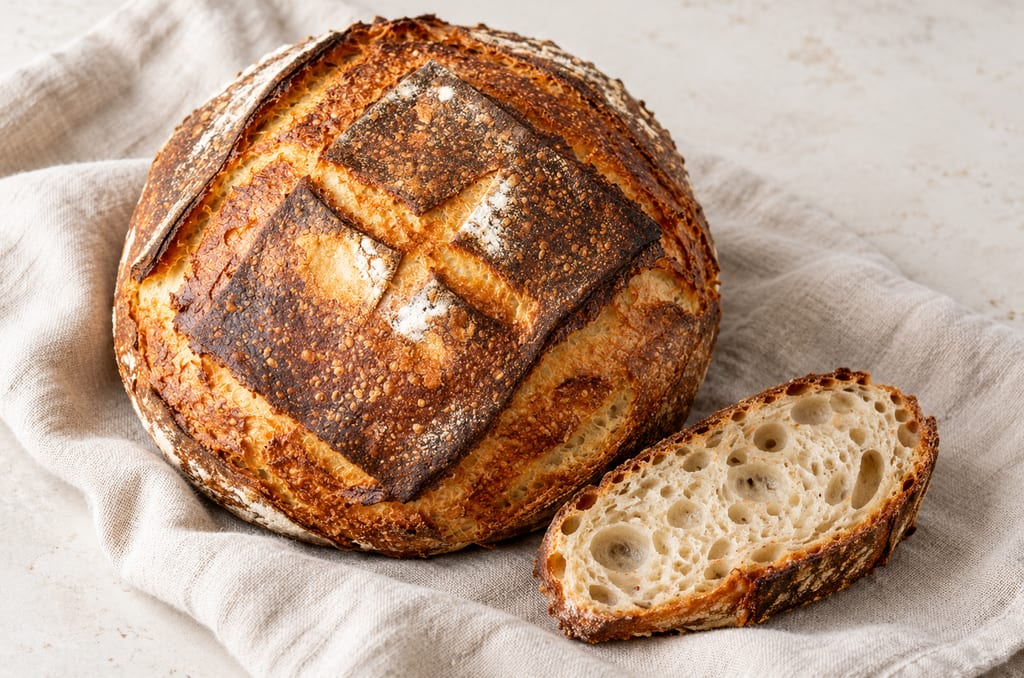
A ripe sourdough starter leavens this modern low-handling loaf. Three hourly folds organize the sticky dough before a long refrigerator rest, final proof and covered bake.
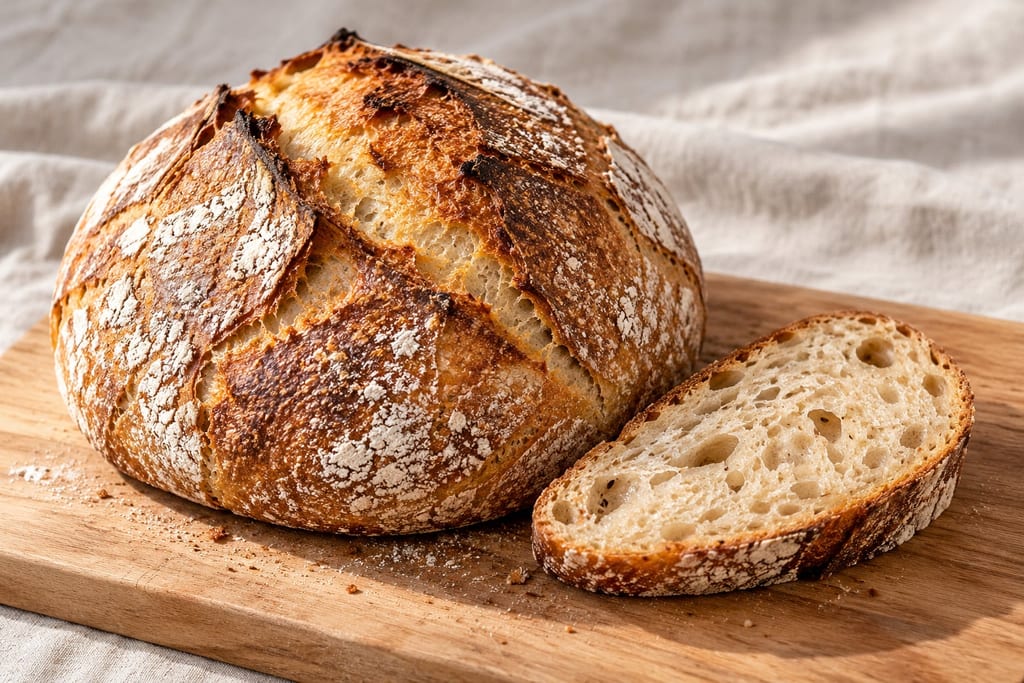
Two large French-style wheat loaves use unfed sourdough starter, whole-wheat flour, long room-temperature fermentation and a covered-pot bake.
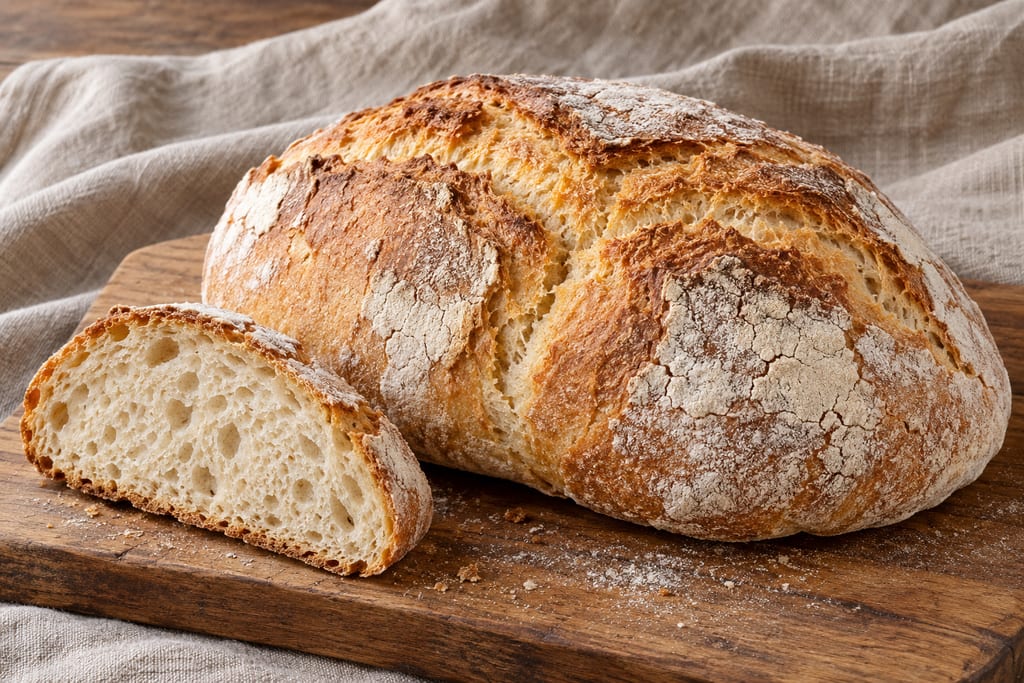
This home sourdough adaptation borrows Pan de Cea’s wheat-forward loaf and central fenda while using a domestic oven and a separately documented modern formula.
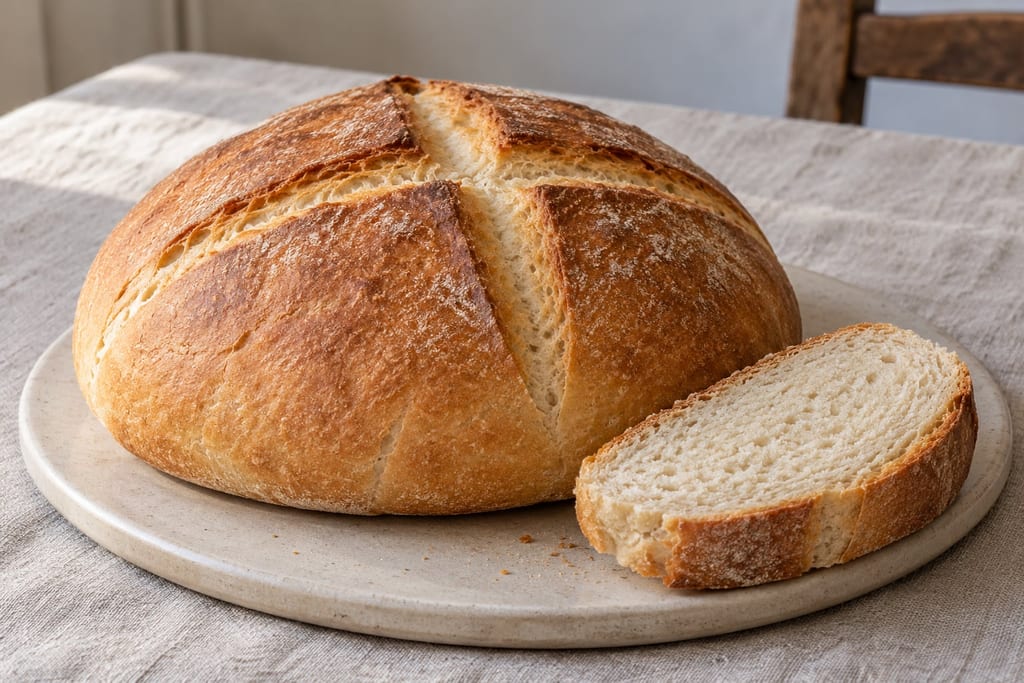
This household Pan de Cruz adaptation uses sourdough and a folded, tight-crumb wheat dough, marked with a cross and baked in a home oven.
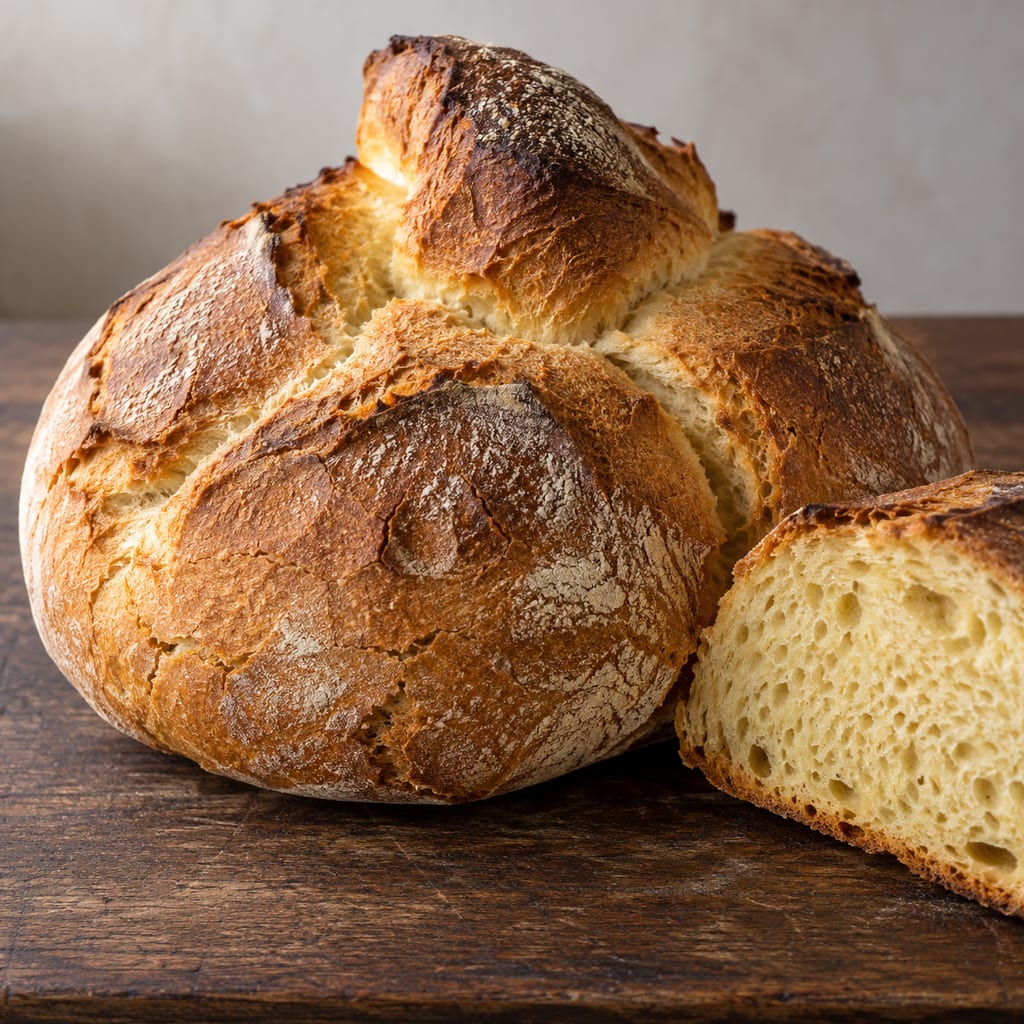
A protected durum-wheat sourdough bread documented by a commercial production specification. The official 100 kg batch and oven process are recorded without inventing a household scale.

Soft, spreadable Calabrian pork sausage made with a great deal of red chilli and fatty pork, stuffed into natural casings, sometimes smoked and matured while staying soft.

A way to add independent temperature logging to an existing food dehydrator without changing its built-in controls or protections. It is a monitoring method, not a rewiring plan.

Pleurotus cystidiosus is the abalone mushroom, a cultivated oyster-type fungus with dark brown caps that grows more slowly and is more demanding than other Pleurotus species.

A dark, balanced vinegar from Emilia-Romagna made by combining cooked or concentrated grape must with wine vinegar, then acetifying and refining it in wood under a protected specification.

A living dairy inoculum that starts controlled cream fermentation, developing acidity and aroma before sour cream or cultured butter is finished.

A small electric incubator holds jars at a selected temperature for yogurt and other documented warm food preparations. Controls, capacity and vessel arrangement vary by model.

The African Caesar-group mushroom, Amanita masasiensis, is a wild ectomycorrhizal species of central and southern African woodlands, eaten locally. The genus contains deadly poisonous species, so identification needs care.
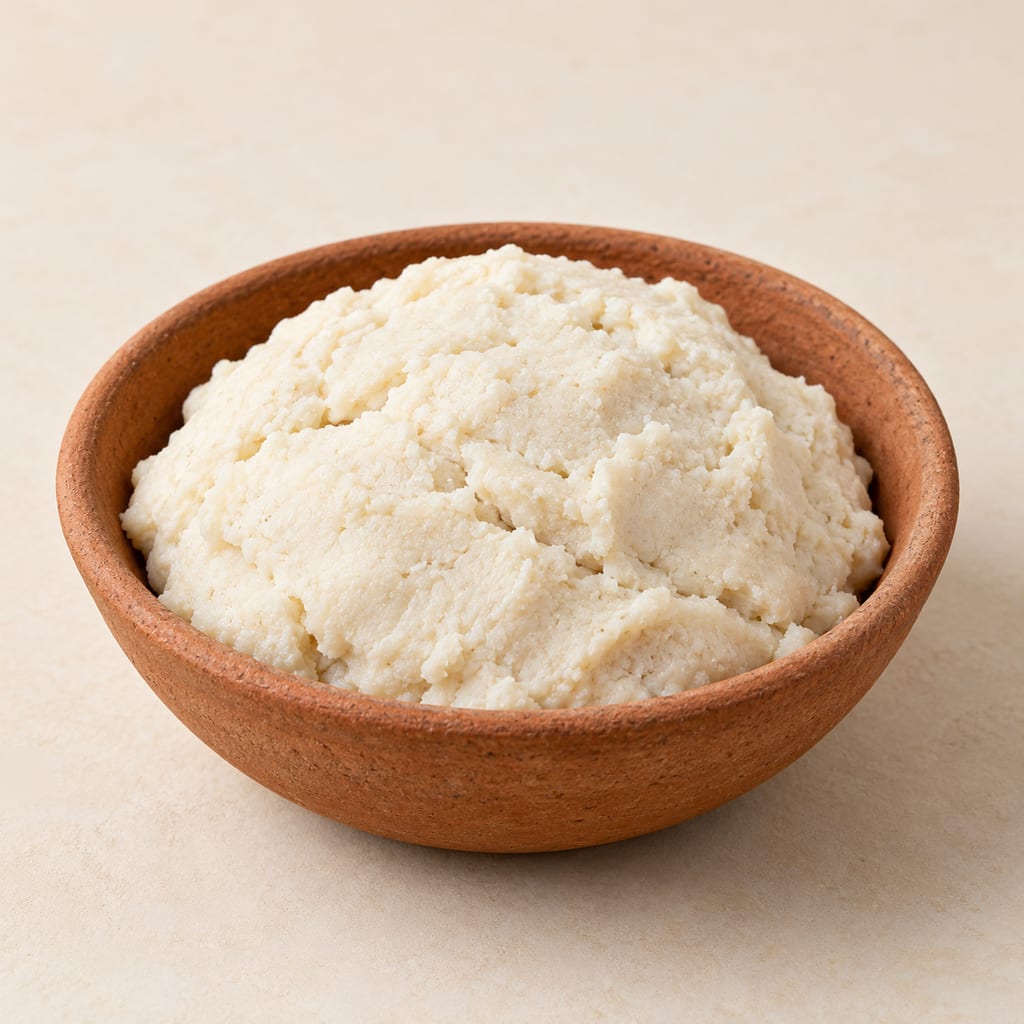
Ghanaian sour cassava dough fermented with traditional inoculum and drained during fermentation. It is used as a base for cooked foods such as banku and akple; process variants and safety outcomes differ.
No community contributions have been published for this entry yet.
Sign in to contribute. Published comments and photos are free to read.
Real Bread Campaign / SustainMethod · Ingredients · Timing · Geography
Lily McCann's Borodinsk-ishProvides a measured two-day home recipe with rye starter, roasted barley-malt scald, coriander, a 4-hour pre-ferment, 2–3-hour final fermentation and 2–3-hour tin proof.
Specifies a 1 kg tin, soft rye-heavy dough shaped using oiled clingfilm, 200°C fan oven for 40–45 minutes, cooling and a minimum 24-hour setting rest.
Describes the recipe as “Borodinsk-ish,” a home approximation inspired by Russian Borodinsky bread, not a universal or canonical formula.
Cited in: A source-specific Borodinsk-ish loaf
Real Bread Campaign / SustainHistory · Geography · Method context
Searching for the bread of BorodinoCalls Borodinsky a popular Russian black bread and says the origin legends are uncertain.
Reports that the earliest Borodinsky bread recipe the author found was dated 1933; describes the ingredient ratios and scalding method of GOST 5309-50 and notes later rules became less strict.
Cited in: A source-specific Borodinsk-ish loaf
Centers for Disease Control and PreventionSafety
Raw Flour and DoughRaw flour may carry germs; do not eat raw dough, bake it before eating and wash hands and food-contact surfaces after flour or dough handling.