
Salted Mushrooms
Salted mushrooms are a traditional wild-mushroom preserve, especially of Finnish and Russian milk caps, made by layering boiled mushrooms with coarse salt or keeping them under brine, and kept cold.
 FermenteaWhere food goes to change
Modern adaptation
Juoda ruginė duona · Lithuanian black rye bread · Lithuanian rye sourdough
A Lithuanian dark rye loaf made with an overnight rye preferment, caraway, honey and sugar, then proofed in a loaf pan and baked in two stages.
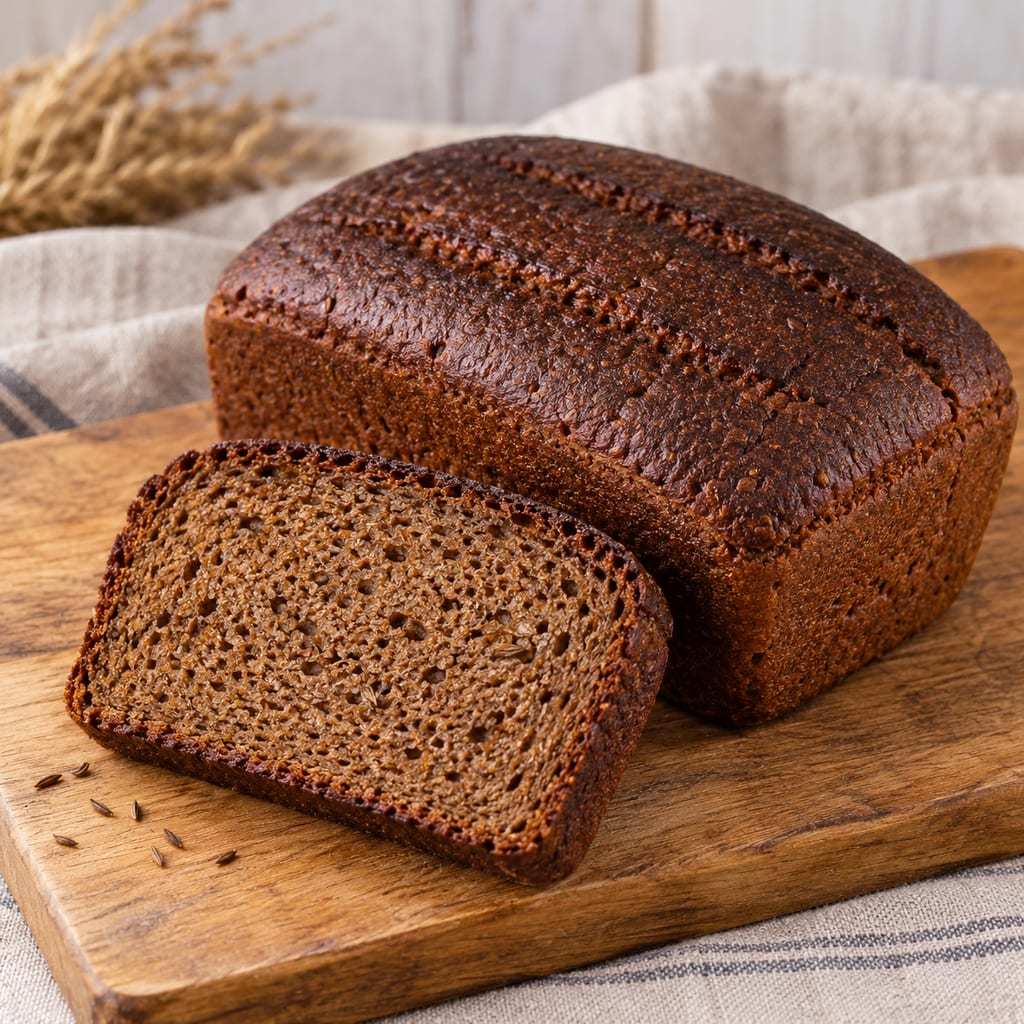
Malsena publishes this measured home formula as Lietuviška juoda duona. It uses an overnight rye preferment, then a short final mix and a pan proof. This record follows that plain-fermented dough; it does not add the boiling-water scald that defines Malsena’s separate plikyta recipe.
Malsena lists 100 g of water for the second-day dough, although the method text says one glass. Its published reply points readers to the half-glass, 100 g ingredient-list amount. The recipe follows that clarification rather than doubling the water.
Lithuania’s Ministry of Agriculture publication also records a traditional black rye loaf made with retained leaven, caraway and a long wood-fired bake. It gives a large hearth method and does not date the dish’s first appearance. That source is historical context, not a replacement for Malsena’s measured home formula.
The first mixture ferments for 12 hours, and the shaped loaf proofs for 3 hours at about 25°C. Because the inspected source calls the culture sourdough without identifying its organisms, this record does not assign a specific microbial fermentation type. Fermentation times belong to this formula and are not a safety test.
Do not taste the raw dough. Keep flour and dough away from ready-to-eat food, and wash hands, bowls, tools and counters after handling flour. Bake the loaf according to the two-stage oven schedule.
Malsena describes the formula as traditional Lithuanian black bread. A Lithuanian Ministry of Agriculture publication separately records traditional black bread made with a retained leaven, rye flour, caraway and a long bake in a wood-fired oven; it does not date the first attestation or establish that its hearth method is identical to this home formula.
Yield 1 loaf · Scaling: source batch only
Uncooked flour and dough can carry germs. Do not taste the dough before baking.
Hazard sourceKeep raw flour and dough away from ready-to-eat food, wash hands and surfaces after handling, and bake according to the source schedule.
Control sourceRye and wheat contain gluten.
Malsena’s recipe text says to add one glass of day-two water, but its ingredient list says half a glass (100 g); the publisher’s reply confirms the listed 100 g amount. This recipe follows the clarified ingredient list.
No storage duration is established here; the instruction to cool fully is not a storage-safety limit.
Malsena publishes this formula as Lithuanian black rye bread. No narrower place is identified.
Salted mushrooms are a traditional wild-mushroom preserve, especially of Finnish and Russian milk caps, made by layering boiled mushrooms with coarse salt or keeping them under brine, and kept cold.
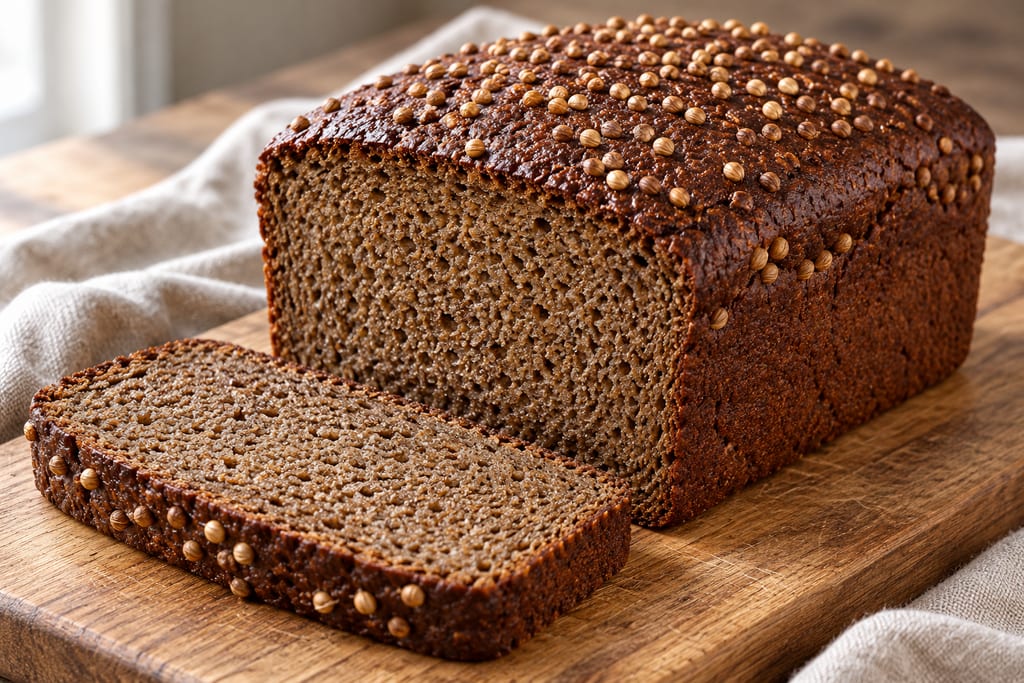
A dark rye sourdough with coriander and roasted barley-malt scald, based on Lily McCann's measured Borodinsk-ish home formula.
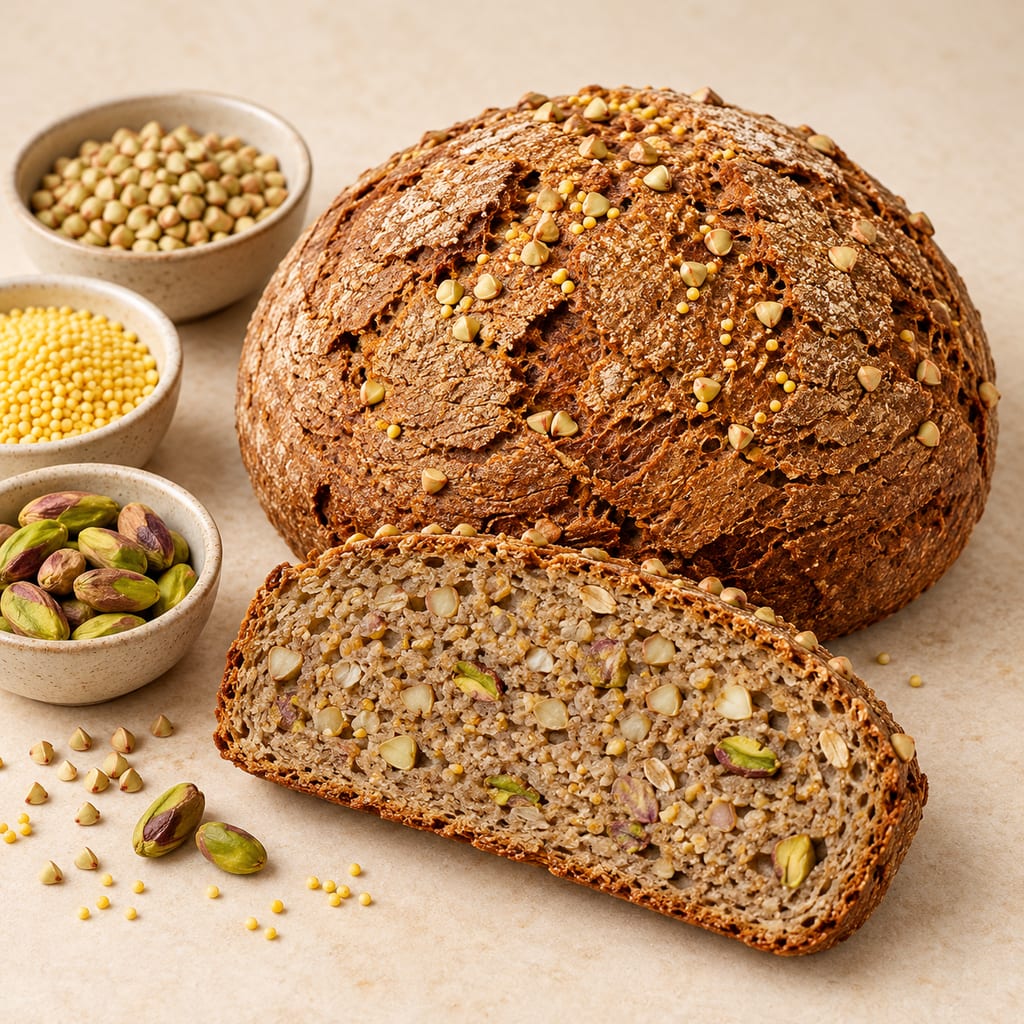
A gluten-free sourdough loaf of about 1 kg. A buckwheat and quinoa starter leavens a dough with cooked whole buckwheat groats, millet and a dark gluten-free bread mix, baked in a lidded pot.
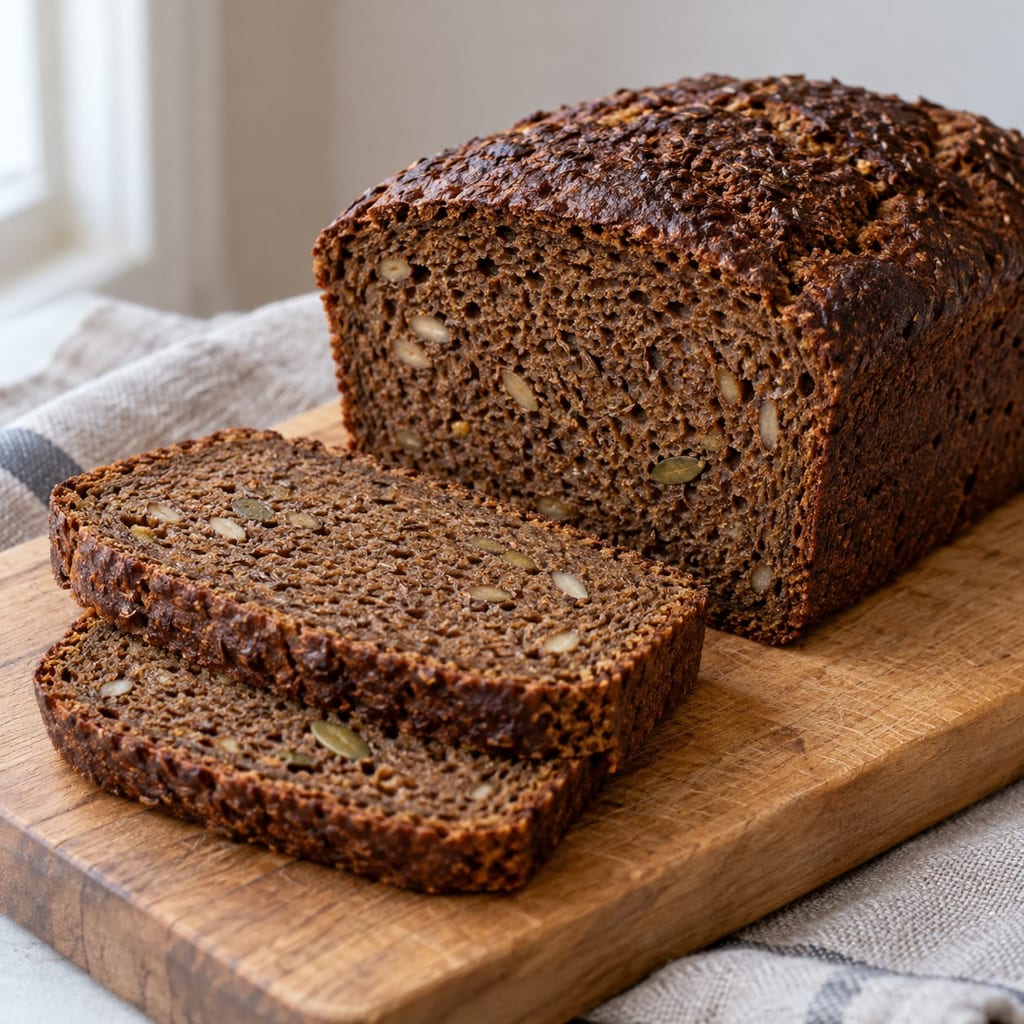
This Estonian rye loaf uses a sourdough preferment, a rye scald and soaked seeds, with a small amount of baker’s yeast. Two tins bake through a staged hot-to-moderate oven schedule.
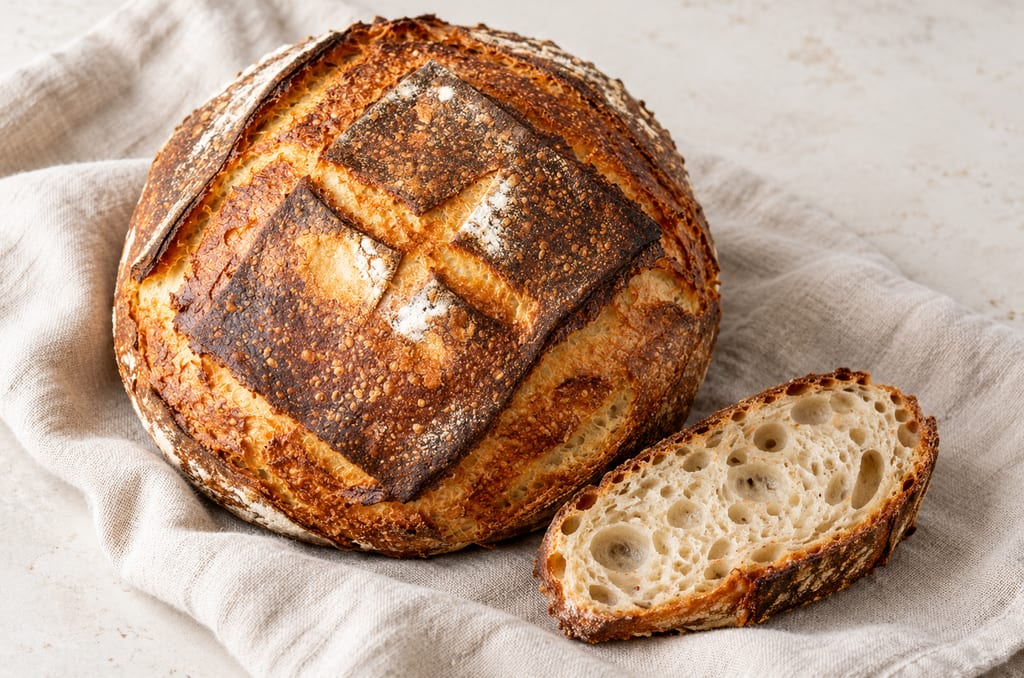
A ripe sourdough starter leavens this modern low-handling loaf. Three hourly folds organize the sticky dough before a long refrigerator rest, final proof and covered bake.
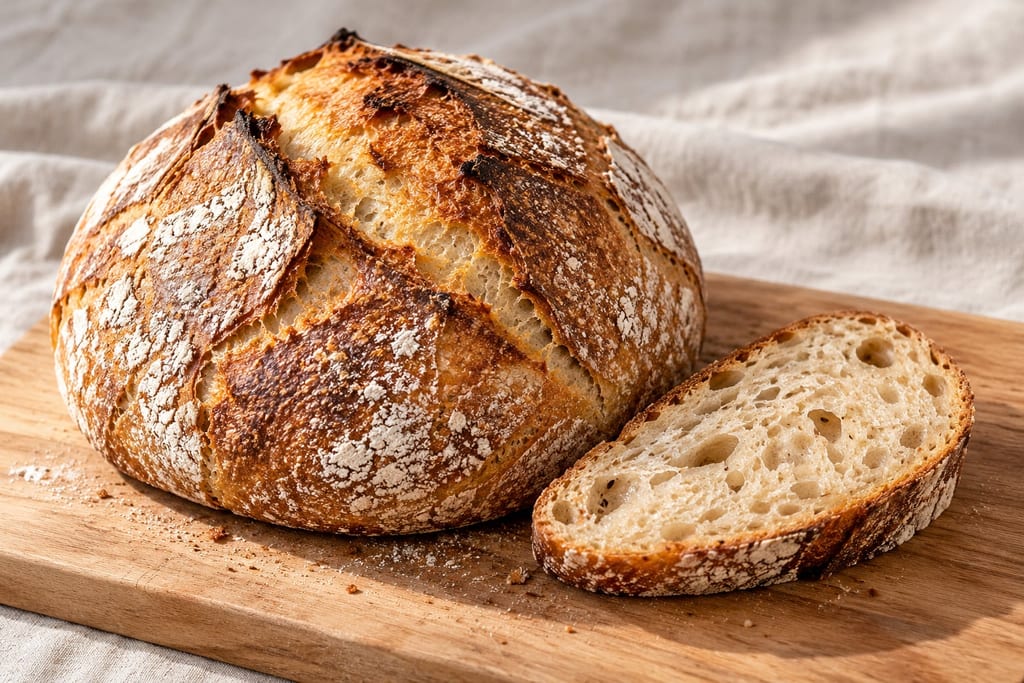
Two large French-style wheat loaves use unfed sourdough starter, whole-wheat flour, long room-temperature fermentation and a covered-pot bake.
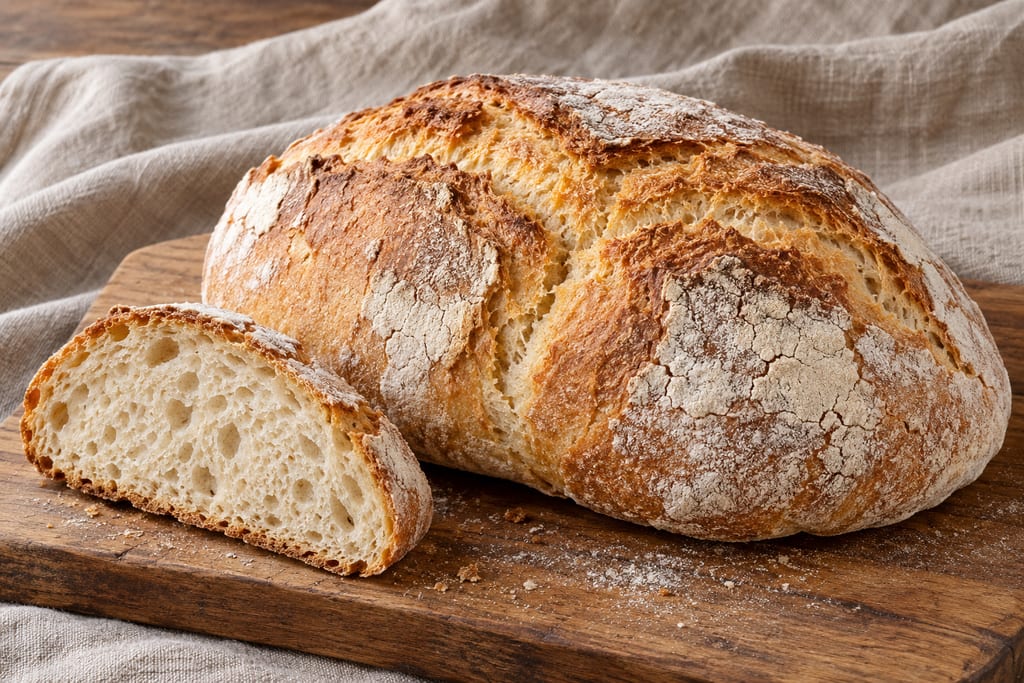
This home sourdough adaptation borrows Pan de Cea’s wheat-forward loaf and central fenda while using a domestic oven and a separately documented modern formula.
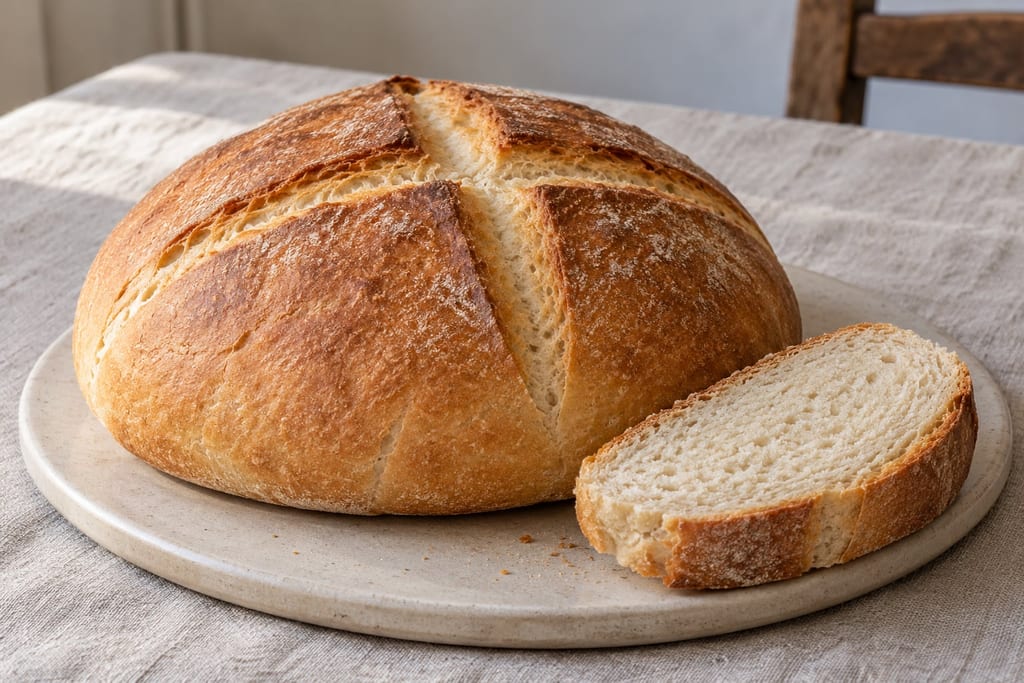
This household Pan de Cruz adaptation uses sourdough and a folded, tight-crumb wheat dough, marked with a cross and baked in a home oven.
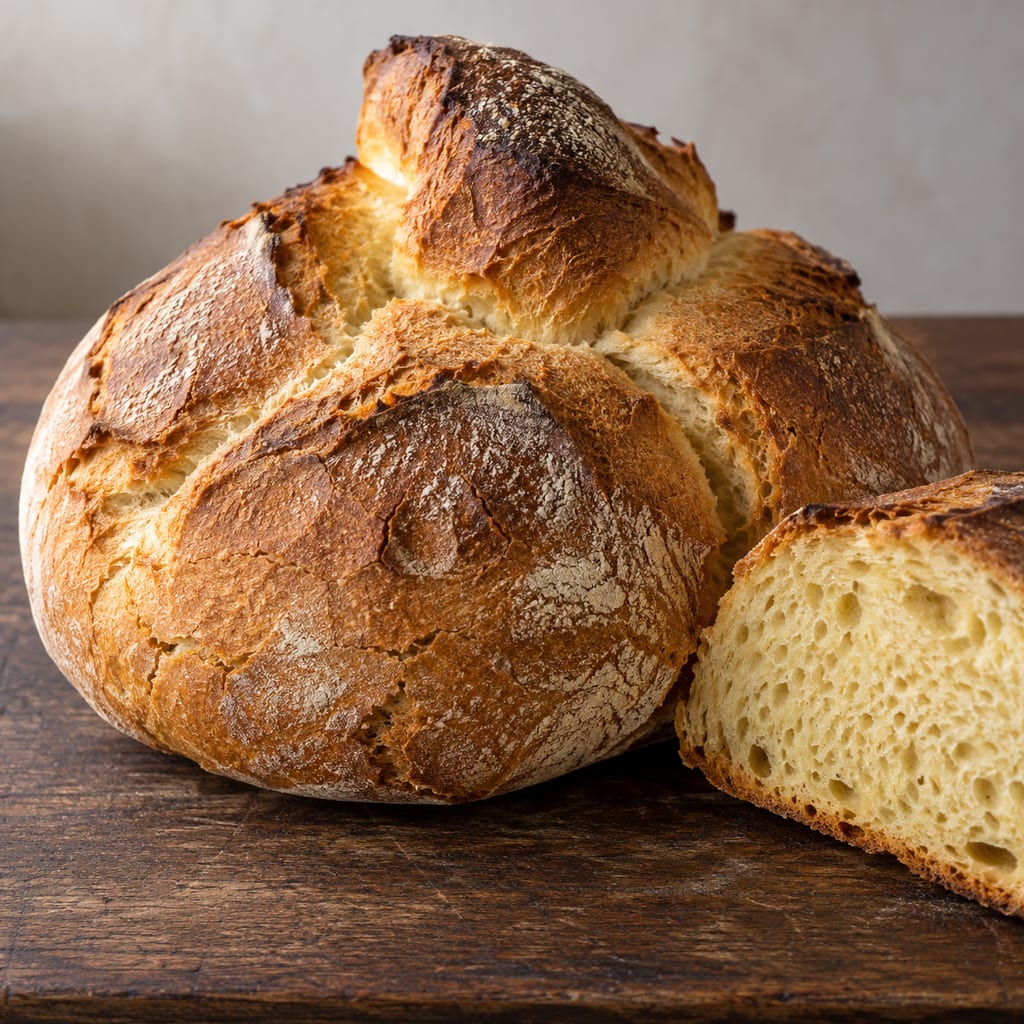
A protected durum-wheat sourdough bread documented by a commercial production specification. The official 100 kg batch and oven process are recorded without inventing a household scale.
No community contributions have been published for this entry yet.
Sign in to contribute. Published comments and photos are free to read.
MalsenaIdentity · Ingredients · Method · Geography
Lietuviška juoda duonaThe publisher identifies the recipe as Lithuanian black rye bread and gives the measured day-one and day-two ingredients, a 12-hour preferment, mixing and pan shaping, a 3-hour proof at about 25°C, and a 250°C/200°C bake.
The ingredient list specifies 100 g warm water for day two; the method prose says one glass, while the publisher’s reply says the ingredient list gives the amount. The recipe uses the listed 100 g.
Malsena’s clarification says the day-one mixture makes 500 g, of which 400 g is used in the bread and 100 g can be saved for the next bake.
A rye malt tablespoon is optional for colour. The source describes the bread as traditional but does not give a first-attestation date.
In a published reply, Malsena suggests using a bread thermometer for a precise bake check and says baked bread should be about 90°C. This is recorded as the publisher's doneness guidance, not a general validated safety limit.
Cited in: A home loaf of Lithuanian black rye; Fermentation and timing
Ministry of Agriculture of the Republic of LithuaniaHistory · Geography · Variation
National HeritageThe publication includes a Lithuanian traditional black bread recipe credited to Vita Stankevičienė. It gives 5 kg rye flour, 2.5 L water, salt, sugar and caraway, uses retained leaven, describes a 12-hour ferment and a 2–2.5-hour wood-fired oven bake. It does not date the first attestation or show that this hearth formula is identical to Malsena’s home method.
Cited in: Traditional bread and this home method
Centers for Disease Control and PreventionFood safety
Raw Flour and DoughUncooked flour and raw dough can contain germs. Do not taste raw dough; keep raw flour away from ready-to-eat foods and wash hands, bowls, utensils and surfaces after handling it.
Cited in: Handle raw dough safely