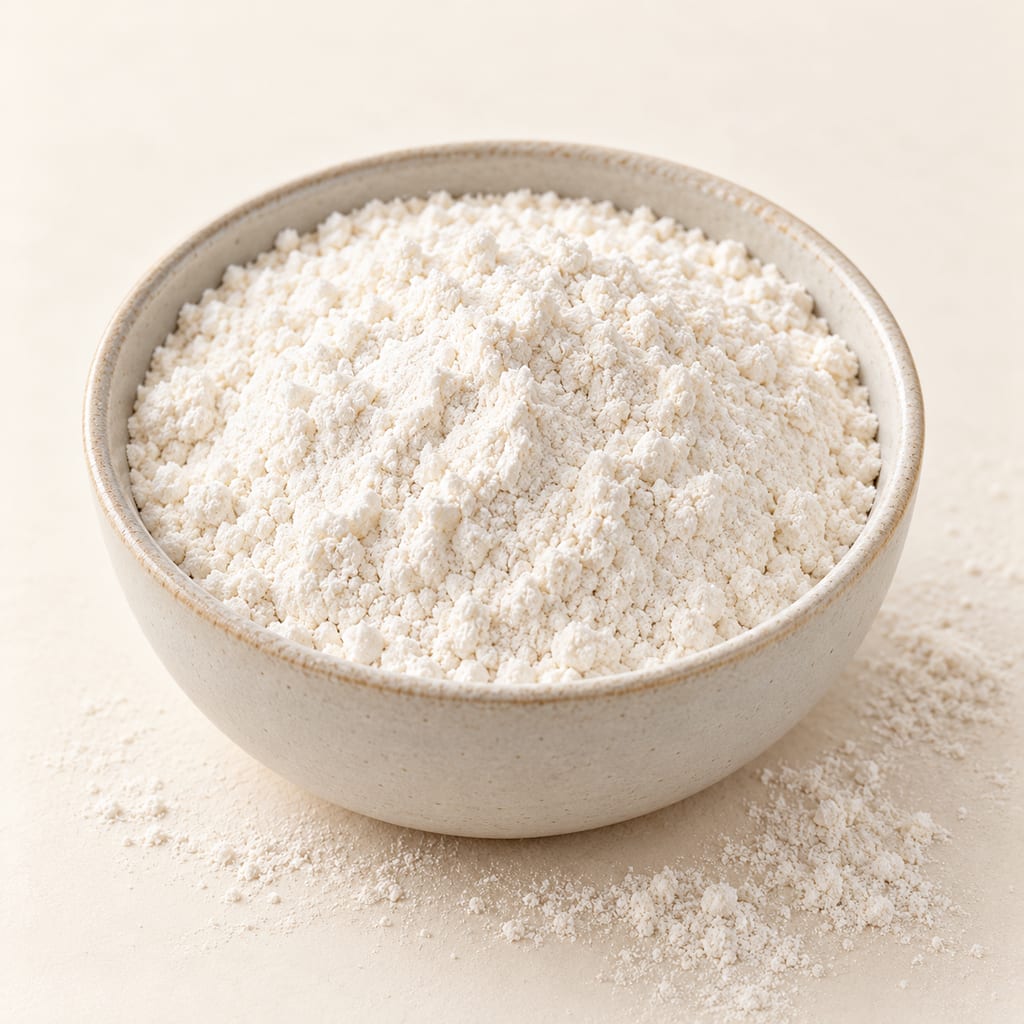
Bread flour
Bread flour is wheat flour chosen for dough strength and gas retention. Its protein level and baking performance vary by wheat, mill and product.
 FermenteaWhere food goes to change
Modern method
No-Knead Sourdough Bread
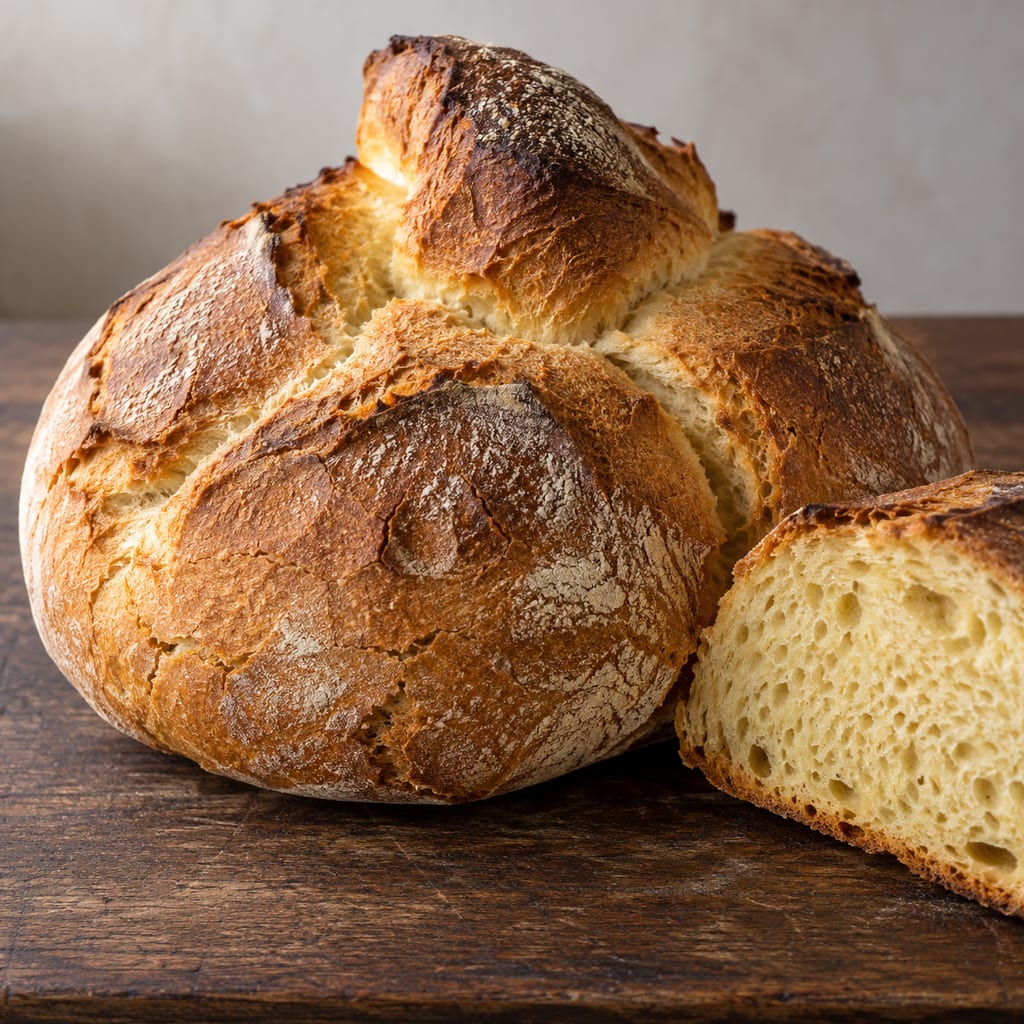
A ripe sourdough starter leavens this modern low-handling loaf. Three hourly folds organize the sticky dough before a long refrigerator rest, final proof and covered bake.
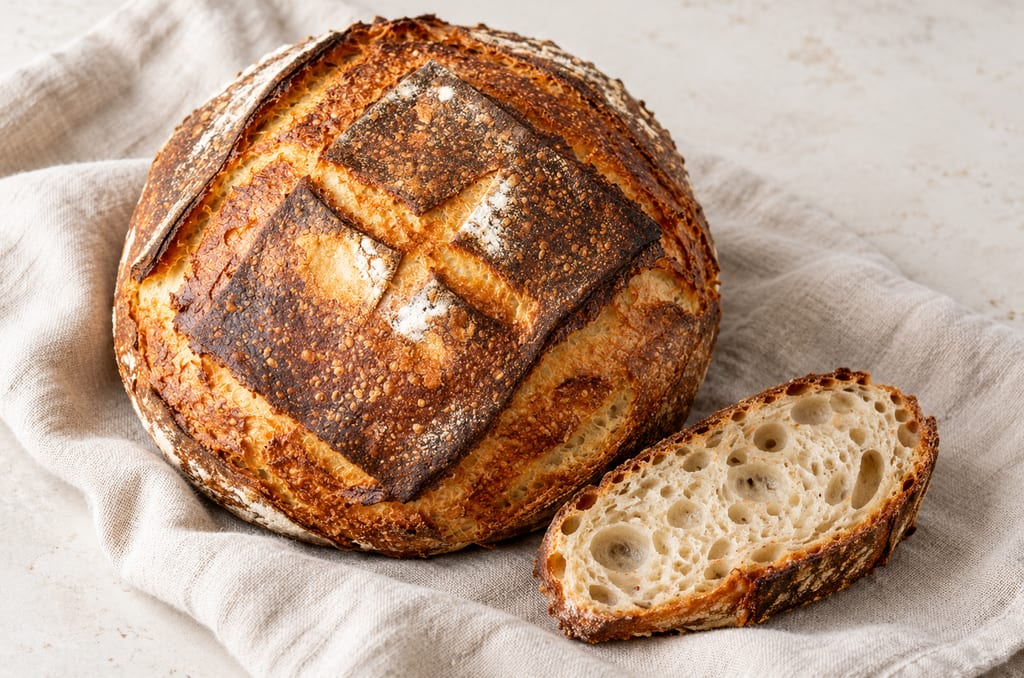
No-knead sourdough is a method for making a naturally leavened wheat loaf with a short mix and little hands-on dough development. This King Arthur formula yields one large loaf from ripe sourdough starter, water, bread flour and salt, with optional diastatic malt. The dough begins rough and sticky. Three rounds of gentle folds during the first rise help organize it; a long refrigerator rest follows, then shaping, a room-temperature proof and a covered bake. The resulting style is described by its publisher as crusty and chewy, with a robust sourdough flavour and a golden crust. It is a practical home-baking schedule rather than a universal definition of sourdough or a traditional regional bread.
The label “no-knead” describes how the dough is handled, not an absence of structure-building. Instead of sustained kneading, this formula combines a short initial mix with repeated folds and time. It also asks the baker to shape the dough and score it before baking. A loaf made this way is not dough that has been left entirely untouched: folds, shaping and scoring are purposeful operations, each doing a different job.
It is useful to distinguish “no-knead” from “no-fermentation.” A quick bread depends mainly on chemical leaveners and goes from mixing to baking within a short preparation window; this loaf depends on an active culture and a multi-stage rise. Nor does the name mean that the baker avoids touching dough: folds and shaping remain essential. The method reduces intensive mixing and shifts more work into elapsed time, making planning the central skill.
Long fermentation and low-intervention bread methods are older than the modern phrase “no-knead.” One widely influential contemporary version reached a broad home-baking audience in 2006, when Mark Bittman wrote about Jim Lahey's method at Sullivan Street Bakery in Manhattan. That dough used a small quantity of commercial yeast and a long rise before a covered-pot bake. The account presented the approach as a way to make a crusty loaf at home with little manipulation; it does not establish that Lahey invented every form of bread made without kneading.
The loaf here belongs to a later branch of that home-baking conversation. King Arthur Baking's 2020 article by Maurizio Leo described its no-knead sourdough approach, relying on an active starter rather than added commercial yeast. Its formula is distinct from the 2006 yeast loaf: it uses a larger bread-flour dough, three early folds, a refrigerator rest that can run from 8 to 48 hours, and an extended final proof. The historical connection is a shared hands-off idea and covered-bake style, not a claim that the ingredients or schedules are interchangeable.
Sourdough starter is a living flour-and-water culture in which yeasts and lactic acid bacteria grow together. The exact community differs among starters and conditions, so this recipe does not justify naming one species as the organism responsible for the loaf. Yeasts make carbon dioxide as they metabolize available sugars; the gas inflates the dough's existing pockets. Lactic acid bacteria acidify the mixture and contribute aroma and flavour compounds. Some sourdough bacteria also produce gas, but their contribution varies with the community and process.
Fermentation and dough strengthening are related but separate. Gas production gives the dough volume only if its structure can retain bubbles. Fermentation also changes acidity and flavour over time. The baker's folds are a physical intervention: they stretch and layer the dough, redistribute its temperature and fermentation products, and help it become more cohesive without a long kneading session. In the oven, heat expands trapped gas and water vapour before the crumb sets. The organisms do not keep fermenting indefinitely; baking turns a flexible, aerated dough into a stable loaf.
Ripe, fed starter supplies the leavening culture and carries flour, water, acidity and flavour into the dough. It needs to be active enough to raise bread; the sourdough guide describes a ripe starter as vigorous and bubbly. Starter maturity and composition affect timing, so the schedule is best understood as a source-specific home formula rather than a promise that every culture will peak at exactly the same moment.
Bread flour supplies starch for fermentation and baking, plus wheat proteins that form gluten when hydrated. Gluten is the elastic network that stretches around gas cells. The flour's strength is useful for a wet dough expected to hold a large loaf shape through a long fermentation and proof. Water hydrates those proteins, lets the flour absorb and swell, and makes the dough workable enough for folds. A different flour absorbs water differently, so substituting a whole-grain or lower-protein flour without changing the formula can alter stickiness and loaf volume; this page does not supply a tested substitution ratio.
Salt contributes savoury flavour and moderates fermentation. It is not just a finishing seasoning: its presence influences how quickly the culture consumes available sugars and how the dough behaves. Table salt is the form used in the formula, at 18 g for this batch. The optional 2 teaspoons of diastatic malt powder are included for a more golden colour and stronger rise in the published recipe. Diastatic malt contains active enzymes that help make flour starch available as fermentable sugars; its effect depends on flour and formula. Because the recipe labels it optional, omitting it leaves the core flour-water-starter-salt loaf intact, though colour and rise may differ.
Mix the ingredients until no dry flour remains and the dough is rough and sticky. This first mix wets the flour and begins gluten development; smoothness is not the goal yet. Covering the bowl keeps the surface from drying while the dough rests. The formula's first one-hour rise gives the flour time to hydrate and the starter time to ferment.
After the first hour, fold the dough over itself several times, cover it, and repeat the one-hour rise. Perform the same cycle once more, including a final fold at the end of the third hour. Each fold adds organization to a dough that would otherwise be handled very little. The method avoids demanding a perfectly developed dough at mixing; gradual hydration, fermentation and repeated gentle stretching do some of the work over time.
The covered refrigerator rest lasts at least 8 hours and may extend to 48. Cold slows microbial activity but does not stop it, so dough continues to change more slowly while its schedule becomes easier to manage. The cold rest also firms the dough for handling. The source's minimum and maximum are practical bounds for this formula, not general sourdough safety limits or guarantees that any starter and refrigerator will produce identical proofing behaviour.
When ready to bake, turn the cold dough onto a floured surface, gather it into a rough ball and leave it covered seam-up for 15 minutes. This short bench rest relaxes the dough after handling. Shape it into a round or long loaf to fit a lidded baker; grease the baker, dust it with semolina, or use parchment as the recipe allows. Proof the shaped dough at room temperature for about 2½ to 3 hours. The publisher notes that it may relax and expand without rising dramatically upward, so the dough's height alone is not a precise clock.
Heat the oven to 500°F (260°C) with the rack in the middle, beginning about an hour before baking. Scoring the surface immediately before the loaf goes in gives expanding dough a controlled place to open. A round loaf can take a crosshatch or crisscross cut; a long loaf can take a lengthwise slash. The cut should be clean enough to guide expansion rather than tear the loaf irregularly.
Start the loaf covered, reduce the oven to 450°F (232°C), and bake for 45 minutes. A lid traps moisture released from the dough, creating a humid environment around the surface during the early bake. That delays the crust from setting too soon and supports expansion. Removing the lid for another 10 to 15 minutes exposes the crust to drier oven air so it can brown and become firm. The source gives a deep-golden finish and a centre temperature of at least 210°F (99°C) as its endpoint; these are instructions for this bread formula, not a substitute for its full bake sequence.
Move the baked loaf to a rack and cool it completely before slicing. Cooling allows the hot, moist crumb to finish setting as steam escapes. Cutting too early can compress a soft interior and make a properly baked loaf seem gummy. The crust will soften as it stands in a closed package; the source recommends wrapping leftovers at room temperature for several days or freezing them for longer storage.
No-knead is a family of low-handling approaches rather than a single standardized recipe. The 2006 Lahey-Bittman dough used commercial yeast, a long room-temperature rise and a covered pot. This 2020 King Arthur formula uses sourdough starter, folds in the first three hours, a refrigerated rest, and a separate final proof. A baker should follow one complete formula rather than combine the yeast quantity, hydration, temperatures or timetable from one version with the starter-based steps of another.
Even within the sourdough formula, the same loaf can take a round or long shape, and the recipe offers a lidded baker or Dutch oven, with parchment as an alternative way to support the dough. These choices affect handling and the silhouette of the finished bread; they do not turn the method into a distinct regional style. The evidence supports describing it as a modern United States-published home method. It does not support assigning the bread an older national origin or treating it as a historic regional staple.
A large, crusty loaf suits table service: tear or slice it alongside soup, stew, cheese or a meal with juices to mop up. Toasted slices can carry butter, preserves or savoury toppings; the mild-to-tangy profile also works as a sturdy sandwich bread. These are ordinary uses of a finished wheat loaf, not culturally specific ceremonial uses documented for this particular formula.
Crust thickness, crumb openness and sourness vary with starter activity, dough temperature, flour, shaping and proofing. A longer, colder fermentation can shift flavour toward sharper acidity, though the effect is culture- and process-dependent. A loaf that spreads may reflect weak dough organization, overproofing, or a shape that was not supported during the final rise; a dense crumb can follow from underfermentation or a starter that lacked strength. These are practical clues rather than definitive diagnoses. The recipe provides a broad cold-rest window and a proof-time range, so the baker must use the schedule together with the dough's condition rather than treating time alone as proof of readiness.
Do not taste this dough before baking. Raw flour can carry harmful germs, and fermentation does not make uncooked dough safe. Keep it away from ready-to-eat food, wash hands after handling it, and clean bowls, utensils and work surfaces that touched raw flour. Bake the loaf through according to the recipe and its stated endpoint. Smell, bubbles and a rising dough tell a baker about activity and handling; none of them establishes microbiological safety.
No-knead sourdough is a modern home-baking method. The 2006 Lahey-Bittman yeast loaf at Sullivan Street Bakery helped bring a low-handling, long-rise approach to a broad home audience. King Arthur Baking published this distinct starter-leavened version in 2020, using several folds and a long cold rest. The shared approach does not make the two formulas interchangeable.
Yield 1 large loaf · Scaling: source batch only
Raw flour may carry E. coli or Salmonella before baking.
Hazard sourceDo not eat raw dough; bake it and wash hands, bowls, utensils and counters after raw flour contact.
Control sourceRaw flour can carry harmful germs. Do not eat the dough before baking; wash hands, tools and work surfaces after handling it.
A modern US-published home method; no traditional regional origin is claimed.
Bread flour is wheat flour chosen for dough strength and gas retention. Its protein level and baking performance vary by wheat, mill and product.
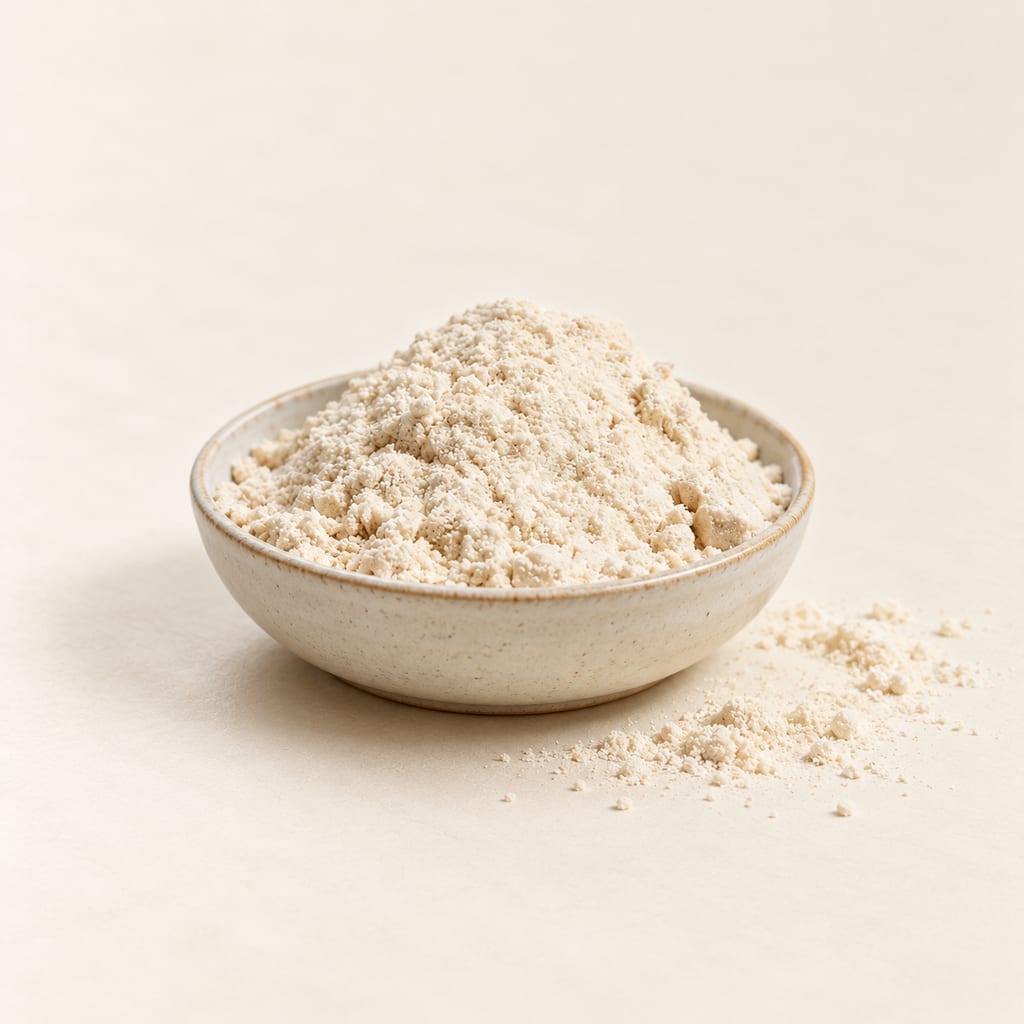
Diastatic malt powder is milled sprouted grain with active starch-converting enzymes. Bakers use it in small, formula-specific amounts to influence fermentation and crust browning.
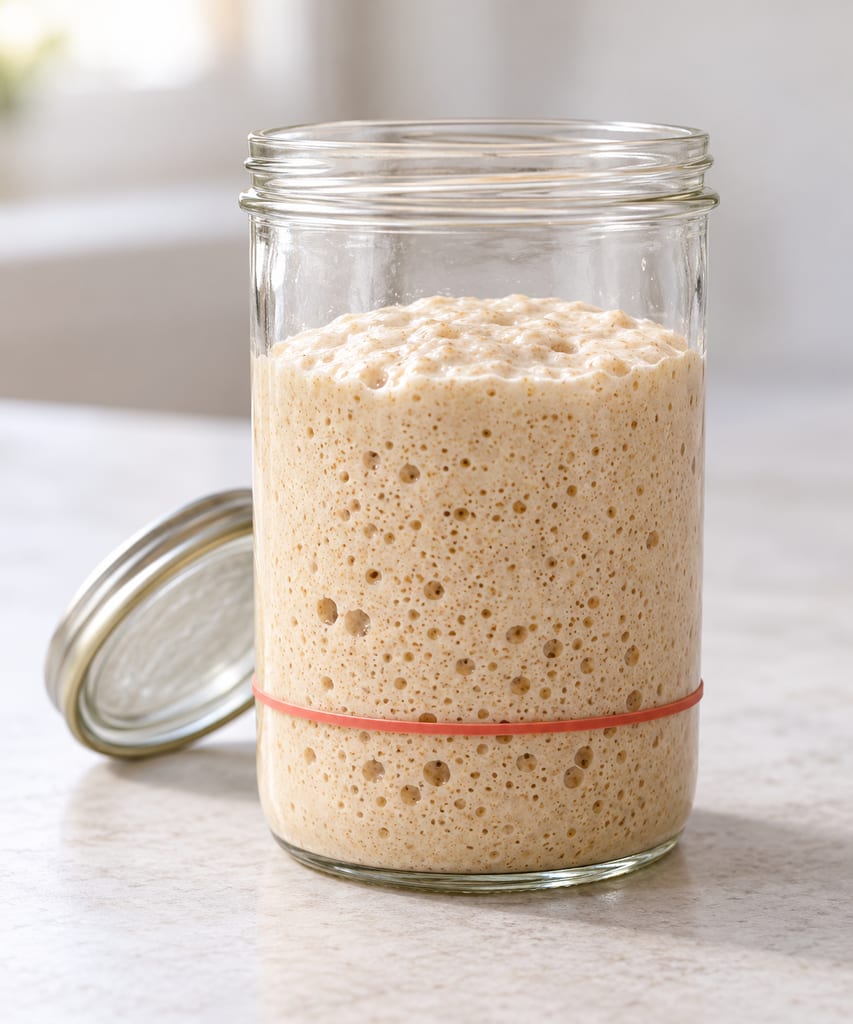
A flour-and-water starter begins with whole-wheat flour, then receives regular all-purpose flour feeds. Once established, this living culture can raise bread dough.
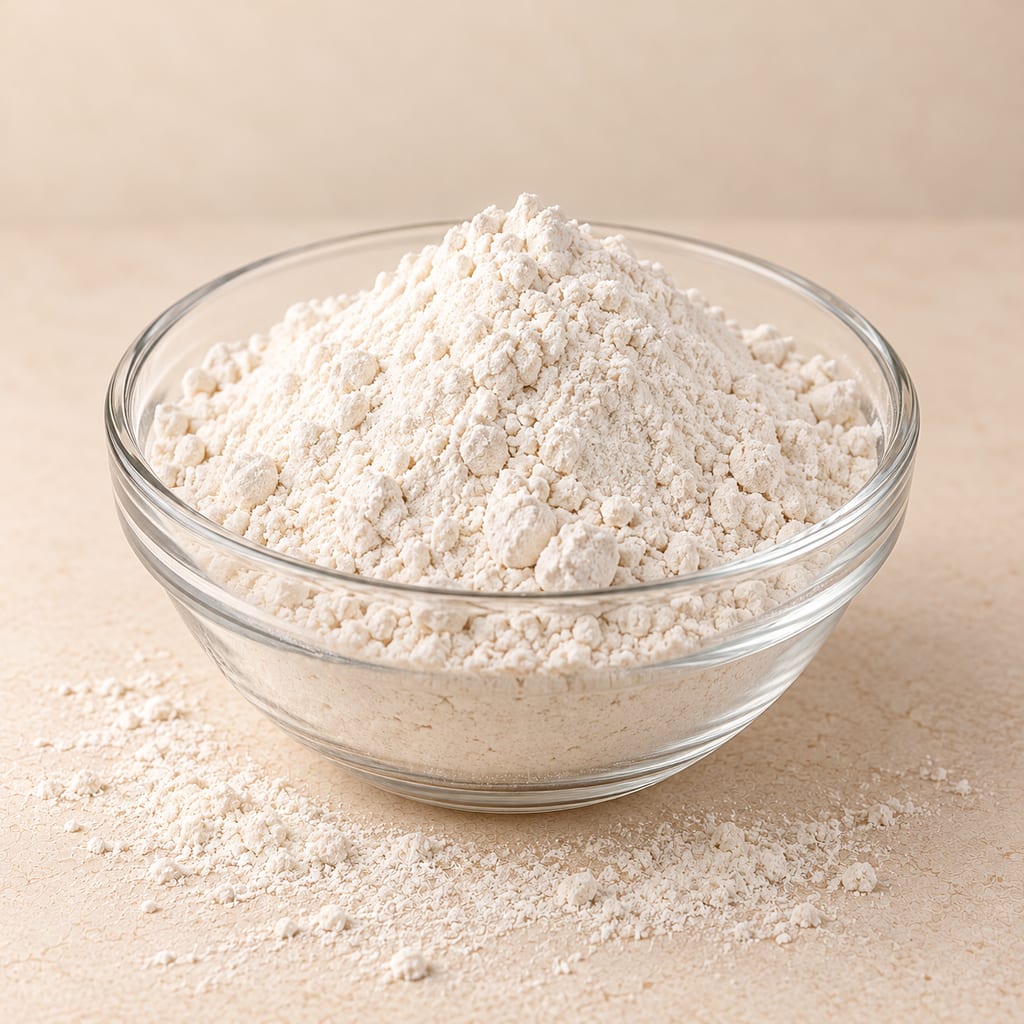
Wheat flour is milled wheat grain, from whole meal to fine white flour, used to make bread, thicken liquids and appear as an optional ingredient in fruit pastes such as Georgian mulberry tklapi.
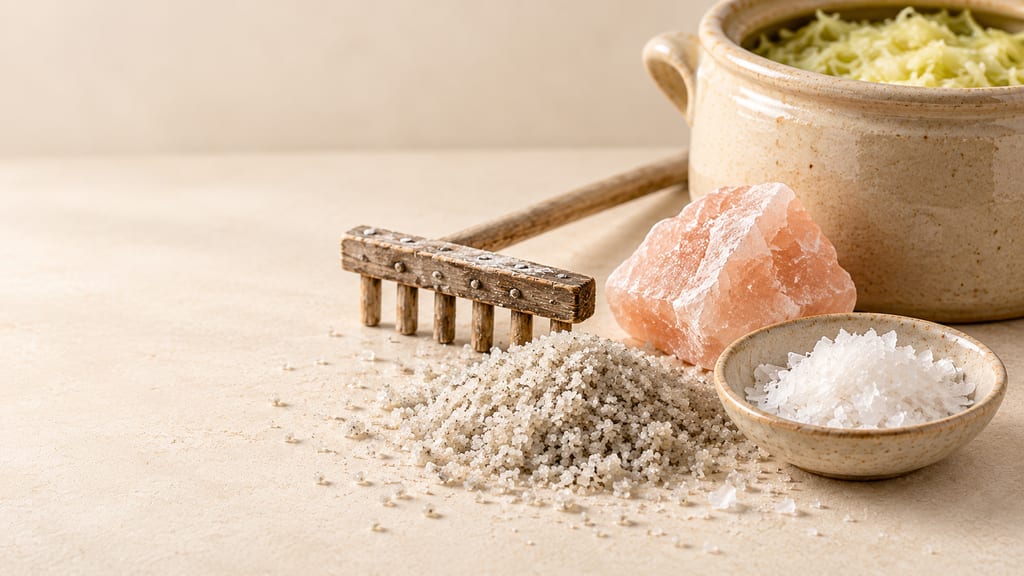
Salt seasons a meal, shapes fermentation and preserves food. Its history follows the people who mine, harvest, trade and transform it, and the choices hidden inside an ordinary packet.
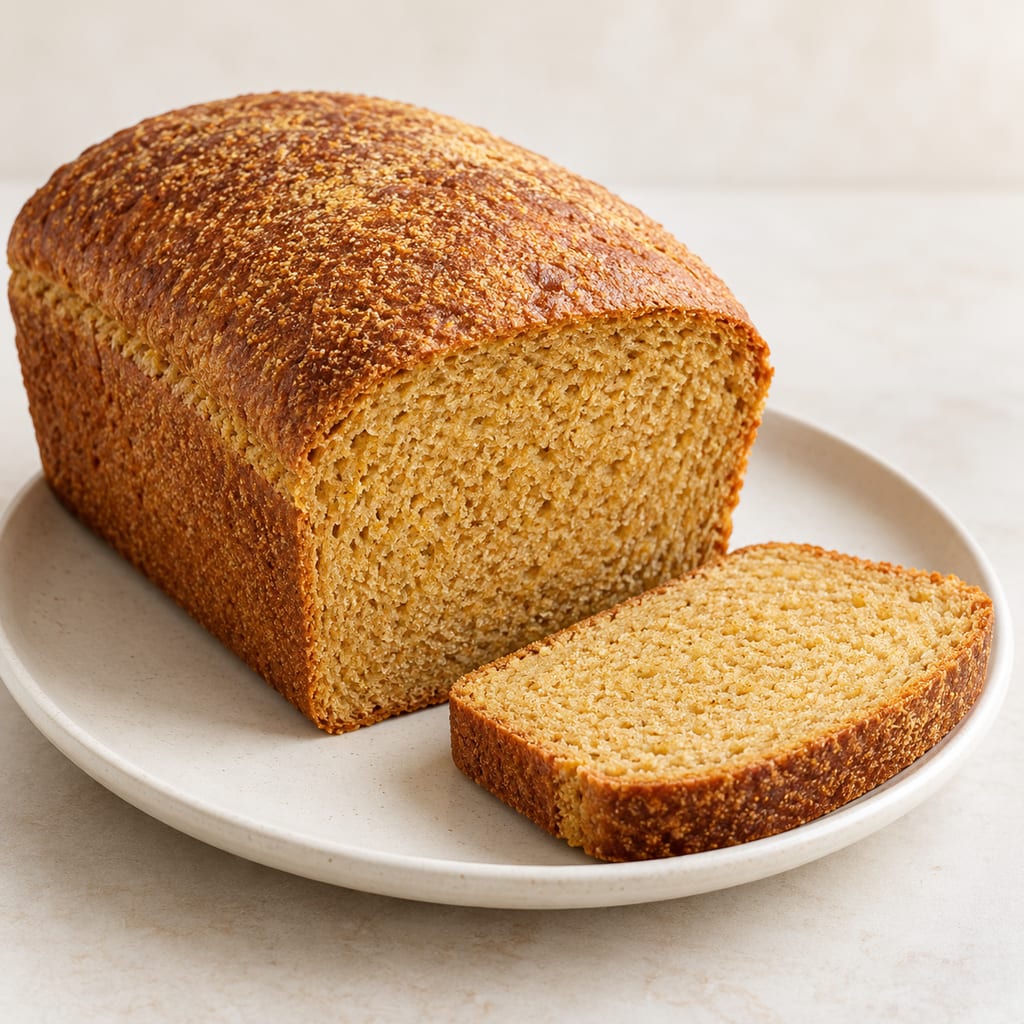
Anadama is a New England yeast loaf made with wheat flour, cornmeal and molasses. Scalded cornmeal enriches the dough, while molasses lends sweetness and a dark crust; it is especially good toasted or beside soup and baked beans.

A yeast-raised wheat ring shaped from a firm dough, briefly boiled and baked. This source-batch formula gives a gently malted crust and a chewy crumb.
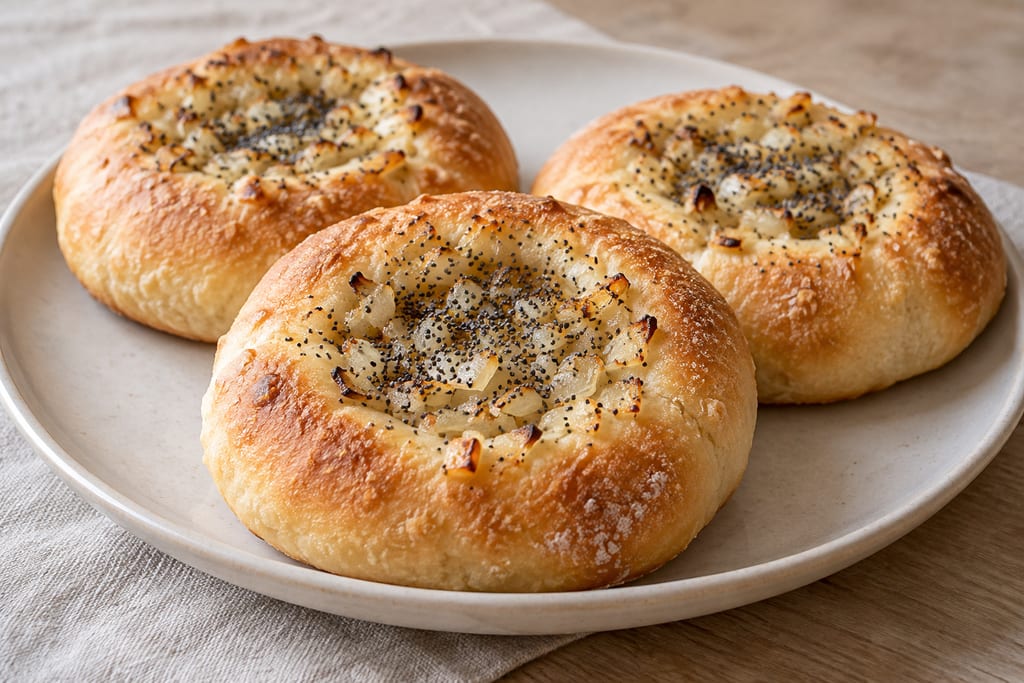
Bialys are soft, yeasted wheat rolls baked without boiling, each shaped with an onion-filled central depression instead of a hole.
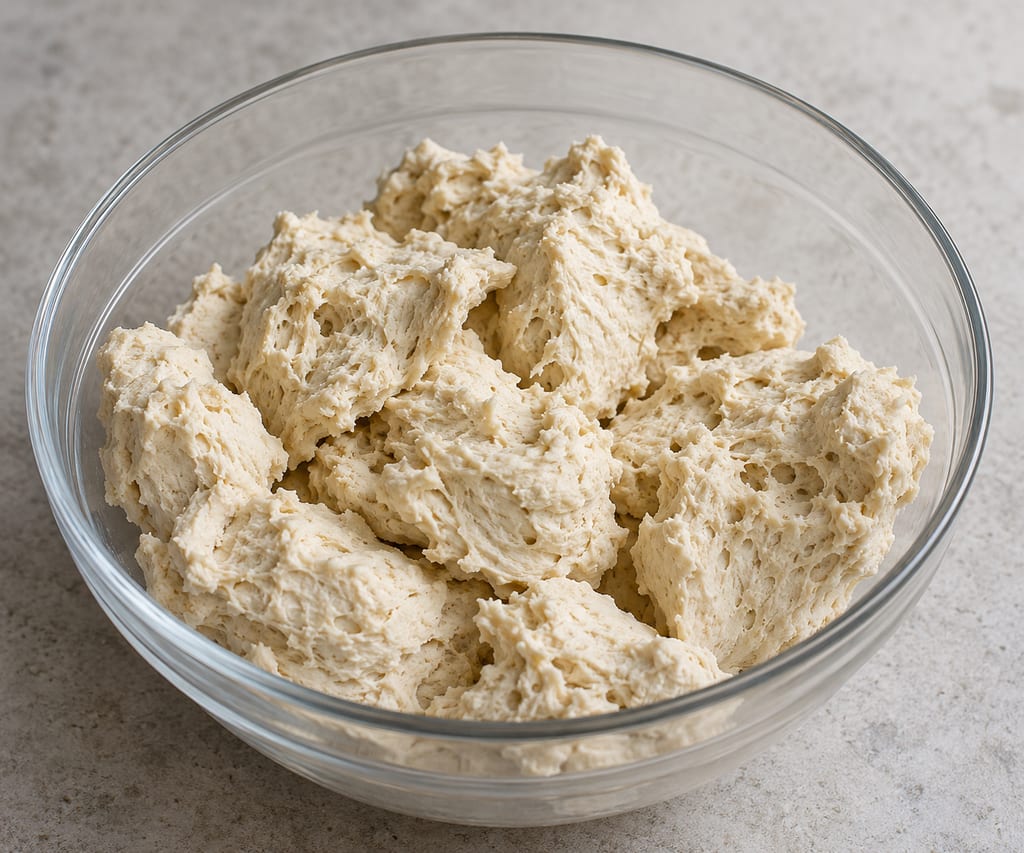
Biga is an Italian bread preferment of flour, water and a little yeast, usually a stiff unsalted mass of about 45 per cent water, fermented ahead and then mixed into the final dough.
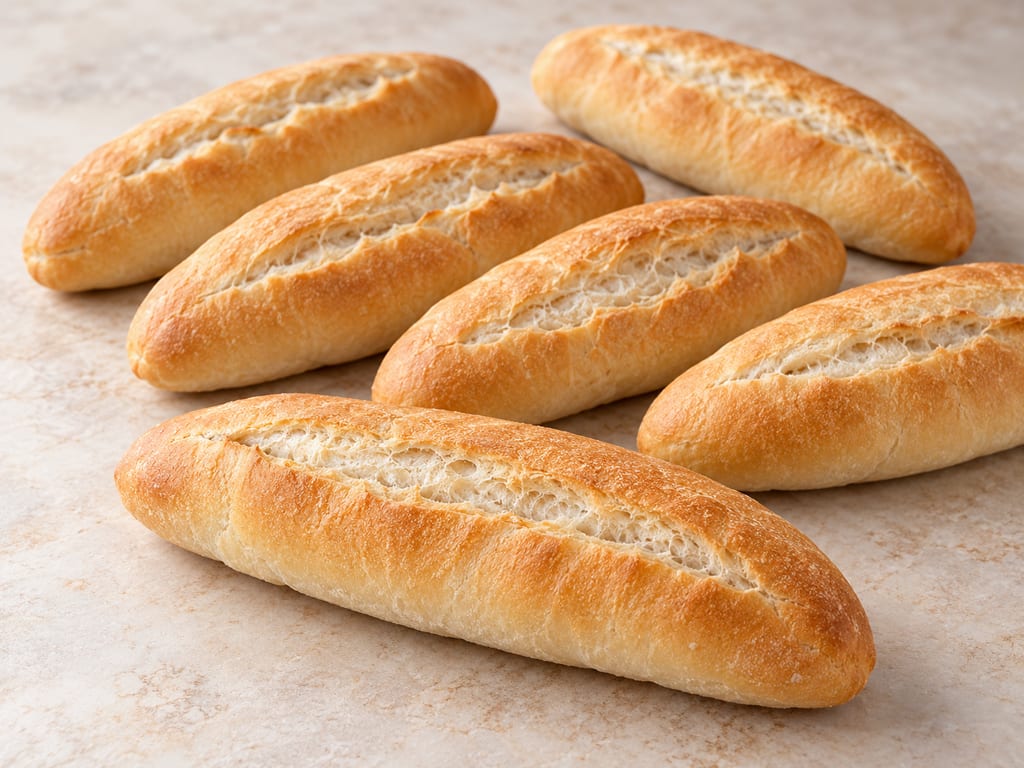
Six yeast rolls for Cuban sandwiches, shaped into long tapered loaves and slashed down the center.
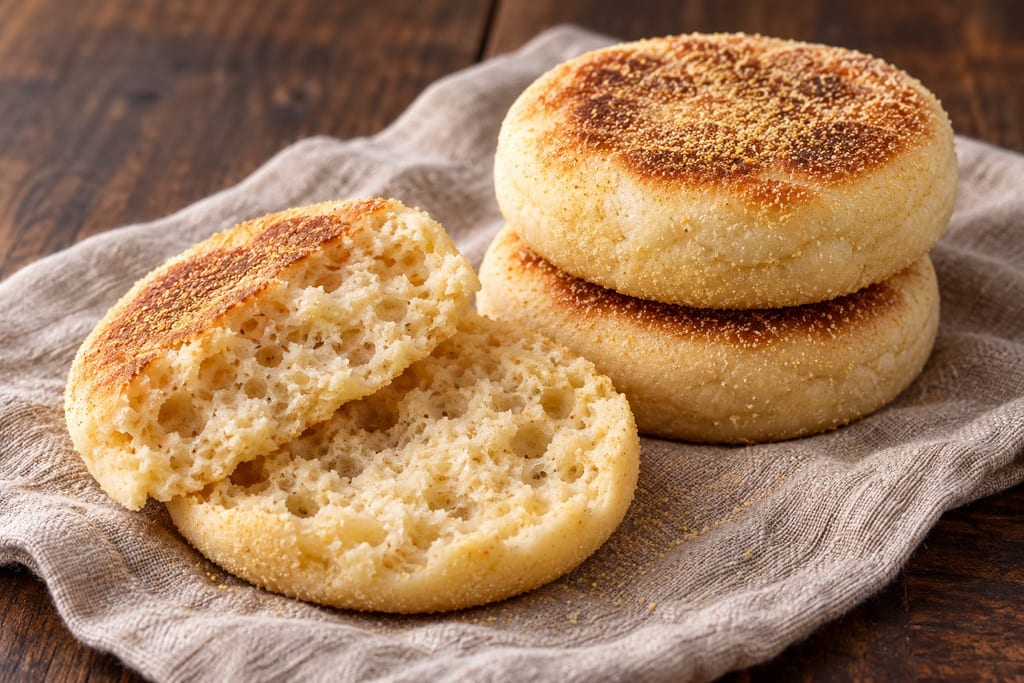
King Arthur’s six-piece English muffin batch uses a yeast preferment, two folds and a skillet or electric griddle; it is distinct from the sourdough-and-yeast version already catalogued.
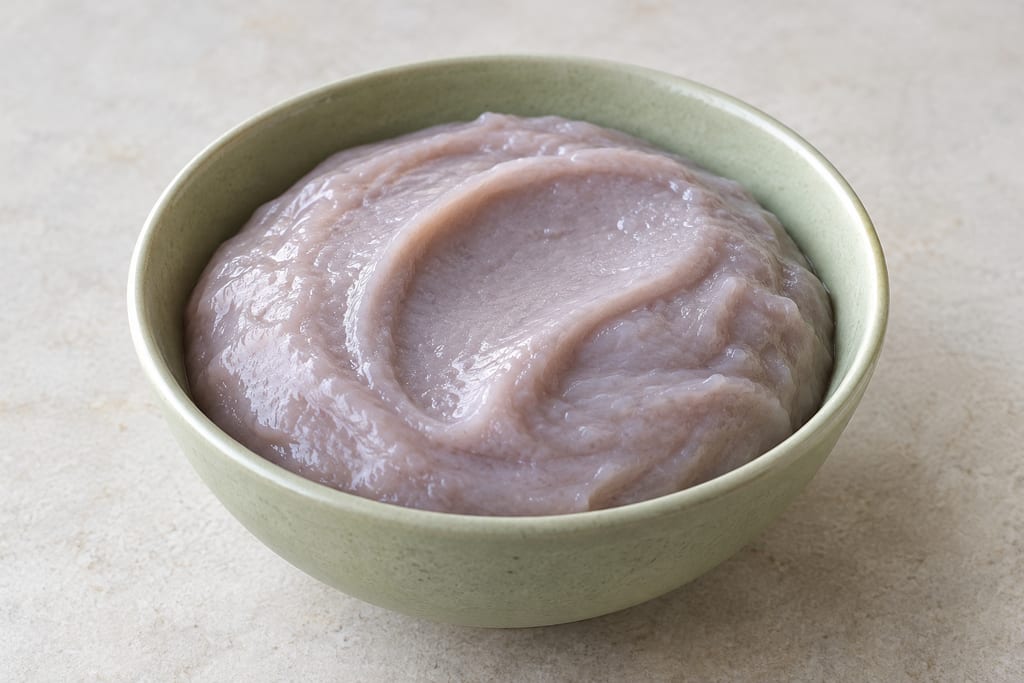
This modern introductory batch boils 500 g edible taro, then pounds it with water into fresh poi. It stops before fermentation and makes no preservation claim.
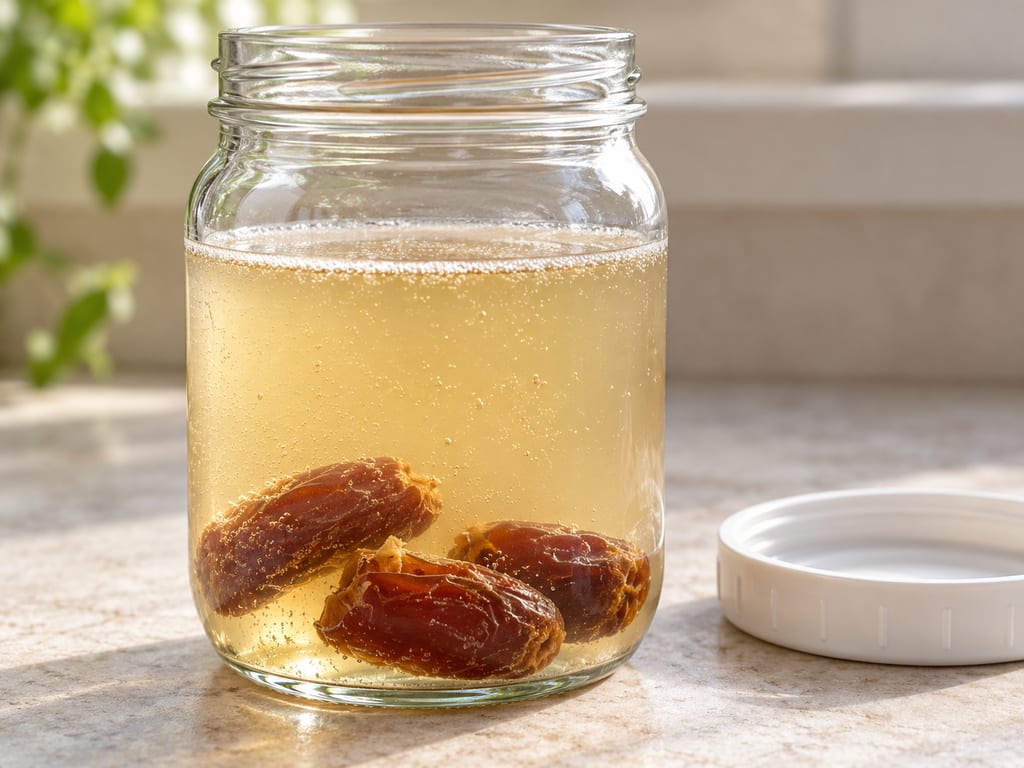
Fruit yeast water is a spontaneously fermented liquid made by soaking fruit in water, with or without sugar, to grow yeast for starting bread dough or a separate flour starter.
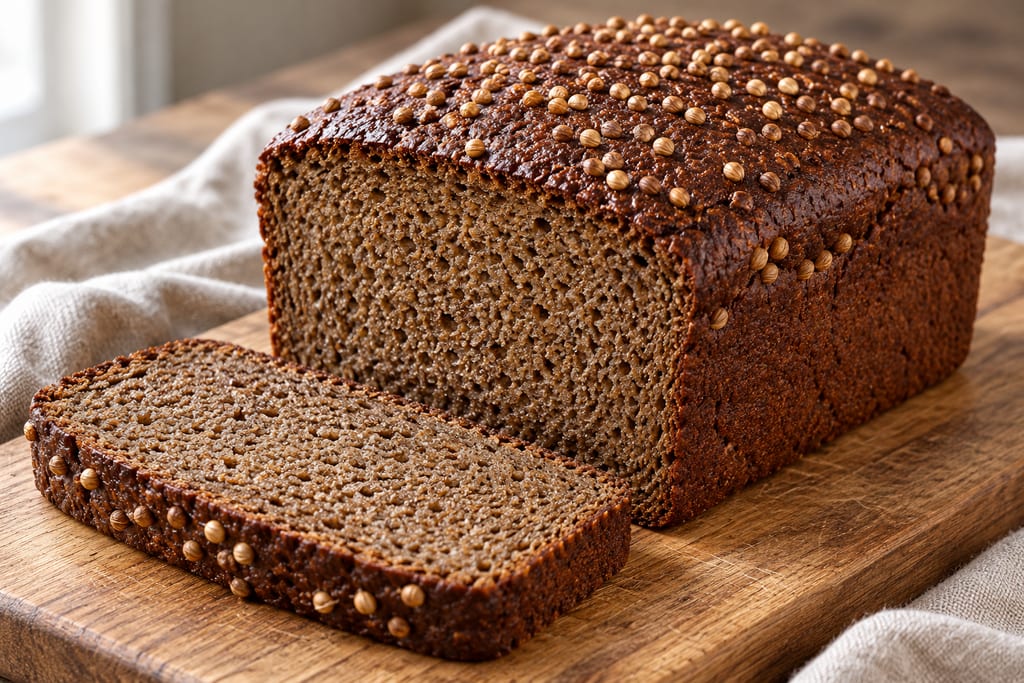
A dark rye sourdough with coriander and roasted barley-malt scald, based on Lily McCann's measured Borodinsk-ish home formula.
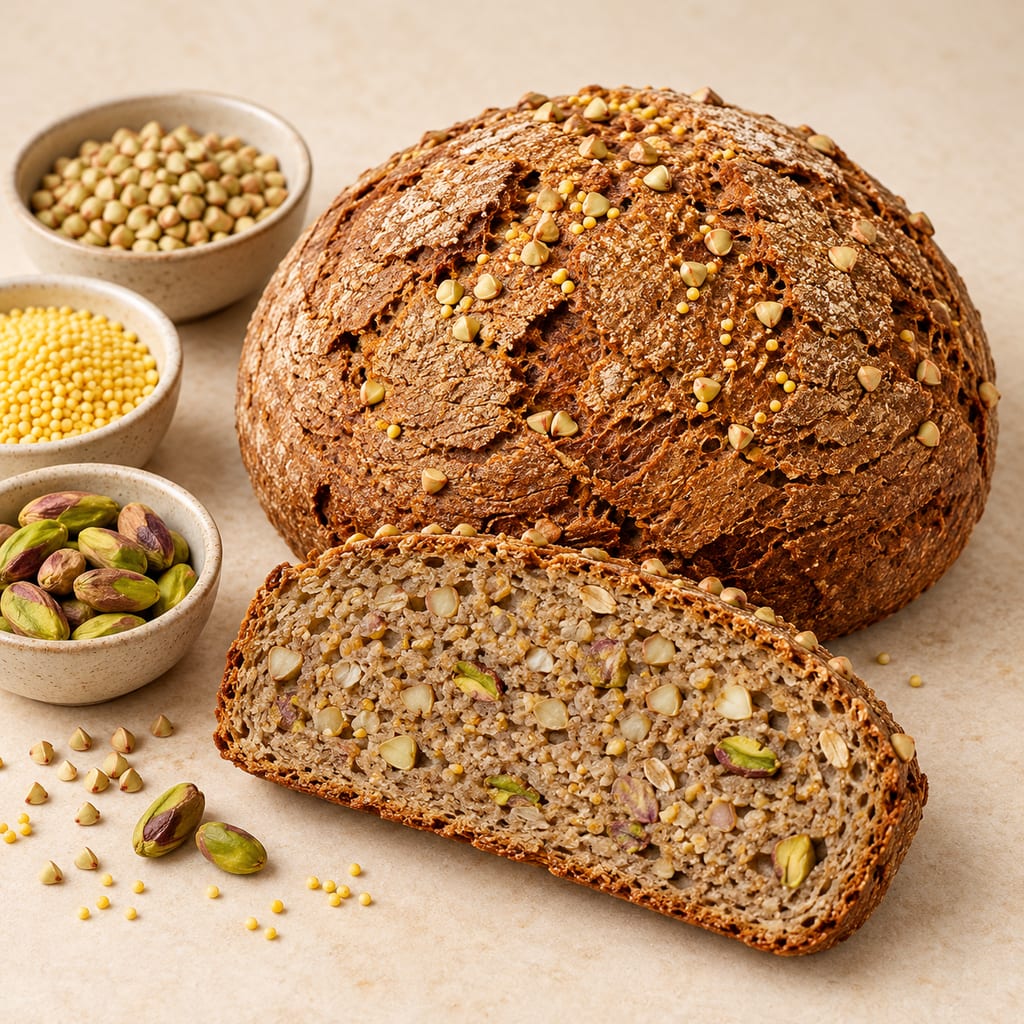
A gluten-free sourdough loaf of about 1 kg. A buckwheat and quinoa starter leavens a dough with cooked whole buckwheat groats, millet and a dark gluten-free bread mix, baked in a lidded pot.
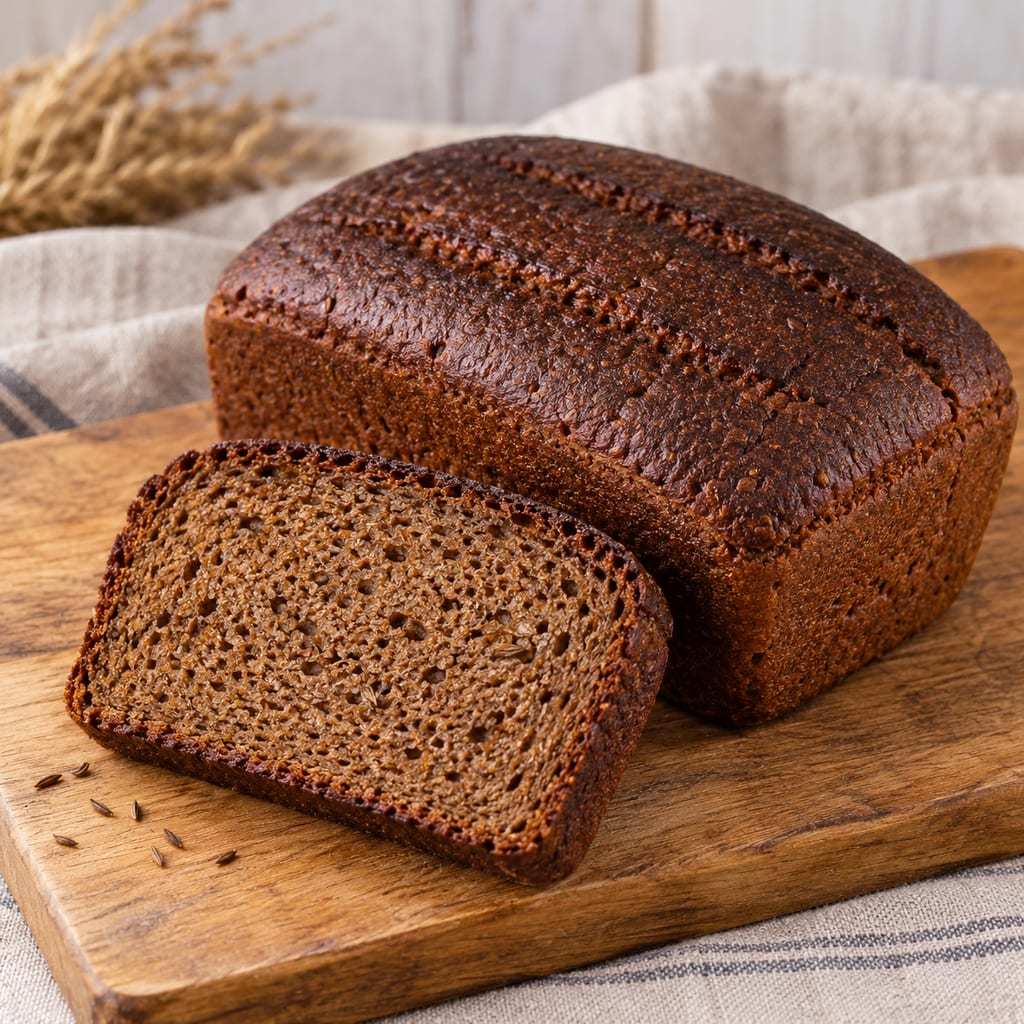
A Lithuanian dark rye loaf made with an overnight rye preferment, caraway, honey and sugar, then proofed in a loaf pan and baked in two stages.
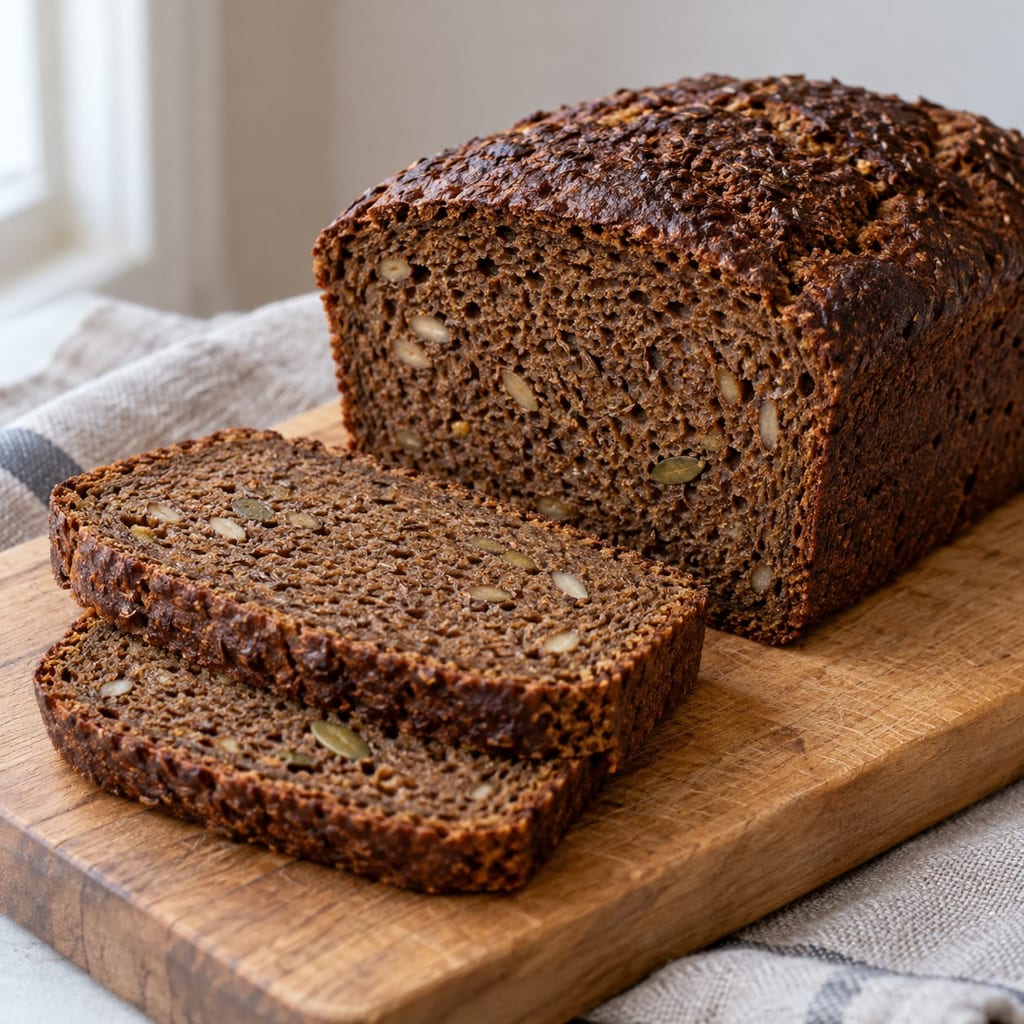
This Estonian rye loaf uses a sourdough preferment, a rye scald and soaked seeds, with a small amount of baker’s yeast. Two tins bake through a staged hot-to-moderate oven schedule.
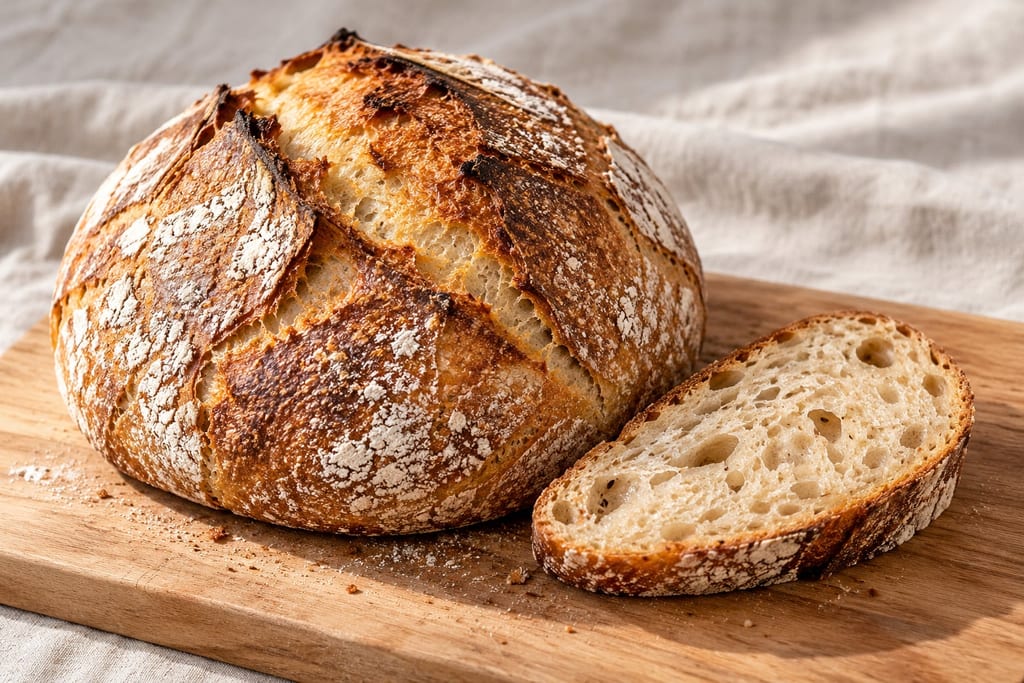
Two large French-style wheat loaves use unfed sourdough starter, whole-wheat flour, long room-temperature fermentation and a covered-pot bake.
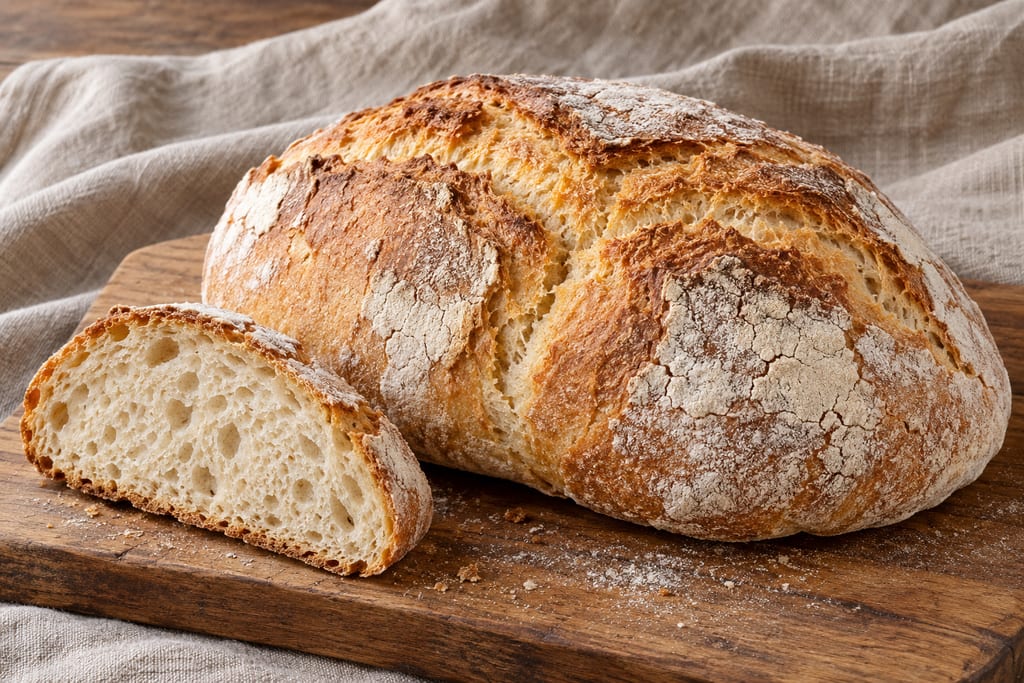
This home sourdough adaptation borrows Pan de Cea’s wheat-forward loaf and central fenda while using a domestic oven and a separately documented modern formula.
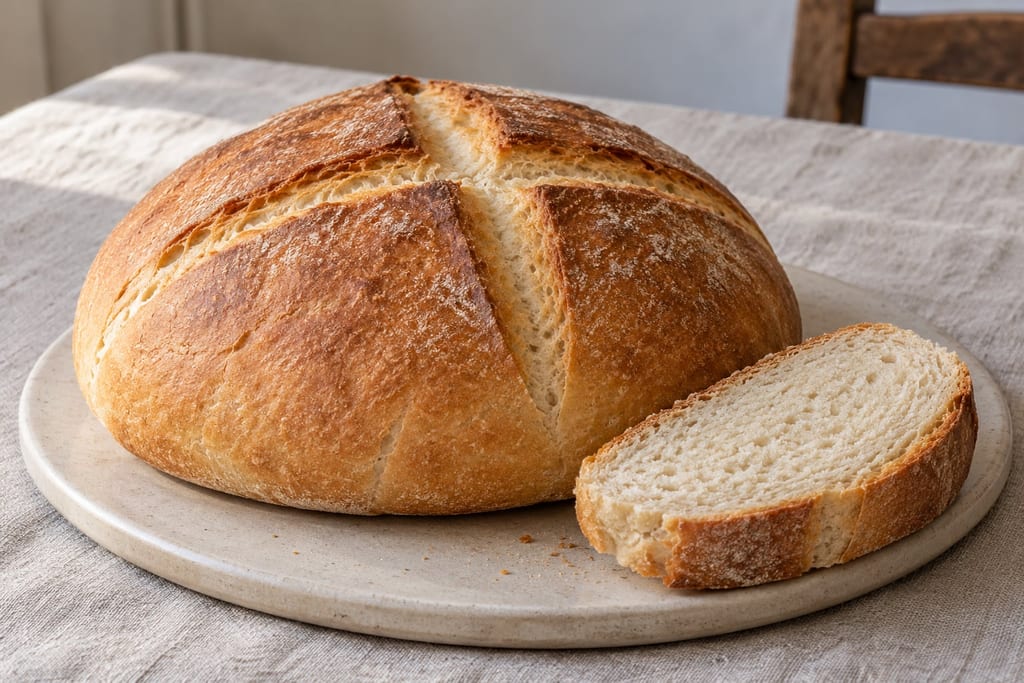
This household Pan de Cruz adaptation uses sourdough and a folded, tight-crumb wheat dough, marked with a cross and baked in a home oven.
A protected durum-wheat sourdough bread documented by a commercial production specification. The official 100 kg batch and oven process are recorded without inventing a household scale.

Soft, spreadable Calabrian pork sausage made with a great deal of red chilli and fatty pork, stuffed into natural casings, sometimes smoked and matured while staying soft.

A way to add independent temperature logging to an existing food dehydrator without changing its built-in controls or protections. It is a monitoring method, not a rewiring plan.

Pleurotus cystidiosus is the abalone mushroom, a cultivated oyster-type fungus with dark brown caps that grows more slowly and is more demanding than other Pleurotus species.

A dark, balanced vinegar from Emilia-Romagna made by combining cooked or concentrated grape must with wine vinegar, then acetifying and refining it in wood under a protected specification.

A living dairy inoculum that starts controlled cream fermentation, developing acidity and aroma before sour cream or cultured butter is finished.

A small electric incubator holds jars at a selected temperature for yogurt and other documented warm food preparations. Controls, capacity and vessel arrangement vary by model.

Adygean salt is a seasoned table salt associated with Adygea and the wider North Caucasian culinary tradition. Salt is blended with garlic and a variable selection of herbs and spices; the exact mix depends on the named style and maker.

The African Caesar-group mushroom, Amanita masasiensis, is a wild ectomycorrhizal species of central and southern African woodlands, eaten locally. The genus contains deadly poisonous species, so identification needs care.
No community contributions have been published for this entry yet.
Sign in to contribute. Published comments and photos are free to read.
King Arthur BakingInspiration · Method
No-Knead Sourdough BreadIngredient weights, one-loaf yield, three hourly rise-and-fold periods, refrigerator rest, final proof, bake stages and storage guidance.
Cited in: A modern loaf built around waiting; How the method fits into bread history; Why these ingredients, and why these amounts; A close reading of the stages; Scoring, covered baking and the crust; What changes across methods; Serving and reading the loaf; Raw flour and safe handling
Centers for Disease Control and PreventionSafety
Say No to Raw DoughRaw flour may contain harmful germs; bake flour mixtures and clean hands and surfaces after handling.
Cited in: Raw flour and safe handling
King Arthur BakingHistory · Method · Image
How to make no-knead sourdough breadThe named King Arthur no-knead sourdough method was published in April 2020 and uses folds during bulk fermentation and a long cold rest.
The published article's finished-loaf image informed the private subject reference.
Cited in: A modern loaf built around waiting; How the method fits into bread history; What the starter changes; A close reading of the stages; Scoring, covered baking and the crust; What changes across methods
King Arthur BakingProcess · Organisms
Sourdough BakingSourdough starter cultures contain wild yeast and lactic acid bacteria that contribute gas, acidity and flavour; species and activity vary.
Cited in: What the starter changes; Serving and reading the loaf
Advances in Applied Microbiology / PubMedMicrobiology · Fermentation · Process
Microbial Ecology and Process Technology of Sourdough FermentationSourdough communities include yeasts and lactic acid bacteria; LAB acidify and contribute flavour, while yeast and heterofermentative LAB contribute leavening.
Sourdough processes differ by inoculum and backslopping; this recipe uses a maintained ripe starter and does not identify a species-level culture.
Cited in: What the starter changes
Houston Chronicle (New York Times article)History · Method
No need to knead this breadThe article documents Jim Lahey's long-rise, low-intervention bread method at Sullivan Street Bakery in Manhattan in 2006.
The 2006 yeast bread is historical context for, but not the same formula as, this later sourdough adaptation.
Cited in: How the method fits into bread history; What changes across methods
King Arthur BakingTroubleshooting · Ingredient functions · Fermentation
Sourdough Baking FAQExplains gluten's gas-retaining structure and how sourdough ingredients and fermentation contribute to bread.
Discusses how temperature and fermentation duration may affect sourness.
Cited in: Why these ingredients, and why these amounts; Serving and reading the loaf