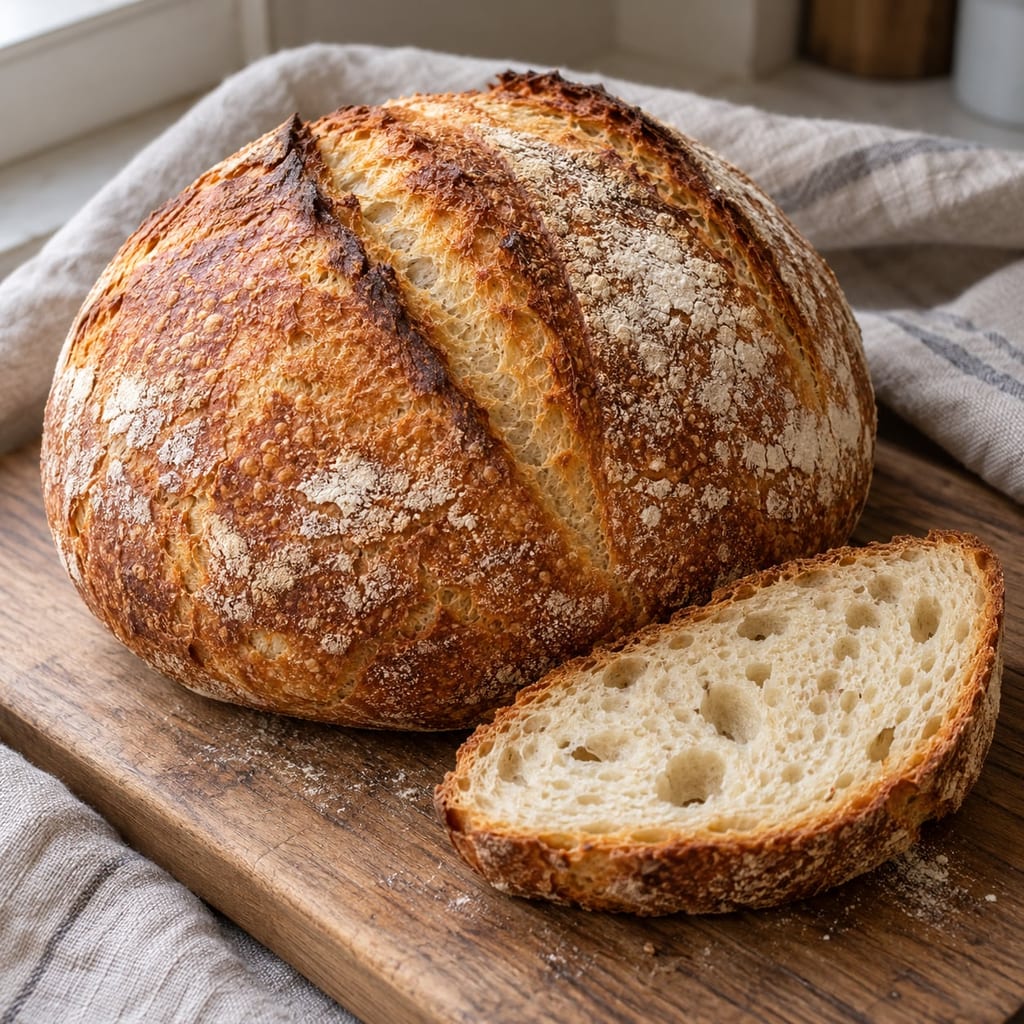
Pa de pagès (home recipe)
A Catalan country loaf from a tested home recipe, made with a fresh-yeast dough, long rise, hand-shaped round and steamed domestic-oven bake.
 FermenteaWhere food goes to change
Modern adaptation
Pan de Cea · Pan de Cea casero
This home sourdough adaptation borrows Pan de Cea’s wheat-forward loaf and central fenda while using a domestic oven and a separately documented modern formula.
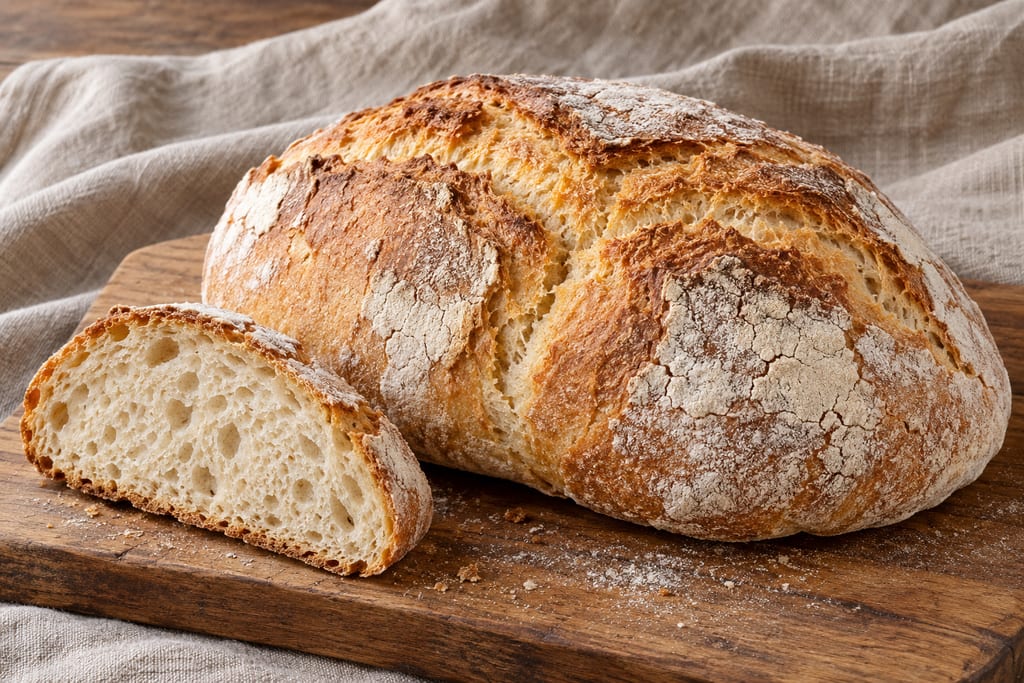
Pan de Cea’s defining format is a long wheat loaf, rounded at the ends and opened by a deep transverse fenda that makes two joined, raised halves. The official product description calls for a thick, crisp crust and a firm, fibrous crumb with an uneven distribution of holes. The protected specification ties that loaf to a place and a production method: bakeries registered in San Cristovo de Cea, previous-bake fermented dough, staged kneading and rests, and a wood-heated granite oven. A domestic loaf made elsewhere cannot claim that protected status.
The geographical link has a long documentary record. The Xunta’s condition sheet cites references to Cea bakers in the last third of the thirteenth century, connects the town’s breadmaking to the Cistercian monastery at Oseira, and describes a large local baking trade by the eighteenth century. It records women carrying bread to sell several leagues away and notes that much of the town’s population was identified as bakers in a 1752 census. Those sources document a community trade; they do not establish a single inventor or an exact first loaf.
The same regulatory document describes the protected leaven as dough retained from an earlier bake, called formento, and allows a small amount of pressed baker’s yeast. The home recipe used here instead builds a firm sourdough starter in two refreshments and ferments without the protected granite oven or workshop sequence. The author calls this a home version and explains the differences. We keep those methods distinct: the home formula is a documented adaptation, not a reconstruction of certified production.
Regional records agree on the characteristic fenda, yet the home recipe directs a lengthwise cut while the protected product specification calls it transverse. This recipe follows the official transverse shape to retain the identifying division and records the source discrepancy rather than treating the domestic version as identical. There is also a wheat-sourcing discrepancy: the Xunta condition sheet says regional wheat was generally more than half of variable flour mixtures, while the product association describes 50% and a Xunta tourism page says 75%. Those figures are not combined into a universal rule here.
The measured dough and oven method below come from the home adaptation: 750 g Galician Caaveiro flour, 250 g strong wheat flour, 800 g water, 24 g salt and 200 g firm starter. It makes two large loaves or four smaller ones, with a 4-hour bulk fermentation, an optional cold rest, a 1–2-hour final proof and a staged 250°C/220°C bake on a home baking stone. The author’s starter-feed quantities total 205 g although the dough list calls for 200 g; the method tells the baker to weigh 200 g into the dough and leaves the small remainder aside. These quantities and oven settings belong to this home method, not to the protected product specification.
Pan de Cea is the wheat bread associated with San Cristovo de Cea in Ourense. Its protected specification ties local production to a previous-bake dough, staged kneading and rests, an elongated loaf split by a transverse fenda, and wood-heated granite ovens. The specification cites late-thirteenth-century references to Cea bakers and describes bread supplied to the Cistercian monastery at Oseira; in the eighteenth century, its cited census lists many local bakers and ovens. The recipe here is explicitly a modern home sourdough adaptation: it uses a domestic oven, a high-hydration dough and a two-stage starter, not the protected production method. The home source and the 2003 specification also differ over the type and terminology of the leaven; the specification describes fermented dough from a prior bake, while the blogger uses a propagated sourdough starter. The formal wheat-share description varies across sources, so no single proportion is claimed here.
Yield 2 large loaves (about 1 kg each) · Scaling: source batch only
Wheat flour is raw and may carry harmful bacteria; the dough is not safe to taste before baking.
Hazard sourceThe home method requires handling a preheated oven stone and transferring a wet loaf at high temperature.
Hazard sourceDo not eat or taste raw flour or dough; keep it away from ready-to-eat foods and wash hands, tools and surfaces after handling.
Control sourceUse heat-resistant gloves and a dry peel; keep hands and arms clear of the hot stone and oven opening.
Control sourceThis is a home adaptation inspired by Pan de Cea, not bread certified under the protected geographical indication. Protected production requires registered production in San Cristovo de Cea under its specification.
Never taste raw flour or dough. The baking stone, peel and oven are extremely hot.
Historical and product association only: the recipe is a modern home adaptation and does not qualify as certified Pan de Cea or claim production in this municipality.
A Catalan country loaf from a tested home recipe, made with a fresh-yeast dough, long rise, hand-shaped round and steamed domestic-oven bake.
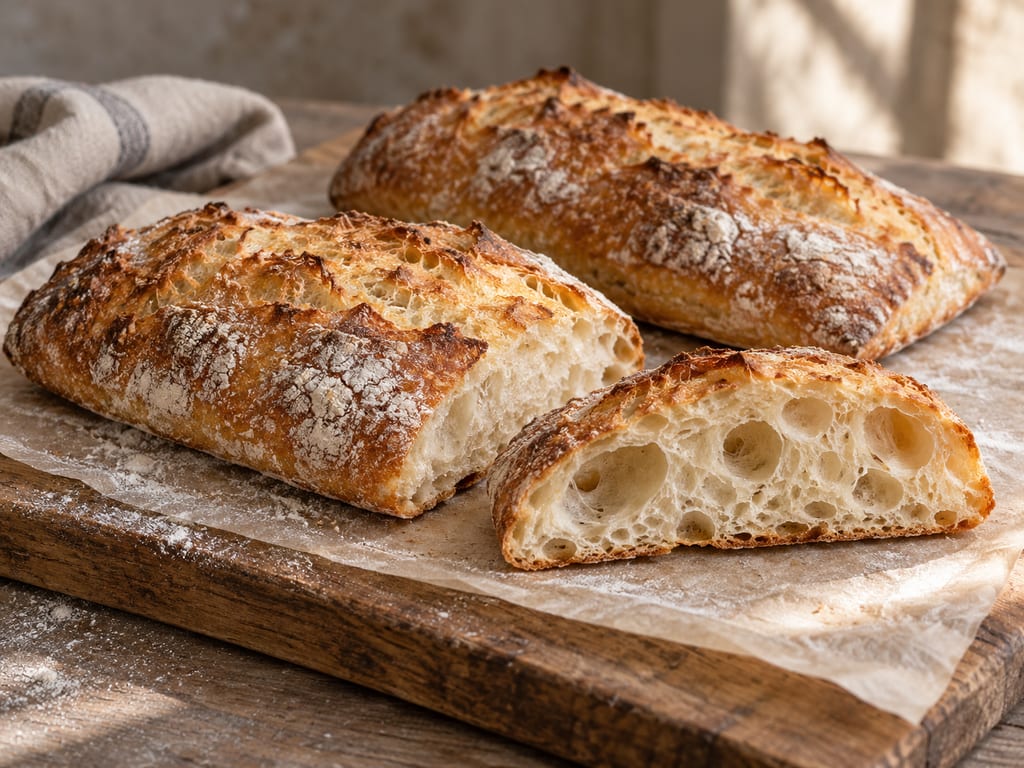
A Catalan-associated wheat loaf with a very wet dough, pan de cristal develops an open crumb through repeated folds and careful handling.
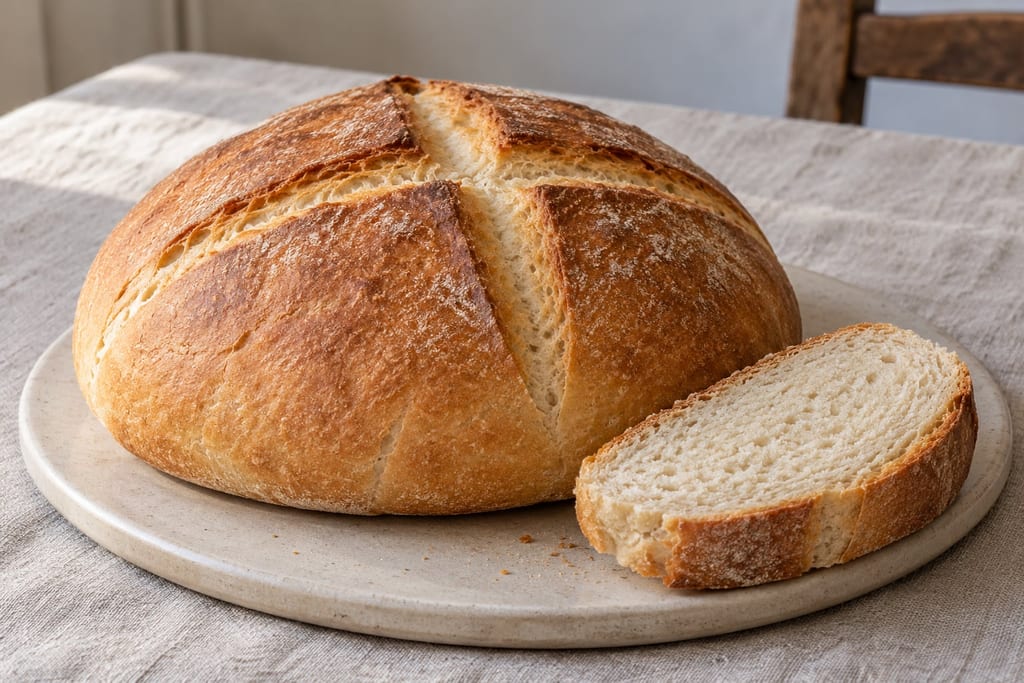
This household Pan de Cruz adaptation uses sourdough and a folded, tight-crumb wheat dough, marked with a cross and baked in a home oven.
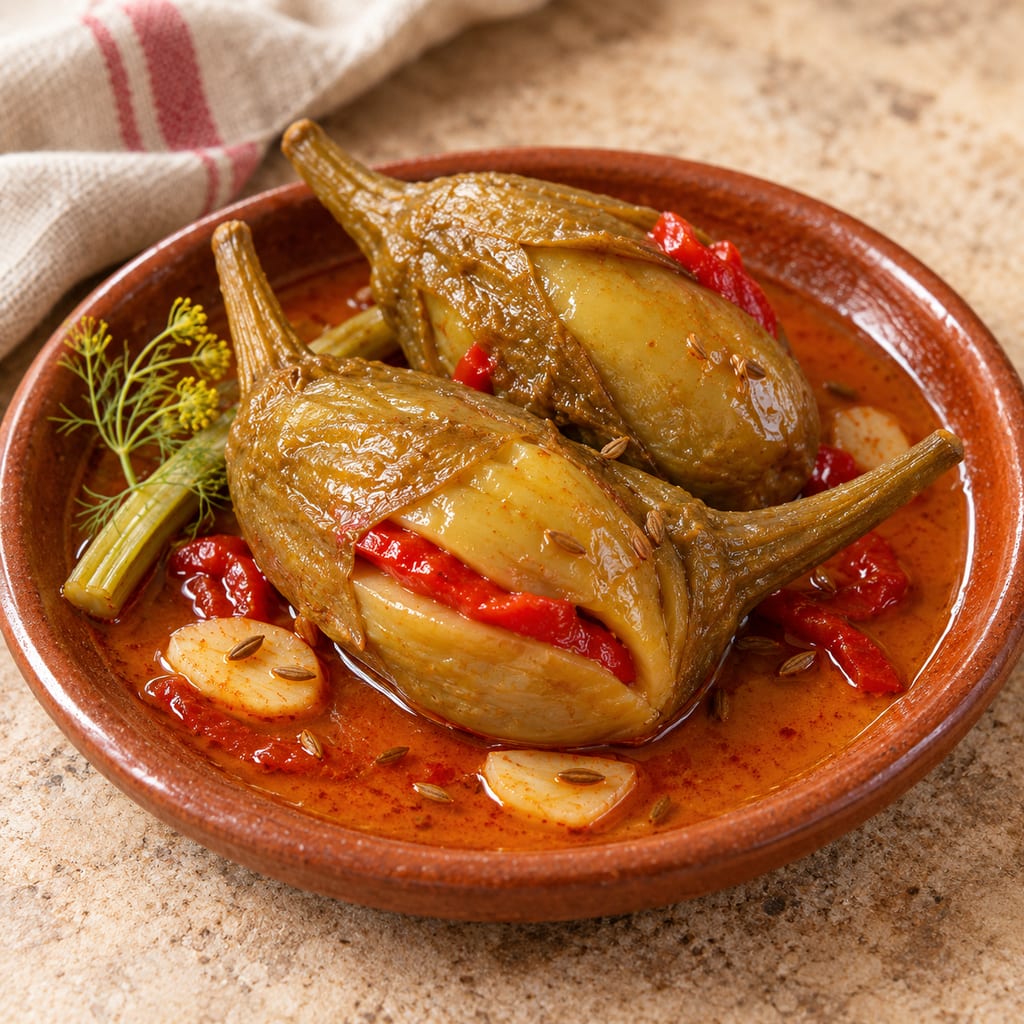
A protected aubergine preserve from Ciudad Real in Spain: tender fruit of the local Dealmagro variety, cooked briefly and then fermented in a vinegared, paprika-seasoned dressing.
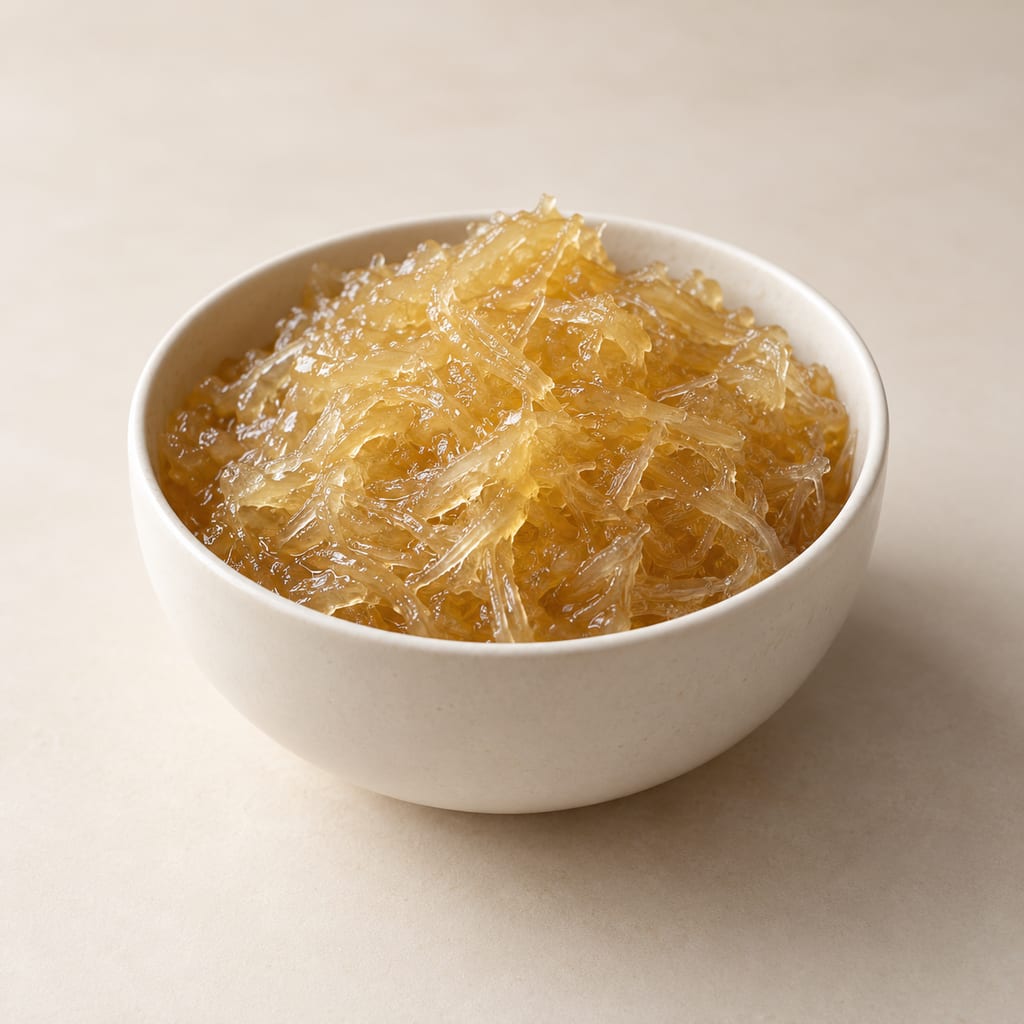
Fine strands of Cucurbita ficifolia cooked in an equal weight of sugar, then portioned for refrigerator or freezer storage. Ordinary orange pumpkin does not give the same fibres.
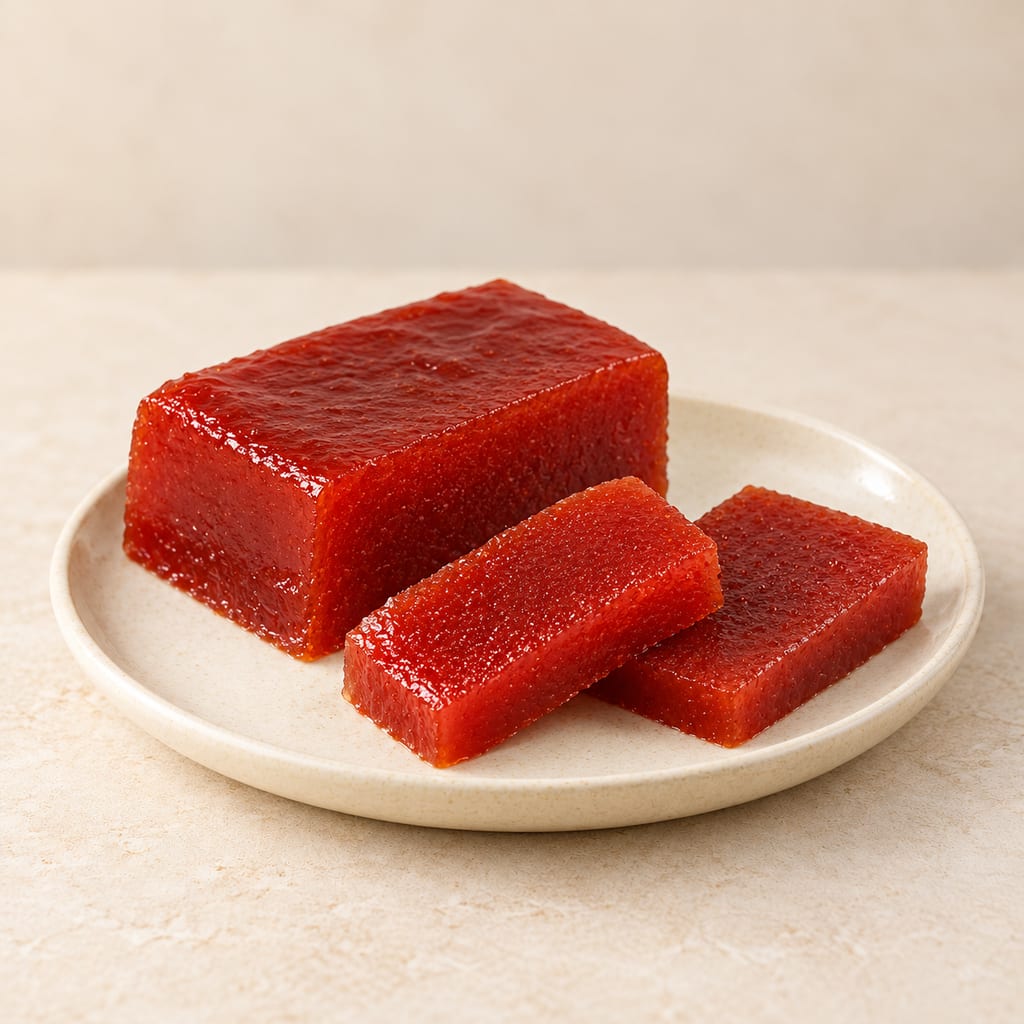
Dulce de membrillo is quince cooked with sugar into a firm paste for slicing. This family method softens the fruit in a pressure cooker, then blends it and leaves it to set.
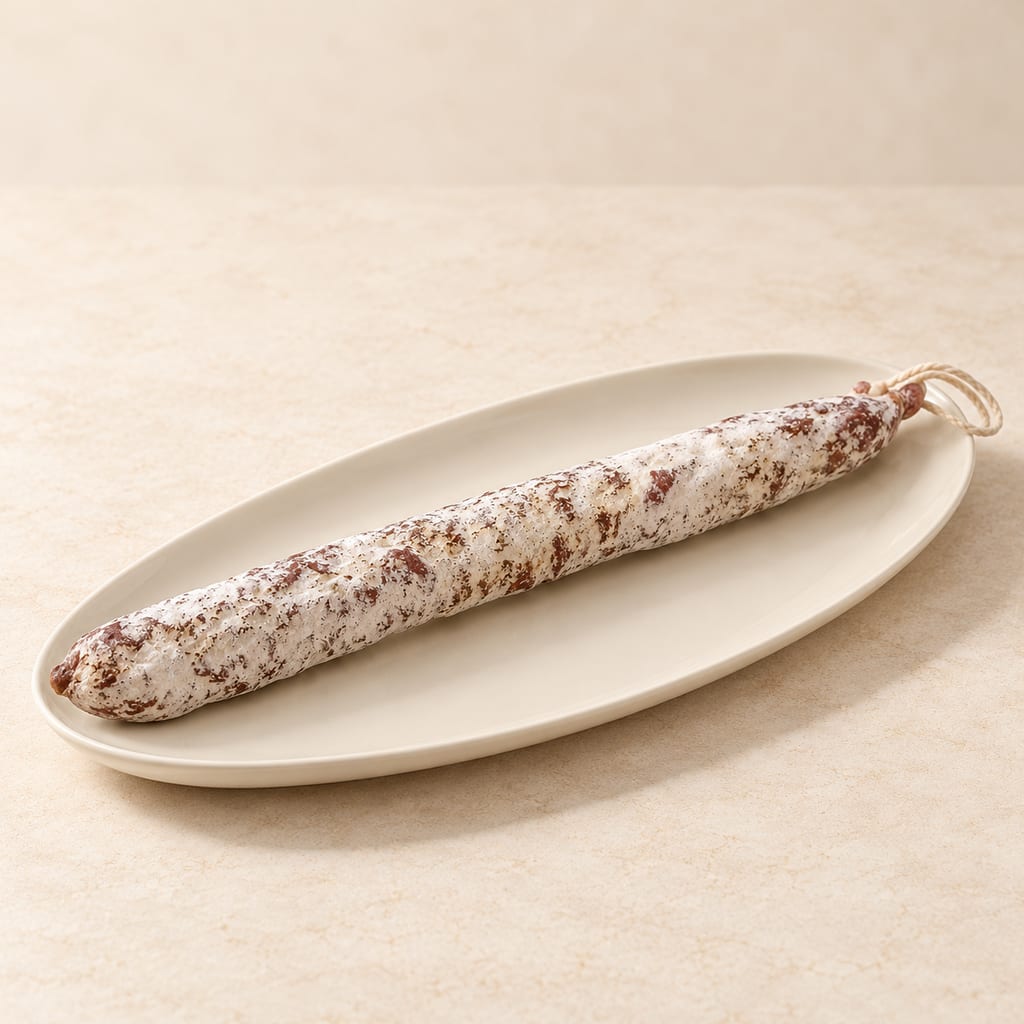
A documentary account of a modern starter-cultured Fuet formula and its place in Catalan sausage culture. The cited raw-pork process lacks matched safety validation, so this page does not present it as a household recipe.
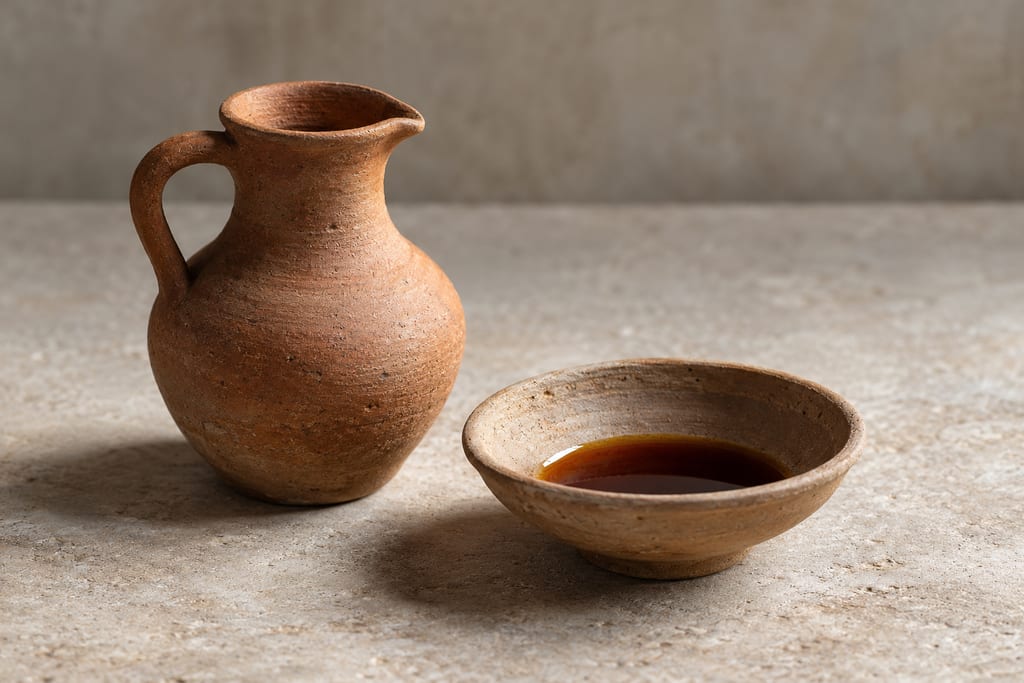
Garum, Greek garos and Latin liquamen, was the fish sauce of the ancient Mediterranean: fish and viscera salted and left in the sun, then drained off as a savoury liquid.
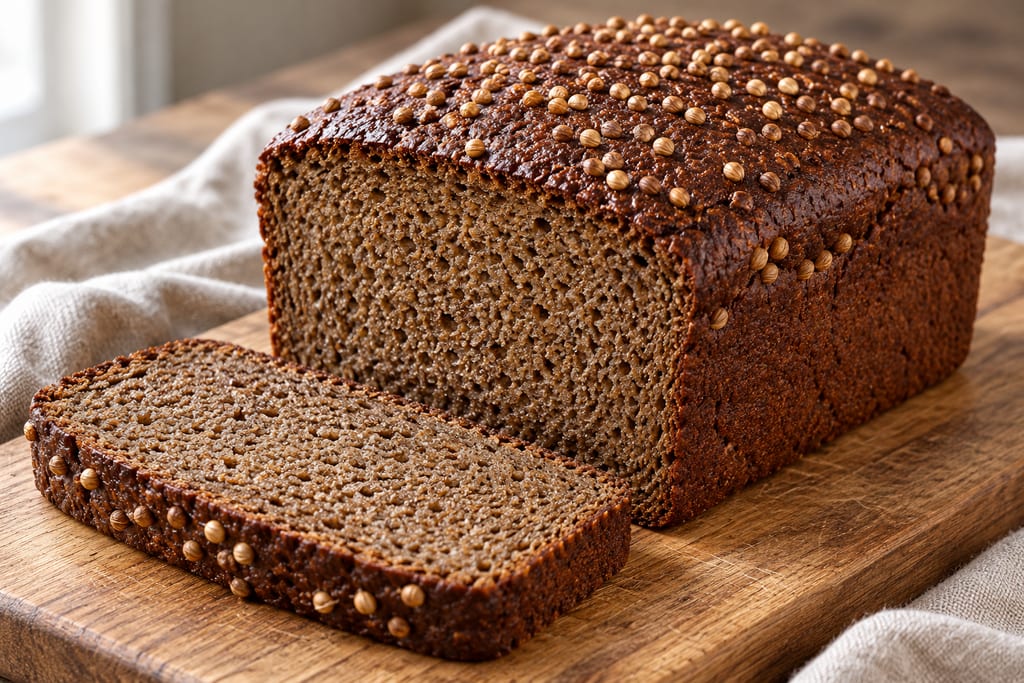
A dark rye sourdough with coriander and roasted barley-malt scald, based on Lily McCann's measured Borodinsk-ish home formula.
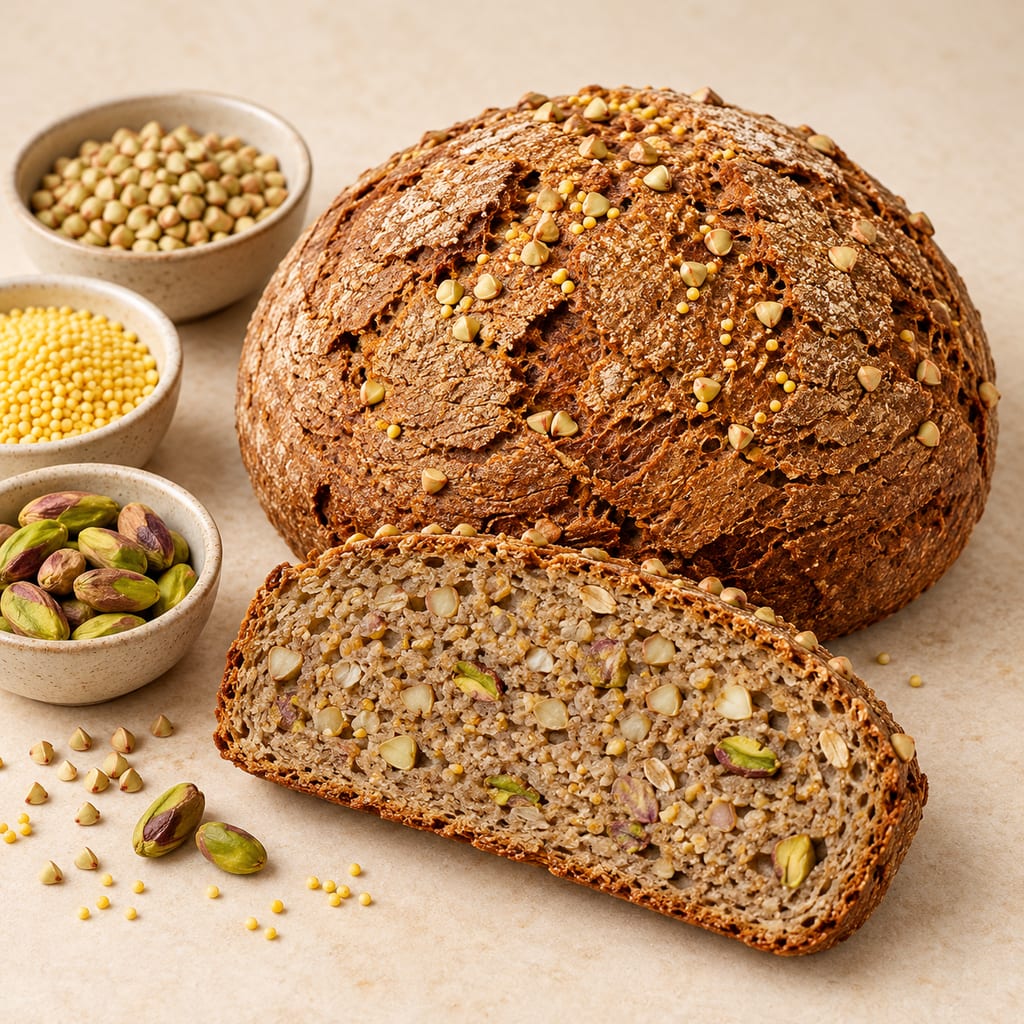
A gluten-free sourdough loaf of about 1 kg. A buckwheat and quinoa starter leavens a dough with cooked whole buckwheat groats, millet and a dark gluten-free bread mix, baked in a lidded pot.
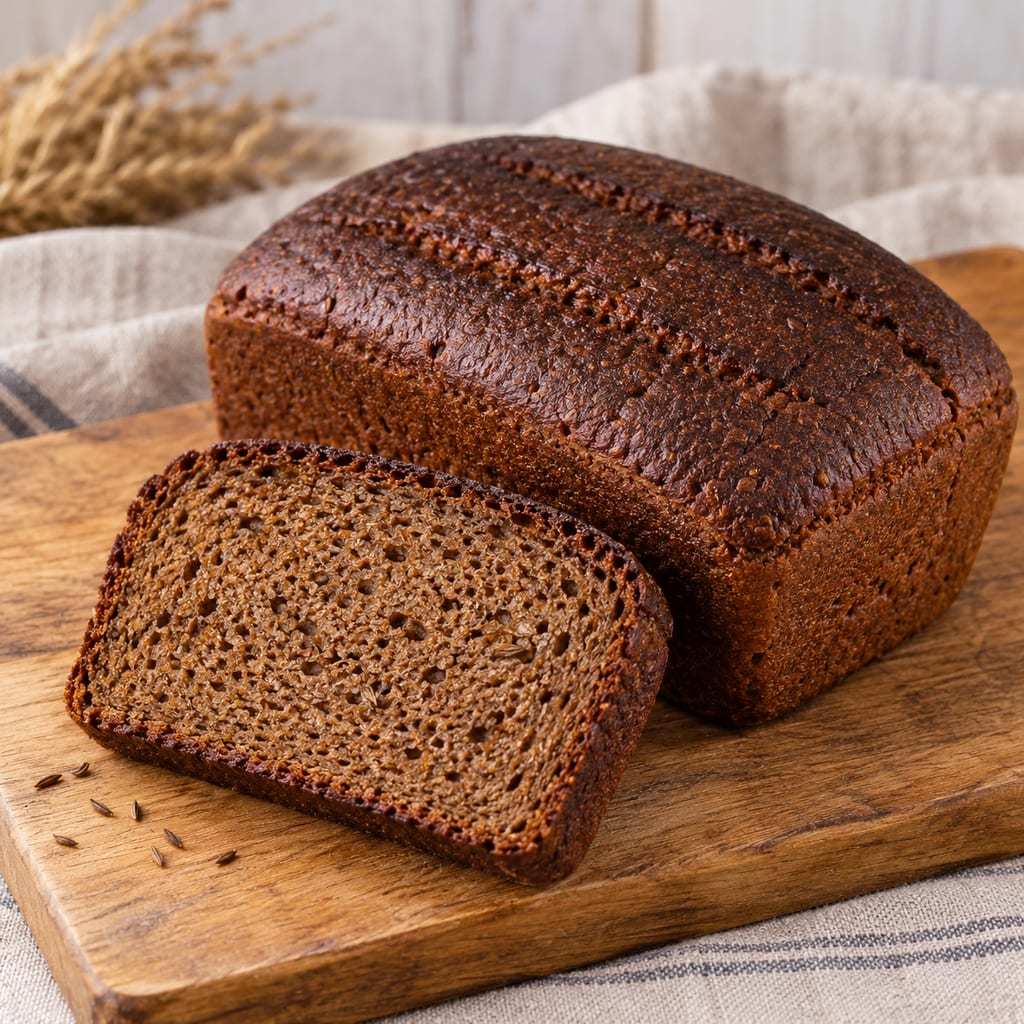
A Lithuanian dark rye loaf made with an overnight rye preferment, caraway, honey and sugar, then proofed in a loaf pan and baked in two stages.
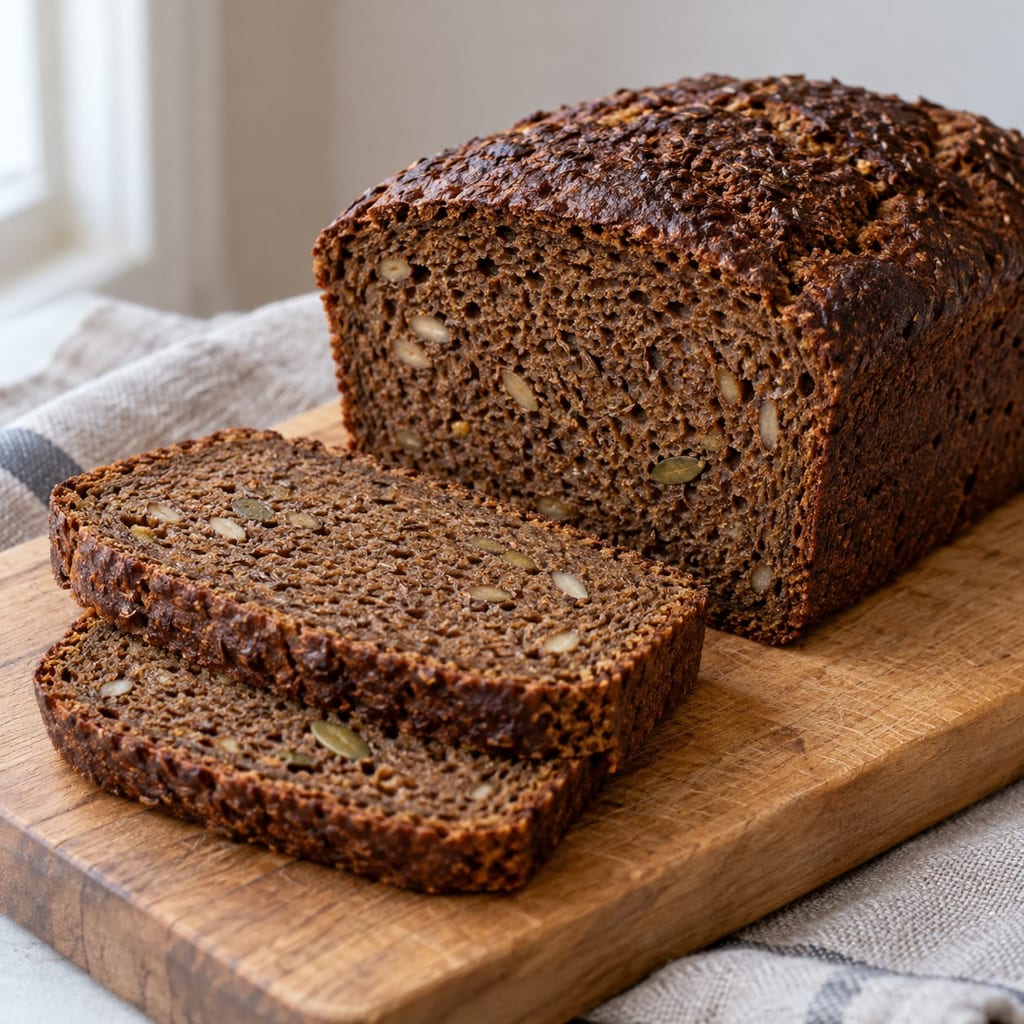
This Estonian rye loaf uses a sourdough preferment, a rye scald and soaked seeds, with a small amount of baker’s yeast. Two tins bake through a staged hot-to-moderate oven schedule.
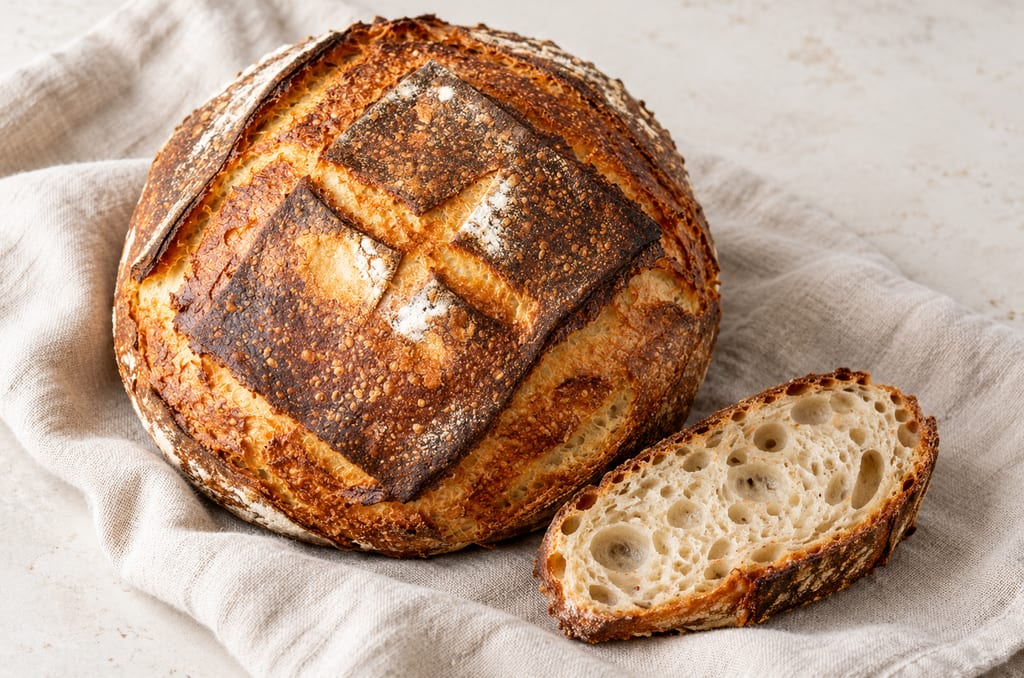
A ripe sourdough starter leavens this modern low-handling loaf. Three hourly folds organize the sticky dough before a long refrigerator rest, final proof and covered bake.
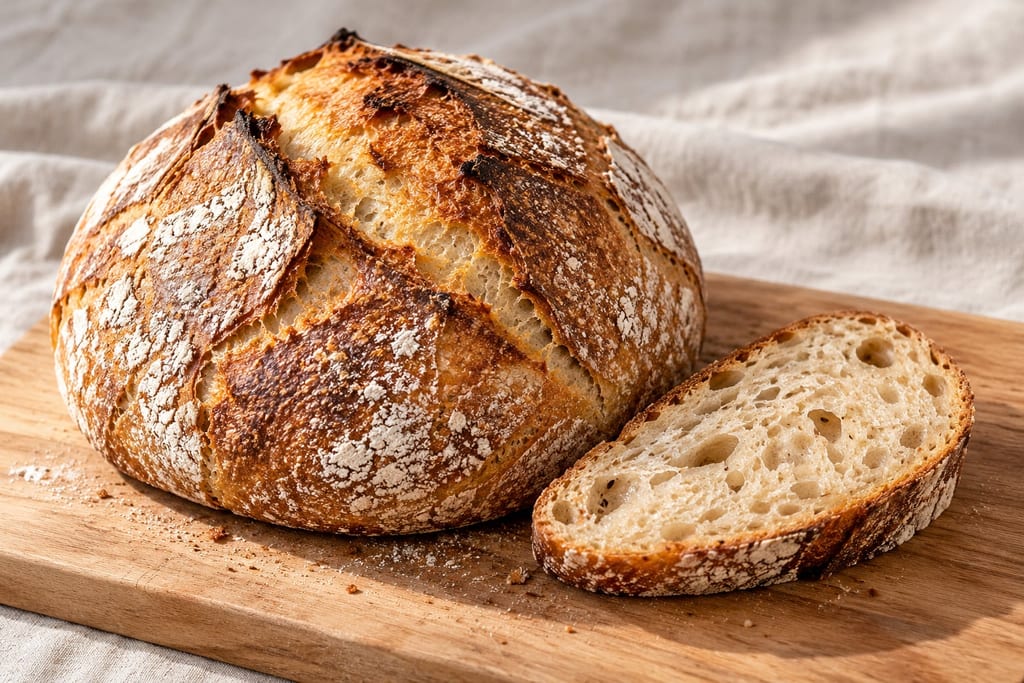
Two large French-style wheat loaves use unfed sourdough starter, whole-wheat flour, long room-temperature fermentation and a covered-pot bake.
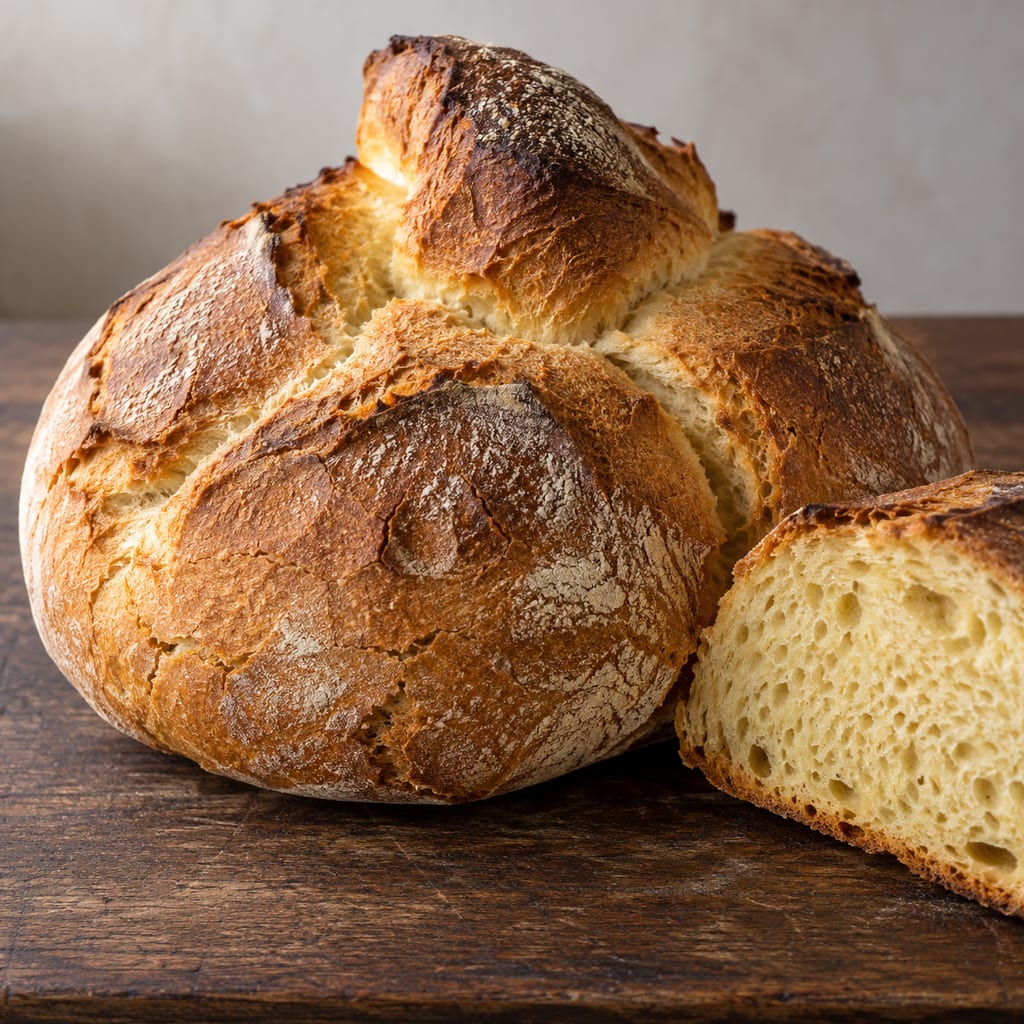
A protected durum-wheat sourdough bread documented by a commercial production specification. The official 100 kg batch and oven process are recorded without inventing a household scale.
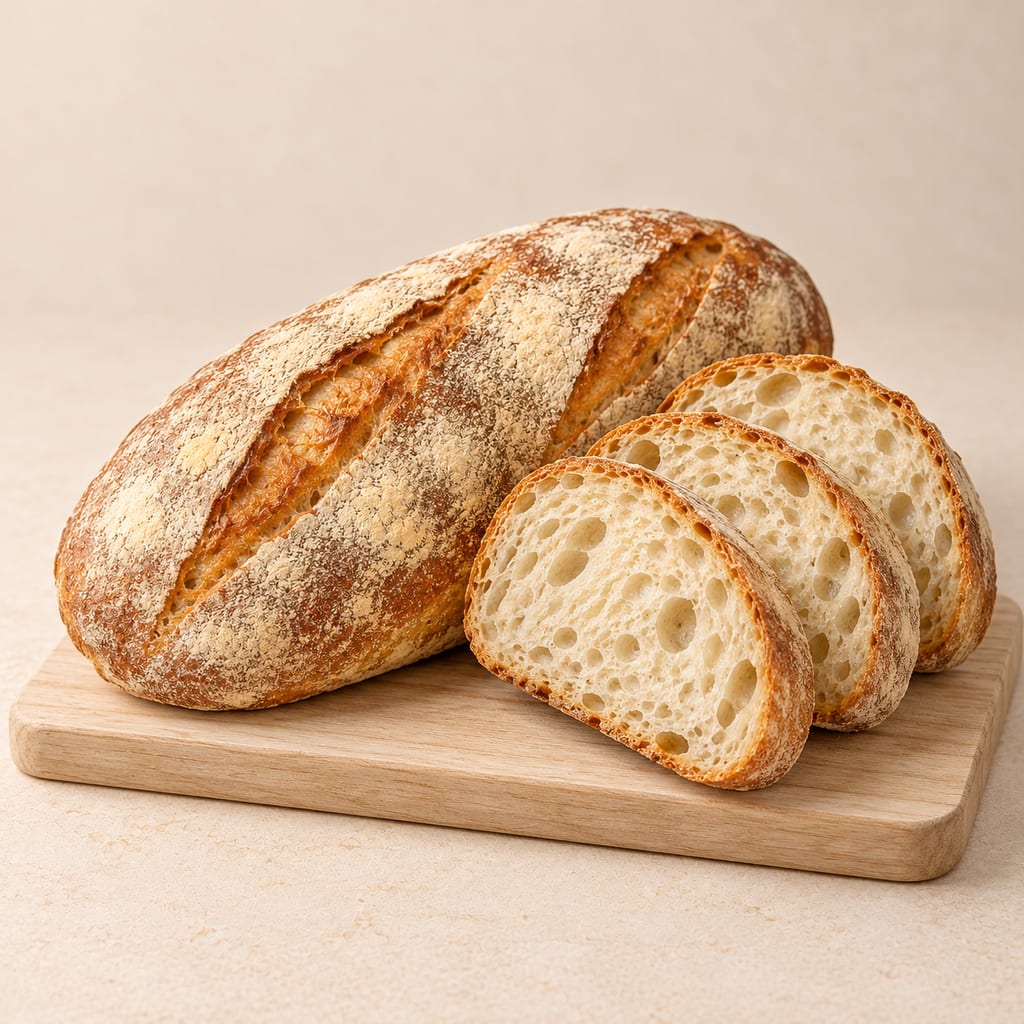
Tuscany's saltless wheat bread, leavened with a sourdough biga: a mild loaf with a crisp dark crust that was made to sit beside salty meats, cheeses and stews.

Protected Italian vinegar made only from cooked grape must, fermented and aged in a battery of wooden barrels for at least 12 years: sweet, sharp and syrupy.
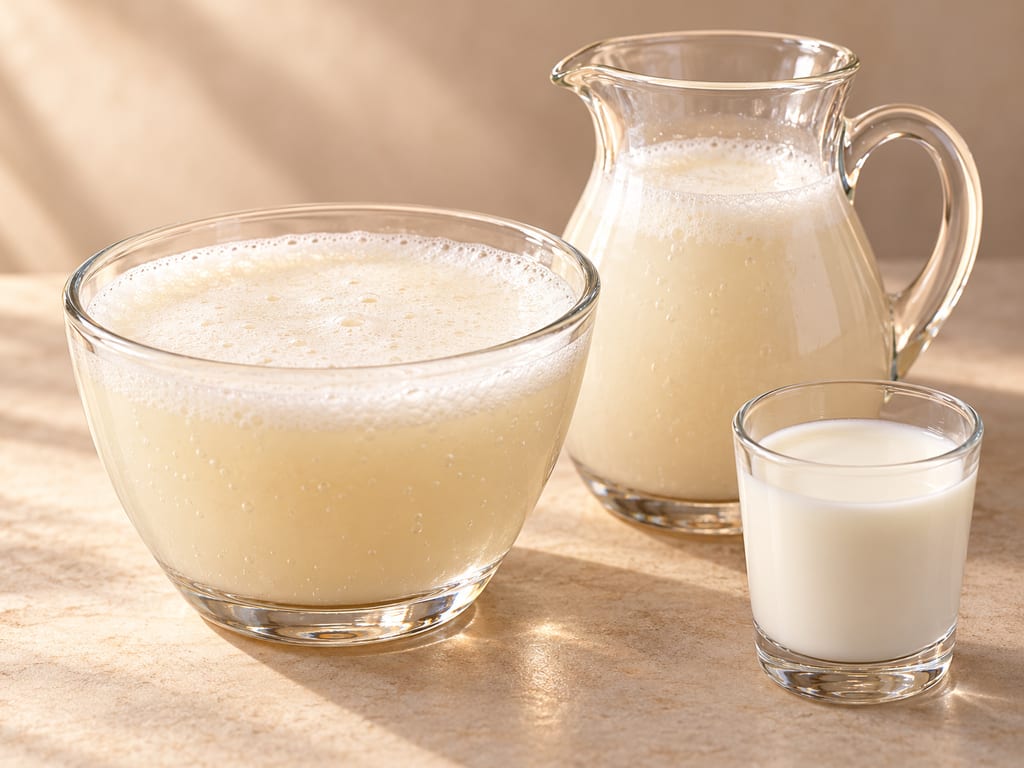
Airag is Mongolia’s fermented mare’s-milk drink, traditionally churned with saved starter in a reusable cowhide khokhuur.

Appam, or hoppers, are South Indian and Sri Lankan rice pancakes made from a fermented coconut-and-rice batter and cooked in a curved pan to a crisp lacy rim and a soft, spongy centre.
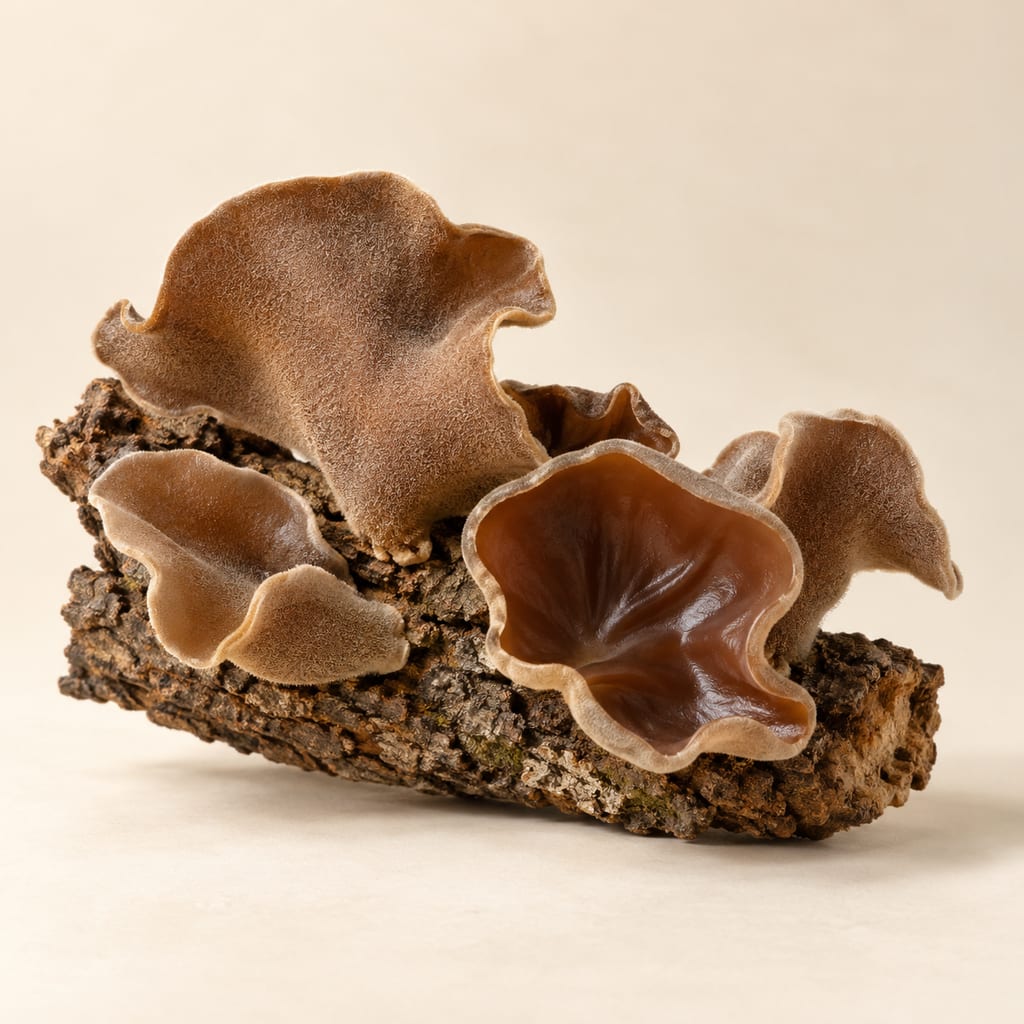
Auricularia tremellosa is a wood ear fungus of the genus that supplies most dried wood ear sold in China; its own food record is thin, and the culinary practice described here comes from the closely related wood ear species.
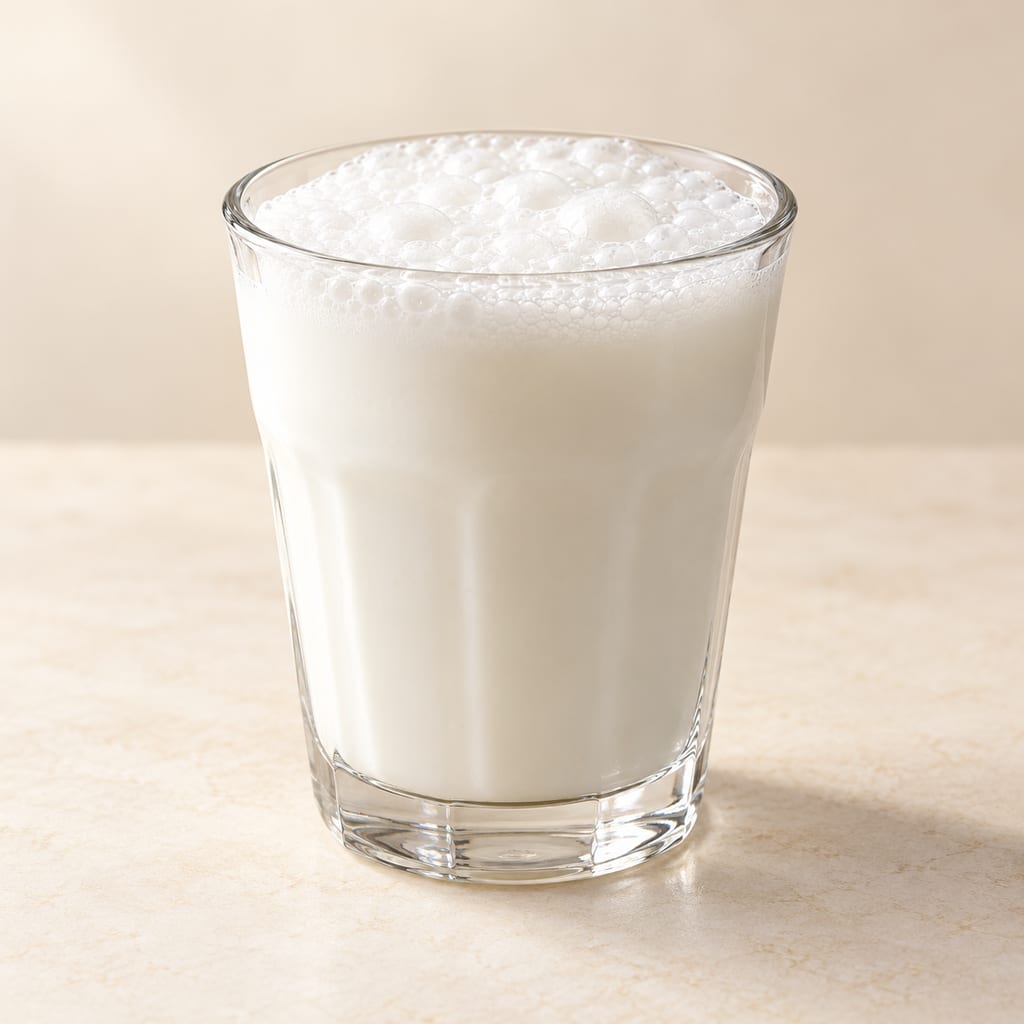
Ayran is Turkey’s cold, savoury yogurt drink: plain yogurt is loosened with water and lightly salted, then whisked smooth or aerated into a soft cap of foam.
A thin stone griddle used over an open hearth. Norwegian archaeology documents the established tradition from the early Middle Ages; a Viking-period origin is only a cautious suggestion linked to Shetland.

Crushed or milled barley cooked in water until the starch softens and the mixture thickens, the plainest way a northern household turned stored grain into a meal, here with apple and hazelnut.

Black carrot is the anthocyanin-pigmented Eastern carrot (Daucus carota var. atrorubens), the purple root that preceded orange types and still colours kanji and şalgam.
No community contributions have been published for this entry yet.
Sign in to contribute. Published comments and photos are free to read.
Sergio RecetasInspiration · Method
Cómo hacer PAN CASERO GALLEGO DE CEA (sin amasar) con masa madreAn explicitly home adapted sourdough formula: 750 g Galician Caaveiro wheat flour, 250 g strong wheat flour, 24 g salt, 800 g water and 200 g firm starter; reported yield is two large loaves or four small ones.
Starter refresh schedule, bulk fermentation, optional 24–72 h cold rest, shaping, final proof, oven-stone settings and staged baking are described. The writer says the home method differs from the protected stone-oven bake and uses sourdough rather than the traditional previous-dough method.
The article's starter refresh amounts yield 205 g while its main formula lists 200 g; the recipe records that discrepancy and weighs 200 g into the dough.
Cited in: A protected bread and a home adaptation
CRIXP Pan de CeaMethod · History · Geography
El producto: ElaboraciónThe protected product is wheat flour, potable water, edible salt and fermented dough from a previous bake, worked in stages and baked in characteristic circular granite ovens.
The association describes the fenda as transverse; it gives poia and molete weights, 45–60 minute rests and 25–30 minute rests between two or three re-kneadings, plus approximately 120 minutes baking and at least one hour cooling.
The association describes the wheat share from Galician del país varieties as 50%; the 2003 condition sheet instead says variable mixtures, generally exceeding 50%, and a Xunta tourism page says 75%, so this draft does not assert a single share.
Cited in: A protected bread and a home adaptation
Axencia Galega da Calidade Alimentaria (AGACAL), Xunta de GaliciaHistory · Method · Geography
Reglamento de la Indicación Geográfica Protegida Pan de CeaProtected production area is the municipality of San Cristovo de Cea, Ourense; registered bakeries in that area and suitable ovens are required to market bread under the PGI name.
The conditions describe previous-bake formento, optional pressed yeast up to 3 g per kg, long staged kneading and rests, the transverse fenda, minimum two-hour baking and minimum one-hour cooling.
It documents the Cea bread trade in a late-thirteenth-century reference and extensive baker activity in the eighteenth century; it describes bread supplying the Cistercian monastery at Oseira. It reports del país wheat mixtures varying by proportion, generally over 50%.
Cited in: A protected bread and a home adaptation
Xunta de GaliciaGeography · History
Medio Rural destaca que a IXP Pan de Cea conseguiu en 2025 un valor estimado case 1,15 millóns de eurosIn 2026 the Xunta reaffirmed the IGP production area as San Cristovo de Cea and described the certified bread as wheat flour, water, salt and previous-bake starter, with staged traditional kneading and wood-heated granite ovens.
U.S. Food and Drug AdministrationSafety
Handling Flour Safely: What You Need to KnowRaw flour may carry harmful bacteria; do not eat or taste raw flour or dough. Keep flour away from ready-to-eat foods and wash hands, tools and surfaces after handling.