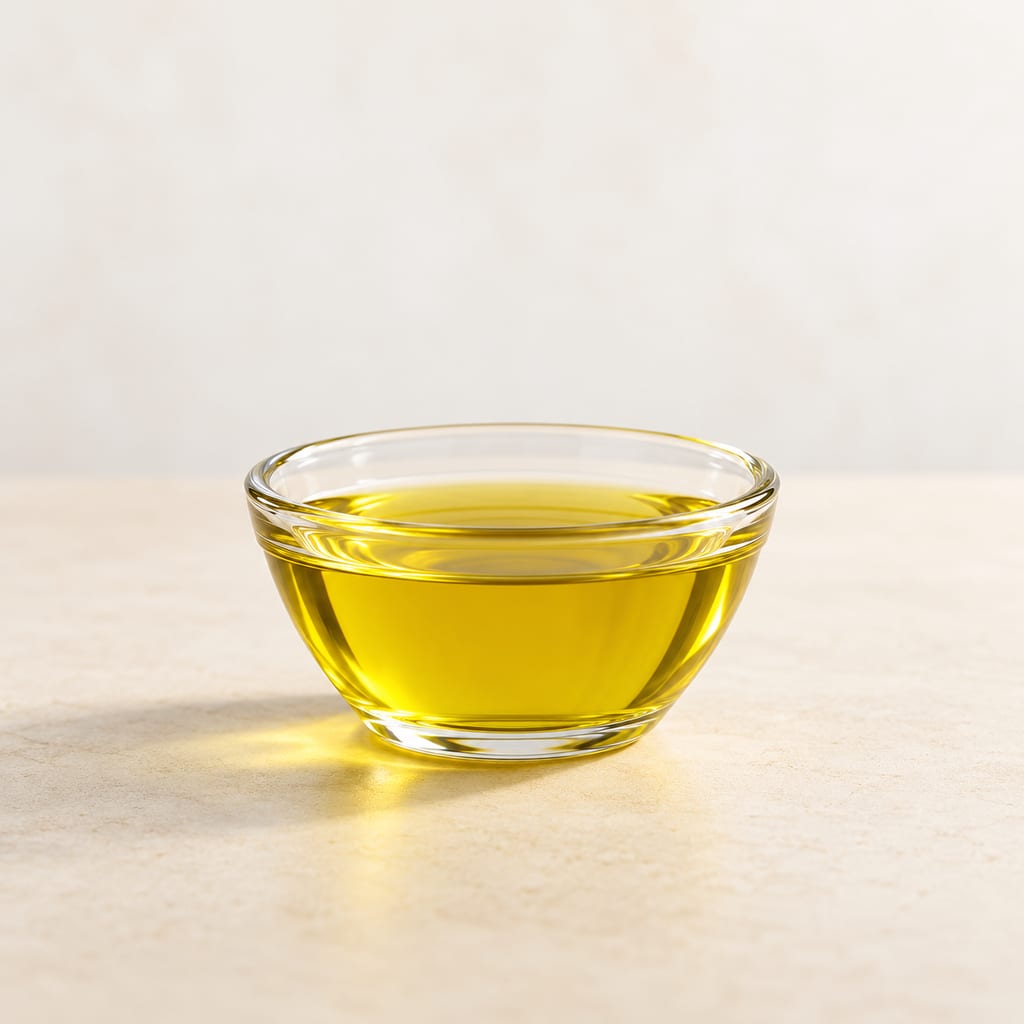
Olive oil
Oil extracted from olive fruit serves as cooking fat, flavouring and, in some cheese methods, an exterior treatment. Grade, cultivar, processing and storage shape its character.
 FermenteaWhere food goes to change
Modern adaptation
Pan de Cristal · glass bread · pa de vidre
A Catalan-associated wheat loaf with a very wet dough, pan de cristal develops an open crumb through repeated folds and careful handling.
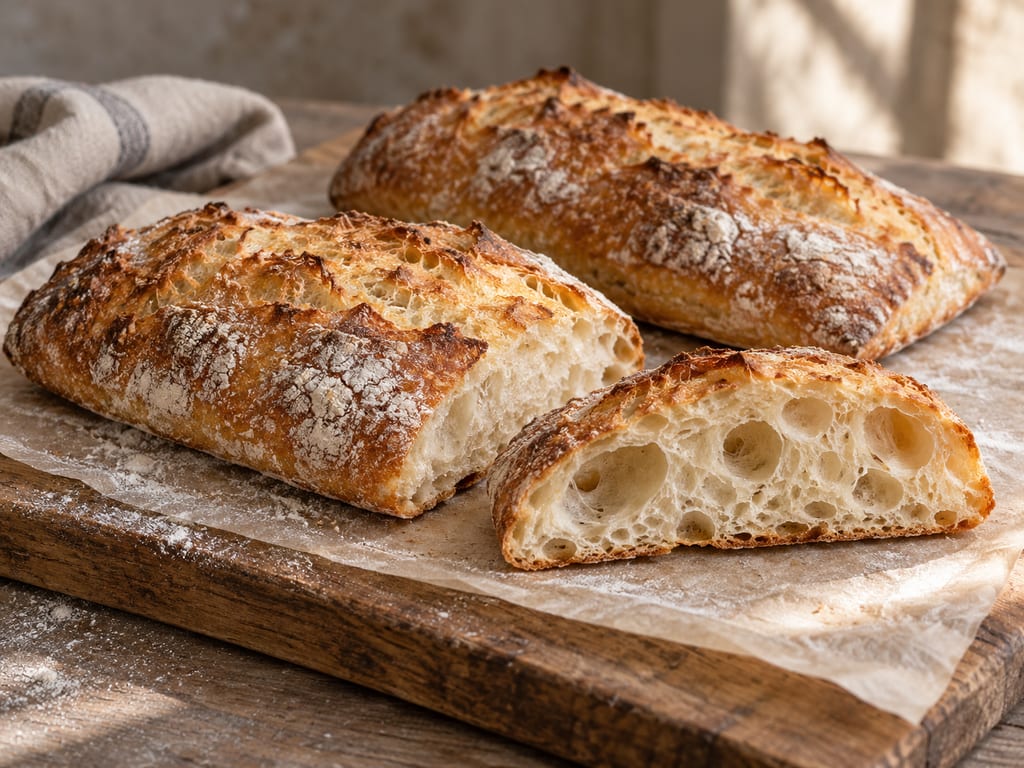
Pan de cristal, also called glass bread, is a Catalan-associated wheat bread with a thin crust and a very open interior. This King Arthur Baking version makes four medium loaves, each about 5 by 7 inches. Its dough begins unusually slack: the formula uses equal weights of water and bread flour. Repeated folds build enough structure to divide and bake it without extensive kneading. The formula here follows that publisher's tested version, rather than presenting one universal Catalan method.
The ingredient list is short: water, bread flour, instant yeast and table salt, plus olive oil for the resting dish and extra flour for handling. That last flour is specified as needed rather than measured. Do not treat it as a fixed part of the dough hydration; it is used on the bench and surface during division. The source's weights are the clearest guide for the main formula.
King Arthur Baking describes pan de cristal as a variation of a traditional loaf from Catalonia in Spain. Its introduction gives no dated evidence or specific locality, so the recipe's place record stays at regional precision and its earliest period remains unknown. The publisher's recipe is a contemporary US adaptation with its own measured flour, timing and equipment choices. It should not be used to fill gaps in the bread's broader history.
The publisher's author describes developing this version by changing the dough strength, fold count, fermentation and final rise across several bakes. That account explains why this particular formula uses bread flour and a short series of folds. It documents recipe development, not a historical chronology of pan de cristal in Catalonia.
At 100 percent hydration by flour weight, this mixture initially feels more like a thick batter than a conventional kneaded dough. The recipe relies on bread flour's gluten-forming capacity and time between folds. The King Arthur author reports that the dough becomes smoother and stronger through fermentation and repeated handling; the final structure is meant to retain gas while remaining loose enough to open into large cells.
A bowl fold gathers dough from the sides toward the center. A coil fold lifts the dough underneath and lets it fold over itself. Wet hands help with the sticky mass. The recipe uses several rest periods, with folds becoming fewer as the dough gains strength. The source's test notes say an extra fold is not always helpful: over-strengthening can reduce the open crumb. That is a texture observation from the publisher's bakes, not a guaranteed result for every flour or kitchen.
Mix the water, bread flour, yeast and salt in a medium bowl until evenly combined. The publisher prefers weighing the flour. Measure the center dough temperature after mixing: the published target is 74–76°F (23–24°C). If it is below 72°F (22°C), the recipe directs the baker to move the dish to a warmer place. Oil a 2-quart (10-by-7-inch) rectangular dish, or an 8- or 9-inch square dish, and transfer the dough there. Cover for a 20-minute rest.
Use wet hands for the first bowl fold, lifting dough from the sides into the center eight to twelve times. Cover and rest 20 minutes. Make a coil fold, turn the dish a quarter turn, and repeat until the dough begins to resist stretching. Cover and rest another 20 minutes. Repeat the coil fold and rest twice more; the third set uses only two or three folds. For the last set use one or two folds only if the dough still needs strength. Then cover and rest about 80 minutes. The source allows skipping that last fold when the dough already feels strong.
Turn the dough gently onto a heavily floured surface. Dust its top and cut it into four pieces with a bench knife or sharp knife, taking care not to press out the gas. Place two portions on parchment with space between them. Leave the loaves uncovered at room temperature for two hours. The publisher says to look for several large bubbles on the surface and a light, airy feel; it also notes that proofing can vary with ambient conditions.
While the loaves proof, preheat the oven with a baking stone or steel on a lower rack at 475°F (246°C) for one hour. Slide two loaves, still on parchment, onto the hot surface. Bake for 15 minutes, then move them directly to the upper rack for another 13–15 minutes. Repeat with the other two loaves and cool fully on a rack. The page header lists a 27–28 minute bake. Its instructions say 15 minutes on the stone or steel, then 13–15 minutes on the upper rack, and state a total of 27–30 minutes; the step durations add to 28–30 minutes. This is an internal timing discrepancy in the source, so follow the staged instruction and check the loaf as it bakes. It also lists a preheated cast-iron pan or oven-safe skillet as an alternative. A baking sheet may work, but the publisher warns that it can warp when heated empty.
Allow the publisher's stated six-hour total schedule. It includes multiple 20-minute rests, a long covered rest, a two-hour uncovered proof and an hour to heat the oven and stone or steel. The oven preheats during the proof, so those tasks overlap. The published sample timeline starts mixing at noon and places the bread in the oven at 5 p.m.; oven loads and cooling extend the work around that outline. Active time is listed as 40 minutes, and the source divides the four loaves between two oven loads.
The method uses a medium bowl, a covered dish, a digital thermometer, a bench knife or sharp knife, parchment, a baking stone or steel (or one of the listed alternatives), an oven and a cooling rack. The resting dish is not used to bake the bread. The high heat creates a practical parchment concern: the publisher notes that parchment edges can char above 450°F (232°C), so trim excess and keep an eye on exposed paper. Use parchment only within its manufacturer's temperature guidance.
The four-loaf batch is the only documented scale here. The source does not test doubling the formula or changing the loaf size. A larger batch could change fold handling and oven scheduling; no adjustment is supplied. The rating reflects the wet dough, repeated timed folds, delicate division, hot baking surface and two-load schedule. It does not describe a special microbiological hazard.
The bread is known for a crisp crust and large irregular holes. The high water ratio and gentle handling help keep the dough open, while the hot stone or steel gives the loaves a strong initial heat. The publisher reports that the crust softens and the bread stales quickly because it has a high crust-to-crumb ratio. For quality, it suggests reheating uncovered in a preheated 400°F (204°C) oven for about 8–10 minutes.
King Arthur Baking advises wrapping the bread loosely and storing it at room temperature for several days, or freezing it for longer storage. That is publisher quality advice, not a validated safe-storage limit. This page does not infer a shelf-life deadline or food-safety control from the recommendation. Use clean handling and discard bread with visible spoilage.
Ariadna Boada's 2012 report places pa de vidre in Barcelona's modern restaurant trade. It describes Jordi Nomen's Concept Pa bakery in the Zona Franca making bread for restaurant customers, par-baking and freezing it for distribution. The report connects its service with pa amb tomàquet and ham; it does not publish the commercial formula.
In a 2021 interview, Nomen recalled presenting his bread at San Sebastián Gastronomika in autumn 2008 and developing it after a mixing error left excess water in dough. That is an attributed maker's recollection, rather than a verified first invention date for every bread called pan de cristal. It adds modern production history to the Catalan association without making King Arthur's four-loaf home recipe a reproduction of Concept Pa's process.
King Arthur calls pan de cristal a variation of a traditional loaf from Catalonia. This US publisher’s introduction supports a regional association but provides no dated attestation or origin account; its linked producer history could not be inspected in the earlier dossier review.
Yield 4 medium breads (about 5 × 7 inches each) · Scaling: source batch only
The publisher advises room-temperature storage for several days or freezing longer, but gives no validated safe-storage duration.
King Arthur describes this as a variation of a traditional Catalan-region loaf; no origin date or exact place is established.
Oil extracted from olive fruit serves as cooking fat, flavouring and, in some cheese methods, an exterior treatment. Grade, cultivar, processing and storage shape its character.
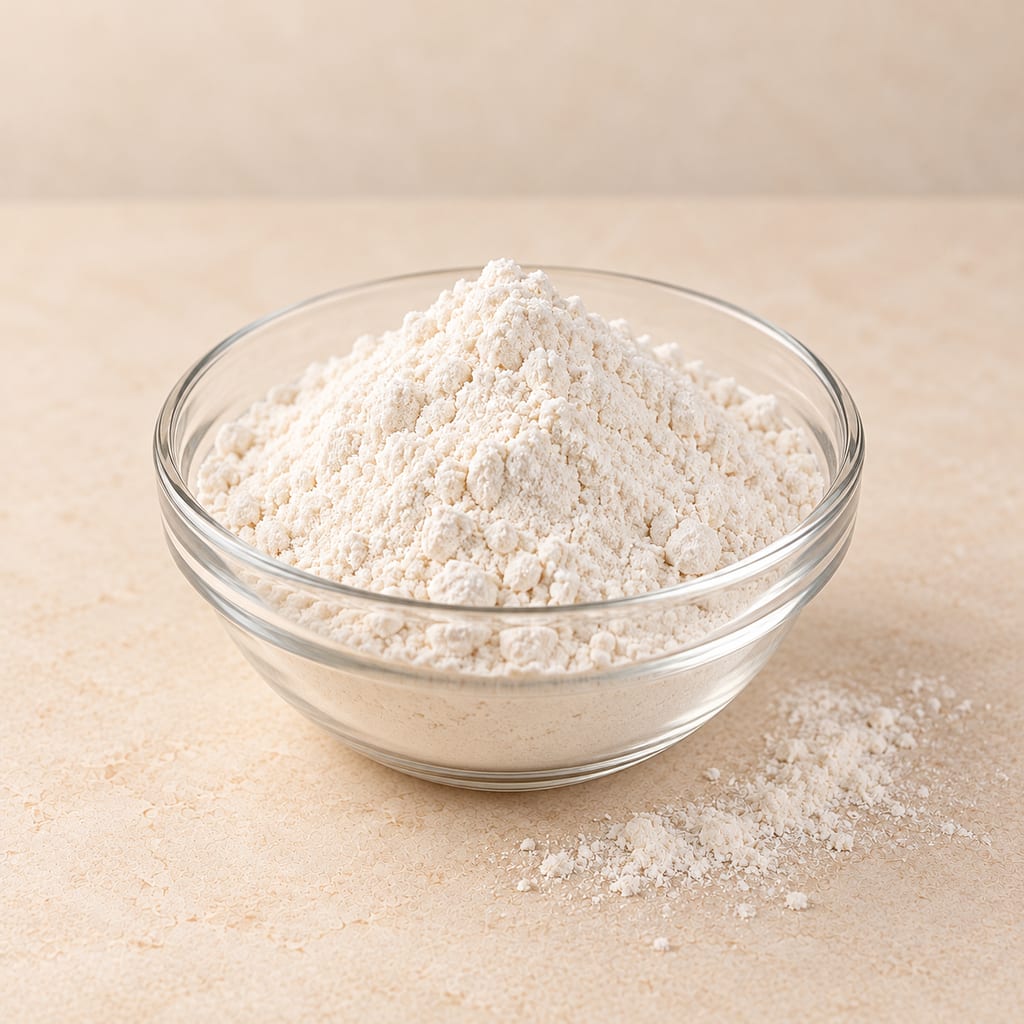
Bread flour and all-purpose flour give yeast dough its gluten network; pan de cristal and pain de mie use them in different ways.
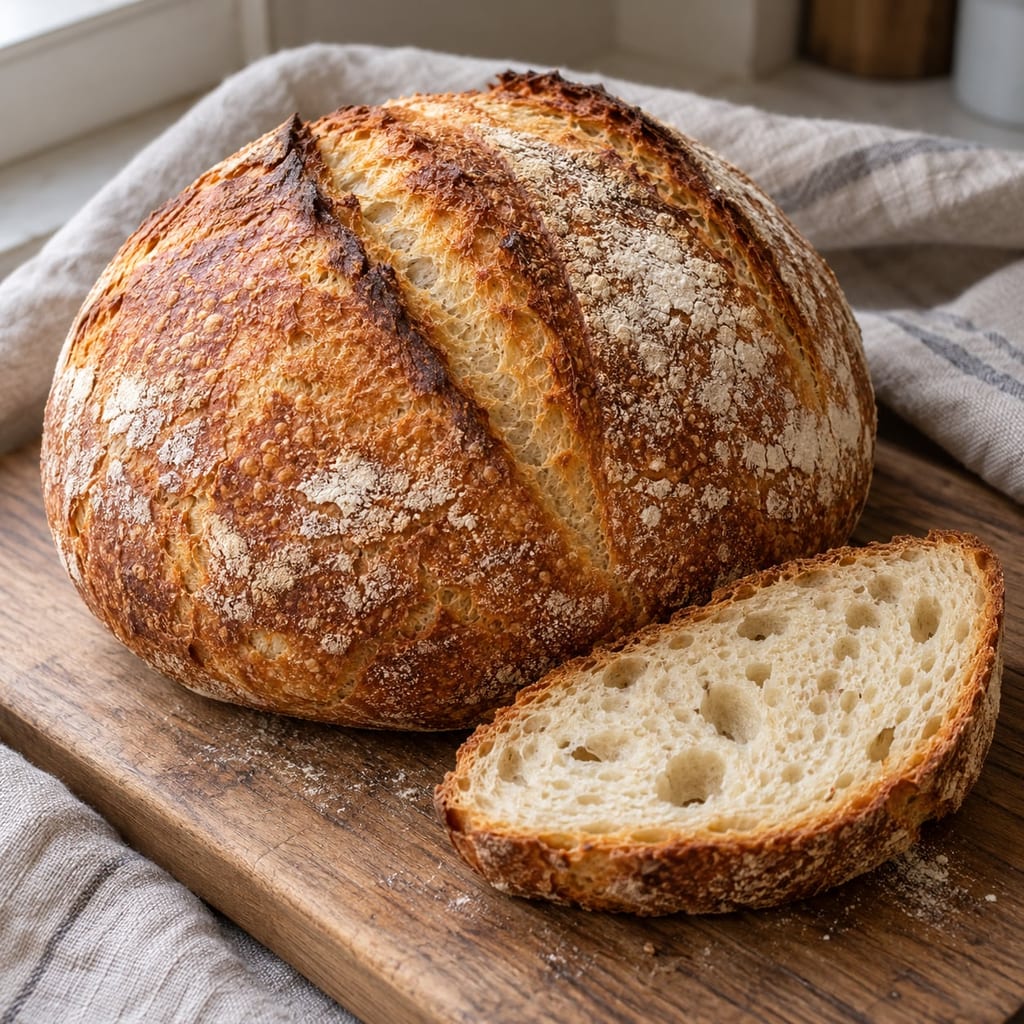
A Catalan country loaf from a tested home recipe, made with a fresh-yeast dough, long rise, hand-shaped round and steamed domestic-oven bake.
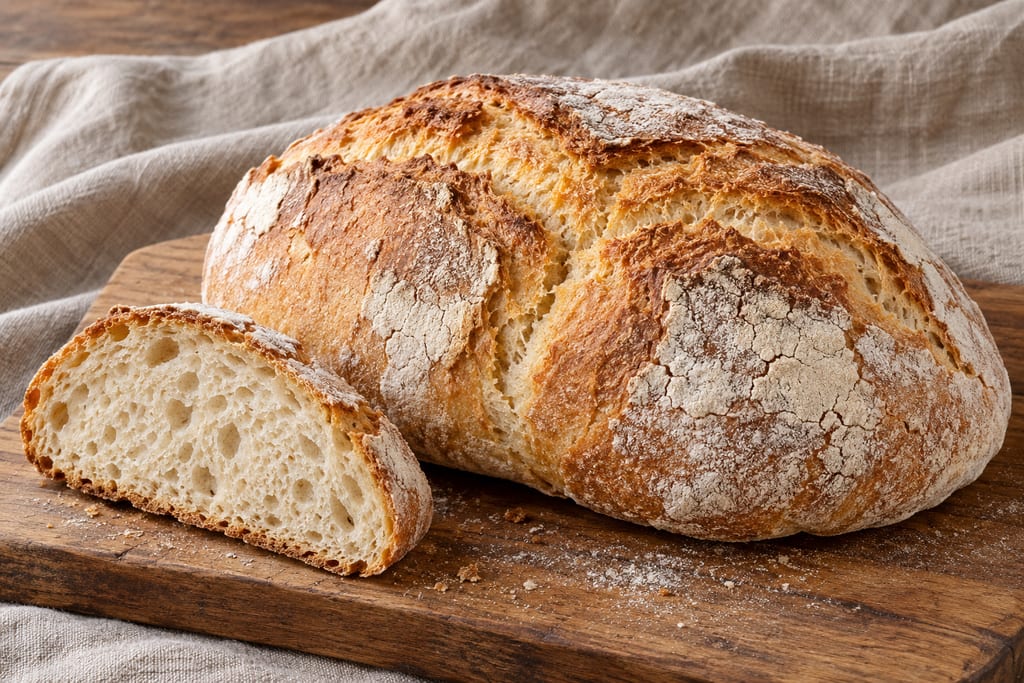
This home sourdough adaptation borrows Pan de Cea’s wheat-forward loaf and central fenda while using a domestic oven and a separately documented modern formula.
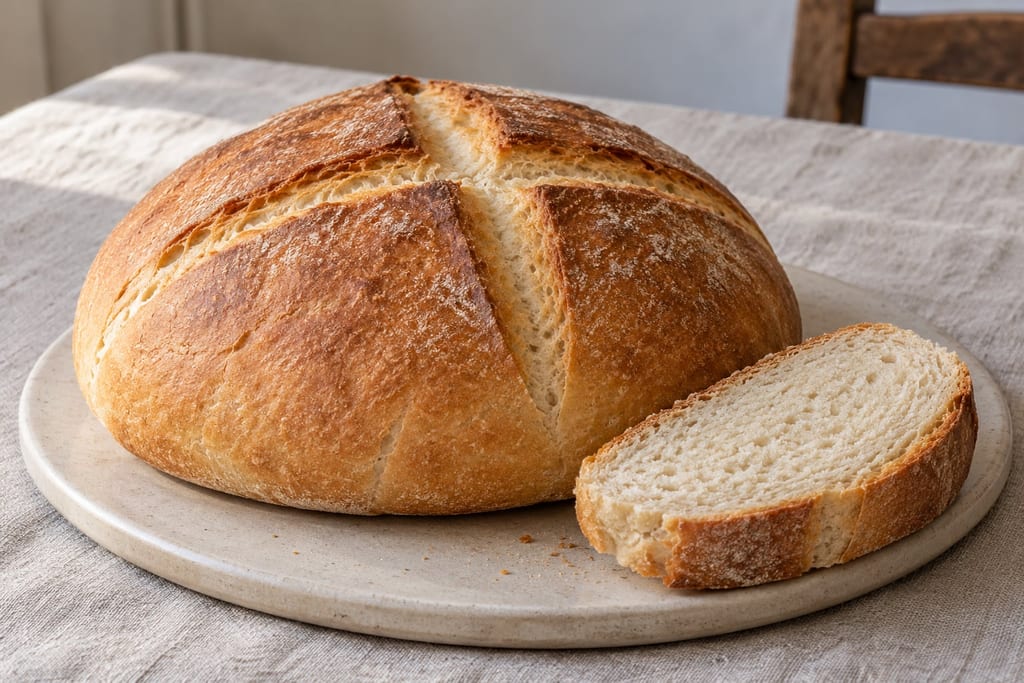
This household Pan de Cruz adaptation uses sourdough and a folded, tight-crumb wheat dough, marked with a cross and baked in a home oven.
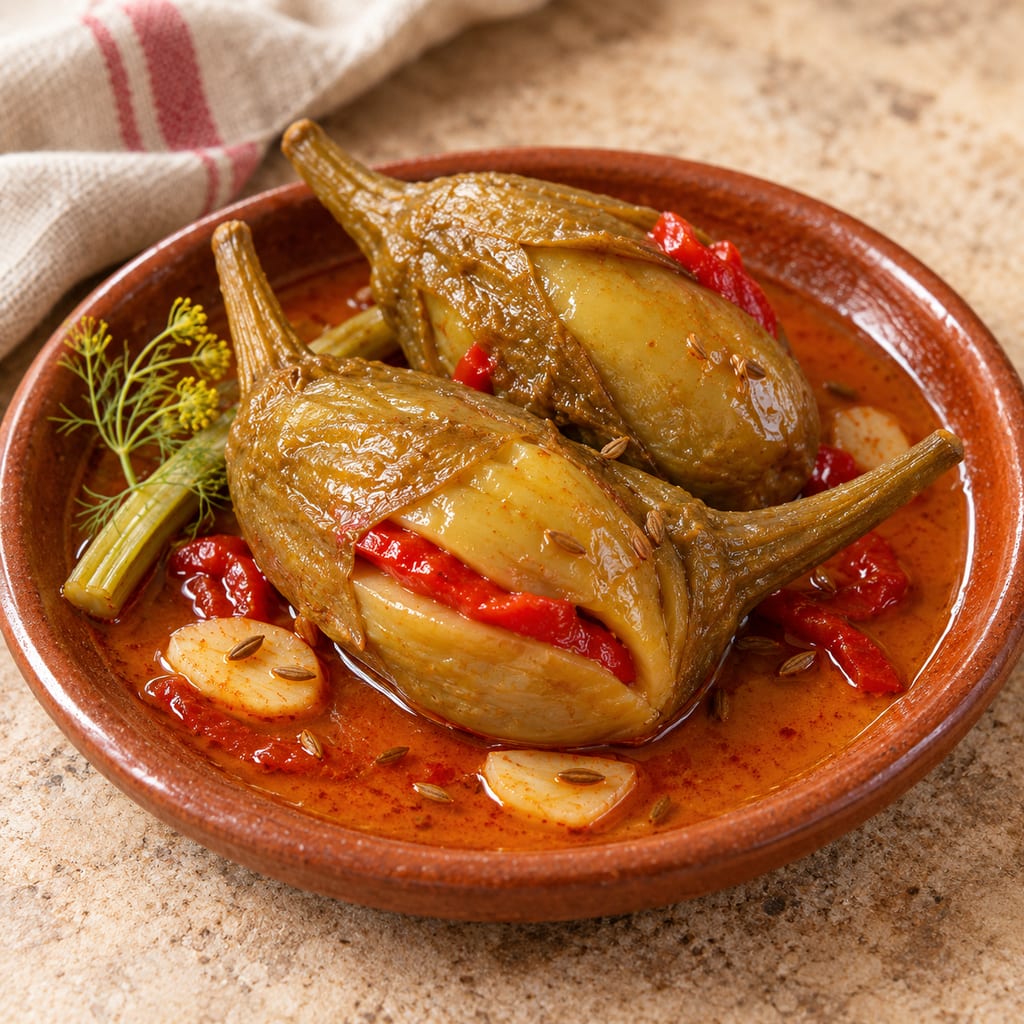
A protected aubergine preserve from Ciudad Real in Spain: tender fruit of the local Dealmagro variety, cooked briefly and then fermented in a vinegared, paprika-seasoned dressing.
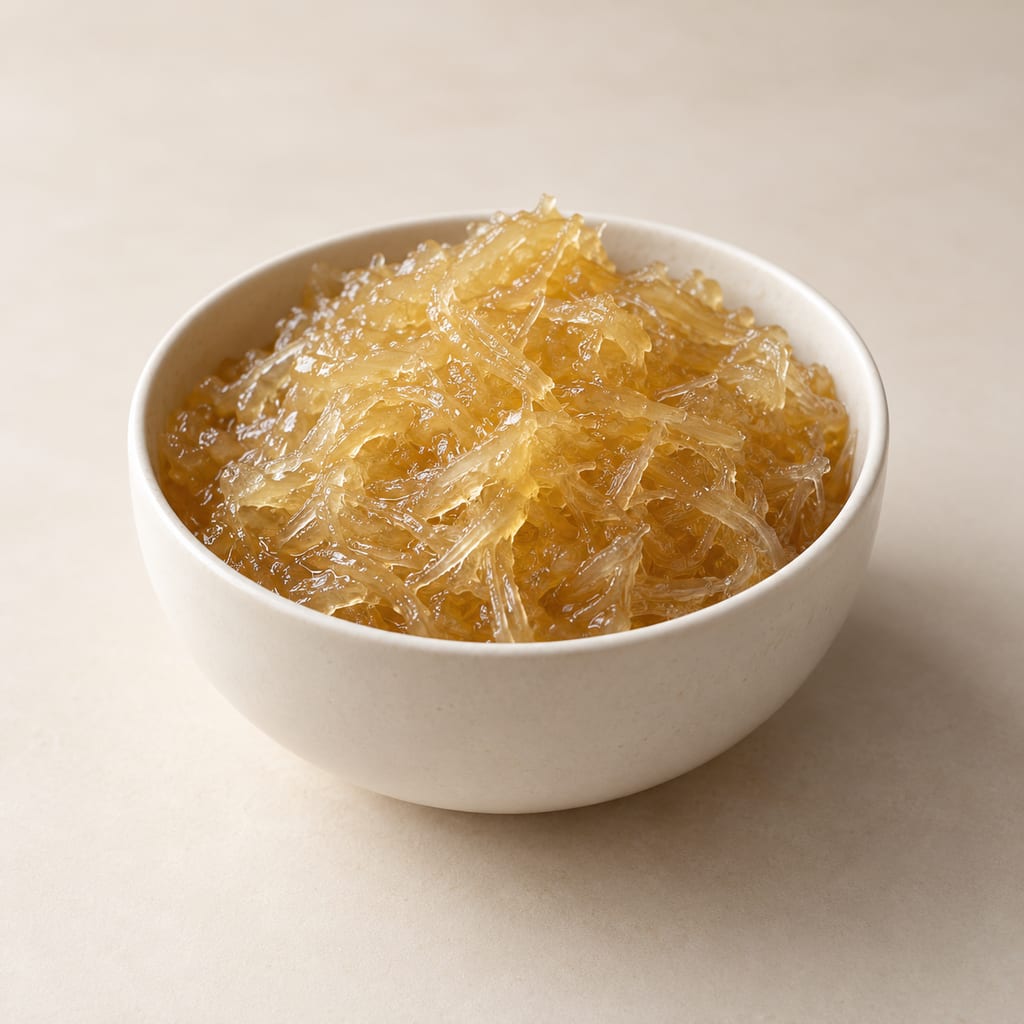
Fine strands of Cucurbita ficifolia cooked in an equal weight of sugar, then portioned for refrigerator or freezer storage. Ordinary orange pumpkin does not give the same fibres.
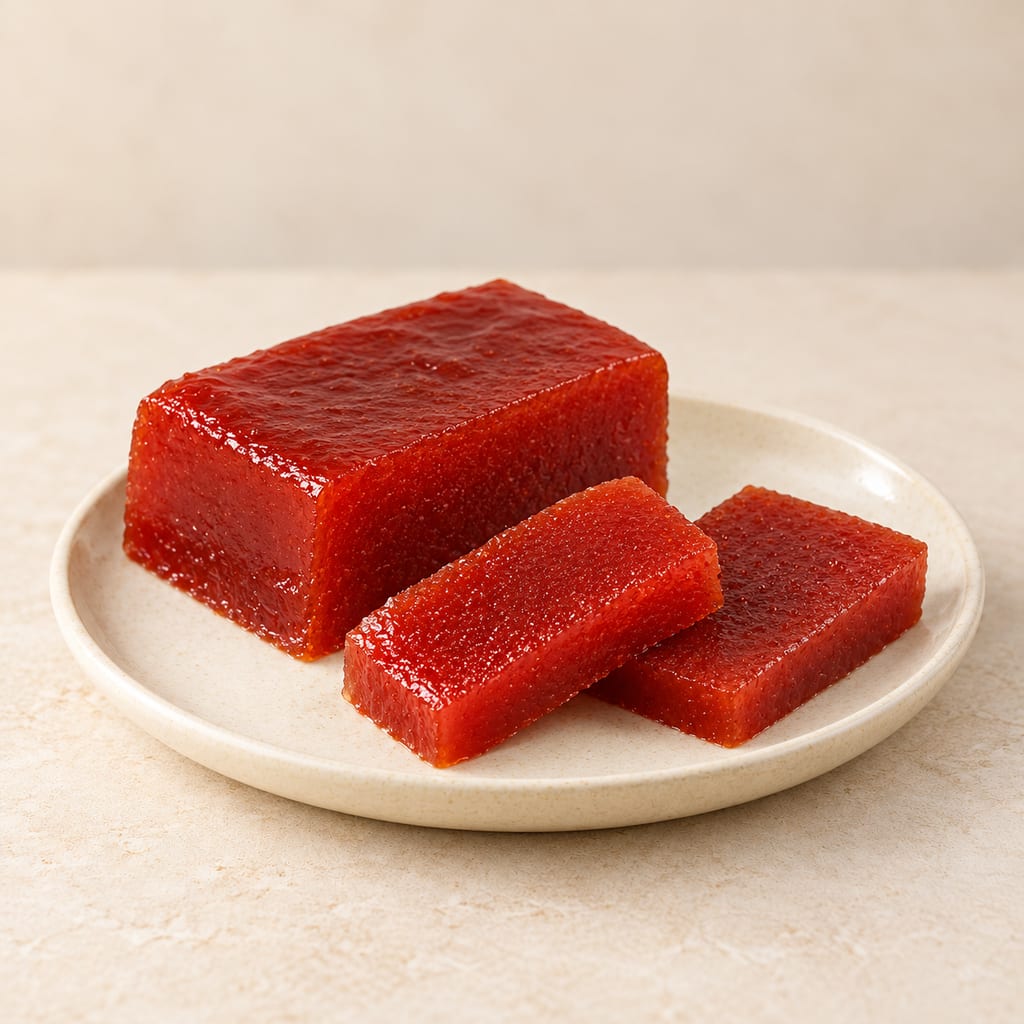
Dulce de membrillo is quince cooked with sugar into a firm paste for slicing. This family method softens the fruit in a pressure cooker, then blends it and leaves it to set.
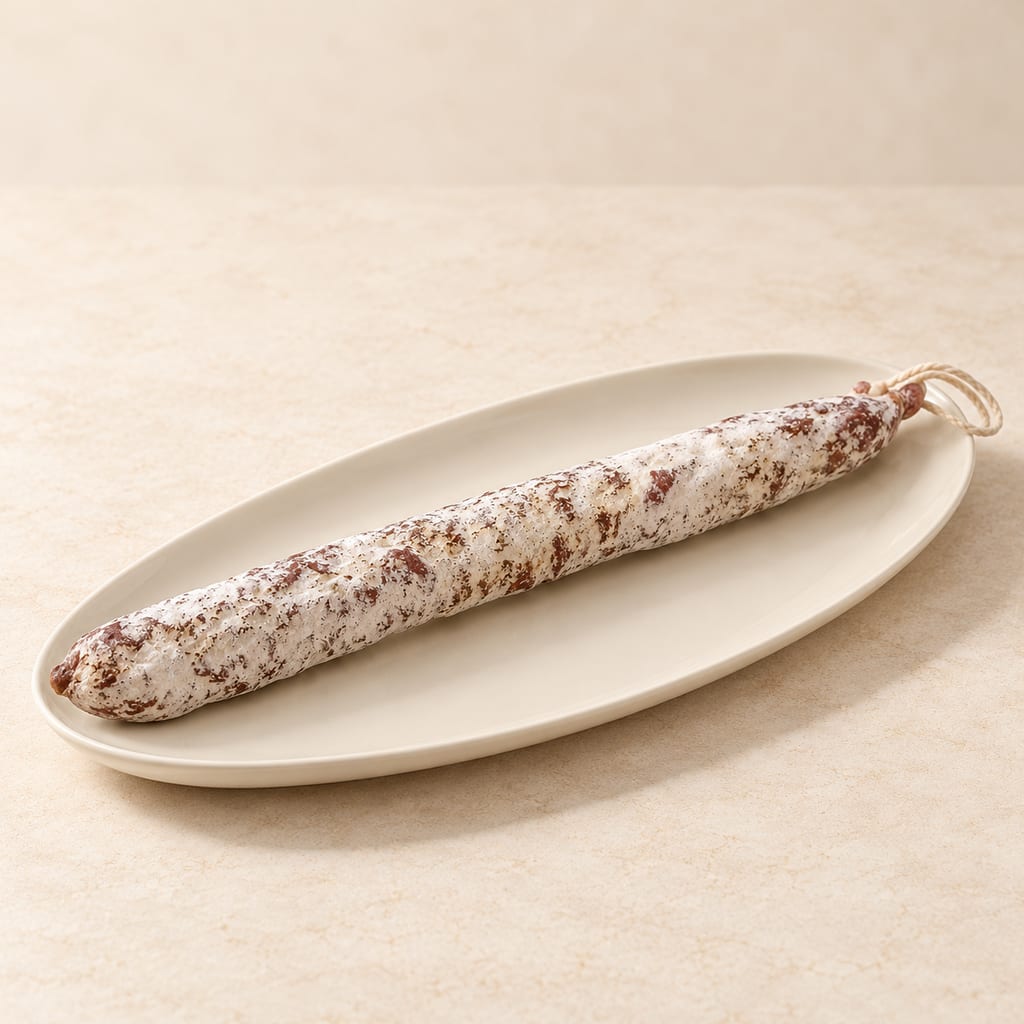
A documentary account of a modern starter-cultured Fuet formula and its place in Catalan sausage culture. The cited raw-pork process lacks matched safety validation, so this page does not present it as a household recipe.
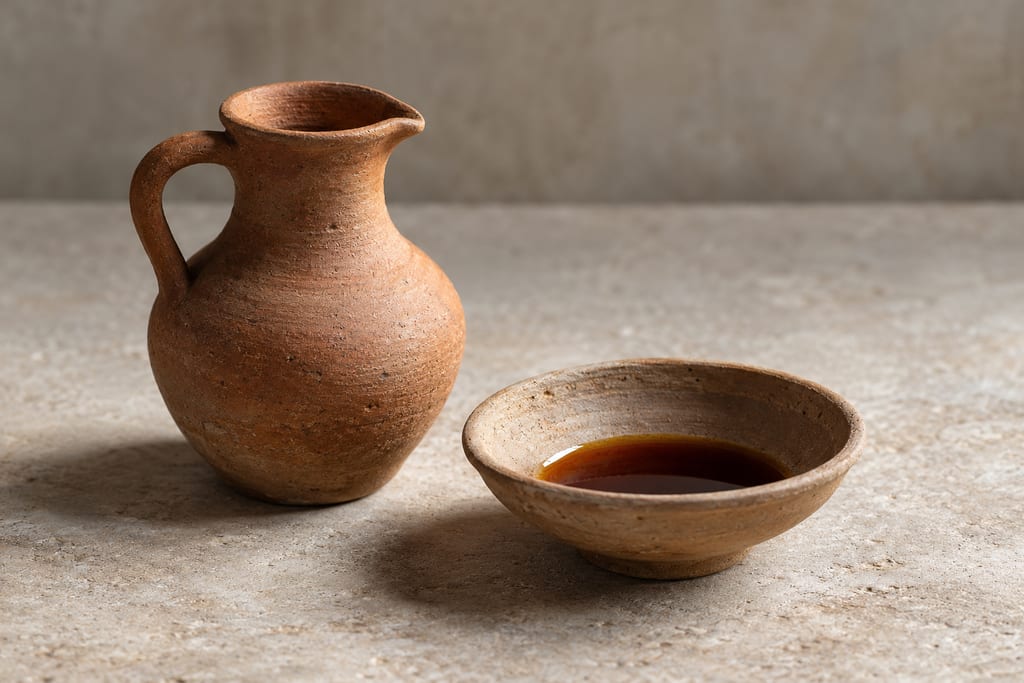
Garum, Greek garos and Latin liquamen, was the fish sauce of the ancient Mediterranean: fish and viscera salted and left in the sun, then drained off as a savoury liquid.
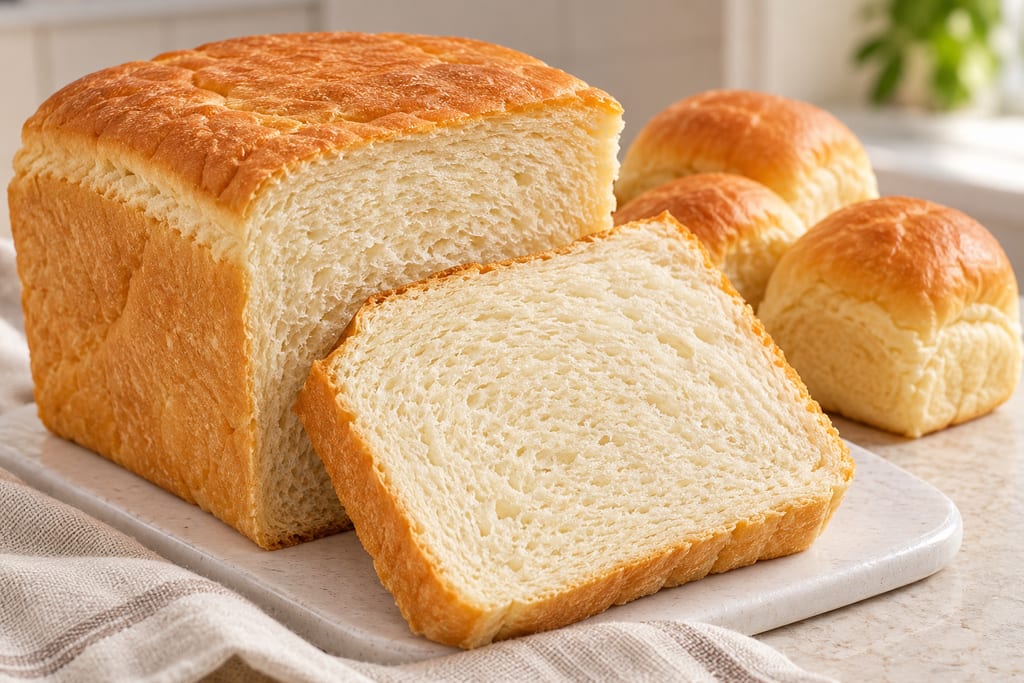
This softer home-style Agege bread uses a scalded flour paste, an enriched yeast dough and a 9×5-inch loaf pan, with rolls from the extra dough.
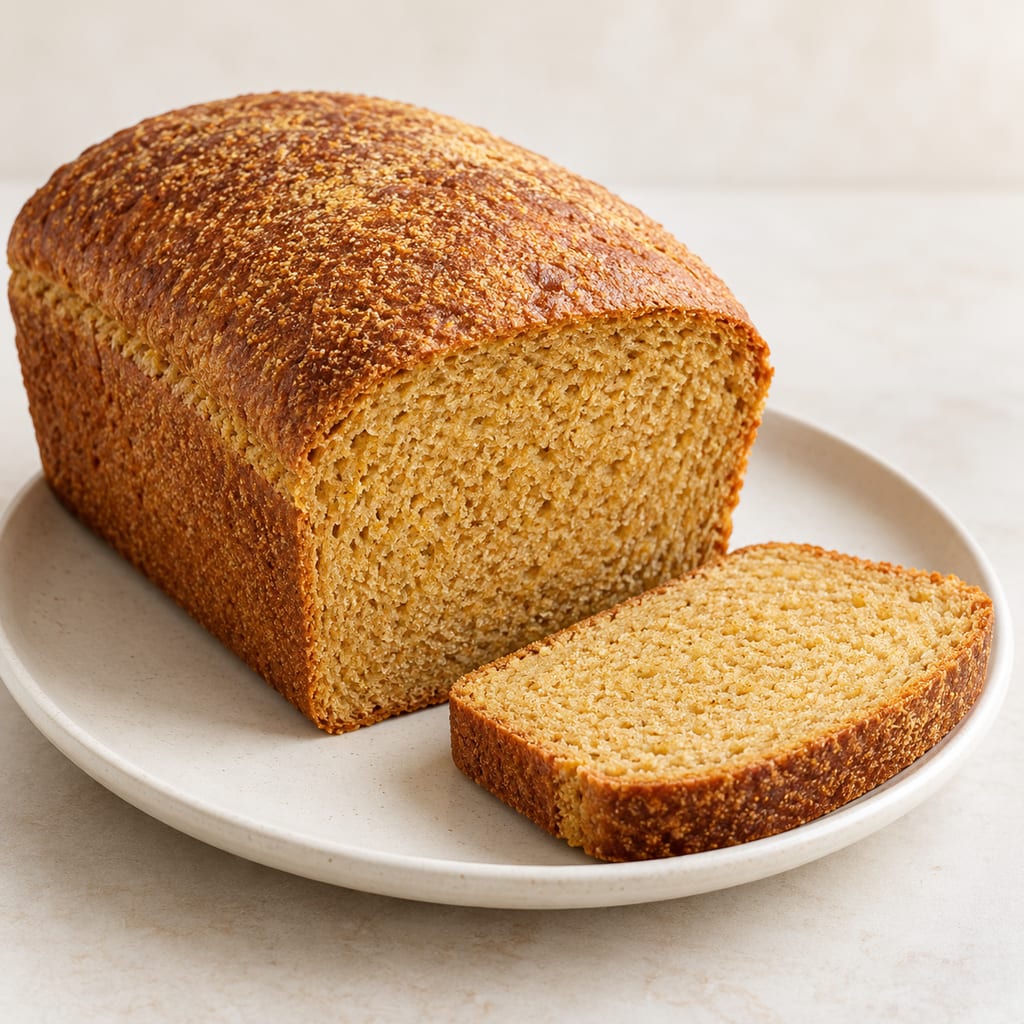
Anadama is a New England yeast loaf made with wheat flour, cornmeal and molasses. Scalded cornmeal enriches the dough, while molasses lends sweetness and a dark crust; it is especially good toasted or beside soup and baked beans.

A yeast-raised wheat ring shaped from a firm dough, briefly boiled and baked. This source-batch formula gives a gently malted crust and a chewy crumb.
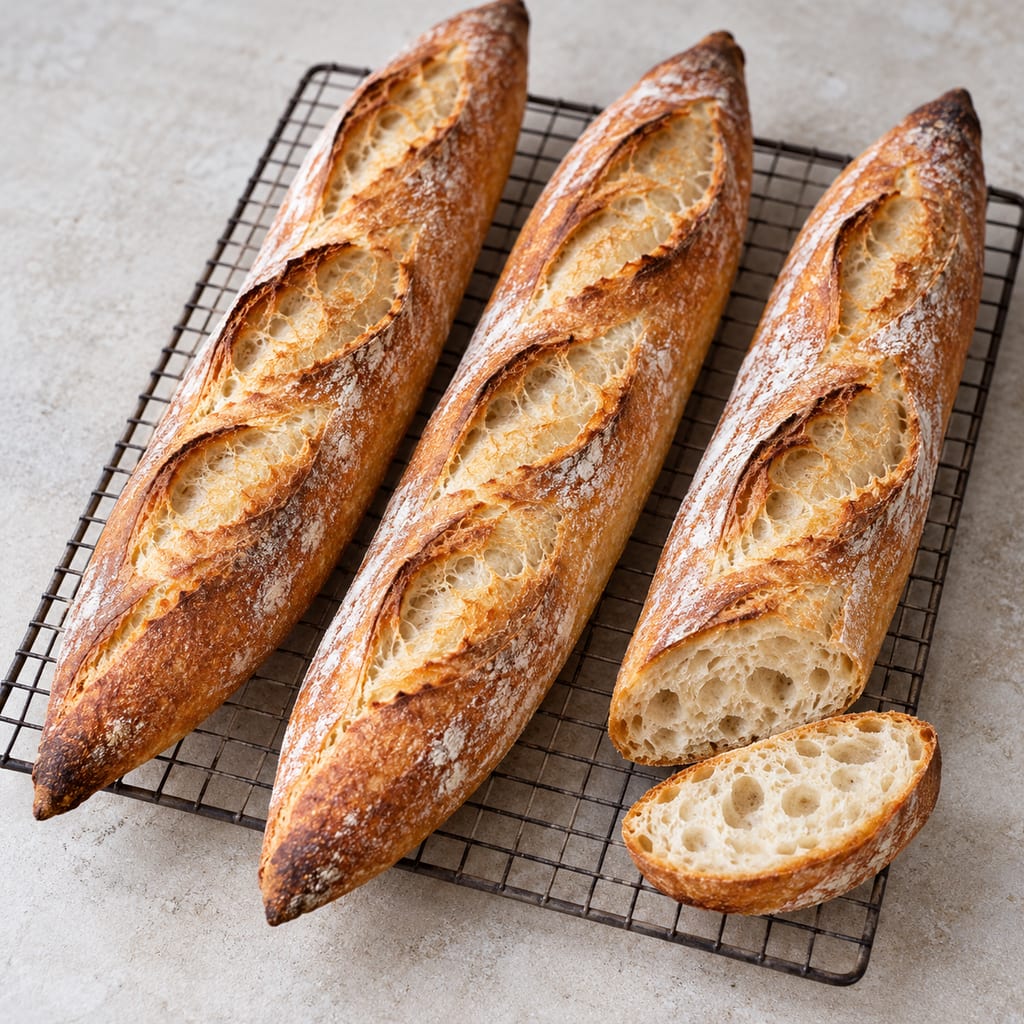
Three long, crusty wheat loaves made with an overnight yeast poolish, shaped by hand and baked with steam for a crisp crust.
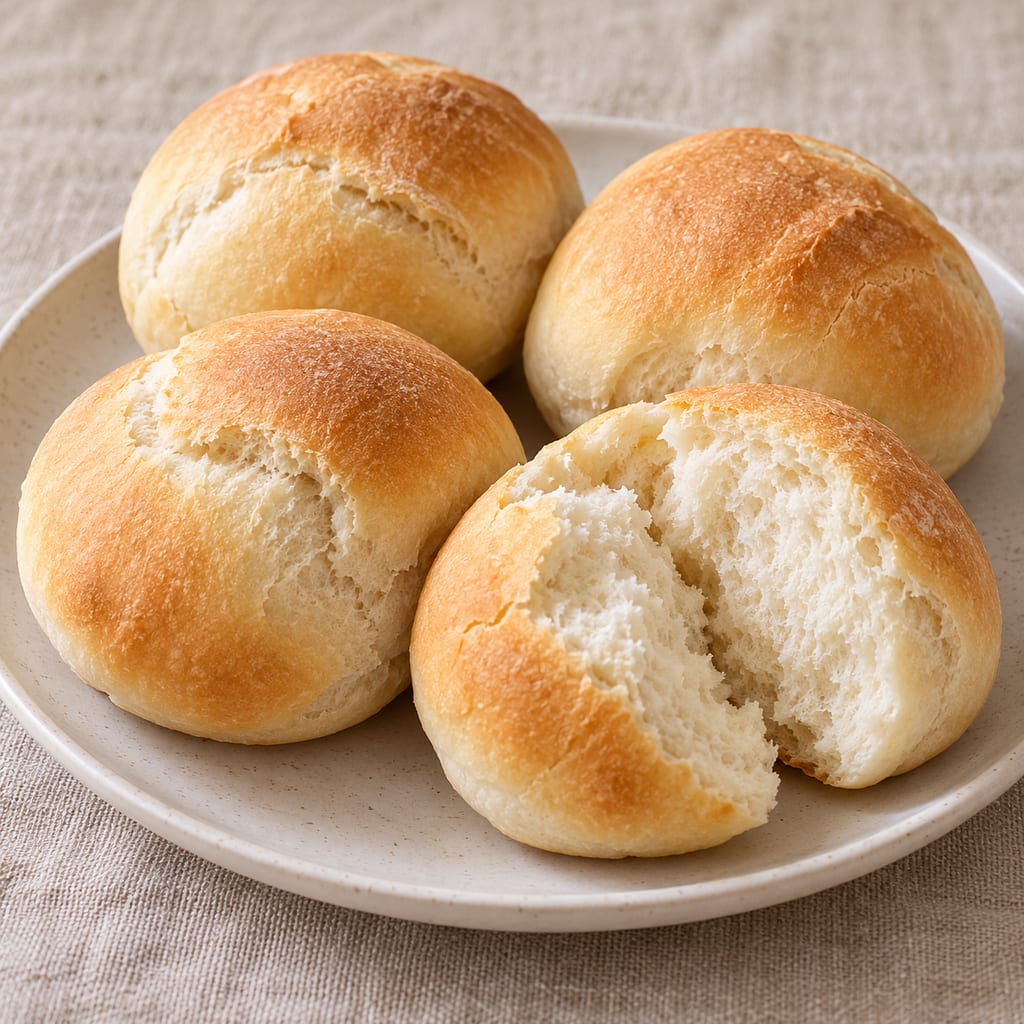
A lightly salted, yeast-raised Barbadian roll, baked in a dozen-roll home batch and often split for cutters.
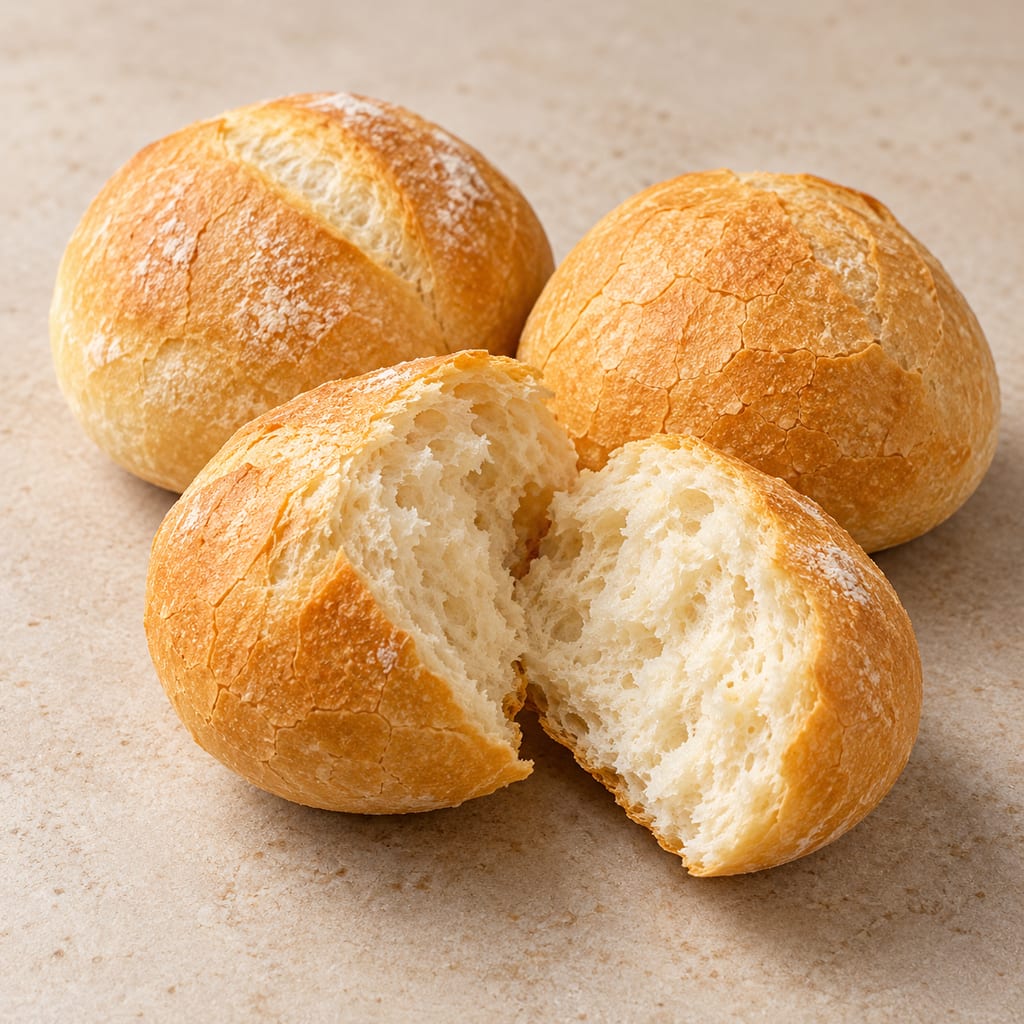
A crisp Belgian roll made from a supplier’s Croc-flour dough, mixed by hand or machine, proofed in rounds and baked with steam.
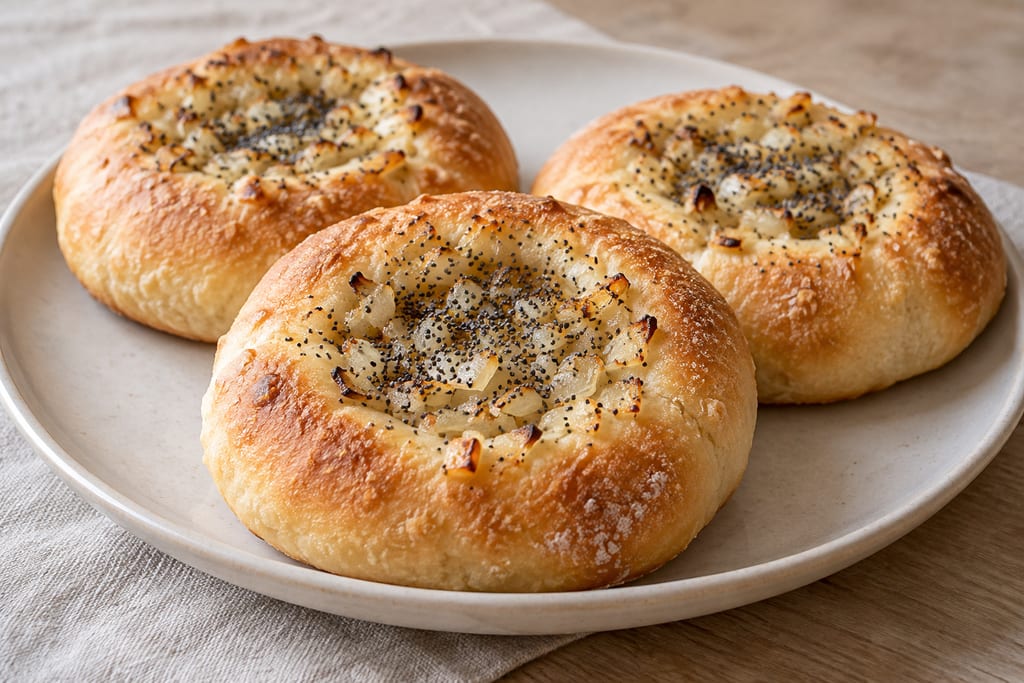
Bialys are soft, yeasted wheat rolls baked without boiling, each shaped with an onion-filled central depression instead of a hole.
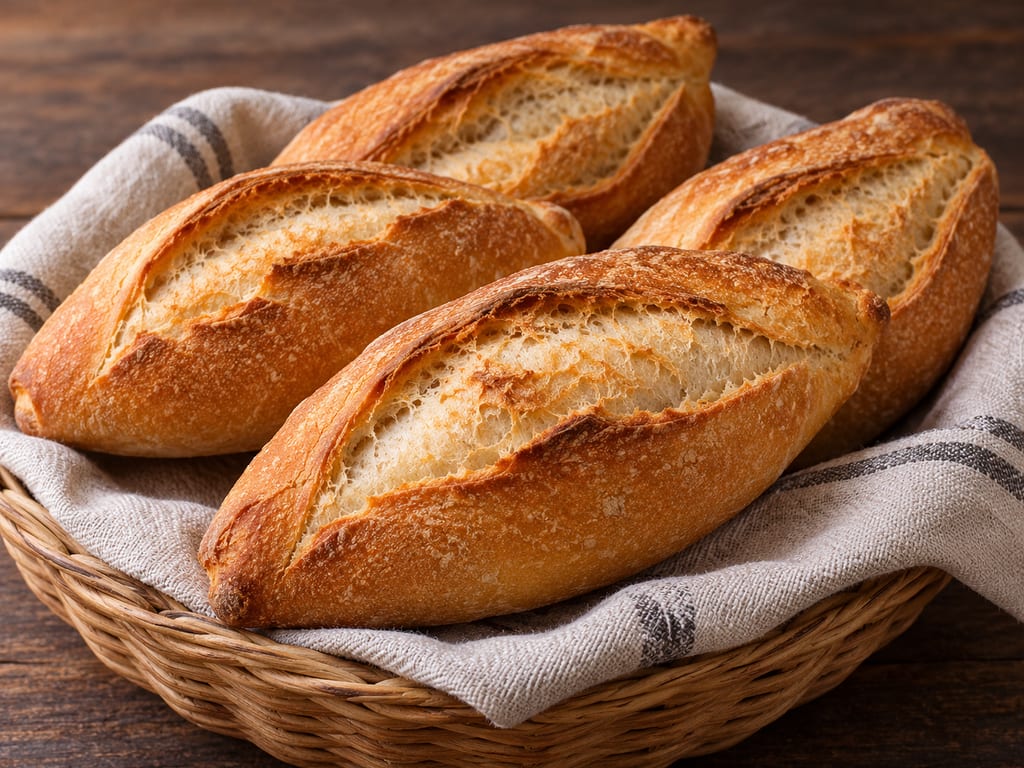
A measured, commercial-yeast home method for Guadalajara-style birote salado, with a six-hour preferment, shaped rolls and a two-temperature steam bake. This formula contains no egg.
No community contributions have been published for this entry yet.
Sign in to contribute. Published comments and photos are free to read.
King Arthur BakingInspiration · Recipe · Geographic context · Storage advice
Pan de CristalCatalan-region association in the introduction; the four-loaf formula; folding, proof and bake method; oven-temperature and equipment options; storage advice.
Cited in: Four airy loaves from a very wet dough; A regional association, not an origin story; Why the dough needs folds; Mixing, resting and folding; Dividing and baking two loaves at a time; Planning, equipment and batch limits; Crust, crumb and storage
King Arthur BakingMethod · Food science · Recipe development
Glass bread tastes as good as it looks (and it looks really, really good)The author's formula uses equal weights of water and bread flour; the article explains his choice of commercial yeast, folds and high-protein flour.
The author recounts adjusting folds and final proof across test bakes; he advises monitoring dough temperature, bubbles and gentle handling.
Cited in: Four airy loaves from a very wet dough; A regional association, not an origin story; Why the dough needs folds; Mixing, resting and folding; Planning, equipment and batch limits
La VanguardiaCultural context · Documented commercial history
Pan registrado8 October 2012 interview-based report documents Jordi Nomen's Concept Pa bakery in Barcelona's Zona Franca supplying par-baked, frozen pa de vidre to restaurants, with pa amb tomàquet and ham pairings.
This is dated evidence of commercial circulation, not proof of the first invention, the current trademark position or identity with King Arthur's home formula.
Cited in: A documented modern restaurant bread
ARACultural context · First person recollection
El pare del pa de vidre13 June 2021 profile interviews Jordi Nomen, who recalls presenting pa de vidre at San Sebastián Gastronomika in autumn 2008 and developing the dough after an excess-water mixing error.
Keep this attributed maker recollection separate from independently dated first attestation or a recipe. It supplies no permission to substitute a commercial production process into the King Arthur batch.
Cited in: A documented modern restaurant bread
Wikimedia Commons / Jan Mark HolzerImage rights research
Jaleo - Las Vegas - 7.jpgIndividual page describes pan de cristal con tomate at Jaleo, Las Vegas, 16 December 2013, sourced from Flickr and verified CC BY 2.0. Attribution licence is not PD/CC0; excluded. No original downloaded or visual acceptance claimed.