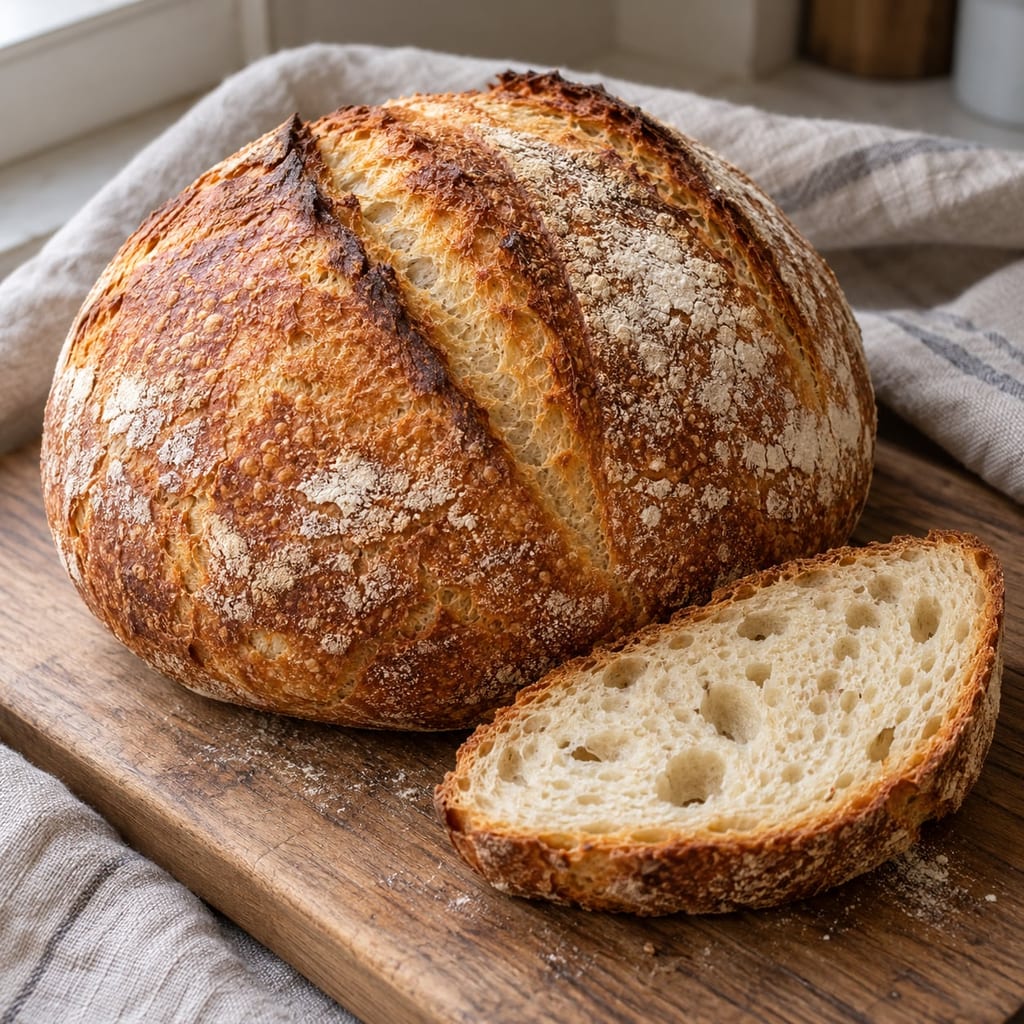
Pa de pagès (home recipe)
A Catalan country loaf from a tested home recipe, made with a fresh-yeast dough, long rise, hand-shaped round and steamed domestic-oven bake.
 FermenteaWhere food goes to change
Modern adaptation
This household Pan de Cruz adaptation uses sourdough and a folded, tight-crumb wheat dough, marked with a cross and baked in a home oven.
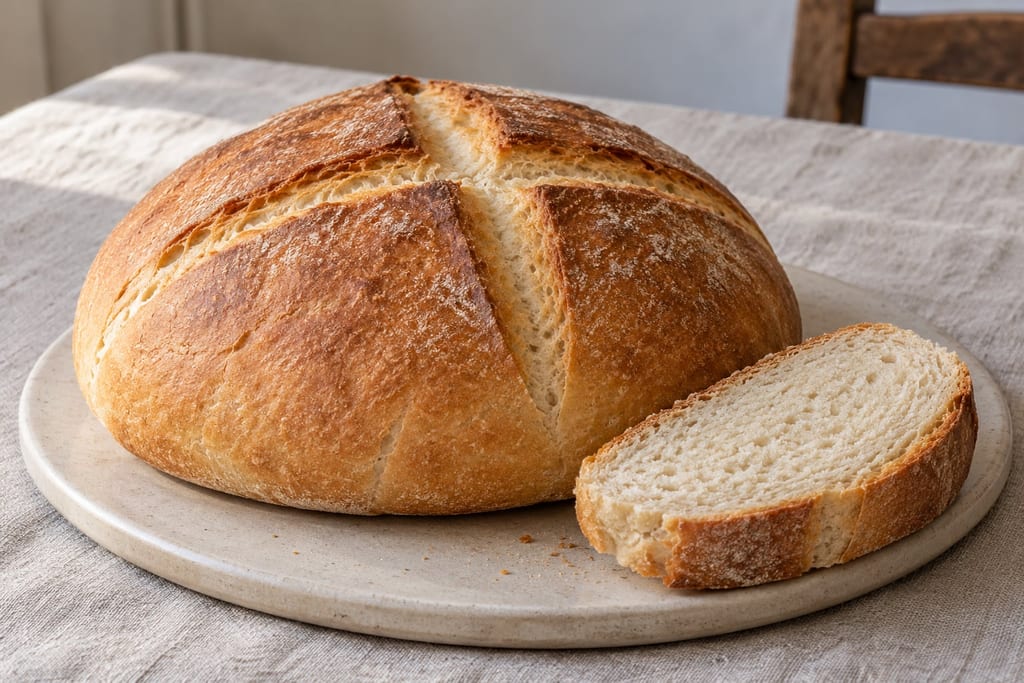
The published home recipe gives a compact four-ingredient batch: sourdough, wheat flour, water and salt. It advises a short knead, then several rounds of rolling and folding to keep the crumb tight. After the first covered warm rest, the loaf receives cross-shaped cuts on one side and small perforations on the other before its second rest and oven bake.
This method comes from a 2020 household recipe page, not the professional formula by Francisco Tejero or the protected production specification. Tejero gives a 10-kilogram flour batch with a hard-dough refining stage and a 200°C, 40-minute bake. The home recipe has different quantities, equipment cues and bake time; the two methods should not be blended.
Pan de Cruz is a Protected Geographical Indication covering Ciudad Real province. The translated specification ties the protected name to production by bakeries located within the defined area, prescribed candeal-flour properties and ingredient ranges, mechanical mixing and refining, controlled proofing, prescribed marking, staged baking, certification and traceability. A loaf made from this home recipe does not establish compliance with those conditions and should not be presented as a certified PGI product.
The household recipe and specification both associate the bread with Campo de Calatrava. They repeat a 13th-century origin claim, but the records cited in the specification have not been inspected directly for this page. That claim is therefore attributed to the secondary sources rather than treated as a verified date.
The recipe specifies 250 g sourdough, 600 g flour, 240 ml room-temperature water and 8 g salt. It does not describe how the sourdough is made or maintained, and it gives no loaf dimensions or finished weight. Knead only until the dough is uniform, roll it out and fold it up to four times, then round and flatten it slightly. Cover the loaf and leave it in a warm place for one hour.
Cut a cross into one face and brush water over the four sections it creates. Turn the loaf over, prick the opposite face several times with a toothpick and cover it for another hour. Bake in an oven preheated to 220°C (428°F) for 20–25 minutes. The source gives no measured proofing temperature or internal endpoint. Raw dough contains uncooked flour: CDC advises against tasting it, says to cook it according to recipe directions and recommends washing hands and equipment after handling.
Fascinating Spain describes Pan de Cruz as a Ciudad Real bread and attributes it to Campo de Calatrava. Its page and the PGI specification repeat a claim reaching back to the 13th century, but the underlying historical records have not been examined here; the earliest attestation is therefore left undated.
Scaling: source batch only
The dough contains uncooked flour before it enters the oven; tasting it raw can expose the cook to foodborne germs.
Hazard sourceDo not taste the raw dough; bake it according to the recipe, and wash hands, bowls, utensils and work surfaces after handling raw flour or dough.
Control sourceThe source gives an oven setting and time, not an internal-temperature endpoint.
The source uses sourdough but does not describe its preparation or storage.
The household recipe page associates Pan de Cruz with Campo de Calatrava. The translated PGI specification delimits protected production to Ciudad Real province; this home adaptation does not by itself establish PGI compliance.
A Catalan country loaf from a tested home recipe, made with a fresh-yeast dough, long rise, hand-shaped round and steamed domestic-oven bake.
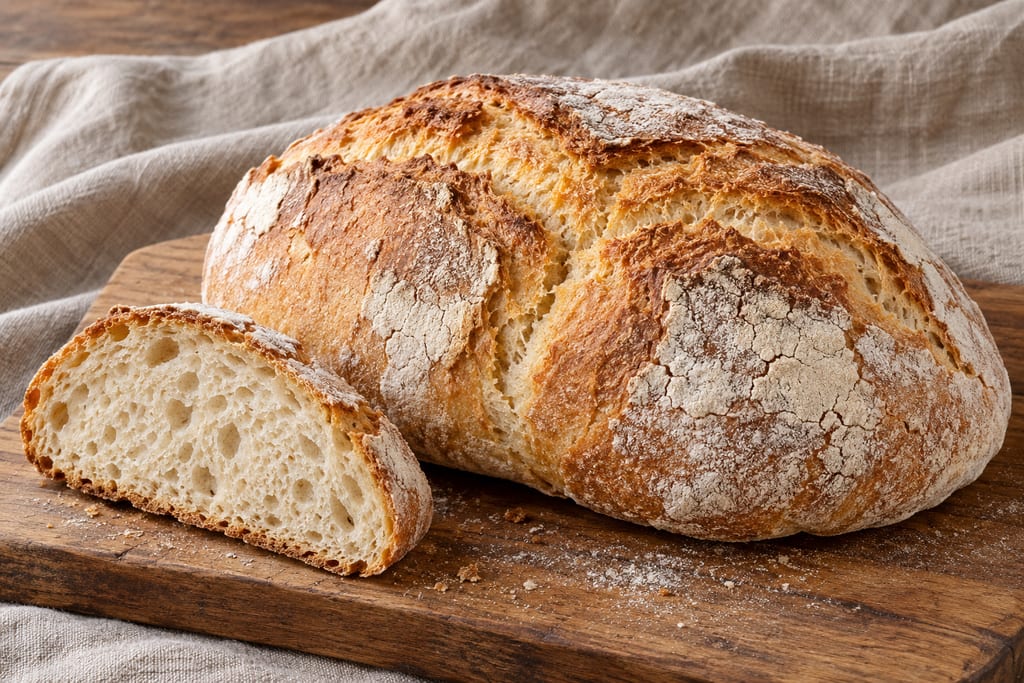
This home sourdough adaptation borrows Pan de Cea’s wheat-forward loaf and central fenda while using a domestic oven and a separately documented modern formula.
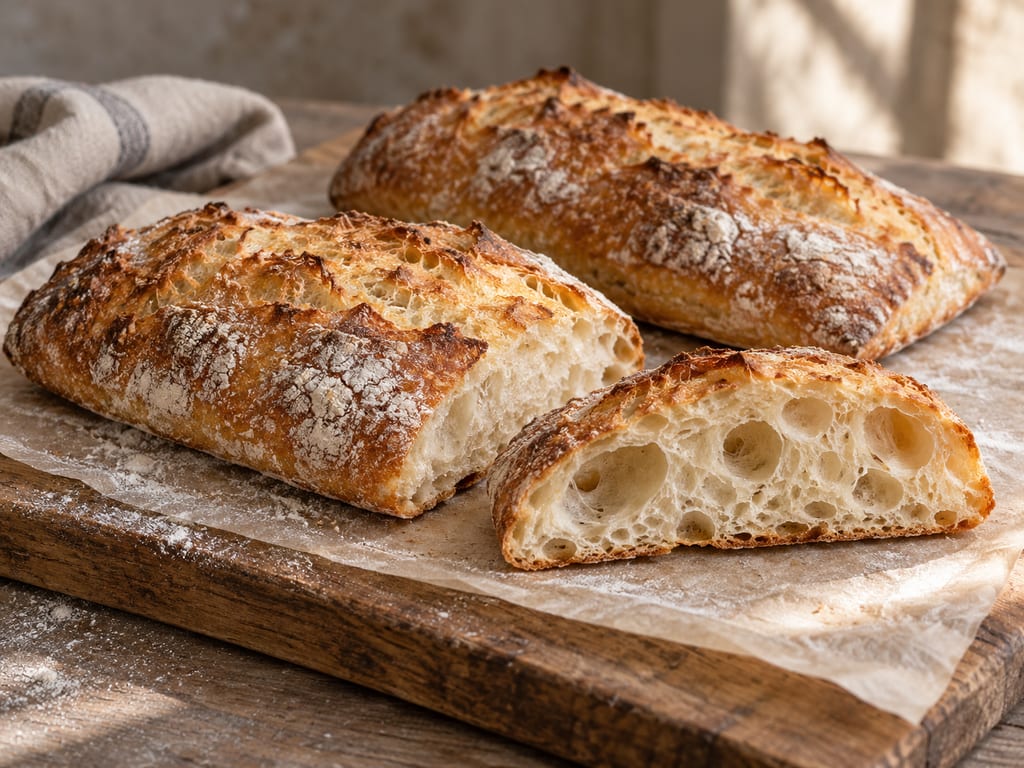
A Catalan-associated wheat loaf with a very wet dough, pan de cristal develops an open crumb through repeated folds and careful handling.
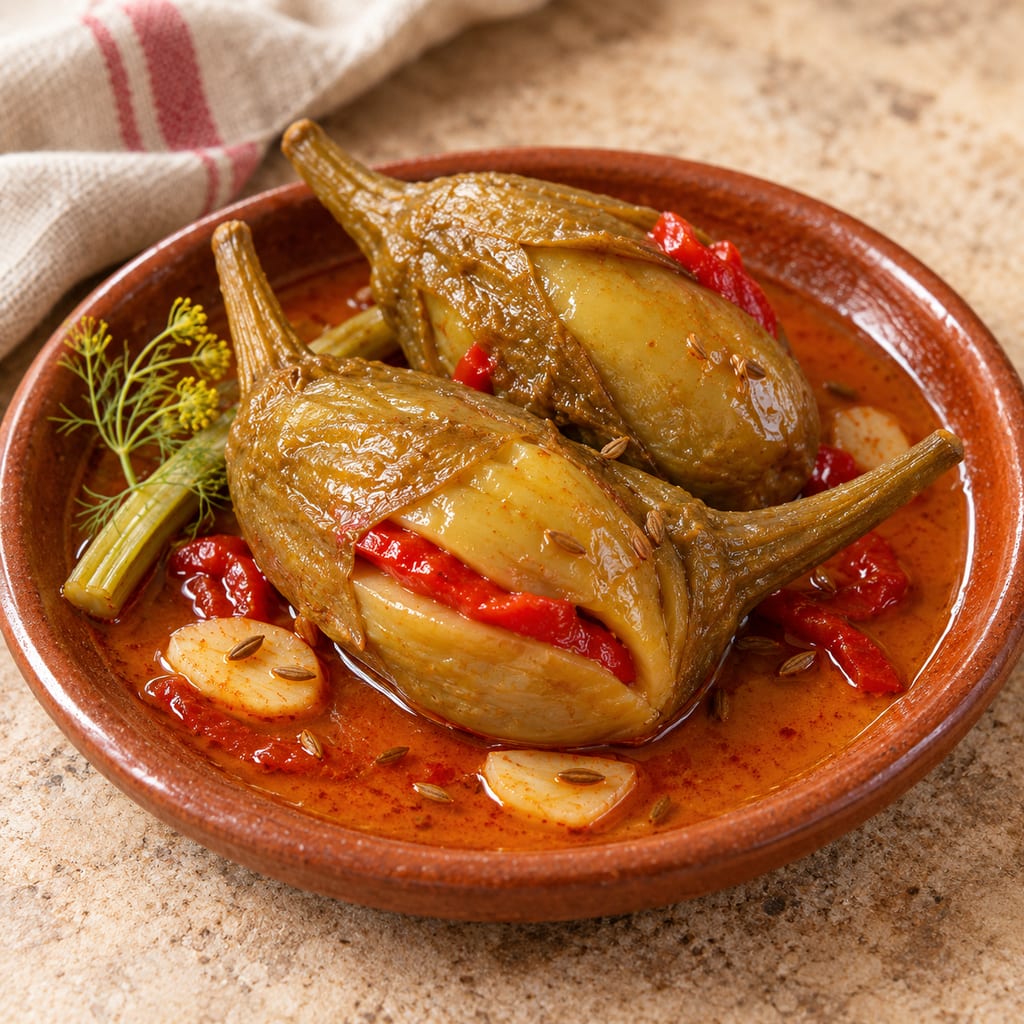
A protected aubergine preserve from Ciudad Real in Spain: tender fruit of the local Dealmagro variety, cooked briefly and then fermented in a vinegared, paprika-seasoned dressing.
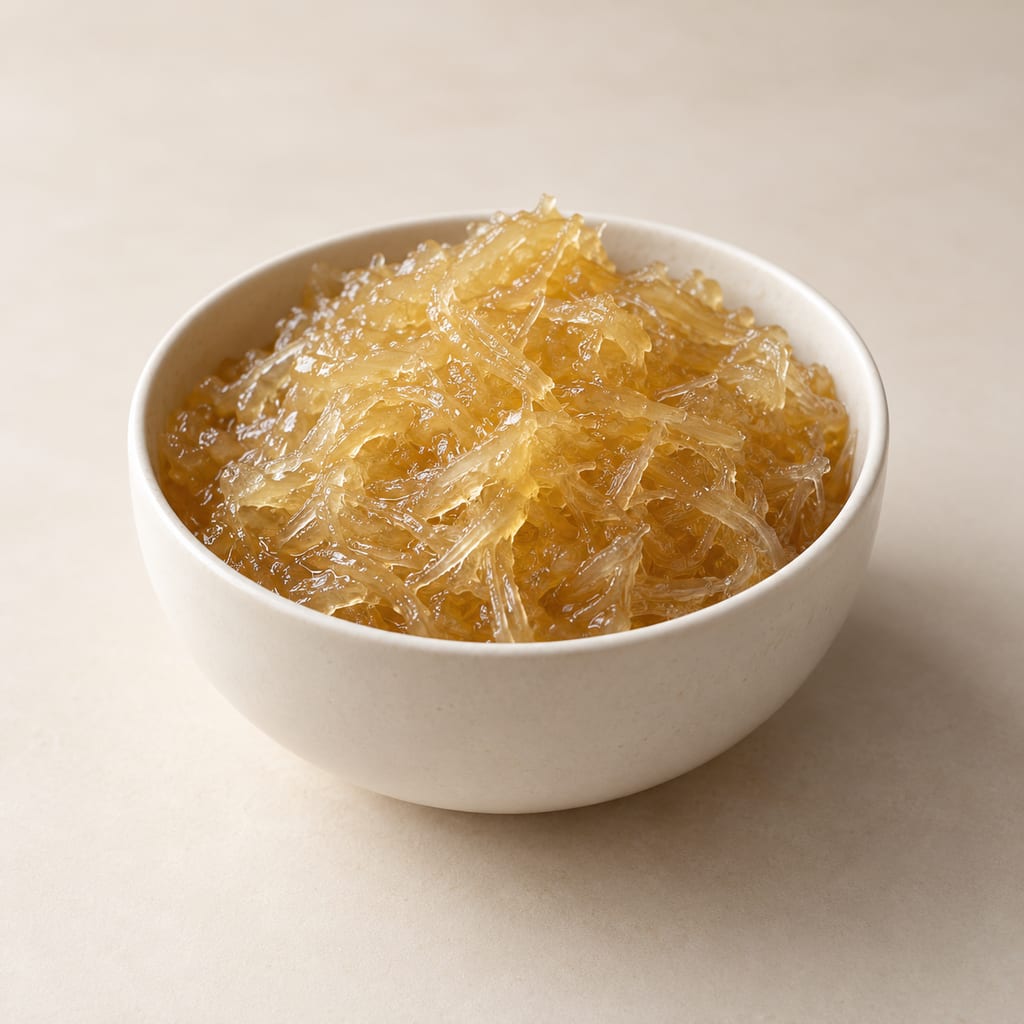
Fine strands of Cucurbita ficifolia cooked in an equal weight of sugar, then portioned for refrigerator or freezer storage. Ordinary orange pumpkin does not give the same fibres.
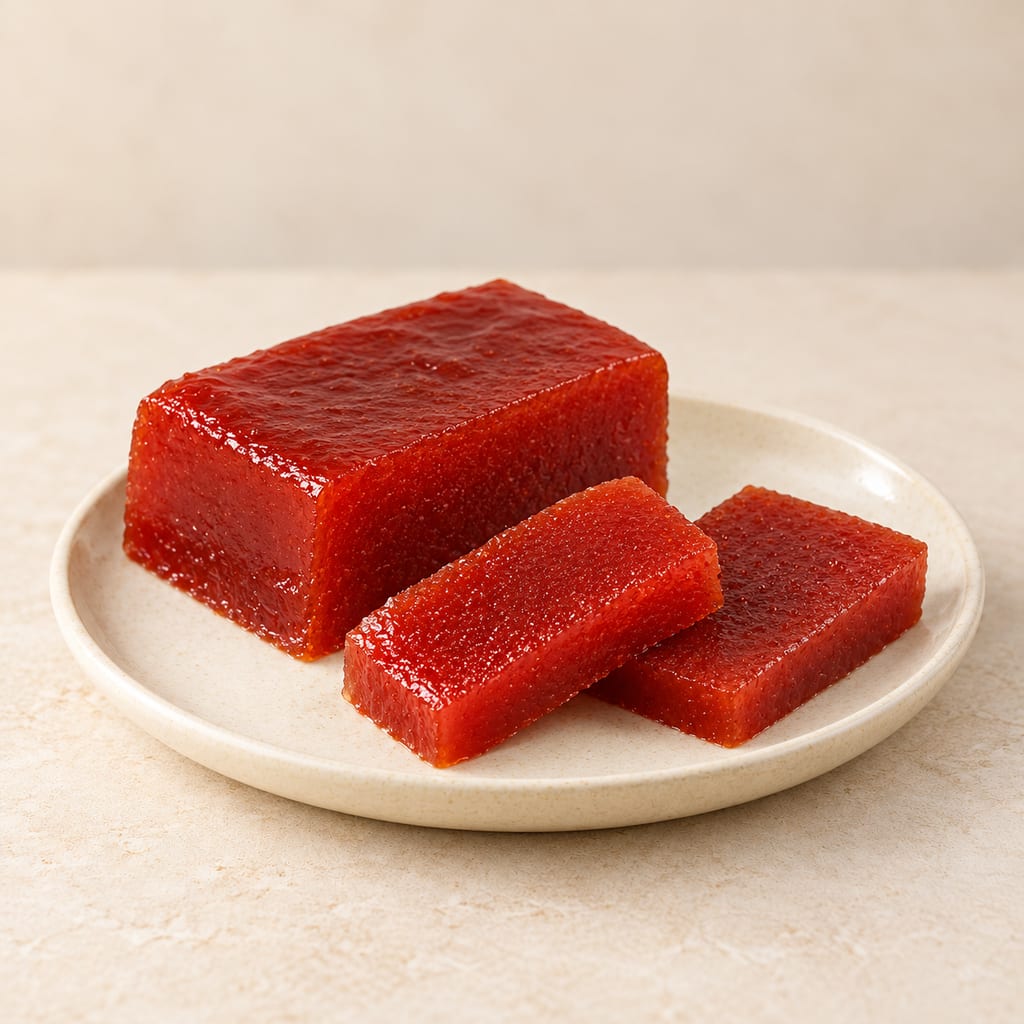
Dulce de membrillo is quince cooked with sugar into a firm paste for slicing. This family method softens the fruit in a pressure cooker, then blends it and leaves it to set.
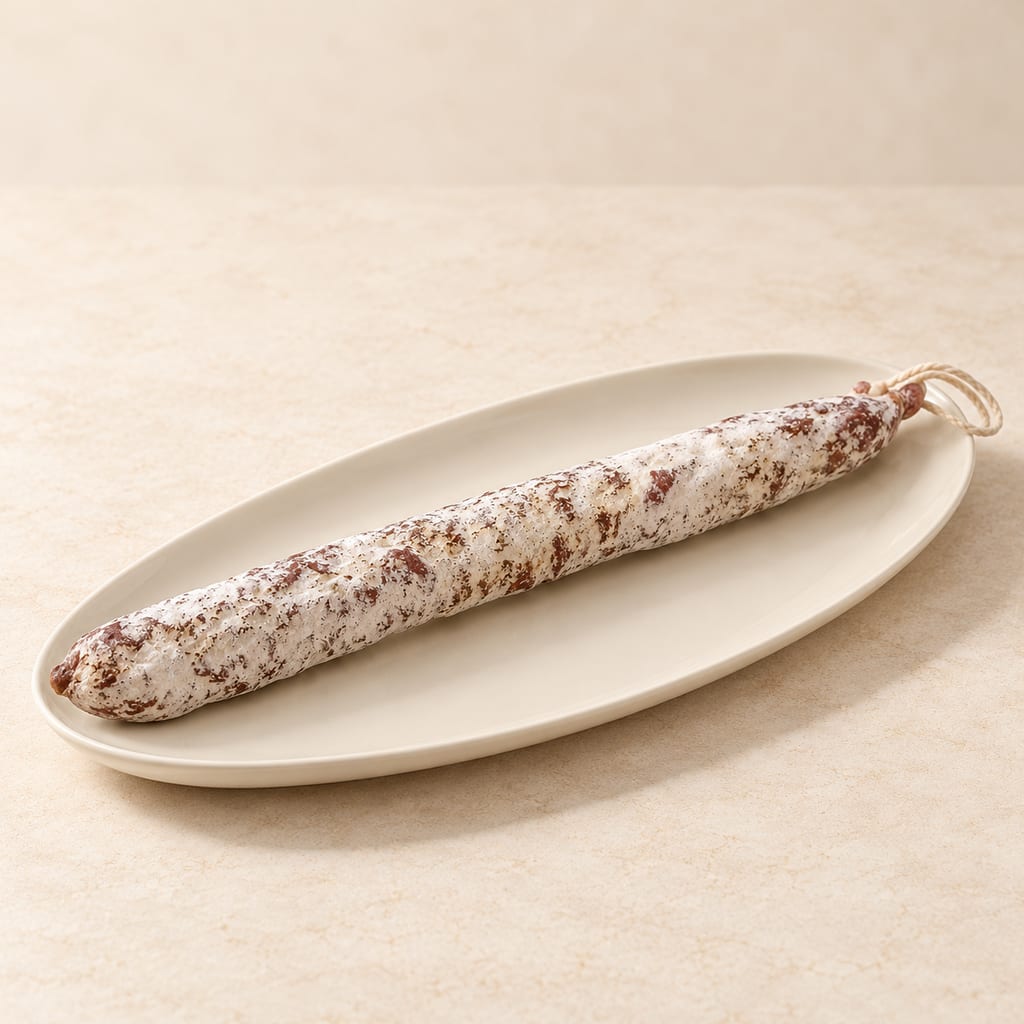
A documentary account of a modern starter-cultured Fuet formula and its place in Catalan sausage culture. The cited raw-pork process lacks matched safety validation, so this page does not present it as a household recipe.
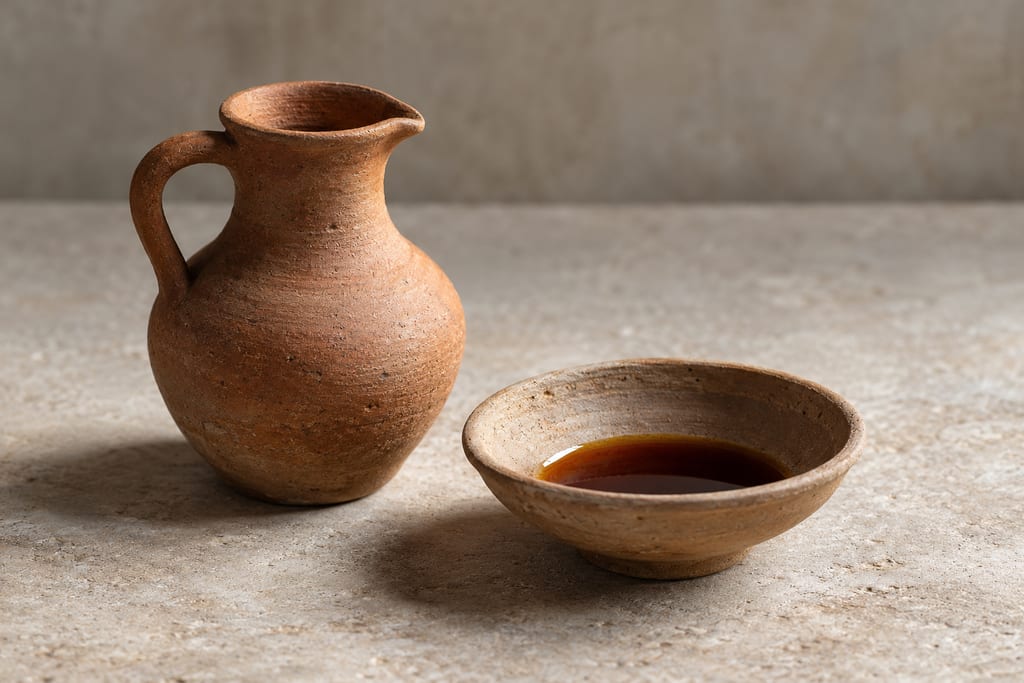
Garum, Greek garos and Latin liquamen, was the fish sauce of the ancient Mediterranean: fish and viscera salted and left in the sun, then drained off as a savoury liquid.
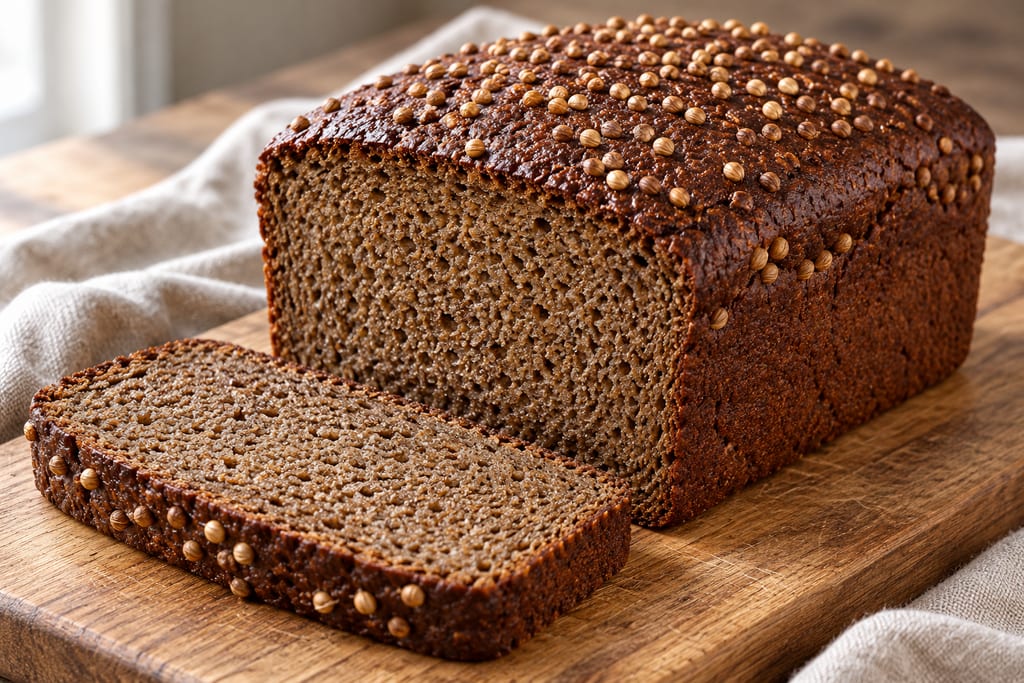
A dark rye sourdough with coriander and roasted barley-malt scald, based on Lily McCann's measured Borodinsk-ish home formula.
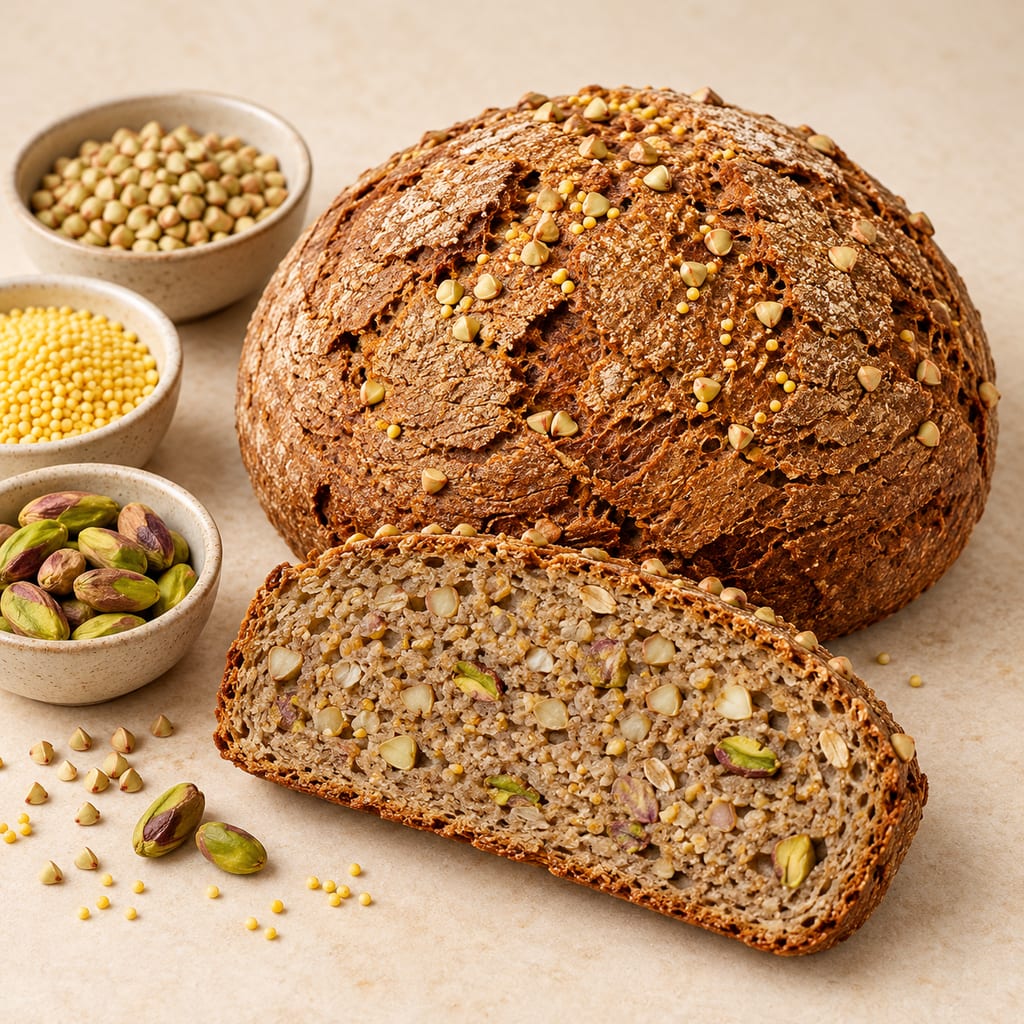
A gluten-free sourdough loaf of about 1 kg. A buckwheat and quinoa starter leavens a dough with cooked whole buckwheat groats, millet and a dark gluten-free bread mix, baked in a lidded pot.
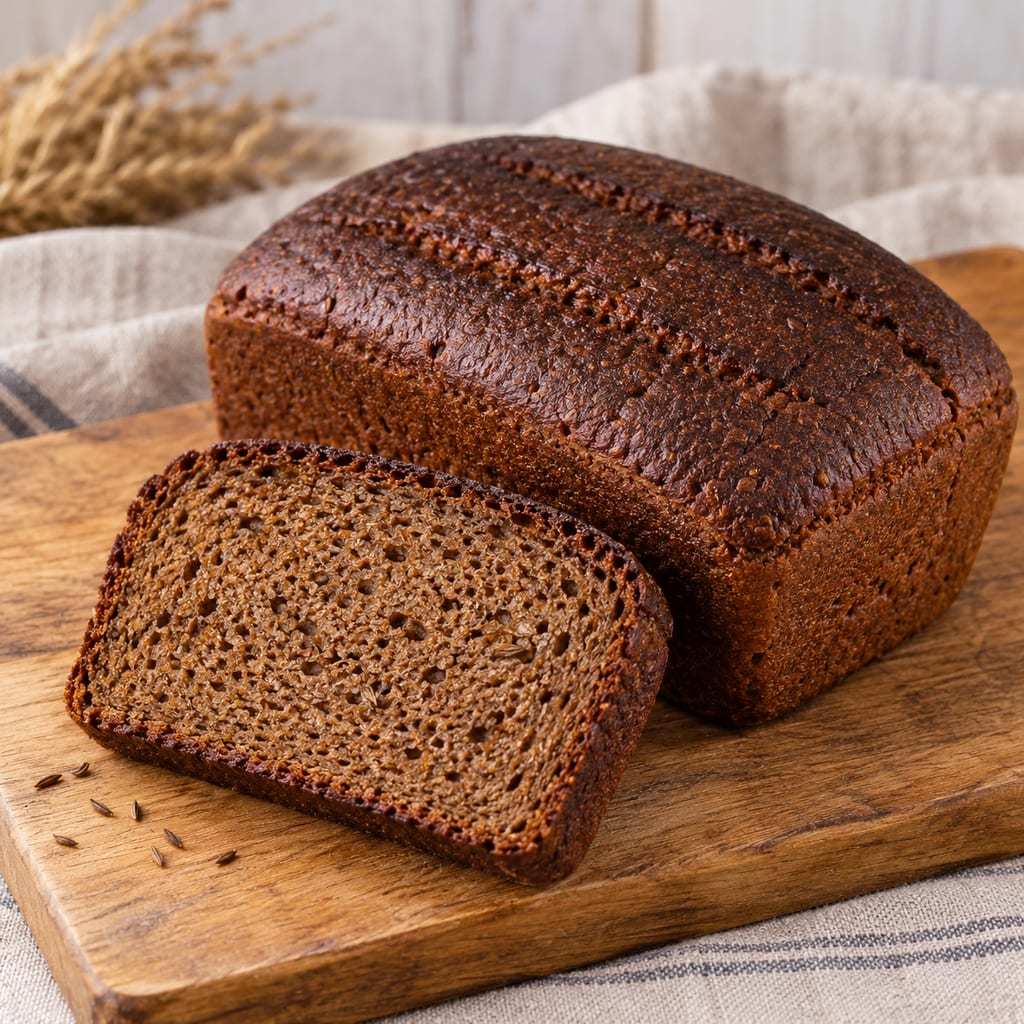
A Lithuanian dark rye loaf made with an overnight rye preferment, caraway, honey and sugar, then proofed in a loaf pan and baked in two stages.
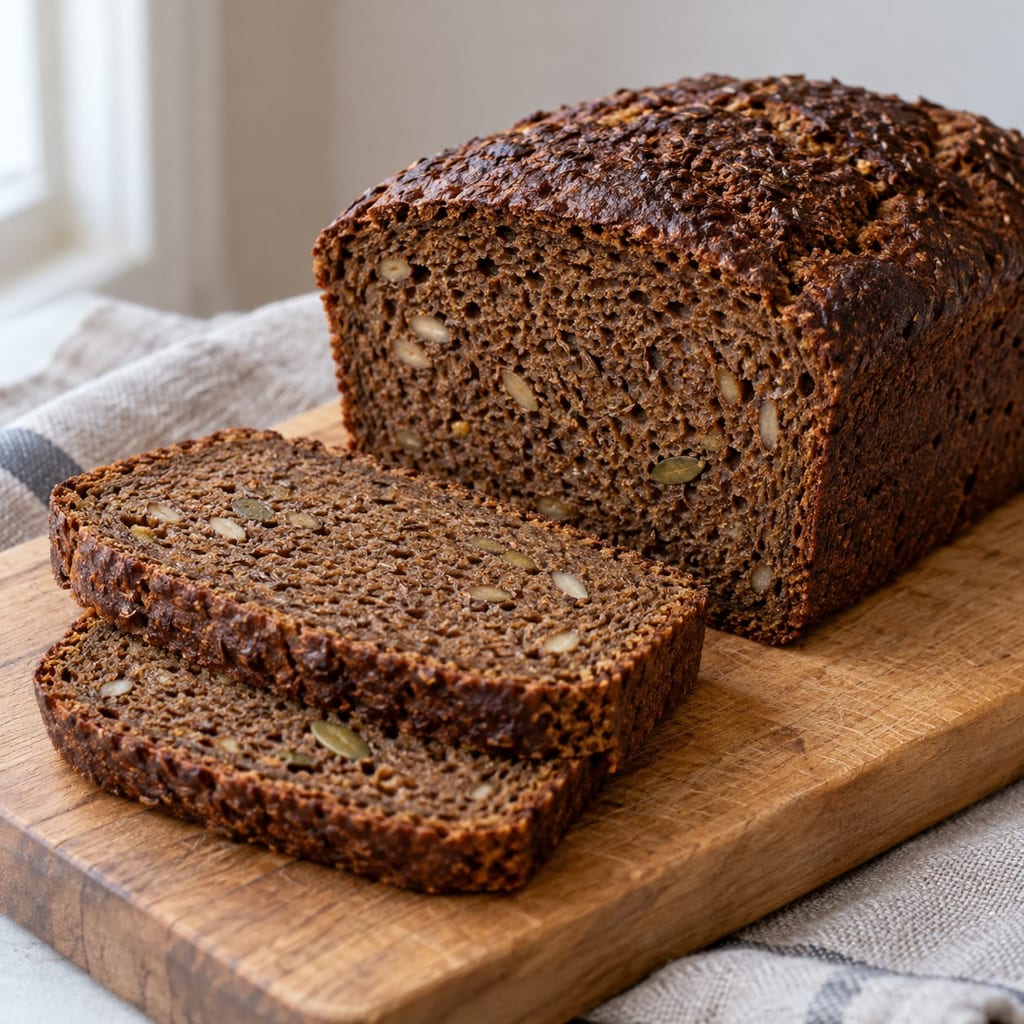
This Estonian rye loaf uses a sourdough preferment, a rye scald and soaked seeds, with a small amount of baker’s yeast. Two tins bake through a staged hot-to-moderate oven schedule.
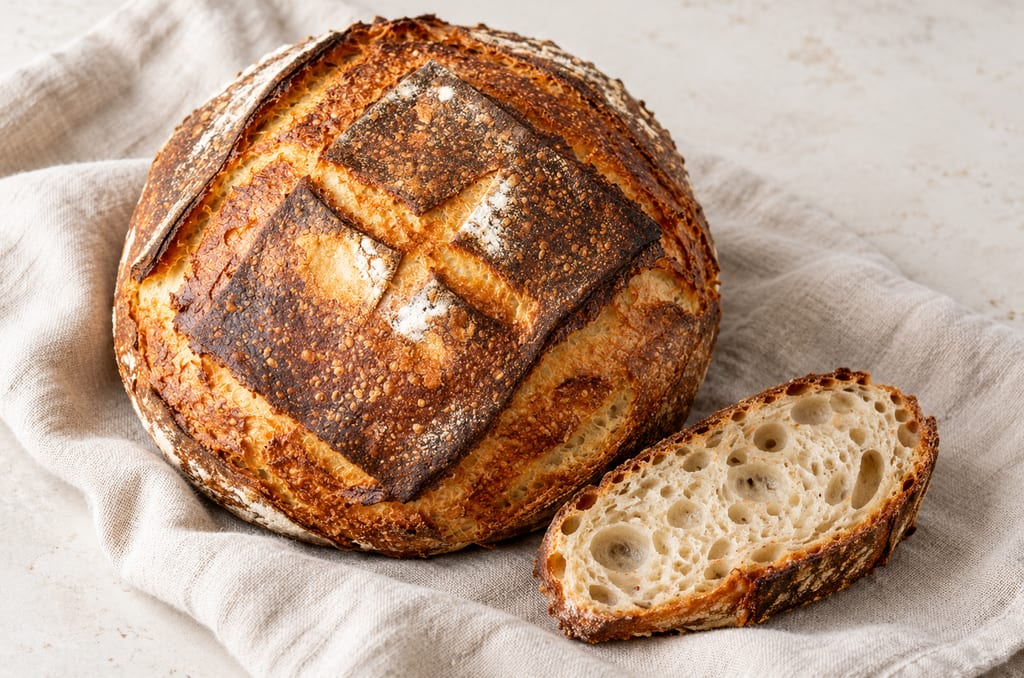
A ripe sourdough starter leavens this modern low-handling loaf. Three hourly folds organize the sticky dough before a long refrigerator rest, final proof and covered bake.
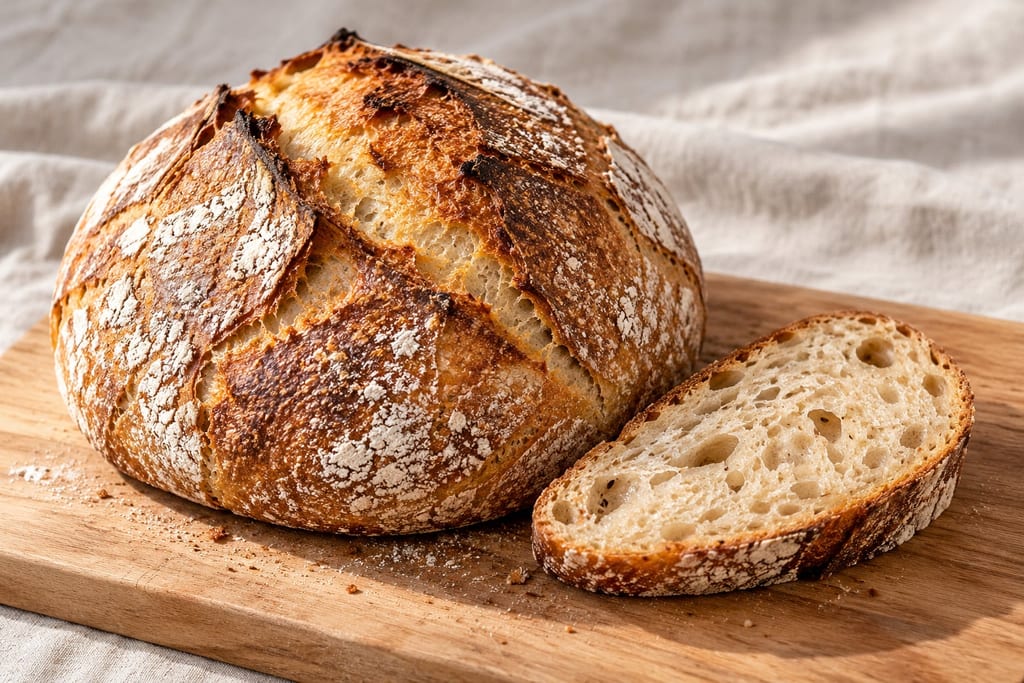
Two large French-style wheat loaves use unfed sourdough starter, whole-wheat flour, long room-temperature fermentation and a covered-pot bake.
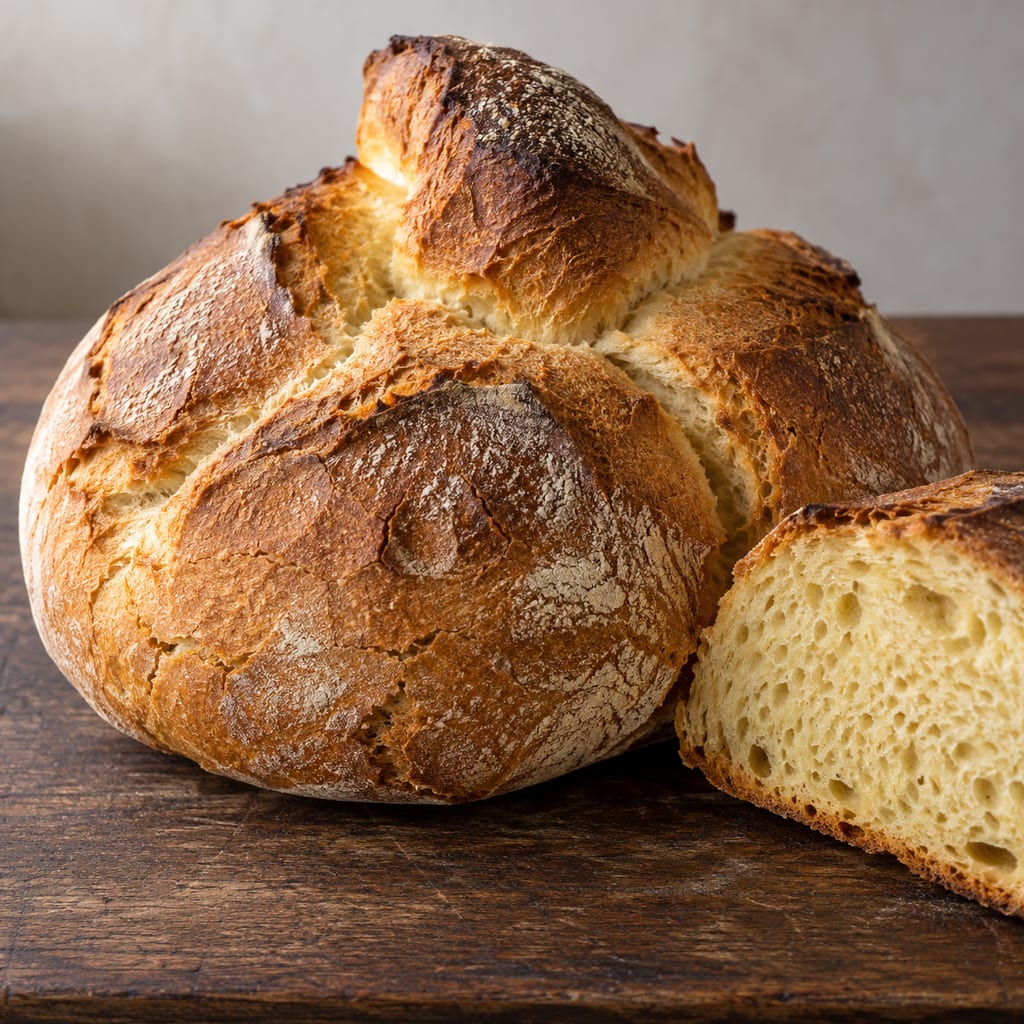
A protected durum-wheat sourdough bread documented by a commercial production specification. The official 100 kg batch and oven process are recorded without inventing a household scale.
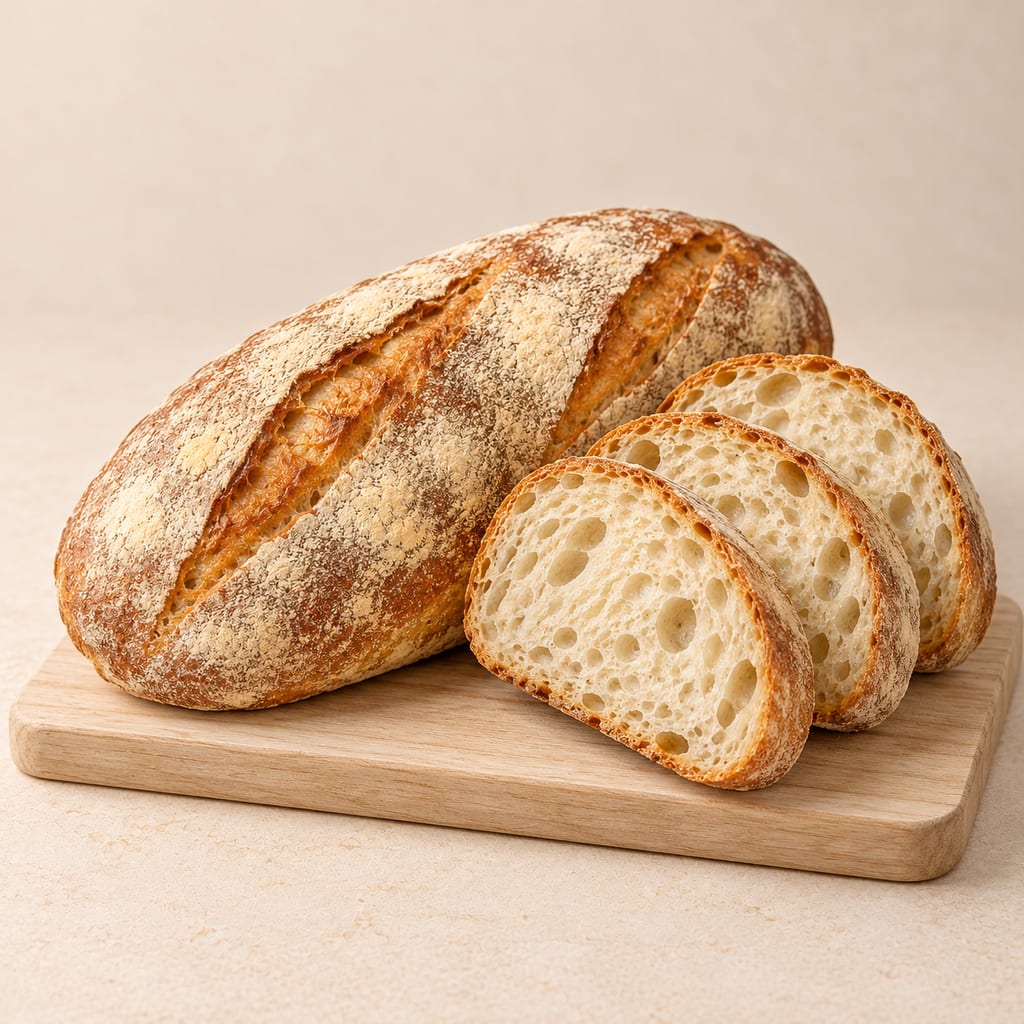
Tuscany's saltless wheat bread, leavened with a sourdough biga: a mild loaf with a crisp dark crust that was made to sit beside salty meats, cheeses and stews.
No community contributions have been published for this entry yet.
Sign in to contribute. Published comments and photos are free to read.
Fascinating SpainHousehold recipe adaptation · Regional context
Pan de Cruz from Ciudad Real: Bread RecipeThe recipe lists 250 g sourdough, 600 g wheat flour, 240 ml room-temperature water and 8 g salt.
Its method kneads only until uniform, stretches and folds the dough up to four times, gives two one-hour warm rests with cross scoring and pricking between them, then bakes at 220°C for 20–25 minutes.
The page identifies the bread with Ciudad Real and Campo de Calatrava, but its 13th-century claim is not supported there by inspected primary records.
Cited in: A household recipe bearing the name; The PGI has a separate production standard; Fold, score and bake
Francisco Tejero, Asesoría Técnica en PanificaciónProfessional formula comparison
Pan de cruzThe separate technical formula uses 10 kg flour with 4.5 L water, 200 g salt, unquantified improver, 2 kg masa madre and 200 g yeast.
Its short professional method uses hard-dough refining, 750 g pieces, a light crust before scoring, and 200°C baking for 40 minutes. It is not the small-batch home method used here.
Cited in: A household recipe bearing the name
UK Department for Environment, Food & Rural AffairsProtected product specification · Geographic and historical context
Terms and Conditions “IGP Pan de Cruz de Ciudad Real”The specification limits protected production to bakery facilities in Ciudad Real province, with production subject to certification and traceability controls.
The PGI process defines candeal flour strength, water, sourdough and pressed-yeast ranges; it requires mechanical mixing and refining, controlled proofing, official marking and a staged oven bake.
It describes the protected loaf and historical claims, including a 13th-century account; the cited historic records are not directly verified in this recipe record.
Cited in: The PGI has a separate production standard
Foods & Wines from Spain (ICEX)Protected product description
Pan de Cruz de Ciudad Real PGIThe product page describes the compact, dense loaf and its cross cut, summarizes professional PGI production, and reports the product's geographic area and quality characteristics. Those commercial specifications are kept distinct from this household recipe.
Cited in: The PGI has a separate production standard
Centers for Disease Control and PreventionFood safety guidance
Raw Flour and DoughUncooked flour can carry germs; do not taste raw dough; cook flour-containing dough according to its directions; wash hands, bowls, utensils and counters after handling raw flour or dough.
Cited in: Fold, score and bake