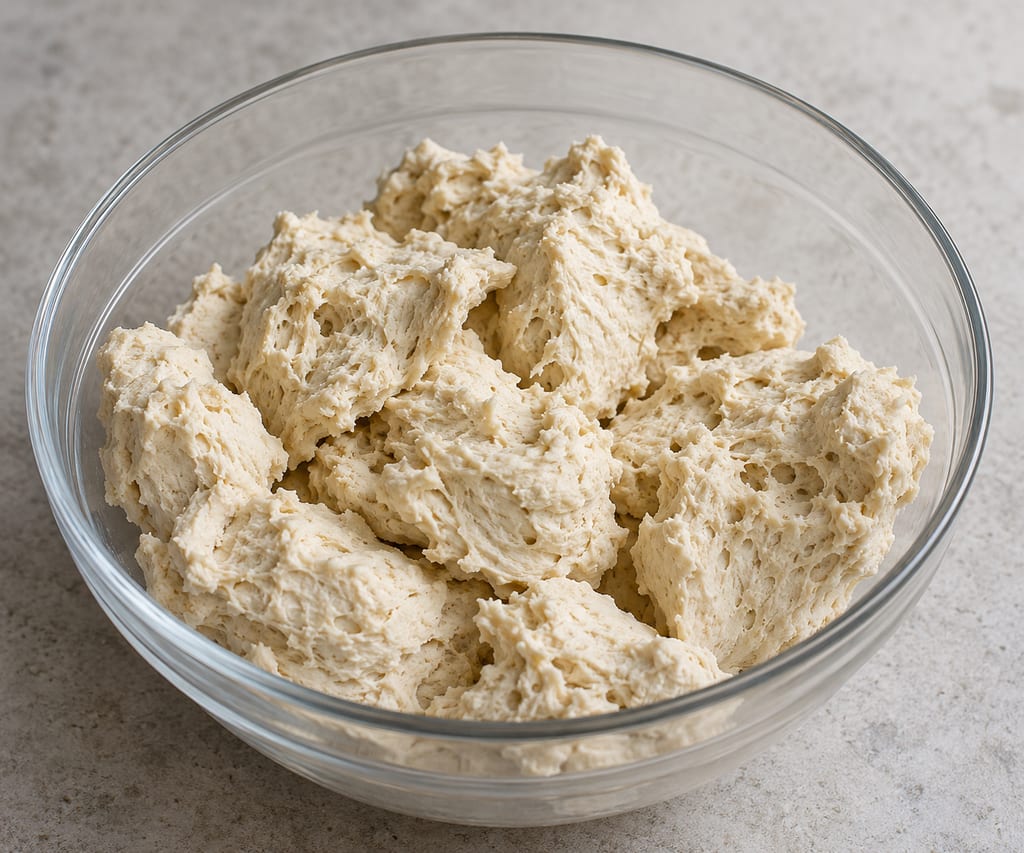
Biga
Biga is an Italian bread preferment of flour, water and a little yeast, usually a stiff unsalted mass of about 45 per cent water, fermented ahead and then mixed into the final dough.
 FermenteaWhere food goes to change
Pane toscano (pane sciocco, pane sciapo) · pane sciocco · pane sciapo · Tuscan saltless bread
Tuscany's saltless wheat bread, leavened with a sourdough biga: a mild loaf with a crisp dark crust that was made to sit beside salty meats, cheeses and stews.
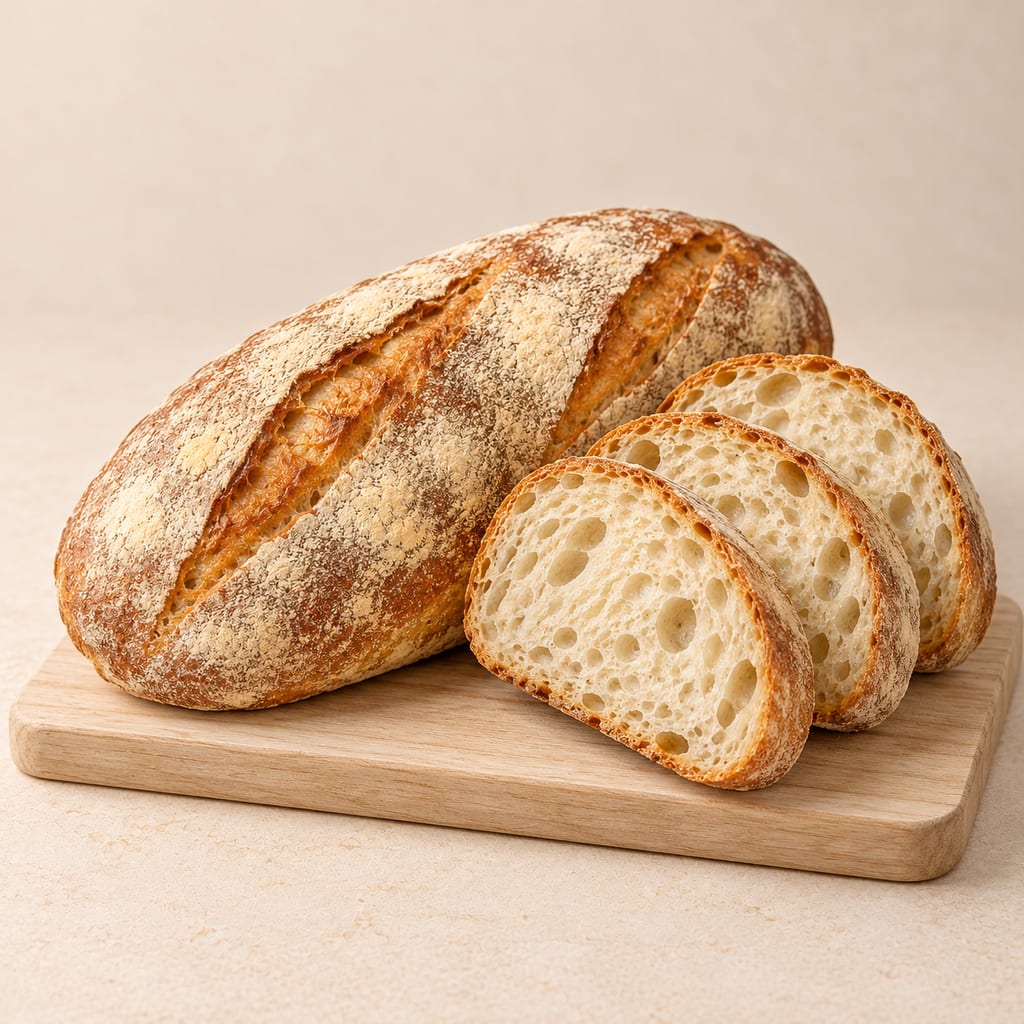
Pane toscano is the bread of Tuscany, and the first thing anyone says about it is what it leaves out. It contains no salt. That is why it is also called pane sciocco, 'bland bread', or pane sciapo. The flour is soft wheat, type 0, ideally from Tuscany; the leaven is natural sourdough, lievito madre; the rest is water. The protected specification allows no additives, processing aids or preservatives.
On 1 May 2016 the bread received protected designation of origin from the EU member states' quality committee, described as the first DOP given to a regional bakery product in Europe. The microbial culture that leavens DOP loaves is kept in the laboratories of the University of Pisa's Faculty of Agriculture on behalf of the producers' consortium.
The specification describes the loaf closely. It is made as a filoncino, a diamond-shaped loaf of 450 to 550 g, or as a filone, a rectangular loaf with rounded corners weighing 900 to 1,100 g or 1,800 to 2,200 g, between 5 and 12 cm thick. The crust is crisp and friable, a dark matte hazelnut colour. The crumb is white or ivory with irregular holes, the aroma is of toasted hazelnut, and the taste is unsalted and slightly acidic. Moisture may not exceed 30% of the weight.
Nobody knows for certain why Tuscan bakers stopped salting their bread, and the accounts that circulate are stories rather than records. The best known puts the cause in the twelfth-century wars between Florence and the maritime republic of Pisa. Pisa controlled the ports through which salt reached central Tuscany and, as the story goes, cut off the supply, so farmers and city families baked without it. A second version blames taxes: Florence taxed everyday urban activities with gabelle, the tax eventually reached salt, and the bakers were said to be the first to rebel by leaving it out.
A third explanation is about taste. Tuscan cooking is strongly flavoured, with cured meats, salted cheeses and robust stews, and an unsalted loaf balances them. One account finds this the least persuasive of the four. It finds the political explanation the most credible, because unsalted bread is not made across all of Tuscany: Massa and Carrara, Pisa and Lucca, which lay outside the Grand Duchy, traditionally baked salted bread. Unsalted loaves also turn up in parts of Umbria and in some areas of Lazio, which a single-event story about Pisa does not explain.
Tuscany was a granary of the Roman empire, a point Livy makes, and bread stayed central to its towns. In 1239 Pope Gregory IX's rule for the Order of the Tau at Altopascio recommended white bread for the sick, and the town became known as a Città del Pane. By the sixteenth century the bakers of Prato had a reputation of their own. In 1596 Giovanni Miniati wrote of bread sellers at the Florentine market calling 'Prato!' to advertise their loaves, and the Medici chose a Prato baker to supply the Villa Medicea di Poggio a Caiano.
The shape is older than the designation. Miniatures illustrating Boccaccio's Decameron in the fourteenth century show a loaf with the diamond form of the modern filoncino.
The leaven is lievito madre, a stiff sourdough kept alive by refreshing. The method is two-stage: a small first dough, the biga, is made with the starter and left to ripen, then a part of it goes into the final dough. The designated production method starts the biga from 1 kg of flour, 500 ml of water, 200 g of lievito madre and wheat germ, rests it at least 8 hours, and then builds the final dough from 1 kg of flour, 550 g of water and 200 g of biga. The dough is kneaded by hand or machine and rested at least 20 minutes before dividing; the pieces rest 15 minutes more, are shaped, and rise at least 2.5 hours before baking.
The home version here is scaled down and slower. Its biga is 120 g of flour, 80 ml of water and 30 g of starter, left 10 to 12 hours until it has doubled and shows bubbles on the surface. The dough is 550 g of flour, 320 ml of water and 230 g of that biga, worked by hand for about 10 minutes, risen until doubled, folded, and left a further 8 hours under a cloth. The whole process takes about 22 hours of rising for a loaf of about 1 kg. The home recipe is a separate published version and is not a claim of equivalence to the protected specification, whose own quantities and controls are the ones given above.
Tuscan farmhouses, the case coloniche, were often far from any town and baked in their own wood-fired ovens, unlike the South, where large shared ovens were common. The home recipe approximates that heat with a static domestic oven: 240 °C for the first 5 minutes, then 180 °C for 55 minutes, finishing for the last 5 minutes directly on the rack with the door slightly open so steam can leave.
At home the bread lived in the madia, the bread chest, which Leon Battista Alberti called the cassa del pane in his treatise on building. Because an unsalted loaf of this kind stays soft and moist, it could be eaten over about a week. Wrapped in cloth or in a paper bag the home loaf keeps at room temperature for 5 to 6 days.
The loaf is mild on purpose. It is served with finocchiona, pecorino and goat cheese, including as an aperitivo snack, where the cured meat and cheese supply the salt that the bread does not. Its second life begins when it goes stale. Stale bread is central to Tuscan cooking and goes into ribollita, the bread and vegetable soup; pappa al pomodoro; panzanella; carabaccia; cacciucco; and several kinds of crostini, among them chicken liver, spleen and black cabbage.
Flour is a raw food and can carry harmful bacteria. Do not taste the dough before baking; keep flour and unbaked dough separate from ready-to-eat foods, and wash hands, utensils, bowls, pans and work surfaces after handling. FDA guidance supports these flour-handling precautions but does not assess or validate this bread's fermentation schedule.
Loaves with the diamond shape of today's filoncino appear in miniatures illustrating Boccaccio's Decameron in the 14th century. In 1239 Pope Gregory IX's rule for the Order of the Tau at Altopascio recommended white bread for the sick, and Altopascio later became known as a Città del Pane. By the 16th century bakers from Prato were famous: in 1596 Giovanni Miniati described bread sellers in the Florentine market crying 'Prato!' to advertise it, and the Medici chose a Prato baker to supply the Villa Medicea di Poggio a Caiano. The bread received EU protected designation of origin (DOP) status on 1 May 2016.
Yield 1 kg
Flour is a raw food and may carry harmful bacteria. Do not eat or taste the dough before baking.
Hazard sourceKeep raw flour and unbaked dough separate from ready-to-eat foods; wash hands, utensils, bowls, pans and work surfaces after handling; bake the bread before eating.
Control sourceDo not taste the raw dough. FDA's flour-handling advice does not validate this recipe's fermentation schedule.
The protected designation covers the bread as made in Tuscany; the sources do not pin it to a single town.
Biga is an Italian bread preferment of flour, water and a little yeast, usually a stiff unsalted mass of about 45 per cent water, fermented ahead and then mixed into the final dough.
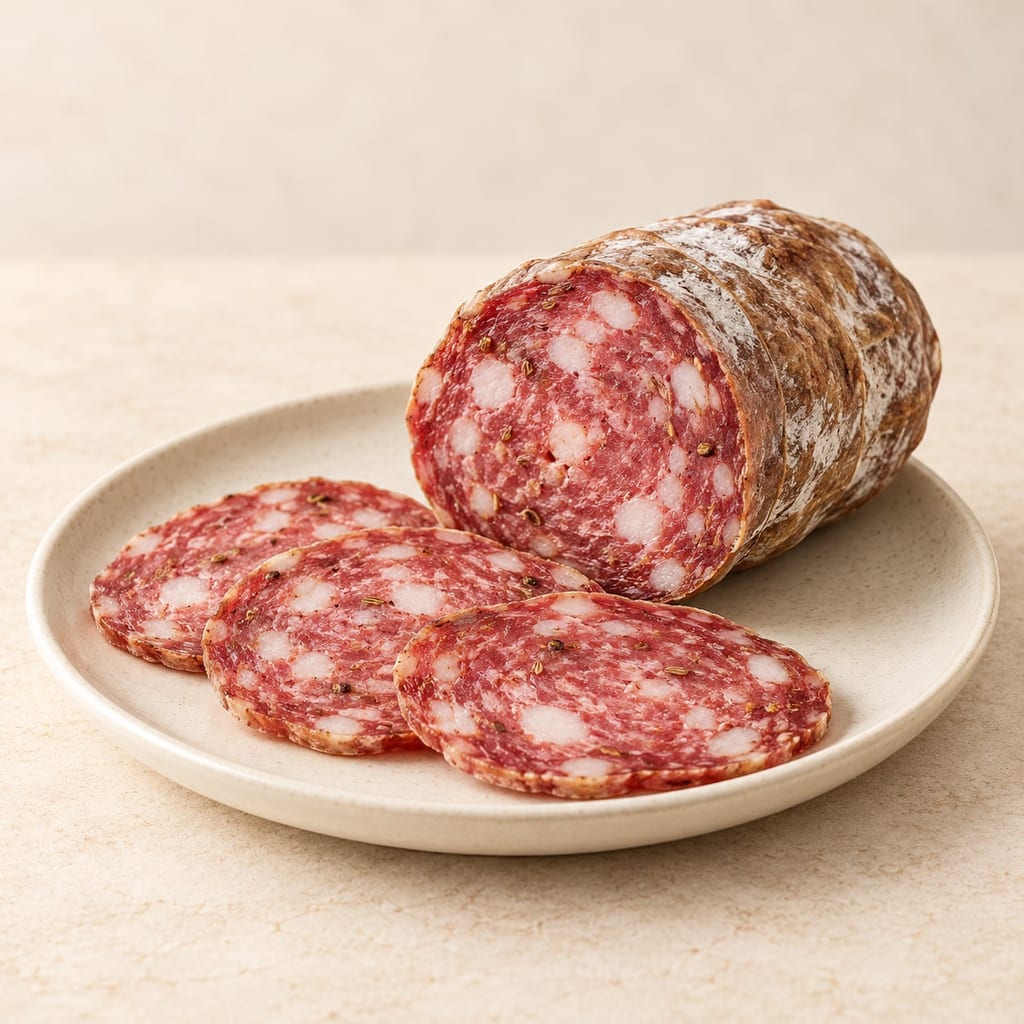
A Tuscan-style fennel salami made with pork and back fat. Toasted fennel, fennel pollen and Sambuca flavor this starter-cultured preparation.
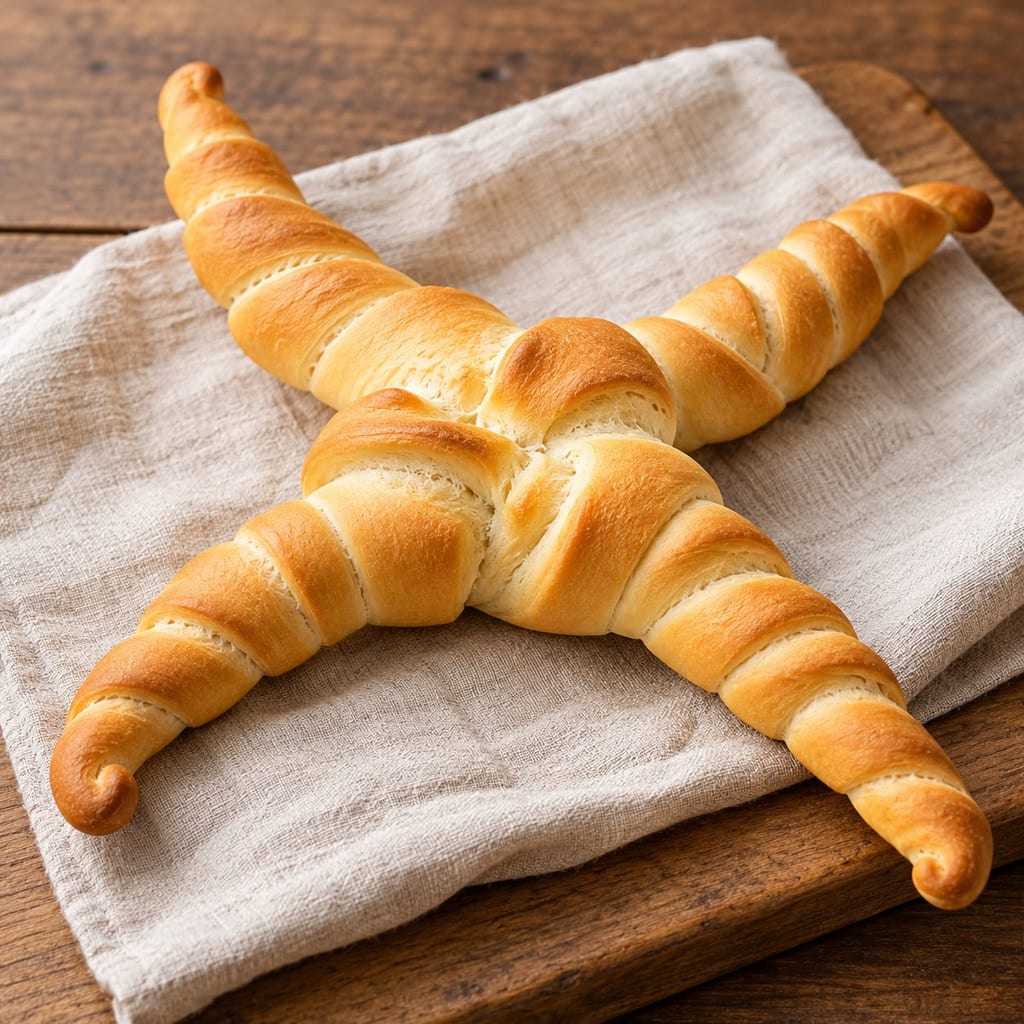
Ferrara’s paired bread twists have four pointed horns joined at a soft centre. This VisitFerrara home recipe uses type 0 flour, water, oil, lard, malt and a choice of sourdough or yeast.
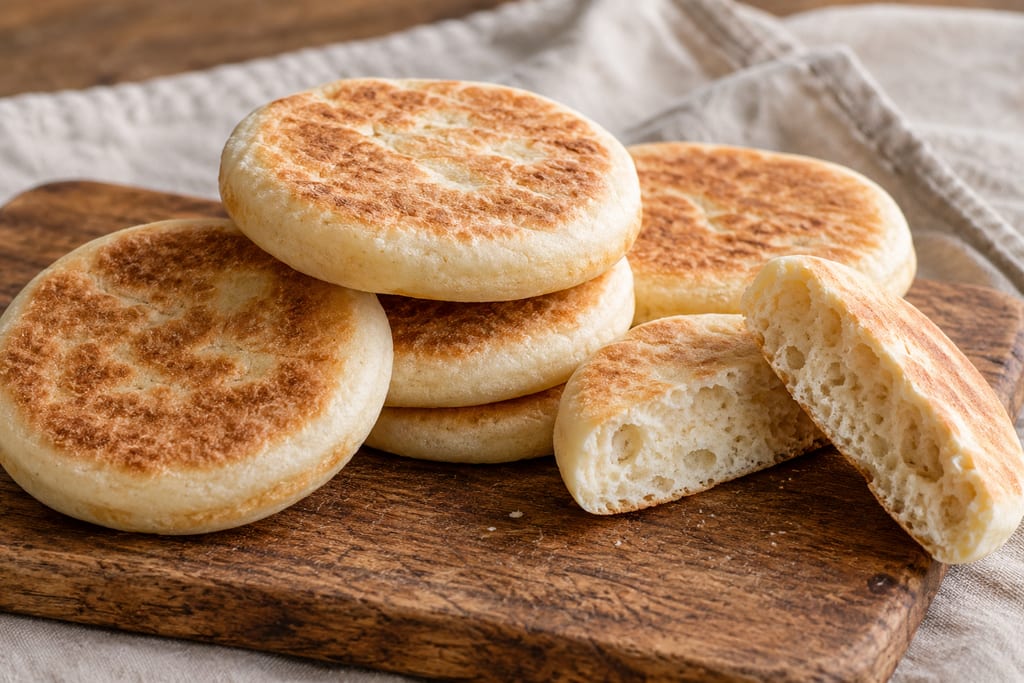
Small Modenese yeast breads cooked between hot plates and served warm.
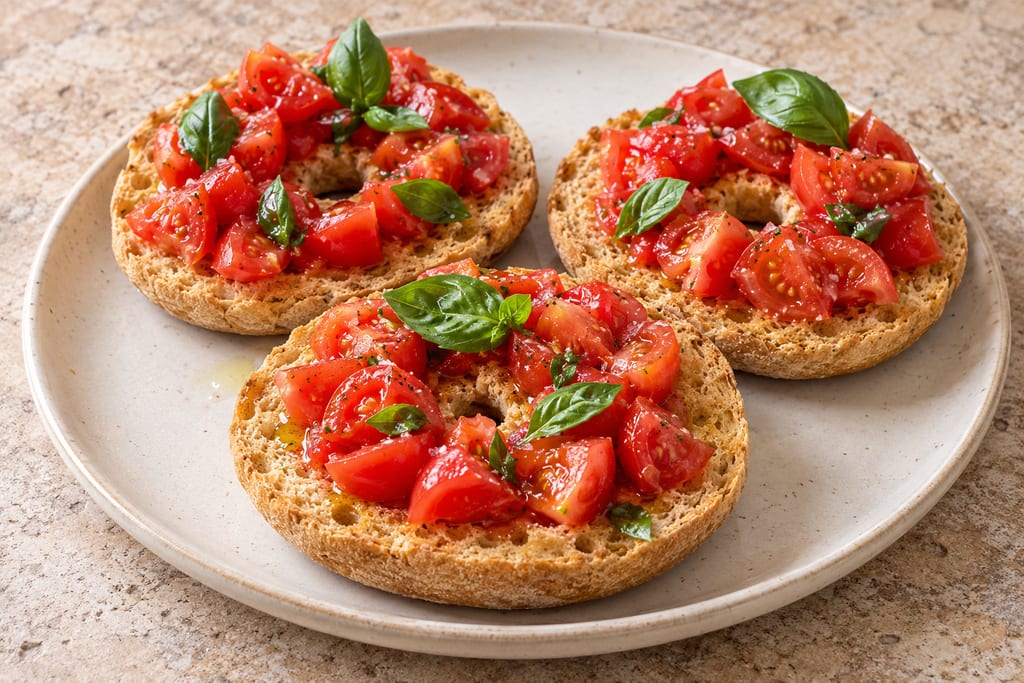
Puglian wheat-and-semolina bread rings are baked, split, then dried in a second bake; briefly moisten and top them before serving.
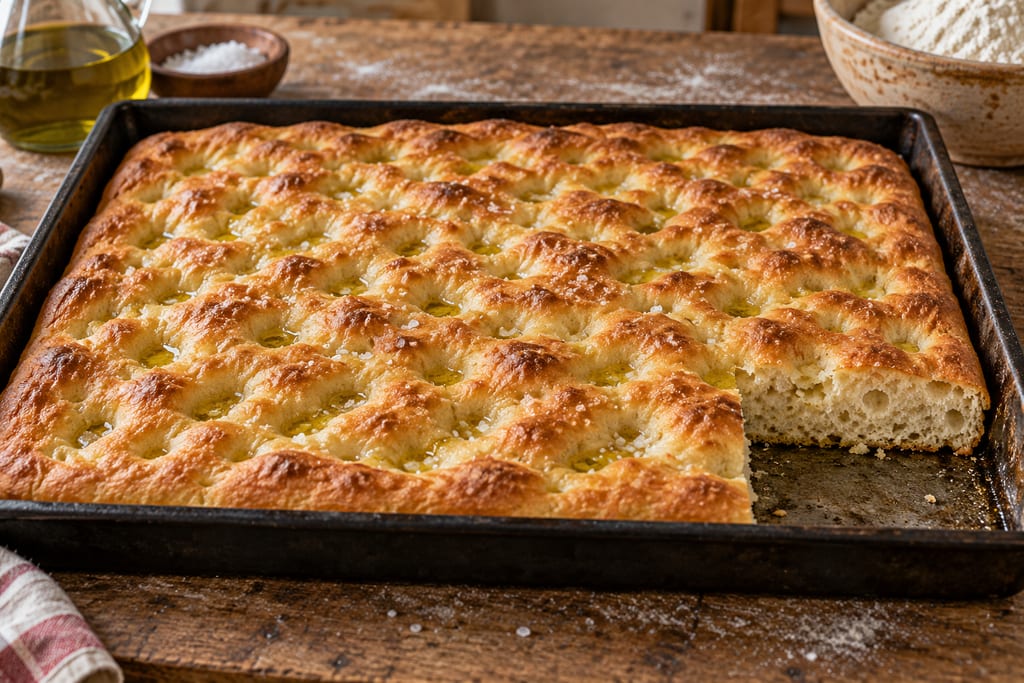
Fresh-yeast focaccia with olive oil and brine in its dimples, made in two 30 × 40 cm trays. It is separate from the sourdough focaccia formula.
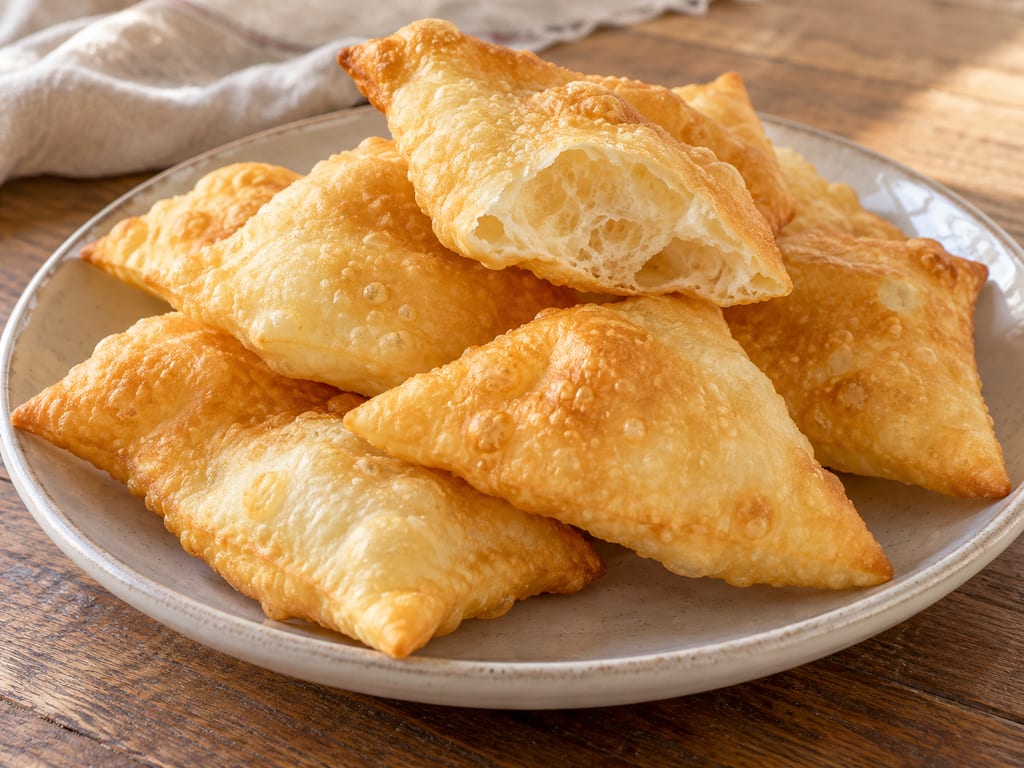
This Emilia-Romagna home version uses a measured flour-and-milk dough with yeast, shapes it into small diamonds or squares, and fries them in peanut oil.
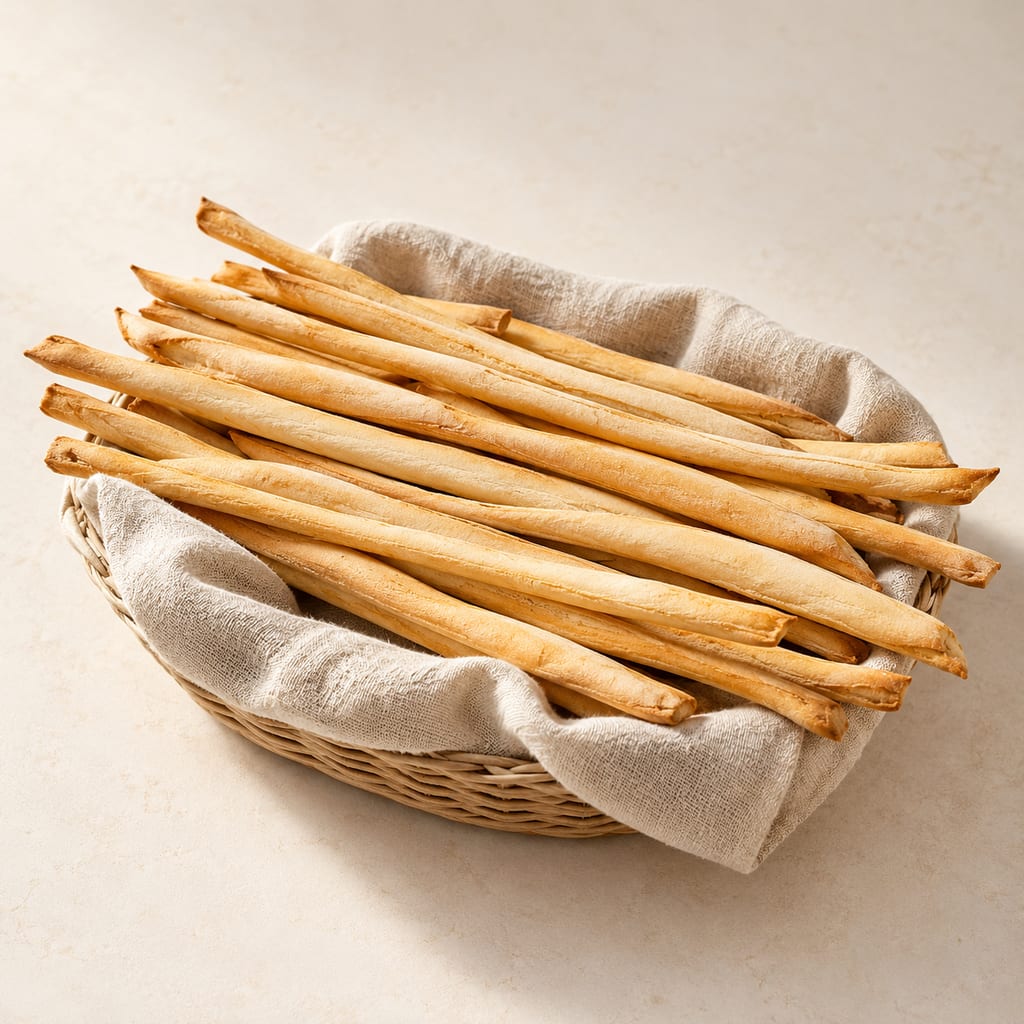
A measured Torino baker’s formula for hand-stretched grissini, baked until crisp and dry.
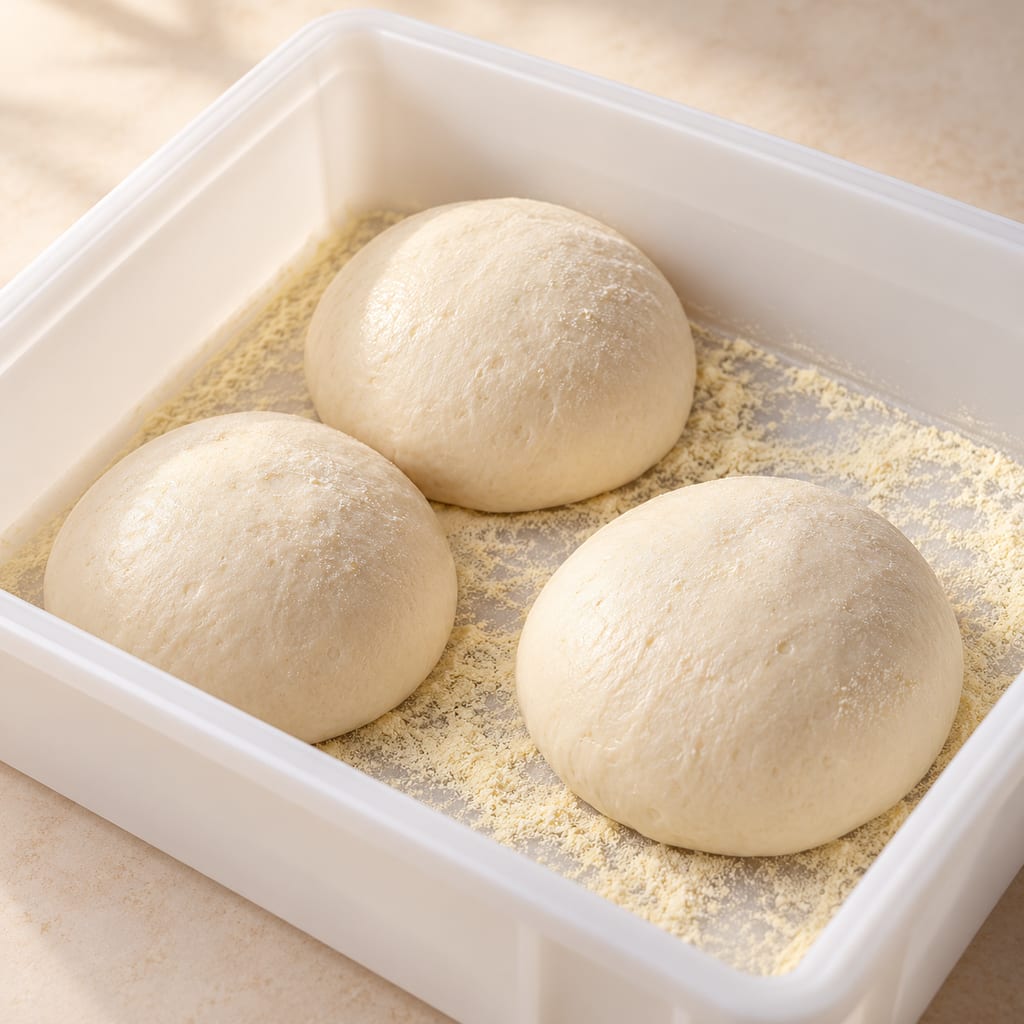
An AVPN regulation formula for Neapolitan pizza dough uses wheat flour, water, salt and fresh brewer’s yeast. Flour absorption and proofing conditions determine the exact dough point and yeast dose.
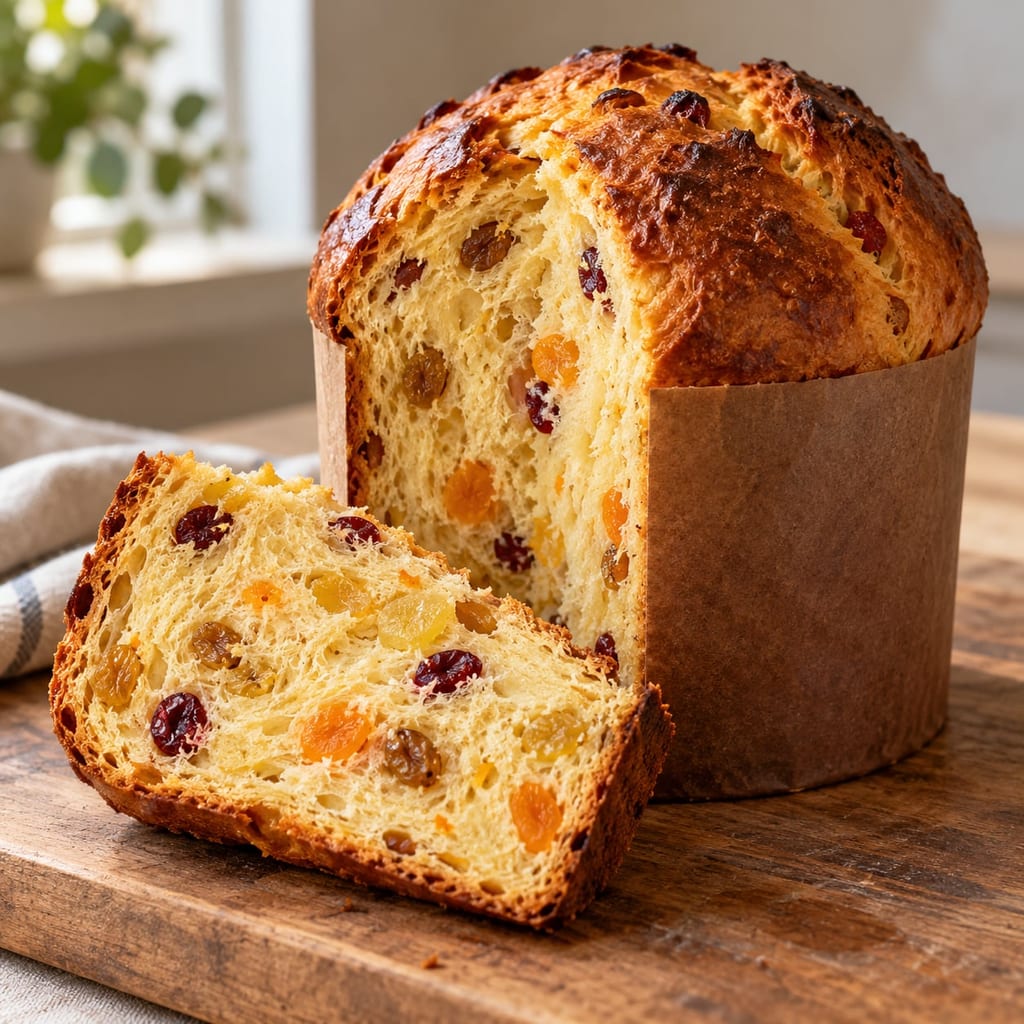
A modern instant-yeast panettone with an overnight flour-and-water preferment and mixed dried fruit. It is separate from specialist sourdough panettone methods.
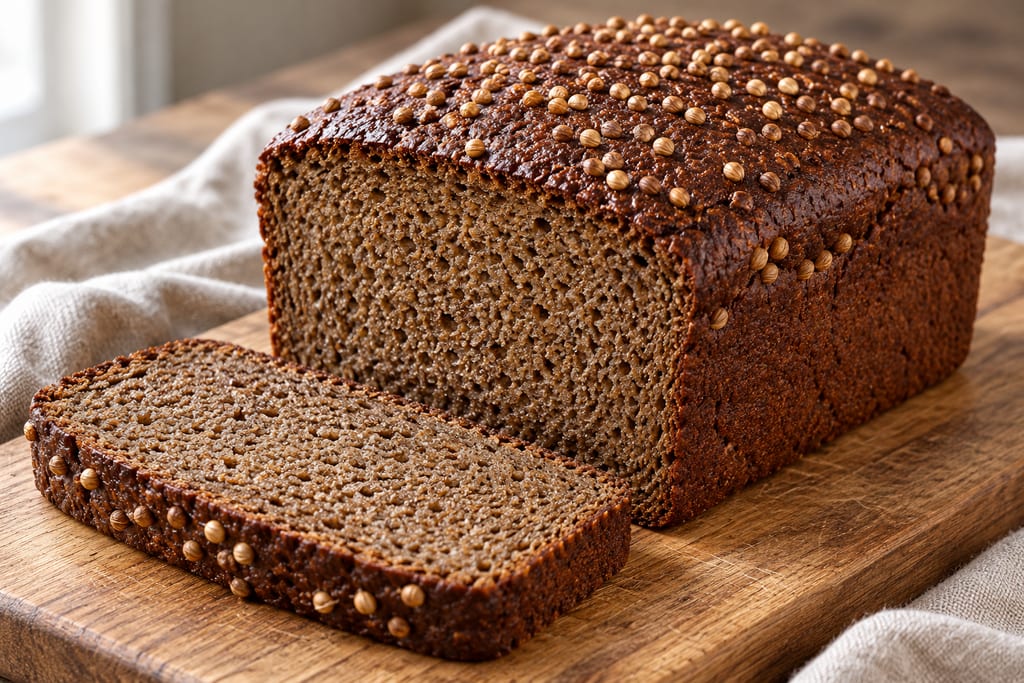
A dark rye sourdough with coriander and roasted barley-malt scald, based on Lily McCann's measured Borodinsk-ish home formula.
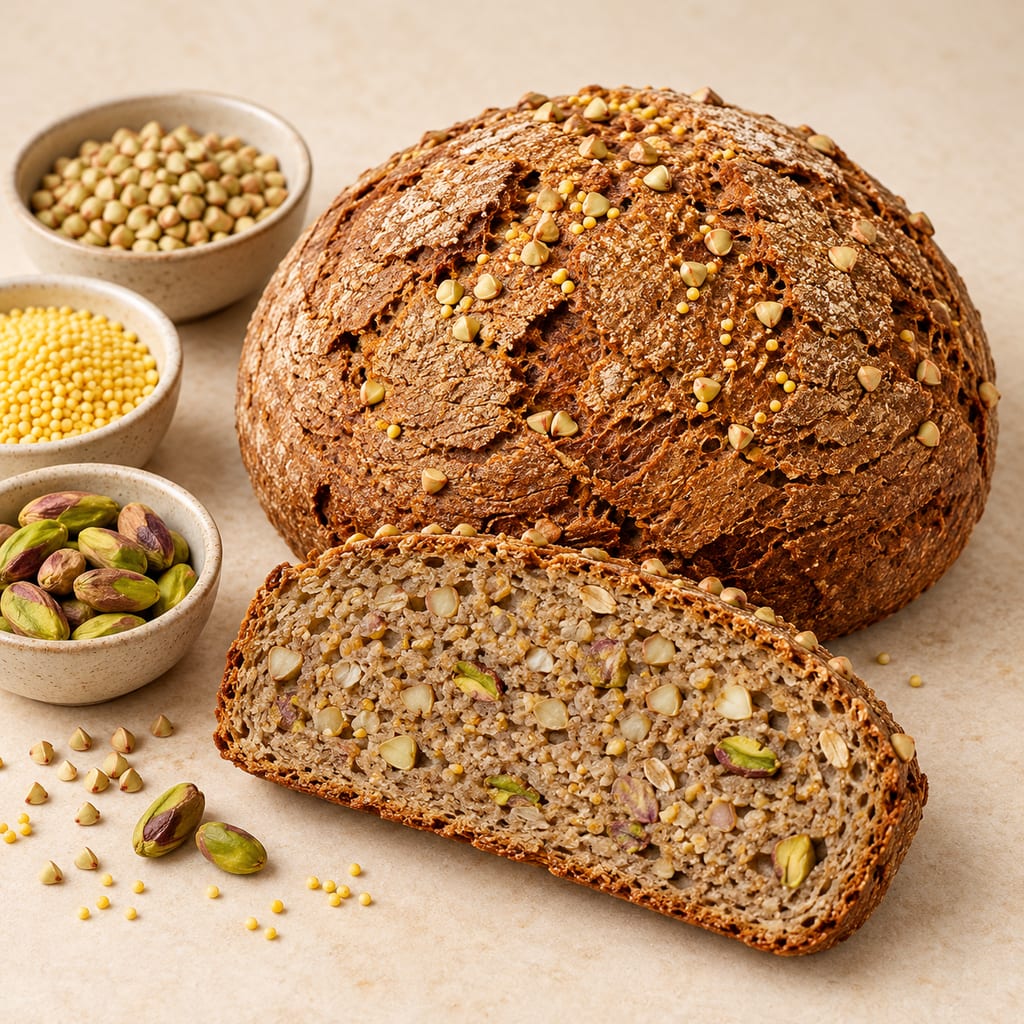
A gluten-free sourdough loaf of about 1 kg. A buckwheat and quinoa starter leavens a dough with cooked whole buckwheat groats, millet and a dark gluten-free bread mix, baked in a lidded pot.
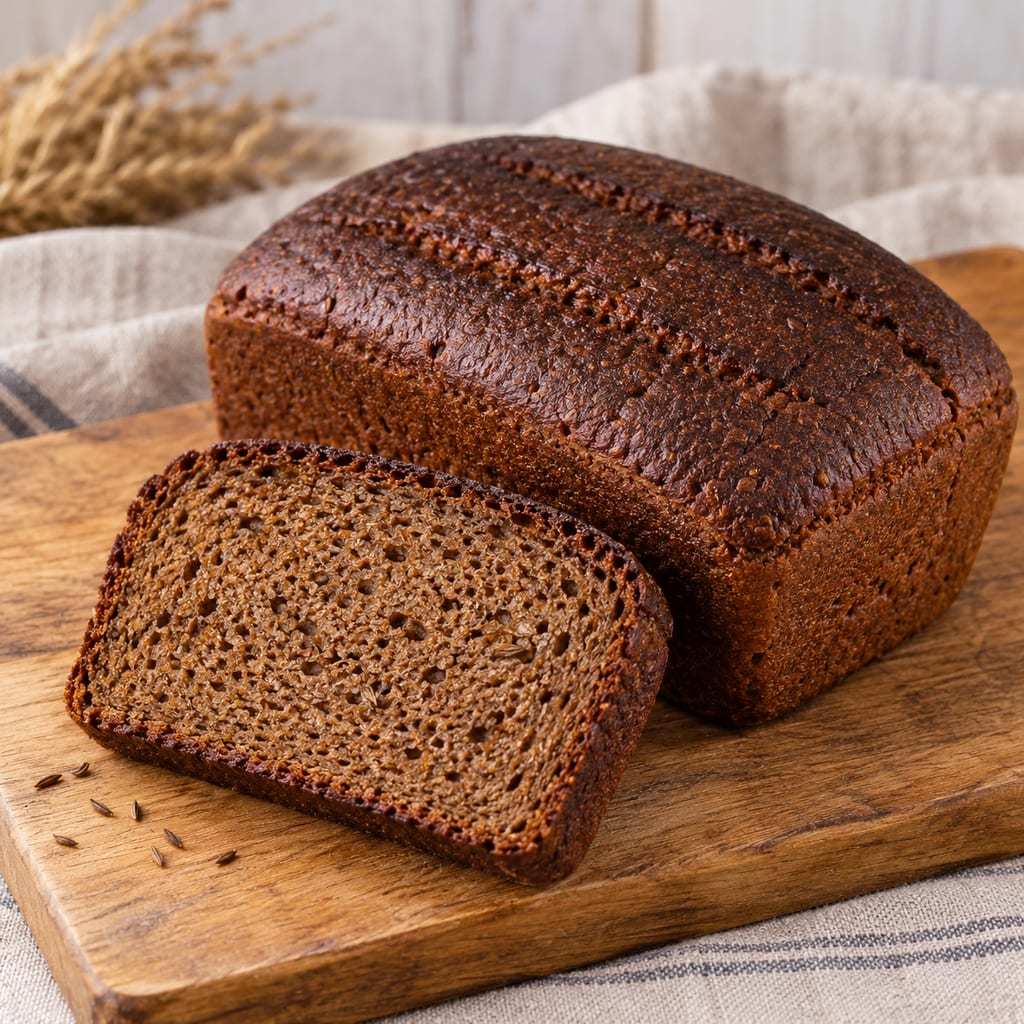
A Lithuanian dark rye loaf made with an overnight rye preferment, caraway, honey and sugar, then proofed in a loaf pan and baked in two stages.
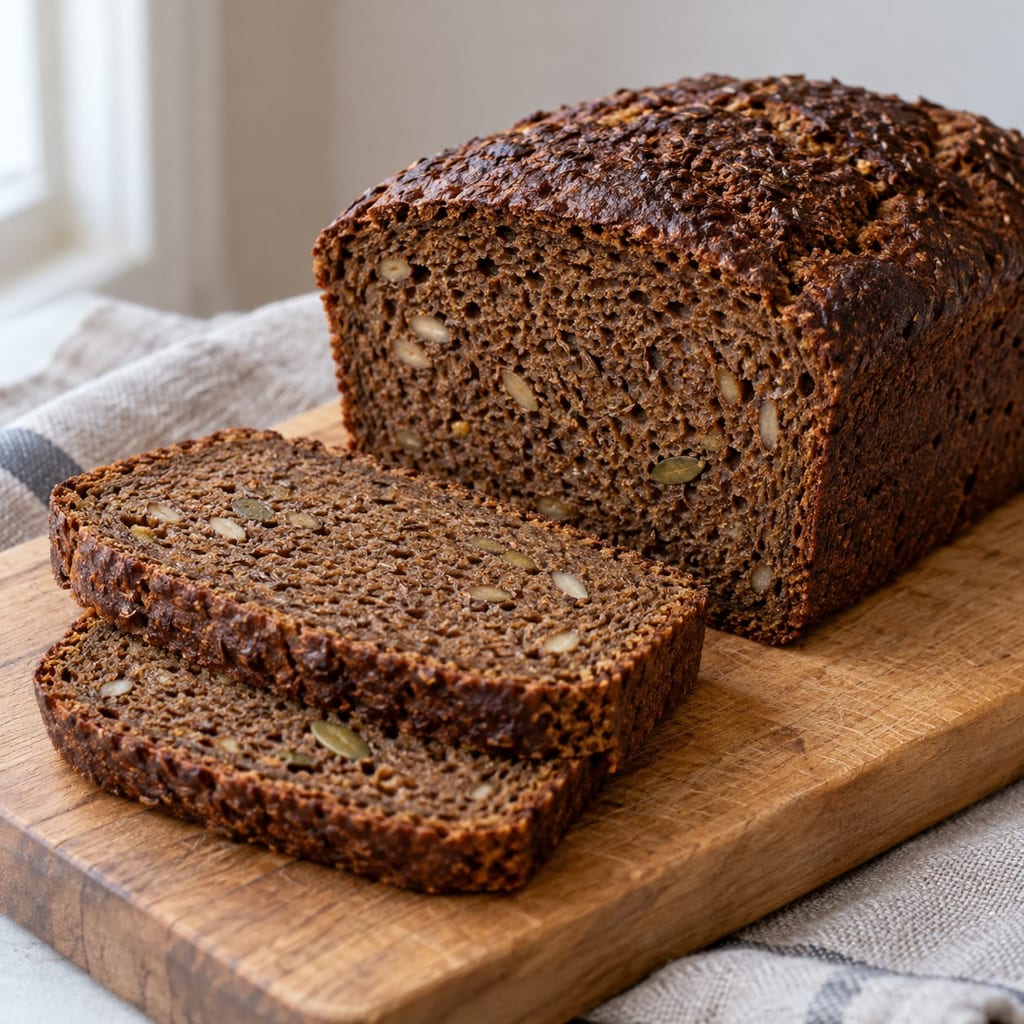
This Estonian rye loaf uses a sourdough preferment, a rye scald and soaked seeds, with a small amount of baker’s yeast. Two tins bake through a staged hot-to-moderate oven schedule.
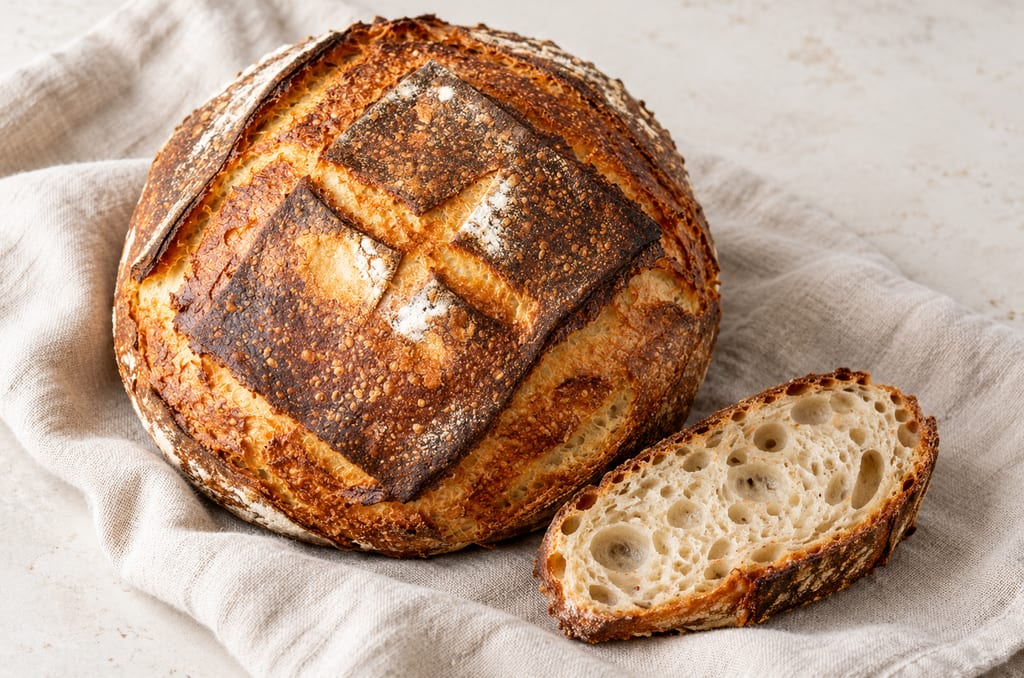
A ripe sourdough starter leavens this modern low-handling loaf. Three hourly folds organize the sticky dough before a long refrigerator rest, final proof and covered bake.
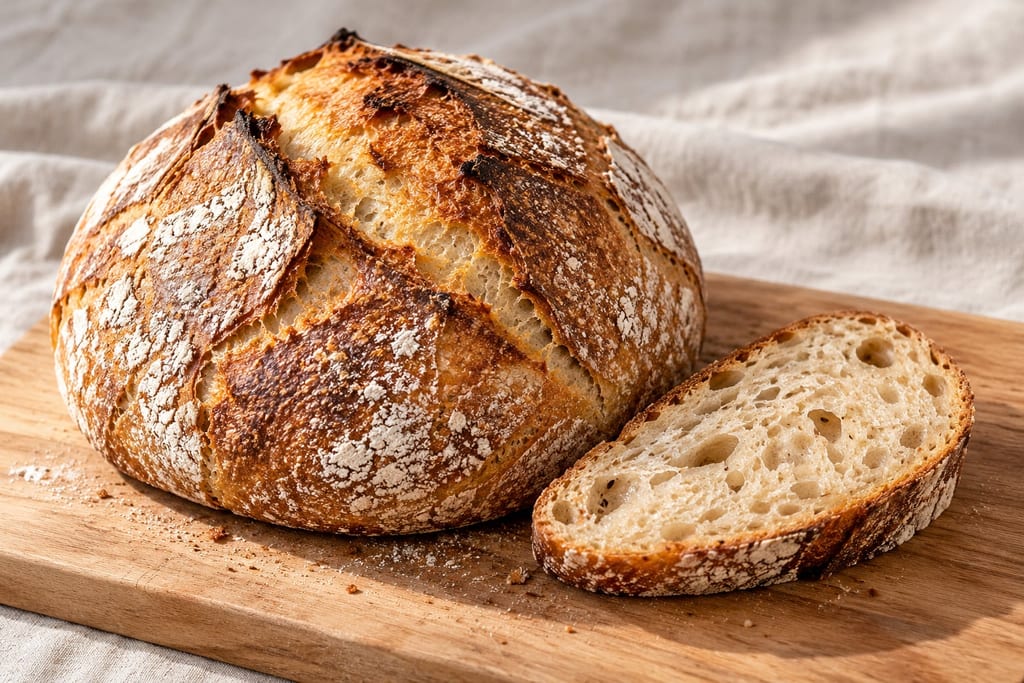
Two large French-style wheat loaves use unfed sourdough starter, whole-wheat flour, long room-temperature fermentation and a covered-pot bake.
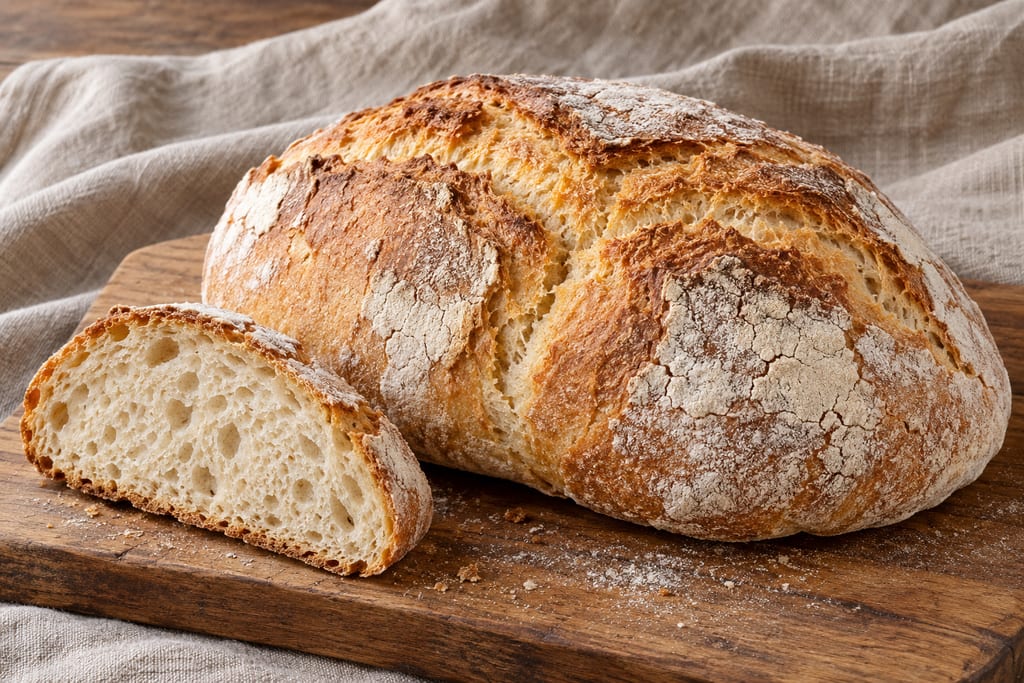
This home sourdough adaptation borrows Pan de Cea’s wheat-forward loaf and central fenda while using a domestic oven and a separately documented modern formula.
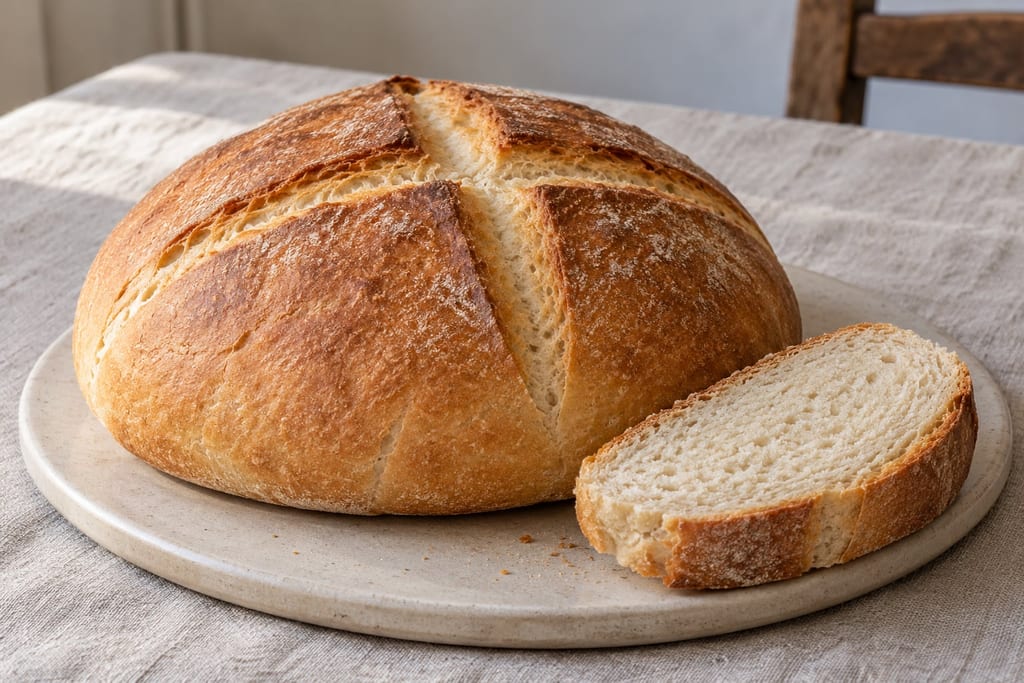
This household Pan de Cruz adaptation uses sourdough and a folded, tight-crumb wheat dough, marked with a cross and baked in a home oven.

Protected Italian vinegar made only from cooked grape must, fermented and aged in a battery of wooden barrels for at least 12 years: sweet, sharp and syrupy.

Airag is Mongolia’s fermented mare’s-milk drink, traditionally churned with saved starter in a reusable cowhide khokhuur.

Appam, or hoppers, are South Indian and Sri Lankan rice pancakes made from a fermented coconut-and-rice batter and cooked in a curved pan to a crisp lacy rim and a soft, spongy centre.

Auricularia tremellosa is a wood ear fungus of the genus that supplies most dried wood ear sold in China; its own food record is thin, and the culinary practice described here comes from the closely related wood ear species.

Ayran is Turkey’s cold, savoury yogurt drink: plain yogurt is loosened with water and lightly salted, then whisked smooth or aerated into a soft cap of foam.
A thin stone griddle used over an open hearth. Norwegian archaeology documents the established tradition from the early Middle Ages; a Viking-period origin is only a cautious suggestion linked to Shetland.

Crushed or milled barley cooked in water until the starch softens and the mixture thickens, the plainest way a northern household turned stored grain into a meal, here with apple and hazelnut.

Black carrot is the anthocyanin-pigmented Eastern carrot (Daucus carota var. atrorubens), the purple root that preceded orange types and still colours kanji and şalgam.
No community contributions have been published for this entry yet.
Sign in to contribute. Published comments and photos are free to read.
Associazione Italiana Food BloggerHistory · Method
Il pane toscanoDOP recognition on 1 May 2016
competing explanations for the missing salt
specification of shapes, weights, crust, crumb, aroma, taste and moisture
designated biga and dough quantities and rests
farmhouse ovens and the madia
history from Livy to the Decameron miniatures
how the bread is eaten
Cited in: A bread made without salt; Why there is no salt: four explanations, none documented; Wheat country and a long baking tradition; The sourdough and the long rise; The oven, the bake and the bread chest; How it is eaten
Cookist; Simona CiampiMethod
Pane toscano: la ricetta del pane sciocco fatto in casahome recipe quantities, rests and the staged 240 °C then 180 °C bake
yield of about 1 kg
storage of 5 to 6 days
serving with finocchiona, pecorino and goat cheese
Cited in: Why there is no salt: four explanations, none documented; The sourdough and the long rise; The oven, the bake and the bread chest; How it is eaten
U.S. Food and Drug AdministrationSafety
Handling Flour Safely: What You Need to KnowFlour is a raw food that may carry harmful bacteria; do not taste raw flour or dough, keep it separate from ready-to-eat foods, and wash hands, utensils, bowls, pans and surfaces after handling.
FDA's handling advice does not validate the bread's fermentation schedule.
Cited in: Handling raw flour