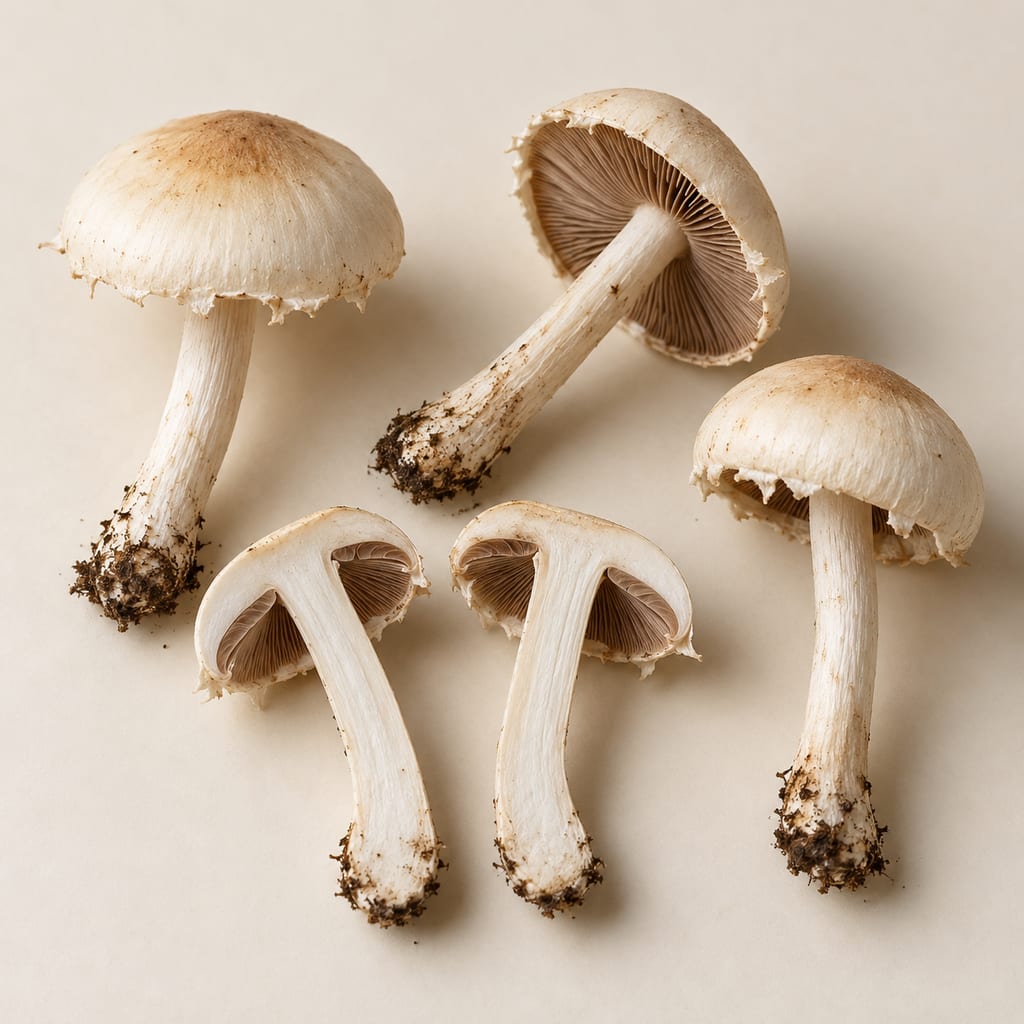
Agrocybe dura
A grassland agaric listed as edible in historical and scientific catalogues for Hong Kong and China. Taxonomic concepts and practical food value vary; the listings do not establish safe identification or culinary practice.
 FermenteaWhere food goes to change
Mushrooms
Auricularia tremellosa is a wood ear fungus of the genus that supplies most dried wood ear sold in China; its own food record is thin, and the culinary practice described here comes from the closely related wood ear species.
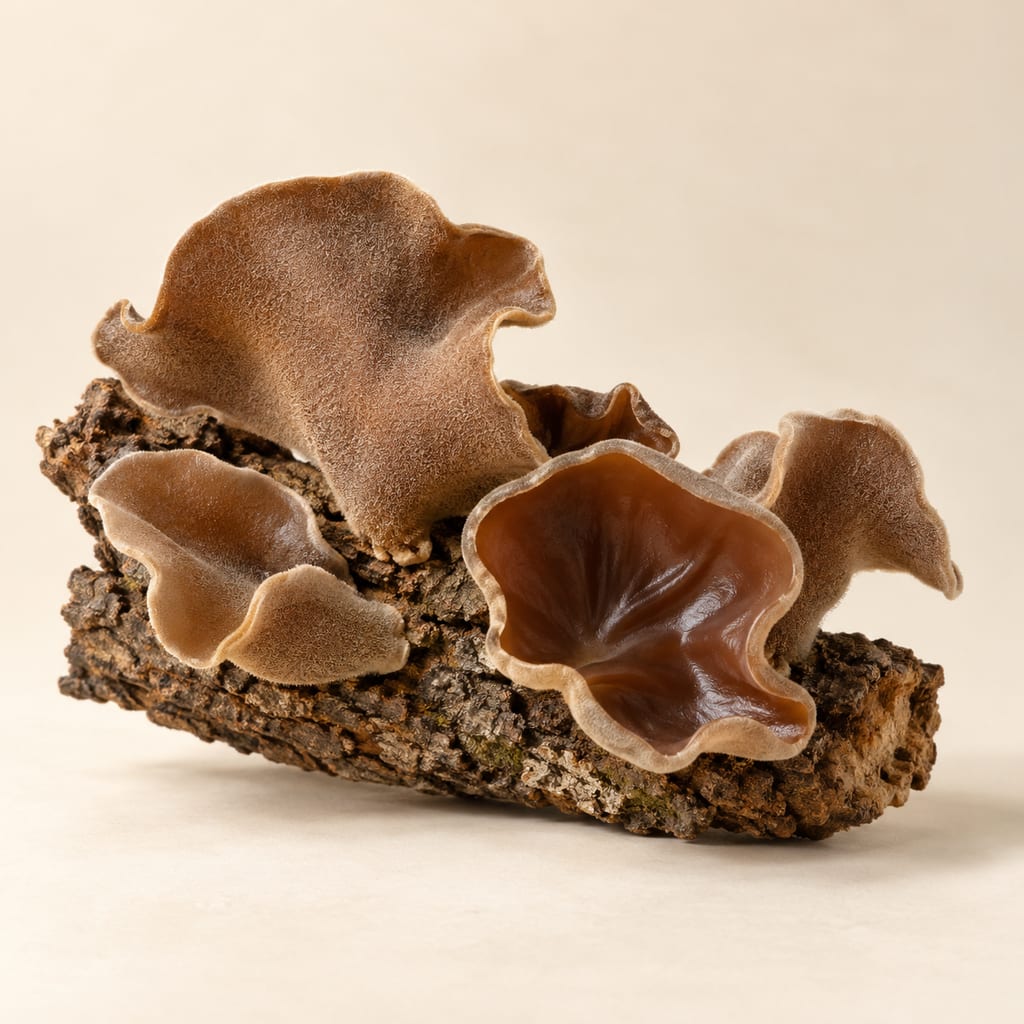
Auricularia tremellosa belongs to the wood ear group, a set of gelatinous fungi that grow on dead wood and have a rubbery, soft-jelly texture when fresh. Wood ear fungi are dried for sale and rehydrated before use, and they keep their crunch and shape well in cooking.
The species name as used in the catalogue is a research label. The taxonomy of the wood ears is complicated, and the sources consulted do not confirm the current accepted name for this material. The page therefore describes the group only where the sources speak of the genus, and keeps species-specific claims to the catalogue record.
Wood ears are common in soups and stir-fries in Chinese cooking. Their mild flavour and ability to take up the flavour of the liquid they are cooked in make them suited to broths and stews, and they are described as low in calories and relatively high in protein and fibre.
The commercial dried trade is grown almost exclusively in China. Cultivation of the group is recorded there as early as the Tang dynasty, 618 to 907 CE, and the estimated 2013 output was about 4.75 billion kilograms fresh weight. These figures describe the wood ear group, not Auricularia tremellosa on its own.
Traditional beliefs link wood ears to breathing and circulation. The Missouri field guide reports that they are said to affect blood coagulation and lower blood cholesterol, and it notes that the evidence is limited to reports rather than established results. Those claims are not used on this page to support any health benefit.
No safety assessment for Auricularia tremellosa was found in the sources consulted, and the catalogue states that its food-use label is pending specialist review. Wood ears in the market are normally sold dried and cooked, and a reader should not treat any wild wood ear as safe without identification by a qualified source.
Open questions: the accepted name, the traditional names, any species-specific preparation and the composition of this particular species are not established by the sources reviewed. A check against a current taxonomic authority and a food-composition study of the species would close those gaps.
This row describes the wood ear group grown in China. It does not establish a species-specific record for A. tremellosa.
A grassland agaric listed as edible in historical and scientific catalogues for Hong Kong and China. Taxonomic concepts and practical food value vary; the listings do not establish safe identification or culinary practice.
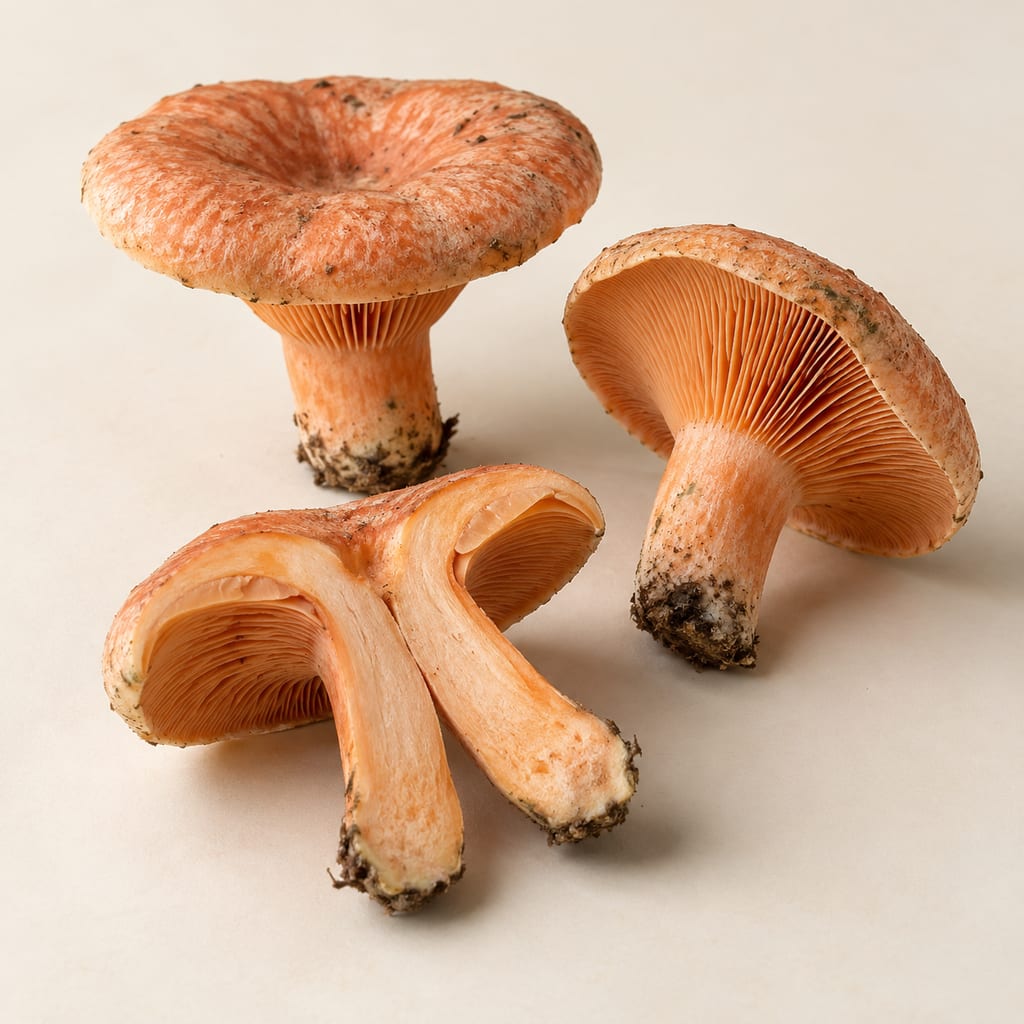
Akahatsu, Lactarius akahatsu, is a wild milkcap of East Asian pine and mixed forests that is sold in Yunnan markets, with its edibility and identity still needing species-level review.
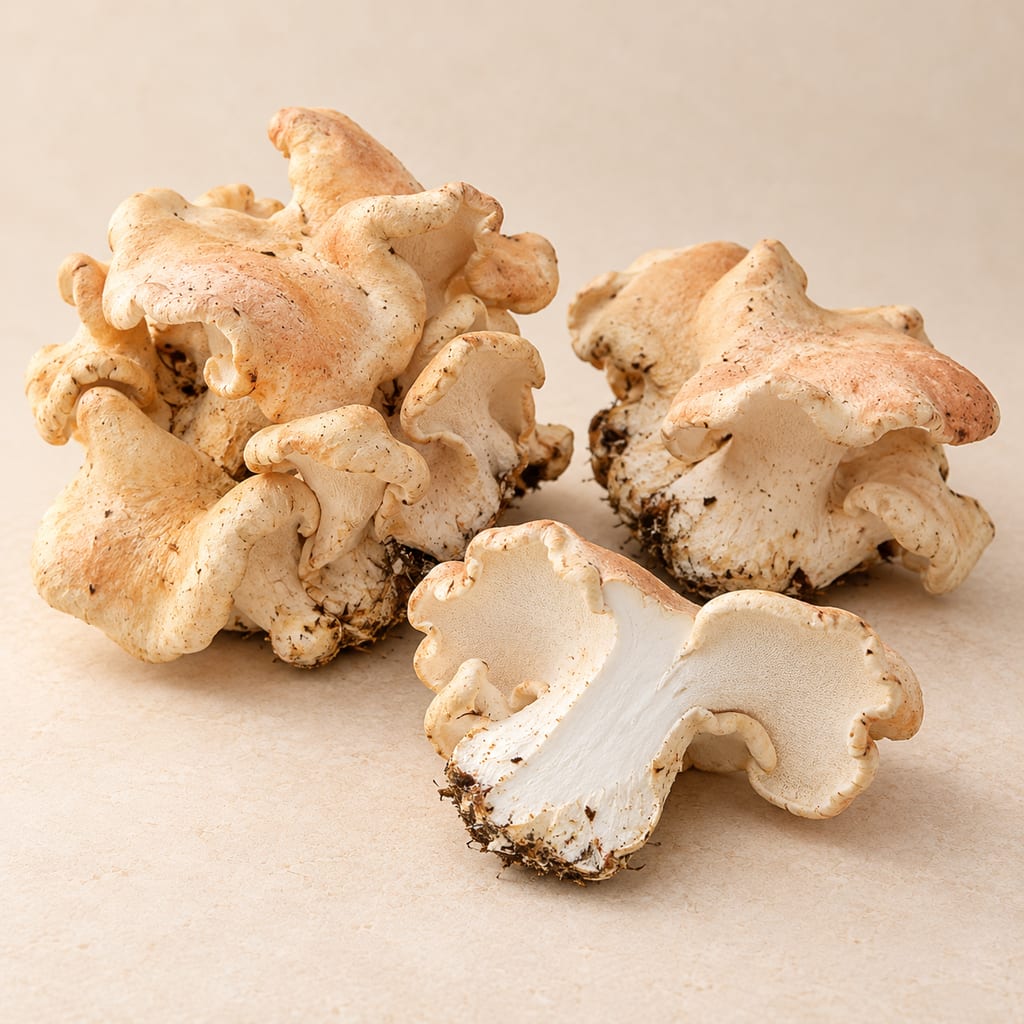
Albatrellus confluens is a ground-growing polypore with fused buff-orange caps. Sources document Chinese market use and regional edibility, but others reject it as too bitter; taxonomy also varies between Albatrellus and Albatrellopsis.
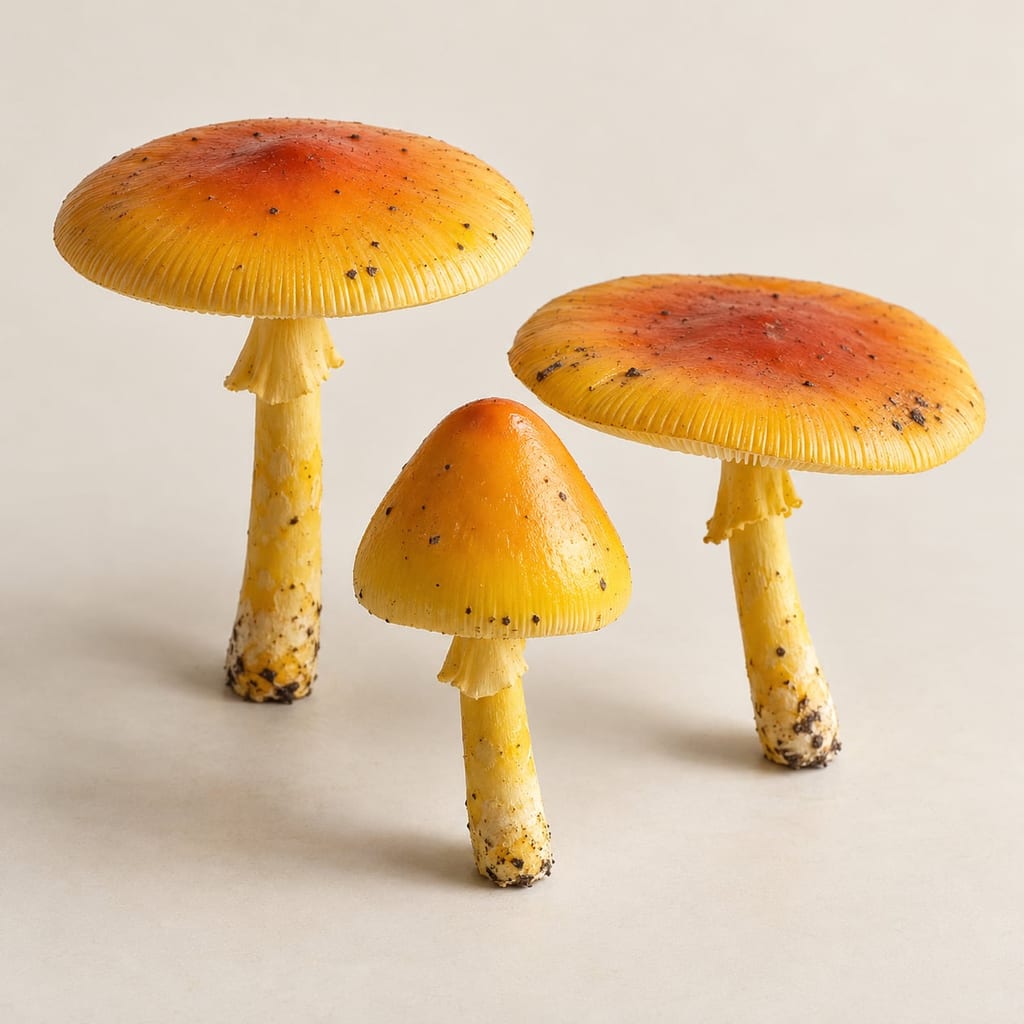
A wild Amanita recorded from China in a 2026 checklist of edible and medicinal fungi. The genus holds deadly species, so this page gives no identification or edibility verdict.
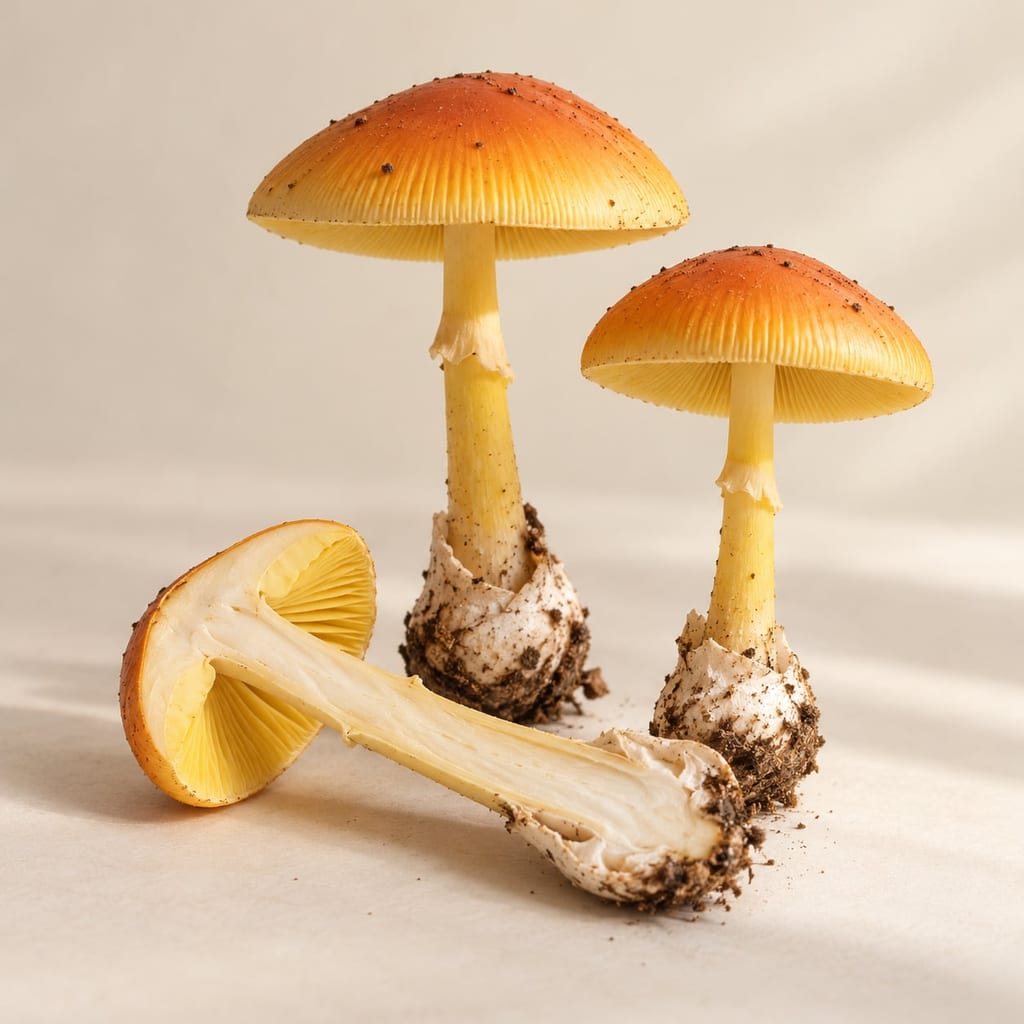
A wild Amanita of China, first reported there and listed as edible in a Yunnan ethnomycology study. The genus contains deadly species, so this page does not support identifying or eating it.
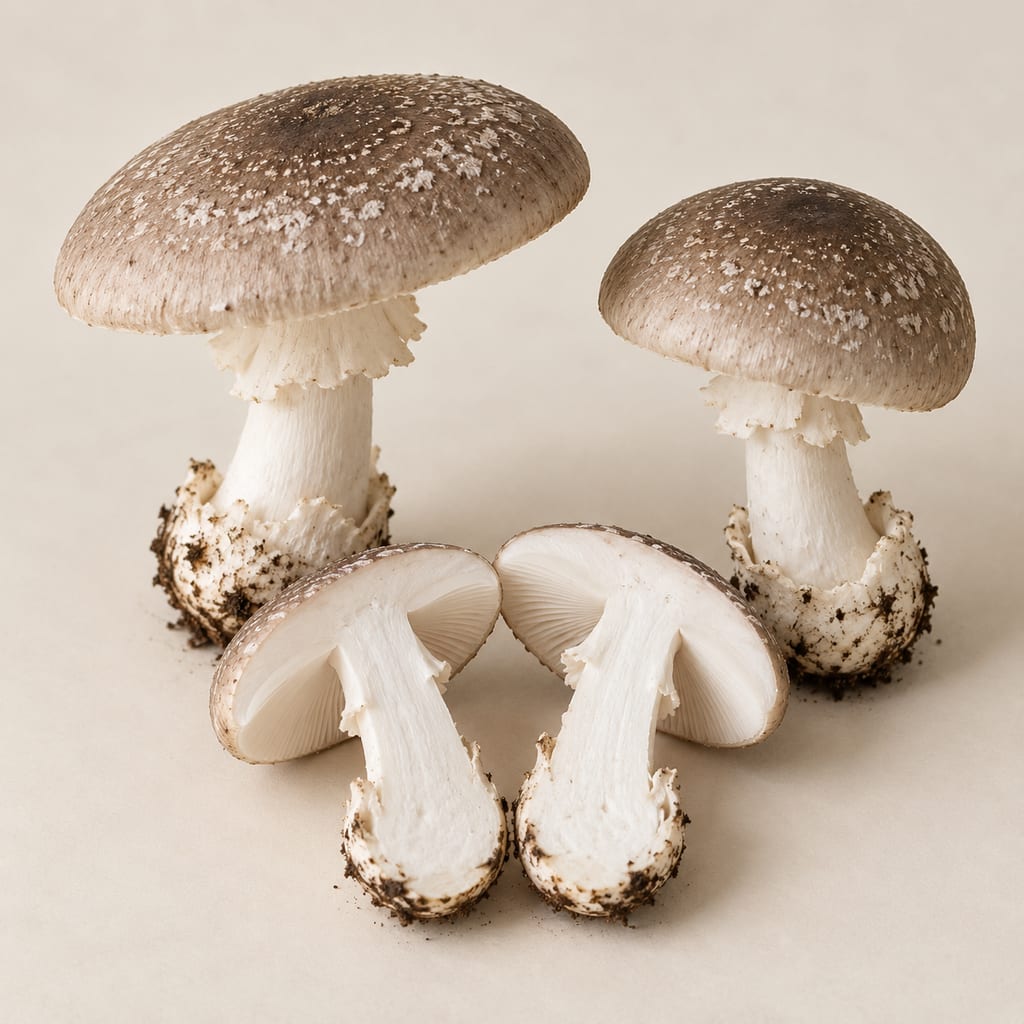
Amanita yuaniana is a Chinese Amanita that a 2023 Yanshan survey and a Yunnan ethnomycology survey list among edible species. No source tests it for safety, and the genus holds the most lethal mushrooms.
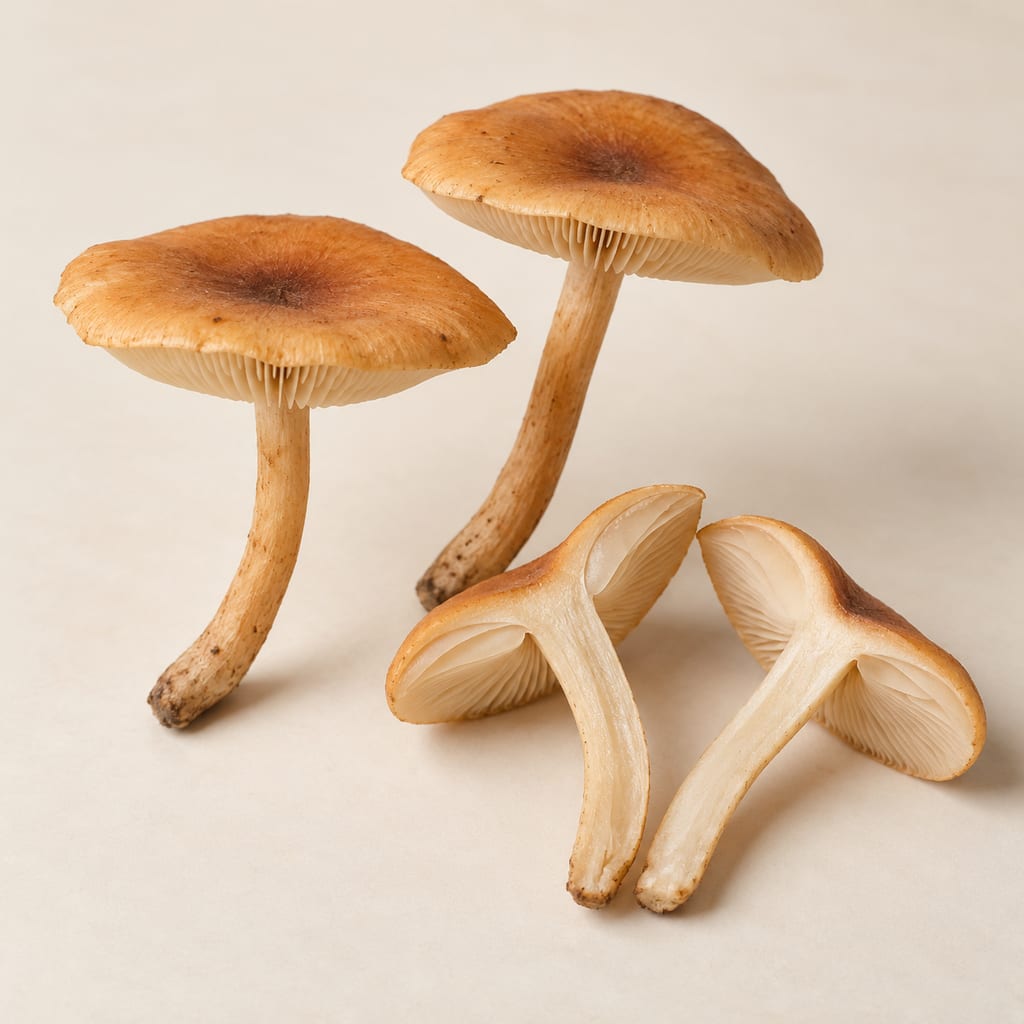
A wood-associated Armillaria recorded in Yunnan and Sichuan, China, and listed as edible in a 2026 Chinese catalogue.
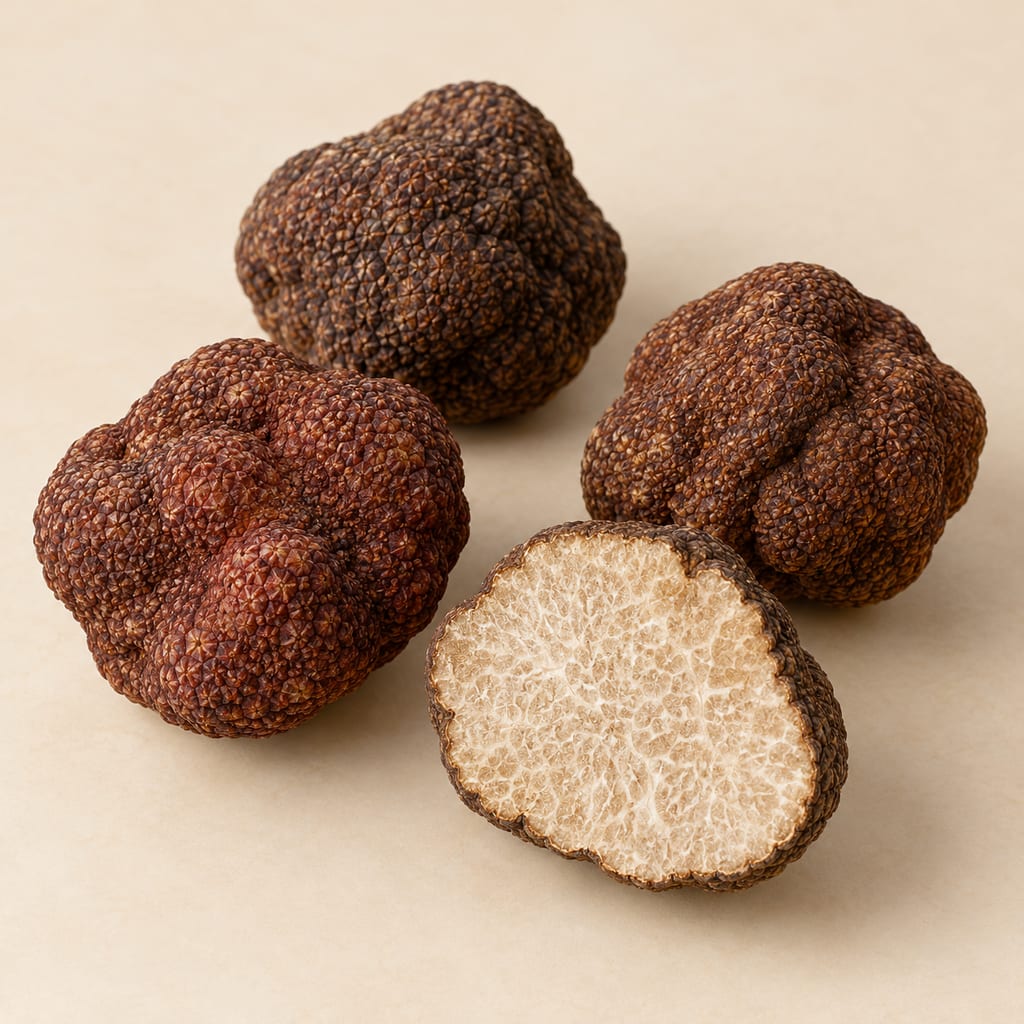
Tuber pseudohimalayense is a wild black truffle from Yunnan, China, listed as edible in a Chinese species catalogue. No independent assessment of its culinary use or safety is available.

Protected Italian vinegar made only from cooked grape must, fermented and aged in a battery of wooden barrels for at least 12 years: sweet, sharp and syrupy.

Airag is Mongolia’s fermented mare’s-milk drink, traditionally churned with saved starter in a reusable cowhide khokhuur.

Appam, or hoppers, are South Indian and Sri Lankan rice pancakes made from a fermented coconut-and-rice batter and cooked in a curved pan to a crisp lacy rim and a soft, spongy centre.

Ayran is Turkey’s cold, savoury yogurt drink: plain yogurt is loosened with water and lightly salted, then whisked smooth or aerated into a soft cap of foam.
A thin stone griddle used over an open hearth. Norwegian archaeology documents the established tradition from the early Middle Ages; a Viking-period origin is only a cautious suggestion linked to Shetland.

Crushed or milled barley cooked in water until the starch softens and the mixture thickens, the plainest way a northern household turned stored grain into a meal, here with apple and hazelnut.

Black carrot is the anthocyanin-pigmented Eastern carrot (Daucus carota var. atrorubens), the purple root that preceded orange types and still colours kanji and şalgam.
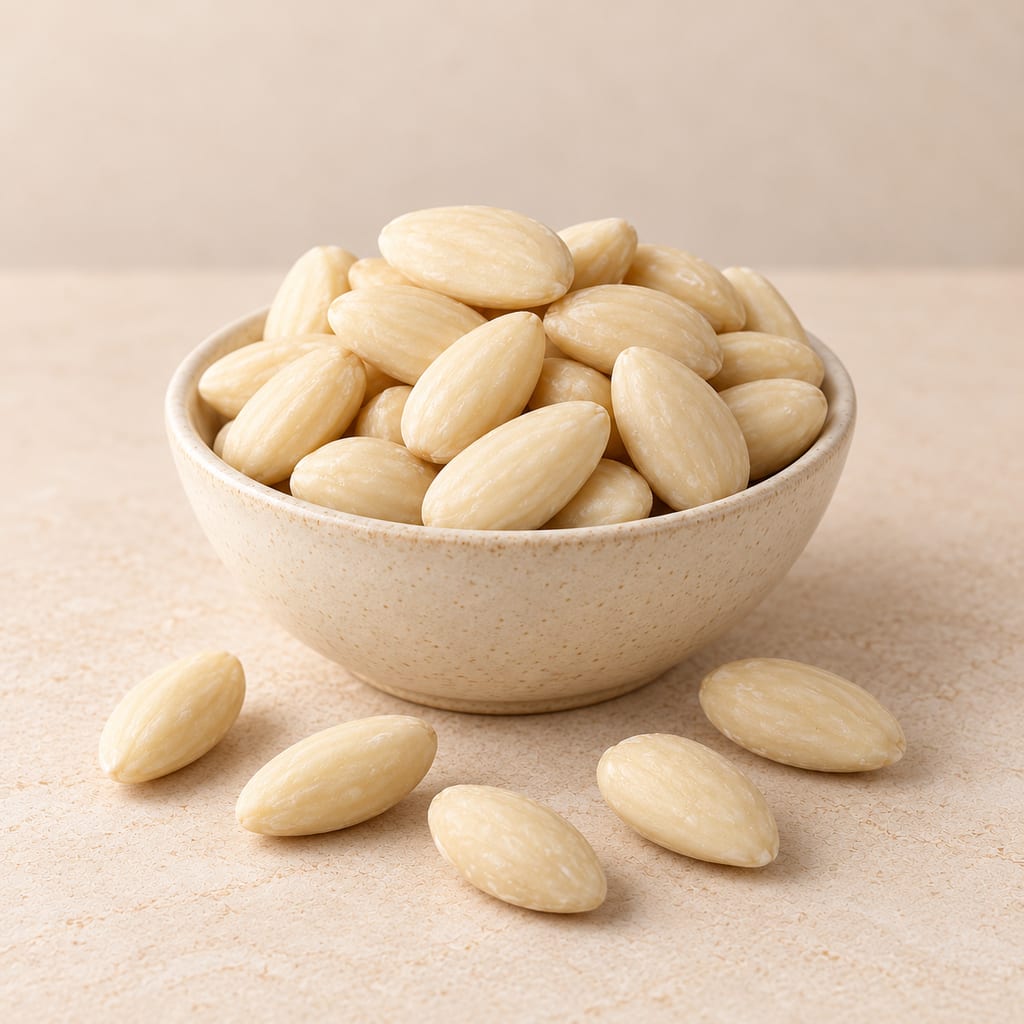
Blanched almonds are sweet almond kernels with the brown seed coat removed. A documented amla murabba cooks ten optional slivered kernels into the finishing syrup with spices and saffron.
No community contributions have been published for this entry yet.
Sign in to contribute. Published comments and photos are free to read.
Missouri Department of ConservationIdentity · Culinary use · Health claims
Wood Ear (Tree Ear), Missouri Department of Conservation field guideHealth claims on blood coagulation and cholesterol are reported; the evidence is limited to reports, not established results.
Cited in: What it is; Culinary use in the wood ear group; Health claims and their limits; Safety and what is not known
WikipediaIdentity · History
Auricularia heimuer, Wikipedia (used as a lead only)Species of the Auricularia genus are cultivated for food in China, where most commercial dried trade is grown.
Cited in: What it is; Culinary use in the wood ear group
PubMed Central, as suppliedFood use
Food-use record supplied in the fungi catalogue (entry F-4a34b476e1fe)Catalogue entry for Auricularia tremellosa with a supplied food-use label pending specialist review.
Cited in: Safety and what is not known