Rice flour
Rice flour is ground, non-waxy rice used in breads, batters and noodles. Its particle size, milling and rice variety shape how it absorbs water and sets when cooked.
 FermenteaWhere food goes to change
Traditional method
അപ്പം · appam · appa · aappa · palappam · പാലപ്പം · vellayappam · വെള്ളയപ്പം · அப்பம் · ஆப்பம் · hoppers · plain hoppers · appa hoppers · ආප්ප · āppa · egg hoppers · බිත්තර ආප්ප · biththara appa · milk hoppers · paal appam · kallappam · കള്ളപ്പം
Appam, or hoppers, are South Indian and Sri Lankan rice pancakes made from a fermented coconut-and-rice batter and cooked in a curved pan to a crisp lacy rim and a soft, spongy centre.

Appam is the name of several South Asian rice foods. This page is about the fermented rice-and-coconut pancake cooked in a curved pan, called palappam or vellayappam in Kerala and hoppers in Sri Lankan English. Malayalam അപ്പം and Tamil அப்பம் are forms of the wider name, and Sinhala ආප්ප means hoppers. The pancake is a shallow bowl, with a thin, often crisp, lacy rim round a thicker, soft centre. It is cooked one at a time and eaten at once, at breakfast or in the evening.
The main ingredient is rice, soaked and wet-ground or used as rice flour. Coconut goes in as grated flesh, fresh coconut milk or prepared milk, and many recipes add a little cooked rice or a cooked rice-flour paste to soften the texture. Water, sugar and salt finish the batter. There is no universal ratio of rice to coconut.
The batter is fermented before cooking, in one of three documented ways: with no added starter, with naturally fermented palm toddy, or with measured baker's yeast. Spontaneous fermentation relies on microbes from the ingredients and equipment, toddy brings organisms from a separate palm-sap ferment, and modern yeast recipes add Saccharomyces cerevisiae on purpose. All can give fermented appam, but they are not microbiologically the same.
A curved pan, the appachatti, gives the shape. The cook pours batter into the hot pan and rotates it so a thin film climbs the sides and a deeper pool stays in the middle. With the lid on, the centre sets in moist heat while the thin edge dries and crisps against the pan, so the hopper has a crisp rim and a spongy centre without being turned. It is a cooked dish, not a kept starter. Idiyappam, string hoppers, are steamed strands of pressed rice flour, and unniyappam and other sweet fried appams are separate foods.
The word appam is older than the bowl-shaped pancake. Sanskrit apūpa names a family of cakes in early Indian literature, but an old reference to apūpa does not identify a fermented hopper, and ingredients, equipment and shapes cannot be reconstructed from a shared word. Appam still names fried, steamed and griddle foods.
The best-dated evidence is South Indian temple inscriptions. Andrea Gutiérrez finds an appam offering at Īśānamaṅkālam under the Chola king Parāntaka I, about 930 CE, that funds rice and ghee, with no fermented batter, coconut milk or curved pan. An inscription at Srirangam of about 1087 CE records a richer appam of rice, pulses, ghee, unrefined sugar, pepper, cumin, salt, bananas and coconut, and Tirupati records of 1393 and 1534 also name appam offerings. They were often sweet and tied to festivals, and Gutiérrez cautions that the sources do not show whether a cake was shallow-fried, moulded or cooked another way. None proves the modern toddy- or yeast-fermented hopper.
The present dish is firmly established in Kerala and Sri Lanka, with related traditions in Tamil Nadu. Kerala Tourism documents appam as a regular breakfast, including Malabar versions, and the Sri Lanka Tourism Promotion Bureau names hoppers as a local rice preparation. A 1989 Dutch Burgher Union of Ceylon publication describes hopper batter of rice flour, coconut milk and palm toddy cooked in a special iron pan, direct evidence of the recognisable modern dish and one traditional fermentation.
How the regional versions developed and influenced one another is unresolved, and claims that one community invented the hopper or that it crossed to Sri Lanka on a particular date need stronger proof. Microbiological studies from 2004 on confirm lactic acid bacteria and other microbes in fermented appam batter, while official recipes often use commercial yeast; that science cannot be projected back into medieval kitchens.
Appam fermentation joins microbial gas production with changes in a hydrated rice batter. Where baker's yeast is added, Saccharomyces cerevisiae takes sugars through glycolysis to pyruvate, which becomes acetaldehyde and carbon dioxide and then ethanol while NAD+ is regenerated. The gas lightens the batter, so a yeast batter is chiefly an alcoholic fermentation, though acid-making organisms may be present.
Traditional or spontaneous batters also hold lactic acid bacteria. Jamuna and Jeevaratnam's 2004 work isolated a bacteriocin-producing lactobacillus identified as Lactobacillus acidophilus from appam batter, and a 2018 study isolated Pediococcus pentosaceus NKSM1 from fermented batter collected in Malappuram, Kerala. These are organisms in particular samples and not a universal starter. A 2014 experiment recorded rising Lactobacillus counts in batters fermented with sugar or dates and a fall in pH over five hours, with one date-syrup sample at pH 5.8, which is an observation and not a safety endpoint.
Lactic acid bacteria lower the pH by making lactic acid, and heterofermentative ones can add acetic acid, ethanol and carbon dioxide. The laboratory temperature used for one isolate does not give the right fermentation temperature for every household batter.
Rice starch gives the cooked structure, but yeast does not eat intact starch granules; grain enzymes and microbial amylases release smaller carbohydrates from accessible starch, and added sugar is an immediate fuel. Cooked rice or a cooked rice-flour paste brings in starch that has already gelatinised, changing viscosity and helping a soft centre. Coconut adds water, fat and flavour, depending on whether it goes in as flesh, first milk or diluted milk.
The shape comes from cooking as much as fermentation. The thin film at the pan's sides loses moisture fast and crisps, the deeper centre sets as starch gelatinises and rice proteins change, and the lid traps steam so the centre cooks without turning. Gas cells give a porous centre, but there is no wheat gluten network, so the batter behaves unlike bread dough, and swirling technique, particle size, consistency and pan heat matter as much as fermentation. Palm toddy brings yeasts, lactic bacteria and sometimes acetic acid bacteria, including Saccharomyces, but species found in toddy are not automatically those of the finished batter.
The rice comes first. In wet-ground Kerala methods raw rice is washed, soaked and drained, then ground with coconut and sometimes cooked rice. Kerala Tourism gives 500 g raw rice, one grated coconut, half a cup of cooked rice, half a teaspoon of yeast and three teaspoons of sugar, with the rice soaked about four hours and the batter fermented eight. Soaking softens the grains for grinding, fine grinding spreads the solids through the liquid, and the cooked rice adds gelatinised starch.
The recipe on this page is the rice-flour method from Kerala Tourism's Appam and Crab Masala: 1 kg of rice flour, 5 g of yeast, 500 ml of coconut milk and 100 g of kappi, a thick paste made by cooking rice flour with hot water. Yeast, flour, water and kappi are mixed thick and left about six hours, and sugar and salt to taste and the coconut milk go in after, with water to reach a pourable batter. The English text calls the ferment one night, six hours; the Malayalam version says six hours. The kappi pre-cooks part of the starch to set the batter's viscosity and a tender centre. Yeast should not go straight into boiling-hot kappi, though no cooling temperature is given.
Other batters differ. The NIFTEM grain-processing handbook describes appam of rice flour, coconut, sugar and toddy left overnight, with the toddy already fermenting and full of microbes. Kerala Tourism names toddy as the traditional leaven for kallappam, though its home recipe uses 2 g yeast with 500 g raw rice. A spontaneous batter uses neither yeast nor toddy and cannot be assumed to ripen at the same rate.
To cook, a small curved pan is heated and lightly greased, a ladle of batter goes in the centre and the pan is rotated at once so a thin coat reaches the sides with a thicker pool at the bottom. It is covered while it cooks, and the appam is ready when the centre is set and the edge lifts from the pan, and is served without flipping. The batter is made for one session, some recipes allow brief refrigeration of leftovers, and no safe period for indefinite refreshing is established, so cooked rice and fresh coconut need careful handling.
In Kerala palappam usually means the thin-edged bowl served with stew or curry, and vellayappam is another name for white rice appam, though usage differs by household. Recipes vary in rice, coconut, cooked rice and whether fermentation is spontaneous, toddy or yeast. Kerala Tourism's Malabar recipe uses grated coconut and cooked rice, and another uses rice flour, coconut milk and kappi.
Kallappam is related but distinct. Its name comes from kallu, toddy, and Kerala Tourism calls naturally fermented toddy the traditional leaven, though its published version uses commercial yeast, coconut, cumin, onions, garlic and curry leaves. It is cooked more like a thick pancake on a flat pan and turned, and it should not be swapped for plain palappam. Vattayappam, a steamed sweet of fermented rice batter with cardamom, unniyappam, a small fried sweet, kuzhalappam, a crisp tube, and idiyappam are separate foods.
Sri Lankan āppa is cooked in a small curved pan with a pronounced bowl. Plain hoppers are joined by egg hoppers, an egg cracked into the centre before the lid goes on, milk hoppers with extra coconut milk, and sweet hoppers with jaggery or treacle. Sri Lanka Tourism lists plain, egg and honey hoppers, and Tamil records from Jaffna describe fermented rice-flour batter with coconut milk and commercial yeast.
Sri Lankan fermentation varies as well: the Dutch Burgher Union account uses palm toddy with rice flour and coconut milk, current recipes may use yeast, baking powder or bicarbonate, and chemical leavening alone is not the same fermentation. A 2026 account from Colombo describes a hopper maker using freshly ground rice flour and coconut milk with no added yeast. Medieval temple appams, with ghee, sugar, pulses, banana and coconut, are not shown to be today's fermented hoppers.
Appam is eaten hot with the edge still crisp. In Kerala it is a familiar breakfast and also appears at other meals; its mild rice-and-coconut taste soaks up liquid sauces, and Kerala Tourism pairs it with chicken stew, mutton stew, crab masala, vegetable stew, egg curry and fish or meat curries. The soft centre takes the gravy and the thin edge contrasts with it.
Each appam is cooked on its own, the pan heated, swirled, covered, emptied and used again, so a held pancake loses its crisp edge as the centre moisture spreads. The pan and the immediate serving are part of the dish.
Hoppers in Sri Lanka are breakfast, dinner and street food. Plain hoppers go with lunu miris, a spicy onion-and-chilli sambol, or with curry, or with jaggery and bananas; egg hoppers add a cooked egg; milk and sweet hoppers suit other occasions. Eaters break pieces from the rim to scoop up the filling or sauce.
String hoppers, indiappa or idiyappam, are steamed nests of pressed rice flour, not swirled fermented batter, though they are served with similar curries and coconut accompaniments. Vattayappam and sweet fried appams share the name and nothing else. The batter is not eaten raw, and the dish category does not depend on the fermentation system, since toddy, yeast and spontaneous batters can all become savoury or sweet hoppers.
A fermenting batter expands, bubbles and smells mildly acid or yeasty. How much depends on the method, rice particle size, sugar, water and temperature. Yeast batter has a more controlled inoculum than spontaneous batter, and toddy batter depends on the condition of the separate palm sap. Bubbles show gas, not a particular community or safe acidity.
A dense centre with little air points to inactive yeast, too little time, the wrong temperature or too little fermentable sugar, and in spontaneous or toddy batters the organisms may differ from those expected. Do not leave a batter that will not rise at room temperature indefinitely; keep to the recipe's schedule.
Too thick a batter pools at the bottom and makes no thin rim, and too thin a batter runs unevenly, tears or leaves a weak centre. The batter should pour yet keep enough body for the central pool, grinding and the amount of kappi change it, and recipes leave the exact water to the cook because rice absorption and coconut-milk strength vary.
Pan faults are their own set. A pan that is too cool leaves the batter sticking and the edge pale and soft, one that is too hot burns the rim before the centre cooks, uneven rotation makes an irregular rim, and no lid leaves the centre unset. The bowl-shaped appam is covered and lifted out without flipping, unlike kallappam.
Rice needs food-safety care. Raw rice can carry Bacillus cereus spores that survive cooking, and several recipes use cooked rice that must have been cooled and stored properly. Food Standards Scotland advises cooling cooked rice promptly, ideally within an hour, keeping it refrigerated and using it within 24 hours, and Food Standards Scotland guidance also notes that reheating does not reliably remove preformed heat-stable toxin. A fermenting batter does not remove spores or toxins, and smell, bubbles or acidity cannot show that mishandled rice has become safe.
Fresh coconut and coconut milk need hygienic handling too, and fermentation is no licence to hold coconut batter at room temperature. Toddy has its own fermentation history and may carry alcohol and contaminants, and bubbles do not judge its quality. The egg in an egg hopper must be cooked and handled properly. No single pH, storage period or count applies to every batter, and a measured laboratory pH is not a safety endpoint for a household batter. Discard batter with mould, odd colour or a putrid smell instead of adding more yeast, sugar or rice. Judge the hopper by whether the rim has cooked and the centre has set, not by bubbles in the raw batter.
The name appears in 930 CE inscriptions; the modern form is documented in recent recipes and studies.
Rice can carry B. cereus spores that survive cooking and grow under favourable conditions; batter fermentation is not established as a way to prevent toxin formation.
Hazard sourcePoor temperature control of cooked starchy foods can allow production of cereulide, and cooking or reheating does not reliably remove preformed toxin.
Hazard sourceThe six-hour fermentation has no stated temperature, pH endpoint or pathogen-reduction step; a bubbling batter is not automatically safe.
Hazard sourceCoconut milk is perishable and can be contaminated in extraction, handling or storage; it is added after the first fermentation.
Hazard sourceA hopper has a thick centre and thin rim; a browned rim alone does not show the centre is cooked.
Hazard sourceIngredients, containers, tools and utensils can carry microbes into the batter, and fermentation does not replace hygiene.
Hazard sourceUse potable water, sound rice flour, fresh coconut milk and clean equipment.
Control sourceIf an alternative recipe uses cooked rice, cool it quickly and refrigerate it; this does not apply to the rice-flour recipe.
Control sourceMake the kappi hygienically and avoid warm storage of the paste before use.
Control sourceUse the documented yeast method; treat toddy or spontaneous fermentation as a different recipe.
Control sourceCook in a properly heated curved pan, covered until the centre has set.
Control sourceUse fresh coconut milk and avoid long uncontrolled holding of the mixed batter.
Control sourceDo not treat the six-hour period, bubbles or aroma as proof of safety.
Control sourceThis is a commercial-yeast Kerala appam recipe, not a spontaneous, toddy or sourdough recipe.
The yeast form is not stated; equal weights of fresh, instant and active dry yeast are not necessarily interchangeable.
The kappi quantity and flour-to-water ratio are incomplete.
No fermentation temperature or endpoint is given; six hours is not a validated safety limit.
Fermentation does not eliminate Bacillus cereus spores or toxins.
Do not use mishandled cooked rice in appam variations.
Use clean coconut milk; adding it after fermentation does not remove contamination.
Do not taste raw batter to judge fermentation.
Bubbles, sourness and rise do not identify microbes or show pathogens are absent.
Discard batter with mould, odd colour or spoilage; do not rescue it with yeast, sugar or cooking.
The raw batter is not ready to eat.
No safe refrigeration time or mother-culture maintenance is established.
The cooking technique is taken from Kerala Tourism's mutton stew method, whose heat and timing are not given.
Medieval inscription appams are not shown to follow this yeast method.
Region-level.
A microbiological sample, not a claim of origin.
Region-level; related tradition.
An appam offering is recorded; the modern fermented hopper is not.
An appam temple offering, not the modern hopper.
Country-level.
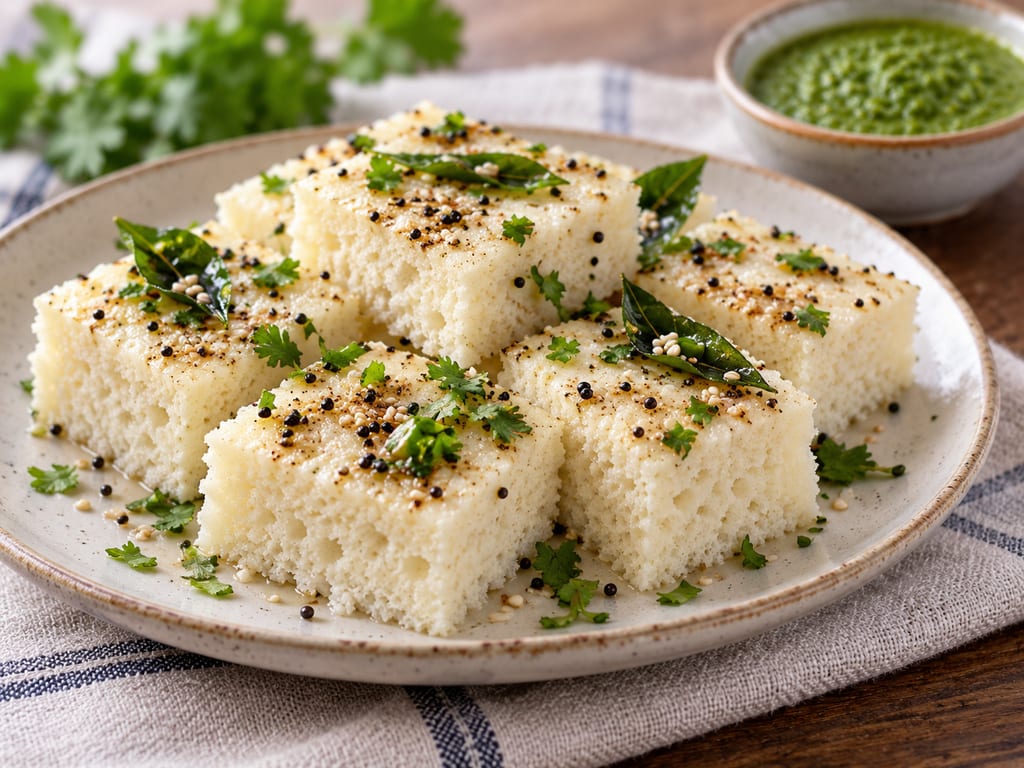
Dhokla is a Gujarati savoury steamed cake made from a fermented rice-and-pulse batter, whose lactic bacteria and yeasts give acidity, aroma and a porous crumb before steaming.
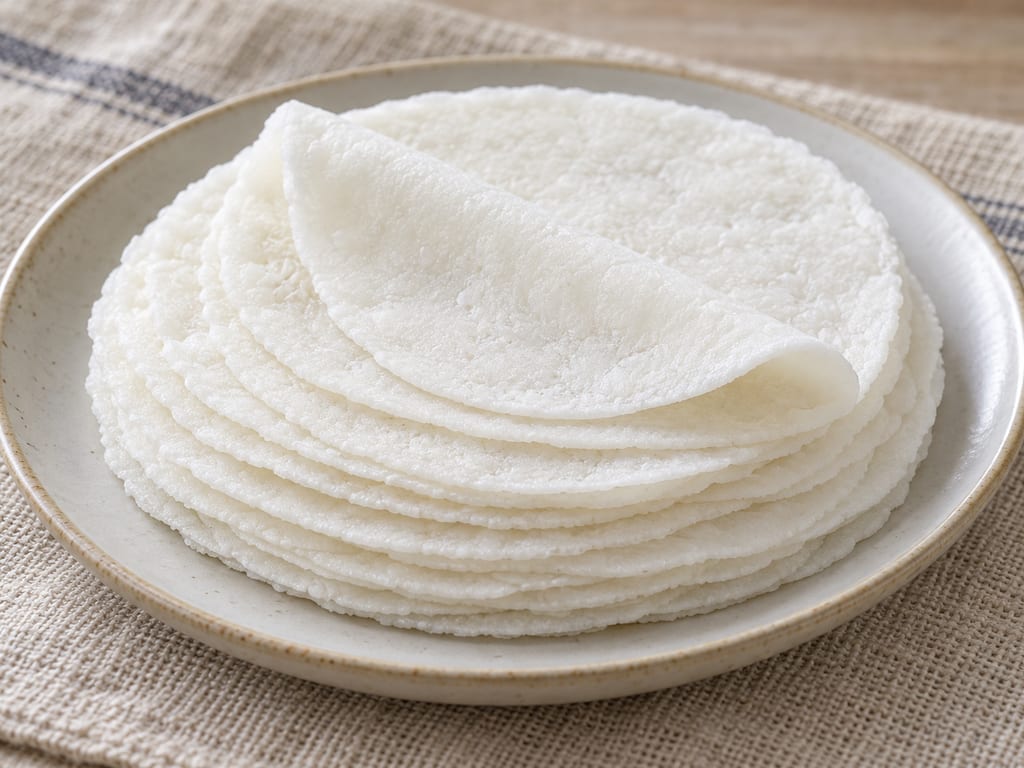
Thin Malabar rice-flour rounds made from roasted rice flour cooked into salted boiling water, kneaded after cooling, and rolled to about 1 mm. They cook on a hot griddle without taking on colour.
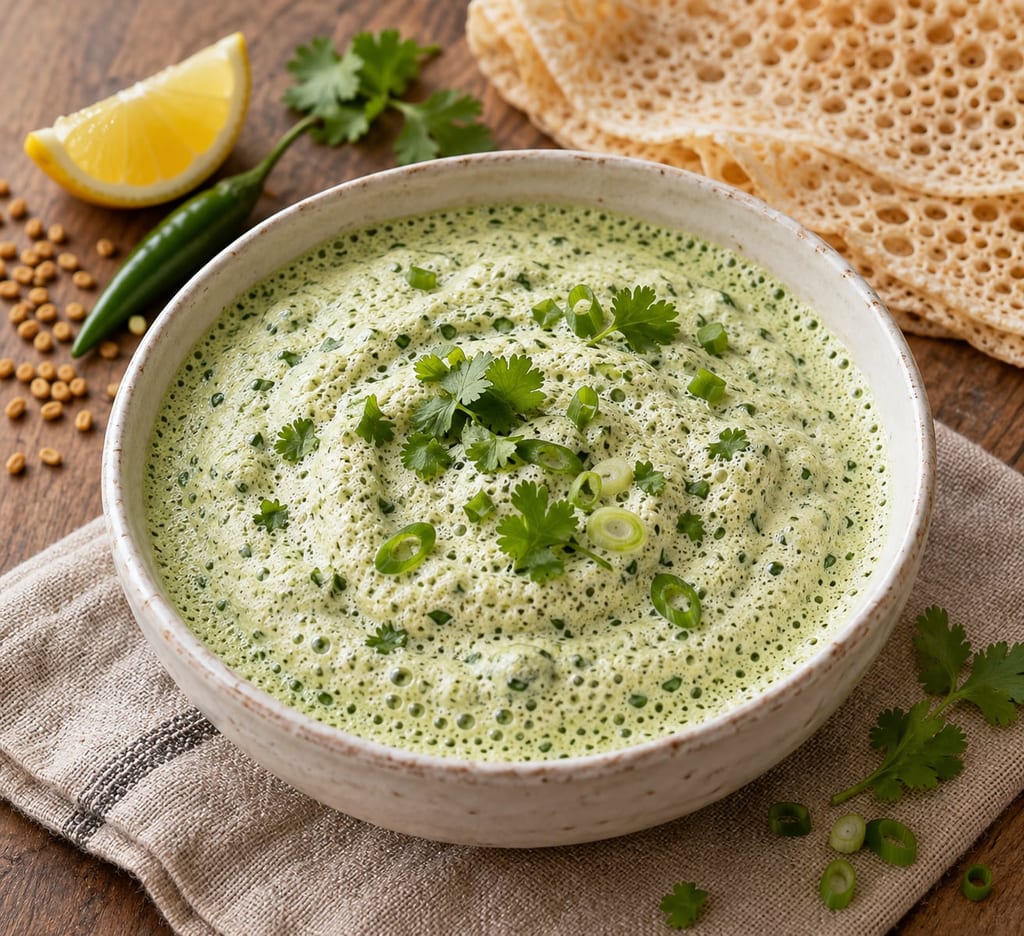
A whipped condiment of soaked ground fenugreek seed, aerated until foamy and finished with herbs, chilli and lemon. It comes from Yemen.
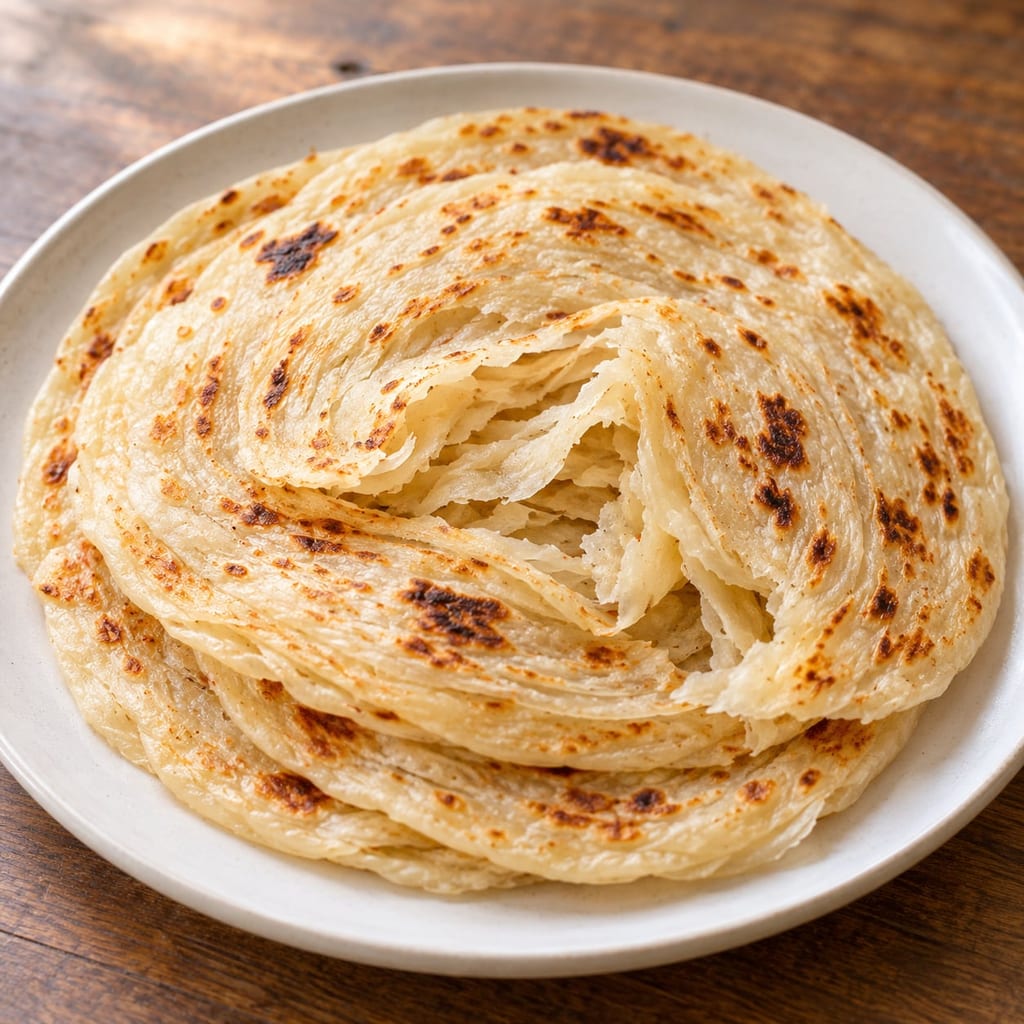
A layered Kerala flatbread made with an unleavened refined-wheat dough, stretched, coiled and cooked on a tawa.
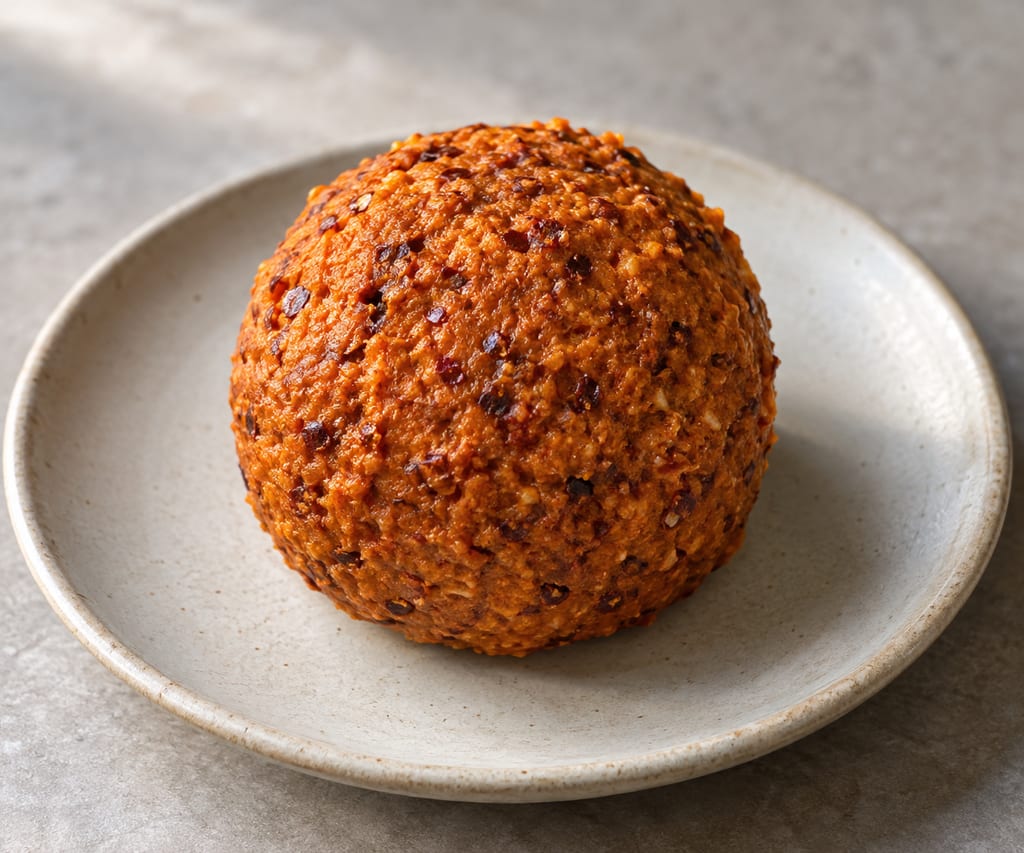
A Kerala chammanthi of coconut and red chillies roasted over a flame, then ground with shallots, tamarind, curry leaves, lemon leaves and salt and shaped into a ball.
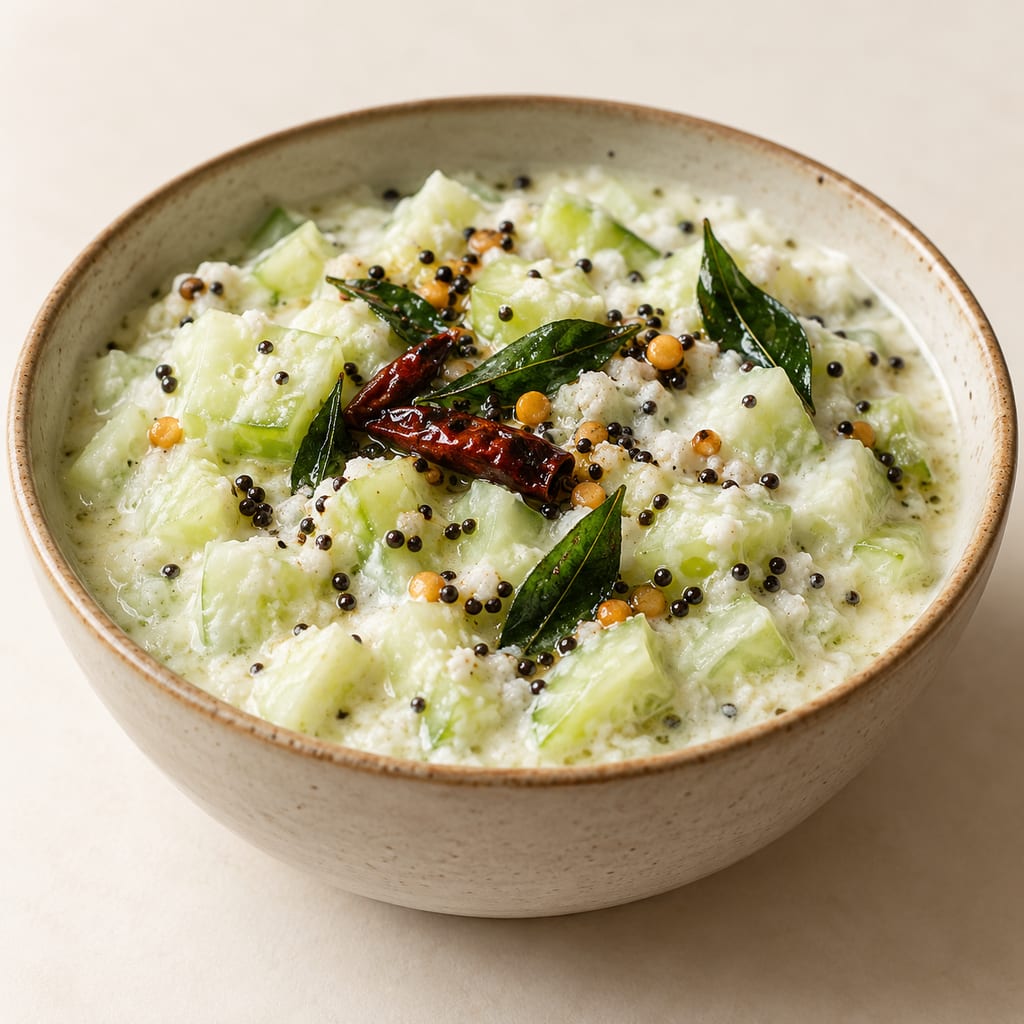
A Kerala cucumber kichadi for an Onam sadya, finished with coconut, yogurt and a coconut-oil tempering.
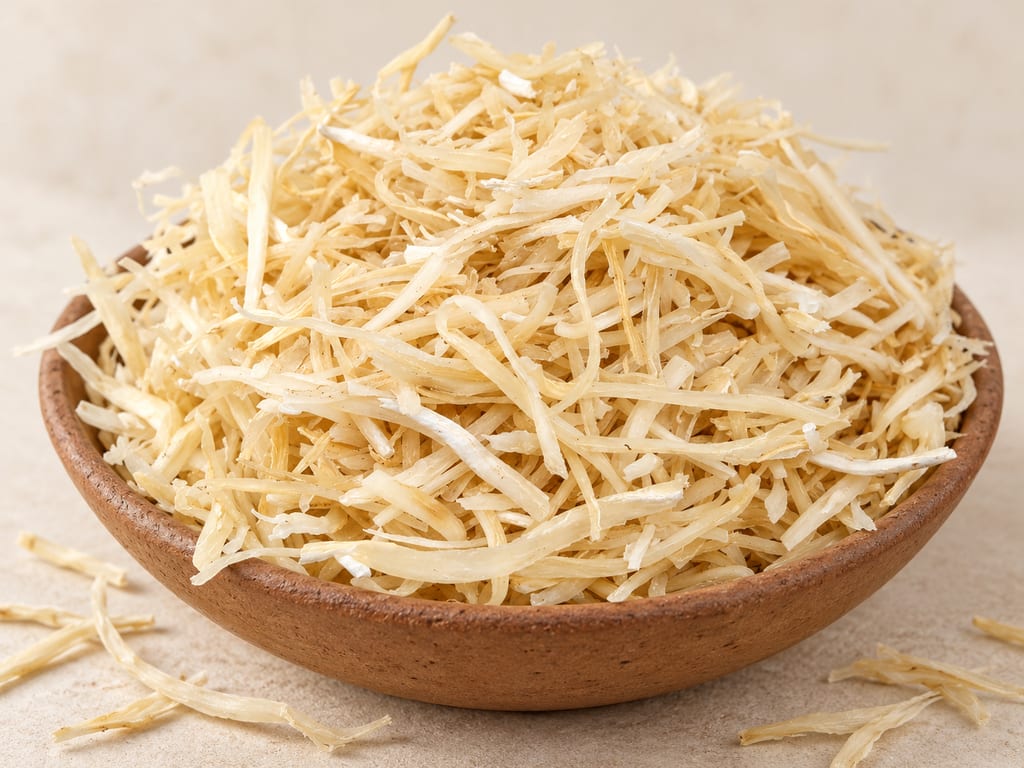
Abacha is a fermented cassava-strip preparation from southeastern Nigeria, sold wet or dried and later rehydrated for meals such as African salad.
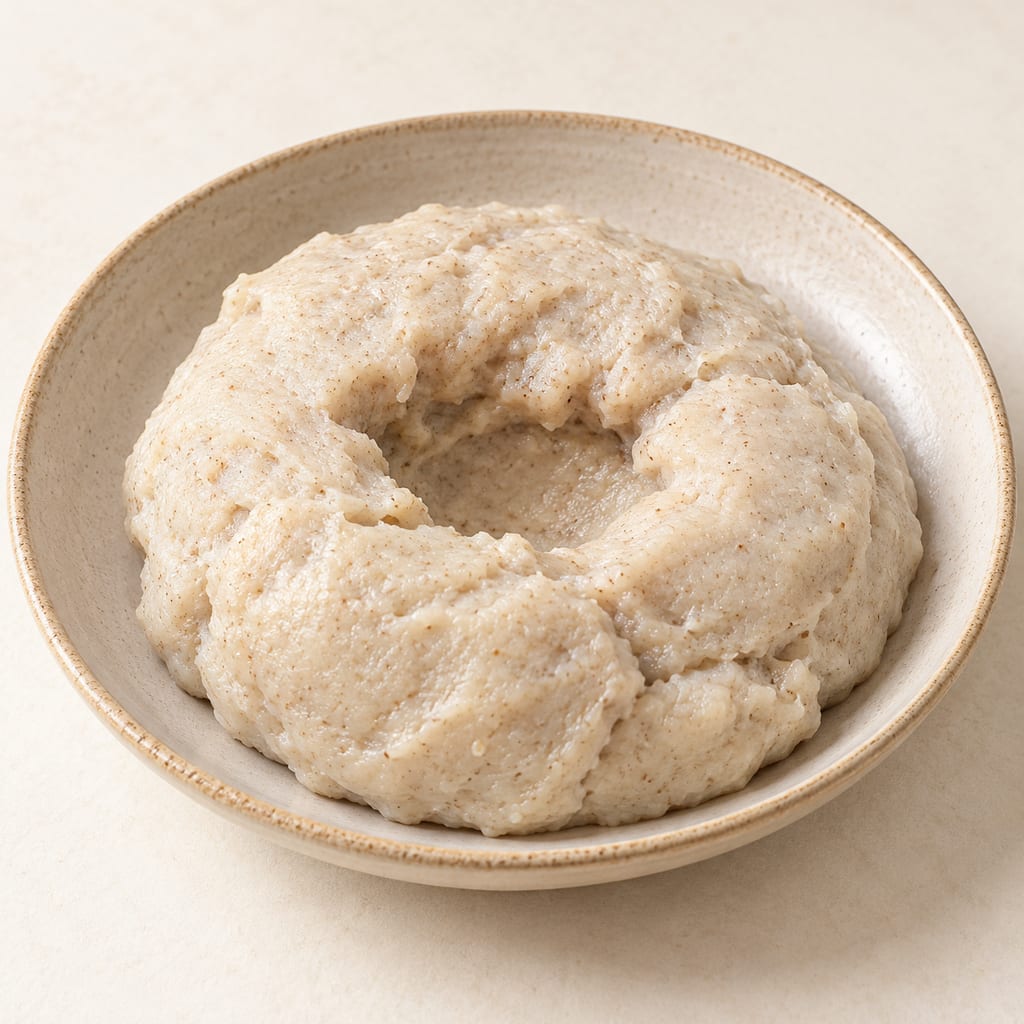
Aceda is Sudan’s firm cereal porridge, commonly made from sorghum and shaped into a smooth mound. Some versions use fermented dough; fermentation is not universal.

Ghanaian sour cassava dough fermented with traditional inoculum and drained during fermentation. It is used as a base for cooked foods such as banku and akple; process variants and safety outcomes differ.
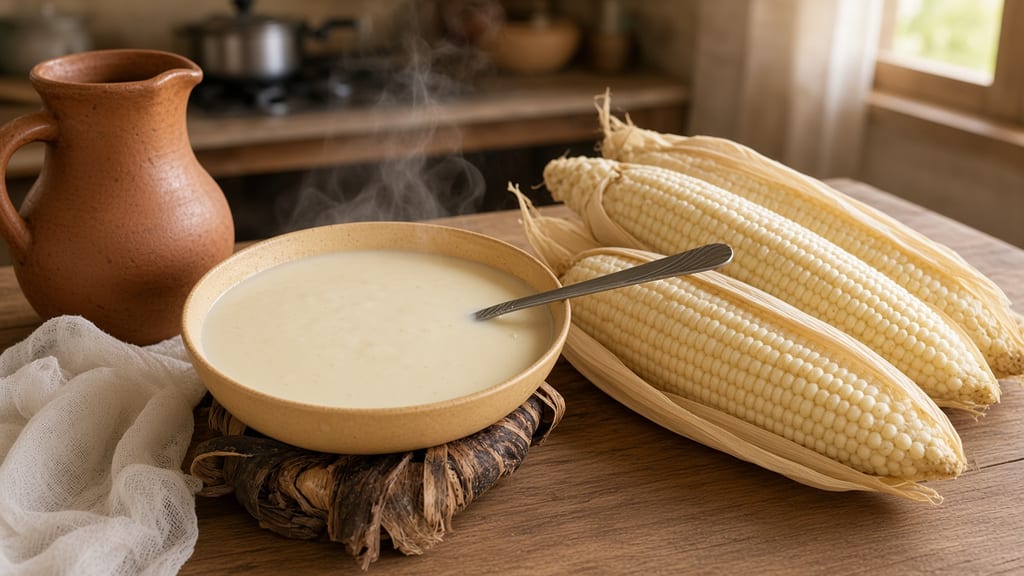
A hot, sour maize drink from Tabasco made from maize that is not lime-cooked. The ground grain sours for half a day, then makers strain it and boil it until thick.
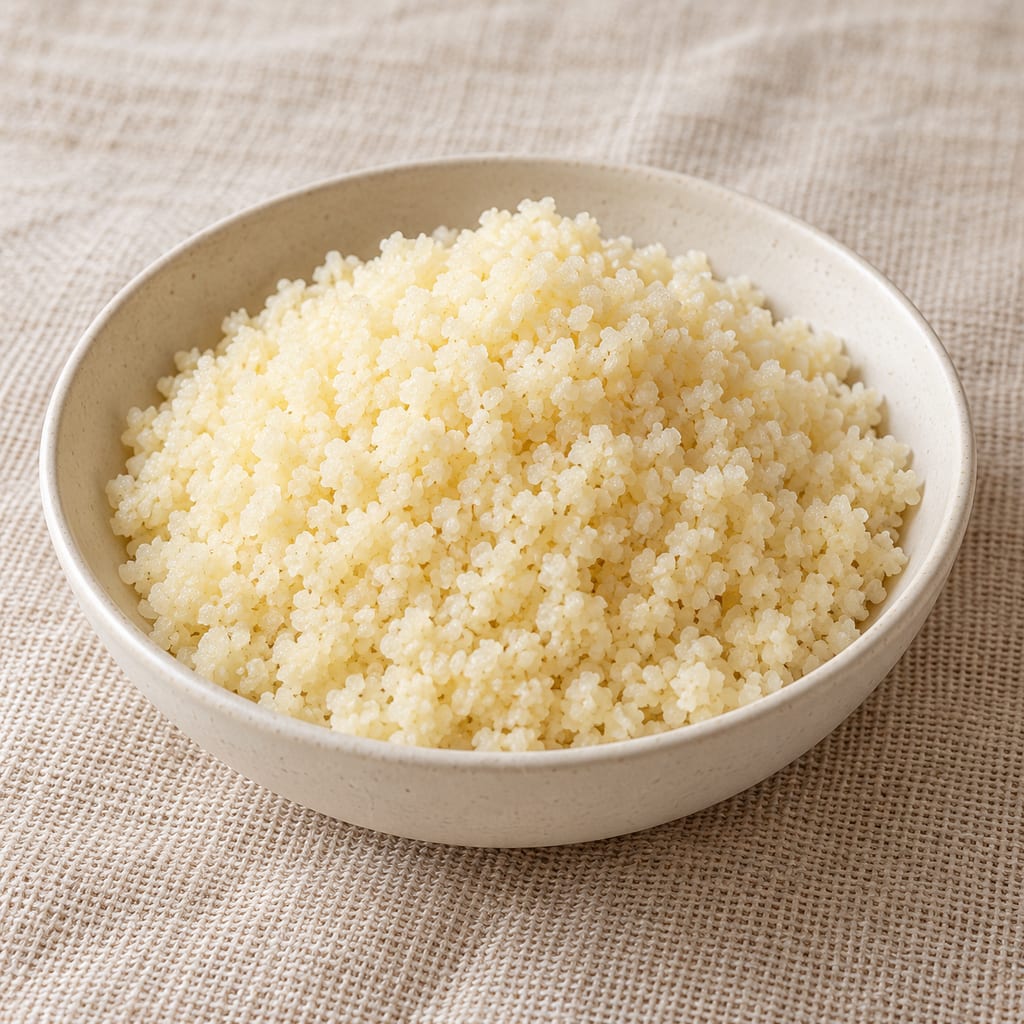
Ivorian cassava semolina: grated cassava is fermented overnight with a traditional inoculum, pressed, sieved into granules, dried and steamed. Documented in a 2006 field study; no sole original process is established.
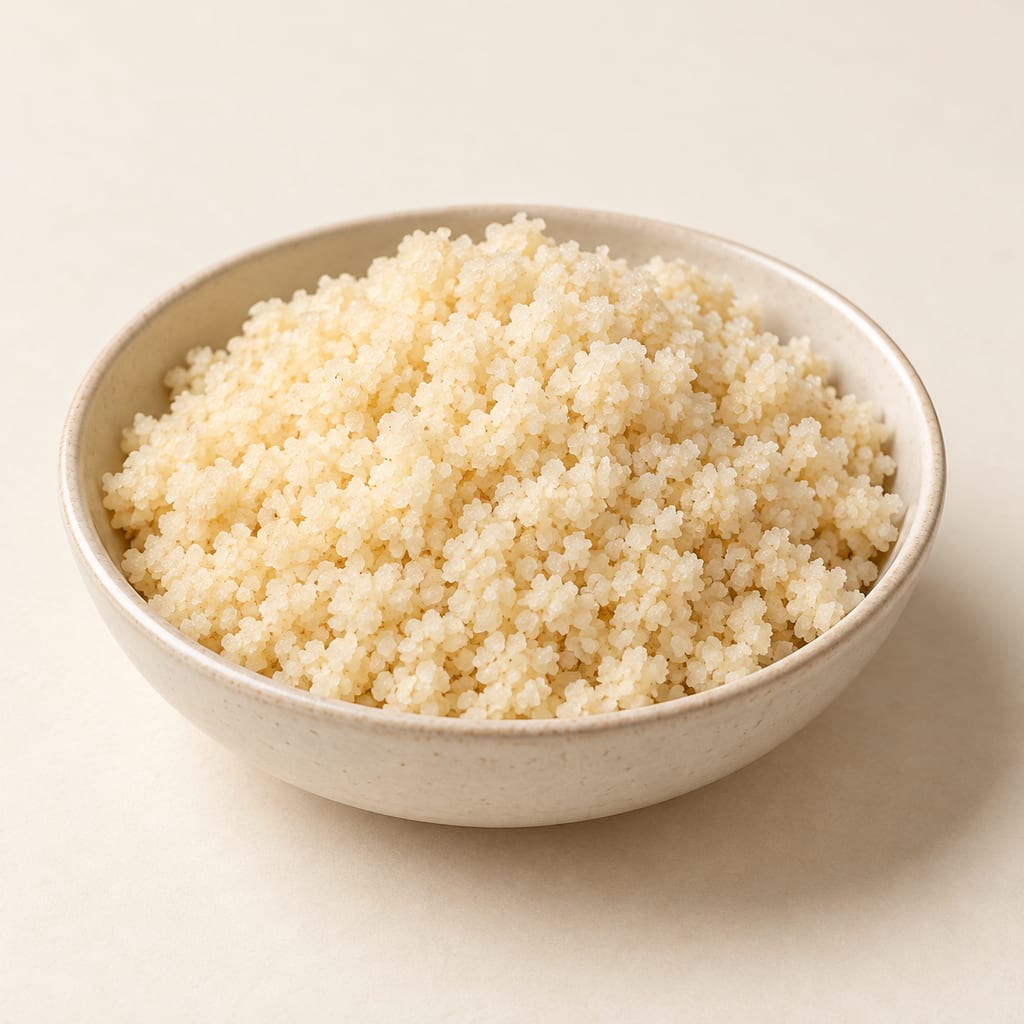
Attiéké is an Ivorian staple of grated cassava fermented with a traditional inoculum, then pressed, sieved, granulated, dried and steamed into fine couscous-like grains.

Crushed or milled barley cooked in water until the starch softens and the mixture thickens, the plainest way a northern household turned stored grain into a meal, here with apple and hazelnut.
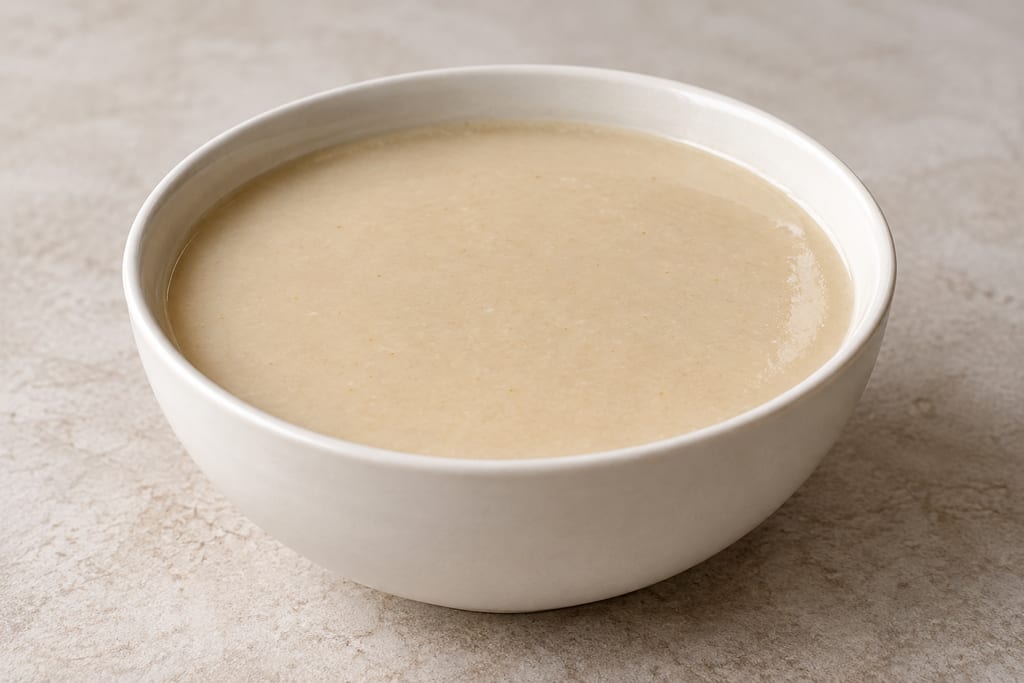
A fermented pearl-millet gruel documented in Ouagadougou, Burkina Faso. Whole grain is soaked, wet-milled and sieved; the settled paste ferments again before it is cooked with its liquid.

Protected Italian vinegar made only from cooked grape must, fermented and aged in a battery of wooden barrels for at least 12 years: sweet, sharp and syrupy.

Airag is Mongolia’s fermented mare’s-milk drink, traditionally churned with saved starter in a reusable cowhide khokhuur.

Auricularia tremellosa is a wood ear fungus of the genus that supplies most dried wood ear sold in China; its own food record is thin, and the culinary practice described here comes from the closely related wood ear species.

Ayran is Turkey’s cold, savoury yogurt drink: plain yogurt is loosened with water and lightly salted, then whisked smooth or aerated into a soft cap of foam.
A thin stone griddle used over an open hearth. Norwegian archaeology documents the established tradition from the early Middle Ages; a Viking-period origin is only a cautious suggestion linked to Shetland.

Black carrot is the anthocyanin-pigmented Eastern carrot (Daucus carota var. atrorubens), the purple root that preceded orange types and still colours kanji and şalgam.
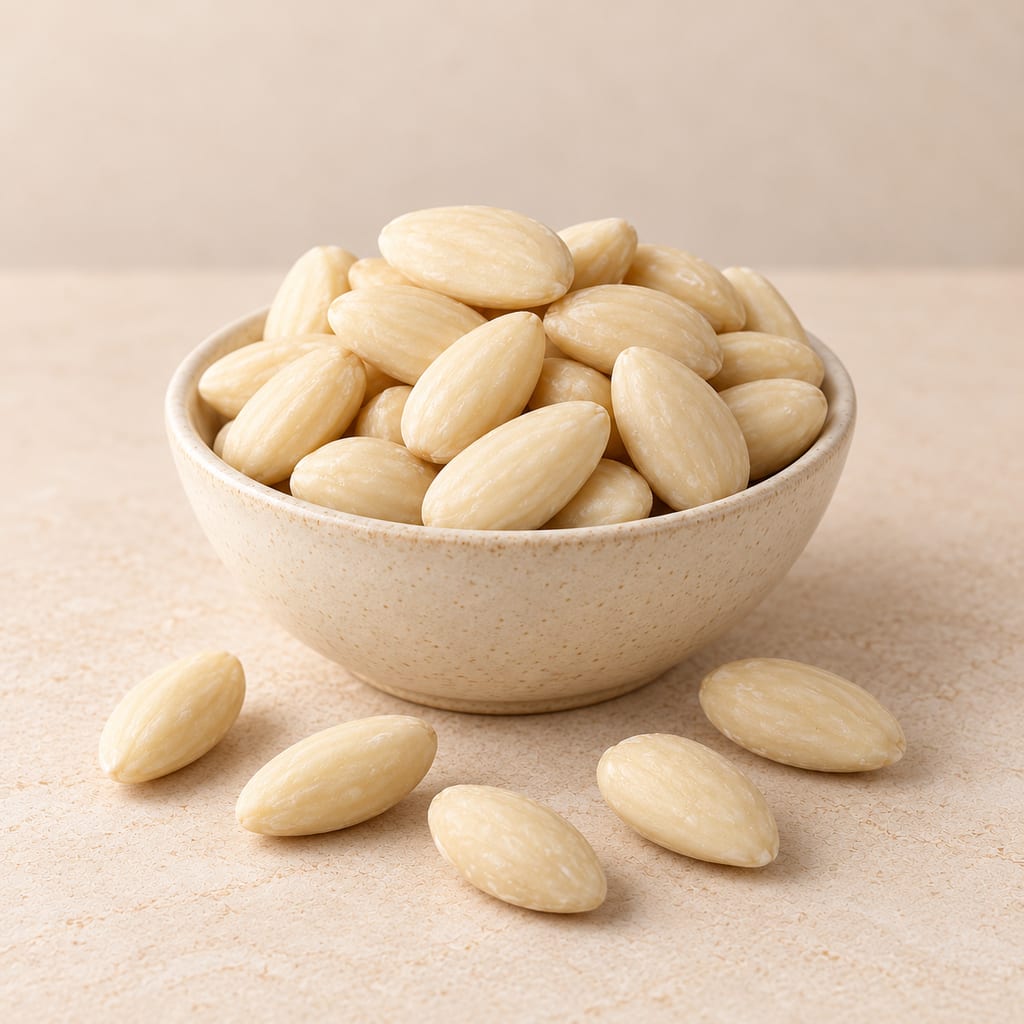
Blanched almonds are sweet almond kernels with the brown seed coat removed. A documented amla murabba cooks ten optional slivered kernels into the finishing syrup with spices and saffron.
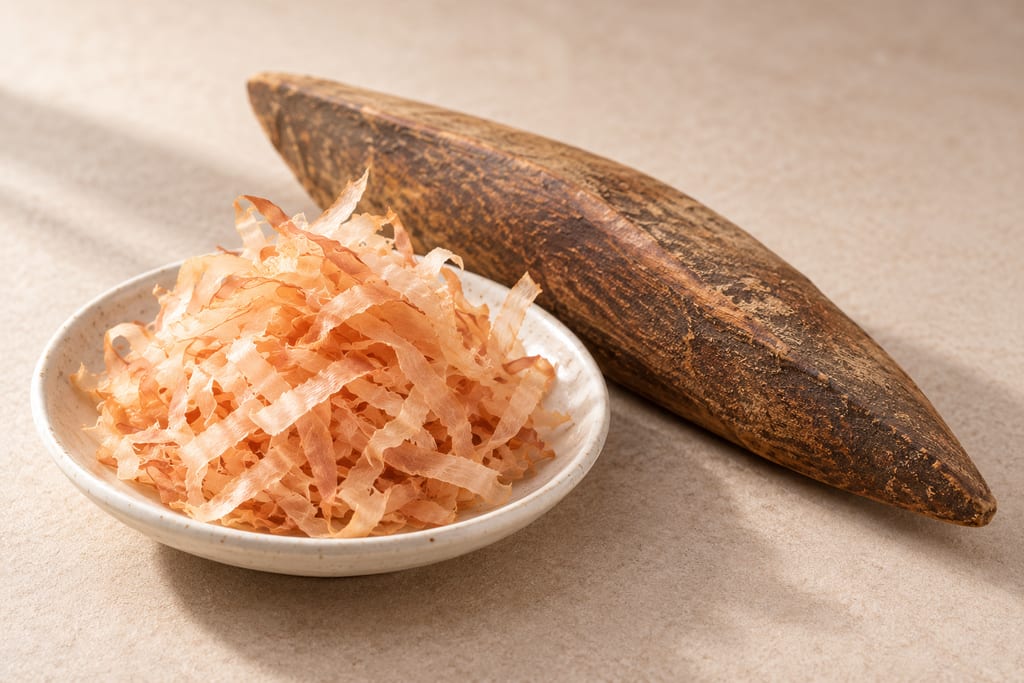
Katsuobushi is skipjack tuna cooked, smoked and dried into a hard block that is shaved into flakes for dashi and toppings. Some styles stop at the smoke-dried stage; others receive carefully managed mold maturation.
No community contributions have been published for this entry yet.
Sign in to contribute. Published comments and photos are free to read.
Department of Tourism, Government of KeralaMethod
Appam and Crab Masala1 kg rice flour, 5 g yeast, 500 ml coconut milk, kappi; about six hours; sugar, salt and coconut milk added after
Cited in: What appam is; What the record shows; Yeast, bacteria and starch; Making appam, and why; Kerala, Sri Lanka and relatives; At the table; Reading the batter and the pan
Department of Tourism, Government of KeralaMethod · Use
Appam and Mutton Stewlightly oiled curved pan over a low flame; swirl, cover, no flipping
Cited in: What appam is; Making appam, and why; At the table; Reading the batter and the pan
Department of Tourism, Government of KeralaUse
Appam and Chicken Stewappam with chicken stew
Cited in: At the table
Department of Tourism, Government of KeralaVariation
Kallappamtoddy as traditional leaven; flat pan, turned; 2 g yeast with 500 g raw rice
Cited in: Making appam, and why; Kerala, Sri Lanka and relatives
Sri Lanka Tourism Promotion BureauVariation · Use
So Rich in Flavours: Sri Lankan Food Rangeplain, egg and honey hoppers; lunu miris
Cited in: What appam is; What the record shows; Making appam, and why; Kerala, Sri Lanka and relatives; At the table
Journal of Ethnic FoodsHistory · Variation
Indigenous and Traditional Foods of Sri Lankahoppers among traditional Sri Lankan rice foods
Cited in: What appam is; What the record shows; Kerala, Sri Lanka and relatives; At the table; Reading the batter and the pan
Religions, MDPI, 2018History
Jewels Set in Stone: Hindu Temple Recipes in Medieval Cōḻa Epigraphyappam offerings about 930 CE and 1087 CE; Tirupati 1393 and 1534
Cited in: What the record shows; Kerala, Sri Lanka and relatives
Journal of General and Applied Microbiology 50(2), 2004Science
Isolation and Characterization of Lactobacilli from Some Traditional Fermented Foods and Evaluation of the Bacteriocinsbacteriocin-producing lactobacillus from appam batter
Cited in: What the record shows; Yeast, bacteria and starch; Making appam, and why
Journal of Pure and Applied Microbiology, 2018Science
Production and Characterization of Bacteriocin by Lactic Acid Bacterium Pediococcus pentosaceus NKSM1 Isolated from Fermented Appam BatterP. pentosaceus NKSM1 from batter collected in Malappuram
Cited in: Yeast, bacteria and starch
Journal of Pure and Applied Microbiology, 2014Science
Effect of Dates on Fermentation of Appam Batterrising Lactobacillus counts and falling pH over five hours
Cited in: Yeast, bacteria and starch; Reading the batter and the pan
Food Standards ScotlandSafety
Food Storagecool cooked rice within an hour, refrigerate, use within 24 hours
Cited in: Reading the batter and the pan
Food Standards ScotlandSafety
Guidance on the Management of Outbreaks of Foodborne Illness in Scotlandheat-stable B. cereus toxin is not removed by reheating
Cited in: Reading the batter and the pan