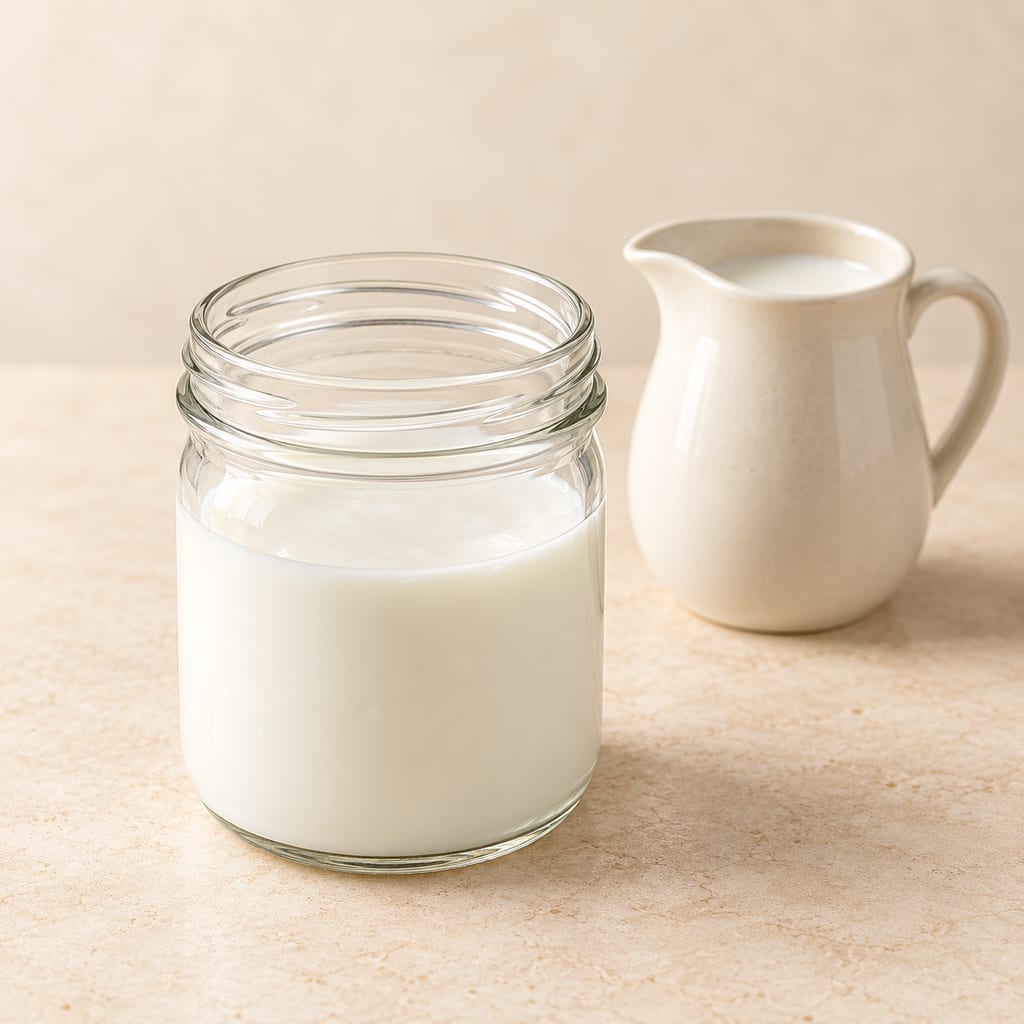
Set yogurt
Set yogurt keeps the milk’s cultured gel intact in its final container. This Canadian home method follows the same heating and inoculation as stirred yogurt, without the final stirring.
 FermenteaWhere food goes to change
Traditional method
ઢોકળા · dhokla · dhoklā · dhokla cake · ઢોકળાં · ढोकला · khatta dhokla · ખાટા ઢોકળા · खट्टा ढोकला · safed dhokla · સફેદ ઢોકળા · white dhokla · Gujarati fermented dhokla · dal-chawal dhokla · dukkia · dukkai
Dhokla is a Gujarati savoury steamed cake made from a fermented rice-and-pulse batter, whose lactic bacteria and yeasts give acidity, aroma and a porous crumb before steaming.
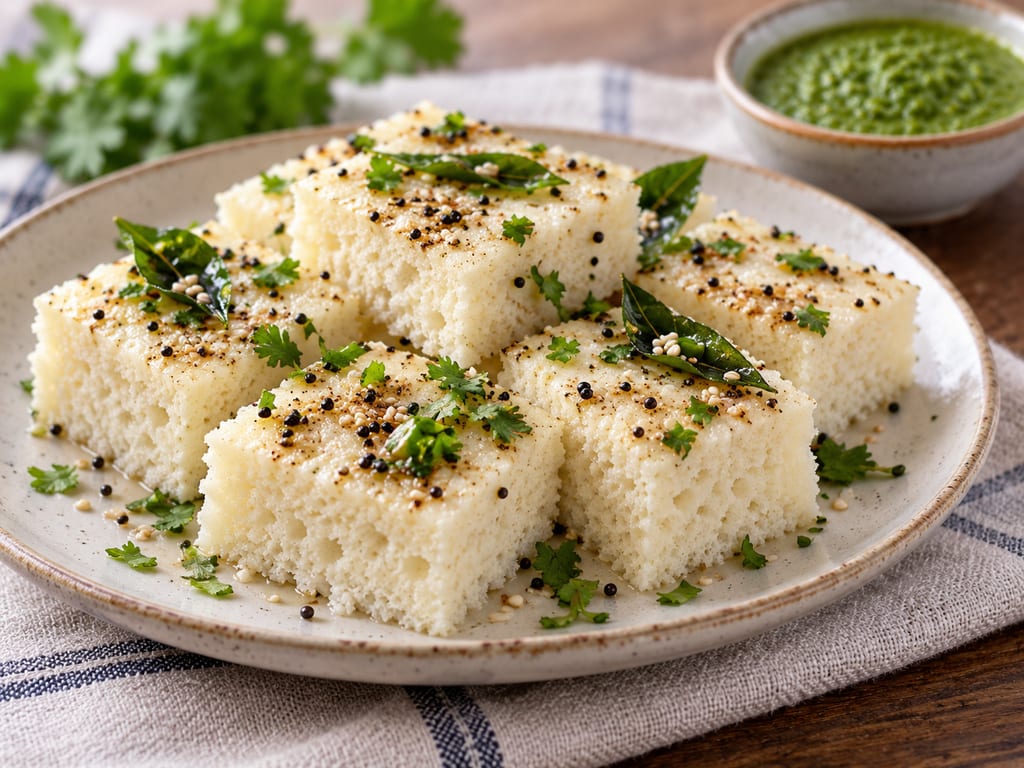
Dhokla is a savoury steamed cake tied above all to Gujarat in western India. In its traditional form, rice and split pulses are soaked, ground into a thick batter, fermented and steamed in a shallow tray, then cut into squares or rectangles. The inside is soft and porous with a mild sourness from the fermentation. It is farsan, a Gujarati savoury eaten as a snack or alongside a meal, and it is cooked before eating; the fermenting batter is a stage and not the food.
A common mix pairs rice, Oryza sativa, with split Bengal gram, Cicer arietinum, or chana dal. Other Gujarati versions use black gram, Vigna mungo, or a blend of pulses. Rice gives starch and much of the cooked structure, the pulses give protein and more carbohydrate, and recipes may add yoghurt, ginger, green chillies, salt and oil. Some are fermented spontaneously and yoghurt versions get an extra inoculum, and no single rice-to-pulse ratio or starter is common to every household.
The Gujarati name is ઢોકળા and the Hindi ढोकला. Khatta dhokla means sour dhokla and usually points to a fermented cake with noticeable acid. White or safed dhokla often uses rice and urad dal, giving a paler cake, and idada or idra is a regional name for rice-and-urad steamed cakes. These names overlap and are not fixed recipes.
Khaman is often confused with dhokla. It is commonly made mostly from Bengal-gram flour or soaked chana dal, is brighter yellow and lighter, and many modern recipes raise it quickly with baking soda or fruit salt, with no microbial fermentation at all. Fermented khaman also exists, so the line is not simply that dhokla ferments and khaman does not; the ingredients and process of each recipe decide. Fermented dhokla belongs under mixed fermentation, with lactic acid and alcoholic processes before cooking, and chemical leavening may be added at the last moment. The steamed cake is not a live starter.
Dhokla is strongly Gujarati, but the origin of the steamed, fermented rice-and-pulse cake is not securely dated. K. T. Achaya is repeatedly cited, in later writing, for an earlier preparation called dukkia or dukkai in Gujarati Jain literature of the eleventh century, with dates given as about 1066 or 1068 CE. The dates and spellings vary between secondary sources, the manuscript has not been examined here, and it is best read as a possible antecedent and not a documented recipe for today's dhokla.
A second reference often cited is the Gujarati work Varanaka Samuchaya, around 1520 CE, said to use the word dhokla; a Goya article on Gujarati food history attributes this to Achaya's Historical Dictionary of Indian Food. The original passage and whether it says anything of fermentation, grain ratios or steaming were not checked, so this gives a reported name and not an unbroken technical history.
The method is clearer. The FAO's Fermented Cereals: A Global Perspective lists dhokla among Indian acid-leavened cereal foods and separates its Bengal-gram batter from the black-gram batter of idli, which shows a shared technology and not that dhokla grew out of idli.
Scientific work dates the biology. Joshi, Godbole and Kanekar published a study of microbial and biochemical changes during dhokla fermentation in 1989, following bacteria, yeasts, acidity, volatiles and batter expansion, a 2006 FEMS Yeast Research review summarised it, and in 2018 Sharma, Kumari, Nout and Sarkar examined how soaking, fermentation and steaming conditions affect antinutrients. Later, snack manufacture, flour blends, packaged steamed cakes and instant versions made with baking soda or fruit salt arrived. The bright-yellow product sold as dhokla is often khaman, and instant chemically leavened cakes are not shown to be the original form.
Traditional fermentation uses microbes carried by the rice, pulses, water, tools and, where used, yoghurt. Lactic acid bacteria turn available carbohydrate into organic acids, while yeasts and gas-making bacteria aerate the batter. The 1989 study identified Lactobacillus fermentum, Leuconostoc mesenteroides and Hansenula silvicola, now Limosilactobacillus fermentum and Wickerhamomyces silvicola (also published as Pichia silvicola). These were found in studied preparations, not a guaranteed community in every Gujarati kitchen.
Homofermentative lactic bacteria make mostly lactic acid, and heterofermentative ones such as Leuconostoc mesenteroides add carbon dioxide, ethanol and acetic acid. Yeasts run glycolysis and make ethanol and carbon dioxide. The gas collects in the viscous batter and gives the bubbles and porous crumb. In the 1989 experiment pH fell from 5.3 to 4.0 over 18 hours and batter volume rose about 95.6 per cent, with rising titratable acidity and volatiles such as acetic acid and acetoin, the buttery aroma. That is one experiment and not a target for every recipe.
Rice supplies starch, and Bengal gram and other pulses supply starch, protein and other carbohydrate. Soaking hydrates and softens the grains for grinding, and grain and microbial enzymes release smaller carbohydrates as substrate. Pulses also carry phytate, tannins and protease inhibitors, which soaking, microbes and heat change. The 2018 study found large reductions in several antinutrients across soaking, fermentation and steaming, but total biogenic amines rose during fermentation, and a separate study found no gain in zinc or iron bioaccessibility for its fermented dhokla mix.
Steaming turns batter into cake. Rice starch gelatinises as it takes up water and heats and pulse proteins denature and set the structure, so gas pockets formed earlier stay as pores. Baking soda or fruit salt added just before steaming makes more carbon dioxide by an acid-base reaction, a chemical lift laid over the fermentation and unlike instant khaman, where it may be the only rise. Steaming also inactivates the batter's organisms, so freshly steamed dhokla is not a source of living starter, and cooking does not undo earlier contamination or remove preformed heat-stable toxins.
The traditional process cleans and soaks rice and split pulses. The 2018 study soaks Bengal gram and rice separately, grinds them into batters and combines them before fermenting. Soaking hydrates the hard seeds and eases grinding, washing removes loose dirt without sterilising, and the ratio shapes the cake, since rice gives starch and Bengal gram gives protein and a denser crumb.
The recipe here is Archana Doshi's Gujarati khatta dhokla from Archana's Kitchen (7 August 2020): one cup rice, one cup whole white urad dal, one cup chana dal and two tablespoons of curd. The rice and dals are soaked in three cups of water for six hours and drained, and then ground with two green chillies, an inch of ginger, the curd and a little water at a time into a thick, flowing batter; the published text names only the dal for grinding, so when the rice goes in is ambiguous, but it is part of the batter. Salt is stirred in and the batter ferments eight hours or overnight, with no temperature given.
Grinding exposes more grain surface and spreads carbohydrate and protein through the liquid. The batter needs enough water for microbes and gas yet enough body to hold bubbles and set coherently. Yoghurt gives acid and may add living cultures, though species and activity are rarely specified, and the batter can also ferment from organisms already in the grain and surroundings.
After fermentation a tablespoon of oil is stirred in gently so the air is not lost, the trays are greased generously and filled about halfway, red chilli powder is sprinkled over and the trays steam on high for about ten minutes, until a greased knife comes out clean from the centre. The 2018 study steamed 20 minutes in a different, controlled process at 32 C for 18 hours with 8 g salt per kilogram of batter, and those conditions should not be merged with the household recipe. The cake rests five minutes, then a tempering of a second tablespoon of oil with a teaspoon each of mustard and sesame seeds, a quarter teaspoon of asafoetida and a chopped sprig of curry leaves is poured over, garnished with coriander, cut and served, giving six servings.
Other recipes differ: the ICAR Gujarati dhokla formula ferments eight to ten hours and adds a raising agent before steaming. The batter is for one session and not a maintained mother culture, and no source establishes a safe repeated-refreshment method.
Gujarati dhokla covers several preparations differing in grain, fermentation, colour and seasoning. Khatta dhokla means the sour, fermented kind, and a familiar pale form pairs rice and urad dal with sour yoghurt, called safed or white dhokla, with idada and idra used in some homes for related white cakes. Kanan Patel's family recipe separates this white khatta dhokla from the yellow chana-dal version made in the same household, so colour and ingredients help but do not define.
Chana-dal dhokla uses Bengal gram, sometimes with rice and other pulses, and mixed-dal versions combine chana, urad, moong and sometimes pigeon pea. Some modern cooks use rice flour, gram flour or ready dhokla flour. Substitutions change water uptake, protein and fermentation behaviour and are not nutritionally or microbiologically equivalent without evidence.
Surati vati dal khaman is a related fermented preparation from Surat, of soaked, ground Bengal gram and sometimes rice, fermented and steamed; Dassana Amit's version ferments eight hours and adds a raising agent before steaming. That shows it is wrong to say all khaman is instant. Instant khaman is chickpea flour, water, seasoning and an acid with baking soda or fruit salt, with no long microbial ferment, and tends to be bright yellow, softer and more open.
Others include rava dhokla of semolina, toor-dal, green-pea, layered sandwich, greens and millet versions, and rasia dhokla served in a tangy sauce. Some are truly fermented, some take yoghurt for flavour without real incubation, and some rely on chemical leavening, so each recipe needs checking. The old dukkia and the 1520 reference do not show the modern proportions or the use of baking soda, yoghurt or particular bacteria.
Dhokla is served as a steamed cake cut into pieces, warm or at room temperature, as breakfast, a tea-time snack, in a lunch box or on a Gujarati thali. Green coriander or mint chutney and tamarind chutney are the usual accompaniments, giving sweetness, heat and freshness against the cake's acidity, and some homes serve white dhokla with only a little oil or chilli powder instead of a full tempering.
The finishing vaghar or tadka heats oil with mustard seeds and other seasonings, such as sesame, curry leaves, asafoetida, green chilli and coriander, and pours it over the cooked pieces; the oil carries aroma and coats the surface. In softer khaman styles a sweetened liquid is sometimes added and absorbed. This step comes after steaming and is not a fermentation ingredient.
Texture is part of the pleasure: acid and gas from the batter, then steam set into a moist open crumb that holds when cut and stays tender, and a compact, gummy centre is a fault. It depends on rice-to-pulse ratio, grinding, consistency, fermentation and cooking and not on the rise alone. Packaged and ready-made versions are sold across India and may use other processing or raising agents, so a yellow khaman bought as dhokla was not necessarily lactic-fermented, and acid can come from lemon juice, citric acid or yoghurt.
A fermenting batter becomes aerated and slightly acid, and recipes look for rise, a changed smell and small bubbles. The 1989 study recorded both volume gain and pH drop, but no doubling or acidity threshold applies everywhere, since thick rice-and-pulse mixtures differ in water, grind and microbes and some turn acid without expanding as much.
A dense batter may be under-fermented, too thick or poorly aerated by the grinder, and a very thin one makes gas but cannot hold it and sets into a weak, wet cake. Archana Doshi asks for thick but flowing batter, and adjustments belong within the method, not more water or a longer warm hold. Temperature and time go together: the 32 C and 18 hours of the 2018 experiment are not safety limits, and a batter that keeps turning too sour, collapsing or smelling wrong needs a different schedule. A spoiled batch should not be rescued with bicarbonate, yoghurt or fresh flour.
Steaming faults spoil texture. Weak steam lengthens cooking and leaves a heavy centre, an overfilled tray cooks differently from the shallow layer a recipe assumes, and water dripping into the tray makes it soggy. With baking soda or fruit salt the reaction starts once moisture and acid meet, so a long delay before steaming loses gas. Chemical lift raises volume but does not give the flavour of microbial fermentation.
Safety cannot be read from sourness. Fermentation can acidify the batter, but a pH change does not show pathogens, harmful metabolites or spoilers are absent, and the 2018 study found total biogenic amines rose in fermentation before steaming reduced them, so longer fermentation does not always improve nutrition or safety. Keep rice and pulses dry and pest-free before soaking, use potable water and clean equipment, handle yoghurt properly, treat raw batter as uncooked, and discard anything mouldy, off-coloured or putrid; steaming does not reliably remove preformed toxins.
Eat the cake promptly, or cool it and refrigerate within two hours; the Food Standards Agency advises eating refrigerated leftovers within 48 hours. The batter has no validated storage life and is not a culture to renew, and none of the sources gives a safe way to reuse raw batter. The recipe contains yoghurt, a milk allergen, and compounded asafoetida may carry wheat, so check the product before calling it gluten-free.
Reported eleventh-century and 1520 references; modern fermentation studied since 1989.
Yield 6 servings
The batter ferments with curd and wild microbes that are not identified or counted; studies show mixed lactic bacteria and yeasts that vary with preparation.
Hazard sourceThe eight-hour fermentation has no temperature or final pH, and gas or sourness does not show harmful microbes are controlled.
Hazard sourceA 2018 study found total biogenic amines rose during fermentation before steaming reduced them; results do not carry to every household recipe or storage period.
Hazard sourceInternal cooking depends on fill depth, steamer performance and time; an unset centre means inadequate cooking.
Hazard sourceUnwashed ingredients, hands, grinder parts and surfaces can add microbes to the batter or cooked food.
Hazard sourceCooked moist cereal-and-pulse food held warm for long can support microbial growth.
Hazard sourceSome commercial asafoetida uses wheat flour as a carrier, so a dhokla without wheat grain is not automatically gluten-free.
Hazard sourceUse sound rice and pulses, potable water, properly handled curd and clean equipment.
Control sourceFollow the soaking, grinding, fermenting and steaming steps together; do not extend warm fermentation for more sourness.
Control sourceSteam until the centre is cooked, using the clean-knife test and not the surface alone.
Control sourceKeep raw and ready-to-eat food apart and clean hands, utensils and surfaces.
Control sourceCool leftovers and refrigerate within two hours.
Control sourceCheck packaged asafoetida and seasonings for wheat or gluten when cooking for allergy or coeliac disease.
Control sourceThis is a curd-assisted fermented dhokla and not instant chemically leavened khaman; no baking soda or fruit salt is in it.
The recipe does not say when the soaked rice goes into the grinder; the ambiguity is kept.
Eight hours is a household instruction and not a validated microbiological limit.
No fermentation temperature, final pH, acidity, microbial count or pathogen measurement is given.
Rising, bubbling and sourness do not show the batter is safe to eat raw or to keep.
It contains yoghurt, a milk allergen.
Compounded asafoetida may contain wheat; check the product before a gluten-free claim.
Discard batter with mould, odd colour, putrid smell or contamination; do not rescue it with more fermentation or steaming.
Antinutrient reduction in a controlled experiment does not make every dhokla fermentation safe.
Steam thoroughly; ten minutes may not suit trays of a different size or depth.
Cooked leftovers need refrigeration; the batter has no validated shelf life.
The batter is not a maintained mother starter.
Region-level.
A reported antecedent, not the modern dish.
A related fermented Bengal-gram preparation.
Fermented dhokla, instant dhokla and khaman are widespread.
Set yogurt keeps the milk’s cultured gel intact in its final container. This Canadian home method follows the same heating and inoculation as stirred yogurt, without the final stirring.

Appam, or hoppers, are South Indian and Sri Lankan rice pancakes made from a fermented coconut-and-rice batter and cooked in a curved pan to a crisp lacy rim and a soft, spongy centre.
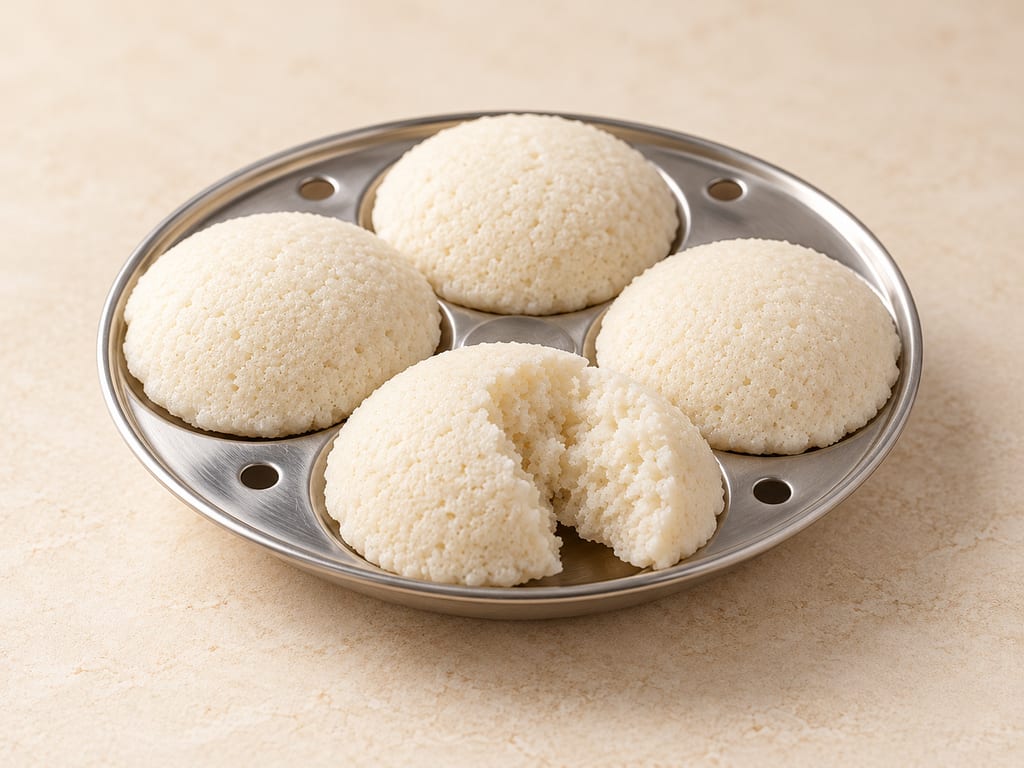
Rice and black gram are soaked separately, ground, salted and fermented into a thick batter for idli. The batter is portioned into moulds and steamed into soft savoury cakes.
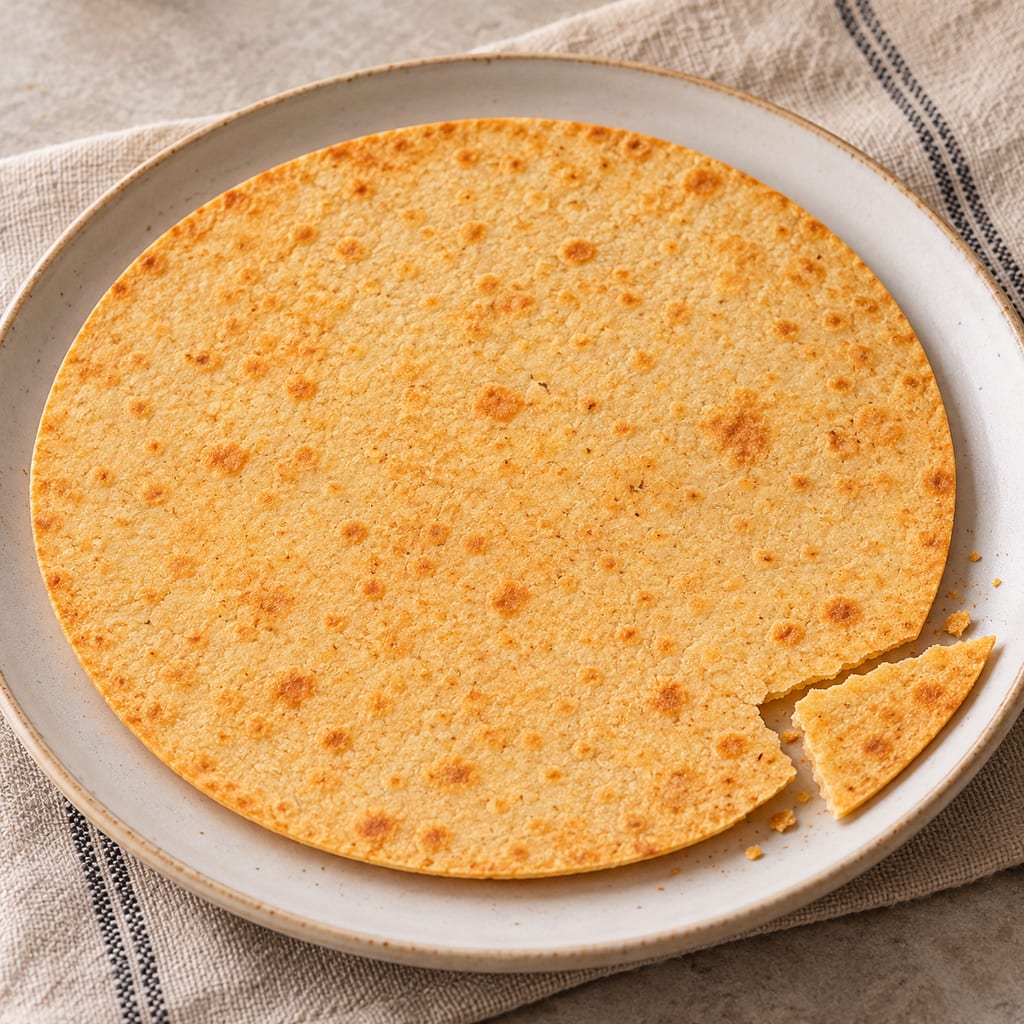
A thin Gujarati wheat flatbread, pressed and roasted over low heat until crisp and lightly browned.
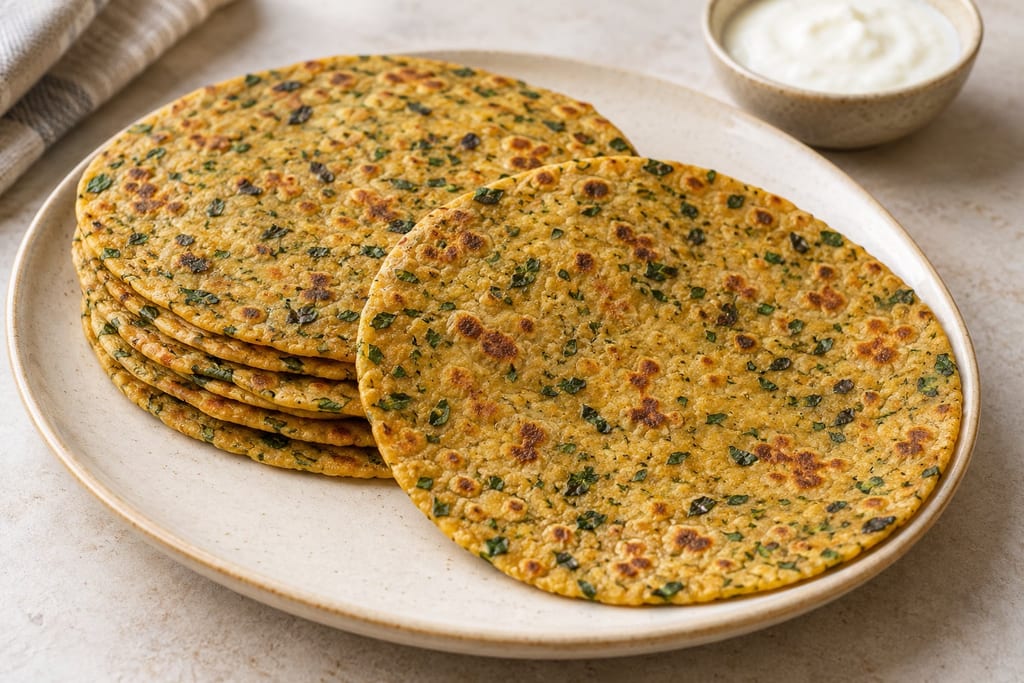
A Gujarati flatbread made with fresh fenugreek leaves, wheat, gram and millet flours, and spices. This batch makes about 11.
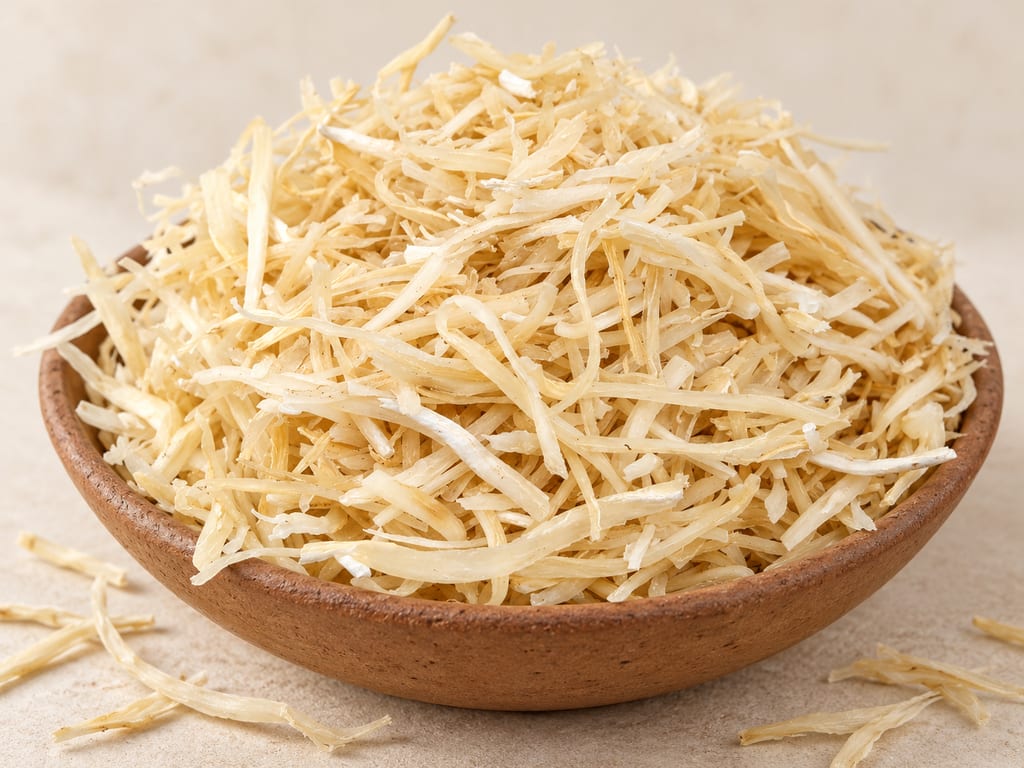
Abacha is a fermented cassava-strip preparation from southeastern Nigeria, sold wet or dried and later rehydrated for meals such as African salad.
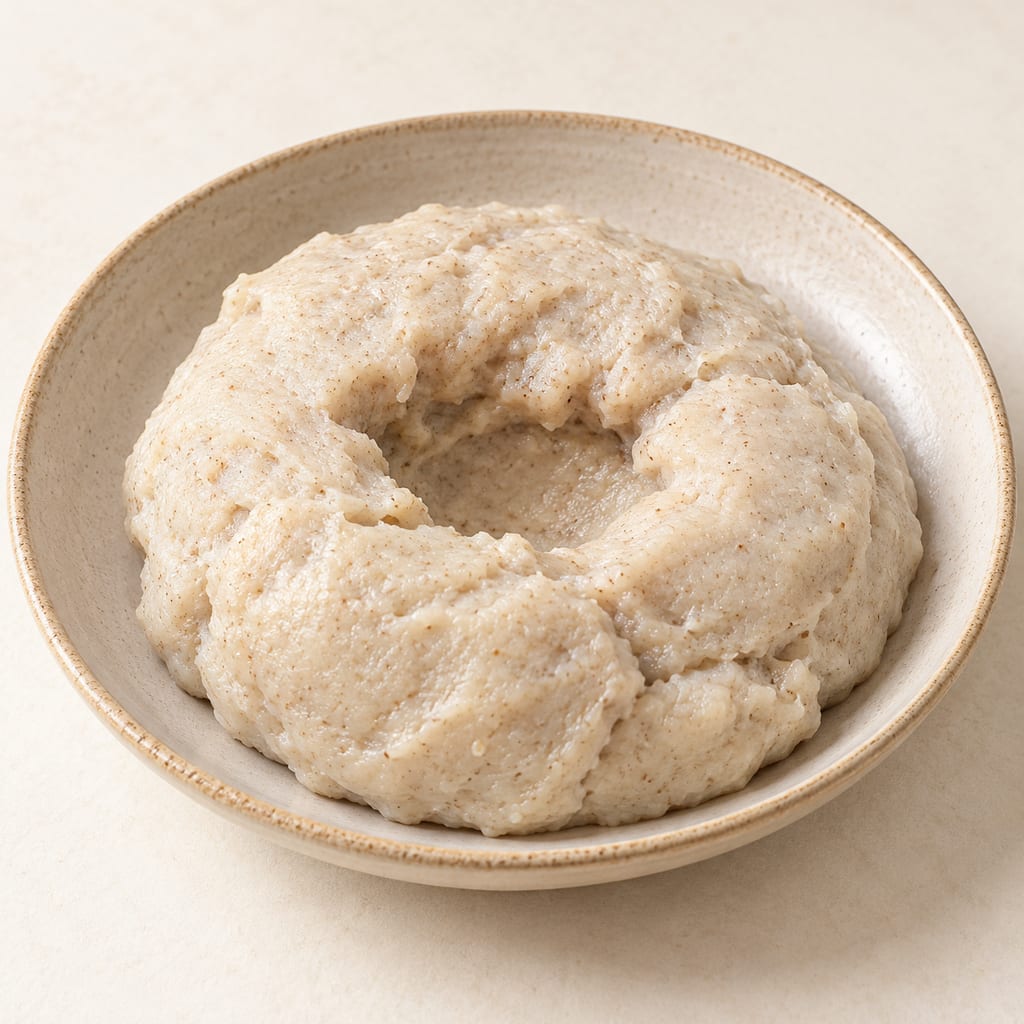
Aceda is Sudan’s firm cereal porridge, commonly made from sorghum and shaped into a smooth mound. Some versions use fermented dough; fermentation is not universal.
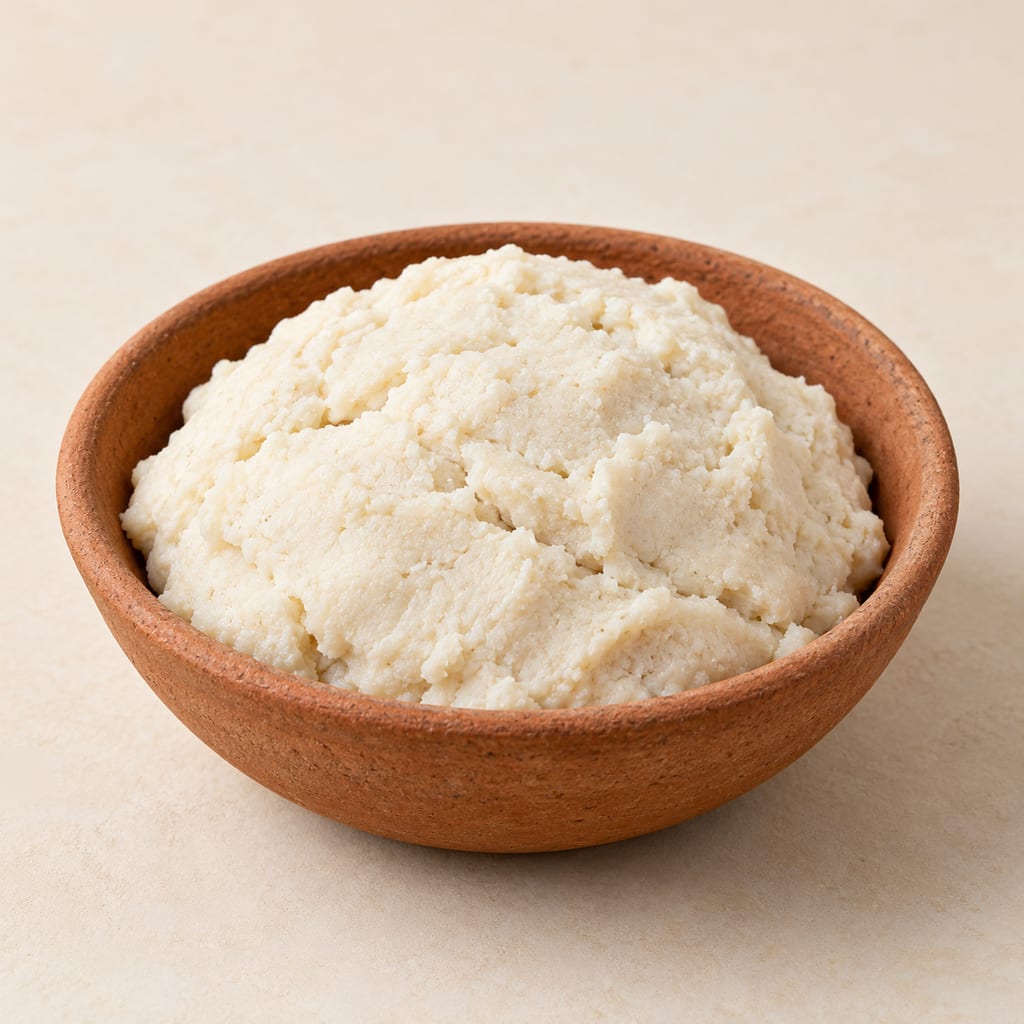
Ghanaian sour cassava dough fermented with traditional inoculum and drained during fermentation. It is used as a base for cooked foods such as banku and akple; process variants and safety outcomes differ.
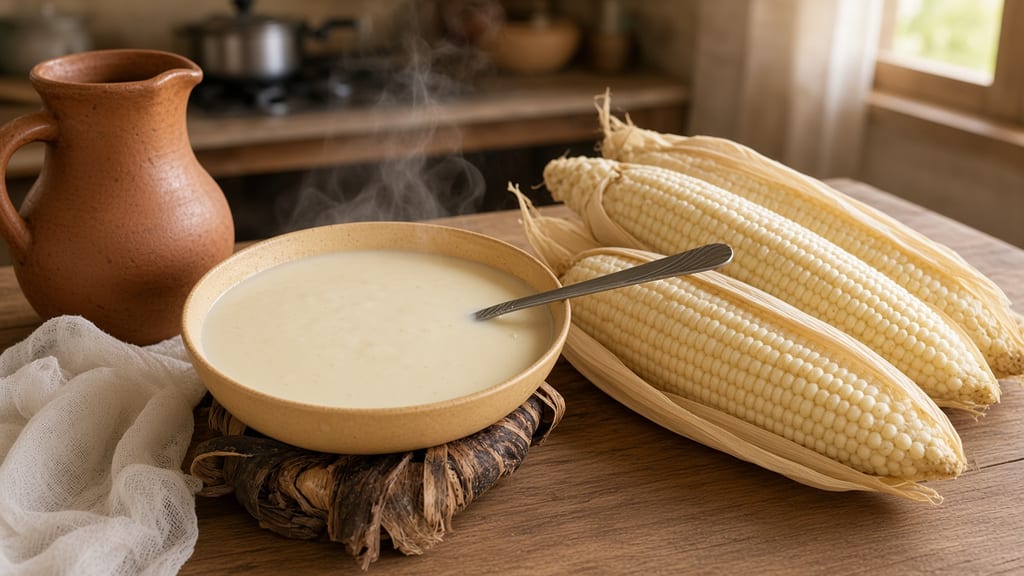
A hot, sour maize drink from Tabasco made from maize that is not lime-cooked. The ground grain sours for half a day, then makers strain it and boil it until thick.
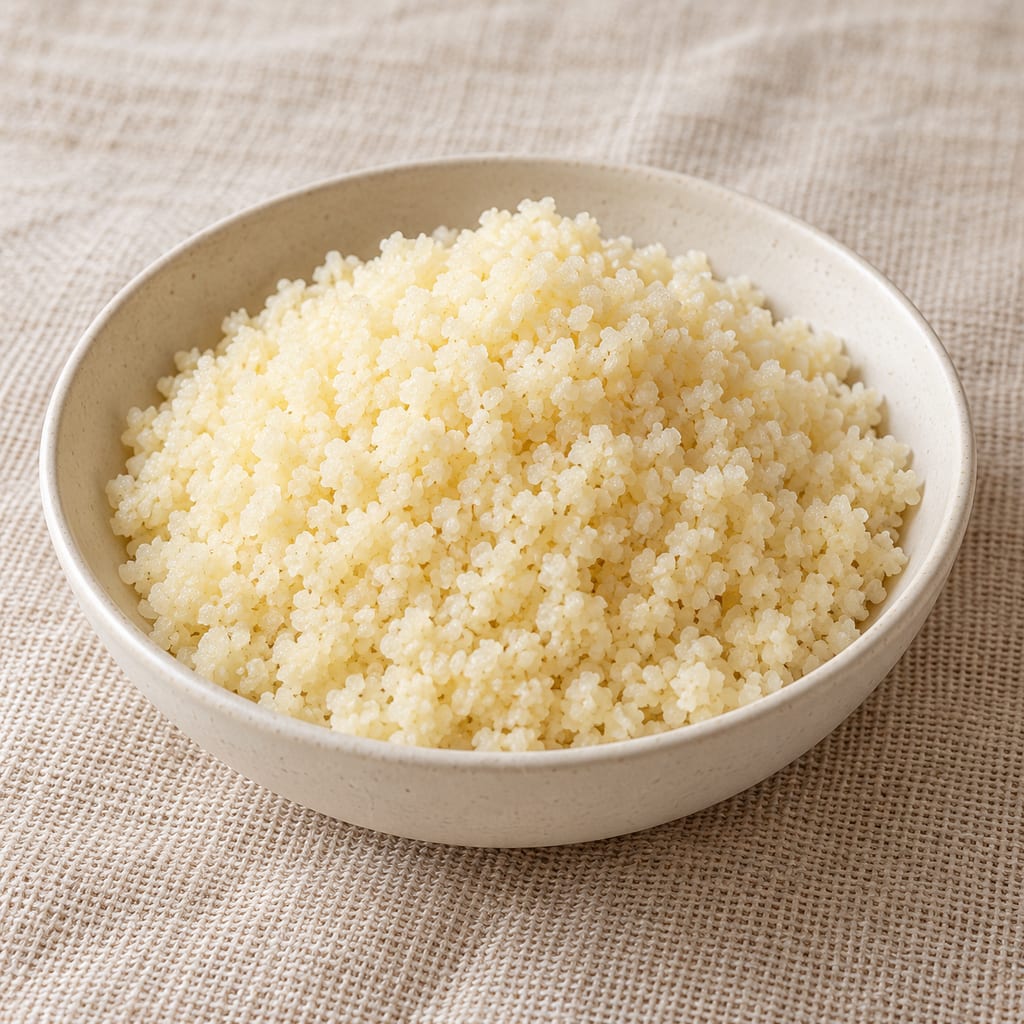
Ivorian cassava semolina: grated cassava is fermented overnight with a traditional inoculum, pressed, sieved into granules, dried and steamed. Documented in a 2006 field study; no sole original process is established.
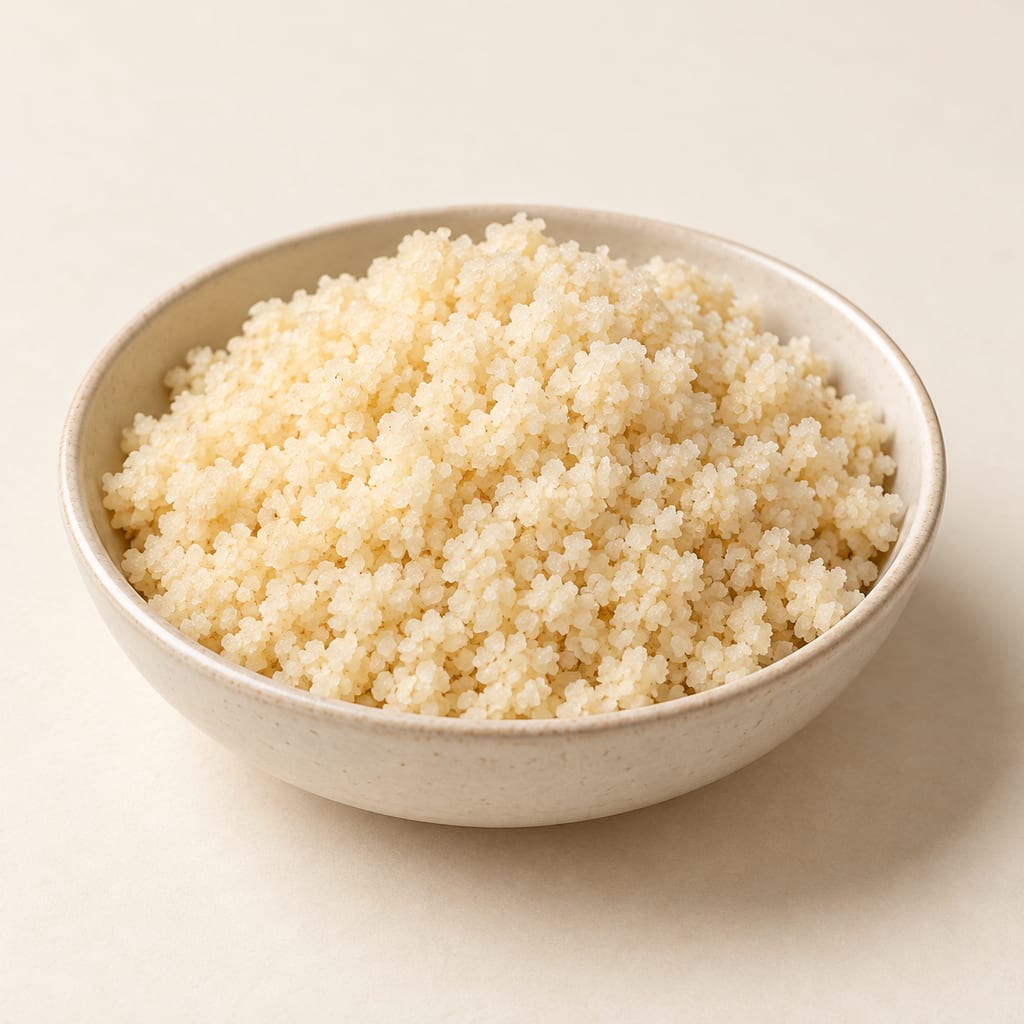
Attiéké is an Ivorian staple of grated cassava fermented with a traditional inoculum, then pressed, sieved, granulated, dried and steamed into fine couscous-like grains.

Crushed or milled barley cooked in water until the starch softens and the mixture thickens, the plainest way a northern household turned stored grain into a meal, here with apple and hazelnut.
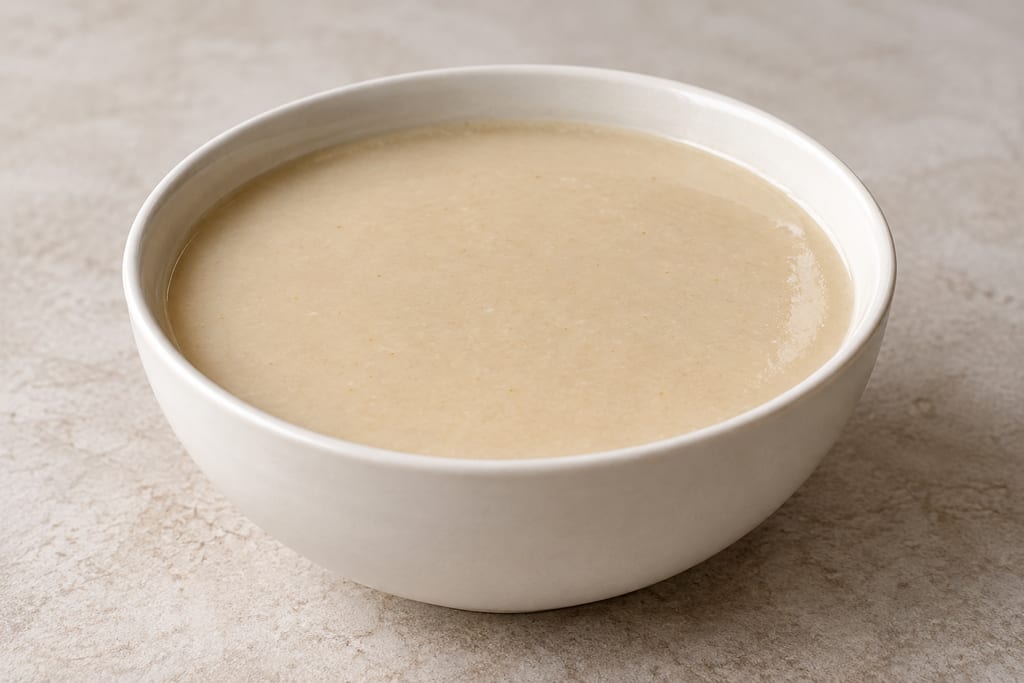
A fermented pearl-millet gruel documented in Ouagadougou, Burkina Faso. Whole grain is soaked, wet-milled and sieved; the settled paste ferments again before it is cooked with its liquid.

Protected Italian vinegar made only from cooked grape must, fermented and aged in a battery of wooden barrels for at least 12 years: sweet, sharp and syrupy.

Airag is Mongolia’s fermented mare’s-milk drink, traditionally churned with saved starter in a reusable cowhide khokhuur.
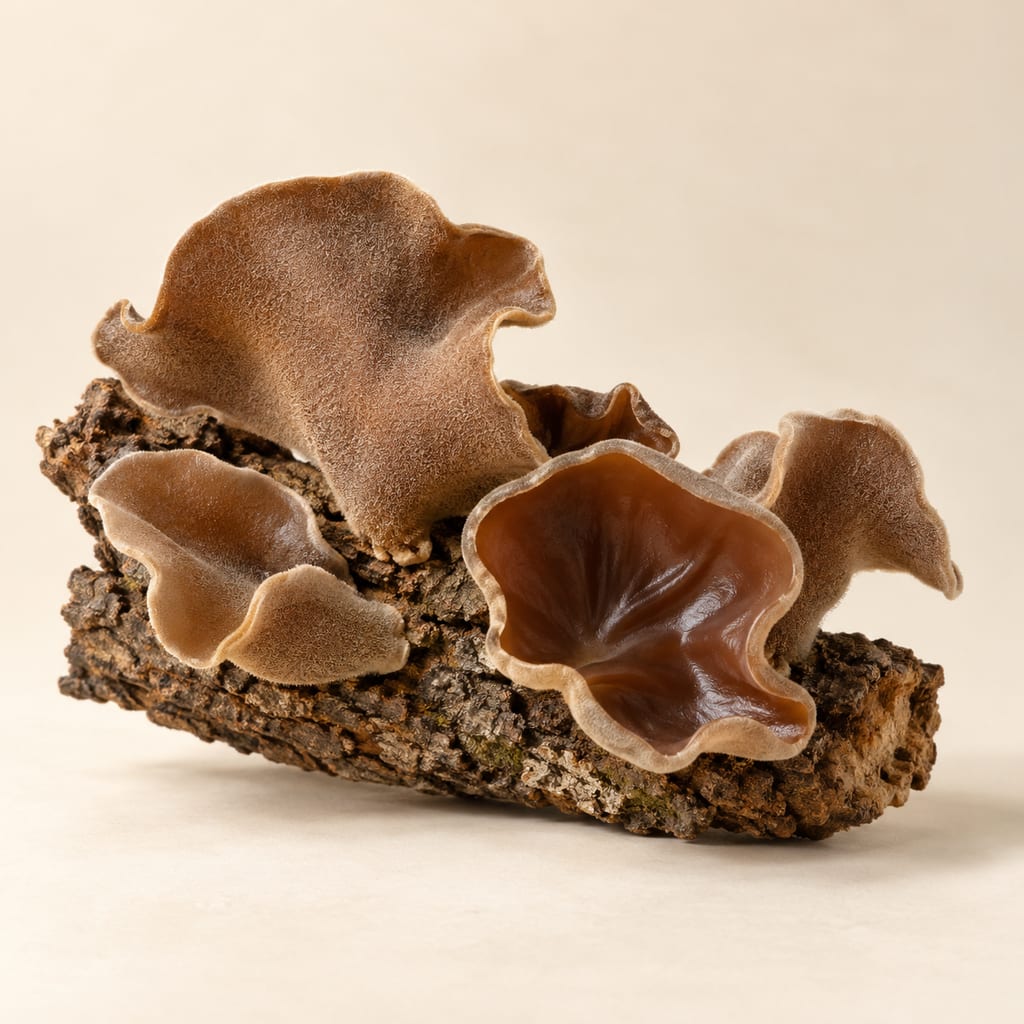
Auricularia tremellosa is a wood ear fungus of the genus that supplies most dried wood ear sold in China; its own food record is thin, and the culinary practice described here comes from the closely related wood ear species.

Ayran is Turkey’s cold, savoury yogurt drink: plain yogurt is loosened with water and lightly salted, then whisked smooth or aerated into a soft cap of foam.
A thin stone griddle used over an open hearth. Norwegian archaeology documents the established tradition from the early Middle Ages; a Viking-period origin is only a cautious suggestion linked to Shetland.
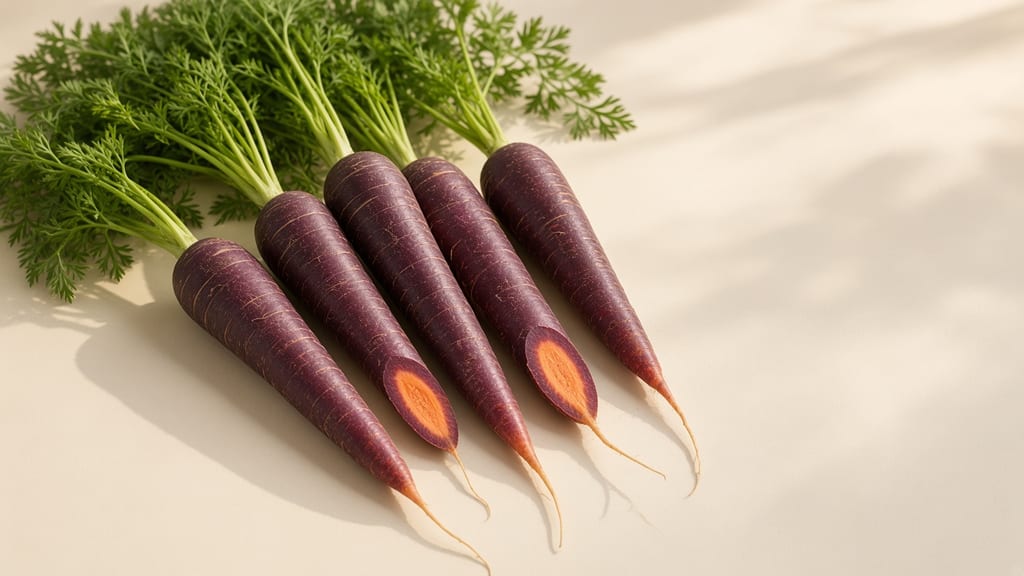
Black carrot is the anthocyanin-pigmented Eastern carrot (Daucus carota var. atrorubens), the purple root that preceded orange types and still colours kanji and şalgam.
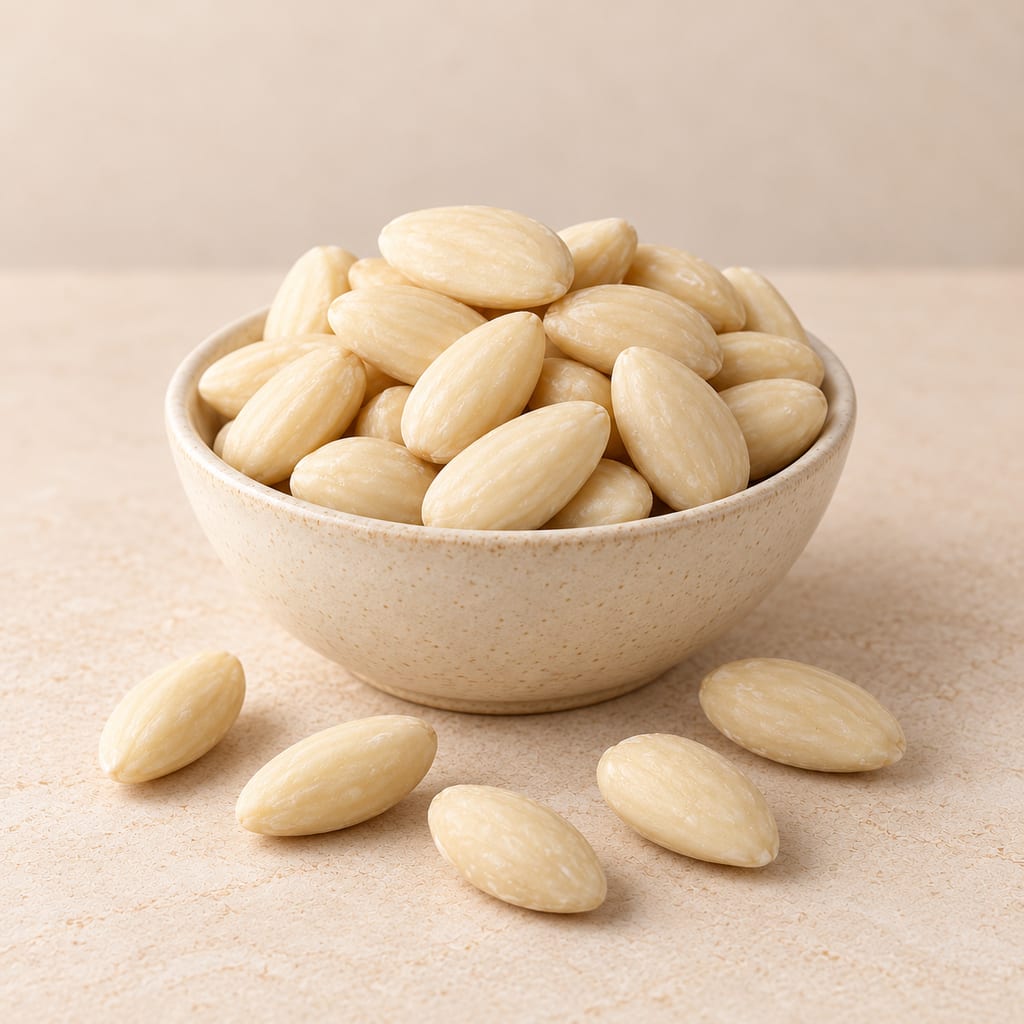
Blanched almonds are sweet almond kernels with the brown seed coat removed. A documented amla murabba cooks ten optional slivered kernels into the finishing syrup with spices and saffron.
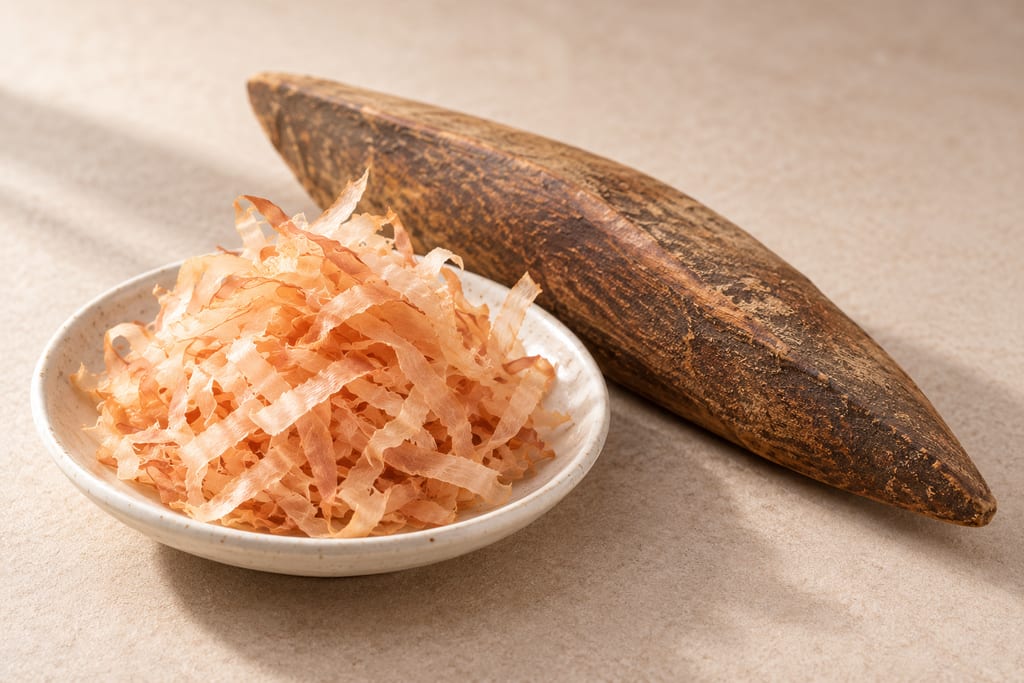
Katsuobushi is skipjack tuna cooked, smoked and dried into a hard block that is shaved into flakes for dashi and toppings. Some styles stop at the smoke-dried stage; others receive carefully managed mold maturation.
No community contributions have been published for this entry yet.
Sign in to contribute. Published comments and photos are free to read.
Archana's KitchenMethod
Gujarati Khatta Dhokla Recipe1 cup rice, 1 cup white urad dal, 1 cup chana dal, 2 tbsp curd; soak 6 hours; ferment 8 hours or overnight; steam about 10 minutes; serves six
Cited in: What dhokla is; Making it, and why each step; Types and relatives; How it is served; Reading the batter and the cake
Journal of Food Science and TechnologyScience
Preparation of Antinutrients-Reduced Dhokla Using Response Surface Process Optimisation32 C and 18 hours with 8 g salt per kg of batter; 20 minutes steaming
antinutrient reductions; biogenic amines rose during fermentation
Cited in: What dhokla is; Old names and modern evidence; The microbes, the starch and the steam; Making it, and why each step; Reading the batter and the cake
Journal of Food Science and Technology, 1989Science
Microbial and Biochemical Changes During Dhokla Fermentation with Special Reference to Flavor CompoundsLactobacillus fermentum, Leuconostoc mesenteroides, Hansenula silvicola
pH 5.3 to 4.0 in 18 hours; volume up about 95.6%; acetoin
Cited in: Old names and modern evidence; The microbes, the starch and the steam; Making it, and why each step; Reading the batter and the cake
FEMS Yeast Research 6(1), 2006Science
Occurrence and Function of Yeasts in Asian Indigenous Fermented Foodsreview of dhokla fermentation yeasts
Cited in: Old names and modern evidence; The microbes, the starch and the steam
Food and Agriculture Organization of the United NationsHistory
Fermented Cereals: A Global Perspective, chapter 3dhokla as an Indian acid-leavened cereal food; Bengal-gram batter versus idli's black-gram batter
Cited in: What dhokla is; Old names and modern evidence; Making it, and why each step; How it is served
European Journal of Clinical NutritionScience
Influence of Germination and Fermentation on Bioaccessibility of Zinc and Iron from Food Grainsno gain in zinc or iron bioaccessibility for the fermented dhokla mix
Cited in: The microbes, the starch and the steam
Dassana's Veg RecipesVariation
White Dhokla | Khatta Dhoklawhite dhokla; Surati vati dal khaman fermented eight hours
Cited in: What dhokla is; Types and relatives; How it is served
GoyaHistory · Variation
100 Ways to Eat a Dhokladukkia or dukkai around 1066 and Varanaka Samuchaya around 1520, citing Achaya
Cited in: Old names and modern evidence; Types and relatives; How it is served
Food Standards AgencySafety
Cooking Your Foodrefrigerate within two hours; leftovers within 48 hours
Cited in: Reading the batter and the cake
Food Standards AgencySafety
Preventing Cross-Contaminationkeep raw and ready-to-eat food apart; clean surfaces
Cited in: Reading the batter and the cake
Food Standards AgencySafety
Allergen Guidance for Food Businessescheck ingredients for wheat and milk
Cited in: Reading the batter and the cake