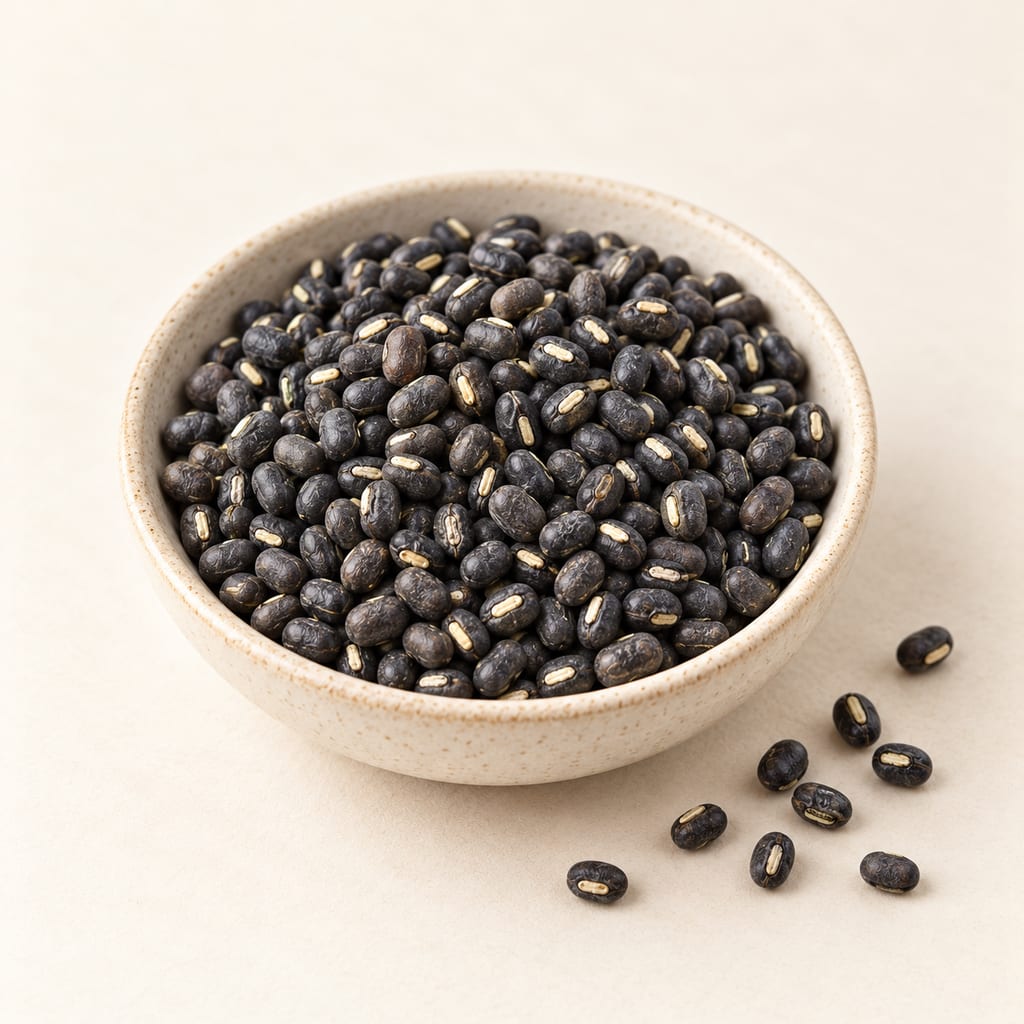
Black gram
Black gram, or urad, is a South Asian pulse whose whole dark seeds and dehulled white dal make distinct cooked and fermented foods.
 FermenteaWhere food goes to change
Traditional method
Idli
Rice and black gram are soaked separately, ground, salted and fermented into a thick batter for idli. The batter is portioned into moulds and steamed into soft savoury cakes.
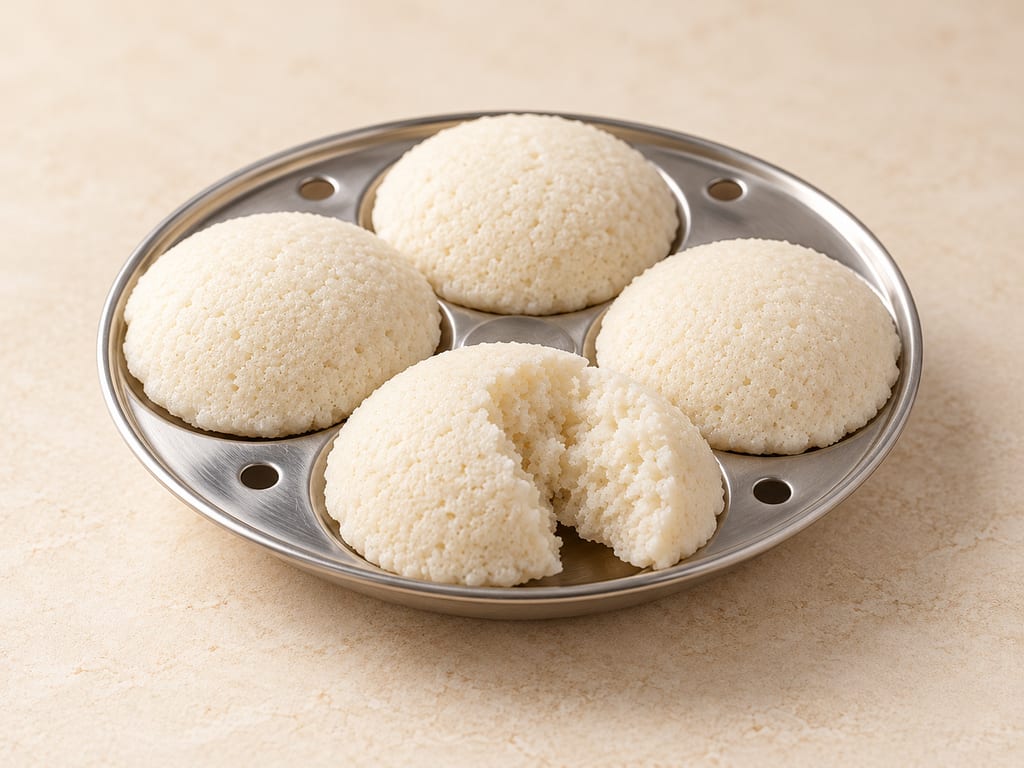
Idli is a tender, round steamed cake made from a batter of rice and black gram. The cakes are white or ivory, softly yielding and finely porous inside, with a mild grain sweetness and gentle tang from fermentation. Their structure is neither the thin crisp edge of dosa nor the dense chew of plain cooked rice: a well-fermented mixture holds small gas cells, then steam sets them into a moist crumb. In South Indian meals, idli is valued for its softness and quiet flavour, which make it an easy partner for stronger accompaniments.
The written record supports a long history of related foods, but it does not provide a simple, certain birthplace or an unbroken modern recipe. A translated passage in Someśvara III's twelfth-century Mānasollāsa names iddarikā, made with rice and black gram paste, asafoetida and cumin, left to sour for a day or two, then portioned and steamed. This is a close documented comparison in its ingredients and operations. It does not establish today's common ratio, identical grind, or that the medieval preparation was the same food as current idli. A resemblance in an old food name cannot alone prove continuity of ingredients or technique.
The useful historical thread is continuity with change: rice, black gram, souring and steaming appear in both the medieval account and current practice, while the measured modern method describes a later, more controlled household process. The short history line records an attestation rather than naming an exact inventor or town. Idli is firmly associated with South Indian cooking; public-health guidance also documents its current preparation and consumption in West India. These are broad food regions, not evidence of a single precise origin.
Rice and black gram do different work. Rice supplies most of the starch and the familiar body. Black gram, also called urad or urd, is Vigna mungo, a pulse distinct from green gram. Its proteins and soluble components help the ground batter retain air and water, so the cooked cake is not simply compact cooked rice. Soaking and grinding the two ingredients separately lets the cook make a coarse rice paste and finer pulse paste; when mixed, they form a thick batter that can rise and still be portioned into moulds.
The cited public-health method uses four parts rice to one part black gram, grinding the rice more coarsely than for dosa. It does not state whether the ratio is by weight or volume, so this recipe keeps it as parts instead of silently choosing a basis. Laboratory papers have tested other ratios, including 2:1, 3:1 and 4:1 by weight, but these experiments are not interchangeable with a household direction whose denominator is unstated. Formulation changes viscosity, rise and crumb; no single ratio represents every regional or domestic batter.
Salt is mixed in before fermentation in the public-health method, but the source's suggested percentage lacks a defined calculation basis. The recipe therefore gives no invented amount or denominator. Potable water is needed to soak and grind, yet the source gives no fixed volume; use enough during grinding to reach its thick-batter endpoint. These are genuine limits of the source method, not gaps to fill by guessing.
Idli batter undergoes spontaneous mixed-community fermentation. Microorganisms associated with grain, pulse, water and food-contact surfaces grow in the moist ground mixture. Culture-based studies and DNA sequencing found succession among bacteria, with lactic acid bacteria prominent and Weissella especially abundant in the batters studied; Enterococcus, Streptococcus and other groups were also detected. The relative mixture differed among samples and stages. These observations describe particular preparations and do not mean every household bowl contains the same strains or proportions.
As these organisms use available carbohydrates, organic acids accumulate and batter becomes more acidic. The change affects aroma and taste, moving it away from raw cereal notes toward a mild tang. Some organisms also release carbon dioxide; gas expands the batter and helps make an open crumb once steaming sets it. Research measurements follow acidity, volume, soluble materials and flow behaviour, showing fermentation changes both chemistry and physical structure, not flavour alone.
Research on microbial activity is not a safety test for an individual batch. A lower pH, increased volume, bubbles or a pleasant smell cannot establish that batter is safe, nor replace the cited handling and cooking controls. The recipe retains those controls. The studies explain transformation under their tested conditions; they do not validate an uncontrolled process or guarantee pathogen reduction.
Wash rice and black gram and soak them separately for four to six hours under refrigeration at 4°C or colder. If soaking at room temperature, the guideline says finish within four hours. This is a handling boundary, not a flavour option. Soaking hydrates the dry seeds and softens them enough for wet grinding. Keeping them separate lets the cook control the textures: fine black gram and coarser rice.
After soaking, drain both. Grind black gram finely and rice coarsely, adding potable water as needed for a thick batter. A household wet grinder or other suitable clean grinding tool can make the pastes, but the source specifically advises checking stones and blades for damage; worn equipment may shed fragments into food. Clean and sanitize food-contact surfaces and avoid cross-contamination during washing, draining and grinding.
Grinding influences the cooked texture. A fine pulse paste distributes water and particles through the mixture, while coarser rice leaves more cereal structure. Combining them before fermentation creates a mixed substrate and a batter capable of holding gas until heat sets it. The source specifies a thick endpoint rather than a measured water volume, so no hydration percentage belongs here.
Mix the pastes in the four-to-one ratio, add potable water only to retain a thick spoonable texture, and mix in salt before fermentation. Cover the vessel and hold the batter for 12 to 14 hours at approximately 30°C, following the guideline. This recipe records an incubated condition because the cited method names a target. Room conditions vary, and no alternative time curve is supplied; do not infer an exact endpoint from a universal clock or visible bubbles.
During the rest, acidity and volume change as resident organisms grow and produce metabolites. These changes influence aroma, lift and tenderness. The mixture must remain thick enough to support gas rather than run like a dosa batter. Mixing distributes moisture and nutrients; covering limits exposure to debris while allowing the described spontaneous fermentation. The source method does not call for commercial starter culture.
Refrigerate fermented batter at 4°C or below if it will not be steamed promptly. Cooling slows microbial activity; it is a handling control and does not undo prior growth. The cited guidance gives no general home shelf life, so this account promises none. Its pH 4.6 control applies to packaged commercial batter and is not a substitute for home refrigeration and thorough cooking.
Portion batter into clean idli moulds and steam for five to eight minutes. Moulds divide the thick mixture into rounds that cook evenly and hold their shape. As heat reaches the batter, starch absorbs water and gelatinizes while proteins set. The network surrounding fermentation bubbles becomes a tender, aerated cake. This is heat setting, not continuing fermentation. The steamer supplies moist heat, leaving a soft surface instead of the browned crust that forms when dosa batter is spread on a hot griddle.
Time alone is not the safety endpoint in the cited guidance. Each idli should reach 74°C internally for at least 15 seconds; reheat leftovers to the same threshold. The source calls this out because moist rice-and-pulse batter may support harmful bacteria if ingredients or handling contaminate it. Do not use sourness, smell, appearance or risen batter as proof of safety. Respect the refrigerated soak limit, chill batter not cooked promptly and steam thoroughly.
The structured method retains the source's order and measurable controls while marking quantities and yield unknown where the guide is silent. It gives four stages: separate refrigerated soaking, separate grinding and mixing, controlled fermentation, and moulded steaming. Its ratio, soak window, fermentation window and cooking threshold come from that named guidance. Water and salt amounts, the ratio's measurement basis, batch yield and general batter shelf life remain unspecified.
Idli names a family of steamed foods, not one invariant formula. This record concerns fermented rice-and-black-gram batter. The Mānasollāsa preparation shares the broad pairing and sequence of souring followed by steam, but adds asafoetida and cumin and does not give today's measured conditions. Later regional forms and modern kitchens also vary rice type, pulse ratio, grind, spices and mould. Such differences affect shape, crumb and flavour; distinct methods should not be collapsed into an invented universal recipe.
Rava idli is a clear adaptation. A foodways article recounts that Bengaluru's Mavalli Tiffin Rooms developed it during wartime rice scarcity, replacing rice and black gram with semolina and curd. It is a different ingredient system and does not use the fermentation in this record. This history shows cooks adapting a steamed form to available food, but it does not establish that all rava idli follows one formula.
Research testing different rice-to-pulse ratios helps explain why batter composition can change density, acidity, flow and texture. Such studies are evidence about their experimental formulations, not a menu of interchangeable household instructions. This recipe keeps its source-specific 4:1 direction and labels its units as unstated. Dosa batter is related but ground finer and spread on a hot griddle; idli batter stays thick and is portioned for steaming.
Idli is commonly eaten as breakfast or tiffin, the smaller meal between larger ones. Soft cakes pair with accompaniments carrying more liquid, spice or sharpness: sambar, a lentil-and-vegetable stew, and coconut or other chutneys are familiar partners. Their porous crumb catches sauce and provides a mild base for seasoning. Idli may also be served with a dry spice-and-lentil powder and oil, or with a curry, according to household and regional preference.
The round steamed form is easy to portion and eat warm, and the batter can be prepared ahead and cooked in batches. In a larger South Indian breakfast, idli may share the table with dosa, vada, pongal and other dishes. These have distinct ingredients and cooking even when they sit within related cereal-and-pulse food traditions. The quiet taste that makes plain idli approachable also lets a sharper chutney or spiced stew shape the meal.
Serve the cakes freshly steamed for their soft, moist crumb. When serving later, retain the source's advice: reheat idli until it reaches 74°C internally for at least 15 seconds. The public-health guidance does not establish a general household storage duration for batter or cooked cakes, so no shelf life is invented. Pleasant flavour belongs to eating quality; it is not a substitute for clean handling and adequate cooking.
The pairing is more than a decorative photograph on a plate. The soft cake moderates chile, sourness and spice while its open crumb carries a spoonful of stew; chutney provides a concentrated counterpoint that can be adjusted from fresh and cooling to sharply seasoned. Vada adds a crisp, fried texture alongside the steamed cakes, and dosa offers a griddled, browned contrast. These companions make the breakfast a balance of soft, crisp, wet and dry textures, with rice-and-pulse dishes appearing in different shapes and preparations across the meal. Serving conventions vary by household and region, so the suggestions describe common combinations rather than a required set.
Idli is a soft steamed cake associated with South Indian foodways, made from fermented rice-and-black-gram batter. A published English rendering of the twelfth-century Mānasollāsa describes iddarikā: rice and black gram paste with asafoetida and cumin, left to sour for a day or two, then portioned and steam cooked. It establishes a close documented predecessor with rice, black gram, souring and steaming, but not the present batter's 4:1 ratio, precise grind or measured process conditions. Earlier Kannada idli-like names are reported in secondary histories, but their food passages were not directly checked here. The present batter is ground more coarsely than dosa batter and steamed in moulds, making a distinct texture and serving form.
Scaling: source batch only
E. coli, Staphylococcus aureus and Bacillus cereus may enter with raw ingredients or handling and proliferate during soaking, fermentation, cooling or storage.
Hazard sourceDamaged grinding stones or blades may introduce physical contaminants.
Hazard sourceUse fresh potable water, keep longer soaks at or below 4°C, refrigerate batter after fermentation, and steam or reheat idli to 74°C internally for at least 15 seconds.
Control sourceInspect grinder stones and blades for damage before grinding; clean and sanitize food-contact tools and surfaces.
Control sourceMoist batter can support harmful bacteria if ingredients or tools contaminate it. Soak longer than 4 hours under refrigeration, chill finished batter promptly, and steam each idli to 74°C internally for at least 15 seconds.
Damaged grinding stones or blades can shed fragments into the batter; inspect the grinder before use.
Broad preparation and consumption region, not a precise birthplace.
The guidance includes this broad region in current preparation and consumption.
Black gram, or urad, is a South Asian pulse whose whole dark seeds and dehulled white dal make distinct cooked and fermented foods.
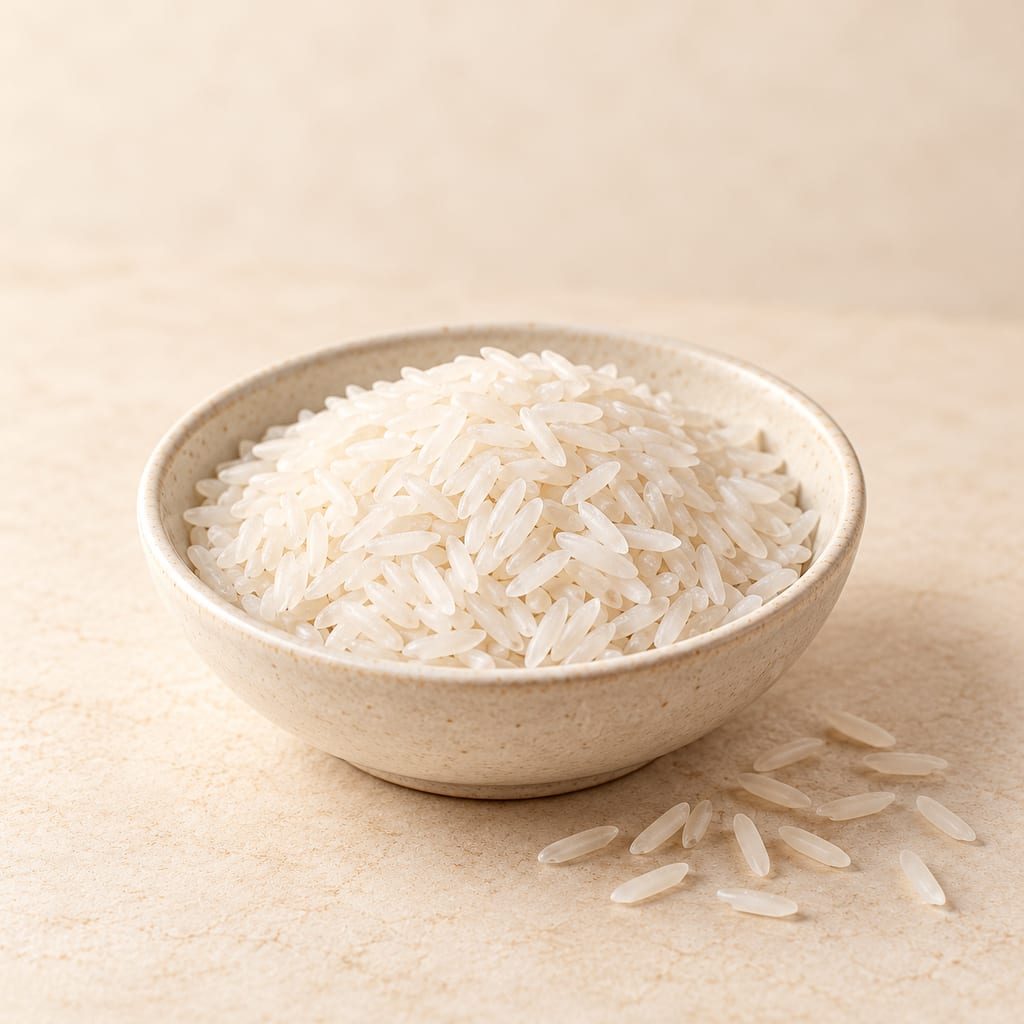
Rice contributes starch to flatbreads, steamed breads, batters and many distinct fermentations. Its species, milling and starch character shape how it cooks, binds, expands and feeds enzymes.
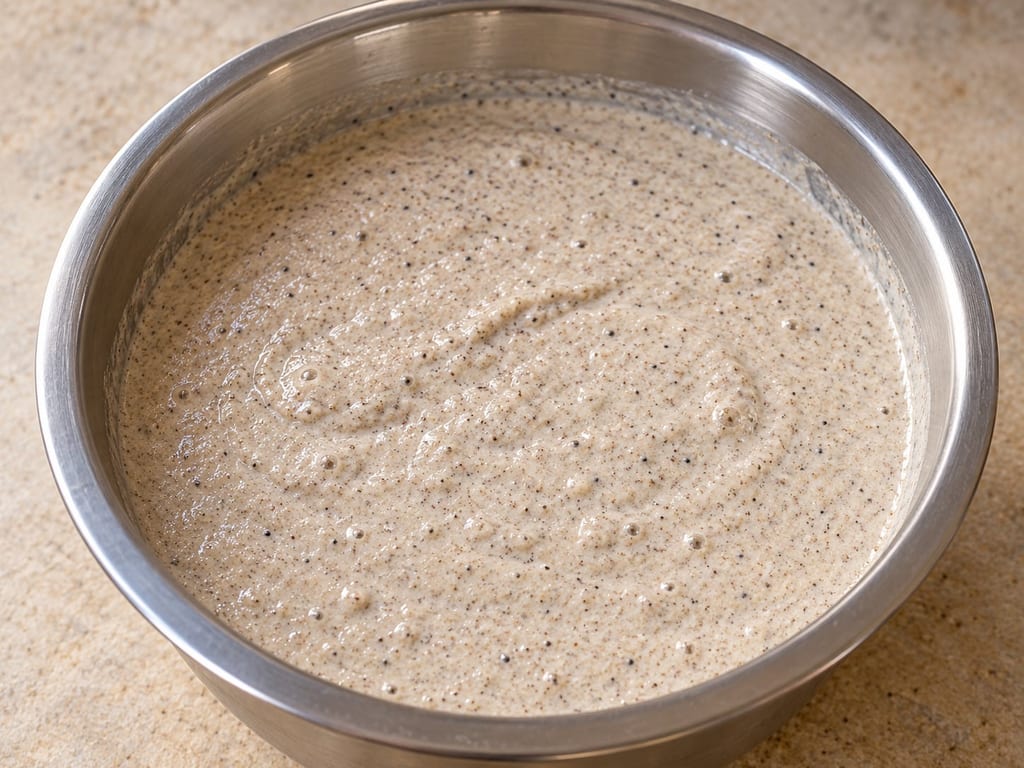
A multigrain idli batter from a stored blend of sorghum, millets, rice and black gram, with fenugreek kept apart, taken out by the glass and fermented warm.
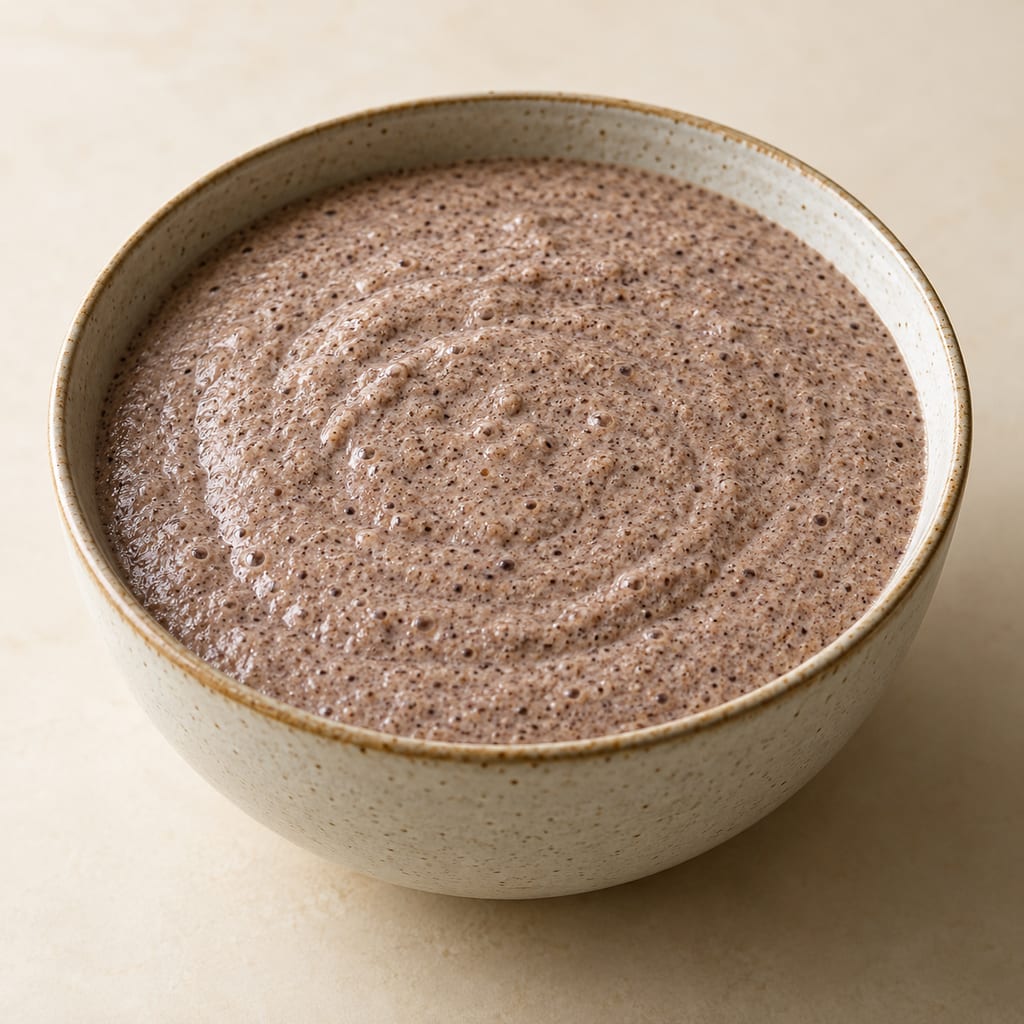
An idli batter made from whole ragi (finger millet) and urad with idli rava, each soaked and ground separately, combined, salted and left to ferment overnight.
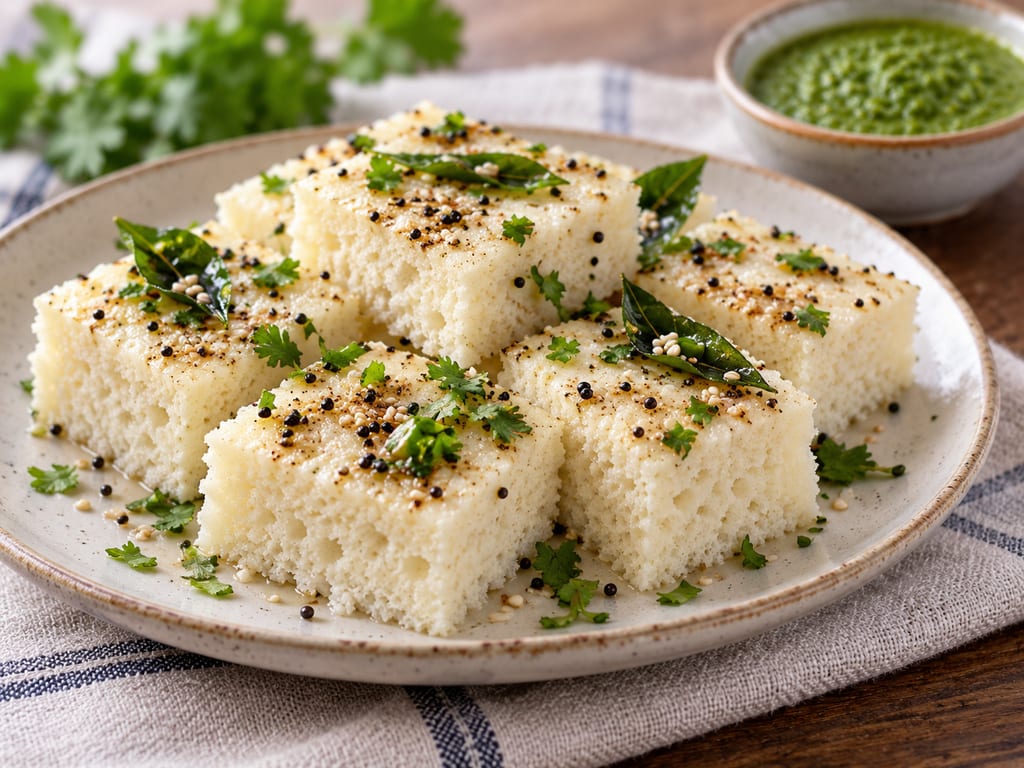
Dhokla is a Gujarati savoury steamed cake made from a fermented rice-and-pulse batter, whose lactic bacteria and yeasts give acidity, aroma and a porous crumb before steaming.
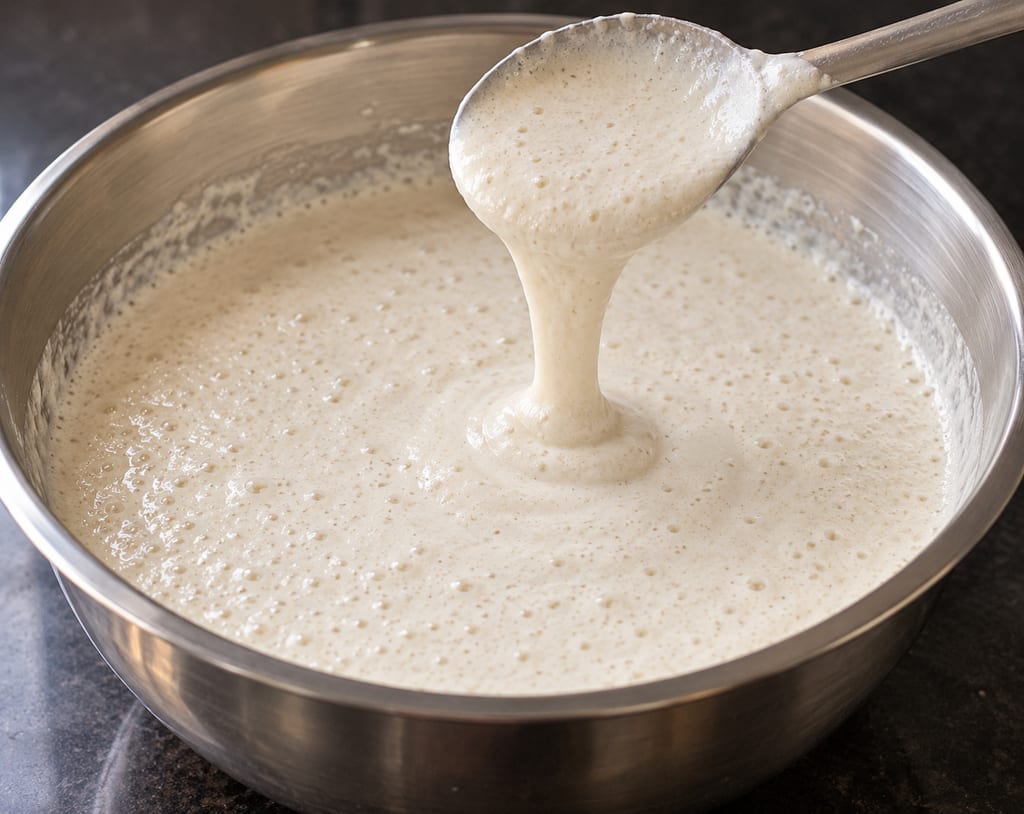
A naturally fermented South Indian rice-and-urad batter, ground fine and spread thin on a hot griddle. Fermentation lightens the batter and develops its gentle tang.
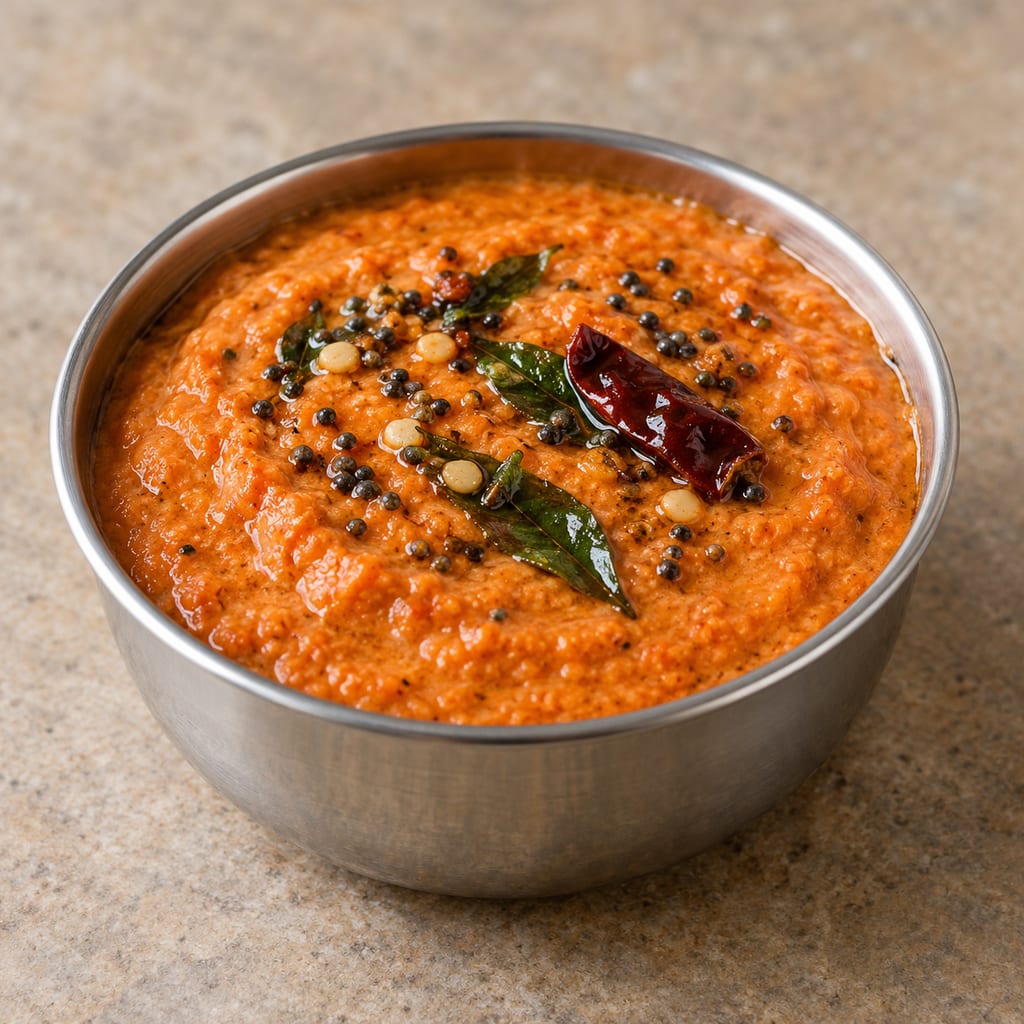
A South Indian chutney of onion and tomato cooked soft with chillies, ginger, tamarind and coconut, cooled, blended and finished with a mustard and curry-leaf tempering, for idli and dosa.
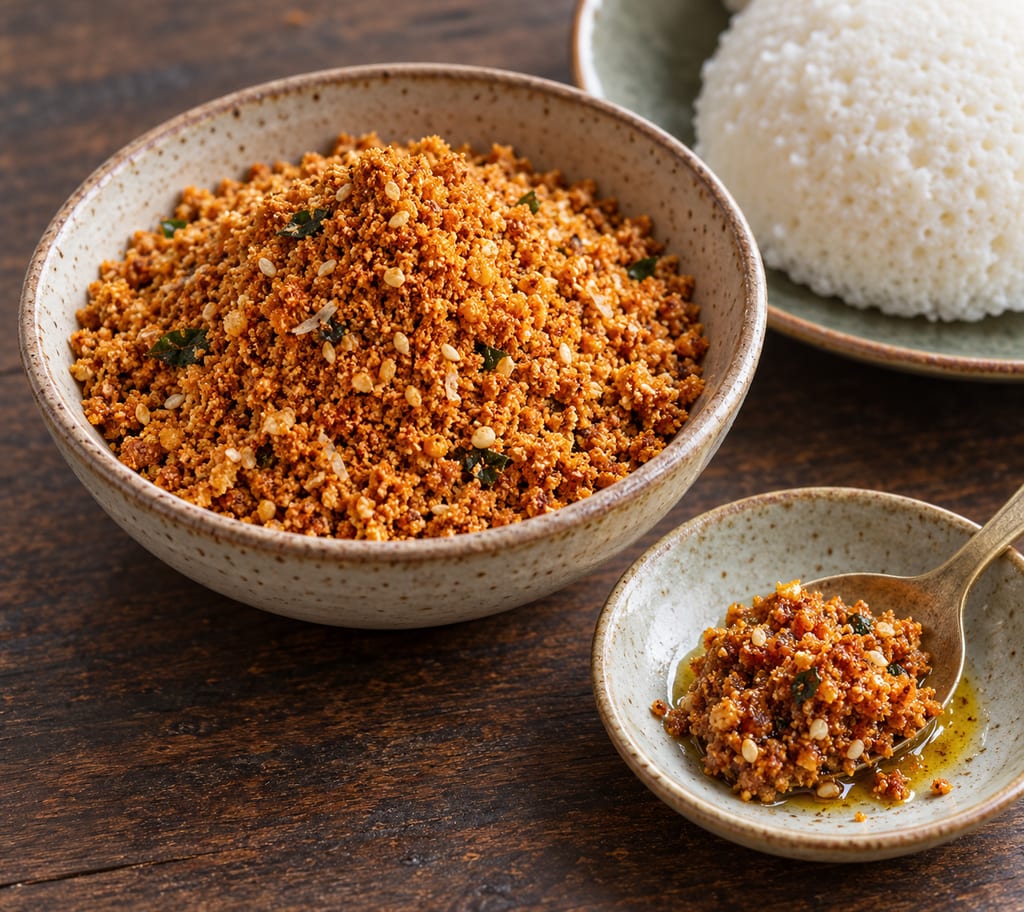
A South Indian dry chutney powder has many regional and household forms. This record follows one published gunpowder podi recipe, served with ghee or gingelly oil; it is not a single standard formula.
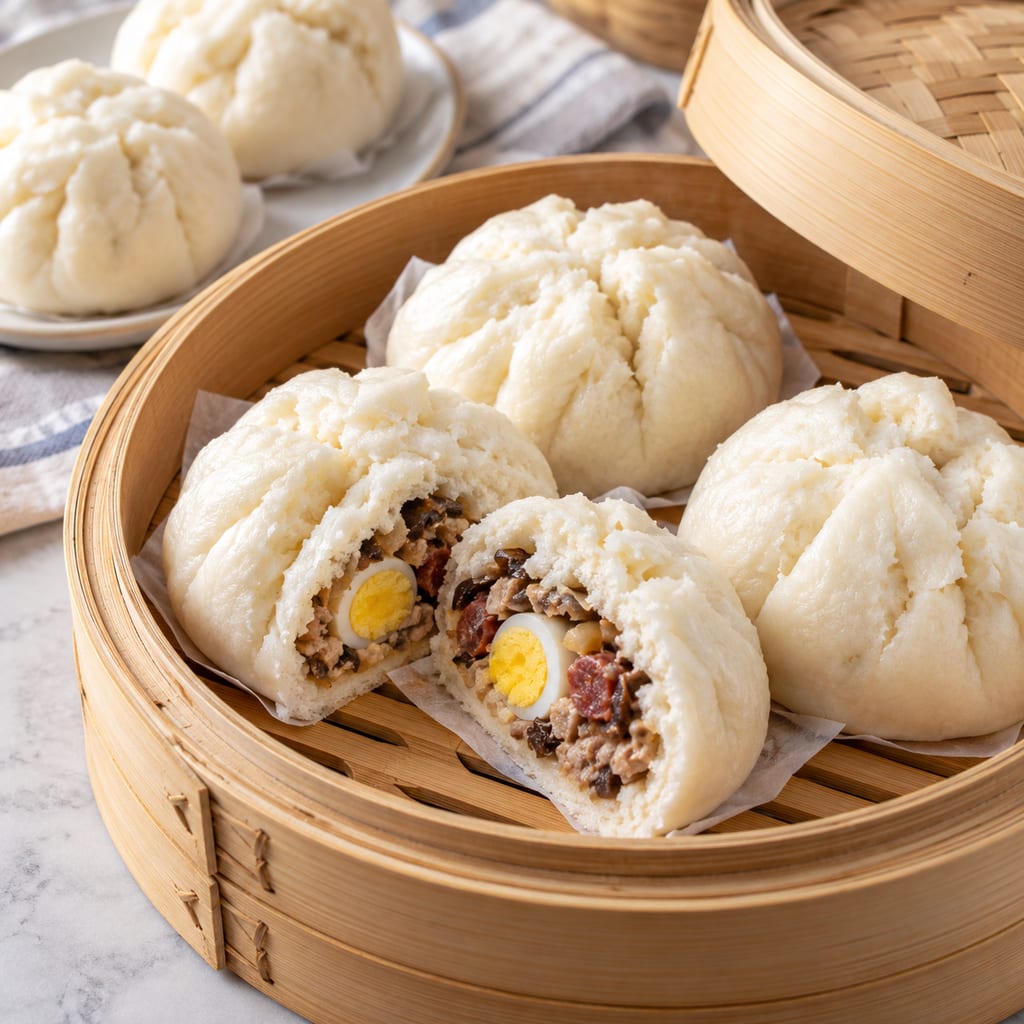
Vietnamese steamed wheat buns wrapped around seasoned pork, mushrooms, Chinese sausage and hard-boiled quail eggs. This from-scratch version uses yeast and self-rising flour.
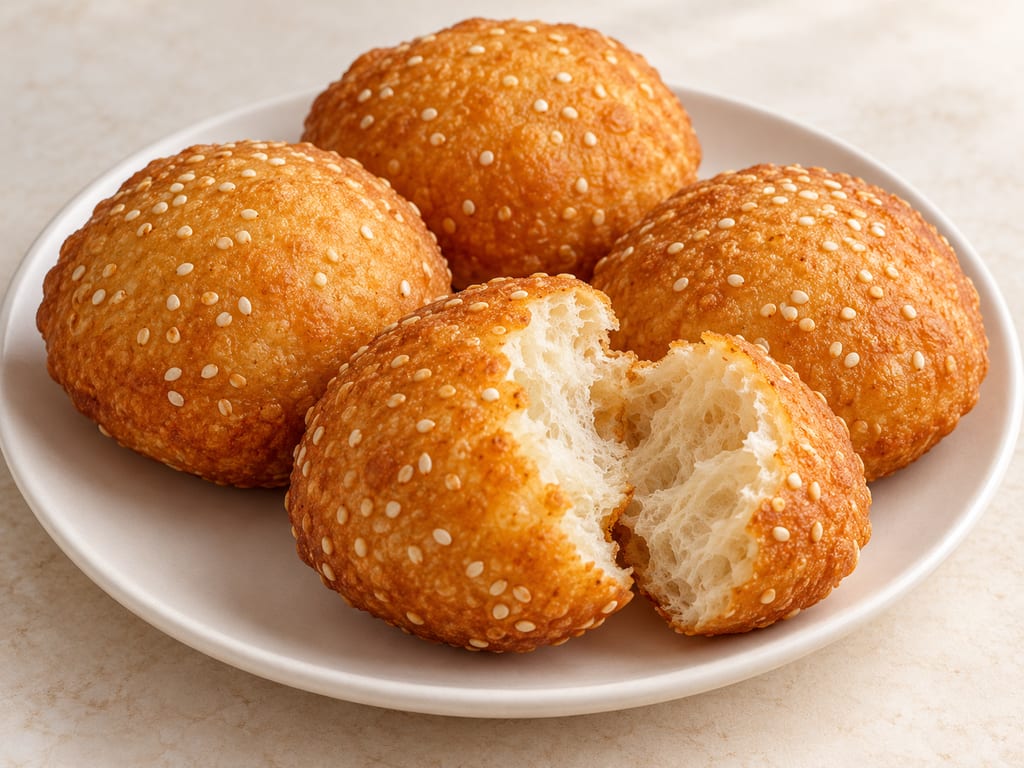
Bánh tiêu is a lightly sweet Vietnamese fried bread coated with sesame. A yeast-raised dough with baking powder is rolled into small rounds and fried until puffed and golden.
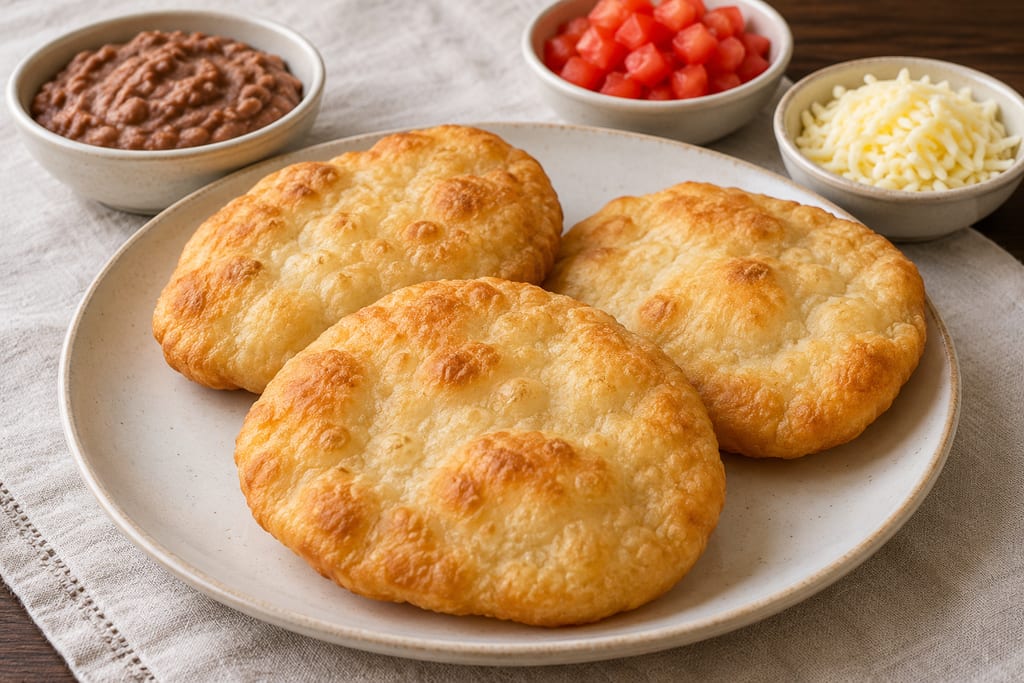
A Belizean fried breakfast bread made from baking-powder dough with evaporated milk, shaped into rounds and fried until golden.
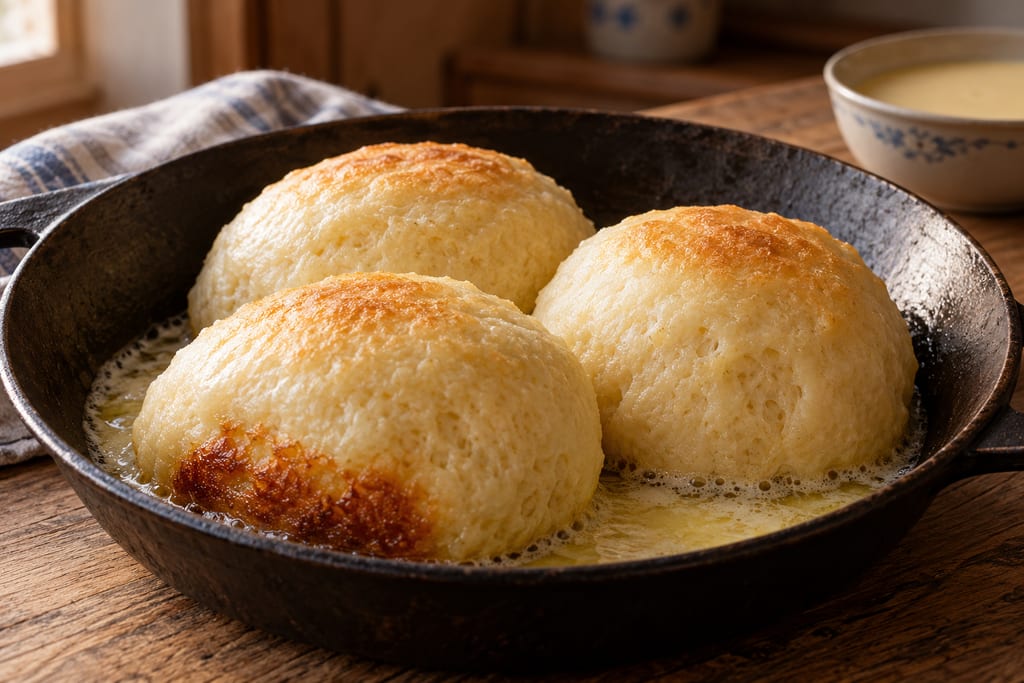
Allgäu Dampfnudeln are enriched wheat buns proofed in a covered casserole and cooked in milk and butter until the liquid nearly cooks away.
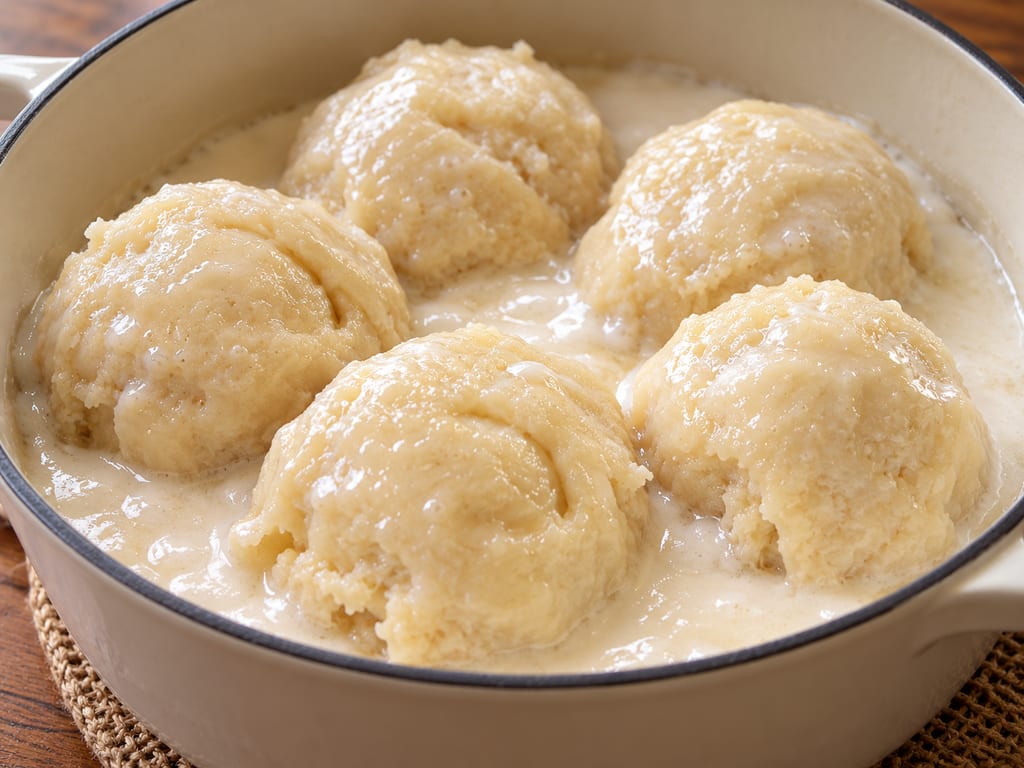
Soft yeast buns shaped by hand and simmered covered in coconut cream diluted with water in a deep pot. This Fijian home version uses a clean knife or fork inserted into the center as its doneness cue.
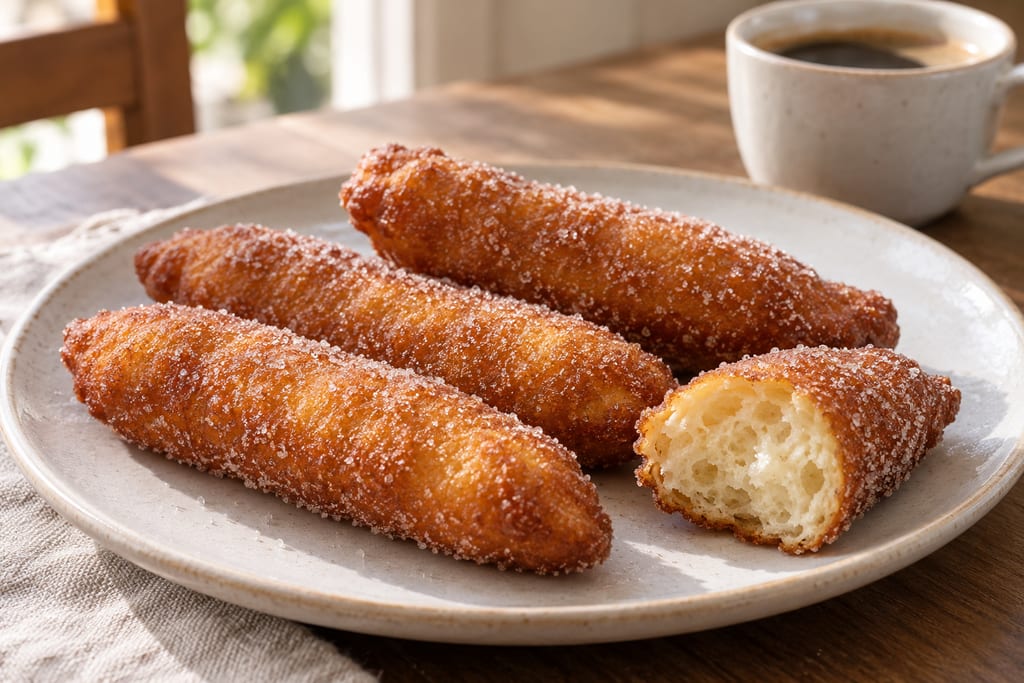
Firi firi is a yeast-raised coconut doughnut piped into long pieces and deep-fried at 170°C, traditionally eaten for breakfast or dessert in Tahiti.
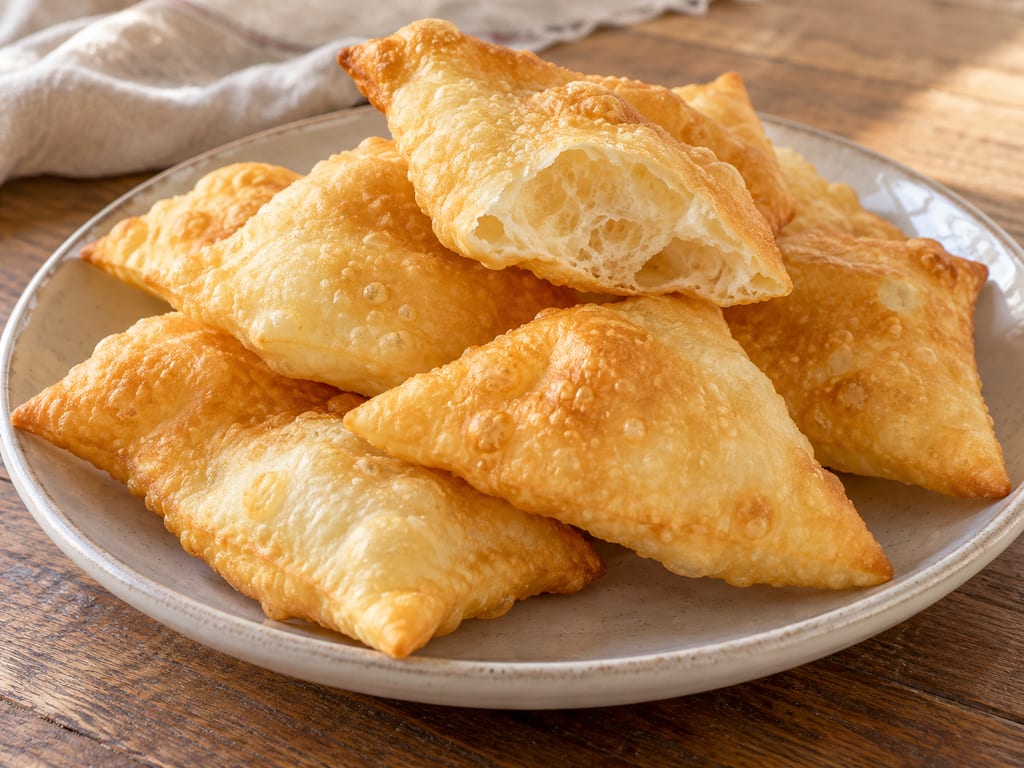
This Emilia-Romagna home version uses a measured flour-and-milk dough with yeast, shapes it into small diamonds or squares, and fries them in peanut oil.
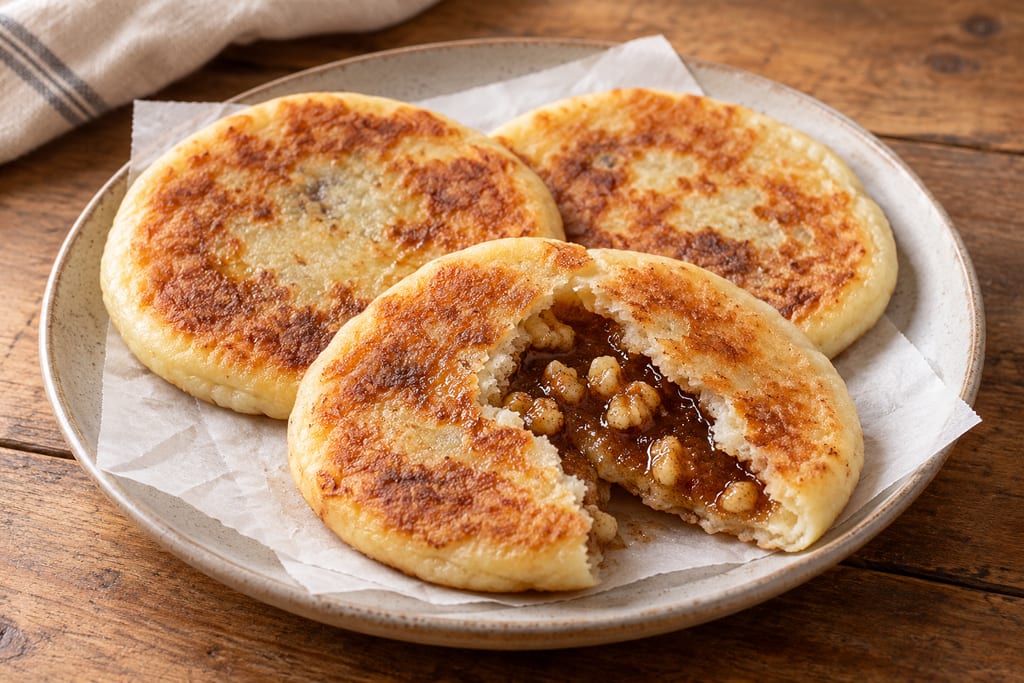
Maangchi’s eight-piece hotteok wraps a brown-sugar, cinnamon and walnut filling in yeast dough, then fries and presses the parcels in a pan.

Protected Italian vinegar made only from cooked grape must, fermented and aged in a battery of wooden barrels for at least 12 years: sweet, sharp and syrupy.

Airag is Mongolia’s fermented mare’s-milk drink, traditionally churned with saved starter in a reusable cowhide khokhuur.

Appam, or hoppers, are South Indian and Sri Lankan rice pancakes made from a fermented coconut-and-rice batter and cooked in a curved pan to a crisp lacy rim and a soft, spongy centre.
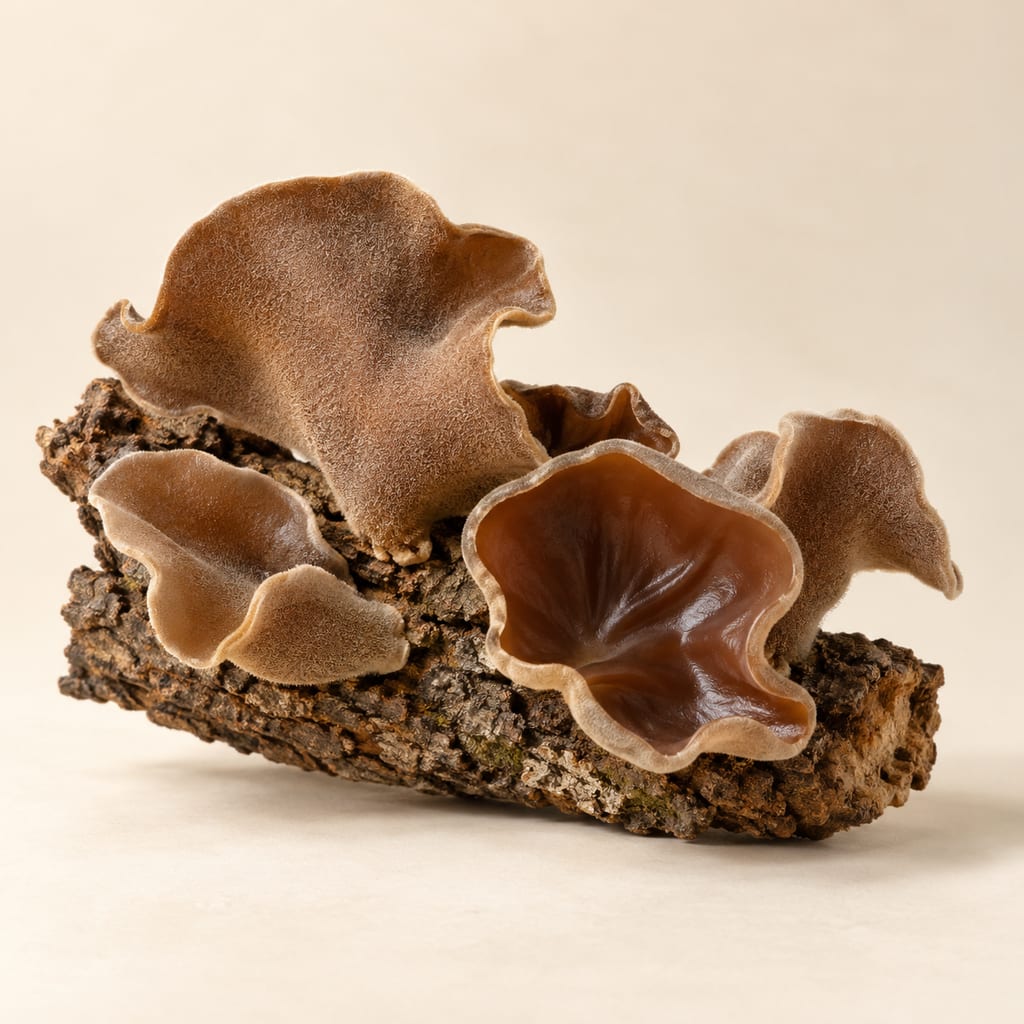
Auricularia tremellosa is a wood ear fungus of the genus that supplies most dried wood ear sold in China; its own food record is thin, and the culinary practice described here comes from the closely related wood ear species.

Ayran is Turkey’s cold, savoury yogurt drink: plain yogurt is loosened with water and lightly salted, then whisked smooth or aerated into a soft cap of foam.
A thin stone griddle used over an open hearth. Norwegian archaeology documents the established tradition from the early Middle Ages; a Viking-period origin is only a cautious suggestion linked to Shetland.

Crushed or milled barley cooked in water until the starch softens and the mixture thickens, the plainest way a northern household turned stored grain into a meal, here with apple and hazelnut.
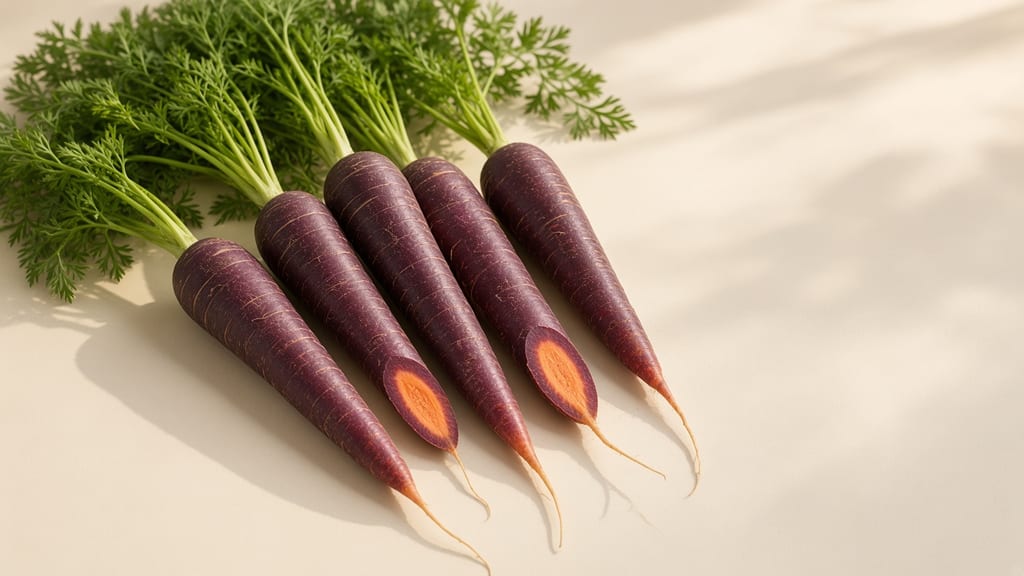
Black carrot is the anthocyanin-pigmented Eastern carrot (Daucus carota var. atrorubens), the purple root that preceded orange types and still colours kanji and şalgam.
No community contributions have been published for this entry yet.
Sign in to contribute. Published comments and photos are free to read.
British Columbia Centre for Disease ControlMethod · Safety · Geography
Fermented Foods Guideline 3.4: Dosa and Idli4:1 rice:black-gram ratio for idli and coarser rice grind
2% salt with unstated basis and 12–14-hour spontaneous fermentation around 30°C
potable-water soak, grinder inspection, steaming and 74°C/15-second cooking controls
Cited in: A steamed staple with a qualified history; Rice, black gram and batter texture; Soaking and grinding; Fermenting at a stated condition; Steaming sets the cake; At the table
Royal Botanic Gardens, Kew, Plants of the World OnlineIdentity
Vigna mungo (L.) HepperBlack gram/urd is Vigna mungo (L.) Hepper, an accepted species distinct from green gram.
Cited in: Rice, black gram and batter texture
IIT Kanpur-hosted excerpt and summary of K. T. Achaya's bookHistory
Book excerptise: Indian Food: A Historical CompanionA secondary summary reports medieval idli-like names but distinguishes those urad-only foods from modern fermented, steamed rice-and-urad idli; the full book and historical passages were not directly read.
Mahadev Narayanrao Joshi, translated study hosted by Wisdom LibraryHistory
Sciences in Someśvara's Mānasollāsa, culinary chapter, pp. 360–361The English rendering of Mānasollāsa 3.13.1579 describes iddarikā as rice and black gram paste with asafoetida and cumin, kept one or two days until sour, portioned and steam cooked.
This translated medieval preparation establishes rice, black gram, souring and steaming, but does not establish the modern 4:1 ratio or precise process conditions.
Cited in: A steamed staple with a qualified history; Regional forms and adaptations
American Society for Microbiology, Applied and Environmental MicrobiologyScience · Fermentation
Diversity and Succession of Microbiota during Fermentation of the Traditional Indian Food IdliMicrobial succession occurs during idli batter fermentation; lactic acid bacteria dominate, particularly Weissella, with Enterococcus and Streptococcus also present.
Acid production correlates with falling pH; heterofermentative Weissella contributes carbon dioxide and leavening in the studied batter.
The authors caution that species and strains need further evaluation before health claims; species-level detection does not establish probiotic benefit.
Cited in: Souring, gas and the changing batter; Fermenting at a stated condition
Journal of Food Science and Technology (PubMed Central)Method · Science · Ingredients
Preparation of idli batter, its properties and nutritional improvement during fermentationExperimental batters compare rice-to-black-gram ratios and document changes in batter volume, density, acidity, flow behaviour, amino nitrogen and B vitamins.
The study distinguishes its laboratory conditions from household practice; its values do not replace the recipe's cited public-health method.
The discussion reviews traditional sequence: soak grains separately, grind, combine with salt, ferment, then steam in idli pans.
Cited in: Rice, black gram and batter texture; Souring, gas and the changing batter; Soaking and grinding; Steaming sets the cake; Regional forms and adaptations
Digest: A Journal of Foodways and CultureHistory · Variations · Uses
Rava idli and the invention of modern Indian breakfast foodsThe article records an account that Bengaluru's Mavalli Tiffin Rooms developed rava idli when rice was scarce during the Second World War, replacing rice and black gram with semolina and curd.
The article discusses the evolution of breakfast dishes and convenience mixes; this is a distinct adaptation and not the fermented rice-and-urad idli described in this record.
Cited in: Regional forms and adaptations
CSIR-Central Food Technological Research InstituteScience · Fermentation
Studies on Idli Fermentation: Part I — Some Accompanying Changes in the BatterThe 1960 study reports increased acidity and batter volume during fermentation, as well as changes in non-protein nitrogen and reducing sugars.
Cited in: Souring, gas and the changing batter; Fermenting at a stated condition
Yashwantrao Chavan Maharashtra Open UniversityUses · Geography
Food & Beverage Service Foundation-IIThe textbook describes idli with vada or dosa and chutney and sambar as a typical South Indian breakfast combination; its discussion of variations includes rava idli.
Cited in: At the table