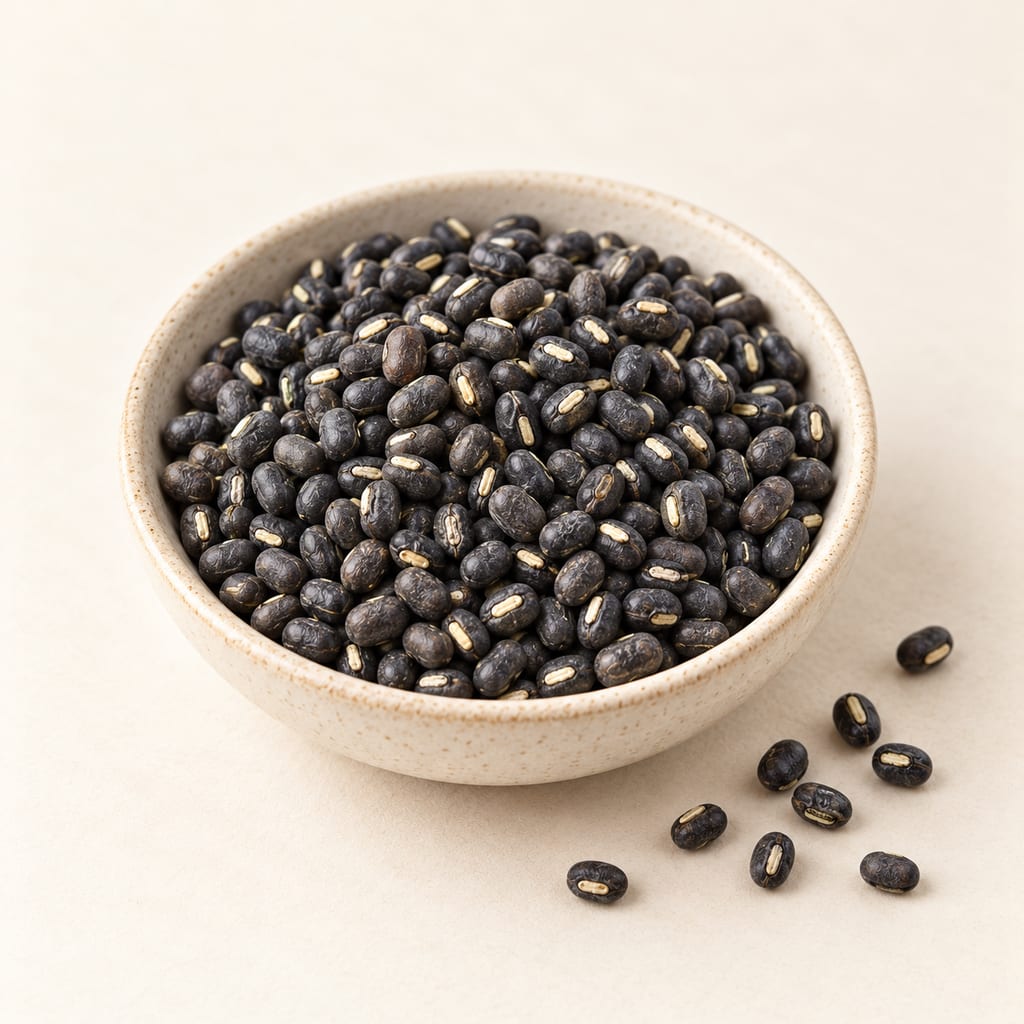
Black gram
Black gram, or urad, is a South Asian pulse whose whole dark seeds and dehulled white dal make distinct cooked and fermented foods.
 FermenteaWhere food goes to change
Traditional method
Dosa · Dosai
A naturally fermented South Indian rice-and-urad batter, ground fine and spread thin on a hot griddle. Fermentation lightens the batter and develops its gentle tang.
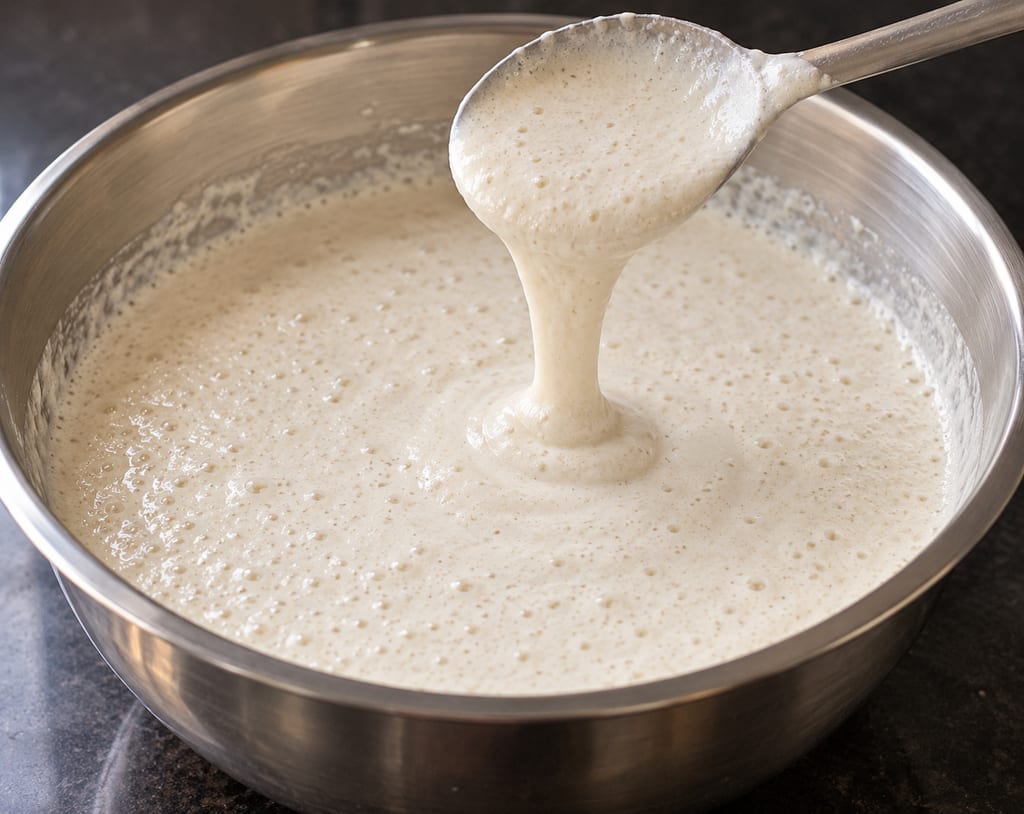
Dosa batter is a partnership between a cereal and a pulse. Rice supplies most of the starch and gives a ground batter its spreading body. Black gram, or urad, is the dehulled seed of Vigna mungo. It contributes protein and soluble material that help a batter hold the gas generated during fermentation. The standard documented formula used here is three parts rice to one part black gram; that ratio is the source's ratio, not a claim that every household or regional recipe uses the same proportion.
Rice and urad are soaked and ground separately because they behave differently. The pulse absorbs water and becomes soft enough to grind into a smooth, aerated paste. Rice is ground finely for dosa, unlike the coarser rice commonly used in idli batter. A fine grind makes the mixture pourable and lets a cook sweep it into a thin layer on the pan. If the grains are left gritty, the dosa can tear or cook unevenly; grinding finer also changes how quickly the batter thickens and spreads.
The term black gram is sometimes confused with mung bean. They are related pulses but different species: urad is Vigna mungo, while mung bean is Vigna radiata. The source recipe names black gram, not whichever small pale or green bean happens to be available. Dehulled urad is the familiar white split dhal; whole urad retains its dark skin. The recipe's measurements and fermentation guidance apply to the specified black gram and should not be silently transferred to another pulse.
This is a spontaneous fermentation: the process is not started with a named commercial culture in the documented method. Microorganisms associated with the raw ingredients and their handling establish themselves in the wet mixture. In a 1986 study of dosa fermentation, bacteria were found either alone or together with yeasts; the organisms identified in those samples included Leuconostoc mesenteroides, Streptococcus faecalis, Lactobacillus fermentum and Bacillus amyloliquefaciens. Those are study findings, not a promised ingredient list or a culture recipe. Different kitchens, grain lots, seasons and conditions do not guarantee the same community.
During fermentation, acid production lowers pH and gas raises the batter's volume. Together these changes give dosa its characteristic slight tang and help the cooked sheet become lighter than an unfermented paste. Yeasts may contribute enzymes and aroma; bacteria contribute acidification and, in some cases, gas. A separate 1986 study found that the balance of bacteria and yeasts varied with season while bacteria remained dominant in the samples. The practical implication is modest: a clock cannot make every batter behave identically.
Fermentation is not a safety test. A rise, a sour smell or visible bubbles can describe activity but cannot establish that harmful organisms or toxins are absent. The BCCDC guidance specifies a 12–14-hour ferment at approximately 30°C, potable water, refrigeration for soaks longer than four hours, prompt refrigeration after fermentation when not cooking immediately, a one-day maximum for room-temperature batter, up to seven days refrigerated at 4°C, and thorough cooking of each dosa. Refrigeration is preferred. Its pH ≤4.6 check applies before commercial packaging, not as a household substitute for these controls.
Dosa belongs to South Indian food traditions and has long since travelled through restaurants, migration and home cooking into a much wider repertoire. Its names change with language and place: dosai is common in Tamil, dose in Kannada, and dosa is the widely used English spelling. These are related names, but a word's appearance in an old text cannot by itself date every modern feature of the food.
The medieval Mānasollāsa, a Sanskrit courtly compendium, includes a dish called dosaka. Its historical importance is real, but the surviving description does not prove that the author meant today's thin, naturally fermented rice-and-urad batter in every detail. Claims of a precise birthplace or a single origin story are harder to establish than the broad South Indian association. The careful distinction is between an early named pancake or pulse preparation and the later, familiar fermented batter.
That caution matters to the cook as well as the historian. Present-day dosa styles are not simply one recipe kept unchanged for centuries. Batter ratios, grind, thickness, degree of fermentation, griddle fat and fillings vary between homes and eateries. A plain dosa can be thin and crisp or soft and pliable; a masala dosa is a serving style that encloses a spiced potato filling, not a different fermentation. Idli shares rice and urad and a natural fermentation, but its batter is thicker and is steamed in moulds rather than spread on a hot griddle.
The batter's final thickness is a cooking decision as much as a fermentation outcome. A spoonful should be loose enough to spread across the heated surface in a thin round, but not so watery that it runs into an uneven film. Water content is not standardized in the documented guidance, so it is adjusted gradually to the source's functional endpoint: pourable and spreadable. Because the rice-to-pulse ratio has no weight-or-volume basis in that guidance, keep the measurement system consistent within a batch rather than mixing cups and weights as if they were interchangeable.
On the griddle, the thin layer sets quickly. Starch absorbs water and gelatinizes under heat; the surface loses moisture and browns where it contacts the pan. A thicker layer retains more moisture and stays softer, while a thinner spread gives more crisp area. The review literature describes dosa as a thin, crisp pancake cooked on a heated plate, with the batter's thickness distinguishing it from idli. These are texture outcomes, not proof of safe fermentation.
A flat tawa or similarly broad pan makes spreading easier. The source does not specify a calibrated griddle temperature, so the method should not claim a universal number. Instead, heat the surface enough for batter to set and cook through, then spread with a quick circular motion. Oil or ghee may be applied according to the cook's style, but a heavily greased surface can make spreading difficult. Between batches, let the surface return to a steady working heat; a pan that is too cool steams and sticks, while excessive heat can set the batter before it spreads.
Dosa is served hot, often alongside sambar, coconut chutney or other chutneys. It can be eaten plain, rolled, folded or filled. Masala dosa pairs the cooked pancake with a seasoned potato mixture; the filling is added after cooking and does not belong in the fermented batter. These accompaniments vary by household and restaurant, so they are suggestions for context rather than compulsory ingredients.
The familiar paper-thin restaurant dosa is only one point in a wide range. Some versions are thicker and softer; others are spread thin for crispness. The same batter can produce different results depending on the ratio, grind, water, fermentation, pan and spreading technique. Rice and urad remain a well-known base, but regional variants may add other cereals or pulses. Such substitutions can change fermentation and texture, so they should be treated as distinct formulations rather than assumed to follow the exact safety or timing controls in this rice-and-urad recipe.
Idli makes a useful comparison because it shares the cereal-pulse fermentation family but has a different shape and heat treatment. Dosa is spread and griddle-cooked; idli is steamed in moulds. A batter sufficiently thin for an easy dosa spread may not hold a moulded idli shape, while a coarser, thicker idli batter resists the thin sweep expected for dosa. The foods overlap in ingredients and microbial ecology without being interchangeable recipes.
A directly inspected home recipe by Dassana Amit is a separate formulation: it uses a 3:0.75 rice-to-urad ratio and adds flattened rice and fenugreek, with an 8–12-hour temperature-dependent ferment. Those details belong to that recipe, not to the BCCDC 3:1 method on this page. This version keeps the BCCDC ingredients and its 12–14-hour condition together instead of borrowing additions or timing from another formula.
A batter that has risen and become mildly tangy has undergone visible fermentation, but sensory cues are not a safety verdict. The provided guidance sets an approximate fermentation condition of 30°C for 12–14 hours; warmer or cooler kitchens can shift activity, and the microbial study confirms that seasonal conditions affect the organisms recovered. The stated window belongs to the guidance's process, not a promise that every batch reaches the same acidity or volume at exactly the same hour.
If the batter is unusually dense, possible causes include insufficient fermentation, a coarse grind, too little water or a cool ferment. If it spreads poorly, the mixture may be too thick or the pan may be too hot; add water only in small increments and assess the texture before cooking the remaining batch. If the cooked dosa is rubbery, a thick pour or low surface heat can leave more moisture in the centre. These are practical quality explanations, not troubleshooting guarantees, and none should be used to rescue batter that has been mishandled.
The safety controls in this recipe are deliberately specific. Use fresh potable water and clean food-contact equipment. For the 4–6-hour separate soak, refrigerate at 4°C or below; if soaking at room temperature, finish within four hours. Ferment for the stated 12–14 hours at approximately 30°C, then refrigerate the batter promptly at 4°C or below if it is not cooked immediately. If kept at room temperature after fermentation, cook it within one day; refrigerated batter should be used within seven days. Refrigeration is preferred. Cook each dosa to an internal temperature of 74°C for at least 15 seconds. Inspect grinder stones and blades for damage, since fragments can contaminate food.
The guidance's pH target applies before batter is packaged for commercial sale; a home cook should not infer that a pH reading alone validates another process. It also advises refrigerating cooked dosa at 4°C or freezing at −18°C, and avoiding prolonged cooling at room temperature. These limits do not establish storage beyond the stated period, and sensory cues are not a safety verdict.
The BCCDC document is a public-health assessment of a specific preparation, not a claim that one formula defines every dosa. It gives a three-to-one rice-to-black-gram ratio, separate soaking, fine grinding, salt, a fermentation window and temperature, then griddle cooking. It also identifies the limits of those details: the ratio has no stated weight-or-volume basis, the salt percentage's calculation basis is undefined, and the pan temperature is not calibrated. A careful recipe keeps these limits beside the numbers so readers can distinguish a source-supported figure from an invented precision.
That distinction explains why a measured household batch cannot be made reproducible from this source alone. A cook can weigh three parts rice and one part urad, or measure them by volume, but the two systems may absorb different amounts of water. The water endpoint is described by use—pourable and spreadable—rather than a fixed quantity. Salt is likewise not converted into a false gram amount. These omissions are not invitations to guess a universal formula; they mark where the evidence stops.
The narrative also distinguishes fermentation from cooking. Fermentation happens in the covered vessel before the batter reaches the pan. The hot griddle sets and browns the thin layer; it does not complete or correct an unsafe ferment. The method's order matters: grind and mix, allow the documented fermentation, chill if cooking is delayed, then cook thoroughly. Treating those stages separately makes the texture easier to reason about and keeps the source's food-safety controls visible.
Dosa belongs to South Indian food traditions. Medieval sources record dosaka, but the surviving historical descriptions do not establish that the named dish had the complete modern rice-and-urad formula and natural fermentation. This page treats the old attestation as evidence of a related pancake tradition, not proof of a single birthplace or unchanged recipe.
Scaling: source batch only
E. coli, Staphylococcus aureus and Bacillus cereus may be introduced with raw ingredients or handling and proliferate during soaking, fermentation, cooling or storage.
Hazard sourceDamaged grinding stones or blades may introduce physical contaminants.
Hazard sourceSoak rice and black gram separately in fresh potable water at 4°C or below; if soaking at room temperature, limit the soak to 4 hours. After fermentation, refrigerate batter at 4°C or below; if left at room temperature, use within one day, or use refrigerated batter within seven days. Refrigeration is preferred.
Control sourceFerment for the source-specific 12–14 hours at approximately 30°C. The pH ≤4.6 check applies before packaging batter for sale; it is not a substitute for the home cooking control.
Control sourceCook each dosa to the source's internal temperature limit. Refrigerate cooked dosa at 4°C or below or freeze at −18°C, and avoid prolonged cooling at room temperature.
Control sourceInspect grinder stones and blades for damage before grinding; clean and sanitize food-contact tools and surfaces.
Control sourceMoist batter can support harmful bacteria if ingredients or tools contaminate it. Keep the soak within its temperature and time limit, use the defined fermentation window, refrigerate promptly, and observe the batter storage limits.
Cook each dosa to 74°C internally for at least 15 seconds. Refrigerate cooked leftovers at 4°C or below or freeze at −18°C; avoid prolonged room-temperature cooling.
The pH ≤4.6 control is specified before commercial packaging; it does not validate a different household process.
Damaged grinding stones or blades can shed fragments into the batter; inspect the grinder before use.
Broad preparation region; no city-level origin is established.
The guidance reports preparation and consumption in this broad region.
Black gram, or urad, is a South Asian pulse whose whole dark seeds and dehulled white dal make distinct cooked and fermented foods.
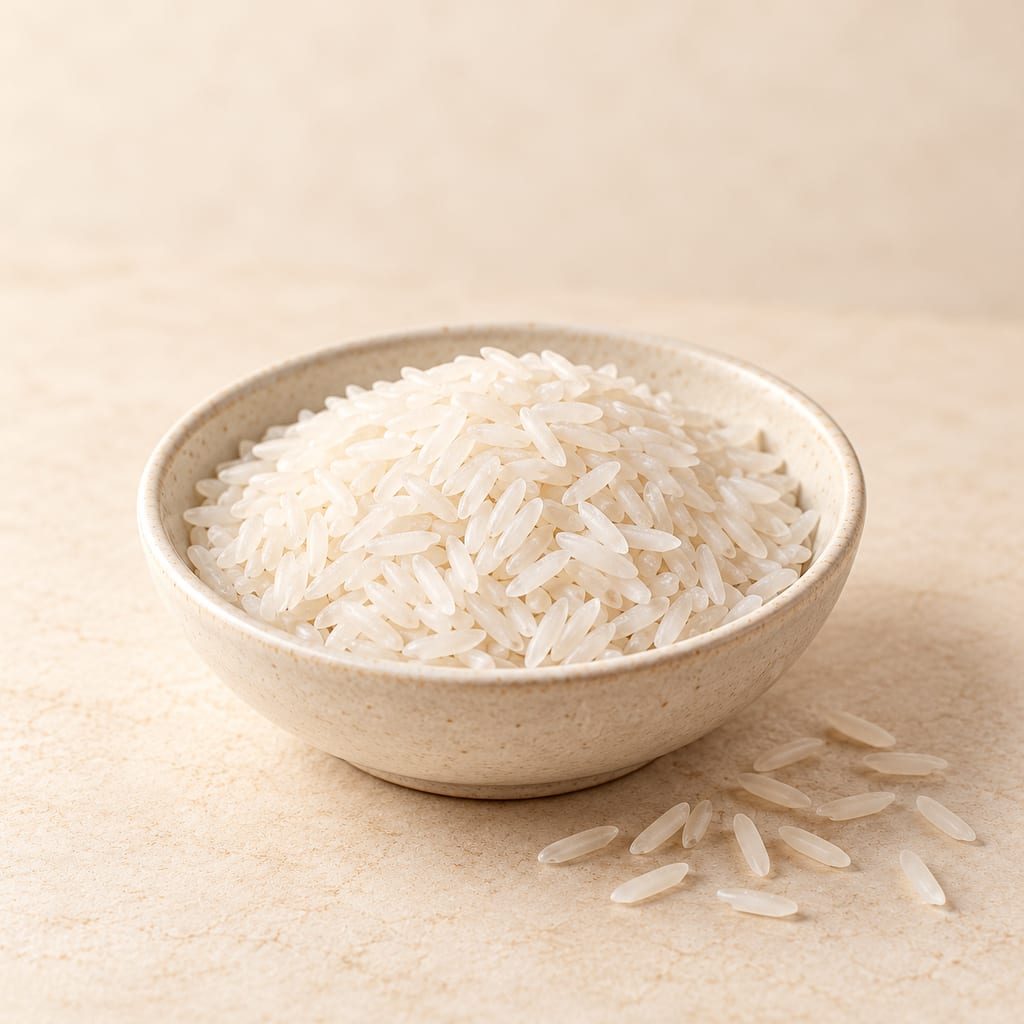
Rice contributes starch to flatbreads, steamed breads, batters and many distinct fermentations. Its species, milling and starch character shape how it cooks, binds, expands and feeds enzymes.
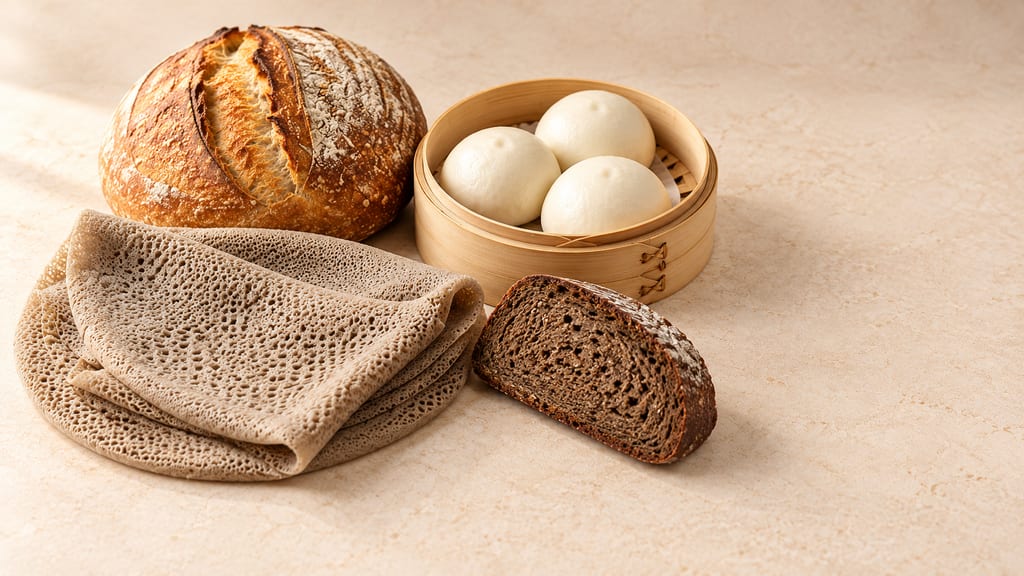
From the baguette and the steamed bun to injera, titiyas, Finnish rye and cassava bread: how grain, microbes and heat answer the question of what bread is for.
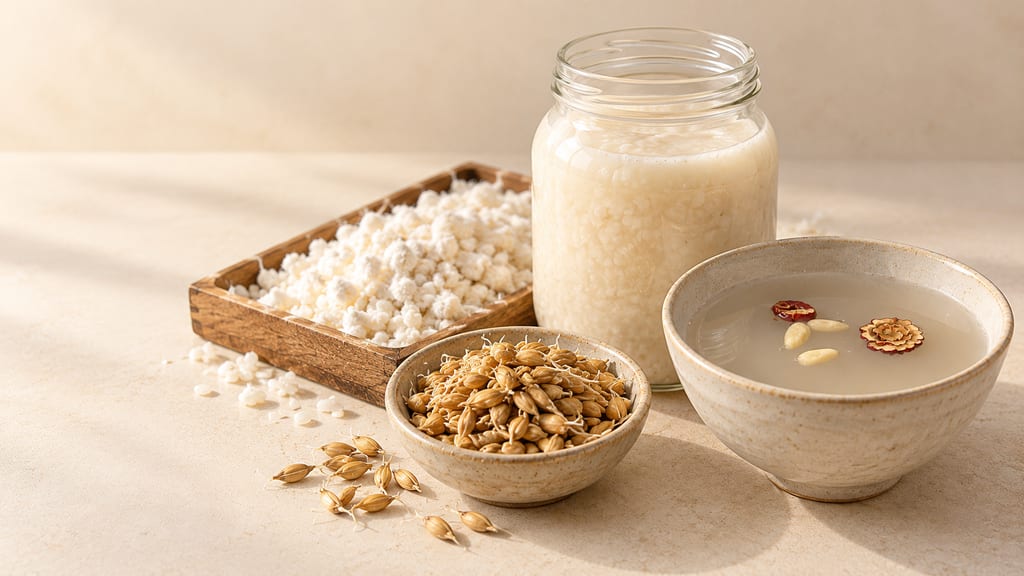
Amazake, sikhye and rice syrup turn cooked rice sweet with enzymes from koji or barley malt, held at the right warmth. Jiu niang and idli batter look similar but depend on living microbes, at very different temperatures.
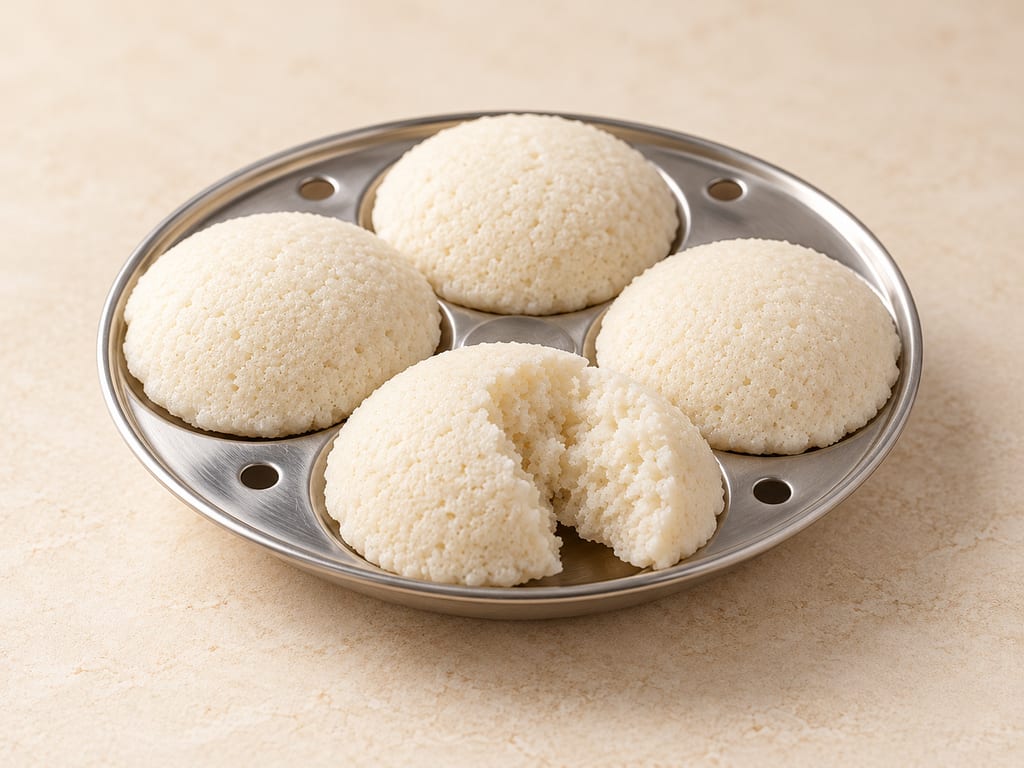
Rice and black gram are soaked separately, ground, salted and fermented into a thick batter for idli. The batter is portioned into moulds and steamed into soft savoury cakes.
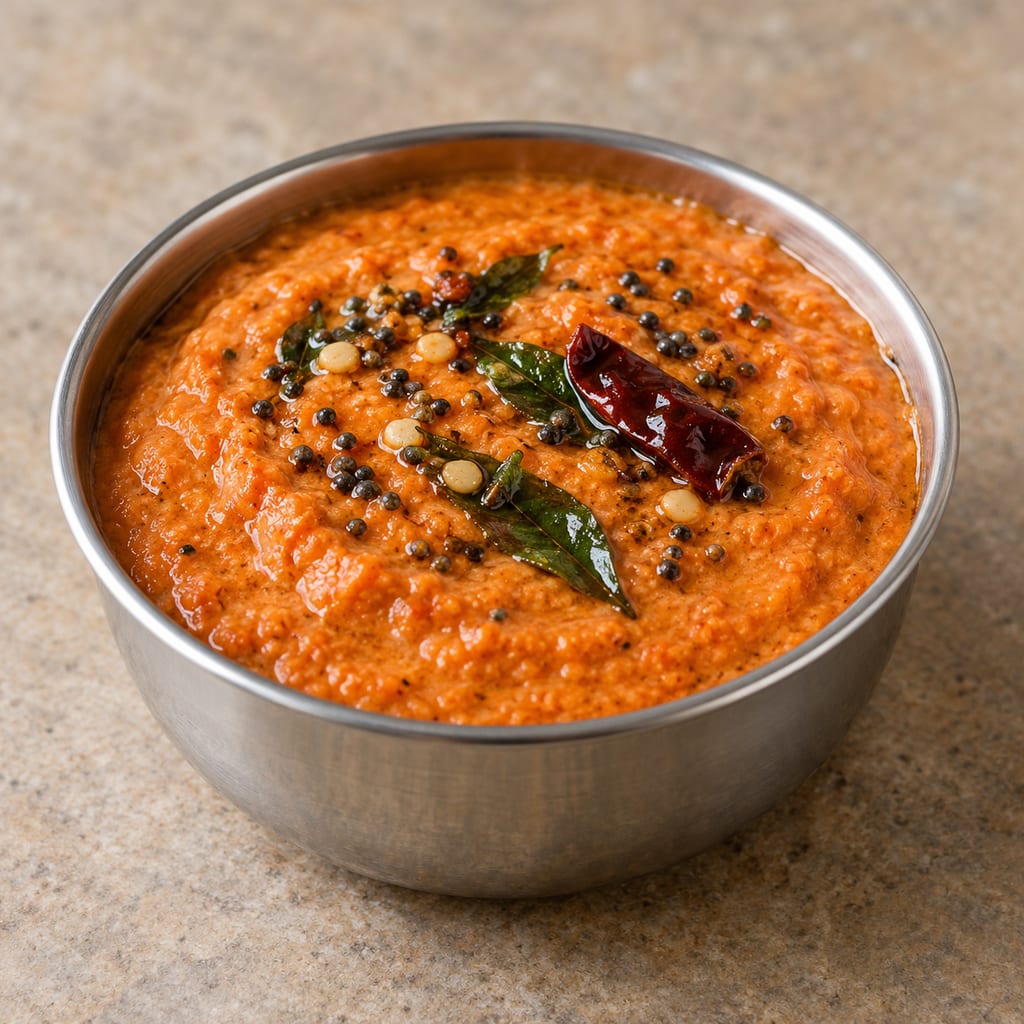
A South Indian chutney of onion and tomato cooked soft with chillies, ginger, tamarind and coconut, cooled, blended and finished with a mustard and curry-leaf tempering, for idli and dosa.
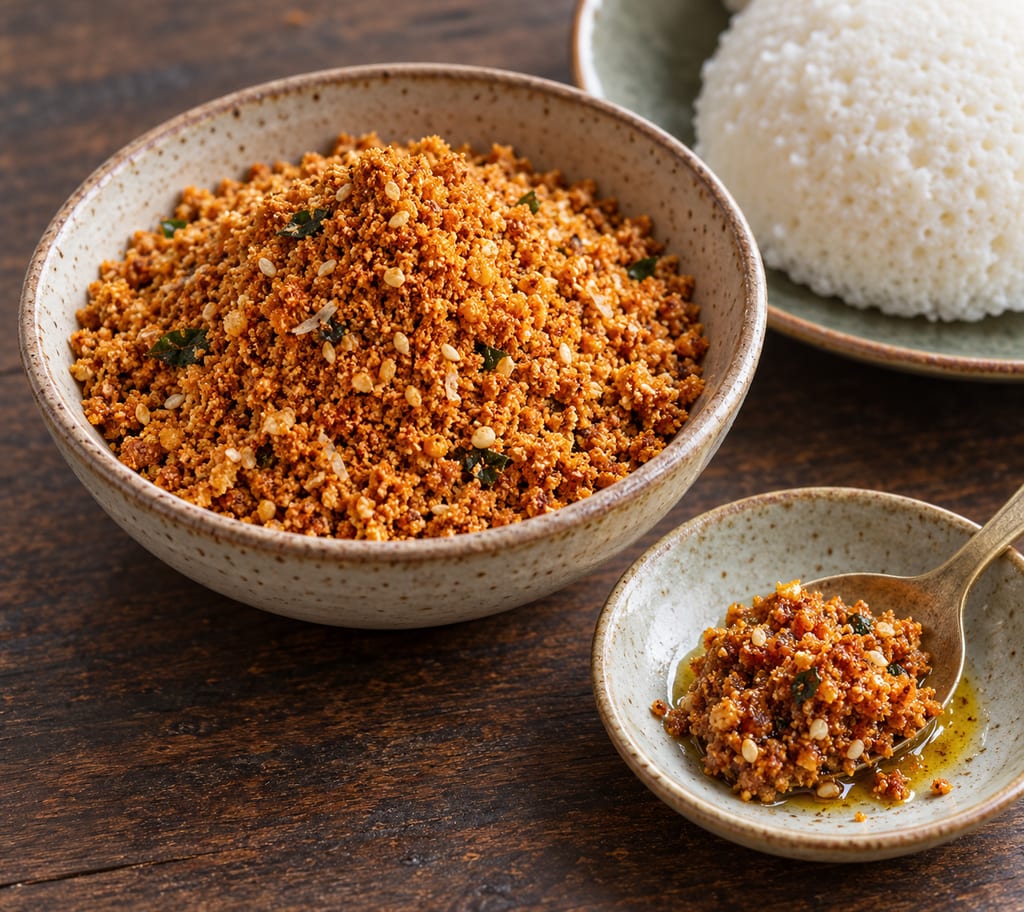
A South Indian dry chutney powder has many regional and household forms. This record follows one published gunpowder podi recipe, served with ghee or gingelly oil; it is not a single standard formula.
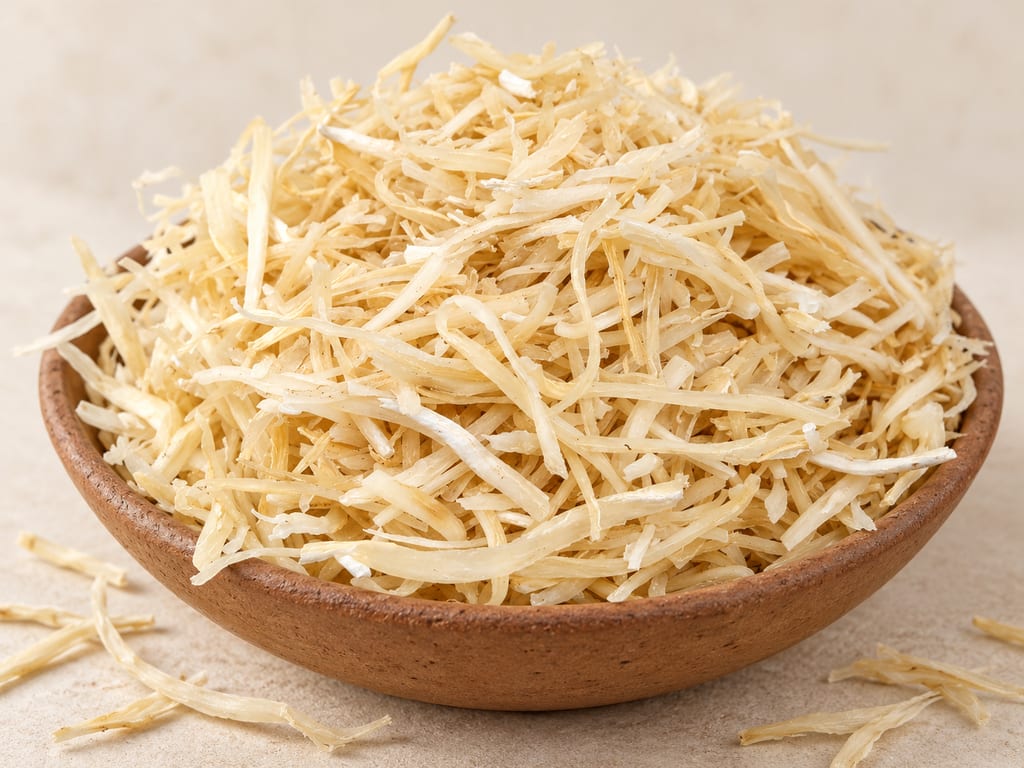
Abacha is a fermented cassava-strip preparation from southeastern Nigeria, sold wet or dried and later rehydrated for meals such as African salad.
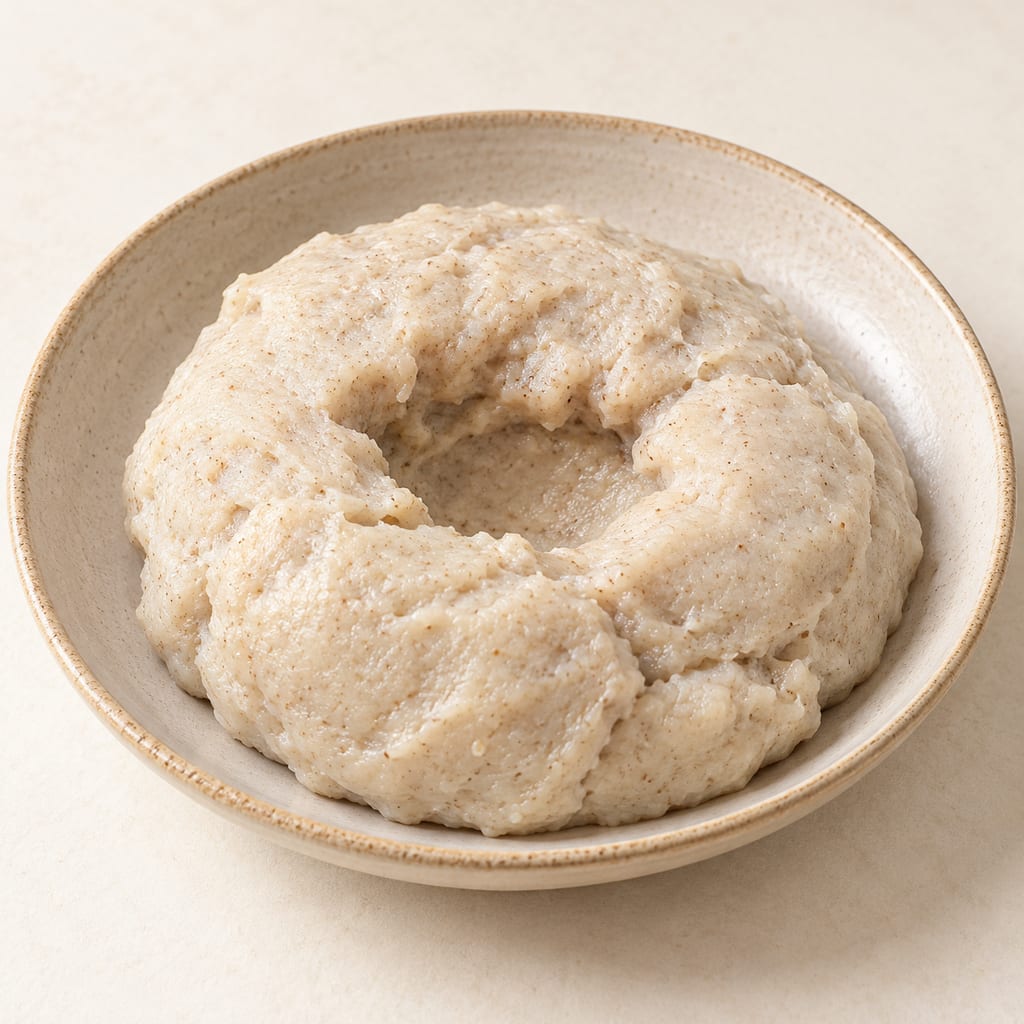
Aceda is Sudan’s firm cereal porridge, commonly made from sorghum and shaped into a smooth mound. Some versions use fermented dough; fermentation is not universal.
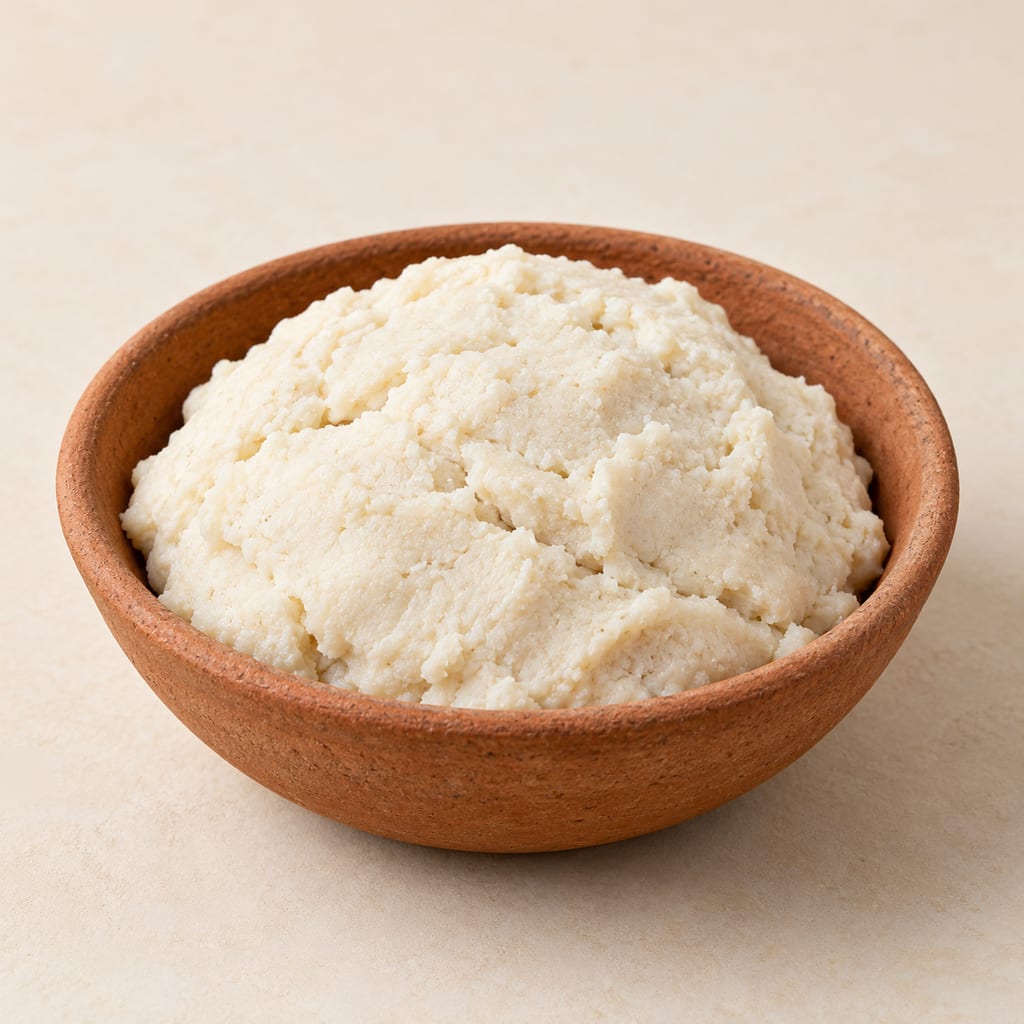
Ghanaian sour cassava dough fermented with traditional inoculum and drained during fermentation. It is used as a base for cooked foods such as banku and akple; process variants and safety outcomes differ.

Appam, or hoppers, are South Indian and Sri Lankan rice pancakes made from a fermented coconut-and-rice batter and cooked in a curved pan to a crisp lacy rim and a soft, spongy centre.
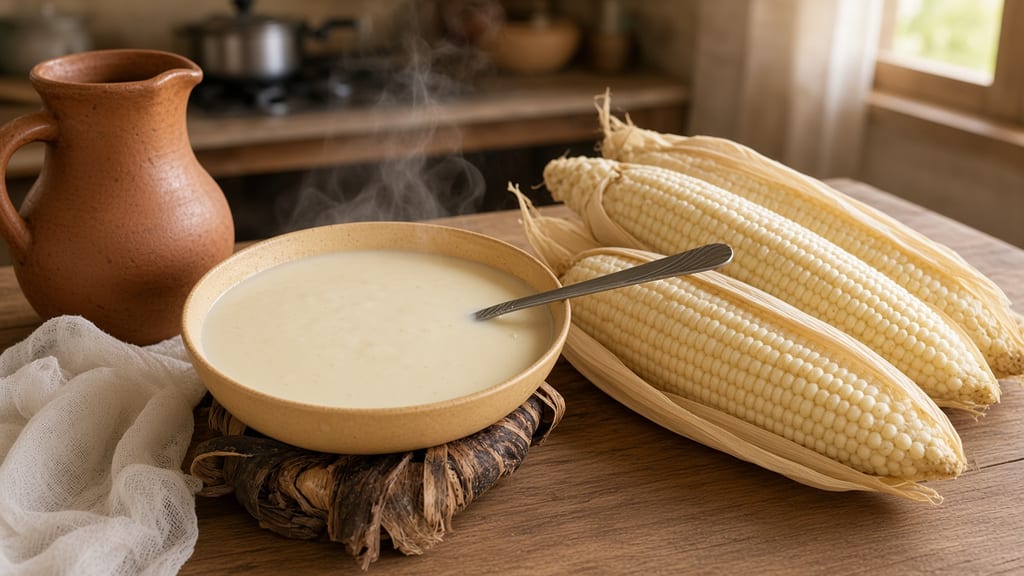
A hot, sour maize drink from Tabasco made from maize that is not lime-cooked. The ground grain sours for half a day, then makers strain it and boil it until thick.
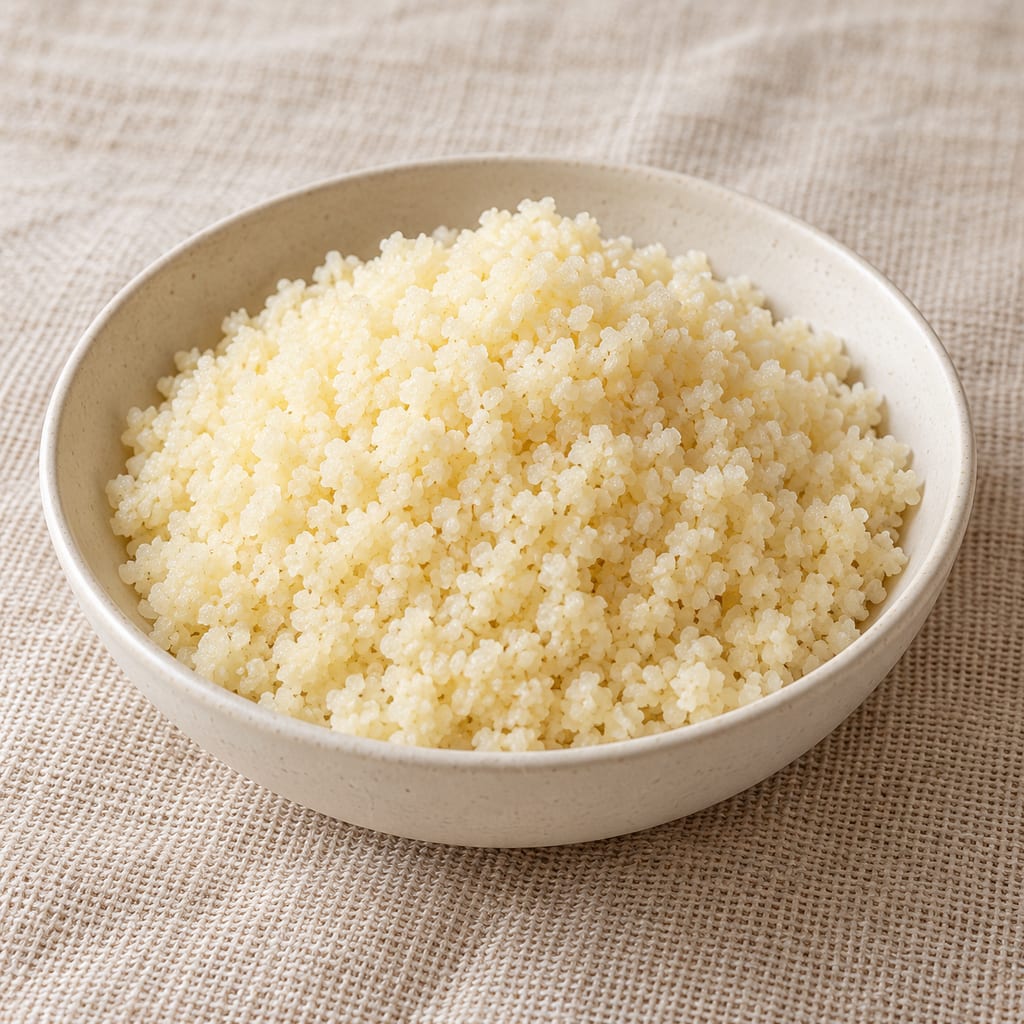
Ivorian cassava semolina: grated cassava is fermented overnight with a traditional inoculum, pressed, sieved into granules, dried and steamed. Documented in a 2006 field study; no sole original process is established.
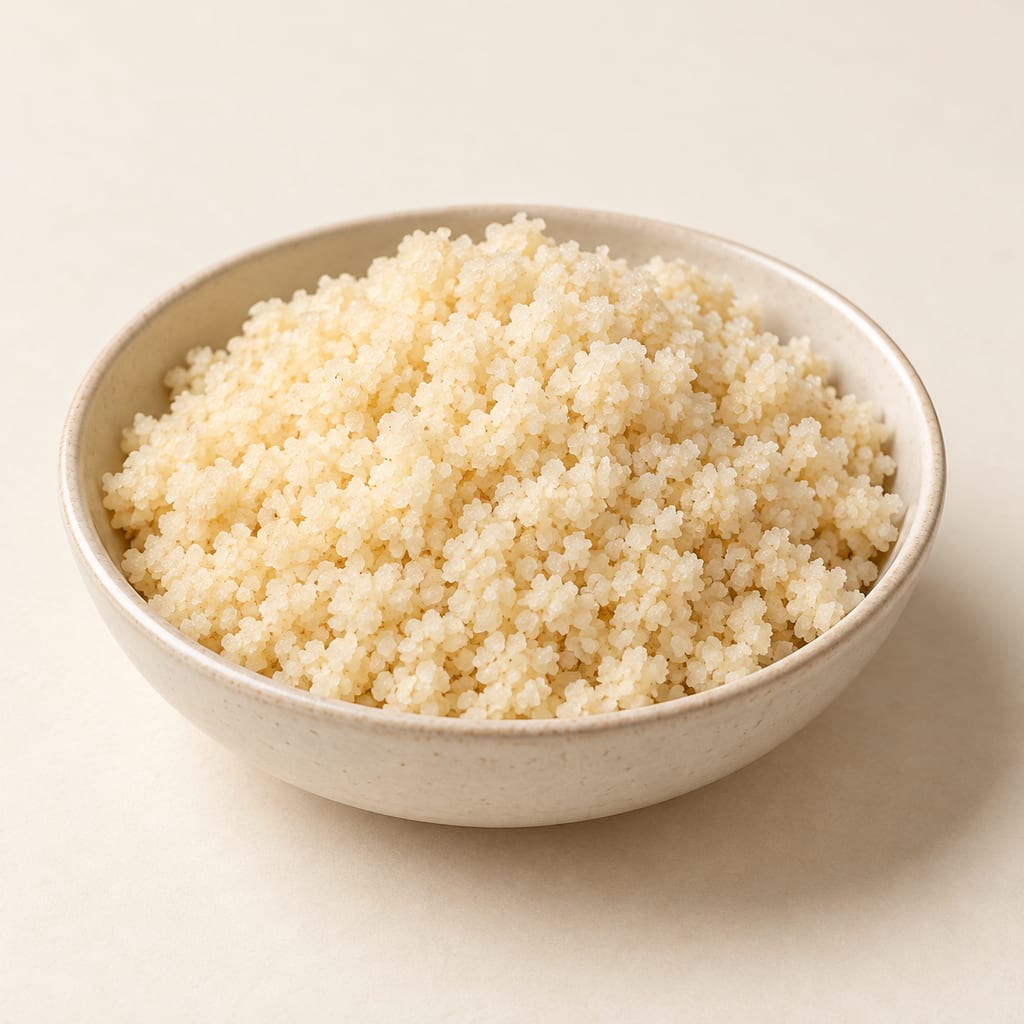
Attiéké is an Ivorian staple of grated cassava fermented with a traditional inoculum, then pressed, sieved, granulated, dried and steamed into fine couscous-like grains.

Crushed or milled barley cooked in water until the starch softens and the mixture thickens, the plainest way a northern household turned stored grain into a meal, here with apple and hazelnut.
No community contributions have been published for this entry yet.
Sign in to contribute. Published comments and photos are free to read.
British Columbia Centre for Disease ControlMethod · Safety · Geography
Fermented Foods Guideline 3.4: Dosa and Idli3:1 rice:black-gram ratio for dosa; fine rice grind and griddle cooking
potable-water soak, 2% salt with unstated basis, 12–14-hour spontaneous fermentation at approximately 30°C
soak, refrigeration, grinder inspection and 74°C/15-second cooking controls
Cited in: Rice and urad: why the two grains share the work; From batter to dosa: texture is made on the griddle; Reading the results and handling the batter; Why the process is written as a bounded method
Damon Binder, Sanskrit recipe transcription and translationHistory
Dhosaka: Mānasollāsa 3.13.1392cd–1394abA medieval Sanskrit passage describes pulse dhosakas cooked on an oiled griddle; it does not include rice or a fermentation step.
Cited in: A history with a boundary around what the evidence says
Royal Botanic Gardens, Kew, Plants of the World OnlineIdentity
Vigna mungo (L.) HepperBlack gram/urd is Vigna mungo (L.) Hepper, an accepted species distinct from green gram.
Cited in: Rice and urad: why the two grains share the work
Food Microbiology / ElsevierMicrobiology · Fermentation
Microbiological studies on Dosa fermentationA 1986 study found bacteria alone or with yeasts responsible for dosa fermentation; its sampled predominant organisms included Leuconostoc mesenteroides, Streptococcus faecalis, Lactobacillus fermentum and Bacillus amyloliquefaciens.
The study reported ingredient-associated inocula and seasonal variation in microbial prevalence.
Journal of Applied Microbiology / Wiley; J. P. Tamang et al.History · Fermentation · Microbiology
“Ethno-microbiology” of ethnic Indian fermented foods and alcoholic beveragesReview describes dosa as a naturally fermented fine-ground rice and dehulled black-gram batter, cooked as a thin crisp pancake and often served plain or with potato filling.
The review contrasts dosa grinding with coarser rice and finer black-gram idli batter, and reports documented historical uncertainty around South Indian cereal-pulse foods.
Cited in: What a spontaneous fermentation changes; A history with a boundary around what the evidence says; Serving and regional forms
Royal Botanic Gardens, Kew, Plants of the World OnlineIngredient identity
Vigna mungo (L.) HepperBlack gram is Vigna mungo (L.) Hepper, distinct from mung bean (Vigna radiata).
Cited in: Rice and urad: why the two grains share the work
Prime Ministers’ Museum & Library; scholarly publicationHistory
The Mānasollāsa and food in medieval IndiaA discussion of Mānasollāsa identifies dosaka among dishes recorded in a 12th-century Sanskrit courtly compendium; historical evidence for an earlier dish name does not establish that its method was today's fermented rice-and-urad batter.
Cited in: A history with a boundary around what the evidence says
Food Microbiology / ElsevierMicrobiology · Fermentation
Microbiological studies on Dosa fermentationBacteria alone or with yeasts were responsible for dosa fermentation in the study; the identified predominant bacteria included Leuconostoc mesenteroides, Streptococcus faecalis, Lactobacillus fermentum and Bacillus amyloliquefaciens.
Microbial prevalence varied seasonally in the samples.
Cited in: What a spontaneous fermentation changes; Reading the results and handling the batter
Food Science and Human Wellness / PMCMethod · Uses
Cereal based functional food of Indian subcontinent: a reviewReview describes dosa batter as a thin, spreadable rice and black-gram suspension, naturally fermented then cooked as a thin pancake.
Dosa is commonly eaten with chutney and sambar; idli batter is generally thicker.
Cited in: From batter to dosa: texture is made on the griddle; Serving and regional forms; Why the process is written as a bounded method
Dassana's Veg RecipesVariant comparison
Classic Dosa Recipe | How to Make Dosa BatterA distinct home formula uses a 3:0.75 rice-to-urad ratio with flattened rice and fenugreek; it is not the BCCDC 3:1 formulation documented here.
The source describes 8–12 hours of fermentation depending on temperature; this different time window is not combined with the BCCDC process.