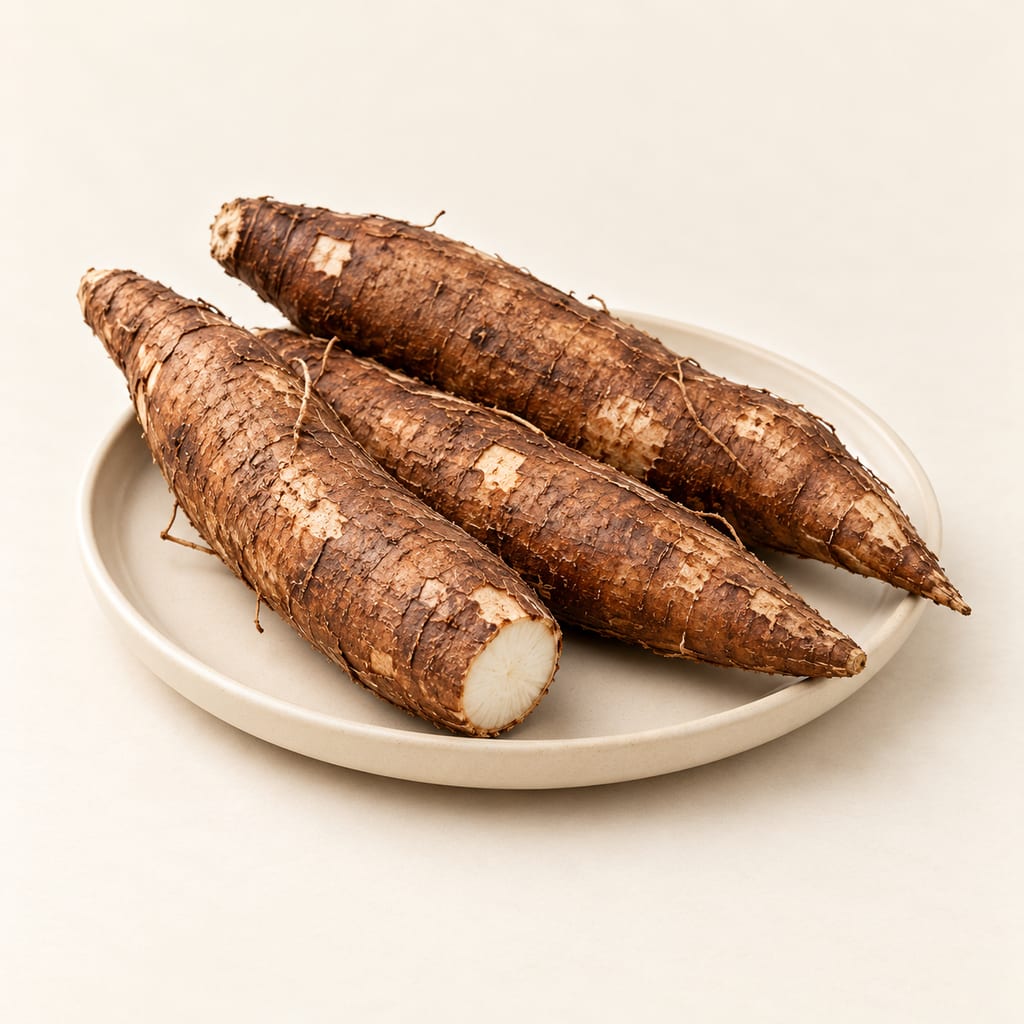
Cassava
Cassava is the starchy root of Manihot esculenta, transformed across Africa into fermented doughs, granules and flours through distinct processes whose safety depends on thorough cyanogen removal.
 FermenteaWhere food goes to change
Akpu-mmiri
Abacha is a fermented cassava-strip preparation from southeastern Nigeria, sold wet or dried and later rehydrated for meals such as African salad.
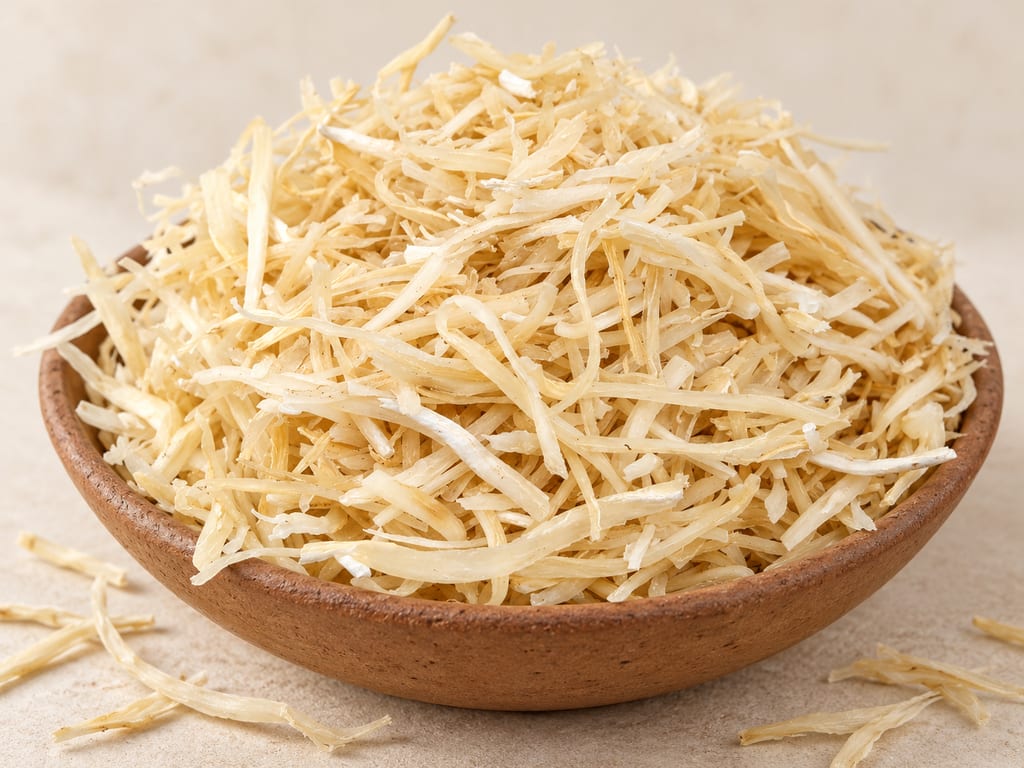
Abacha names both a cassava preparation and, in everyday use, a meal built from it. The preparation begins with cooked cassava roots cut into strips or chips and soaked in water. Fresh, it is soft and wet; dried, it becomes a compact strip that can be softened again. In southeastern Nigeria it may be eaten as a snack, mixed into bean dishes or dressed with oil, seasonings, vegetables, fish and other accompaniments. The dressed form is widely called African salad or Abacha ncha. Keeping those stages distinct makes the word easier to follow: this page describes the cassava preparation, while the salad is a separate culinary assembly.
The strips are yielding and slightly chewy, with a mild flavour after soaking. Their soft starch holds on to seasoning, which helps explain how a simple base becomes several different meals. Some versions are served warm, with palm oil and spices mixed through; others are served cool with leaves and fermented oil bean seed. Cowpea versions turn the same cassava base into a heartier hot dish. These are not one fixed recipe with optional garnish: community-collected versions differ in ingredients, moisture and whether cassava is served alone or cooked with beans.
Abacha belongs to a broad cassava tradition. Cassava is a South American root crop that crossed the Atlantic in the early modern period. African communities adapted it to local farming and developed many processes that made the root usable as food. Abacha sits in southeastern Nigeria's repertoire alongside other cassava staples whose production differs in whether roots are grated, soaked, fermented, dried, roasted, milled or cooked to a paste. It is not gari, fufu, lafun or tapioca starch. Those foods share a crop but have different shapes, stages and uses.
The sources establish Abacha as a recognized regional food and describe its present preparation, but they do not provide a securely dated first written mention of Abacha itself. Cassava history gives context without supplying that missing date. Portuguese expansion carried cassava from tropical America to parts of Africa from the sixteenth century. Sources vary on its Nigerian arrival: some trace coastal cultivation to the seventeenth century, while systematic cultivation and wider acceptance came later. Histories of the crop's spread into Igboland describe a gradual and uneven adoption alongside yam, rather than one moment when a dish was invented.
Traditional accounts agree on a broad sequence: peel, wash, boil, slice, soak, rinse, then use the strips wet or dry them. Details differ among communities and publications, so these stages describe reported practices rather than one standardized formula. Boiling softens cassava enough to cut it into narrow pieces. One research protocol cools the cooked roots before slicing; another begins with slices and then boils them. Older descriptions specify a longer boil, while experimental studies describe shorter ones. The sources do not establish one temperature-and-time schedule suitable for every cultivar, root size and starting condition.
For a documented fresh-root approach, use cassava intended for food and prepared by a competent local processor. Peel and wash the roots. Boil them in water until cooked and soft enough to slice, then cool enough to handle. Cut the flesh into long strips or chips. Place them in clean potable water to soak. Published schedules range from overnight or 12–24 hours to one or two days; some describe changing the soaking water at least twice, while another gives one or two changes. Drain and wash the strips thoroughly in fresh water before use. These timings record differing practices; they are not a validated safety endpoint.
A research method cuts boiled cassava into long pieces, cools it, slices it thinly, soaks it for about 16 hours and changes the soaking water after four hours. Another study compares the direct fresh-root process with a route that first dries chunks, then rehydrates and boils them before slicing, soaking, washing and drying the finished strips. Starting from dried cassava is useful where those chips are available, but its sensory and chemical results differ from those of fresh-root Abacha. Drying the finished wet strips creates a distinct storage form; it is not a shortcut around careful processing and clean handling.
Heat softens the starch-rich root and makes it possible to cut clean narrow pieces. Soaking hydrates the strips and lets water-soluble compounds move into the surrounding liquid; replacing the water changes that exchange. Fermentation may occur during the wet hold, but publications describe household processes with varying conditions rather than one selected starter or measured endpoint. Flavour can become mild; texture, moisture and acidity vary with cultivar and process. Sun or controlled drying removes water from the prepared strips and aids storage and transport. Experimental work also finds acidity and measured hydrogen cyanide change with processing. None of these changes can be judged safely by smell, taste, appearance or bubbles.
For home use, buy Abacha from a reputable processor or follow an established food-safety procedure taught by a competent local source. Cassava contains cyanogenic compounds and the amount varies; thorough processing is especially important for high-cyanide varieties. This account records traditional methods but does not certify a household procedure or any soaking time as a safe detoxification limit. Do not eat raw cassava or infer that a short soak has made it safe. Use clean water, clean utensils and hygienic handling throughout; discard material contaminated or stored under uncertain conditions.
Food literature describes Abacha as fermented cassava, but not as one controlled-culture product. The wet process depends on microbial communities present in the raw material, water and working environment. A research review describes soaking as fermentation during which the pieces become almost bland. Other studies report shifts in acidity and chemical composition, but those measurements belong to the specific cassava varieties and procedures studied. They do not establish one universal pH, acidity, duration or microbial signature for every batch.
In general, fermentation is microbial growth and activity on available nutrients. Microorganisms can transform some carbohydrates into acids and flavour compounds, changing sourness, aroma and surrounding liquid. For Abacha, the cited reports do not trace one exact metabolic route in a standardized batch, so naming a particular bacterium or saying one acid always dominates would go beyond the evidence. Cassava itself supplies starch and water. Cooking alters its structure; wet soaking hydrates it. These physical changes matter alongside microbial activity. Drying is a separate moisture-removal operation after the wet preparation, not another fermentation.
Cassava's naturally occurring cyanogenic glycosides explain why it is processed before eating. Peeling, cooking, soaking, washing and drying appear in different combinations across cassava foods, but the details are product-specific. An IITA reference warns that high-cyanide cultivars require thorough processing. Research on Abacha measured hydrogen cyanide in finished samples, and the results varied with cultivar and treatment. That is evidence that process conditions matter, not proof that a market sample or any home schedule meets a safety threshold.
Fermentation is not a substitute for hygiene. A small microbiological study of processing water from four Owerri farms reported both organisms associated with fermentation and organisms of public-health concern, including Escherichia coli. Its sample is limited and does not describe every producer, but it shows why uncontrolled microbial activity is not automatically beneficial. Clean water, surfaces and handling matter. The study also warns against treating sourness or characteristic aroma as proof of safety. This account gives no smell test, universal storage life or safety assurance based on a soak's visible progress.
Practice is not fixed by one canonical formula. A study recording community recipes across five southeastern Nigerian states documented five Abacha variations. One used dry cassava chips, palm oil, pepper, seasoning and salt with dried prawns. Another included sliced ukazi leaves; a third combined garden-egg leaves with fermented African oil bean seed. Other versions added cowpea, with different proportions of cassava and beans. Some were served hot; one was served cold, garnished with fermented oil bean and leaves. These variations reflect household preference and availability, not a ladder from authentic to inauthentic.
The cassava base can also begin in different forms. Fresh roots are boiled and cut directly into strips; dried cassava chips can be rehydrated, boiled and cut. A comparative study found sensory and chemical differences between the fresh-root and dried-chip forms it tested. Dried Abacha is more compact for storage and transport; wet Abacha is already hydrated and ready for the next preparation. They are related, but dried and wet weights cannot be exchanged directly.
When dressed as African salad, cassava is combined with ingredients that provide richness and savoury complexity. Palm oil coats the strips and carries spice aromas. Pepper brings heat. Fermented African oil bean seed, often called ugba, adds an assertive savoury fermented note and a yielding bite. Leaves such as ukazi or garden-egg leaves add green flavours and texture; prawns or fish make the meal more substantial. The exact combination changes from recipe to recipe. The research record includes a cold serving with fermented oil bean and leaves and hot versions in which cassava is mixed into seasoned palm oil; cowpea versions cook cassava with beans and seasonings.
These mixtures may be a snack or a full meal. Mild cassava contrasts with oil, pepper, salty seasonings and the stronger aroma of dried seafood. A cold salad keeps strips distinct and highlights their chew; a hot preparation lets oil and spices cling while they are warm. Abacha can also accompany coconut or enter bean dishes, uses described in Nigerian food references. 'African salad' names a way of serving the product, not a separate fermentation. Ingredients of the dressed salad should not be mistaken for ingredients required to make the cassava strips.
Food-heritage research describes Abacha as a notable Enugu food enjoyed by residents and visitors, and records local differences in preparation and presentation. It names Achi, Ezeagu and Obinagu, but that evidence does not assign the food to one exclusive birthplace. Southeastern Nigeria is the strongest supported geographic description; Enugu is a documented centre of food heritage within that larger region. This scale matters because local names, family methods, markets and foodways cross administrative boundaries.
Choose the form according to the meal. Wet strips are convenient for immediate dressing or cooking. Dried strips are compact, but need softening and rinsing before use. The sources do not establish a general commercial label or grade system. Check that packaging names the product and processor and remains intact; ask a trusted seller how it was prepared when the process is unclear. Once rehydrated, treat the strips as a moist prepared food and handle them with the care given to other cooked foods. No universal refrigerated storage life is established by the sources, so this page does not invent one.
To assemble a salad, begin with clean, prepared Abacha and drain it well. Dress it using the method of a specific local version. Some recorded recipes warm palm oil with onion and seasonings; another makes an emulsion with oil, edible potash and seasonings before folding in the strips. Cold servings add fermented oil bean seed and leaves at the end. Cowpea versions start with beans boiled until tender, then combine them with cassava, palm oil, onion and seasoning for a brief further cook. These are separate methods; they should not be blended into an imagined standard.
Potash appears in some recorded versions as part of the seasoned oil emulsion; it is not required in every version, and published community recipes include preparations without it. The sources do not give a safe household amount or medical advice, so this page gives no dose or health claim. Follow the version used by a reputable local cook, and omit ingredients you cannot identify with confidence. The same restraint applies to spices, vegetables and proteins: they vary by recipe, availability and preference.
Abacha's story is less a single origin tale than a record of adaptation. A crop introduced from the Americas became a staple across African regions because farmers and cooks shaped it into forms suited to local cultivation, food security and taste. Southeastern Nigerian processors turned cassava into wet or dried strips, which households and vendors made their own at the table. Boundaries between preparation and dish, between wet and dry, and between one community's seasonings and another's are part of its identity. Its history is best read through documented practice and variation, with the date of its first written attestation still unresolved.
Cassava's arrival and spread are documented, but the consulted sources do not establish a dated first written attestation or one birthplace for Abacha itself.
Scaling: source batch only
Cassava varies in cyanide content; IITA warns that high-cyanide varieties require thorough processing.
Hazard sourceA limited Abacha processing-water study reported organisms of public-health concern alongside other isolates.
Hazard sourceUse food-grade cassava and thorough processing established by a competent local source; this account does not validate an abbreviated home process.
Control sourceUse clean potable water and hygienic utensils and handling. Fermentation, taste, smell and appearance do not prove safety.
Control sourceDo not eat raw cassava or treat descriptive time ranges as a validated detoxification schedule.
The cited sources establish no universal safe soaking endpoint or storage life.
Regional food-system and community recipe studies document preparation and variation; this does not claim one exclusive birthplace.
Food-heritage research records Abacha as a locally important food; named communities do not establish an exclusive origin.
Cassava is the starchy root of Manihot esculenta, transformed across Africa into fermented doughs, granules and flours through distinct processes whose safety depends on thorough cyanogen removal.
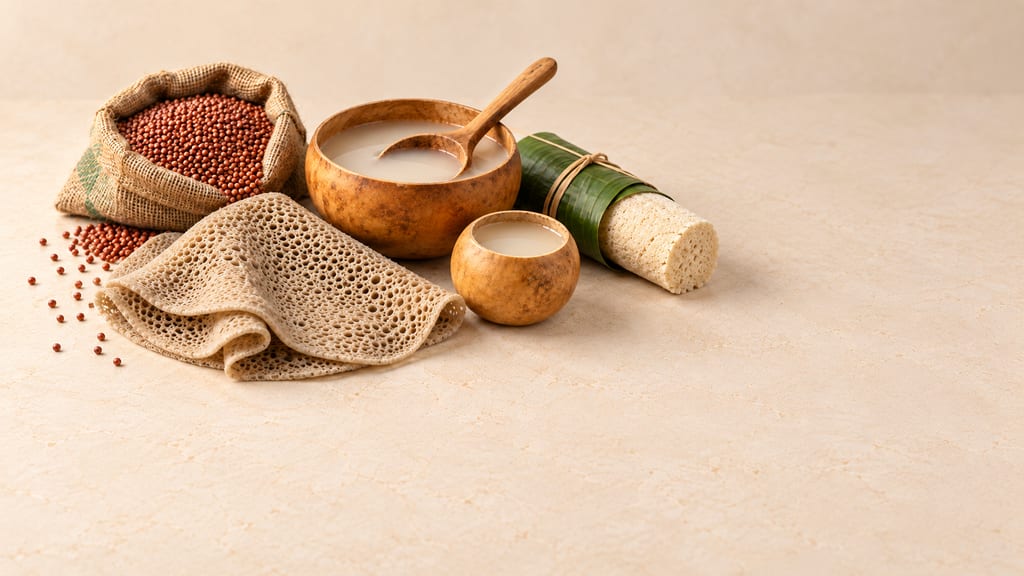
From sour breads and milk to savoury seeds, cassava staples and living beers, African fermentation follows the crop, the community and the work of transformation.
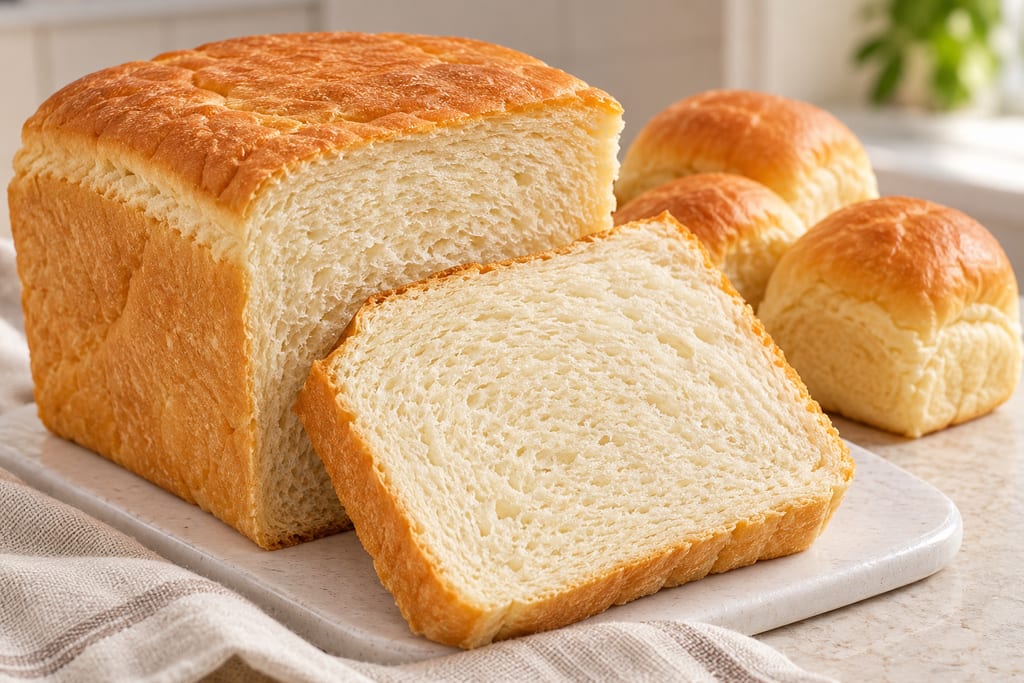
This softer home-style Agege bread uses a scalded flour paste, an enriched yeast dough and a 9×5-inch loaf pan, with rolls from the extra dough.

Eba is a West African dish of cooked gari, stirred into hot water until it forms a thick paste. It is a cooking stage with no new fermentation, served with soup.
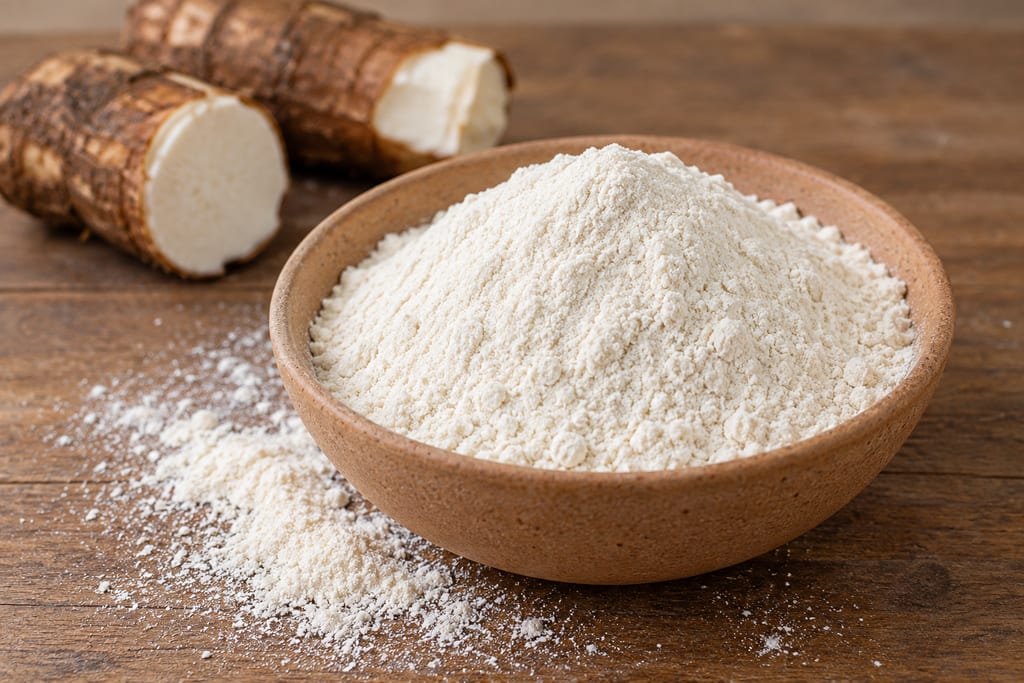
Lafun is a Nigerian fermented cassava flour described in historical accounts. This record documents reported processing stages, not a validated household method or a batch-specific cyanogen and moisture safety endpoint.
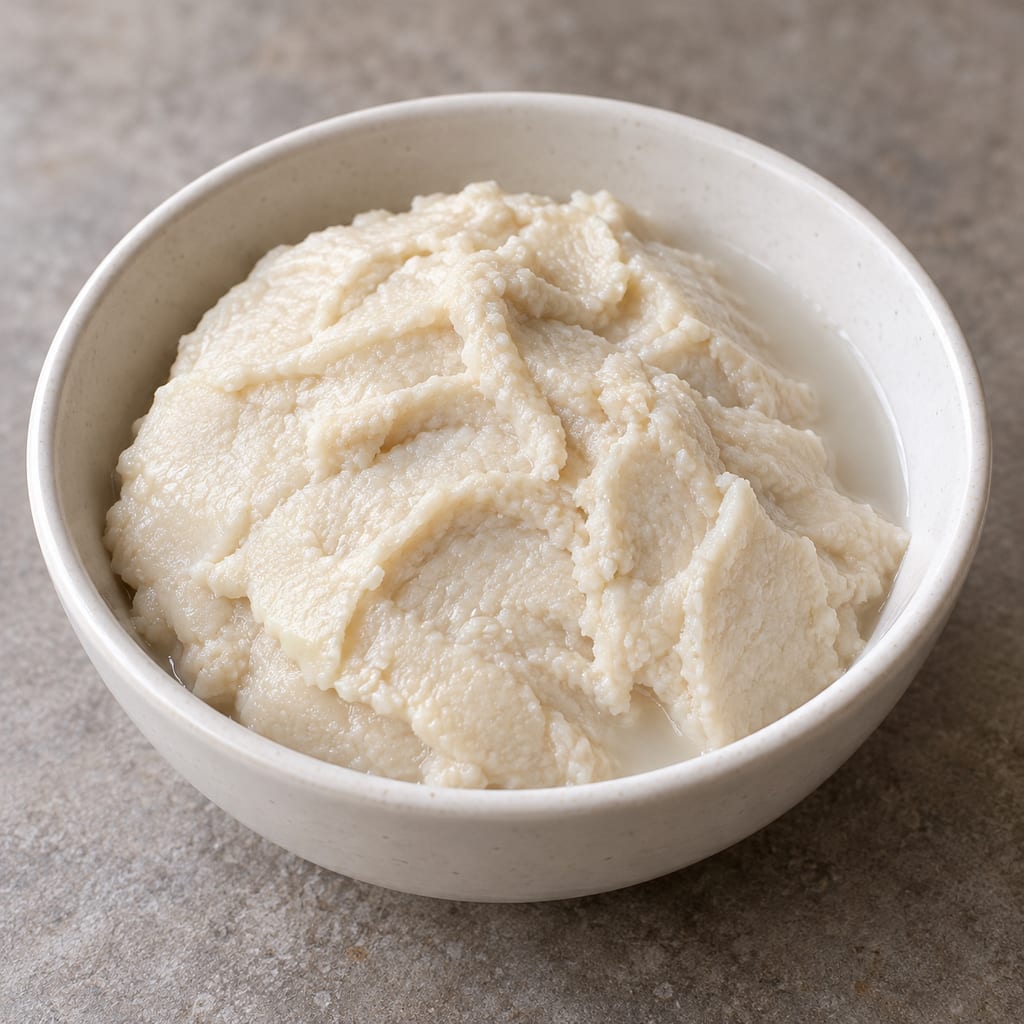
Ogi or akamu is a wet fermented cereal preparation documented in Nigeria and Benin. Grain or maize starch is steeped, milled or sieved, then fermented by process-specific routes; evidence supports no universal method or safety limit.
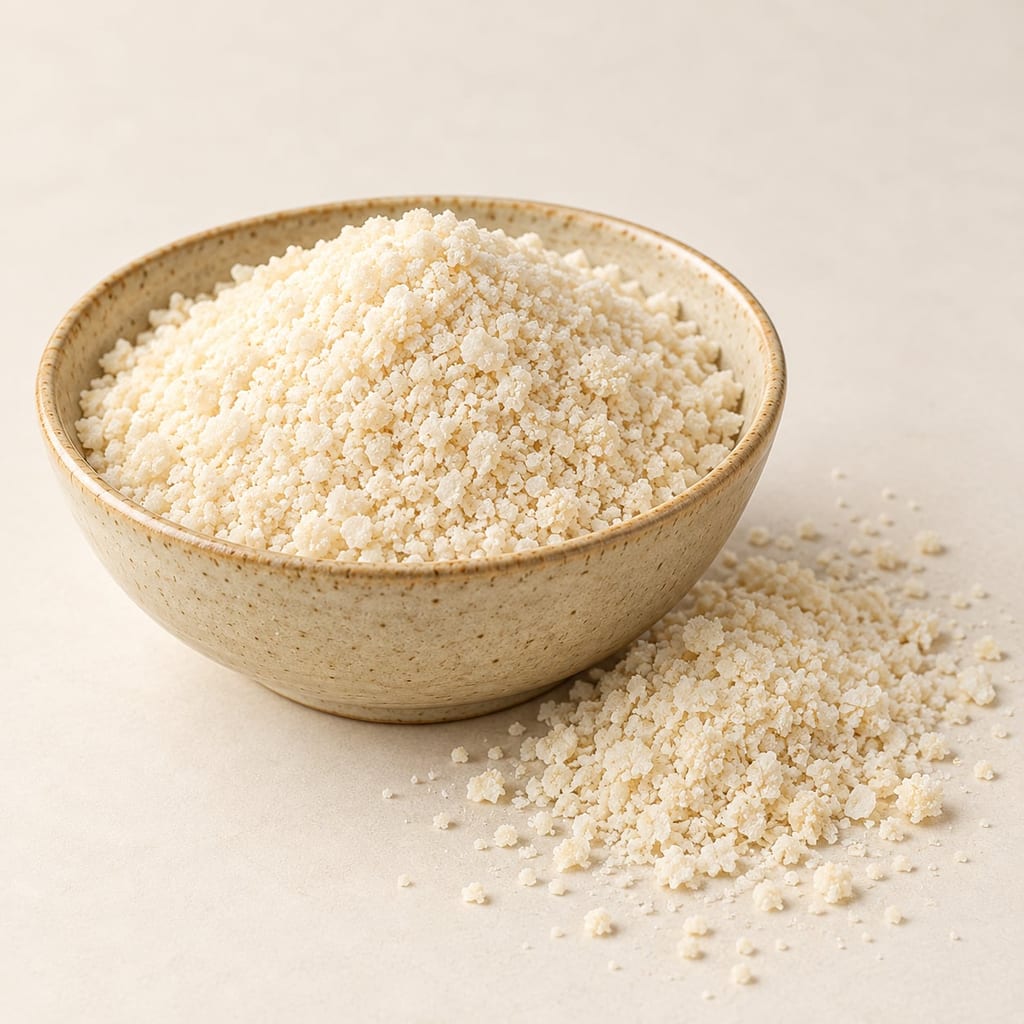
White gari is grated cassava fermented for three days, then pressed, sieved and toasted dry into a coarse West African meal eaten soaked or as a stiff porridge.
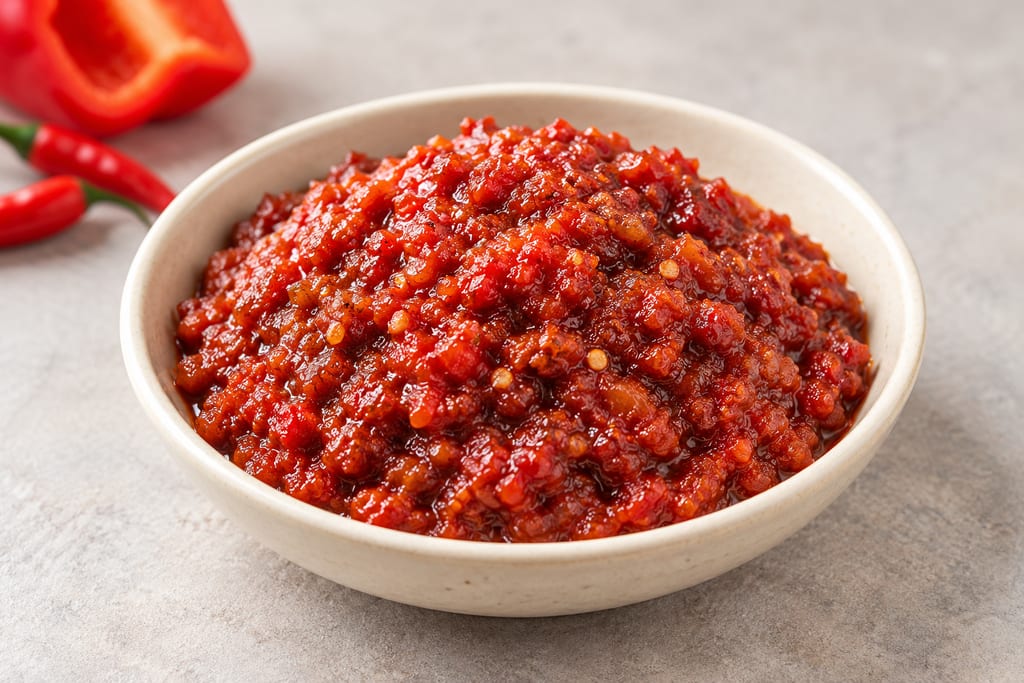
Ata dindin is the Yoruba fried pepper sauce: chillies, red bell pepper and onion blended and cooked down in oil until the oil separates. The same name is also given to a finished stew built on it.
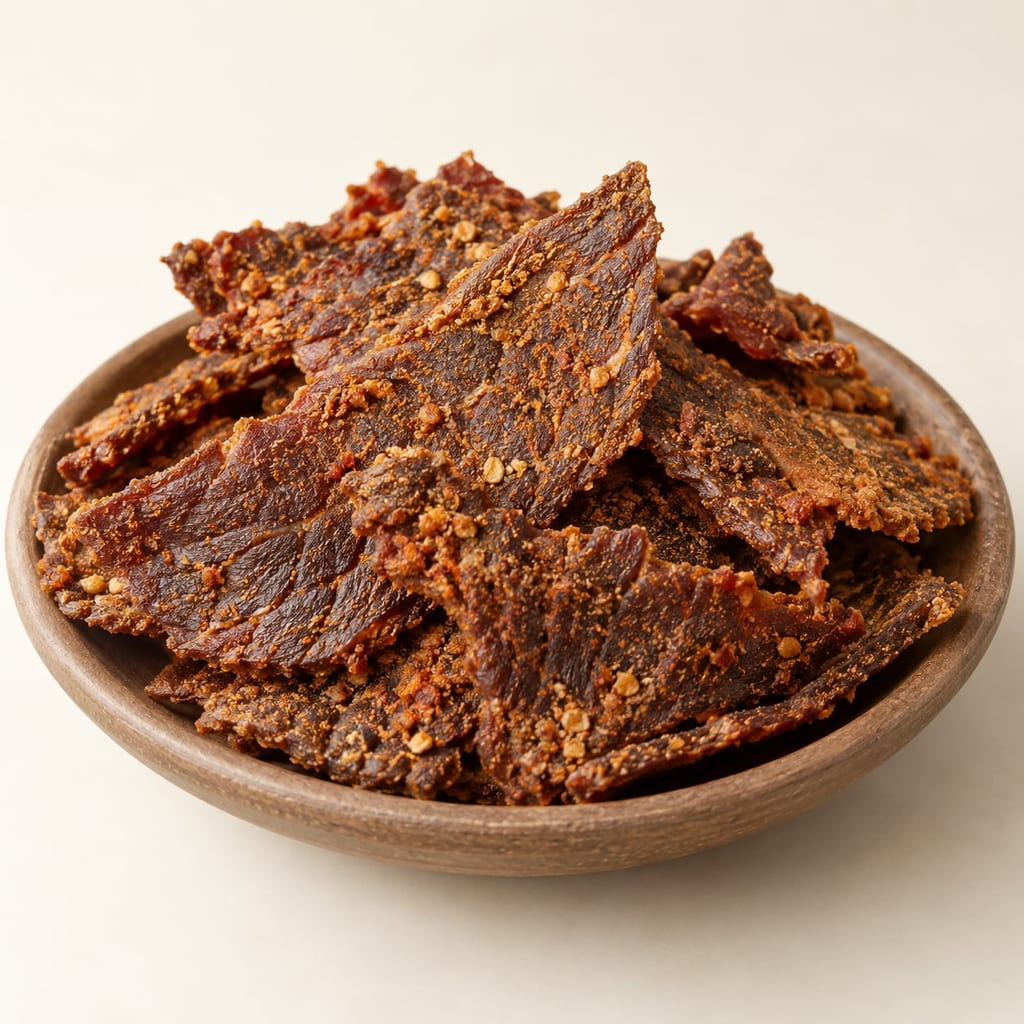
Kilishi is a Hausa-land dried meat from northern Nigeria and southern Niger: thin slices of beef or other meat, dried, coated in a spiced groundnut paste and dried again.
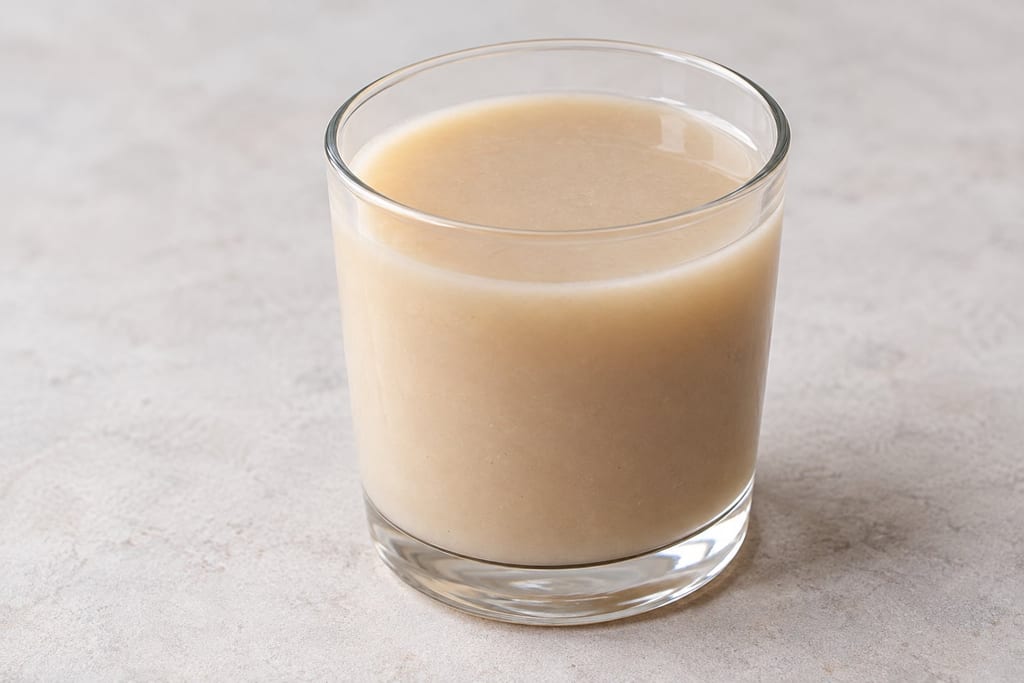
A thick, spiced northern Nigerian drink of pearl millet in which only part of the fermented slurry is cooked, so raw starch and gelatinised starch are recombined.
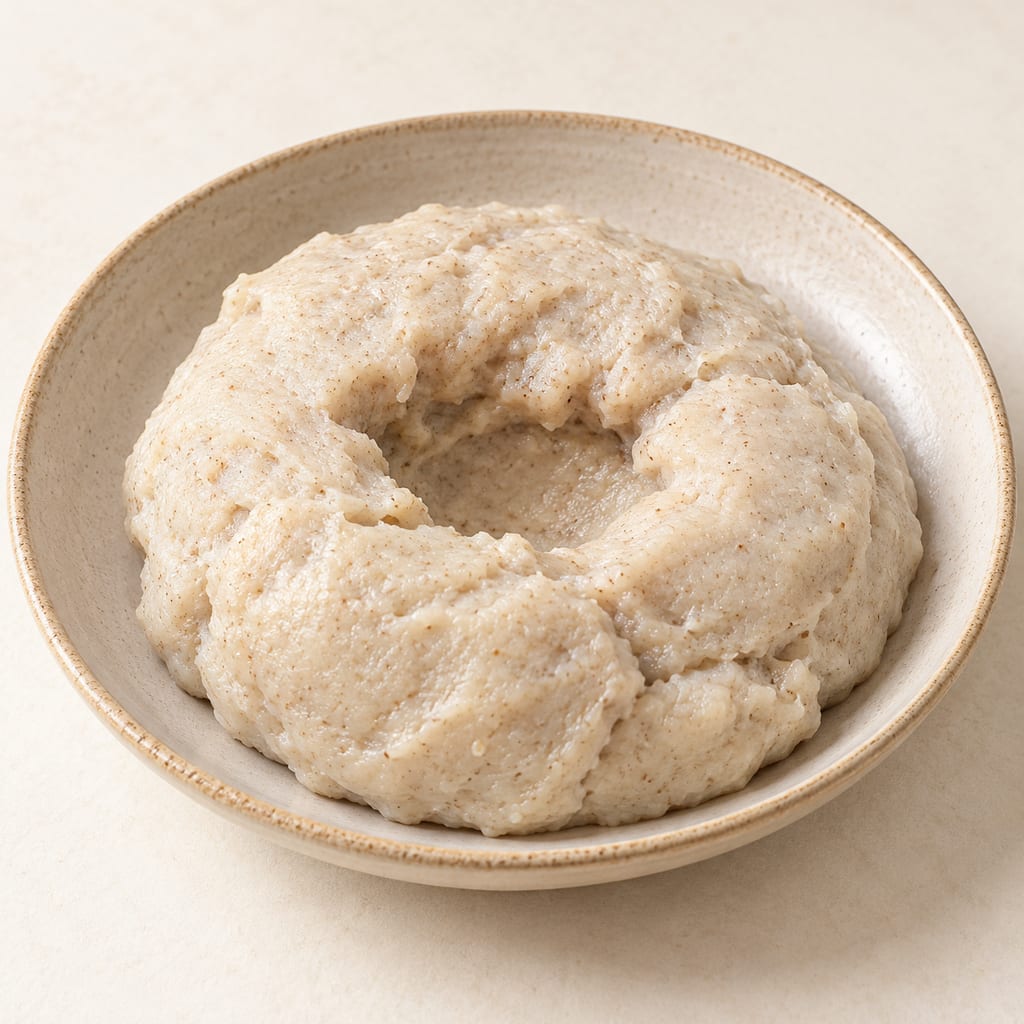
Aceda is Sudan’s firm cereal porridge, commonly made from sorghum and shaped into a smooth mound. Some versions use fermented dough; fermentation is not universal.

Ghanaian sour cassava dough fermented with traditional inoculum and drained during fermentation. It is used as a base for cooked foods such as banku and akple; process variants and safety outcomes differ.

Appam, or hoppers, are South Indian and Sri Lankan rice pancakes made from a fermented coconut-and-rice batter and cooked in a curved pan to a crisp lacy rim and a soft, spongy centre.
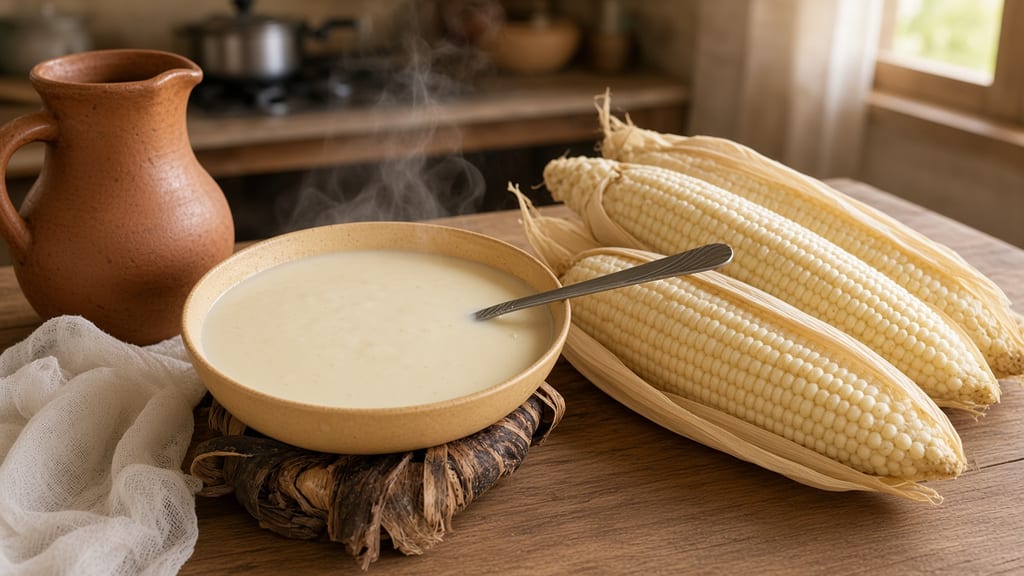
A hot, sour maize drink from Tabasco made from maize that is not lime-cooked. The ground grain sours for half a day, then makers strain it and boil it until thick.
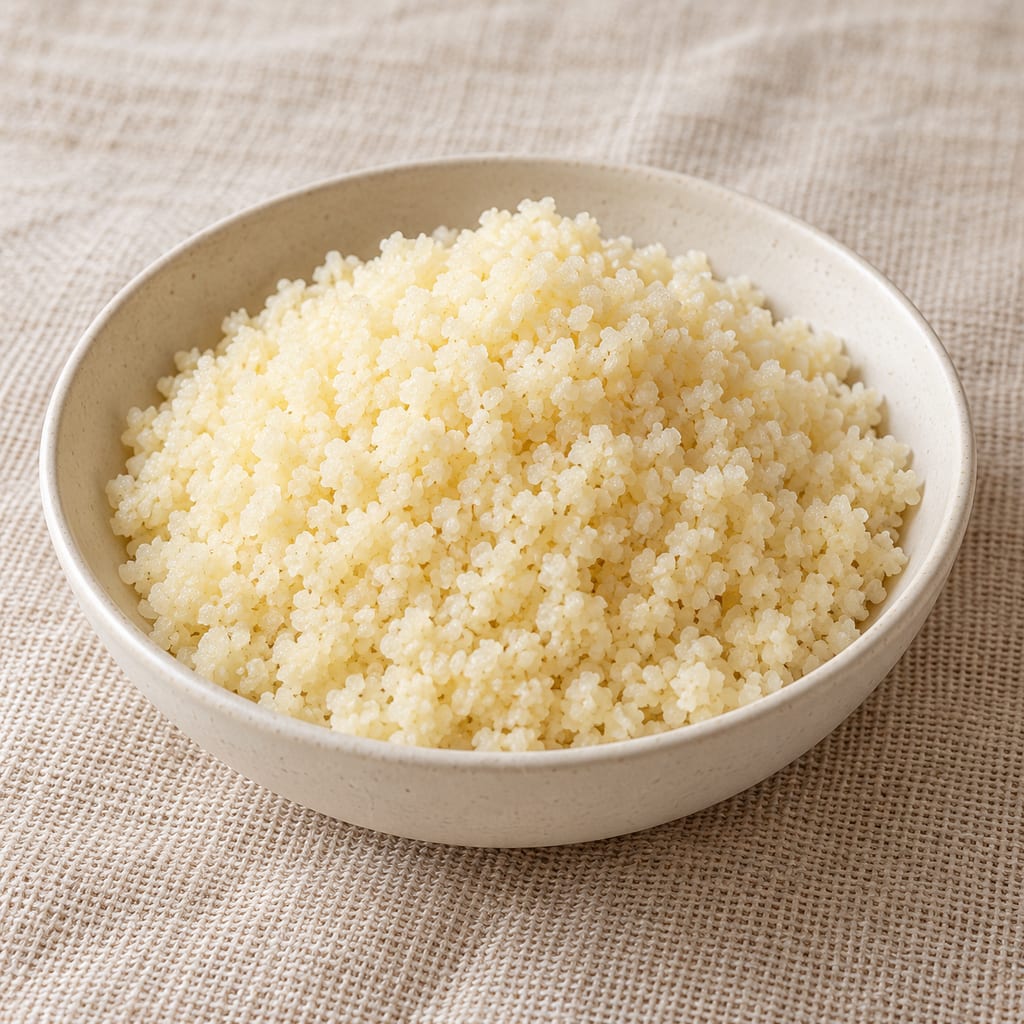
Ivorian cassava semolina: grated cassava is fermented overnight with a traditional inoculum, pressed, sieved into granules, dried and steamed. Documented in a 2006 field study; no sole original process is established.
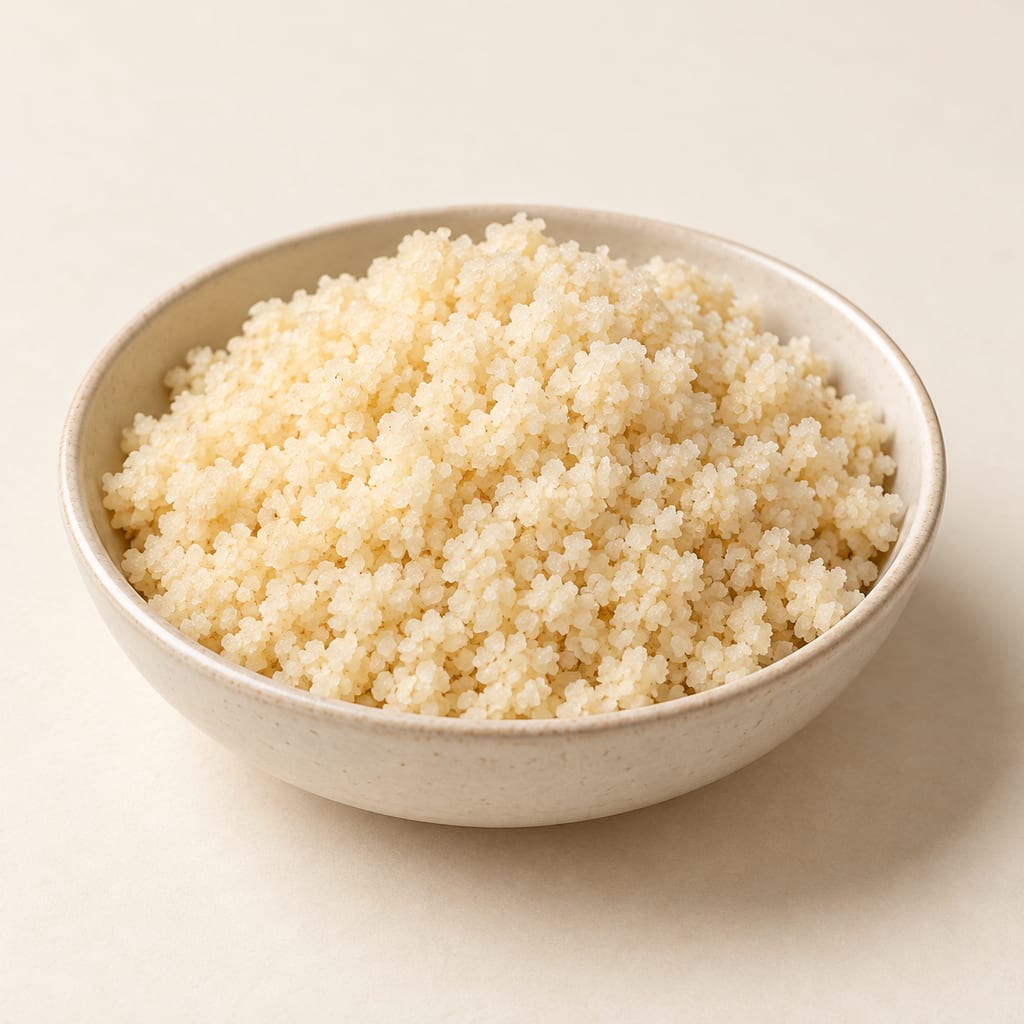
Attiéké is an Ivorian staple of grated cassava fermented with a traditional inoculum, then pressed, sieved, granulated, dried and steamed into fine couscous-like grains.

Crushed or milled barley cooked in water until the starch softens and the mixture thickens, the plainest way a northern household turned stored grain into a meal, here with apple and hazelnut.
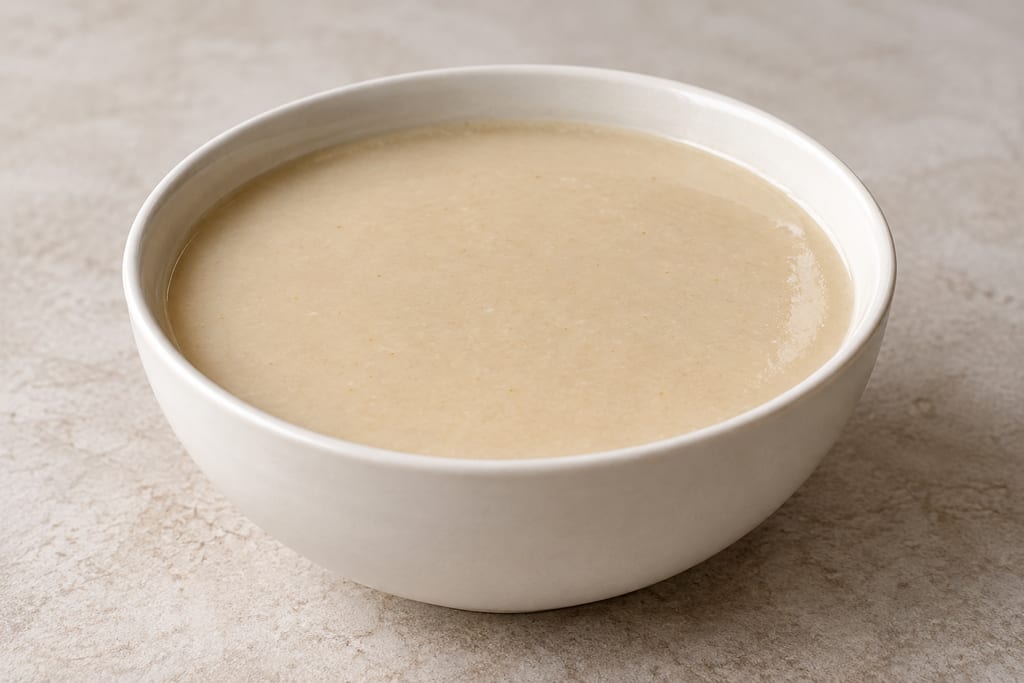
A fermented pearl-millet gruel documented in Ouagadougou, Burkina Faso. Whole grain is soaked, wet-milled and sieved; the settled paste ferments again before it is cooked with its liquid.
No community contributions have been published for this entry yet.
Sign in to contribute. Published comments and photos are free to read.
International Journal of Food Science & Technology / Oxford University PressHistory · Method · Fermentation
Traditional and novel fermented foods and beverages from tropical root and tuber cropsIdentifies abacha (akpu-mmiri) as fermented wet cassava chips of southeastern Nigeria; describes washing, peeling, boiling, lengthwise slicing, soaking for 1–2 days with water changes and washing with fresh water.
Cited in: A cassava food with two meanings; From root to wet or dried strip; What fermentation contributes—and what remains uncertain
Food and Agriculture Organization of the United NationsGeography · Method · Uses
The Igbo traditional food system documented in four states in southern NigeriaDescribes peeling, slicing, boiling, further slicing, soaking for 12–24 hours with at least two water changes; wet abacha may be eaten or dried, and dry abacha is used for African salad.
Cited in: A cassava food with two meanings; From root to wet or dried strip; Regional practice, dried chips and the salad table; Working with Abacha in a modern kitchen
Nigerian Food Journal / ElsevierMethod · Variations · Science
Quality of ‘Abacha’ from Fresh Cassava Roots and Dried ChipsCompares fresh-root and dried-chip preparation; finds processing method and cassava variety affect sensory and chemical measurements. Experimental changes in acidity and hydrogen cyanide are not universal safety validation.
Cited in: From root to wet or dried strip; What fermentation contributes—and what remains uncertain
Journal of Food Quality / WileyRegional use · Variations · Method
Variations in Nutrients Composition of Most Commonly Consumed Cassava (Manihot esculenta) Mixed Dishes in South-Eastern NigeriaCommunity recipe documentation found five Abacha variations, including plain, vegetable, fermented African oil bean seed and cowpea versions, served hot or cold.
Cited in: Regional practice, dried chips and the salad table; Working with Abacha in a modern kitchen
International Institute of Tropical AgricultureHistory · Science · Safety
Cassava in Tropical Africa: A Reference ManualWarns high-cyanide cassava requires thorough processing and identifies Abacha as boiled, shredded and dried cassava slices eaten in Nigerian salads.
Cited in: From root to wet or dried strip; What fermentation contributes—and what remains uncertain; Regional practice, dried chips and the salad table
Food and Agriculture Organization of the United NationsHistory · Geography
The adoption of improved cassava varieties and their potential as livestock feeds in southwestern NigeriaReviews historical accounts placing cassava cultivation on the Nigerian coast by the late seventeenth century and describing its later, gradual adoption in southern Nigeria and Igboland.
Cited in: A cassava food with two meanings; Working with Abacha in a modern kitchen
Agricultural History Review / British Agricultural History SocietyHistory · Geography
The spread of cassava (manioc) in Igboland, south-east Nigeria: a reappraisal of the evidenceDiscusses historical and oral evidence for cassava’s spread in Igboland, its relationship to yam-centered foodways, and the debated nature of its introduction and adoption.
Cited in: A cassava food with two meanings; Working with Abacha in a modern kitchen
Journal of Sustainability / MDPIGeography · Cultural use
Cultural Influence of Local Food Heritage on Sustainable DevelopmentField research records Abacha as Enugu food heritage, made with dried shredded cassava, fermented oil bean seed and spices, with variation in methods and presentation; mentions several communities.
Cited in: A cassava food with two meanings; Regional practice, dried chips and the salad table; Working with Abacha in a modern kitchen
World News of Natural SciencesFermentation · Safety
Microorganism Associated with Cassava Fermentation for Abacha Product Sold in Owerri, Imo StateA limited study of processing water from four Owerri farms reported several bacterial and fungal isolates, including Lactobacillus spp. and Escherichia coli, and called for hygienic handling.
Cited in: From root to wet or dried strip; What fermentation contributes—and what remains uncertain