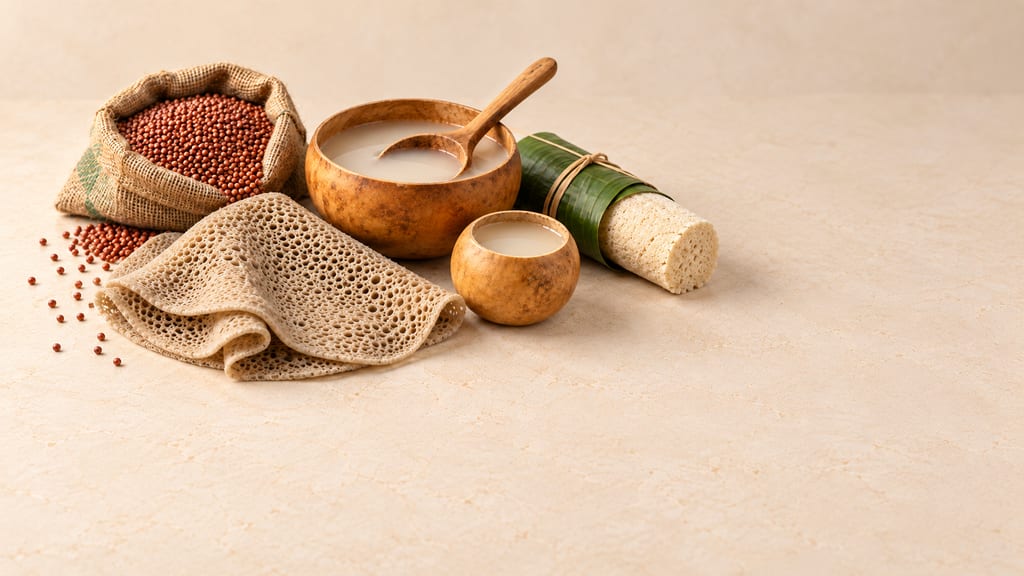
African fermented foods, drinks and preservation
From sour breads and milk to savoury seeds, cassava staples and living beers, African fermentation follows the crop, the community and the work of transformation.
 FermenteaWhere food goes to change
elubo lafun · Láfún · lanfun
Lafun is a Nigerian fermented cassava flour described in historical accounts. This record documents reported processing stages, not a validated household method or a batch-specific cyanogen and moisture safety endpoint.
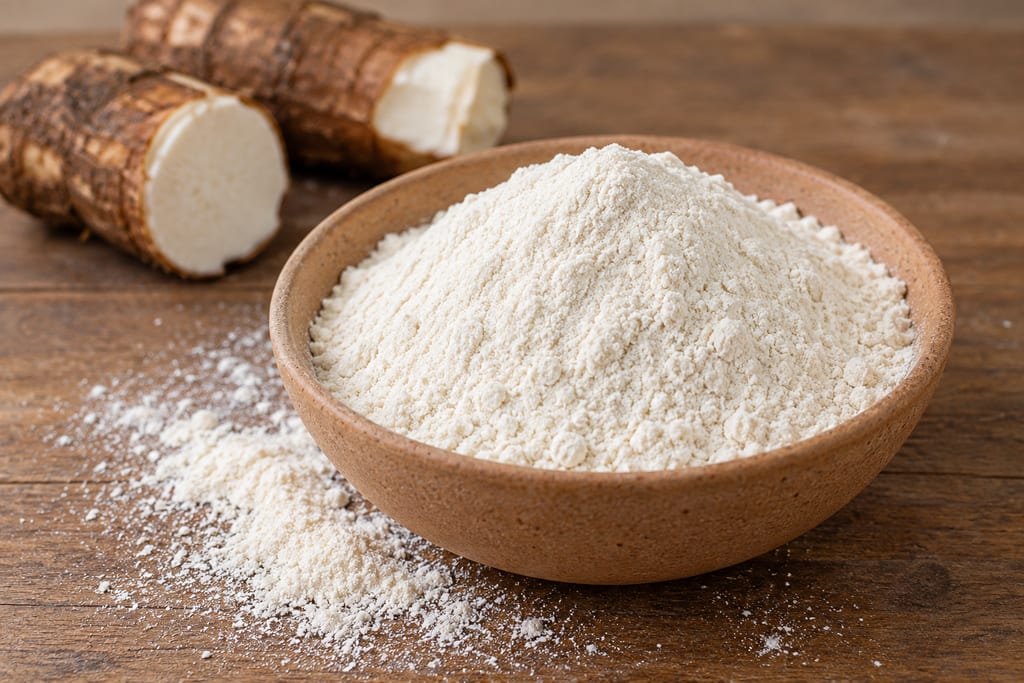
Lafun is fermented cassava processed into dried flour. The IITA manual documents its production in southwestern Nigeria and reports steeping roots in drums, pots or natural ponds, followed by dewatering, pulverizing, drying and milling. The account is useful for understanding the documented process but does not provide a validated household procedure or batch-specific safety endpoint.
The manual reports a minimum of three days for fermentation and one to three days for weather-dependent drying. FAO describes a separate five-day soaking variant and reports that a lafun sample still contained 19.6 mg/kg total HCN after 96 hours of drying. These observations are not a safety guarantee and must not be combined into a recommended home schedule. The IITA manual also records a quality variant that peels roots before steeping and grates them more coarsely.
Lafun ends as flour. It may later be cooked with boiling water into a stiff paste, but this page documents the flour-processing subject rather than providing validated directions for making a batch for consumption. Moist root doughs and other cassava preparations use distinct process routes.
The IITA account names drums, pots or natural ponds for steeping; bags and stones for dewatering; mats, concrete surfaces or rocks for drying; and a mill for flour. It provides no root-to-water ratio, batch size or flour yield. The weather-dependent drying duration is not a measurable moisture endpoint.
IITA warns that drying whole chunks can leave the interior wetter than the surface suggests and notes hygiene problems when drying on the ground. These observations make open drying and storage a concern, but the manual does not provide a modern validated household storage limit. The evidence supports describing equipment and process stages; it does not support a claim that visible dryness establishes shelf stability.
Traditional lafun fermentation is spontaneous. A study that sampled it reported several groups of bacteria and yeasts, among them Bacillus cereus group isolates, some carrying toxin-associated genes. The presence of those genes does not show that toxin is produced in a finished food, and a study of sampled batches cannot stand for every producer.
Researchers have also looked for a defined starter. One study screened 22 microorganisms for their effect on cassava used for lafun and reported the yeast Saccharomyces cerevisiae 2Y48P22 as promising for softening under the study conditions; it produced pectinase in a model system. That is a research isolate, not a traditional or widely available household starter. A later report on lafun production by a medium-scale processor in Benin mentions the strain in its introduction, but the strains in its methods table and trial combinations are others, and the report does not make the yeast's role clear. A softening result is also not a safety result.
Cassava contains cyanogenic glycosides that can release hydrogen cyanide. FSANZ advises peeling and fully cooking roots before eating, but notes that cyanogen reductions from cooking vary and no cooking method alone reliably establishes a safe concentration. Its published examples of soaking and drying report percentage reductions, not a batch-specific endpoint for this lafun process.
FAO's lafun table reports 19.6 mg/kg total HCN for a sample after five days soaking and 96 hours drying. The Codex Standard for Edible Cassava Flour sets a maximum of 10 mg/kg for flour intended for direct human consumption. The documented IITA process gives a minimum fermentation period and a weather-dependent drying time, but no analytical result establishing that its output meets that benchmark. Do not use the sequence on this page as household instructions or consume flour made from it unless qualified testing confirms compliance with the applicable local standard.
A 2013 survey of lafun and processing water in Ogun and Oyo reported coliforms in sampled water and microbial contamination in some sampled flour. It demonstrates hazards at the observed sites and markets, not a universal property of lafun. The records do not establish validated home hygiene, moisture or storage controls for this flour.
Lafun is a fermented cassava flour associated with Nigeria, especially Yoruba communities in the southwest. The IITA manual and FAO account describe regional processing variants; neither establishes a first date.
Scaling: source batch only
Cassava contains cyanogenic glycosides that can release hydrogen cyanide; the references do not establish a finished-product assay for each lafun batch.
Hazard sourceA Nigerian lafun survey found coliforms in sampled processing water and organisms including E. coli, Staphylococcus aureus and Aspergillus in surveyed products; this documents hazards in those samples, not every producer.
Hazard sourceA study sampling traditional lafun fermentation reported Bacillus cereus group isolates carrying some toxin-associated genes. Carrying a gene does not show toxin production in a finished food; the finding is a reason for care, not a measured risk for a given batch.
Hazard sourceThis documented sequence has no validated household cyanogen endpoint. FSANZ says cyanogen reductions vary and that cooking alone does not reliably establish a safe level. For edible cassava flour, Codex specifies no more than 10 mg/kg total hydrocyanic acid; that is a laboratory criterion, not a sensory or time-based home endpoint. Do not consume flour from this undocumented batch method unless qualified testing confirms compliance with the applicable local standard. Use compliant commercially prepared lafun and follow its label directions.
Control sourceDo not use the traditional time ranges in this record as household processing directions or as proof that cyanogenic glycosides have been reduced to a safe level.
Do not judge cyanogen removal by smell, bitterness, sourness, color, texture or appearance.
Do not consume flour made by this documented process unless finished flour has been analytically checked against the applicable safety standard; Codex's edible-cassava-flour maximum is 10 mg/kg total hydrocyanic acid.
The IITA and FAO references describe lafun as a Nigerian cassava product; they do not establish one place of origin.
IITA identifies production in southwestern states including Lagos, Ogun, Ondo and Oyo; FAO associates lafun with Yoruba communities in western Nigeria. This is a regional association, not a single origin.
A university project report documents lafun production by a medium-scale processor in Benin; it does not claim Benin as an origin.
From sour breads and milk to savoury seeds, cassava staples and living beers, African fermentation follows the crop, the community and the work of transformation.
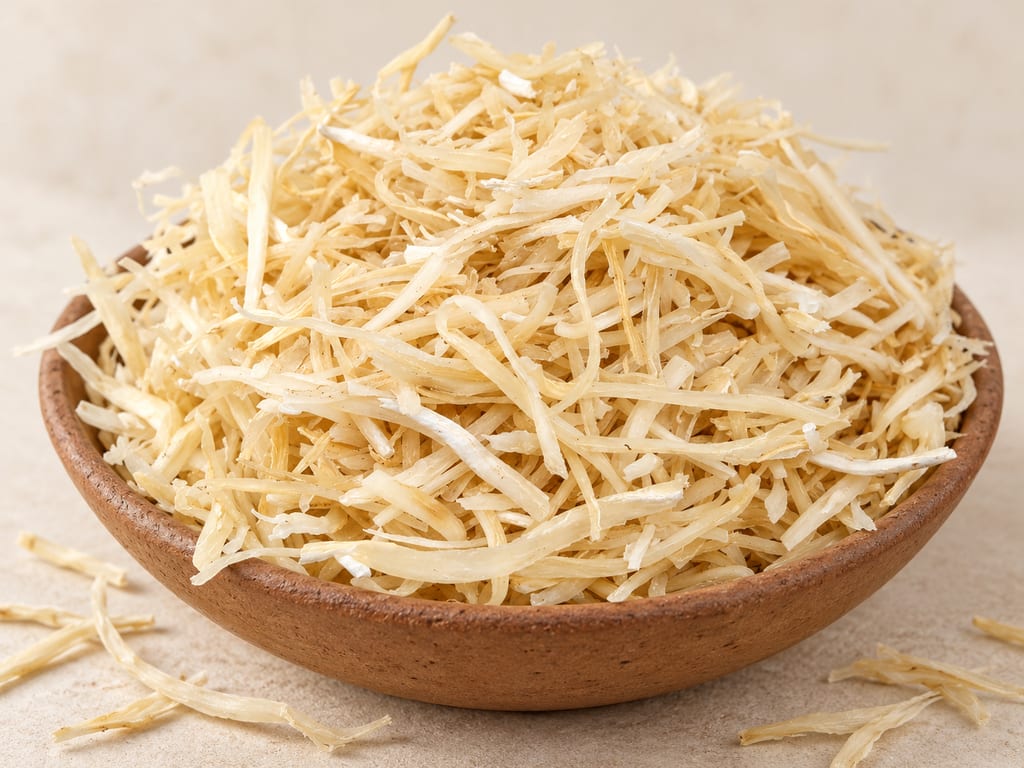
Abacha is a fermented cassava-strip preparation from southeastern Nigeria, sold wet or dried and later rehydrated for meals such as African salad.
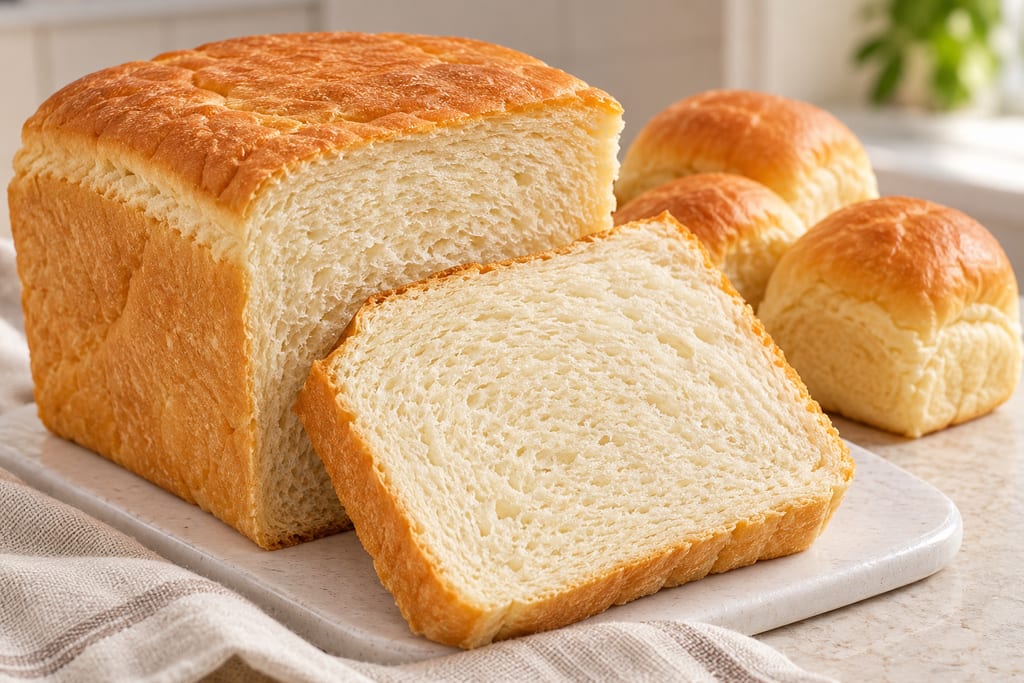
This softer home-style Agege bread uses a scalded flour paste, an enriched yeast dough and a 9×5-inch loaf pan, with rolls from the extra dough.

Eba is a West African dish of cooked gari, stirred into hot water until it forms a thick paste. It is a cooking stage with no new fermentation, served with soup.
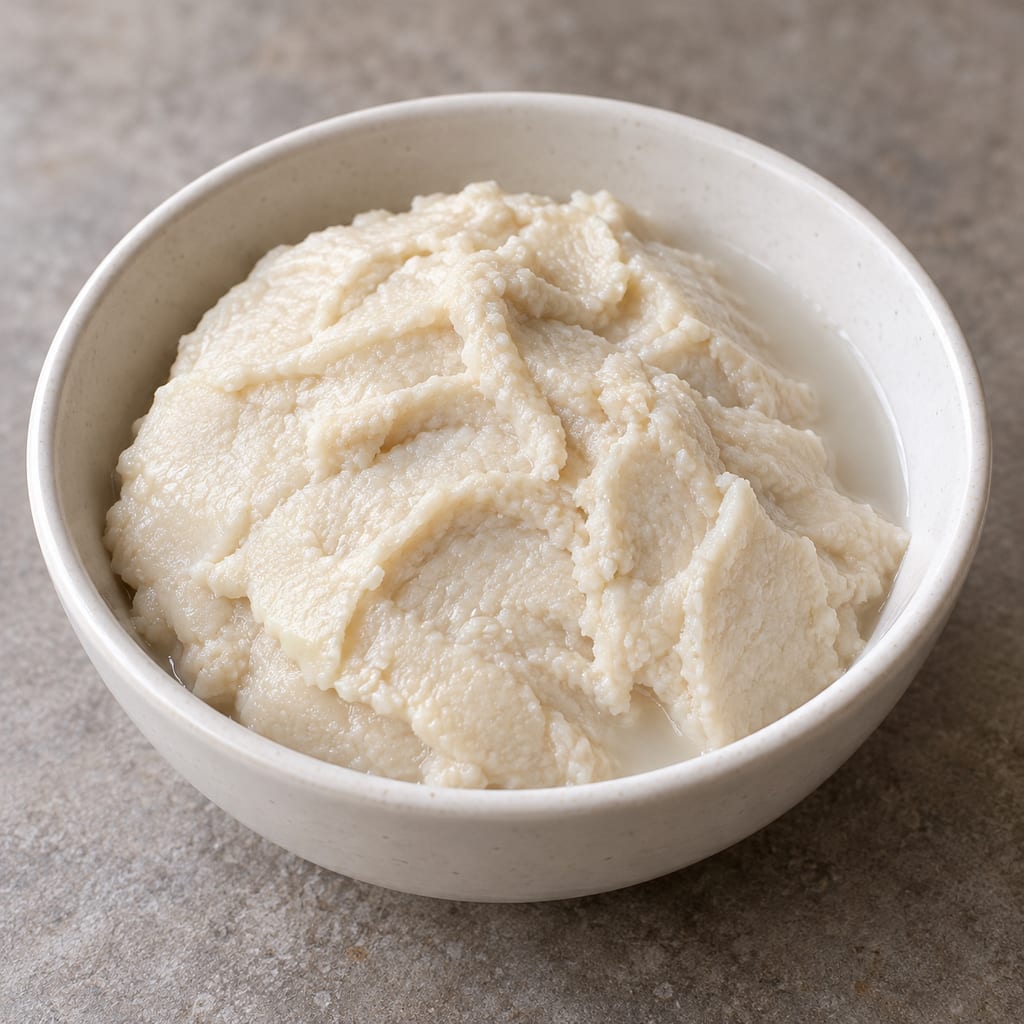
Ogi or akamu is a wet fermented cereal preparation documented in Nigeria and Benin. Grain or maize starch is steeped, milled or sieved, then fermented by process-specific routes; evidence supports no universal method or safety limit.
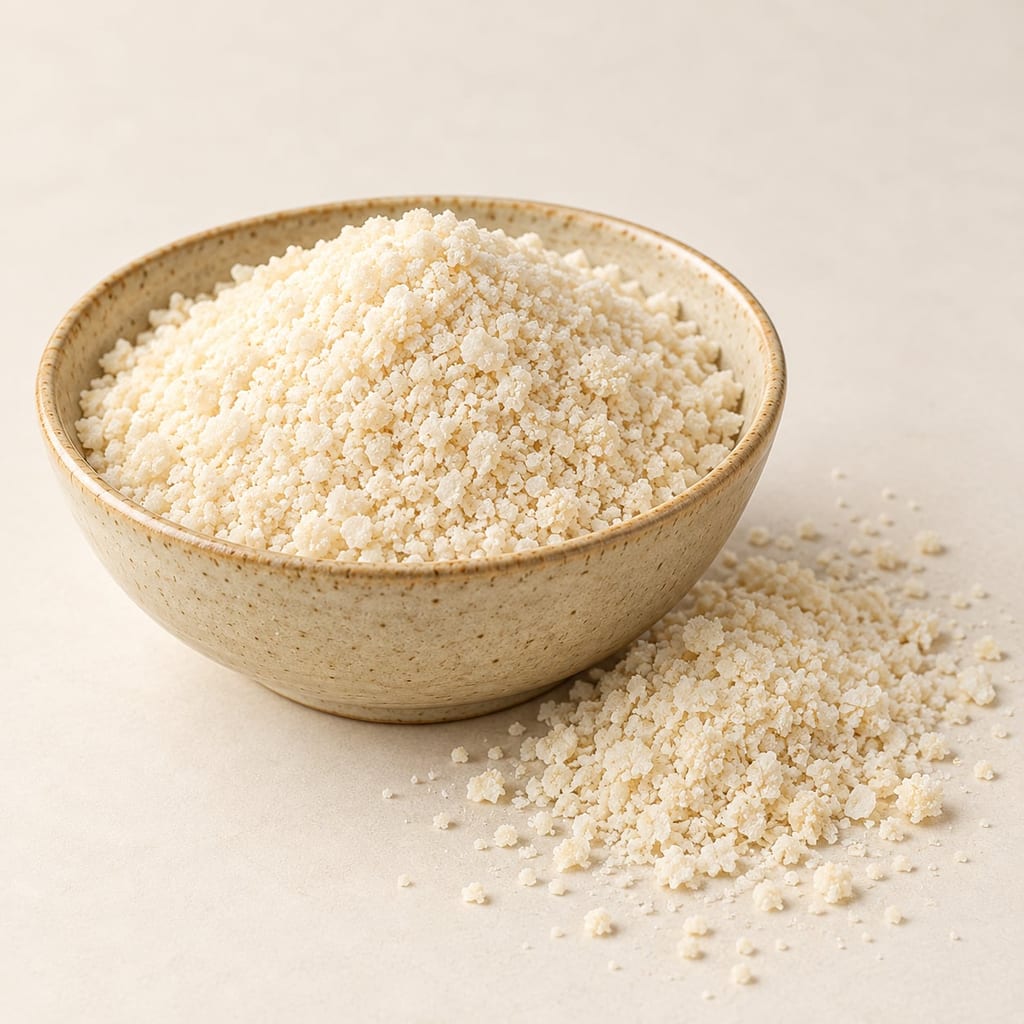
White gari is grated cassava fermented for three days, then pressed, sieved and toasted dry into a coarse West African meal eaten soaked or as a stiff porridge.
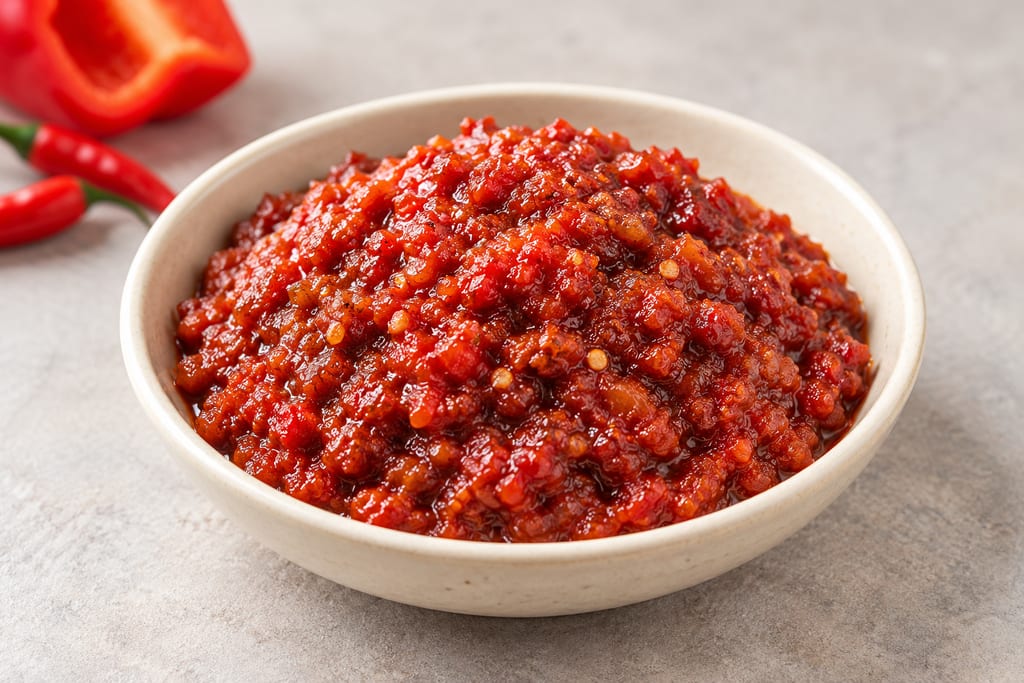
Ata dindin is the Yoruba fried pepper sauce: chillies, red bell pepper and onion blended and cooked down in oil until the oil separates. The same name is also given to a finished stew built on it.
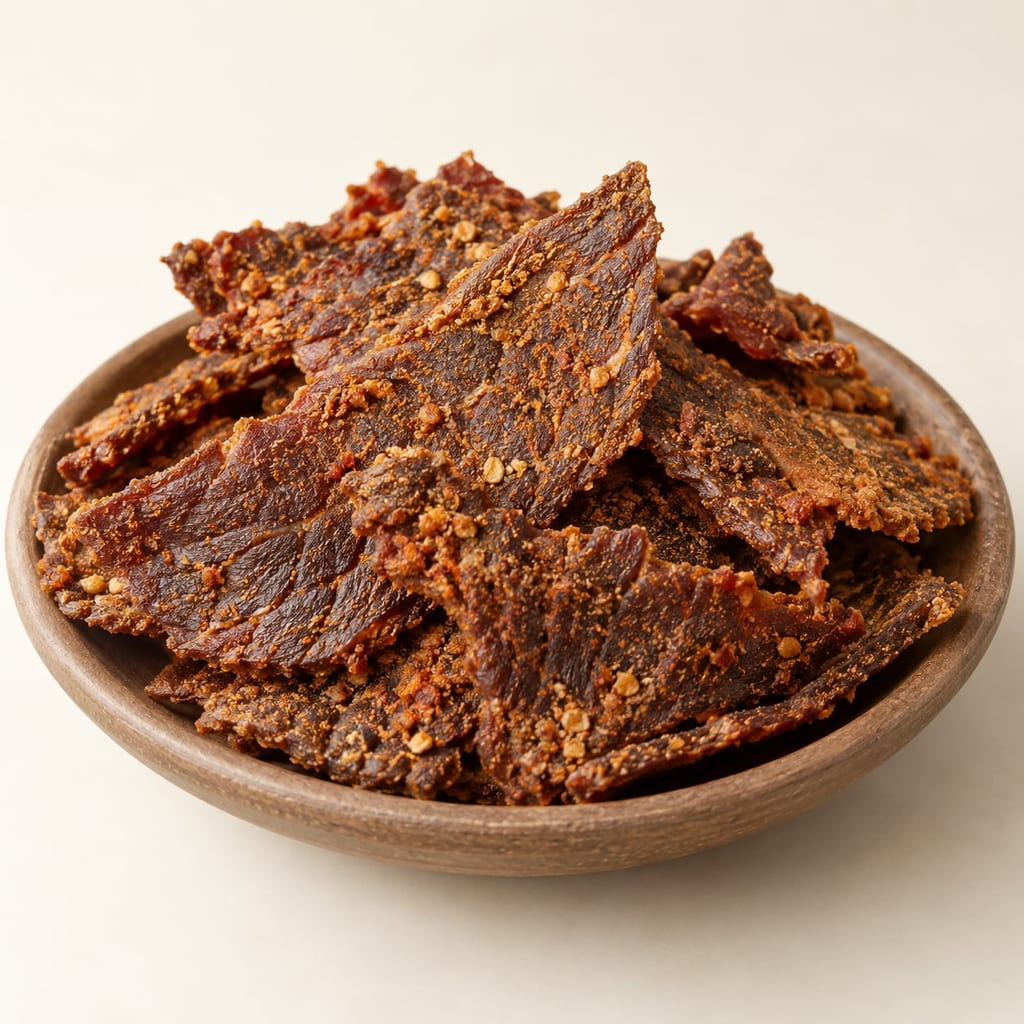
Kilishi is a Hausa-land dried meat from northern Nigeria and southern Niger: thin slices of beef or other meat, dried, coated in a spiced groundnut paste and dried again.

A thick, spiced northern Nigerian drink of pearl millet in which only part of the fermented slurry is cooked, so raw starch and gelatinised starch are recombined.
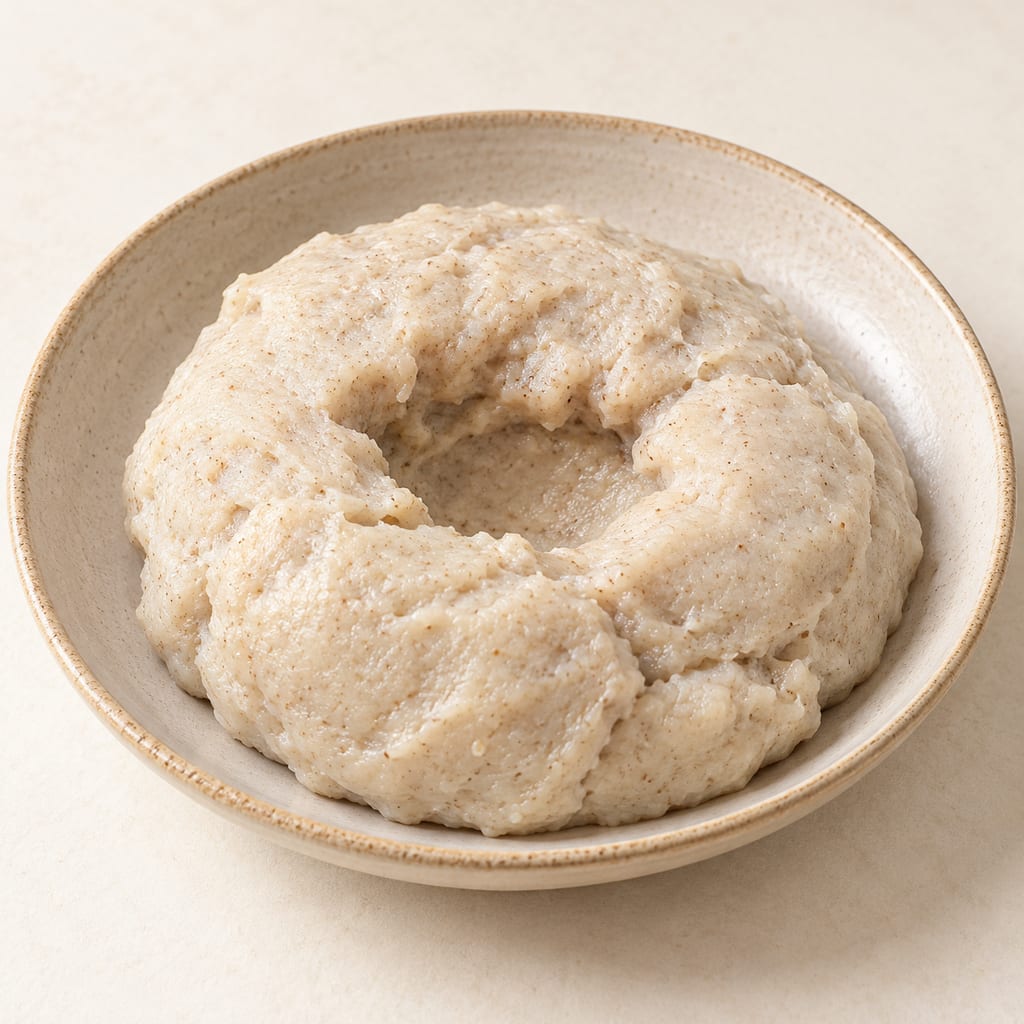
Aceda is Sudan’s firm cereal porridge, commonly made from sorghum and shaped into a smooth mound. Some versions use fermented dough; fermentation is not universal.

Ghanaian sour cassava dough fermented with traditional inoculum and drained during fermentation. It is used as a base for cooked foods such as banku and akple; process variants and safety outcomes differ.

Appam, or hoppers, are South Indian and Sri Lankan rice pancakes made from a fermented coconut-and-rice batter and cooked in a curved pan to a crisp lacy rim and a soft, spongy centre.
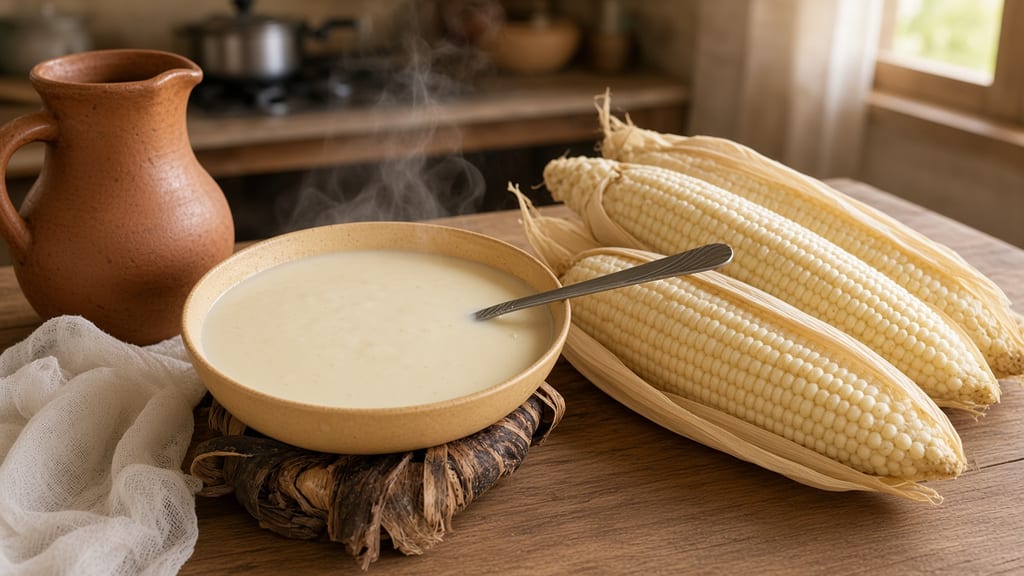
A hot, sour maize drink from Tabasco made from maize that is not lime-cooked. The ground grain sours for half a day, then makers strain it and boil it until thick.
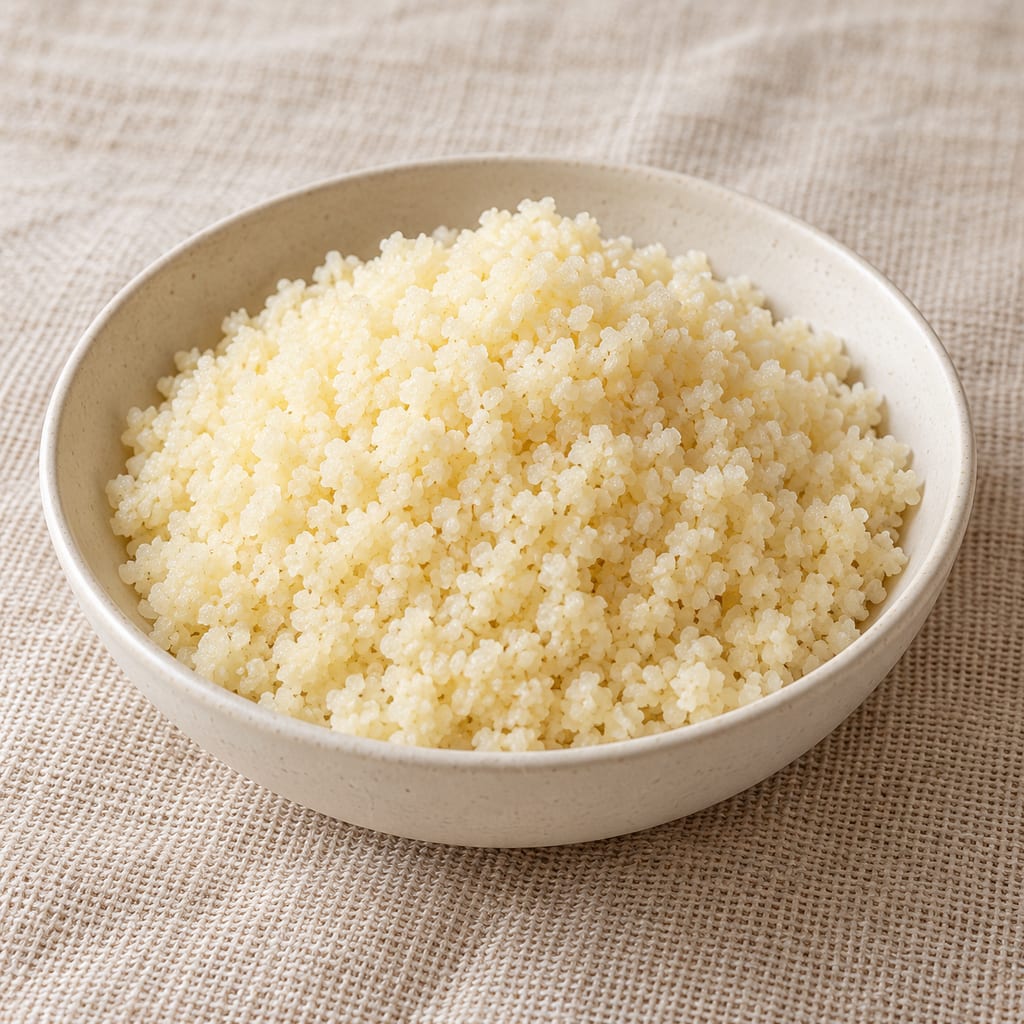
Ivorian cassava semolina: grated cassava is fermented overnight with a traditional inoculum, pressed, sieved into granules, dried and steamed. Documented in a 2006 field study; no sole original process is established.
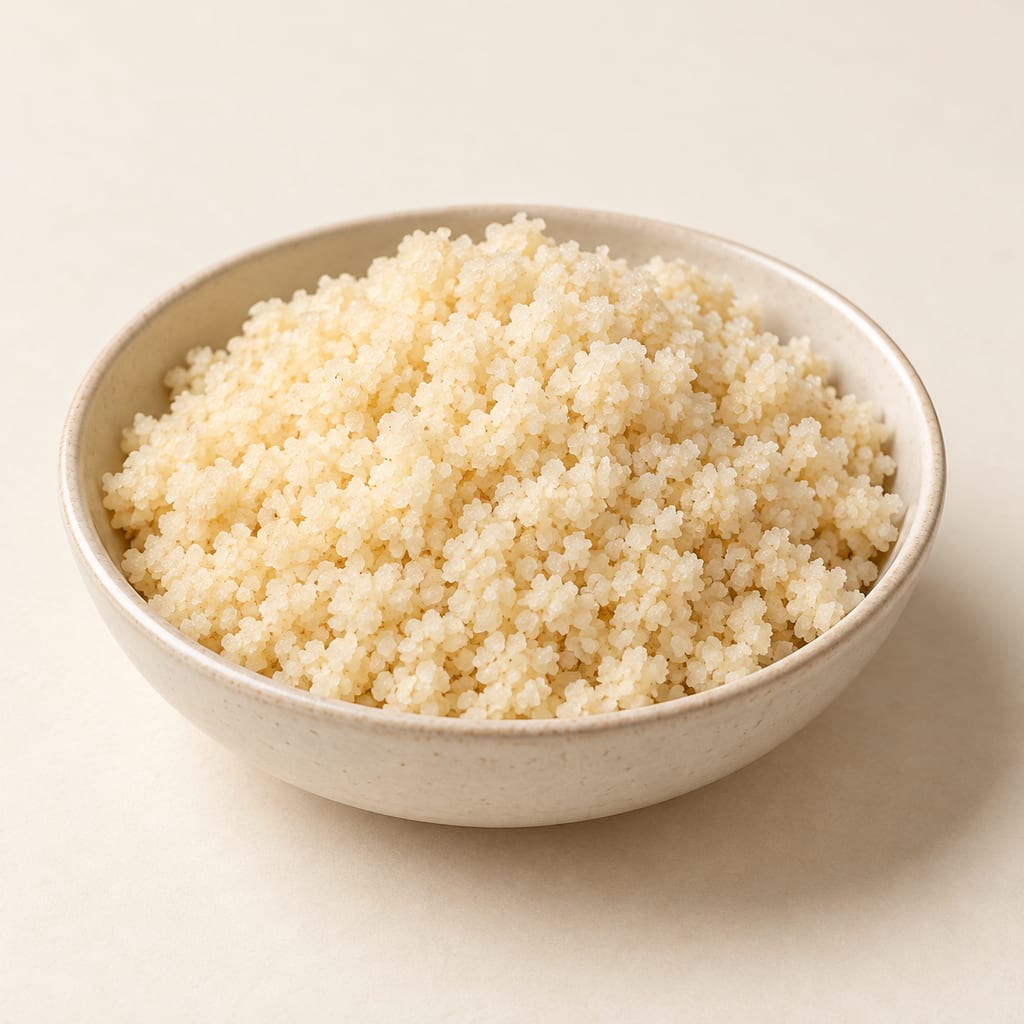
Attiéké is an Ivorian staple of grated cassava fermented with a traditional inoculum, then pressed, sieved, granulated, dried and steamed into fine couscous-like grains.

Crushed or milled barley cooked in water until the starch softens and the mixture thickens, the plainest way a northern household turned stored grain into a meal, here with apple and hazelnut.
A fermented pearl-millet gruel documented in Ouagadougou, Burkina Faso. Whole grain is soaked, wet-milled and sieved; the settled paste ferments again before it is cooked with its liquid.
No community contributions have been published for this entry yet.
Sign in to contribute. Published comments and photos are free to read.
International Institute of Tropical AgricultureMethod · Geography · History
Cassava in Tropical Africa: A Reference ManualIITA describes lafun preparation in southwestern Nigeria: roots are washed, steeped in water for a minimum of three days, peeled after fermentation, dewatered in bags under stones, pulverized, sun-dried in thin layers for one to three days depending on weather, and milled.
It names drums, pots and natural ponds as steeping vessels and mats, concrete surfaces or rocks as drying surfaces.
A quality variant peels before steeping and uses a coarser grater; IITA warns traditional flour can retain excess internal moisture.
Cited in: Flour from softened cassava; Equipment, drying and limits
Food and Agriculture Organization of the United NationsMethod · Geography · History · Safety
Traditional Post-harvest Technology of Perishable Tropical Staples: Chapter 5, CassavaFAO associates lafun with Yoruba communities in western Nigeria and describes a variant soaking unpeeled roots for about five days before drying and milling.
Cassava cyanogenic glycosides can release hydrogen cyanide; processed cassava can retain bound cyanide, and bitterness does not precisely indicate cyanide content.
The source distinguishes lafun from other cassava flour, paste and gari processes.
Cited in: Flour from softened cassava
Food Standards Australia New ZealandSafety
Cassava and bamboo shootsCassava contains cyanogenic glycosides; roots must be peeled and fully cooked before eating.
Cooking alone has a variable effect and is not a reliable sole detoxification method.
FSANZ reports its examples of 3 days soaking followed by 3 days drying reduce cyanogenic glycosides by around 86%, and stresses that reduction varies; it does not establish a safe batch endpoint for this lafun recipe.
Cited in: Cassava and handling hazards
Journal of Food QualitySafety · Geography
Microbiological Safety Assessment of Fermented Cassava Flour “Lafun” Available in Ogun and Oyo States of NigeriaA 2013 survey sampled lafun and processing water in Ogun and Oyo; coliforms were found in sampled process water and E. coli, Staphylococcus aureus and Aspergillus were among organisms reported in samples.
Survey findings describe the sampled processors and markets, not all Nigerian lafun.
Cited in: Cassava and handling hazards
International Journal of Food Microbiology / PubMedScience · Safety
The microbiota of Lafun, an African traditional cassava food productSampling of traditional lafun fermentation reported several bacterial and yeast groups, including Bacillus cereus group isolates with some toxin-associated genes.
Cited in: What lives in the fermentation
Journal of Applied Microbiology / PubMedScience
Development of starter culture for improved processing of Lafun, an African fermented cassava food productA study screened 22 microorganisms for effects on cassava used for lafun; the yeast Saccharomyces cerevisiae 2Y48P22 was reported promising for softening under the study conditions and produced pectinase in a model system.
Cited in: What lives in the fermentation
University of Abomey-Calavi / GreenGrowth projectScience · Geography
The use of starter cultures from the UAC culture collection to ferment cassava for lafun production by Alitech Industries, a medium scale food processing company in BeninA Benin project report documents a lafun production setting; it mentions strain 2Y48P22 in its introduction, but its methods table and trial combinations list other strains and do not make the yeast's role clear.
Cited in: What lives in the fermentation
FAO/WHO Codex Alimentarius CommissionSafety
Codex Standard for Edible Cassava Flour (CXS 176-1989)The standard defines edible cassava flour as intended for direct human consumption and sets total hydrocyanic acid at no more than 10 mg/kg.
The standard describes soaking bitter cassava tubers in water for a few days before drying, but does not validate this recipe’s specific process or establish its batch endpoint.
The Codex Standard sets maximum total hydrocyanic acid at 10 mg/kg for edible cassava flour intended for direct human consumption.
Cited in: Flour from softened cassava; Cassava and handling hazards
Food and Agriculture Organization of the United NationsSafety · Method
Roots, tubers, plantains and bananas in human nutrition: Toxic substances and antinutritional factorsFAO describes cyanide release during cassava tissue disruption, soaking and fermentation, pressing, and drying, while warning that residual cyanide can remain.
The FAO table reports lafun at 19.6 mg/kg total HCN after five days soaking and 96 hours drying; processing time alone did not show that the product met the edible-flour safety limit.
Cited in: Flour from softened cassava; Cassava and handling hazards