
African fermentation intake
African fermented foods, drinks and preservation
From sour breads and milk to savoury seeds, cassava staples and living beers, African fermentation follows the crop, the community and the work of transformation.
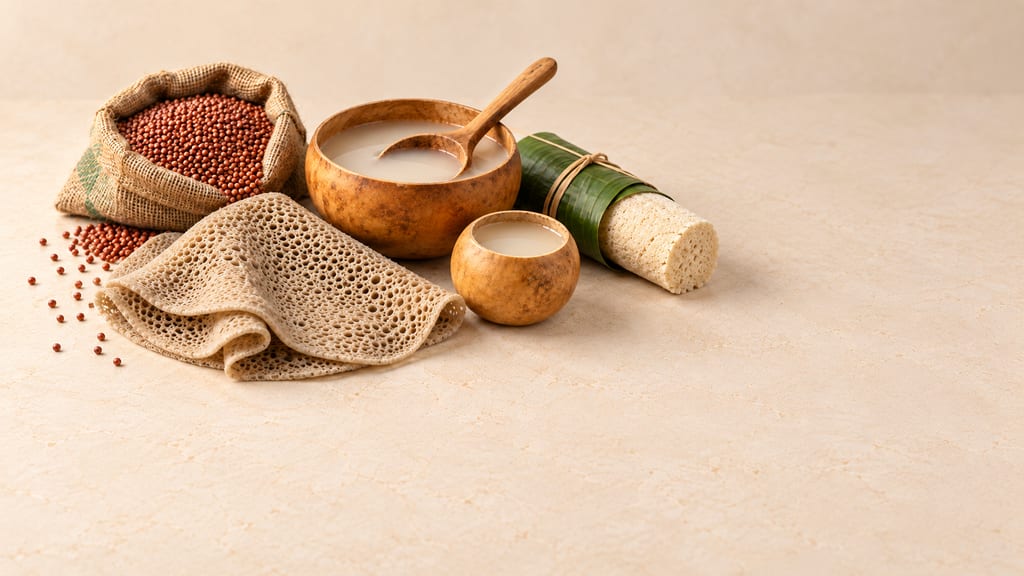
Injera, sorghum, a calabash of grain beer and a wrapped cassava loaf: African fermentation follows the crop and the community.
The daily work of transformation
A porous sheet of injera, a spoonful of pungent soumbala and a bowl of sour milk ask different things of their makers. Grain becomes batter and bread. Cooked seeds become a savoury seasoning. Milk becomes a drink, butter, curd or several of them in succession. Across Africa, fermentation belongs as much to the everyday meal as to the brewery. It happens in ingredients prepared for later cooking, in foods eaten fresh, and in the farm processing behind coffee and chocolate.
The clearest way into this variety is to follow the raw material and the change. Acid-producing bacteria sour cereal dough. Yeasts make alcohol from available sugars. Malt or selected roots first release sugars from starch. In alkaline seed fermentations, protein breakdown produces a pungent food whose chemistry moves in the opposite direction from a sour pickle. One starter, recipe or acidity target cannot stand in for all of these technologies.
This account follows an atlas spanning all 54 sovereign African states, with Western Sahara and Réunion considered separately. Its boundaries are those of documented examples, not every household or language. Foods travel with communities and trade, and a national border rarely encloses a whole tradition. Related names can identify a shared family; they can also hide differences in plant, milling, starter, vessel and cooking that change the food on the plate.
Deep history, without an invented family tree
Milk processing has a long African history. Dairy fats survive in pottery from the Libyan Sahara dating to the fifth millennium BCE. Those traces establish dairying; they do not identify a modern sour milk or give it an invention date. At Hierakonpolis in Egypt, beer-related residues dated to 3764–3537 calibrated BCE support cereal brewing with ingredients including emmer and barley. Possible fruit additions remain a question, rather than a complete recovered recipe.
Around 3000 BCE, the brewery at Abydos operated on a scale its investigators estimated at approximately 22,000 litres per batch. That makes organised brewing and royal ritual provision part of the story. It does not make Abydos the ancestor of every African beer. The surviving evidence is uneven: archaeological residues, oral knowledge, travellers’ accounts, market surveys and laboratory experiments answer different historical questions.
Later changes are equally consequential. Cassava and maize arrived from the Americas and spread from the sixteenth and seventeenth centuries onward. A maize version of a food cannot simply inherit the antiquity of an earlier sorghum version. Mungo Park’s journeys of 1795–1797, published in 1799, describe malted millet beer and a bitter-root addition in inland West Africa. Pobéguin recorded fermented néré seeds as soumara in 1906. These are dated attestations, seen through their observers’ perspectives, rather than the beginnings of the foods.
Nor is recent history an interruption to be cut away. Ghanaian akpeteshie expanded through colonial taxation, regulation and class politics, examined for 1930–1967. The 2024 UNESCO inscription of attiéké concerns living skills and their transmission, particularly women’s production and trading knowledge. The date recognises the practice; it does not date its invention.
The Maghreb: milk that branches into several foods
Raib, rayeb and raïb are related names for acidified milk across Morocco, Algeria and Tunisia. Cow, goat and sheep milk are used, depending on the place. A set sour milk and a churned buttermilk are different outcomes: churning separates butter, leaving lben or leben. Lactic acid bacteria and yeasts contribute to local dairy communities, while selected cultures support some industrial versions. Libyan laban belongs in this connected geography, with its own sampled practices and microbial concerns.
Further handling creates a branching system. Jben is a soft white cheese whose coagulation varies by producer; its name does not tell us whether acid, rennet or another coagulant set the curd. Klila turns sour curd into fresh or dried fragments. In northeastern Algeria’s Chaouia region, bouhezza combines fermentation, drainage, salting and ripening in a prepared goatskin bag, the chekoua or djeld. Research on exchange between bag and lben helps explain why the vessel is part of the process rather than decorative packaging.
Smen begins with butter from fermented milk and continues through salted maturation. Lipolysis, the breakdown of fats, changes its aroma. Algerian and Moroccan accounts differ in salting and handling, so taking salt from one version and storage time from another would invent a third method. In Mauritania and the connected western Saharan pastoral sphere, zrig may use sour milk diluted with water and often sweetened. It is a milk-drink category: the name alone does not establish that every version has fermented.
Wheat, olives, lemons and dates
Algerian hamoum or lemzeïet ferments whole durum wheat before milling for couscous. Its association with underground matmor storage gives a different starting point from a dough fermented after milling. Container experiments following the wheat over months are modern investigations of that technology, not evidence that ordinary couscous is fermented. Brined Moroccan Picholine olives offer another microbial process, with changing fruit and brine chemistry. Lye-treated, naturally brined, blackened and directly acidified olives need their own descriptions.
Preserved lemon requires particular care with terminology. In a study of dry-salted msayer, microbial activity was low and viable counts declined during the observed curing period. Salt and the fruit’s own acidity can preserve a lemon without a vigorous fermentation. Harissa, pickles and olive paste likewise describe foods, not sufficient evidence of how their makers transformed them.
A date palm supplies two distinct materials. Legmi is tapped sap, whose sugars can begin fermenting rapidly; Algerian date vinegar uses the fruit. Yeasts and acetic acid bacteria can work together in traditional vinegar production, while controlled research separates the alcoholic and acetic stages. Tunisian legmi research has isolated vinegar bacteria, but that finding alone does not establish a standard finished vinegar.
Figs and dates also enter distilled-drink histories. Tunisian boukha and Moroccan Jewish mahia pass through fermentation before distillation; diaspora manufacture is a further context, not proof of an unchanged local supply chain. Present-day grape wines from Morocco, Algeria, Tunisia and Egypt belong beside these foods. A winery catalogue or registry establishes particular products, while the bottle and vintage determine the relevant strength.
Egypt: fresh curd, dried cereal and a risky festival fish
Egypt’s dairy names describe different stages and textures. Laban rayeb is acidified milk, zabady a yoghurt-like cultured milk, laban zeer a concentrated fermented dairy, and kareish a drained acid-set skim-milk curd. Mish cheese or paste is a stronger ripened preparation. Egyptian mish should remain distinct from the Sudanese dairy of the same name.
Upper Egyptian kishk combines fermented milk with boiled, dried and cracked wheat, then undergoes further maturation and drying. Rehydration and cooking turn stored cereal–dairy material back into food. Experiments with barley, millet and other raw materials are useful comparisons, but do not redefine every customary kishk. Fermentation, grain cooking and final drying each have a role; none can be replaced merely by leaving the mixture longer.
Bread offers another set of distinctions. Sunlight warms traditionally proofed shamsi dough; microorganisms, rather than sunshine itself, cause fermentation. Baladi can use yeast, sourdough or combinations set by bakery practice. Modern experiments with selected yeasts and bacteria do not recover an ancient starter. Bouza is a documented cereal beer, yet resemblance to archaeological brewing cannot establish uninterrupted manufacture by one recipe.
Fesikh, salt-cured fermented mullet associated with Sham el-Nessim, is part of the food history and also a documented botulism vehicle when processing fails. Its presence in a tradition is no basis for improvising a household method. Salt penetration, raw material, temperature and handling require controls specific to the fish and process.
Sudan and South Sudan: one grain, many endings
Sorghum becomes thin sour kisra bread, porridge, beer and the dried sheets of hulu-mur. Kisra batter is fermented before thin cooking. Hulu-mur brings malted and unmalted grain together with fruit, hibiscus, tamarind and spices in documented formulas, then becomes cooked sheets that are dried and later soaked for a bittersweet drink, notably during Ramadan. The final drink is not the same as a fresh cereal beer merely because fermentation occurred earlier. White abreh offers a related pale dried-sheet preparation.
Merissa brewing moves through staged souring, starter activation and alcoholic fermentation. Its food and social contexts span Sudanese and South Sudanese traditions, including documented wedding service. Roub or rob belongs to sour-milk practice; gariss to camel-herding communities, often with repeated fresh-milk additions. A regional average pH from sampled gariss describes those products, not a specification for every container. Older sources labelled Sudan can cover territory now in South Sudan, so historical boundaries need to remain visible.
Western Sudan’s leaf and seed condiments broaden the picture further. Kawal is made from pounded Senna obtusifolia leaves, fermented, shaped and dried. Sigda can use sesame oilseed cake; furundu uses roselle seeds rather than the flowers of a hibiscus drink. Plant identity matters: the name senna is not permission to ferment another species.
Animal foods include fermented fish preparations such as terkin and mendeshi, and historically documented seasonings made from fat membranes or intestines, including miriss and musran. Thick indoor-dried shermout can ferment while thin sun-dried strips may not. These accounts preserve specialised knowledge without converting brief descriptions of raw offal or fish into instructions. Dirar’s work records rural practitioners, particularly older women; speculative claims about the first human fermentation remain separate from that field evidence.
Groundnuts also enter the sour-sauce repertoire. Dirar describes rob-ful as roasted-groundnut paste or slurry soured in a covered vessel and later made into sauce, serving a role associated with sour milk. His sunlight and time observations leave temperature, microbial controls and storage unresolved.
Rob-heb uses watermelon seeds in a separate sour-sauce preparation. Dirar describes the seeds pounded into paste, soured and mixed with water for sauce. The short account supplies no batch formula or operating limits; the roasting, vessel and sunlight treatment described for peanut rob-ful are not established for rob-heb.
Beiga is a specifically fermented caterpillar preparation from the Nuba Mountains in Dirar's account, followed by sun-drying for later roasting or soup use. The host tree is named, but the insect species is not. It cannot stand for all edible caterpillars, and its brief process description supplies no validated safety limits.
Duga uses locusts rather than Beiga's caterpillars: the fermented insects are dried and pounded for sauces. Dirar's 1992 account reports fermentation within three days; a separate undated paper gives three to ten days and cloth-bag storage. These differing observations identify research questions, not safe holding or storage rules. Neither account identifies the locust species.
Kesherneh follows another sequence in western Darfur near Chad: frogs are boiled, dried and pounded before fermentation and further drying. The local frog is described by appearance and habitat, without a species name. A second Dirar account mentions small dried balls. Neither account supplies validated heating, fermentation, drying or storage limits, so the initial boiling cannot stand as proof of final safety.
Duma, documented in the historical Equatorial Region of southern Sudan, is honey wine made with maintained iyal-duma microbial grains. Its reported 12-hour commercial fermentation leaves ratios, measured conditions and alcohol strength unknown. A later Dirar chapter describes developing the starter from deleib palm roots; that separate enrichment process does not make roots a beverage ingredient or establish a safe substitute culture.
Berbassa, also called Khamirat-laban, is a milk-based starter for gergosh bread. Historical accounts describe beans added to concentrated milk and an external grain bed for warmth, with different 20- and 24-hour observations. A 2025 study examines a chickpea-and-cumin preparation; those findings do not validate the older broad-bean example. The starter remains distinct from the bread, and froth or a historical incubation time supplies no safety endpoint.
Gergoush, also written gergosh, carries the starter into a fermented wheat bread snack through an adapted starter and a final dough. A Khartoum field study reached a favorable safety conclusion for its tested production and baking, with findings tied to that site's isolates and process. That result preserves the value of the documented method without making a partial abstract-based home recipe equivalent to it.
Watermelon juice has its own brief entry: Dirar records Um-zummatah as soured juice, separately from the watermelon-seed paste used for rob-heb. The same name also denotes sour sorghum or millet steep water called Mayat-aish. That shared name does not establish a shared recipe; the juice account gives no formula, fermentation conditions or intended use.
Teshnuti is a still less detailed okra-seed entry in the same account. Dirar names it among related fermented vegetable foods but calls it ill-defined. No seed preparation, fermentation sequence or storage method is supplied, so dried okra pods and whole-pod pickles cannot fill that gap.
Assaliya is described separately as a clear grain beer, with Um-bilbil as a name in Dirar's accounts. An assal syrup extracted from sorghum or millet malt precedes brewing; the honey gloss for that syrup does not make bee honey an ingredient. Neither the reported forty-stage complexity nor related names such as Merissa and Cameroonian bilbil provide the missing extraction and brewing method. Sorghum and millet are reported alternatives, without a prescribed blend.
Baganiya exposes a limit in broad drink labels. A 2020 Red Feterita study describes its northern Sudanese preparation as lactic and nonalcoholic, while Dirar's earlier account lists Baganiya among grain beers. The relationship between those source scopes and the drink's alcohol content remain unresolved.
Fermentation can also serve starch extraction. Jir hur is the firm lower fraction separated during Sudanese millet Jir preparation; it later supplies porridge rather than being the cooked jiriya itself. The 2011 two-stage account and a modified 2025 extraction experiment preserve different schedules, vessels and sediment names, without establishing a safe household process.
Surij, written Soorij in the 1978 Merissa study, is a precursor rather than a finished beer. Unmalted sorghum flour first sours as ajeen, then is heated and cooled before the separate deboba activation stage. Keeping this intermediate distinct makes the sequence visible without turning colour or sourness into safety endpoints.
Deboba names the activation fermentation that follows cooled Surij in this account. Sorghum malt, water and earlier Merissa enter before the final brewing stage. The reported four-to-five-hour observation and approximate additions remain source-specific, rather than a complete batch formula or a safety endpoint.
The Horn: bread is a process, not a single grain
Injera in Ethiopia and Eritrea starts as a flour batter, often involving teff and a retained sour starter called ersho. Many methods cook a small fraction as absit and return it before further fermentation and baking. Acid production and starch gelatinisation perform different jobs. A contemporary chef’s honey-and-baker’s-yeast formula, or a boiling-water addition in place of separately cooked absit, is a particular adaptation rather than the one definition of injera.
Laxoox or canjeero in Somalia, Somaliland and Somali communities in Ethiopia, with related lahoh in Djibouti, has its own grain combinations and retained batter, dhanaanis. Field interviews record changes associated with milling, kneading and infrastructure. Calling all of it teff injera under another name would erase those differences.
Enset makes the distinction between plant and product especially clear. Kocho uses scraped pseudostem tissues and pulverised corm, not banana fruit. Mixing, starter preparation, fermentation and later cooking produce a starchy staple. Pit, basket and jar experiments show that the system affects acidification and microbial succession; local starters differ among cultural zones. Bulla is a starch-rich extracted fraction, which may or may not have fermented. Its identity must follow the actual process.
Condiments are just as varied. Datta undergoes lactic fermentation of pounded chillies with seasonings, while some awaze is mixed for immediate use. Siljo ferments a cooked faba-bean slurry in safflower extract with black-mustard powder. The studied siljo process acidifies; it is not an Ethiopian version of an alkaline West African seed paste.
Milk chains and the difference between honey and starch
Ethiopian ergo can be churned into qibe butter and arrera buttermilk, with heating of sour buttermilk producing ayib curd and separated whey. Clarifying and spicing butter makes nitir qibe; heating is not a second fermentation. Borana ititu concentrates sour cow milk through whey removal and fresh-milk addition in a smoked container. Dhanaan belongs to camel-milk traditions connected across Somali pastoral communities. These processes are related through milk handling without becoming interchangeable yoghurt recipes.
Tella, suwa and related cereal beers need sugars released from starch. Malt, cereal bread or porridge fractions and gesho enter in stages. Tej, mies and daadhii instead begin with honey diluted in water: their sugar is already soluble. Gesho, Rhamnus prinoides, is a buckthorn relative, not botanical hops. That difference matters even when a brewer uses it for a familiar bittering role.
Laboratory honey-wine reconstructions use prepared microbial suspensions whose dose cannot be copied as an equal weight of dry retail yeast. Their selected strains and measured endpoints describe those trials. Birz can mean honey-water or an early fermentation stage, and the name does not guarantee zero alcohol. Borde, shamita, keribo and cheka occupy the food-like end of the beverage range, using roasted, cooked or malted cereals and, in some cheka, vegetables or roots. Customary descriptions as non-alcoholic require measurement before becoming a claim about a particular batch. Areki comes after distillation of a fermented cereal base, a separate operation.
West Africa’s savoury seeds
Iru, dawadawa, daddawa, soumbala, soumbara, nététou and netetu name a broad fermented locust-bean family across Nigeria, Ghana, Burkina Faso, Mali, Guinea, Côte d’Ivoire, Senegal, Guinea-Bissau and neighbouring areas. Cooked Parkia biglobosa seeds are dehulled and fermented as moist cotyledons, then sold in forms including moist paste, dried balls and powder. Proteolysis breaks proteins into smaller compounds; ammonia can raise pH. Their pungency belongs to an alkaline process, not a sour ferment that went wrong.
Local method still matters within the family. A Beninese comparison distinguished shorter-fermented afitin from iru and sonru made with different roselle-seed adjuncts, iku-iru and yanyanku. Those adjuncts are traditional process-derived inocula, not simply alternate names for a purified Bacillus culture. Nor should the particular Beninese sequence be imposed on all Nigerian iru.
The seed itself changes the food. Ugba uses sliced African oil-bean cotyledons and can be eaten as a salad ingredient or seasoning. Ogiri-egusi uses melon seeds; other ogiri names refer to fluted-pumpkin or castor seeds. Castor seed is toxic before extensive processing, so a record of its use is not a household substitution suggestion. Okpehe uses Prosopis africana. Bikalga uses roselle seeds, distinct from bissap’s red calyces, while maari uses baobab seeds rather than fruit pulp.
In the Republic of Congo, ntoba mbodi ferments cassava leaves in an alkaline direction while root preparations in the same comparative research acidify. Cyanogen reduction was substantial but incomplete in that comparison. Bacillus prominence, an alkaline pH or familiar aroma cannot by itself establish safety; toxin-producing organisms have been detected in some seed-condiment samples. The intended transformation and the controls must be understood together.
Otiru uses African yam bean seeds in a separately documented Nigerian ferment. The 2007 laboratory paper's prose and flowchart disagree on seed pretreatment, boiling duration, temperature and wrapping vessel, with drying appearing as an additional chart stage. Those conflicts deserve to remain visible rather than becoming a composite recipe. Neither cottonseed Owoh nor an experimentally named Owoh-type bean product supplies the missing consistent method.
Oso is a different Nigerian seed condiment, made from Cathormion altissimum. A microbiology abstract documents its bacterial, alkaline fermentation; a later study begins with purchased Oso and tests deterioration treatments. Reduced oxidation markers in those samples do not establish pathogen control or a household preservation regimen. The paper's statement about rapid deterioration within a week supplies no safe week of storage, and the base production method remains incomplete here.
The many textures of fermented grain
West African cereal fermentation is a set of texture-making technologies. Ogi or akamu becomes a sour, starch-rich slurry after steeping, wet milling, sieving and fermentation; cooking produces porridge. Mawè is fermented wet dough. It can feed cooked akassa, steamed ablo, granulated aklui preparations or couscous-like yèkè-yèkè. These are meaningful culinary forms, not evidence for an independent fermentation organism every time the dough is shaped differently.
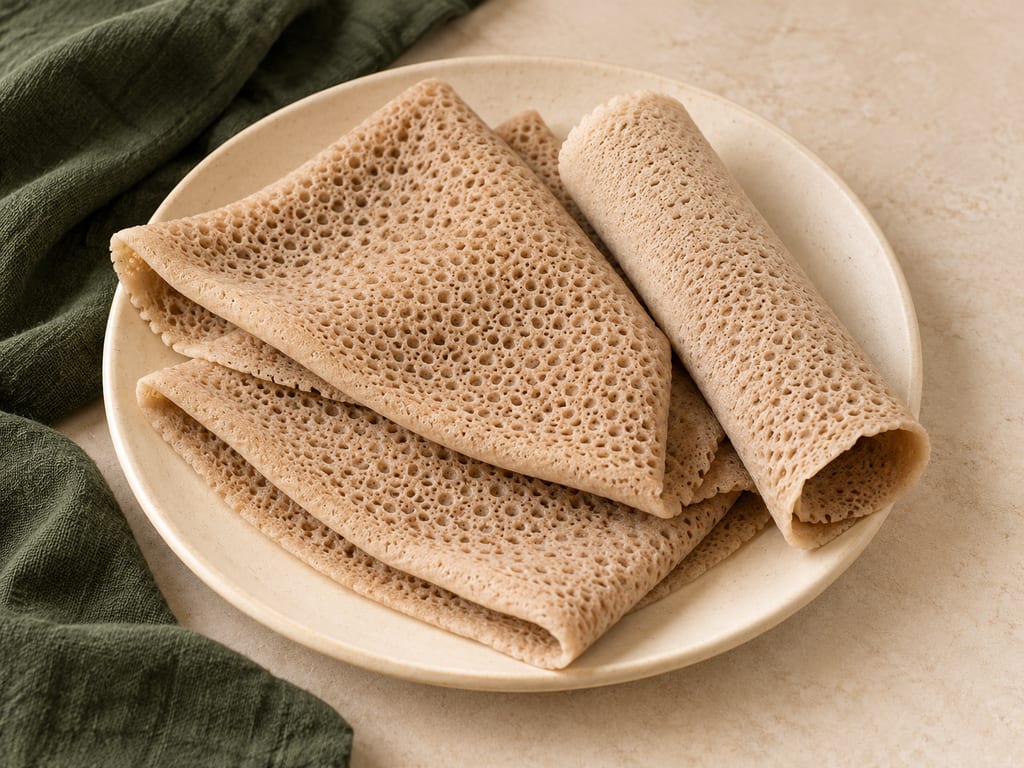
Ghanaian kenkey combines fermented maize dough with partial cooking, blending, wrapping and thorough final cooking; Ga and Fante forms differ in handling. Banku brings maize and cassava doughs together as a smooth elastic staple. In Burkina Faso, pearl-millet ben-saalga is wet-milled, sieved, allowed to settle and ferment, then cooked into gruel. Poto-poto in Congo illustrates how an easily overlooked sedimentation phase can be the main acid-fermentation stage.
Drinks and softer foods use the same operations in other orders. Malt supplies enzymes to sweet-sour gowé. Akpan’s partial gelatinisation creates a cereal base that can be diluted and served with milk, sugar or ice; it is not dairy yoghurt unless dairy is added. Kunun-zaki combines steeping, milling, partial cooking and a brief mixed fermentation. Masa or waina becomes rounded pan-fried portions from fermented batter, with grain and modern adjuncts varying.
Millet balls served in sour milk make fura da nono. Some fura doughs ferment before cooking and pounding, others do not, so the composite does not prove that both components fermented. Thiakry, dégué and brukina likewise belong to cereal-and-fermented-milk foodways without requiring a claim of fermented millet in every recipe. A dish can use fermentation-derived ingredients while adding no new fermentation itself.
Cassava: a root becomes granules, flour or a wrapped loaf
Cassava’s transformations form a wide belt from West Africa through Central Africa and into eastern and southern regions. Gari begins with grated root, fermented under pressure before sieving and roasting into granules. Fermented fufu or foofoo uses submerged roots or pieces, softened before pulping, dewatering and cooking. Lafun dries the softened fermented root for milling into a flour later cooked as paste. Abacha keeps a recognisable strip form through its wet processing. The same raw material therefore produces several storage forms and eating textures.
Attiéké from Côte d’Ivoire follows another path: ground cassava with a fermented inoculum is pressed, granulated and steamed. Its resemblance to wheat semolina does not make it wheat couscous. Placali cooks fermented cassava paste to a softer gel. Ghanaian agbelima uses a prepared inoculum, kudeme, whose preparation and the cassava variety influence the dough. A starter is part of a processing system, not an interchangeable spoonful of anything sour.
Leaf-wrapped cooked cassava appears as chikwangue or kwanga in the two Congos, bobolo and miondo in Cameroon, bâton de manioc in Gabon, and related mangbele in the Central African Republic. Defibring, kneading, wrapping and cooking shape the final food. Other Cameroonian forms include mintoumba and kumkum. East African kivunde and Burundian inyange differ in submerged versus heap fermentation; Burundi’s ubuswage includes repeated cooking and wet handling. Namibia’s mudhika and Mozambique’s roasted rale extend the map further.
Detoxification is not a synonym for fermentation. Disrupting tissue, soaking, draining, pressing, drying and cooking jointly determine cyanogen removal. A reported percentage reduction needs initial and residual concentrations to say what remains. Sourness or a completed number of days cannot settle that question. Ready-processed cassava foods offer a practical route to tasting without simultaneously developing a raw-root detoxification process.
The vessel can carry the culture
Sour milk has many local names and several ways of being maintained. Nigerian nono, Ghanaian nunu and nyarmie, Malian fènè and Cameroonian kossam have their own studied microbial communities. Lait caillé spans Francophone West Africa, including Senegal, Burkina Faso and Niger. In northern Senegal, resident biofilms in wooden lahals inoculate milk; adding a selected commercial culture produces a more defined analogue, not a reconstruction of every household’s vessel ecology.
Across East Africa, Kalenjin mursik uses prepared gourds associated with selected woods and smoke or charcoal. Abagusii amabere amaruranu includes boiling, cooling and inoculation with earlier product. Maasai kule naoto and Somali pastoral suusac belong to distinct cattle- and camel-milk traditions. Rwanda’s kivuguto research has selected dairy bacteria for more consistent production. Finding a species in a study does not make every strain of it a suitable starter.
Southern dairy is equally varied. Zambia’s mabisi survey distinguished seven connected methods, including direct souring, whey removal, repeated fresh-milk additions, cooked milk and deliberate backslopping. Amasi in South Africa and Zimbabwe includes household and controlled commercial versions. Botswana’s madila has an official product standard; Lesotho’s mafi and Eswatini’s emasi are documented through their local practices. Namibia’s omashikwa is fermented buttermilk associated with Boscia albitrunca root, and southern Mozambique’s massi retains thick curd after whey decanting.
These are living technologies, including changes from earthenware to plastic and from raw milk to pasteurised cultured production. Fermentation does not replace pasteurisation, and smoke treatment is not automatic microbial validation. Heating, draining and churning change both texture and what remains alive. Calling the whole family probiotic would demand evidence about characterised organisms and health benefit that a traditional name cannot supply.
Beer begins before the yeast arrives
Sorghum, millet and maize do not hand yeast the same soluble sugars as honey. Malting germinates grain so enzymes can release fermentable sugars; mashing must also make starch accessible. In a controlled pito process, the liquid above a settled mash was reserved while the thick portion was boiled, then recombined. The separation protects enzymes while gelatinising starch. Simply adding yeast to intact grain would not reproduce that conversion.
Pito and dolo belong to a broad West African brewing belt, but local methods deserve their own names. Benin and Togo have tchoukoutou; Côte d’Ivoire tchapalo; Nigeria and Ghana burukutu; Chad and northern Cameroon bili-bili; Cameroon maize-based sha’a. Acidification and alcoholic fermentation may follow one another or overlap. A reported final eight hours of yeast fermentation does not mean grain became beer in eight hours: steeping, germination, milling, mashing and souring came earlier.
East African traditions include Kenyan busaa, Ugandan kwete and millet malwa or ajon, Rwandan ikigage, Burundian impeke and Ugandan omuramba. These names do not identify one uniform regional beer. In South Africa, umqombothi combines maize meal and sorghum malt through souring, cooking, cooling and a further malt addition. The second addition restores enzyme and microbial activity after heating; it is not a duplicated ingredient to remove.
Lesotho’s Sesotho or joala can be consumed while still fermenting, while hopose includes introduced hops. Eswatini’s umcombotsi and Angola’s maize beer quimbombo have their own documented formulations. Fresh opaque beer, a selected-culture laboratory version and an industrial packaged continuation can share a family name while differing in texture, microbial life and distribution. Chibuku belongs in the same contemporary story as the household brewer.
Otika adds a documented Nigerian sorghum process: grain and water lead through malting in moist banana leaves, drying, milling, cooked wort and natural fermentation in earthenware pots. A 2017 study sampled an Iseyin producer, but its method cites a separate pearl-millet oti-oka-like experiment; the two formulas cannot be interchanged. Dirar's earlier clear-beer description also differs from the later paper's brownish, opaque drink. These source differences and the study's microbial findings leave a full household protocol and safe storage unresolved.
Oyokpo is a separately documented millet beer from historical Bendel State, Nigeria. A 1981 microbiology abstract distinguishes grain-associated sugar conversion from starter-driven alcohol fermentation; another study compares native brewing with a selected-yeast process. The later bottling trial ranks preservation treatments without supplying a usable household dose or storage method. Those experiments preserve different research questions, not interchangeable recipes.
In a Bulu account from Cameroon, fermented-maize Kpwet remains distinct from Arki, the name given after distillation. That sequence identifies a precursor and its spirit without supplying a fermentation formula or justifying palm-wine ingredients in the maize drink.
A porridge can be a drink, and a root can supply enzymes
The boundary between food and drink is often thickness rather than a distinct ingredient. East African sour uji, Meru kirario made with green maize, Mbeere kimere dough, Ugandan bushera and Tanzanian togwa use different cereal preparation and heating sequences. Some are meals, some refreshments, and some both. Mixed lactic-bacterial and yeast activity means the customary phrase non-alcoholic does not certify zero ethanol.
Southern Africa adds sour sorghum ting in Botswana, thin motoho in Lesotho, pearl-millet oshikundu or ontaku in Namibia, maize-based mahewu in Zimbabwe, emahewu in Eswatini and maheu in Mozambique. Malt appears in some processes and not others. In Zimbabwean mangisi, a sweet malt-derived preparation called masvusvu precedes the later ferment; naming the precursor as fermented would collapse two stages. Angola’s quissângua is distinct from alcoholic quimbombo, and fuba means flour broadly rather than fermented flour in every use.
Zambia’s munkoyo and chibwantu show that germinated grain is not the only enzyme source. Selected roots added to cooled maize porridge help liquefy starch and make sugars available, while ingredients and reused calabashes contribute microbes. Botanical identification is essential to understanding the method. A random root is no more a substitute than a random mould is a commercial culture.
Raw-material quality still matters after fermentation and cooking. Malawian thobwa research reduced aflatoxins in contaminated ingredients without eliminating them. That is a reason to start with suitable grain, not a promise that brewing rescues mouldy material. Cooking a sour gruel also changes viable organisms; a fermentation-derived drink need not contain living cultures when served.
Nigerian Obiolor brings germinated sorghum and millet together in a thin cereal drink. A 2014 laboratory preparation wet-mills the blend, filters and concentrates the liquid, then uses spontaneous fermentation. Its frozen research samples do not establish a household storage method. An earlier microbiology abstract's sensory unacceptability after 24 hours is likewise no safety deadline, and the customary non-alcoholic description is not a zero-ethanol assay.
Bananas, honey, sap and the age of a drink
Great Lakes banana beers do not all begin in the same way. Urwagwa or urwarwa uses extracted ripe-banana juice; Burundian dilution helps distinguish urwarwa from isongo. Ugandan tonto and eastern Congolese kasiksi belong to related but separately documented traditions. Chagga mbege in northeastern Tanzania joins fermented cooked-banana porridge with a separately prepared sweet finger-millet-malt porridge. The components supply different contributions to yeast activity, enzymes and sugar. Banana flavouring in an otherwise unrelated beer would not reproduce it.
Honey joins sorghum in southwestern Uganda’s enturire, where the timing of honey addition distinguishes a traditional-method reconstruction from selected-starter trials. Kenyan muratina instead uses cane juice and sometimes honey with conditioned Kigelia fruit pieces carrying microorganisms. The pieces act as reusable carriers; the beverage is not simply sausage-tree fruit juice.
Palm wines follow the tapped sap. Emu, nsafufuo, bandji, poyo, vinho de palma and other names range through West and Central Africa, including Liberia, Sierra Leone, Guinea, The Gambia, Equatorial Guinea and São Tomé and Príncipe. Sap starts changing during collection. Coastal Kenyan mnazi is coconut-palm sap, not the water inside a coconut; Mozambican utchema has plant-specific evidence for Hyphaene petersiana. Tanzanian ulanzi comes from bamboo, a grass, so it should not be filed as palm wine.
Seasonal fruit adds another map: cashew-apple wine in Guinea-Bissau and Mozambique uses the fleshy pseudofruit, not the kernel. Gabonese malamba or musungu uses cane juice. Marula supplies Namibia’s omagongo, Eswatini’s buganu and Mozambique’s ucanhe. The Oshituthi shomagongo festival centres Aawambo participation and transmitted skills around the harvest. Zimbabwean masau pulp can ferment before distillation. Each fruit, season and handling sequence matters more than a generic label such as African fruit wine.
The age of a sample is part of its identity. Ghanaian oil-palm wine measurements rose across collection and subsequent holding. A sweet fresh sap, a drink fermented overnight, a stabilised bottle and a distilled spirit are four different products. A tasting description without collection time may therefore describe a different drink from tomorrow’s vessel.
Baobab fruit pulp also has a named Nigerian fermentation, Kumin. Its microbiology abstract reports predominantly lactic acid bacteria, distinguishing this preparation from seed condiments, a freshly dispersed Bouye drink and the cereal/baobab food Mutchayan. The compared exposed and unexposed pulp groups do not provide a handling recipe, and the reported low pH supplies no safety or storage guarantee. A full formula and operating method remain unavailable in this evidence.
Indian Ocean islands and the still
Madagascar’s betsa is a cane-based ferment, toaka gasy a distilled family, and trembo a palm wine. Regional spirit names need not imply separate technologies. In Comoros, trembo has official contemporary consumption evidence, while ntsambu is a cycad-derived heritage food whose long traditional processing should not be reduced to a household detoxification sketch. Seychelles has coconut-sap kalou or calou and cane-based bacca, whose local processing needs closer evidence before every description as liquor is translated into distillation.
Mauritian rum can begin with fresh cane juice or sugar-production molasses. Réunion has both shared rum traditions and specifically documented long-fermented high-ester bottlings. Distillation follows fermentation; a bottle’s strength also reflects dilution, blending and later choices. South African grape wine has a documented Cape milestone on 2 February 1659 and local brandy a record in 1672. Those dates belong to particular colonial industries, not the beginning of fermentation on the continent.
The wider spirit map includes Cabo Verdean grogue, Beninese and Togolese sodabi, Ghanaian akpeteshie, Nigerian ogogoro, Ivorian koutoukou, Cameroonian odontol or arki, Chad’s siko, Ugandan waragi or enguli, Tanzanian gongo and regional kachasu. Some names cover more than one feedstock. Koutoukou producer research found both palm-wine and sugar-based preparations. Historical Liberian cane juice can mean a spirit, a particularly consequential difference from ordinary fresh juice.
Industrialisation can change the supply chain while preserving a familiar name. Uganda’s commercial Waragi history includes a shift away from purchasing household enguli toward industrial cane spirit. Such changes belong in a food history alongside malt and yeast. They explain why a branded bottle cannot stand as an unchanged sample of every local distilling practice.
Fish, meat and the preservation boundary
West African fish seasonings often combine proteolysis, salting and drying rather than strong lactic souring. Senegalese and Gambian guedj, Beninese lanhouin and Ghanaian momone are distinct preparations; local fish species and handling matter. The fish called cassava fish in some lanhouin accounts is Pseudotolithus, not a recipe addition of cassava root. Yët is made from marine gastropod molluscs, especially Cymbium. It is neither fish nor shrimp paste.
Tambadiang uses small whole fish in a lightly salted, fermented and dried form. Koobi is principally salted dried tilapia, with ripening or fermentation in some practices, while ewule has its own handling. Technical inventories retain less fully characterised names such as Ivorian gyagawere or adjonfa, Malian djegue or jalan and Chadian salanga. Those names keep a place on the map without supplying invented processing limits. Histamine, salt distribution, raw-material quality and drying need product-specific control.
Nearby foods reveal why the actual operation matters. Kéthiakh is braised and dried, metorah smoked, and yokhoss cooked or smoked dried oysters. North African gueddid is salted dried meat; khlii combines curing, drying, cooking and storage in fat. A specific Algerian Khliaa Ezir process has microbial succession evidence, but that finding does not turn every meat stored in oil into the same ferment.
Madagascan kitoza consists of salted, seasoned beef or pork strips, dried and/or smoked. A 54-sample study found microorganisms including lactic acid bacteria, yet many samples had little measurable fermentation-derived D-lactate. Microbial presence is not the same as a deliberately controlled fermentation, and traditional ambient storage is not proof of shelf stability. Biltong belongs in preservation coverage with its actual curing and drying process, rather than being relabelled to increase the fermentation count.
Coffee, cacao, vinegar and the modern shop shelf
Ghanaian cocoa studies follow yeasts, lactic acid bacteria and acetic acid bacteria through changing pulp around the seeds. Fermentation precedes drying and roasting, helping prepare the material that becomes cocoa and chocolate. It is not a process of leaving finished chocolate to ferment. Washed coffee similarly involves fruit-associated mucilage after depulping, followed by washing and drying. A modern Ethiopian whole-cherry lot fermented with selected yeast is a contemporary specialty method, not an unchanged ancient recipe.
Vinegar turns an alcoholic intermediate into a seasoning. Acetic acid bacteria oxidise ethanol with oxygen available. Algerian date vinegar and West African palm-wine vinegar make this transition visible. Acidity and residual alcohol remain separate measurements: a result of 6% w/v acetic acid means 6 grams per 100 millilitres, not 6% ABV. A low pH cannot supply the missing alcohol result.
The modern commercial map includes African-produced lager, stout, cider, cultured cheeses and kombucha alongside opaque beers and sour milk. South African mould-ripened cheeses are contemporary African production of internationally shared styles. Nigerian brewing can use local maize or sorghum without becoming the same process as a household opaque beer. Packaged Chibuku continues an opaque-beer family with processing and packaging chosen for distribution.
Rooibos is an instructive naming trap: its usual manufacturing term fermentation refers to oxidation after damage to leaf tissue. A kombucha made from sweetened rooibos or honeybush infusion adds a separate microbial stage. Marula cream liqueur likewise differs from seasonal marula wine: cream and distilled spirits form a new product. The familiar label must be followed back to what was actually done.
Reading alcohol numbers without changing their meaning
A sample range, a laboratory endpoint, a manufacturer’s label and a legal definition are different kinds of number. Kenyan busaa samples in a survey published in 1998 measured 2–7.5% ABV. A pito comparison found 4.2% ABV in a traditional-culture branch and 3.6% in a selected-culture branch. Those figures describe the sampled products and conditions, not permanent strengths attached to the names.
Some published percentages need an additional qualifier. The mbege study reported 2.7% ethanol at six hours and 4.0% at 48 hours after blending, without specifying whether the percentage was by mass or volume. It should therefore remain a reported ethanol percentage, not become verified ABV. Enturire trials measured different outcomes at early and later endpoints; combining them into one typical-strength range would erase the experiment.
Units can cause larger errors. A bili-bili study reports 2.33–4.60 grams of ethanol per litre, and a northern Chad date-drink study 8.7 grams per litre. Neither is a percentage by volume. The numerals cannot be copied into an ABV field unchanged. Likewise, sugar, acidity, gravity and ethanol are different measurements. Sweetness, sourness or an uncorrected reading in a viscous opaque drink cannot settle its alcohol content.
A missing value means not established, rather than zero. This matters for sour cereal drinks, honey-water names and even milk ferments that can contain yeasts. Age, formulation, storage and stabilisation change the result. A particular bottled product can make a particular claim; its name alone cannot make that claim for every household version.
From the atlas to a meal
A practical first encounter can begin with a finished ingredient and the food it makes. Cook purchased attiéké, taste gari in its customary preparation, or use a bought fermented seed condiment in a documented dish. For banku, prepared maize and cassava dough let the cook learn the blending, stirring and steaming without developing cassava detoxification at the same time. A published equal-dough formulation is one author’s version, not a universal ratio.
Iced kenkey shows how a serving preparation can reveal another texture. Cooked kenkey is crumbled into chilled water with evaporated milk and sugar, with roasted peanuts optional in the documented recipe. Whisking or blending changes the consistency, not the fermentation history. Bread becomes drinkable food through dilution; there is no new fermentation to count.
Controlled cultured milk provides another bounded route. A commercial mesophilic starter with pasteurised milk makes a useful sour-milk analogue when its full instructions are followed. A prepared bulk-starter percentage is not the same dose of concentrated freeze-dried culture, and a thermophilic yoghurt culture belongs to a different temperature system. Specific adaptations should keep their own names and conditions.
Availability follows the finished form. Dry or roasted granules travel differently from frozen paste, fresh bread, refrigerated milk and a drink still producing gas. The atlas recorded UK listings on 26–27 October 2026 for palm wine, frozen attiéké, iru, teff, dried injera, tej and Nigerian stout. Those dated listings establish routes to investigate, not present stock, delivery coverage or a cold-chain guarantee. A local producer or restaurant can offer a better account of fresh texture and serving context than a long-life substitute.
The differences worth preserving are concrete: the plant used, when it is milled, what supplies enzymes, what carries the starter, which fraction is heated, whether whey is removed, and how the finished food is eaten. They let a reader recognise related technologies without flattening them into one recipe. The linked food and ingredient pages carry those individual stories; the broader atlas keeps them in conversation across the continent.
Related
Discussed in this article
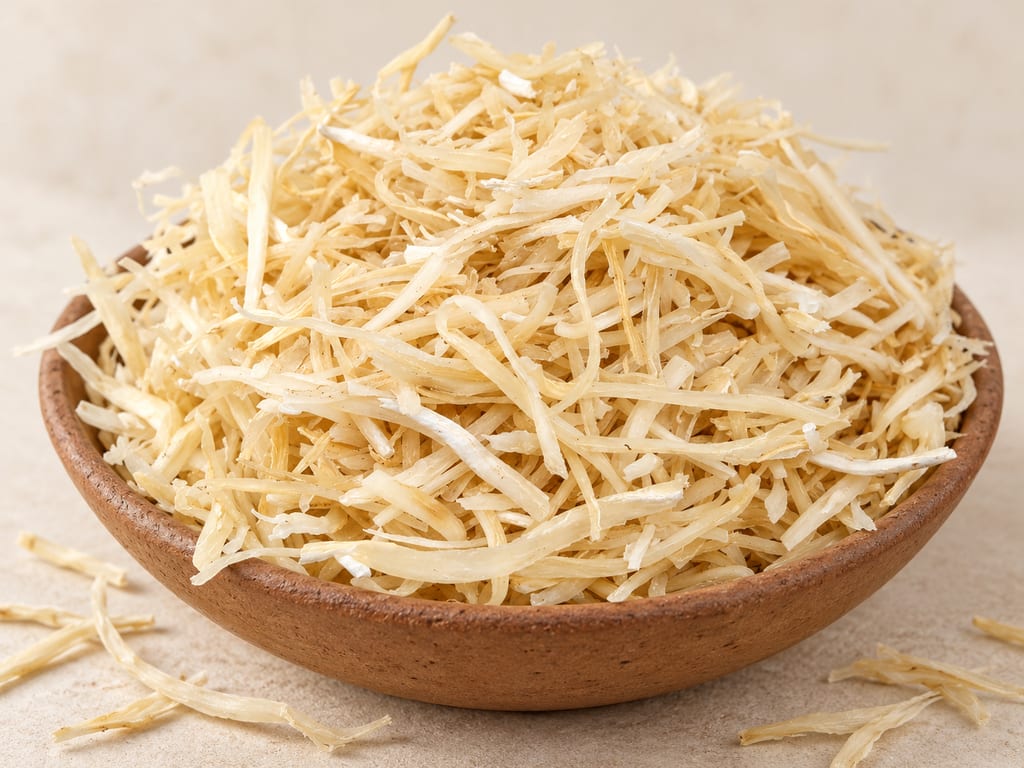
Abacha
Abacha is a fermented cassava-strip preparation from southeastern Nigeria, sold wet or dried and later rehydrated for meals such as African salad.
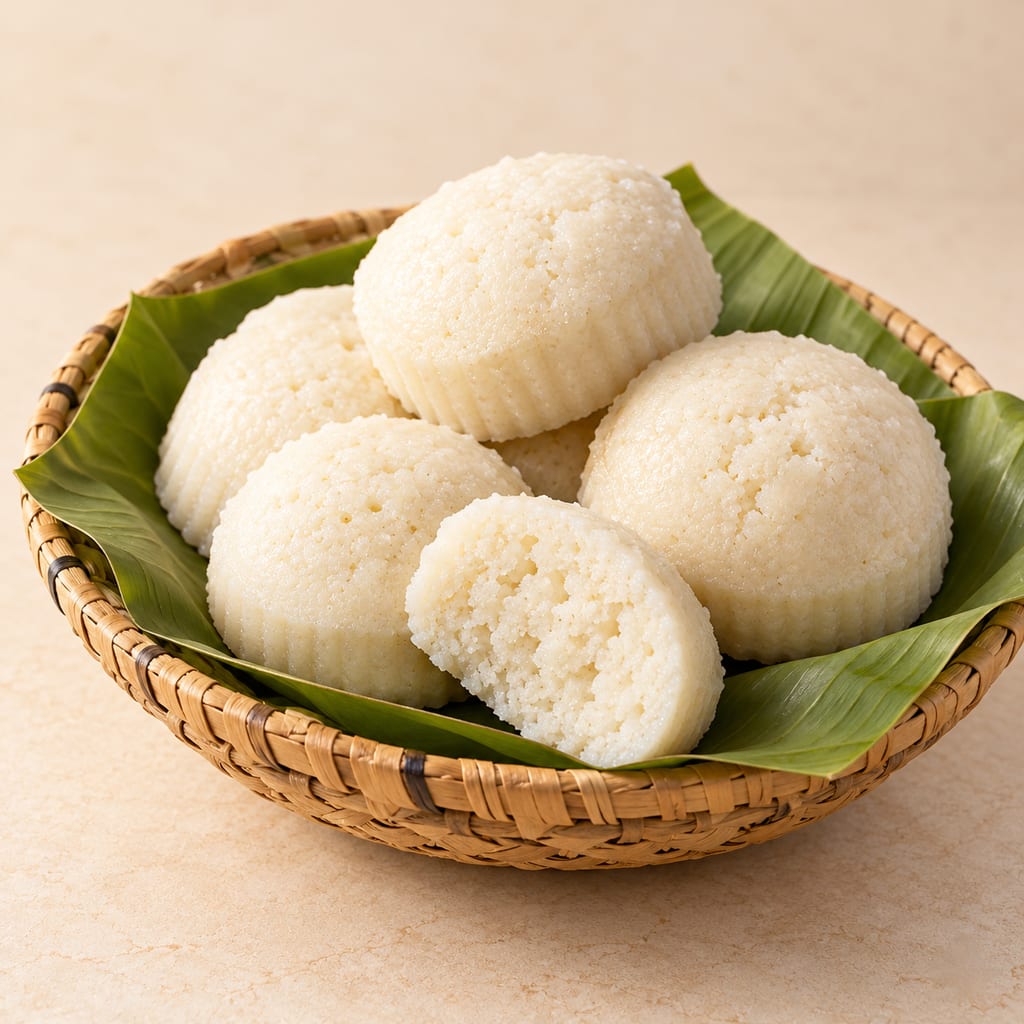
Ablo (rice-based steamed bread)
Soft, lightly tangy steamed cereal bread documented across Benin and Togo. This page gives one measured rice-flour research method; maize-based Ablo and mixed-grain versions remain distinct traditions.
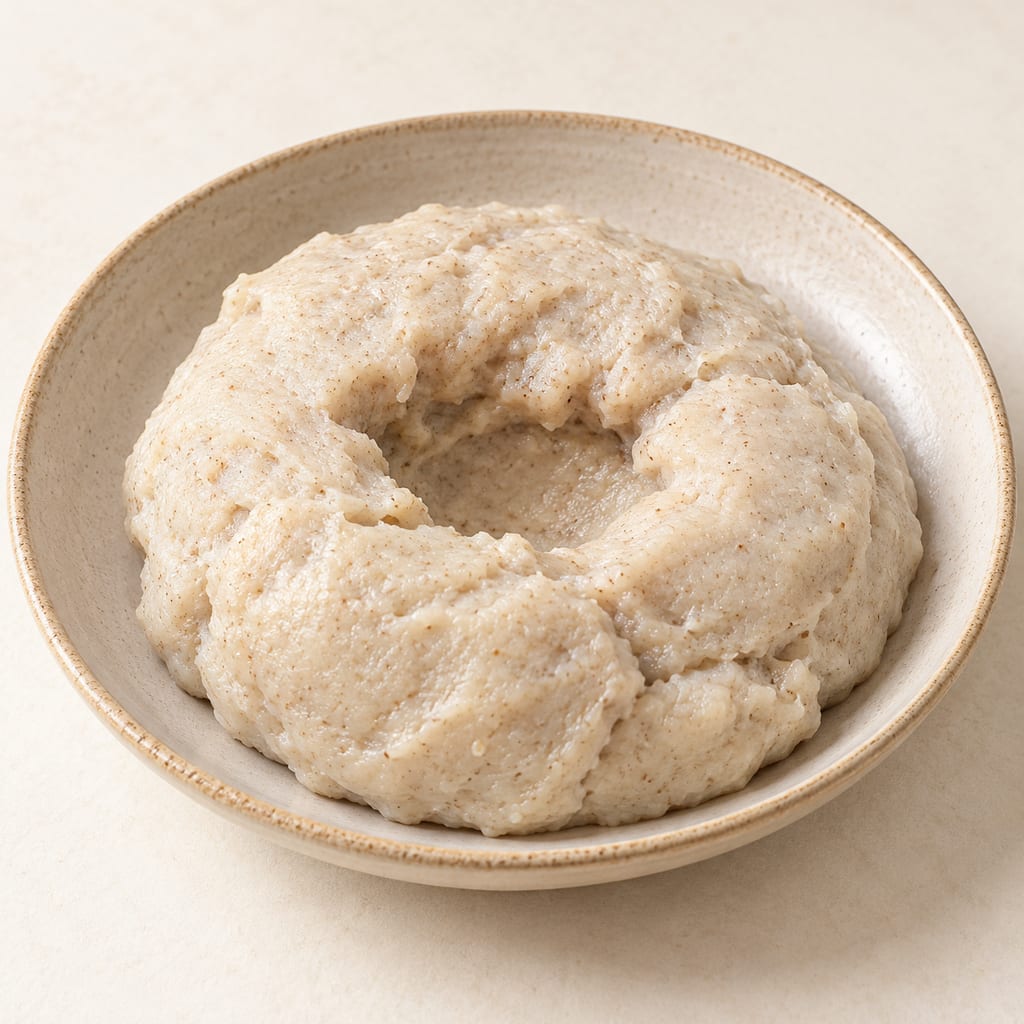
Aceda
Aceda is Sudan’s firm cereal porridge, commonly made from sorghum and shaped into a smooth mound. Some versions use fermented dough; fermentation is not universal.
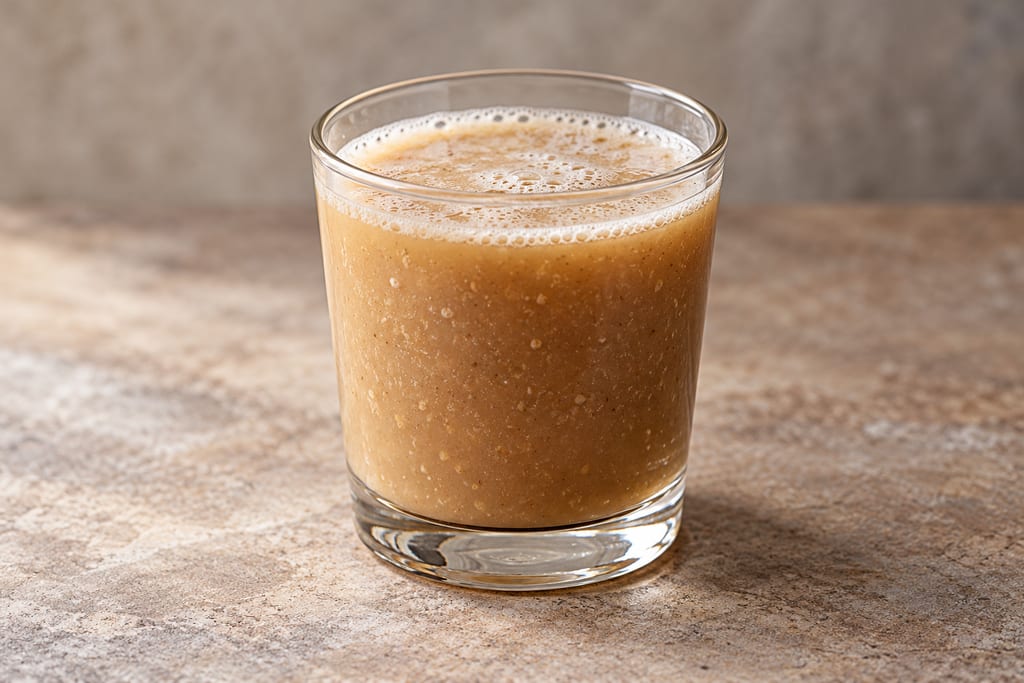
Addis Ababa wheat borde
A thick, faintly fizzy Ethiopian cereal drink in which a wheat dough is fermented, roasted dark, then fermented a second time with barley malt into a drinkable slurry.

African locust bean seeds (Parkia biglobosa)
Parkia biglobosa seeds are fermented into regional West African seasonings, including nététou, iru, dawadawa and soumbala. The yellow fruit pulp is a separate food, and names and methods vary by place.

Agbelima (Ghanaian fermented cassava dough)
Ghanaian sour cassava dough fermented with traditional inoculum and drained during fermentation. It is used as a base for cooked foods such as banku and akple; process variants and safety outcomes differ.
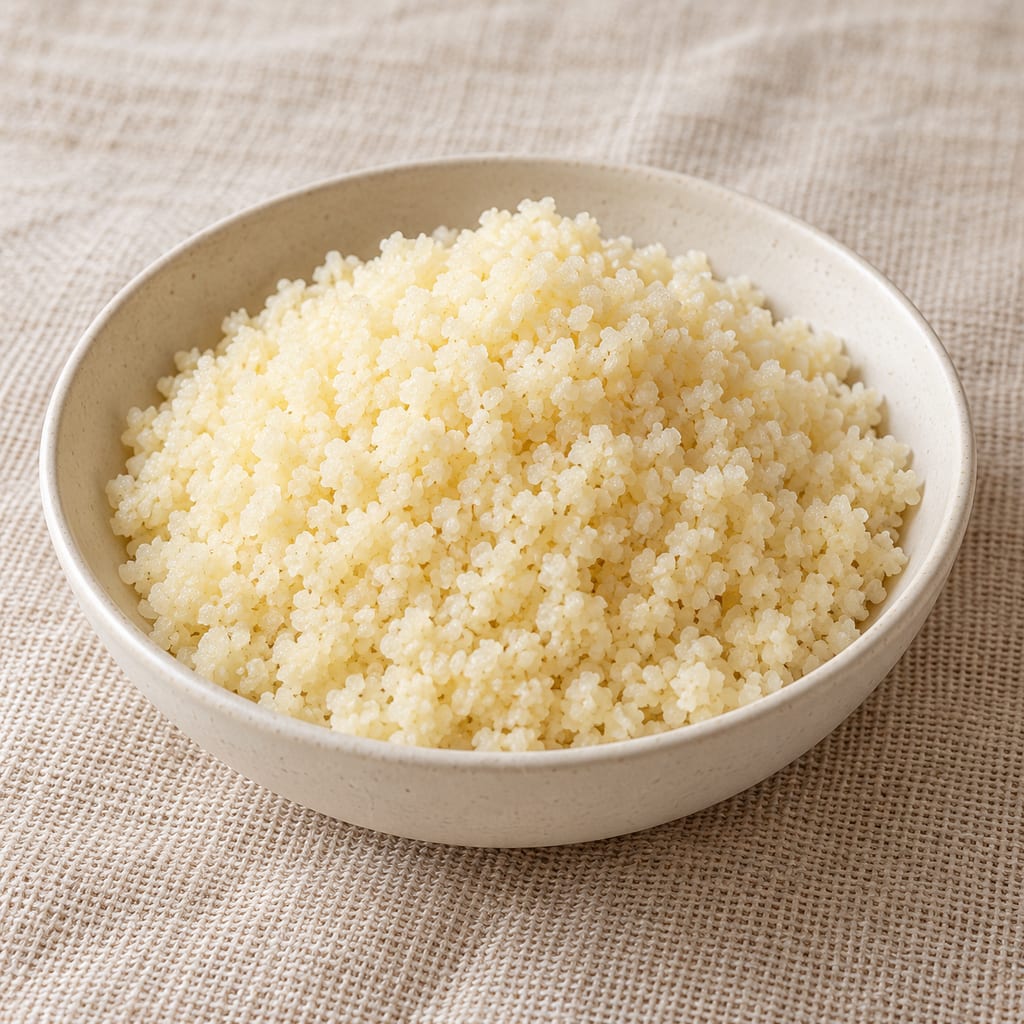
Attiéké
Ivorian cassava semolina: grated cassava is fermented overnight with a traditional inoculum, pressed, sieved into granules, dried and steamed. Documented in a 2006 field study; no sole original process is established.
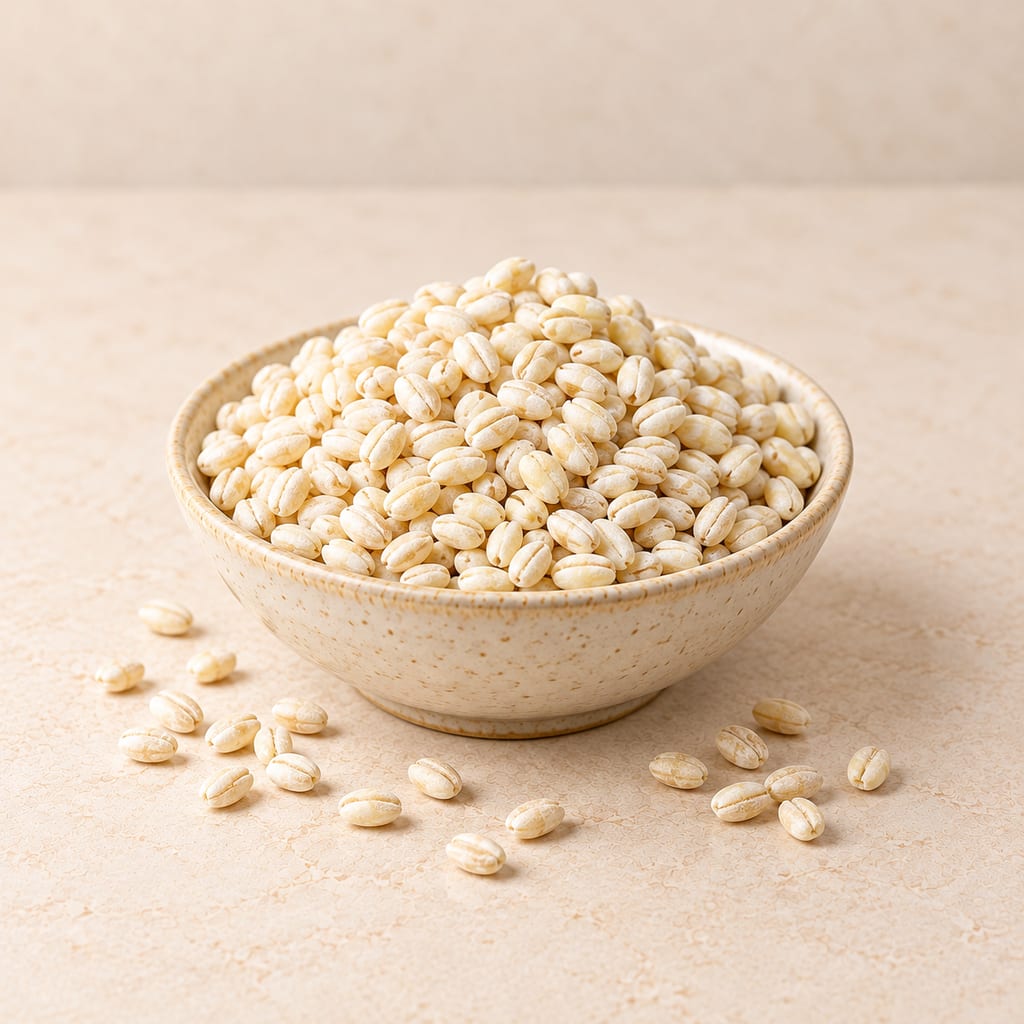
Barley
Barley is a hardy cereal, domesticated in the Middle East over 10,000 years ago, eaten whole, pearled or milled, malted for brewing, and grown with koji mold for barley miso.
Community
No community contributions have been published for this entry yet.
Share what you made
Sign in to contribute. Published comments and photos are free to read.
Sources
Marco et al. (2021), ISAPP consensus statement on fermented foods. Definitions and distinction from probiotics.
ISAPP consensus statement on fermented foodsCited in: The daily work of transformation; Coffee, cacao, vinegar and the modern shop shelf
UNESCO (2024), Skills related to attiéké production in Côte d’Ivoire. Living heritage documentation; same entry as WC28.
Skills related to attiéké production in Côte d’IvoireCited in: The daily work of transformation; Deep history, without an invented family tree; Cassava: a root becomes granules, flour or a wrapped loaf; From the atlas to a meal
Gonfa et al. (2001), Field survey and literature review of Ethiopian fermented milk. Field evidence and dairy processing-chain terminology.
Field survey and literature review of Ethiopian fermented milkCited in: The daily work of transformation; The Horn: bread is a process, not a single grain; Milk chains and the difference between honey and starch
Azokpota et al., 2006. Direct comparison of afitin, iru and sonru fermentation.
Azokpota et al., 2006. Direct comparison of afitin, iru and sonru fermentation.Cited in: The daily work of transformation; West Africa’s savoury seeds
Schoustra et al. (2013), Microbial community structure of three traditional Zambian fermented products. Mabisi, munkoyo and chibwantu; calabash reuse, root enzymes and microbial communities.
Microbial community structure of three traditional Zambian fermented productsCited in: The daily work of transformation; A porridge can be a drink, and a root can supply enzymes
Dunne et al. (2012), First dairying in green Saharan Africa in the fifth millennium BC. Primary lipid-residue archaeology.
First dairying in green Saharan Africa in the fifth millennium BCCited in: Deep history, without an invented family tree
Farag et al. (2019), Chemical analysis of ancient Egyptian beer residues. Hierakonpolis primary investigation.
Chemical analysis of ancient Egyptian beer residuesCited in: Deep history, without an invented family tree
Princeton University (2021), Abydos industrial brewery investigation. First-party archaeological team announcement and capacity estimate.
Abydos industrial brewery investigationCited in: Deep history, without an invented family tree
FAO, Cassava processing: introduction and history. Historical crop-diffusion background; not a recipe validation.
Cassava processing: introduction and historyCited in: Deep history, without an invented family tree; Cassava: a root becomes granules, flour or a wrapped loaf
De Paz Sánchez (2013), Wheat of Portugal: the African adventure of maize. Historical research on maize diffusion.
Wheat of Portugal: the African adventure of maizeCited in: Deep history, without an invented family tree
Mungo Park (1799), Travels in the Interior Districts of Africa. Original historical text; millet-beer observation near Koojar on 11 December 1795. Same work as WC58.
Travels in the Interior Districts of AfricaCited in: Deep history, without an invented family tree
Henri Pobéguin, 1906, original Essai sur la flore de la Guinée française.
Henri Pobéguin, 1906, original Essai sur la flore de la Guinée française.Cited in: Deep history, without an invented family tree
Akyeampong (1996), The politics of akpeteshie in Ghana, 1930–1967. Archival historical research; same work as WC60.
The politics of akpeteshie in Ghana, 1930–1967Cited in: Deep history, without an invented family tree
Boussekine et al. (2022), Deciphering the microbiota and volatile profiles of Algerian smen. Original microbial and chemical study across production and maturation.
Deciphering the microbiota and volatile profiles of Algerian smenCited in: The Maghreb: milk that branches into several foods
Azzouz et al. (2024), Analysis of bacterial diversity in Moroccan jben. Original molecular characterisation of Moroccan cheese.
Analysis of bacterial diversity in Moroccan jbenCited in: The Maghreb: milk that branches into several foods
Leksir & Chemmam (2015), Contribution à la caractérisation du klila. French-language primary field survey and product analyses.
Contribution à la caractérisation du klilaCited in: The Maghreb: milk that branches into several foods
Aissaoui Zitoun-Hamama et al. (2022), Bouhezza goat-skin-bag cheese. Algerian university paper describing cheesemaking and microbial quality.
Bouhezza goat-skin-bag cheeseCited in: The Maghreb: milk that branches into several foods
Senoussi et al. (2024), Microbial screening of animal skin bags used in traditional cheesemaking. Original work on djeld–lben microbial interactions.
Microbial screening of animal skin bags used in traditional cheesemakingCited in: The Maghreb: milk that branches into several foods; The vessel can carry the culture
Samet-Bali et al. (2012), Characterisation of typical Tunisian fermented milk: Leben. Traditional-versus-industrial comparison.
Characterisation of typical Tunisian fermented milk: LebenCited in: The Maghreb: milk that branches into several foods
Samet-Bali & Attia (2012), Characterization of typical Tunisian fermented milk, rayeb. Original study of acidification, texture and aroma.
Characterization of typical Tunisian fermented milk, rayebCited in: The Maghreb: milk that branches into several foods
Nahaisi, Almaroum & Ziyaina (2023), Libyan traditional fermented milk laban. Local primary dairy microbiology.
Libyan traditional fermented milk labanCited in: The Maghreb: milk that branches into several foods
Catherine Taine-Cheikh, Les voies lactées. Le lait dans l’alimentation des nomades de Mauritanie; Awal 42 issue. Original linguistic/ethnographic study of Mauritanian milk culture.
Les voies lactées. Le lait dans l’alimentation des nomades de MauritanieCited in: The Maghreb: milk that branches into several foods
Ouadghiri et al. (2009), LAB in Moroccan milk and lben. Original 37-farm-sample study with 146 LAB isolates.
LAB in Moroccan milk and lbenCited in: The Maghreb: milk that branches into several foods
Becila et al. (2022), Biochemical and microbiological changes in durum wheat for lemzeïet. Original controlled comparison; modern containers, 3–12 months.
Biochemical and microbiological changes in durum wheat for lemzeïetCited in: Wheat, olives, lemons and dates
Kiai et al. (2020), Chemical profiles of Moroccan Picholine olives and brines. Primary spontaneous-fermentation study.
Chemical profiles of Moroccan Picholine olives and brinesCited in: Wheat, olives, lemons and dates
Aayah et al. (2009/2010), Characterisation of the dry-salted process for msayer. Important evidence that salt-cured lemons can show little microbial fermentation.
Characterisation of the dry-salted process for msayerCited in: Wheat, olives, lemons and dates
Identification of acetic acid bacteria isolated from Tunisian palm sap (2017). Original Southern Tunisian sampling; distinguishes sap fermentation from experimental vinegar development.
Identification of acetic acid bacteria isolated from Tunisian palm sapCited in: Wheat, olives, lemons and dates
Bokobsa, manufacturer history and current collection. First-party availability and attributed family chronology.
manufacturer historyCited in: Wheat, olives, lemons and dates
21st Century Wine Co., Nahmias Mahia. Distributor specification: figs/anise, 40% ABV; Moroccan family heritage with US manufacture.
Nahmias MahiaCited in: Wheat, olives, lemons and dates
Roslane Wine & Spirits, Viniculture. Current first-party account of Moroccan Celliers de Meknès and Thalvin wine production.
VinicultureCited in: Wheat, olives, lemons and dates
Les Vignerons de Carthage, red wines and white wines. First-party Tunisian producer catalogue.
red winesCited in: Wheat, olives, lemons and dates
EgyBev, Beausoleil d’Égypte and vineyards. First-party Egyptian product strengths, grapes and processing.
Beausoleil d’ÉgypteCited in: Wheat, olives, lemons and dates
GS1 Algeria Mantooj catalogue, Médéa Nouveau and Domaine Selatna. Product registrations naming SOTRAVIT/ONCV and Algerian origin; not retail stock confirmation.
Médéa NouveauCited in: Wheat, olives, lemons and dates
Halladj, Boukhiar, Amellal & Benamara. Optimization of Traditional Date Vinegar Preparation Using Full Factorial Design. Journal of the American Society of Brewing Chemists 74(2), 137–144 (2016 issue; publisher webpage posted 2018). Original article.
Original articleCited in: Wheat, olives, lemons and dates; Coffee, cacao, vinegar and the modern shop shelf; Reading alcohol numbers without changing their meaning
Ghariani et al. (2017). Identification of acetic acid bacteria isolated from Tunisian palm sap. Original study. Same source as NH12 in the North/Horn chapter.
Original studyCited in: Wheat, olives, lemons and dates
Djafri et al. (2026). Optimization of Biotechnological Vinegar Production from an Algerian Date Variety Using Indigenous Strains and Response Surface Methodology. Original study, DOI 10.3390/foods15030518.
Original studyCited in: Wheat, olives, lemons and dates; Coffee, cacao, vinegar and the modern shop shelf
El-Gendy (1983), Fermented foods of Egypt and the Middle East. Dated technical baseline and product nomenclature, not current retail evidence.
Fermented foods of Egypt and the Middle EastCited in: Egypt: fresh curd, dried cereal and a risky festival fish
Gadallah & Hassan (2019), Quality properties of kishk from different raw materials. Experimental cereal/milk substitutions; distinguish them from customary ingredients.
Quality properties of kishk from different raw materialsCited in: Egypt: fresh curd, dried cereal and a risky festival fish
Abd-Alla, Salman & Mahmoud (2020), Microbiological quality of kishk, laban rayeb and kareish in Sohag. Primary survey of 156 rural/market samples.
Microbiological quality of kishk, laban rayeb and kareish in SohagCited in: Egypt: fresh curd, dried cereal and a risky festival fish
CDC (2019), Botulism type E after salt-cured fish, New Jersey 2018. Direct outbreak investigation involving Egyptian fesikh.
Botulism type E after salt-cured fish, New Jersey 2018Cited in: Egypt: fresh curd, dried cereal and a risky festival fish; Fish, meat and the preservation boundary
Public Health Ontario/BCCDC, Fesikh fermented salted fish guidance. Specific production hazards and regulatory process considerations.
Fesikh fermented salted fish guidanceCited in: Egypt: fresh curd, dried cereal and a risky festival fish; Fish, meat and the preservation boundary
FAO, Fermented cereals: a global perspective, chapter 2. Technical reference for bouza and merissa; historical continuity assertions require archaeological corroboration.
Fermented cereals: a global perspective, chapter 2Cited in: Egypt: fresh curd, dried cereal and a risky festival fish
The large and diverse family of Mediterranean flat breads (2022). Comparative database including Egyptian shamsi; cultural/process classification.
The large and diverse family of Mediterranean flat breadsCited in: Egypt: fresh curd, dried cereal and a risky festival fish
Mohsen et al. (2016), Sourdough and Egyptian balady bread. Experimental S. cerevisiae/L. plantarum formulations.
Sourdough and Egyptian balady breadCited in: Egypt: fresh curd, dried cereal and a risky festival fish
Dirar (1992), Sudan’s fermented food heritage. First-hand ethnographic compilation; historical country boundaries and speculative prehistory need care.
Sudan’s fermented food heritageCited in: Sudan and South Sudan: one grain, many endings; Beer begins before the yeast arrives; Fish, meat and the preservation boundary
Harper & Collins (1992), Leaf and seed fermentations of western Sudan. Detailed comparative work on kawal, sigda and furundu.
Leaf and seed fermentations of western SudanCited in: Sudan and South Sudan: one grain, many endings
Sami et al. (2022), Sudanese fermented foods. Research summary of sequencing of 44 samples in five substrate categories.
Sudanese fermented foodsCited in: Sudan and South Sudan: one grain, many endings
Eltayeb, Eltigani & Taniguchi (2020), Kisra and hulumur microbial communities. Original study with preparation methods and clear limits on species identification.
Kisra and hulumur microbial communitiesCited in: Sudan and South Sudan: one grain, many endings
Composition of gariss in North Darfur (2024 publication/2023 DOI). Primary sampling of 118 products; collection in 2018.
Composition of gariss in North DarfurCited in: Sudan and South Sudan: one grain, many endings
Chemical composition of fermented milk roub and mish in Sudan (2005). Direct factory and laboratory comparison.
Chemical composition of fermented milk roub and mish in SudanCited in: Sudan and South Sudan: one grain, many endings
Wageningen University, South Sudanese rob research project. First-party confirmation of a specific South Sudanese living dairy tradition.
South Sudanese rob research projectCited in: Sudan and South Sudan: one grain, many endings
Dirar (1978), A microbiological study of Sudanese merissa brewing. Original paper in Journal of Food Science 43(6), contained in scanned issue.
A microbiological study of Sudanese merissa brewingCited in: Sudan and South Sudan: one grain, many endings; Beer begins before the yeast arrives
FAO AGRIS bibliographic record, Dirar’s 1993 monograph. Establishes field-research provenance and publication date.
Dirar’s 1993 monographCited in: Sudan and South Sudan: one grain, many endings
Comboni Missionaries (2016), A real Maban wedding. Cultural account documenting local beer service in South Sudan; used for place, not a brewing formula.
A real Maban weddingCited in: Sudan and South Sudan: one grain, many endings
Standardization of teff injera-making process conditions (2024). Original processing optimisation, not one universal traditional recipe.
Standardization of teff injera-making process conditionsCited in: The Horn: bread is a process, not a single grain
Effect of fermentation system on enset fermentation (2019). Direct pit/basket/jar experiment.
Effect of fermentation system on enset fermentationCited in: The Horn: bread is a process, not a single grain
Traditional starter cultures for enset fermentation (2019). Original 18-district survey and microbial analyses.
Traditional starter cultures for enset fermentationCited in: The Horn: bread is a process, not a single grain
Mehari & Ashenafi (1995), Microbiology of siljo. Original cooked-legume fermentation experiment.
Microbiology of siljoCited in: The Horn: bread is a process, not a single grain
Idris, Mehari & Ashenafi (2001), Fermentation of awaze and datta. Primary microbial/biochemical study.
Fermentation of awaze and dattaCited in: The Horn: bread is a process, not a single grain
Comparative analysis of fermented flatbreads in the Horn and southern Arabia (2026). Comparative geography and historiography; includes Somali areas of Djibouti and kisra in South Sudan.
Comparative analysis of fermented flatbreads in the Horn and southern ArabiaCited in: The Horn: bread is a process, not a single grain
Wolgamuth et al. (2022), A survey of laxoox/canjeero. Original interviews with 46 women, July 2020–February 2021; excellent source on living variation and changing infrastructure.
A survey of laxoox/canjeeroCited in: The Horn: bread is a process, not a single grain
Maskal Teff, Traditional injera recipe. Current producer/practitioner recipe including absit.
Traditional injera recipeCited in: The Horn: bread is a process, not a single grain; From the atlas to a meal
Elazar Tamano / Asif, Injera Ethiopian flatbread. Chef-authored quantified recipe; the kitchen formula below is half-sized.
Injera Ethiopian flatbreadCited in: The Horn: bread is a process, not a single grain; From the atlas to a meal
ILRI/CABI (2025), Traditional milk processing in Borana. Original interview/focus-group case study on ititu.
Traditional milk processing in BoranaCited in: Milk chains and the difference between honey and starch
Karssa et al. (2025), Fermentation and handling of dhanaan. Household survey in four Ethiopian Somali-region districts; claimed therapeutic effects are not clinical evidence.
Fermentation and handling of dhanaanCited in: Milk chains and the difference between honey and starch
Abegaz et al. (2002), Indigenous processing methods and raw materials of borde. Primary field/process paper; companion 2003 fermentation study.
Indigenous processing methods and raw materials of bordeCited in: Milk chains and the difference between honey and starch
Bacha, Mehari & Ashenafi (1999), Microbiology of shamita fermentation. Local original journal article; webpage upload date differs from publication year.
Microbiology of shamita fermentationCited in: Milk chains and the difference between honey and starch
Abawari (2013), Indigenous processing methods of keribo. Original Jimma fieldwork and laboratory reconstruction.
Indigenous processing methods of keriboCited in: Milk chains and the difference between honey and starch
Binitu (2015), Cheka processing and alcohol content. Addis Ababa University original thesis; published field-process paper.
Cheka processing and alcohol contentCited in: Milk chains and the difference between honey and starch
Traditional foods and beverages in Eastern Tigray (2020). Original interviews, including suwa procedure and cultural setting.
Traditional foods and beverages in Eastern TigrayCited in: Milk chains and the difference between honey and starch; Beer begins before the yeast arrives
Gebremichael et al. (2024), Process standardization of Mies. Original experiment; some reported compositional units are odd, so use process descriptions cautiously and do not generalise reported alcohol values.
Process standardization of MiesCited in: Milk chains and the difference between honey and starch
Microbial ecology of selected traditional Ethiopian fermented products (2025). Nine products, one sample of each: useful diversity snapshot, not national prevalence or proof of probiotic efficacy.
Microbial ecology of selected traditional Ethiopian fermented productsCited in: Milk chains and the difference between honey and starch
Denekew et al. (2025), Production of improved Ethiopian Tej using mixed LAB and yeast starters; PDF. Original experiment with weighed honey/gesho, water volume and culture comparisons.
Production of improved Ethiopian Tej using mixed LAB and yeast startersCited in: Milk chains and the difference between honey and starch
Yohannes, Melak and Siraj (2013), Preparation and physicochemical analysis of Ethiopian traditional alcoholic beverages. Measured tella, tej and areki samples.
Preparation and physicochemical analysis of Ethiopian traditional alcoholic beveragesCited in: Milk chains and the difference between honey and starch; Reading alcohol numbers without changing their meaning
Debebe et al. (2018), Improvement in analytical methods for determination of sugars in fermented alcoholic beverages. Its Table 1 reports ethanol in sampled Ethiopian drinks; do not confuse the paper's sugar units with ABV.
Improvement in analytical methods for determination of sugars in fermented alcoholic beveragesCited in: Milk chains and the difference between honey and starch; Reading alcohol numbers without changing their meaning
Sanni et al., 2000. Market isolates and composition of iru, ugba and ogiri.
Sanni et al., 2000. Market isolates and composition of iru, ugba and ogiri.Cited in: West Africa’s savoury seeds
Kambiré et al., 2021. Soumbara formats and market quality in Korhogo, Côte d'Ivoire.
Kambiré et al., 2021. Soumbara formats and market quality in Korhogo, Côte d'Ivoire.Cited in: West Africa’s savoury seeds
2024 ethnobotanical field study of edible-plant trade in Guinea-Bissau, including netetu.
2024 ethnobotanical field study of edible-plant trade in Guinea-Bissau, including netetu.Cited in: West Africa’s savoury seeds
2000 study developing B. subtilis inocula for ugba.
2000 study developing B. subtilis inocula for ugba.Cited in: West Africa’s savoury seeds
1990 Nigerian traditional-food survey/review; useful historical inventory, with category cautions.
1990 Nigerian traditional-food survey/review; useful historical inventory, with category cautions.Cited in: West Africa’s savoury seeds
Ogueke et al., 2013. Controlled variables in melon-seed ogiri-egusi.
Ogueke et al., 2013. Controlled variables in melon-seed ogiri-egusi.Cited in: West Africa’s savoury seeds
Parkouda et al., 2008. Field processing and chemistry of bikalga.
Parkouda et al., 2008. Field processing and chemistry of bikalga.Cited in: West Africa’s savoury seeds
2015 primary study of amino-acid/lipid changes in baobab-seed maari.
2015 primary study of amino-acid/lipid changes in baobab-seed maari.Cited in: West Africa’s savoury seeds
Kobawila et al., 2005. Root versus leaf cassava fermentation and cyanogen reduction in Congo.
Kobawila et al., 2005. Root versus leaf cassava fermentation and cyanogen reduction in Congo.Cited in: West Africa’s savoury seeds
Ouoba et al., 2008. Toxin-production screening in soumbala/bikalga isolates.
Ouoba et al., 2008. Toxin-production screening in soumbala/bikalga isolates.Cited in: West Africa’s savoury seeds; Fish, meat and the preservation boundary
1988 primary paper on castor-seed ogiri microbiology.
1988 primary paper on castor-seed ogiri microbiology.Cited in: West Africa’s savoury seeds
Oguntoyinbo et al., 2007. Selected strains and okpehe laboratory fermentation, including traditional process description.
Oguntoyinbo et al., 2007. Selected strains and okpehe laboratory fermentation, including traditional process description.Cited in: West Africa’s savoury seeds
2018 microbial ecology study at eight Beninese mawè production sites.
2018 microbial ecology study at eight Beninese mawè production sites.Cited in: The many textures of fermented grain
2024 primary study comparing current Beninese ogi processing.
2024 primary study comparing current Beninese ogi processing.Cited in: The many textures of fermented grain
Hounhouigan, Wageningen thesis on maize meal fermentation for mawè; process and culinary derivatives.
Hounhouigan, Wageningen thesis on maize meal fermentation for mawè; process and culinary derivatives.Cited in: The many textures of fermented grain
Tou et al., 2006. Ben-saalga field survey and fermentation kinetics.
Tou et al., 2006. Ben-saalga field survey and fermentation kinetics.Cited in: The many textures of fermented grain
Efiuvwevwere and Akona, 1995. Kunun-zaki process microbiology.
Efiuvwevwere and Akona, 1995. Kunun-zaki process microbiology.Cited in: The many textures of fermented grain
2015 primary study of spontaneous and modified gowé processes.
2015 primary study of spontaneous and modified gowé processes.Cited in: The many textures of fermented grain
European Commission AFTER project reporting, including direct product research on akpan.
European Commission AFTER project reporting, including direct product research on akpan.Cited in: The many textures of fermented grain
2013 research on yeasts from fura; paired with field-report caution that fermentation is optional in some methods.
2013 research on yeasts from fura; paired with field-report caution that fermentation is optional in some methods.Cited in: The many textures of fermented grain
Annan-Prah and Agyeman, 1997. Kenkey types and post-processing microbial risk.
Annan-Prah and Agyeman, 1997. Kenkey types and post-processing microbial risk.Cited in: The many textures of fermented grain
Krabi et al., primary banku study; journal issue says 2023, manuscript/publication metadata 2024.
Krabi et al., primary banku study; journal issue says 2023, manuscript/publication metadata 2024.Cited in: The many textures of fermented grain
Amove et al., 2022. Experimental rice-masa formulation; modern adaptation.
Amove et al., 2022. Experimental rice-masa formulation; modern adaptation.Cited in: The many textures of fermented grain
Louembe et al., original biochemical/microbial study of poto-poto, in IRD collection.
Louembe et al., original biochemical/microbial study of poto-poto, in IRD collection.Cited in: The many textures of fermented grain
Ghana fura value-chain field report, including optional cereal fermentation.
Ghana fura value-chain field report, including optional cereal fermentation.Cited in: The many textures of fermented grain
Hong Kong Centre for Food Safety, Cyanogenic glycosides in cassava. Official explanation of the need for combined processing.
Cyanogenic glycosides in cassavaCited in: Cassava: a root becomes granules, flour or a wrapped loaf
Dike et al., 2022. Bacterial communities in abacha, fufu and garri.
Dike et al., 2022. Bacterial communities in abacha, fufu and garri.Cited in: Cassava: a root becomes granules, flour or a wrapped loaf
Blanshard et al., 1994. Sierra Leone foofoo retting, storage and cyanogens.
Blanshard et al., 1994. Sierra Leone foofoo retting, storage and cyanogens.Cited in: Cassava: a root becomes granules, flour or a wrapped loaf
IITA, 1990, Cassava in Tropical Africa, technical reference.
IITA, 1990, Cassava in Tropical Africa, technical reference.Cited in: Cassava: a root becomes granules, flour or a wrapped loaf
Dziedzoave et al., 1997. Kudeme preparation and agbelima quality.
Dziedzoave et al., 1997. Kudeme preparation and agbelima quality.Cited in: Cassava: a root becomes granules, flour or a wrapped loaf
2006 study of 81 attiéké starter samples in Dabou.
2006 study of 81 attiéké starter samples in Dabou.Cited in: Cassava: a root becomes granules, flour or a wrapped loaf
Adiko et al., 2025. Placali varieties and two inoculum methods.
Adiko et al., 2025. Placali varieties and two inoculum methods.Cited in: Cassava: a root becomes granules, flour or a wrapped loaf
Nardis et al., 2026. Bobolo starter and packaging comparison.
Nardis et al., 2026. Bobolo starter and packaging comparison.Cited in: Cassava: a root becomes granules, flour or a wrapped loaf
Westby technical chapter on cassava utilisation.
Westby technical chapter on cassava utilisation.Cited in: Cassava: a root becomes granules, flour or a wrapped loaf
Muandze-Nzambe et al., 2020/2021. Direct study of Gabonese indigenous foods.
Muandze-Nzambe et al., 2020/2021. Direct study of Gabonese indigenous foods.Cited in: Cassava: a root becomes granules, flour or a wrapped loaf
Adewusi and Akindahunsi, 1994. Cassava processing, consumption and cyanide exposures.
Adewusi and Akindahunsi, 1994. Cassava processing, consumption and cyanide exposures.Cited in: Cassava: a root becomes granules, flour or a wrapped loaf
2009 root/tuber-fermentation review; regional chikwangue-family names only.
2009 root/tuber-fermentation review; regional chikwangue-family names only.Cited in: Cassava: a root becomes granules, flour or a wrapped loaf
Kimaryo et al. (2000), Use of a starter culture in fermentation of cassava for production of kivunde. Tanzanian cassava retting and L. plantarum starter research.
Use of a starter culture in fermentation of cassava for production of kivundeCited in: Cassava: a root becomes granules, flour or a wrapped loaf
Nzigamasabo & Nimpagaritse (2009), Traditional fermented foods and beverages in Burundi. Field-oriented documentation of milk, cassava, banana and sorghum products.
Traditional fermented foods and beverages in BurundiCited in: Cassava: a root becomes granules, flour or a wrapped loaf; Beer begins before the yeast arrives; Bananas, honey, sap and the age of a drink
Misihairabgwi & Cheikhyoussef (2017), Traditional fermented foods and beverages of Namibia. Regional inventory, mudhika, ombike and less-studied names; secondary synthesis supplemented with field observation.
Traditional fermented foods and beverages of NamibiaCited in: Cassava: a root becomes granules, flour or a wrapped loaf
Massamby et al. (2025), Microbial contamination and food safety aspects of cassava roasted flour rale. Current producer associations in southern Mozambique; wet processing, fermentation, roasting.
Microbial contamination and food safety aspects of cassava roasted flour raleCited in: Cassava: a root becomes granules, flour or a wrapped loaf
Aloys & Zhou (2006), Functional and chemical properties of ikivunde and inyange. Primary comparison of two fermented cassava flours; 0–120 hour experiment.
Functional and chemical properties of ikivunde and inyangeCited in: Cassava: a root becomes granules, flour or a wrapped loaf
Akabanda et al., 2013. Ghanaian nunu LAB and yeast characterisation.
Akabanda et al., 2013. Ghanaian nunu LAB and yeast characterisation.Cited in: The vessel can carry the culture
Obodai and Dodd, 2006. Nyarmie microbial community.
Obodai and Dodd, 2006. Nyarmie microbial community.Cited in: The vessel can carry the culture
2018 Northern Senegal lahal/lait-caillé field and culture study.
2018 Northern Senegal lahal/lait-caillé field and culture study.Cited in: The vessel can carry the culture
2018 taxonomic study of bacteria isolated from Malian fènè.
2018 taxonomic study of bacteria isolated from Malian fènè.Cited in: The vessel can carry the culture
Kaktcham et al., 2012. LAB from sha'a and kossam.
Kaktcham et al., 2012. LAB from sha'a and kossam.Cited in: The vessel can carry the culture; Beer begins before the yeast arrives
2007 CIRAD-hosted Niger dairy production/marketing field study.
2007 CIRAD-hosted Niger dairy production/marketing field study.Cited in: The vessel can carry the culture
Fagbemigun et al., 2021. Nono microbial characterisation and starter development.
Fagbemigun et al., 2021. Nono microbial characterisation and starter development.Cited in: The vessel can carry the culture
Mureithi et al. (2000), Tree use in fermented milk preparation in Kenya. Ethnobotanical documentation of gourds, smoke and wood/charcoal in mursik.
Tree use in fermented milk preparation in KenyaCited in: The vessel can carry the culture
Nieminen et al. (2013), Alcohol and acetaldehyde in fermented milk mursik. Starter-culture experiment; cautions against assuming all sour milk contains no ethanol.
Alcohol and acetaldehyde in fermented milk mursikCited in: The vessel can carry the culture
Nyambane et al. (2014), Microbiological quality and safety of amabere amaruranu. Abagusii milk, boiling, backslopping, household vessels and microbial characterization.
Microbiological quality and safety of amabere amaruranuCited in: The vessel can carry the culture
Mathara et al. (2004), Isolation, identification and characterisation of dominant microorganisms of kule naoto. Kenyan Maasai fermented milk survey; diverse LAB.
Isolation, identification and characterisation of dominant microorganisms of kule naotoCited in: The vessel can carry the culture
Lore et al. (2005), Enumeration and identification of microflora in suusac, a Kenyan traditional fermented camel milk product. Camel milk, smoked gourds, spontaneous souring and LAB/yeast.
Enumeration and identification of microflora in suusac, a Kenyan traditional fermented camel milk productCited in: The vessel can carry the culture
Moonga et al. (2019), The art of mabisi production. Nine-province Zambia survey; seven production variants, not seven unrelated foods.
The art of mabisi productionCited in: The vessel can carry the culture
Bille, Buys & Taylor (2007), Omashikwa, a traditional fermented buttermilk of Namibia. Boscia albitrunca root; traditional vs controlled processing.
Omashikwa, a traditional fermented buttermilk of NamibiaCited in: The vessel can carry the culture
Simatende et al. (2015), Methods of preparation of Swazi traditional fermented foods. Eswatini fieldwork: emasi, emahewu, umcombotsi and buganu.
Methods of preparation of Swazi traditional fermented foodsCited in: The vessel can carry the culture; A porridge can be a drink, and a root can supply enzymes; Bananas, honey, sap and the age of a drink
Simatende et al. (2019), LAB in emasi and emahewu. Primary microbial evidence for Eswatini milk and cereal ferments.
LAB in emasi and emahewuCited in: The vessel can carry the culture
Botswana Bureau of Standards (2019), BOS 828:2019 Madila—Specification. Contemporary official standard for traditionally fermented cow/goat milk.
BOS 828:2019 Madila—SpecificationCited in: The vessel can carry the culture
Karenzi et al. (2012), Fermentation of kivuguto, a Rwandese traditional milk: selection of microbes for a starter culture. Primary isolation and starter trial; Lactococcus and Leuconostoc.
Fermentation of kivuguto, a Rwandese traditional milk: selection of microbes for a starter cultureCited in: The vessel can carry the culture
Maleke (2021), Effect of fermentation conditions on amasi. University of Johannesburg graduate research; traditional and controlled milk fermentation.
Effect of fermentation conditions on amasiCited in: The vessel can carry the culture
Nhassengo et al. (2022), Microbiological characterization of traditionally fermented food in southern Mozambique. Primary samples and processing descriptions: ucanhi, maheu, massi and rhali.
Microbiological characterization of traditionally fermented food in southern MozambiqueCited in: The vessel can carry the culture; A porridge can be a drink, and a root can supply enzymes; Bananas, honey, sap and the age of a drink
Djameh and colleagues (2019), Pito fermentation with selected cultures and shelf-life assessment. Companion primary brewing study; the detailed regional recipe uses the separate paper WC43.
Pito fermentation with selected cultures and shelf-life assessmentCited in: Beer begins before the yeast arrives
Greppi et al., 2013. Yeast dynamics in mawè and tchoukoutou.
Greppi et al., 2013. Yeast dynamics in mawè and tchoukoutou.Cited in: Beer begins before the yeast arrives
Djameh et al., 2019. Pito with traditional versus commercial pure cultures; detailed brewing method.
Djameh et al., 2019. Pito with traditional versus commercial pure cultures; detailed brewing method.Cited in: Beer begins before the yeast arrives; Reading alcohol numbers without changing their meaning
Djè et al., 2008. Tchapalo fermentation observations and measured ABV.
Djè et al., 2008. Tchapalo fermentation observations and measured ABV.Cited in: Beer begins before the yeast arrives
Naïm et al., 2026. N'Djamena bili-bili producers/consumers and analyses; ethanol reported in g/L.
Naïm et al., 2026. N'Djamena bili-bili producers/consumers and analyses; ethanol reported in g/L.Cited in: Beer begins before the yeast arrives; Reading alcohol numbers without changing their meaning
Atter et al., 2014. Burukutu microbiological and chemical production study.
Atter et al., 2014. Burukutu microbiological and chemical production study.Cited in: Beer begins before the yeast arrives
Muyanja et al. (2010), Traditional processing, microbial and physicochemical changes during fermentation of malwa. Iteso millet beer; Kampala producer survey and process study.
Traditional processing, microbial and physicochemical changes during fermentation of malwaCited in: Beer begins before the yeast arrives
Namugumya & Muyanja (2009), Traditional processing and microbial changes during fermentation of kwete. Ugandan sour maize preparation followed by malt fermentation.
Traditional processing and microbial changes during fermentation of kweteCited in: Beer begins before the yeast arrives
Kibwage, Maitai & Mureithi (1998), Alcohol content and related composition of Kenyan traditional beverages. Sample ranges for busaa, muratina, miti ni dawa and chang’aa. Web posting date is not publication date.
Alcohol content and related composition of Kenyan traditional beveragesCited in: Beer begins before the yeast arrives; Reading alcohol numbers without changing their meaning
Lyumugabe et al. (2010), Microbiological and physicochemical characteristics of Rwandese traditional beer ikigage. Sorghum beer; sampled mean 2.2% ABV.
Microbiological and physicochemical characteristics of Rwandese traditional beer ikigageCited in: Beer begins before the yeast arrives; Reading alcohol numbers without changing their meaning
Hlangwani, Adebiyi & Adebo (2021), Nutritional Compositions of Optimally Processed Umqombothi. Quantified maize–sorghum beer process; customary and experimental processing compared.
Nutritional Compositions of Optimally Processed UmqombothiCited in: Beer begins before the yeast arrives
Xolo, Keyser & Jideani (2024), Effects of fermentation conditions on umqombothi. Contemporary South African study; two fermentation stages and sensory differences.
Effects of fermentation conditions on umqombothiCited in: Beer begins before the yeast arrives
Carvalho (2025), Bebidas do povo Umbundo (Angola): Quissângua e Quimbombo. Documents research undertaken from 1970 and Angola's maize fermentation traditions.
Bebidas do povo Umbundo (Angola): Quissângua e QuimbomboCited in: Beer begins before the yeast arrives; A porridge can be a drink, and a root can supply enzymes
Gadaga, Lehohla & Ntuli (2013), Traditional fermented foods of Lesotho. Roma interviews and technical inventory: motoho, Sesotho, hopose, mafi.
Traditional fermented foods of LesothoCited in: Beer begins before the yeast arrives; A porridge can be a drink, and a root can supply enzymes
Mwesigye & Okurut (1995), A survey of the production and consumption of traditional alcoholic beverages in Uganda. Primary survey: tonto, ajon, omuramba, kweete and waragi.
A survey of the production and consumption of traditional alcoholic beverages in UgandaCited in: Beer begins before the yeast arrives; Bananas, honey, sap and the age of a drink
Mugula et al. (2003), Microbiological and fermentation characteristics of togwa. Tanzanian cereal gruel, mixed LAB and yeast, 24-hour acidification.
Microbiological and fermentation characteristics of togwaCited in: A porridge can be a drink, and a root can supply enzymes
Kunyanga et al. (2009), Microbiological and acidity changes during traditional production of kirario. Meru green-maize and millet/sorghum porridge, 48-hour fermentation.
Microbiological and acidity changes during traditional production of kirarioCited in: A porridge can be a drink, and a root can supply enzymes
Muyanja et al. (2003), Isolation, characterisation and identification of LAB from bushera. Ugandan sorghum/millet drink; measured household ethanol up to 0.27%.
Isolation, characterisation and identification of LAB from busheraCited in: A porridge can be a drink, and a root can supply enzymes
Muyanja et al., Production Methods and Composition of Bushera. Field documentation of grain soaking, malting, preparation and consumption.
Production Methods and Composition of BusheraCited in: A porridge can be a drink, and a root can supply enzymes
Pswarayi & Gänzle (2019), Composition and origin of microbiota of mahewu. Zimbabwe; malt supplies organisms to cooked maize porridge; mixed LAB/yeast.
Composition and origin of microbiota of mahewuCited in: A porridge can be a drink, and a root can supply enzymes
Sekwati-Monang & Gänzle (2011), Microbiological and chemical characterisation of ting. Botswana fermented sorghum; household vs starter acidification.
Microbiological and chemical characterisation of tingCited in: A porridge can be a drink, and a root can supply enzymes
Embashu (2020), Oshikundu/ontaku processing research. University of Namibia thesis, pearl millet, sorghum malt and process variation.
Oshikundu/ontaku processing researchCited in: A porridge can be a drink, and a root can supply enzymes
Zvauya, Mygochi & Parawira (1997), Microbial and biochemical changes in masvusvu and mangisi. Zimbabwe finger-millet malting, sweet precursor and subsequent sour ferment.
Microbial and biochemical changes in masvusvu and mangisiCited in: A porridge can be a drink, and a root can supply enzymes
Njeru et al. (2010), Lactobacilli from kimere, a fermented pearl-millet dough of Mbeere, Kenya. Eleven homesteads; 18–24 hours; dominant L. fermentum isolates.
Lactobacilli from kimere, a fermented pearl-millet dough of Mbeere, KenyaCited in: A porridge can be a drink, and a root can supply enzymes
Namaumbo et al. (2023), Reduction of aflatoxins during brewing of thobwa. Current Malawian production; processing does not reliably remove all mycotoxin.
Reduction of aflatoxins during brewing of thobwaCited in: A porridge can be a drink, and a root can supply enzymes
Mbugua et al. (1992), Effect of fermentation, malted flour treatment and drum drying on nutritional quality of uji. Sour cereal slurry and subsequent cooking; sorghum/finger-millet formulation.
Effect of fermentation, malted flour treatment and drum drying on nutritional quality of ujiCited in: A porridge can be a drink, and a root can supply enzymes
Amoa-Awua et al., 2007. Ghana oil-palm wine through tapping and storage.
Amoa-Awua et al., 2007. Ghana oil-palm wine through tapping and storage.Cited in: Bananas, honey, sap and the age of a drink; Reading alcohol numbers without changing their meaning
Catarino et al., 2015, cashew cultivation and fruit use in Guinea-Bissau.
Catarino et al., 2015, cashew cultivation and fruit use in Guinea-Bissau.Cited in: Bananas, honey, sap and the age of a drink
2014 primary epidemiological paper documenting Sierra Leone omolay and poyo.
2014 primary epidemiological paper documenting Sierra Leone omolay and poyo.Cited in: Bananas, honey, sap and the age of a drink
Rubayi Sanga, 2022. University of Goma kasiksi culture-substitution experiment.
Rubayi Sanga, 2022. University of Goma kasiksi culture-substitution experiment.Cited in: Bananas, honey, sap and the age of a drink
Gabon primary experiment on Garcinia kola and lees in cane wine.
Gabon primary experiment on Garcinia kola and lees in cane wine.Cited in: Bananas, honey, sap and the age of a drink
Bakari et al., 2022. Northern Chad date drink and siko relationship.
Bakari et al., 2022. Northern Chad date drink and siko relationship.Cited in: Bananas, honey, sap and the age of a drink; Reading alcohol numbers without changing their meaning
Sierra Leone National Museum, Kono poyo cup, pre-1965.
Sierra Leone National Museum, Kono poyo cup, pre-1965.Cited in: Bananas, honey, sap and the age of a drink
ITTO Cameroon field report, crop and beverage processing.
ITTO Cameroon field report, crop and beverage processing.Cited in: Bananas, honey, sap and the age of a drink
2014 São Tomé infant feeding field study; evidence of local palm-wine consumption, not endorsement of that practice.
2014 São Tomé infant feeding field study; evidence of local palm-wine consumption, not endorsement of that practice.Cited in: Bananas, honey, sap and the age of a drink
Kubo & Kilasara (2016), Brewing Technique of Mbege, a Banana Beer Produced in Northeastern Tanzania. 2015–16 Chagga fieldwork; three-stage process; measured alcohol over time.
Brewing Technique of Mbege, a Banana Beer Produced in Northeastern TanzaniaCited in: Bananas, honey, sap and the age of a drink; Reading alcohol numbers without changing their meaning
Mukisa, Ntaate & Byakika (2017), Application of starter cultures in production of Enturire. Quantified honey–sorghum recipe; traditional versus selected-starter trial.
Application of starter cultures in production of EnturireCited in: Bananas, honey, sap and the age of a drink; Reading alcohol numbers without changing their meaning
Wahome (2003), Microbiological and chemical characterisation of traditional manufacture of muratina wine. University of Nairobi thesis; reusable fruit carriers; 1–7 days; 2–8% ABV.
Microbiological and chemical characterisation of traditional manufacture of muratina wineCited in: Bananas, honey, sap and the age of a drink
Shayo et al. (2000), Aspects of manufacture, composition and safety of orubisi. Kagera, Tanzania; production and analysis of banana-based opaque beer.
Aspects of manufacture, composition and safety of orubisiCited in: Bananas, honey, sap and the age of a drink; Reading alcohol numbers without changing their meaning
Parawira et al. (2012), Microbial and biochemical changes during production of traditional Rwandese banana beer urwagwa. Banana juice fermentation; one 72-hour trial reached 7% ABV; do not universalize.
Microbial and biochemical changes during production of traditional Rwandese banana beer urwagwaCited in: Bananas, honey, sap and the age of a drink
UNESCO (2015 inscription), Oshituthi shomagongo, marula fruit festival. Aawambo cultural practice, marula harvest, 2–7 day fermentation.
Oshituthi shomagongo, marula fruit festivalCited in: Bananas, honey, sap and the age of a drink
Nyanga et al. (2008), Traditional Processing of Masau Fruits in Zimbabwe. Fermented fruit pulp and kachasu distillate; documented alcohol ranges.
Traditional Processing of Masau Fruits in ZimbabweCited in: Bananas, honey, sap and the age of a drink; Reading alcohol numbers without changing their meaning
Uamba et al. (2023), Produção e comercialização de vinho de Hyphaene petersiana no Parque Nacional de Banhine, Moçambique. Universidade Eduardo Mondlane conference abstract: interviews/observation of utchema production and sale.
Produção e comercialização de vinho de Hyphaene petersiana no Parque Nacional de Banhine, MoçambiqueCited in: Bananas, honey, sap and the age of a drink
José E. M. Ferrão (2013), Potencialidades agropecuárias de Moçambique: uma súmula. IICT conference proceedings; agronomist's account of cashew-apple use, wine and spirit.
Potencialidades agropecuárias de Moçambique: uma súmulaCited in: Bananas, honey, sap and the age of a drink
FAO, Non-Wood Forest Products in Mozambique. Ucanhe/bucanhe from marula; cultural associations and seasonal fruit use.
Non-Wood Forest Products in MozambiqueCited in: Bananas, honey, sap and the age of a drink
Kaale (2022), Sugars, amino acids, pH and alcohol in bamboo beverage from southern Tanzania. Ulanzi; six-day storage experiment and changing alcohol concentration.
Sugars, amino acids, pH and alcohol in bamboo beverage from southern TanzaniaCited in: Bananas, honey, sap and the age of a drink; Reading alcohol numbers without changing their meaning
Randrianarivony et al. (2024), Ethnobotanical study of traditional alcohol production in Madagascar. Ten-region survey; toaka gasy, betsa and trembo; 75 plants.
Ethnobotanical study of traditional alcohol production in MadagascarCited in: Indian Ocean islands and the still
INSEED Comoros (2024 survey), Household consumption variable including trembo. Contemporary official recognition of the drink; not a production or ABV source.
Household consumption variable including tremboCited in: Indian Ocean islands and the still
Union of Comoros, Initial report under the African Charter on the Rights and Welfare of the Child. Identifies trembo with coconut-tree liquid.
Initial report under the African Charter on the Rights and Welfare of the ChildCited in: Indian Ocean islands and the still
Tourism Seychelles, Food and drinks. Current official tourism description of bacca.
Food and drinksCited in: Indian Ocean islands and the still
Rhumerie de Chamarel, The distillery. Primary producer documentation of Mauritian fresh-cane-juice rum.
The distilleryCited in: Indian Ocean islands and the still
Mauritius Revenue Authority (March 2024), Tariff rulings. Actual bottled rum example at 44% ABV.
Tariff rulingsCited in: Indian Ocean islands and the still
Mauritius Revenue Authority (April 2024), Tariff rulings. Molasses rum example, Lazy Dodo at 40% ABV.
Tariff rulingsCited in: Indian Ocean islands and the still
Slow Food Foundation, Cycad: ntsambu, sagou, sago. Comorian heritage documentation; fermented cycad food. Not a validated detoxification protocol.
Cycad: ntsambu, sagou, sagoCited in: Indian Ocean islands and the still
Tourism Seychelles/BBC StoryWorks, The Creole Way. Cultural record.
The Creole WayCited in: Indian Ocean islands and the still
Wines of South Africa, Three Centuries of Cape Wine. Recorded Cape wine production on 2 February 1659. Industry history, not a neutral account of colonial society.
Three Centuries of Cape WineCited in: Indian Ocean islands and the still
South African Brandy Foundation, Discover SA Brandy. Brandy production and present classifications; recorded local wine distillation in 1672.
Discover SA BrandyCited in: Indian Ocean islands and the still
Ratsimba et al. (2019), Physicochemical and microbiological characteristics of kitoza. Malagasy meat preservation; distinction between microbial presence and deliberate fermentation.
Physicochemical and microbiological characteristics of kitozaCited in: Indian Ocean islands and the still; Fish, meat and the preservation boundary
Justin Willis (2007), “Clean Spirit”: Distilling, Modernity, and the Ugandan State, 1950–86. Historical research using contemporary records; household distilling and state commercialization.
“Clean Spirit”: Distilling, Modernity, and the Ugandan State, 1950–86Cited in: Indian Ocean islands and the still
Tábua et al. (2020; online 2019), Identification of volatile compounds, quantification of glycerol and trace elements in distilled spirits produced in Mozambique. Thirteen samples collected in 2016–17; substrate-specific alcohol concentrations.
Identification of volatile compounds, quantification of glycerol and trace elements in distilled spirits produced in MozambiqueCited in: Indian Ocean islands and the still
Dellacassa et al. (2017), Pineapple wine production in Angola: volatile aroma compounds and yeast native flora. Primary Huambo pineapple experiments; introductory inventory of Angolan spirit/palm-wine names.
Pineapple wine production in Angola: volatile aroma compounds and yeast native floraCited in: Indian Ocean islands and the still
Velier, Savanna High Ester HERR Limited Edition. Distributor's primary product specification: molasses, selected yeast, 11-day fermentation, pot still, 57% bottling.
Savanna High Ester HERR Limited EditionCited in: Indian Ocean islands and the still
2020 Portuguese clinical/public-health protocol documenting São Tomé local beverage names.
2020 Portuguese clinical/public-health protocol documenting São Tomé local beverage names.Cited in: Indian Ocean islands and the still
Cabo Verde official gazette, 12 February 2015, via FAOLEX.
Cabo Verde official gazette, 12 February 2015, via FAOLEX.Cited in: Indian Ocean islands and the still
Fourgeau and Maula, 1998. Field research on southeastern Benin sodabi livelihoods.
Fourgeau and Maula, 1998. Field research on southeastern Benin sodabi livelihoods.Cited in: Indian Ocean islands and the still
Koffi et al., 2019. Koutoukou production field survey.
Koffi et al., 2019. Koutoukou production field survey.Cited in: Indian Ocean islands and the still
Emmanuel Akyeampong, 1996. Archival historical research on akpeteshie, 1930–1967.
Emmanuel Akyeampong, 1996. Archival historical research on akpeteshie, 1930–1967.Cited in: Indian Ocean islands and the still
R. E. Campbell, 1957. Original Liberia mission memoir, ch.13.
R. E. Campbell, 1957. Original Liberia mission memoir, ch.13.Cited in: Indian Ocean islands and the still
Microbial food-safety challenges of gueddid and lben in Libya. Original local retail sampling; distinguishes dry meat from fermented buttermilk.
Microbial food-safety challenges of gueddid and lben in LibyaCited in: Fish, meat and the preservation boundary
Microbiological changes during preparation of Khliaa Ezir. Original process microbiology; not a universal model for all khlii.
Microbiological changes during preparation of Khliaa EzirCited in: Fish, meat and the preservation boundary
Food Standards Scotland, Microbiological hazards in fish. Official hazard and preservation-control context.
Microbiological hazards in fishCited in: Fish, meat and the preservation boundary
Anihouvi et al., 2007. Natural lanhouin fish fermentation.
Anihouvi et al., 2007. Natural lanhouin fish fermentation.Cited in: Fish, meat and the preservation boundary
Senegal Ministry fisheries glossary of guedj, yët and other preserved seafood.
Senegal Ministry fisheries glossary of guedj, yët and other preserved seafood.Cited in: Fish, meat and the preservation boundary
University of Rhode Island/USAID technical value-chain report on Ghanaian fish processing.
University of Rhode Island/USAID technical value-chain report on Ghanaian fish processing.Cited in: Fish, meat and the preservation boundary
Amuna thesis, 2014, regional preservation table adapting Essuman 1992; use names as historically documented categories.
Amuna thesis, 2014, regional preservation table adapting Essuman 1992; use names as historically documented categories.Cited in: Fish, meat and the preservation boundary
Diop et al., 2009. Nisin-producing starter in Senegalese fish fermentation.
Diop et al., 2009. Nisin-producing starter in Senegalese fish fermentation.Cited in: Fish, meat and the preservation boundary
Nielsen et al. (2007), Microbiology of Ghanaian cocoa fermentation using different methods. Primary heap/tray fermentation study.
Microbiology of Ghanaian cocoa fermentation using different methodsCited in: Coffee, cacao, vinegar and the modern shop shelf
Daniel et al. (2009), Yeast diversity of Ghanaian cocoa-bean heap fermentations. Original yeast identification study.
Yeast diversity of Ghanaian cocoa-bean heap fermentationsCited in: Coffee, cacao, vinegar and the modern shop shelf
Tanzanian coffee-processing workplace study (2013). Primary field study describing the washed-coffee processing sequence.
Tanzanian coffee-processing workplace studyCited in: Coffee, cacao, vinegar and the modern shop shelf
Sucafina, Chelichele Anaerobic Oro Natural Gr 1, Ethiopia. Current first-party specialty-coffee lot and processing record.
Chelichele Anaerobic Oro Natural Gr 1, EthiopiaCited in: Coffee, cacao, vinegar and the modern shop shelf
South African Rooibos Council, Frequently asked questions. Manufacturer-sector clarification that conventional rooibos “fermentation” is oxidation.
Frequently asked questionsCited in: Coffee, cacao, vinegar and the modern shop shelf
Theonista, Pomegranate and rooibos kombucha and current range. First-party modern fermented beverage specifications.
Pomegranate and rooibos kombuchaCited in: Coffee, cacao, vinegar and the modern shop shelf
Delta Corporation, Chibuku and National Breweries Zambia. Current manufacturer evidence for packaged opaque beer.
Chibuku and National Breweries ZambiaCited in: Coffee, cacao, vinegar and the modern shop shelf
Fairview, Cheese production and cheese range. Current first-party South African cultured and mould-ripened cheese production.
Cheese productionCited in: Coffee, cacao, vinegar and the modern shop shelf
Guinness Nigeria, How its beers are made. First-party contemporary brewing processes and local grain use.
How its beers are madeCited in: Coffee, cacao, vinegar and the modern shop shelf
Nigerian Breweries, Savanna Dry. Current commercial apple-cider product specification, 6% ABV.
Savanna DryCited in: Coffee, cacao, vinegar and the modern shop shelf
Amarula, Cream liqueur technical sheet. Product ingredients and 17% ABV; a liqueur rather than traditional marula wine.
Cream liqueur technical sheetCited in: Coffee, cacao, vinegar and the modern shop shelf
FAO, Fermented fruits and vegetables: a global perspective, chapter 7, section 7.1.3. Technical handbook. Regional culinary documentation; not a new primary sampling study.
Technical handbookCited in: Coffee, cacao, vinegar and the modern shop shelf
Onuorah Samuel, Joson Lina & Obika Ifeanyi (2016). Production of Vinegar from Oil-palm Wine Using Acetobacter Aceti Isolated from Rotten Banana Fruits. Primary experimental paper. The isolated laboratory culture is not an instruction to inoculate food with decomposing fruit.
Primary experimental paperCited in: Coffee, cacao, vinegar and the modern shop shelf
Francis et al. (2017), Ethanol Concentration of Traditional Alcoholic Beverages in Northern Tanzania. Mwanza outlet samples: gongo, komoni, kangara, kindi, waini and mbege.
Ethanol Concentration of Traditional Alcoholic Beverages in Northern TanzaniaCited in: Reading alcohol numbers without changing their meaning
Kurwijila (2006), Hygienic milk handling processing and marketing, volume 1, ILRI and ASARECA. Cultured-milk method on printed pages 46–48; modern batch scale and refrigeration are identified adaptations.
Hygienic milk handling processing and marketingCited in: From the atlas to a meal
FoodSafety.gov, Four steps to food safety. Household refrigeration guidance.
Four steps to food safetyCited in: From the atlas to a meal
Aftrad Village Kitchen (2021, updated 2023), Ghanaian banku. Cook-authored recipe using prepared dough.
Ghanaian bankuCited in: From the atlas to a meal
Fran Osseo-Asare (2009), Iced kenkey. BETUMI African Culinary Network recipe and personal food-history account.
Iced kenkeyCited in: From the atlas to a meal
Accentric Foods, Glasgow, Palm wine listing. UK retail evidence; 600 mL and origin stated as Nigeria.
Palm wine listingCited in: From the atlas to a meal
Oranso Market, Frozen attiéké 400 g. UK retail listing with stock and order terms at inspection.
Frozen attiéké 400 gCited in: From the atlas to a meal
Lula’s Ethiopian and Eritrean Cuisine, Oxford, Tej listing. Restaurant/shop evidence, 13% and £27.60 listed.
Tej listingCited in: From the atlas to a meal
Manha Foods, Frozen iru 200 g. UK product identification; stock display ambiguous at inspection.
Frozen iru 200 gCited in: From the atlas to a meal
The Links Market, UK Ethiopian/Eritrean product catalogue. Listings for teff, tej and dried injera; not a verified delivery commitment.
UK Ethiopian/Eritrean product catalogueCited in: From the atlas to a meal
Beers of Europe, Guinness Nigeria product listings. UK listings identify Nigerian origin and 7.5% ABV for specific bottles.
Guinness Nigeria product listingsCited in: From the atlas to a meal
Nkulenu Industries, Current Ghanaian producer catalogue. Packaged banku and palm-wine examples.
Current Ghanaian producer catalogueCited in: From the atlas to a meal
H. A. Dirar, UNIDO IPCT.164 (SPEC.), 24 July 1992, section 2.5.4, PDF page 36/printed page 32; original scan inspected.
The Indigenous Fermented Foods and Beverages of SudanCited in: Sudan and South Sudan: one grain, many endings
Hamid A. Dirar, National Research Council, National Academy Press (1992); CD3WD reprint. Same-author account, not independent corroboration.
Sudan's Fermented Food Heritage — Vegetable Products (access copy)Cited in: Sudan and South Sudan: one grain, many endings
H. A. Dirar, UNIDO IPCT.164 (SPEC.), 24 July 1992, §2.6.1, PDF page 36/printed page 32; inspected source entry. Same document already cited for Rob-ful, different passage.
The Indigenous Fermented Foods and Beverages of Sudan — BeigaCited in: Sudan and South Sudan: one grain, many endings
H. A. Dirar, UNIDO IPCT.164 (SPEC.), 24 July 1992, §2.6.2, PDF page 36/printed page 32. Same document cited for Rob-ful/Beiga, different inspected passage.
The Indigenous Fermented Foods and Beverages of Sudan — DugaCited in: Sudan and South Sudan: one grain, many endings
Hamid A. Dirar, UNIDO archive 21156, §3.4.5, PDF page 8; publication date unestablished. Separate same-author descriptive account, not independent validation.
The Fermented Foods of Africa: Their PotentialCited in: Sudan and South Sudan: one grain, many endings
H. A. Dirar, UNIDO IPCT.164 (SPEC.), 24 July 1992, §2.6.3, PDF page 36/printed page 32. Same document cited for adjacent foods, different inspected passage.
The Indigenous Fermented Foods and Beverages of Sudan — KeshernehCited in: Sudan and South Sudan: one grain, many endings
H. A. Dirar, UNIDO IPCT.164 (SPEC.), 24 July 1992, §2.7.2, PDF page 38/printed page 34; inspected. Same document cited for other foods, distinct passage.
The Indigenous Fermented Foods and Beverages of Sudan — DumaCited in: Sudan and South Sudan: one grain, many endings
Hamid A. Dirar, Food Processing Technologies for Africa, UNIDO (1997), PDF page 128/printed page 112; volume/chapter bylines and passage inspected. Same-author starter context, not independent process validation.
Lactic Acid and Lactic Acid Bacteria in African Indigenous KnowledgeCited in: Sudan and South Sudan: one grain, many endings
Hamid A. Dirar, UNIDO archive 21156, §5.2, PDF page 10; date unestablished, original scan inspected. Different passage in the already cited document.
The Fermented Foods of Africa: Their Potential — BerbassaCited in: Sudan and South Sudan: one grain, many endings
Eltigani et al., International Microbiology 28 (2025), 1919–1933, DOI 10.1007/s10123-025-00665-4. Public abstract read; chickpea/cumin preparation, full methods not accessed.
Microbiome-mediated flavor development in Berbassa: a traditional fermented milk starter for Gergoush productionCited in: Sudan and South Sudan: one grain, many endings
Sherfi and Hamad, International Journal of Food Microbiology 67 (2001), 247–252, DOI 10.1016/S0168-1605(01)00435-4; primary abstract read.
Microbiological and biochemical studies on Gergoush fermentationCited in: Sudan and South Sudan: one grain, many endings
Thorsen et al., International Journal of Food Microbiology 146 (2011), 244–252, DOI 10.1016/j.ijfoodmicro.2011.02.028; primary abstract, Khartoum site trials in 2006 and 2009.
Identification and safety evaluation of Bacillus species occurring in high numbers during spontaneous fermentations to produce Gergoush, a traditional Sudanese bread snackCited in: Sudan and South Sudan: one grain, many endings
Oriola, Boboye and Adetuyi (2017), Jordan Journal of Biological Sciences 10(2):127–133; Iseyin sampling and source-scoped sorghum method.
Bacterial and Fungal Communities Associated with the Production of A Nigerian Fermented Beverage, "Otika"Cited in: Beer begins before the yeast arrives
Ogunbanwo and Ogunsanya (2012), Journal of Applied Biosciences 51:3608–3617; separate experimental grain substitution.
Quality assessment of ‘oti-oka’ like beverage produced from pearl milletCited in: Beer begins before the yeast arrives
Acta Biotechnologica 1(1):41–47 (1981); publisher-deposited abstract and metadata accessed through Crossref, full methods unavailable.
The microbiology of ‘Oyokpo’, a traditionally fermented millet beer in Bendel State of NigeriaCited in: Beer begins before the yeast arrives
Acta Biotechnologica 1(2):153–159 (1981); publisher-deposited abstract and metadata accessed through Crossref, full methods unavailable.
Improved brewing of millet beer – (OYOKPO) and production of single cell proteins from the spent grainCited in: Beer begins before the yeast arrives
Journal of Applied Bacteriology 59(6):487–492 (1985); publisher-deposited abstract and metadata accessed through Crossref, full methods unavailable.
Studies on the preservation and bottling of oyokpo—a Nigerian beer from millet (Pennisetum typhoideum)Cited in: Beer begins before the yeast arrives
Food Science & Nutrition 2(5):597–604 (2014); actual laboratory preparation read through Europe PMC archived full text.
Nutritional and antioxidant dispositions of sorghum/millet-based beverages indigenous to NigeriaCited in: A porridge can be a drink, and a root can supply enzymes
Journal of Applied Bacteriology 69(3):321–325 (1990); publisher-deposited abstract read, original full methods unavailable.
Microbiology of ‘obiolor’: a Nigerian fermented non-alcoholic beverageCited in: A porridge can be a drink, and a root can supply enzymes
Research Journal of Microbiology 2(11):816–823 (2007); actual text/figure inspected, same primary paper.
Microorganisms Associated with Natural Fermentation of African Yam Bean (Sphenostylis sternocarpa Harms) Seeds for the Production of OtiruCited in: West Africa’s savoury seeds
Figure in Y. A. Jeff-Agboola (2007), Research Journal of Microbiology; actual text/figure inspected, same primary paper.
Figure 2: Processing of African yam bean seed into fermented seedCited in: West Africa’s savoury seeds
Journal of Herbs, Spices & Medicinal Plants 12(1–2):129–138; cited as 2006 in institutional bibliographies, Crossref publication date 4 January 2007; abstract access only, full base method unavailable.
Microbiological Studies on the Production of Oso: A Condiment Made from Fermenting Seeds of Cathormion altissimumCited in: West Africa’s savoury seeds
Journal of Emerging Trends in Engineering and Applied Sciences 3(4):608–613 (2012); purchased fermented-product quality study, actual methods inspected.
Changes in Functional Properties as a Measure of Biochemical Deterioration of Oso (Fermented Seeds of Cathormion Altissimum)Cited in: West Africa’s savoury seeds
Afolabi and Bankole, Asian Journal of Microbiology Biotechnology and Environmental Sciences 6(3):349–353; abstract access only. Indexed 2004 and institutional 2004/2006 dates need reconciliation.
Production, characteristics and nutritional quality of kumin a Nigerian fermented fruit beverageCited in: Bananas, honey, sap and the age of a drink
Hamid A. Dirar, UNIDO archive 21156, PDF page 6, actual scan inspected; date unestablished. New passage in the same already cited document, not independent validation.
The Fermented Foods of Africa: Their Potential — Assaliya and assalCited in: Sudan and South Sudan: one grain, many endings
Sudan University of Science and Technology, November 2020
Evaluation of Nutritional Value of Sorghum bicolor (Red Feterita Sorghum) Fermented Drink (Baganiya)Cited in: Sudan and South Sudan: one grain, many endings
H. A. Dirar, UNIDO IPCT.164 (SPEC.), 24 July 1992, §2.1, PDF29/printed25. Same document already cited for other foods, distinct inspected passage.
The Indigenous Fermented Foods and Beverages of Sudan — grain drinksCited in: Sudan and South Sudan: one grain, many endings
K.H. Samah and A.A. Muna, Current Research Journal of Biological Sciences 3(4):410–415 (2011), preparation pages 410–411; text inspected.
Jir hur a Fermented Millet (Penisitum typhoidism) Product of SudanCited in: Sudan and South Sudan: one grain, many endings
Hamid and colleagues, Applied Food Research 5 (2025) 100969; author-deposited full text and preparation section inspected.
Tailoring the functional properties of Jir starch from pearl millet: Effects of extraction layer, fermentation time, and sudanese genotypesCited in: Sudan and South Sudan: one grain, many endings
Paul Ulrich Otye Elom, Anthropology of food 13 (2018), paragraph 8; DOI 10.4000/aof.8766.
La consommation du vin de palme au Cameroun : anthropologie d’un prétexte touristiqueCited in: Beer begins before the yeast arrives
Hamid A. Dirar, Journal of Food Science 43(6):1683–1686 (1978); indexed institutional scan, printed page 1683, process text read.
A Microbiological Study of Sudanese Merissa BrewingCited in: Sudan and South Sudan: one grain, many endings


Gaps
- Some locally attested names still lack complete ingredient, process or community-specific descriptions.
- Household drinks do not have one established alcohol strength; several papers leave percentage basis or inoculum notation unclear.
- Historical accounts, modern experiments and retail listings do not establish unchanged recipes, current stock or universal shelf life.
- Raw cassava, castor seed, cycad, specialised leaves, raw-milk, fish and offal processes require product-specific safety evidence beyond a brief cultural account.
Updated 2026-10-29