
African fermented foods, drinks and preservation
From sour breads and milk to savoury seeds, cassava staples and living beers, African fermentation follows the crop, the community and the work of transformation.
 FermenteaWhere food goes to change
Agbelima · fermented cassava dough
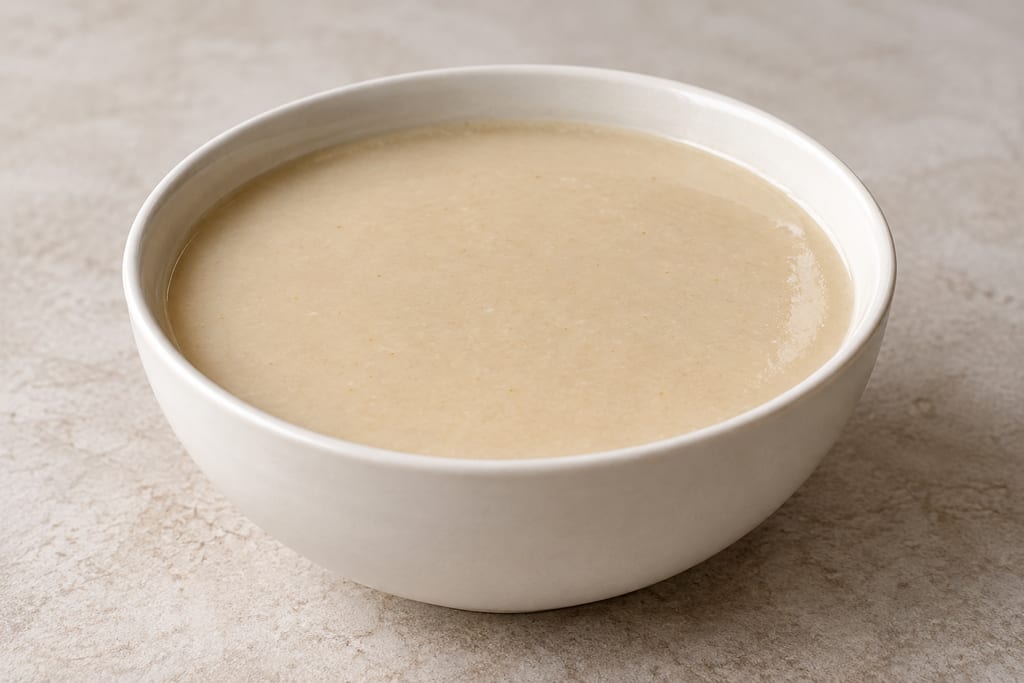
Ghanaian sour cassava dough fermented with traditional inoculum and drained during fermentation. It is used as a base for cooked foods such as banku and akple; process variants and safety outcomes differ.
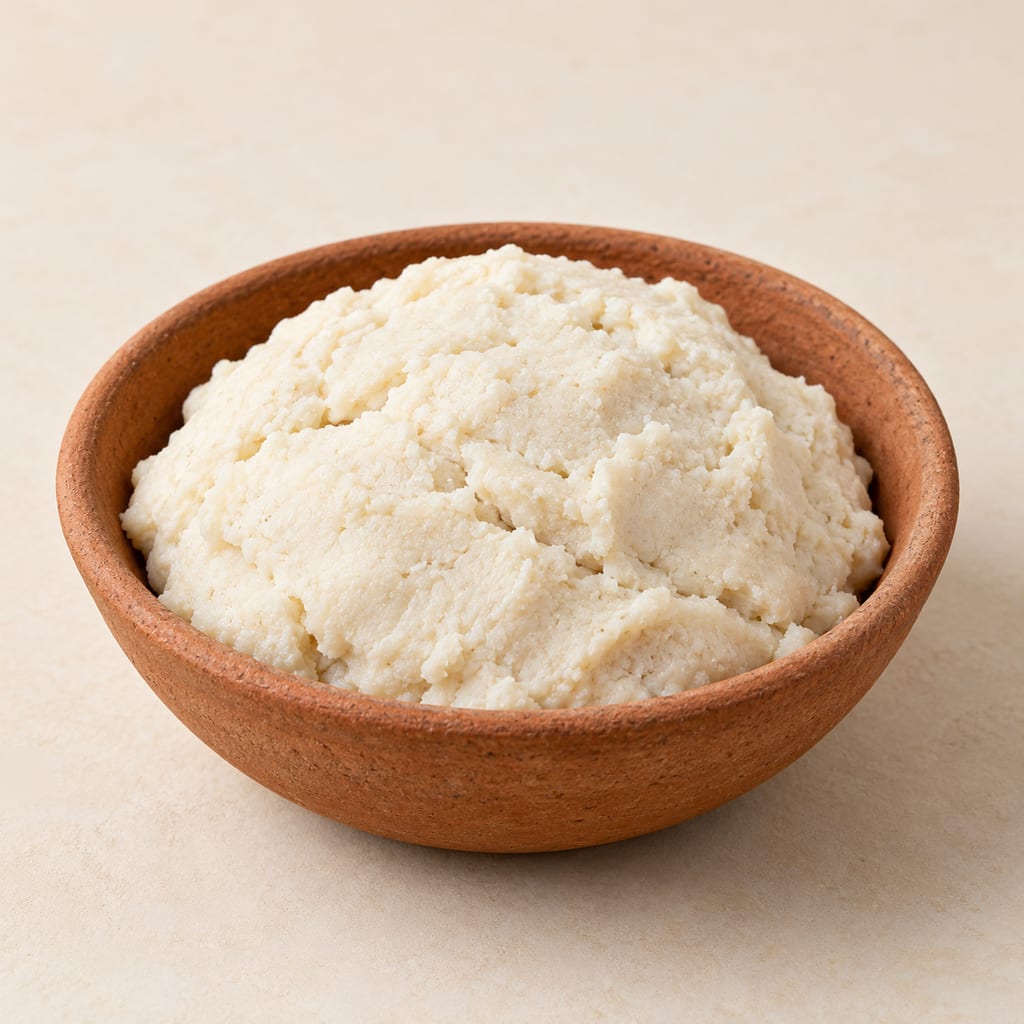
Agbelima is a fermented cassava dough associated with Ghana. Peeled roots are grated and the resulting mash is fermented with a traditional cassava inoculum, often called kudeme. In a studied process the mash ferments as it drains in sacks for two to three days, yielding a sour, smooth-textured dough. This dough is a preparation in its own right and also serves as a base for cooked foods. It is not the same product as gari, whose fermented mash is roasted into dry granules, or fufu, which follows a different processing route.
Food Research Institute researchers in Accra investigated agbelima’s fermentation in the 1990s. Their publications show that researchers were documenting the product and its microbiology by that time; the dates do not tell us when the food originated. A careful account keeps modern food-science documentation separate from a tradition’s beginnings, which the cited studies do not establish.
Ghana is the principal place association in the recipe record. A primary study described agbelima as widely consumed in Ghana, Togo and Benin, while a FAO country account places it among Ghana’s many important cassava foods. These broad labels describe documented presence; they do not mean that each community uses one identical recipe or that national borders contain all local practice.
The name appears alongside different local preparations and downstream uses. Some later accounts discuss banku, akple and kenkey as foods that can use agbelima as an ingredient. This record keeps those cooked dishes separate: their maize dough, shaping, cooking and serving are not part of making the fermented cassava dough itself.
The core transformation is acidifying fermentation of cassava mash. Grating breaks the root tissue and makes a moist substrate. Researchers describe traditional cassava-dough inocula, including kudeme, as part of the process. These inocula can carry a mixed microbial community; an inoculum is not a single defined commercial culture. In primary work, lactic acid bacteria were abundant during fermentation and lactic acid increased over the observed 48-hour sampling period.
Agbelima studies do not all prescribe the same order. One quality-study abstract says inoculum may be added before, during or after grating. It describes mash packed in sacks and fermenting for two to three days while dewatering takes place. Another account gives a sequence that begins with steeping roots before the paste is prepared. These are useful records of process diversity, not components to combine into an invented standardized method.
The recipe steps therefore describe the source-bounded sack process as one documented version. They leave proportions, fermentation temperature, cultivar and analytical endpoint unspecified where the sources do. A time range from a paper describes that paper’s process; it does not guarantee equal acidity, texture or safety in another kitchen.
The souring is a microbial change, not simply the taste of fresh cassava. Amoa-Awua, Appoh and Jakobsen measured increasing titratable acidity in inoculated dough and reported lactic acid bacteria throughout the process. Their survey of isolates found Lactobacillus plantarum common, with other lactic acid bacteria also present. Naming those organisms helps explain the study; it does not imply that a home batch contains the same organisms in the same proportions.
A later investigation considered moulds and yeasts as well as bacteria. It linked cellulase activity in some isolates to breakdown of coarse cassava texture, which helps explain why a fermented dough can become smoother than the grated root mash. Research accounts also discuss aroma development. These findings come from specific samples and methods, so they describe microbial possibilities rather than a guaranteed sensory profile for every agbelima.
Kudeme is a traditional inoculant whose preparation varies. A Ghanaian study comparing cassava varieties and kudeme processing methods found differences in measured chemical characteristics. That variability matters: it helps explain why agbelima is not a single factory-style formula with universal quantities, timing or color.
Agbelima’s sour dough can be used as an ingredient in cooked Ghanaian foods. Reviews identify banku and akple among its uses, and some sources include kenkey. Once mixed with other doughs or cooked, the result has its own ingredient balance and method. The sour cassava base contributes acidity and texture, while the final dish’s additional ingredients and cooking transform it again.
This makes the preparation useful to understand even when a reader’s goal is the meal rather than the fermentation. It is an intermediate, much as a starter or dough stage belongs to a wider cooking process. Use the dedicated dish method for the final food, and keep its maize, water, shaping and cooking instructions separate from the cassava fermentation steps.
Cassava roots contain cyanogenic glycosides that can release hydrogen cyanide. Their amount varies with the cultivar and growing conditions. Peeling, grating, soaking, fermenting, pressing, drying and cooking can each contribute to a processing system, but the order and effectiveness differ by product. A process that reduces cyanogens in one cassava food does not automatically establish a safe endpoint for another.
Some agbelima studies report reductions in cyanogenic compounds during fermentation. A University of Ghana thesis also reports a pH measurement and pathogen-challenge results for particular laboratory doughs. Neither the pH value nor the 2–3 day processing interval is a validated cyanide limit for every cassava cultivar or home batch. Sourness, smell and elapsed time cannot serve as proof that a dough is safe.
For that reason, this source-based record is not a stand-alone home detoxification protocol. Use a locally approved cassava-processing procedure or commercially processed agbelima, then fully cook it in the chosen final dish. Do not taste raw or incompletely processed cassava dough. Follow current local food-safety and Codex guidance; where a validated process or measured endpoint is required, use qualified processing advice.
Agbelima belongs to a wider set of West African cassava preparations, but the shared crop does not make their methods interchangeable. In the FAO account of Ghana, agbelima is described as a grated, fermented preparation whose process stops after fermentation, while gari continues through roasting and becomes a granular dry food. Fufu is another path, based on soaking and softening roots before later processing. Each product name therefore points to a different chain of transformations, moisture level, texture and later use.
That distinction matters when reading a recipe or a photograph. An image of peeled cassava shows the raw substrate, not evidence of fermentation. A cooked banku or akple dish shows a downstream use, not the appearance or safety of the dough stage. The fermented dough itself is often described as smooth and sour, but the source papers caution that varieties and traditional inocula can change its measured and sensory properties. This record separates those stages so that descriptions of one food do not silently become instructions for another.
Regional descriptions also vary in what they call an intermediate. A source may describe agbelima as a meal, a sour dough, or a base used in other preparations. These labels capture related but different perspectives: the fermenter names the product at the end of a processing sequence, while a cook may treat the dough as one ingredient among several. The term should not be extended to every sour cassava product, flour, cooked dumpling or dish served with sauce.
Broad production geography deserves the same care. A study from the late 1990s describes agbelima as consumed across Ghana, Togo and Benin, but its research sample cannot stand for every community or household in those countries. Regional trade, migration, language and shared ingredients cross national borders. The documentation supports describing a multi-country association; it does not justify assigning an exclusive origin or claiming a uniform recipe.
Kudeme is described in Ghanaian research as a traditional inoculant used to start cassava fermentation. It is itself associated with cassava processing, and the studies treat it as a source of microorganisms rather than a single purified starter strain. This helps explain why an inoculum can influence texture, color and flavour while still producing variable results. A written recipe that names kudeme but supplies no source-specific amount cannot be made into a standardized formula by guessing a percentage.
Researchers compared different methods used to prepare kudeme and different cassava varieties. Their results found meaningful changes in measured chemical characteristics across preparations, while the microbial load did not differ significantly in that particular comparison. The finding describes the studied samples and metrics; it does not mean that every inoculum is interchangeable or that its microbial identity is fully controlled.
Amoa-Awua and colleagues studied four traditional inocula in fermenting dough and found lactic acid bacteria in the inocula and throughout fermentation. Other studies found yeasts and moulds in some processes as well. It is therefore more accurate to describe agbelima as an ecosystem-mediated fermentation than as a process driven by one guaranteed species. The often-reported presence of lactic acid bacteria is important, but it cannot stand in for an exact starter specification, a process validation or a safety test.
The add-in order can vary too. The quality study reports inoculum addition before, during or after grating. Different sequences may change how quickly acidification begins and how much the dough drains while fermenting. A documented variant is not an invitation to shuffle steps arbitrarily: each sequence belongs to its own source and local practice, and should be interpreted together with the raw material, inoculum and handling described there.
During fermentation, lactic acid bacteria use available carbohydrates and produce organic acids. In the 1996 study, titratable acidity expressed as lactic acid rose during the observation period. The microbial counts and isolate identifications help describe the sample’s change over time; they are evidence from a research setting, not a home monitoring chart. The method record does not provide a single starter dose, standardized root cultivar, temperature range or sensory endpoint that can be copied into every kitchen.
Texture is another outcome of interacting factors. Grating breaks down root tissue and increases the surface available to microorganisms. The draining sack removes liquid as the mash acidifies. A paper on moulds and yeasts proposes that enzymes produced by some organisms can contribute to breakdown of coarse texture. Cassava variety and inoculum preparation also affect quality measurements. The resulting dough may be smooth and cohesive in one batch and differ in color, aroma or sourness in another.
A two- or three-day fermentation interval appears in studies describing particular batches. It tells us how long those researchers processed their samples; it does not prove that another lot has reached equivalent acidification or reduced cyanogenic compounds to a safe concentration. A study measurement such as pH or titratable acidity belongs to the exact material and method tested. It should not be promoted into a universal cutoff unless a competent authority has validated it for the same product and process.
Fermentation is influenced by temperature, but no transferable controlled temperature is established for agbelima. A plausible warm-room figure would create false precision, so reproducing the process calls for local technical guidance.
Agbelima is used as an ingredient in later cooking. Reviews describe it as a base for banku and akple, and other accounts mention kenkey among the dishes made with cassava dough. These names refer to finished foods with their own formulas, other ingredients and heating steps. A reader preparing banku, for example, needs the appropriate banku method for the maize and cassava dough mixture; agbelima’s fermentation outline does not specify how much maize to add or how long to cook the final dish.
Keeping the preparation and dish separate also prevents unsafe shortcuts. Cooking the final food is a distinct step from fermenting and draining the cassava. It does not retroactively establish that the raw root or dough was properly processed. Sources on cassava safety stress that residual cyanogens depend on cultivar and on a series of processing steps. This record consequently names the cooked use without presenting the unvalidated agbelima interval as proof that its dough is ready for raw consumption.
Commercial agbelima can be a more appropriate starting point for cooks who want to make a final dish without reproducing a traditional fermentation at home. Product handling and cooking instructions should follow the label and local food guidance. A purchased dough’s sour flavor or appearance still cannot reveal the cultivar, processing history or measured cyanide level, so it should be handled as a food intended for its stated cooked use.
Cassava contains cyanogenic glycosides, especially linamarin, which can release hydrogen cyanide when plant tissue is disrupted and enzymes act on the compounds. The amount varies with the root variety and growing conditions. The FAO discussion of Ghana explains why processing can lower cyanogenic compounds and also notes that traditional technologies differ by product. Codex guidance similarly treats cyanide reduction as a product-specific process problem and warns that inadequate processing may leave high residues.
Agbelima research has reported reductions in cyanogenic compounds during fermentation, with inocula affecting outcomes. That is useful evidence about the food and its microbial process, but a reported reduction does not demonstrate that every batch is below a safety limit. A University of Ghana thesis reports experimental pH and pathogen-challenge observations; those results concern the tested dough systems. They do not define an agbelima home safety threshold, and a low pH alone is not a cyanide measurement.
Food Standards Australia New Zealand explains that cassava must be properly peeled and fully cooked under its local food code, and that processing methods differ in their effectiveness. The Codex code sets out good practices for reducing hydrocyanic acid across cassava products. Neither source validates this particular recipe outline. Without a measured residual-cyanide endpoint or a locally validated production protocol, the safe editorial boundary is to avoid presenting agbelima as a do-it-yourself detoxification recipe.
People who already prepare agbelima within an established local food system can follow the trained and validated method used there. Readers who lack that process should choose commercially processed dough and cook it according to an appropriate dish recipe. Do not eat raw cassava mash or rely on waiting until it smells sour. This guidance preserves the documented food tradition while being clear about the limits of this study-based recipe record.
Agbelima is documented as fermented cassava dough associated with Ghana and also reported in studies spanning Togo and Benin. Food Research Institute researchers in Accra published studies of its acidification and microbial ecology in the 1990s. These publication dates document research, not the food's origin.
Cassava contains cyanogenic glycosides; cultivar, growing conditions and processing affect the residual level. Inadequate processing can leave harmful cyanide.
Hazard sourceUse a locally validated cassava-processing procedure and a product intended for further cooking. Do not treat this study interval, sourness or smell as confirmation of a safe cyanide level.
Control sourceCassava cyanogenic content varies. This source-bounded recipe record is not a validated home detoxification procedure; use commercially processed agbelima or locally approved processing guidance and cook the final dish fully.
Ghana-associated fermented cassava dough documented in primary studies and a FAO country account.
A 1997 study describes agbelima as widely consumed in Ghana, Togo and Benin; this does not establish identical local methods.
A 1997 study describes agbelima as widely consumed in Ghana, Togo and Benin; this does not establish identical local methods.
From sour breads and milk to savoury seeds, cassava staples and living beers, African fermentation follows the crop, the community and the work of transformation.
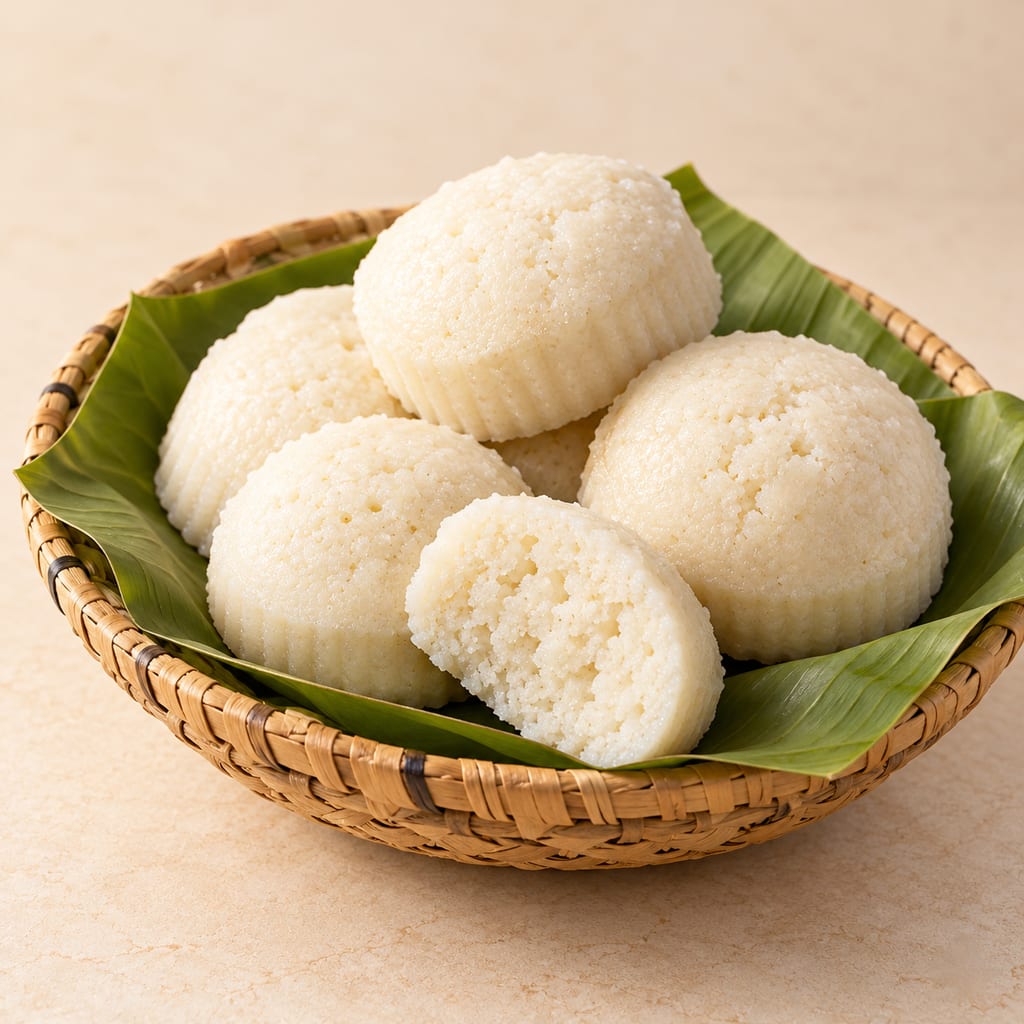
Soft, lightly tangy steamed cereal bread documented across Benin and Togo. This page gives one measured rice-flour research method; maize-based Ablo and mixed-grain versions remain distinct traditions.
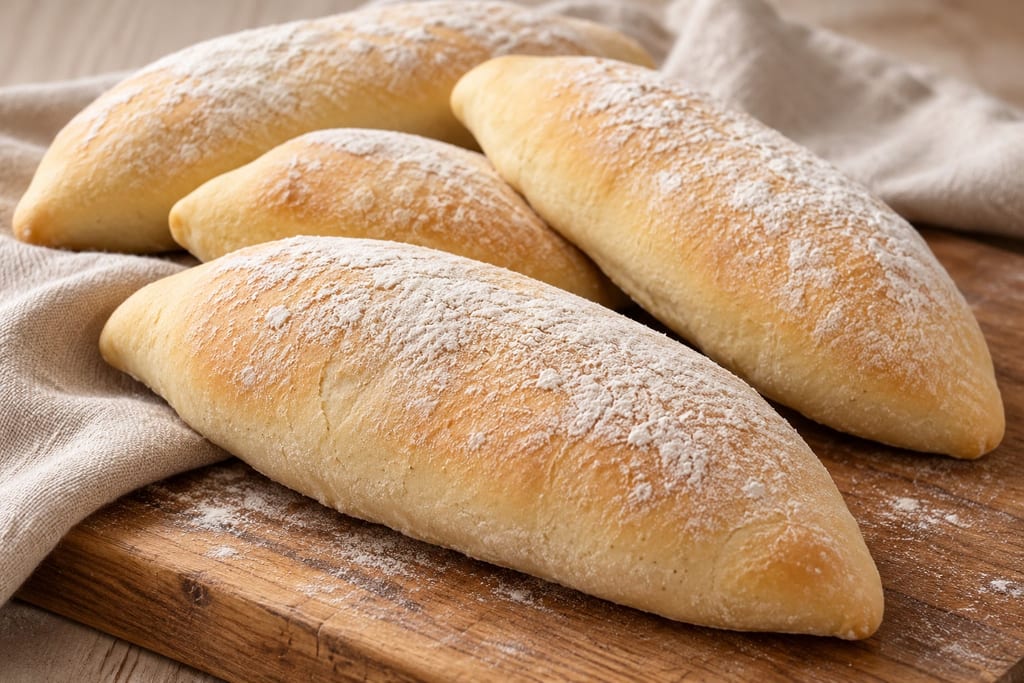
Lightly sweet Ghanaian wheat loaves with nutmeg, a long single proof and a crisp warm crust.

Koobi is Ghanaian salted and dried tilapia. Sources differ on the brief ripening stage and drying period, and do not establish a single validated household process. This entry records documented variants and their limits.
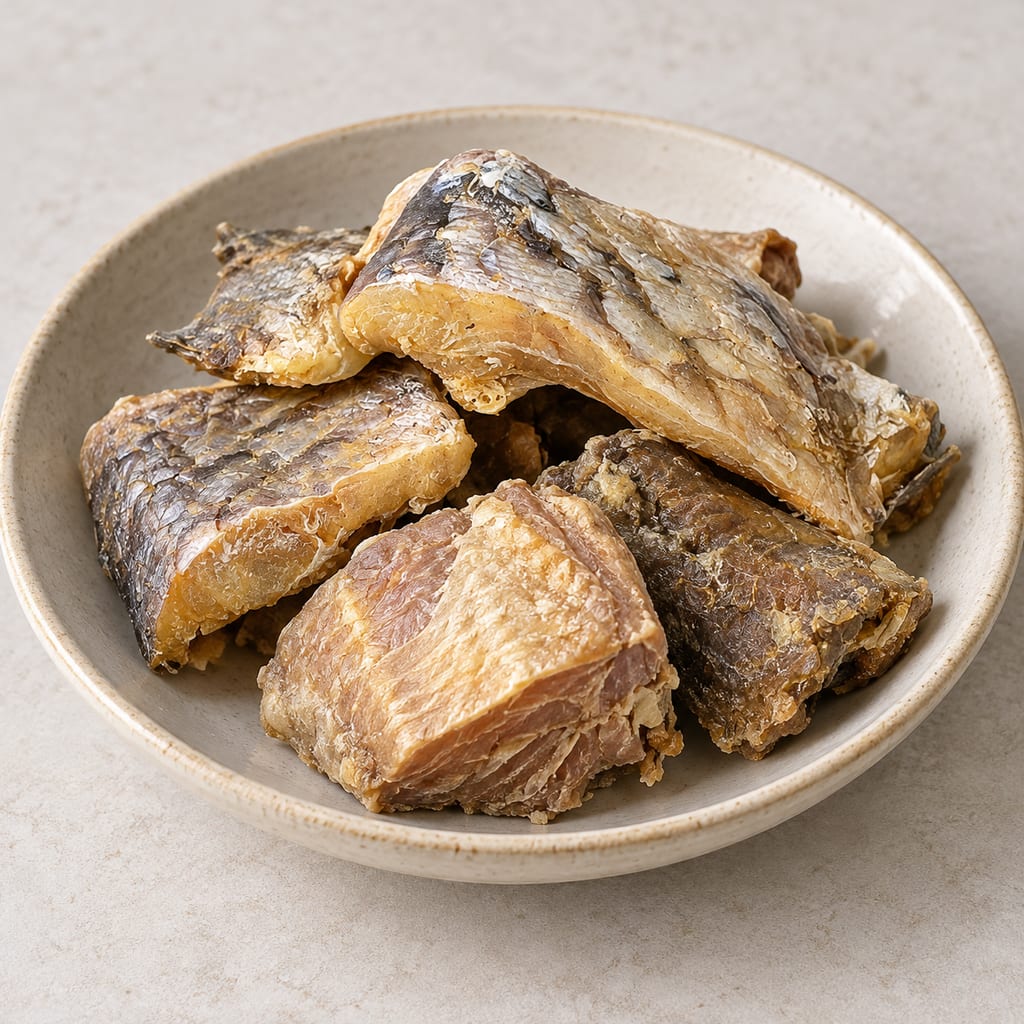
Momone is a Ghanaian salted and fermented fish condiment made from varied marine fish. Historical surveys describe both semi-dried and drier products, with salting and drying methods differing across coastal communities.
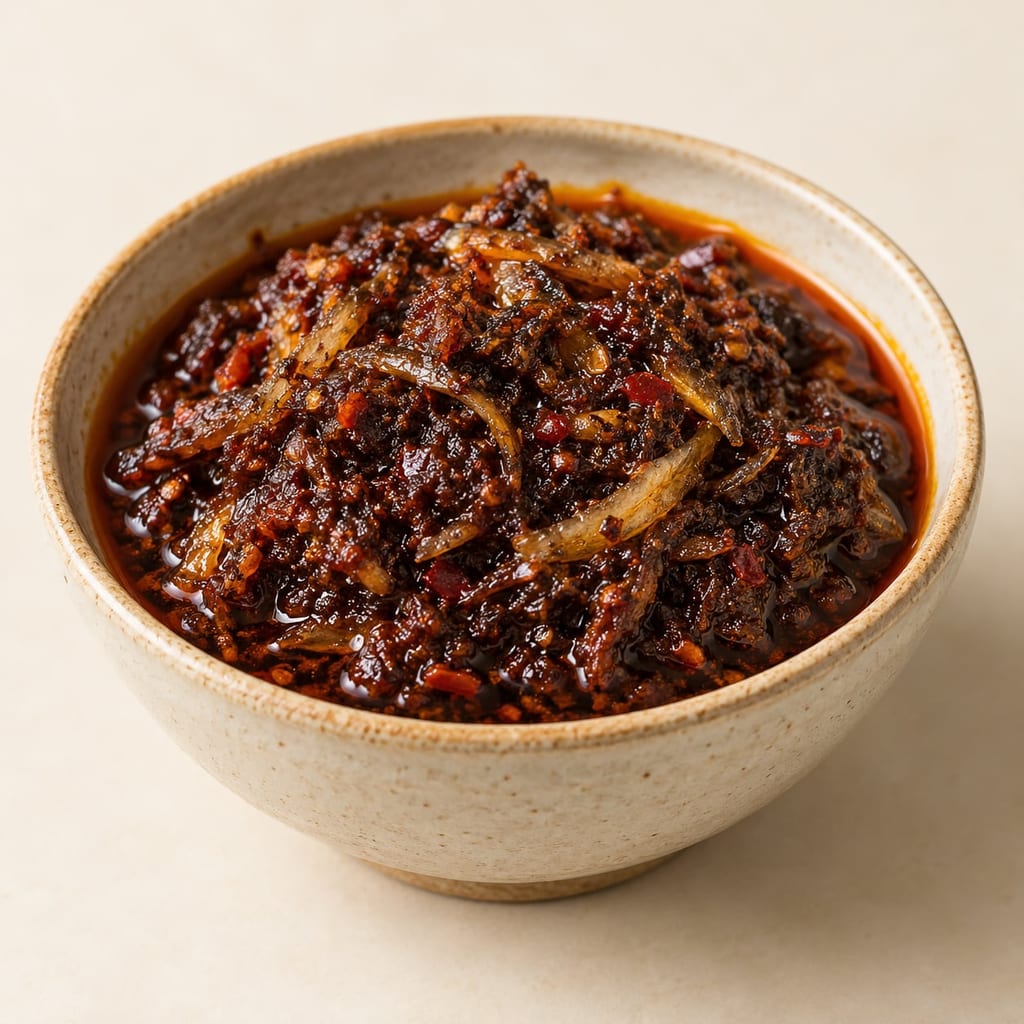
Shito is a hot Ghanaian pepper condiment with fish-rich, oil-cooked and fresh pepper forms; this measured version follows a recipe collected in Ghana’s Northern Region.
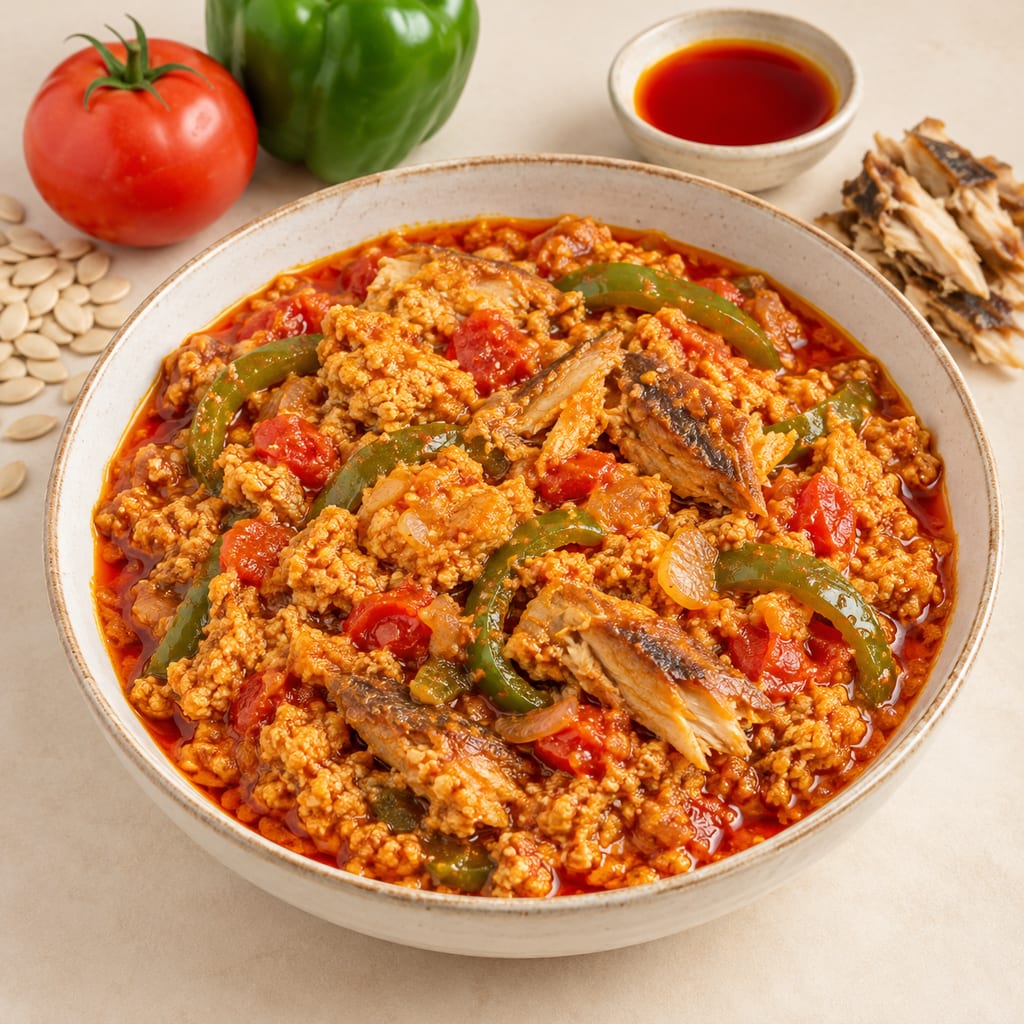
Ghanaian agushie stew combines melon-seed paste with tomatoes, peppers, palm oil and smoked fish, and is served with rice, yam or plantain.
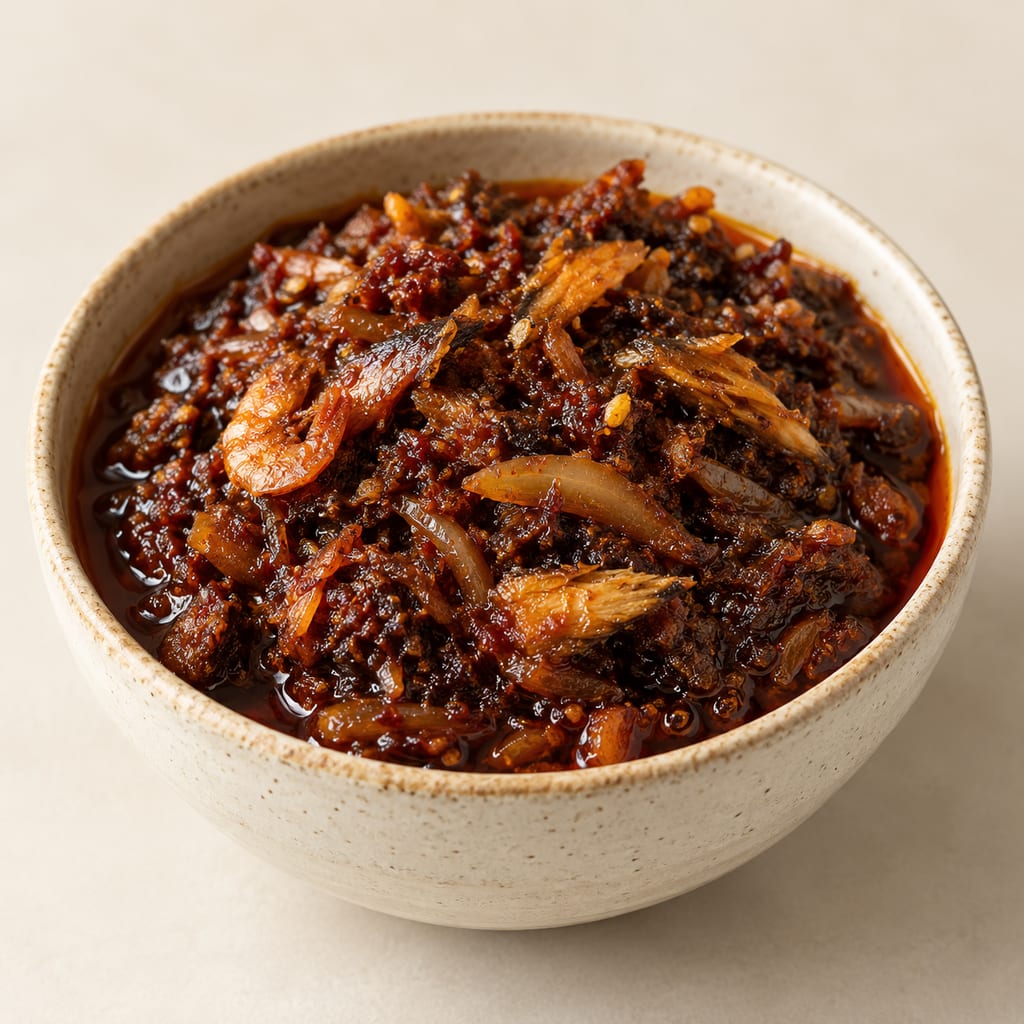
A seafood shito variant by Zoe Adjonyoh, using dried prawn and smoked fish in a cooked chilli and onion base.
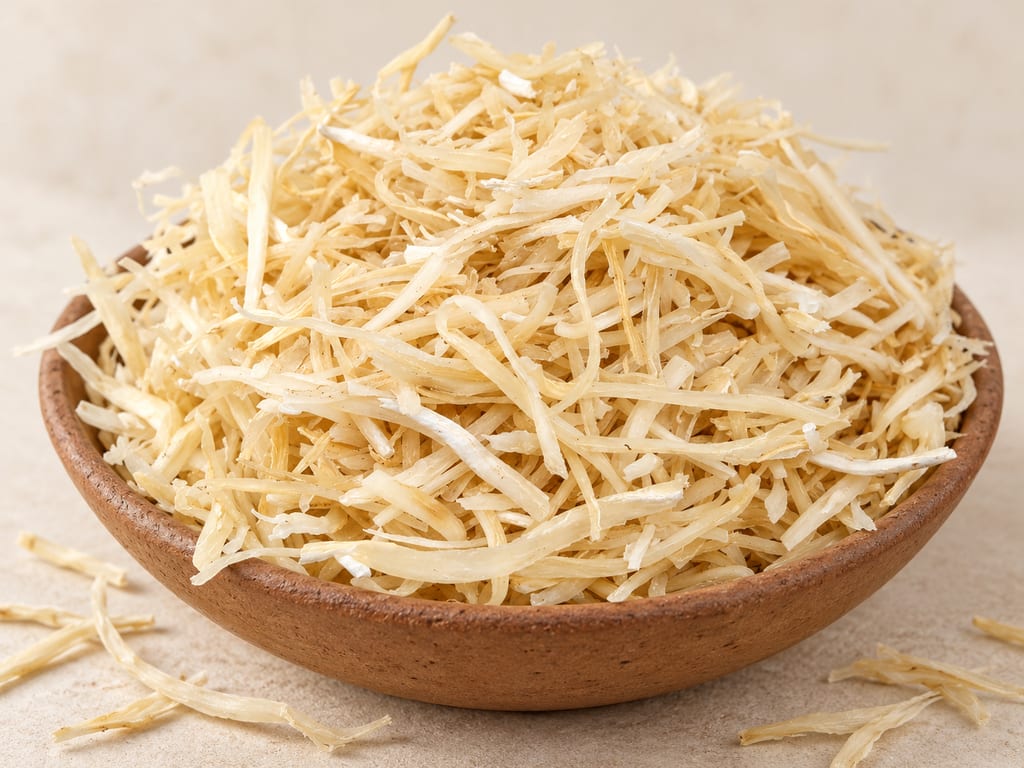
Abacha is a fermented cassava-strip preparation from southeastern Nigeria, sold wet or dried and later rehydrated for meals such as African salad.
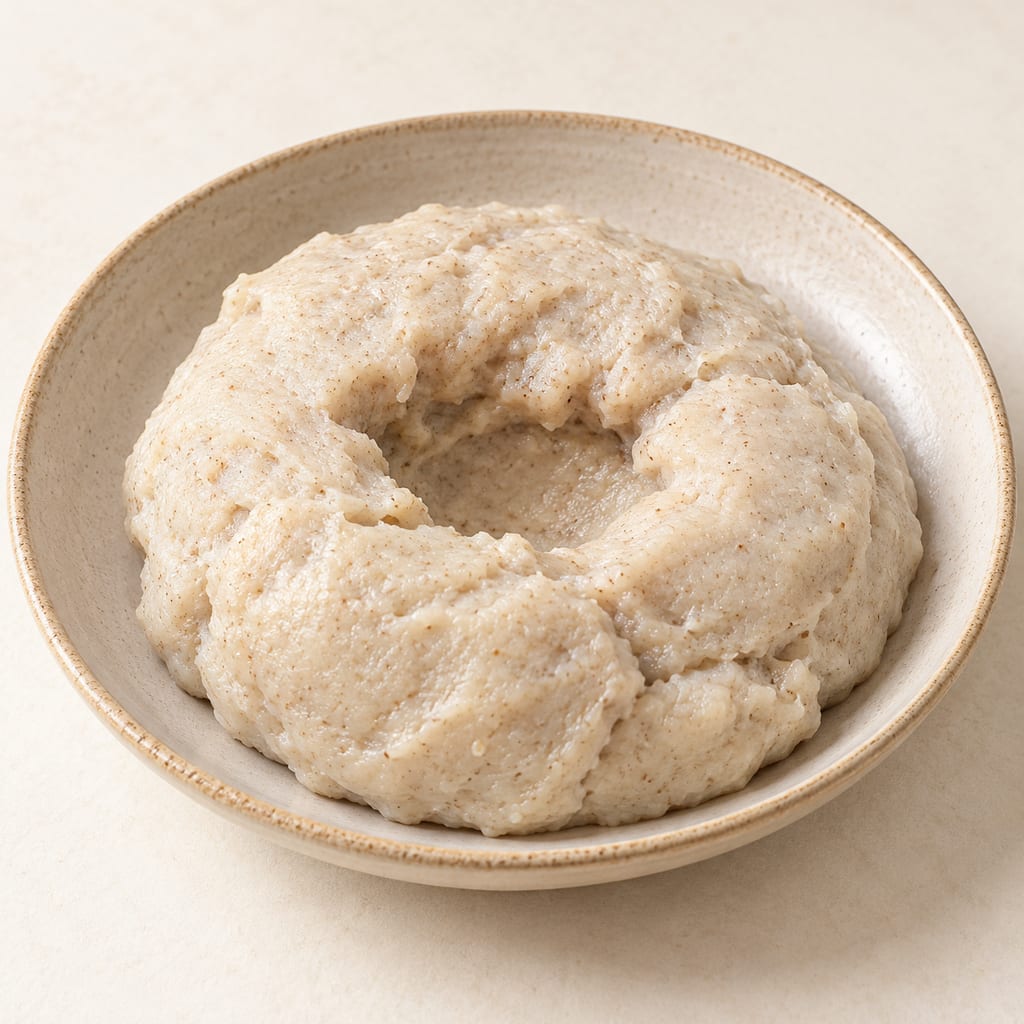
Aceda is Sudan’s firm cereal porridge, commonly made from sorghum and shaped into a smooth mound. Some versions use fermented dough; fermentation is not universal.

Appam, or hoppers, are South Indian and Sri Lankan rice pancakes made from a fermented coconut-and-rice batter and cooked in a curved pan to a crisp lacy rim and a soft, spongy centre.
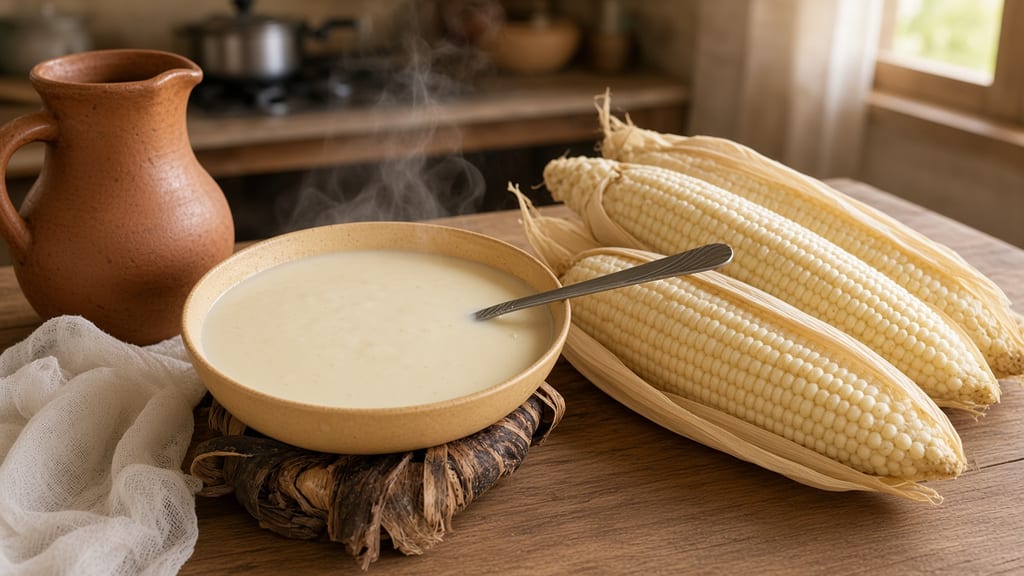
A hot, sour maize drink from Tabasco made from maize that is not lime-cooked. The ground grain sours for half a day, then makers strain it and boil it until thick.
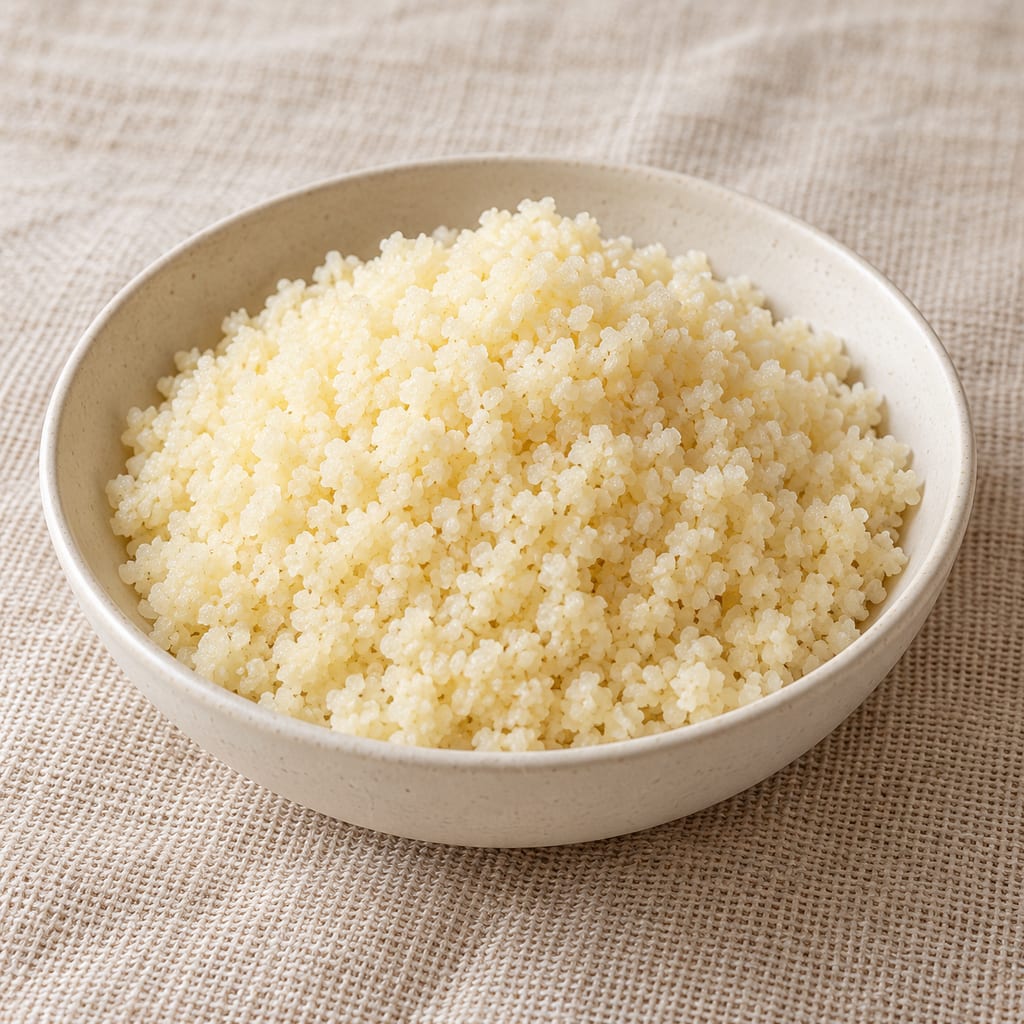
Ivorian cassava semolina: grated cassava is fermented overnight with a traditional inoculum, pressed, sieved into granules, dried and steamed. Documented in a 2006 field study; no sole original process is established.
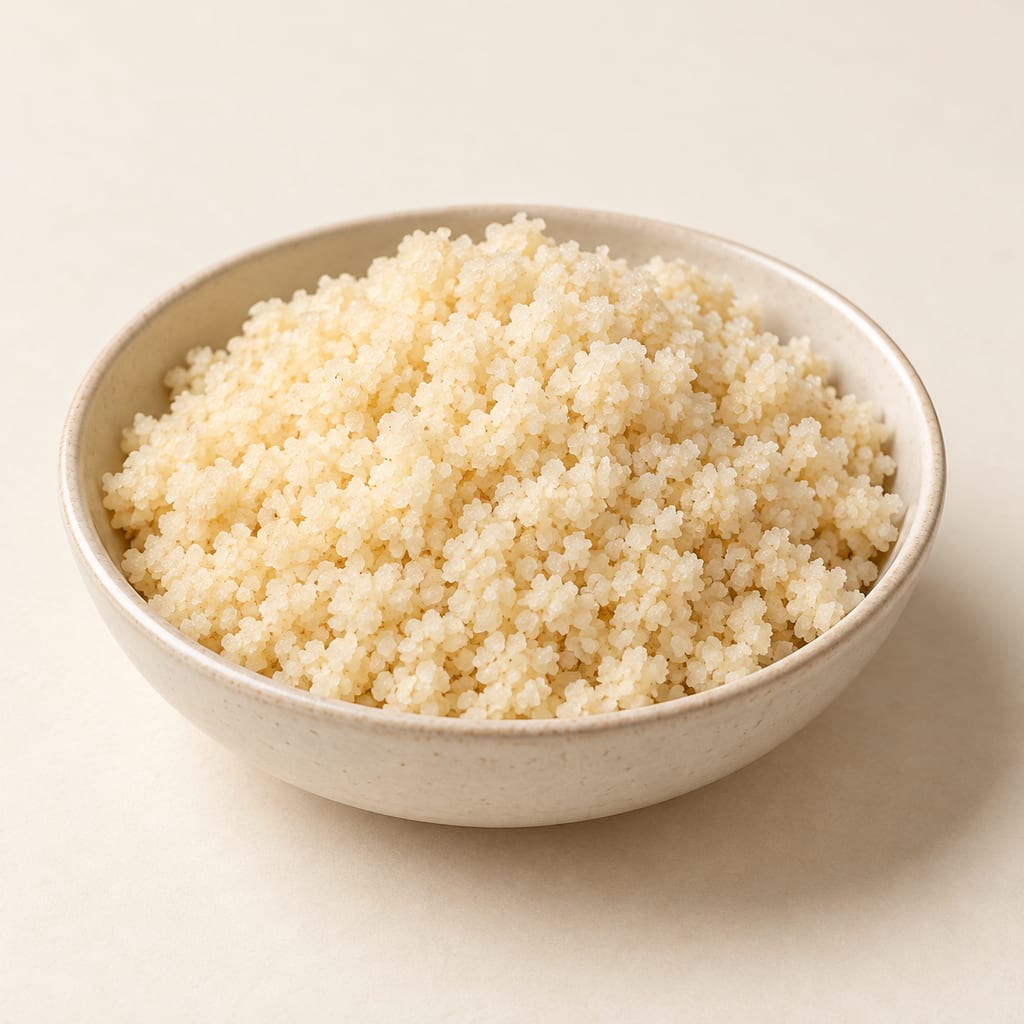
Attiéké is an Ivorian staple of grated cassava fermented with a traditional inoculum, then pressed, sieved, granulated, dried and steamed into fine couscous-like grains.

Crushed or milled barley cooked in water until the starch softens and the mixture thickens, the plainest way a northern household turned stored grain into a meal, here with apple and hazelnut.
A fermented pearl-millet gruel documented in Ouagadougou, Burkina Faso. Whole grain is soaked, wet-milled and sieved; the settled paste ferments again before it is cooked with its liquid.

Soft, spreadable Calabrian pork sausage made with a great deal of red chilli and fatty pork, stuffed into natural casings, sometimes smoked and matured while staying soft.

A way to add independent temperature logging to an existing food dehydrator without changing its built-in controls or protections. It is a monitoring method, not a rewiring plan.

Pleurotus cystidiosus is the abalone mushroom, a cultivated oyster-type fungus with dark brown caps that grows more slowly and is more demanding than other Pleurotus species.

A dark, balanced vinegar from Emilia-Romagna made by combining cooked or concentrated grape must with wine vinegar, then acetifying and refining it in wood under a protected specification.

A living dairy inoculum that starts controlled cream fermentation, developing acidity and aroma before sour cream or cultured butter is finished.

A small electric incubator holds jars at a selected temperature for yogurt and other documented warm food preparations. Controls, capacity and vessel arrangement vary by model.

Adygean salt is a seasoned table salt associated with Adygea and the wider North Caucasian culinary tradition. Salt is blended with garlic and a variable selection of herbs and spices; the exact mix depends on the named style and maker.

The African Caesar-group mushroom, Amanita masasiensis, is a wild ectomycorrhizal species of central and southern African woodlands, eaten locally. The genus contains deadly poisonous species, so identification needs care.
No community contributions have been published for this entry yet.
Sign in to contribute. Published comments and photos are free to read.
International Journal of Food Microbiology / PubMedProcess · Science
Lactic acid fermentation of cassava dough into agbelimaGhana Food Research Institute affiliation; traditional inocula; acidification across 0, 24 and 48 hours; lactic acid bacteria in the fermentation. The abstract does not define a safe household recipe.
Cited in: A sour cassava dough and a distinct stage; Grating, inoculation and simultaneous drainage; Microbes shape sourness, texture and aroma; Kudeme and the role of traditional inoculum; Acidification, texture and the meaning of a two-day interval
Journal of Applied MicrobiologyIdentity · Geography · Science
The contribution of moulds and yeasts to the fermentation of ‘agbelima’ cassava doughDescribes agbelima consumption across Ghana, Togo and Benin; cassava mash fermented with traditional inoculum; describes smooth sour dough and microbial variation.
Cited in: A sour cassava dough and a distinct stage; Geography and community context; Microbes shape sourness, texture and aroma; One cassava root, several distinct fermented foods; Kudeme and the role of traditional inoculum; Acidification, texture and the meaning of a two-day interval
Food Control / ScienceDirectProcess · Variation
Subjective and objective assessment of agbelima (cassava dough) qualityQuality-study abstract describes inoculum added before, during or after grating and mash fermenting in sacks while dewatering for two to three days; records variability and lack of standardization.
Cited in: Grating, inoculation and simultaneous drainage; Kudeme and the role of traditional inoculum; Acidification, texture and the meaning of a two-day interval
Food and Agriculture Organization of the United NationsGeography · History · Uses · Safety
Background information on GhanaCassava cultivation and processing context in Ghana; describes agbelima as a fermented cassava product and distinguishes it from gari and cooked derivatives; explains cyanogenic compounds and why processing matters.
Cited in: Geography and community context; How agbelima is used; Cassava safety requires validated processing; One cassava root, several distinct fermented foods; From fermented dough to a cooked meal; A safety boundary around cassava processing
Journal of Science and Technology, Kwame Nkrumah University of Science and TechnologyCulture · Variation
Effect of Different Cassava Varieties and Processing Methods on some Characteristics of Kudeme—an Inoculant for Agbelima ProductionKudeme is a traditional inoculant for agbelima; cassava variety and processing affect its measured chemical and sensory-related characteristics.
Cited in: Microbes shape sourness, texture and aroma; Kudeme and the role of traditional inoculum; Acidification, texture and the meaning of a two-day interval
International Journal of Food Science & TechnologyProcess · Uses · Variation
Traditional and novel fermented foods and beverages from tropical root and tuber crops: reviewReview summarizes agbelima and related cassava dough processes, use in cooked foods, and documented process variants. Used as a synthesis, not as a single universal recipe.
Cited in: Geography and community context; Grating, inoculation and simultaneous drainage; How agbelima is used; One cassava root, several distinct fermented foods; From fermented dough to a cooked meal
Food Standards Australia New ZealandSafety
Cassava and bamboo shootsCyanogenic glycosides occur in cassava; preparation and processing affect safety; cooking alone varies in its cyanide reduction. Used to support the warning that source time or taste is not a validated detox endpoint.
Cited in: Cassava safety requires validated processing; From fermented dough to a cooked meal; A safety boundary around cassava processing
FAO/WHO Codex Alimentarius CommissionSafety
Code of Practice for the Reduction of Hydrocyanic Acid (HCN) in Cassava and Cassava ProductsCodex code explains cassava cyanogenic content and emphasizes appropriate product-specific processing; inadequate processing can leave high residues. It does not validate the cited agbelima time as sufficient.
Cited in: Cassava safety requires validated processing; A safety boundary around cassava processing
University of GhanaScience · Safety
Antimicrobial Interactions during the Fermentation of Cassava Dough into AgbelimaThesis abstract reports pathogen challenge experiments and a pH 3.85 in one 48-hour experimental dough. These are experimental observations, not a recipe-specific safety validation.
Cited in: Cassava safety requires validated processing; A safety boundary around cassava processing