
African fermented foods, drinks and preservation
From sour breads and milk to savoury seeds, cassava staples and living beers, African fermentation follows the crop, the community and the work of transformation.
 FermenteaWhere food goes to change
Cultures
Kudeme is described in research as a traditional Ghanaian inoculant for fermenting cassava dough into Agbelima. Its exact microbial composition and a single canonical preparation are not established by the sources reviewed.
Kudeme is described in research as a traditional inoculant used to ferment cassava for Agbelima, a Ghanaian fermented cassava dough. It is a starter material rather than a plant species, cassava variety, or the finished dough. The sources reviewed do not establish a stable microbial formula, a defined strain, or a single standard form.
The name should remain attached to the source-specific inoculant described in the studies. Microorganisms reported in research on other Agbelima inocula cannot be assigned to Kudeme without evidence. Nor should Kudeme be treated as generic sourdough or as a retained portion of cassava dough.
The KNUST study names Kudeme as an inoculant for Agbelima production and compares cassava varieties and processing methods. The abstract reports variation in chemical characteristics, including texture, colour and flavour of the resulting dough. It reports no significant difference in measured microbial load across the study treatments, but it does not name Kudeme's microbial community or provide a universal inoculation method.
Other Agbelima studies describe several traditional inocula and measure fermentation organisms or acidification. Their findings belong to the particular inocula and dough samples that they examined. They should not be transferred wholesale to Kudeme or used as a recipe.
The strongest source-specific association is Ghana: the KNUST paper identifies Kudeme as a traditional inoculant for Agbelima. Studies of Agbelima describe the food's broader consumption across Ghana, Togo and Benin, but that broader distribution does not demonstrate that Kudeme itself is used throughout all three countries. No reviewed source establishes a precise locality or a place of origin for Kudeme.
A University of Ghana thesis relays several historical accounts and attributes them to earlier oral and published sources. Because those original accounts were not independently inspected here, they remain separate reports rather than a settled origin narrative or a combined process.
Cassava can contain cyanogenic glycosides. Their reduction depends on processing, and general cassava hazard guidance is not a validated Kudeme procedure. Studies of Agbelima report changes in cyanogenic compounds and measured fermentation outcomes under particular experimental conditions; they do not establish a current home endpoint or prove that fermentation alone makes every cassava batch safe.
The cited experimental observations are not substitutes for validated controls, and smell, taste, sourness, or a single pH reading does not establish safety. The sources reviewed do not provide a universal time, temperature, acidity, storage, or detoxification limit for Kudeme.
The primary KNUST abstract identifies Kudeme as an inoculant for Agbelima production in Ghana. It does not establish an exact locality, growing area, or origin.
From sour breads and milk to savoury seeds, cassava staples and living beers, African fermentation follows the crop, the community and the work of transformation.
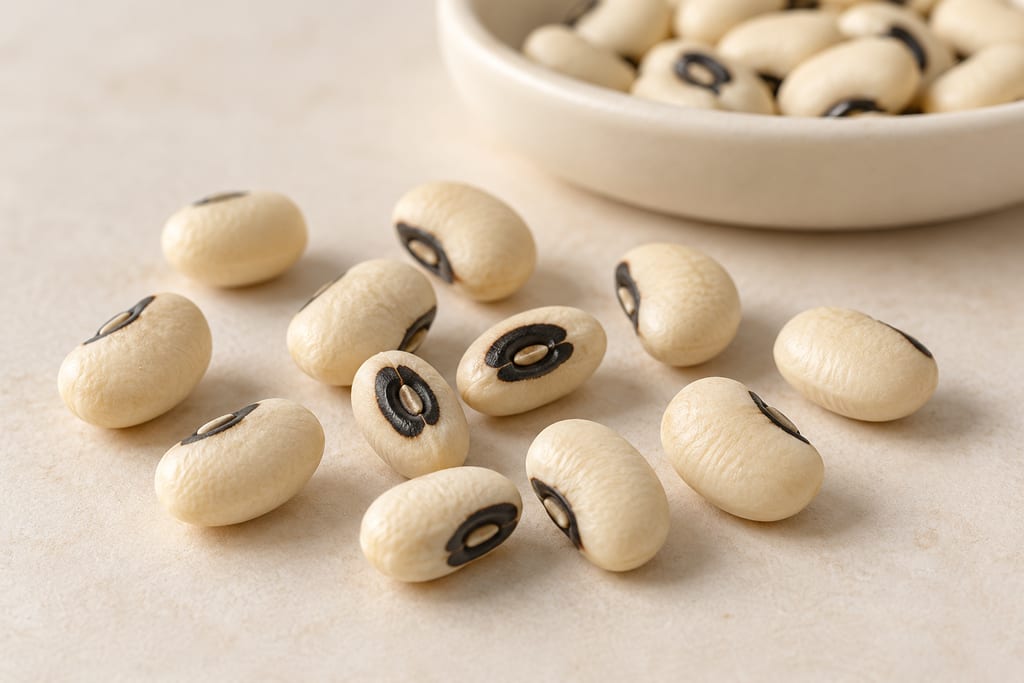
Cowpeas are the seeds of Vigna unguiculata, eaten green and freshly shelled or fully mature and dry. Across Africa they serve as food, fodder and a crop partner, while research also examines them in fermented pastes and cereal doughs.
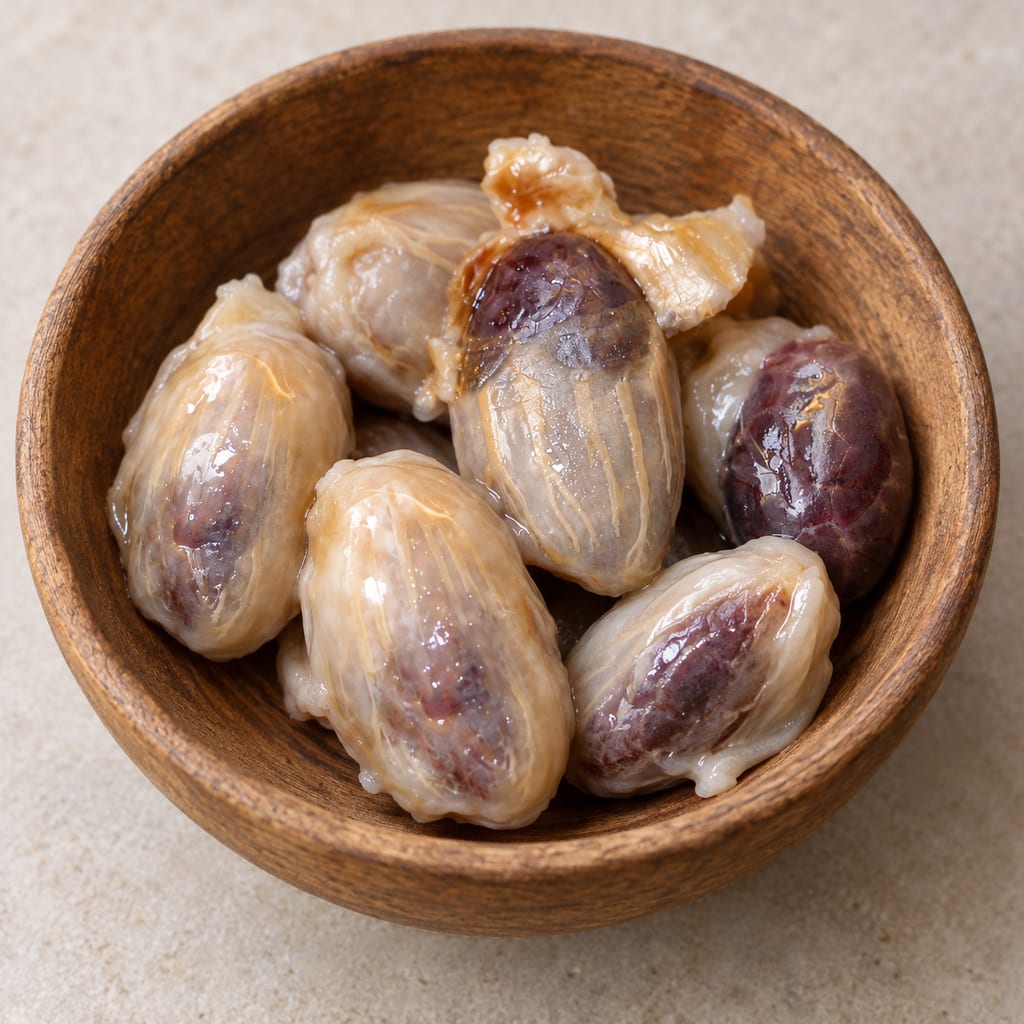
Fresh cocoa beans with pulp are cacao seeds newly removed from the pod while the sweet-acid white mucilage still clings to them. The seed-and-pulp mass is the starting material for post-harvest cocoa fermentation.
Sugar-rich liquid tapped from different palms, gathered fresh or transformed into local drinks and sweeteners; species and collection stage shape its composition.
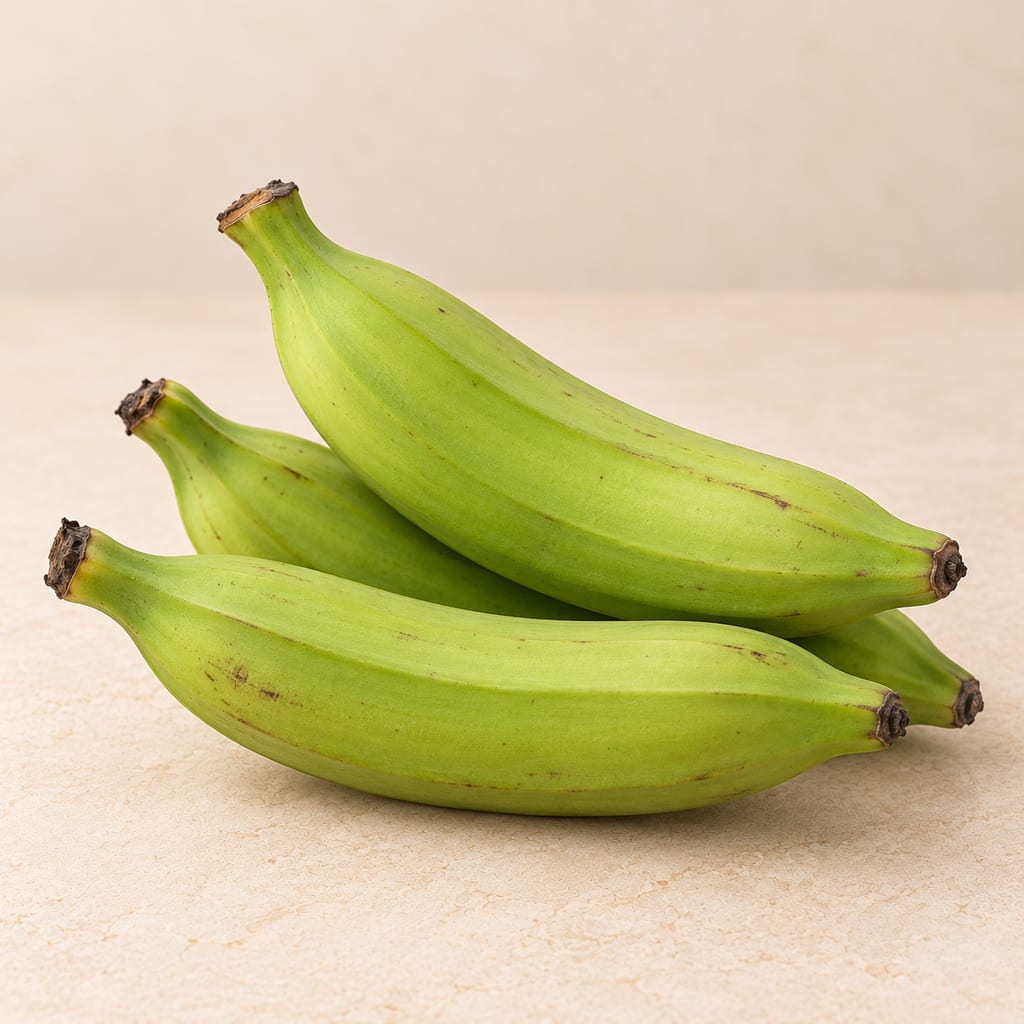
Plantains are starchy cooking bananas used green through fully ripe. Their firmness and sweetness shift with maturity, and ripe mashed fruit appears in a University of Rhode Island Liberian rice-bread adaptation.
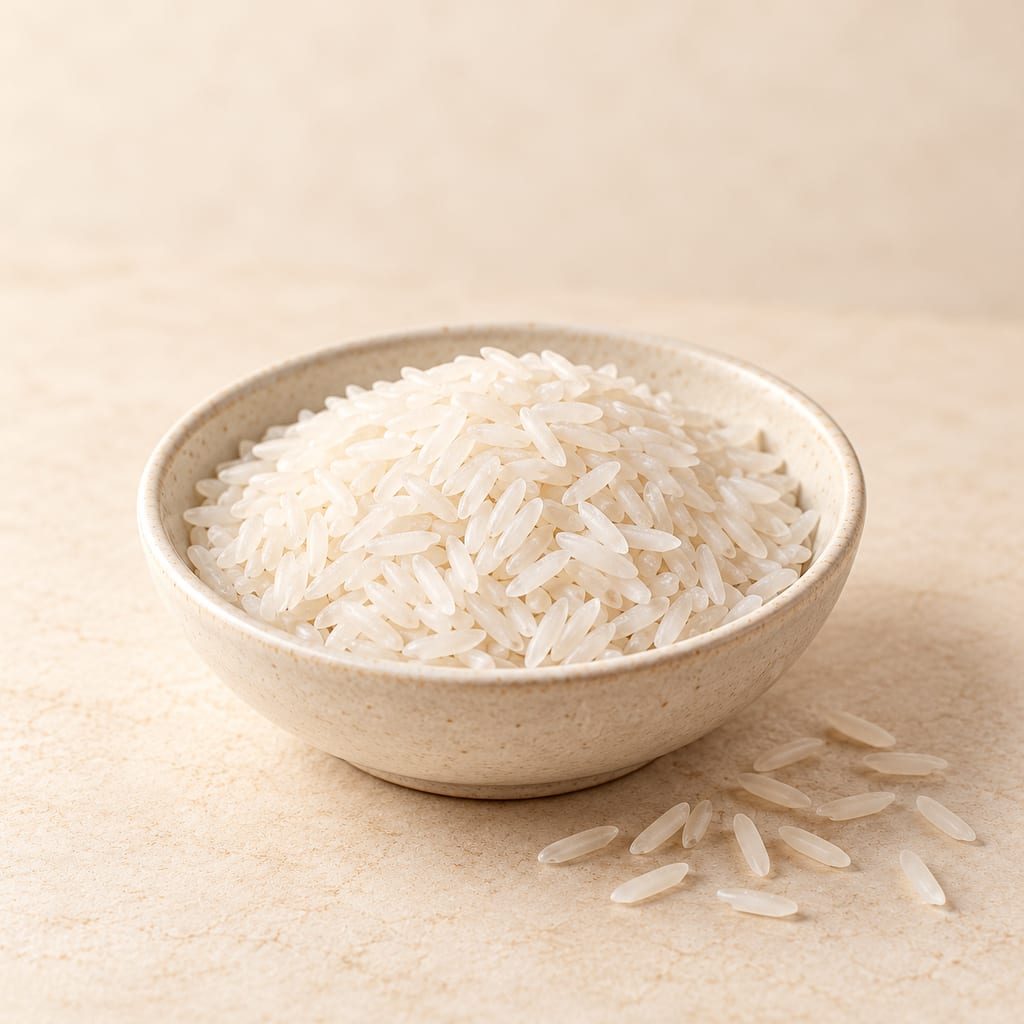
Rice contributes starch to flatbreads, steamed breads, batters and many distinct fermentations. Its species, milling and starch character shape how it cooks, binds, expands and feeds enzymes.
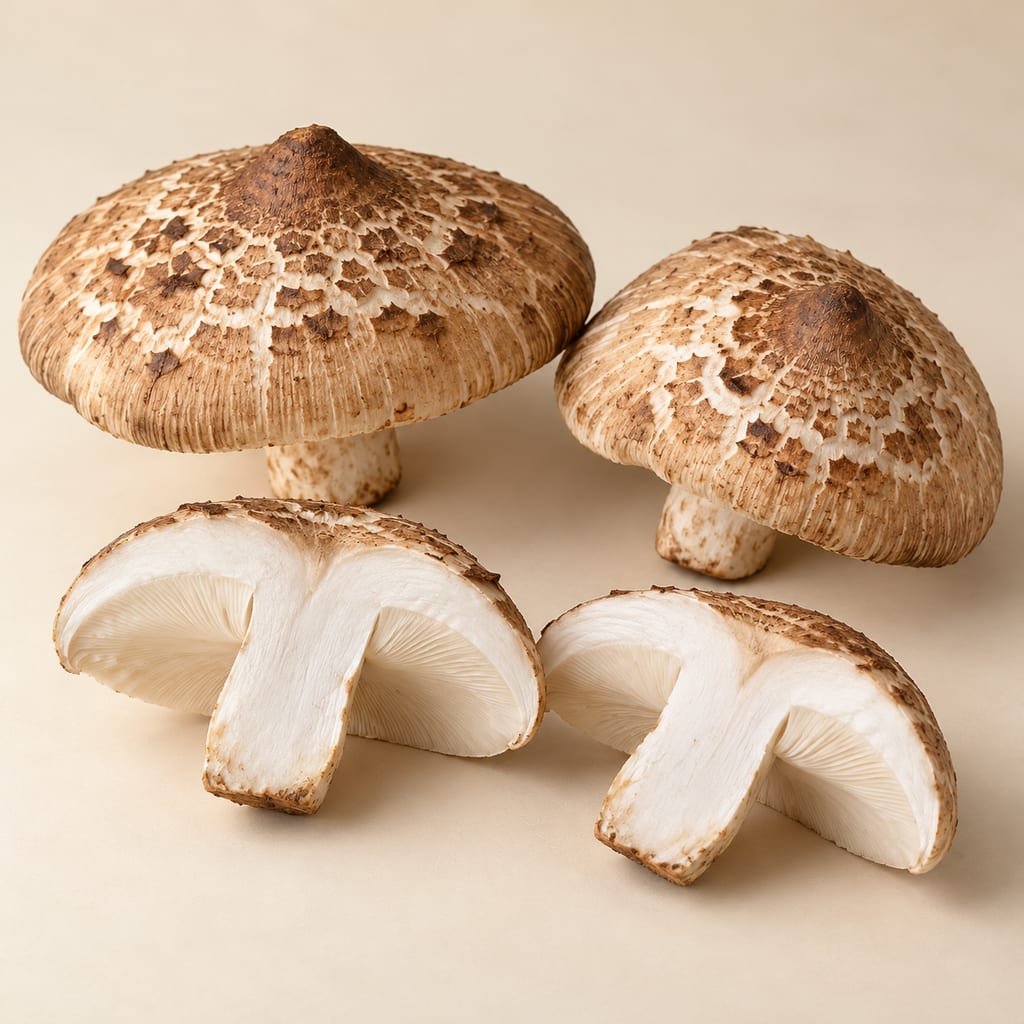
The termite mushroom, a large wild fungus of tropical Africa that fruits on Odontotermes termite mounds. The EFTA inventory lists it but gives no edibility rating or preparation.
Termitomyces reticulatus is a termite mushroom that grows with Odontotermes termites in African woodland. The European Food Safety Authority list records it as edible, but its identity and preparation need checking.
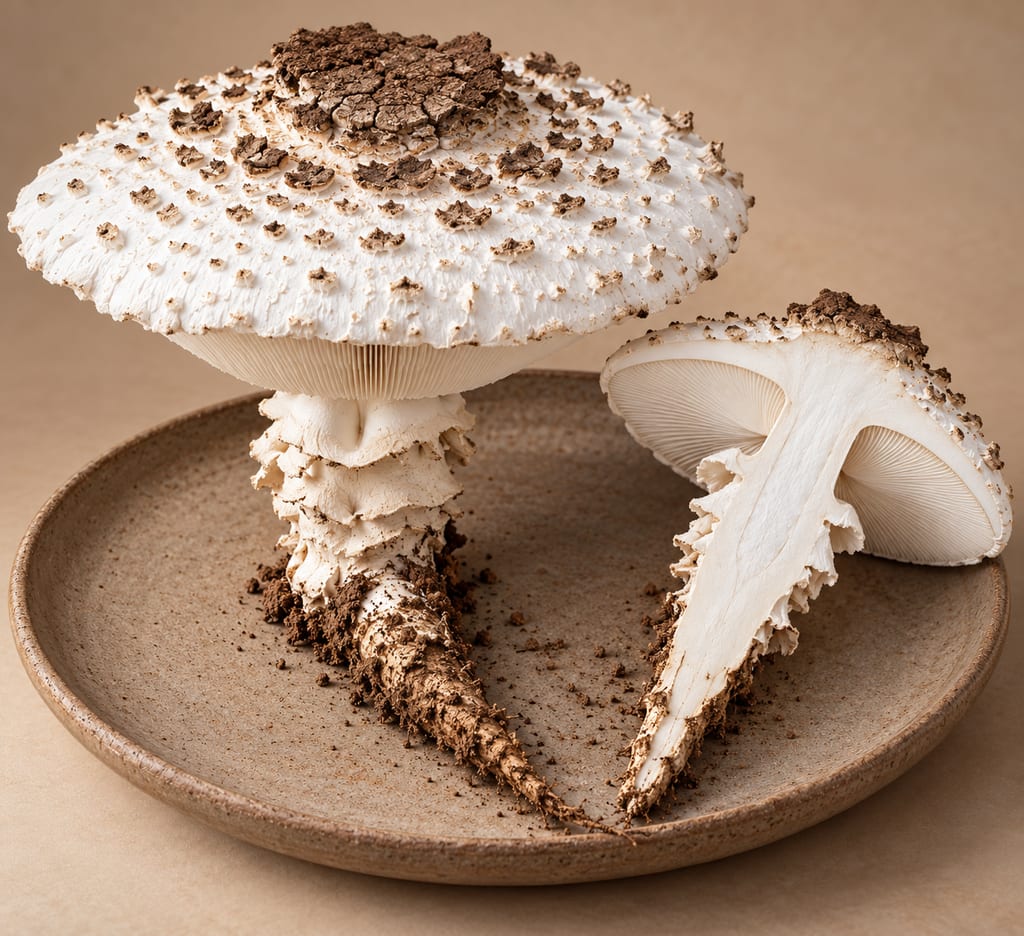
A large wild termite-associated mushroom gathered across parts of tropical Africa. Local food uses and fruiting seasons vary by place and rainfall; its appearance alone cannot establish a safe identification.
No community contributions have been published for this entry yet.
Sign in to contribute. Published comments and photos are free to read.
Journal of Science and Technology, Kwame Nkrumah University of Science and TechnologyIdentity · Use · Geography
Effect of Different Cassava Varieties and Processing Methods on some Characteristics of ‘Kudeme’—An Inoculant for Agbelima ProductionThe abstract identifies Kudeme as a traditional inoculant used to ferment cassava into Agbelima and reports differences in chemical characteristics across cassava varieties and processing methods.
The article's abstract says measured microbial load did not differ significantly among its treatments; it does not name Kudeme's organisms or establish a household starter method.
Cited in: What Kudeme names; Use in Agbelima; Geography and history; Safety and evidence limits
International Journal of Food MicrobiologyFermentation · Safety
Lactic acid fermentation of cassava dough into agbelimaThe abstract describes four traditional inocula and measured acidification and microbial flora during Agbelima fermentation; it does not identify Kudeme's stable composition or map every result to Kudeme.
Cited in: What Kudeme names; Use in Agbelima; Geography and history; Safety and evidence limits
Journal of Applied MicrobiologyFermentation
The contribution of moulds and yeasts to the fermentation of ‘agbelima’ cassava doughThe study considers four Agbelima inocula and reports mould and yeast findings; it does not define a universal Kudeme culture.
Cited in: What Kudeme names; Use in Agbelima
University of GhanaHistory · Use
The Application of Kudeme as Fermentable Modifiers in Nixtamalized MaizeThe reviewed thesis passage relays several historical accounts and attributes them to earlier sources; those accounts are not combined into one preparation or treated as validated instructions.
Cited in: Geography and history
Food Standards Australia New ZealandSafety
Cassava and bamboo shootsCassava can contain cyanogenic glycosides, and processing affects their reduction; this general hazard source does not validate a Kudeme or Agbelima process.
Cited in: Safety and evidence limits