Borno and Yobe underground grain pits
A 2007 survey reports underground grain pits in Nigeria’s Sudan Savanna, especially Borno and Yobe. It describes lined pits storing threshed millet, sorghum and cowpea.
 FermenteaWhere food goes to change
Substrates
Cowpeas are the seeds of Vigna unguiculata, eaten green and freshly shelled or fully mature and dry. Across Africa they serve as food, fodder and a crop partner, while research also examines them in fermented pastes and cereal doughs.
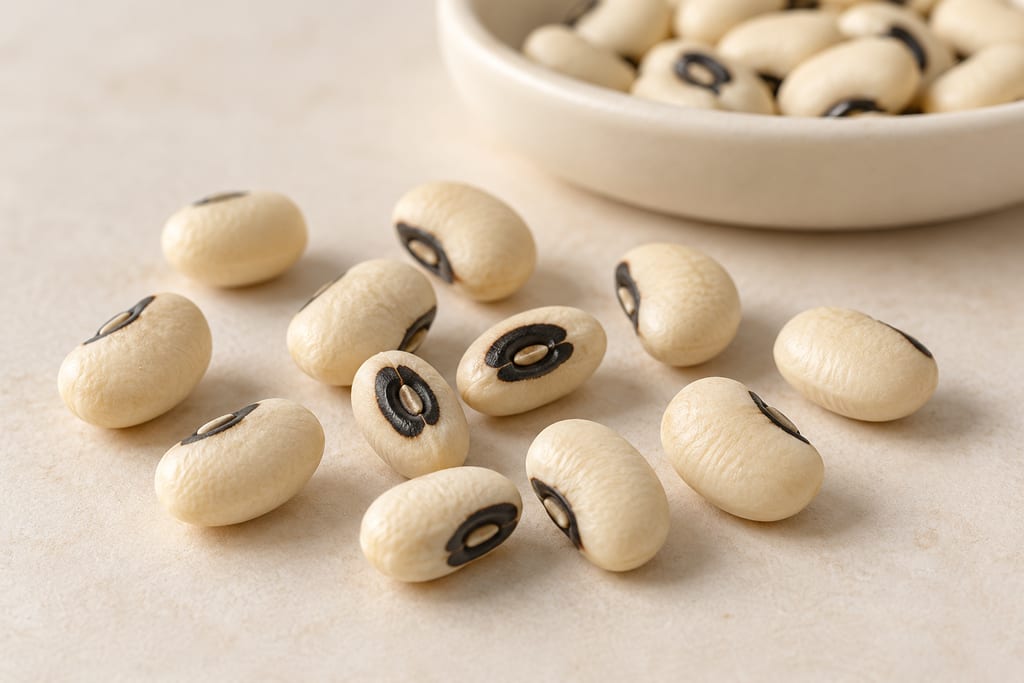
Cowpea is the edible seed of Vigna unguiculata (L.) Walp., an annual legume in the family Fabaceae. The pods contain seeds attached along a narrow seam. Depending on cultivar, the seeds are round to kidney-shaped, smooth or slightly wrinkled, and may be white, cream, green, yellow, red, brown, black, mottled or speckled. Some have a contrasting dark eye around the hilum, the scar where a seed attached inside the pod. That pattern explains the familiar name black-eyed pea, but an eye is not a defining feature of the species: many cowpeas have no black eye at all.
People harvest cowpea seeds at more than one maturity. Fresh-shelled cowpeas are plump seeds removed while the pod and seed are still green and moist; mature cowpeas are left to dry before shelling and can be stored as grain. These are stages of the same crop, but they behave differently in the kitchen. Fresh seeds are tender vegetables, while dry seeds need hydration and longer cooking. The crop is also grown for its immature pods, edible leaves and fodder, but those parts are not the subject of this seed account.
Cowpea is one species, not a synonym for every bean or pea. It is distinct from common bean (Phaseolus vulgaris), mung bean (Vigna radiata), and the cowpea products made from its seed, such as flour, akara, moin-moin and miso. Yardlong beans belong to a cultivated group within Vigna unguiculata but are selected mainly for their long green pods; their pod use should not be confused with grain cowpeas. In southern African sources, cowpea is also named dinawa in Sotho and Tswana, munawa in Venda, and isikhwali, indumba or isihlumaya in isiZulu. These regional words sit alongside English and Afrikaans names and do not identify one seed colour or landrace.
Cowpea was domesticated in Africa, but its exact domestication history remains unsettled. Genetic, textual and archaeological evidence supports West African and East African hypotheses; some analyses suggest that populations in both regions may be related to local wild cowpeas. The oldest cited archaeological remains from sub-Saharan Africa are charred seeds from central Ghana, dated to 1830–1595 BCE. That find documents early use of cowpea in the region; it does not prove that domestication began at the excavation site or in that exact period.
By the first millennium BCE, cowpea had moved beyond its African centres and was established across the Mediterranean region and farther east. Later movement across the Atlantic took place within colonial exchange systems shaped by enslavement and forced migration. The crop travelled with African germplasm and food knowledge, but popular stories that a particular person secretly carried seeds have no direct evidence in the historical review. These movements explain why cowpea now appears in cuisines far beyond Africa without erasing its African domestication and agricultural history.
Cowpea grows as an upright, bushy, trailing or climbing annual. Cultivar and growing conditions affect plant form, flowering, pod set and maturity. The crop is adapted to warm environments and is widely grown in the semi-arid tropics. Its diversity includes types bred for dry grain, fresh pods, forage or several uses together. West Africa is the main centre of cowpea diversity and production in the CGIAR genebank account, while the crop is also widely cultivated in East and Central Africa and in other tropical regions.
Farmers grow cowpea alone or intercrop it with cereal crops such as millet, sorghum and maize. Its root nodules house nitrogen-fixing bacteria, which take nitrogen from the air and make it part of the plant’s nutrient cycle; the crop’s ground cover and residues also contribute to farming systems. In semi-arid areas, cowpea can provide food before later cereal harvests and its dried haulms can feed livestock. The plant therefore links grain, fodder and soil management. The precise balance varies by variety, labour, rainfall, land and household needs, so there is no single African cowpea farming pattern.
Green cowpea seeds are eaten as a vegetable in some African communities. A FAO post-harvest account describes green seeds boiled as a fresh food alongside green pods and leaves; a separate FAO compendium lists cowpeas boiled, steamed or fried, and also records cooked green seeds and pods. Fresh seeds retain more moisture than mature dry grain, so their use is closer to a seasonal vegetable than a pantry pulse. Their tender texture and green colour contrast with the firmer, drier grain used for milling, storage and long-cooked dishes.
Mature dry cowpeas are widely used whole, split, dehulled or ground. In West Africa, soaked seeds may be decorticated and milled to a paste for akara, which is shaped and deep-fried, or for moin-moin, which is portioned and steamed. Other preparations use whole cooked grains in soups and stews or blend cowpea with rice and other staples. The finished texture depends on seed type and what producers do to it: leaving the seed coat gives a different body from wet dehulling; grinding creates a paste; boiling softens the cotyledons; frying or steaming then sets the food. These are distinct cooked foods, not names for fermented cowpea.
Cowpea’s protein and starch make it useful alongside cereal foods, though composition varies with seed type, growing conditions and processing. A West African FAO food-composition table gives one representative dry-seed entry, while an FAO survey of cowpea studies reports a range of seed compositions. Those figures describe dried seeds and should not be applied directly to fresh green seeds or to a cooked dish.
Cowpea seeds can support fermentation, but the evidence includes several different research systems rather than one continental tradition. An early Nigerian study examined two cultivars and compared fermentation with soaking and dehulling. Its abstract reports that fermentation lowered verbascose and slightly lowered stachyose, while raffinose rose. This uneven response matters: one measured compound cannot stand in for the whole seed or prove that a ferment is safe, digestible or suitable for storage. The paper’s abstract does not give a complete set of process conditions for a household method.
A later Benin and Wageningen study compared dehulling, soaking and boiling with bacterial, fungal and yeast cowpea fermentations. It measured both chemical changes and gas production after consumption; results differed with organism and measurement. Its experiments treated cowpeas as a substrate for controlled processing, not as evidence that every local seed ferment follows the same route. The hull itself was not the main fraction responsible for the reported gas response.
A Ghanaian study examined maize dough fortified with 20% cowpea during natural fermentation. Lactic acid bacteria were the predominant group isolated, with yeasts and other microbes also found. This is a mixed cereal-and-legume dough; cowpea supplied a protein-rich addition while maize remained the main fermenting base. The paper does not identify it as a cowpea-only tradition, and its microbiological observations do not validate a general home process.
In 2025, Portuguese researchers made cowpea miso with a defined microbial consortium and compared two salt formulations over an 18-month study. Their legumes were purchased dried, soaked and cooked before mixing with koji, salt and cultures. Cowpea misos differed from chickpea and lupin misos, including lower soluble protein and phenolic fractions in the reported results. This modern experiment shows that dried cowpea is a possible paste substrate; it does not establish a traditional Portuguese preparation or make its experimental low-salt formulation a household recipe.
Cowpeas bring starch, protein, fibre, minerals and sugars to a fermenting mixture. The seed coat, cotyledon size, cultivar and water absorbed during preparation all affect how fast a paste softens and how microbes reach nutrients. A whole dry seed, a soaked and dehulled seed, a flour and a cooked cowpea paste are therefore different substrates. An experimental result for one form should not be transferred to another without evidence.
The cowpea-miso study used a mixed microbial system: Aspergillus oryzae koji supplied enzymes, while yeasts and bacteria were added to the legume-and-koji mixture. Amylases break starch into smaller sugars, and proteases release soluble proteins and peptides; microbes then use some of those products and produce acids and flavour compounds. In the cowpea trials, ingredient identity and salt treatment shaped the measured evolution. These observations explain why a cowpea paste can behave differently from a soybean paste, even under a designed method.
In Ghanaian maize dough co-fermentation, the cereal supplied much of the fermentable carbohydrate and cowpea was a supplement. That pattern differs from a cowpea-only ferment or a miso-style paste. The word fermentation covers these varied microbial changes, but it does not erase differences in substrate, organisms, water, salt, heat treatment or intended food. This page therefore records research contexts without turning them into a single cowpea fermentation method.
Choose a form that matches the preparation. Fresh-shelled seeds are moist and tender and are used as seasonal vegetables; mature dry seeds are firmer and intended for pantry storage, milling or soaking and cooking. Seed colour and eye pattern vary naturally, so a cream, red, brown, black, mottled or speckled coat does not by itself identify quality or a particular food. Planting seed is selected for viability and variety identity; food seed is selected for cooking use, and these markets are not interchangeable.
The FAO post-harvest account describes cowpea grain losses from storage insects, especially bruchid beetles. This makes clean handling and protection from insects important for stored dry grain. The report is old and its loss estimates are not a modern storage schedule; it does not justify assigning a universal storage time. Fresh seeds retain moisture and are perishable, whereas a properly dried mature seed is a different storage material. A recipe should name which it uses rather than quietly substituting one for the other.
Cowpea flour, split seeds and dehulled seeds are further forms. Milling makes seed nutrients more accessible to water and microbes but also changes how a paste thickens and cooks. The hull contributes texture and colour, and wet dehulling brings its own soaking and separation stage. When a source omits a drying endpoint, storage duration or process measurement, those limits remain unknown. A colour change, soft texture or sour aroma is not a substitute for a documented safety check.
Cowpea seeds contain several compounds that influence nutrition, including oligosaccharides, phytic acid, polyphenols, protease inhibitors and lectins. Their amounts vary among varieties. The OECD review describes cowpea protease inhibitors and lectins as heat-labile and inactivated by cooking. That is why a fermentation account should specify whether the seed was cooked before fermentation and whether the finished food receives further heat. A short soak or an unmeasured spontaneous fermentation should not be treated as a replacement for cooking.
Fermentation studies measure particular endpoints: oligosaccharides, digestibility, gas production, microbial counts, acids or soluble compounds. A reduction in one antinutrient does not establish that all hazards have been controlled. The Ghana maize-dough paper included inoculated pathogen tests on its cooked, fermented product, but those results belong to that specific formulation and test design. The Portuguese miso paper tested a controlled consortium and its own salt levels over a long period; it explicitly calls for further research. Neither study proves safety for a different cultivar, equipment, salt level, temperature or home method.
People who prepare cowpea should use a source-backed recipe for the actual seed form and food, including its cooking and fermentation stages. If the method is experimental or incomplete, its findings are evidence about that experiment, not a safety guarantee. Cowpea offers a flexible food and crop resource, but flexibility does not make methods interchangeable.
Cowpea is eaten as a fresh vegetable, a cooked pulse and a flour, and it also supports livestock feeding and soil fertility. In African food systems, the seed joins meals in forms that range from whole cooked grains to fried cakes and steamed pastes. These uses can coexist with fermentation without turning every cowpea dish into a ferment. The cowpea in a bowl of cooked beans, the ground paste of akara, and the seed added to fermented maize dough each occupy a different place in the meal and in the process.
This record keeps the seed identity broad enough to include green and mature stages while naming their practical differences. Cowpea leaves and pods have separate uses, and products made from cowpea flour or fermentation may warrant their own recipe pages when a documented method exists. Cowpea does not mean common bean, lentil, or soybean. Its long African history, seed diversity and modern research are best understood together, without treating any one variety, food or laboratory experiment as the whole species.
The archaeology dates charred cowpea remains, not the crop's origin or domestication.
The sources document production and seed dishes including akara and moin-moin; this is not one cultivar or a single birthplace.
The regional genetic evidence contributes to unresolved domestication hypotheses; it does not establish a single site of origin.
A study examined cowpea as a protein addition to fermenting maize dough; it is not evidence for a cowpea-only traditional ferment.
Cowpea miso was tested as a modern alternative-legume ferment with defined cultures, not as a Portuguese traditional food.
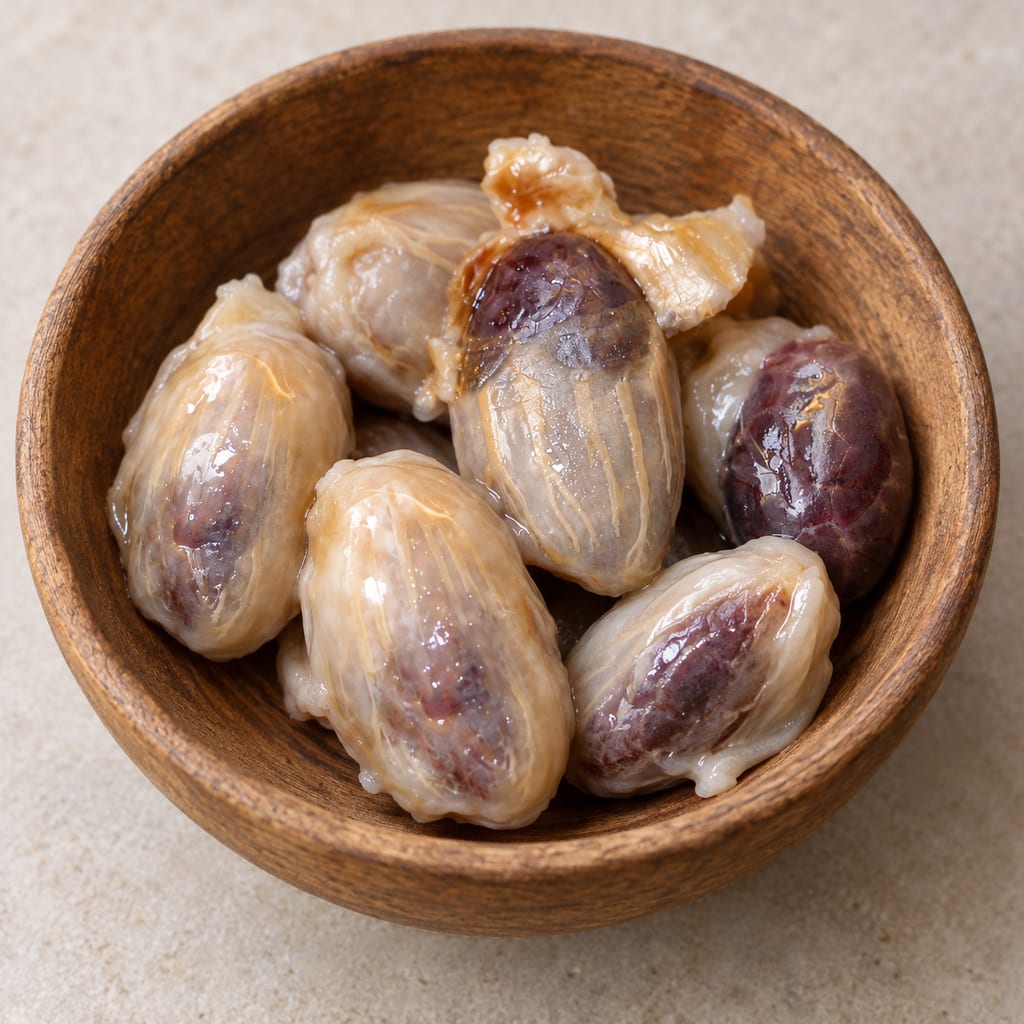
Fresh cocoa beans with pulp are cacao seeds newly removed from the pod while the sweet-acid white mucilage still clings to them. The seed-and-pulp mass is the starting material for post-harvest cocoa fermentation.
Kudeme is described in research as a traditional Ghanaian inoculant for fermenting cassava dough into Agbelima. Its exact microbial composition and a single canonical preparation are not established by the sources reviewed.
Sugar-rich liquid tapped from different palms, gathered fresh or transformed into local drinks and sweeteners; species and collection stage shape its composition.
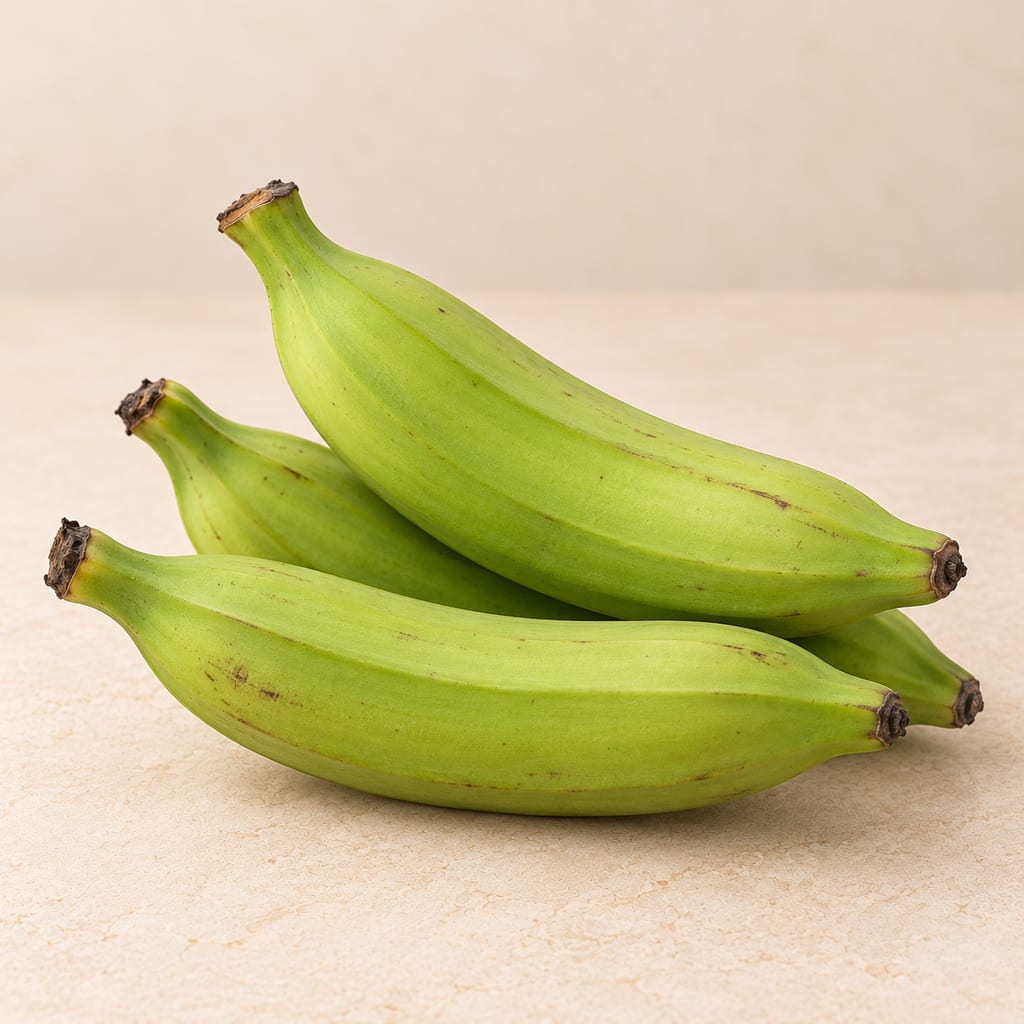
Plantains are starchy cooking bananas used green through fully ripe. Their firmness and sweetness shift with maturity, and ripe mashed fruit appears in a University of Rhode Island Liberian rice-bread adaptation.
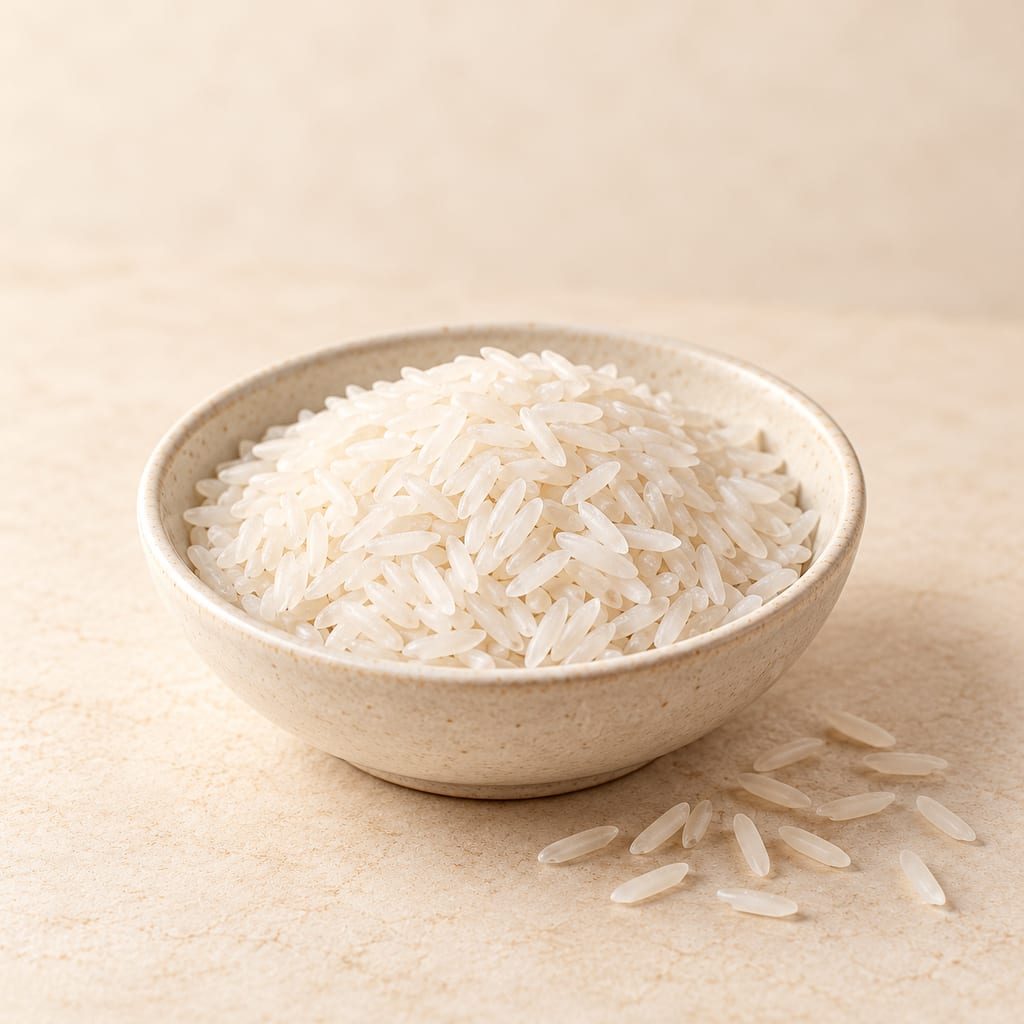
Rice contributes starch to flatbreads, steamed breads, batters and many distinct fermentations. Its species, milling and starch character shape how it cooks, binds, expands and feeds enzymes.
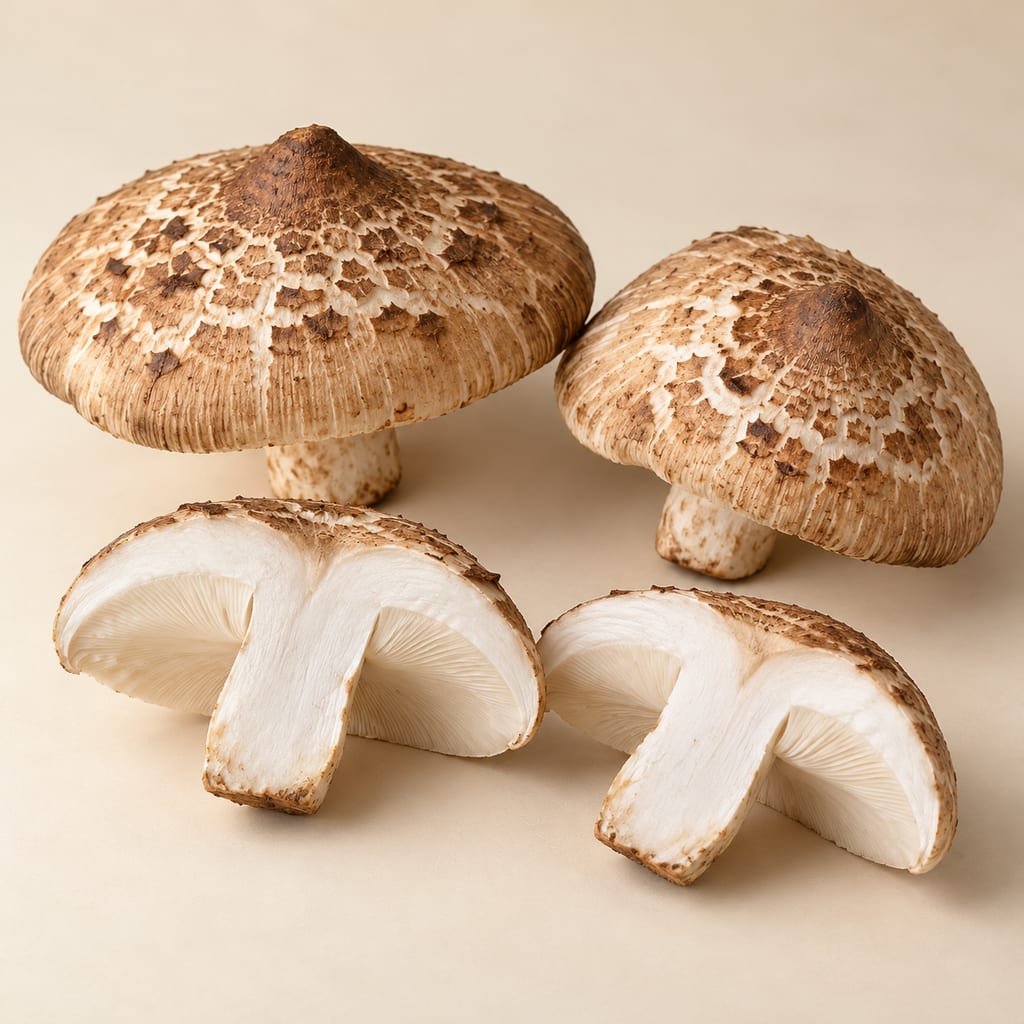
The termite mushroom, a large wild fungus of tropical Africa that fruits on Odontotermes termite mounds. The EFTA inventory lists it but gives no edibility rating or preparation.
Termitomyces reticulatus is a termite mushroom that grows with Odontotermes termites in African woodland. The European Food Safety Authority list records it as edible, but its identity and preparation need checking.
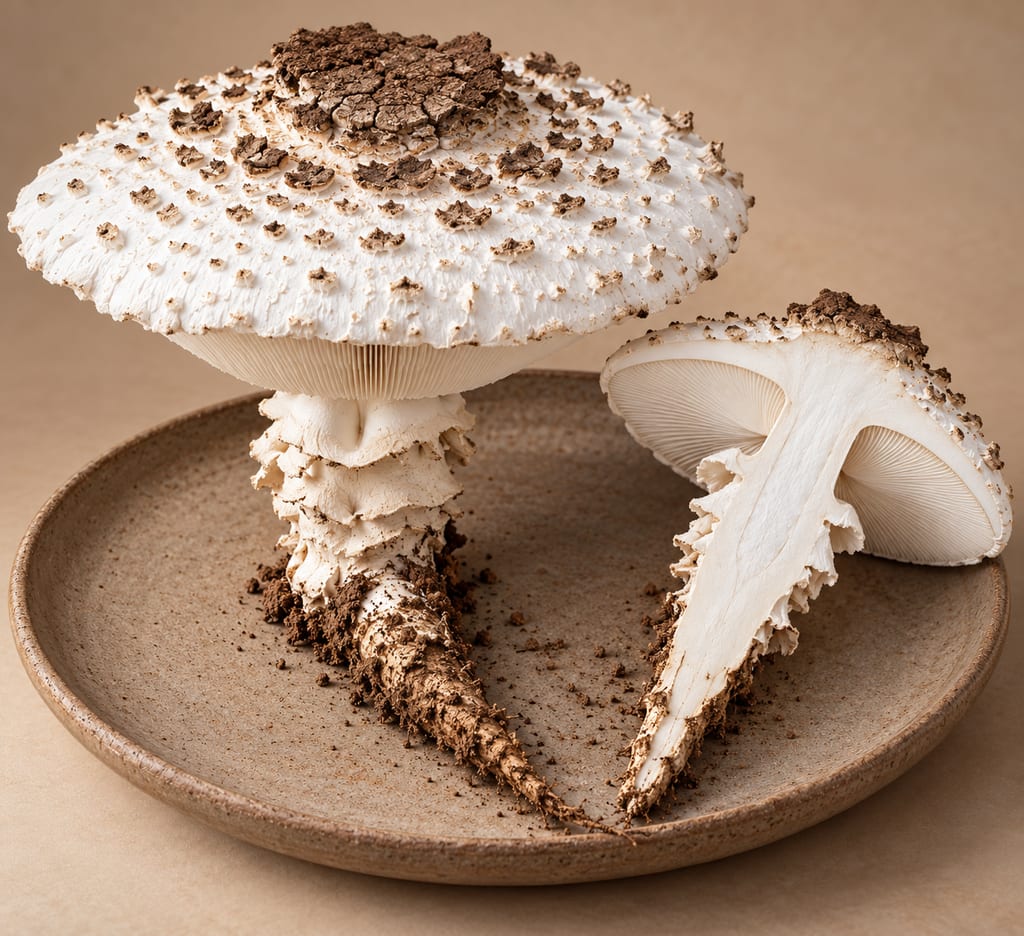
A large wild termite-associated mushroom gathered across parts of tropical Africa. Local food uses and fruiting seasons vary by place and rainfall; its appearance alone cannot establish a safe identification.
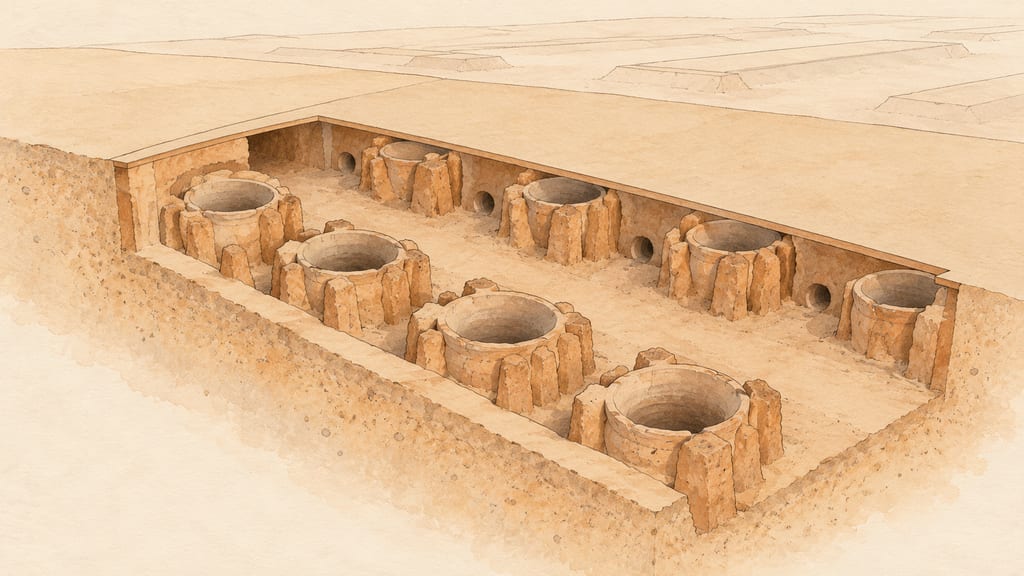
At North Abydos in Egypt, a fixed early Dynastic brewery comprised parallel semi-subterranean installations with rows of ceramic mash vats; excavation reports revise their number, scale and estimated batch capacity.
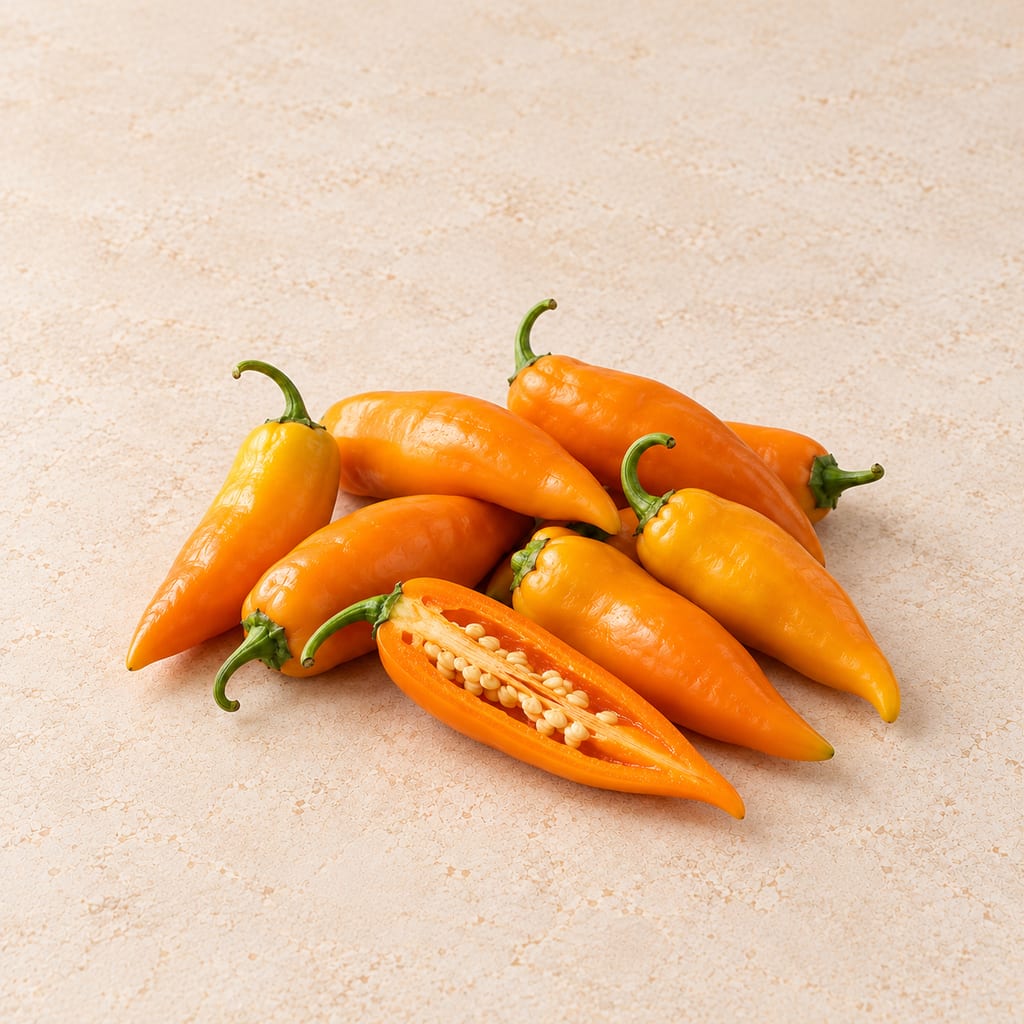
Ají amarillo is the orange-yellow Peruvian chilli cultivar group of Capsicum baccatum, used to colour and season huancaína sauce and ají de gallina. Published heat estimates do not establish one range for the named cultivar.

Toasted almonds are whole sweet almond kernels dry-roasted until golden to brown. Heat replaces their marzipan note with a roasted, nutty one; they thicken and flavour romesco.

Kodiak salmon, halibut and cod cut as seg'aq and hung on an initaq rack to become tamuuq, with kac'amaasaq and kupcuunaq named as different results.

Aniseed is the dried ripe fruit of Pimpinella anisum, an aromatic Apiaceae spice commonly called a seed. It adds a sweet, warm aroma to breads such as Moroccan krachel and South African mosbolletjies, and is distinct from star anise.
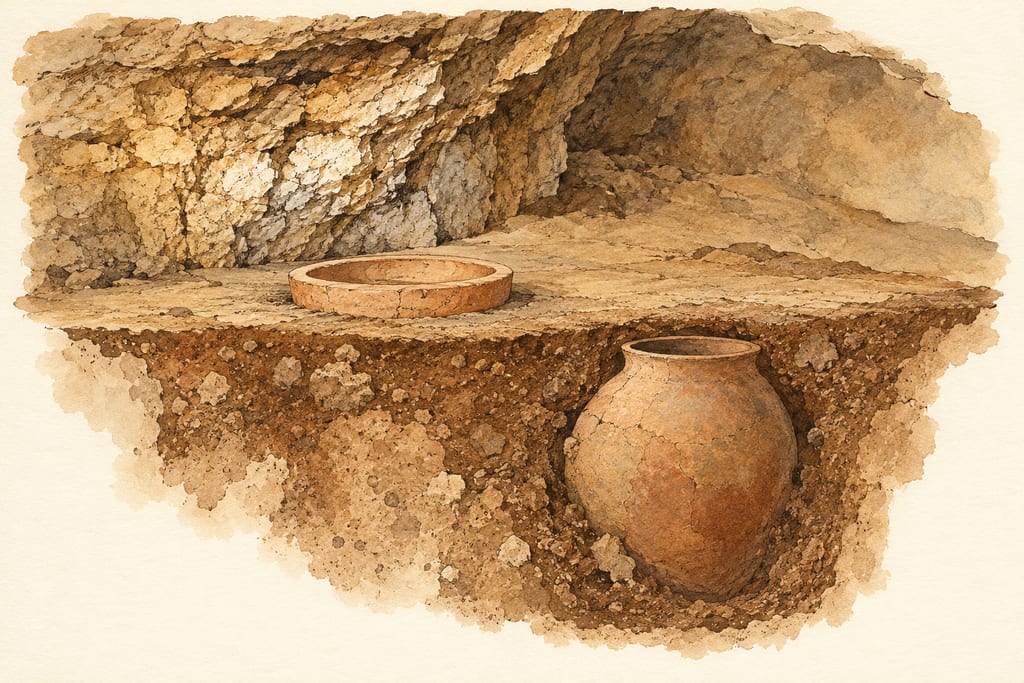
A fixed Late Chalcolithic installation in Areni-1 cave combined a shallow clay pressing basin with a large jar set into the cave floor and storage vessels nearby.

Ripe avocado flesh is the soft, buttery, fat-rich pulp of Persea americana, eaten raw. It is low in acid, so it is a fresh ingredient that needs care in chilled dishes.

A portable dome and pan used over a hearth, with embers on the lid and heat from below. Regional peka and saç forms share this principle while differing in materials, pan shape and how the food is cooked.
No community contributions have been published for this entry yet.
Sign in to contribute. Published comments and photos are free to read.
Ira A. Herniter, María Muñoz-Amatriaín and Timothy J. Close; Legume Science, WileyTaxonomy · History · Geography · Seed forms · Food use
Genetic, textual, and archeological evidence of the historical global spread of cowpea (Vigna unguiculata [L.] Walp.)Cowpea was domesticated in sub-Saharan Africa; the authors discuss likely West and East African domestication regions rather than a settled single origin.
The oldest cited cowpea in the sub-Saharan archaeological record is from central Ghana, dated 1830–1595 BCE.
Cowpea spread across major Old World production regions by 400 BCE and later moved through the Columbian Exchange, including with African germplasm.
The article distinguishes dry grain, fresh grain, immature pods, leaves and haulms, and describes West African seed-based foods.
Cited in: The seed and its two harvest forms; Names, relatives and the crop’s African history; A variable crop of the dryland tropics
CGIAR Genebank AcceleratorCrop identity · Seed variation · Production geography · Cultivation
CowpeaCowpea is an annual multipurpose legume cultivated around the world, especially in semi-arid areas.
Cowpea leaves and green peas are eaten as vegetables; seeds vary in coat colour, seed size and growth form.
The page identifies West Africa as the crop's centre of diversity and main production region.
Cowpea seeds are smooth or wrinkled and range from white, cream or yellow to red, brown or black, often with a marked hilum.
Cited in: The seed and its two harvest forms; A variable crop of the dryland tropics
Carlos Gómez; Food and Agriculture Organization of the United NationsSeed morphology · African cultivation · Harvest · Fresh seed use · Post harvest handling
Cowpea: Post-harvest OperationsCowpea grain, green pods and leaves have distinct food and forage uses in sub-Saharan Africa.
Seeds vary in size, shape, surface and coat colour; the eye is a contrasting mark around the hilum on some types.
The report describes green cowpea seeds boiled as a fresh vegetable and mature dry seeds used in other preparations.
The post-harvest report describes stored-grain insect damage and notes that its production and trade figures are dated.
Cited in: A variable crop of the dryland tropics; Freshly shelled seeds and dry grain; Choosing, handling and storing seeds
Food and Agriculture Organization of the United NationsAfrican culinary uses · Nutrition · Crop uses
Compendium of Forgotten FoodsThe cowpea entry lists boiled, steamed and fried seeds, flour, cooked green pods and seeds, and roasted ground seeds as culinary uses.
The entry reports food-composition data for dry cowpea seeds from the West African FAO/INFOODS table.
Cowpea is an annual crop with fodder and soil-cover functions as well as human food uses.
Cited in: Freshly shelled seeds and dry grain; A seed with many uses, not one fermentation
Organisation for Economic Co-operation and DevelopmentFood safety · Processing · Culinary use · Antinutritional compounds
Cowpea (Vigna unguiculata): Safety Assessment of Foods and Feeds Derived from Transgenic Crops, Volume 3Cowpeas contain oligosaccharides, phytic acid, polyphenols, protease inhibitors and lectins, with levels that vary among varieties.
The report states that cowpea protease inhibitors and lectins are heat-labile and inactivated by cooking.
It describes African cowpea foods including akara, moin-moin, cowpea soup and grain-based dishes, and the processing steps that distinguish them.
Fermentation is one of several studied processing methods; the report does not provide one universal cowpea fermentation procedure.
Cited in: Freshly shelled seeds and dry grain; Why seed form matters in a ferment; Choosing, handling and storing seeds; Food safety and the limits of fermentation; A seed with many uses, not one fermentation
I. O. Akinyele and A. Akinlosotu; Food Chemistry 41(1), 43–53; AGRIS record provided by the National Agricultural LibraryCowpea seed fermentation research · Oligosaccharides
Effect of smoking, dehulling and fermentation on the oligosaccharides and nutrient content of cowpeas (Vigna unguiculata)A study of two cowpea cultivars compared 24-hour fermentation, four-hour soaking and dehulling.
In the reported fermentation sample, verbascose and stachyose fell while raffinose increased; the changes were not uniform across these compounds.
The abstract does not supply enough process detail to transfer the treatment as a recipe or safety control.
Cited in: What fermentation research shows
Yann E. Madodé, Martinus J. R. Nout, Evert-Jan Bakker, Anita R. Linnemann, Djidjoho J. Hounhouigan and Martinus A. J. S. van Boekel; LWT – Food Science and Technology 54(1), 186–193Cowpea fermentation research · Processing · Digestibility
Enhancing the digestibility of cowpea (Vigna unguiculata) by traditional processing and fermentationThe Benin and Wageningen research compared soaking, dehulling and boiling with bacterial, fungal and yeast fermentations of cowpea.
The study found fermentation effects depended on organisms and measurements; cowpea hulls were not the principal fraction responsible for gas production.
The findings describe studied preparations and do not establish a general home fermentation method.
Cited in: What fermentation research shows
A. I. Sanni, S. Sefa-Dedeh, E. Sakyi-Dawson and M. Asiedu; International Journal of Food Sciences and Nutrition 53(5), 367–373Ghanaian cereal and cowpea fermentation research
Microbiological evaluation of Ghanaian maize dough co-fermented with cowpeaThe study assessed Ghanaian fermenting maize dough fortified with 20% cowpea.
Lactic acid bacteria predominated among the microorganisms isolated, alongside yeasts and other bacteria and moulds.
The work concerns a mixed maize-cowpea dough and does not establish a cowpea-only traditional product or a transferable safety process.
Cited in: What fermentation research shows; Why seed form matters in a ferment; Food safety and the limits of fermentation
Rafaela Santos, Beatriz Parente, Mariana Mota, Anabela Raymundo and Catarina Prista; Foods 14(23), 4131Modern cowpea fermentation research · Alternative legume processing
Fermentation Process Evaluation of a Sustainable and Innovative Miso Made from Alternative LegumesResearchers in Portugal studied miso made from dried cowpea, chickpea and lupin with defined microbial cultures and two salt formulations over 18 months.
Cowpea misos had lower soluble protein and phenolic fractions than chickpea misos in the reported study.
The authors call for further research; the experimental formulations do not validate a low-salt household recipe.
Cited in: What fermentation research shows; Why seed form matters in a ferment; Food safety and the limits of fermentation
South African National Biodiversity Institute, PlantZAfricaRegional names · South African use · Plant identity
Vigna unguiculataThe page records the scientific name Vigna unguiculata (L.) Walp. and names cowpea, black-eyed pea, akkerbone, koertjie, isikhwali, indumba, isihlumaya, umcwasibe, dinawa and munawa in regional languages.
It describes cowpea seeds and leaves as food and notes the plant's use for fodder and soil fertility.
Cited in: Names, relatives and the crop’s African history
Royal Botanic Gardens, Kew, Plants of the World OnlineBotanical identity · Species distinction · Seed description
Vigna unguiculata (L.) Walp.Kew accepts Vigna unguiculata (L.) Walp. as the accepted botanical name.
The Kew account describes seed pods and variable seed shapes and colours and separates cowpea from its prepared products.
Cited in: The seed and its two harvest forms