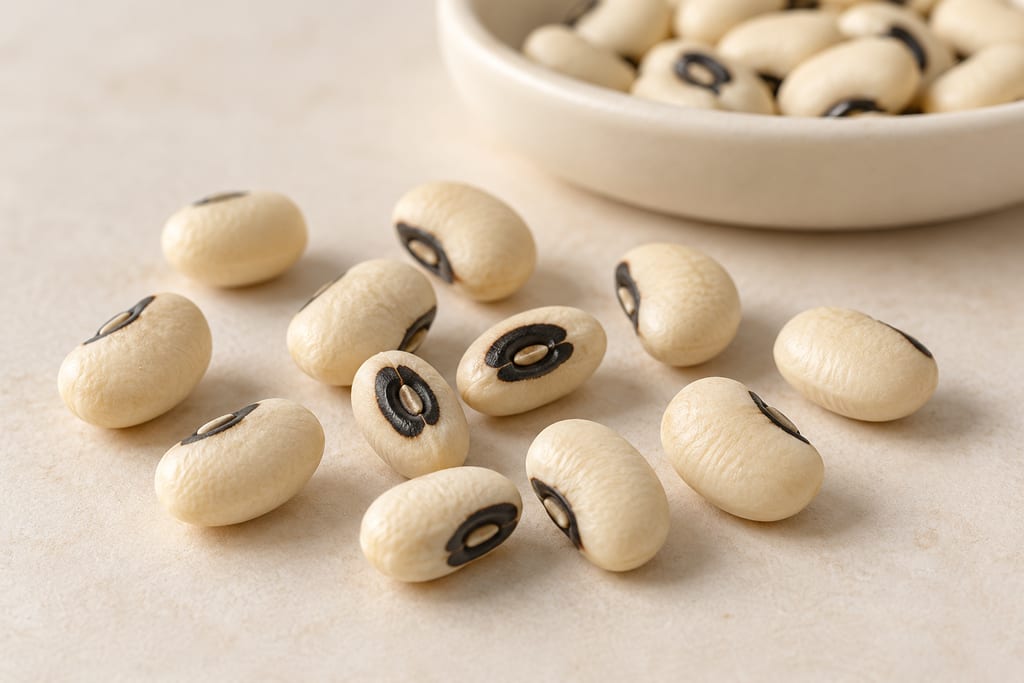
Cowpeas
Cowpeas are the seeds of Vigna unguiculata, eaten green and freshly shelled or fully mature and dry. Across Africa they serve as food, fodder and a crop partner, while research also examines them in fermented pastes and cereal doughs.
 FermenteaWhere food goes to change
Built structures · Pits and cavities
A 2007 survey reports underground grain pits in Nigeria’s Sudan Savanna, especially Borno and Yobe. It describes lined pits storing threshed millet, sorghum and cowpea.
Adejumo and Raji’s 2007 technical appraisal describes underground grain pits in Nigeria’s Sudan Savanna. It says they are commonly found in Borno and Yobe states, particularly where the water table is low. The broader field survey used interviews, questionnaires and measurements in ten villages in Kano, Kaduna, Bauchi and Borno. It offers a regional record, but its sample does not establish how widespread pits were throughout Yobe or Nigeria.
The survey describes round or square pits about 1–3 m deep and 1–3 m across. Straw lining and corn-husk padding were reported, including insulation at the base. Millet, sorghum and cowpea were stored threshed. The paper gives capacity as roughly 1,000 kg to 6,000 kg or more. Tree stems crossed the opening; polyethylene or metal sheet, husk, and sand or laterite completed the reported cover. These are observations from one appraisal, not a standard specification.
The authors report pits could remain unopened for one to five years. Once opened, contents were usually emptied. The same site could be reused for up to twelve years with annual re-digging. The survey also reports termite damage to lining, no rodent protection, possible seepage with unsuitable covers, and difficult emptying and cleaning. The observations do not establish that every pit performs identically.
A build is made where it stands: moving it means building it again.
The survey identifies a millet pit in Borno and says the form is commonly found in Borno and Yobe.
The survey says the pit form is commonly found in Yobe but identifies no locality.
Cowpeas are the seeds of Vigna unguiculata, eaten green and freshly shelled or fully mature and dry. Across Africa they serve as food, fodder and a crop partner, while research also examines them in fermented pastes and cereal doughs.
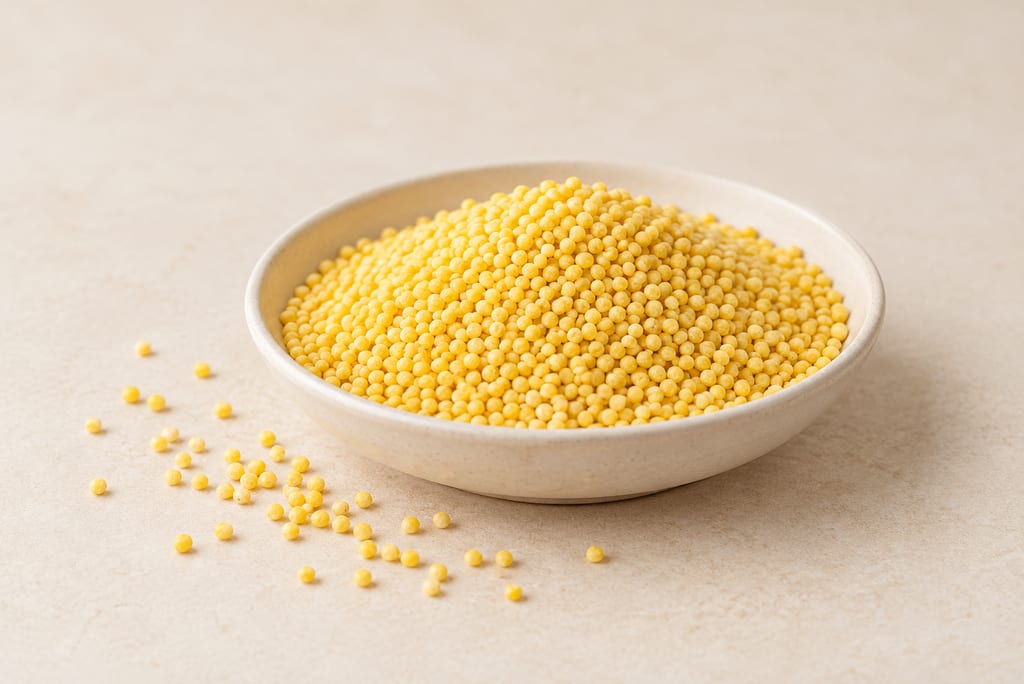
Millet names several small-seeded cereals. In African fermented foods, pearl millet and finger millet become sour gruels, doughs and drinks through distinct combinations of soaking, milling, cooking, malting and fermentation.
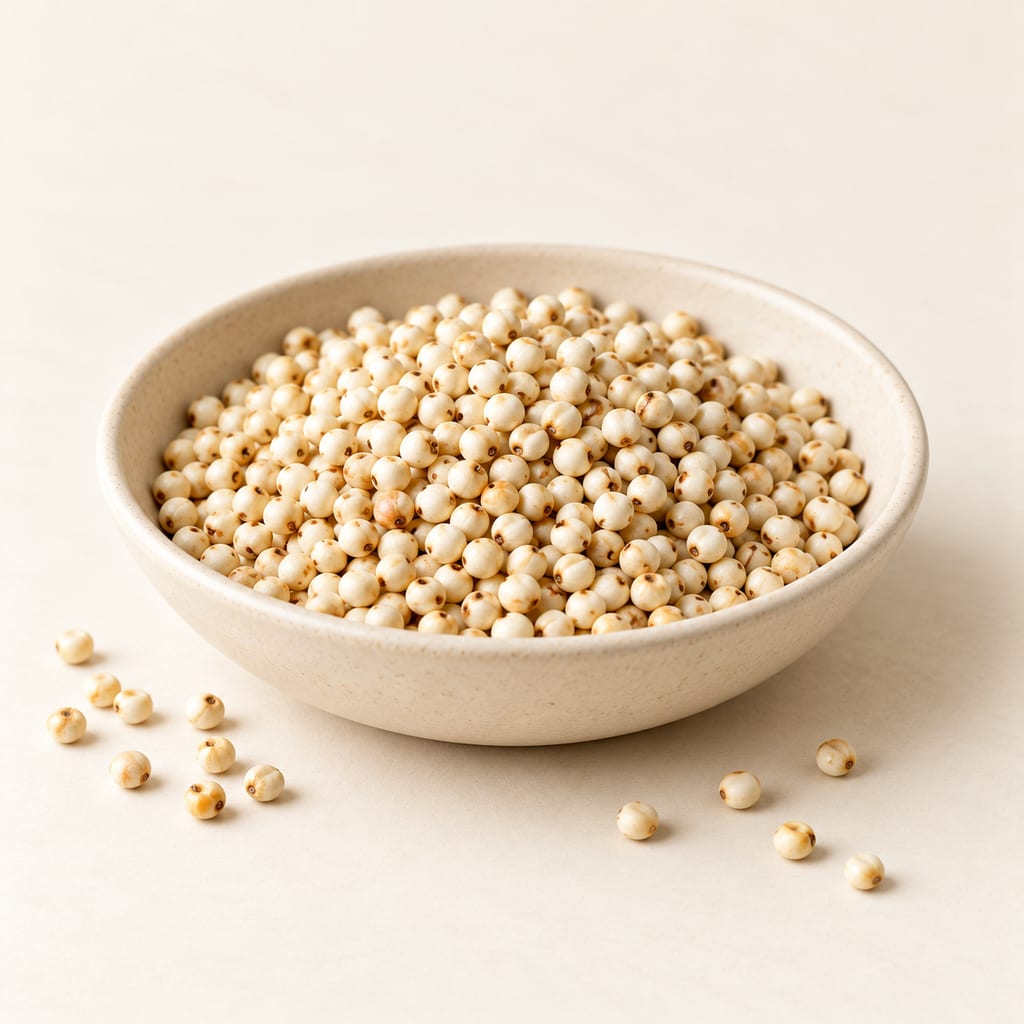
Sorghum is the grain of Sorghum bicolor, a variable African-origin cereal used whole, milled, malted and cooked in distinct fermented foods and drinks.
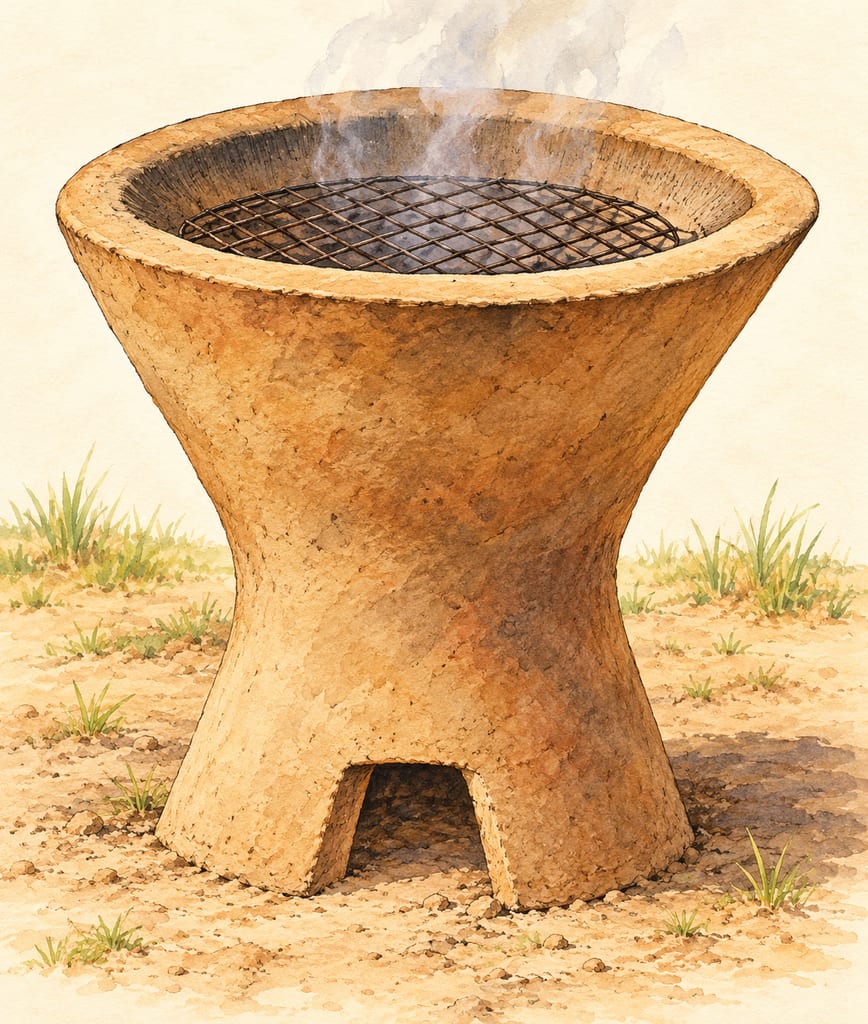
A 1974 FAO report describes varied mud fish-smoking ovens around Nigeria’s Kainji Lake basin, including an hourglass form in its northern parts. It documents the form and broad use, but gives no dimensions or construction sequence.
No community contributions have been published for this entry yet.
Sign in to contribute. Published comments and photos are free to read.
Agricultural Engineering International: the CIGR Ejournal, Invited Overview No. 11, Vol. IXGeography · Dimensions · Materials · Method · Capacity · Limitations
Technical Appraisal of Grain Storage Systems in the Nigerian Sudan SavannaPits common in Borno and Yobe where water table low.
Round/square, 1–3 m deep/across, straw-lined with husk padding.
Threshed millet, sorghum and cowpea; 1,000–6,000 kg or more; 1–5 years unopened.
Cover materials, re-digging, limitations.
Survey sample provinces and Yobe scope caveat.
Cited in: A locally reported pit form; Form and reported use; Storage cycle and limits