Overview
Termitomyces le-testui is a large agaric of tropical Africa, called the termite mushroom in the supplied record. Heim published the name in 1942 in the Archives du Muséum d’Histoire naturelle de Paris. Older names include Lepiota le-testui Patouillard (1916) and Lepiota congolensis Beeli (1927), and EFTA lists a form named lactifluus by R. Heim in 1977.
Sources for this section
Association with termites
EFTA describes the fungus as obligately associated with Odontotermes termites, a relationship documented by Froslev and colleagues in 2003. Its large sporophores come up near or on tall termite mounds, and the species is recorded in gallery forest, dry closed forest, savanna and cultivated fields.
Sources for this section
Appearance
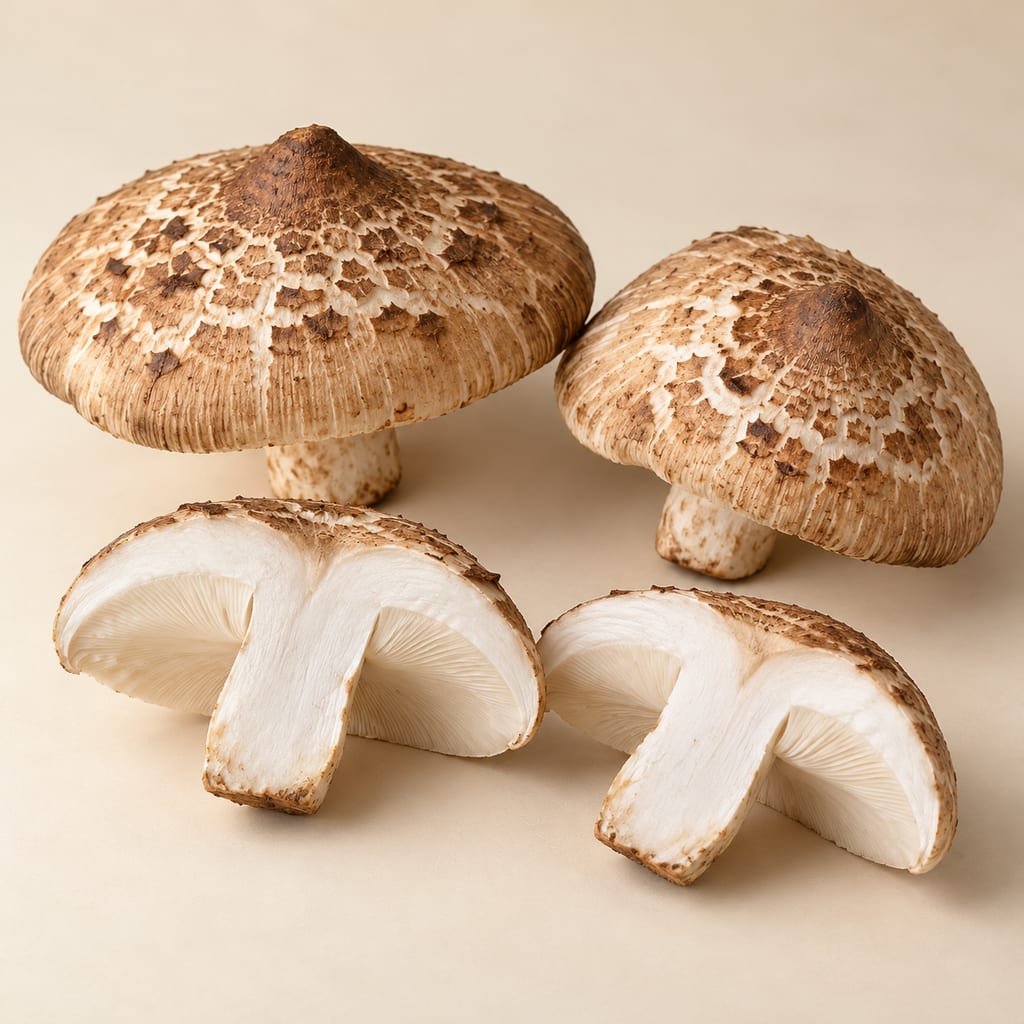
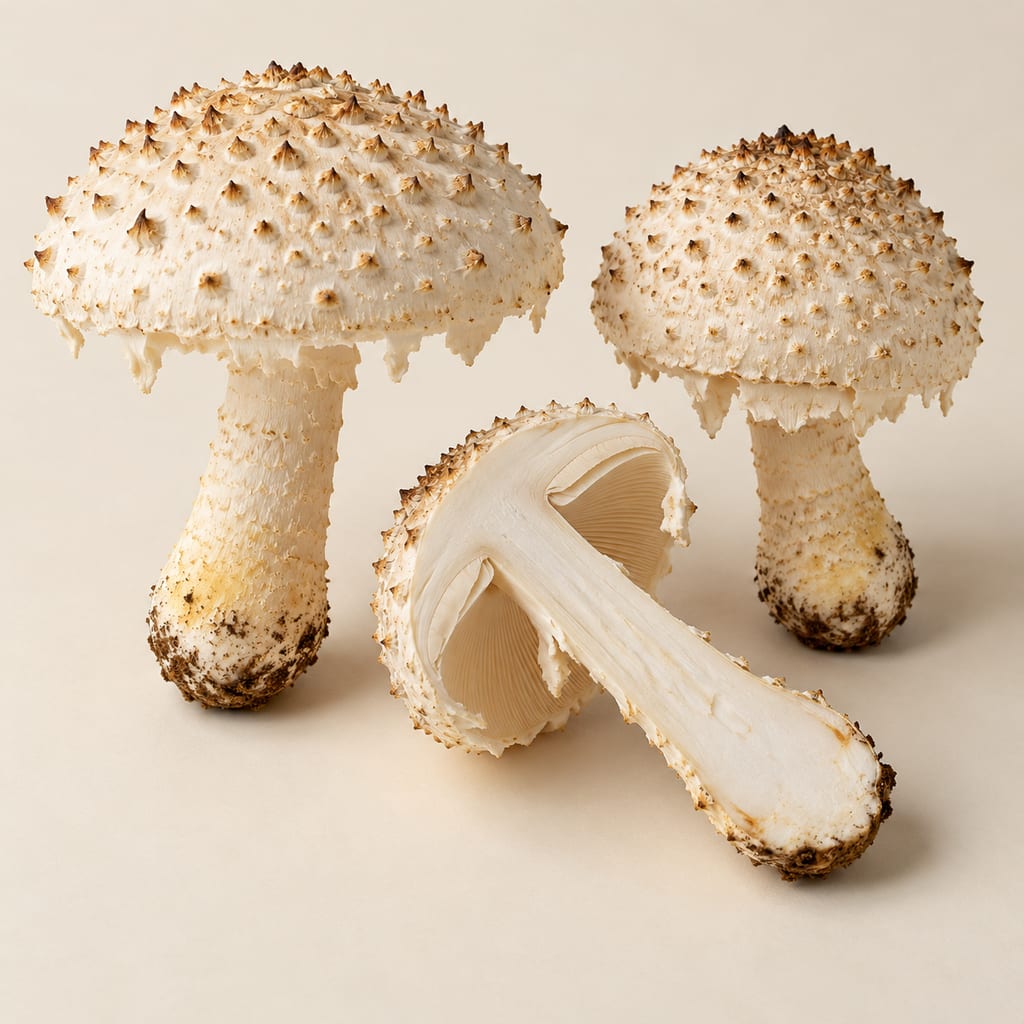
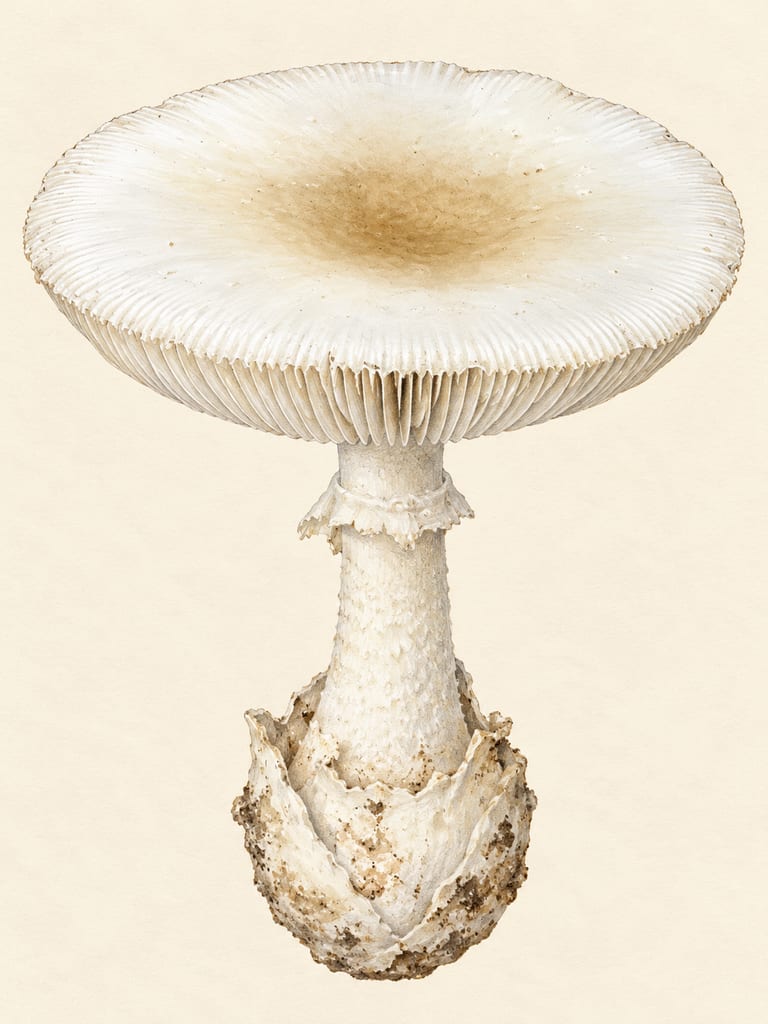
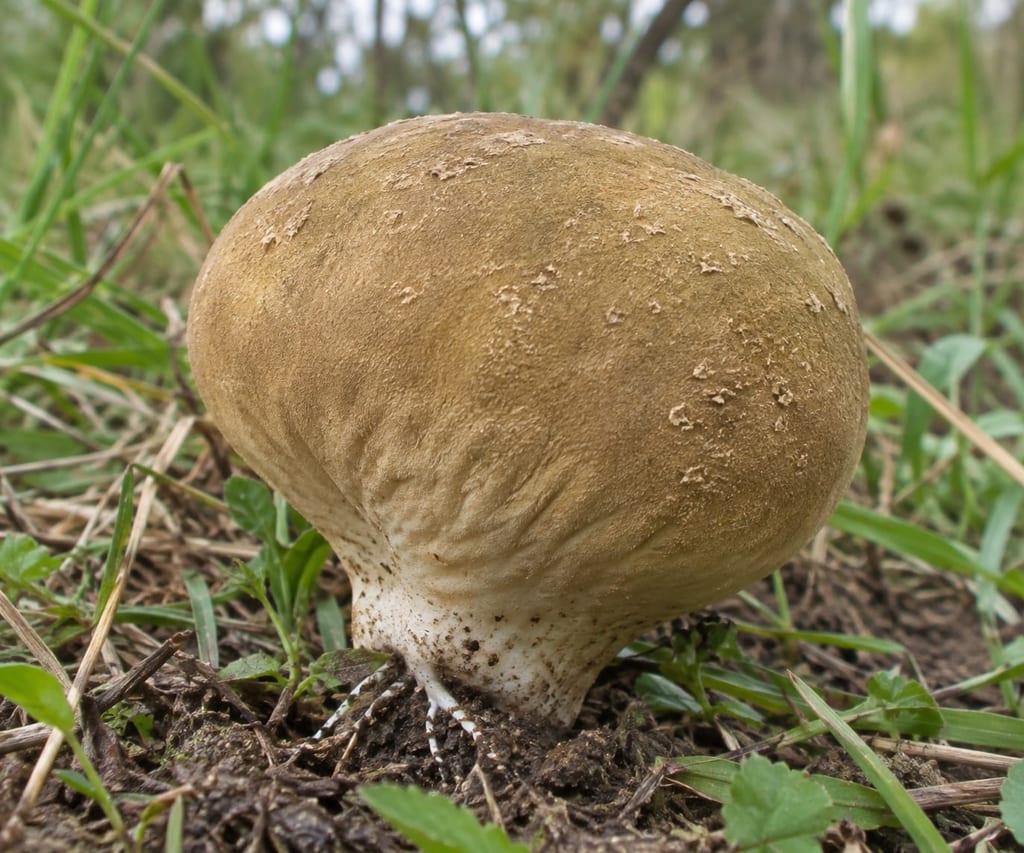
The cap is 10 to 35 cm across, dry and felty, light brown, and cracks radially with age. The stipe is 7 to 15 cm long and 1.5 to 2 cm thick, white, with a double white ring. The flesh is white and does not change colour. The pseudorhiza, the root-like base, can reach about 50 cm. The spore print is whitish with a pinkish tinge, and the spores are smooth, ellipsoid, and about 5.6 to 6.6 by 3.7 to 4.2 micrometres. EFTA notes a fungal odour and a rather neutral, sometimes slightly pungent taste.
EFTA states that the large persistent ring, the size of the sporophore, the brown felted perforatorium and the velvety cap rule out confusion with other Termitomyces species. These are the page’s own features, not a substitute for expert confirmation.
Sources for this section
Range
EFTA lists the species from Benin, Burundi, Cameroon, the Central African Republic, the Republic of the Congo, DR Congo, Côte d’Ivoire, Gabon, Ghana, Guinea, Kenya, Niger, Nigeria, Tanzania, Togo and Zambia.
Sources for this section
Edibility and safety
The EFTA species page does not state an edibility status and gives no preparation notes or warnings. The supplied record lists the species as a regional termite-mushroom food taxon in the EFTA inventory, and states that preparation, identity and current safety need separate validation. The sources read here do not establish how it is cooked or whether it is safe to eat.
Gather or eat no wild fungus on the strength of a catalogue listing, a description or a photograph. Identification needs a qualified expert, and the sources read here do not establish a safe preparation.
Sources for this section
Places
Benin
Documented use · Country evidenceListed in the EFTA distribution for this species.
Burundi
Documented use · Country evidenceListed in the EFTA distribution for this species.
Cameroon
Documented use · Country evidenceListed in the EFTA distribution for this species.
Central African Republic
Documented use · Country evidenceListed in the EFTA distribution for this species.
Republic of the Congo
Documented use · Country evidenceListed in the EFTA distribution for this species.
DR Congo
Documented use · Country evidenceListed in the EFTA distribution for this species.
Côte d’Ivoire
Documented use · Country evidenceListed in the EFTA distribution for this species.
Gabon
Documented use · Country evidenceListed in the EFTA distribution for this species.
Ghana
Documented use · Country evidenceListed in the EFTA distribution for this species.
Guinea
Documented use · Country evidenceListed in the EFTA distribution for this species.
Kenya
Documented use · Country evidenceListed in the EFTA distribution for this species.
Niger
Documented use · Country evidenceListed in the EFTA distribution for this species.
Nigeria
Documented use · Country evidenceListed in the EFTA distribution for this species.
Tanzania
Documented use · Country evidenceListed in the EFTA distribution for this species.
Togo
Documented use · Country evidenceListed in the EFTA distribution for this species.
Zambia
Documented use · Country evidenceListed in the EFTA distribution for this species.