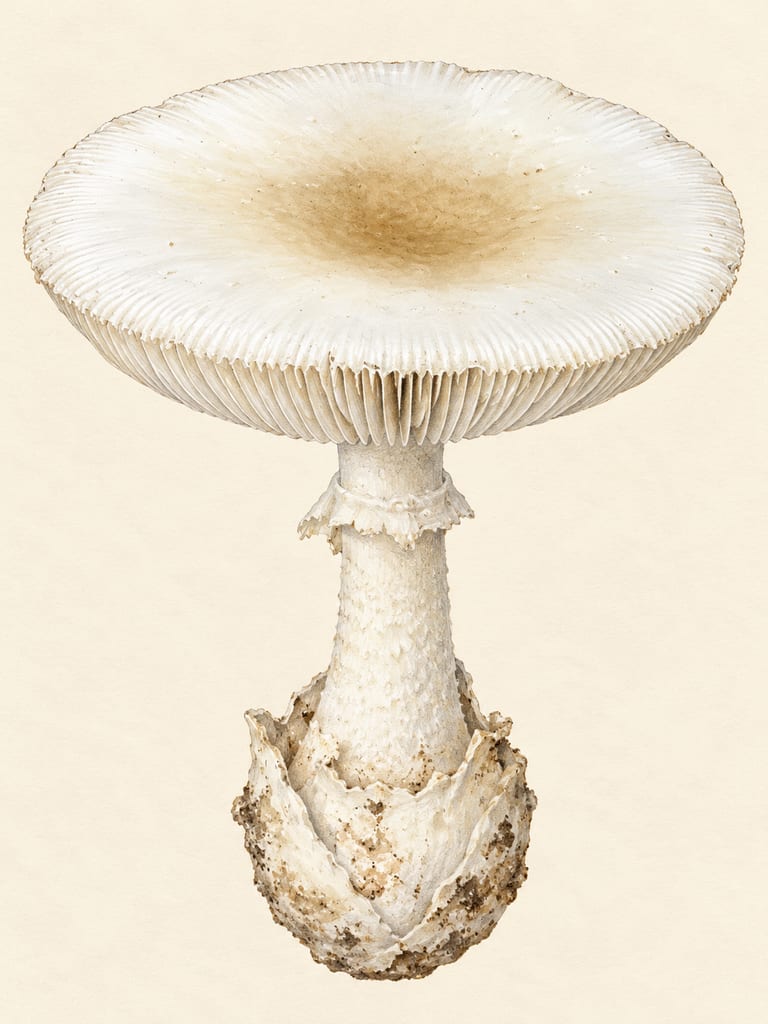
Amanita loosei
Amanita loosei is a large wild Amanita of tropical African miombo and open woodland, gathered and sold as a valued seasonal food. Regional food-use evidence is not a guide to identifying wild mushrooms.
 FermenteaWhere food goes to change
Mushrooms
Amanita afrospinosa is a white, warted Amanita of miombo woodland in southern and central Africa. A regional food-use record exists, but the Amanita genus includes deadly species, so no safe use is established here.
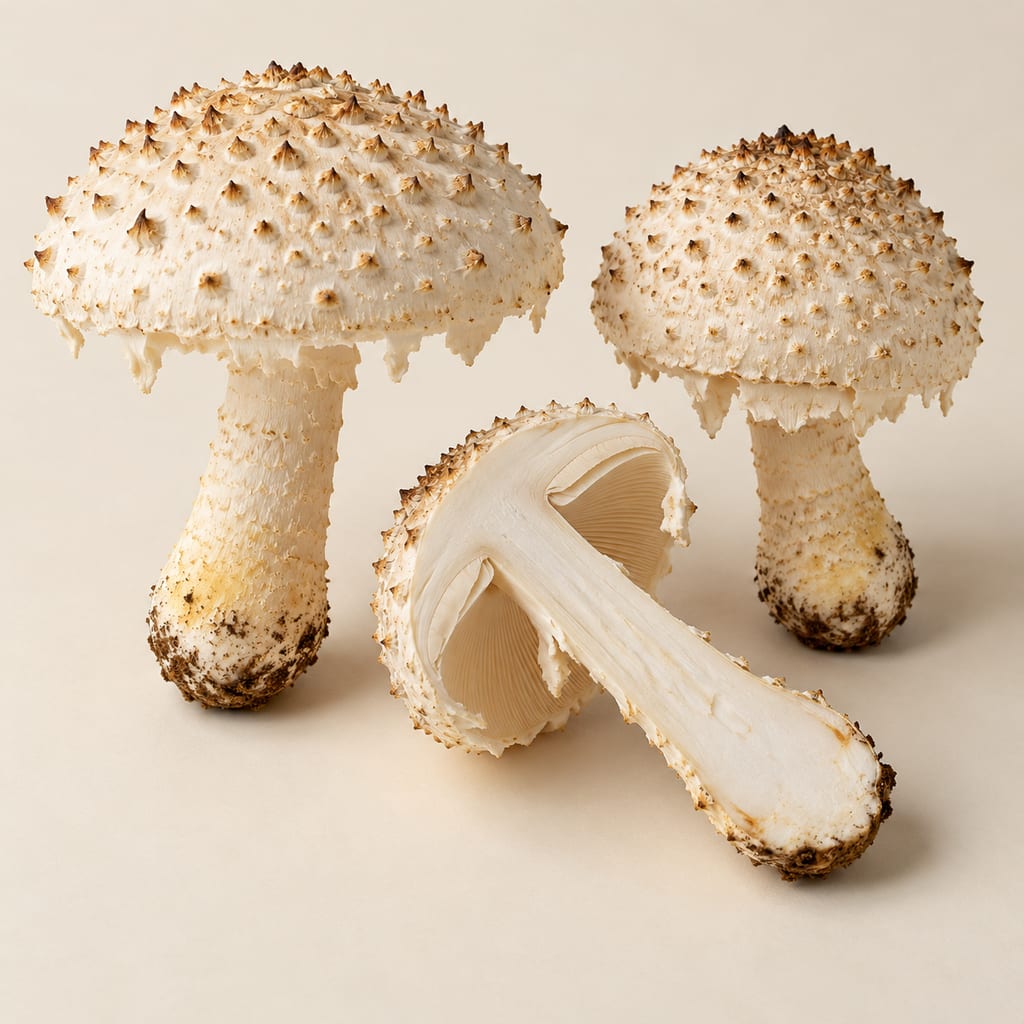
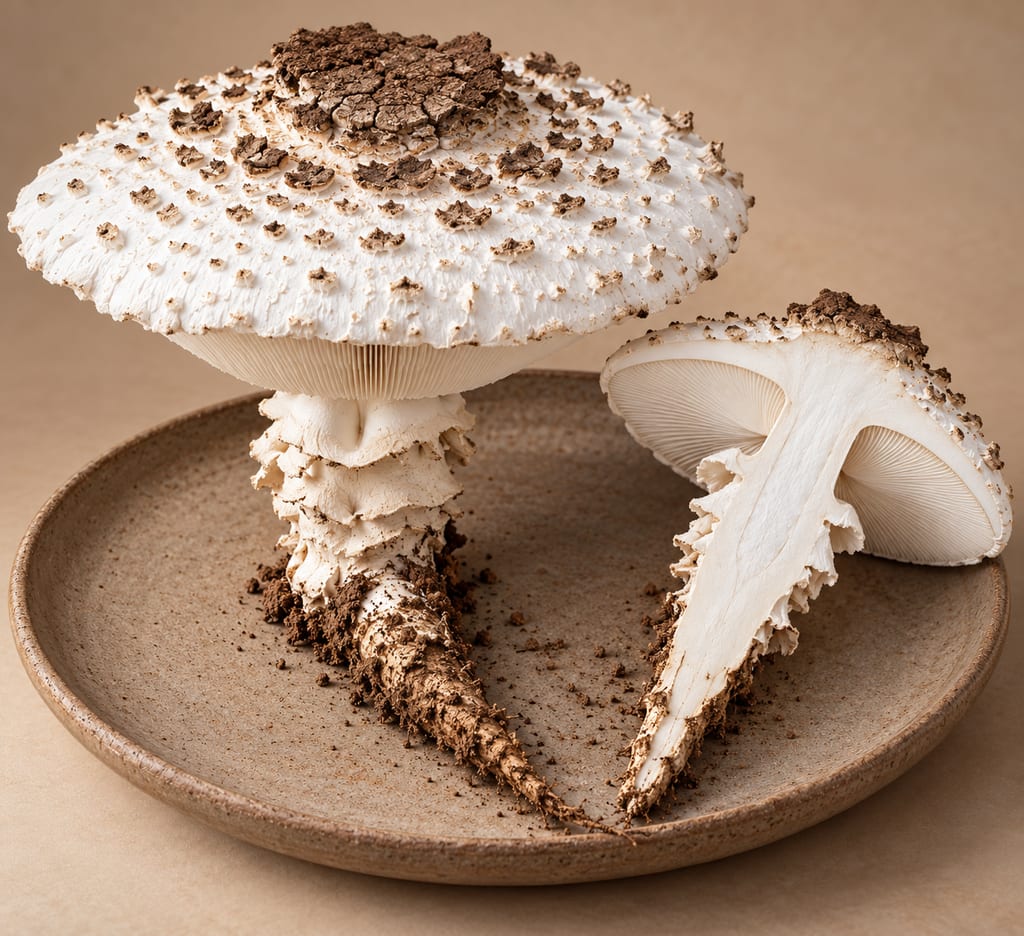
Amanita afrospinosa is a large white Amanita that grows in open forest and miombo woodland in southern and central Africa. It forms a partnership with tree roots, as ectomycorrhizal fungi do. It was described by Pegler and Shah-Smith in 1997. The catalogue records it as a regional food-use taxon, supplied from the wild.
The cap is 4 to 12 cm wide, white, and covered in erect, pyramid-shaped or truncated warts, with a strongly appendiculate margin. The white stipe is 6.5 to 11 cm long and 1.5 to 3 cm thick, often with a cracked, bulbous base. The volva forms concentric zones of small scales, and a thick, flared, woolly ring sits on the stipe. The gills are free and white to beige or yellowish-brown. The flesh is white and does not change colour. The odour is strong and unpleasant, likened to soap or butter. The spore print is white, and the spores are smooth and 8 to 9 by 4 to 5 micrometres.
The species is recorded from Angola, Benin, Burundi, the Democratic Republic of the Congo, Kenya and Zambia. It grows in open forest and miombo woodland. The EFTA species page gives no local names for it.
The catalogue lists the species as a regional food-use taxon from the EFTA resource. The EFTA species page itself gives no food-use or edibility statement, and it advises that it should not be used alone to decide whether a mushroom is safe to eat. The food-use entry therefore rests on the wider catalogue record, which the regional survey data would need to confirm.
The EFTA page says the species is recognized by the pyramid-shaped scales on its cap and by its small cylindrical spores. It names no lookalikes. The catalogue warns that Amanita includes deadly lookalikes, and that regional use does not establish universal safety.
No safe preparation is established for this species in the sources read here, and the catalogue calls for specialist review. Many Amanita species are deadly, and a regional food-use record does not make any Amanita safe to eat. This page gives no identification or edibility verdict. Any identification should be confirmed by a qualified mycologist before a wild Amanita is considered for eating.
Distribution record only; the species page gives no food-use statement for this country.
Distribution record only; the species page gives no food-use statement for this country.
Distribution record only; the species page gives no food-use statement for this country.
Distribution record only; the species page gives no food-use statement for this country.
Distribution record only; the species page gives no food-use statement for this country.
Distribution record only; the species page gives no food-use statement for this country.
Amanita loosei is a large wild Amanita of tropical African miombo and open woodland, gathered and sold as a valued seasonal food. Regional food-use evidence is not a guide to identifying wild mushrooms.
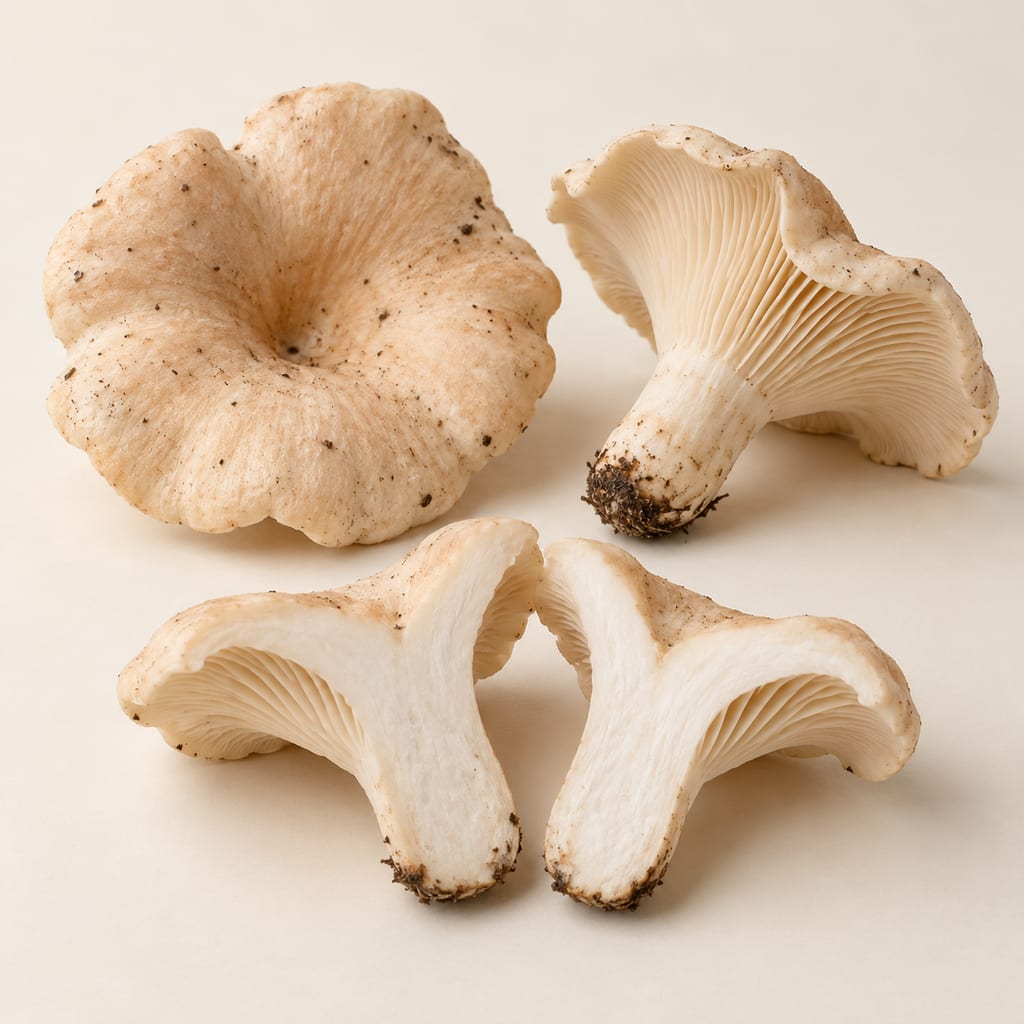
Lactifluus gymnocarpoides is an African milkcap of open Uapaca and miombo woodland. Regional inventories record it as food, but its bitter taste means local cooks remove it before eating, and the sources give no preparation.
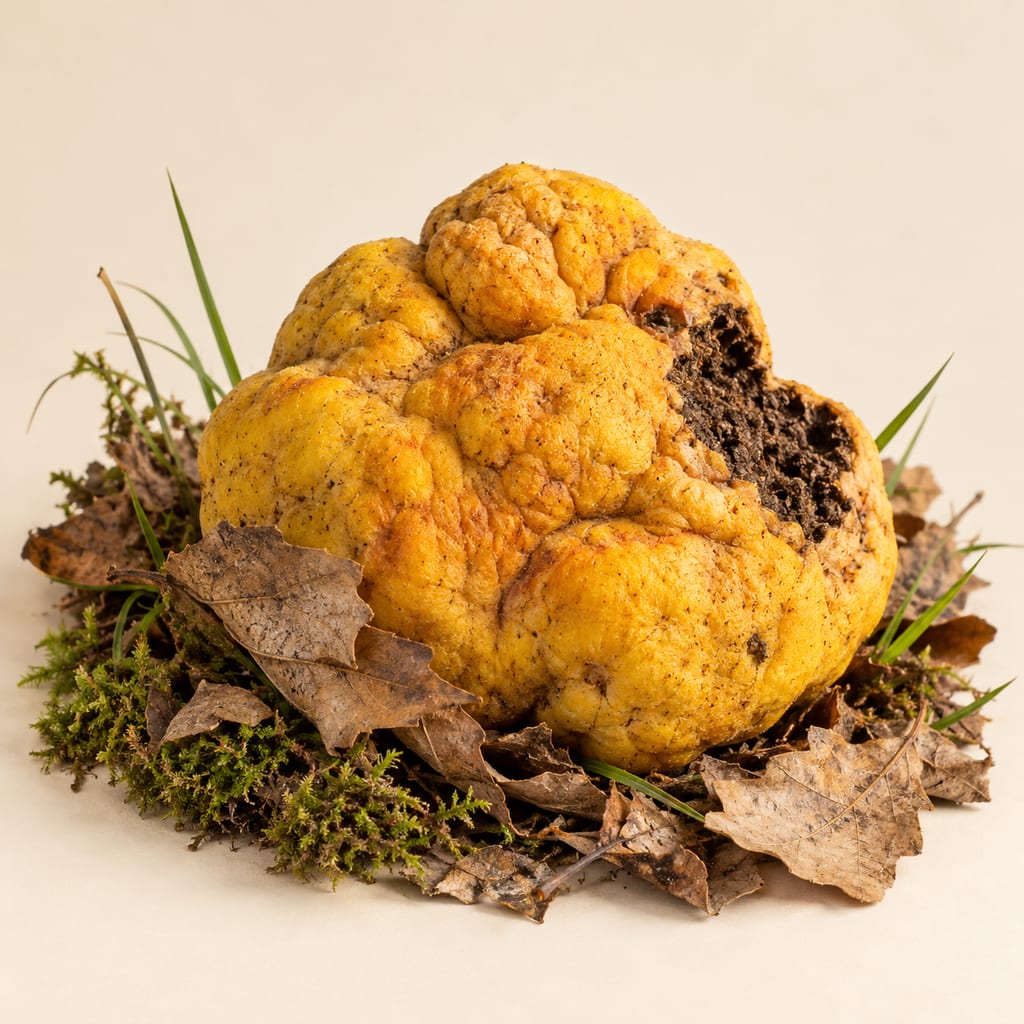
The African false truffle, Mackintoshia persica, is an ectomycorrhizal truffle-like fungus of miombo woodland in southern-central Africa. It is recorded as a regional edible, though its preparation is not documented.
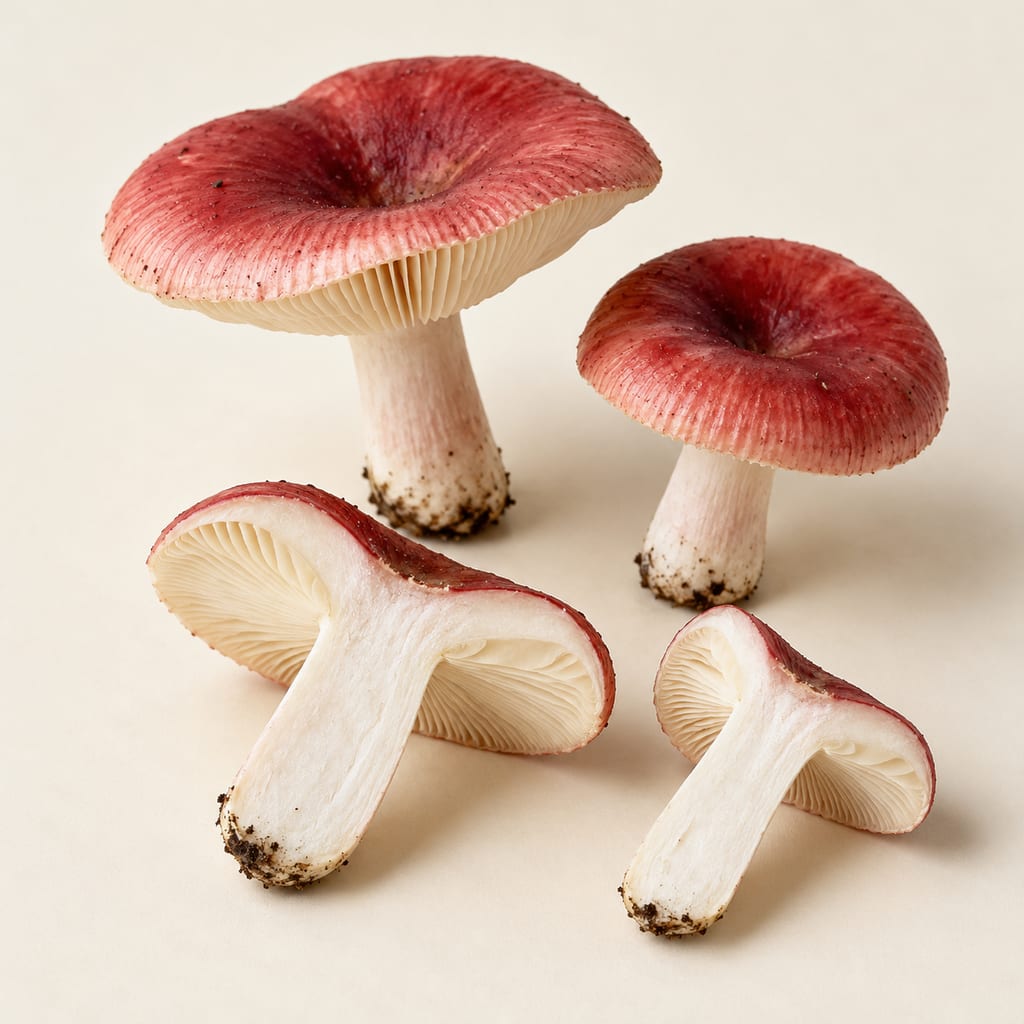
Russula congoana is an ectomycorrhizal brittlegill of miombo and savanna woodland in tropical Africa, recorded in an edible-fungi inventory. Preparation, identity and current safety still need validation.
A large wild termite-associated mushroom gathered across parts of tropical Africa. Local food uses and fruiting seasons vary by place and rainfall; its appearance alone cannot establish a safe identification.
No community contributions have been published for this entry yet.
Sign in to contribute. Published comments and photos are free to read.
Edible Fungi of Tropical Africa, Meise Botanic GardenIdentity · Ecology · Distribution · Catalogue source
Amanita afrospinosaPegler and Shah-Smith, Mycotaxon 61: 407 (1997); cap, stipe, volva, ring, odour and spore details; ectomycorrhizal in open forest and miombo; distribution in six countries; no local names; no edibility, toxicity or lookalike statements; advice that the page should not alone decide whether a mushroom is safe to eat.