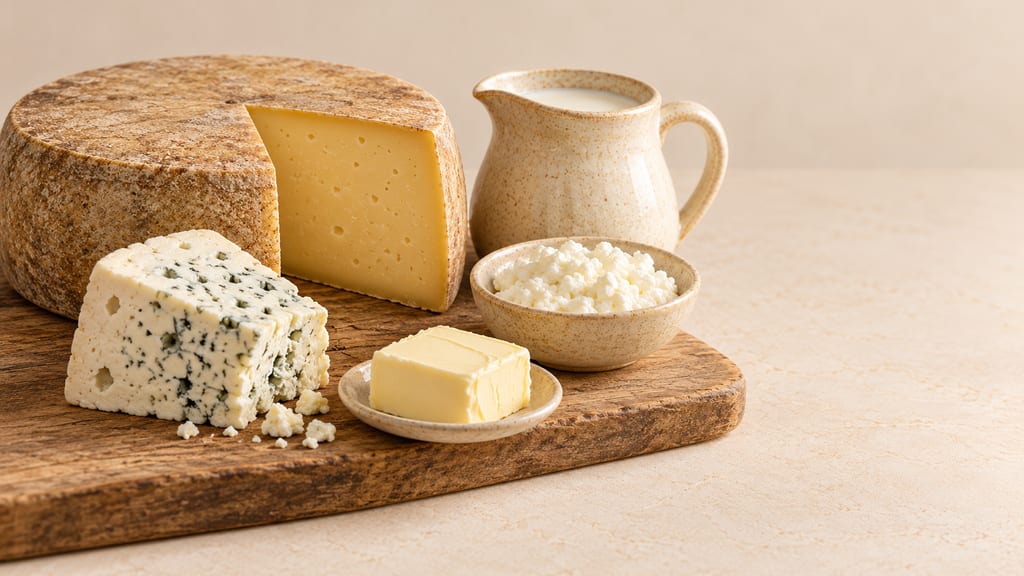
Milk, curd and the world's dairy stores
Follow milk into cheese, cultured drinks, butter, dried curds and sweets: a journey through the animals, seasons and household decisions behind the world's dairy foods.
 FermenteaWhere food goes to change
Coagulants
Calotropis procera preparations are documented as coagulants for wagashi gassirè in Benin and wara in Nigeria. Crude plant materials differ from purified research enzymes, and current evidence does not support a general home preparation.
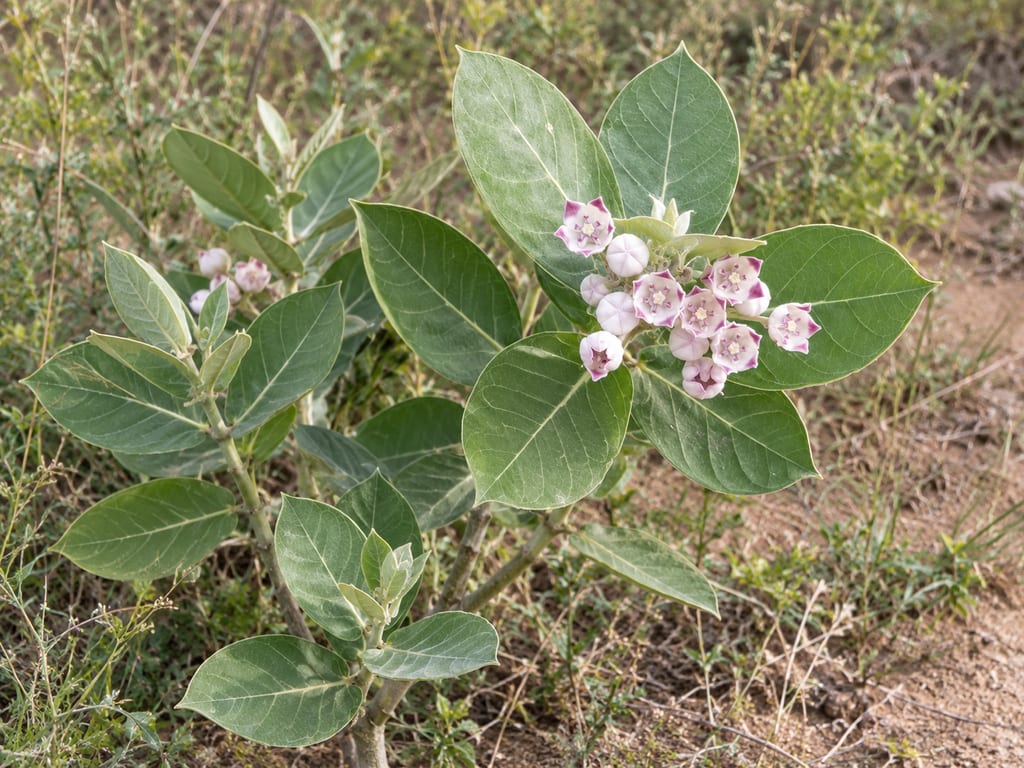
Calotropis procera is a milkweed-family shrub known in English by names including Sodom apple and in South Asian sources as madar. Its milky sap is plant latex. In some West African cheese-making traditions, parts of the plant supply a milk coagulant; in other settings the plant is discussed for medicinal or laboratory purposes. Those contexts should not be blended into one generic claim that the plant is an ordinary food.
This page concerns reported coagulant materials associated with wagashi gassirè and wara: fresh leaves, stems, sap, or crude extracts described in particular sources. It does not identify every product called Sodom apple or every plant with milky sap as the same species. The botanical name matters because common names can refer to more than one plant, and the available studies examine different organs and preparations.
The product is not synonymous with calotropain, calotropin or CpCP3. Calotropain is used in food literature for coagulant protease activity attributed to the plant; CpCP3 names a purified cysteine protease studied under controlled laboratory conditions. A purified enzyme, an extract from leaves, crushed stems and unprocessed latex are materially different preparations with different evidence and risks.
Plant identification is especially important because the common name Sodom apple is used in several places and the family contains multiple latex-bearing plants. Research on one identified species cannot be transferred automatically to a lookalike or to a different Calotropis species. The supplied field record names C. procera, but a household reader should not treat a common name or a milky sap as adequate identification.
In Benin, wagashi gassirè is a soft, fresh cheese made mainly from cow milk. A 2022 field survey across Dassa and Nikki recorded cheese makers, traders, dairy farmers and consumers describing local production and preservation. Calotropis procera preparations were the central plant coagulant in the surveyed practice. The paper records variation: leaves and stems together were common, stems alone also appeared, and some makers used sap. A minority of accounts described other combinations or alternatives.
The survey describes a place-specific tradition, not one standardized formulation followed by every maker. In Nigeria, the name wara is associated with a related West African soft cheese. A laboratory study describes traditional use of a leaf extract and examines enzyme function. Related names such as waragashi, warankasi and wagashi may overlap in regional writing, but their meanings and production details should be checked in the source and community being discussed.
These records support a geographic association with Benin and Nigeria, while the clearest surveyed preparation here is Beninese. They do not show that every cheese bearing these names uses Calotropis, that every community harvests the same plant part, or that the practice began in a specific century. Other ingredients and process stages, including colouring and preservation, are separate from the milk-clotting role.
The field study's sample was drawn from two municipalities, so its percentages describe the interviewed people and methods rather than the national share of production. The paper is valuable because it records who was interviewed and which plant parts makers reported. It still does not tell us that a given extract has the same strength from one plant, season or preparation to the next. A reported practice can be well documented and remain unsuitable for replication by a reader who does not know the plant, local method or controls.
Field reports describe fresh leaves and stems being crushed and mixed with a small quantity of milk or water, then filtered, with the resulting liquid used as a coagulant. The Benin survey also records other preparation variants, including preparations made directly from sap and methods that omit one of the crushing or filtering steps. These are descriptions of reported practice. The variation itself cautions against turning a short catalogue summary into a universal recipe.
Wagashi is commonly described as a hot-coagulated cheese. One review of the Benin process reports milk coagulation in a heated range around 65–70 °C; other reports describe differing heating and curd-handling stages. Such temperatures are observations from particular studies, not a validated safety target that a reader can apply to another milk, extract or batch. Heating can affect enzyme activity and microbial hazards in different ways.
Laboratory studies use their own extraction, clarification, dose, milk and temperature controls. Their methods answer research questions about activity or cheese properties; they do not automatically translate into a safe household method. This page therefore records the ingredients and use without supplying amounts, harvest instructions, storage times, or a step-by-step process.
The field survey's accounts also distinguish coagulant extraction from later cheese handling. For example, techniques used to give wagashi a red colour involve dye materials after the curd is made; they do not describe the coagulant. Local differences in how makers strain, heat or preserve the product belong to the documented process, but should not be collapsed into a single set of directions without evidence that the conditions are equivalent.
Milk clotting is associated with proteases that act on casein, the main protein system responsible for the curd structure. Research on C. procera latex fractions reports proteolytic and milk-clotting activity, while cheese literature attributes traditional coagulant action to plant enzymes commonly called calotropain. The activity depends on the exact preparation and experimental conditions; the plant name alone does not tell a maker the enzyme concentration or performance.
A 2007 Nigerian Wara study found that a leaf extract had greater measured rennet strength at a high test temperature than at 35 °C. Later laboratory work on latex fractions characterized their action on kappa-casein. A separate study purified CpCP3 from latex and examined milk clotting, casein aggregation and experimental cheese. Those findings explain why researchers study the plant as a possible rennet alternative; they do not establish that raw sap is a standardized commercial coagulant.
Milk type and composition, plant part, freshness, extraction, enzyme activity, heat and handling can all affect the result. Reported cheese yield or sensory acceptance from one trial is specific to that trial. No universal dose, substitution ratio, finished-product specification, or safe endpoint is established by those results for an unfamiliar home process.
The distinction between crude plant material and isolated enzyme is essential. A traditional preparation may contain the target protease along with many other plant constituents, particles and variable amounts of sap. Laboratory CpCP3 is a purified protein that researchers isolated and characterized. Some further laboratory work has explored recombinant or immobilized forms, which are still different materials.
A cheese made successfully with purified enzyme in a controlled study cannot by itself establish the safety of leaves, stems or crude latex used in a traditional preparation. Conversely, documenting a long-standing local use does not reveal the precise composition of every batch or prove safety under all handling conditions. Evidence about identity, function, process and risk answers separate questions.
Commercial availability is not established by the sources reviewed. The item is therefore best understood as a documented plant coagulant with distinct research leads, not as a standardized ingredient specification. A future food-grade product would need its own verified identity, manufacturing controls, specification and applicable regulatory assessment.
Even the word enzyme source is not a safety label. A protease can be useful for changing milk proteins while the rest of a crude extract remains chemically complex. The active fraction and any accompanying substances may respond differently to heat, dilution and digestion. The sources do not provide enough analytical data to determine how much of each compound remains after every reported preparation.
Calotropis latex can injure the eye. Clinical reports document acute corneal inflammation and reduced vision after accidental contact, sometimes with lasting effects on the corneal endothelium. Because plant sap may be present when leaves or stems are cut, avoid contact with eyes and do not handle the plant casually. These medical reports concern exposure, not eating the cheese.
Animal toxicology studies have investigated oral exposure to latex and ethanolic leaf extract, reporting effects on heart and reproductive tissues in rats under experimental dosing. Those experiments do not tell us the risk from a particular traditional cheese portion, nor do they define a safe dose. A Benin study screened selected plant-associated phytochemical classes and did not detect them in tested cheese and whey, but the authors said more sensitive analytical work was needed. These findings do not cancel one another; they leave a process-specific food-safety question open.
The sources reviewed do not validate a home detoxification step, a safe raw-latex handling method, or a general domestic preparation using unfamiliar plant material. Heating described in a cheese process is not proof that a hazardous compound is removed, and the enzymes themselves may have different heat stability. No safety threshold, storage limit or shelf life should be inferred from sensory appearance, curd formation or a historical account.
People with accidental eye exposure should seek urgent medical advice rather than relying on a food preparation account; the cited clinical literature treats this as a medical injury. General protective handling language cannot make the latex safe to harvest or process. The safety concern also applies to separating research statements carefully: injury from direct eye contact is not evidence that eating a properly prepared traditional food causes the same injury, while a limited negative screen is not proof that every preparation is safe.
The rat study used specified oral doses over repeated weeks, and the eye-injury reports describe a direct exposure route. These are distinct kinds of evidence with different limits. They justify clear hazard communication and careful separation of crude material from purified protease, but they do not let us calculate a human food dose or decide what happens in every finished cheese. Nor does a single study finding no selected phytochemicals in samples establish a universal detoxification pathway; its authors explicitly call for more sensitive assays.
The evidence supports three careful statements: C. procera preparations are documented as traditional coagulants in specific West African fresh cheeses; the plant contains proteases with demonstrated milk-clotting activity in laboratory studies; and the raw materials carry safety uncertainties that should not be replaced by assumptions based on purified enzyme experiments or one limited food study.
The reviewed field survey is recent and cannot establish an origin date. The earliest use of the plant as a food coagulant is unknown in the sources reviewed. There is also no single validated preparation protocol that accounts for species confirmation, plant part, extract strength, microbial control, chemical residue and repeatable finished-product safety across settings.
For a reader, the useful distinction is between documented cultural practice and an instruction they can safely reproduce. The first can be described with its community, source and limits. The second would require stronger process and safety evidence than the materials reviewed provide.
The literature also moves between local names and broader product categories. A source describing Wara in Nigeria may give useful evidence about leaf extract activity, while a survey of wagashi gassirè in Benin gives better evidence about regional preparation choices. Neither source alone covers every maker, language or cheese sold under related names. Keeping the names attached to their source and location avoids converting a specific account into a continent-wide claim.
A field survey documented Calotropis procera preparations used for wagashi gassirè; this is a country-level practice association, not an origin date for the plant or all wagashi.
A study describes the use of leaf extract in wara cheese and tests its protease activity; no uniform practice across Nigeria is claimed.
Wagashi and related wara names are used in regional literature; specific practices and spellings vary by community and source.
Follow milk into cheese, cultured drinks, butter, dried curds and sweets: a journey through the animals, seasons and household decisions behind the world's dairy foods.
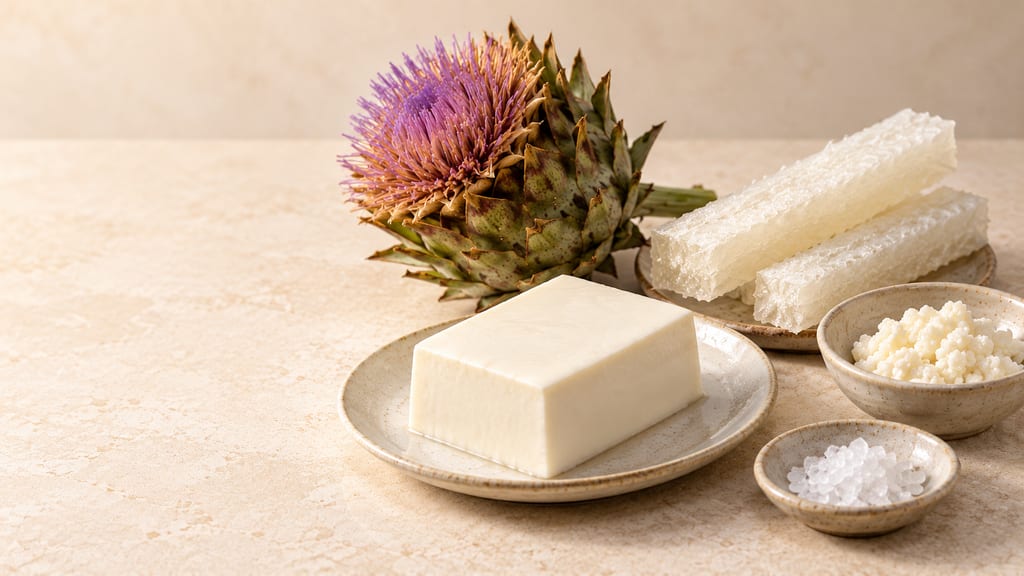
Cheese, tofu, agar, nixtamal and cured ham all begin with a liquid or soft food made to set, sour or keep. Rennet is one branch of that history, beside plant enzymes, acids, minerals, alkalis, gels, finings and curing salts.

The African Caesar-group mushroom, Amanita masasiensis, is a wild ectomycorrhizal species of central and southern African woodlands, eaten locally. The genus contains deadly poisonous species, so identification needs care.

Parkia biglobosa seeds are fermented into regional West African seasonings, including nététou, iru, dawadawa and soumbala. The yellow fruit pulp is a separate food, and names and methods vary by place.
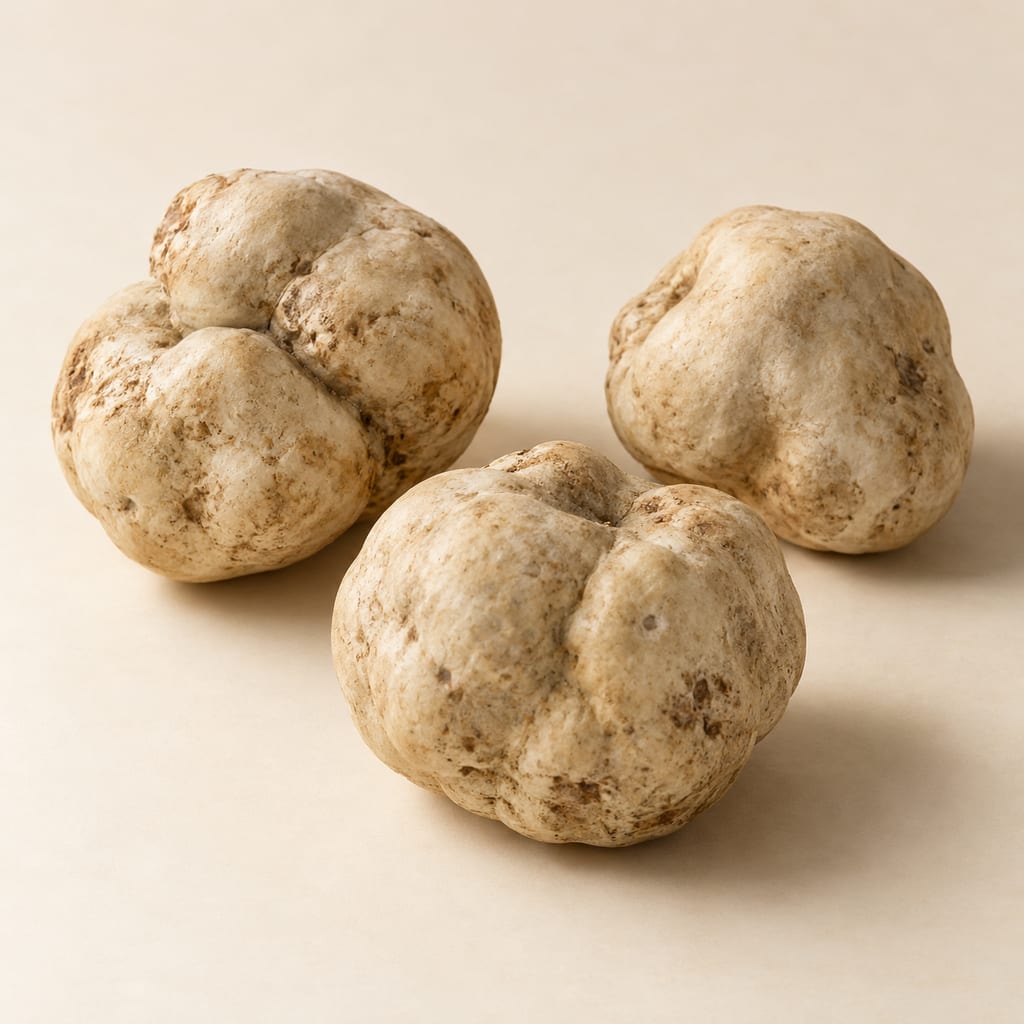
Afrocastellanoa ivoryana is a truffle-like false truffle of African woodlands, ectomycorrhizal with woodland trees and recorded as a regional wild food in West and Central Africa.
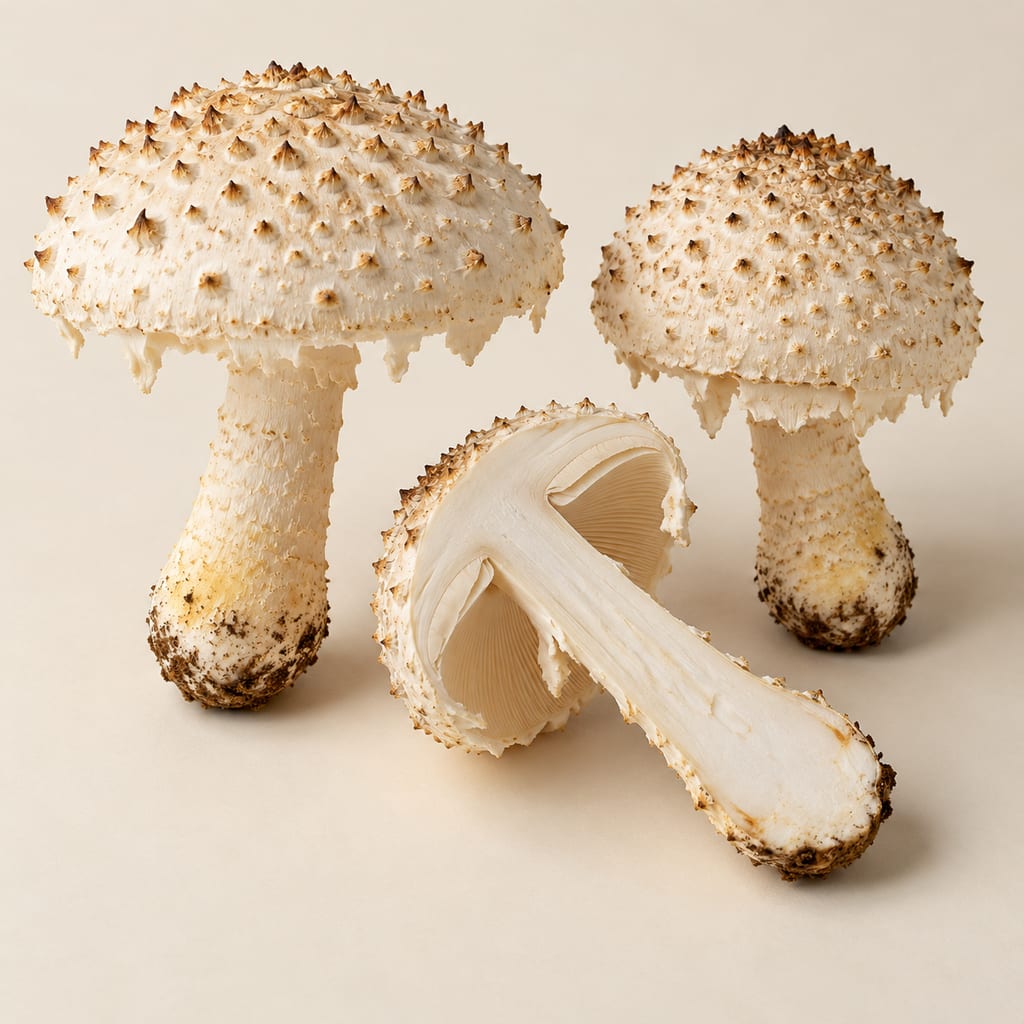
Amanita afrospinosa is a white, warted Amanita of miombo woodland in southern and central Africa. A regional food-use record exists, but the Amanita genus includes deadly species, so no safe use is established here.
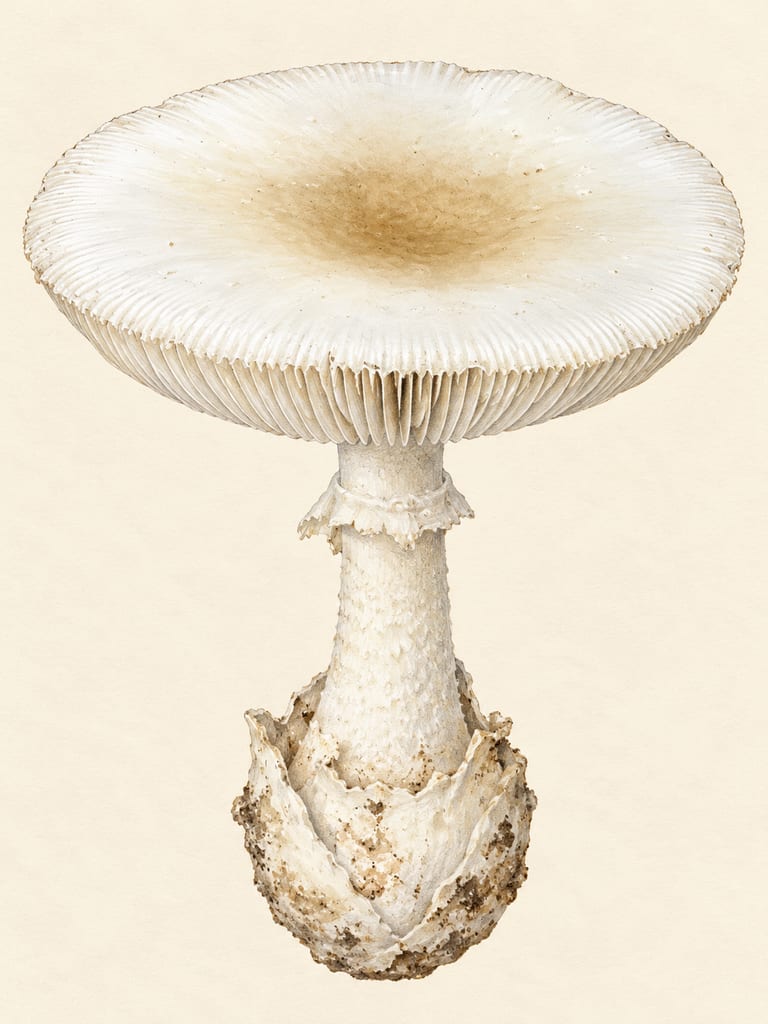
Amanita loosei is a large wild Amanita of tropical African miombo and open woodland, gathered and sold as a valued seasonal food. Regional food-use evidence is not a guide to identifying wild mushrooms.
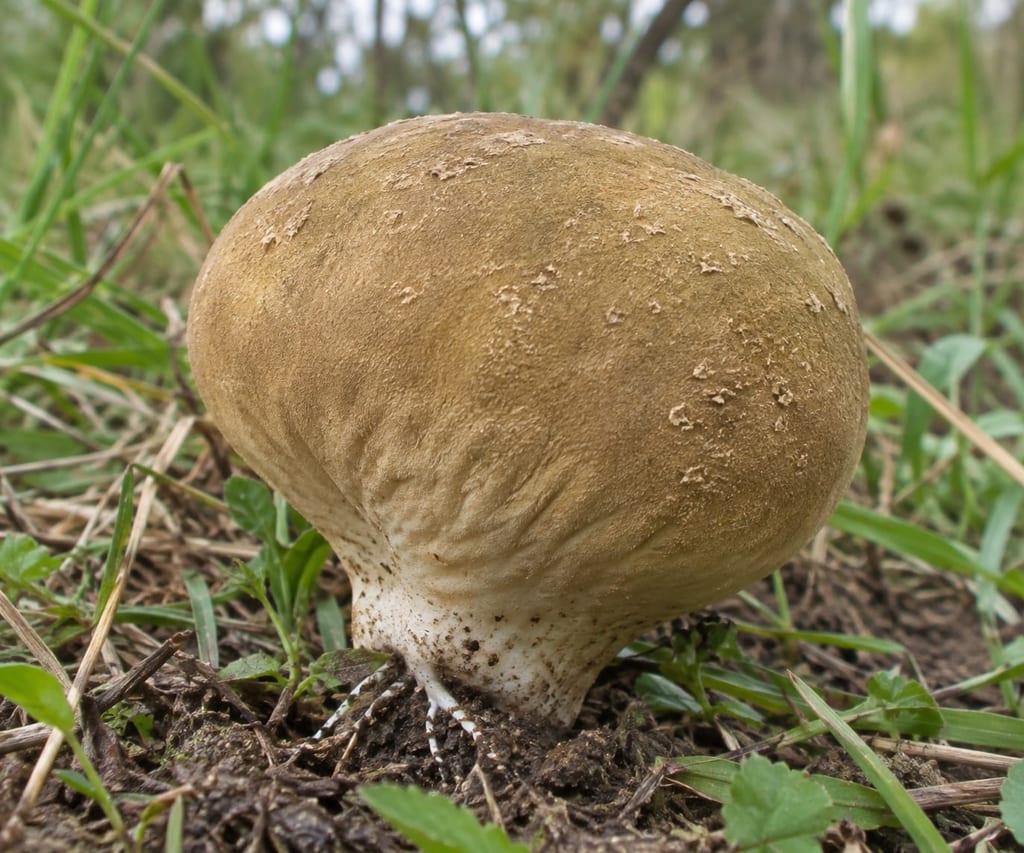
A tropical African puffball recorded in West African range accounts and Ethiopian edible-mushroom studies. Ethiopian use evidence is qualified; Benin identification and safety remain unresolved.
A defined Saccharomyces cerevisiae strain, 2Y48P22, was screened in 2010 for softening cassava in lafun experiments. It is an experimental candidate, not a household starter with a verified method.
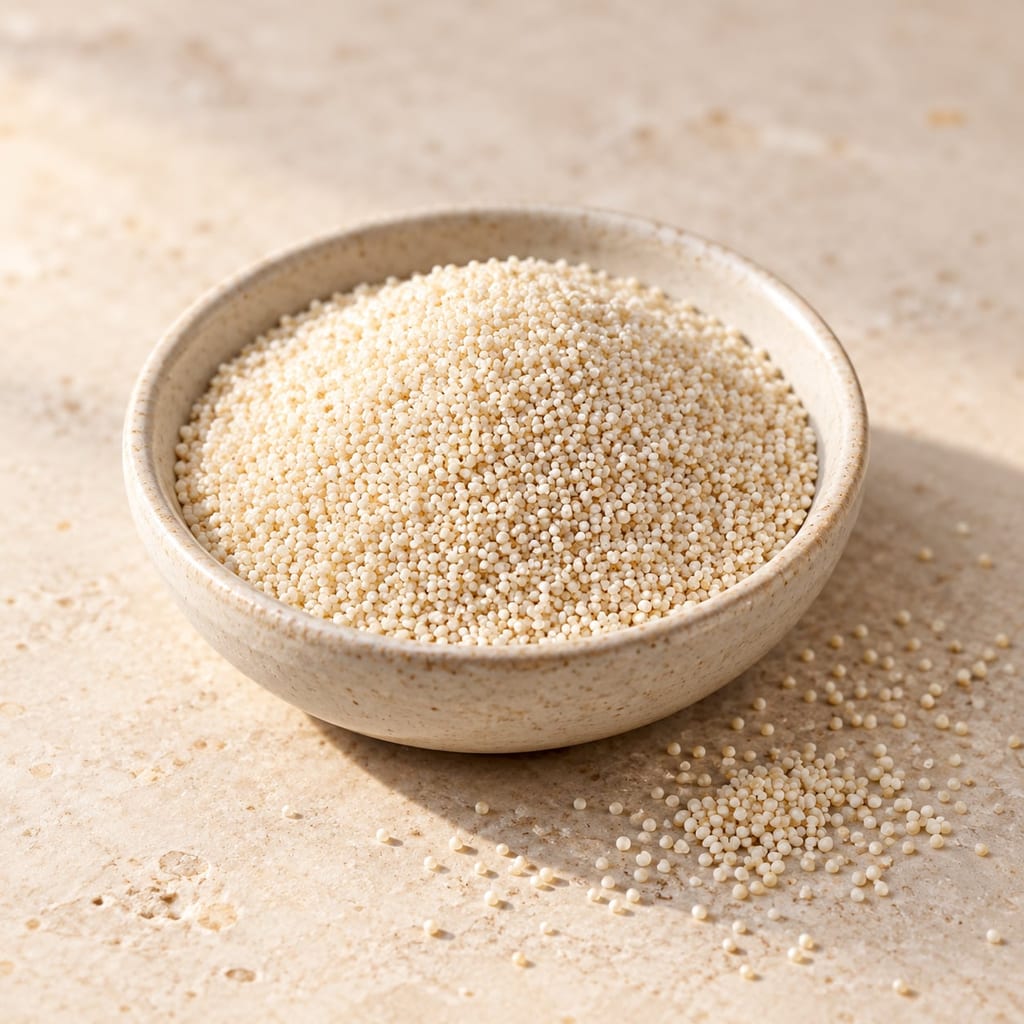
Fonio covers two distinct West African cereals: white fonio (Digitaria exilis) and black fonio (D. iburua). Both are eaten in cooked dishes; sources also document fermented drinks and controlled fonio fermentations.
No community contributions have been published for this entry yet.
Sign in to contribute. Published comments and photos are free to read.
HeliyonTraditional use · Geography · Preparation · Sourcing
Processing and preservation methods of Wagashi Gassirè, a traditional cheese produced in BeninA field survey in Dassa and Nikki records fresh cow milk and Calotropis procera as a traditional hot-coagulation system for wagashi gassirè.
The survey describes variation in plant parts and extraction practices, including leaves, stems and sap; those observations are not a validated universal home method.
The survey identifies different post-coagulation preservation practices; these do not validate the coagulant as a safe standalone ingredient.
Cited in: What this ingredient is; Where the food use is documented; What sources describe about preparation; Traditional material and purified enzyme are different; What is known and what remains open
International Journal of Food Science and TechnologyDocumented use · Function · Processing
The characterization and application of Calotropis procera, a coagulant in Nigerian Wara cheeseThe study describes use of Calotropis procera leaf extract in wara and tests protease activity at cheese-making temperatures.
Its laboratory extraction and activity measurements are not a household recipe or safety validation.
Cited in: What this ingredient is; Where the food use is documented; What sources describe about preparation; How milk clotting works; What is known and what remains open
Food Research InternationalMechanism · Laboratory function
Insights into milk-clotting activity of latex peptidases from Calotropis procera and Cryptostegia grandifloraLaboratory work found milk-clotting and proteolytic activity in latex fractions; pre-incubation at 75 °C for 10 minutes eliminated those activities.
Activity in a test fraction does not establish safety of raw latex or a traditional crude preparation.
Cited in: What sources describe about preparation; How milk clotting works; Traditional material and purified enzyme are different; Safety and evidence limits
Food Chemistry; Federal University of Ceará repositoryMechanism · Laboratory function
Biotechnological potential of a cysteine protease (CpCP3) from Calotropis procera latex for cheesemakingThe paper characterizes a purified cysteine protease CpCP3 from latex and reports experimental cheesemaking results.
Purified CpCP3 is a distinct research material and cannot be treated as equivalent to crude latex, leaves or stems.
Cited in: What this ingredient is; How milk clotting works; Traditional material and purified enzyme are different; What is known and what remains open
Indian Journal of OphthalmologySafety
Ocular toxicity by latex of Calotropis procera (Sodom apple)A clinical series reported serious ocular injury after accidental latex exposure; this supports avoiding eye contact and taking plant sap seriously as a hazard.
Cited in: Safety and evidence limits
SpringerPlusSafety · Uncertainty
Cardiac and testicular toxicity effects of the latex and ethanolic leaf extract of Calotropis procera on male albino rats in comparison to abamectinAn animal study administered latex and ethanolic leaf extract orally to rats and evaluated heart and testicular effects; animal findings do not quantify human dietary risk or establish a safe cheese process.
Cited in: Safety and evidence limits
Food Science and Quality ManagementSafety · Uncertainty
Effect of Calotropis procera on the Proximate Composition and Potential Toxicity of Wagashi (Traditional Cheese) in BeninThis study reports that several screened phytochemical classes were not detected in cheese and whey, but expressly calls for more sensitive analytical methods; it does not settle safety for every crude extract or process.
Cited in: Safety and evidence limits; What is known and what remains open