
African locust bean seeds (Parkia biglobosa)
Parkia biglobosa seeds are fermented into regional West African seasonings, including nététou, iru, dawadawa and soumbala. The yellow fruit pulp is a separate food, and names and methods vary by place.
 FermenteaWhere food goes to change
Substrates
Fonio covers two distinct West African cereals: white fonio (Digitaria exilis) and black fonio (D. iburua). Both are eaten in cooked dishes; sources also document fermented drinks and controlled fonio fermentations.
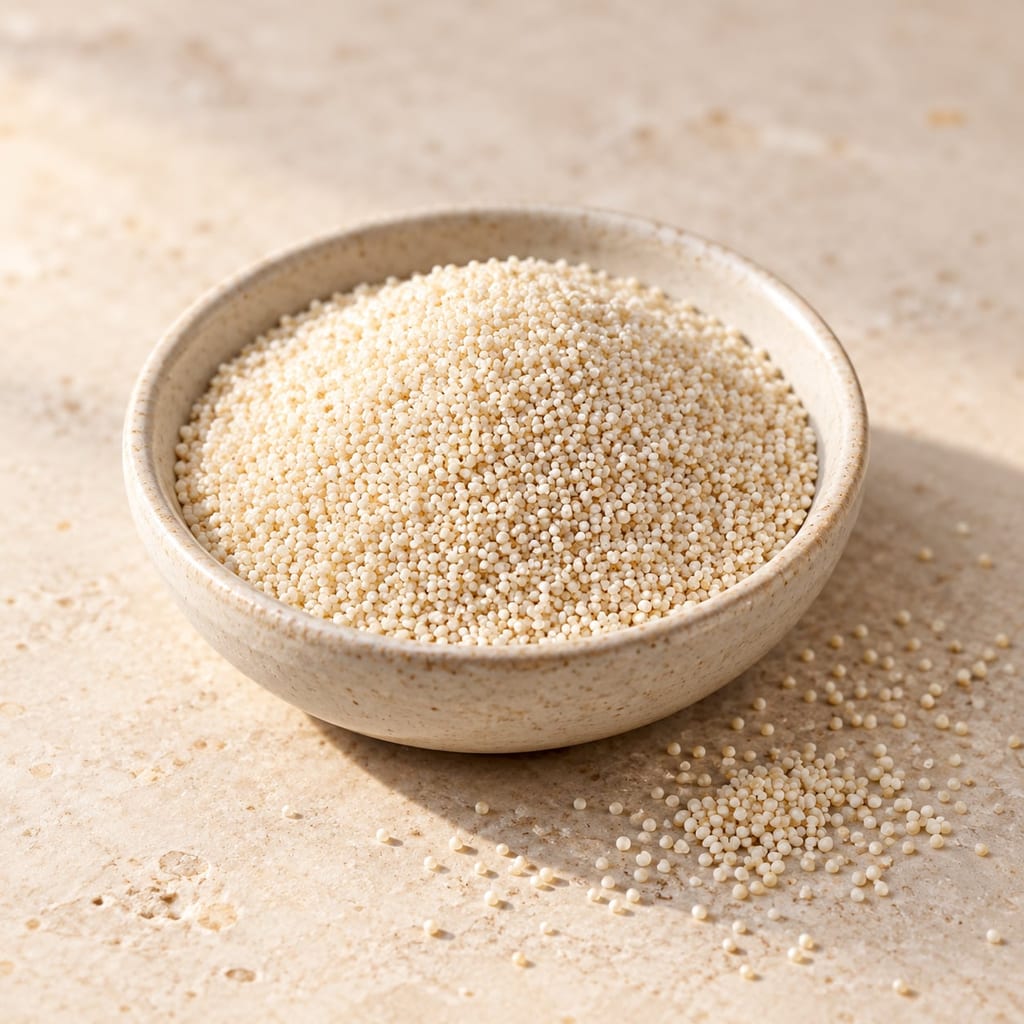
Fonio is a collective name for two cultivated West African grasses in the genus Digitaria. White fonio is Digitaria exilis (Kippist) Stapf; black fonio is Digitaria iburua Stapf. Both are cereals, but they are separate species with different histories and ranges. The names acha and iburu commonly refer to white and black fonio, respectively. Other spellings and local names vary by community, so a vernacular name alone may not establish which species a source means.
The grains are very small and may be sold as paddy (grain still in its hull), dehulled grain, whitened grain, washed grain, flour or a precooked product. These are different forms of the crop. White fonio is the main cultivated type across West Africa; black fonio is grown on a more limited scale. Colour names do not make the species interchangeable in taxonomic or historical accounts.
White fonio is widely cultivated from Senegal eastward to Nigeria and perhaps as far as Lake Chad. The ICRISAT and FAO descriptor guide lists fonio cultivation in Benin, Burkina Faso, Côte d’Ivoire, The Gambia, Guinea, Guinea-Bissau, Mali, Niger, Nigeria and Senegal. These sources describe a regional crop range, not a single center of origin.
Black fonio has a narrower distribution, especially in the Nigerian highlands and around Atakora in Benin and Togo. Recent genomic evidence shows that white and black fonio arose from separate domestication histories, without evidence of gene flow between them. The same study infers cultivation expansion from near the beginning of the Common Era and notes that this coincides with Nigeria’s earliest known archaeological fonio remains. The precise domestication places and dates remain unresolved; the Nigerian archaeological evidence is an early attestation, not proof that domestication began at that find.
Fonio grows in dryland and marginal farming environments and is valued as a household cereal in parts of West Africa. Farmers and researchers describe white fonio as widespread and black fonio as more localized. Nigeria is one of the places where both species are cultivated, with black fonio maintained in highland communities and particular landraces tied to local farming and cultural practice.
The small grain size makes the path from harvest to food laborious. Accounts describe hand harvest, drying, threshing, further drying, dehulling and winnowing. Traditional dehulling uses pounding in a mortar; some areas use mechanical hullers. Cleaning and washing remove sand and other foreign material. These stages mean that a recipe for washed, precooked fonio is not the same as one starting from paddy grain or dry flour.
Fonio straw and chaff are also used for fodder and other rural purposes. These plant residues are not edible grain ingredients and should not be confused with hulled fonio sold for cooking.
A Nigerian interview study records fonio cooked as tuwo, a dough-like paste served with soup; gote or fate, a porridge; and brabusko, a couscous-like dish served with stew. It also records fonio in jollof-style dishes and fura. These names describe foods made in particular settings; they are not generic names for fermented fonio.
The same study describes kunun zaki as a beverage that can be made by soaking fonio, sometimes together with finger millet or peanuts, then blending and straining it. Interviewees said it is sometimes fermented for a mildly sour taste. The report also describes masa batter that may be fermented when yeast is used. These examples establish that fonio appears in fermented cereal foods, but the ingredients, mixing, fermentation and cooking differ by dish and producer. Sourness is a flavor description, not a safety result.
A catalogue recipe for northern Nigerian pearl-millet kunu zaki is not itself a fonio recipe. I keep it separate because its documented grain is pearl millet, even though fonio is reported in related kunun zaki preparations.
A 2020 Nigerian laboratory study examined fermented weaning food made from malted Digitaria exilis. Researchers steeped and malted acha, dried and milled it, then fermented reconstituted flour with selected Lactobacillus and Leuconostoc isolates. The work measured microbial and physicochemical changes. It is evidence that D. exilis can be used in a controlled lactic fermentation, not evidence that all fonio varieties or spontaneous methods behave the same way.
The study's abstract says safety assessment tests were performed, and its methods describe gelatinase, DNase and haemolysis screening of selected isolates. That result belongs to those isolates and that experimental formulation. It does not validate another starter, a home-scale process, or an unspecified time, temperature or flour stage. A process should be followed as documented for the actual product, and fermentation signs should not replace verified safety controls.
Other modern brewing projects have also used fonio, but an experimental or commercial beer does not establish a historical African beer tradition. This account keeps farmer and interview evidence separate from controlled fermentation research and contemporary product development.
Fonio's small seeds can carry sand and other foreign matter through harvest and milling. The FiBL training manual describes repeated cleaning and washing and warns of grain moulding around post-harvest handling. For a recipe, use clean, food-grade grain in the stated form and follow the source's own washing, cooking and fermentation steps. A paddy, washed grain, flour and precooked grain are not substitutes unless the source allows that change.
A 2026 study of 64 fonio flour samples sold in Abidjan reported microorganisms including moulds and Aspergillus species. Those findings belong to the sampled retail flour and do not estimate contamination across all regions or all fonio products. They do show why good handling and cooking matter. The study does not provide a general safety schedule, and this record adds no invented storage duration, moisture limit or fermentation endpoint.
The 2020 fermented-acha study examined a defined malted flour and selected bacteria. Its isolate screening and reported findings cannot be transferred to untested spontaneous ferments. Smell, taste, sourness, appearance and bubbling do not show that a batch is safe.
This record treats fonio as a broad grain entry while retaining the scientific distinction between white and black fonio. It covers food grain and documented fermented uses, not seed for planting, straw, chaff, generic millet flour or other Digitaria grass crops. A specific recipe should name the species or processed form when its source does.
The available sources support a West African crop history, multiple cooked dishes and several fermentation contexts. They do not support one fonio fermentation method, a single domestication site, or one safety rule that applies to every product. The exact regional names, grain stage and process remain important evidence.
Fonio is maintained through farmer-selected landraces as well as formal collections. In the Nigerian interview study, participants said that planting seed is commonly saved from a household's own harvest; seed may move between nearby communities when harvests are poor. Varieties have names tied to traits such as maturity, yield, grain size or husk colour. These local names and seed histories matter because a market label such as acha does not always describe a single uniform variety.
The same study records long-standing connections between fonio and community identity in Nigeria. Participants associated cultivation with Birom communities in Plateau State, Sayawa in Bauchi and Jaba in Kaduna, and described fonio foods at ceremonies and other social events. These are findings from the study's interviewed communities, not a claim that every fonio-growing group shares one cultural practice.
The international descriptor guide records broad variation in maturity, height and grain characteristics. It also notes that both species have uses as food and fodder. This variability matters in agriculture and in kitchens: a fast-maturing local variety, a later variety retained for its yield, and a black-fonio landrace may not behave identically in harvesting, milling or cooking. When a source identifies a variety or species, keep that name attached to the use it documents.
Paddy or raw fonio still carries the hull after threshing. Dehulled fonio has had that outer hull removed; whitening removes further outer grain layers, while washing clears away bran, sand and other foreign material. Precooked fonio has already passed through a cooking and drying stage. These names describe different ingredients and manufacturing steps, not different species.
The choice of form changes a recipe. Paddy requires the source's dehulling and cleaning steps before cooking. Cleaned, whitened fonio is ready for a different sequence from a flour made by milling dry grain. Precooked fonio may be rehydrated or reheated according to its package directions, but a precooked export product is not evidence for a traditional method or a substitute for raw grain in a fermentation study.
The FiBL manual describes hand pounding and winnowing as traditional dehulling work, and mechanical hullers as a way some areas reduce the labour. It also reports that cleaning and washing remove sand. The 2026 Nigerian study describes household handling and storage practices in its surveyed communities, including sacks and older granary forms. These practices are time- and place-specific; they do not establish a single storage period or moisture target for every fonio product.
The word fermentation covers different processes here. Kunun zaki is a prepared beverage that may use fonio alone or with another grain or peanut and may undergo spontaneous souring. Masa batter may be fermented when yeast is used before it is cooked on a griddle. A malted acha weaning-food study, by contrast, used selected lactic acid bacteria in a controlled laboratory formulation. These foods differ in ingredients, solids, processing and final cooking; their methods cannot be merged into one generic fonio fermentation.
The Nigerian laboratory paper reports a research sequence that included soaking and malting grain, drying and milling it, then fermenting reconstituted flour with selected cultures. Its measured times and temperatures describe that experiment only. They are not proposed here as a household method, nor do they establish safety for a spontaneous kunun zaki or a different species, flour or batch size.
A finding that acidity changed or that selected bacterial isolates passed laboratory screening does not show that every organism in a different product was controlled. Neither taste nor a sour smell identifies the organisms present. The evidence supports fonio as a substrate in particular fermented foods and experiments, while leaving the safe limits of unsourced or improvised processes unanswered.
Fonio is often described as a drought-adapted cereal that can grow on shallow or nutrient-poor soils. The 2023 descriptor guide and 2026 Nigerian interview study connect this resilience to household food security, particularly in farming systems where the crop fills a seasonal gap before the main cereals are ready. The genomic study and farmer interviews also point to changing cultivation and landrace use.
The grain's small size creates a practical trade-off. It can provide a familiar staple and a prestige food, yet harvesting, cleaning and dehulling demand time and care. In the Nigerian study, farmers described different harvesting and processing choices for some white-fonio and black-fonio varieties. The FiBL manual likewise describes post-harvest labour and contamination risks. Thus agronomic resilience does not mean processing is effortless or that all fonio products are prepared in the same way.
White fonio is widely cultivated across this region. The range is not a single birthplace; listed country coverage varies by source.
The genomic study relates Nigeria's earliest known archaeological fonio remains to cultivation expansion near the start of the Common Era; it does not identify a precise site or date domestication.
An interview study documents both species in Nigerian cultivation and foods including tuwo, gote/fate and kunun zaki.
Black fonio (Digitaria iburua) is concentrated in Nigerian highland communities; white and black fonio coexist in parts of Nigeria.
Black fonio has a limited distribution here and is reported as recently reintroduced in the Atakora region of Benin.
Parkia biglobosa seeds are fermented into regional West African seasonings, including nététou, iru, dawadawa and soumbala. The yellow fruit pulp is a separate food, and names and methods vary by place.
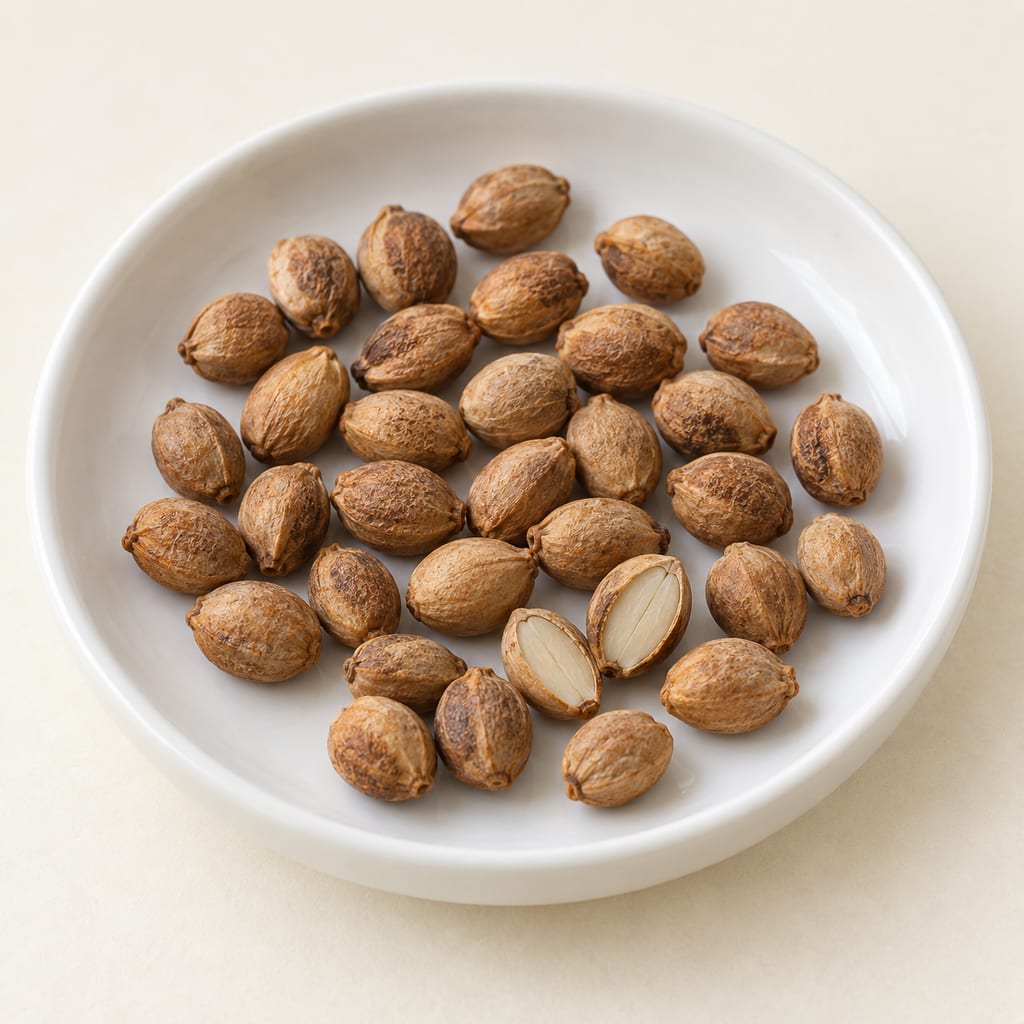
The seeds of the African breadfruit, Treculia africana, are cooked, dried and milled into flour in West and Central Africa, and the fruit is heaped and fermented before the seeds are washed out.
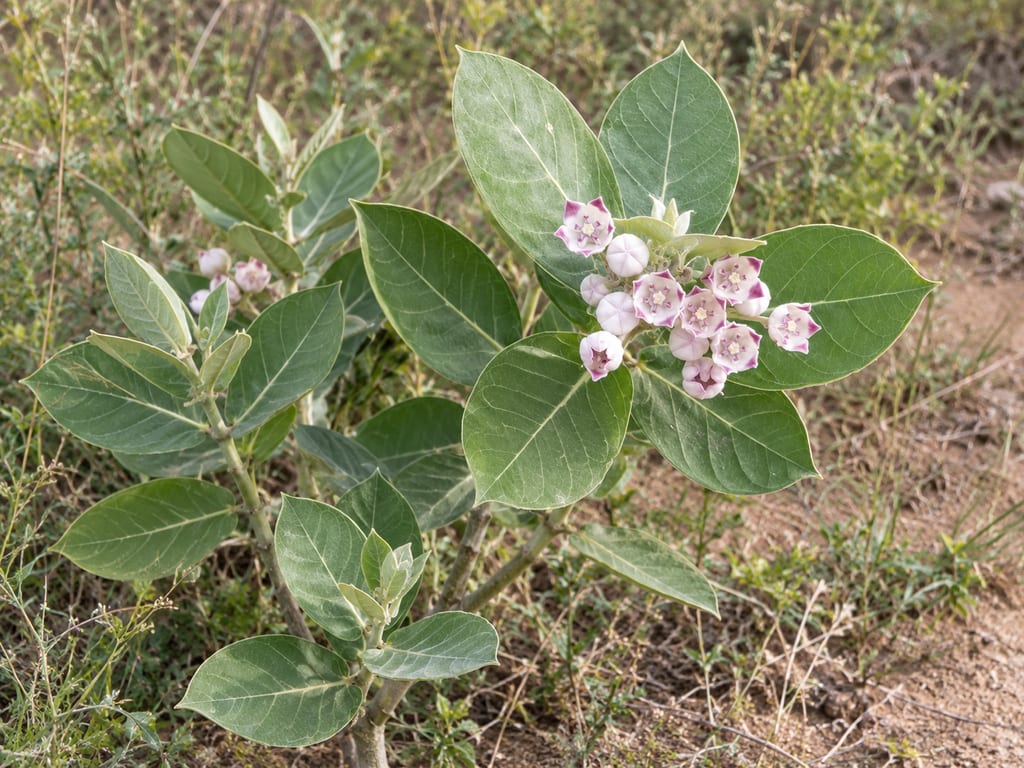
Calotropis procera preparations are documented as coagulants for wagashi gassirè in Benin and wara in Nigeria. Crude plant materials differ from purified research enzymes, and current evidence does not support a general home preparation.
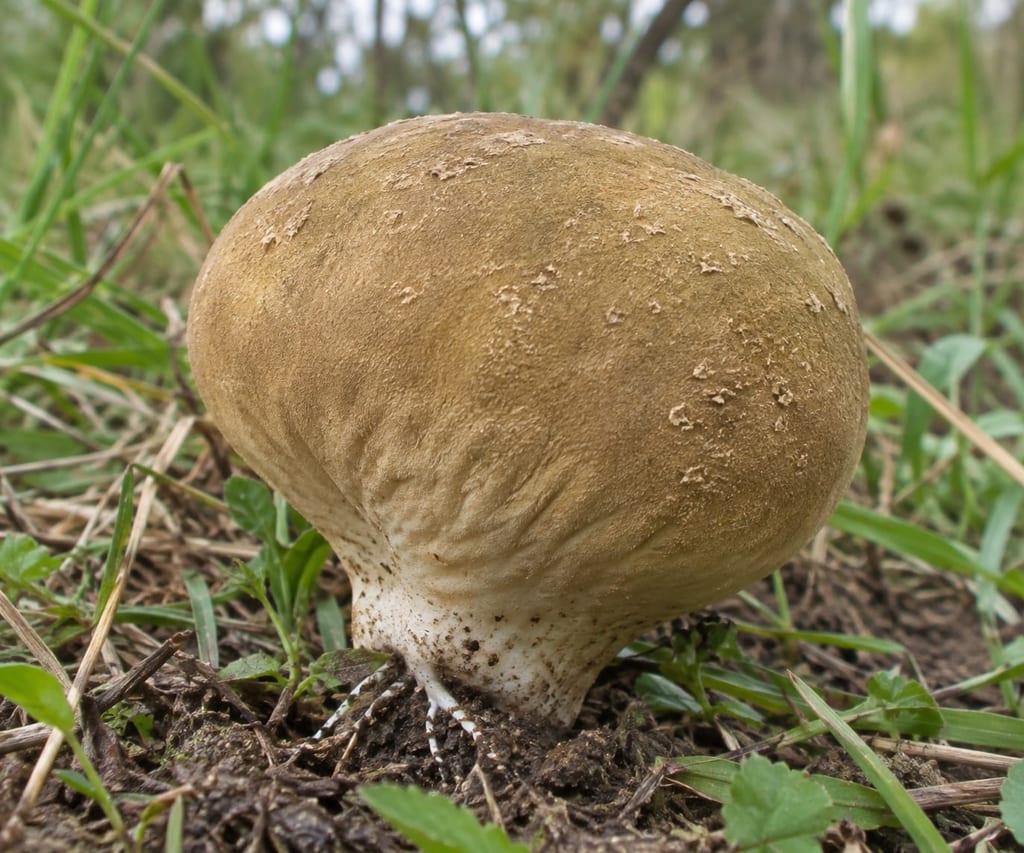
A tropical African puffball recorded in West African range accounts and Ethiopian edible-mushroom studies. Ethiopian use evidence is qualified; Benin identification and safety remain unresolved.
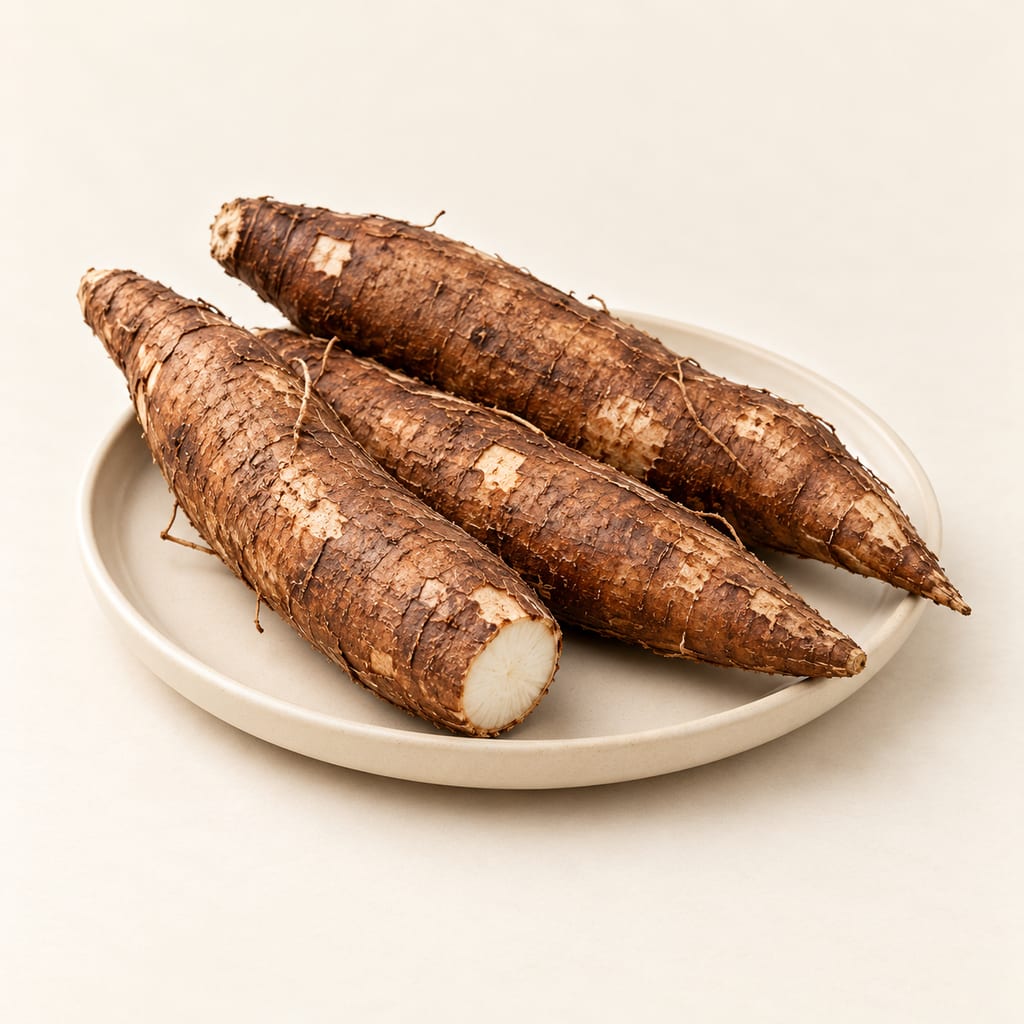
Cassava is the starchy root of Manihot esculenta, transformed across Africa into fermented doughs, granules and flours through distinct processes whose safety depends on thorough cyanogen removal.
A defined Saccharomyces cerevisiae strain, 2Y48P22, was screened in 2010 for softening cassava in lafun experiments. It is an experimental candidate, not a household starter with a verified method.
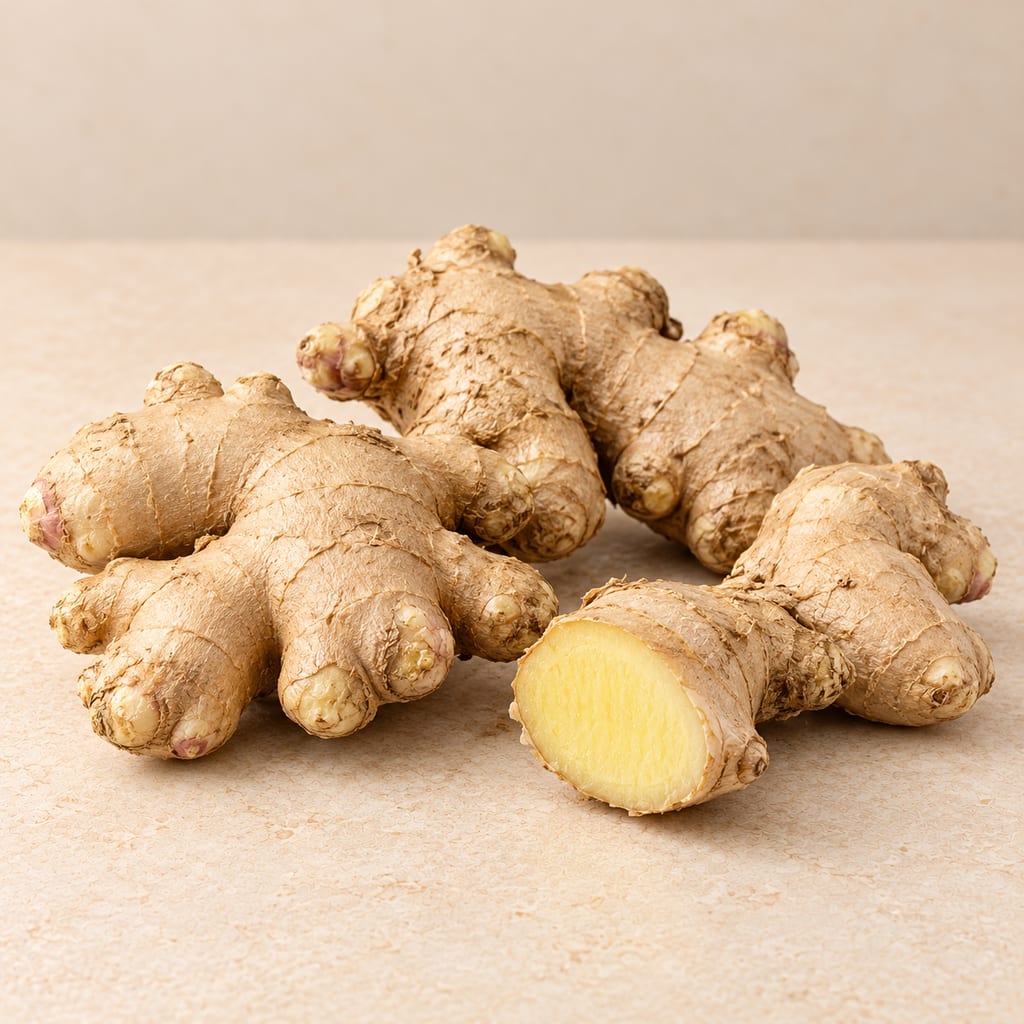
Ginger is the aromatic rhizome of Zingiber officinale, used fresh, dried and preserved. Historical ginger wines sliced or bruised it to flavour a sugar-based ferment.
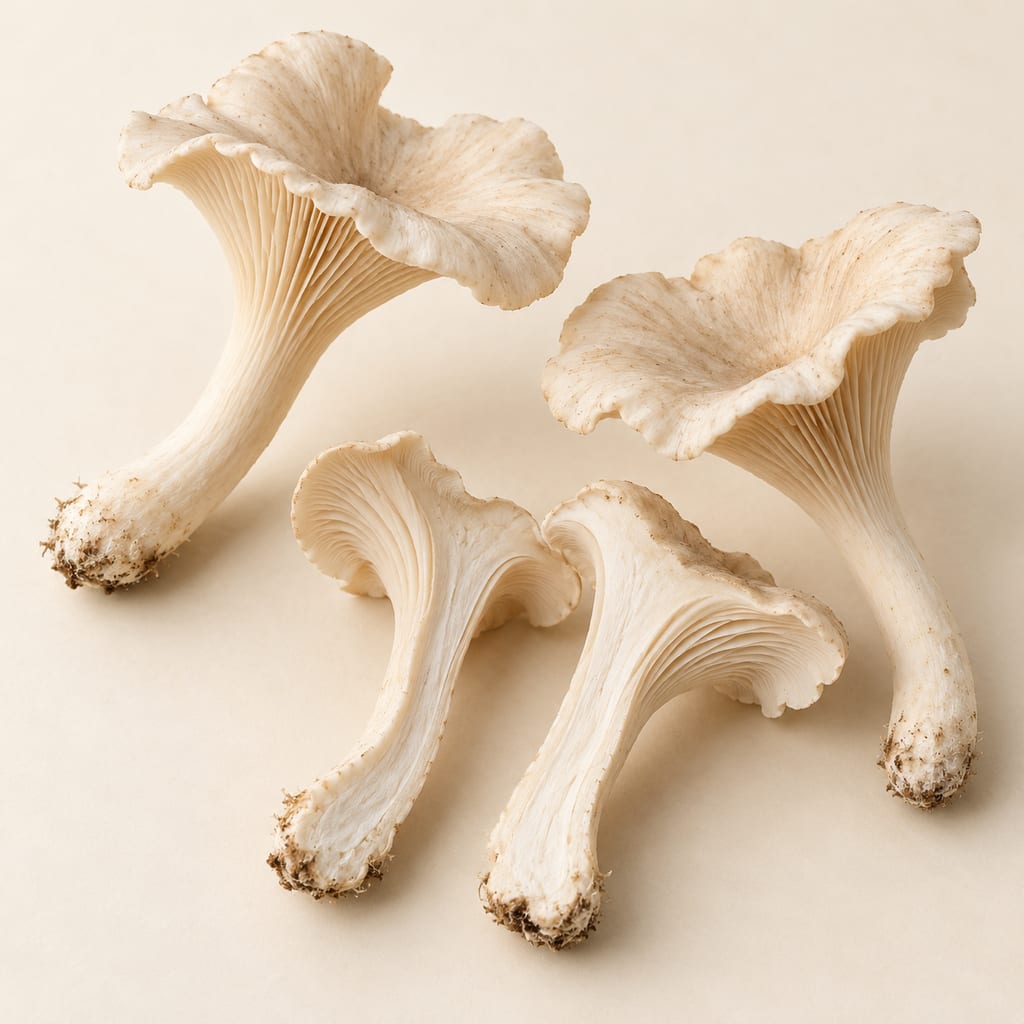
Pleurotus tuber-regium is a tropical fungus whose underground sclerotium is a staple and soup thickener in south-eastern Nigeria. It is also recorded as a food in Tshopo province, Democratic Republic of the Congo.
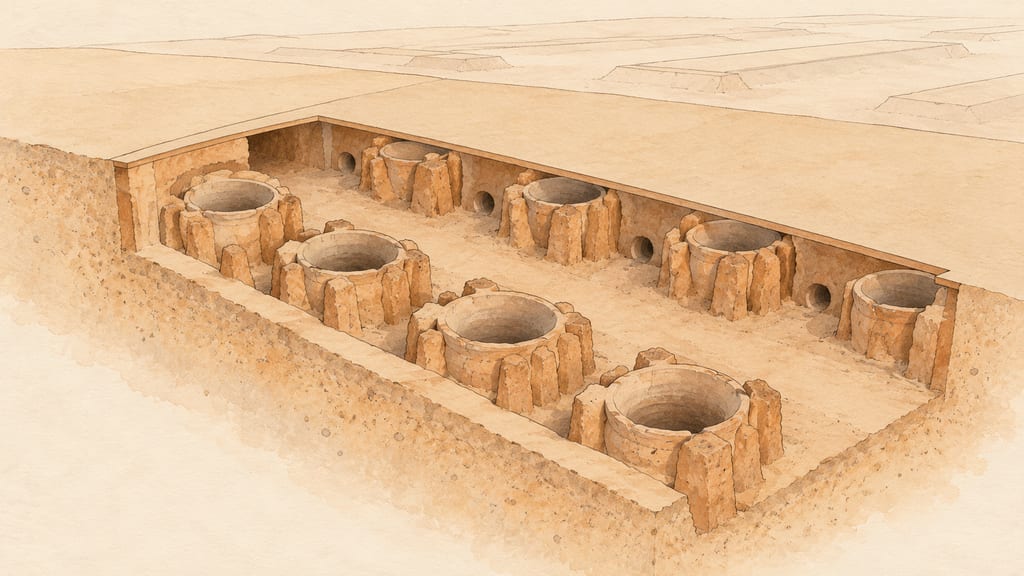
At North Abydos in Egypt, a fixed early Dynastic brewery comprised parallel semi-subterranean installations with rows of ceramic mash vats; excavation reports revise their number, scale and estimated batch capacity.
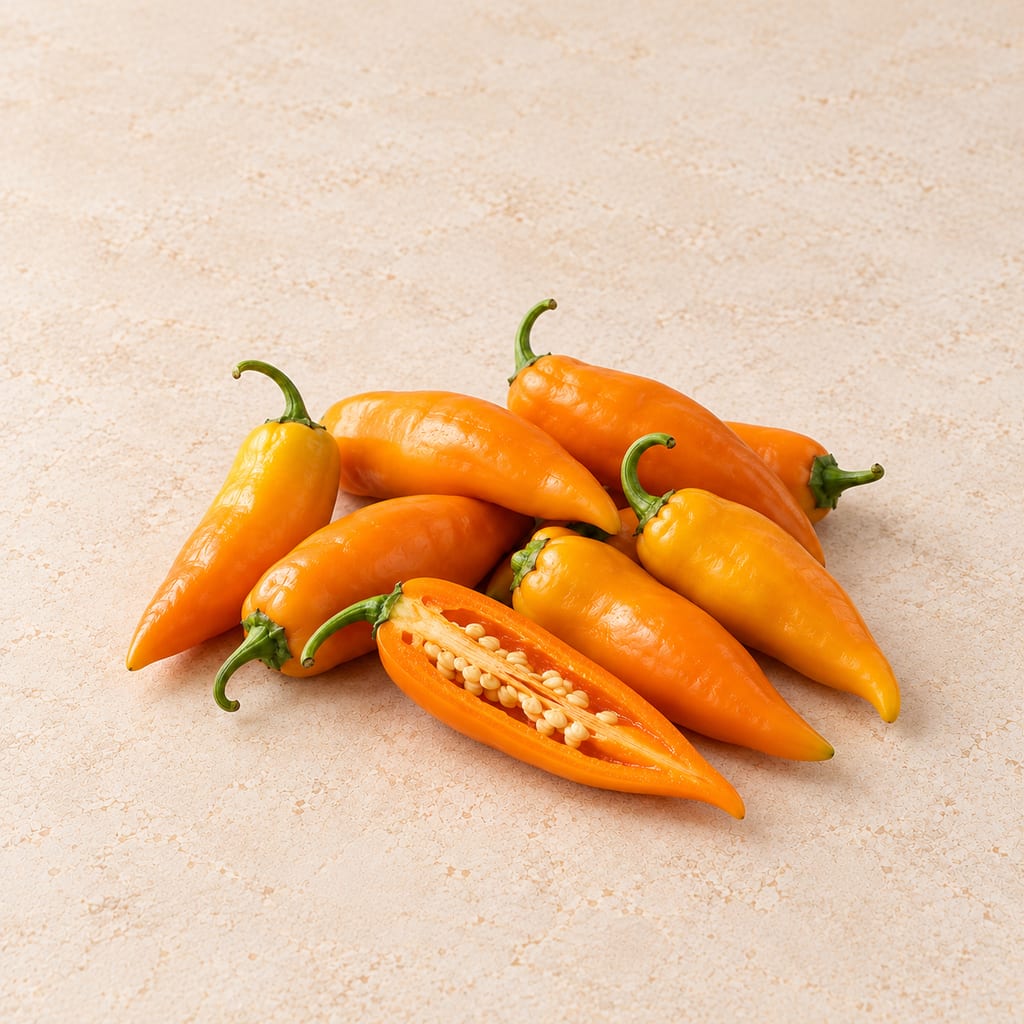
Ají amarillo is the orange-yellow Peruvian chilli cultivar group of Capsicum baccatum, used to colour and season huancaína sauce and ají de gallina. Published heat estimates do not establish one range for the named cultivar.

Toasted almonds are whole sweet almond kernels dry-roasted until golden to brown. Heat replaces their marzipan note with a roasted, nutty one; they thicken and flavour romesco.

Kodiak salmon, halibut and cod cut as seg'aq and hung on an initaq rack to become tamuuq, with kac'amaasaq and kupcuunaq named as different results.
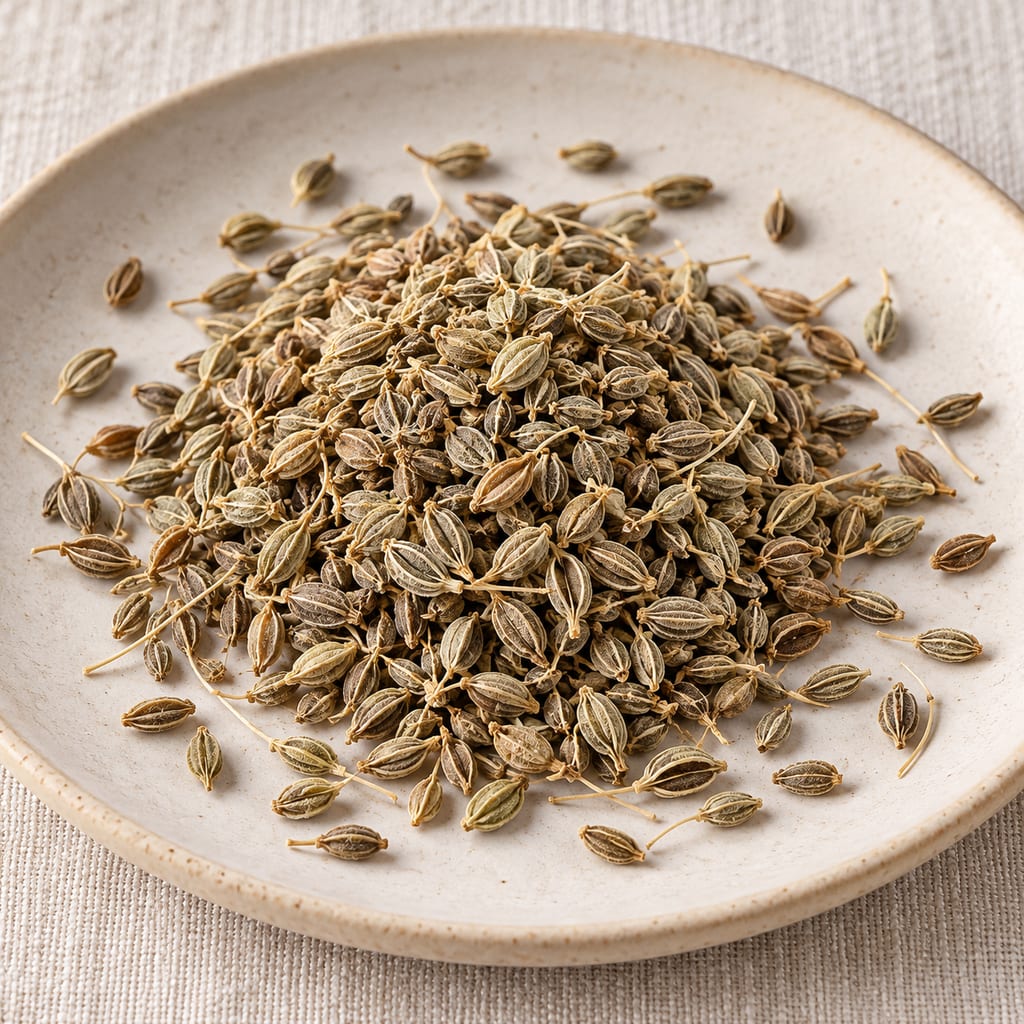
Aniseed is the dried ripe fruit of Pimpinella anisum, an aromatic Apiaceae spice commonly called a seed. It adds a sweet, warm aroma to breads such as Moroccan krachel and South African mosbolletjies, and is distinct from star anise.
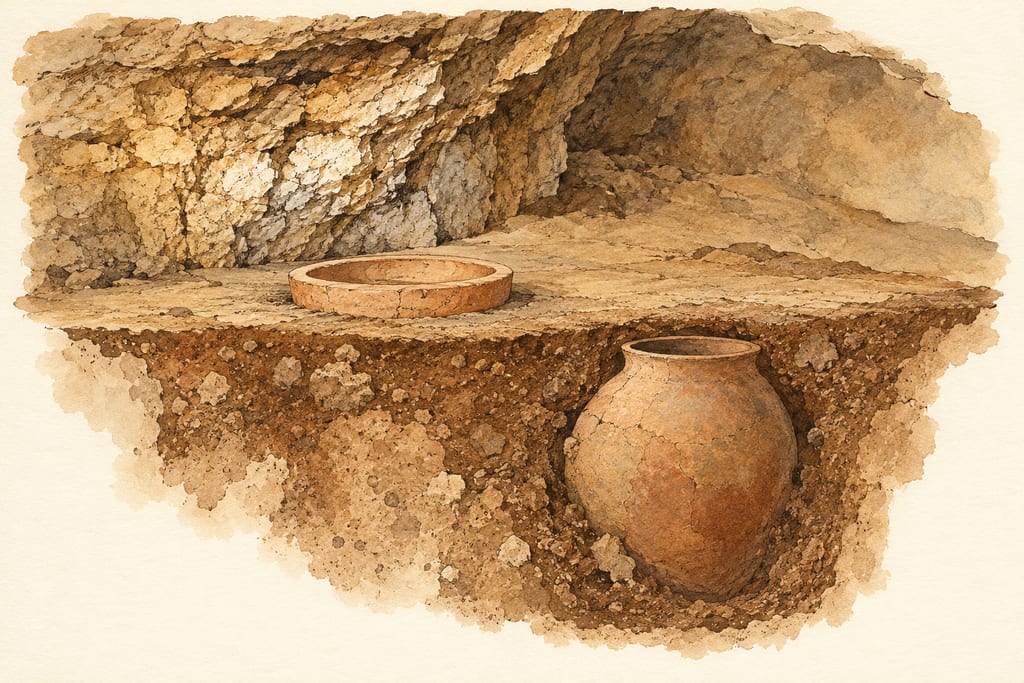
A fixed Late Chalcolithic installation in Areni-1 cave combined a shallow clay pressing basin with a large jar set into the cave floor and storage vessels nearby.

Ripe avocado flesh is the soft, buttery, fat-rich pulp of Persea americana, eaten raw. It is low in acid, so it is a fresh ingredient that needs care in chilled dishes.

A portable dome and pan used over a hearth, with embers on the lid and heat from below. Regional peka and saç forms share this principle while differing in materials, pan shape and how the food is cooked.
No community contributions have been published for this entry yet.
Sign in to contribute. Published comments and photos are free to read.
Thomas Kaczmarek et al.; Nature Communications 16, 4067 (2025)Species identity · Domestication history · Geography · Archaeological attestation
Independent domestication and cultivation histories of two West African indigenous fonio millet cropsWhole-genome data support independent domestications of white and black fonio without gene flow.
White fonio is widespread from Senegal to Nigeria and possibly Lake Chad; black fonio is concentrated in Nigerian highlands and the Atakora region of Benin and Togo.
The authors infer cultivation expansion near the start of the Common Era alongside Nigeria's earliest known archaeological fonio remains; precise domestication origins remain unresolved.
Cited in: Two species under one food name; Range and an unresolved domestication history; What this ingredient record covers
M. Elangovan et al.; ICAR-IIMR, ICAR-NBPGR, ICRISAT and FAO International Treaty on Plant Genetic Resources for Food and Agriculture (2023)Taxonomy · Names · West African cultivation · Crop diversity
Key descriptors for fonio milletsThe guide treats Digitaria exilis as white fonio and D. iburua as black fonio; acha commonly names white fonio and iburu black fonio.
It lists cultivation in Benin, Burkina Faso, Côte d’Ivoire, The Gambia, Guinea, Guinea-Bissau, Mali, Niger, Nigeria and Senegal.
White fonio predominates, while landraces vary in maturity, plant height and grain size.
Cited in: Two species under one food name; Range and an unresolved domestication history; Small grain, long post-harvest work; What this ingredient record covers; Landraces, household farming and cultural use; A resilient crop with local processing costs
Ishaq Muawiyya et al.; Plants, People, Planet (2026)Nigerian cultivation · Landrace knowledge · Food uses · Fermented drink evidence
Fonio (Digitaria exilis and Digitaria iburua) in Nigeria: Regional cultivation patterns, landrace diversity, and farmer knowledge for conserving a climate-resilient indigenous cerealThe study describes white fonio (D. exilis) and black fonio (D. iburua) as separate species and records their different distributions and localities.
Interviewees described tuwo, gote/fate, brabusko and other fonio foods.
Kunun zaki may be made with fonio, sometimes mixed with finger millet or peanuts, and sometimes fermented; masa may also be fermented when yeast is used. These findings do not define one process across the region.
Cited in: Small grain, long post-harvest work; Cooked foods and named dishes; Fonio fermentation in research; What this ingredient record covers; Landraces, household farming and cultural use; Paddy, cleaned grain, flour and precooked products; Reading fonio fermentation research carefully; A resilient crop with local processing costs
H. O. Hwabejire, S. M. Wakil and P. O. Akpoghelie; Nigerian Journal of Microbiology 34(1):4920–4935 (2020)Fonio fermentation research · Lactic acid bacteria · Process specific safety evidence
Production of Fermented Weaning Food from Digitaria exilis (Acha) using Lactic Acid BacteriaThe study examined malted D. exilis flour fermented with selected Lactobacillus and Leuconostoc isolates for a weaning-food formulation.
Its abstract reports a defined laboratory steeping, malting and fermentation sequence; this is research, not a validated household method.
Safety assessment included gelatinase, DNase and haemolysis screening of selected isolates; this does not validate other processes or sensory signs as proof of safety.
Cited in: Fonio fermentation in research; Handling and food safety; What this ingredient record covers; Reading fonio fermentation research carefully
Research Institute of Organic Agriculture (FiBL), with IFOAM and African partner organizations; Fonio chapter (2011)Grain size · Harvest · Post harvest processing · Mould and sand contamination
African Organic Agriculture Training Manual: FonioThe manual describes tiny fonio grains and labor-intensive harvesting, threshing, dehulling, winnowing and cleaning.
It reports sand contamination as a recurring post-harvest concern and notes moulding risks around late harvest and grain handling.
It distinguishes paddy, dehulled or whitened grain, washed grain and precooked products; it is not a modern safety-limit standard.
Cited in: Small grain, long post-harvest work; Cooked foods and named dishes; Handling and food safety; Paddy, cleaned grain, flour and precooked products; A resilient crop with local processing costs
Moumouny Traore, N’zebo Desiré Kouame, Arouna Diarrassouba and Marina Koussemon-Camara; Journal of Advances in Microbiology 26(1):59–70 (2026)Market flour microbiology · Hygiene evidence
Physicochemical and Microbiological Characterization of Fonio Flour in Terms of Sale and ConsumptionA study of 64 fonio flour samples sold in Abidjan reported several microbial groups, including moulds and Aspergillus species.
Those findings describe sampled products and a supply chain, not prevalence across all fonio or a validated process.
Cited in: Handling and food safety
Fan Zhu; Comprehensive Reviews in Food Science and Food Safety 19(6):3365–3389 (2020)Species names · Grain identity · Food applications
Fonio grains: Physicochemical properties, nutritional potential, and food applicationsThe review distinguishes white fonio (D. exilis) from black fonio (D. iburua) and summarizes their use as small-seeded West African cereals.
Fonio food applications are varied; the review describes a research landscape rather than one fermentation tradition.
Cited in: Two species under one food name; Fonio fermentation in research