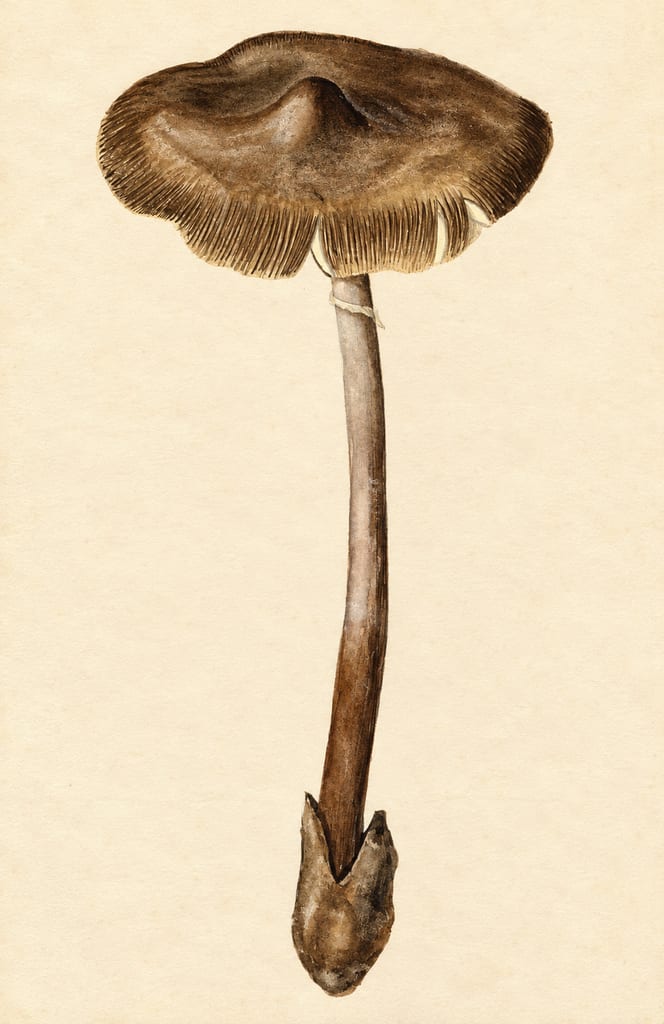
Amanita annulatovaginata
A wild ectomycorrhizal Amanita of the Congo rainforest, recorded as locally consumed in Tshopo province. Its preparation was not established, and the genus includes deadly species.
 FermenteaWhere food goes to change
Mushrooms
Pleurotus tuber-regium is a tropical fungus whose underground sclerotium is a staple and soup thickener in south-eastern Nigeria. It is also recorded as a food in Tshopo province, Democratic Republic of the Congo.
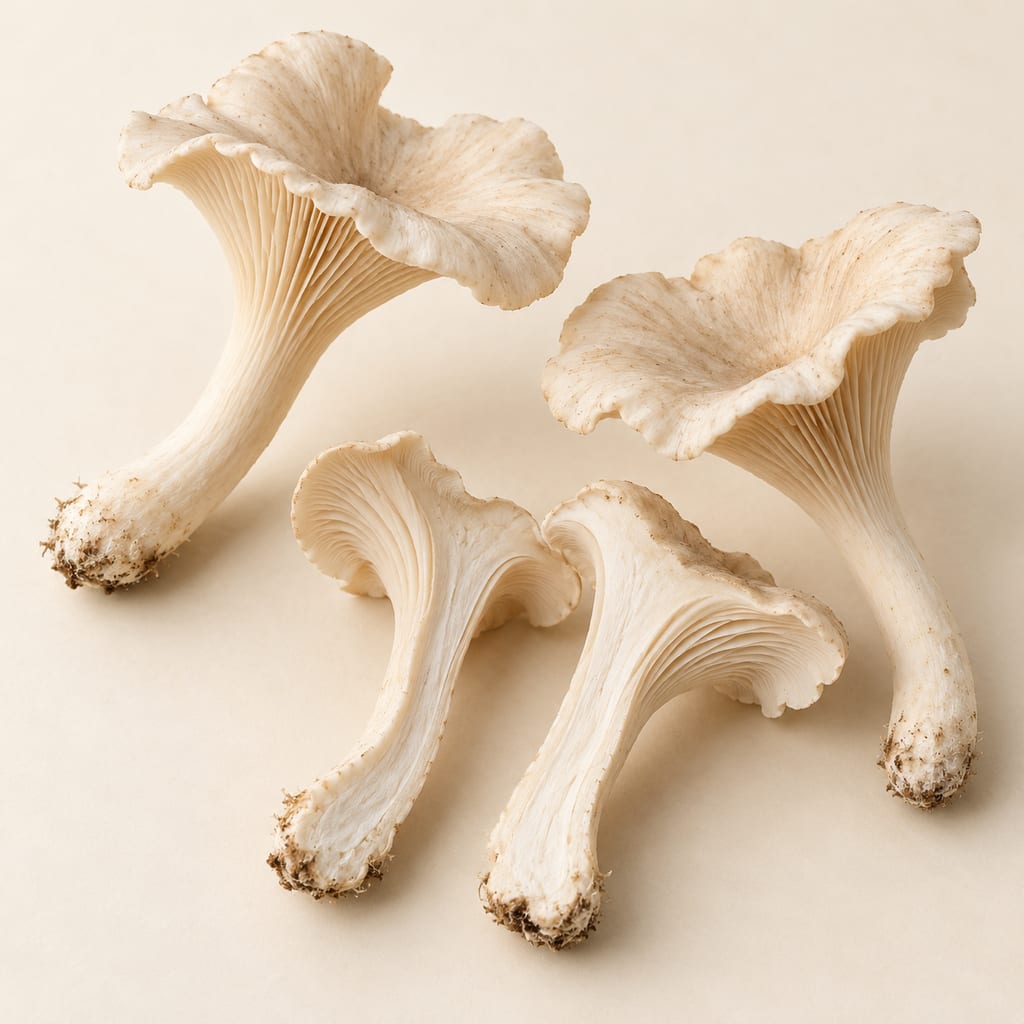
Pleurotus tuber-regium forms a hard underground sclerotium, which is harvested and eaten, as well as a fruiting body. In south-eastern Nigeria the sclerotium is a staple, cooked in soups and used as a thickener because it swells in water. Local names include osu and ero nsu in Igbo and olu ohu in Yoruba. It is also recorded as a food in Tshopo.
Sources say the sclerotia are often used in place of, or mixed with, melon to prepare soups. They are also reported in pork sausage and as a flavouring. The sclerotium and the fruiting body are both described as edible in the sources reviewed.
One assessment reported about 63.8 per cent carbohydrate and 12.4 per cent protein in the sclerotium, with moisture of about 19.9 per cent. Another study found that the sclerotium had lower protein, fat, amino acid and mineral content than the cap. These are single-study figures and should not be read as a general composition.
Sclerotium formation has been studied at the molecular level in a genome and transcriptome study. The review cited describes cultivation of the species and its sclerotium.
A heavy-metal study of markets in south-eastern Nigeria concluded that the sclerotium is safe for human consumption. The same sources detected oxalate, tannin, flavonoid, alkaloid and hydrogen cyanide compounds. This page does not extend that finding to other regions or preparations. Because "tiger milk mushroom" is also used for Lignosus rhinocerus, the scientific name on any product label should be checked.
Staple sclerotium use in the south-east of Nigeria.
Food-use record in the Tshopo edible-fungi survey.
A wild ectomycorrhizal Amanita of the Congo rainforest, recorded as locally consumed in Tshopo province. Its preparation was not established, and the genus includes deadly species.
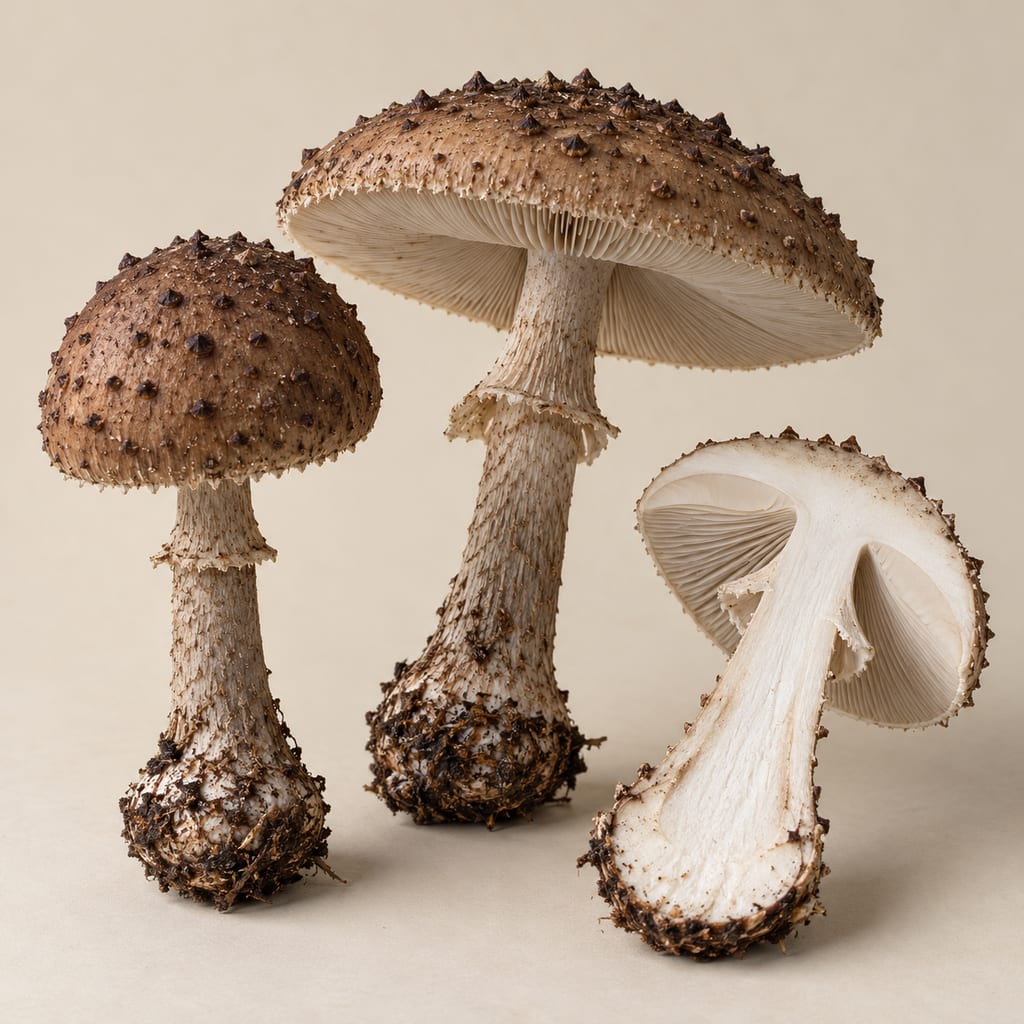
A wild ectomycorrhizal Amanita of the Congo rainforest, recorded as locally consumed in Tshopo province. Its preparation was not established, and the genus includes deadly species.
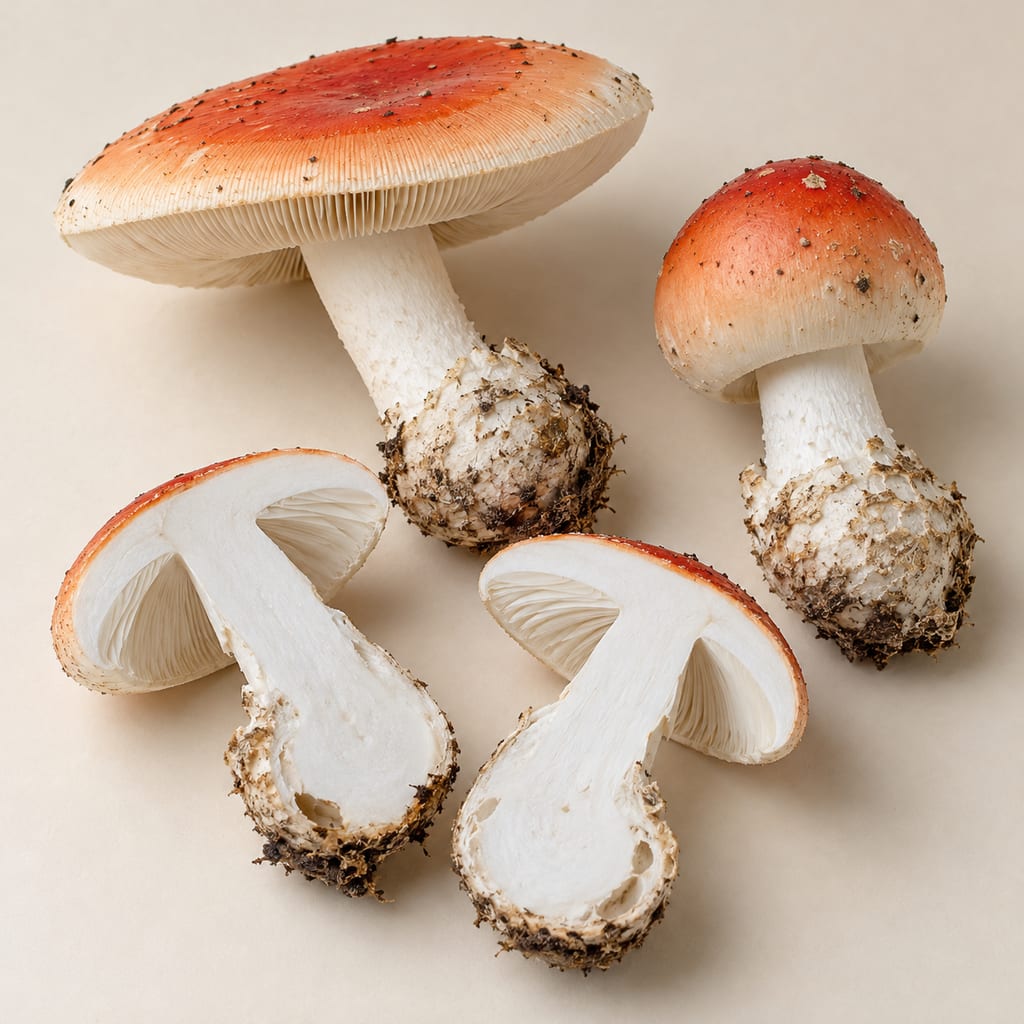
Amanita robusta Beeli is a poorly documented Central African Amanita known from voucher-backed rainforest collections in the Democratic Republic of the Congo and Cameroon. A Tshopo study reports local food use for a taxonomically supported voucher, but neither that record nor the name makes an unknown Amanita safe to identify or eat.
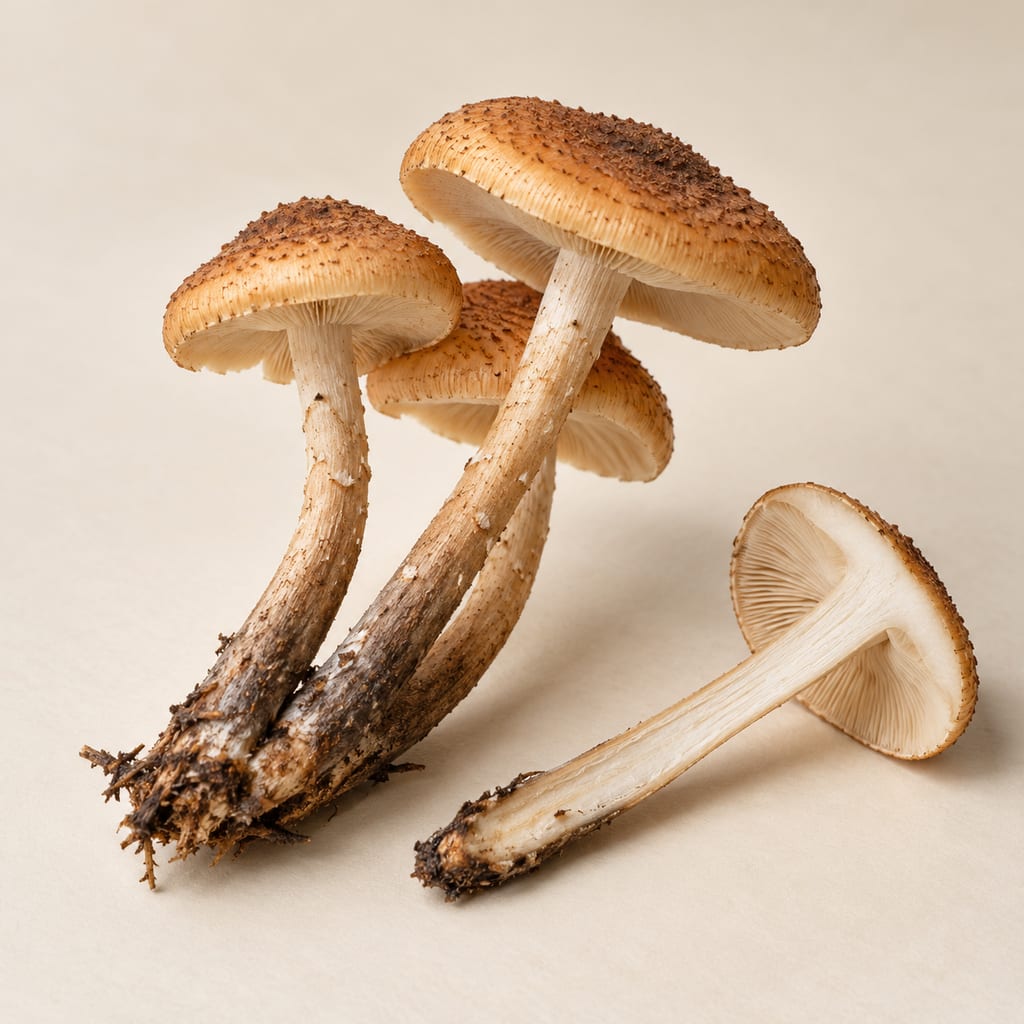
Armillaria heimii is a saprotrophic fungus of the honey-fungus genus, recorded as a wild food in Tshopo province, DR Congo. Its preparation and safety are not established in the sources.
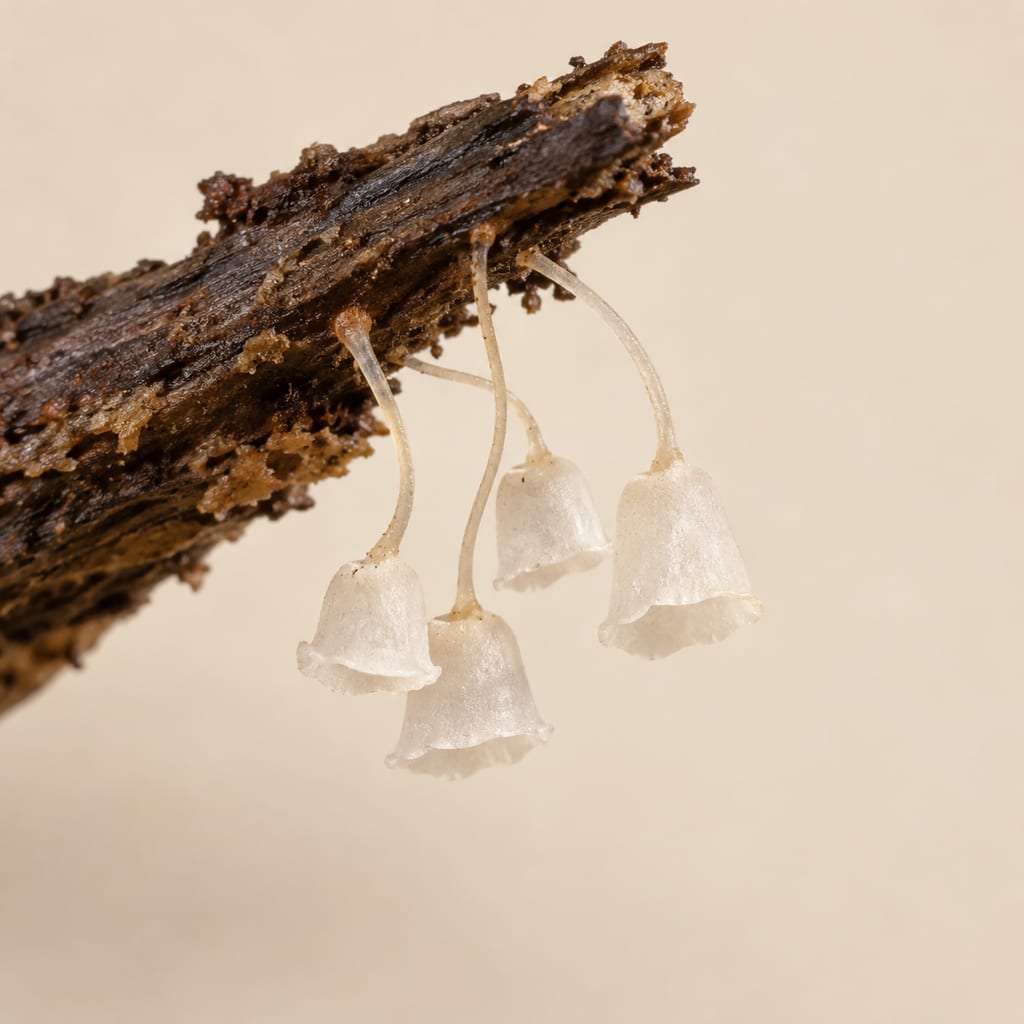
Calyptella longipes is a wood and litter decaying fungus of the rainforests of Tshopo province, DR Congo, where some ethnic groups in voucher-backed interviews eat it. Its preparation was not recorded.
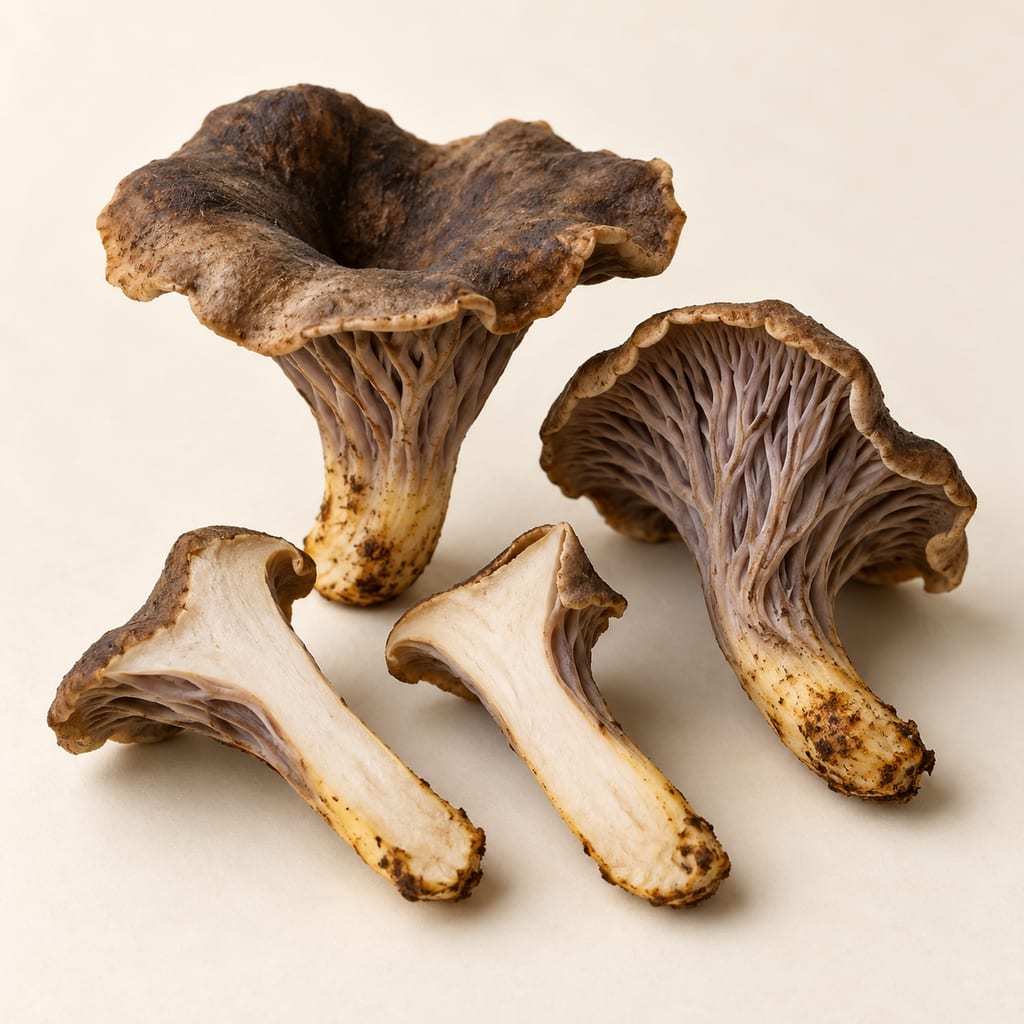
Cantharellus congolensis is an ectomycorrhizal chanterelle of sub-Saharan Africa, eaten in the Democratic Republic of the Congo under local names. Its edibility rests on food-use surveys, not on toxicity tests.
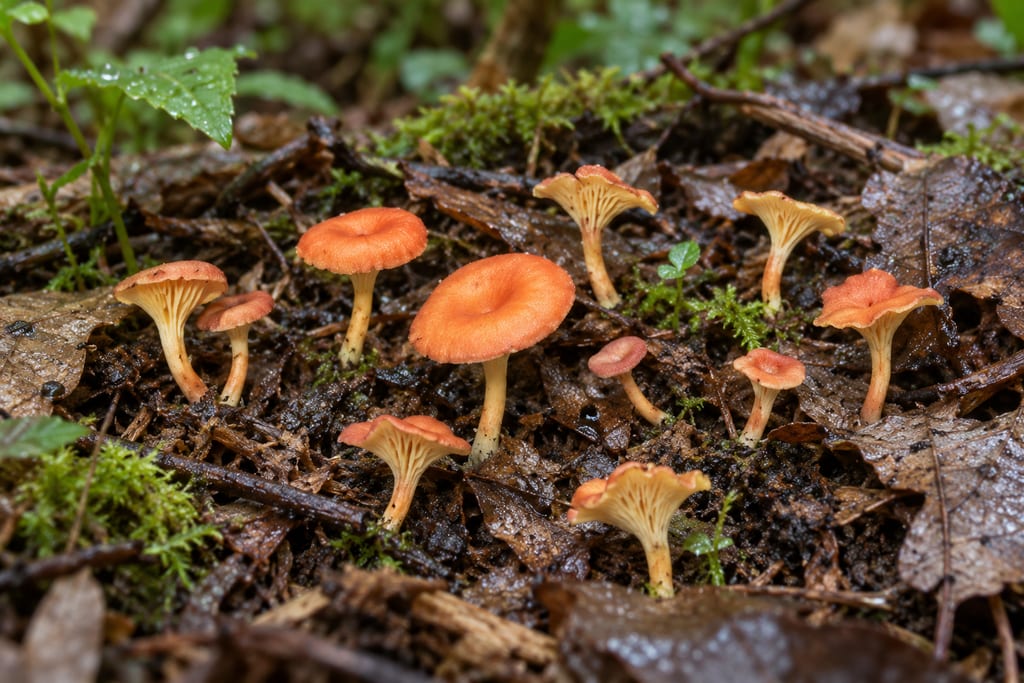
Cantharellus floridulus is an ectomycorrhizal rainforest fungus that informants in Tshopo province, DR Congo, eat in voucher-backed interviews. Its preparation is not recorded, and the source gives no toxicity statement.
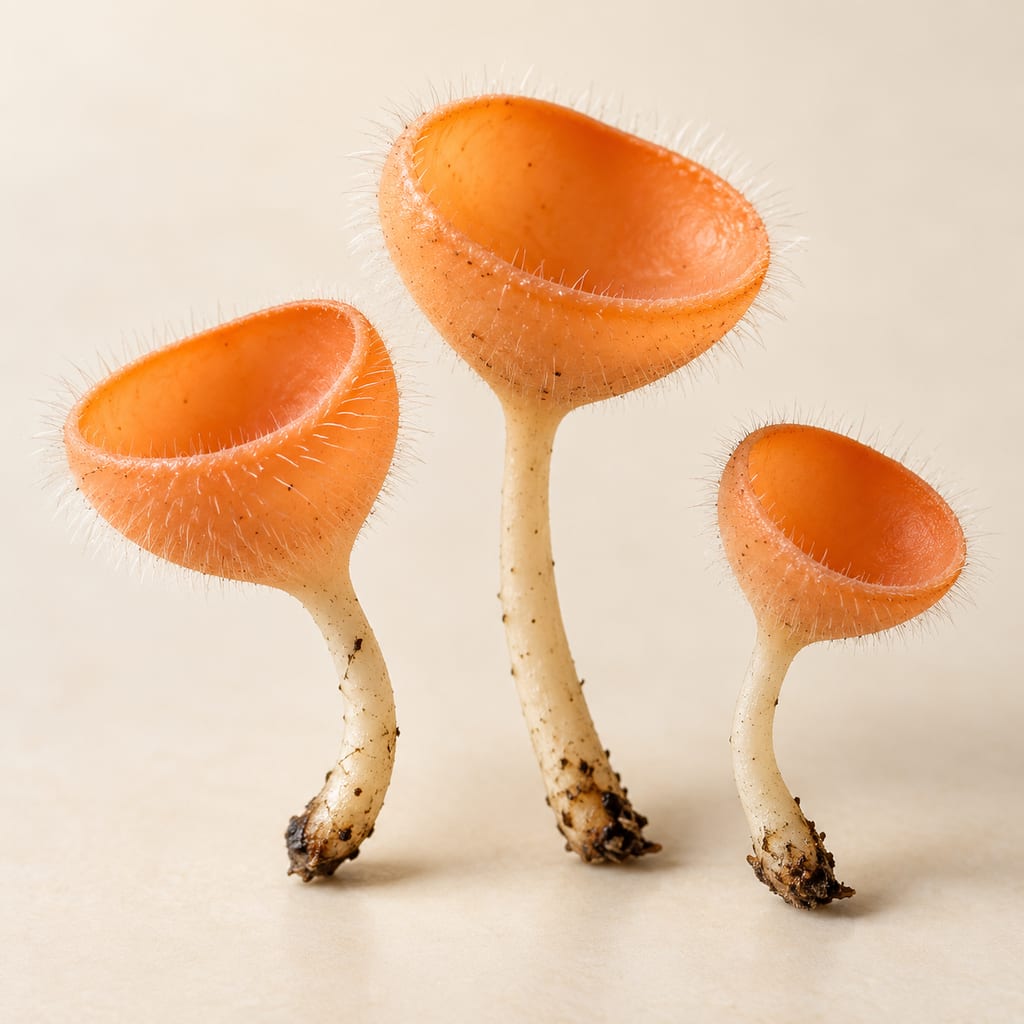
A forest cup fungus of the Tshopo province in the Democratic Republic of the Congo, recorded in local interviews as eaten. The species-level preparation is not established.
No community contributions have been published for this entry yet.
Sign in to contribute. Published comments and photos are free to read.
ResearchGateFood use · Safety · Composition
Major and trace elements in sclerotium of Pleurotus tuber-regium (Osu) mushroom: dietary intake and risk in southeastern NigeriaSclerotium eaten in south-eastern Nigeria; heavy-metal study concluded safe for consumption.
Cited in: Overview; Food use and preparation; Composition; Safety
ResearchGateFood use · Composition
Sclerotium of Culinary-Medicinal King Tuber Oyster Mushroom, Pleurotus tuberregium (Fr.) Singer: Its Cultivation, Biochemical Composition, and Biopharmacological Effects (Review)Sclerotium cooking, soup and composition review.
Cited in: Food use and preparation; Composition; Biology and cultivation; Safety
PubMed CentralBiology
Genome and Comparative Transcriptome Dissection Provide Insights Into Molecular Mechanisms of Sclerotium Formation in Culinary-Medicinal Mushroom Pleurotus tuber-regiumMolecular mechanisms of sclerotium formation.
Cited in: Biology and cultivation
PubMed CentralFood use
Wild edible ectomycorrhizal fungi: an underutilized food resource from the rainforests of Tshopo province (Democratic Republic of the Congo)Recorded as a food in Tshopo.
Cited in: Overview