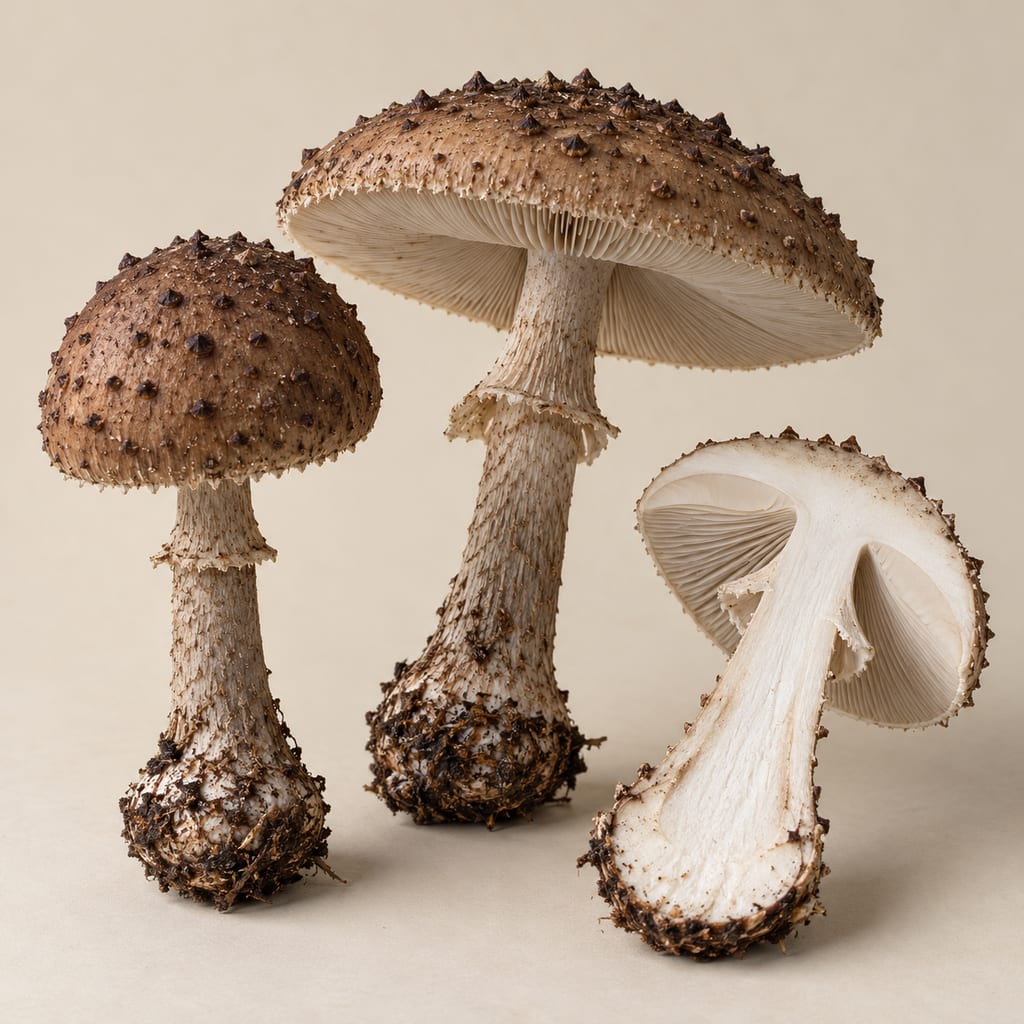
Amanita echinulata
A wild ectomycorrhizal Amanita of the Congo rainforest, recorded as locally consumed in Tshopo province. Its preparation was not established, and the genus includes deadly species.
 FermenteaWhere food goes to change
Other
A wild ectomycorrhizal Amanita of the Congo rainforest, recorded as locally consumed in Tshopo province. Its preparation was not established, and the genus includes deadly species.
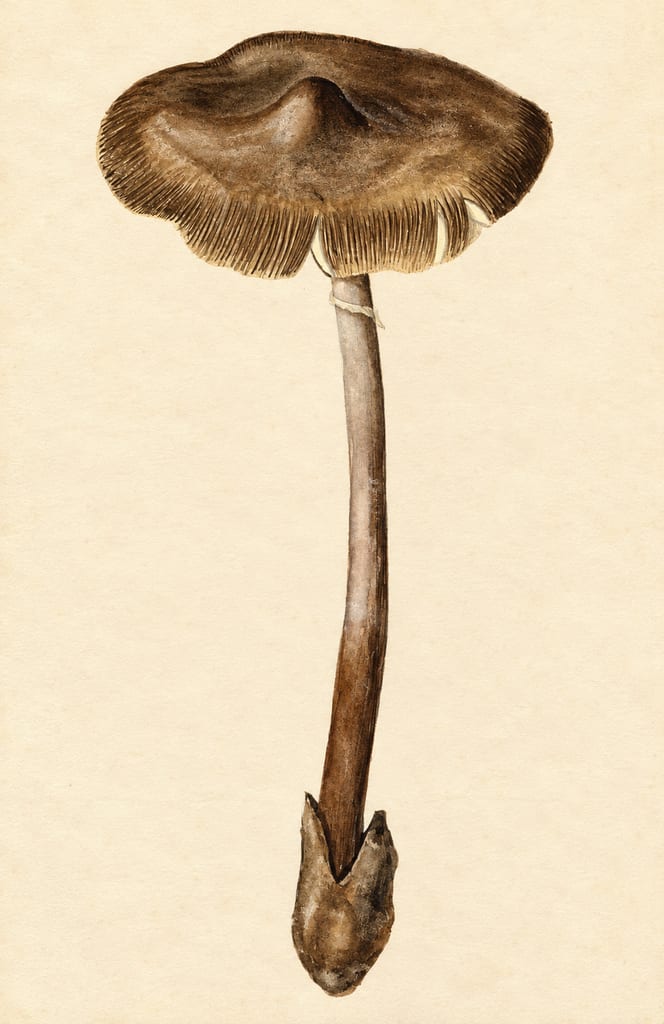
Amanita annulatovaginata is an ectomycorrhizal fungus, growing in association with trees in the rainforest. The Fermentea catalogue records it from Tshopo province in the Democratic Republic of the Congo, where it is harvested from the wild.
A 2020 study of Yangambi and Yoko reports that the rainforests there hold a relatively high number of edible ectomycorrhizal fungi, more than local people use.
Voucher-backed ethnomycological interviews in Tshopo recorded the species as locally consumed. The catalogue notes that the species-specific preparation was not established. The 2018 survey of 160 informants across six ethnic communities names other species as the most used for food, and A. annulatovaginata is not among them.
The 2018 survey also reports that local people focus mainly on saprotrophic fungi, not on the ectomycorrhizal species.
The EFTA genus page includes A. annulatovaginata Beeli in a key to edible Amanita species in tropical Africa. The key is a field-identification aid, and it does not establish that the species is safe to eat.
The genus Amanita includes deadly poisonous species. A record of local consumption, or an entry in a key, does not confirm that a specimen is this species or that it is safe to eat.
Do not collect or eat any Amanita from this page, a photograph or a name. Confirm the species with a local mycologist before any use.
Voucher-backed interview records from Tshopo province; no village is given.
A wild ectomycorrhizal Amanita of the Congo rainforest, recorded as locally consumed in Tshopo province. Its preparation was not established, and the genus includes deadly species.
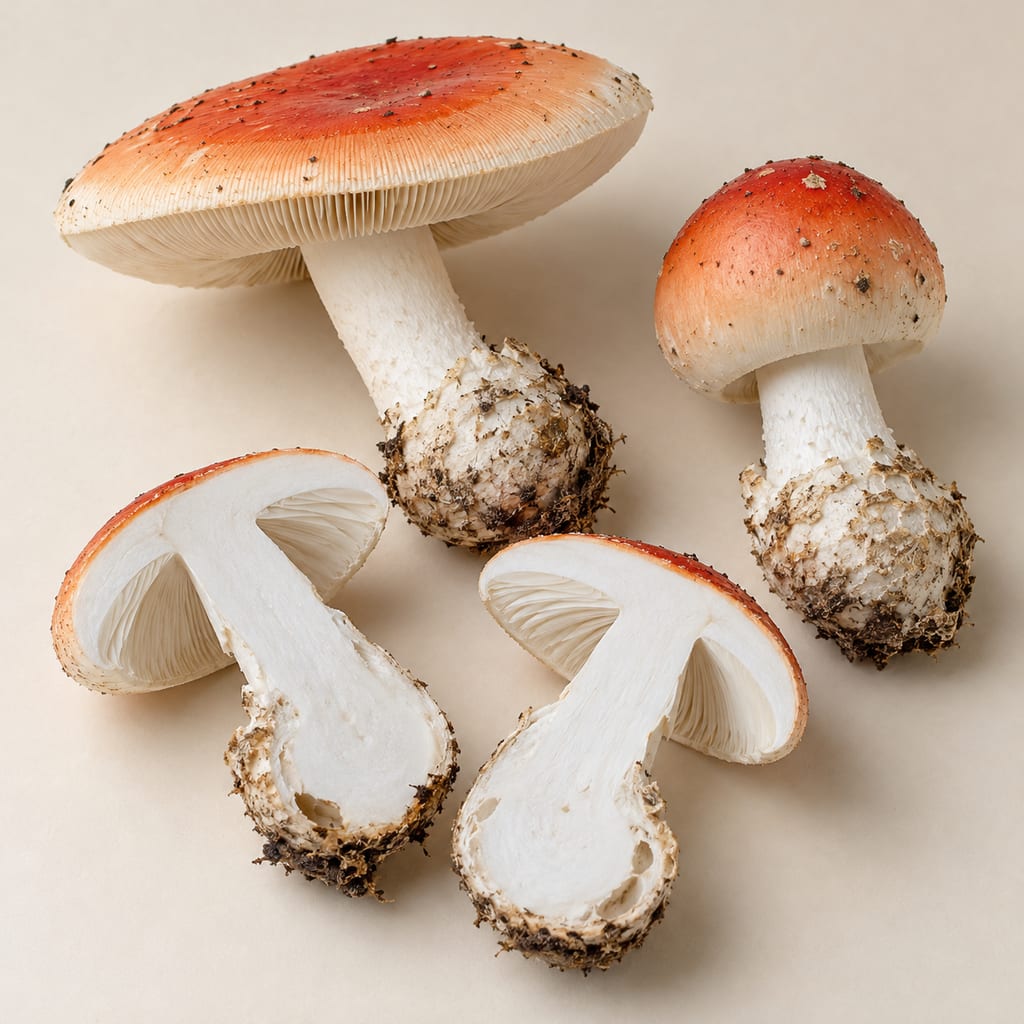
Amanita robusta Beeli is a poorly documented Central African Amanita known from voucher-backed rainforest collections in the Democratic Republic of the Congo and Cameroon. A Tshopo study reports local food use for a taxonomically supported voucher, but neither that record nor the name makes an unknown Amanita safe to identify or eat.
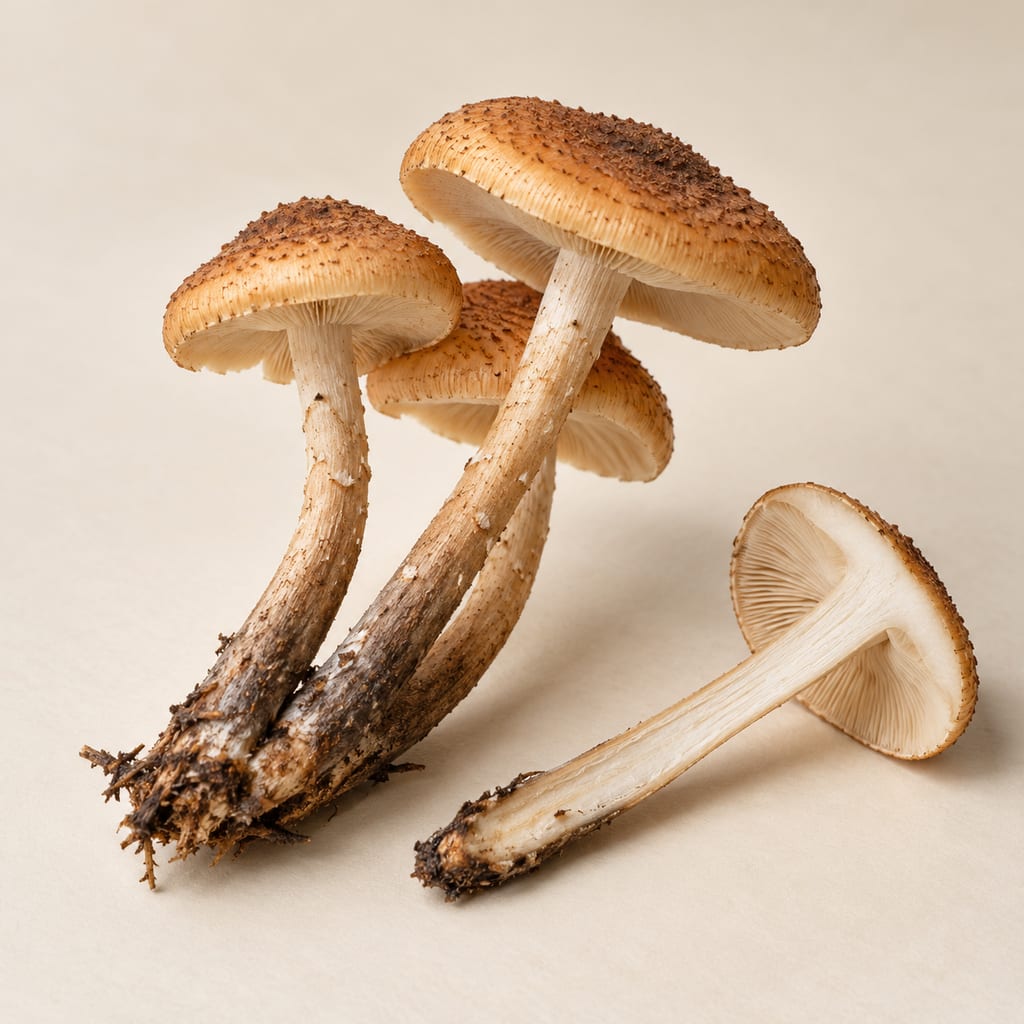
Armillaria heimii is a saprotrophic fungus of the honey-fungus genus, recorded as a wild food in Tshopo province, DR Congo. Its preparation and safety are not established in the sources.
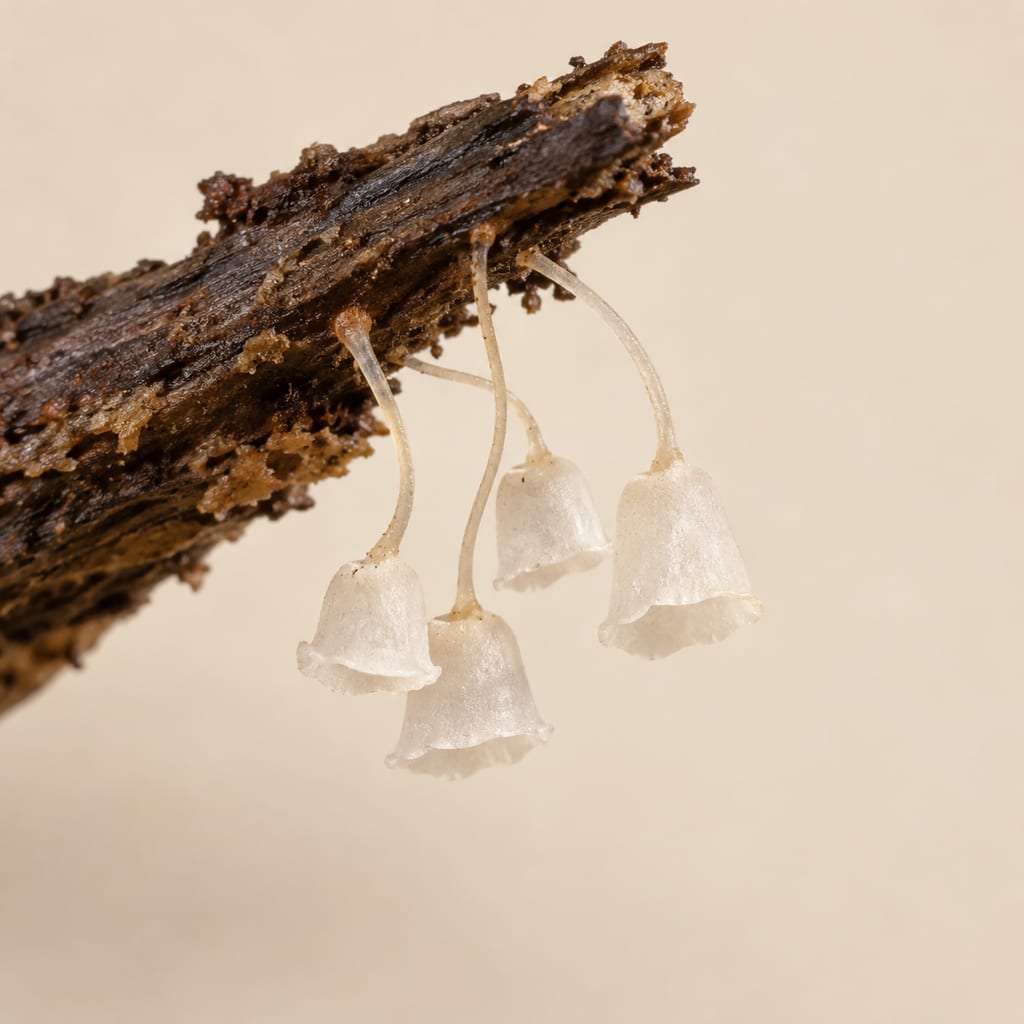
Calyptella longipes is a wood and litter decaying fungus of the rainforests of Tshopo province, DR Congo, where some ethnic groups in voucher-backed interviews eat it. Its preparation was not recorded.
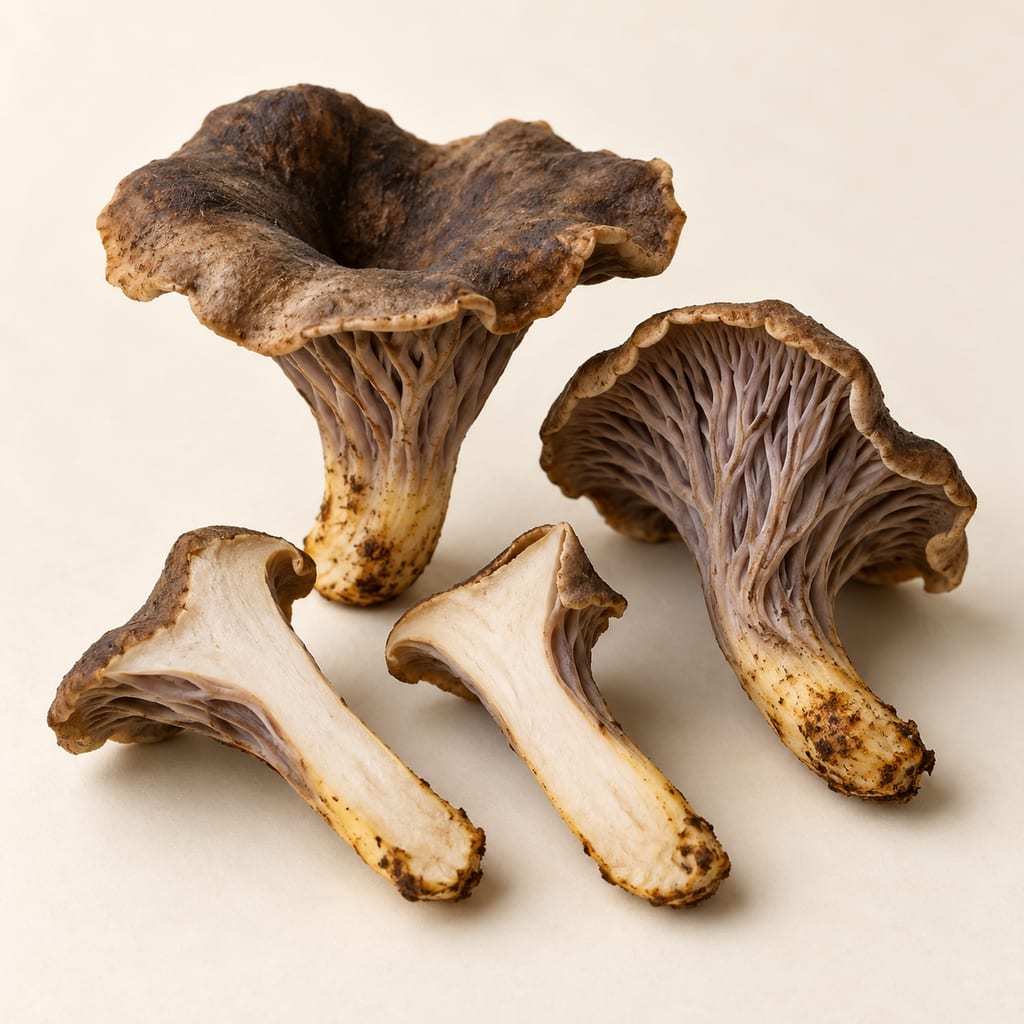
Cantharellus congolensis is an ectomycorrhizal chanterelle of sub-Saharan Africa, eaten in the Democratic Republic of the Congo under local names. Its edibility rests on food-use surveys, not on toxicity tests.
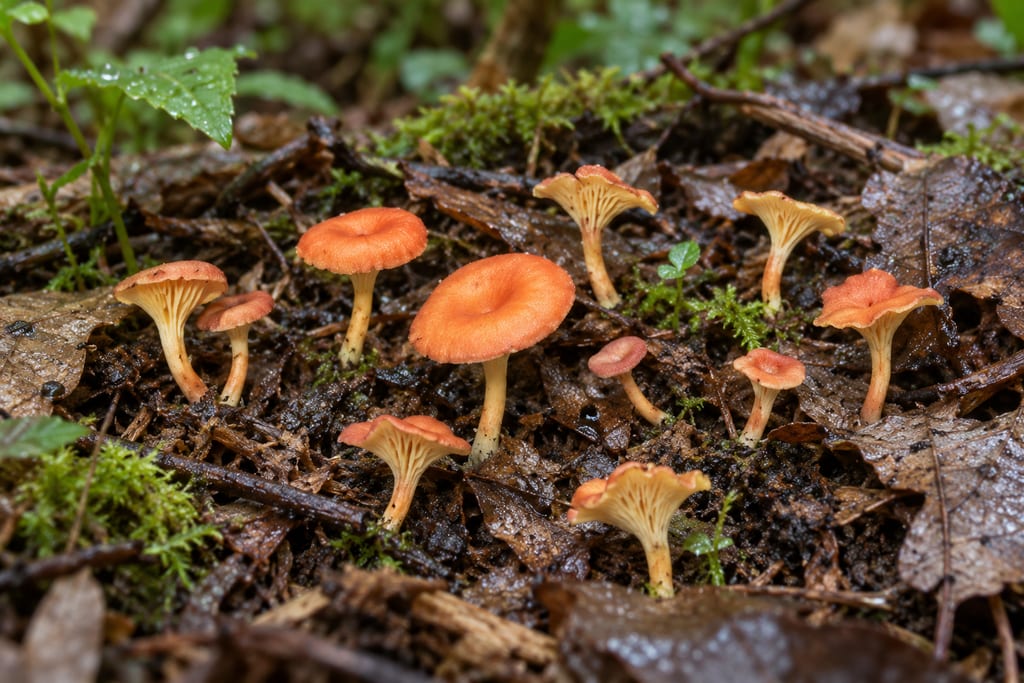
Cantharellus floridulus is an ectomycorrhizal rainforest fungus that informants in Tshopo province, DR Congo, eat in voucher-backed interviews. Its preparation is not recorded, and the source gives no toxicity statement.
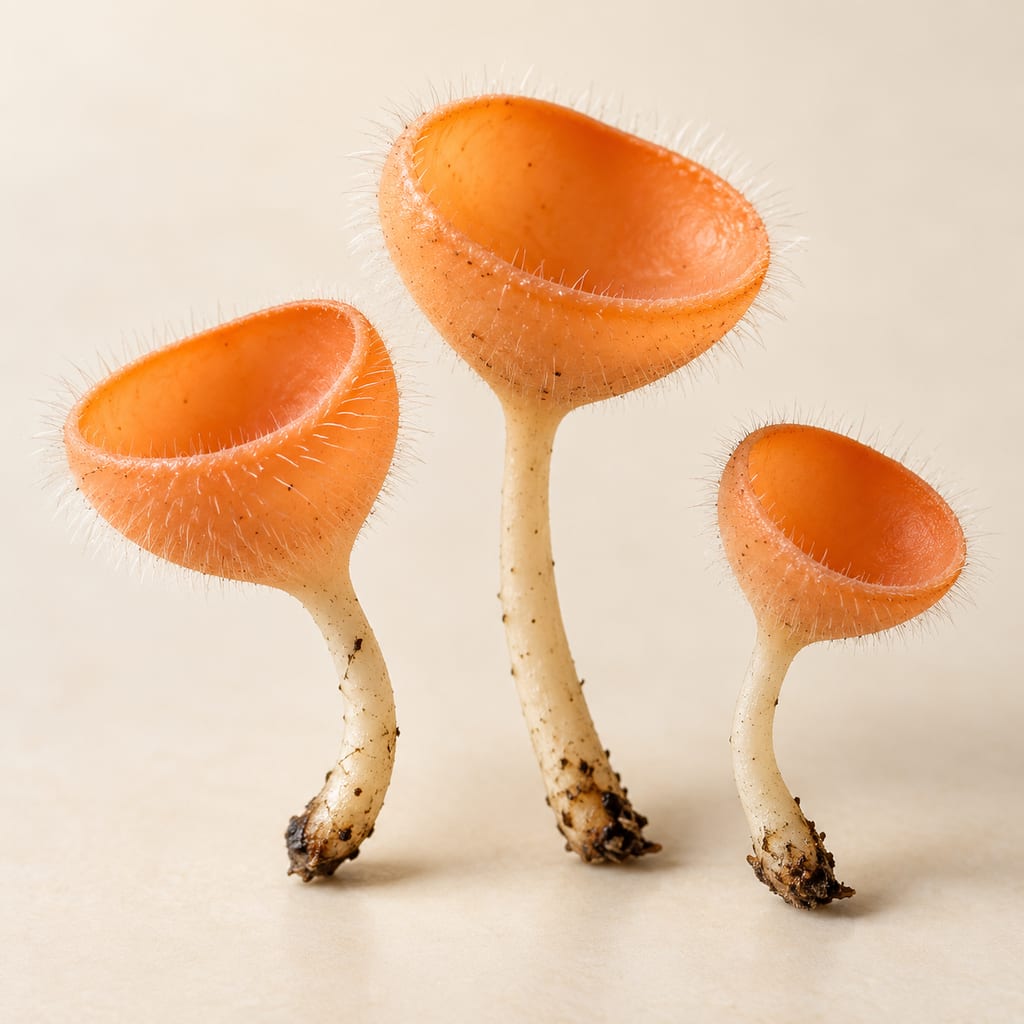
A forest cup fungus of the Tshopo province in the Democratic Republic of the Congo, recorded in local interviews as eaten. The species-level preparation is not established.
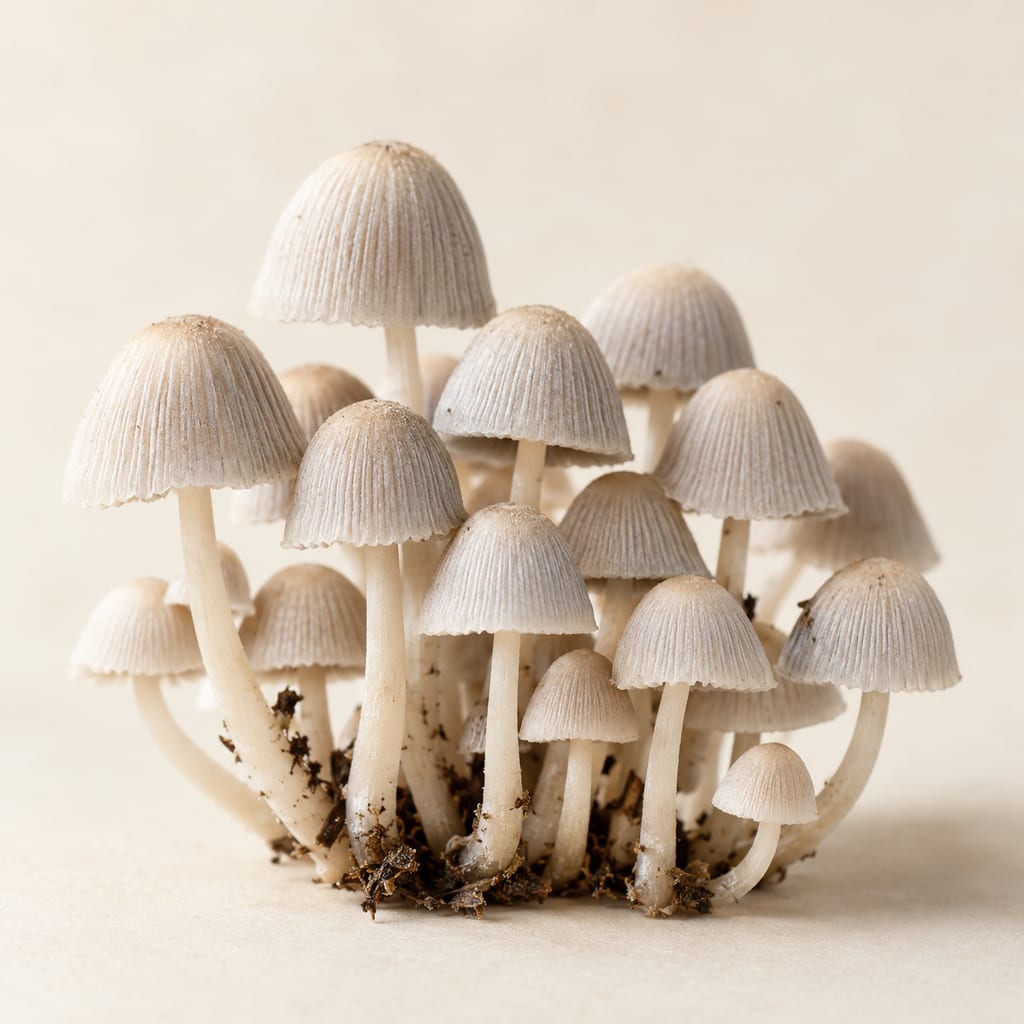
Coprinellus disseminatus is a small saprotrophic inky-cap mushroom that grows in clusters on wood and debris. A Congolese food-use record and a Colombian catalogue entry both call it edible, but neither describes its preparation.
No community contributions have been published for this entry yet.
Sign in to contribute. Published comments and photos are free to read.
Journal of Ethnobiology and EthnomedicineFood use · Safety
Uses and importance of wild fungi: traditional knowledge from the Tshopo province in the Democratic Republic of the CongoSurvey of 160 informants across six ethnic communities; 73 species used, 68 for food
Local interest focuses on saprotrophic fungi
Cited in: Food use; Safety and identification
Journal of Ethnobiology and EthnomedicineFood use · Ecology
Wild edible ectomycorrhizal fungi: an underutilized food resource from the rainforests of Tshopo province (Democratic Republic of the Congo)Yangambi and Yoko rainforests hold more edible ectomycorrhizal fungi than local people use
Cited in: Where it grows; Food use
European Forest Institute Ethnomycology (EFTA)Identity · Safety
Amanita genus pageA. annulatovaginata Beeli included in a key to edible species in tropical Africa; the key is an identification aid
Cited in: Keys and edibility listings; Safety and identification