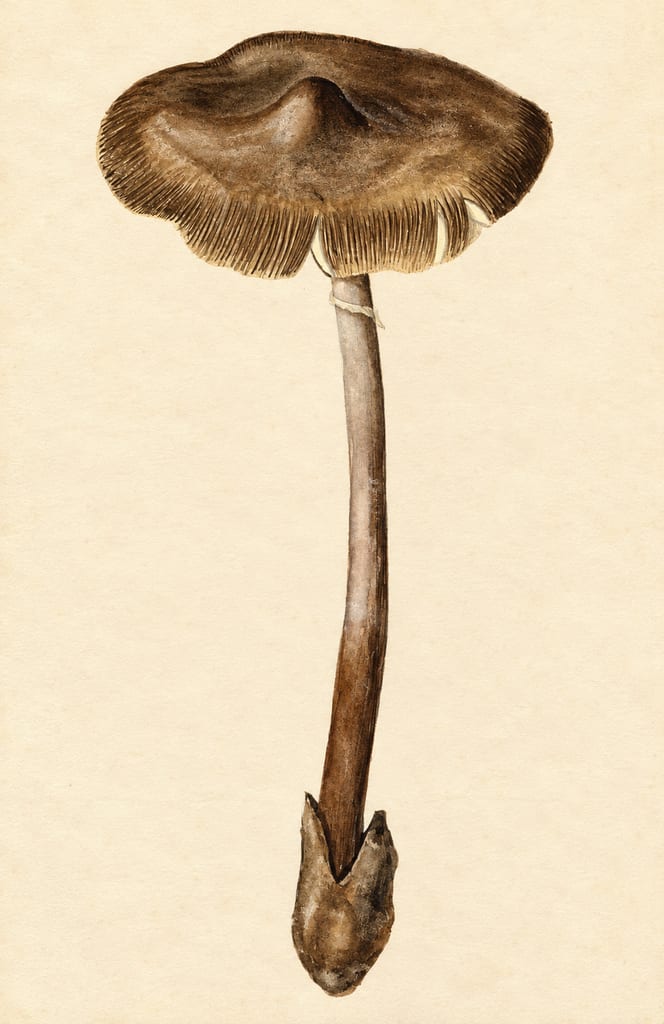
Amanita annulatovaginata
A wild ectomycorrhizal Amanita of the Congo rainforest, recorded as locally consumed in Tshopo province. Its preparation was not established, and the genus includes deadly species.
 FermenteaWhere food goes to change
Mushrooms
Amanita robusta Beeli is a poorly documented Central African Amanita known from voucher-backed rainforest collections in the Democratic Republic of the Congo and Cameroon. A Tshopo study reports local food use for a taxonomically supported voucher, but neither that record nor the name makes an unknown Amanita safe to identify or eat.
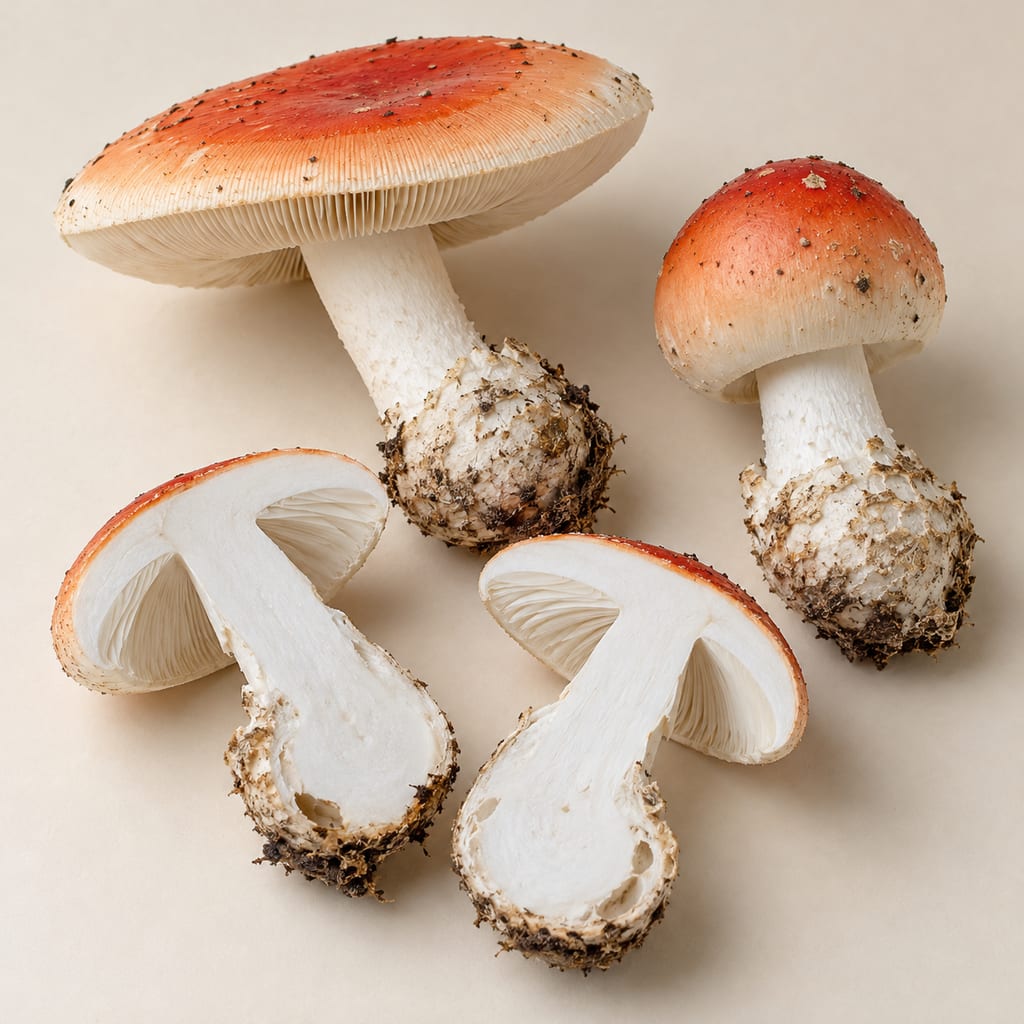
The working name is Amanita robusta Beeli, described from a 1928 collection at Binga in what is now the Democratic Republic of the Congo. A 2020 taxonomic study epitypified the name from a Cameroon collection and combined morphology, DNA sequences and phylogeny to clarify a species that had gone nearly a century without a new, well-documented collection. NCBI Taxonomy records the Beeli name and type material, while the specialist Amanitaceae.org account calls it accepted but emphasizes how limited the evidence remains.
The modern description reports a bright pink-orange cap with a violaceous ring around a paler disc, a large basal bulb, and a thick, membranous, warted volva. It is ectomycorrhizal and occurs in Guineo-Congolian rainforest, most often with Gilbertiodendron dewevrei; one Tshopo voucher was collected under Brachystegia laurentii. These details describe the studied taxon; they are not a checklist for identifying or eating a wild specimen.
The strongest modern records are from Binga and Tshopo in the DRC and the Dja Biosphere Reserve in Cameroon. In Cameroon, collections were made mainly in August and September, with a December collection also reported; an epitype was collected on 26 August 2014. The paper reports occurrence in rainy-season forest plots during September to November. In the DRC, the type was collected in May and the Tshopo voucher in October. These are site-specific observations rather than a single calendar for the species.
Some secondary lists include Malawi, but a primary voucher record was not verified here. The Madagascar entry requires separate treatment: FAO marked its edible status uncertain, and later research says the specimen called A. robusta by Bouriquet differs from Beeli’s taxon and may represent a different, reputedly toxic mushroom. Keep these records separate instead of combining them into one range or food-use claim.
A 2020 ethnomycological study lists A. robusta Beeli as a food fungus and gives herbarium voucher ADK5236 from Tshopo. The same collection was reexamined in the later taxonomic study, which found its spore measurements consistent with A. robusta. The interview table gives the local name Balenda and reports use among participating communities. This supports a local, voucher-linked food-use record only; the reviewed sources do not document a preparation method, safe dose or species-specific toxicology.
Amanita includes species capable of severe or fatal poisoning, and this taxon’s similarity to other Amanitas has been discussed by taxonomists. The Madagascar misapplication further shows why old common-name and species-label records cannot be carried across specimens casually. This page is not a foraging or identification guide. No one should use it or a photograph to decide whether a wild mushroom is safe.
Local interview and herbarium voucher support food use; preparation was not documented. This row does not assert uniform use across the DRC.
A wild ectomycorrhizal Amanita of the Congo rainforest, recorded as locally consumed in Tshopo province. Its preparation was not established, and the genus includes deadly species.
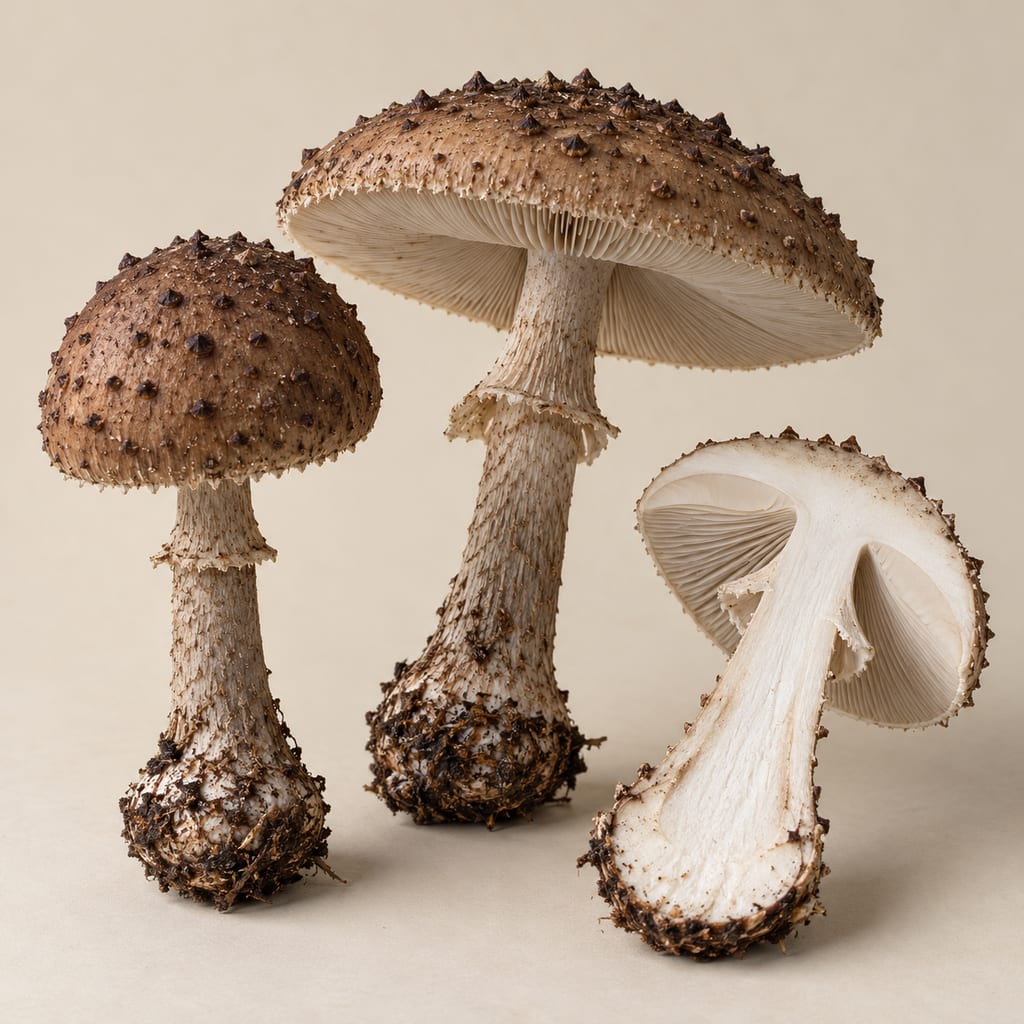
A wild ectomycorrhizal Amanita of the Congo rainforest, recorded as locally consumed in Tshopo province. Its preparation was not established, and the genus includes deadly species.
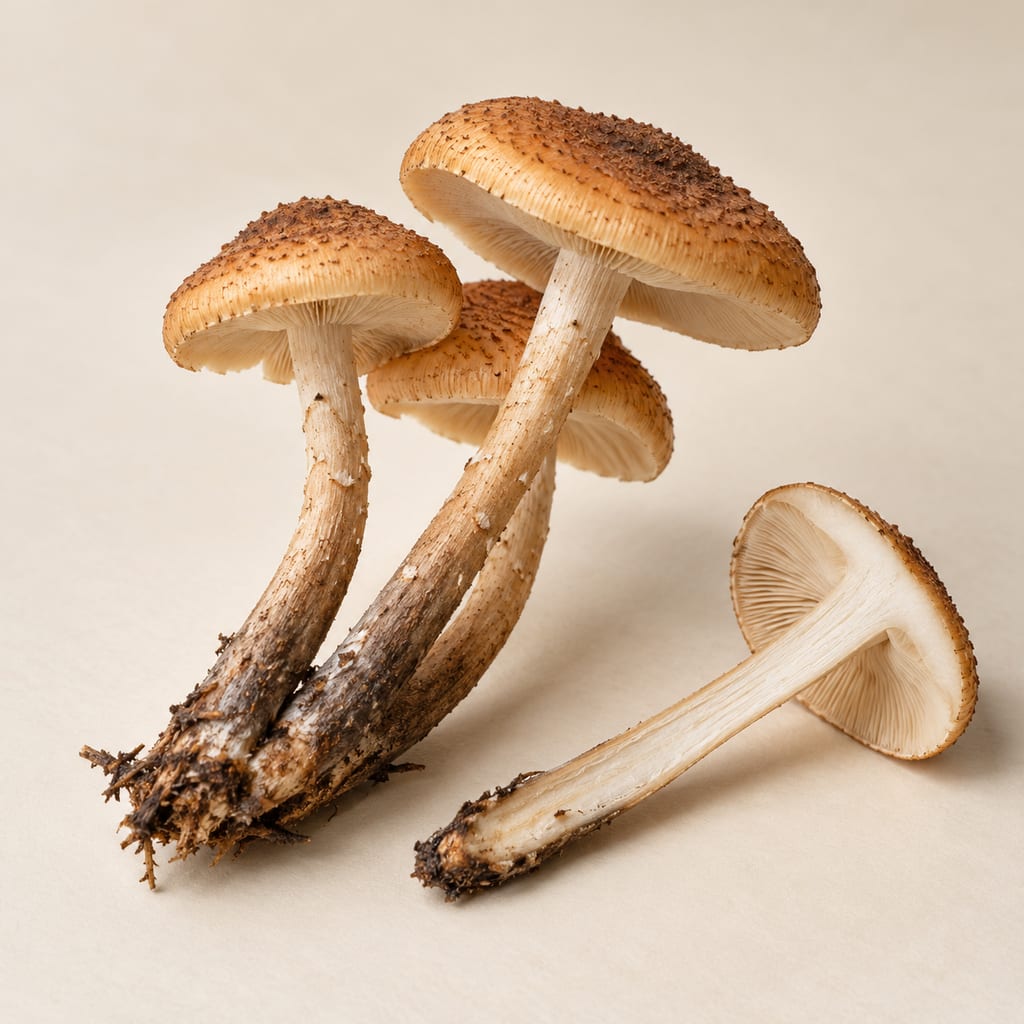
Armillaria heimii is a saprotrophic fungus of the honey-fungus genus, recorded as a wild food in Tshopo province, DR Congo. Its preparation and safety are not established in the sources.
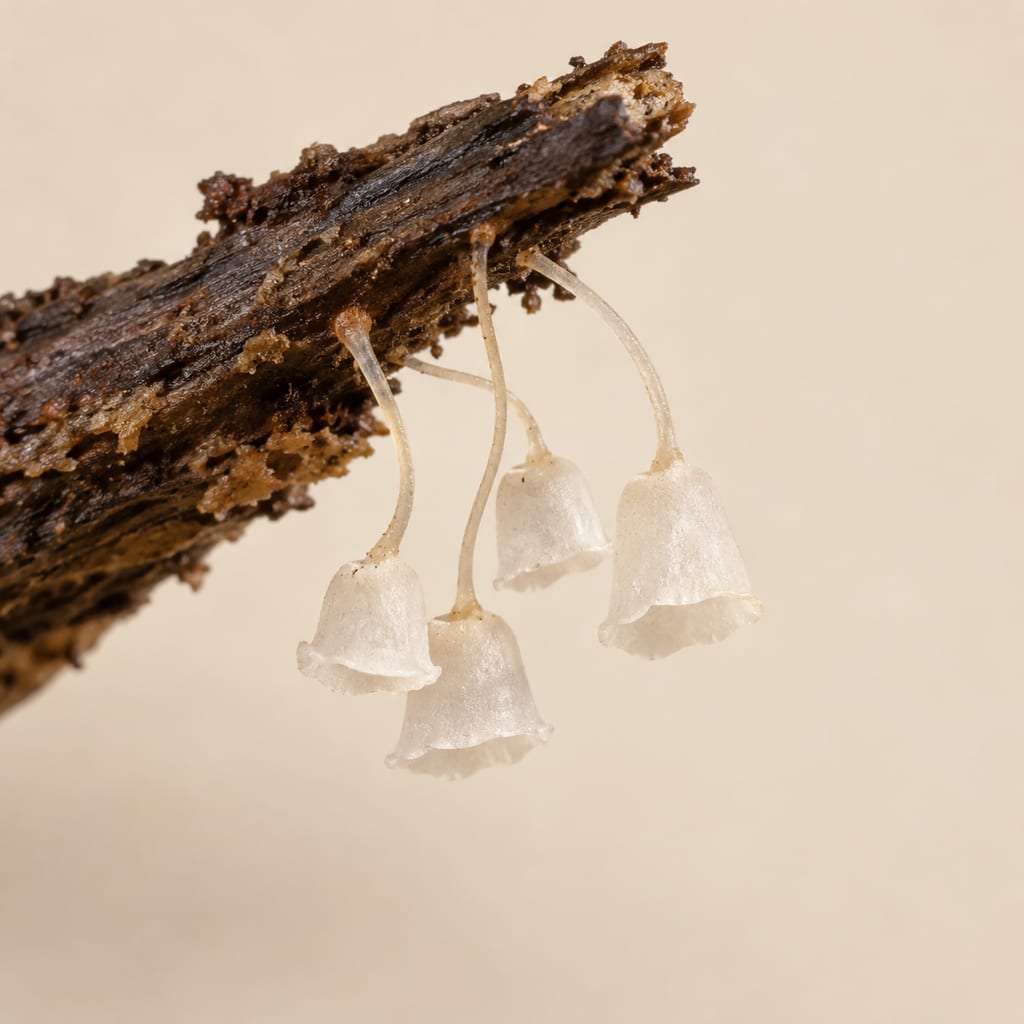
Calyptella longipes is a wood and litter decaying fungus of the rainforests of Tshopo province, DR Congo, where some ethnic groups in voucher-backed interviews eat it. Its preparation was not recorded.
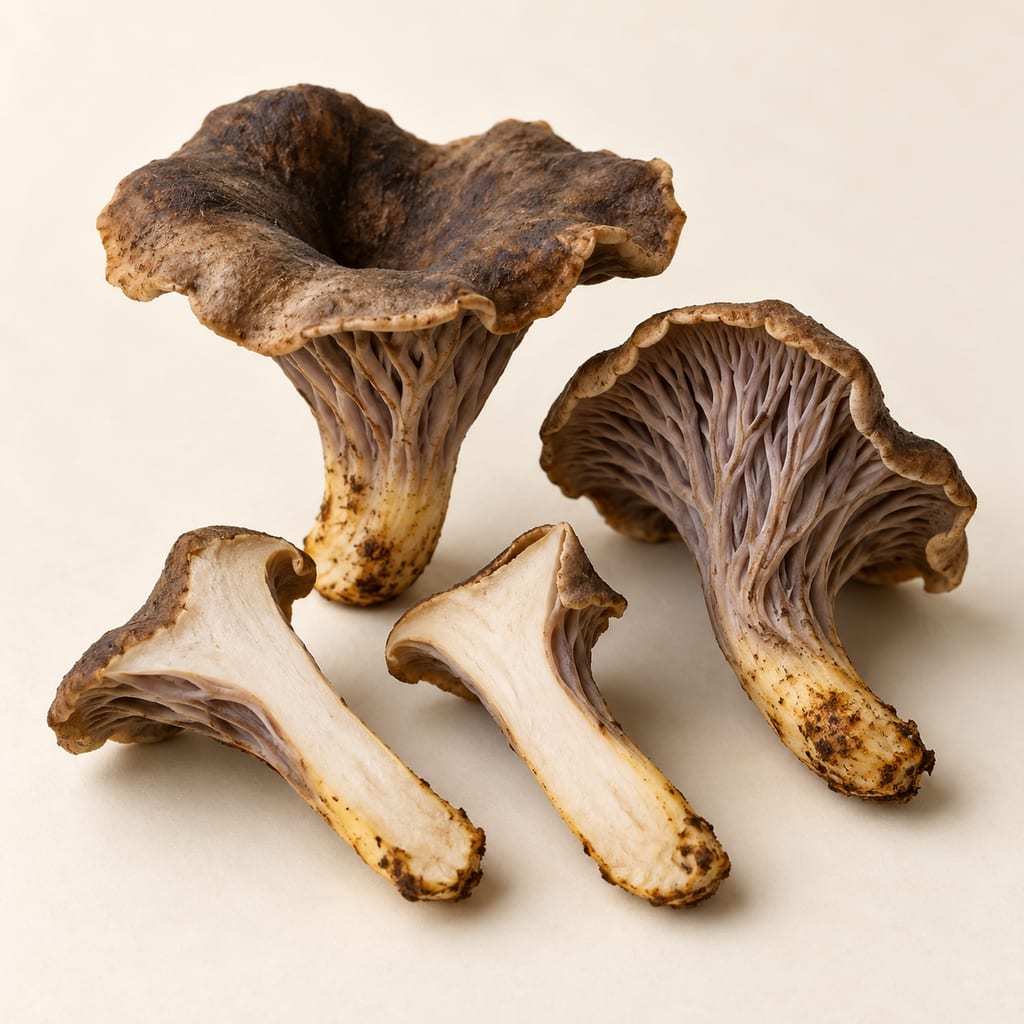
Cantharellus congolensis is an ectomycorrhizal chanterelle of sub-Saharan Africa, eaten in the Democratic Republic of the Congo under local names. Its edibility rests on food-use surveys, not on toxicity tests.
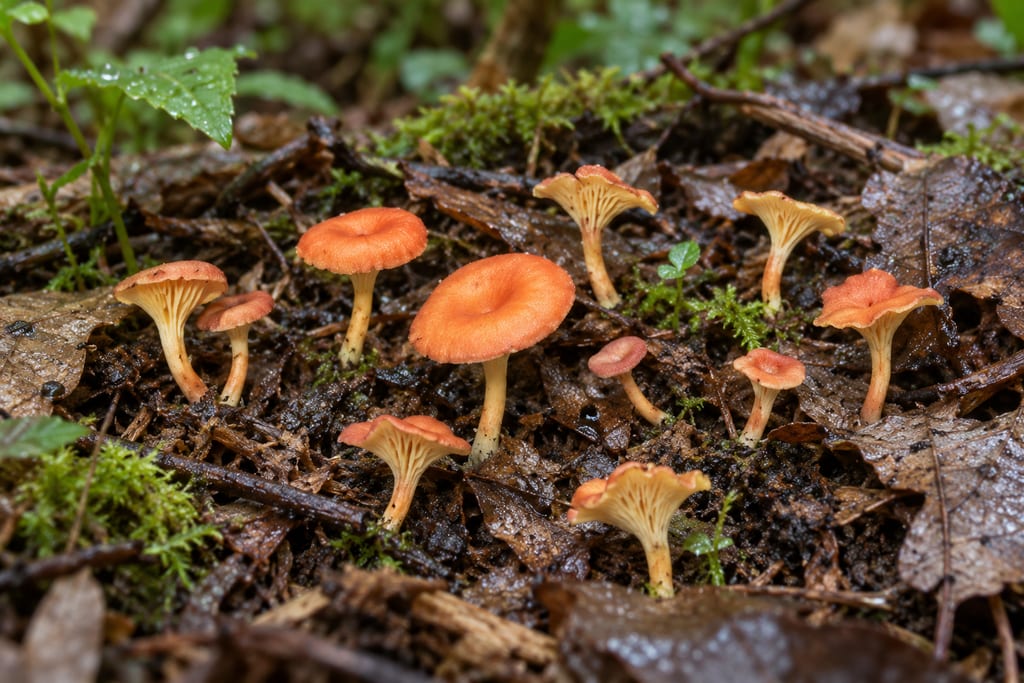
Cantharellus floridulus is an ectomycorrhizal rainforest fungus that informants in Tshopo province, DR Congo, eat in voucher-backed interviews. Its preparation is not recorded, and the source gives no toxicity statement.
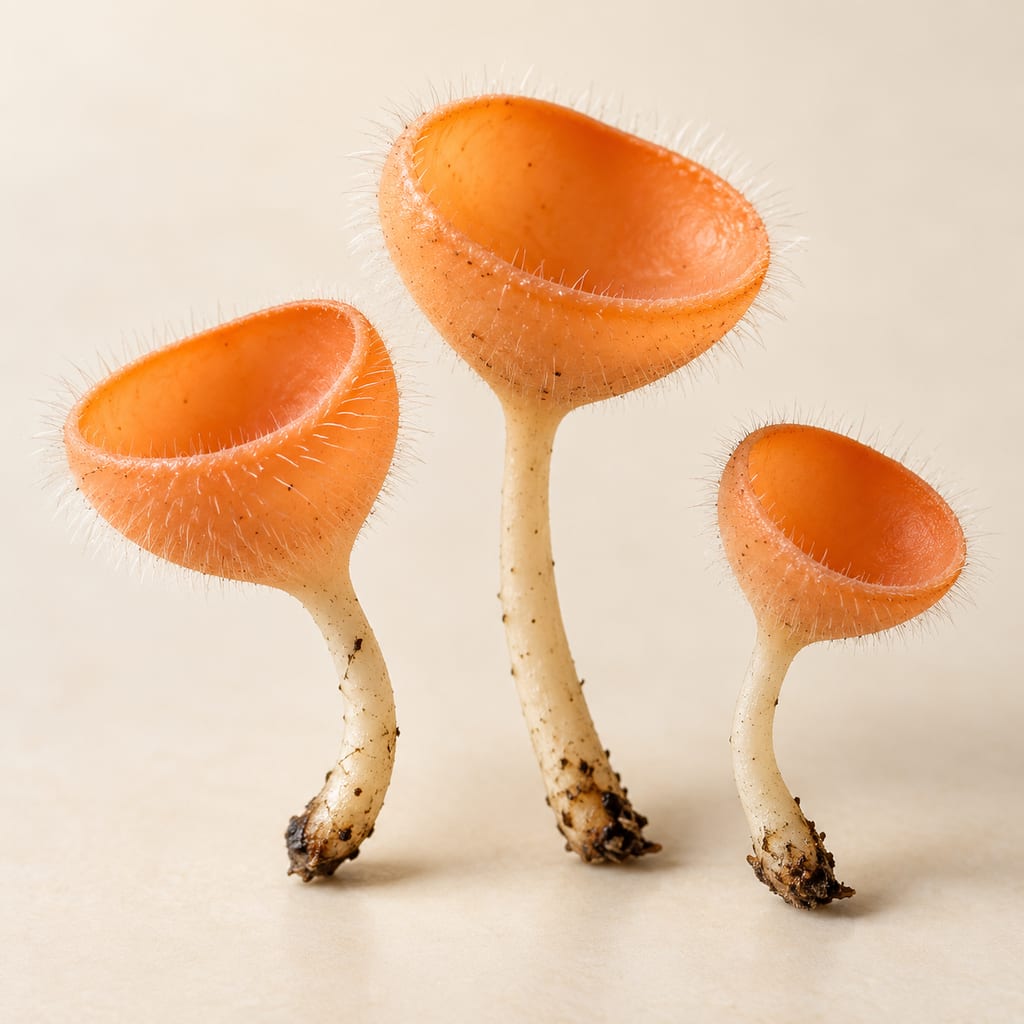
A forest cup fungus of the Tshopo province in the Democratic Republic of the Congo, recorded in local interviews as eaten. The species-level preparation is not established.
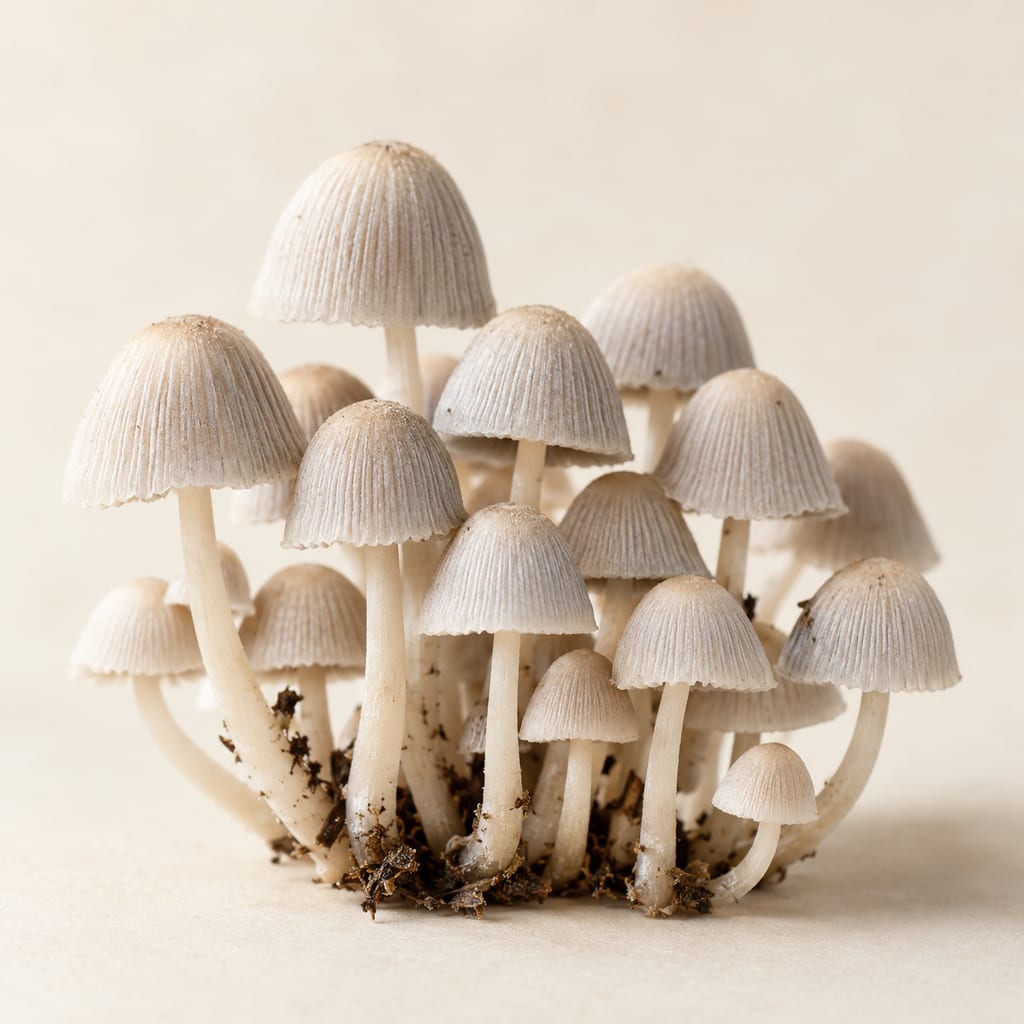
Coprinellus disseminatus is a small saprotrophic inky-cap mushroom that grows in clusters on wood and debris. A Congolese food-use record and a Colombian catalogue entry both call it edible, but neither describes its preparation.
No community contributions have been published for this entry yet.
Sign in to contribute. Published comments and photos are free to read.
Mycologia / Mycological Society of AmericaTaxonomy · Identity · Season · Geography · Habitat
Amanita in the Guineo-Congolian rainforest: Epitypes and new species from the Dja Biosphere Reserve, CameroonEpitypifies Amanita robusta Beeli; gives diagnostic morphology, phylogeny, forest ecology, Cameroon collection dates, DRC collections and revises the interpretation of the Malagasy Bouriquet specimen.
Cited in: The Beeli species and its names; Rainforest places and an uneven season; A narrow food-use record and strong caution
Amanitaceae.org / TullossTaxonomy · Morphology · History
Amanita robustaTreats Beeli name as accepted; describes form and habitat; notes very limited evidence and need for modern photos.
Cited in: The Beeli species and its names
NCBITaxonomy
NCBI Taxonomy Browser: Amanita robustaCurrent name Amanita robusta Beeli, 1931; holotype and epitype records. NCBI warns its taxonomy is not nomenclatural authority.
Cited in: The Beeli species and its names
Journal of Ethnobiology and EthnomedicineFood use · Geography · Voucher
Wild edible ectomycorrhizal fungi: an underutilized food resource from the rainforests of Tshopo province (Democratic Republic of the Congo)Lists Amanita robusta Beeli as Food, voucher ADK5236; Tshopo local-use interviews and ecology.
Cited in: A narrow food-use record and strong caution
Journal of Ethnobiology and EthnomedicineFood use · Geography
Uses and importance of wild fungi: traditional knowledge from the Tshopo province in the Democratic Republic of the CongoReports A. robusta voucher ADK5236 as food; local use context.
Cited in: A narrow food-use record and strong caution
FAOHistory · Food use
Wild edible fungi: a global overview, Annex 2Lists Amanita robusta as [edible] for Madagascar; bracket denotes uncertain use in source.
Cited in: Rainforest places and an uneven season
Economic BotanyTaxonomy · Safety · Food use
The Edible Mushrooms of Madagascar: An Evolving EnigmaWarns that FAO’s Madagascar edible listing for Amanita robusta Bouriquet refers to a reputedly toxic mushroom.
Cited in: Rainforest places and an uneven season
Food FrontiersGeography
Ethnomycological prospect of wild edible and medicinal mushrooms from Central and Southern Africa—a reviewSecondary review includes DRC and Malawi; Malawi not independently corroborated in this dossier.
Cited in: Rainforest places and an uneven season