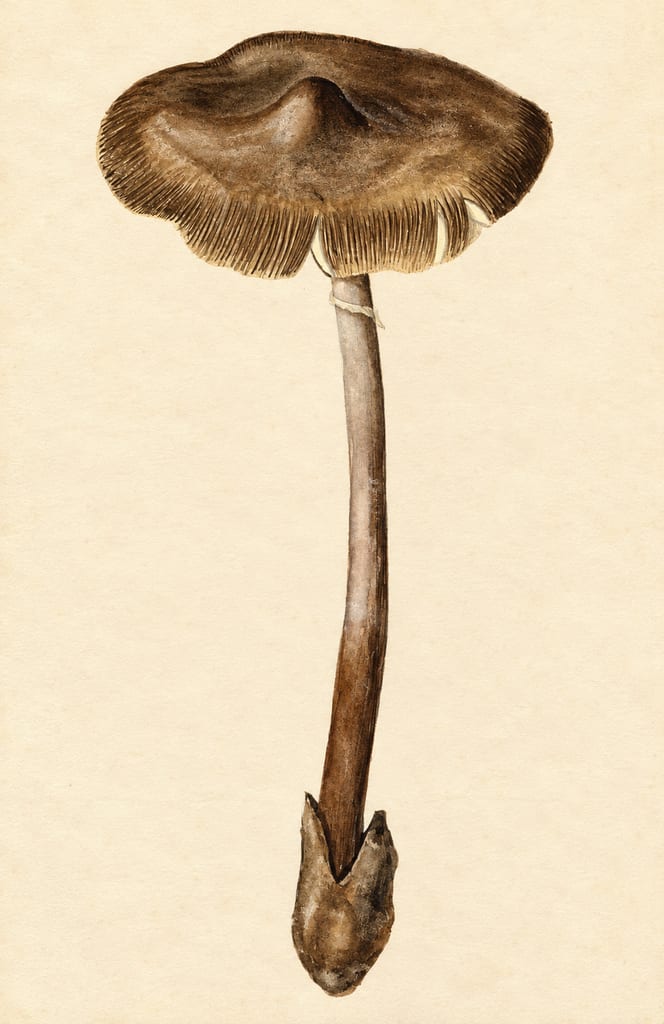
Amanita annulatovaginata
A wild ectomycorrhizal Amanita of the Congo rainforest, recorded as locally consumed in Tshopo province. Its preparation was not established, and the genus includes deadly species.
 FermenteaWhere food goes to change
Other
Calyptella longipes is a wood and litter decaying fungus of the rainforests of Tshopo province, DR Congo, where some ethnic groups in voucher-backed interviews eat it. Its preparation was not recorded.
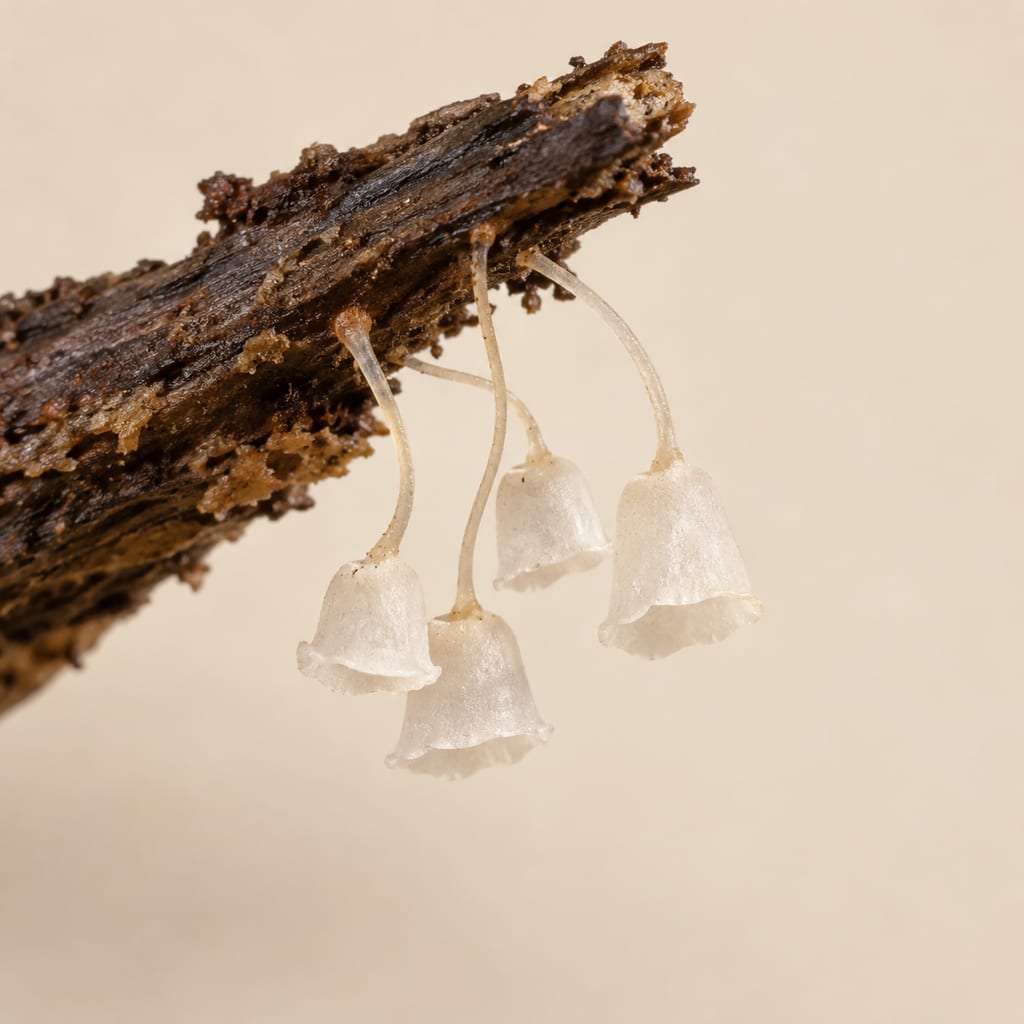
Calyptella longipes is the name used in the supplied catalogue and in a study of wild edible fungi from Tshopo province in the Democratic Republic of the Congo. The catalogue does not record a common name in English, and the study treats the species as a saprotroph, a fungus that feeds on dead wood and leaf litter rather than forming a partnership with tree roots.
The study's voucher specimen for this taxon is ADK5868. Its vouchers were identified from macroscopic and microscopic characters. The catalogue does not validate the name against current taxonomic authorities, so synonyms and the accepted name are not resolved here.
Informants from the Lokele, Ngando, Topoke and Turumbu groups eat Calyptella longipes. Informants from the Kumu and Ngelema groups do not. The frequency of mention for this taxon is 12, with an EMCS score of 0.1, which places it among the less frequently cited fungi in the survey.
The Turumbu informants gave the local name bape-bape. No other local name is recorded for this taxon.
How Calyptella longipes is prepared or cooked is not recorded. No preparation method is established here.
This entry is not an edibility verdict or an identification. Local consumption was recorded in interviews. No toxicity statement is given and no species-specific identification notes for this taxon. The catalogue states that the record is an ethnomycological food-use record, not an independent toxicological assessment.
Local consumption in one forest region does not show that the fungus is safe to eat elsewhere, or that a lookalike collected by someone else is the same organism. Wild mushrooms must be identified by a qualified expert before any use.
Recorded in interviews with informants from several ethnic groups around the Yangambi and Yoko forest reserves; the paper does not give a locality for this voucher.
A wild ectomycorrhizal Amanita of the Congo rainforest, recorded as locally consumed in Tshopo province. Its preparation was not established, and the genus includes deadly species.
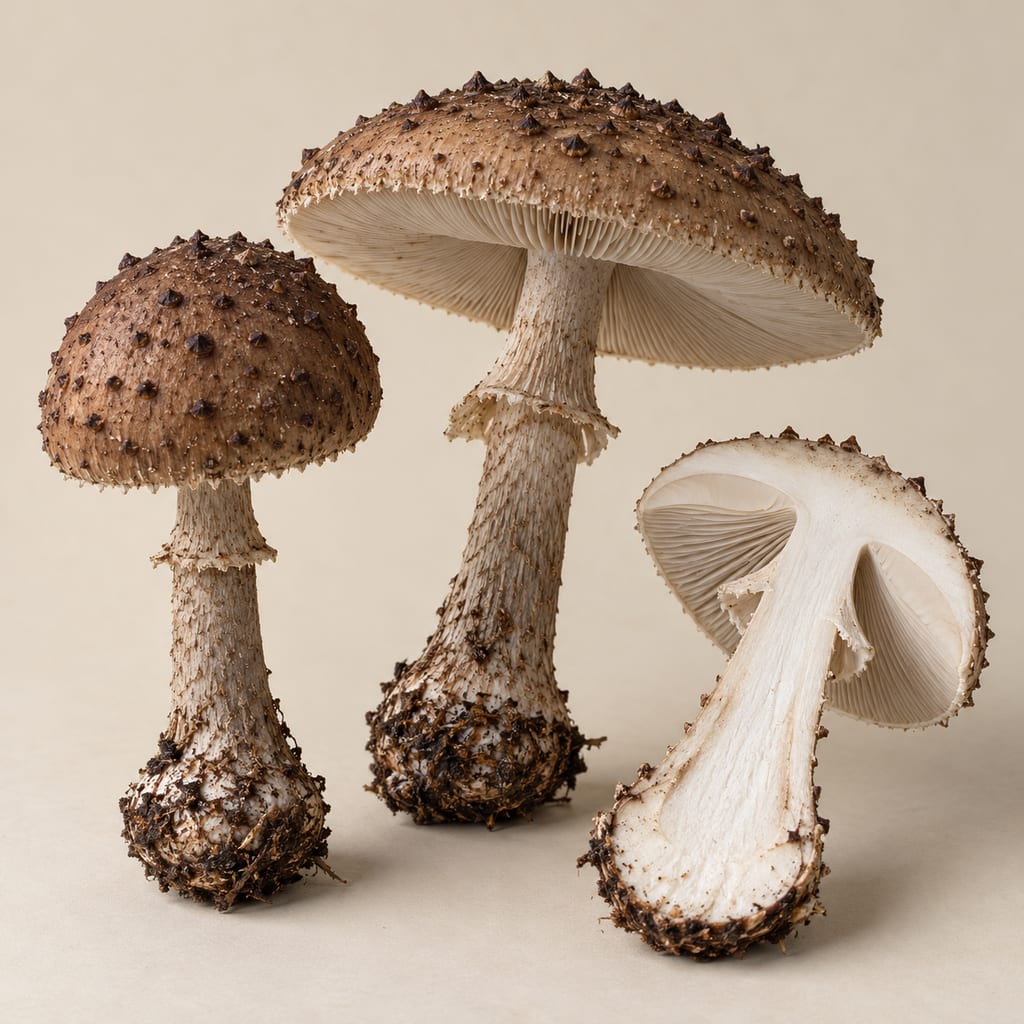
A wild ectomycorrhizal Amanita of the Congo rainforest, recorded as locally consumed in Tshopo province. Its preparation was not established, and the genus includes deadly species.
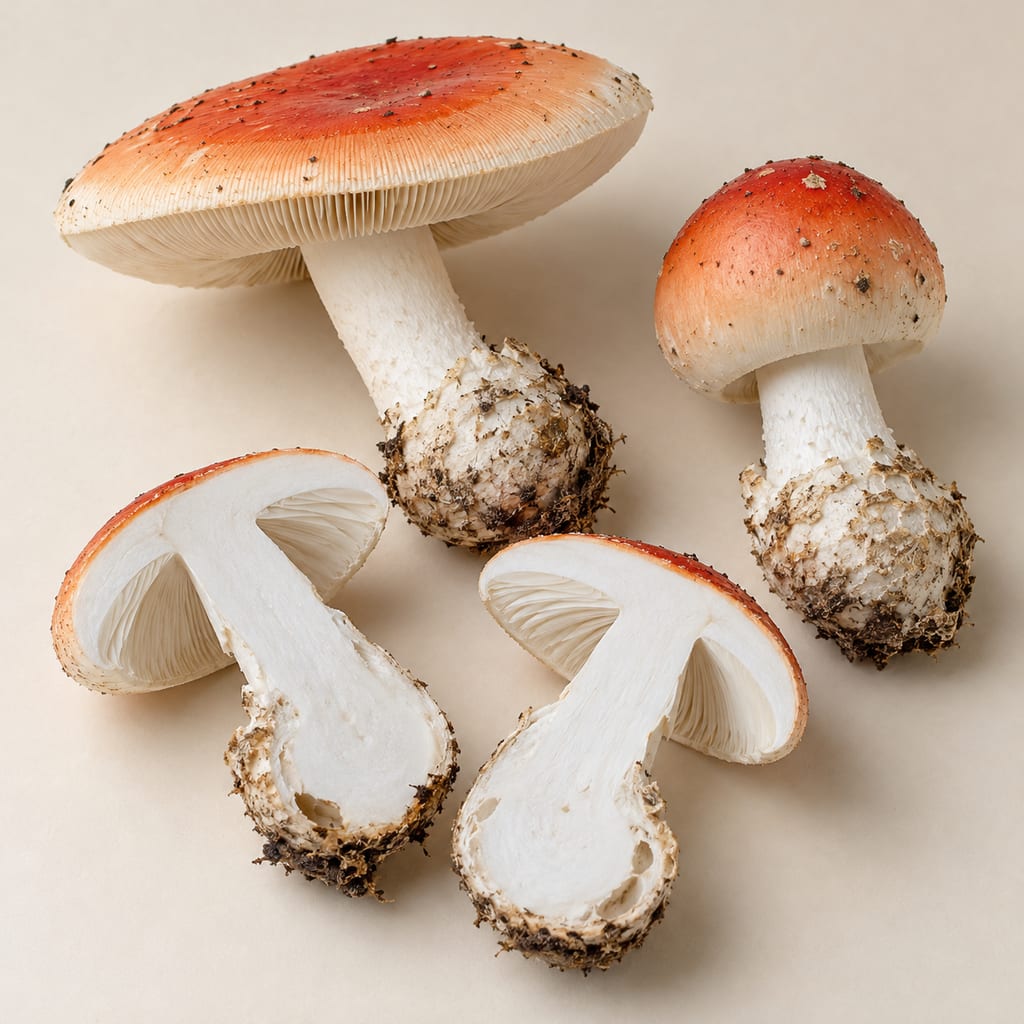
Amanita robusta Beeli is a poorly documented Central African Amanita known from voucher-backed rainforest collections in the Democratic Republic of the Congo and Cameroon. A Tshopo study reports local food use for a taxonomically supported voucher, but neither that record nor the name makes an unknown Amanita safe to identify or eat.
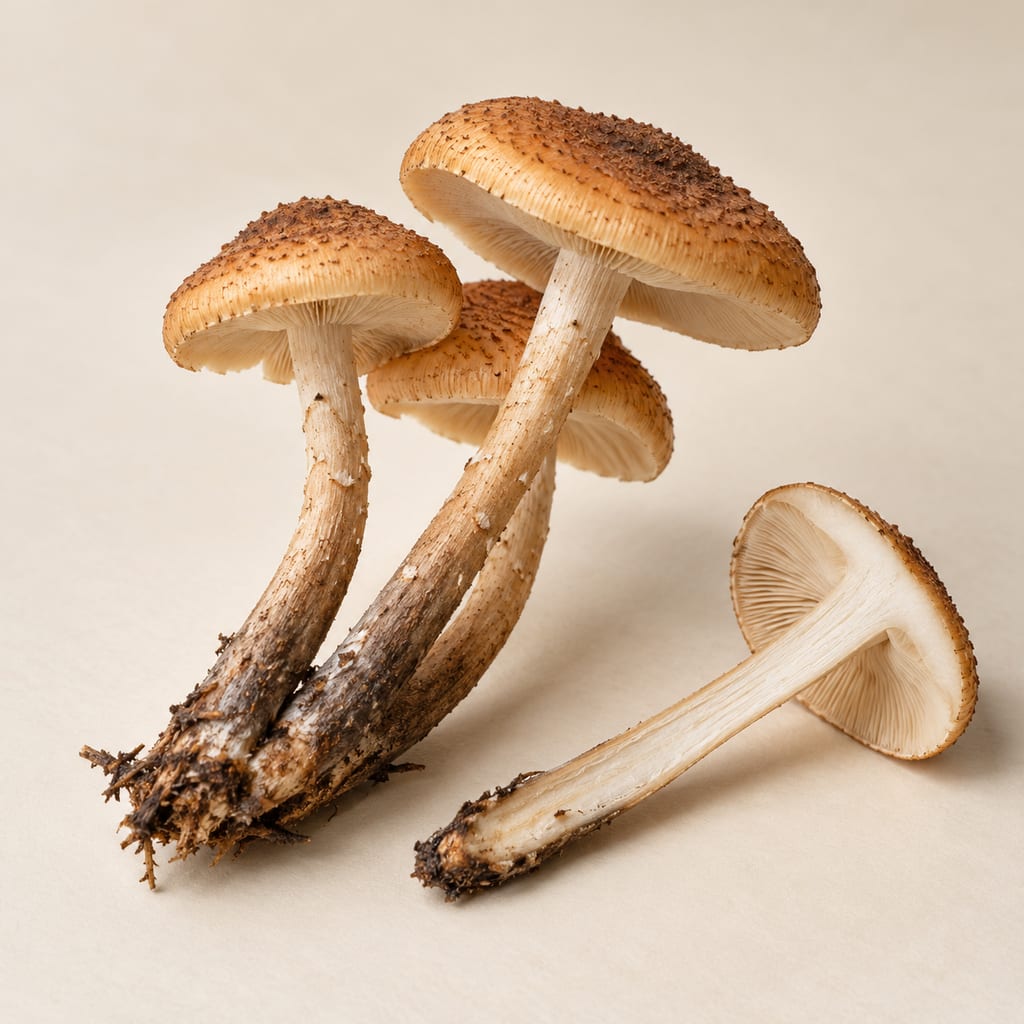
Armillaria heimii is a saprotrophic fungus of the honey-fungus genus, recorded as a wild food in Tshopo province, DR Congo. Its preparation and safety are not established in the sources.
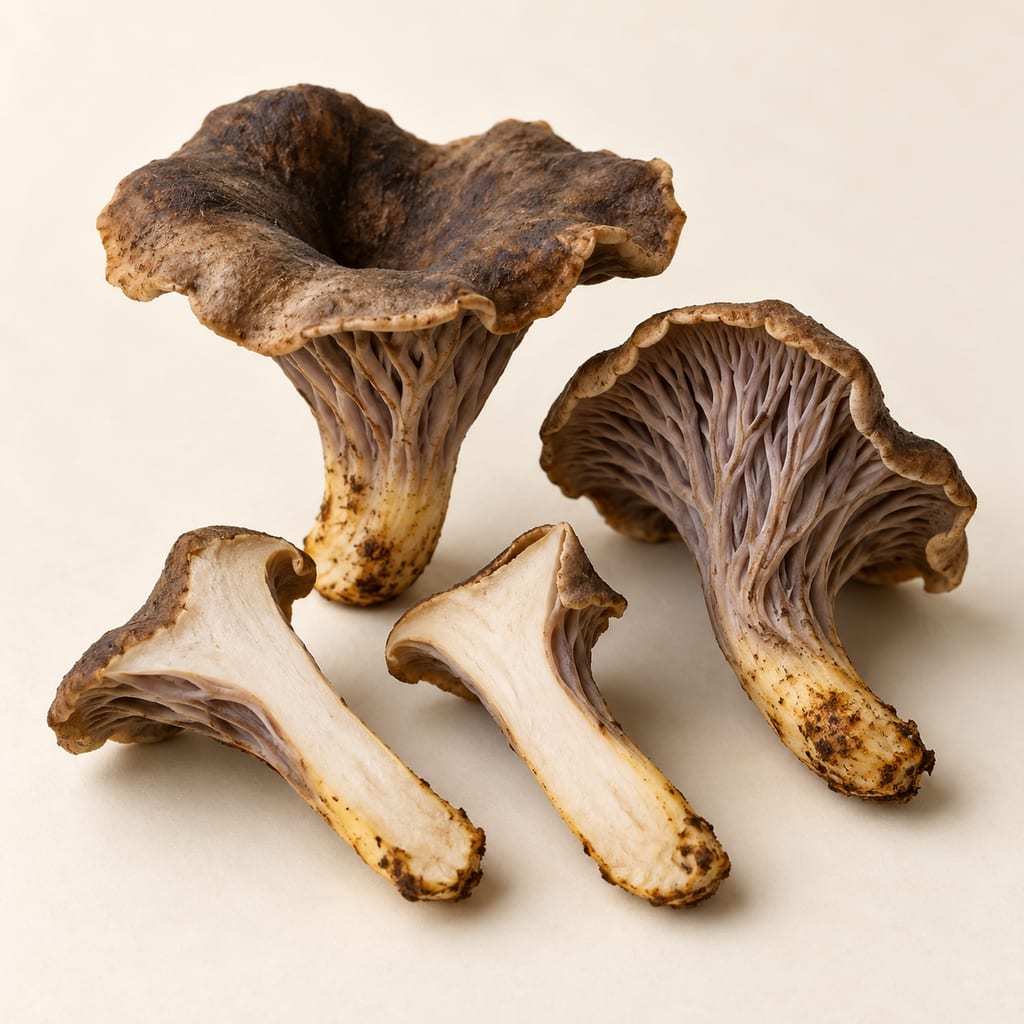
Cantharellus congolensis is an ectomycorrhizal chanterelle of sub-Saharan Africa, eaten in the Democratic Republic of the Congo under local names. Its edibility rests on food-use surveys, not on toxicity tests.
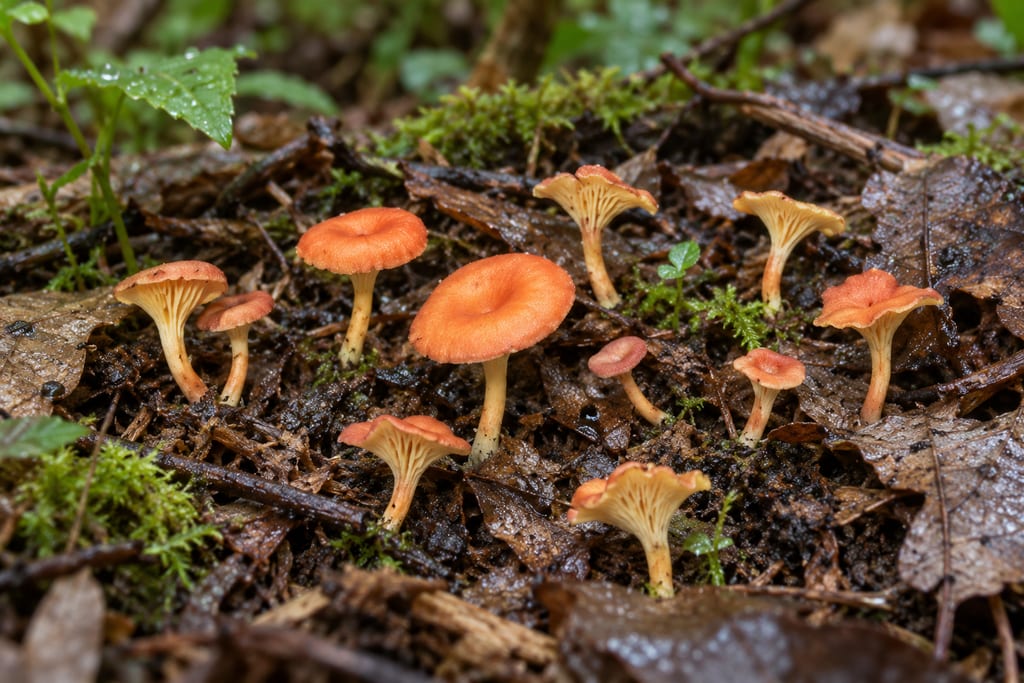
Cantharellus floridulus is an ectomycorrhizal rainforest fungus that informants in Tshopo province, DR Congo, eat in voucher-backed interviews. Its preparation is not recorded, and the source gives no toxicity statement.
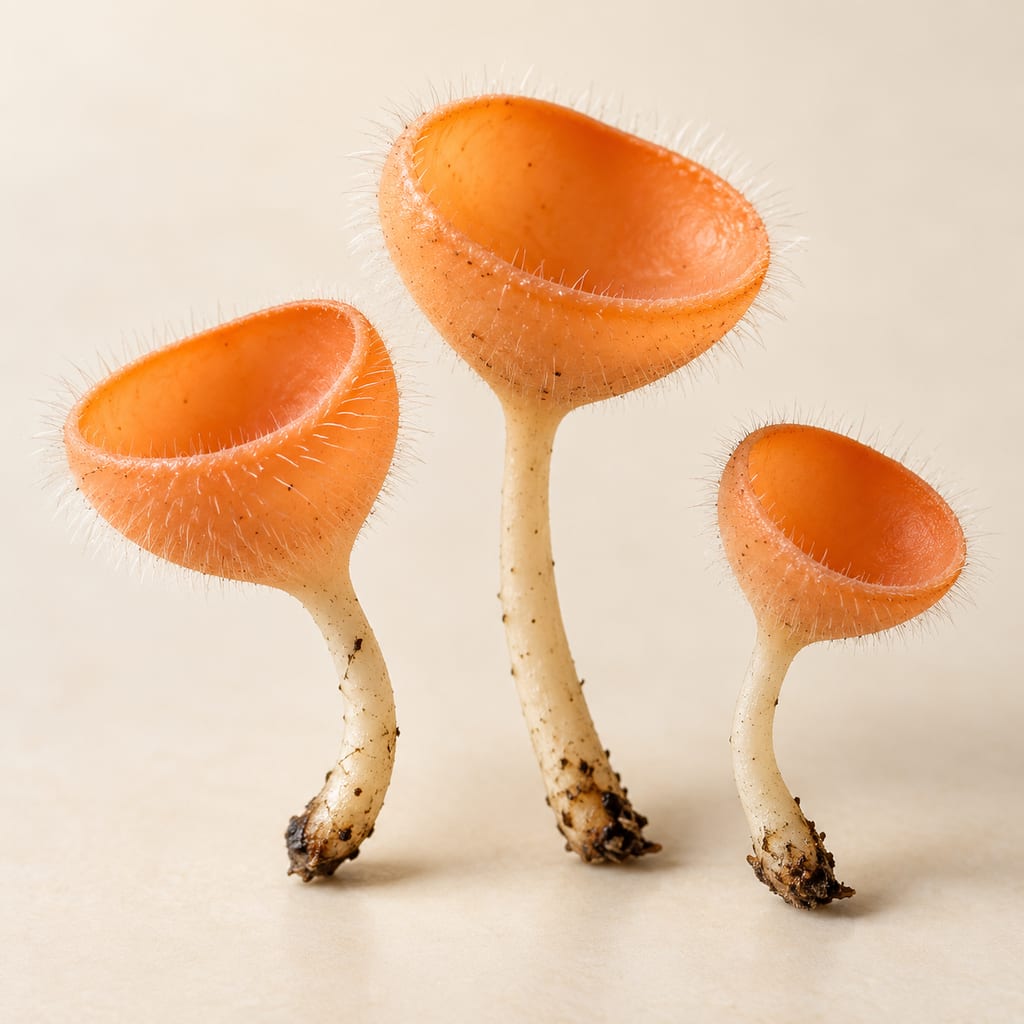
A forest cup fungus of the Tshopo province in the Democratic Republic of the Congo, recorded in local interviews as eaten. The species-level preparation is not established.
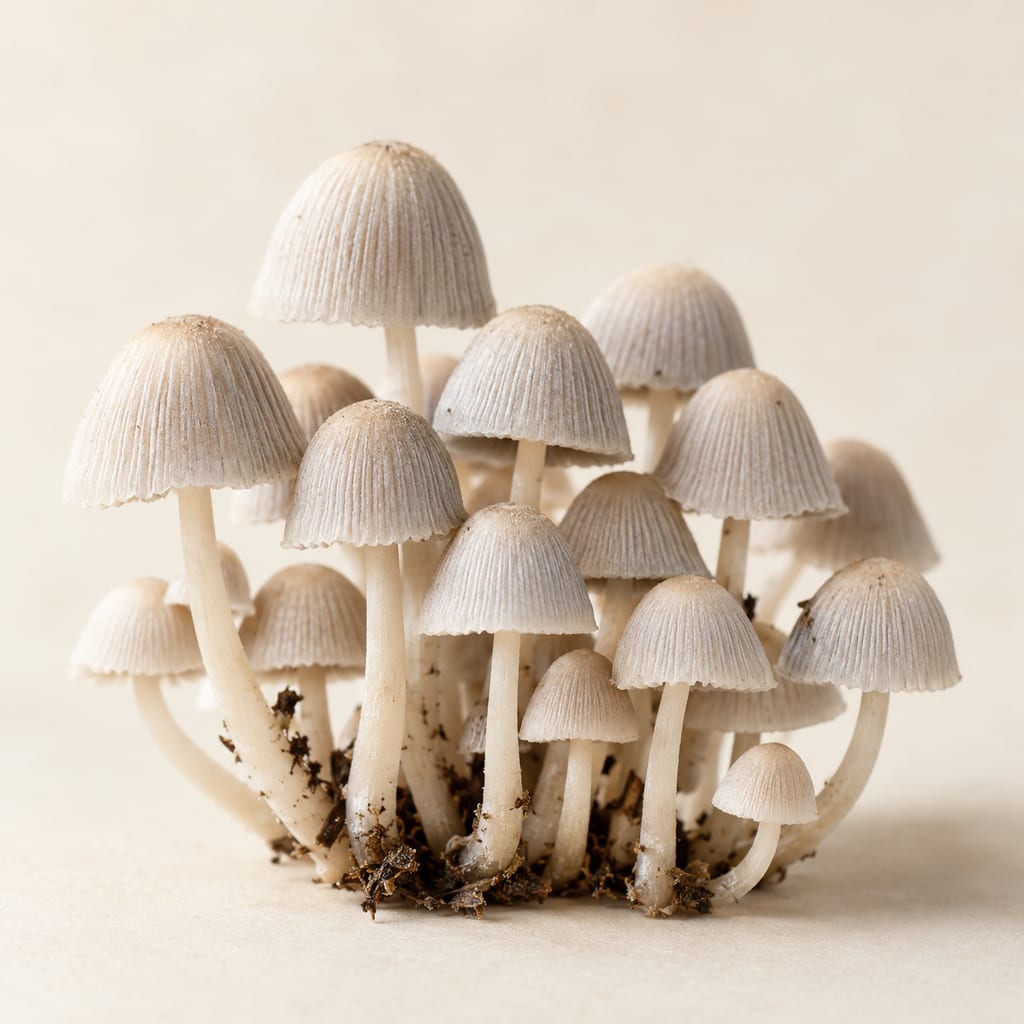
Coprinellus disseminatus is a small saprotrophic inky-cap mushroom that grows in clusters on wood and debris. A Congolese food-use record and a Colombian catalogue entry both call it edible, but neither describes its preparation.
No community contributions have been published for this entry yet.
Sign in to contribute. Published comments and photos are free to read.
PubMed CentralHistory · Safety
Wild edible ectomycorrhizal fungi: an underutilized food resource from the rainforests of Tshopo province (Democratic Republic of the Congo)Voucher ADK5868; saprotrophic; eaten by Lokele, Ngando, Topoke and Turumbu informants, not Kumu or Ngelema; local name bape-bape (Turumbu); frequency of mention 12; EMCS 0.1; preparation not recorded; no toxicity statement
Cited in: What it is; Use in Tshopo; Preparation; Safety and identification
Europe PMCMethod
Full text of PMC7011311 (Europe PMC)Full text used to read the voucher and informant table for this taxon