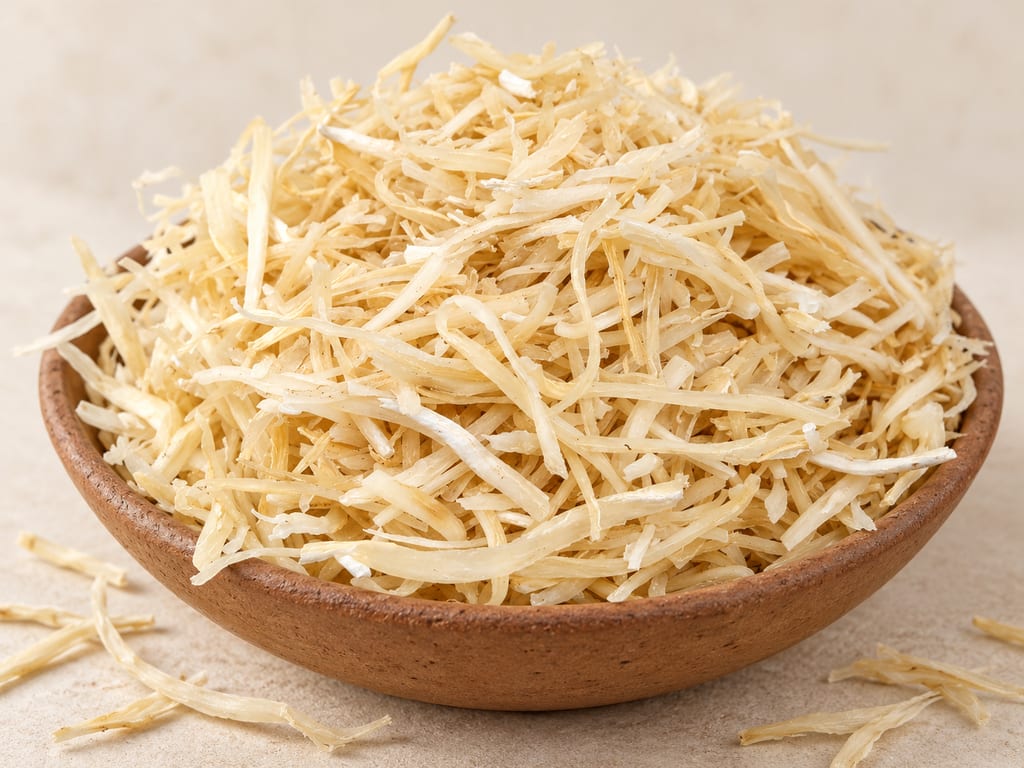
Abacha
Abacha is a fermented cassava-strip preparation from southeastern Nigeria, sold wet or dried and later rehydrated for meals such as African salad.
 FermenteaWhere food goes to change
Substrates
Cassava is the starchy root of Manihot esculenta, transformed across Africa into fermented doughs, granules and flours through distinct processes whose safety depends on thorough cyanogen removal.
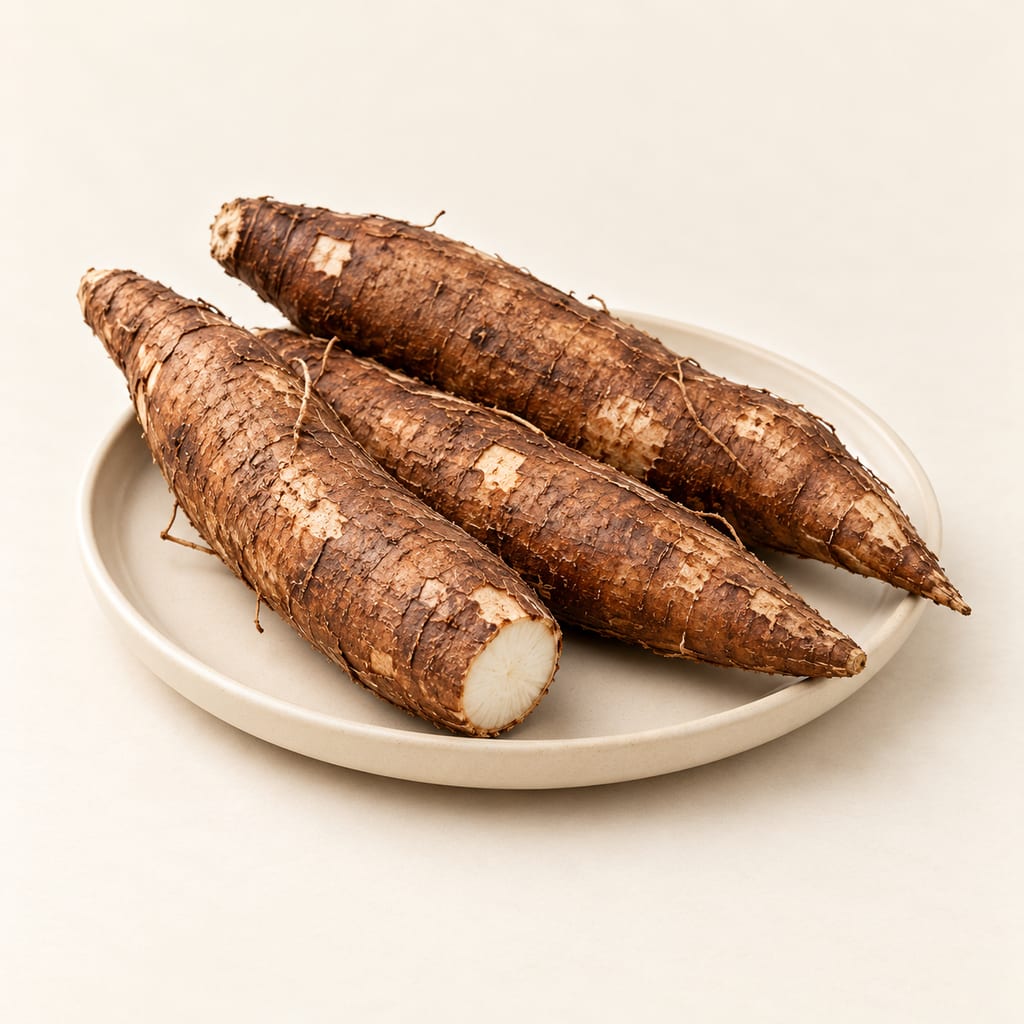
Cassava, Manihot esculenta Crantz, is a woody perennial shrub cultivated chiefly for its swollen, starch-storing roots. It belongs to the spurge family, Euphorbiaceae. The mature root has a thin outer covering, a pale storage tissue rich in starch, and a central fibrous vascular strand. The exact shape, size, dry matter and cyanogenic potential vary with cultivar, growing conditions, maturity and growing environment; the name cassava does not describe one standardized root.
The roots are often called tubers in everyday and processing literature, but botanically they are storage roots. That distinction helps separate the crop from yam and potato, which have different plant structures and processing characteristics. Cassava's related products also have distinct identities: cassava flour is a dried and milled root product, cassava starch is extracted starch, tapioca usually names starch products, and gari is a fermented, dewatered and roasted granule. None is interchangeable with the fresh root as a fermentation substrate.
Cassava's history begins in the Americas. Archaeological and botanical accounts associate its early cultivation with tropical South America and Mesoamerica; the crop was established in parts of South America and the Caribbean before European conquest. FAO describes cassava as unknown in the Old World before the arrival of Europeans and dates its introduction to Africa to the sixteenth century, through Atlantic movement from Brazil. That history distinguishes the crop's American domestication from the later African histories of foods made with it.
Its spread across Africa took place over generations and did not create one continent-wide technique. In parts of Central Africa cassava came to serve as a dependable reserve food when other harvests failed or during the hungry season. Households and producers adapted it to local crops, water access, labour, fuel, equipment, storage needs and taste. Fermented cassava traditions are therefore comparatively recent in relation to the crop's American history, yet they are now rooted in distinct African communities and economies. A sixteenth-century introduction date cannot be used as the invention date of gari, fufu, attiéké or any other named food.
Cassava grows across humid tropical and seasonally dry regions, including areas where drought, poor soils or unreliable rainfall limit other crops. It is propagated from stem cuttings rather than seed in ordinary cultivation, and the harvest may take place across a broad span of the growing cycle. The root stores energy underground; leaves and stems also matter to farmers for planting material, shade, soil cover and, in many places, food or animal feed. Cassava is grown as a staple and as a market crop, and the same harvest may supply household meals, processors, animal feed or industrial starch.
The root is particularly rich in carbohydrate and is comparatively low in protein and fat. Its importance in food security comes from its yield and flexible use, not from a claim that the root alone provides a balanced diet. FAO food-composition data for West Africa reports the root as a substantial energy source, while cassava leaves supply a different nutrient profile and are used as a cooked vegetable in several African cuisines. Leaves are a distinct ingredient, with their own cyanogen levels and preparation requirements; this root account does not give instructions for preparing them.
Fresh cassava roots are highly perishable. A post-harvest FAO compendium describes physiological deterioration beginning within a short period after harvest, with discoloration and loss of quality developing as the detached root responds to injury and oxygen. Microbial spoilage may follow. This rapid decline is one reason processing does more than make the root convenient: grating, soaking, drying, cooking or converting the root into a stable product protects harvest value and moves food beyond the place where it was grown.
Processing routes are also ways to manage the root's natural cyanogenic compounds. Cultivars are often described as sweet or bitter in relation to taste and cyanogenic potential, but the terms are not dependable safety classifications. Bitter-tasting roots are not the only roots with cyanogens, and a grower's or seller's category is not a laboratory measurement. Variety is one factor among several in a process whose result depends on tissue condition and the complete sequence of operations.
Cassava roots contain the cyanogenic glycosides linamarin and lotaustralin. In intact tissue these compounds and the plant enzyme linamarase are separated within cells. Cutting, grating, pounding or other tissue damage brings them into contact: enzymatic breakdown forms cyanohydrins and can release hydrogen cyanide. Water, acidity, temperature, drying and heating then affect how compounds move, break down or remain in the food. The same tissue disruption that prepares a fermentable mash also starts biochemical changes that matter to safety.
The root's abundant starch gives fermentation organisms a large reserve of carbohydrate, but starch is not directly available to every organism. Local microbial communities use different sugars and starch breakdown products, produce organic acids and other metabolites, soften the root, and shape the finished food's sourness, aroma, colour and texture. Spontaneous fermentations draw microorganisms from the root, water, utensils, vessels and surrounding environment. Their populations and activity depend on the product's physical form and handling, so the microbiology of grated mash is not simply the microbiology of whole roots submerged in water.
Fermentation is only one operation within a wider process. A study of gari found that grating, fermentation and pressing influenced biochemical properties, while grating and roasting strongly shaped particle size and colour. Pressing carries soluble compounds away with the liquid; roasting or cooking adds heat after earlier stages have already changed the material. These interactions explain why a successful fermentation in one route cannot be copied into another food by keeping only the name or duration.
Gari begins with peeled, washed roots that are grated. Producers place the mash in sacks or another pressing arrangement; liquid drains as fermentation proceeds. They break up the dewatered mass, remove coarse fibres by sieving, then roast or fry the small particles to make dry granules. The balance between pressing, fermentation and heat affects sourness, starch characteristics, colour, texture and residual cyanogenic compounds. Yellow gari may include palm oil during roasting, while white gari omits it. Gari is eaten dry, rehydrated or cooked into a dough or porridge; those serving forms do not make it the same product as dried cassava flour.
Cassava fufu, called foofoo or akpu in some settings, follows another path. Peeled whole or cut roots are softened in water, with fermentation occurring during some forms of retting. The softened root is broken down, strained or pressed, then cooked into a smooth paste. The word fufu can also refer to cooked and pounded yam, plantain or other starches, some of them not fermented. A cassava fufu recipe must therefore state which substrate and process it means. Lafun uses a water-fermented root route that is dried and milled into flour before cooking, giving the material a dry storage form rather than fufu's moist paste.
Attiéké is associated with lagoon communities in Côte d'Ivoire. Cassava is ground and mixed with fermented cassava inoculum, then fermented, pressed, granulated and steamed. UNESCO's 2024 inscription documents the knowledge involved in growing, harvesting, preparing, steaming, cooling and distributing the food. It also describes women's central role in preparing, cooking, preserving and selling attiéké, alongside men growing, harvesting, transporting and grinding cassava. The recognition records a living practice and transmission of knowledge; it does not establish when attiéké was invented.
Other names mark further regional forms rather than synonyms for one universal method. Ghanaian agbelima is a fermented cassava dough; a prepared cassava inoculum known as kudeme can influence its fermentation. Placali is a fermented cassava paste cooked to a soft gel. In Central African traditions, retted cassava may be defibred and kneaded before cooking in leaf-wrapped forms such as chikwangue, while Cameroon has related but distinct wrapped foods such as bobolo and miondo. Abacha uses processed cassava strips. Their forms, fermentation stages and final cooking differ, and an account of the root cannot supply one method for all of them.
Cassava can cause acute cyanide poisoning when eaten raw or inadequately processed. Repeated exposure to high cyanogen levels in inadequately processed cassava has also been associated with serious neurological illness, including konzo, particularly when diets depend heavily on cassava under conditions of food stress. This hazard is specific to the plant's cyanogenic compounds; sourness, bubbling, a familiar name or a traditional appearance do not measure the amount left in a batch.
The Codex code for cassava products describes different process sequences for different finished foods and warns that poor or rushed processing can leave high residues. Tissue disruption exposes linamarase to the glycosides; soaking allows water transfer; fermentation alters the mash; pressing or draining removes liquid; drying and cooking affect the remaining compounds. These stages work together, and their effects vary by cultivar and process. A reported percentage reduction from one study is not a universal endpoint, and a processing time from one product does not establish safety for another.
Do not treat fermenting cassava as a stand-alone detoxification instruction. This ingredient page does not give a household method for turning unprocessed roots into safe food. For an initial culinary use, choose an established commercially processed cassava ingredient and follow its product-specific preparation directions. A producer developing a raw-root process needs product-specific validation and appropriate measurement of residual cyanogens. No smell, taste, bubbling, elapsed time or simple home check can prove that a batch is safe.
Cassava leaves are eaten in Central and Eastern Africa, but the leaf is not simply a green version of the root. Leaves can have higher cyanogenic potential than roots and are often pounded or ground before boiling, with water or liquid removed according to the established local preparation. The process evidence for leaves must not be borrowed from gari, fufu or another root food. A cassava-leaf preparation belongs to its own ingredient and recipe records.
The same care applies to flour and starch. Cassava flour retains more of the root's other components than purified cassava starch, while tapioca refers to extracted starch and foods made from it. A fermented product such as gari or attiéké is not an ingredient substitute for plain flour when a recipe depends on its sourness, granulation or water behaviour. Clear names help a cook choose the form that the method actually requires.
The fresh root is a short-lived harvest material. Buy it from a source that can identify it as cassava, then process it promptly using a method written for the intended product. Avoid extending storage based on a generic time estimate: post-harvest deterioration depends on injury, cultivar, temperature and handling, while visual quality is not a cyanide test. Blue-black streaking is a known deterioration symptom, but it cannot establish whether the cyanogen content is safe or unsafe.
A recipe should name the root form it starts with—peeled whole pieces, cut roots, grated mash or a purchased flour—and say whether it uses water fermentation, mash fermentation, pressing, drying, cooking or several stages. The source and the product name should match that route. Where an account does not state cultivar, quantities, duration or a finished-product measurement, those details remain unknown rather than being supplied from a different cassava food. The root's many uses are a reason to be specific about the process, not to assume that one method transfers.
FAO documents cassava processing and use across West Africa; this broad regional association does not mark the crop's birthplace or define one shared process.
The cited study examines cassava-based abacha, fufu and garri in Nigeria; it does not claim a single Nigerian origin for cassava.
UNESCO associates attiéké production with lagoon communities in Côte d’Ivoire; the row records a living food tradition, not the species’ origin.
FAO documents cassava foods in Cameroon and neighboring Central African settings; local names and processes vary by community.
Abacha is a fermented cassava-strip preparation from southeastern Nigeria, sold wet or dried and later rehydrated for meals such as African salad.

Farinha d’água is a coarse cassava flour associated with Brazil's Amazon and Pará. This page documents one published experiment; it is not a household recipe or validated safety guide.
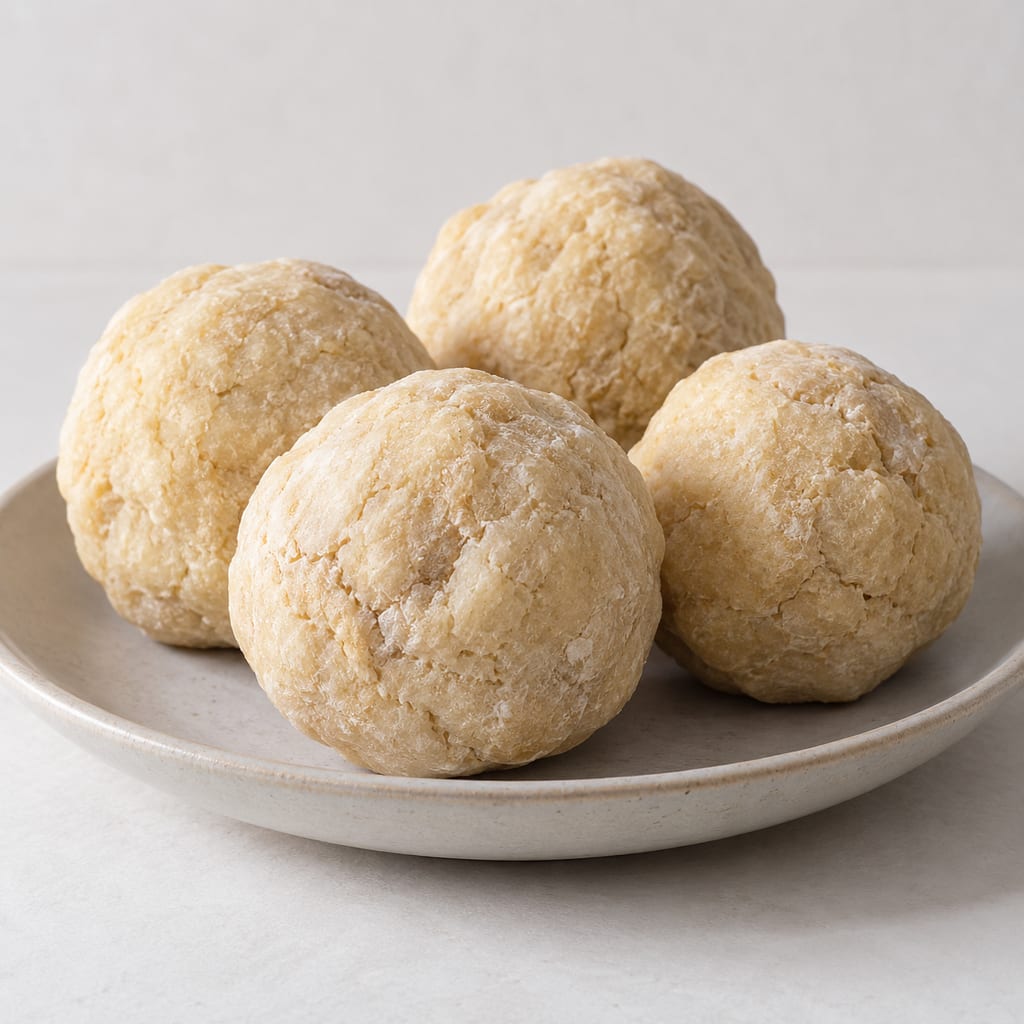
Kumkum is a Cameroonian fermented-cassava preparation described as balls dried over a fireplace and stored or milled into flour. Sources also describe a sun-dried market form; they give no Kumkum-specific safety endpoint.
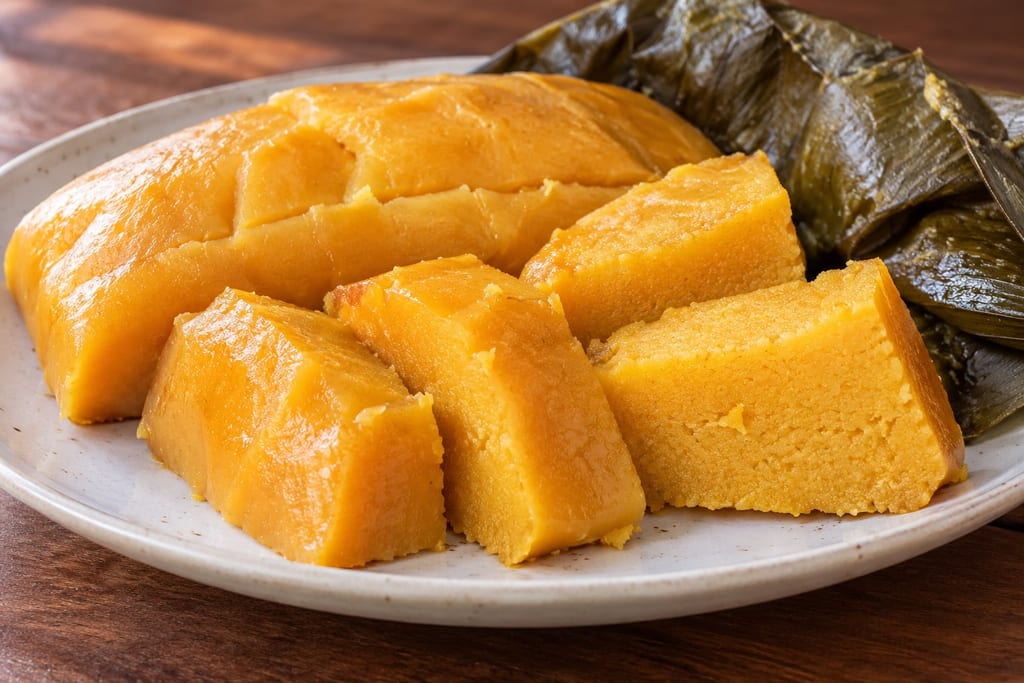
Cameroonian fermented fresh cassava mixed with red palm oil, wrapped and steamed as a cake.
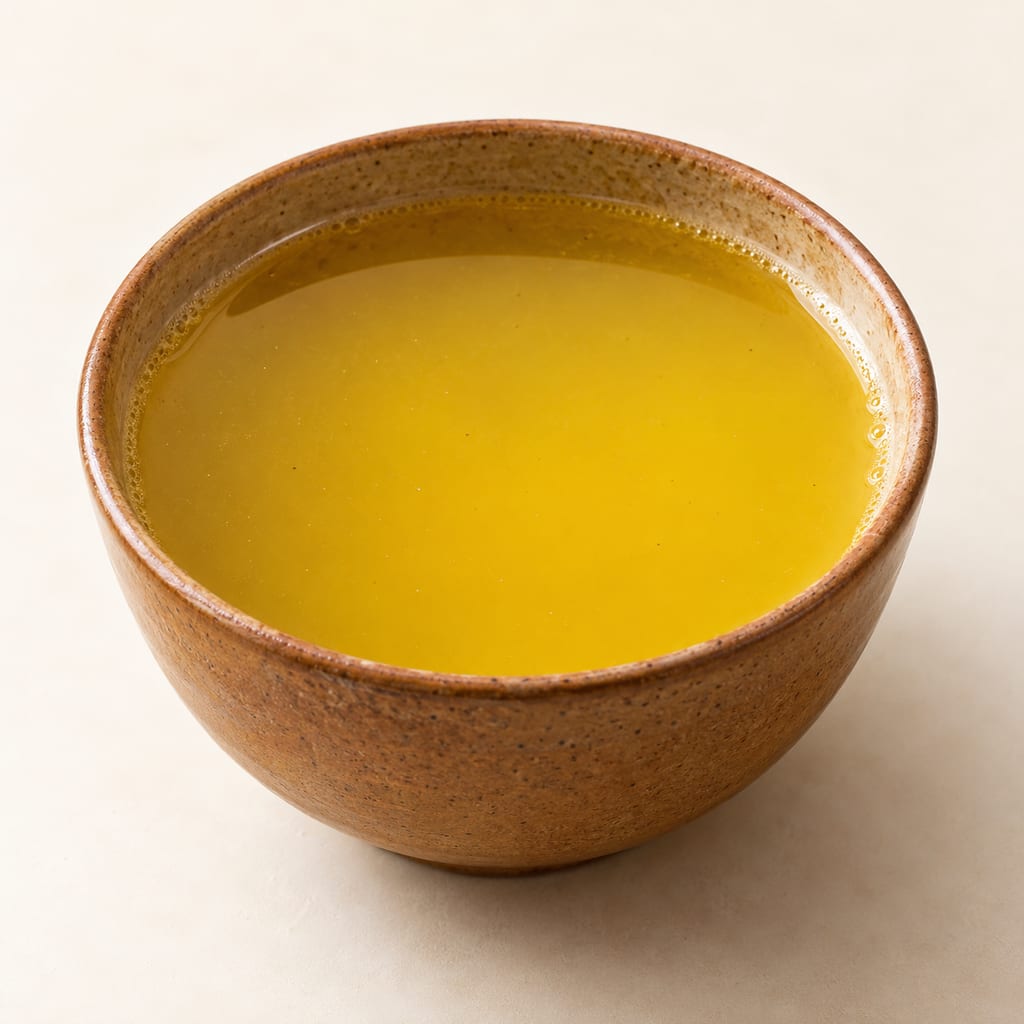
Tucupi is a yellow, sour liquid from the Brazilian Amazon, made from the juice of bitter manioc that is settled, fermented and cooked. It is the base of duck in tucupi and tacacá.

Tipití is a long, flexible woven basket press used to squeeze grated cassava mash. Its looped ends let a maker suspend and stretch the tube; it is a processing tool, not a fermenting vessel.
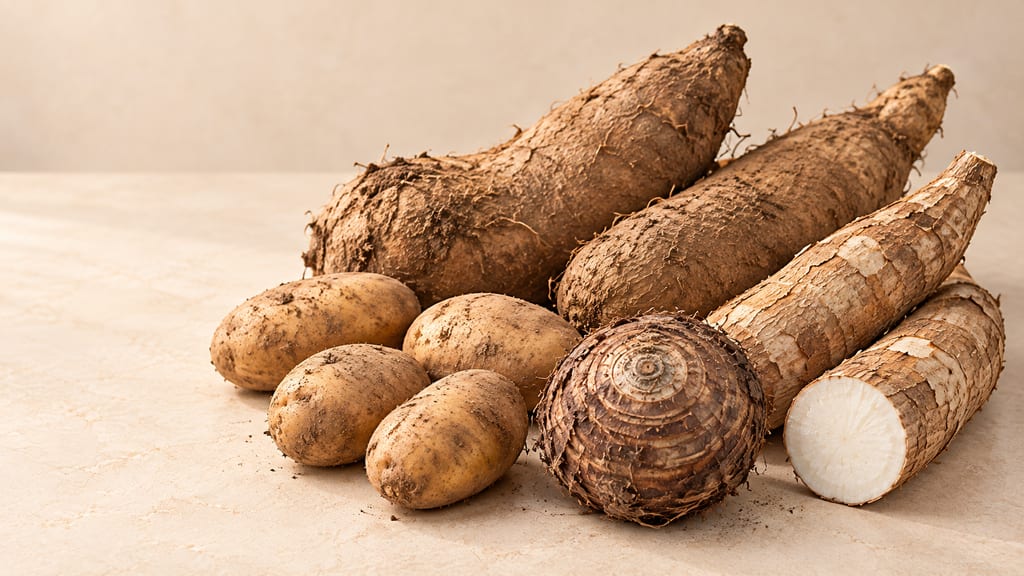
Every root crop is cut and bruised at harvest, and each gets a short window to seal the damage. The heat, the humidity and the days differ by crop, and for cassava the benefit is still argued over.
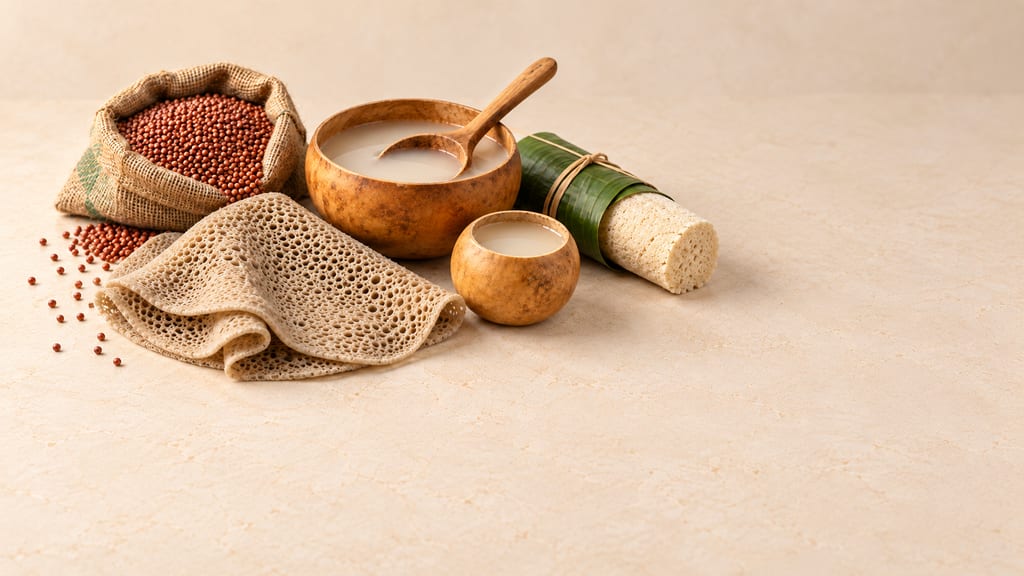
From sour breads and milk to savoury seeds, cassava staples and living beers, African fermentation follows the crop, the community and the work of transformation.
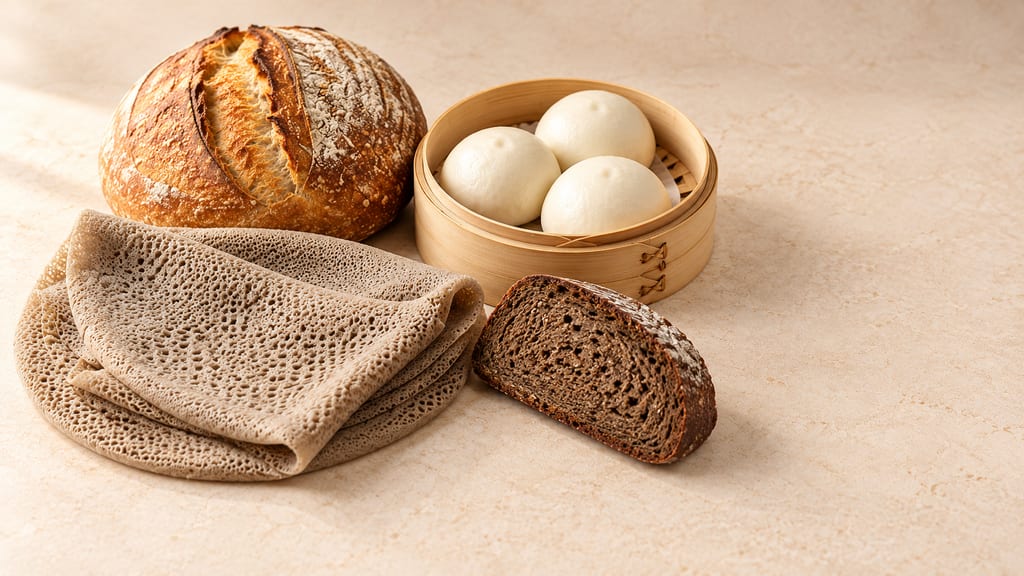
From the baguette and the steamed bun to injera, titiyas, Finnish rye and cassava bread: how grain, microbes and heat answer the question of what bread is for.
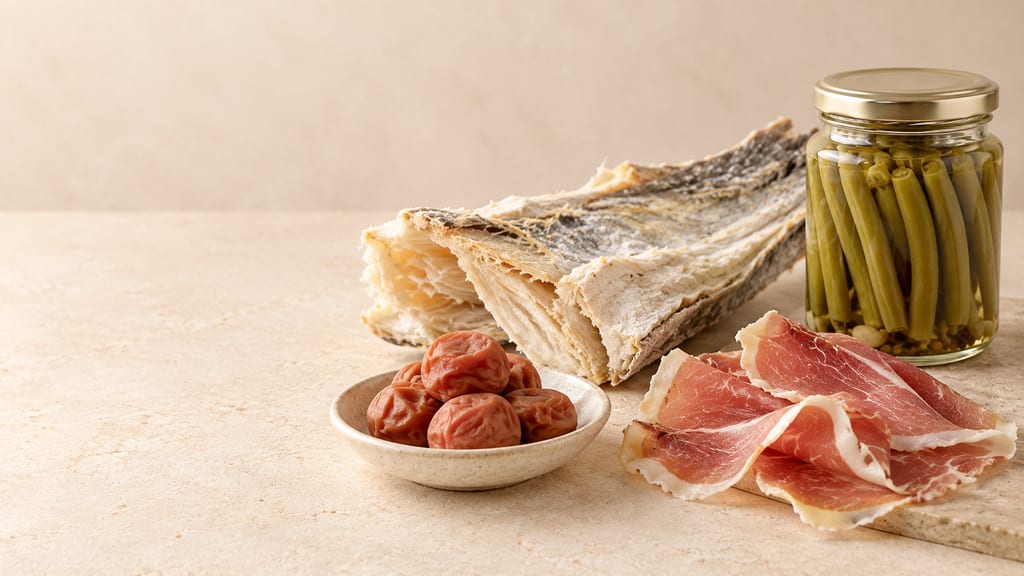
Every preserved food is a stack of barriers against microbes, enzymes, air and time. This is how they work, what a recipe's numbers measure, and how cooks worldwide build them.

Parkia biglobosa seeds are fermented into regional West African seasonings, including nététou, iru, dawadawa and soumbala. The yellow fruit pulp is a separate food, and names and methods vary by place.
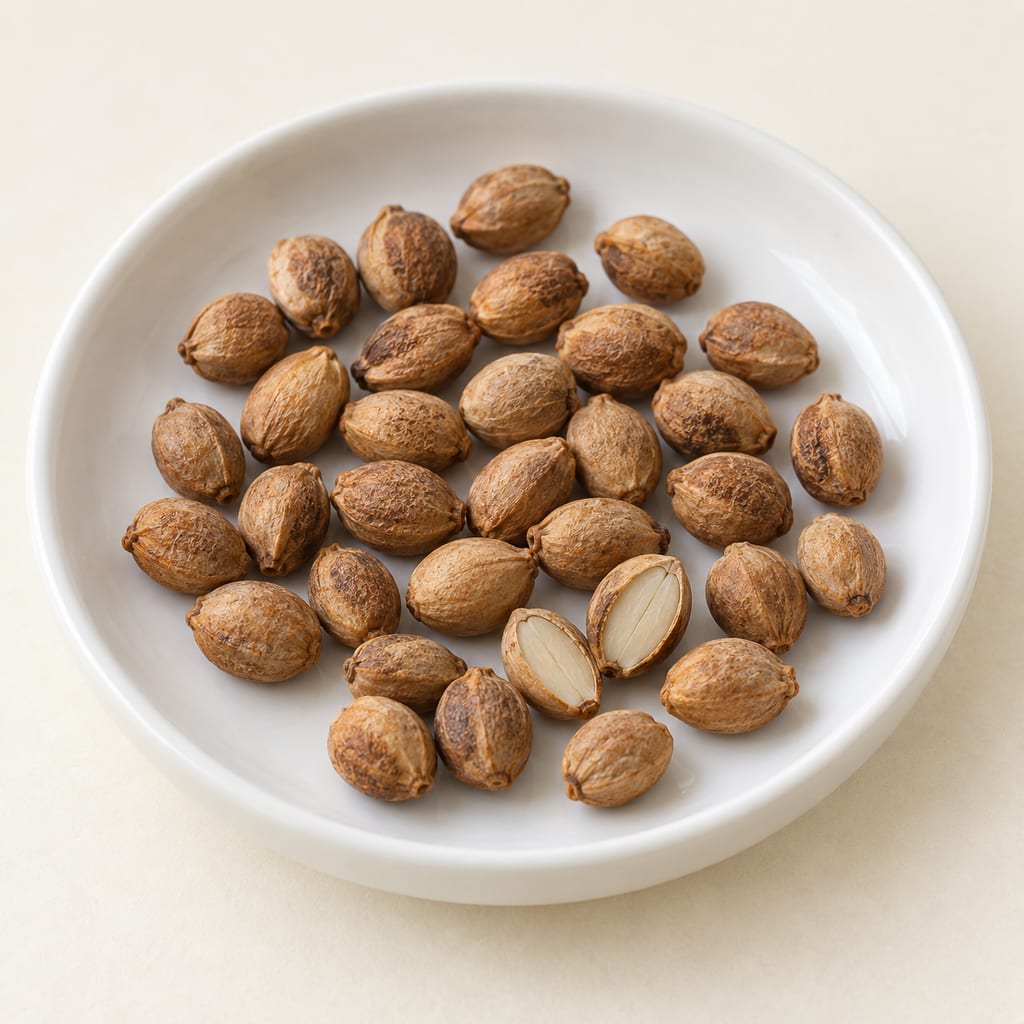
The seeds of the African breadfruit, Treculia africana, are cooked, dried and milled into flour in West and Central Africa, and the fruit is heaped and fermented before the seeds are washed out.
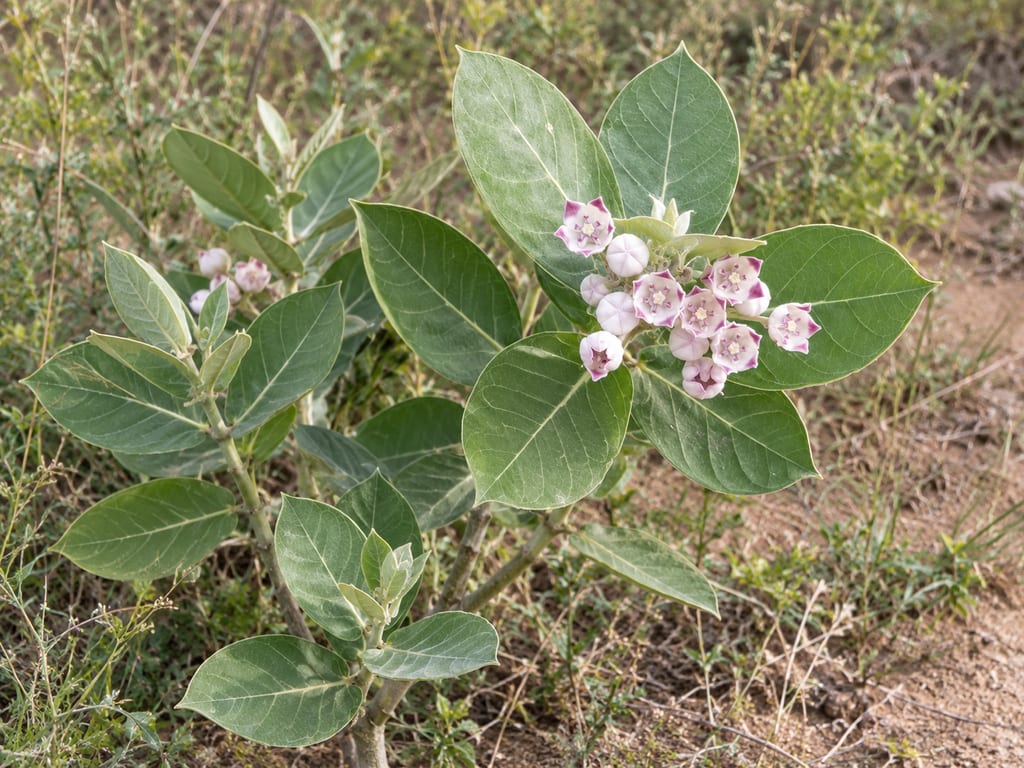
Calotropis procera preparations are documented as coagulants for wagashi gassirè in Benin and wara in Nigeria. Crude plant materials differ from purified research enzymes, and current evidence does not support a general home preparation.
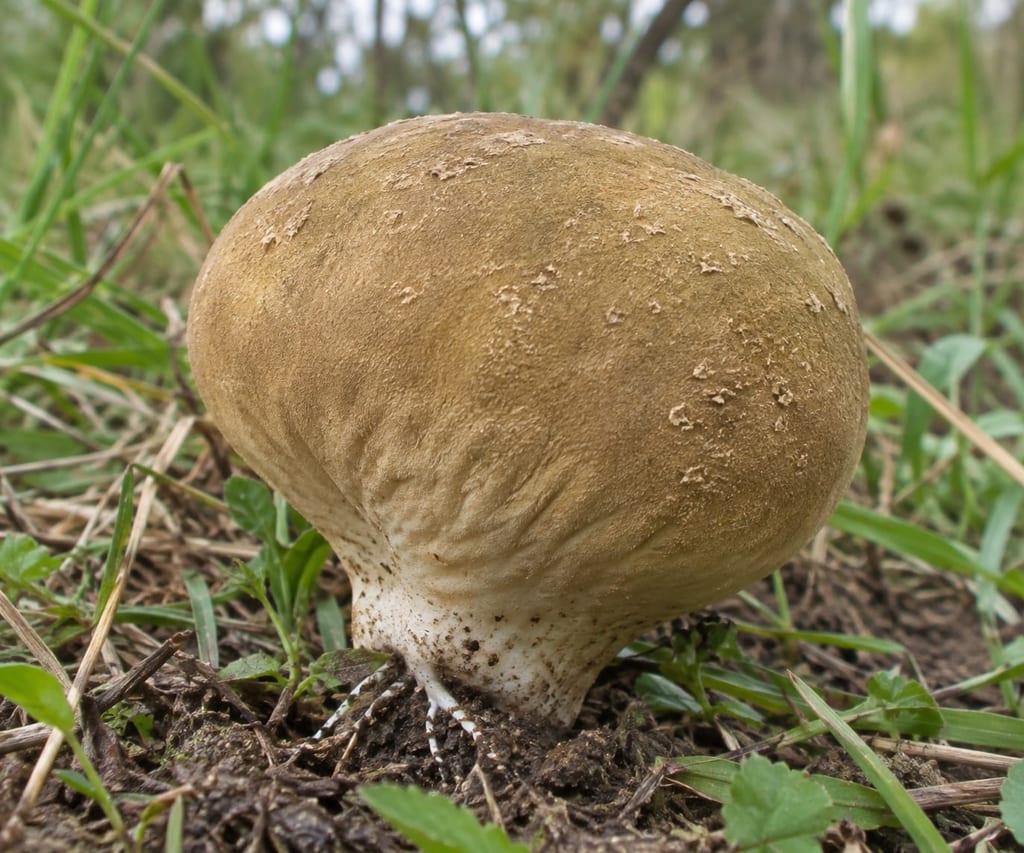
A tropical African puffball recorded in West African range accounts and Ethiopian edible-mushroom studies. Ethiopian use evidence is qualified; Benin identification and safety remain unresolved.
A defined Saccharomyces cerevisiae strain, 2Y48P22, was screened in 2010 for softening cassava in lafun experiments. It is an experimental candidate, not a household starter with a verified method.
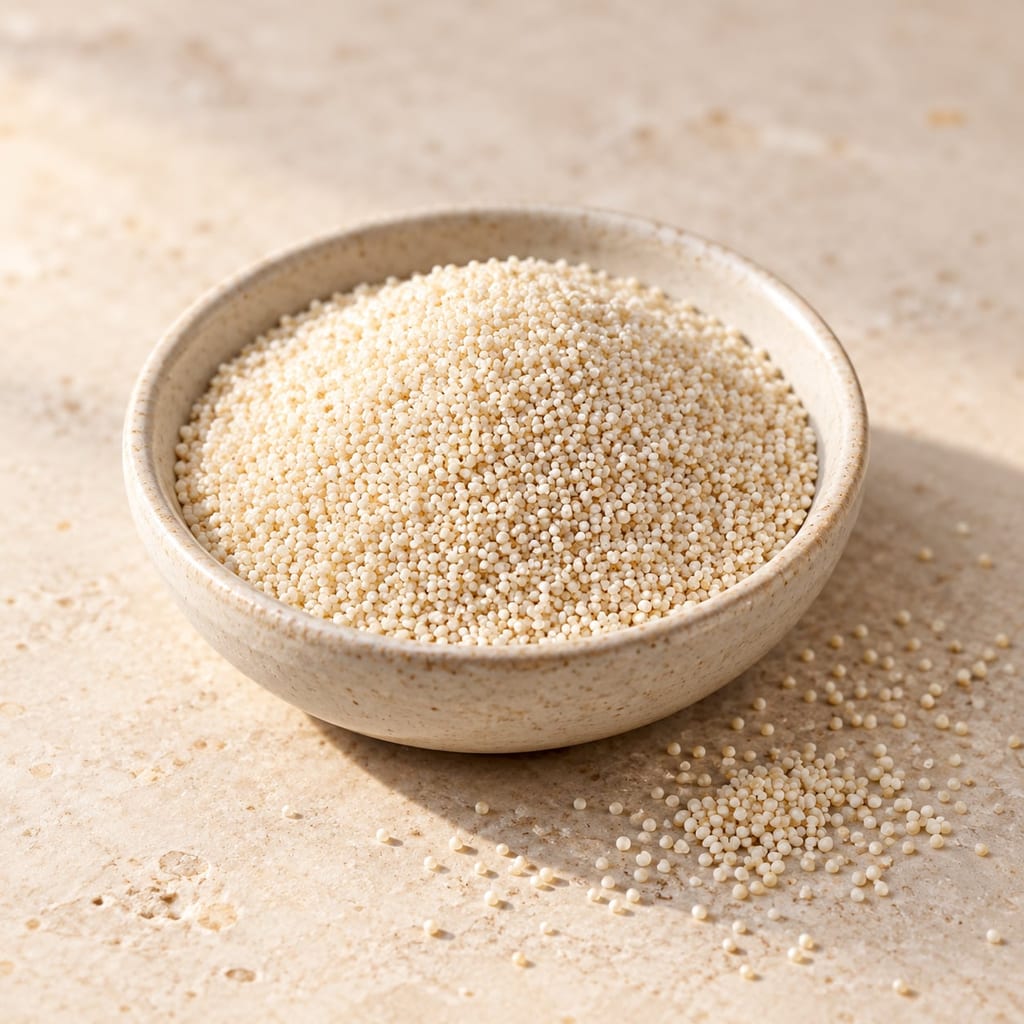
Fonio covers two distinct West African cereals: white fonio (Digitaria exilis) and black fonio (D. iburua). Both are eaten in cooked dishes; sources also document fermented drinks and controlled fonio fermentations.
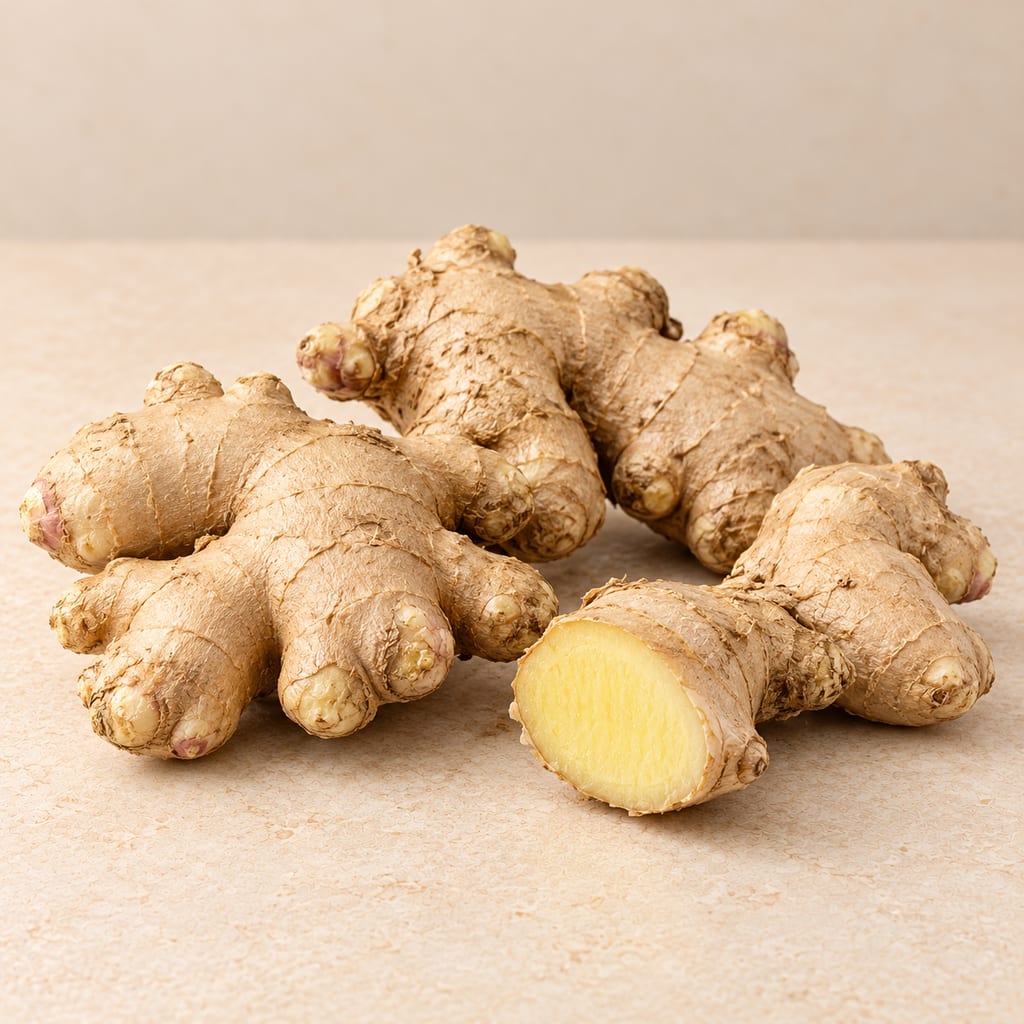
Ginger is the aromatic rhizome of Zingiber officinale, used fresh, dried and preserved. Historical ginger wines sliced or bruised it to flavour a sugar-based ferment.
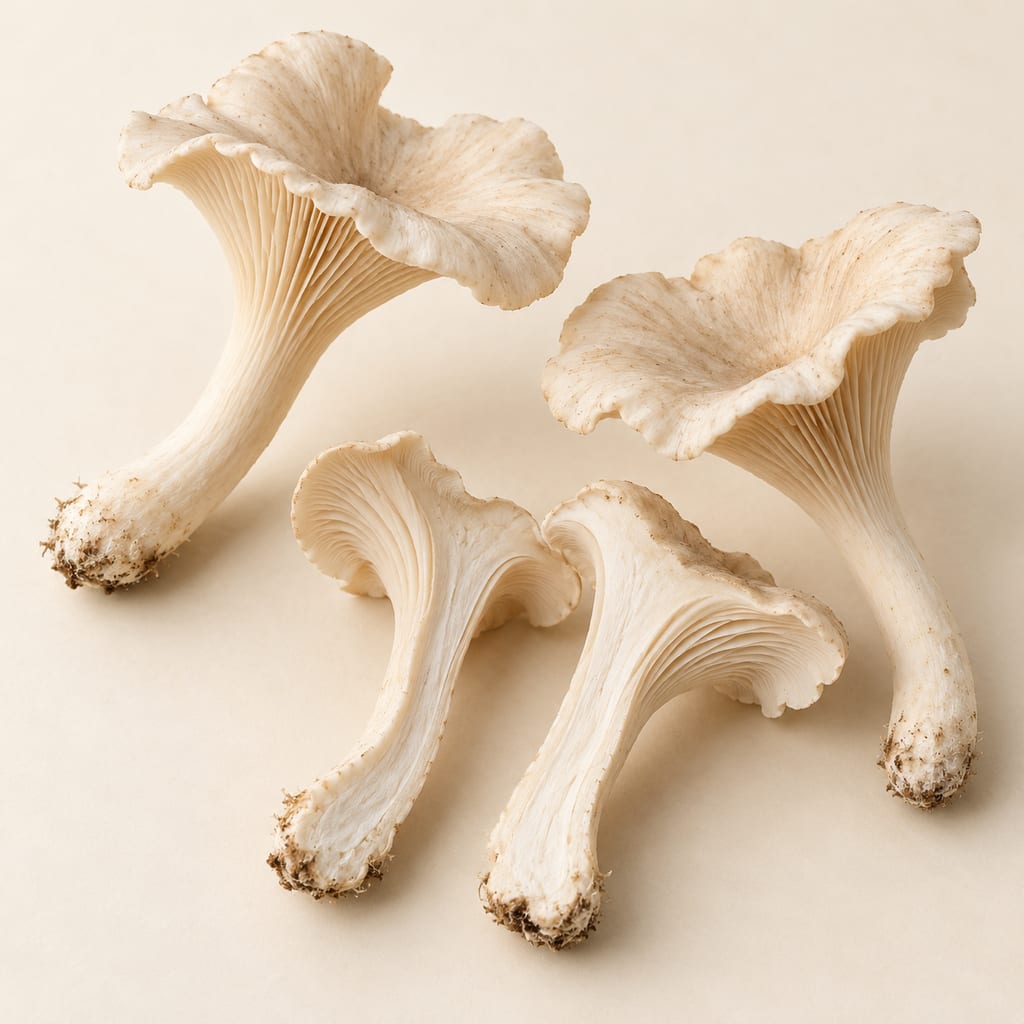
Pleurotus tuber-regium is a tropical fungus whose underground sclerotium is a staple and soup thickener in south-eastern Nigeria. It is also recorded as a food in Tshopo province, Democratic Republic of the Congo.

A gelling polysaccharide extracted from red seaweeds, sold as kanten strips or powder; it sets firm at a low concentration and stays solid until about 85 °C.

A Dominican table and seasoning condiment of sour orange juice, mixed with lime and salt and bottled raw; garlic, oregano or a hot pepper may be added for meat or a spicier bottle.

Cicerbita alpina is an alpine perennial whose tender shoots and leaves have been eaten raw or cooked. Sámi milk preparations and modern Carnian dishes are distinct uses, with serious identification and preservation limits.

Japanese skipjack tuna cooked, then repeatedly smoked and dried over a wood fire by the hand-fired tebiyama method into a hard block for shaving into dashi: the first stage of katsuobushi.

A Swedish-style spirit vinegar made by fermenting neutral alcohol with live vinegar bacteria, with a separate guide to commercial ättika strengths.

A yeast-raised wheat ring shaped from a firm dough, briefly boiled and baked. This source-batch formula gives a gently malted crust and a chewy crumb.

A warm dip of garlic, anchovy and olive oil, often enriched with butter, that Piedmont serves over a flame with raw and cooked vegetables and bread.

Bechamel is a white sauce of milk thickened with a butter and flour roux, one of the French mother sauces, and the base from which Mornay and other cheese and cream sauces are made.
No community contributions have been published for this entry yet.
Sign in to contribute. Published comments and photos are free to read.
Food and Agriculture Organization of the United NationsIdentity · History · Cultivation · Use
Save and grow: CassavaBotanical identity and description of cassava as Manihot esculenta Crantz
American domestication and introduction to Africa
Crop ecology and cultivation as a staple
Cited in: A root crop, not a starch product; From tropical America to African food systems; A productive crop with many uses
Food and Agriculture Organization of the United NationsHistory · Geography · Use
A review of cassava in Africa: The cassava transformation in AfricaIntroduction of cassava from Brazil to Africa in the sixteenth century
Adoption as famine-reserve crop and changing food systems
Regional variation in cultivation and use
Cited in: From tropical America to African food systems
Food and Agriculture Organization of the United NationsCultivation · Nutrition · Use
Compendium of forgotten foodsCultivation and harvest context in sub-Saharan Africa
West African food-composition values for root and leaves
Root and leaf culinary uses
Cited in: A productive crop with many uses
Food and Agriculture Organization of the United NationsHandling · Safety
Cassava: Post-harvest operationsRoot structure and perishability after harvest
Deterioration and processing context
Traditional processing stages
Cited in: Why roots are processed soon after harvest; Choosing and handling the root
Food and Agriculture Organization of the United NationsFermentation · Processing · Safety · Geography
An overview of traditional processing and utilization of cassava in AfricaCyanogenic glycoside chemistry and tissue damage
Pressing, soaking, drying and fermentation routes
Gari, fufu and lafun processing differences
Regional variation in cassava foods
Cited in: A root crop, not a starch product; How fermentation changes cassava; Different foods begin with different root forms; Root and leaf are separate materials; Choosing and handling the root
Food and Agriculture Organization of the United NationsProcessing · Use
Chapter 5: Processing of roots and tubersGari as a fermented and gelatinized dry coarse flour
Gari processing stages and customary serving forms
Historical descriptions of work and equipment in gari manufacture
Cited in: Different foods begin with different root forms
Codex Alimentarius Commission / FAO and WHOProcessing · Safety
Code of practice for the reduction of hydrocyanic acid (HCN) in cassava and cassava productsProduct-specific cassava processing sequences
Gari route and the distinct roles of peeling, grating, pressing, fermentation and heating
Warning that poor or rushed processing may leave high HCN residues
Cited in: Why roots are processed soon after harvest; How fermentation changes cassava; Different foods begin with different root forms; Cyanogen removal is a process outcome; Choosing and handling the root
World Health OrganizationSafety
Natural toxins in foodCassava as a food containing cyanogenic glycosides
Potential acute symptoms of cyanide intoxication
Dependence of toxicity on cyanide exposure
Cited in: Cyanogen removal is a process outcome
World Health Organization / Joint FAO-WHO Expert Committee on Food AdditivesSafety
Evaluation of certain contaminants in foodEpidemiological association of konzo with inadequately processed cassava and high cyanide exposure
Cited in: Cyanogen removal is a process outcome
Critical Reviews in Food Science and NutritionSafety · Processing
Cyanide detoxification in cassava for food and feed usesReview of cyanide reduction by several processing sequences
Distinction between roots and leaves
No single process step is universal across products
Cited in: Cyanogen removal is a process outcome
Food Science & NutritionFermentation · Processing · Safety
Identification of critical versus robust processing unit operations determining the physical and biochemical properties of cassava-based semolina (gari)Different unit operations have different effects on gari properties
Cultivar and process affect cyanogenic potential
Pressing, fermentation and roasting have distinct roles
Cited in: Why roots are processed soon after harvest; How fermentation changes cassava; Cyanogen removal is a process outcome
UNESCOGeography · History · Process · Use
Skills related to Attiéké production in Côte d’IvoireAttiéké production among lagoon peoples of Côte d’Ivoire
Mixing cassava with fermented cassava, semolina preparation and steaming
Women’s knowledge and roles, transmission, household and ceremonial use
Inscription in 2024; inscription is not an origin date
Cited in: Different foods begin with different root forms
Food and Agriculture Organization of the United NationsProcessing · Use · Geography
Traditional post-harvest technology of perishable tropical staples: CassavaAfrican uses of boiled cassava and fufu forms
Cassava retting and paste preparation vary by place
Attiéké and wrapped cassava-food examples
Cited in: How fermentation changes cassava
Food and Agriculture Organization of the United NationsProcessing · Use
Cassava processing: Utilization of cassava productsGari production and consumption
Cassava starch and flour distinctions
Regional use of cassava products
Cited in: Root and leaf are separate materials
Letters in Applied MicrobiologyFermentation · Geography
Analysis of bacterial communities of three cassava-based traditionally fermented Nigerian foods (abacha, fufu and garri)The study compares bacterial communities in three named Nigerian cassava foods
The products are abacha, fufu and garri; the findings are product-specific
Cited in: Different foods begin with different root forms
UK Department for International Development, Research for Development OutputsProcessing
Fermentation of cassava into foofoo: Effect of time and temperature on processing and storage qualityResearch on cassava foofoo processing conditions and storage quality
Evidence that foofoo studies concern a specific product rather than a general cassava fermentation rule
Cited in: Different foods begin with different root forms
Food and Agriculture Organization of the United NationsUse · Safety
A review of cassava in AfricaCassava leaves as food in Central and Eastern Africa
Leaf preparation differs from root processing
Cited in: A productive crop with many uses; Root and leaf are separate materials