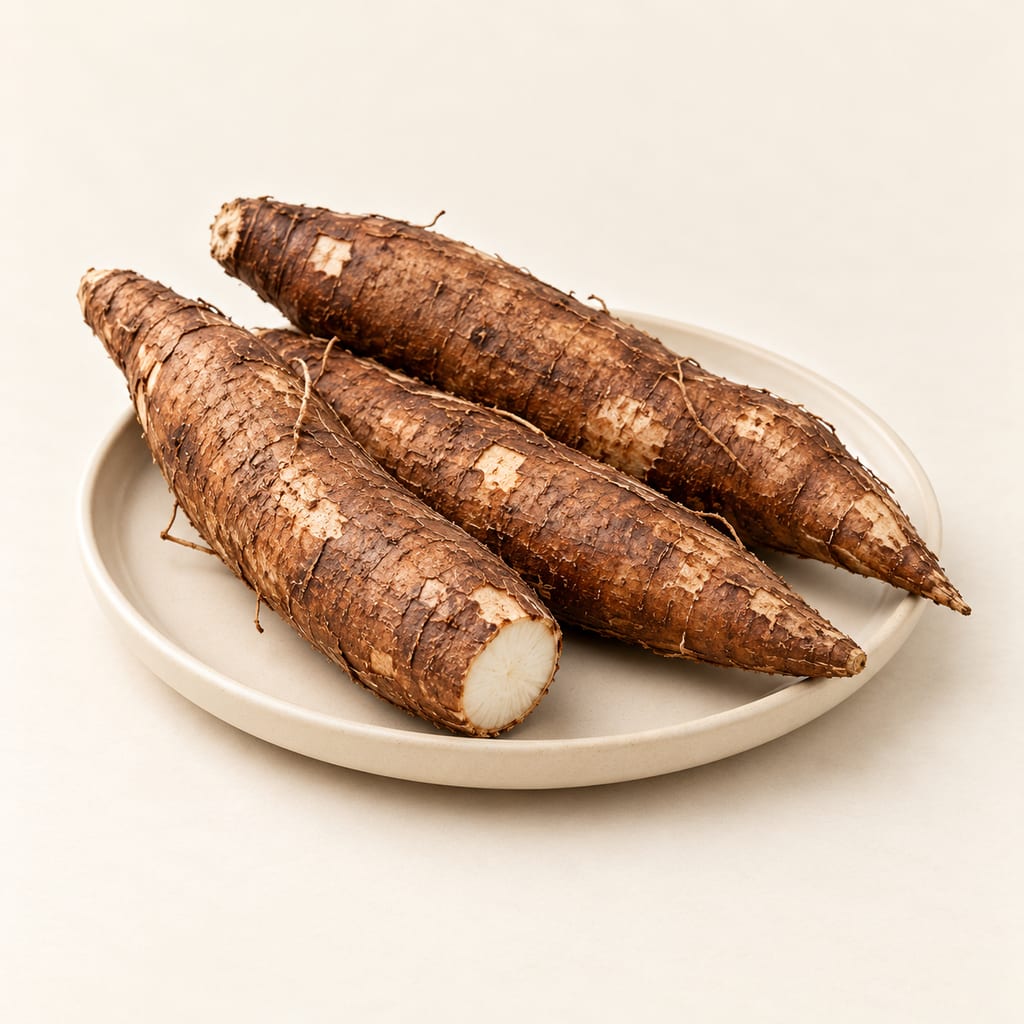
Cassava
Cassava is the starchy root of Manihot esculenta, transformed across Africa into fermented doughs, granules and flours through distinct processes whose safety depends on thorough cyanogen removal.
 FermenteaWhere food goes to change
Tucupí
Tucupi is a yellow, sour liquid from the Brazilian Amazon, made from the juice of bitter manioc that is settled, fermented and cooked. It is the base of duck in tucupi and tacacá.
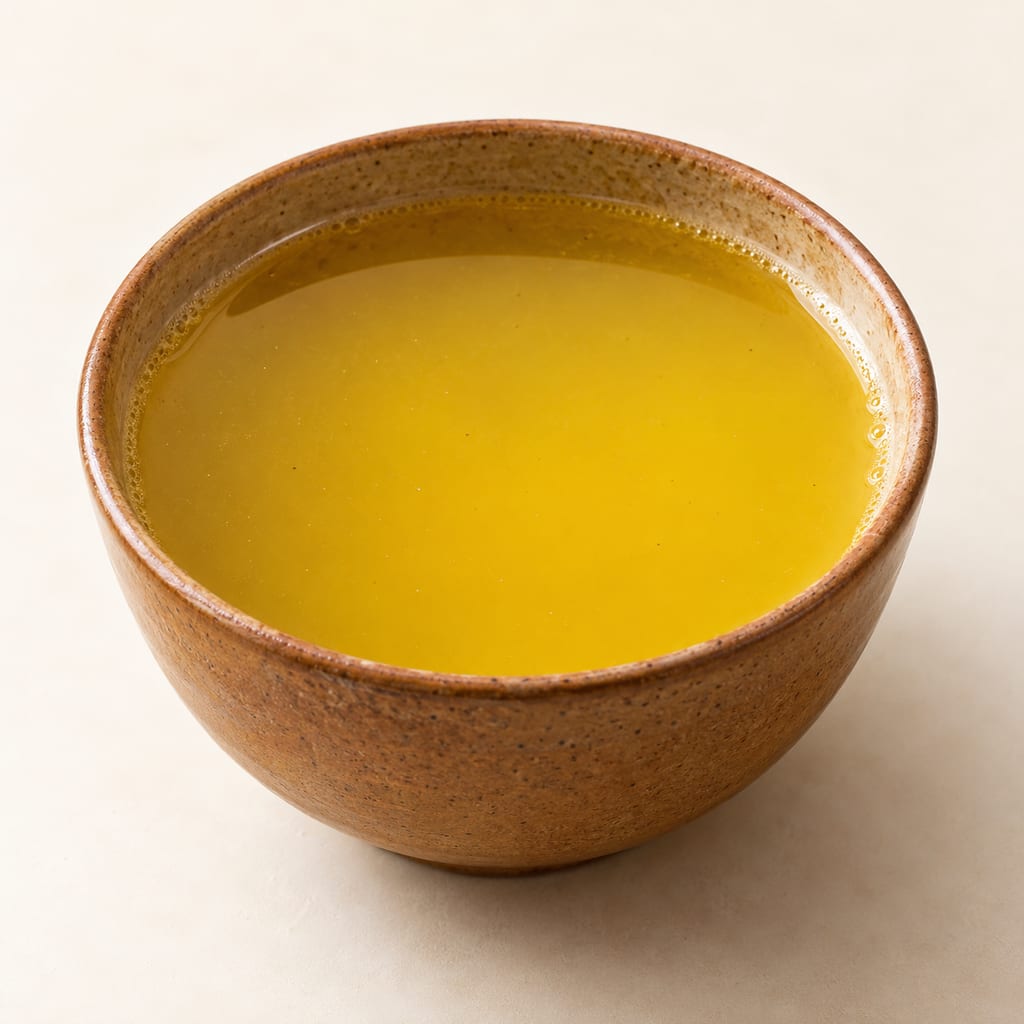
Tucupi is a yellow, sour liquid made from the juice of manioc. Its colour is bright yellow in the laboratory description, and its taste is sharp, with the acidity that gives it its place in Pará cooking. The product is neither a thick paste nor a clear stock: it is a thin, cooked liquid that carries the flavour of the root and is used to dress other ingredients.
The name is used for the liquid itself. Wikipedia describes it as a yellow sauce made from wild manioc in the Brazilian Amazon and as a by-product of manioc flour manufacture. The same article notes that the liquid is produced after the root's starch has been separated, so tucupi and manioc flour are two products from one root.
The root that makes tucupi is bitter manioc, called yuca brava. Its juice is poisonous, and the juice is described plainly as poisonous: raw tucupi contains hydrocyanic acid and is poisonous at the stage when the juice has just been separated. The sauce exists because a process has been worked out that turns this juice into something people eat, not because the raw liquid is safe.
The documented sequence starts with peeling, grating and pressing the root. Traditionally the pulp was squeezed in a basket press called a tipiti. The juice is then left to rest, so that the starch settles and can be removed; the starch is used in bread, according to the feature. What remains is the liquid that becomes tucupi, and it is the liquid, not the starch, that carries the toxin problem.
A New Worlder feature on the sauce describes communities that soak yuca brava in water for several days and then boil the separated juice. It also notes that communities vary the method, sometimes adding peppers, seeds or insects, and that the result can be a thin broth or a paste. The variation is real, which is why no single method should be read as the one true recipe.
The laboratory study on tucupi processing is the most useful evidence here, because it measured cyanide rather than assuming it. It compared fermentation times of 12 and 24 hours and chose 24 hours with 40 minutes of cooking for the experimental product. Its finding that matters most for safety is about cooking: cooking for under 10 minutes did not lower the cyanide, while cooking for 30 to 60 minutes brought the total and free cyanide down to levels the authors called safe.
The same study does not show that these settings are a home method. Its model did not predict cyanide well, with R squared values of 0.6256 for total cyanide and 0.4811 for free cyanide, and the highest levels in one trial came after a 30 hour fermentation with only 2 minutes of cooking. Its results also do not match the simple idea that more fermentation always removes more cyanide. The study is written for a processing plant, and its parameters are the authors' suggestion, not a validated instruction for a kitchen.
Fermentation and cooking therefore do different jobs. Fermentation changes the liquid's acidity and microbial makeup, and it is not, on its own, a sure way to remove cyanide. Cooking is the step most directly linked with reducing cyanide. Neither should be treated as a casual shortcut.
The study that measured cyanide also measured the finished liquid. Its final product had a pH of 3.71 and a titratable acidity of 0.65 g of lactic acid per 100 mL, with a reported abstract figure of 0.7. The acidity comes from the lactic acid bacteria in the fermentation, and the authors describe the liquid as fermented, which is why tucupi is grouped here as a fermented product.
Acidity is also what makes tucupi work in dishes. Its acidity is also said to sharpen the effect of jambu, a leaf that gives a tingling or numbing sensation in the mouth. In that setting, the liquid is not a neutral stock but a sour, savoury base that changes the way the other ingredients taste.
Acidity is not a safety verdict. A low pH does not tell a cook that cyanide has been removed, and a sour, yellow liquid is not proof of anything about its safety. These questions are kept apart in the accounts, and a reader should keep them apart too.
Tucupi is best known through two dishes. Pato no tucupi, duck in tucupi, is a traditional dish found mostly around the city of Belém. A roasted duck is shredded and simmered in a tucupi and jambu sauce, so the liquid gives the dish its acidity and its tingle.
Tacacá is a specialty of the state of Pará, served in a gourd bowl. Hot tucupi is poured over manioc flour, then topped with jambu and dried shrimp. The soup is eaten as a light meal or a snack, and the liquid's acidity is the element the whole bowl depends on.
Both dishes show how the liquid is used: as a dressing and a broth, rather than as a condiment on the side. A reader who wants the flavour of tucupi should taste it in one of these dishes or buy a commercial product with a clear process, and not make the raw liquid at home.
The New Worlder feature credits Indigenous communities and cooks with the knowledge behind tucupi. It names producers in Brazil, including a Wapixana community in Roraima and a cook in the Upper Rio Negro region, as well as communities in Peru and southern Colombia. It credits the work of grandmothers with the product's complexity, and it describes recipes passed down through generations.
Modern production has changed the labour. The article reports a partnership in Peru that employs 24 women across neighbouring communities, and a mechanised grater that cut processing time from three hours to 20 minutes. Output is reported to have risen from 1,000 litres a month in 2018 to 2,000 litres a month in 2019. A bottled Peruvian product sells for about 40 soles for 200 millilitres. These are reported figures for one producer and are not general statistics.
The Wikipedia article gives a legend of the origin of tucupi, in which the Moon and the Morning Star visit the centre of the Earth and tears from a bitten face fall on a manioc field. The legend is uncited and is not attributed to a people there, so it is recorded as a story and not as the sauce's history.
The sources do not establish a safe home method for removing cyanide from bitter manioc juice. The laboratory study is a process study with its own limits, and the feature article does not describe how the toxicity is removed beyond the steps it names. Until a validated method is published for the kitchen, the sensible reading is that tucupi is a product to buy from a producer with a documented process.
The Wikipedia page says the liquid must be boiled for three to five days before use. The laboratory study describes a much shorter fermentation and a cooking step of minutes. These accounts do not agree, and the page does not resolve the difference. The discrepancy is recorded here rather than averaged into a method.
The first dated mention of tucupi, and any early written recipe, are not in these sources. A reader interested in its history should look for regional food writing and early descriptions of Amazonian manioc processing before treating any date as established.
Tucupi is a Pará and Amazonian manioc liquid used in traditional dishes. The sources place its making in Indigenous manioc processing, but none gives a dated first record.
Scaling: source batch only
The sources state that raw tucupi is poisonous because it contains hydrocyanic acid, and that yuca brava is the poisonous form of manioc.
Hazard sourceThe laboratory study found that cooking under 10 minutes did not lower cyanide, while cooking for 30 to 60 minutes brought it down to the levels the authors called safe. Its design did not produce a predictive model for cyanide.
Hazard sourceDo not prepare tucupi from raw bitter manioc at home from these pages. Use a commercial product made under a published process, or a process validated for cyanide.
Control sourceRaw juice of bitter manioc is toxic.
Cooking time is not a verified home control outside the conditions of a study.
Smell, taste and colour do not show that cyanide has been removed.
The sources place tucupi in Pará and the wider Brazilian Amazon; none fixes a single village or inventor.
Cassava is the starchy root of Manihot esculenta, transformed across Africa into fermented doughs, granules and flours through distinct processes whose safety depends on thorough cyanogen removal.
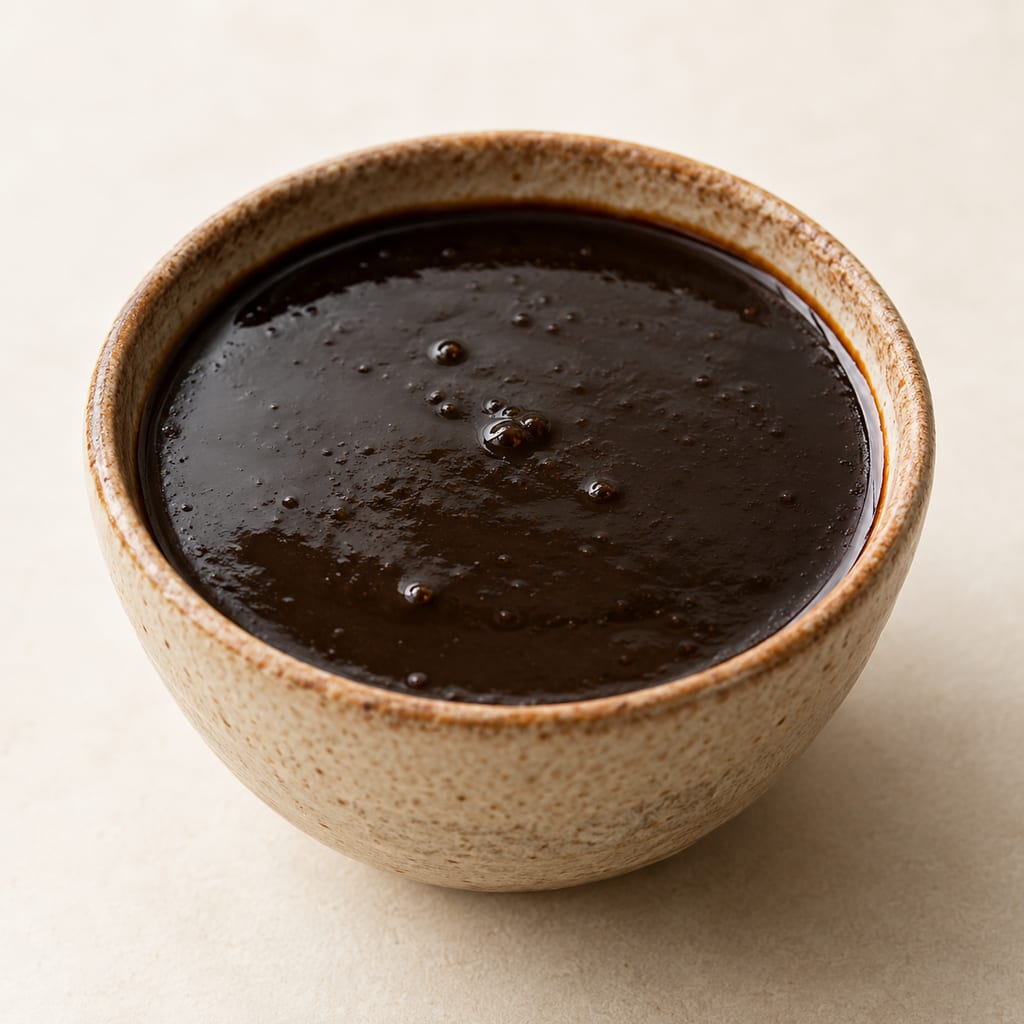
Tucupi negro is a dark, pungent sauce that Amazonian Indigenous women make by pressing bitter cassava, settling its starch and simmering the juice for hours until it thickens.
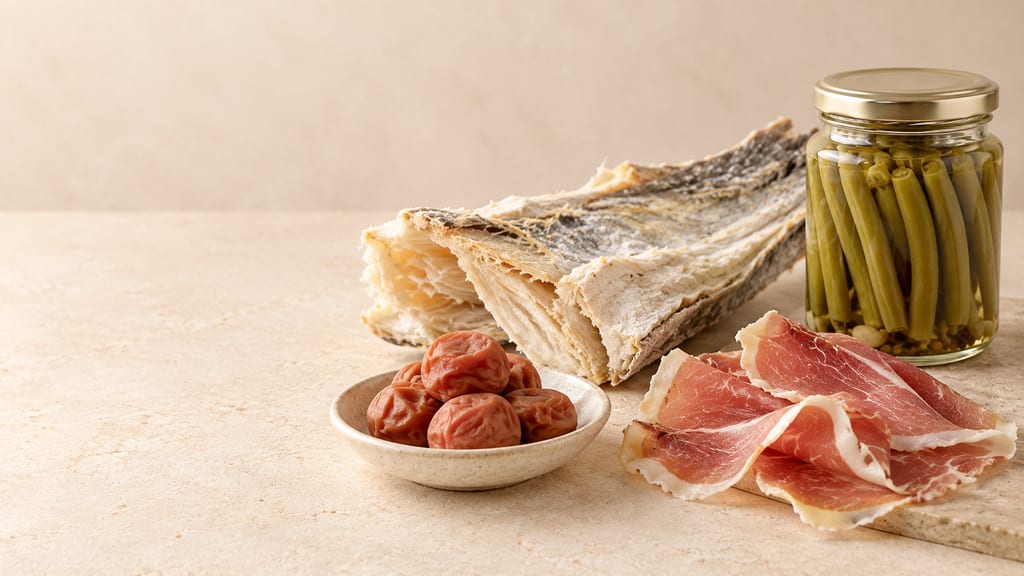
Every preserved food is a stack of barriers against microbes, enzymes, air and time. This is how they work, what a recipe's numbers measure, and how cooks worldwide build them.
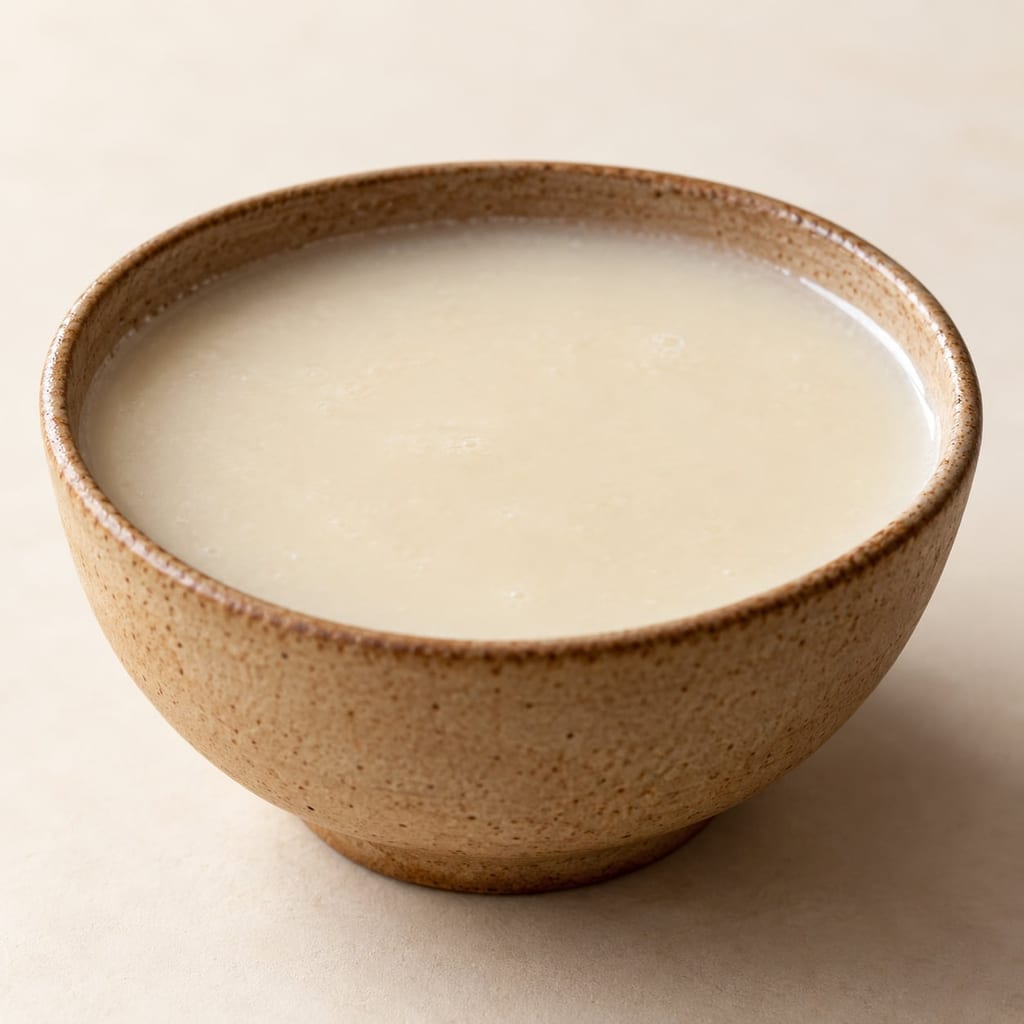
Tarubá is a cassava drink documented in several distinct Amazonian settings. Community-linked accounts describe different beiju-based processes; they do not establish one universal recipe, fermentation culture or safety endpoint.
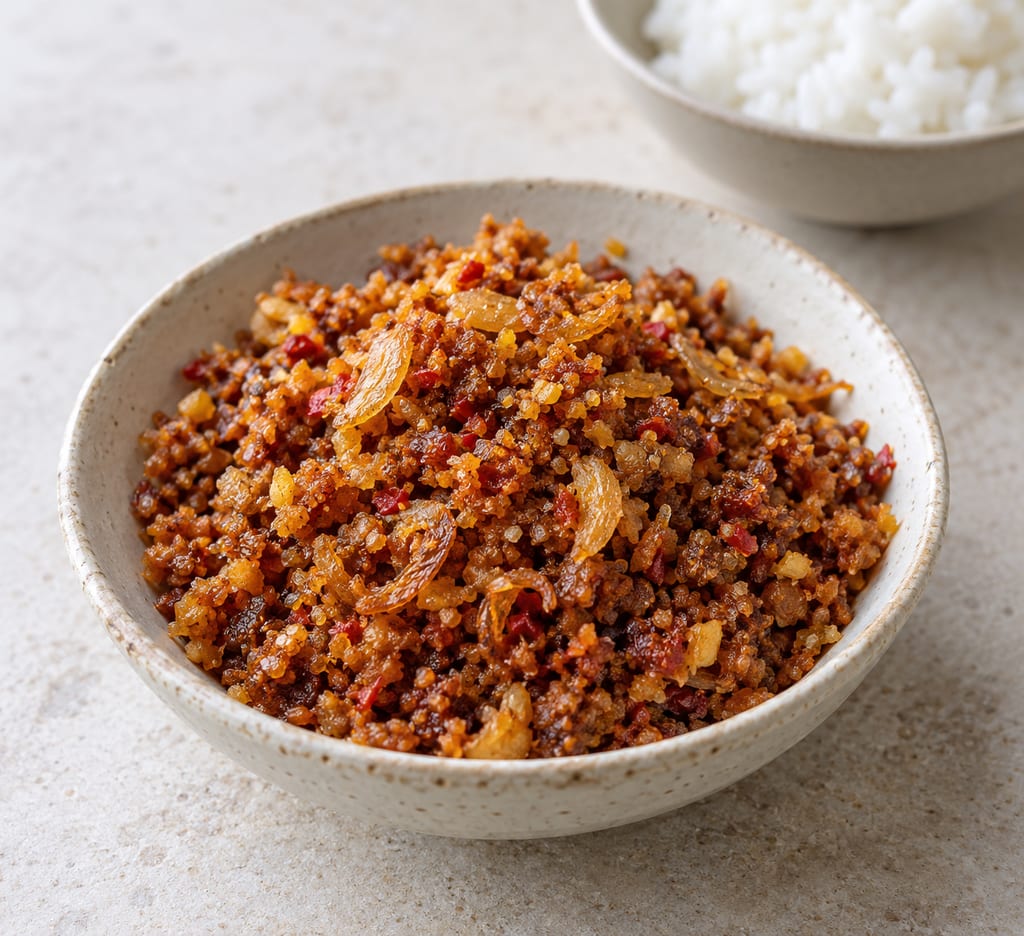
A Myanmar relish of dried shrimp, fried eschalot and garlic, chilli, turmeric, tamarind and ngapi. Naomi Duguid’s published recipe makes about 1 cup; it contains crustacean shellfish.
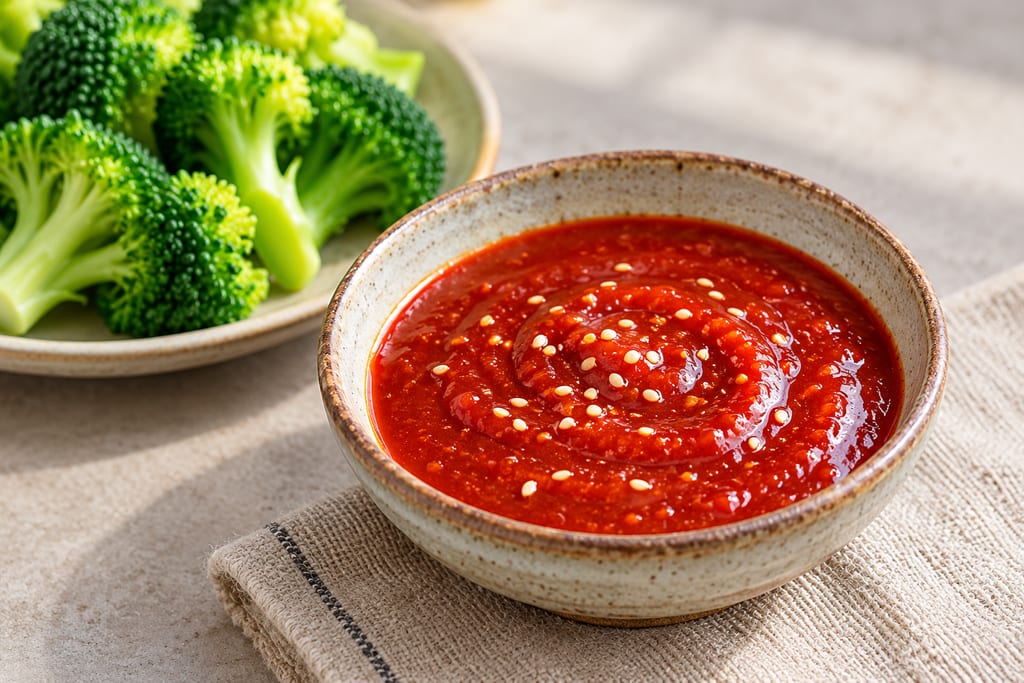
Chogochujang is a Korean sweet-sour sauce made by seasoning gochujang with vinegar and sugar. This development batch adds water and toasted sesame seeds, with optional garlic for the portion being served.
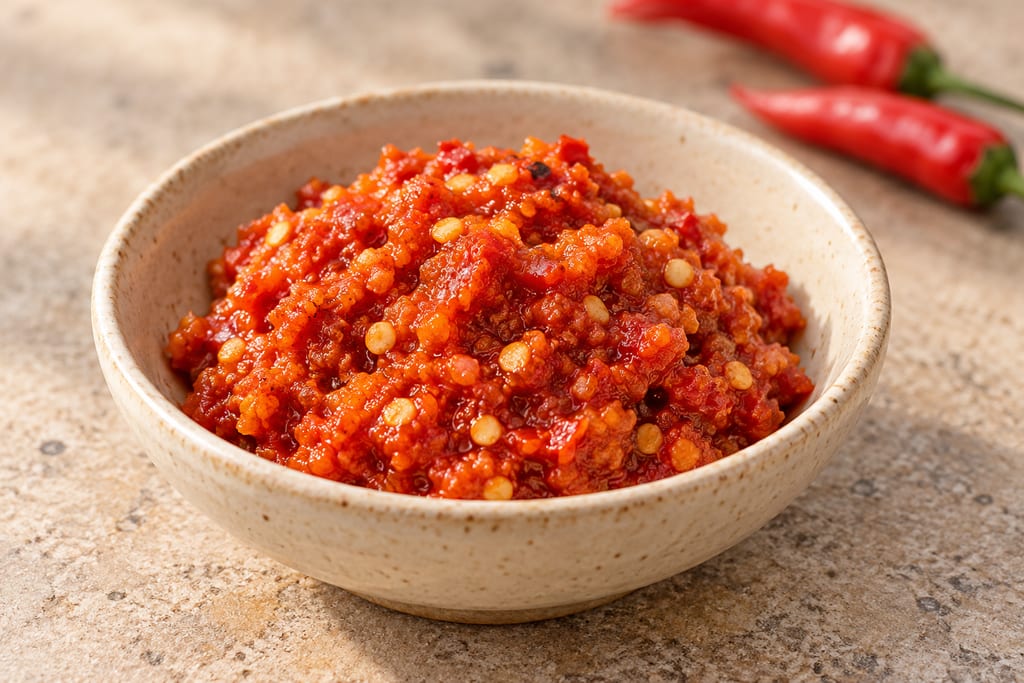
Dinanche, or donne' dinanche, is a Chamorro hot pepper paste of crushed chillies that Guam cooks use on its own or stir into fina'denne'. Its versions range from pepper alone to ones with eggplant, miso or coconut milk.
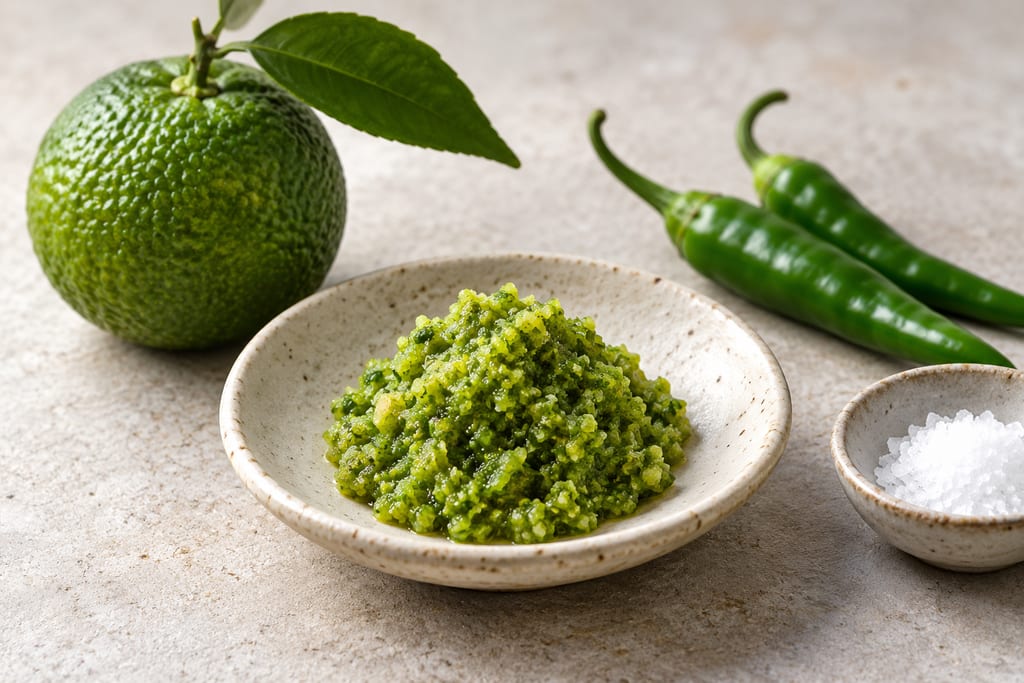
A fresh, uncooked yuzu and green chilli paste inspired by Kyushu’s yuzu kosho, made here as an untested small-batch seasoning rather than a preservation formula.
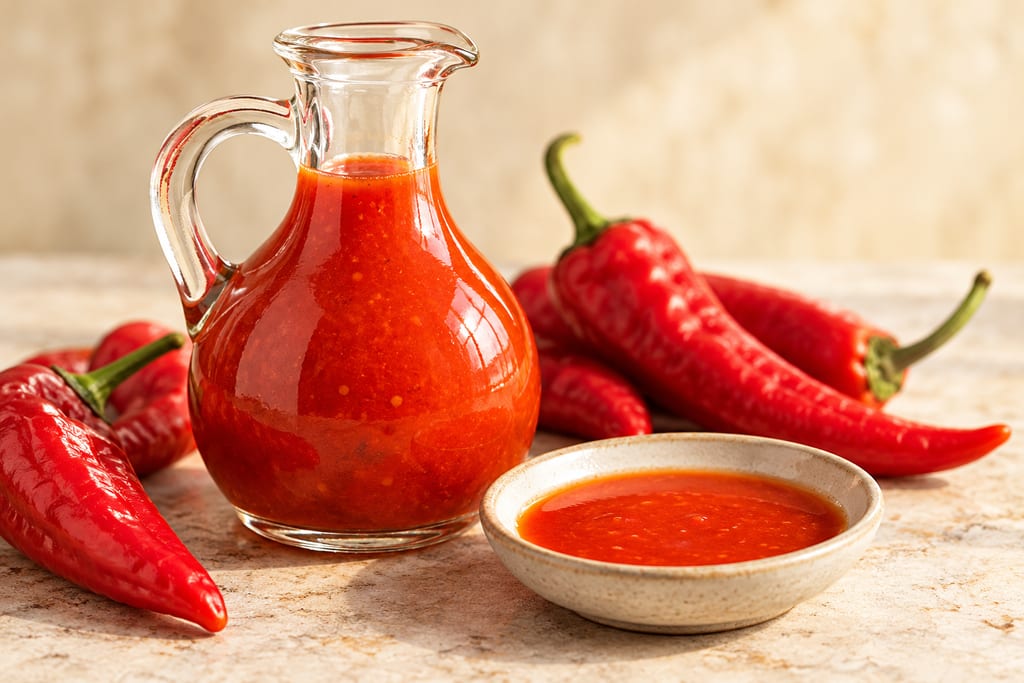
Fresh hot peppers ferment beneath a measured salt brine, then become a bright, tangy sauce blended from the peppers and their liquor.
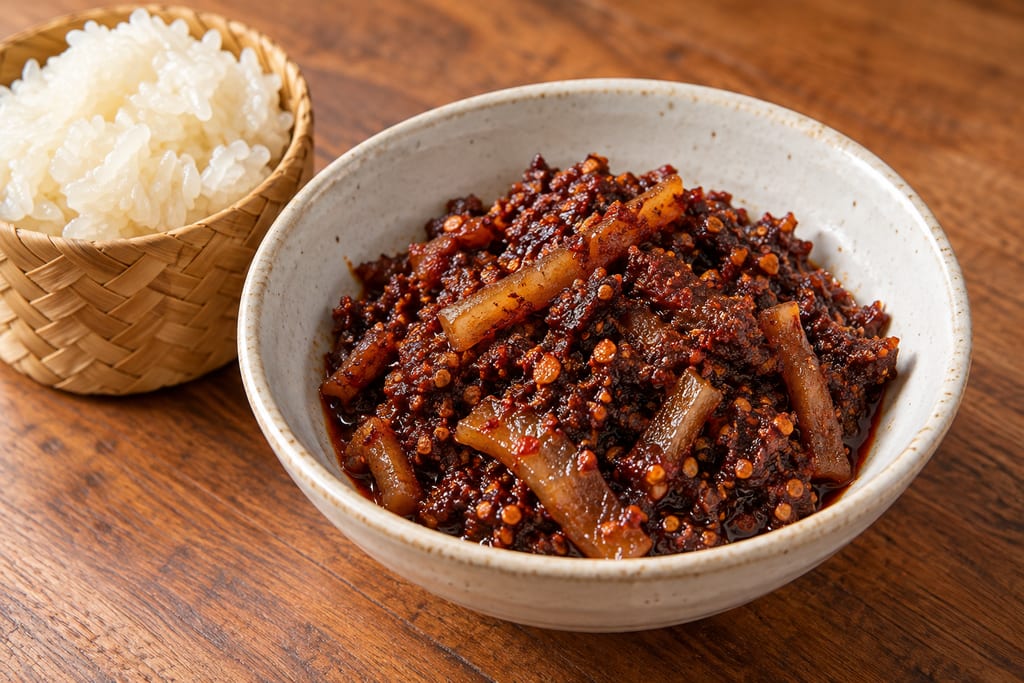
Jeow bong is a Lao paste of dried chilli, shallot, garlic and galangal cooked with buffalo or cow skin, a Luang Prabang specialty eaten with sticky rice and grilled meat.
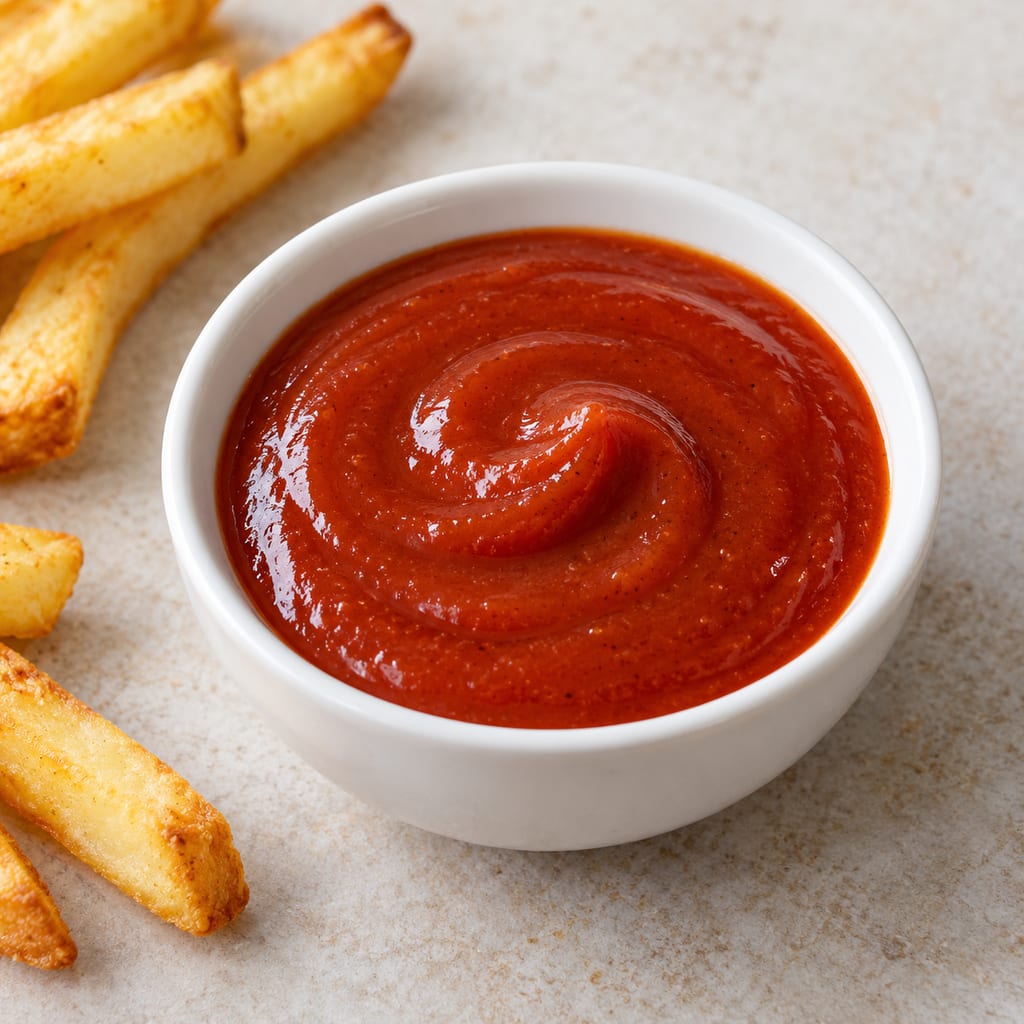
A modern tomato condiment sharpened with the spicy, savoury tang associated with kimchi; this measured version whisk-mixes prepared ketchup and commercial kimchi seasoning.
Documentary account of Louisiana pepper sauces, using TABASCO's published barrel-aged commercial process as one specific example; the source does not provide a validated home recipe.
No community contributions have been published for this entry yet.
Sign in to contribute. Published comments and photos are free to read.
WikipediaBackground · History
TucupiTucupi is a yellow sauce from wild manioc in the Brazilian Amazon
Dishes: pato no tucupi and tacacá
The origin account is an uncited legend
Cited in: A yellow, sour liquid from manioc; From poisonous root to sauce; A fermented liquid and its acid; Dishes of Pará; Indigenous knowledge and modern production; What remains open
New WorlderMethod · History · Safety
The Obscure Sauce That Is Changing Indigenous Economies in the AmazonYuca brava is peeled, soaked, pressed and boiled
Raw tucupi is poisonous because of hydrocyanic acid
Indigenous producers and communities in Brazil, Peru and Colombia
Cited in: A yellow, sour liquid from manioc; From poisonous root to sauce; Indigenous knowledge and modern production; What remains open
Ciencia e Tecnologia de Alimentos, SciELO BrazilMethod · Safety
Optimization of parameters technological to process tucupi and study of product stabilityFermentation 12 and 24 h compared; 24 h chosen with 40 min cooking
Cooking under 10 min did not reduce cyanide; 30 to 60 min reduced it
Final product pH 3.71 and 0.65 g lactic acid per 100 mL
Stable for 50 days at 10 degrees Celsius
Cited in: Why cooking matters for safety; A fermented liquid and its acid; What remains open