
Spices and aromatics
Basil
A source-linked overview of sweet basil's culinary names, one Ligurian pesto account, and the limits of UK and Maryland growing advice.
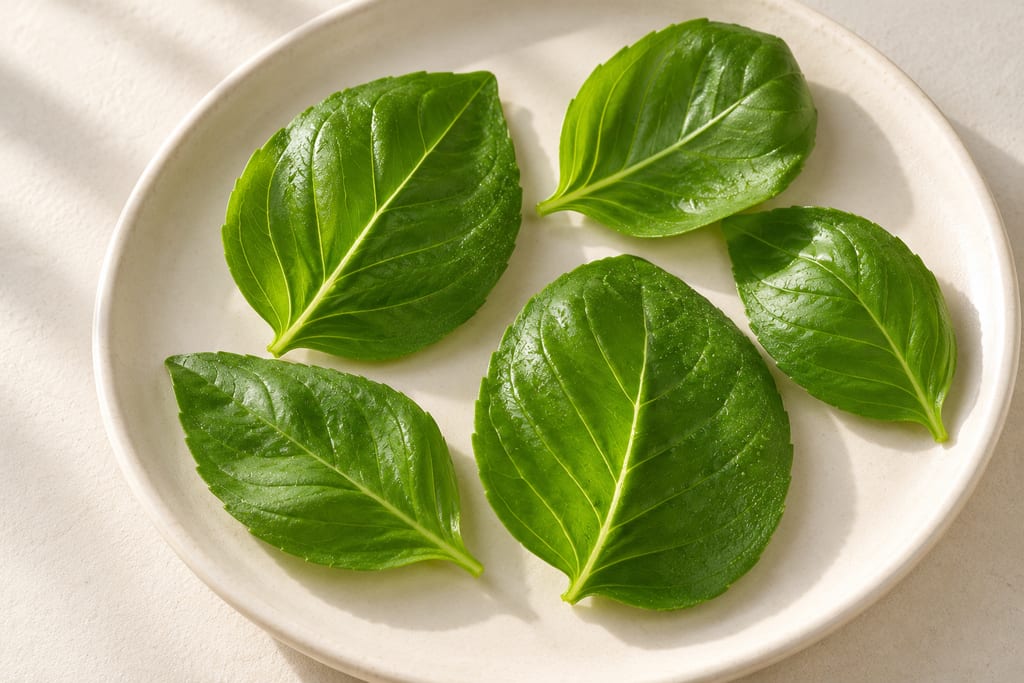
About this ingredient
This account describes the particular species named below. The common ingredient name can also refer to other species or varieties; it does not identify every product or recipe ingredient by itself.
Sources for this section
Names and plant identity
Kew accepts Ocimum basilicum L. and describes it as an annual or subshrub native from tropical and subtropical Asia to northern Australia. Kew's seasonally dry tropical biome label describes the recorded biogeographic context; it is not a growing prescription for a particular garden.
Sweet basil and common basil are names used for this species. The RHS profile lists other common names, synonyms and many cultivated forms with differences in size and colour. A name such as lemon basil does not by itself identify a particular cultivar or guarantee a specific flavour or growing habit. The Ligurian pesto source uses the narrower ingredient name Basilico Genovese DOP; that named ingredient should not be treated as interchangeable with every plant sold as basil.
Cultivars and essential-oil profiles
A PubMed abstract describes an analysis of fresh and freeze-dried leaves from 16 Ocimum basilicum accessions belonging to different varieties and reports five major essential-oil profiles, with little correlation between profile and varietal classification in that sample. The full paper was not inspected. This abstract-level chemical study does not identify a plant sold as basil, establish that cultivars perform alike in cooking, or support using essential oil as a culinary substitute for leaves. The named Basilico Genovese DOP ingredient remains a separate source-defined boundary.
A documented Ligurian pesto use
The Consorzio del Pesto Genovese page, hosted by Liguria's food and tourism portal, presents pesto made with Basilico Genovese DOP. Its ingredient list describes sauce for 600 grams of pasta and names small-leaf basil, olive oil, cheeses, garlic, pine nuts and coarse salt. The page describes a mortar and wooden pestle as the traditional tools and also notes that blenders are used today. This is a specific regional source account, not a general recipe for every basil cultivar.
Sources for this section
The published quantities do not resolve to one batch
The same page lists two garlic cloves and one tablespoon of pine nuts. Its method instead says to use one garlic clove for every 30 basil leaves and to add a handful of pine nuts. The list specifies 50 grams of basil but does not give a leaf count, so the garlic amounts cannot be matched; the pine-nut measures also differ. The page's sequence and texture description can be reported, but these quantities should not be silently combined or repaired into a deterministic source batch. The page gives no measured pesto yield, storage duration or food-safety validation.
Sources for this section
Growing advice depends on the source's region
For UK conditions, the RHS assigns sweet basil its H1C rating. In the RHS scheme this is a tender category for plants grown outdoors in summer; it is not a measured lethal-temperature threshold. The profile describes sheltered, full-sun conditions and moist but well-drained soil, and recommends growing basil indoors as an annual in a container, with spring sowing under gentle heat or summer in-situ sowing. It says a plant may be moved outdoors in summer.
The University of Maryland Extension guide recommends at least six hours of direct summer sun, moist but well-drained soil, and sowing after frost danger has passed because basil is not tolerant of chilly temperatures. It describes Maryland practice, not a universal calendar or survival limit.
Sources for this section
Propagation, harvest and growing limits
The RHS profile describes seed propagation and names both protected spring sowing and summer sowing in place. Maryland Extension describes seed-grown plants, pinching stems, and leaf harvest from about six weeks after planting. These recommendations come from different UK and Maryland contexts; they do not establish a shared planting date, container size, indoor light level or expected yield.
The RHS profile lists conservatory and greenhouse among possible garden settings but does not provide a greenhouse crop protocol or control settings. Maryland Extension warns that warm, wet, humid weather encourages basil downy mildew and names several cultivars it recommends for resistance. These are source-specific cultivation and disease notes, not a universal performance claim. The reviewed pages do not establish a home storage duration or a food-safety endpoint for pesto.
Sources for this section
Research gaps
The pesto source's garlic and pine-nut quantities conflict, and it does not give a basil leaf count, so this article does not provide an executable source-batch recipe.
The UK RHS scheme and Maryland Extension advice do not establish a universal frost threshold, growing calendar or climate envelope.
The reviewed sources do not give a validated pesto storage duration or food-safety endpoint.
Cultivar identity and any equivalence between general sweet basil and the Basilico Genovese DOP ingredient require source-specific evidence.
Places
Unknown
Relationship not established · Place not establishedThe available research does not establish a single origin for this ingredient.
Community
No community contributions have been published for this entry yet.
Share what you made
Sign in to contribute. Published comments and photos are free to read.
Sources
Royal Botanic Gardens, Kew, Plants of the World OnlineIngredient research
Ocimum basilicum L.Cited in: About this ingredient; Names and plant identity; Cultivars and essential-oil profiles; Research gaps
Royal Horticultural SocietyIngredient research
Ocimum basilicum | sweet basilCited in: Names and plant identity; Cultivars and essential-oil profiles; Growing advice depends on the source's region; Propagation, harvest and growing limits; Research gaps
University of Maryland ExtensionIngredient research
Growing Basil in a Home GardenCited in: Growing advice depends on the source's region; Propagation, harvest and growing limits; Research gaps
Consorzio del Pesto Genovese, hosted by Mangiare in LiguriaIngredient research
Pesto Genovese – Ricetta ufficiale del ConsorzioCited in: Names and plant identity; A documented Ligurian pesto use; The published quantities do not resolve to one batch; Research gaps
Phytochemistry; bibliographic record and abstract indexed by PubMedIngredient research
Infraspecific taxonomy and essential oil chemotypes in sweet basil, Ocimum basilicumCited in: Cultivars and essential-oil profiles; Research gaps