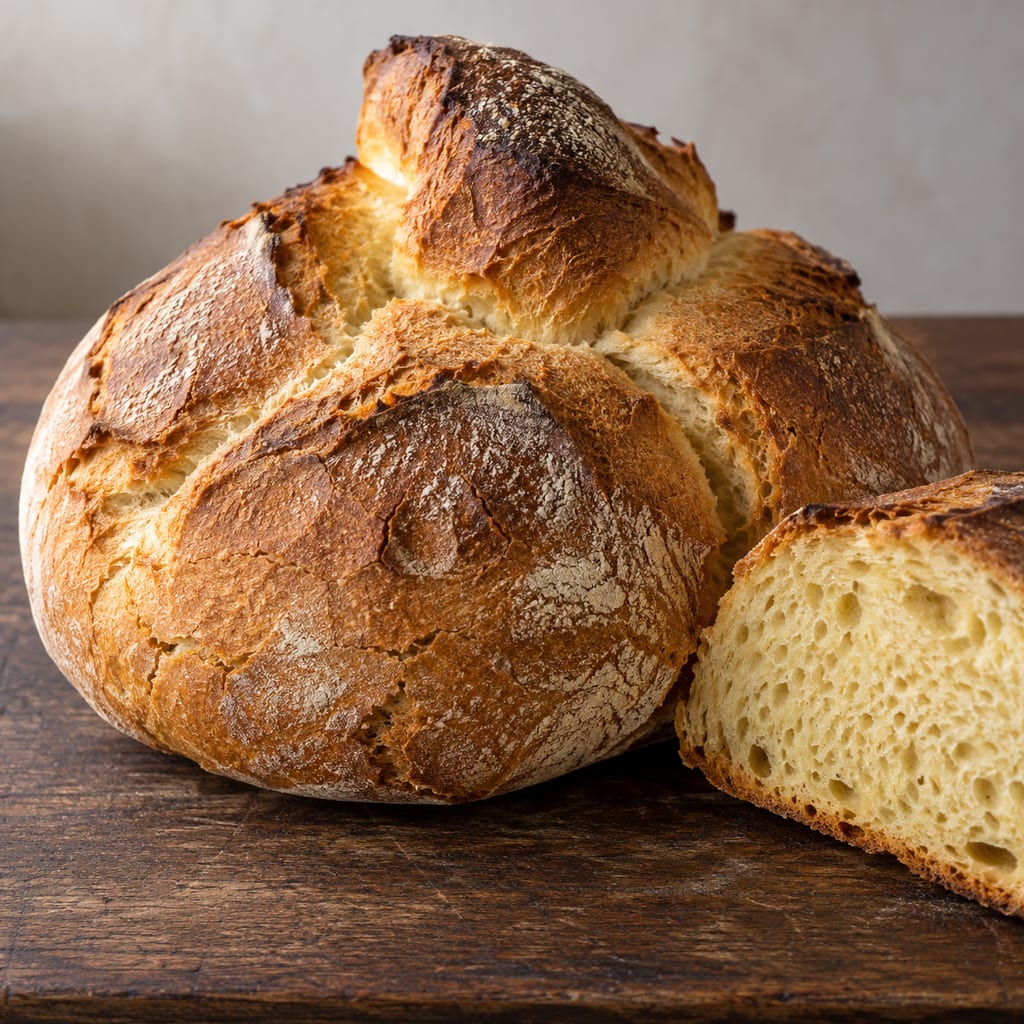
Pane di Altamura DOP: registered production method
A protected durum-wheat sourdough bread documented by a commercial production specification. The official 100 kg batch and oven process are recorded without inventing a household scale.
 FermenteaWhere food goes to change
frise
Puglian wheat-and-semolina bread rings are baked, split, then dried in a second bake; briefly moisten and top them before serving.
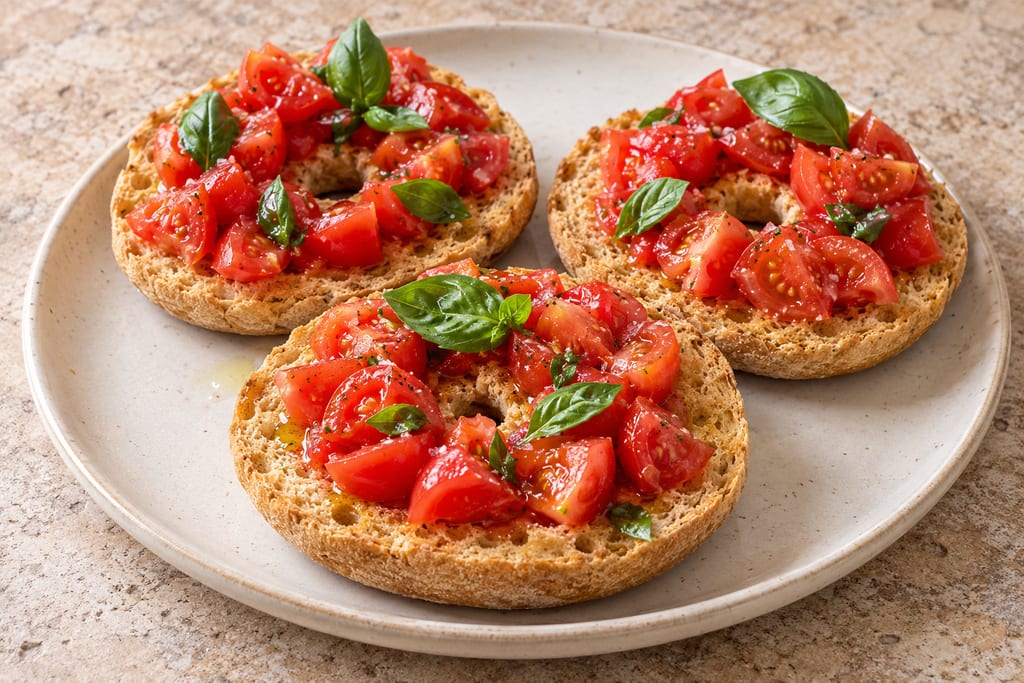
Friselle are ring-shaped breads baked once as rings, cut horizontally and baked again until dry and crisp. Puglia's regional PAT project describes both wheat and barley versions and links the bread with simple regional meals. Cookist identifies this measured recipe as Puglian and says friselle are also widespread in Campania and Calabria. Those associations do not make every regional form identical, and neither source establishes a precise birthplace or first historical date.
This is a contemporary home-oven formula by Tamara Mitrangolo for Cookist. It blends 300 g Italian type 00 wheat flour with 200 g remilled durum semolina, then adds 300 ml room-temperature water, 10 g fresh yeast, 10 g salt and 5 g sugar. The regional PAT entry describes a separate formula: 500 g wheat and/or barley flour, 300 ml water, 10 g salt and 5 g yeast or backslopped dough. Its shaping is spiral-like, and its first bake is much longer; it gives no duration for the final 150 °C drying stage. Do not combine those flour, leavening, shape or oven details with the Cookist batch.
The Cookist dough first rises covered in an unheated oven with the light on for about two hours, until doubled. It is folded, divided and shaped as multiple short rings, then left to rise again until doubled. That second rise has no fixed time. The first bake uses a static 200 °C oven for about 15 minutes until the rings are lightly golden. The rings are then split horizontally and baked cut-side up at 180 °C for about 25 minutes. This second bake is the characteristic drying step; the method does not measure water activity or validate a shelf life.
The published formula estimates about 24 friselle, but ring size depends on how the dough is divided and cut. The recipe also lists tomatoes, basil, olive oil and salt for serving without fixed amounts. Dip only the pieces being served briefly in cold water, then add lightly pressed tomato, olive oil, salt and basil. Keeping the finished rings dry until serving preserves their crisp texture; this page gives no validated storage duration.
Friselle can be made with other flours and leavening methods. The regional PAT source explicitly includes barley and mentions either yeast or a backslopped dough, while Cookist notes sourdough and wholemeal variants. Those are documented variations, not swaps tested in this measured recipe. The formula here stays wheat-based, fresh-yeast-leavened and baked in two oven stages.
PAT Puglia describes frisella as a regional double-baked bread made from wheat and/or barley and recounts its use by sailors and in simple regional meals. Cookist describes the Puglian bread as also widespread in Campania and Calabria. These sources document regional associations and practices, not a dated first attestation or a single formula for all southern Italy.
Yield 24 friselle (approximate) · Scaling: source batch only
Flour may carry harmful bacteria; uncooked dough should not be tasted.
Hazard sourceThe two baking stages require handling hot trays and bread.
Hazard sourceKeep raw flour and dough away from ready-to-eat toppings, wash hands and work surfaces after handling, and do not taste uncooked dough.
Control sourceUse oven mitts when loading or removing trays and let the bread cool before packing it dry.
Control sourceContains wheat (gluten).
Keep friselle dry until serving; briefly moisten only the pieces being eaten. No validated storage duration is claimed.
Sources identify this twice-baked bread with Puglia; they do not establish a precise place of origin.
Cookist describes friselle as also widespread in Campania; this does not claim that every local formula matches this Puglian recipe.
Cookist describes friselle as also widespread in Calabria; this does not claim that every local formula matches this Puglian recipe.
A protected durum-wheat sourdough bread documented by a commercial production specification. The official 100 kg batch and oven process are recorded without inventing a household scale.
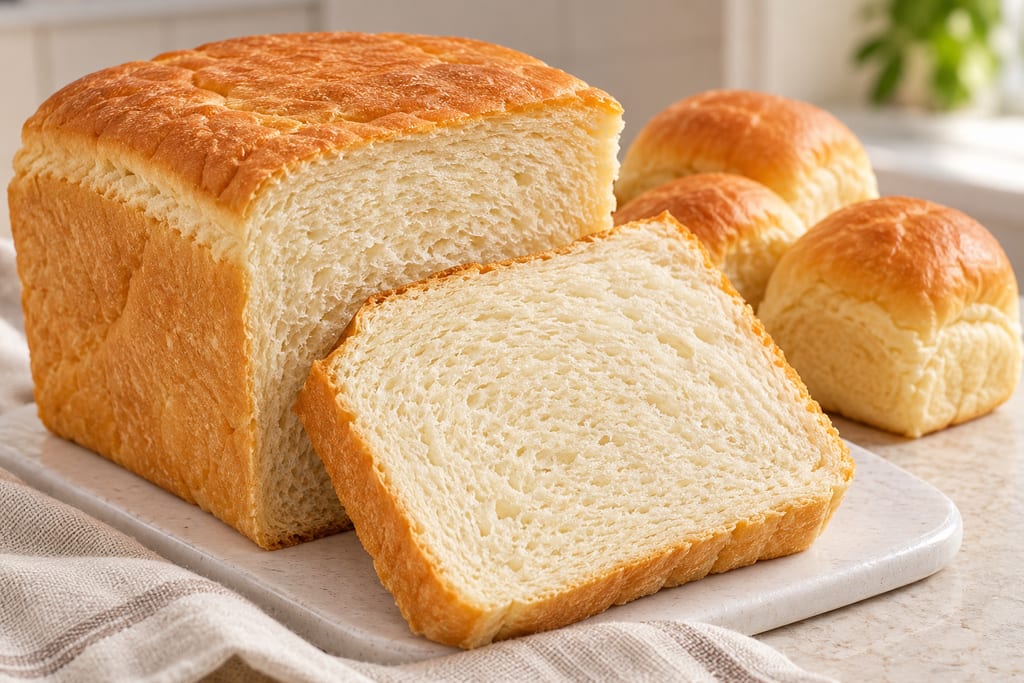
This softer home-style Agege bread uses a scalded flour paste, an enriched yeast dough and a 9×5-inch loaf pan, with rolls from the extra dough.
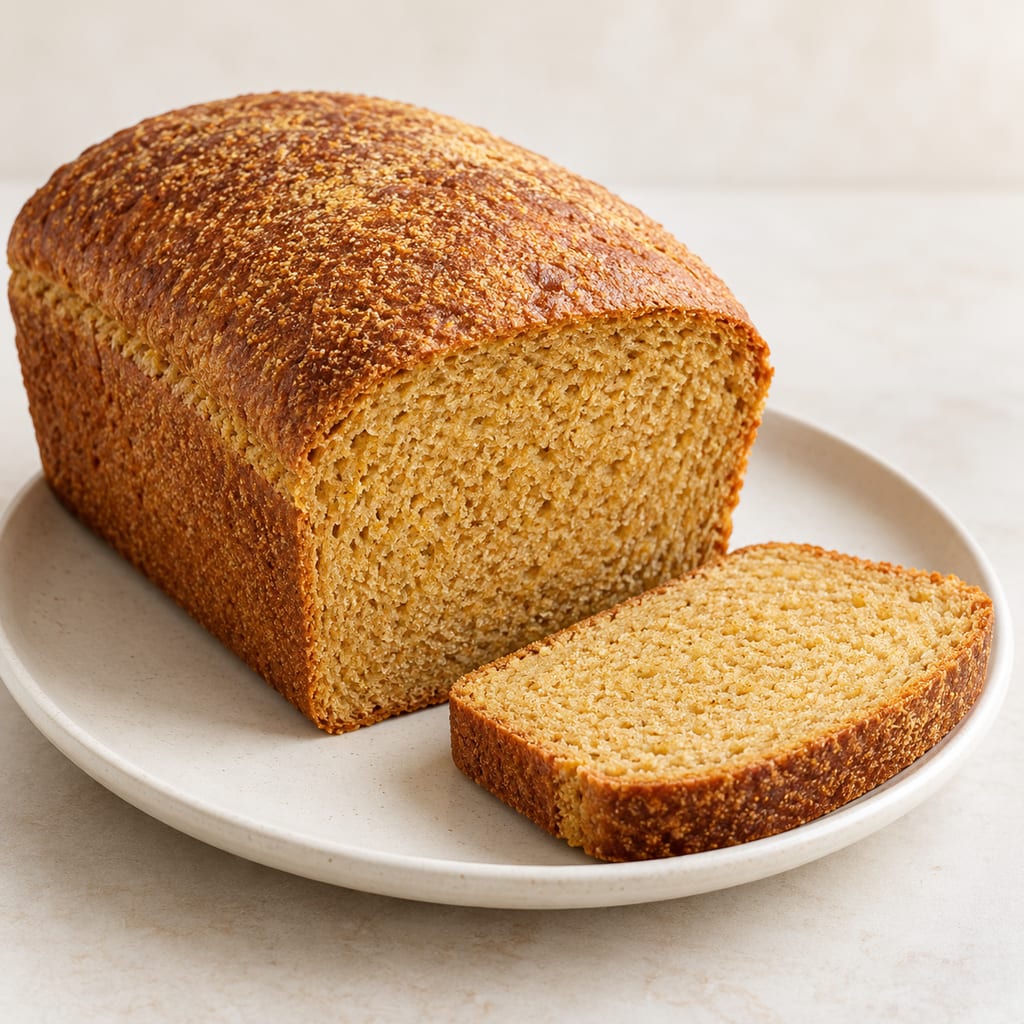
Anadama is a New England yeast loaf made with wheat flour, cornmeal and molasses. Scalded cornmeal enriches the dough, while molasses lends sweetness and a dark crust; it is especially good toasted or beside soup and baked beans.

A yeast-raised wheat ring shaped from a firm dough, briefly boiled and baked. This source-batch formula gives a gently malted crust and a chewy crumb.
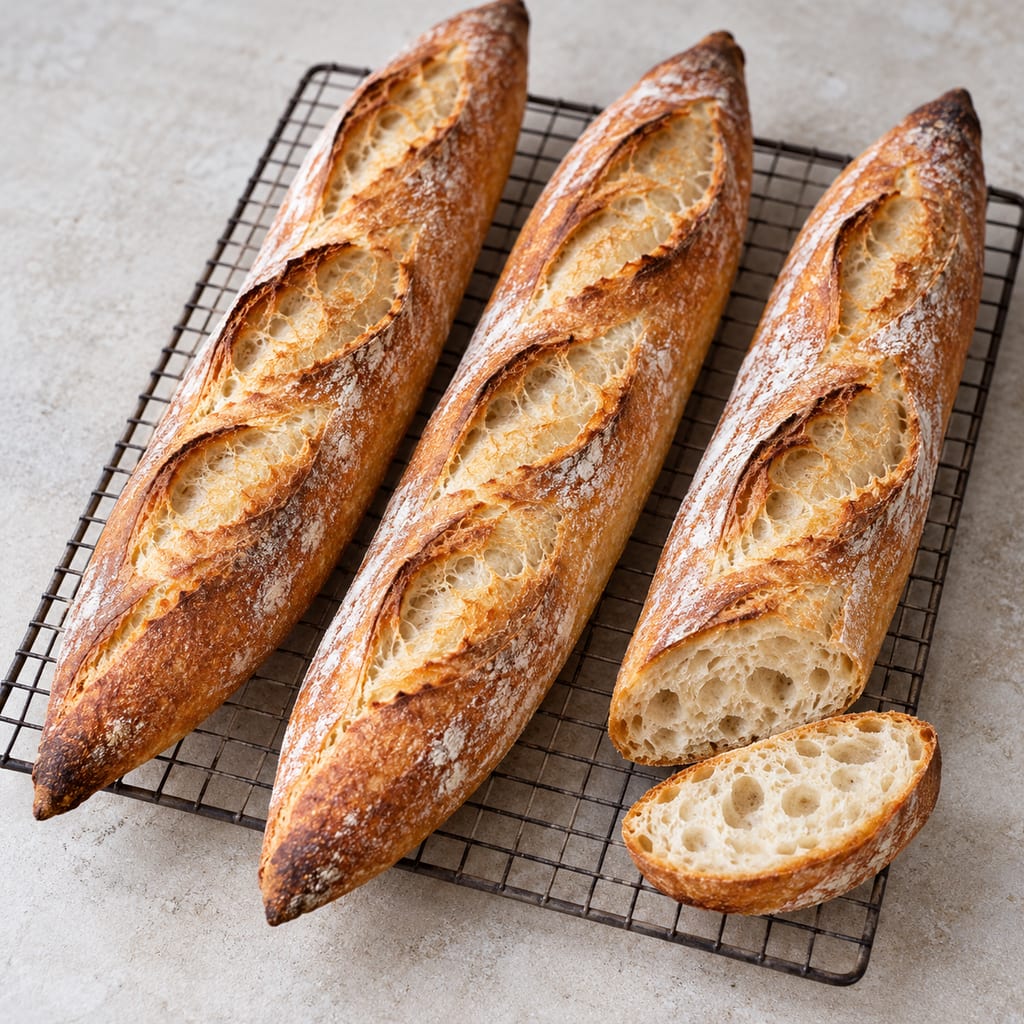
Three long, crusty wheat loaves made with an overnight yeast poolish, shaped by hand and baked with steam for a crisp crust.
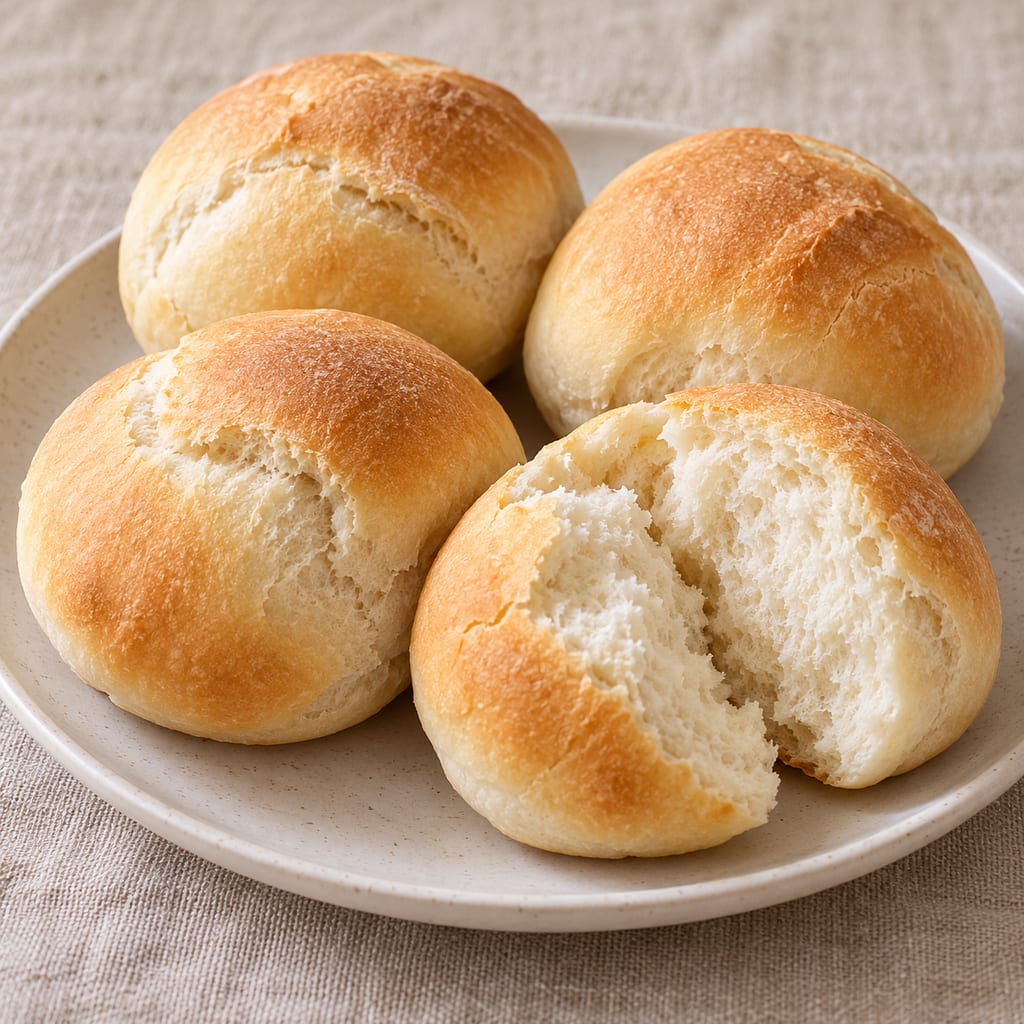
A lightly salted, yeast-raised Barbadian roll, baked in a dozen-roll home batch and often split for cutters.
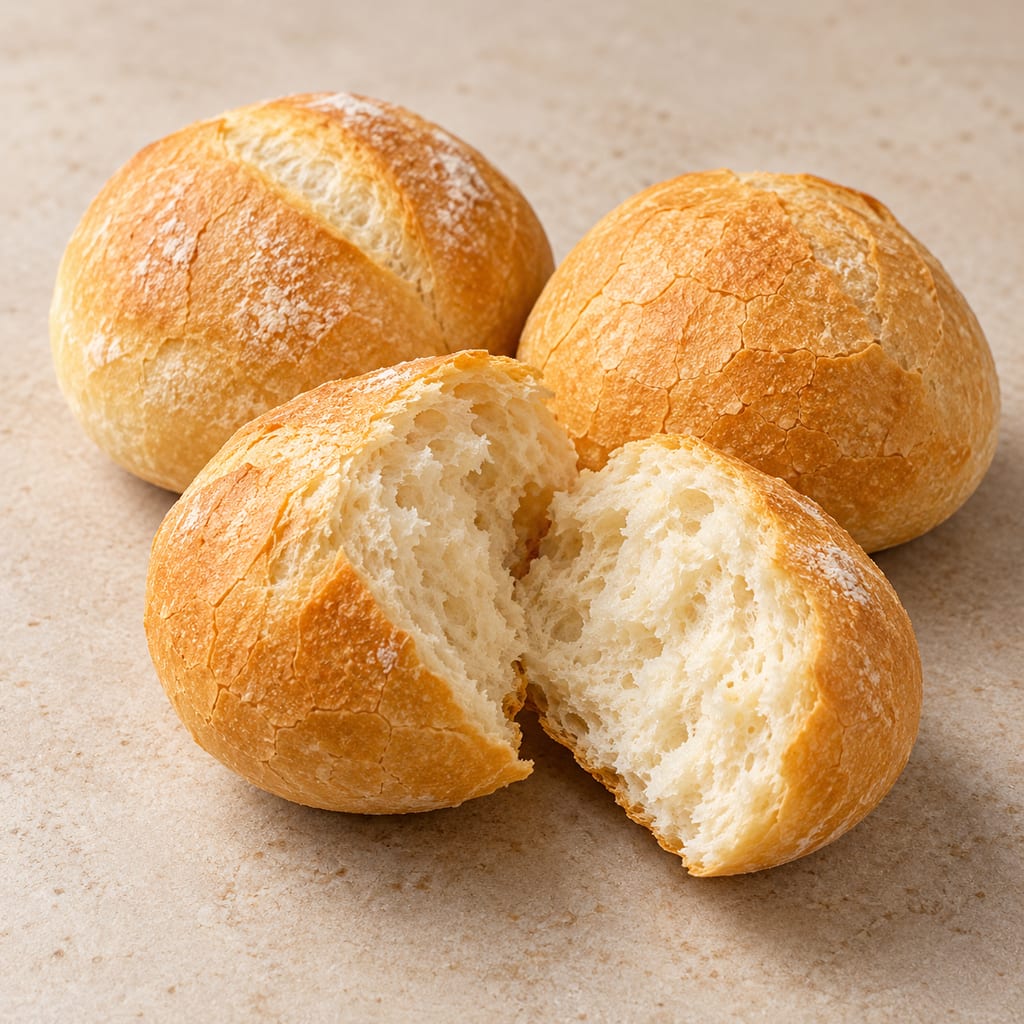
A crisp Belgian roll made from a supplier’s Croc-flour dough, mixed by hand or machine, proofed in rounds and baked with steam.
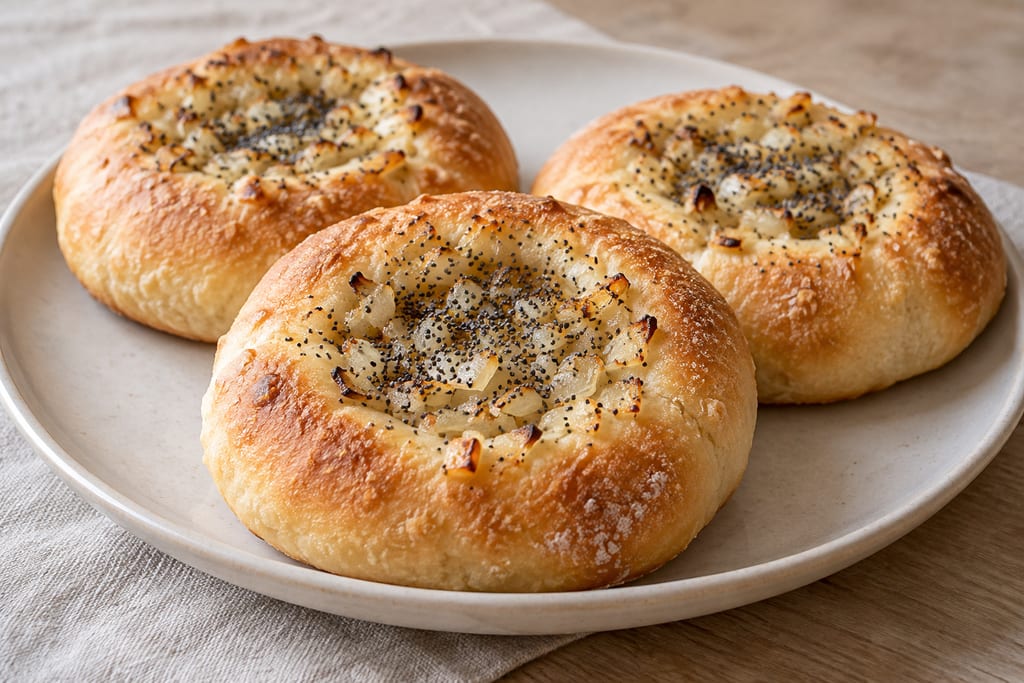
Bialys are soft, yeasted wheat rolls baked without boiling, each shaped with an onion-filled central depression instead of a hole.
A measured, commercial-yeast home method for Guadalajara-style birote salado, with a six-hour preferment, shaped rolls and a two-temperature steam bake. This formula contains no egg.
No community contributions have been published for this entry yet.
Sign in to contribute. Published comments and photos are free to read.
CookistInspiration · Method
Friselle pugliesi: la ricetta originale delle friseThe article estimates about 24 friselle from 300 g type 00 flour, 200 g remilled durum wheat semolina, 300 ml room-temperature water, 10 g fresh yeast, 10 g salt and 5 g sugar.
It specifies a first covered rise of about two hours until doubled, shaping as rings and a second rise until doubled.
It gives a static first bake at 200 °C for about 15 minutes, followed by horizontal splitting and a second bake cut-side up at 180 °C for about 25 minutes.
It briefly dips the dried friselle in cold water and tops them with pressed cherry tomatoes, olive oil, salt and basil; it also says formulas vary by production area.
Cited in: Twice-baked bread from Puglia
PAT Puglia (Regione Puglia and University of Bari Aldo Moro project)History · Method
La frisella: il bis-cotto di Puglia dal gusto d’estateThe regional product source describes frisella as a circular twice-baked bread, traditionally made from barley and/or wheat flour, with color depending on flour choice.
It says the product is commonly eaten with tomatoes, extra-virgin olive oil and salt and reports a historical sailor association; this is the source's contextual account, not a dated first attestation.
Its distinct regional recipe specifies wheat and/or barley flour, salt, yeast or backslopped dough and water, shapes spirals, proofs about two hours, bakes about two hours at 200–250 °C, splits diagonally and returns them to 150 °C for drying without stating a second-bake time.
Cited in: Twice-baked bread from Puglia
U.S. Food and Drug AdministrationSafety
Handling Flour Safely: What You Need to KnowRaw flour may contain harmful bacteria; do not taste uncooked flour or dough.
Keep flour and dough separate from ready-to-eat foods and wash hands, utensils and surfaces after handling.
Cited in: Twice-baked bread from Puglia