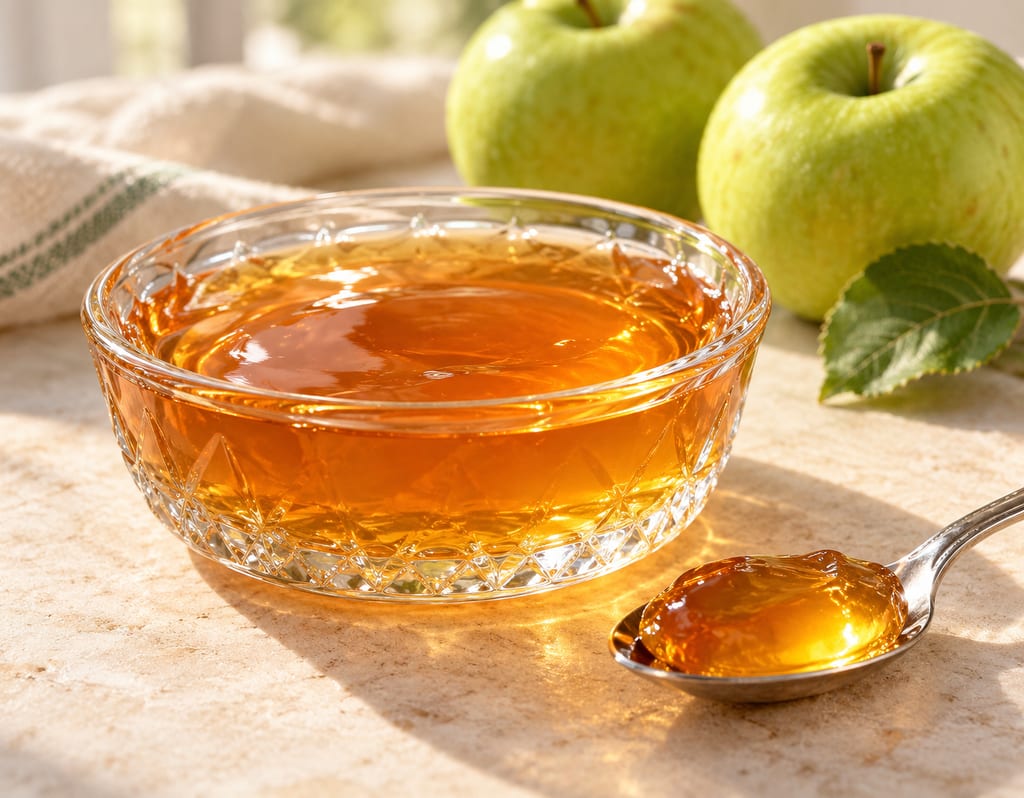
Apple jelly without added pectin
A clear jelly made from tart-apple juice, sugar and optional strained lemon juice. This batch uses a stated fruit-to-water preparation, gel endpoint, hot fill and altitude-adjusted boiling-water process.
 FermenteaWhere food goes to change
Sugar sources
Sugar is a family of sweeteners with different forms and food roles; refined white sucrose may come from cane or beet, while less refined forms add other flavours and moisture.
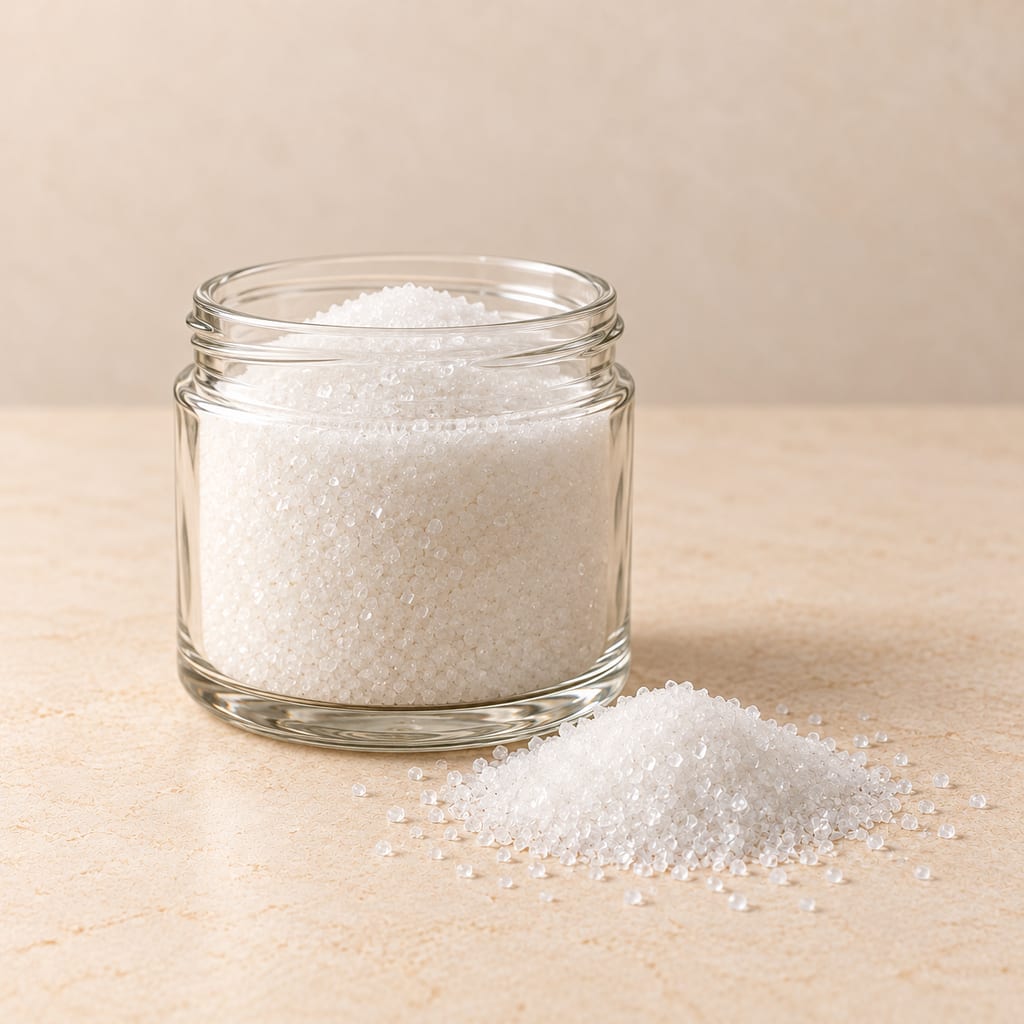
Sugar is a kitchen name for several sweeteners. The white granules most cooks picture are sucrose, a molecule made from glucose and fructose; cane stalks and sugar-beet roots are its two main commercial crops. Brown sugar, syrup and molasses bring other flavors and different amounts of water, so a recipe's word sugar needs its accompanying form.
Sugar’s history is also a story of crops moving across climates. Cane grew in South and Southeast Asia long before it became a staple of Atlantic commerce; methods for extracting and crystallizing it spread through trade and changing technologies. In Europe, sweeteners were costly enough to be used sparingly, but plantation production transformed sugar into a mass commodity. That transformation is inseparable from coercion. An eighteenth-century Boston merchant's ledgers and letters connect sugar and molasses shipments with salted cod, rum and the traffic in enslaved people. The same routes carried food for plantation workers and wealth back to merchants. A crystal on the table could thus be the end of a chain stretching from fields and boiling houses across several Atlantic ports.
Making plantation sugar demanded labor in field and boiling house. Enslaved people planted, cut, milled and boiled cane under coercion; these were demanding steps needed before sugar could be sold as a clean white food. Formal abolition did not erase unequal labor systems overnight. In parts of the Caribbean, plantation owners recruited indentured workers from India after emancipation. Registers of Indian arrivals in Trinidad cover 1845 through 1917, recording people who came to work in a transformed but still unequal plantation economy. Sugar's household convenience was built through land conversion, industrial processing and human labor, even when the finished crystals made that work invisible.
Sugar’s crop geography still follows climate. Cane requires warmth and a long growing season; beet can grow in temperate regions. In the United States, for example, cane production is concentrated in Florida, Louisiana, and Texas, while beet production is more widely distributed across temperate states. A packet bought elsewhere may come from another crop or region. Its origin matters to the people and places in that supply chain, even when refined sucrose behaves much the same at the stove.
Refined table sugar is sucrose, a molecule built from glucose and fructose joined together. Chemically it is a disaccharide, C12H22O11. A jar of familiar white crystals can have begun as either a cane stalk or a beet root. Sugarcane is a tall perennial grass grown in tropical and subtropical climates; it is planted from stalk cuttings, takes roughly one to two years to mature, and can produce several harvests from the original planting. Sugar beet is a biennial species grown in temperate regions; growers harvest the sucrose-rich root in its first year. Harvested cane must be processed promptly as its sucrose deteriorates; beet roots likewise move from field to factory for extraction.
The plant is only the beginning. Cane is crushed to release sweet juice; beet roots are washed, sliced into thin strips called cossettes, and extracted with hot water. The juice is cleaned and concentrated, then sugar crystals are separated from the remaining syrup. Each route leaves its own byproducts, including molasses and fibrous plant material. After refining, the familiar white crystals from either crop are sucrose. A recipe rarely needs a different method because the packet says “cane” or “beet.” The more consequential distinction at the stove is whether the sugar is refined and dry, or still carries enough molasses, water, or other ingredients to alter flavor and texture.
A common brown sugar is refined white sugar with molasses mixed in; other brown sugars retain more of the cane syrup during less complete refining. That molasses gives a deeper aroma and softer, clump-prone texture. Light and dark brown sugars vary in molasses intensity; where the recipe relies on clean, neutral sweetness, white granulated sugar is the steadier choice. Powdered sugar is ground sucrose blended with a little starch to keep it from clumping. It dissolves quickly and is useful for icing, but that starch can cloud brines and alter a clear syrup. Syrup is sugar dissolved in water or naturally sweet plant juice; it spreads sweetness through liquid more quickly than crystals. Molasses and cane syrups carry stronger flavors and more of the original plant’s character. Each is a real ingredient, not simply a different package of the same thing.
Sweetness is the most immediate job. Sugar also softens sourness and bitterness, making fruit, citrus, vinegar, and spices feel more rounded. In a pickle, a measured spoonful can make acidity more pleasant and keep sharp flavors in balance. There, sugar contributes to taste; the acid and tested processing method carry the preservation work. The fact that a pickle tastes less sour after adding sugar does not mean that its acidity has disappeared, nor that sugar can replace the vinegar or fermentation conditions specified by a recipe.
In a syrup, sugar dissolves into the water phase and gives it body. When syrup surrounds cut fruit, it sweetens and coats the pieces; the syrup strength is a matter of recipe and intended result, with a light syrup leaving fruit less sweet than a rich one. Fruit itself releases juice, so sweetness and texture evolve as the pieces sit. Dry sugar placed against cut fruit can draw out that juice before there is enough liquid to call it a syrup. In another preparation, dissolving sugar in water first sends sweetness around every piece at once. The order changes the first contact between fruit and sugar. Use clean, dry crystals and dissolve them fully for an even syrup; undissolved grains can settle and make sweetness uneven.
Jam and jelly ask sugar to do more. In a conventional high-sugar preserve, sugar binds water and lowers water activity, reducing how much water is available to many microbes. It also helps pectin molecules come together into a gel. Heat evaporates some water and helps distribute fruit and dissolved sugar; pectin, acidity, and concentration then work in concert to create a spread that holds its shape. A reduction in sugar can change that balance, leaving a softer set and a product with a different storage life. Low-sugar pectins are formulated for a different balance. They make reduced-sugar fruit spreads possible, but do not make every standard jam recipe adaptable by simply removing sugar.
Concentrated sugar is a preservation hurdle, not sterilization. Some molds and sugar-tolerant yeasts can grow where many other microbes cannot. What matters to preservation is the concentration of sugar left in the finished liquid, after fruit releases juice and some water evaporates. A heavy scoop at the start cannot by itself tell a cook the final concentration, and even a sweet preserve can develop mold. Fruit spreads are made with a balance of sugar, acidity, heat and pectin suited to that food. A vinegar pickle or fruit ferment has a different balance, so its sugar cannot be chosen from a jam rule.
Baking gives sugar still more work. It dissolves into batter or dough, adds sweetness, and encourages browning at the hot surface. It can hold moisture in cakes and cookies, contributing to tenderness, and crystals can trap air when beaten with butter. In yeast dough, sugar may feed yeast, though flour itself supplies fermentable sugars as enzymes act on starch. A very sweet dough can ferment differently from lean bread because concentrated sugar draws water and increases osmotic stress on yeast. More sugar does not automatically mean a faster rise. Timing depends on the formula, yeast, temperature, and dough structure.
Sucrose is not a flavoring that sits outside fermentation. Yeasts and some bacteria can use it as a food substrate. In many cases, enzymes first split sucrose into glucose and fructose; microbes then convert available sugars into products such as carbon dioxide, alcohol, or organic acids, depending on organism and conditions. This is why sugar can produce lift in dough, alcohol in a beverage, or acidity in a controlled bacterial process.
But adding sugar alone does not decide what will grow or what the finished food will become. Microbes differ in which sugars they use, how quickly they use them, and how they tolerate salt, acid, oxygen, and concentrated sweetness. High sugar may feed fermenters while also slowing them through osmotic stress. In fruit ferments, fruit supplies its own sugars and acids; added sugar changes the substrate and liquid balance. It may support a desired fermentation, intensify sweetness, or leave more sugar behind if the chosen culture cannot consume it under the conditions. The visible result can range from lively bubbles and a sharper aroma to little change at all; the fruit, culture and conditions matter together.
The practical lesson is to follow a formula written for the food and culture in front of you. A controlled experiment with a sourdough bacterium, then named Lactobacillus sanfranciscensis, makes the range of outcomes tangible. As it used sucrose in a medium also containing fructose, the researchers measured lactate, acetate or ethanol, mannitol and a fructan that can affect dough texture. Changing the sucrose concentration changed the balance of products. A household starter contains a different, mixed community, yet the experiment shows why the sugar in a ferment is more than a source of bubbles or a sweetness that simply disappears.
For most recipes, plain granulated sugar is the flexible default: its crystal size is consistent, its flavor is neutral, and it dissolves in warm liquid. When precision matters, weigh it. A cup can vary depending on whether crystals are loosely poured, scooped, or packed, while a scale gives a reproducible amount. Brown sugar is often measured packed because its soft grains hold air differently; powdered sugar's fine particles and starch alter its volume and performance. Follow the recipe’s stated form and measurement rather than swapping by visual volume.
Choose dry sugar with no signs of moisture, insects, or off odors. Store it in a clean, tightly closed container, away from steam and damp cupboards. White granulated sugar may harden into a lump if it absorbs moisture and dries again, but this is generally a texture problem. Brown sugar is more prone to drying and becoming hard because of its molasses content; airtight storage helps preserve softness. If brown sugar has hardened, gentle moisture can soften it, but any piece of bread or fruit used for that purpose should be checked and discarded before it molds.
Added sugar counts as a free sugar in dietary guidance, as do honey and syrups. The World Health Organization recommends that adults and children keep free sugars below 10 percent of daily energy, with a further reduction below 5 percent suggested. Those are population dietary goals; they do not supply a new sugar ratio for a preserve. A cook can consider how much sweet food is eaten while still following the tested formula when preparing a shelf-stable jar.
Substitutions deserve care. Honey contains water and a mixture of sugars, with a distinct aroma; maple syrup adds liquid and characteristic flavor. Molasses and jaggery retain more of the original sugar-making material and can deepen color and taste. They may be welcome in a sauce or marinade, but change the liquid balance and can affect browning or fermentation. In a tested jam, syrup, or pickle, that is a structural change as well as a flavor choice. Non-sugar sweeteners may supply sweetness without lowering water activity, thickening syrup, feeding yeast in the same way, or supporting a pectin gel. For a casual drink or bowl of porridge, adjust to taste. For shelf-stable preserves, use a tested formula designed for the chosen sweetener and process.
Indentureship registers document one later plantation labor history, not sugar's origin.
A clear jelly made from tart-apple juice, sugar and optional strained lemon juice. This batch uses a stated fruit-to-water preparation, gel endpoint, hot fill and altitude-adjusted boiling-water process.
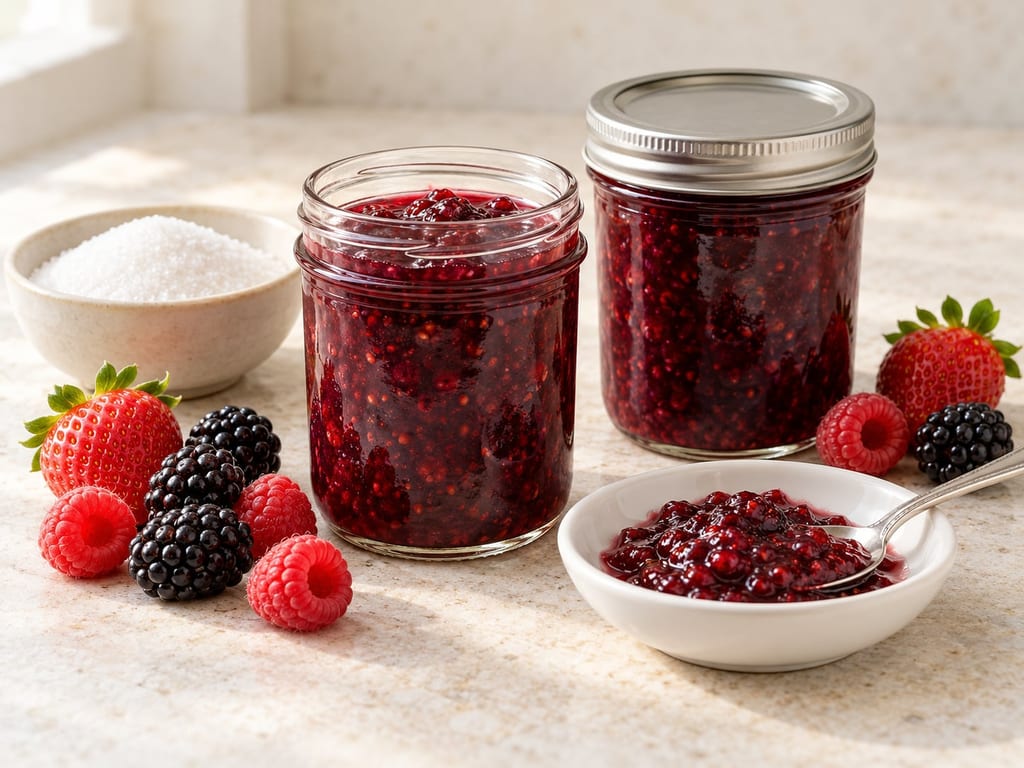
A NCHFP berry jam made without added pectin: crushed berries and sugar are cooked to the desired gel point, hot-filled into sterile half-pint or pint jars, and processed in a boiling-water canner.
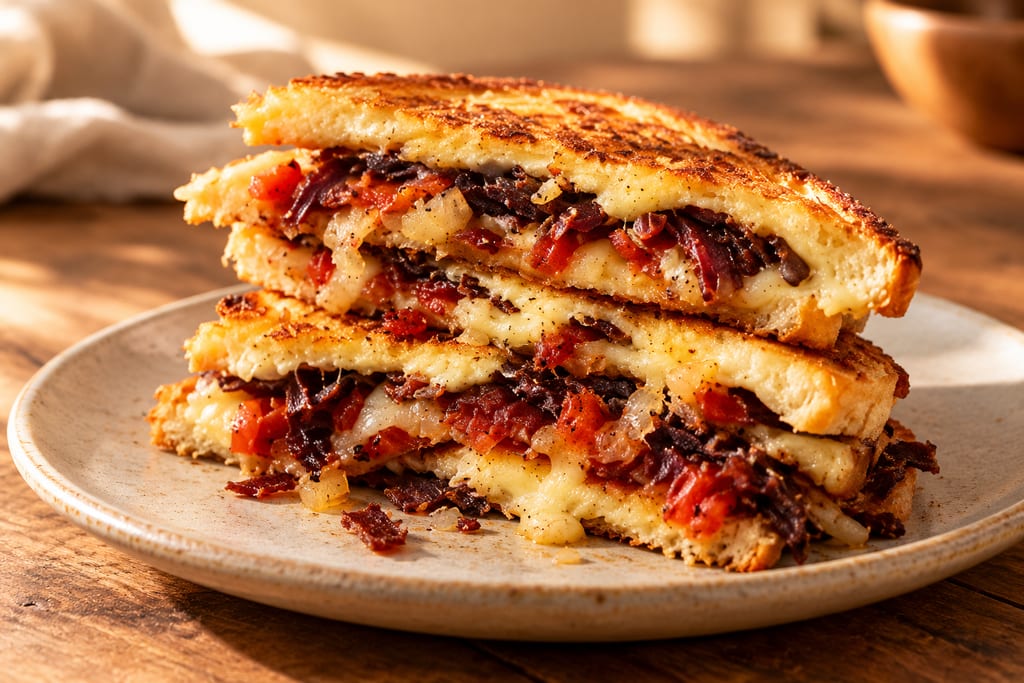
Chopped biltong, sweet onion, cream cheese and Cheddar fill bread toasted in a hinged grid over gentle coals, then finished with biltong dust.
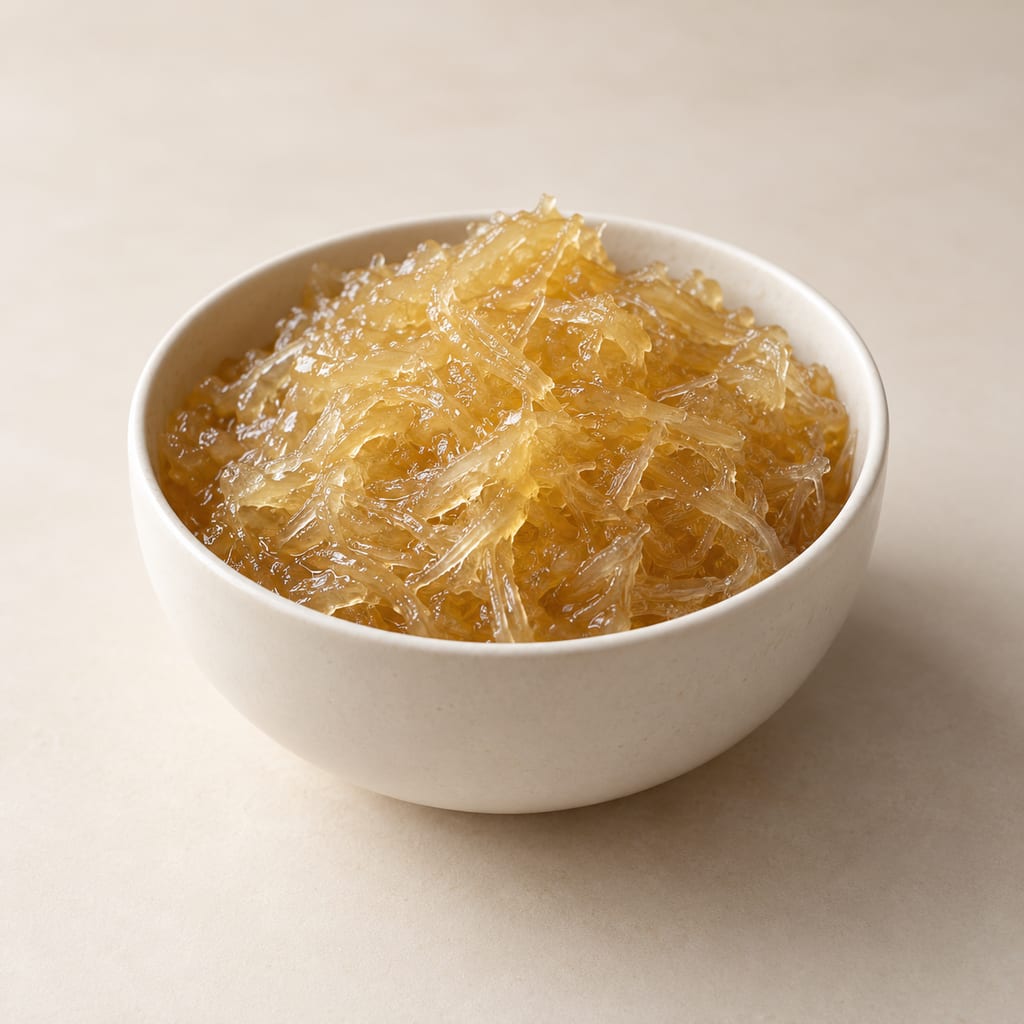
Fine strands of Cucurbita ficifolia cooked in an equal weight of sugar, then portioned for refrigerator or freezer storage. Ordinary orange pumpkin does not give the same fibres.
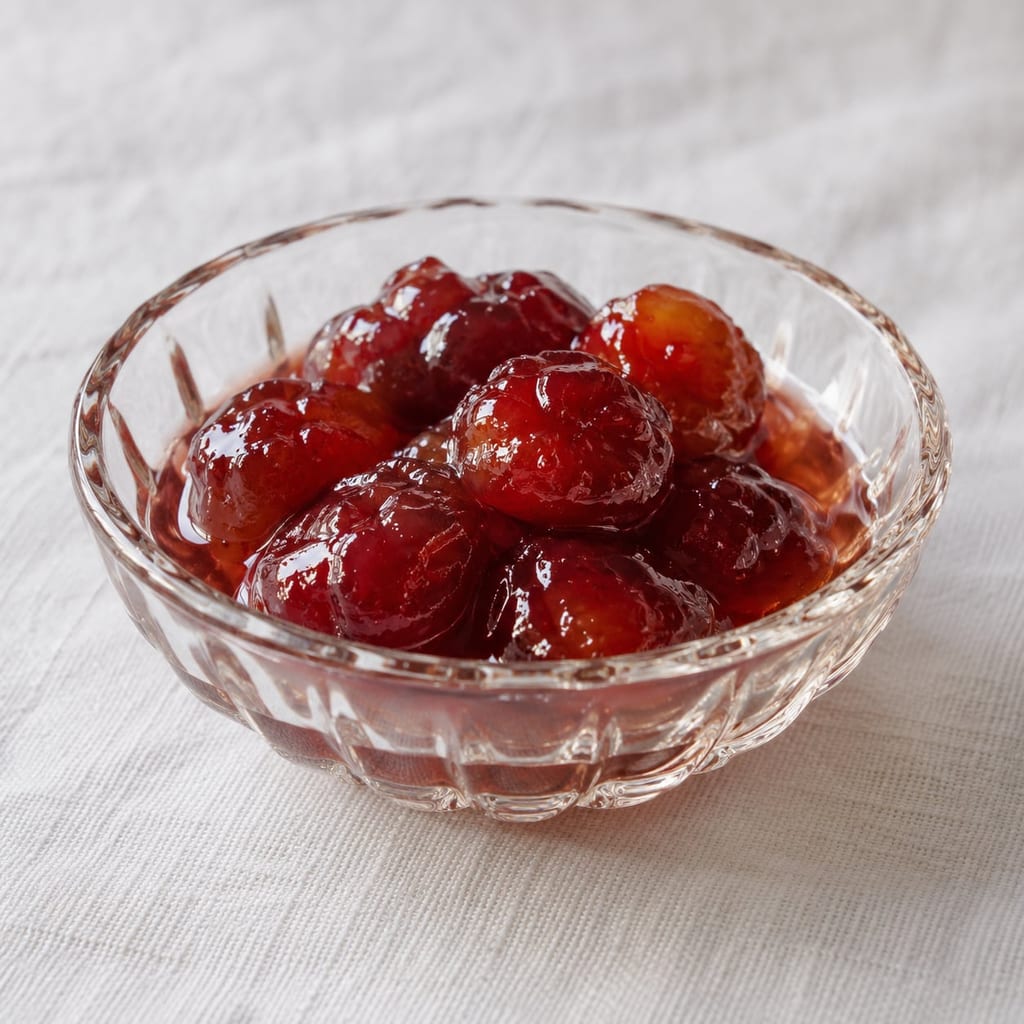
Cypriot cherry glyka made by layering firm pitted cherries with sugar, briefly boiling them, chilling overnight, and boiling again to concentrate the syrup. This version is refrigerated and has no shelf-stable canning process.
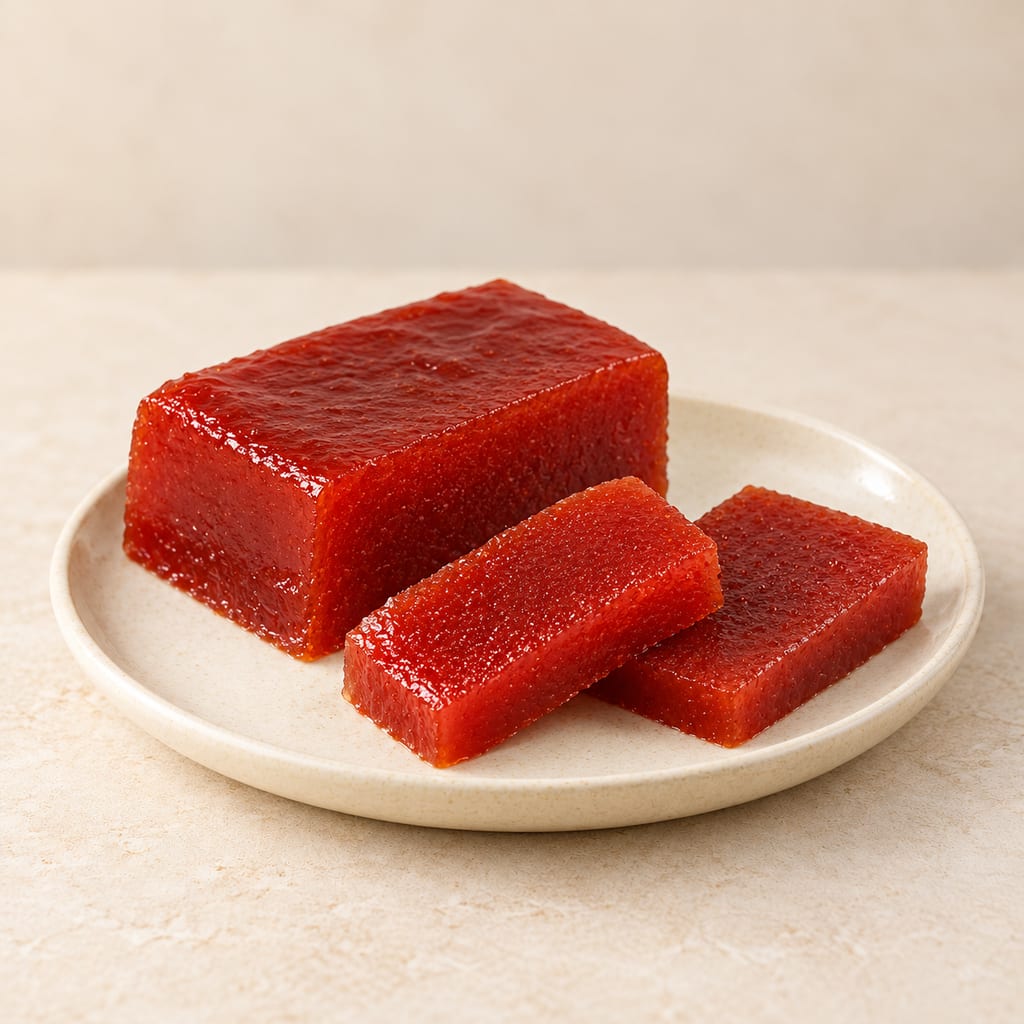
Dulce de membrillo is quince cooked with sugar into a firm paste for slicing. This family method softens the fruit in a pressure cooker, then blends it and leaves it to set.
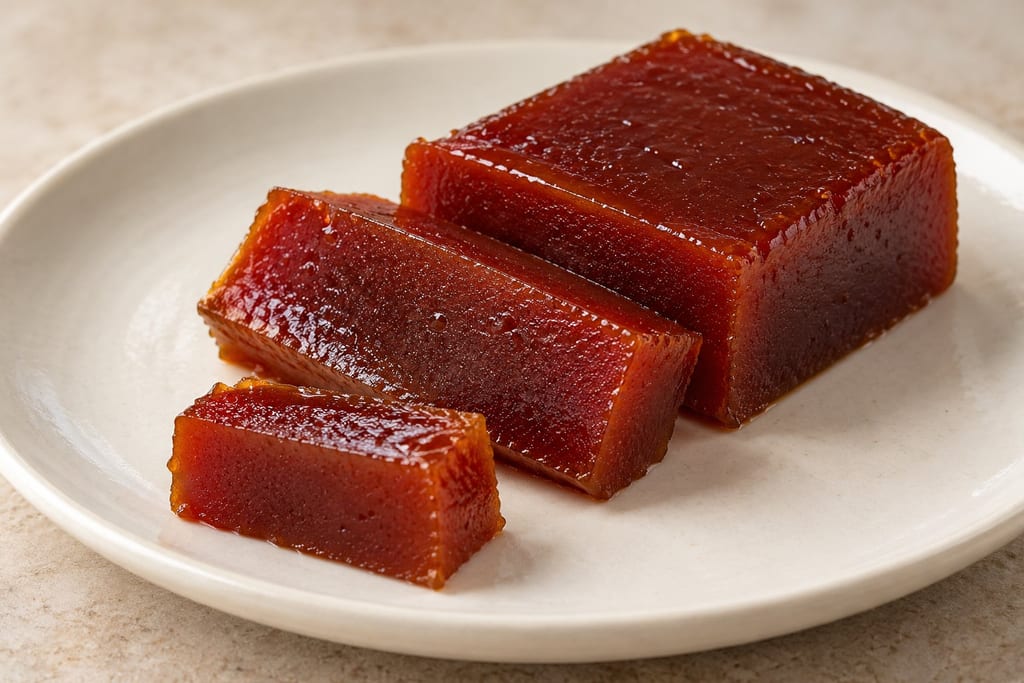
Cooked, sieved guava pulp is reduced with sugar and lime juice to a sliceable paste, then refrigerated. This adapted trial begins with prepared pulp and has no validated canning process or storage duration.
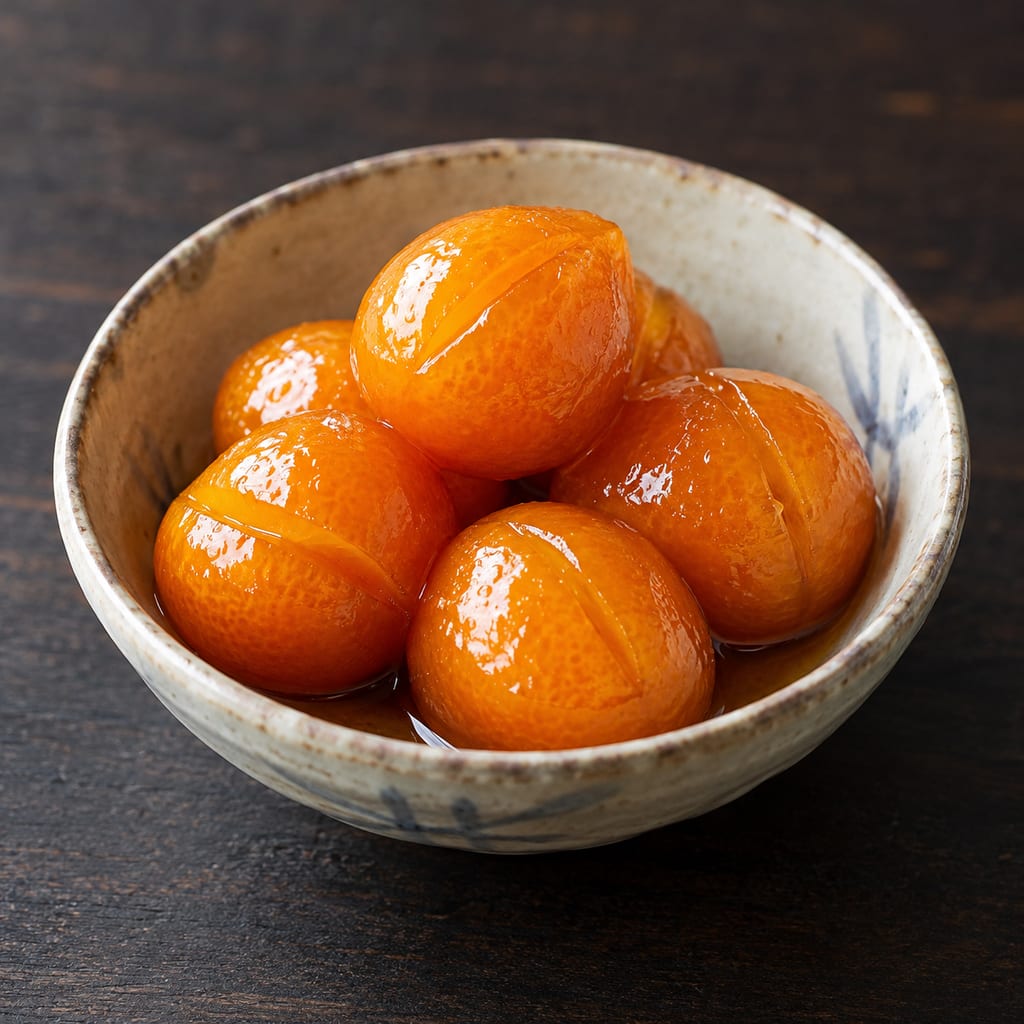
Whole kumquats are slit, blanched and simmered gently in fresh water and sugar until the peel softens and the liquid thickens. This Imari municipal recipe gives a sugar range rather than a fixed ratio.
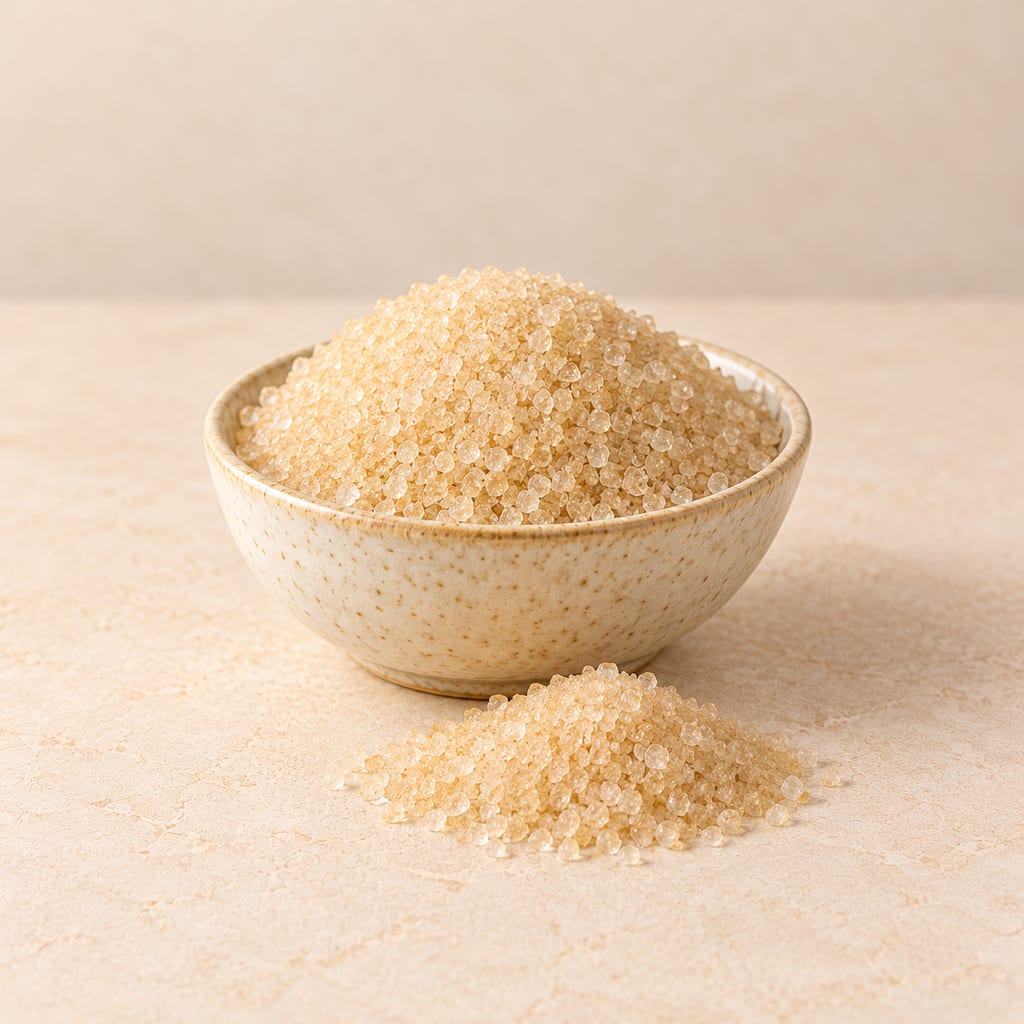
Turbinado is a pale golden cane sugar made by washing and spinning raw crystals, leaving large, dry grains that keep a faint trace of molasses and a mild toffee note.
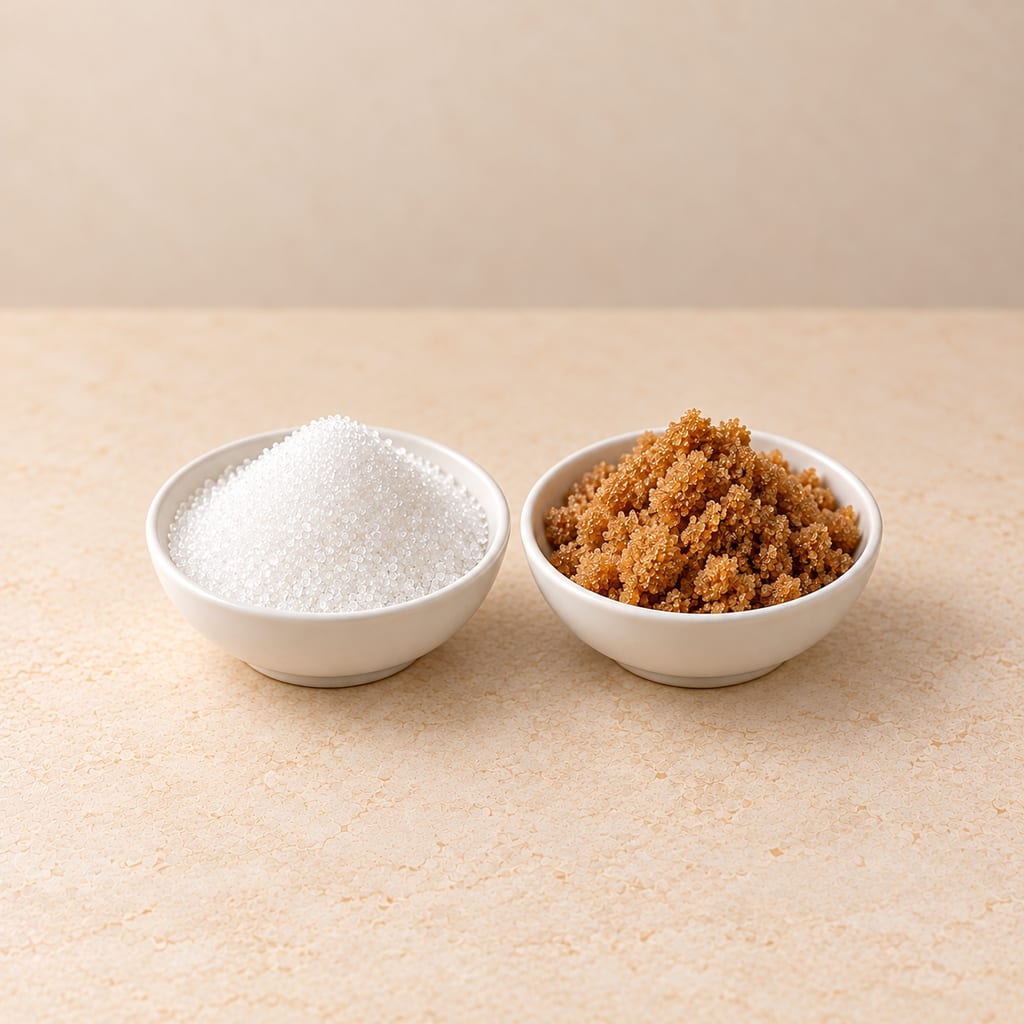
White sugar is refined sucrose, almost pure; brown sugar is sucrose with molasses, left in or added back. Molasses makes brown sugar moister, darker and more strongly flavoured.
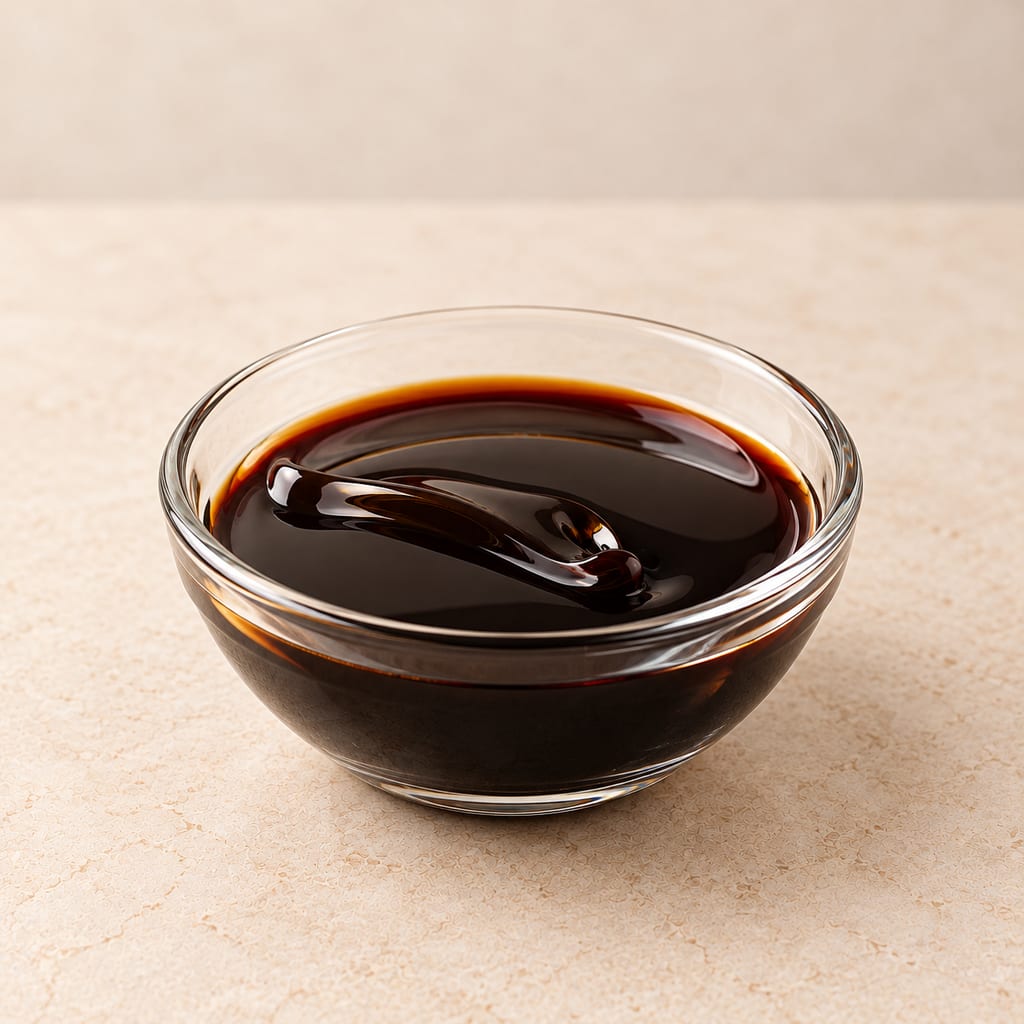
Cane syrup is sugarcane juice boiled down until it is thick and sweet, or the first syrup left after sugar is crystallised. Historical American recipes used it as a sweetener in ham cures.
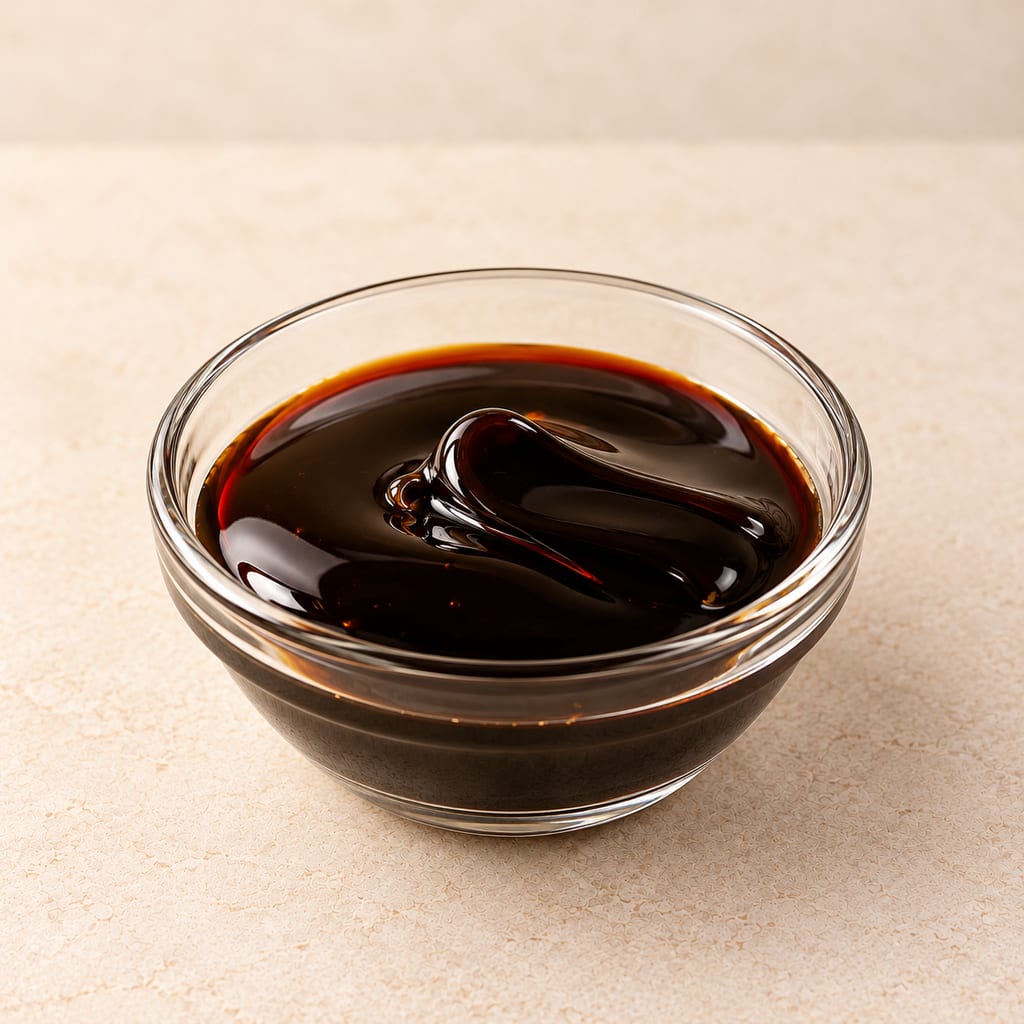
Molasses is the syrup separated as sugar crystallises from cane or beet; its grades and food uses vary, from Anadama and steamed brown bread to fermentation.
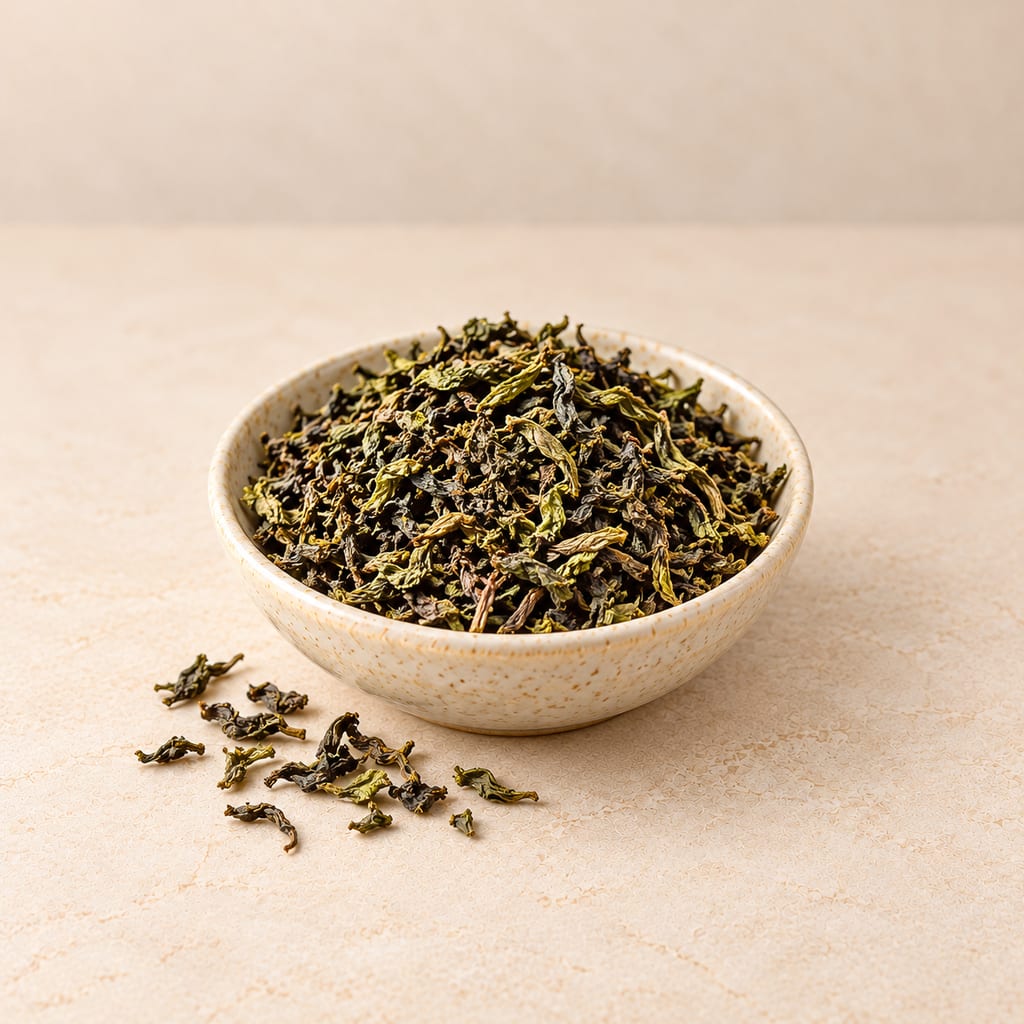
Tea is the processed leaf of Camellia sinensis, an evergreen shrub from the borderlands of south-western China. Steeped and sweetened, it is the base of kombucha and jun.
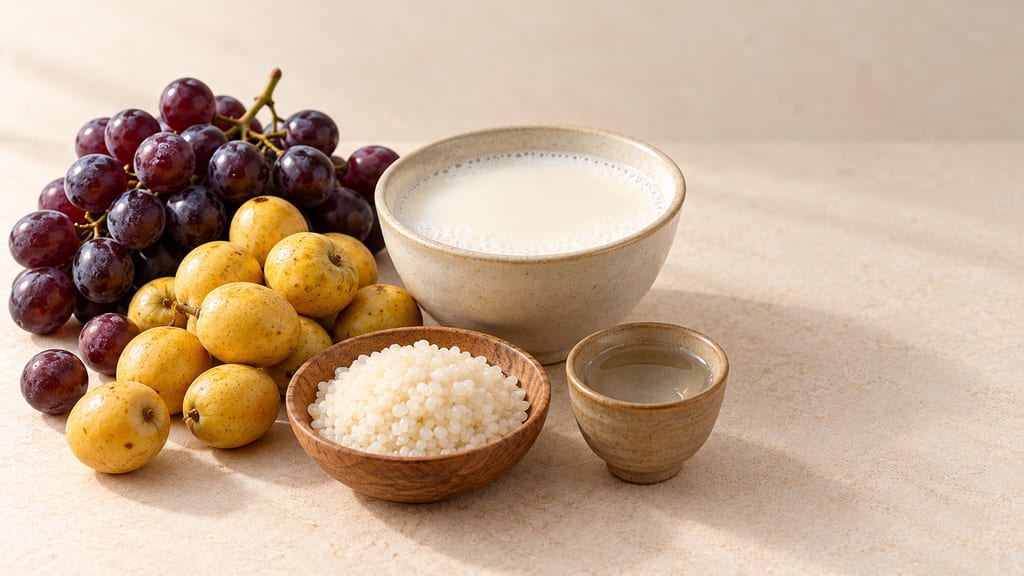
A marula harvest, a rice mash and a bowl of fermented mare’s milk reveal different ways to make alcohol, and different kinds of knowledge behind the drink.
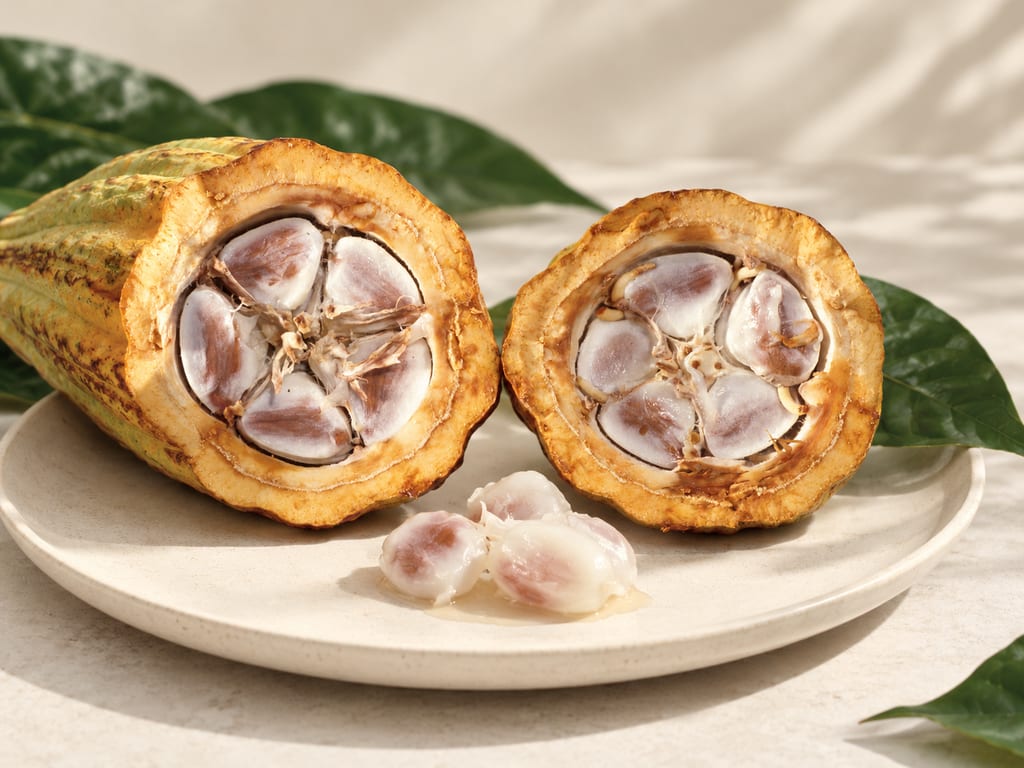
Cacao pulp is the moist, sweet-acid mucilage around cacao seeds. It fuels bean fermentation and can be extracted for fruit drinks, wine and vinegar.
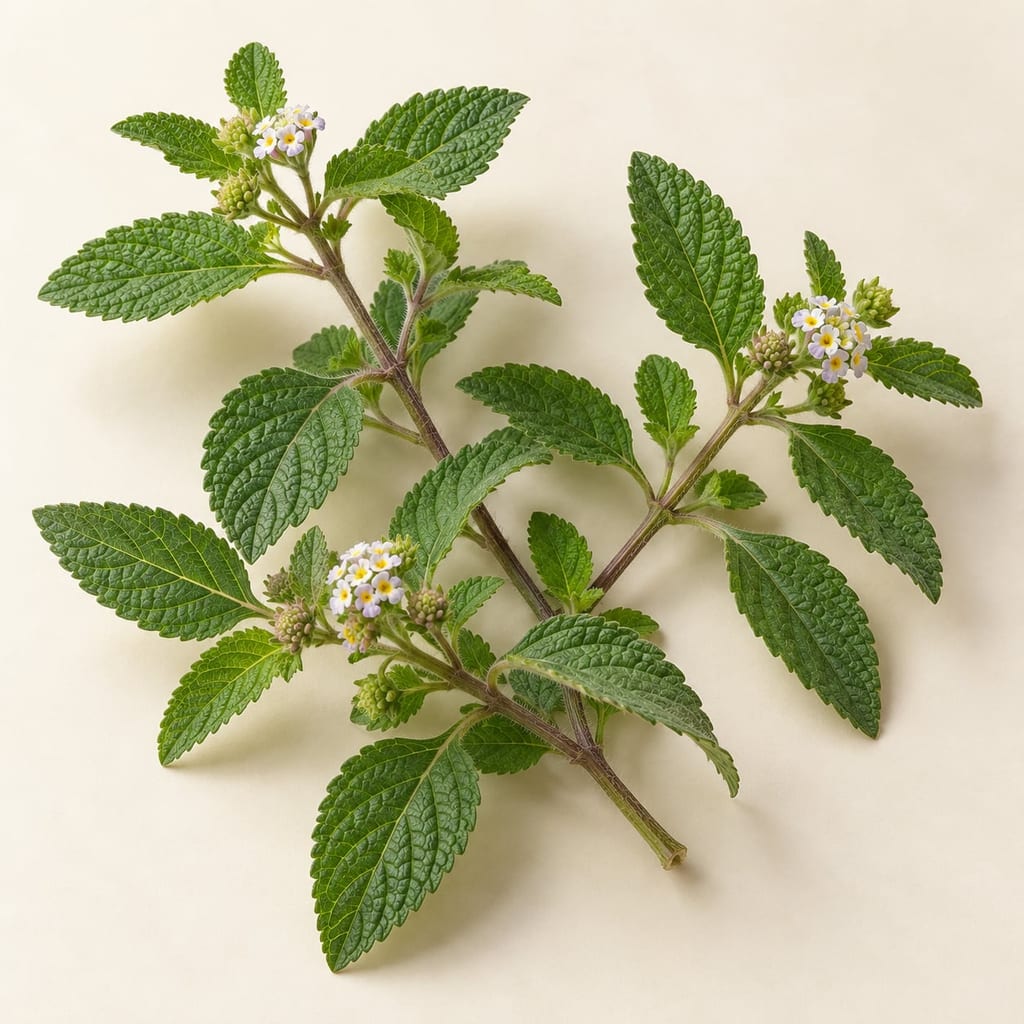
Lippia alba, bushy lippia, is an aromatic shrub of the Americas whose leaves are steeped as a tea, added to sauces in Mexico and used in folk medicine.
No community contributions have been published for this entry yet.
Sign in to contribute. Published comments and photos are free to read.
USDA Economic Research ServiceThe crystal and its two crops
Sugar and Sweeteners - BackgroundSugarcane is a perennial tropical/subtropical grass planted from cuttings; the U.S. account gives one to two years to maturity, successive harvests, prompt processing and U.S.-specific production regions.
Its sugarbeet discussion covers U.S. crop geography and processing; beet life cycle is sourced separately to USDA ARS.
Cited in: The crystal and its two crops
U.S. Environmental Protection AgencyThe crystal and its two crops
AP-42, section 9.10.1.2: Sugarbeet Processing (March 1997)Primary process description: washed beets are cut into cossettes, sucrose is extracted with hot water, then juice is clarified, evaporated and crystallized. The former AMS Vinasse.pdf citation reproduced this EPA section as an attachment.
Cited in: The crystal and its two crops
USDA Farm Service AgencyThe crystal and its two crops · A crop with a history
Sugar GlossaryDefinitions for cane juice, cane sugar, beet sugar, invert sugar, molasses, cane syrup and direct-consumption sugar.
Cited in: A crop with a history; The crystal and its two crops
Penn State ExtensionThe crystal and its two crops · What sugar changes in a dish · Choosing, measuring, and keeping it
Let’s Preserve: Ingredients Used in Home Food PreservationTable sugar is typical white granulated sucrose; brown sugar is white sugar with molasses; powdered sugar includes starch. Sugar contributes to preservation and jam/jelly gelling. Starch in powdered sugar can cloud brine, so it is unsuitable for canning as described by the source.
Cited in: The crystal and its two crops; What sugar changes in a dish; Choosing, measuring, and keeping it
U.S. National Park ServiceA crop with a history
The Atlantic Empire of Peter FaneuilAn eighteenth-century Boston merchant network traded in sugar, molasses, salt cod, rum, and enslaved people. NPS says its reconstruction uses surviving ledgers, letters, customs records, and court records; supports this specific Atlantic case study, not total global history.
Cited in: A crop with a history
The National Archives (UK), education resourcesA crop with a history
SugarCurated primary-document teaching set on sugar plantations and enslaved labor in the Atlantic economy.
Cited in: A crop with a history
National Archives of Trinidad and TobagoA crop with a history
List of the Trinidad General Registers of Indian Indentureship 1845-1917Registers record Indian arrivals 1845–1917; source states approximately 147,500 arrivals after emancipation in 1838, over five-year indentures, 17 volumes covering 298 ships; those counts describe this archival collection.
Cited in: A crop with a history
U.S. Department of Agriculture, Agricultural Research ServiceA crop with a history
History of sugar and sweeteners (USDA ARS research summary, 2019)Eggleston's original historical research summary traces cane domestication and extraction in Asia, crystallization in India, spread through trade, and later Atlantic plantation production; broad chronology only.
Cited in: A crop with a history
Penn State ExtensionWhat sugar changes in a dish
Sugar and Sucralose in Home Food PreservationUpdated 6 May 2024; sugar offsets acidity in pickles, provides jam/jelly structure, and protects frozen fruit texture. Freezing-fruit syrup and dry-pack ratios are application-specific.
Cited in: What sugar changes in a dish
University of Minnesota ExtensionWhat sugar changes in a dish
Preserving food at home: Fruit spreadsIn fruit spreads, sugar binds water, lowers water activity, supports pectin association and inhibits mold. Substitutions depend on recipe/pectin and are not generalized.
Cited in: What sugar changes in a dish
Food and Agriculture Organization of the United NationsWhat sugar changes in a dish
Fruit and vegetable processing - Ch05 General procedures for fruit and vegetable preservation (cont.), section 5.5 Preservation with sugarSugar preservation depends on osmotic pressure and the finished liquid-phase concentration; boiling often removes water. FAO says about 60% sugar generally assures preservation in its context, but warns sugar-treated products can still support mold and need appropriate process/handling. Not a universal recipe safety threshold.
Cited in: What sugar changes in a dish
University of Minnesota ExtensionWhat sugar changes in a dish
Preserving food at home: Pickling produceSugar in tested pickle recipes balances flavor; acidity is the preservation hurdle. Supports not presenting sugar as the safety step for vinegar pickles.
Cited in: What sugar changes in a dish
U.S. Food and Drug AdministrationWhat sugar changes in a dish
Water Activity (aw) in Foods (Inspection Technical Guide 39)Defines water activity as available moisture; sugar lowers water activity in solution, but control must be established for the specific product.
Cited in: What sugar changes in a dish
Kansas State University Research and ExtensionSugar and fermentation
Sweeteners in FoodsGeneral explanation of sucrose hydrolysis to glucose/fructose, use by microorganisms, and osmotic effect of concentrated sugar; not a recipe-specific fermentation outcome.
Cited in: Sugar and fermentation
Journal of General and Applied Microbiology (J-STAGE)Sugar and fermentation
Further evidence of direct uptake of sucrose by Saccharomyces cerevisiae in batch cultureA specific study of sucrose uptake by S. cerevisiae; used only to illustrate strain/process-specific yeast sucrose handling.
Cited in: Sugar and fermentation
Applied and Environmental Microbiology, American Society for MicrobiologySugar and fermentation
Influence of invertase activity and glycerol synthesis and retention on fermentation of media with a high sugar concentration by Saccharomyces cerevisiaeA specific yeast/high-sugar laboratory study used only to illustrate sucrose metabolism and osmotic stress are condition-dependent.
Cited in: Sugar and fermentation
Applied and Environmental Microbiology / PubMed CentralSugar and fermentation
Exopolysaccharide and Kestose Production by Lactobacillus sanfranciscensis LTH2590A controlled sucrose-medium experiment measured Lactobacillus sanfranciscensis products including lactate, acetate or ethanol; a bounded microbial example, not a fruit-ferment prediction.
Cited in: Sugar and fermentation
Penn State ExtensionChoosing, measuring, and keeping it
Storing Staple Ingredients in the KitchenStore dry sugar airtight; brown sugar hardens as it dries; moisture-restoring methods require checking for mold.
Cited in: Choosing, measuring, and keeping it
Penn State ExtensionChoosing, measuring, and keeping it
Canning and Freezing Questions and AnswersSweetener substitution can preserve sweetness without preserving sugar's texture/color function; substitutions are recipe-specific, especially for shelf-stable products.
Cited in: Choosing, measuring, and keeping it
World Health OrganizationChoosing, measuring, and keeping it · Dietary context
Information note about intake of sugars recommended in the WHO guideline for adults and childrenWHO recommends adults and children consume less than 10% of daily energy from free sugars and suggests further reduction below 5%.
Cited in: Choosing, measuring, and keeping it
World Health OrganizationChoosing, measuring, and keeping it · Dietary context
Healthy dietFree sugars include added sucrose and sugars naturally present in honey and syrups; WHO guidance is below 10% of daily energy, with 5% or less potentially offering further health benefit.
Cited in: Choosing, measuring, and keeping it
U.S. Department of Agriculture, Agricultural Research ServiceThe crystal and its two crops
Sugar beet (USDA ARS research summary, 2024)Sugar beet is a biennial species whose sucrose-rich taproot is harvested in the first year; temperate growing regions.
Cited in: The crystal and its two crops
National Center for Home Food Preservation, University of GeorgiaWhat sugar changes in a dish · Choosing, measuring, and keeping it
Jellied Product IngredientsFruit, pectin, acid and sugar must be balanced for a gel; sugar is a preserving ingredient in a tested jellied product; ordinary and reduced-sugar recipes differ.
Cited in: What sugar changes in a dish; Choosing, measuring, and keeping it
American Society of BakingWhat sugar changes in a dish · Sugar and fermentation
Sugar: functions in bakingIn baking, sugar provides sweetness, humectancy, aeration during creaming, tenderness, browning and yeast food; effects depend on formula.
Cited in: What sugar changes in a dish; Sugar and fermentation
American Society of BakingThe crystal and its two crops · Choosing, measuring, and keeping it
Brown Sugar: forms and food functionsBrown sugar may be less refined or have molasses added; its moisture and molasses contribute color, flavor and soft texture.
Cited in: The crystal and its two crops; Choosing, measuring, and keeping it
American Society of BakingThe crystal and its two crops · Choosing, measuring, and keeping it
Powdered Sugar: form and food functionsFine powdered sucrose commonly contains a corn-starch anticaking agent; it dissolves readily and its starch can alter texture.
Cited in: The crystal and its two crops; Choosing, measuring, and keeping it