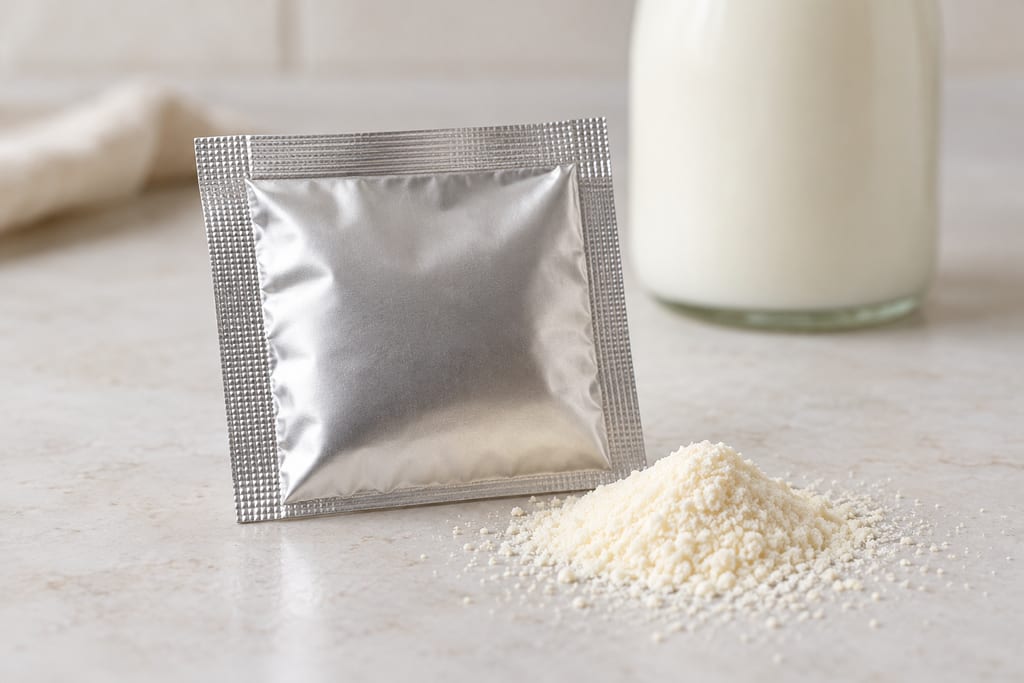
Aroma-forming and acid-producing dairy starter
A mixed dairy starter selected for acidification and aroma. The documented Queso Andino culture has no identified modern strain blend or commercial formulation.
 FermenteaWhere food goes to change
Substrates
Cacao pulp is the moist, sweet-acid mucilage around cacao seeds. It fuels bean fermentation and can be extracted for fruit drinks, wine and vinegar.
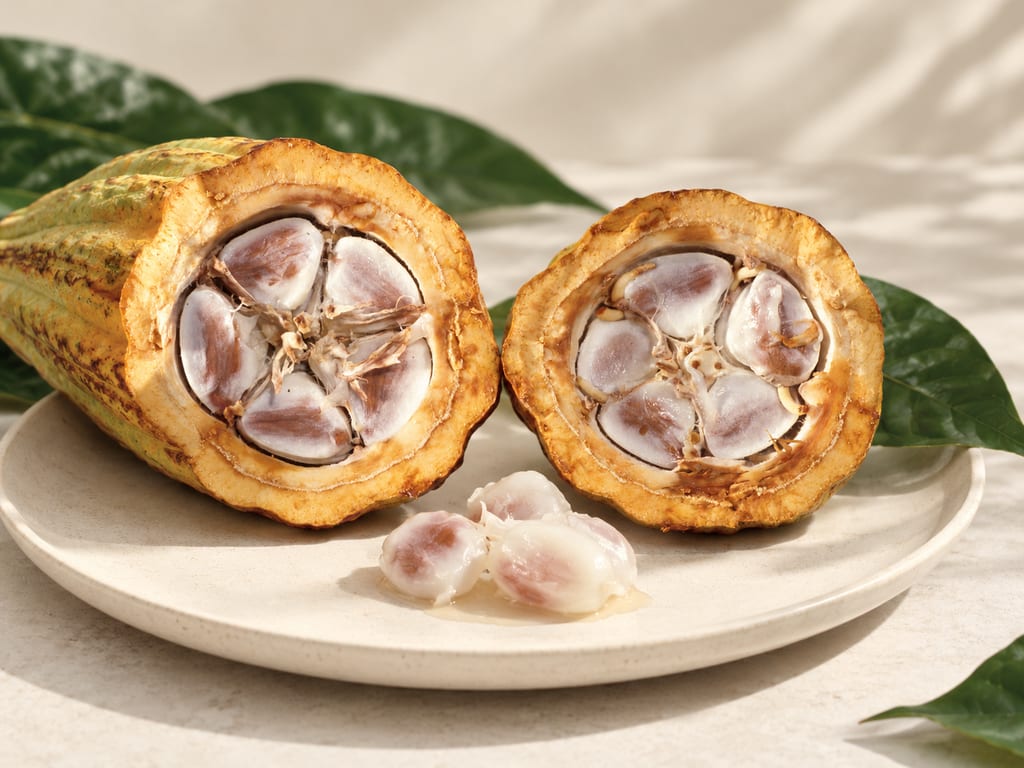
Fresh cacao pulp is the moist, pale mucilage attached to the seeds inside a ripe fruit of *Theobroma cacao* L. The pulp covers the seeds rather than forming a separate edible chamber. It is translucent to white, soft and slippery, and its sweet-acid taste and aroma vary with the fruit and its growing conditions. The seeds are the material processed into cocoa and chocolate; the surrounding pulp is a distinct fruit tissue with its own food uses. The term “cacao mucilage” is used for this attached material, while “cocoa sweatings” can refer more narrowly to liquid that drains from a fermenting heap. That drained juice is not exactly the same thing as intact pulp.
Kew accepts *Theobroma cacao* L. as the species name and gives a broad native range from Costa Rica to southern tropical America. A range is not a precise birthplace, and cultivated cacao moved widely through human cultivation. Modern reports may use “pulp,” “mucilage,” or “sweatings” for materials collected at different stages, so the name alone does not establish whether a study tested fresh attached pulp, pressed juice, or liquid drawn from bean fermentation. This page focuses on the fresh pulp around seeds, while noting when studies describe drained or processed material.
The accepted botanical name is *Theobroma cacao* L. Spanish sources use “mucílago de cacao” for cacao mucilage, and Portuguese-language research often uses “polpa de cacau” for cocoa pulp. These names refer to tissue attached to cacao seeds, although individual papers may use them for pulp collected after separation. In English, “cacao pulp” and “cocoa pulp” are common descriptive terms. “Cocoa sweatings” is retained as a catalogue alias, with the caution that it often means the free-draining liquid formed during bean fermentation rather than the whole fresh pulp layer.
Cacao seed, cacao pulp, and products made by fermenting either material deserve separate records. The seed is the botanical material that becomes cocoa and chocolate after fermentation and processing. Pulp is the surrounding fruit tissue. A pulp wine or vinegar is a preparation made from pulp, while the fermented bean mass is a mixed process that includes attached pulp. This item describes only the raw pulp ingredient. It does not treat cacao beans, nibs, chocolate, pulp wine, vinegar, or drained fermentation liquor as the same material.
Archaeological evidence places cacao use in the upper Amazon well before the later expansion of cacao cultivation and trade. Zarrillo and colleagues combined chemical, genetic and archaeological methods at Santa Ana–La Florida in southeastern Ecuador and reported cacao use around 5,300 years ago. They described this site as the oldest center of cacao domestication yet identified. Their article also reviews ethnographic and ethnohistoric evidence that people in parts of Ecuador have eaten cacao pulp fresh, made juice from it and fermented pulp into alcoholic drinks used in rituals or celebrations. Those later observations establish documented uses, not a single recipe shared across all cacao-growing peoples.
Residues in vessels from Puerto Escondido in the lower Ulúa Valley of Honduras show cacao beverages by before 1000 BCE. Henderson and colleagues proposed that early beverages may have been made by fermenting cacao pulp, since the pod pulp ferments readily and could yield an alcoholic drink. The residue evidence establishes cacao in the vessels; it does not directly identify pulp as the fermented material or prove alcohol in every vessel. These two archaeological records should therefore remain separate from claims about a named, continuous “ancient cacao wine” tradition. The record supports early cacao use and a plausible pulp-drink interpretation, with the ingredients and process still uncertain.
Cacao pulp enters fermentation in two principal ways. In the familiar post-harvest bean process, seeds and their adhering pulp are piled, boxed or otherwise held together. Yeasts consume pulp sugars and produce ethanol and carbon dioxide while also helping break down pectin, which makes the sticky mass drain more freely. Lactic-acid bacteria and acetic-acid bacteria then participate in the changing microbial community; acetic-acid bacteria oxidize yeast-produced ethanol to acetic acid when oxygen is available. Heat, acids and other metabolites penetrate the beans and contribute to embryo death and the development of flavor precursors. This is a succession of microbes and chemical changes in a mixed bean-and-pulp mass, not fermentation of isolated pulp alone.
People can also extract cacao pulp for a fruit drink or ferment it as a beverage substrate without the seeds. Brazilian studies describe wines made from cocoa pulp with selected *Saccharomyces cerevisiae* and laboratory-scale fermentation. A separate Ecuadorian study names wine and vinegar made from CCN-51 cacao mucilage and reports experimental additions such as water, sugar and yeast. Those papers document particular trials under their stated conditions; they do not establish a universal household recipe, a customary method across cacao regions, or equivalent results from every cultivar. A pulp wine, a pulp vinegar, and the bean-fermentation liquor are separate preparations even though all begin with related fruit material.
The wet pulp is a microbial habitat and a food supply. Its readily available sugars support early yeast activity. As yeast cells release ethanol and carbon dioxide, pectin breakdown and drainage change the mass’s texture and aeration. Lactic-acid bacteria use available carbohydrates and produce organic acids; acetic-acid bacteria use ethanol when oxygen reaches the mass and form acetic acid. The changing mix of sugar, ethanol, acids, heat and oxygen shapes the fermentation environment. These activities happen alongside physical drainage, turning or transfer of the mass. The microbes do not act in a perfectly synchronized sequence, and their abundance depends on the cacao, handling, vessel, aeration and environment.
The bean fermentation and pulp fermentation also have different endpoints. For chocolate-making, the goal is not a finished alcoholic drink: the microbial and heat changes help develop precursors inside the seeds before drying and later roasting. For a fruit wine, the desired product is a fermented pulp liquid, which is then separated or otherwise processed using its stated protocol. In vinegar work, ethanol can serve as a substrate for acetic-acid production, but the resulting acidified product requires process-specific evidence. A report about bean quality should not be read as a recipe for beverage fermentation, and a fruit-wine paper does not validate cocoa-bean fermentation.
Fresh cacao pulp is largely water with soluble sugars and organic acids, but the balance is not fixed. Kalloo and colleagues sampled 30 cacao accessions in Trinidad and found significant accession-related differences in pulp pH, acidity and reducing sugars. Penha and Martins da Matta characterized pulp traded in southeastern Bahia, showing why a local sample should be described with its own measurements rather than treated as a species-wide average. Maturity, cultivar or accession, harvest and handling can change the starting material. A study’s pH, soluble-solids or sugar measurements belong to its sample and method; they should not be converted into universal values for home fermentation.
Flavor research likewise finds differences among origins and varieties. Bickel Haase and co-authors compared fresh pulp from Indonesia, Vietnam, Cameroon and Nicaragua and reported distinct aroma profiles. Chetschik and colleagues examined three cacao varieties and found that fruity and floral notes were stronger in some samples than in CCN-51; they also studied how pulp characteristics relate to the flavor of fermented beans. These results support describing cacao pulp as sweet-acid and potentially fruity or floral, with real variation, rather than assigning one fixed flavor to every fruit. A cultivar or regional label is useful only when a source actually ties the sample to it.
In experimental food work, pulp is removed from the pod and separated from seeds using the chosen protocol. The fresh material is perishable and can be used as juice, nectar, syrup, jam or as a fermentation substrate; published reviews and reports list these potential applications. That list describes research and product development, not proof that all forms are traditional or commercially common. The cited wine studies choose particular equipment, added ingredients, yeast and fermentation management. If reproducing a named experiment, follow its own paper and institutional procedures; do not combine its measures with a different study to make a new “standard” method.
The word “sweatings” deserves care when interpreting instructions. During bean fermentation, liquid drains from pulp and accumulates below or outside the heap. Researchers have studied that liquor as a by-product, while other sources call the fresh layer around the seeds “mucilage” or “pulp.” They are related by drainage, but one is not a synonym that guarantees identical composition. The supplied Fermentea catalogue lead connects cacao mucilage with a CCN-51 vinegar trial. The live ingredient retains “Cocoa sweatings” as a search alias because the term appears in the source inventory, while the editorial account explains the narrower distinction.
Cacao pulp has been explored as a drink ingredient as well as a fruit-wine and vinegar substrate. Its own sweet-acid character can be used in juice or nectar, while controlled fermentation changes sugars and introduces microbial metabolites. The outcome depends on whether the seeds remain in the mass, which organisms are active, how oxygen is managed, whether juice is diluted or sweetened, and how the product is finished. These variables explain why a name such as “cacao wine” covers experimental products that may not be interchangeable.
Bean fermentation remains the agricultural process most readers encounter, but it is useful to remember that the white material around the seed is not merely waste. Research explores pulp beverages and other products, and drainage from bean heaps can be collected as a side stream. Availability and use vary by farm and processing setup: when pulp is left attached for bean fermentation, it is not simultaneously available as a separate fresh-fruit ingredient. This practical distinction connects the ingredient to both chocolate production and experimental beverage making without collapsing them into one preparation.
Fresh pulp has high water activity and can support microbial growth; it is not a shelf-stable ingredient simply because it tastes acidic or sweet. Research on thermal stabilization has tested controlled pasteurization and ultra-high-temperature treatment and measured their effects on microbial and sensory stability. Those findings apply to the tested equipment, material and process. They do not set a household temperature, holding time or storage life. The sources reviewed here do not establish one safe universal pulp-wine recipe, acid target, alcohol threshold, refrigeration period, or room-temperature storage rule.
Use source-specific controls when working in a food laboratory or regulated production setting, and rely on validated local food-safety guidance for commercial or home preservation decisions. Fermentation signs such as aroma, bubbling or visible activity cannot establish that a product is safe. Nor does a low pH from one sample prove that another batch is safe. No critical limit is supplied here because the cited cacao studies do not justify a transferable one. The appropriate conclusion is a clear boundary: documented applications exist, but a general home process and storage limit remain unestablished.
Geography in the cacao record has several different meanings. Kew’s taxonomic page gives the broad native range. Zarrillo’s archaeological attestation is at Santa Ana–La Florida in southeastern Ecuador; Henderson’s vessel evidence comes from Puerto Escondido in Honduras. Those are archaeological sites, not demonstrated birthplaces for every cacao preparation. The Bahia paper concerns pulp traded in southeastern Bahia, Brazil. The Trinidad study sampled accessions in a genebank, which is a research location rather than a claim that cacao pulp originated there.
The modern aroma comparison samples from Indonesia, Vietnam, Cameroon and Nicaragua, and the Ecuadorian CCN-51 trial reports sourcing in Los Ríos and Esmeraldas provinces. These locations help readers distinguish source material and experimental setting. They do not by themselves demonstrate long-standing local wine traditions. Separate evidence is needed for a customary preparation, its community and its historical continuity. The literature spans cacao-growing regions and research laboratories, but it does not support a single geographic origin for pulp fermentation.
Archaeological cacao use at Santa Ana–La Florida; this row does not identify an ancient pulp-wine recipe.
Country-level label for the Santa Ana–La Florida evidence; the site lies in southeastern Ecuador.
Cacao residues in vessels; pulp fermentation is the authors’ hypothesis, not a directly identified process.
Study characterized cocoa pulp traded in this region; not an origin claim.
Accession sampling at the Trinidad International Cocoa Genebank; research location, not origin.
Fresh-pulp aroma sample origin in the comparison study.
Fresh-pulp aroma sample origin in the comparison study.
Fresh-pulp aroma sample origin in the comparison study.
Fresh-pulp aroma sample origin in the comparison study.
Field sourcing reported for the CCN-51 wine and vinegar experiment, not evidence of a customary local tradition.
A mixed dairy starter selected for acidification and aroma. The documented Queso Andino culture has no identified modern strain blend or commercial formulation.
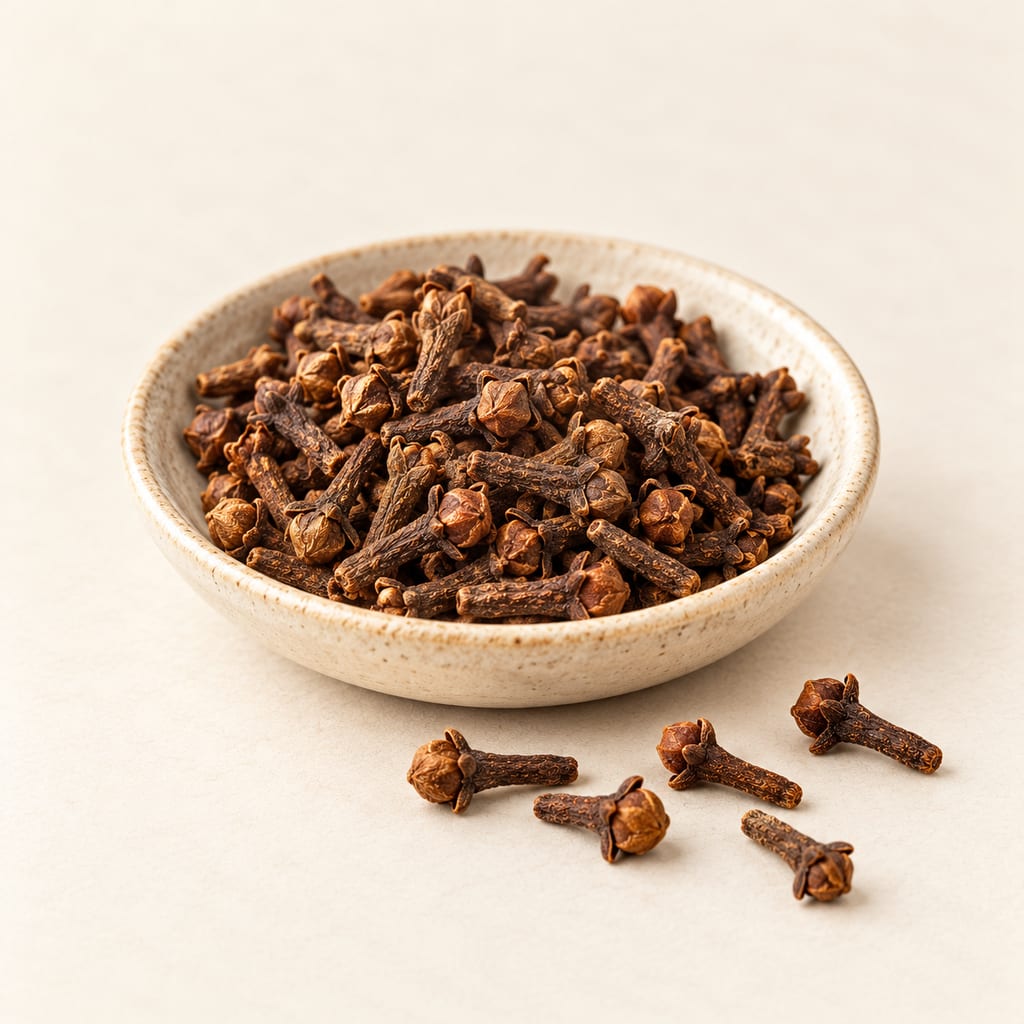
Cloves are the dried unopened flower buds of Syzygium aromaticum. Whole buds infuse liquids and can be removed; ground clove disperses its intense aroma through food.
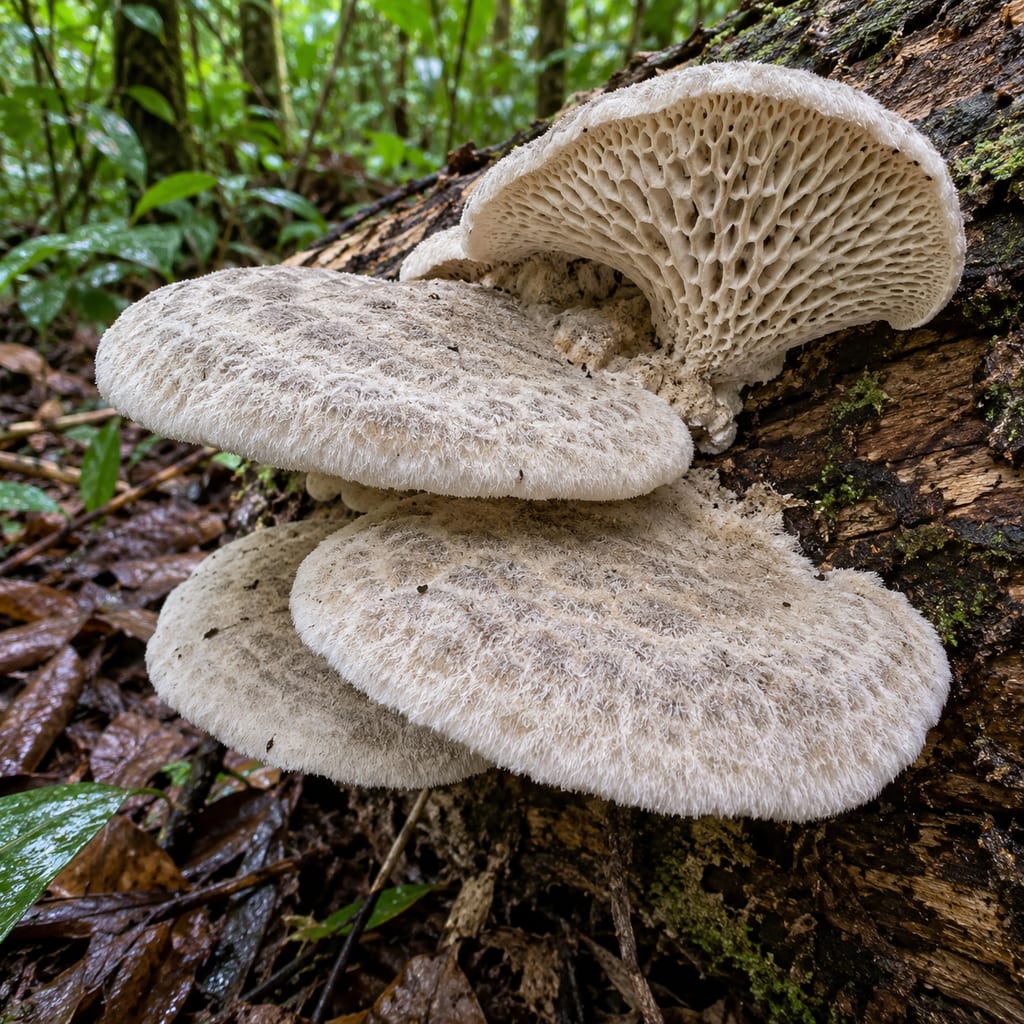
Favolus tessellatus is a tropical wood-decaying polypore with a tessellated cap and honeycomb pores. Brazilian sources record it as food, but the evidence does not establish one traditional recipe or a universal harvest season.
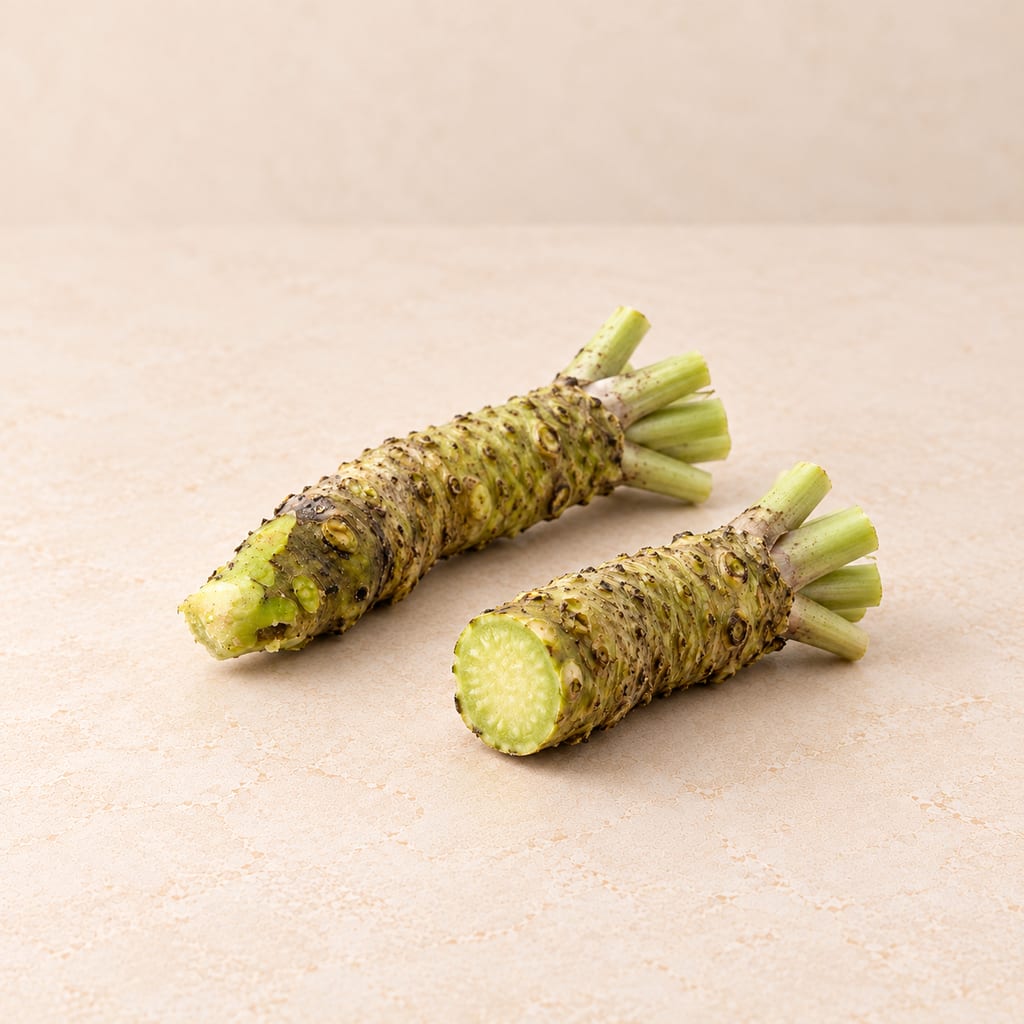
Wasabi is the enlarged stem of Eutrema japonicum, a pungent perennial in the mustard family. Fresh rhizome is grated as a Japanese condiment; powder and prepared paste are separate products.
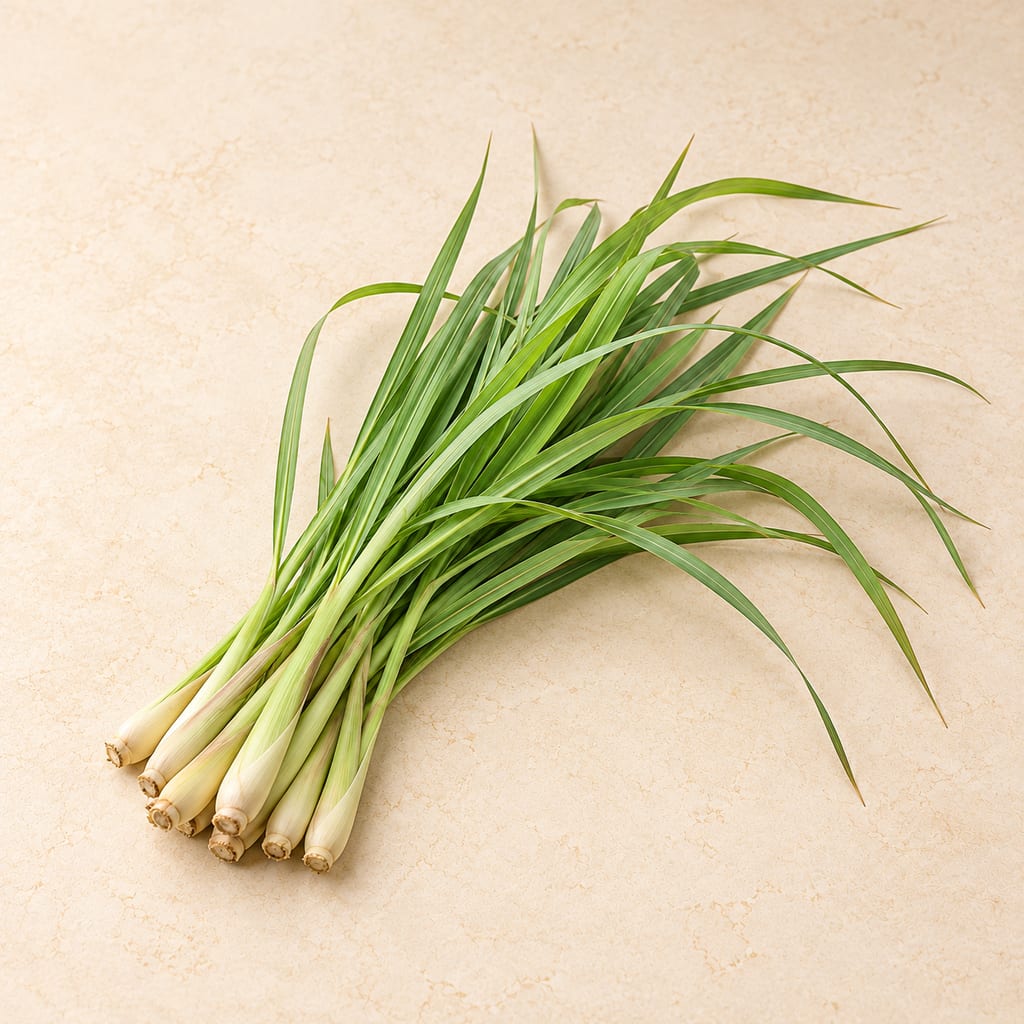
The lemon-scented grass Cymbopogon citratus, sold in Ecuador as hierba luisa or limonaria and steeped for its aroma in chicha de jora, avena and leaf water.
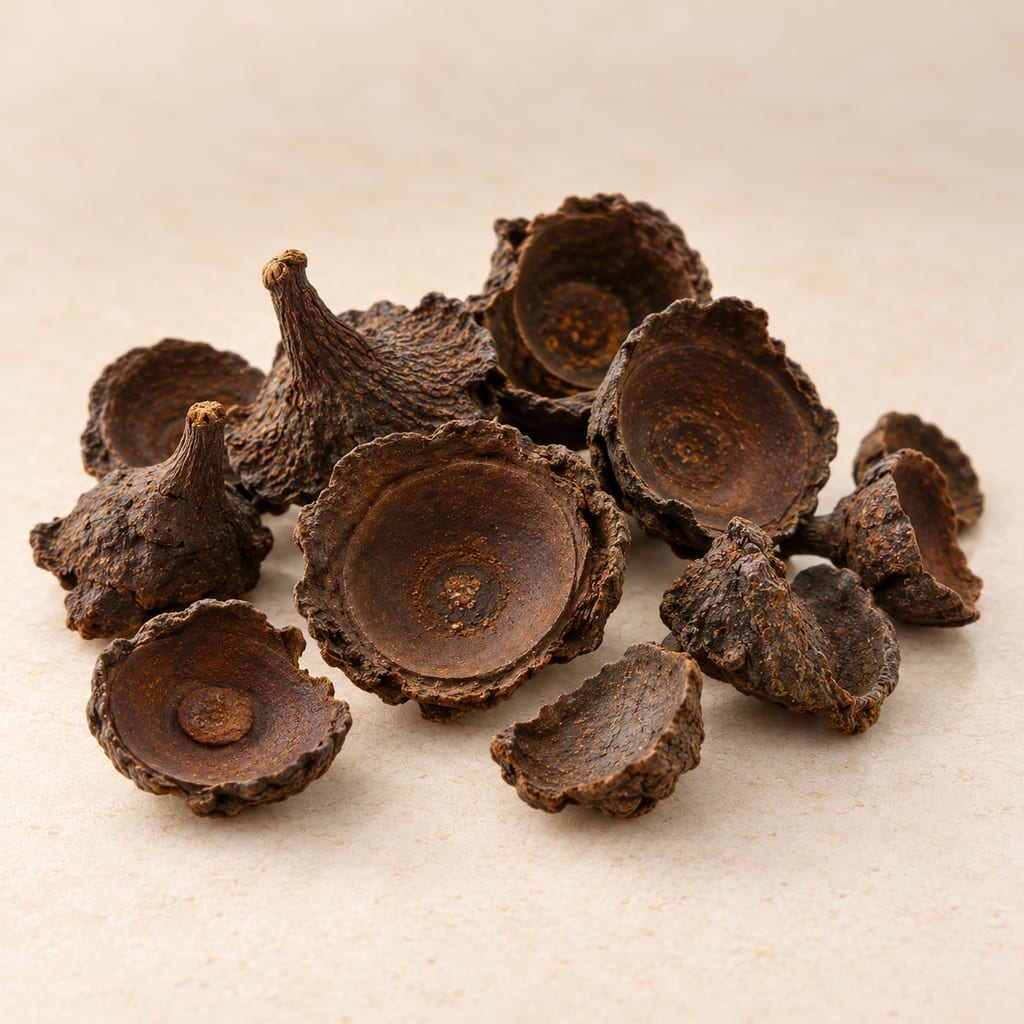
Ishpingo is the dried, hat-shaped calyx of Mespilodaphne quixos, a western-Amazon laurel. Its cinnamon-like perfume seasons colada morada, champús and chicha de jora in Ecuador.
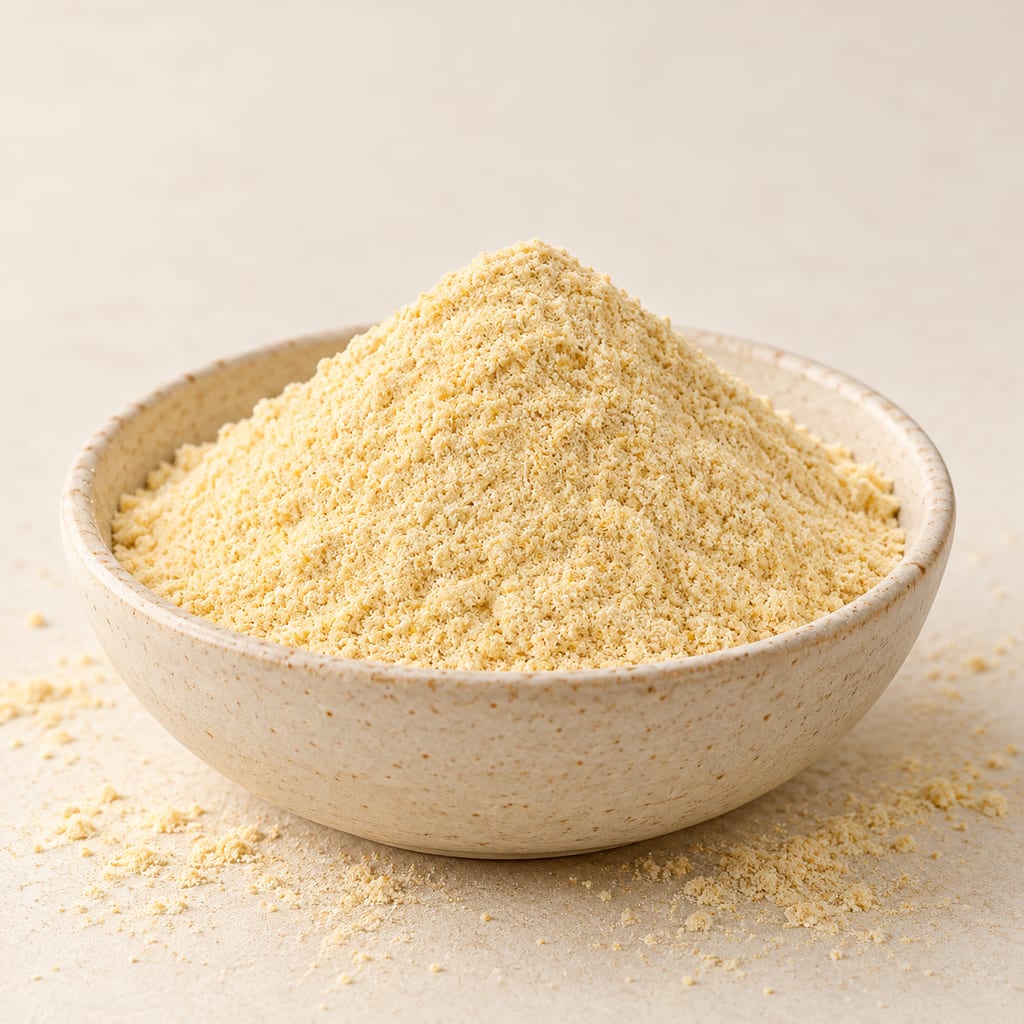
Jora flour is ground malted maize, produced by germinating, drying and milling corn kernels. It provides the enzymatic starch breakdown essential for chicha de jora.
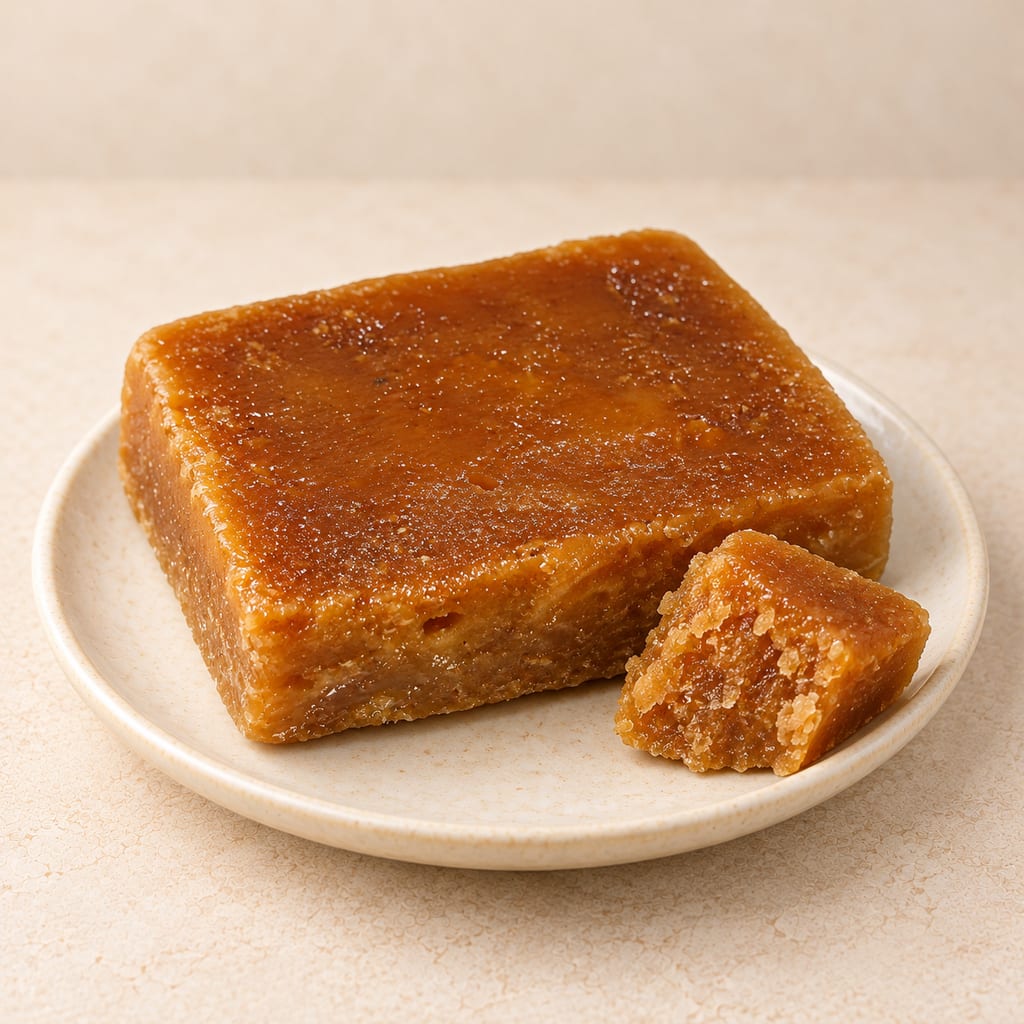
Panela is a solid, non-centrifugal sugarcane sweetener made by concentrating juice and letting it set. A documented Ecuadorian chicha recipe adds it after the cooked jora mixture cools.
No community contributions have been published for this entry yet.
Sign in to contribute. Published comments and photos are free to read.
Plants of the World Online, Royal Botanic Gardens, KewIdentity · History · Geography · Composition · Fermentation · Uses · Handling
Theobroma cacao L.Taxonomic identity and broad native range.
Cited in: The pulp around the cacao seed; Names and botanical distinction; Where the studies were made
Nature Ecology & EvolutionIdentity · History · Geography · Composition · Fermentation · Uses · Handling
The use and domestication of Theobroma cacao during the mid-Holocene in the upper AmazonArchaeological evidence from Santa Ana–La Florida; pulp, juice and fermented-drink ethnographic uses; uncertainty about early processing.
Cited in: What archaeology can and cannot say; Using the fruit beyond chocolate; Where the studies were made
Proceedings of the National Academy of SciencesIdentity · History · Geography · Composition · Fermentation · Uses · Handling
Chemical and archaeological evidence for the earliest cacao beveragesCacao residues at Puerto Escondido, Honduras, and authors’ interpretation of early beverages.
Cited in: What archaeology can and cannot say; Where the studies were made
FEMS Microbiology ReviewsIdentity · History · Geography · Composition · Fermentation · Uses · Handling
The cocoa bean fermentation process: from ecosystem analysis to starter culture developmentMicrobial succession and bean-and-pulp mass transformations.
Cited in: The pulp around the cacao seed; Names and botanical distinction; Two very different fermentation settings; Why the pulp changes the bean fermentation; Opening fruit and separating pulp; Using the fruit beyond chocolate
International Cocoa Organization-hosted reportIdentity · History · Geography · Composition · Fermentation · Uses · Handling
A preliminary investigation into the effect of variety on the chemical composition of cacao pulpAccession variation and applications proposed for pulp.
Cited in: Sugar, acidity and fruit variation; Opening fruit and separating pulp; Using the fruit beyond chocolate; Where the studies were made
Pesquisa Agropecuária Brasileira / EmbrapaIdentity · History · Geography · Composition · Fermentation · Uses · Handling
Physical, chemical and microbiological characterization of cocoa pulpCharacterization of pulp traded in southeastern Bahia.
Cited in: The pulp around the cacao seed; Names and botanical distinction; Sugar, acidity and fruit variation; Storage and limits of the evidence; Where the studies were made
International Journal of Food Science & TechnologyIdentity · History · Geography · Composition · Fermentation · Uses · Handling
Use of *Saccharomyces cerevisiae* in the fermentation of cocoa pulp for the production of wineSpecific Brazilian fruit-wine experiment, not general household instructions.
Cited in: Two very different fermentation settings; Why the pulp changes the bean fermentation; Using the fruit beyond chocolate; Storage and limits of the evidence
UTCienciaIdentity · History · Geography · Composition · Fermentation · Uses · Handling
Obtención de vino y vinagre a partir del mucílago de cacao (Theobroma cacao L.) CCN-51Experimental CCN-51 pulp/mucilage preparations and stated Ecuador field sites.
Cited in: Two very different fermentation settings; Why the pulp changes the bean fermentation; Opening fruit and separating pulp; Using the fruit beyond chocolate; Storage and limits of the evidence; Where the studies were made
MoleculesIdentity · History · Geography · Composition · Fermentation · Uses · Handling
Aroma-active compounds in cocoa pulp from different originsOrigin comparison of fresh-pulp aroma from Indonesia, Vietnam, Cameroon and Nicaragua.
Cited in: Sugar, acidity and fruit variation; Where the studies were made
Journal of Agricultural and Food ChemistryIdentity · History · Geography · Composition · Fermentation · Uses · Handling
The cacao pulp: composition and impact on cocoa bean fermentation and flavorVarietal differences in pulp aroma and effects during bean fermentation.
Cited in: Sugar, acidity and fruit variation
Current Research in Food ScienceIdentity · History · Geography · Composition · Fermentation · Uses · Handling
Microbial and sensory stability of cocoa pulp after thermal processingControlled pasteurization/UHT as studied stabilization options; not a home-storage rule.
Cited in: Storage and limits of the evidence