Ishpingo
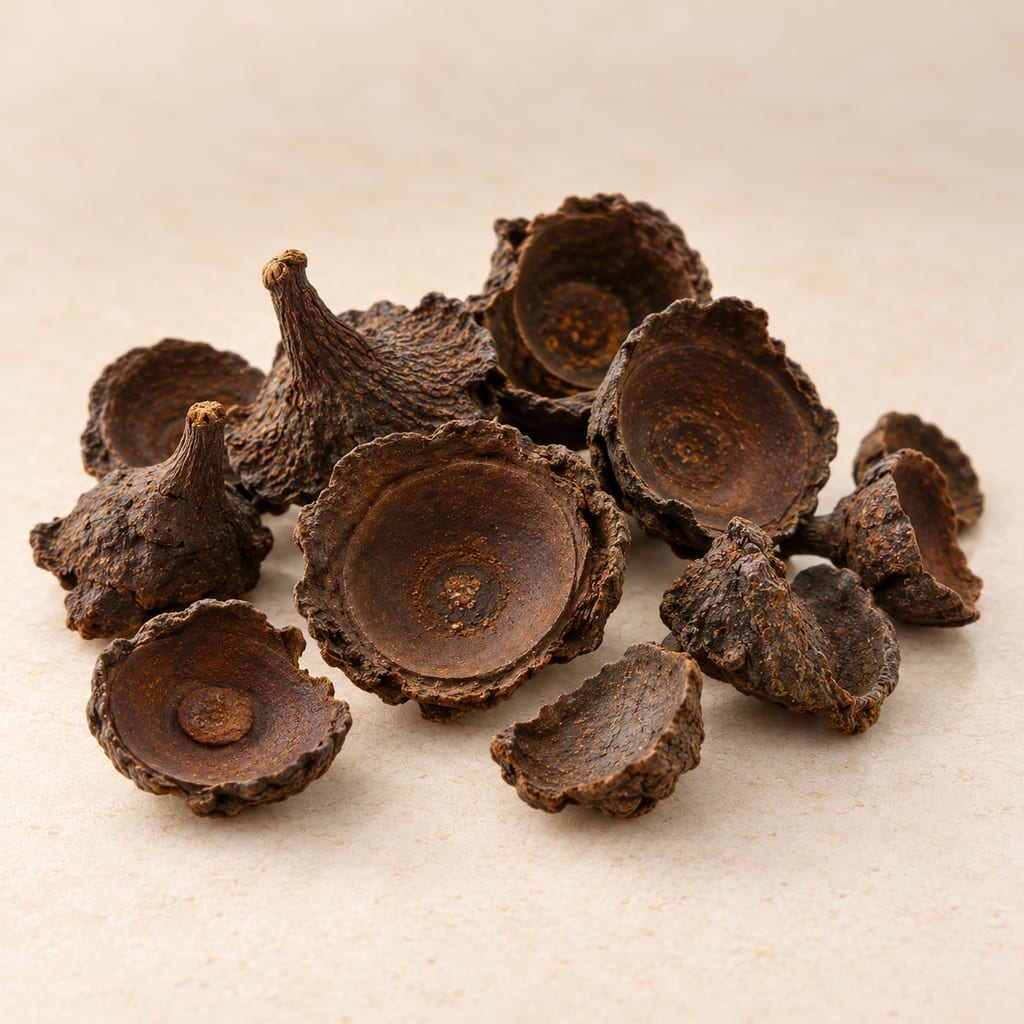
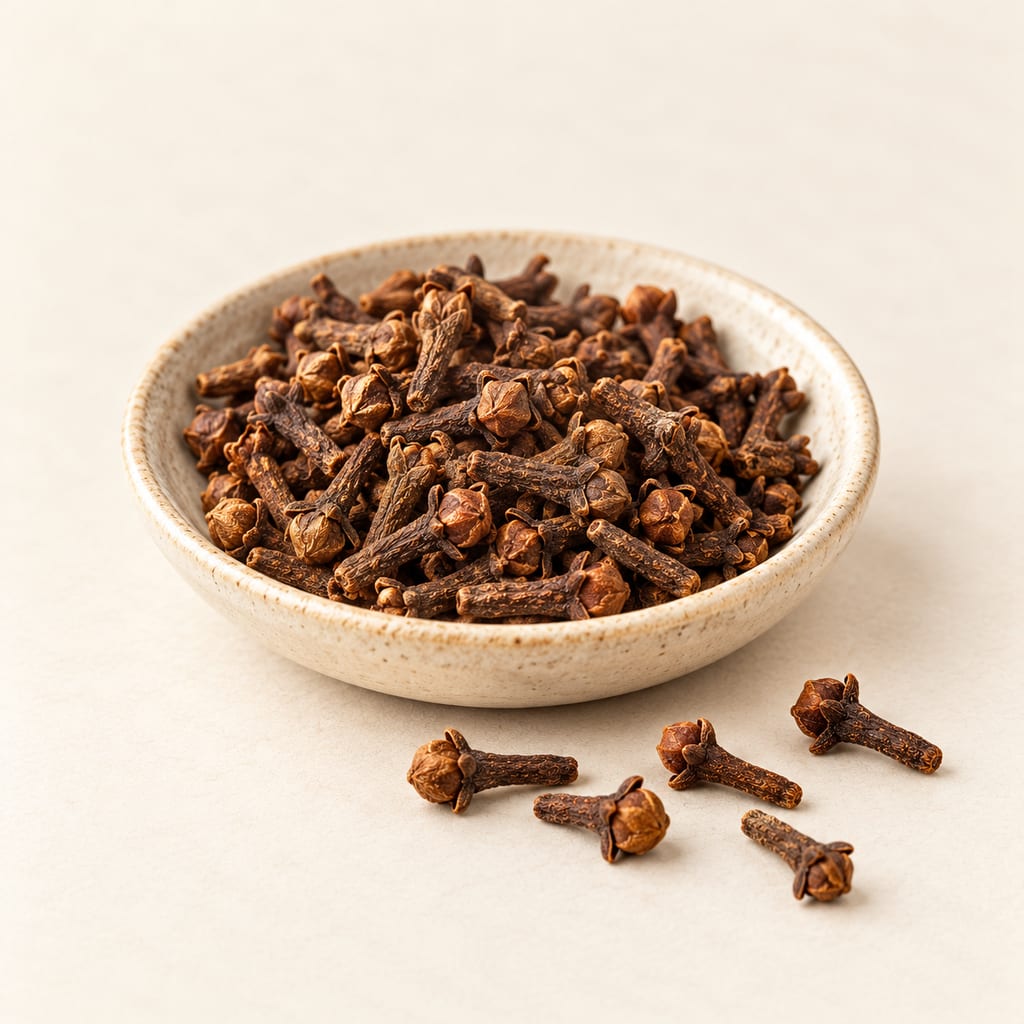
Ishpingo is the culinary name for the dried, woody calyx of *Mespilodaphne quixos*, a laurel native to the western Amazon. To the eye, it is a small, dark, hat-shaped cup; to the nose, it is a close cousin of cinnamon, though it belongs to a different botanical lineage. In Ecuador, this spice is not merely an aromatic addition but a structural pillar of festive drinks like colada morada and chicha de jora, where it provides a deep, bittersweet backbone that survives long cooking times better than true cinnamon.
The spice is distinct from the bark of the same tree, which is sold as *canela amazónica*, and from the essential oil distilled from its leaves. While all three come from *Mespilodaphne quixos*, they carry different chemical profiles and culinary roles. The calyx is the traditional spice used in Andean kitchens, valued for its persistent aroma and its ability to infuse without turning bitter or losing potency when boiled.
Its name, *ishpingo*, is a Quechua and Kichwa term that has been Hispanicised, and it is often confused with other South American trees that share the name. However, in the context of Ecuadorian gastronomy, it refers specifically to the cupule of *Mespilodaphne quixos*. This distinction matters because the flavour profile—fruity, spicy, and slightly bitter—is unique to this species and its specific plant part.
Sources for this section
A name carried by several parts
The botanical identity of ishpingo has shifted in scientific literature. The accepted name is now *Mespilodaphne quixos* (Lam.) Rohwer, but the older synonym *Ocotea quixos* (Lam.) Kosterm. remains prevalent in Ecuadorian food writing, product labels, and ethnobotanical studies. Both names refer to the same evergreen tree of the Lauraceae family, which also includes true cinnamon (*Cinnamomum*) and bay leaf.
The word *ishpingo* itself is a linguistic map of the region. It derives from the Quechua *ispinku* or Kichwa *ishpinku*, terms that specifically refer to the flowers of the tree. Hispanicised spellings include *ishpingo* and *eshpingo*. In modern commercial contexts, the tree is often called *canela amazónica* (Amazonian cinnamon) or *flor de canela* (cinnamon flower), names that emphasize its aromatic resemblance to Asian cinnamon rather than its botanical difference.
Crucially, the name *ishpingo* is applied to different parts of the tree in different contexts. The dried calyx (cupule) is the primary culinary spice. The bark is harvested separately, often sold as *canela amazónica* in 250g packages, and is described as coarser and less prized for culinary use than the calyx, though it is used in infusions. The leaves are a third stream, gathered for distillation into essential oil, which has a different chemical profile dominated by cinnamyl acetate rather than the cinnamaldehyde-rich profile of the calyx.
A buyer must be careful: the name *ishpingo* is also attached to other South American trees, such as *Amburana cearensis* and various *Nectandra* species, which are used medicinally in Peru and Colombia but are not the source of the Ecuadorian spice. The specific spice for colada morada and chicha is the cupule of *Mespilodaphne quixos*.
Sources for this section
A short written history
The history of ishpingo in written records is fragmented, often obscured by colonial misidentification and the later evolution of Andean festive foods. A 1621 account by the Jesuit Pablo José de Arriaga describes a spice called *espingo* as a dried, round, almond-like fruit with a very strong smell, brought from Chachapoyas and used as a tribute payment in Jaén de Bracamoros. Arriaga also notes that powdered *espingo* was added to *yale*, a thick chicha made from sorghum and chewed maize, in ritual offerings. While this confirms the early use of a similarly named spice in fermented maize drinks, it does not definitively identify the species as *Mespilodaphne quixos* or the plant part as the calyx.
The direct link to modern colada morada is harder to trace. The oldest known description of a black-maize drink resembling colada morada comes from Mario Cicala in 1771, but this preparation did not include ishpingo. The first written mention of *guaguas de pan* and *mazamorra morada* for the Day of the Dead appears in 1900. The specific pairing of ishpingo with colada morada seems to be a more recent culinary development, solidified in the 20th century.
However, ishpingo has a deeper, if less documented, history in the Amazon. Runa Foundation records indicate it has been used as a spice and medicinal plant since pre-Columbian times. The spice’s economic importance is visible in its trade: in Quito’s historic center, ishpingo is the most expensive of the five traditional spices for colada morada, with a 45-kilo sack selling for around USD 1,200, reflecting its scarcity and the labor-intensive harvest from the Amazonian foothills.
Sources for this section
A laurel of the Amazonian foothills
*Mespilodaphne quixos* is a tree of the western Amazon Basin, native to Ecuador, Colombia, and Peru. It grows in lowland and foothill rainforests below 1,000 meters elevation. The tree is evergreen and can grow at a rate of about 6 inches per year for its first three years. After flowering begins, it produces flowers once every two years, a biennial cycle that affects the availability of the calyx spice.
The spice is harvested from specific regions in the Ecuadorian Amazon, including Tena in Napo province, and Taisha, Macas, Sucúa, and Méndez in Morona Santiago. These areas are the primary sources for the market in Quito and other Andean cities. The harvest is often carried out by indigenous communities, including Shuar, Achuar, and Kichwa groups, who collect the calyx and bark sustainably.
Conservation efforts are underway because the tree faces pressure from timber harvesting and declining agroforestry cultivation. The Runa Foundation works with communities in Puni Kotona and Puni Ishpingo to conserve remaining trees and create value for planting and harvesting the species. They have drafted sustainable management plans and obtained harvest permits from the Ecuadorian Ministry of Environment. A nursery in Puni Kotona aims to produce 3,000 seedlings for reforestation and agroforestry systems, ensuring the future supply of this culturally vital spice.
Sources for this section
Why it smells like cinnamon—and why parts differ
The aroma of ishpingo is dominated by cinnamaldehyde and methyl cinnamate, compounds also found in true cinnamon. This chemical similarity explains the common comparison to *Cinnamomum*. However, the profile is not identical. Analyses of essential oil distilled from the dried calyx show trans-cinnamaldehyde at around 27.9 percent and methyl cinnamate at 21.6 percent, with 1,8-cineole also present. These compounds create a scent that is spicy, fruity, and slightly medicinal.
The plant part matters significantly for the flavour. Comparative studies show that the cupule (calyx) is rich in (E)-methyl cinnamate, while the bark is dominated by (E)-cinnamaldehyde, and the leaves by (E)-cinnamyl acetate. This means that substituting bark for calyx, or leaf oil for the whole spice, will change the dish’s aromatic character. The calyx provides a specific balance of sweetness and spice that the other parts do not replicate.
In cooking, ishpingo behaves differently from cinnamon. Cinnamon loses its flavour when boiled for long periods, but ishpingo releases more aroma as it simmers. Chefs recommend adding it 10 to 15 minutes before the end of boiling to maximize its impact. Grinding the calyx changes the infusion, releasing more volatile compounds and allowing it to be used in sauces, whereas the whole cup is better for long-simmered drinks where it can be removed.
Sources for this section
The spice at the table
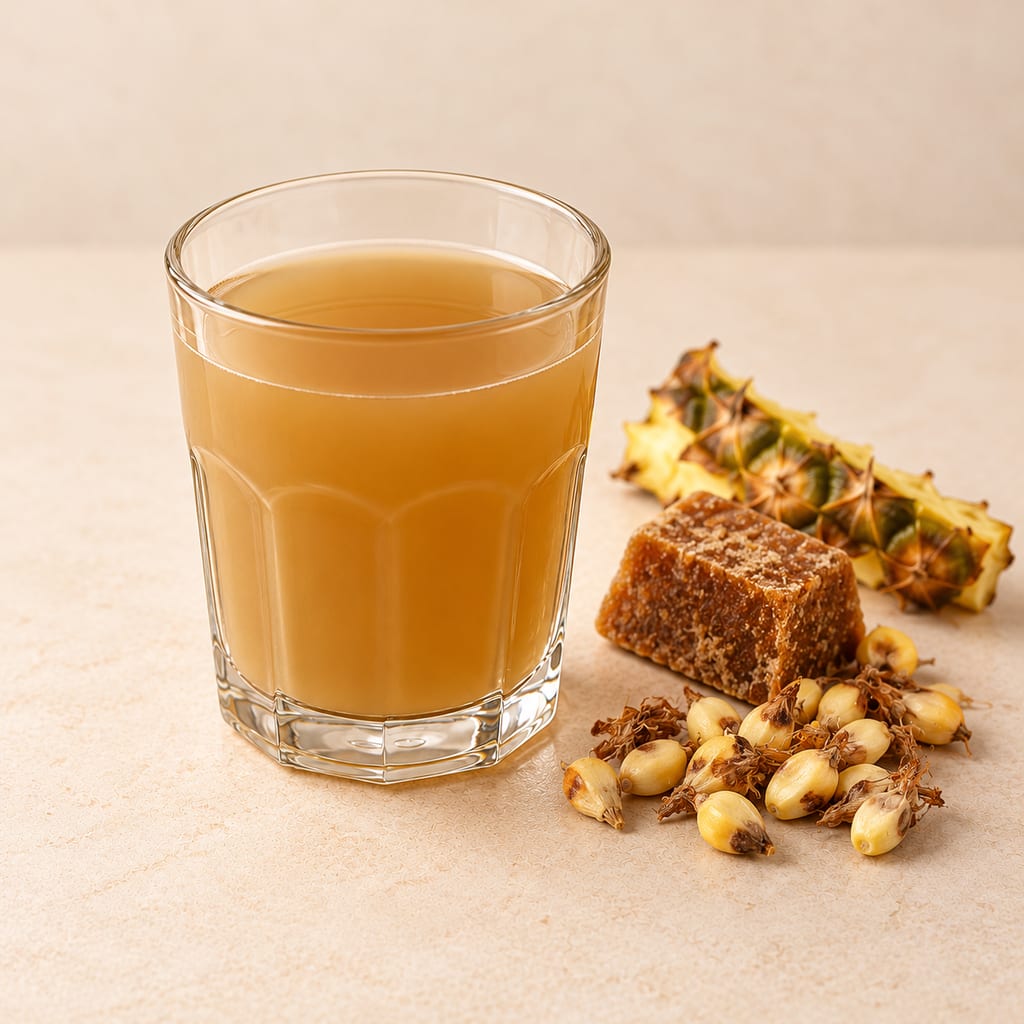
Ishpingo is most famously associated with colada morada, the black-maize and fruit drink prepared for the Day of the Dead on November 2. In this context, it is one of five traditional spices, alongside cinnamon, clove, star anise, and sweet pepper. It provides a deep, aromatic base that complements the tartness of blackberries and the earthiness of black maize. A survey of Quito households found ishpingo mentioned in 36 out of over 100 preparations, classifying it as a key aromatic ingredient.
Beyond colada morada, ishpingo seasons other Andean drinks. In Cotopaxi, it flavors champús, a fermented maize drink served with pineapple (champús blanco) or blackberries (champús morado). In Chimborazo, it is used in jucho, a warm fruit drink associated with capulí season. A typical jucho recipe lists 3 grams of ishpingo for 15 servings, simmered with cinnamon and cloves to create a sweet base before adding peaches, pears, and capulíes.
In chicha de jora, ishpingo is added during the cooking of the jora flour. A standard recipe calls for three whole ishpingos, boiled with cinnamon and cloves for two hours before the maize flour is added. The spice infuses the liquid, contributing aroma to the fermented drink. It is also used in savory dishes, such as seco de chivo and fritada, where it adds a bittersweet note, and in marinades or ground into powder for sauces.
Sources for this section
Variations and Substitutions
Regional variations in the use of ishpingo reflect local availability and taste preferences. In Quito, it is a mandatory component of the colada morada spice blend. In other areas, it may be used more sparingly or replaced by other aromatics if unavailable. The bark of the same tree is sometimes used as a substitute, but it is coarser and has a different chemical profile, leading to a less nuanced flavour. True cinnamon (*Cinnamomum verum*) is not a direct substitute; it lacks the fruity, methyl cinnamate-rich character of ishpingo and breaks down more quickly under heat.
Commercial forms vary. The whole dried cupule is the most common and preferred form for traditional drinks. Ground ishpingo is available and used in sauces and marinades, where its finer texture allows for a more immediate infusion. Bark is sold separately as *canela amazónica*, often in 250g packages, and is marketed for infusions and desserts. Leaf oil is a commercial product for aromatherapy and industrial flavoring, not typically used in home cooking.
Substitutions should be approached with caution. If ishpingo is unavailable, a combination of cinnamon and a small amount of star anise might approximate the spice profile, but it will not replicate the unique fruity-bitter balance. The identity of the dish, particularly colada morada, relies heavily on the specific aroma of ishpingo, making it difficult to replace without altering the character of the preparation.
Sources for this section
Reading results and problems
When using ishpingo, the primary challenge is balancing its strong aroma. Because it releases more flavour as it simmers, adding it too early can result in an overpowering, medicinal taste. The recommended practice is to add it towards the end of the boiling process, 10 to 15 minutes before finishing, to preserve its delicate fruity notes. In long-fermented drinks like chicha, it is added during the cooking stage, where it infuses the base liquid before fermentation begins.
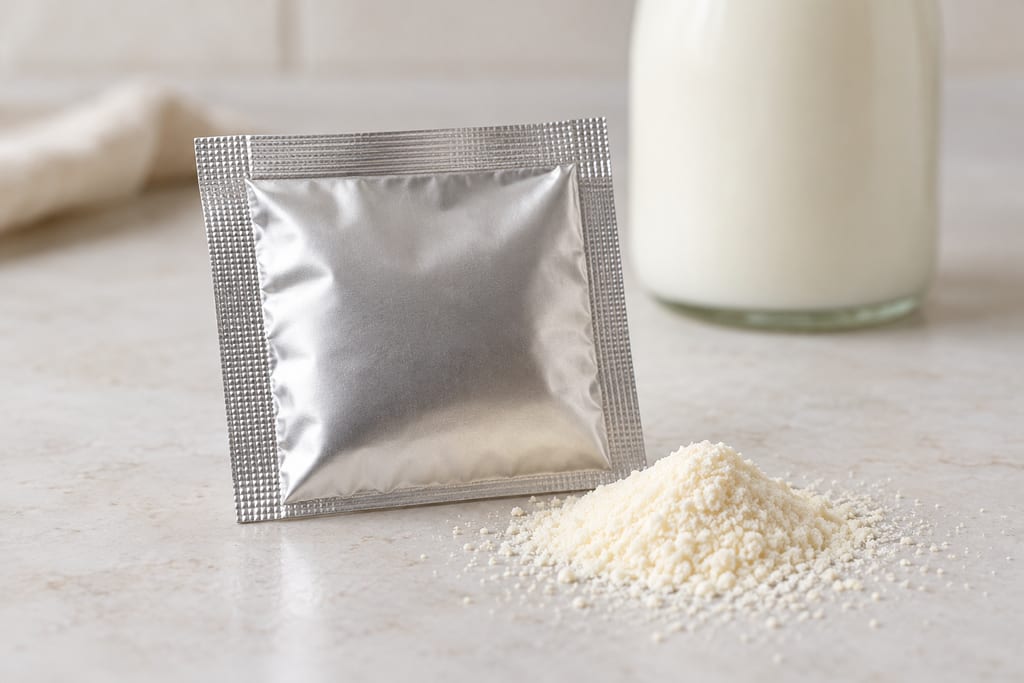
Quality varies by source. High-quality ishpingo is dark, hard, and has a pronounced hat shape. Poor-quality or old stock may be lighter in colour, brittle, or have a faded aroma. The price reflects this quality, with retail costs ranging from USD 12 to 15 per pound. In popular markets, small pre-mixed spice packets are available for USD 1, offering an accessible way to use the spice without buying in bulk.
Storage is straightforward: dried calyces keep well in airtight containers away from light and moisture. They do not spoil easily but can lose aroma over time. If the spice has no scent, it is likely stale and will not contribute significantly to the dish. There are no known allergens associated with ishpingo, but as with any spice, individual sensitivities are possible.
Sources for this section
Places
Tena
Modern adaptation · Locality evidenceHarvest location for ishpingo spice.
Macas
Modern adaptation · Locality evidenceHarvest location for ishpingo spice.
Puni Kotona
Documented preparation · Locality evidenceConservation and nursery site for ishpingo.