A sweetener made from concentrated cane juice
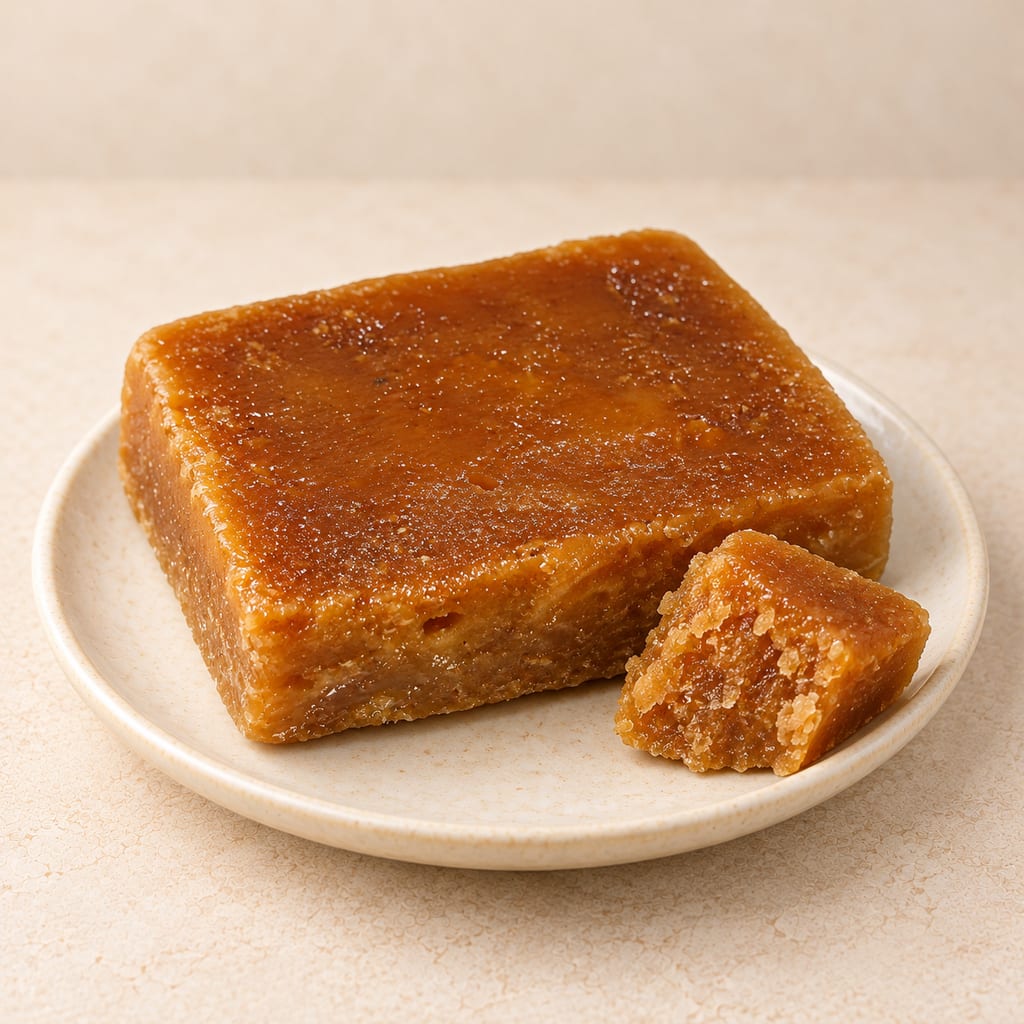
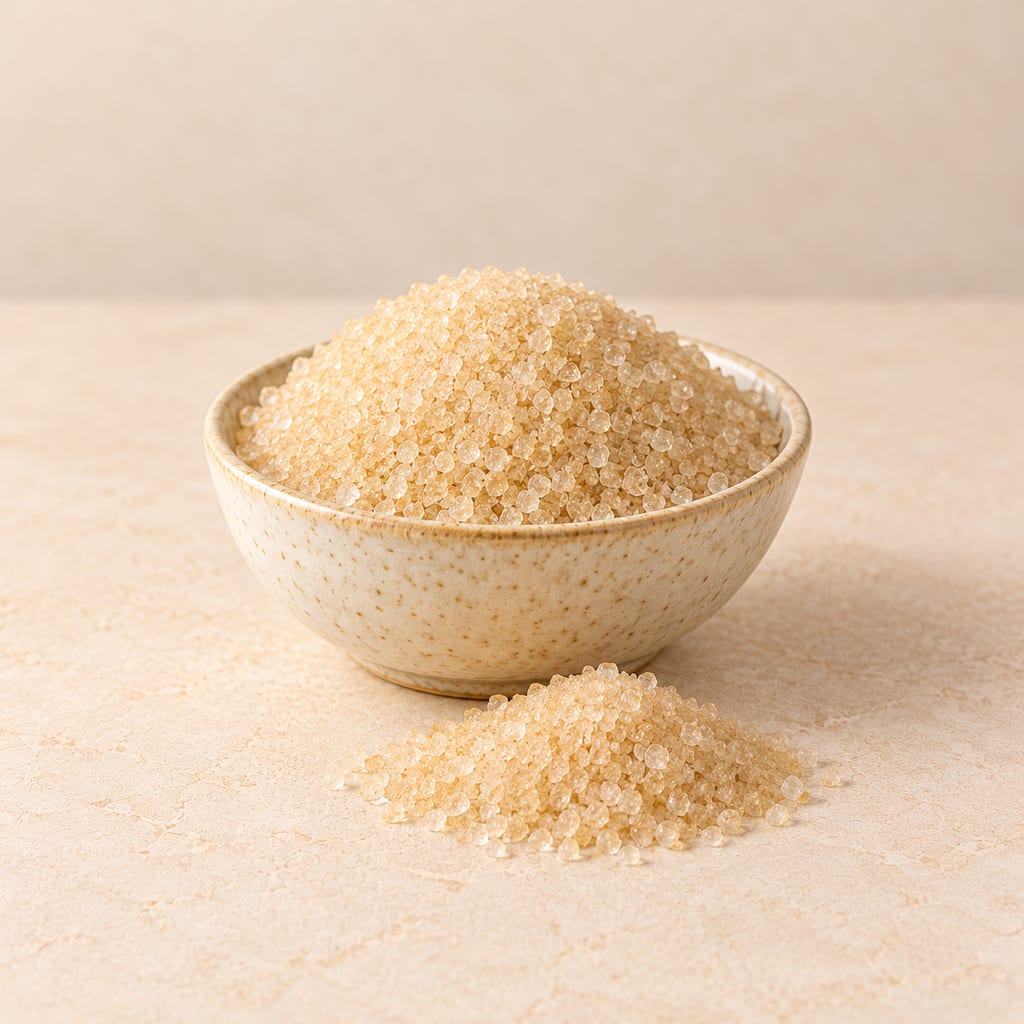
Panela is a solid sweetener made by concentrating sugarcane juice and letting it set, usually in a block mold. It is brown, sweet, and distinctively aromatic; it may be rectangular, conical, tied into a small bundle, or sold loose as granules or powder. Unlike familiar white sugar, it is not spun in a centrifuge to separate crystals from the remaining syrup. The word names a family of cane products whose shape, color, grain, and exact composition reflect the cane and the mill that made them.
The crop behind panela is sugarcane, a tall grass in the genus Saccharum. Cane used for sugar is commonly named Saccharum officinarum, though modern commercial sugarcane includes hybrids. Its ancestry took shape over a long sequence of cultivation, movement, selection, and crossing: people managed wild Saccharum robustum around New Guinea before sugar-rich S. officinarum and other cultivated forms emerged. This crop history reaches far earlier than the particular histories of the cane sweets later made in different regions.
The defining distinction is how the juice is processed. Sugarcane is pressed, the juice is cleaned and heated, and water is evaporated until the syrup becomes thick enough to set. In block panela, the hot concentrate is poured or beaten into molds and cooled. No centrifuge separates out the bulk of the cane syrup as it does during ordinary crystalline-sugar manufacture. The solid therefore holds together sucrose with glucose, fructose, moisture, and smaller amounts of other cane-derived material. Its surface can be smooth or grainy; its interior may be dense or slightly crystalline. A block can be shaved, grated, chopped, or dissolved, while loose panela is ready to measure and stir into liquid.
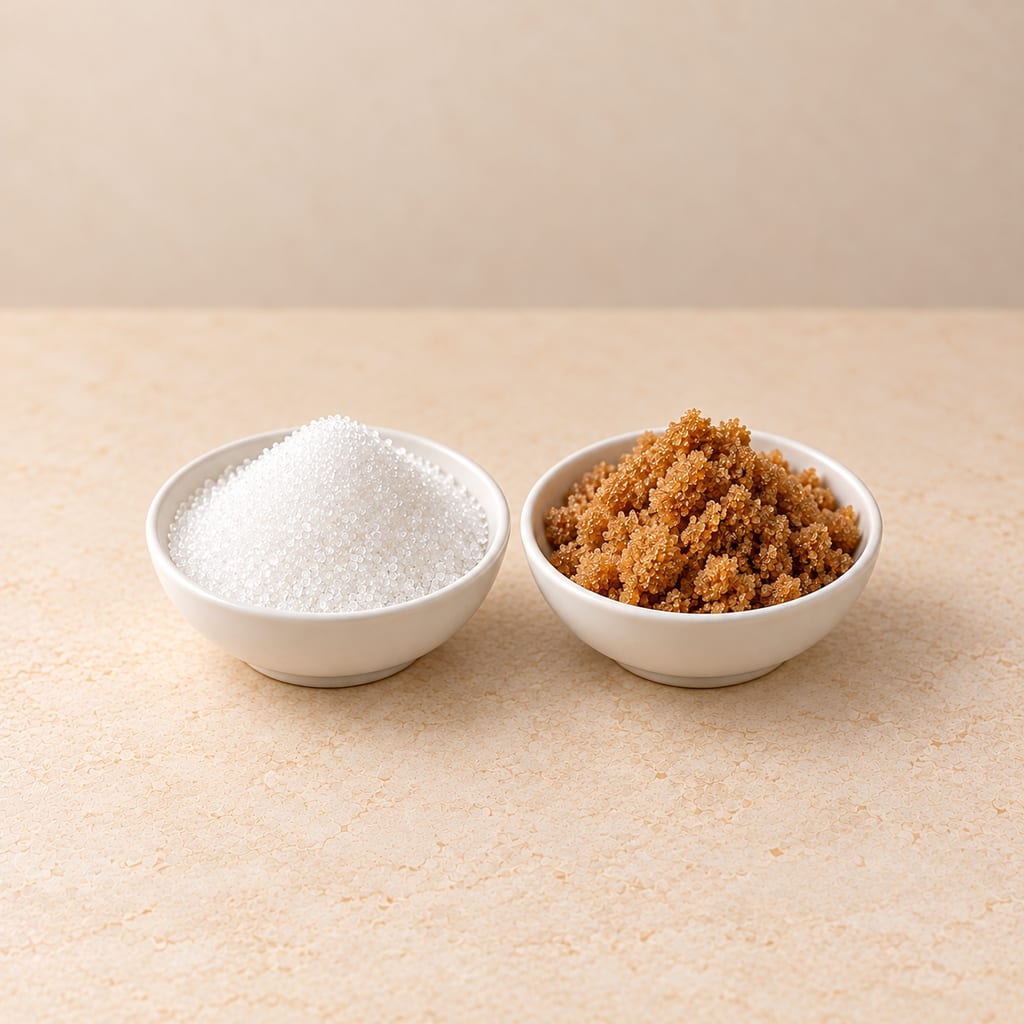
This is not simply white sugar with molasses poured back in. Refined sugar and many commercial brown sugars are made through crystallization and separation; panela retains the mixture produced when cane juice is concentrated as a whole. “Whole” does not mean that every panela has identical composition or a guaranteed nutrient profile. The raw juice, clarification, heating, final moisture, and granulation method all affect the result. Molded, granulated, and spray-dried samples can differ in color and in their measured minor compounds, so one sample’s laboratory profile should not be treated as a universal nutrition label.
Its sugars set together in a dense block instead of separating into the free-flowing crystals of refined sugar. That changes the small kitchen task: chop or grate the block, dissolve it, or choose a loose form when an even distribution matters.
Sources for this section
Fields, mills, and household economies
Panela begins in a cane field, but a block also records the place and working arrangement of the mill. In Ecuador, the cane mill is called a trapiche; the mill premises may be called a ramada or panelera. Cane varieties suited to one mill are not interchangeable raw material: varieties differ in soluble solids, yield, cane form, maturity, and ease of clarification. An Ecuadorian agricultural estimate for 2023 placed the possible area devoted to cane juice for panela, molasses, and traditional sweets at up to 30,000 hectares. It sketches a diverse sector, not a count of panela farms or a fixed measure of acreage.
Cane maturity is another part of the harvest decision. Growers can judge it from leaf color, stalk thickness, and sweetness, or measure the soluble solids in the juice. Varieties with strong sugar concentration and quick clarification can improve the mill’s yield and the consistency of its finished blocks.
The work around a trapiche has also shaped community life. At Mascarilla, in Ecuador’s Chota valley, Afro-Ecuadorian recollections of a former mill preserve details of seasonal cane work, jobs at the boiling pans and mill, and the making of panela, syrup, and liquor. Mieleros, moledores, and empapeladoras held distinct roles. Women wrapped small blocks in leaves; families carried them to markets and exchanged panela for maize, potatoes, and other goods. The sweetener moved through household labor and local exchange rather than as a packaged commodity with a national brand. Each mill had its own molds, shapes, and wrapping customs. These practices belong to Mascarilla and to the generations remembered there, not to every Ecuadorian mill.
In Útica, Cundinamarca, local figures count 272 farmers and 165 enramadas or trapiches in 2012. As of August 2019, the municipality had 3,017 hectares of cane; the cited production figure was an average of 16,401 tonnes of panela. Family members carried processing knowledge between generations, while small producers faced practical constraints around labor, technical assistance, and market access. This Colombian locality offers a second view of the work behind panela: a crop, mill, and market connected through a household-scale value chain. Its figures do not describe Ecuador.
By 1933, panela or raspadura was reaching Quito from hacienda production. Contemporary concern about insoluble material offers a window onto processing in that period, not a description of panela sold today or an exact origin story.
Sources for this section
From cut cane to a set block
At the mill, the first task is to get the juice out of the stalk. A trapiche presses cane through rollers, separating liquid from fibrous bagasse. The bagasse can serve as fuel, so extraction produces both the sweet juice and material that may return to the fire. The juice carries more than dissolved sugar: it can contain cane fibers, suspended earth, gums, waxes, fats, and pigments. Sieves and settling tanks remove bagacillo, mud, and sand; clarification separates non-sugar material from the liquid. As heating begins, foam and coagulated material rise as cachaza and are skimmed away. This cleaning stage shapes the color and flavor of the syrup that remains. The practice varies: some Ecuadorian mills use mucilage from yausabara, while others use different plant materials or technical approaches. No single clarification ingredient belongs to every panela.
Once clarified, the juice is heated in open pans. Water boils away, concentrating the sugars and raising the syrup’s boiling point as it thickens. This is the central physical transformation: a large volume of dilute juice becomes dense syrup. The sequence moves from extraction and cleaning to clarification, evaporation, final concentration, agitation, molding, and cooling. Punteo is the maker’s judgment about when the syrup has reached the consistency for the intended product. Ecuadorian block-panela production is described at a finishing range of 116–122°C and 88–92° Brix; the lower end gives a softer block and the higher end a harder one. Elevation and local conditions affect boiling, so these figures describe a production context rather than a universal household endpoint.
Beating or stirring the concentrated syrup as it cools helps it become workable and set. It changes the physical arrangement of the sugars: sucrose crystals form and grow within a concentrated mixture of sugars and other dissolved cane material. The resulting structure is not the same as refined crystalline sugar. The syrup goes into molds while hot enough to flow, then cools into shapes used by a particular mill or market. In Ecuador, blocks may be rectangular, conical, or tied; loose or granulated products are separate finishes with different texture and handling.
Color is not a simple score of goodness. It can change with cane variety, juice clarification, heating, and final product form. More intensive thermal treatment can produce darker non-centrifugal cane sugar and change measured phenolic and flavonoid compounds. Color alone cannot identify an exact process, mineral content, or safety.
Sources for this section
What the sugars contribute
Sucrose makes up most of panela’s sweetness. Glucose and fructose are also present, and their proportions depend on the cane and how the juice is clarified and heated. Heat and acidity can convert some sucrose into these simpler sugars, a change called inversion. That chemistry affects the concentrated syrup as it cools and sets. It is separate from fermentation: panela is made by pressing, heating, concentrating, and setting cane juice, not by growing a starter culture.
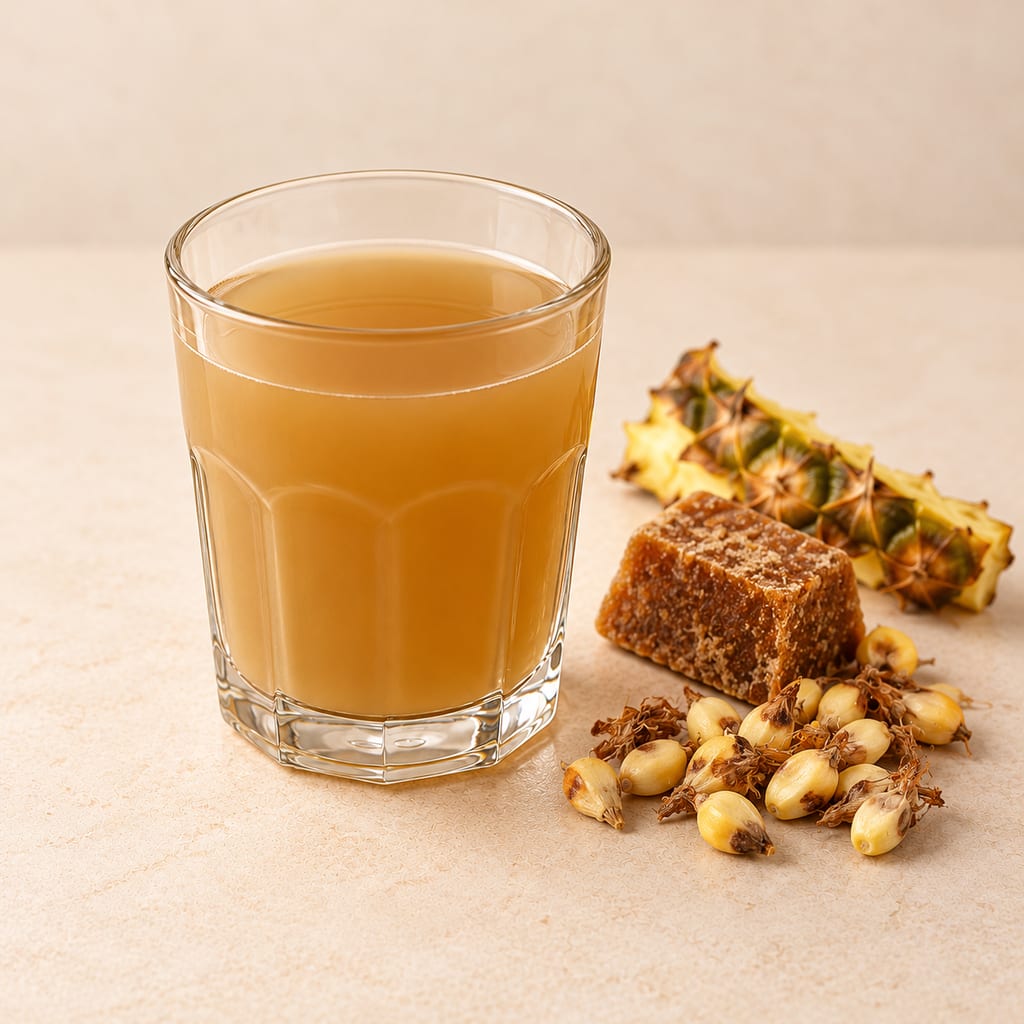
In a fermented drink, panela can provide soluble sugar and its own cane aroma. One Ecuadorian chicha de jora formula uses two cups of panela in five litres of water, added in pieces after the cooked jora mixture has cooled and been moved to a fermentation jar. Pineapple peel goes in at the same stage, followed by a two-day ferment. Malted maize also contributes fermentable material, so panela works alongside the grain rather than defining the drink by itself. The two-cup measure belongs to this Cañar-attributed formula.
In Cumbe, Azuay, panela appears in several distinct maize preparations. Timbulos are maize-flour parcels with miel de panela at the center, called the shungo, wrapped and tied in softened dry maize husks. For local chicha de jora, germinated maize is dried, toasted, and ground; the jora flour is combined with hot water and pieces of panela in a tinaja to ferment. Champús takes a different route: cooked maize is finished with maize flour, cinnamon, and panela, then boiled again into a loose sweet porridge or drink associated with Christmas gatherings. These are Cumbe foodways, not a national recipe template.
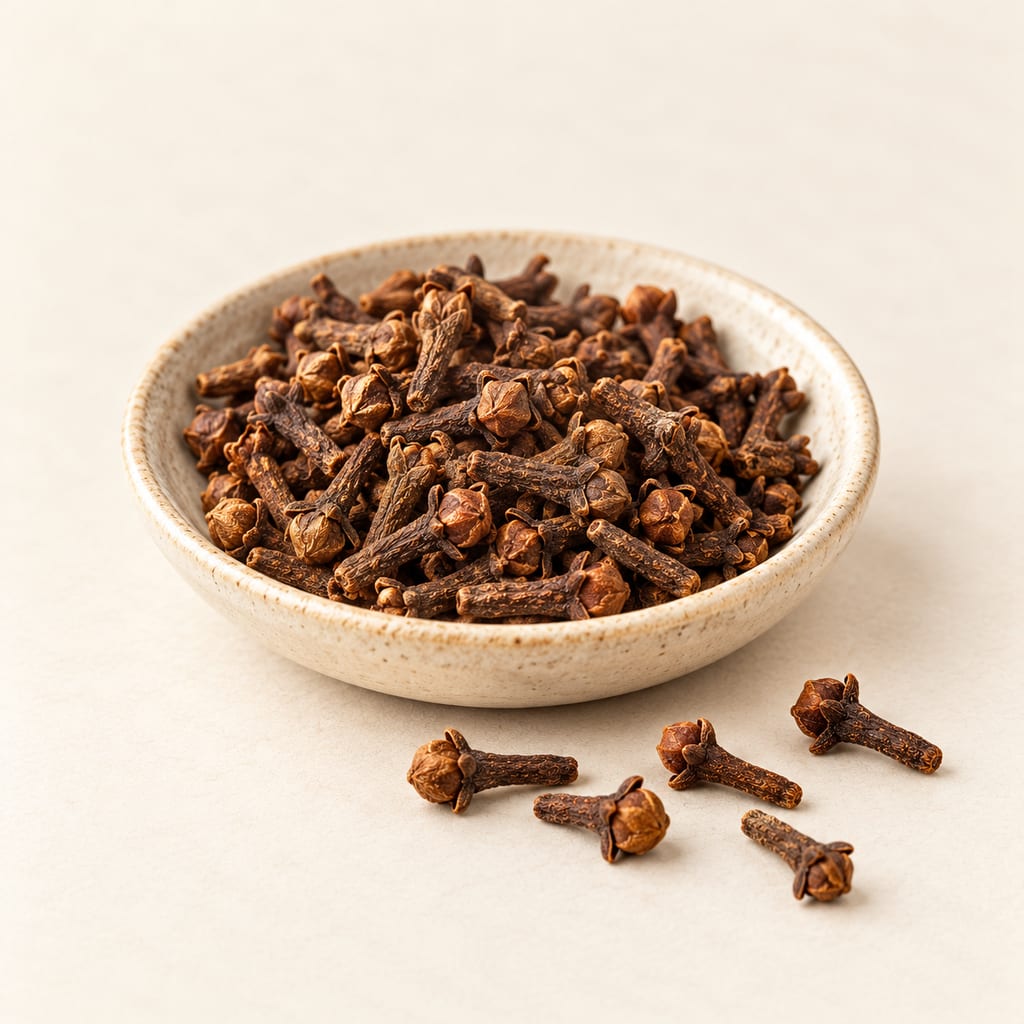
In Otavalo, figs with cheese turn a block into a spiced syrup. The whole panela block melts over low heat with cinnamon, cloves, and pimienta dulce; washed figs are halved or quartered, then cooked in the syrup for two hours over medium-low heat and served with fresh cheese. That long simmer makes the sweetener part of the dish’s sauce, while the cheese gives the finished plate a savory counterpoint. Another local account describes a cook preparing the same seasonal combination for Día de los Difuntos with panela, cinnamon, and cloves.
Colombian cooks also dissolve panela as aguapanela or aguadepanela: the documented common proportion is half a pound to a litre of water, served hot or cold and optionally scented with cinnamon, anise, or cloves. In Andean settings it accompanies bread and cheese; in warm climates it may be chilled with lemon, and in parts of Antioquia it can form the base for chocolate. Panela’s range extends beyond drinks and desserts: a regional recipe uses powdered panela in a citrus, garlic, onion, and soy-seasoned sauce for grilled chicken.
Sources for this section
Names that travel, and names that do not mean the same thing
In Ecuador, panela is also called raspadura; chancaca is another name used for this cane sweetener. Across regions, related cane sweets may be sold as rapadura in Brazil, Cuba, Bolivia, and Ecuador or piloncillo in Costa Rica and Mexico; gur or jaggery is another name recorded for India. These regional labels do not guarantee the same mold, grain, degree of clarification, flavor, or recipe behavior.
A name needs a botanical qualifier when the ingredient changes. A 2021 Indian regulatory classification distinguishes cane jaggery from jaggery made from palmyra or coconut palm and from date palm. A recipe that calls for panela means a cane-juice product; an unqualified “jaggery” label can cover a different plant source. Even cane-based products may differ in moisture, shape, grain, and processing, so a regional analogue is not automatically an exact substitution.
Sources for this section
Buying and keeping panela
The form should suit the way it will be used. A block is the traditional and widely recognizable market form; it can be broken down or grated as needed. Loose granulated or powdered panela saves that step and disperses easily, but it is not necessarily the same texture as a molded block. In Ecuador, blocks may be rectangular, conical, or tied; the form reflects local molding customs and the market the mill supplies. A consistent color is not a guarantee of quality: cane type and clarification affect color, and very pale or very dark products can result from processing differences. Choose a clearly identified cane product, a form that matches the intended use, and packaging that keeps it dry.
Panela attracts moisture from its surroundings. Keep it dry and cool, off the floor, in a low-humidity place, and avoid heavy stacks that can compact or damage it. In Colombian storage trials run across 13–34°C and 60–90% relative humidity, blocks with 8–10% moisture allowed only short storage under ordinary producing-region conditions; longer preservation required equilibrium moisture below 7%. Those measured conditions are not a use-by date for every block. Keep the product sealed and dry, and follow its label where available.
Sources for this section
Places
Ecuador
Documented preparation · Country evidenceEcuadorian production and a Cañar-attributed chicha use are documented; this does not date the invention or first arrival of panela.