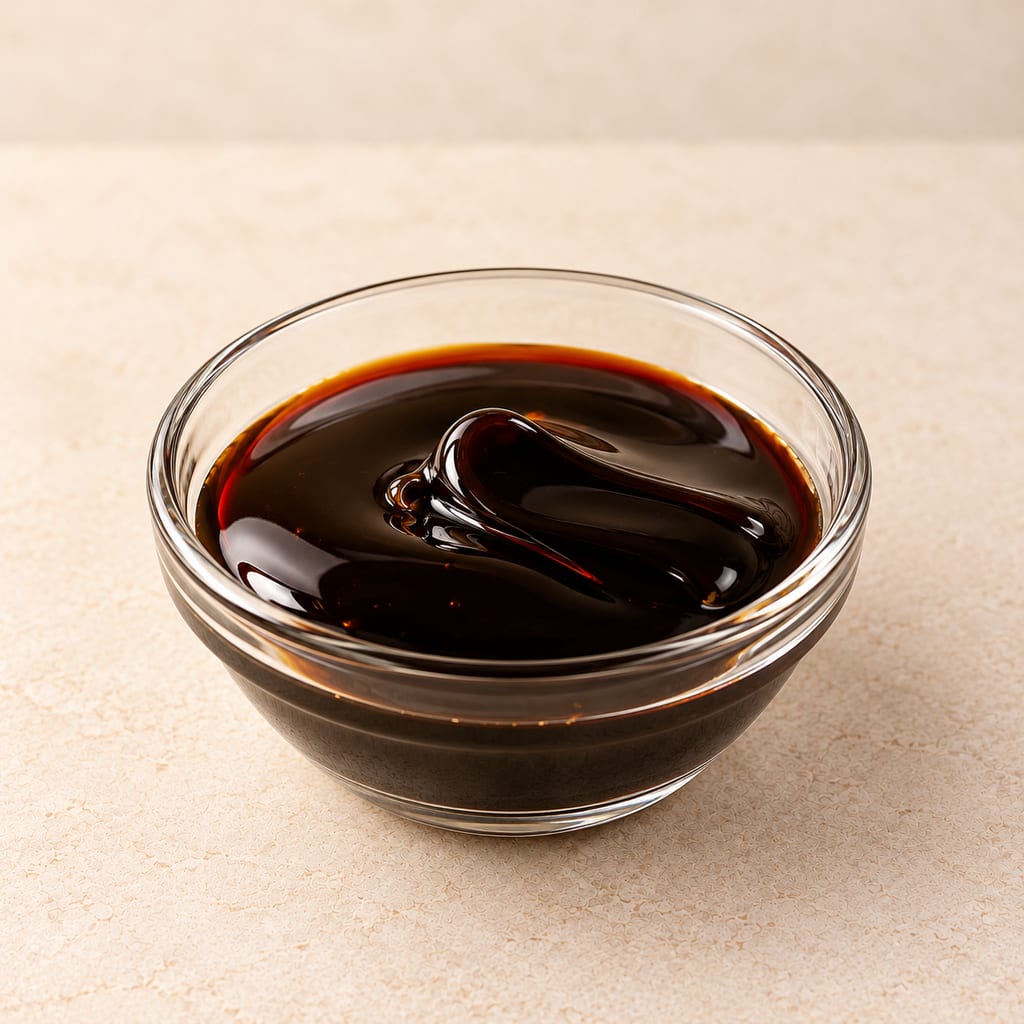
Molasses / dark treacle
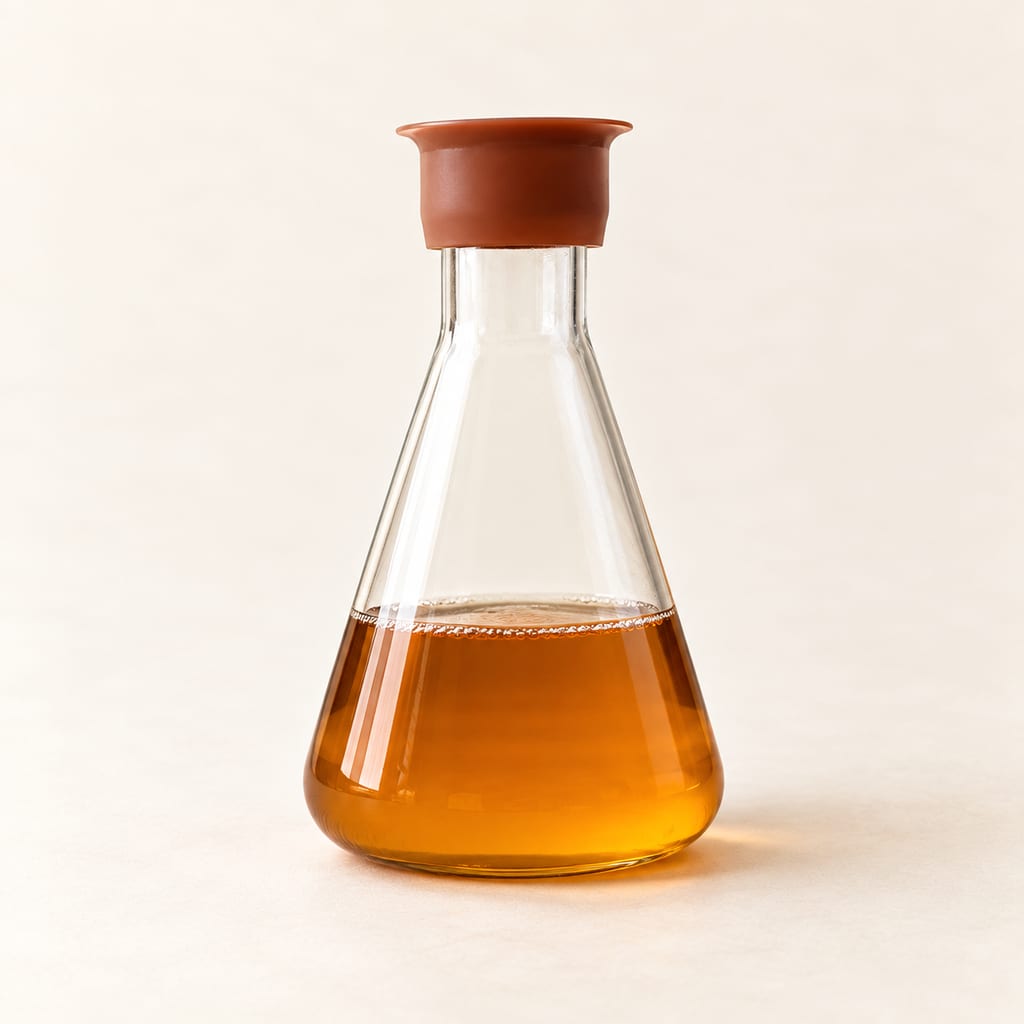
Molasses is the syrup separated as sugar crystallises from cane or beet; its grades and food uses vary, from Anadama and steamed brown bread to fermentation.
 FermenteaWhere food goes to change
Sugar sources
White sugar is refined sucrose, almost pure; brown sugar is sucrose with molasses, left in or added back. Molasses makes brown sugar moister, darker and more strongly flavoured.
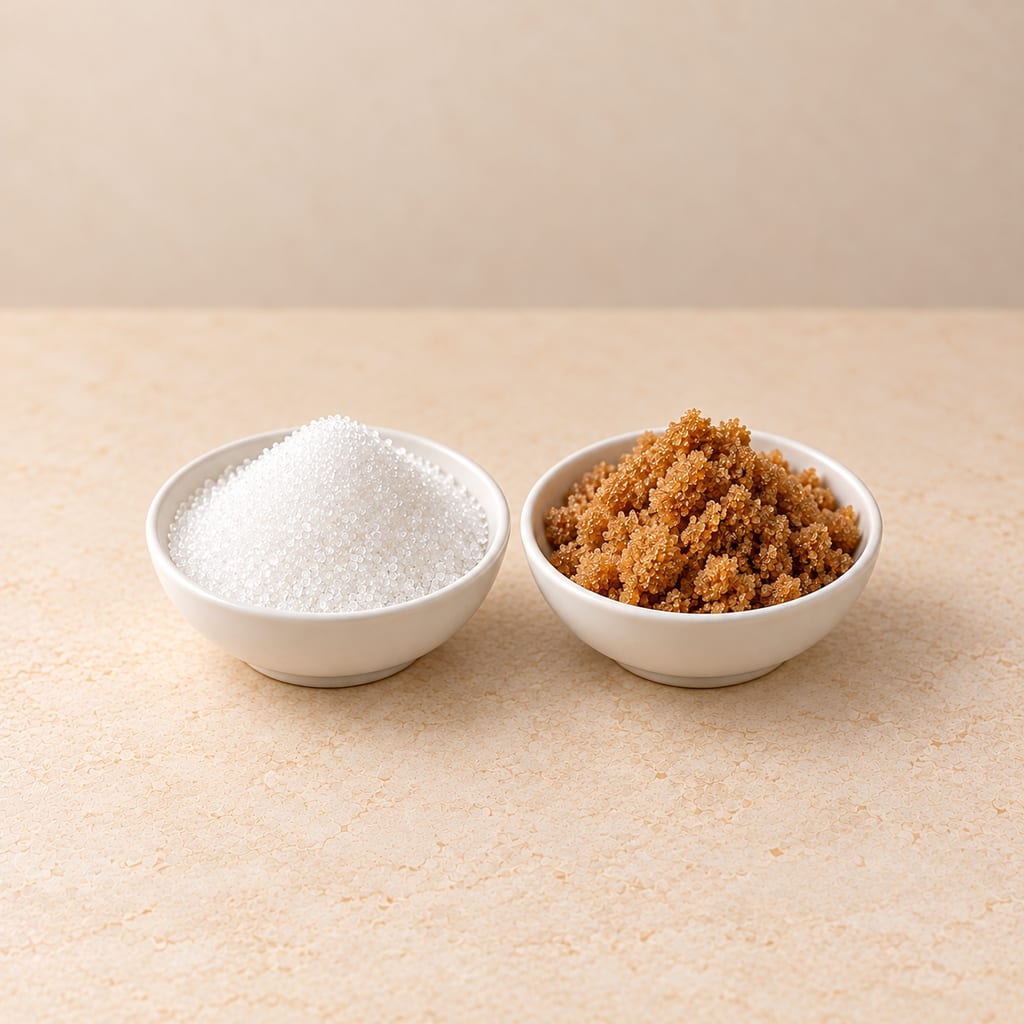
White sugar and brown sugar are the same molecule, sucrose, and differ in how much of the cane or beet juice is still clinging to it. Raw sugar is sucrose extracted from the juice with a sticky brown coating of molasses still on the crystals. White, or refined, sugar is raw sugar refined to remove that coating, and it is almost pure sucrose. Brown sugar is granulated sugar with molasses either left in or added back, and its darkness depends on how much molasses it carries. Muscovado and turbinado are the best-known examples.
The trade measures this with ICUMSA numbers, set by the International Commission for Uniform Methods of Sugar Analysis, where a lower number means higher purity: refined sugar is below 300 and raw sugar above 1,500. Definitions in the Codex sugar standard follow the same line. In a proposed amendment, soft white sugar is a fine-grained, purified, moist sugar that is white and holds at least 97 percent sucrose plus invert sugar, soft brown sugar is a light to dark brown version with at least 88 percent, and raw cane sugar is partially purified sucrose crystallised from partially purified cane juice, its crystals coated with a film of cane molasses.
The difference shows in a table of composition. Per 100 grams, granulated sugar holds 99.98 grams of carbohydrate and 0.03 grams of water, and about 387 kilocalories. Brown sugar holds 97.33 grams of carbohydrate and 1.77 grams of water, about 377 kilocalories, with 85 milligrams of calcium against 1, 1.91 milligrams of iron against 0.01 and 133 milligrams of potassium against 2. Neither has fibre, protein or fat. The extra minerals are the molasses, and they are small amounts in a food that is overwhelmingly sucrose.
Sugar crossed the world slowly. Arab and Muslim traders carried cane across the Abbasid world from about the eighth century, and by the tenth century every village in Mesopotamia grew it. Sugar reached the Mediterranean in the thirteenth century, with Cyprus and Sicily important producers; it was mass produced on Madeira and the Canary Islands in the mid-fifteenth century; and Columbus brought cane to Hispaniola on his second voyage, with Cuba and Jamaica having sugar industries by the 1520s. Sugar loaves, cones of hard-pressed white sugar, were the standard form until the late nineteenth century. In Britain, consumption rose from about 2 pounds a person a year in 1650 to about 90 pounds in the early twentieth century, and world consumption rose more than a hundredfold between 1850 and 2000.
The plantation economy that supplied this sugar rested on forced labour. Sugar was one side of the Atlantic triangle trade, and plantation labour was a main basis of the Atlantic slave trade. After the British Slavery Abolition Act of 1833, planters recruited indentured workers from China and India, and in Queensland and New South Wales between 1863 and 1900, 55,000 to 62,500 South Pacific islanders were brought to the cane fields, about a third of them coerced or kidnapped.
What counted as brown sugar changed as refining did. In the nineteenth-century United States, brown sugar of commerce was a product that could be refined to yield about 70 percent of its weight in white sugar. In Britain, muscovado was the commonest raw sugar and was called brown sugar. In the twentieth century the words could mean a centrifuged raw sugar of about 97 percent purity sold in health-food shops, or white sugar with molasses added. In the late nineteenth century, refined-sugar interests played on fears about brown sugar, and by 1900 a best-selling cookbook warned that it was prone to infestation by a minute insect.
Both kinds of sugar come from two crops. Sugarcane is a tropical grass whose stalks hold 11 to 16 grams of sucrose per 100 grams; sugar beet is a temperate root crop that yields 16 to 17. Cane supplies 79 percent of the world’s sugar and beet most of the rest. In the United States cane has supplied 40 to 45 percent of sugar and beet 55 to 60 percent since the mid-2000s, with cane grown mainly in Florida, Louisiana and Texas. Cut cane must be processed quickly because its sucrose deteriorates, and beet, though it can be stored briefly, has to be processed before its sucrose breaks down too.
The crops follow different routes. Cane is crushed or diffused in a mill, the juice is clarified with lime, and heat deactivates enzymes. The juice is evaporated to a syrup and seeded so sugar crystallises, leaving bagasse, the fibre, to be burned for process energy and molasses as a by-product. Beet is washed, sliced and extracted by diffusion, milk of lime and calcium carbonate are added to the raw juice, and the syrup is evaporated under vacuum, seeded and spun in a centrifuge. Beet sugar made this way is white and needs no further refining. So cane sugar usually reaches the table through a refinery, while beet sugar leaves its factory white.
Beet sugar is a German invention. It began with Marggraf’s experiments in 1747, and industrial production began in 1801 at Cunern in Prussia. Cane sugar is older by far. It was first made from cane on the Indian subcontinent, a claim that Chinese manuscripts of the eighth century BCE support, and the word sugar itself comes from Sanskrit śarkarā through Persian shakar and Arabic sukkar to Old French sucre in the twelfth century.
A mill produces raw sugar; a refinery makes white sugar from it, and the steps explain what white sugar is. First comes affination: the raw crystals are soaked in concentrated syrup, which strips the brown coating without dissolving the crystals. The crystals are then dissolved in water and the liquor is clarified by carbonatation or phosphatation, in which a fine precipitate forms and carries impurities out when it is filtered. Colour is removed with granular activated carbon or ion-exchange resin, and bone char was traditionally used. The clear syrup is boiled down under vacuum, cooled, seeded with crystals and spun in a centrifuge to separate crystals from liquor, and the white crystals are dried in hot air.
What is left in the centrifuge is the other half of the story. Surplus liquor becomes refiners’ molasses, and the dark washings from affination can be boiled again to give brown sugar and treacle. Sulphur dioxide is added to cane juice at the mill to inhibit colour formation and stabilise the juice during evaporation.
Brown sugar comes by two routes, and the labels do not always say which. Some is unrefined or partially refined soft sugar that keeps the molasses of its mother liquor. Most commercial brown sugar is made by adding cane molasses to fully refined white sugar crystals, and the colour depends on how much goes in. Cane molasses is usual, but beet molasses is used in some areas, especially Belgium and the Netherlands. A wash test separates them: refined-based brown sugar is coarser and its molasses washes off to reveal white crystals, while unrefined brown sugar reveals off-white crystals.
The amount of molasses is modest. Commercial light brown sugar contains about 3.5 percent molasses by volume and dark brown about 6.5 percent; regular commercial brown sugar has up to 10 percent by weight, and another account gives 5 to 10 percent. Brown sugars are also graded by number, with 6, 8, 10 and 13 the most common and higher numbers darker. A home cook can make brown sugar by mixing about a tablespoon of molasses into a cup of white sugar, which gives molasses roughly 3 to 7 percent of the weight. The molasses used is the subject of its own pages, one on dark molasses and treacle and one on cane syrup.
Muscovado is the darkest modern natural brown sugar, sometimes nearly black. The name is a corruption of the Portuguese açúcar mascavado, unrefined sugar, and there is no legal definition or international standard, so manufacturers label various products muscovado and the name is confused with brown sugar and jaggery. It is made by evaporating cane juice until crystals form in a mixture with the molasses called massecuite. Village producers beat or tread the cooling mass into grains, with a paddle in India and by foot in parts of Africa. Larger mills spin the mass in a centrifuge and let the molasses drain by gravity, as in Mauritius, a technique that dates from the late eighteenth or early nineteenth century, and modern factories can also use a spray dryer. Set in moulds without shearing, centrifuging or spray drying, the same massecuite becomes jaggery.
Muscovado output is 10 to 11 million tonnes a year from 20 nations, 58 percent of it in India, followed by Colombia, Myanmar, Pakistan and Brazil. Indian khand has been used in sweets since at least 500 BCE, in masala chai, kheer and laddu. The Philippines, especially Negros, was a major exporter from the nineteenth century until the late 1970s. In nineteenth-century Europe the word meant poor-quality sugars with a high molasses content.
Elsewhere the same idea has other names. Panela, rapadura, piloncillo and chancaca are minimally centrifuged or uncentrifuged cane sugars from small producers, made by boiling juice in open pans over wood fires until it reaches about 30 percent of its original volume and then moulding it or beating it into granules. In Okinawa, kokuto or kurozato, black sugar, is uncentrifuged cane sugar sold in large lumps and tastes like caramel. Turbinado is partly evaporated cane juice spun in a centrifuge to remove some of the molasses, in large golden crystals, and demerara is amber and 97 to 99 percent sucrose.
Molasses makes brown sugar naturally moist and hygroscopic, which is why it is labelled soft. In a cake or cookie that moisture-holding effect makes the crumb moister and chewier, and the darker the sugar the greater the effect, which is why brown sugar is chosen for chocolate chip cookies. Brown sugar also caramelises more readily than refined sugar, which helps browning in glazes and gravies, and through the Maillard reaction the molasses encourages browning in cooking. Small amounts of baking soda neutralise the acidity of molasses and improve crust colour.
Light and dark are used differently. Light brown sugar, about 3.5 percent molasses, suits cookies and butterscotch; dark brown, about 6.5 percent, suits fuller-flavoured products such as gingerbread. A recipe that calls for brown sugar without saying which usually means light. Muscovado is slightly coarser and stickier than most brown sugars, resists high temperatures and has a reasonably long shelf life; it can replace brown sugar in most recipes, with slightly less liquid.
White sugar does other jobs. Its large crystals disperse colours and flavours and help wet a mixture when water is added; creamed with fat it incorporates air, as in cakes; it adds bulk and viscosity and carries trace ingredients; and it balances acidity, bitterness and saltiness. Perceived sweetness depends on temperature, concentration and acidity. Heating sugar to near 200 °C makes caramel, and heating sucrose in solution produces invert syrup, a mix of glucose and fructose that resists crystallisation in breads, cakes and drinks.
In fermentation, sugar is food. At low levels it feeds microorganisms, and in alcoholic fermentation sucrose is first inverted to glucose and fructose. Winemakers add sugar to must that is low in sugar, called chaptalisation, and bakers add it to yoghurt and bread dough to boost fermentation. A fermented drink can be started from white or brown sugar; the brown brings its molasses with it, and an 1885 brewing handbook warned against raw sugars as contaminated brewing materials.
At high concentration sugar does the opposite. It binds water so it is unavailable to microorganisms, and it preserves candied fruit, jams and marmalades. It also affects water activity, enzyme activity and fat oxidation. In meat curing, sugar became common practice in the nineteenth century to soften the saltiness of the meat, and curers found the meat cured faster and coloured better; a 1921 account by a United States Department of Agriculture biochemist concluded that its value was quality, not preservation, because the amount used is too small to preserve the meat and meat can be cured safely without it.
White sugar comes in several grain sizes: coarse-grain at about 1 to 3 millimetres, granulated at about 0.6 millimetres, and milled or screened sugars such as powdered and caster. Cube sugar is steamed and pressed. Brown sugar particles are generally smaller than granulated white.
Brown sugar sets into lumps when its molasses film dries out. Restoring moisture to it, or warming it until the molasses melts again, brings it back; sugar that has only just started to clump breaks up when worked with a spoon or shaken in a sealed container. Keeping it in a closed container prevents the drying in the first place.
The World Health Organization advises keeping free sugars under 10 percent of energy, about 50 grams or 12 teaspoons a day, with a further reduction to under 5 percent encouraged. Nothing in this advice distinguishes brown from white sugar, whose composition is almost all sucrose.
Sugar was first produced from cane here; crystalline sugar is linked to northern India. The dating rests on attributed accounts.
Produces 58 percent of the world’s muscovado; second-largest cane producer in 2022 at 439.4 million tonnes.
Largest cane producer in 2022 at 724.4 million tonnes.
Marggraf’s experiments in 1747; first industrial beet sugar at Cunern in 1801.
A major muscovado exporter; large mills later took over.
Muscovado is made by centrifuging massecuite.
Kokuto, uncentrifuged black sugar, is an Okinawan specialty.
Molasses is the syrup separated as sugar crystallises from cane or beet; its grades and food uses vary, from Anadama and steamed brown bread to fermentation.
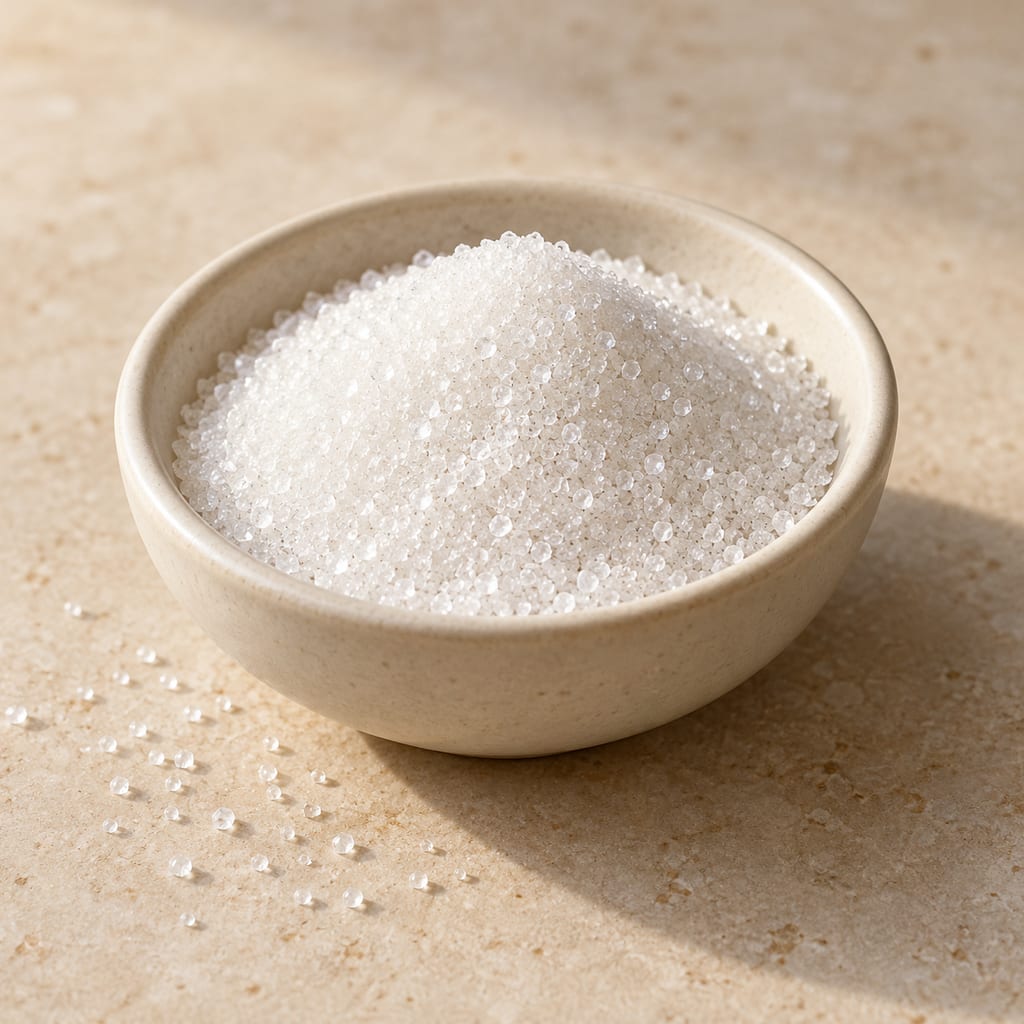
Granulated sugar is dry crystalline sucrose refined from cane or beet. It sweetens dough, feeds baking yeast, and helps set particular fruit spreads.
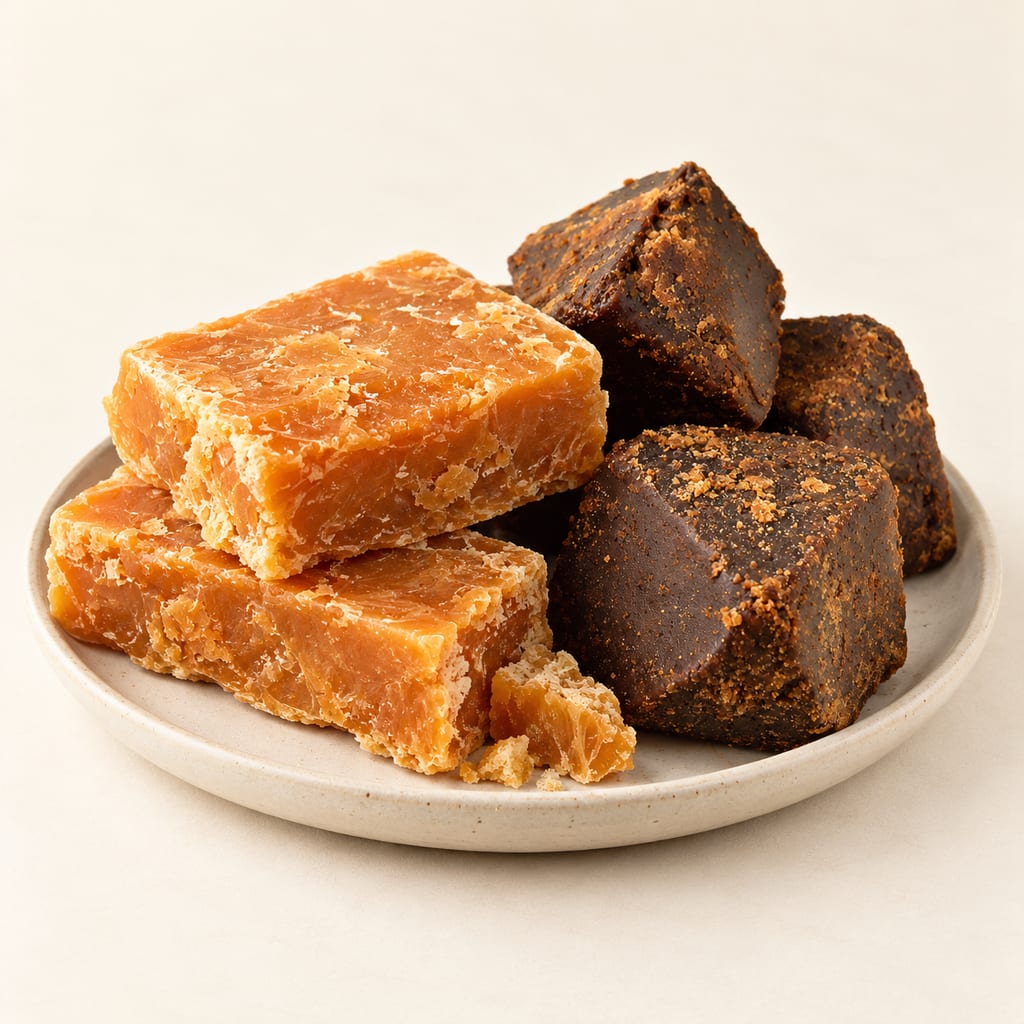
Jaggery is a family of concentrated, non-centrifugal sweeteners made from cane juice or palm sap. Plant source and form shape its flavour and use.
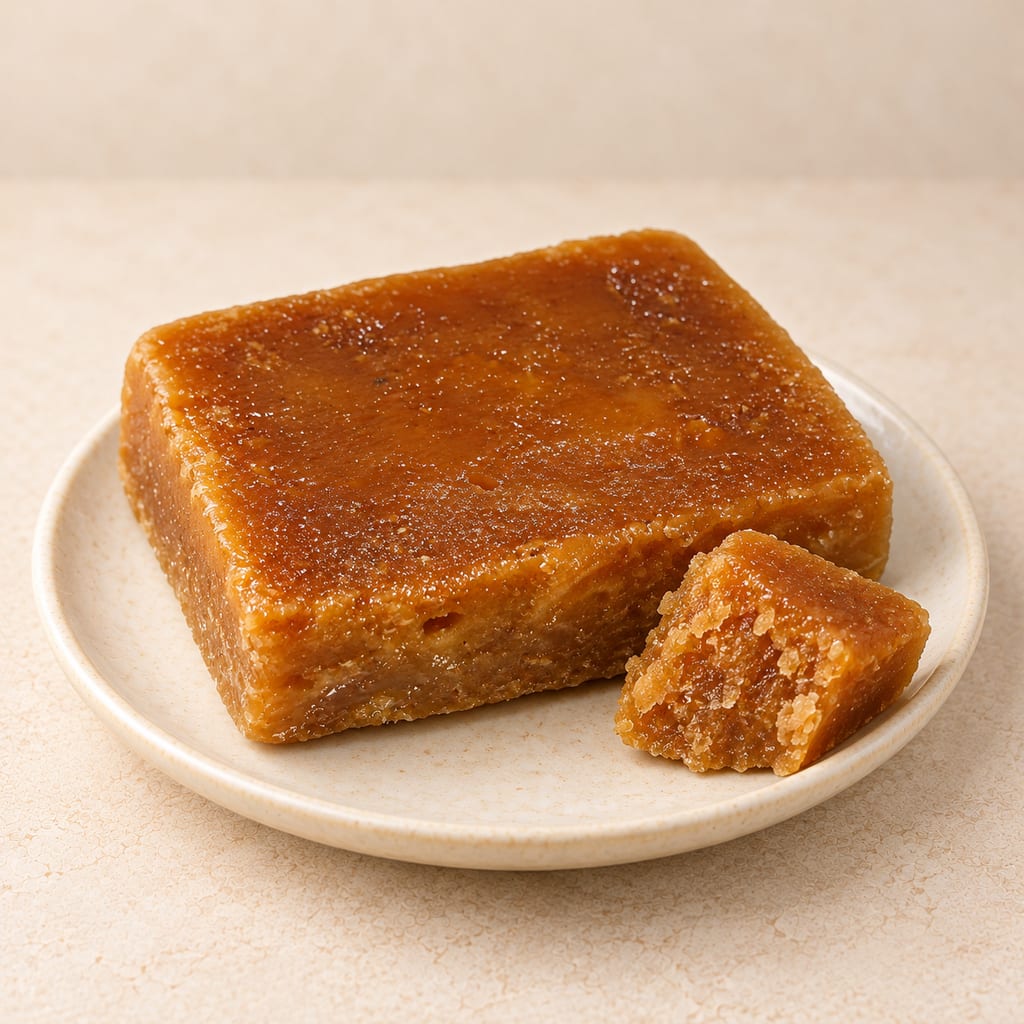
Panela is a solid, non-centrifugal sugarcane sweetener made by concentrating juice and letting it set. A documented Ecuadorian chicha recipe adds it after the cooked jora mixture cools.
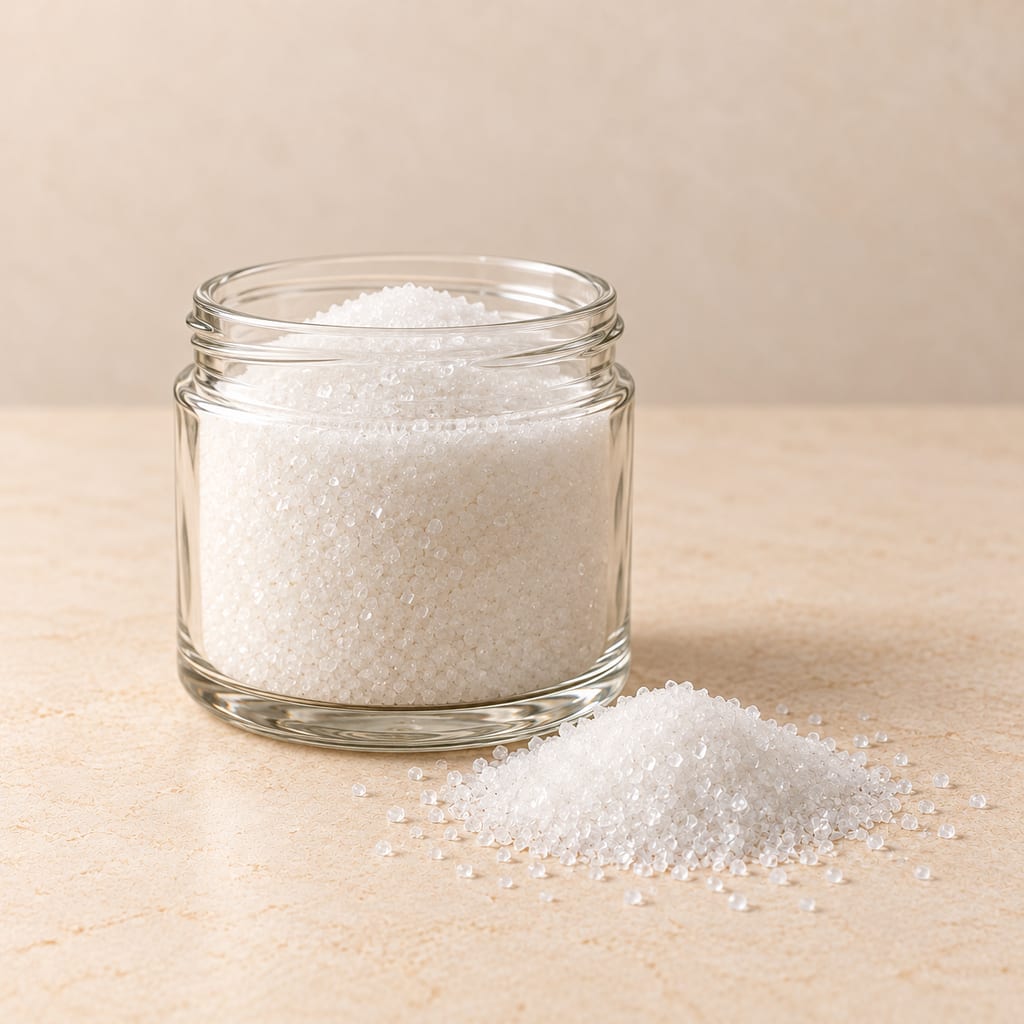
Sugar is a family of sweeteners with different forms and food roles; refined white sucrose may come from cane or beet, while less refined forms add other flavours and moisture.
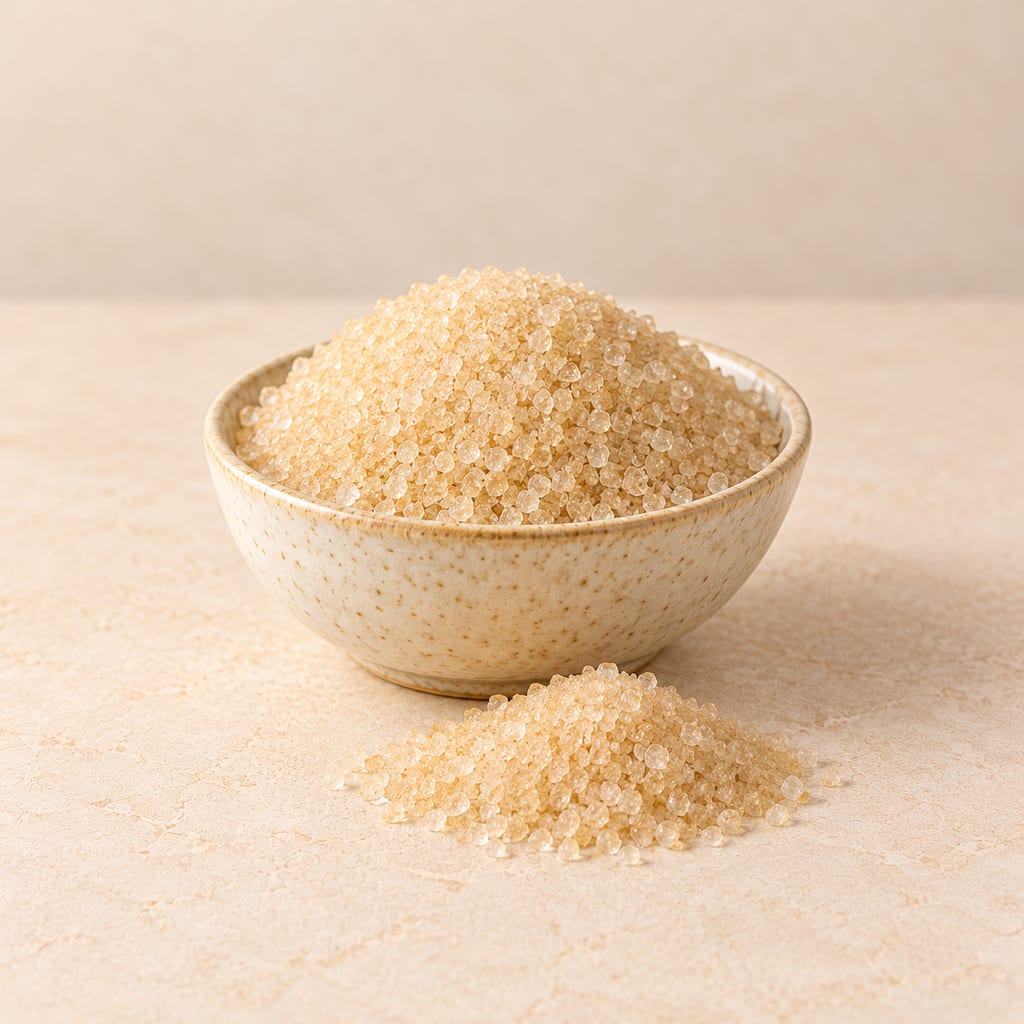
Turbinado is a pale golden cane sugar made by washing and spinning raw crystals, leaving large, dry grains that keep a faint trace of molasses and a mild toffee note.
Awamori yeast ferments sugar released from rice koji in the Okinawan spirit’s mash. Sakimoto names the ingredient but gives no strain, form, supplier or dose.
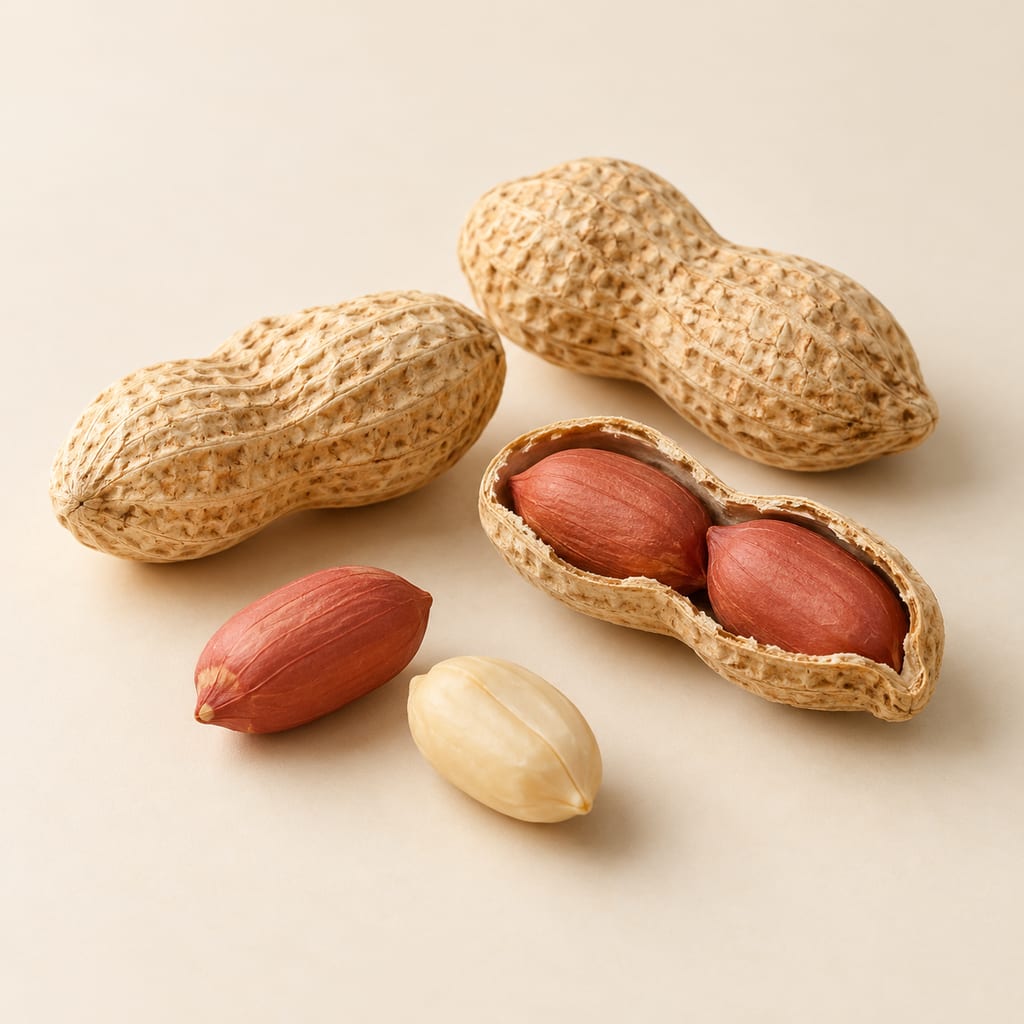
Peanuts are the edible seeds of Arachis hypogaea, a cultivated legume. They are eaten whole, roasted and ground, and peanut oil-press cake is a separate byproduct used in some fermentations.
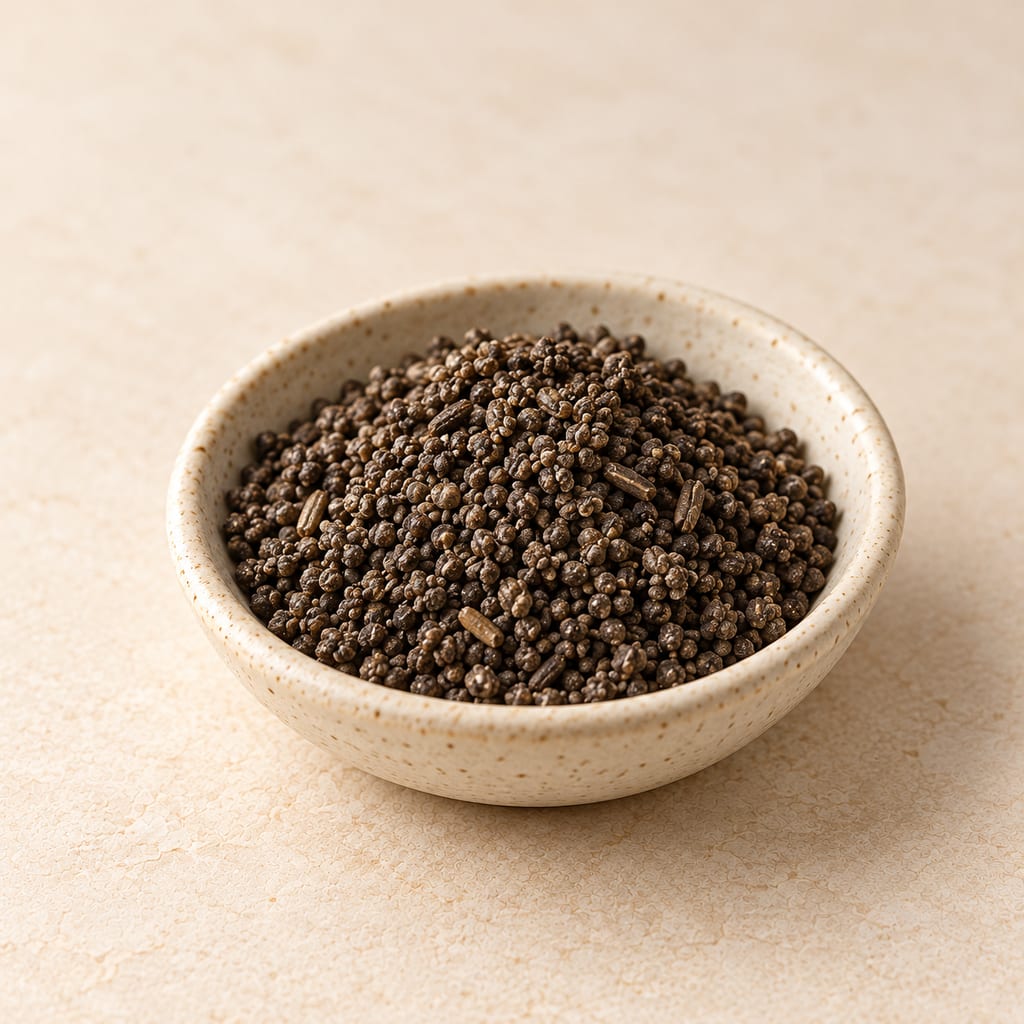
Tane-koji is the mold inoculum Sakimoto plants on steamed rice to make rice koji for Yonaguni awamori; its exact strain and supplier are unpublished.
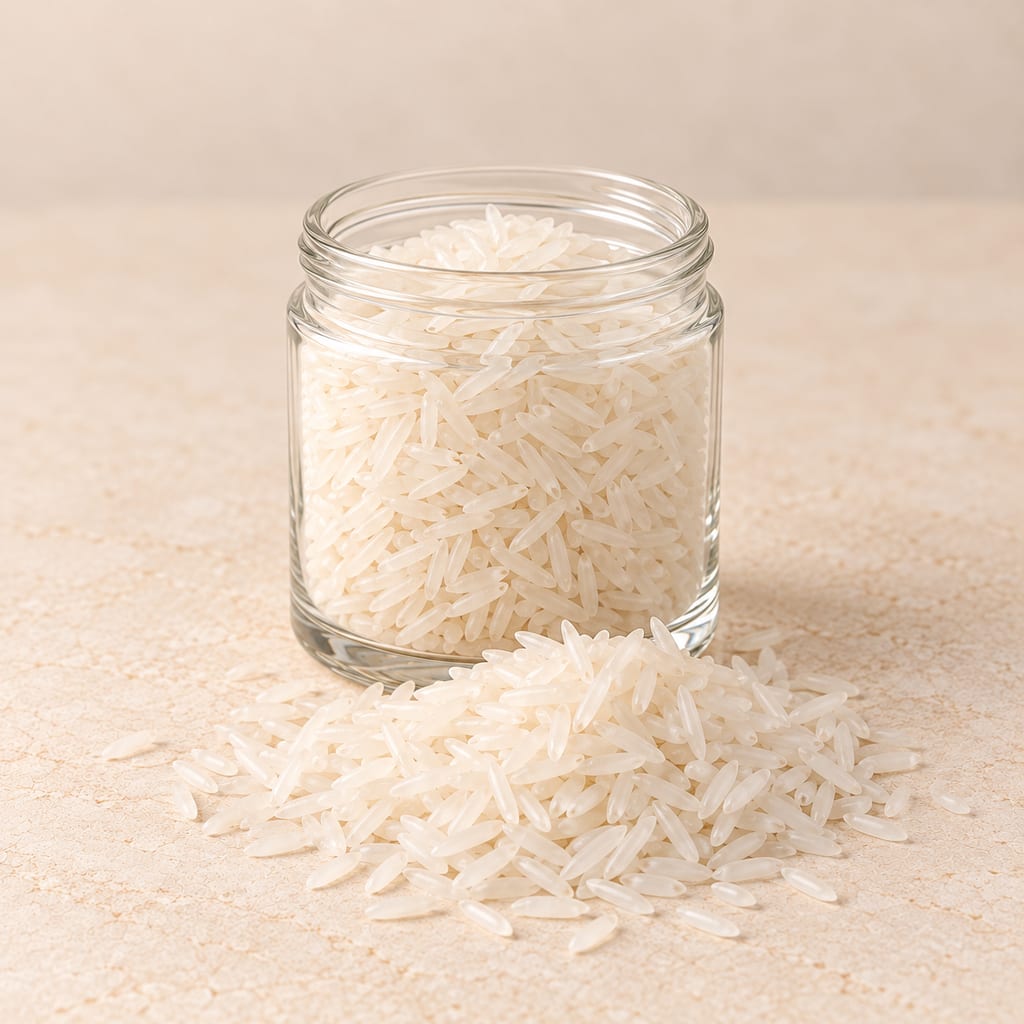
Thai indica rice is the starch-bearing grain Sakimoto steams for Yonaguni awamori koji. The producer names its origin and rice group, but no cultivar, lot or grain grade.

At North Abydos in Egypt, a fixed early Dynastic brewery comprised parallel semi-subterranean installations with rows of ceramic mash vats; excavation reports revise their number, scale and estimated batch capacity.

Ají amarillo is the orange-yellow Peruvian chilli cultivar group of Capsicum baccatum, used to colour and season huancaína sauce and ají de gallina. Published heat estimates do not establish one range for the named cultivar.

Toasted almonds are whole sweet almond kernels dry-roasted until golden to brown. Heat replaces their marzipan note with a roasted, nutty one; they thicken and flavour romesco.

Kodiak salmon, halibut and cod cut as seg'aq and hung on an initaq rack to become tamuuq, with kac'amaasaq and kupcuunaq named as different results.

Aniseed is the dried ripe fruit of Pimpinella anisum, an aromatic Apiaceae spice commonly called a seed. It adds a sweet, warm aroma to breads such as Moroccan krachel and South African mosbolletjies, and is distinct from star anise.

A fixed Late Chalcolithic installation in Areni-1 cave combined a shallow clay pressing basin with a large jar set into the cave floor and storage vessels nearby.

Ripe avocado flesh is the soft, buttery, fat-rich pulp of Persea americana, eaten raw. It is low in acid, so it is a fresh ingredient that needs care in chilled dishes.

A portable dome and pan used over a hearth, with embers on the lid and heat from below. Regional peka and saç forms share this principle while differing in materials, pan shape and how the food is cooked.
No community contributions have been published for this entry yet.
Sign in to contribute. Published comments and photos are free to read.
WikipediaIdentity · Production · History · Secondary
SugarRaw, white and brown sugar and ICUMSA numbers; refining steps; cane and beet routes; beet sugar history; etymology; consumption history; composition table of brown and granulated sugar; WHO sugar advice.
Cited in: One sugar, with and without its coat; Sugar in history; Cane and beet; Inside the refinery; Where brown sugar gets its colour; Sugar in ferments and preserves; Choosing and keeping them
WikipediaIdentity · Production · Use · History · Secondary
Brown sugarTwo routes to brown sugar; molasses content; grades; panela, jaggery, kokuto, turbinado, demerara; storage; culinary use; history of the term brown sugar.
Cited in: One sugar, with and without its coat; Sugar in history; Where brown sugar gets its colour; The unrefined brown sugars; What the molasses does in baking and cooking; Sugar in ferments and preserves; Choosing and keeping them
WikipediaProduction · History · Secondary
MuscovadoDefinition, name, methods, producers and shares, history, use.
Cited in: The unrefined brown sugars
WikipediaProduction · History · Secondary
SugarcaneCane botany and production; spread of cane; plantation labour history; 2022 production.
Cited in: Sugar in history; Cane and beet; Inside the refinery
American Society of BakingBaking function
Brown sugar (BAKERpedia)Light brown about 3.5 percent molasses for cookies and butterscotch; dark about 6.5 percent for gingerbread; baking soda neutralises molasses acidity.
Cited in: Where brown sugar gets its colour; What the molasses does in baking and cooking
Kansas State University Research and ExtensionFunction · Fermentation · Preservation
SweetenersFunctions of sucrose in food: bulking, dispersion, creaming, flavour balance, fermentation, preservation.
Cited in: What the molasses does in baking and cooking; Sugar in ferments and preserves
USDA Economic Research ServiceProduction
Sugar and sweeteners: backgroundCane and beet processing must be fast; US cane and beet shares; cane-growing states.
Cited in: Cane and beet
FAO / WHO Codex Alimentarius CommissionStandard
Appendix III, proposed draft amendment to the Standard for Sugars (Step 5/8)Definitions of soft white sugar, soft brown sugar and raw cane sugar and their sucrose plus invert sugar minima. A draft amendment, not the final standard.
Cited in: One sugar, with and without its coat
Eben van Tonder (earthwormexpress.com), 2016, quoting Hoagland 1921Curing history
Bacon curing: a historical reviewSugar in 19th-century cures; Hoagland 1921: quality not preservation. A secondary account quoting the original authors.
Cited in: Sugar in ferments and preserves