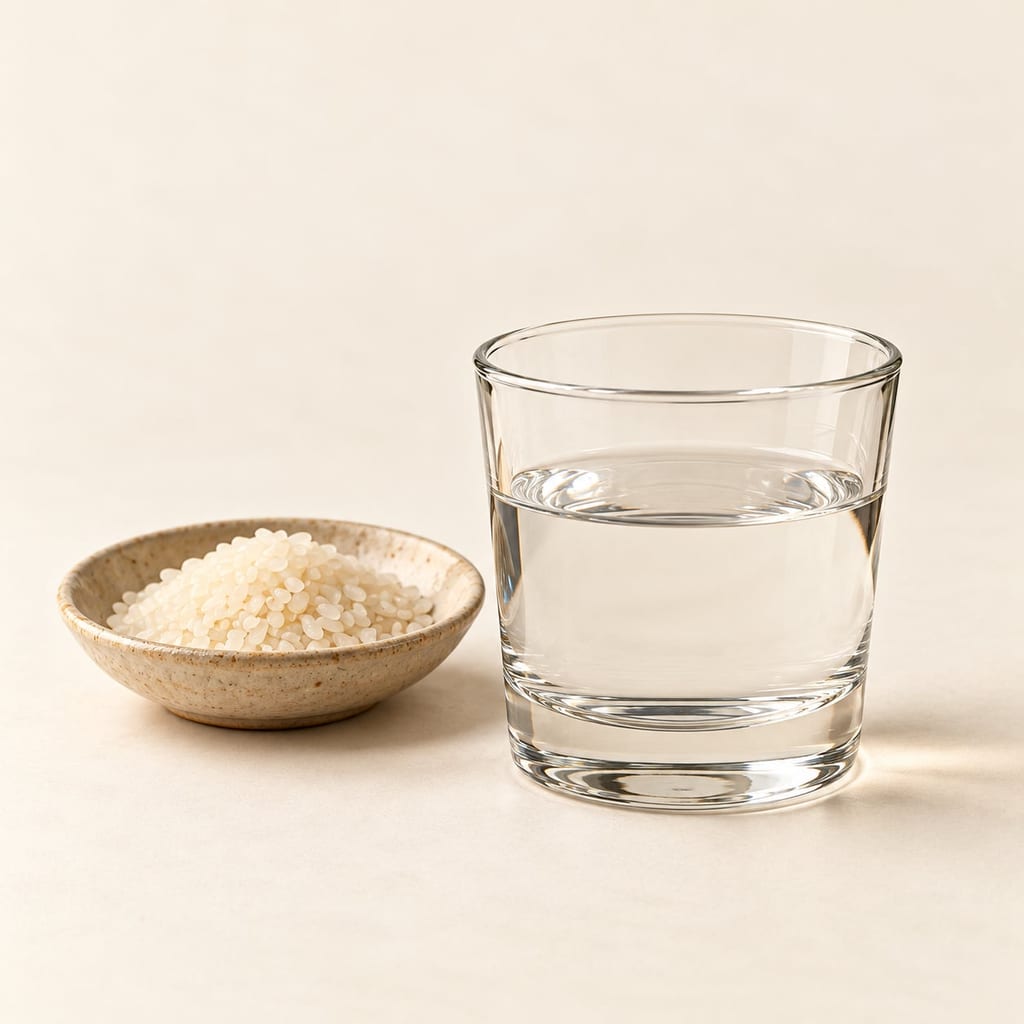
Awamori
An Okinawan rice spirit made by turning all the rice into black koji, fermenting it with water and yeast, then pot-distilling and maturing the spirit.
 FermenteaWhere food goes to change
Substrates
Thai indica rice is the starch-bearing grain Sakimoto steams for Yonaguni awamori koji. The producer names its origin and rice group, but no cultivar, lot or grain grade.
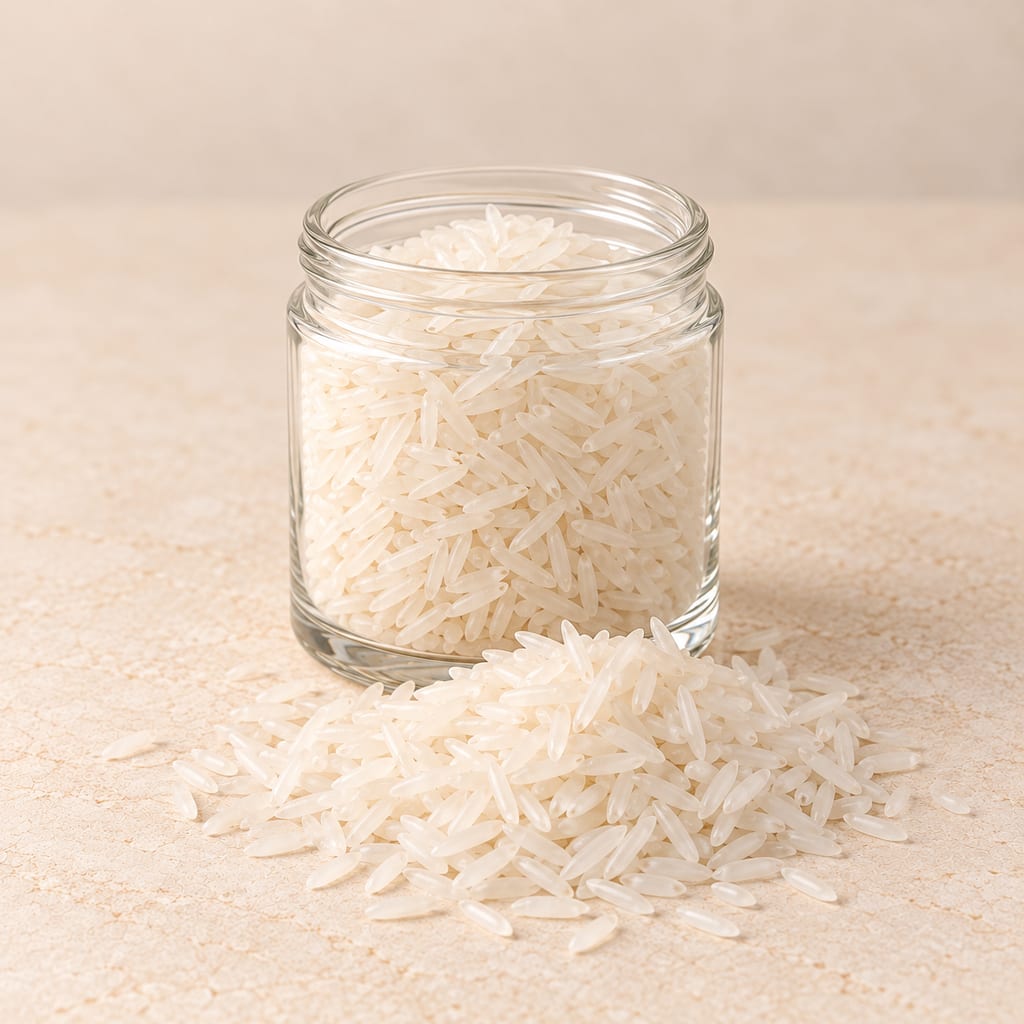
Thai indica rice is the grain Sakimoto Shuzo names at the beginning of its Yonaguni awamori method. The producer brings indica rice from Thailand, washes it, lets it take up water and steams it before making rice koji. Another Okinawan cooperative process calls its input simply Thai rice. In these records the grain is the starchy material from which the spirit begins; it is neither the mold starter put on the steamed rice nor the yeast later added to the mash. The useful description is therefore a rice of a stated origin and a broad grain group, serving a particular fermentation tradition. Neither producer names a cultivar, growing province, harvest year, milling grade or shipment.
The cultivated Asian rice species is Oryza sativa. Indica, in the producer's wording, describes a broad rice group; Thailand names a country of supply. A long grain, a polished grain, a broken grain and a named cultivar answer different questions. The Thai Rice Department's variety catalogue sorts rice by ecology, response to day length, starch type, grain shape and growing season, and lists many non-glutinous and glutinous varieties. That diversity is a reason to resist turning the words Thai rice into the name of one botanical cultivar. It also prevents a shop label such as Thai jasmine or a local specialty variety from being quietly substituted for an unspecified awamori shipment.
A pale handful of polished long grains reveals shape and milling, but not the exact genetics or growing place of Sakimoto’s lot. Rice grown in Thailand may arrive as whole or broken kernels, and either form may contain a mixture of cultivars. Okinawan awamori producers have a long relationship with imported Thai grain, and the look of the grain does not tell how its starch will behave after soaking.
Behind the label lies a long history of domestication. Cultivated rice descends from wild rice, Oryza rufipogon. A 2012 genome study that compared 446 wild accessions with more than 1,000 cultivated varieties concluded that japonica rice was first domesticated from a wild population around the middle Pearl River in southern China, and that indica rice developed later, as the first cultivars spread into Southeast and South Asia and crossed with local wild rice. Not every researcher accepts a single southern Chinese origin for all rice, and the history of indica in particular is still argued over. What the awamori distillers use is the product of that long separation: a long, firm grain from the warm lowlands of Southeast Asia, distinct from the stickier japonica rice of Japanese cooking.
Awamori's history is older than the modern preference for Thai rice. An Okinawa cooperative describes the drink's Ryukyuan roots and the use of black koji, but its present process begins with Thai rice. A Japan Tourism Agency account prepared with the Okinawa Distillers Association explains the change in raw material more narrowly. It says locally grown rice, millet and sweet potato had been used before the imported grain became established. By the early 1920s the local rice price had risen, and producers sought an overseas supply that would maintain the drink's quality at workable cost. They chose long-grain indica from Thailand. That is an industry account of a sourcing decision, not an archive proving which grain every earlier household or distillery used.
The distillers' stated reasons join practical handling to the finished drink. They found the grain firmer and easier to work than the sticky japonica rice used in much Japanese food and sake. Broken pieces were thought to give black koji mold more exposed surface to colonize. The account also attributes easier control of fermentation temperature, greater alcohol recovery than alternatives they tried, and a rich fragrance in the finished spirit to the choice. These are the producers’ own comparisons, without a controlled dataset or numeric yield.
The grain's form changed again in modern production. An Okinawa Industrial Technology Center study records that a 2008 contaminated-rice resale scandal halted imports of broken rice used for awamori, and that whole polished Thai rice began to arrive in 2010. Distilleries adapted their raw-rice handling, especially water absorption, and the report describes initial difficulty with koji quality and alcohol recovery at some sites. These observations bring the history into the brewery itself. A switch from fragments to intact grains changes how water reaches the centre of a grain and how consistently a batch steams, even though both products can be called Thai rice.
Thai rice also belongs to a wider farming and trading system. Thailand cultivates many rice types and exports rice in several forms. The field story and the brewery's import story are connected by supply, but a national crop or export figure cannot trace a Yonaguni sack to one field. The ingredient page can explain why an Okinawan spirit depends on a grain from across the sea without pretending that the country name is a farm-level provenance record. It also leaves room for documented local long-grain rice alternatives in contemporary awamori, which change the geographic source even if the production goal remains similar.
Sakimoto's first operations are washing, soaking and steaming. Washing removes surface rice bran from the material it uses. Soaking allows water into the grain, and steaming cooks the hydrated starch so that a mold-grown enzyme system can later digest it. Those operations are physical preparation, not fermentation. Sakimoto describes the sequence but gives no soaking duration, rice mass, water temperature, kernel grade or measured endpoint. The cooperative likewise says to wash and steam its Thai rice before black-koji inoculation; its approximate later timings belong to its own production outline, not to every producer's raw-grain treatment.
Commercial grain form matters here. Thai official rice standards distinguish whole kernels, broken fractions, milling degree and length classes. These are commodity categories; they do not prove whether a kernel is genetically indica. The historical awamori account explains why fragments once seemed useful for mold attachment, while the 2012 Okinawa study asks what happened when intact kernels replaced them. In that study the whole grains were larger and more variable than the broken material, and their water uptake depended strongly on cracks opening and water entering them. Time and temperature affected those cracks in the trials. A distillery had to understand the actual incoming grain rather than carry a broken-rice routine across unchanged.
The 2012 study complicates a simple surface-area explanation of broken rice. Its measured whole kernels had roughly three times the exterior area of individual broken particles, while calculated area per unit weight was similar in the two tested forms. The study also observed cracks forming first across the short axis of whole kernels, then along the long axis as water entered and the grains lost translucency. These are physical observations of its sampled Thai rice. Together they show why grain size, cracks, soaking temperature and batch variation matter more than a slogan that one grain form always exposes more mold-growing surface.
After steaming, Sakimoto inoculates the rice with seed koji and watches the grain's temperature and moisture during a roughly two-day koji stage. The prepared substrate offers both a surface for fungal growth and a store of starch for the growing mold's enzymes to attack. The grain is now becoming rice koji, a new material with a living mold culture and enzyme activity. Calling raw Thai rice and finished rice koji the same ingredient would hide the most important transformation in the process. It would also confuse an apparent difference in grain behavior with a difference in the seed culture, both of which can affect the outcome.
Rice starch is not identical across all rice. The Thai Rice Department explains that the balance of amylose and amylopectin helps shape how grains take up water and how soft, firm or sticky they become when cooked. Its variety catalogue distinguishes non-glutinous from glutinous rice and names many cultivars in each group. They matter here because awamori makers steam rice before cultivating koji on it: hydration and cooked structure determine what the mold is given to colonize.
The variability is not merely hypothetical. A 2019 study of Thai non-broken rice shipments used for awamori compared their starch and protein properties. The researchers found differences among shipments in gelatinization temperature and alkali solubility. Their abstract links the high-gelatinization group to a different distribution of short amylopectin chains and faster starch retrogradation than the low-temperature group. They suggest that mixtures of cultivars can affect raw-material treatment. This is a study of its sampled shipments, not proof of one profile for all Thai indica or of Sakimoto's lot. It gives a reader a concrete reason why a place-and-type label alone does not determine a soak or steam schedule.
Once the rice has been steamed, its starch becomes accessible to enzymes made by the black-koji mold. Those enzymes release smaller sugars; yeast later uses fermentable sugars in the wet moromi and produces alcohol. The rice supplies the carbohydrate, the mold supplies much of the saccharifying power and acid, and yeast carries out alcoholic fermentation. These activities can overlap in a working mash. The rice is not a culture and does not create alcohol on its own. Its composition and physical form influence the environment in which the two microbial partners work, without dictating their strain identity or guaranteeing a particular aroma.
In an all-koji process, a grain that hydrates unevenly can make the later mold-growing stage harder to manage, while a difference in starch structure can alter how quickly cooked starch firms again. Those links explain the distiller’s attention to the rice it receives.
Thai rice has many lives outside an awamori distillery. The Thai Rice Department's knowledge bank separates non-glutinous and glutinous types and describes how starch composition changes cooked texture. A higher apparent amylose content is associated there with a firmer, more separate cooked grain; low-amylose glutinous rice cooks stickier. The department also documents fermented rice foods, including sweet khao mak made from steamed glutinous rice with a prepared starter. These examples show the food range carried by a country name. They do not imply that Sakimoto uses a glutinous-rice dessert grain or a Thai starter in its awamori.
The comparison is revealing because two rice ferments can begin with steaming yet diverge in grain choice, culture and finish. In awamori, the entire rice supply of the all-koji method becomes a mold-grown substrate, then a mash fermented with yeast, then a distilled spirit. In a Thai sweet-rice preparation, the grain can remain part of the food served. The rice is a material capable of several changes, but those changes arise from the selected cultures and operations. A photograph of cooked sticky rice, a packet of Thai sweet rice and a bottle of awamori would therefore illustrate different products, not three interchangeable depictions of this ingredient's stage.
Some contemporary distillers have also used locally grown long-grain indica selected for awamori, according to the Japan Tourism Agency account. That changes geographic sourcing without making the local grain chemically identical to an imported lot. The two documented production pages likewise use different levels of description: the Okinawa cooperative says Thai rice, and Sakimoto specifies Thai indica rice. They share a sourcing tradition and an all-koji method.
Sakimoto documents Thai imported rice used here; no Thai farm or exact growing province is identified.
An Okinawan rice spirit made by turning all the rice into black koji, fermenting it with water and yeast, then pot-distilling and maturing the spirit.
A Yonaguni rice spirit made with two-day koji, a nineteen-day moromi stage and direct-fire pot distillation, followed by filtration and tank maturation.
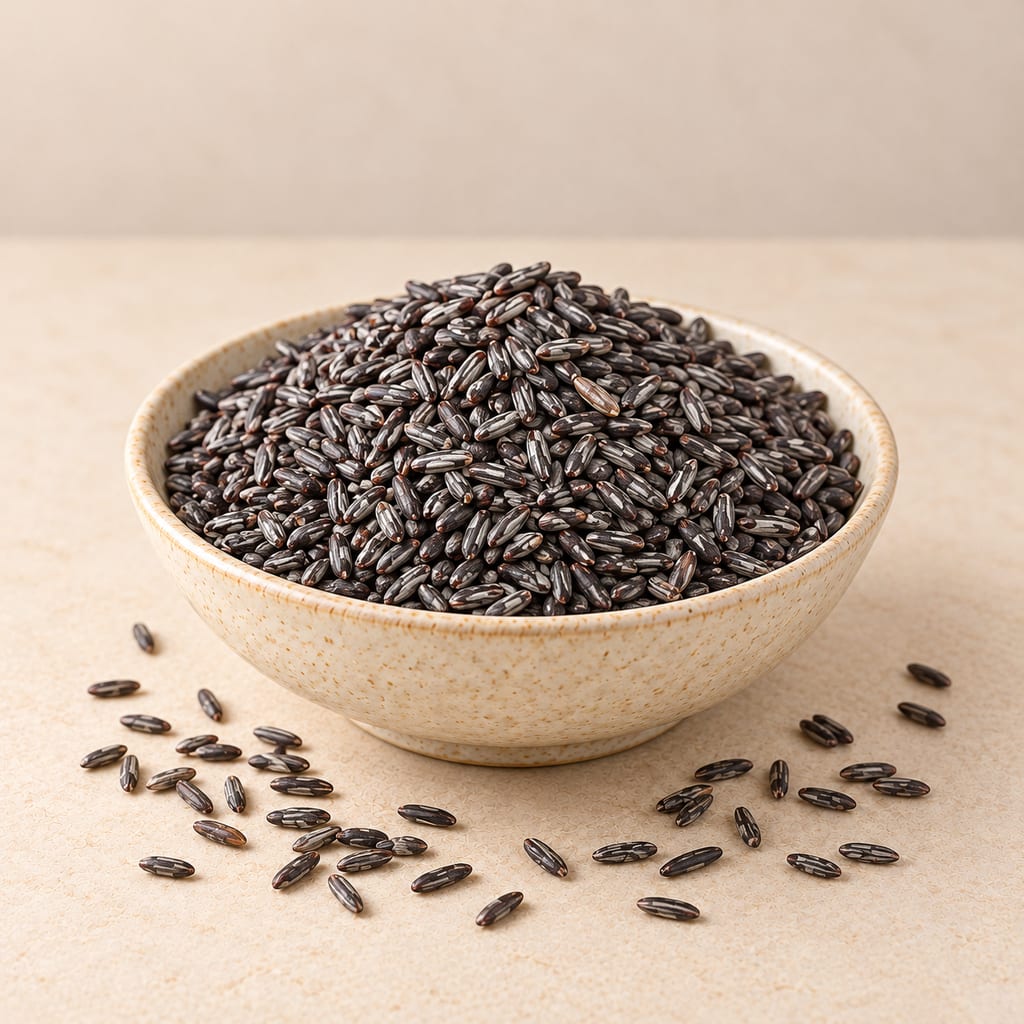
Dahyangheukmi (다향흑미) is a registered Korean black-rice cultivar with an aromatic, non-glutinous grain. It has been used to make rice-flour nuruk, yakju and gochujang in published studies.
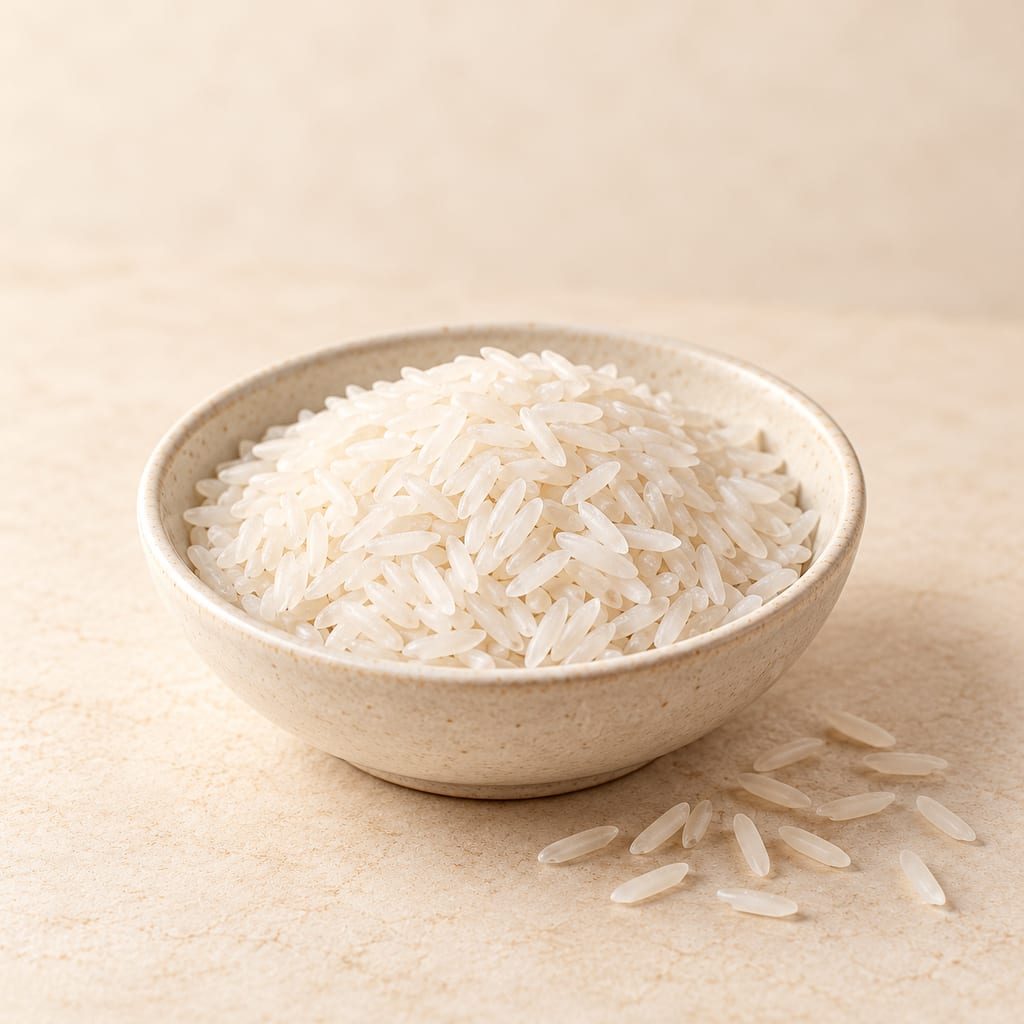
Rice contributes starch to flatbreads, steamed breads, batters and many distinct fermentations. Its species, milling and starch character shape how it cooks, binds, expands and feeds enzymes.
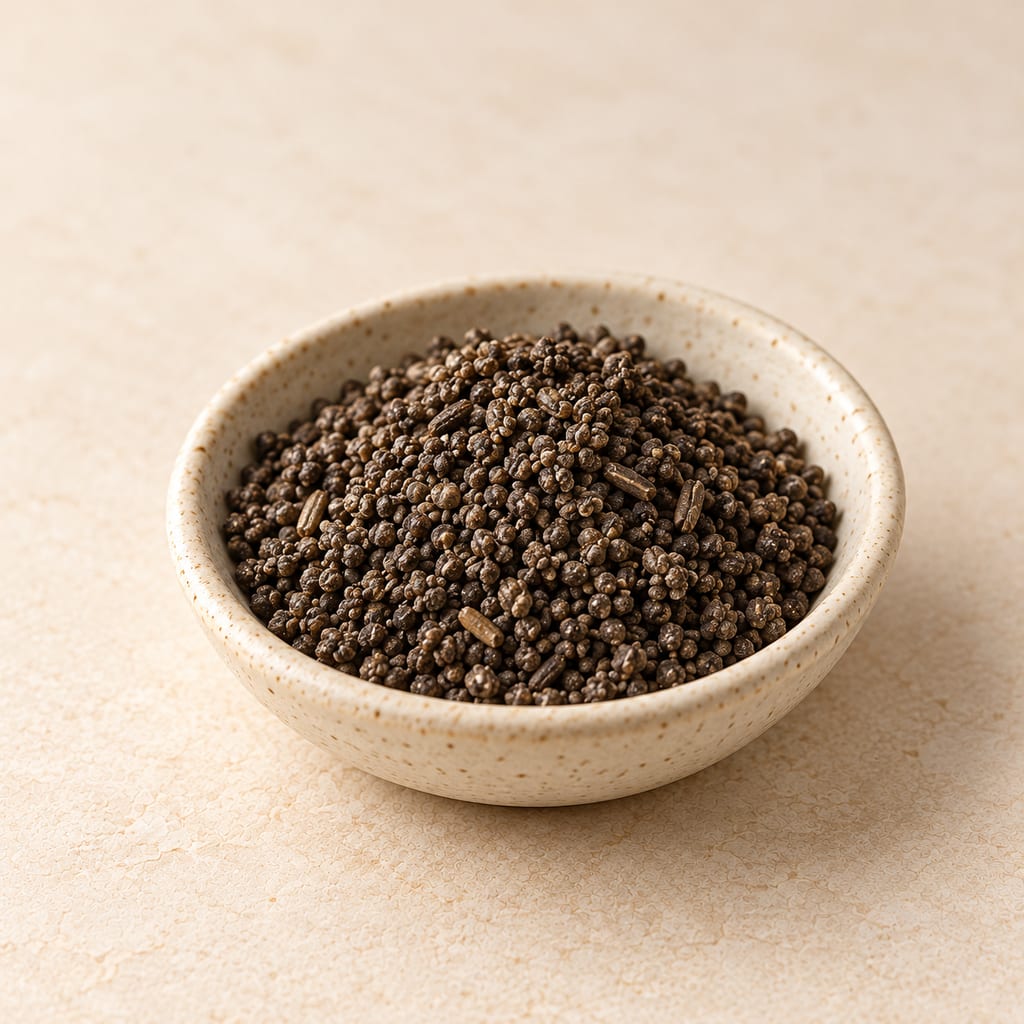
Tane-koji is the mold inoculum Sakimoto plants on steamed rice to make rice koji for Yonaguni awamori; its exact strain and supplier are unpublished.
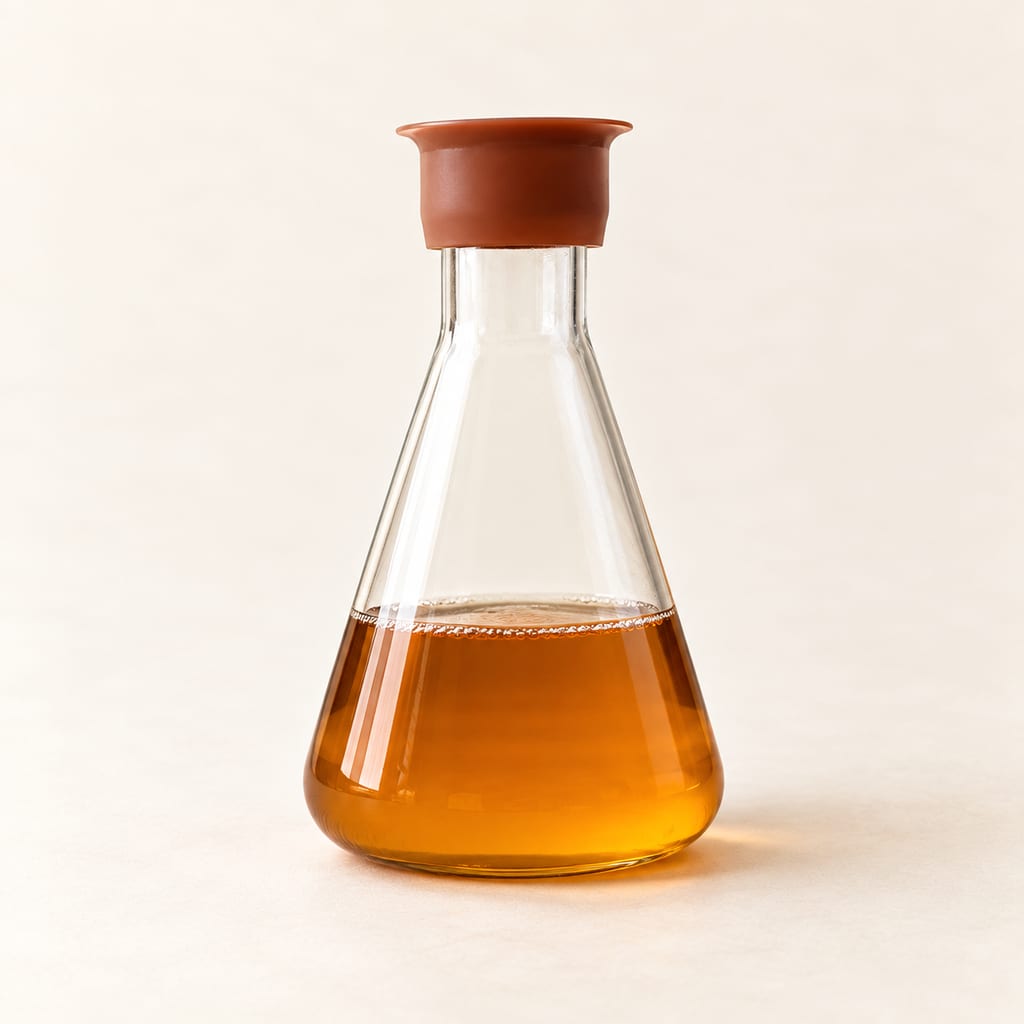
Awamori yeast ferments sugar released from rice koji in the Okinawan spirit’s mash. Sakimoto names the ingredient but gives no strain, form, supplier or dose.
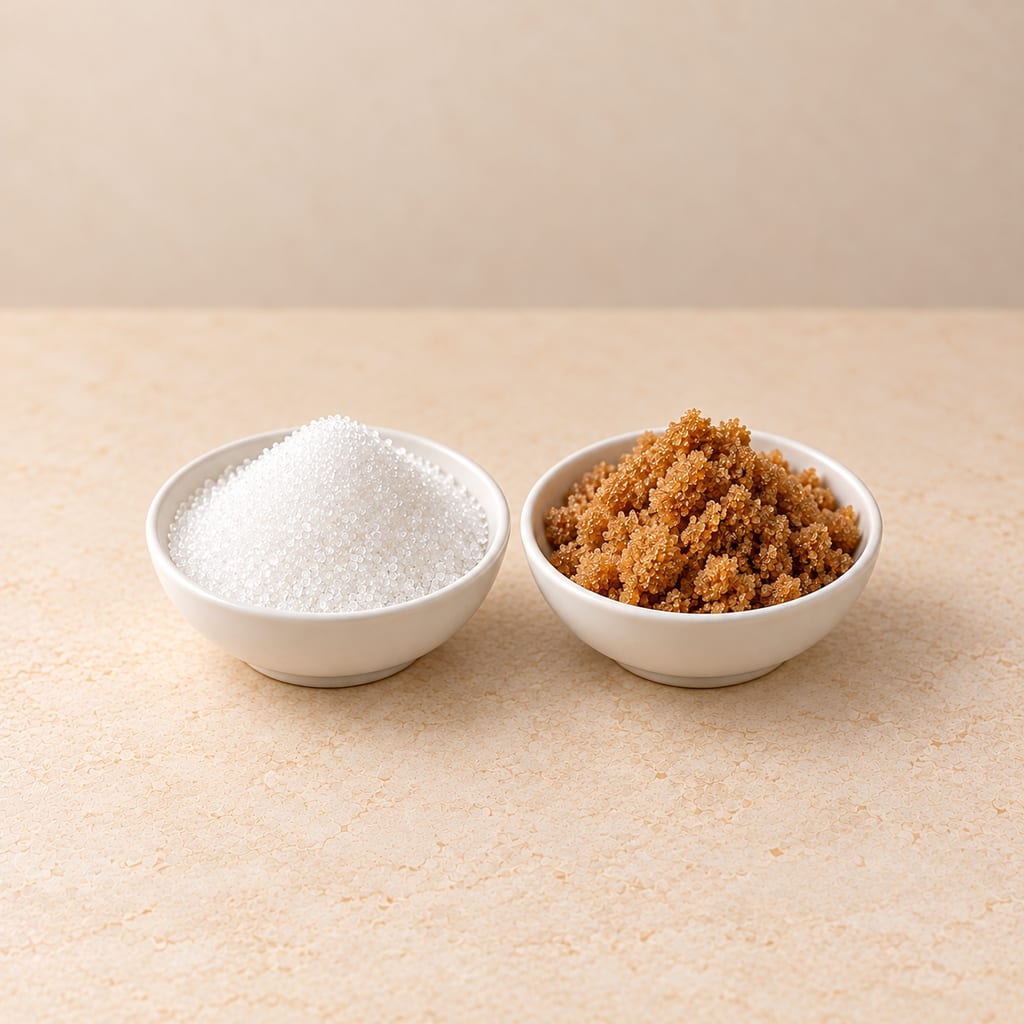
White sugar is refined sucrose, almost pure; brown sugar is sucrose with molasses, left in or added back. Molasses makes brown sugar moister, darker and more strongly flavoured.
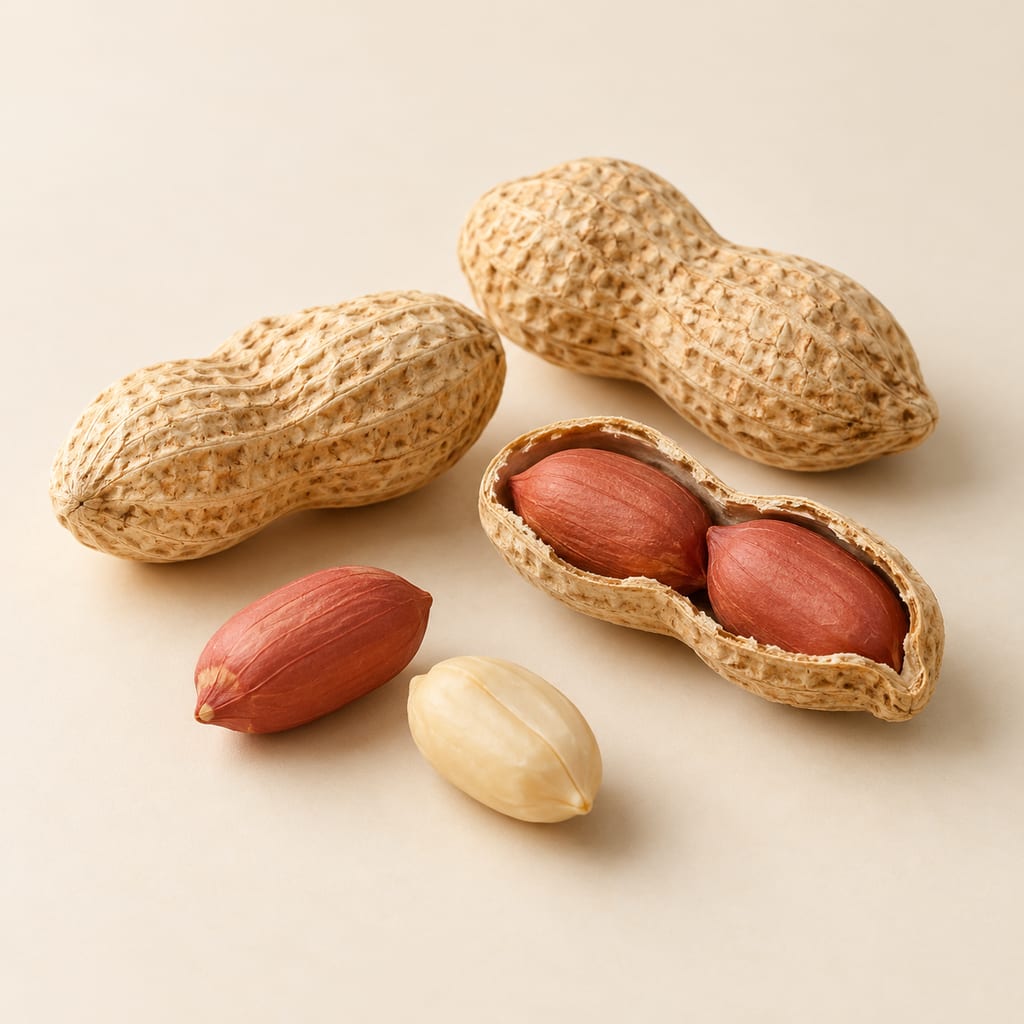
Peanuts are the edible seeds of Arachis hypogaea, a cultivated legume. They are eaten whole, roasted and ground, and peanut oil-press cake is a separate byproduct used in some fermentations.

Soft, spreadable Calabrian pork sausage made with a great deal of red chilli and fatty pork, stuffed into natural casings, sometimes smoked and matured while staying soft.

A way to add independent temperature logging to an existing food dehydrator without changing its built-in controls or protections. It is a monitoring method, not a rewiring plan.

Pleurotus cystidiosus is the abalone mushroom, a cultivated oyster-type fungus with dark brown caps that grows more slowly and is more demanding than other Pleurotus species.

A dark, balanced vinegar from Emilia-Romagna made by combining cooked or concentrated grape must with wine vinegar, then acetifying and refining it in wood under a protected specification.

A living dairy inoculum that starts controlled cream fermentation, developing acidity and aroma before sour cream or cultured butter is finished.

A small electric incubator holds jars at a selected temperature for yogurt and other documented warm food preparations. Controls, capacity and vessel arrangement vary by model.

Adygean salt is a seasoned table salt associated with Adygea and the wider North Caucasian culinary tradition. Salt is blended with garlic and a variable selection of herbs and spices; the exact mix depends on the named style and maker.

The African Caesar-group mushroom, Amanita masasiensis, is a wild ectomycorrhizal species of central and southern African woodlands, eaten locally. The genus contains deadly poisonous species, so identification needs care.
No community contributions have been published for this entry yet.
Sign in to contribute. Published comments and photos are free to read.
Sakimoto ShuzoIngredient · Process
泡盛 製造行程 [Awamori production process]Exact Japanese names Thailand-origin indica rice; washing, soaking, steaming, seed koji, two-day koji, yeast and 19-day moromi; no cultivar or rice dose.
Cited in: A Thai grain in an Okinawan spirit; The grain before the mold grows
Okinawa Prefectural Distillery CooperativeIngredient · Process · History
君知るや名酒泡盛 [Do you know awamori, the renowned spirit?]General cooperative process calls its input Thai rice and documents all-koji method; no cultivar or physical form.
Cited in: A Thai grain in an Okinawan spirit; How Thai rice entered awamori's supply; The grain before the mold grows
Japan Tourism Agency and Okinawa Distillers AssociationHistory · Ingredient · Process
Why Awamori Is Made from Thai RiceFY2019 one-page account: early 1920s Thai long-grain indica preference, local-rice prices, producer handling/yield/aroma rationale, local long-grain alternatives.
Cited in: A Thai grain in an Okinawan spirit; How Thai rice entered awamori's supply; The grain before the mold grows; Thai rice beyond the still house
Royal Botanic Gardens, KewIdentity
Oryza sativa L.Accepted Asian cultivated rice species Oryza sativa L.; no cultivar identity of Sakimoto lot.
Cited in: A Thai grain in an Okinawan spirit
Thailand Rice DepartmentIdentity · Culture
พันธุ์ข้าว [Rice varieties]Thai rice diversity by ecology, photoperiod, starch type, grain form, season and cultivar; origin is not one cultivar.
Cited in: A Thai grain in an Okinawan spirit; Why one shipment may behave differently from another; Thai rice beyond the still house
Okinawa Prefectural Industrial Technology CenterHistory · Science · Process
泡盛原料米の吸水機構の解明と制御法開発-砕米と健常米(丸米)の違いについて- [Water uptake in awamori rice: broken and whole kernels]FY2012 primary report: broken rice imports halted after 2008 scandal, whole polished imports from 2010; grain-size, cracks and water-uptake trial results.
Cited in: How Thai rice entered awamori's supply; The grain before the mold grows; Why one shipment may behave differently from another
Thailand Ministry of Commerce, Department of Foreign TradeIdentity · Ingredient
รวมมาตรฐานสินค้าข้าวไทย [Thailand rice commodity standards]Official commercial distinctions among whole, broken, milled and length classes; not proof of Sakimoto lot grade.
Cited in: The grain before the mold grows
Journal of the Brewing Society of JapanScience
Characteristics of the starch and protein composition of rice grains used for awamori2019 primary abstract: Thai non-broken awamori rice shipment variation in gelatinization and alkali solubility, amylopectin and retrogradation differences.
Cited in: Why one shipment may behave differently from another
Thailand Rice DepartmentScience · Ingredient
คุณภาพเมล็ดข้าวทางเคมี [Chemical quality of rice grains]General apparent-amylose and cooked-texture relationships; not measured for producer shipment.
Cited in: Why one shipment may behave differently from another; Thai rice beyond the still house
Thailand Rice DepartmentCulture · Science
กลุ่มผลิตภัณฑ์หมักดอง [Fermented foods and beverages]Thai rice fermented foods including glutinous-rice khao mak; comparison only, not Sakimoto ingredient identity.
Cited in: Thai rice beyond the still house
Nature 490 (Huang et al., 2012)History
A map of rice genome variation reveals the origin of cultivated riceGenome comparison of 446 wild Oryza rufipogon accessions and more than 1,000 cultivated varieties: japonica domesticated around the middle Pearl River in southern China, indica developed later as cultivars spread to Southeast and South Asia; the single-origin reading is contested. Taken from the paper’s published abstract as reported in secondary summaries.
Cited in: A Thai grain in an Okinawan spirit