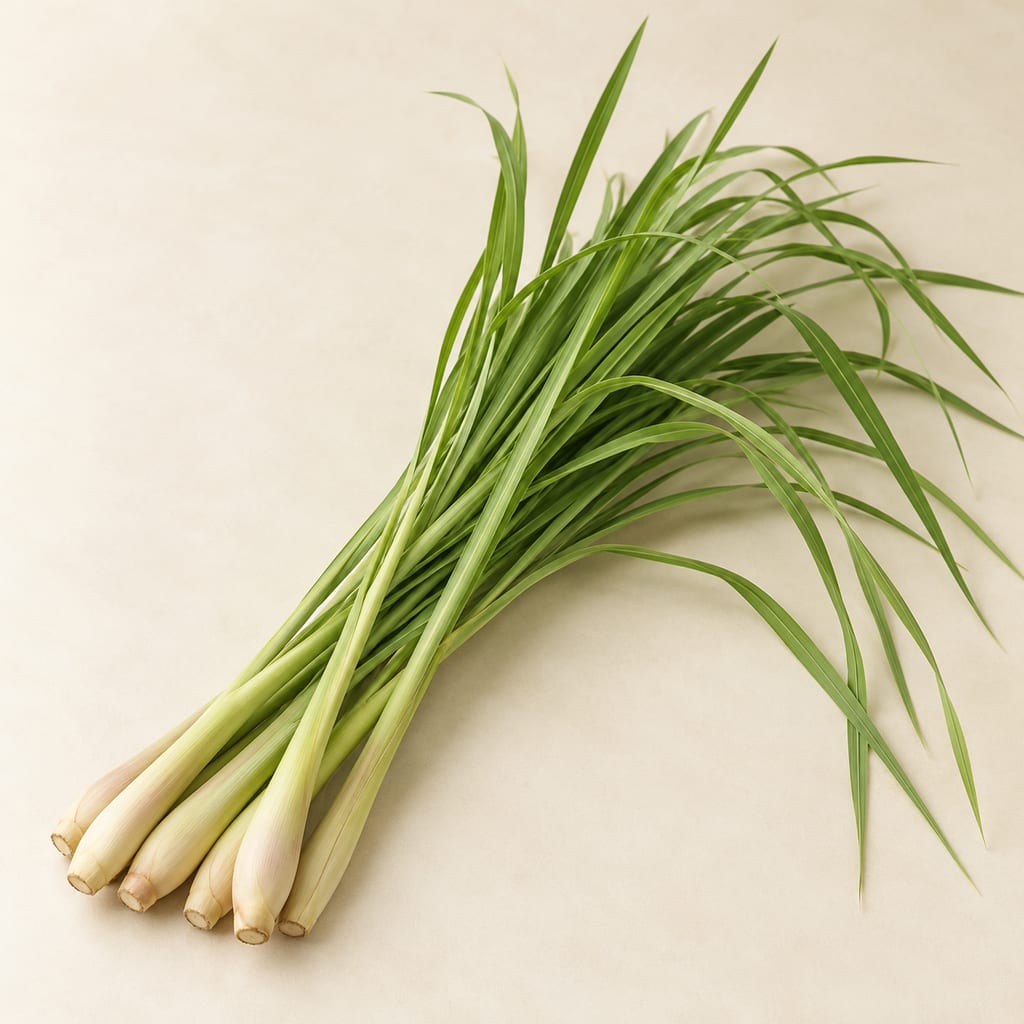
Lemongrass
Lemongrass is Cymbopogon citratus, a tropical grass whose lemon-scented stalks and leaves flavour cooking across South and Southeast Asia. The common name also covers other Cymbopogon species.
 FermenteaWhere food goes to change
Substrates
Peanuts are the edible seeds of Arachis hypogaea, a cultivated legume. They are eaten whole, roasted and ground, and peanut oil-press cake is a separate byproduct used in some fermentations.
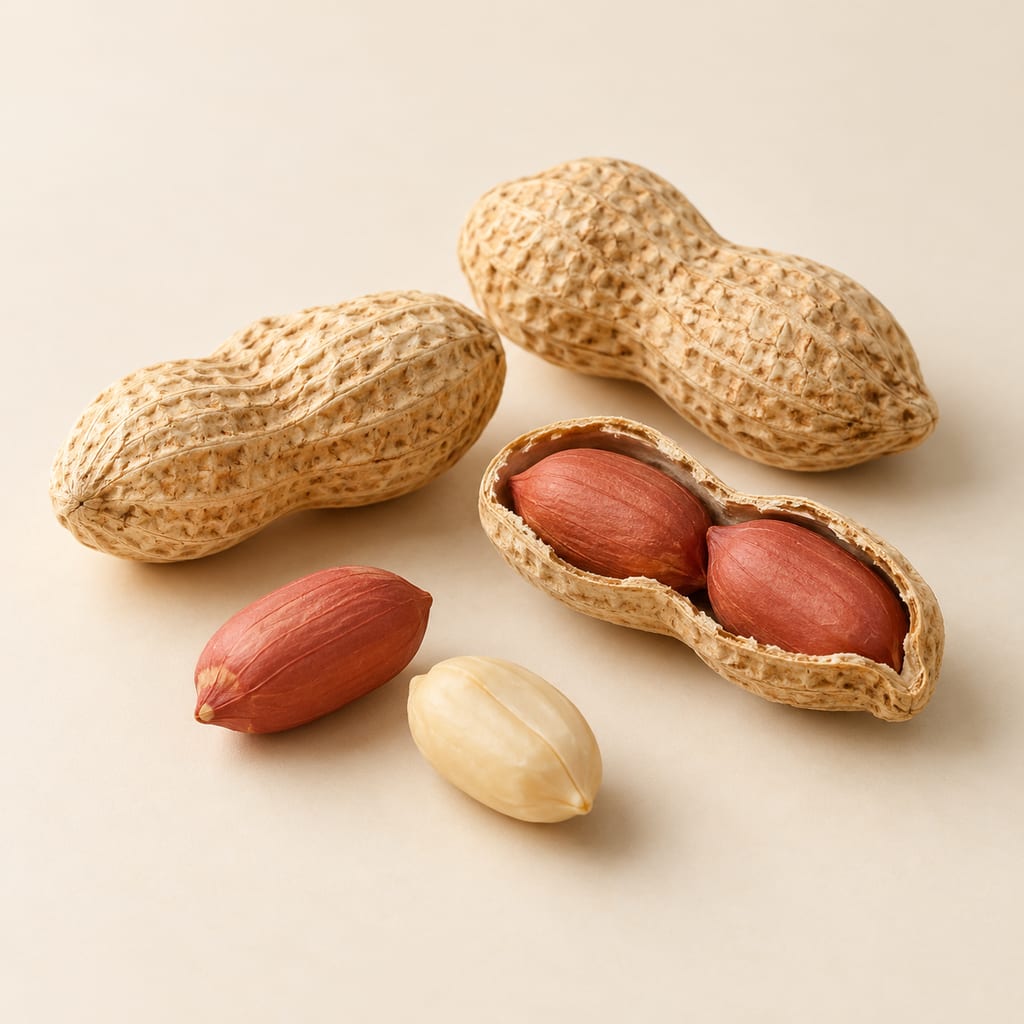
A peanut is the seed of Arachis hypogaea, a legume. Kew's Plants of the World Online accepts the name and lists the species as a cultigen, a plant known from cultivation. The National Parks Board of Singapore gives its common names as peanut and groundnut.
Whole peanuts, roasted peanuts, ground peanuts, peanut butter and peanut oil-press cake are related but different foods. Oil-press cake is what remains after the oil is pressed out, and the fermentation evidence reviewed here concerns that byproduct, not the whole seed. A recipe that says peanuts needs to be read for which of these forms it means.
Kew gives Bolivia as the native range of the species, and the National Parks Board describes a South American native distribution. Both are botanical statements. Neither locates a domestication site precisely or names the people who first ate the seed, and neither dates the first food use.
Where a regional food uses peanuts, this entry records that use as documented, not as evidence that the food began in that place.
A peer-reviewed review of oncom fermentation describes traditional black oncom made in Java with peanut oil-press cake as its substrate. The review documents the microbial ecology of the fermentation. The product is made from the pressed cake, not from whole peanuts, and that difference matters for any recipe that names peanuts as its substrate.
Okinawan jimami-dofu is a different case. Japan's Ministry of Agriculture, Forestry and Fisheries records it as a peanut-and-starch preparation. It is not fermented, so it does not belong with the oncom evidence.
Roasting develops the roasted aroma that most people associate with peanuts and changes their flavour. The degree of roast, the skin, added salt and other ingredients all change how a product tastes, so no single taste profile describes peanuts as a food.
Grinding changes texture as well. A freshly ground roasted peanut preparation can stay more granular than a smooth peanut butter, and how fine the grind goes depends on the cook or the producer.
The US Food and Drug Administration lists peanuts among the major food allergens. People with peanut allergy need clear labelling and protection from cross-contact in shared kitchens and processing lines.
The FDA also lists peanuts among crops susceptible to aflatoxins, which are toxins made by some moulds that grow on crops. Neither the smell nor the taste of a batch shows whether aflatoxins are present, and these sources propose no home limit or test. Peanuts used in any preparation need to come from a supplier who manages this risk.
Botanical native-range listing for a cultigen, not a precise domestication claim.
The fermentation uses peanut oil-press cake.
Jimami-dofu is a peanut-and-starch dish, not a fermented product.
Lemongrass is Cymbopogon citratus, a tropical grass whose lemon-scented stalks and leaves flavour cooking across South and Southeast Asia. The common name also covers other Cymbopogon species.
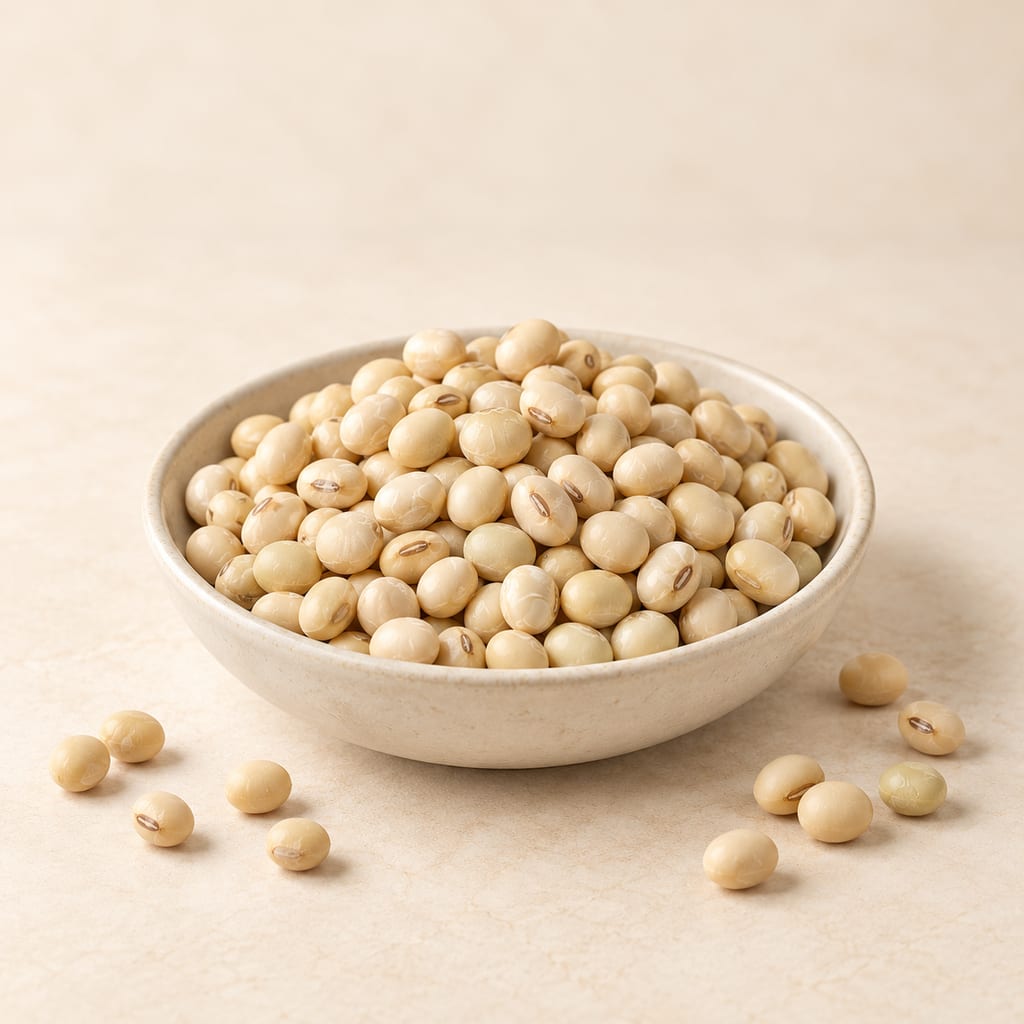
Soybeans are the mature dry seeds of Glycine max, about 40 percent protein and 20 percent oil, the substrate of tempeh, natto, miso, soy sauce and many other fermented foods.
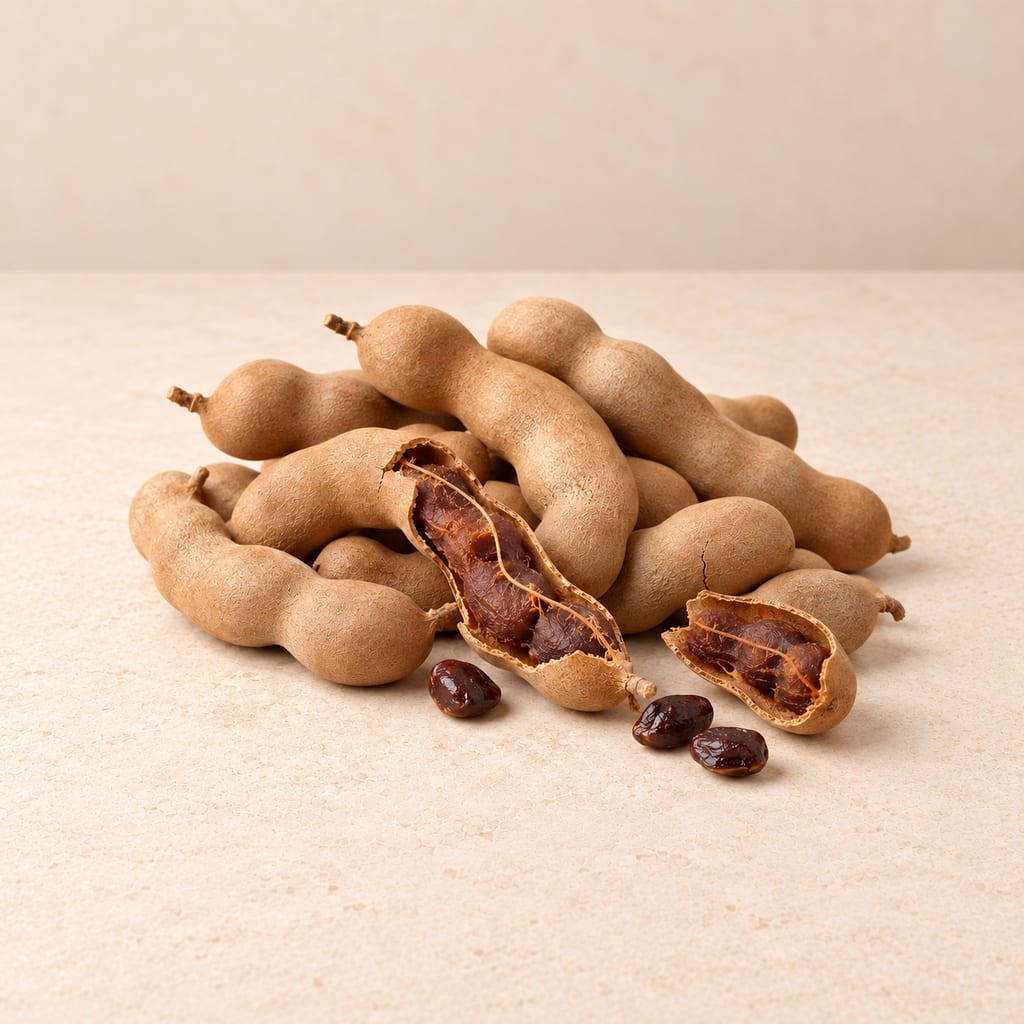
Tamarind pulp is the sweet-sour flesh of Tamarindus indica. It brings a tartaric-acid-led fruit flavour to chutneys, sauces and drinks; water content and sourness vary across forms and brands.
No community contributions have been published for this entry yet.
Sign in to contribute. Published comments and photos are free to read.
Plants of the World Online, Royal Botanic Gardens, KewIdentity · Geography
Arachis hypogaea L.Kew accepts Arachis hypogaea as a cultigen and lists the native range as Bolivia; this is not a precise domestication site.
Cited in: The plant and its food forms; Native range and spread
Nature MicrobiologyUse · Geography
The microbial ecology of oncom fermentationBlack oncom in Java uses peanut oil-press cake, a byproduct distinct from whole peanuts.
Cited in: The plant and its food forms; Oil-press cake in fermentation; Roasting, grinding and taste
Ministry of Agriculture, Forestry and Fisheries of JapanUse · Geography
Jimami-dofuOkinawan jimami-dofu uses peanuts and starch and is not fermented.
Cited in: Oil-press cake in fermentation
U.S. Food and Drug AdministrationSafety
Food AllergiesPeanuts are a major food allergen in the United States.
Cited in: Allergy and aflatoxin
U.S. Food and Drug AdministrationSafety
MycotoxinsPeanuts are among crops susceptible to aflatoxins.
Cited in: Allergy and aflatoxin
National Parks Board, Singapore, Flora & Fauna WebIdentity · Geography
Arachis hypogaeaCommon names peanut and groundnut
South America given as native distribution
Cited in: The plant and its food forms; Native range and spread