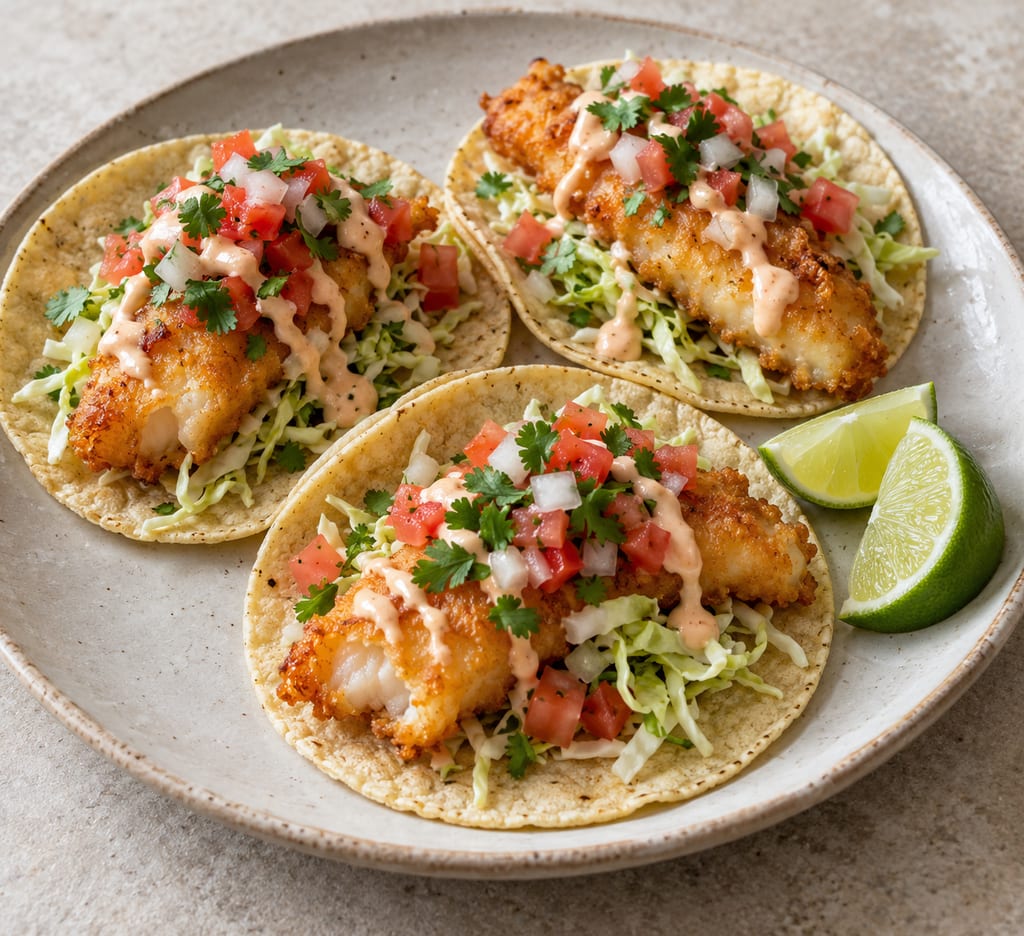
Baja-style fish tacos
Crisp battered white fish in warm corn tortillas with shredded cabbage, lime and fresh salsa. This home version draws on the Ensenada style without claiming to be a definitive historic formula.
 FermenteaWhere food goes to change
Modern adaptation
Salsa macha is a Mexican chile-and-oil condiment, often coarse with garlic, peanuts and sesame; this version follows a documented gentle-cook method and stays refrigerated.
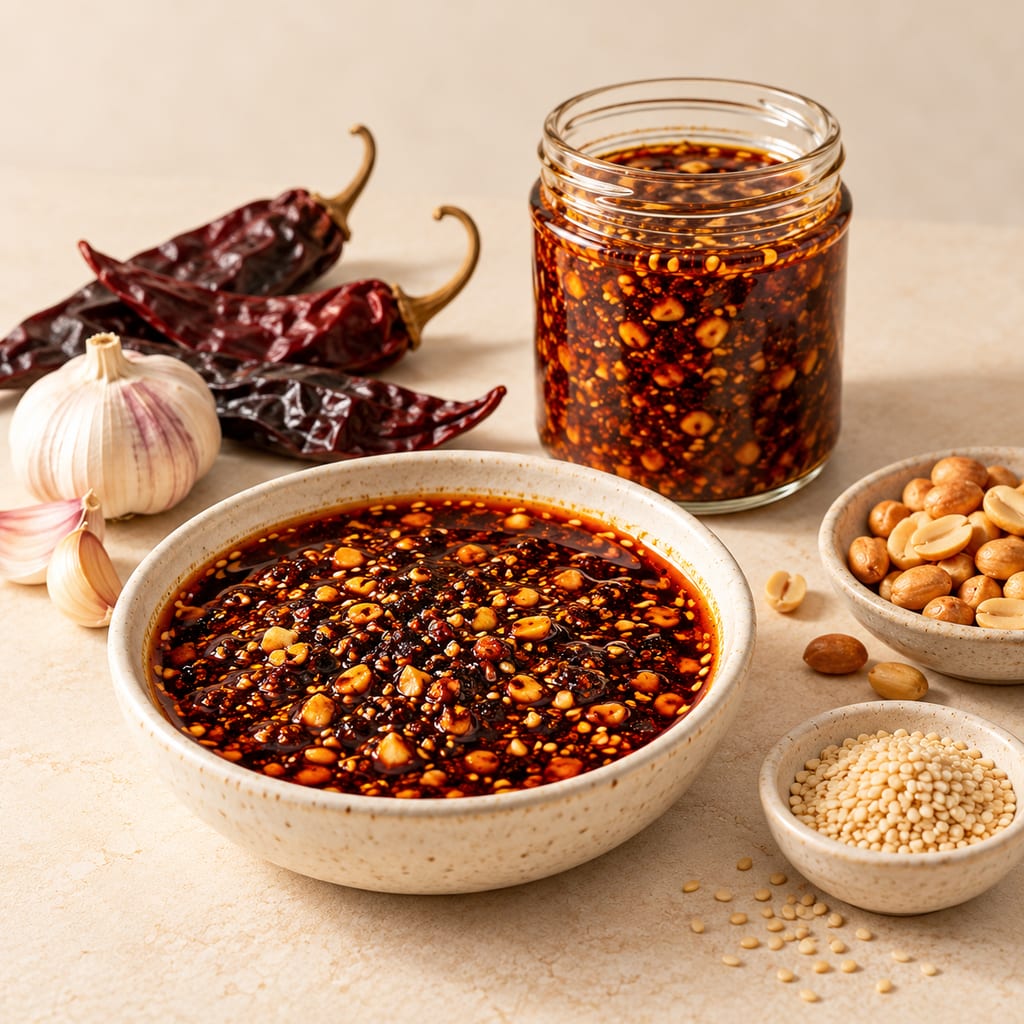
Salsa macha does not have one fixed texture. The Mexican gastronomy dictionary published by Larousse describes a home preparation made by frying serrano and morita chiles, then grinding them with garlic and salt in a molcajete, the heavy stone mortar used for crushing ingredients. Sometimes fried peanuts are added and ground too. The result may be a paste spread over tortilla or bread, or a more fluid preparation with olive oil. In the latter, the chile paste settles and the oil takes on colour; the cook can spoon off the coloured oil or stir the jar and serve the thicker mixture.
That account is a useful anchor because it describes a local food practice rather than a single standardized formula. Current recipes broaden the cast of chiles, add sesame and other nuts or seeds, and vary the oil, vinegar and sweetener. The common thread is a chile-led condiment in which the oil carries much of the flavour and the cooked or ground solids give it body. It is not a fermented sauce: the methods consulted cook, toast, grind and season the ingredients, with no microbial fermentation stage.
Larousse places the preparation in Veracruz, especially Orizaba. Its description is specific about the local pairing of serrano and morita chiles and the use of a molcajete, while also recording a liquid form with olive oil. That is stronger evidence than a broad claim that every oil-and-chile sauce in Mexico is the same dish. The same dictionary leaves the account undated, so this page does not assign salsa macha an invented century or a precise historical origin.
The regional story remains open. In a recent discussion, chef Rick Bayless reports that many people locate the sauce's origin in Veracruz's mountainous areas, while he says he encounters it more often on Mexico's west coast and in Baja. This is a chef's observation, not proof of a single birthplace. Larousse's recipe says that chile morita and chipotle are used in Veracruz and that chile de árbol became popular nationwide for a hotter version. Both sources point to movement and adaptation rather than a frozen recipe. The most careful account is therefore a Veracruz association, with present-day versions circulating and changing across Mexico.
The method here follows Bayless's version: garlic and peanuts warm gently in olive oil before dried chiles and sesame join them. He calls the early stage closer to a gentle confit than a hard fry. Softening garlic and lightly colouring peanuts gives the oil time to take on their flavour without driving the garlic dark. The chiles go in later because they need much less time; a short warm-up releases a toasty aroma, while overcooking them can make the finished sauce bitter.
Grinding is the second defining operation. A molcajete produces the hand-crushed paste described by Larousse; a blender or food processor gives a faster, more even chop. Bayless recommends pulsing until the solids are small, not until they disappear into a smooth puree. The finished sauce should still show the pieces that distinguish this style from a plain chile-infused oil. As the mixture rests, solids settle and oil rises, so a spoonful taken from the top tastes different from a stirred spoonful. That separation is normal for this texture, not a defect that needs a stabilizer.
Dry chiles set the sauce's heat, colour and aroma. Bayless starts with guajillo or cascabel and adds a few chile de árbol; Larousse's regional account names morita and chipotle, while its more recent recipe uses chile de árbol and allows other dried chiles. These are not interchangeable in flavour: the recipe writers deliberately choose among mild, fruity, smoky and sharper-hot varieties. Stem and seed the chiles as the cited recipe directs, and keep the first batch close to one source's combination so the result can be understood before substitutions are made.
Peanuts contribute a roasted, starchy crunch and sesame contributes small toasted seeds that stay visible after coarse grinding. Larousse's definition records peanuts as an occasional addition, while Bayless includes them with sesame. Another documented variation from the Culinary Institute of America uses roasted peanuts, guajillo, ancho and chipotle; it adds Mexican oregano and cider vinegar, then pulses the cooled mixture to a coarse chop. If starting with raw peanuts, they need the longer time in oil; Bayless says roasted nuts can wait until the sesame stage. This distinction matters because a pre-roasted nut can darken before the garlic has softened.
Oil determines how freely the condiment pours and how much of the chile solids it carries. Olive oil appears in Larousse's liquid version and in Bayless's recipe, while other versions use neutral vegetable oils. Vinegar, salt and sometimes sugar balance the richness and heat; their amounts and types differ by recipe. Bayless uses vinegar and water, Larousse's recipe uses vinegar and piloncillo, and the CIA packet uses cider vinegar with agave or honey. Keep those formulas as distinct choices rather than combining all their additions into a purported traditional standard.
A Veracruz-style profile can lean on morita or chipotle, often with a pronounced smoky note; Larousse's entry documents serrano and morita in a paste, while its later recipe allows chile de árbol or other dried chiles. Bayless's contemporary version uses guajillo or cascabel with some árbol, peanuts and sesame. The CIA's demonstration packet provides another modern composition with ancho, guajillo and chipotle, Mexican oregano, cider vinegar and a little sweetener. Each is a recognizable salsa macha, but their heat, smoke, sweetness and texture differ because the ingredients and sequence differ.
Other variations shift the grinding and the form served. In a molcajete, the cook can stop at a dense paste and spread it on tortilla or bread; a blender makes a looser oil-rich sauce in a few pulses. Some cooks leave the solids coarse, while others grind them finer. Larousse also records that the liquid version separates, with a layer of chile solids at the bottom; diners may use only the coloured oil or stir it together. That choice changes the way it behaves at the table: oil alone dresses food lightly, while the stirred paste clings and adds crunch.
Modern cooks use salsa macha in ways that go beyond its older bread-and-tortilla description. The CIA recommends it with grilled vegetables, grilled fish, tacos and eggs, and suggests spooning it into braised root vegetables. McCormick lists tacos, grilled fish, tostadas, eggs and pasta. These are serving suggestions rather than evidence that every dish is regional or traditional. For this recipe, keep the chile-and-oil base intact, then adjust heat with the chile mix and texture with the grinding. If adding nuts or seeds beyond peanuts and sesame, make that a named variation because it changes allergens and flavour.
Use salsa macha as a concentrated finishing condiment rather than a full-volume table sauce. Stir the jar so each spoonful carries both oil and solids, then add a little to tacos, tostadas, grilled fish, vegetables, eggs or beans. A small amount seasons food with chile, toasted nut and garlic; more oil than solids gives a glossier drizzle, while a stirred, coarser portion gives stronger crunch. Larousse's older description of spreading paste on tortilla or bread offers a simple way to taste the chile mixture without hiding it beneath other flavours.
The sauce can also enrich a cooked dish. The CIA recipe suggests adding a spoonful to root vegetables or tubers as they braise, with extra stock. That is a modern use of a condiment rather than a preservation step. Start with a small amount because chile heat is concentrated in the oil and the nuts make it substantial. If serving guests, state clearly that the sauce contains peanuts and sesame, and keep a separate spoon in the jar to reduce cross-contact.
This is a fresh cooked sauce, not a shelf-stable preserve. It contains garlic in oil and receives no validated canning treatment or measured acidification. Vinegar in the ingredient list does not by itself prove that the finished mixture has a safe pH: the recipe has no tested pH or validated preservation schedule. The National Center for Home Food Preservation warns that homemade garlic-in-oil mixtures kept at room temperature can support botulism risk; its guidance is to refrigerate at 4 °C (40 °F) or colder and use within four days, or freeze for longer storage. The recipe follows that boundary and does not inherit the pantry claims found on some commercial pages.
Cool the sauce until safe to handle, transfer it to a clean shallow container and refrigerate promptly. Keep it cold, use a clean utensil, and date the container. Freeze portions if they will not be used within four days. Do not can this formula, leave it in a cupboard, or use smell, appearance or a small taste to decide whether it is safe: CDC guidance says botulinum toxin cannot be seen, smelled or tasted. These controls do not turn the recipe into a validated commercial product; they are the appropriate limit for this home-prepared garlic-in-oil sauce.
Use the colour and aroma cues that the recipe actually gives rather than inventing an oil temperature. The saucepan should stay at medium to medium-low while the garlic and peanuts soften; they are ready when the garlic is just softening and the peanuts are slightly golden. Add the chiles and sesame only after that stage, then stir for the short interval until the chiles smell toasty. McCormick likewise tells cooks to reduce the heat if needed and warns that over-browned chiles make the sauce bitter. If the pan is smoking or the chiles darken rapidly, the heat is beyond the gentle cooking described by these recipes; remove it from the burner rather than trying to disguise a scorched flavour with more oil or vinegar.
Grinding determines whether the finished spoonful reads as a paste, a coarse relish or a pourable oil. A molcajete crushes ingredients gradually and gives the cook direct control over the paste described in Larousse's dictionary. A blender is quicker, but its blade can turn chopped nuts and chiles into a uniform puree if left running. Bayless's short pulses preserve distinct bits, while the CIA recipe similarly says to stop before a smooth puree. For a first batch, pause often, scrape down the sides if needed, and stop when the pieces are small enough to distribute through the oil but still visible. If the oil rises while the jar sits, stir before measuring a spoonful so the amount of chile solids does not change from serving to serving.
The category matters because salsa macha is sometimes grouped with fermented foods simply because it is a sauce or because it keeps for a while. The documented methods here contain no starter, salt brine, microbial succession or maturation stage. The changes happen through cooking and grinding: warmed oil takes on the aroma and colour of the chiles, the garlic softens, nuts toast, and the solids are chopped and suspended. A day of resting may be recommended by a particular cookbook, but a rest is not fermentation unless a source documents microbial activity. This recipe therefore labels the preparation non-fermented and does not borrow fermentation times, safety rules or storage claims from chile pastes that undergo a different process.
The ingredients also explain why this is a concentrated condiment. Dried chiles provide heat and dried-fruit or smoky notes according to variety; peanuts and sesame add their own toasted flavours and solids; oil spreads those flavours over the surface of a tortilla or a cooked dish. Vinegar can sharpen the taste, but without a tested finished pH it cannot be treated as a preservation control. The recipe gives no laboratory measurement for acidity, no validated heat treatment for canning, and no shelf-stable process. For that reason the practical account stops at short refrigerated storage and freezing; it does not try to make a pantry sauce by changing the amount of vinegar or by pouring hot oil into a jar.
Larousse describes a home salsa of fried serrano and morita chiles ground in a molcajete with garlic and salt, prepared chiefly in Orizaba, Veracruz. It records both a paste and an oil-containing liquid form. No dated origin is established here.
Scaling: source batch only
Garlic and other low-acid plant material submerged in oil can create low-oxygen conditions; the sauce also has no validated acidification or shelf-stable process.
Hazard sourceRefrigerate promptly at 4 °C (40 °F) or colder and use within 4 days; freeze portions for longer keeping.
Control sourceDo not store this home-prepared sauce at room temperature, can it, or use smell or taste to judge safety.
Control sourceVinegar is included for seasoning, but this recipe has no tested finished pH and is not a validated acidified or shelf-stable preserve.
The pan may sputter when vinegar and water meet hot oil; pour slowly and keep face and hands back.
Larousse locates the home preparation in Veracruz, chiefly Orizaba; this association does not claim an exclusive birthplace.
Crisp battered white fish in warm corn tortillas with shredded cabbage, lime and fresh salsa. This home version draws on the Ensenada style without claiming to be a definitive historic formula.
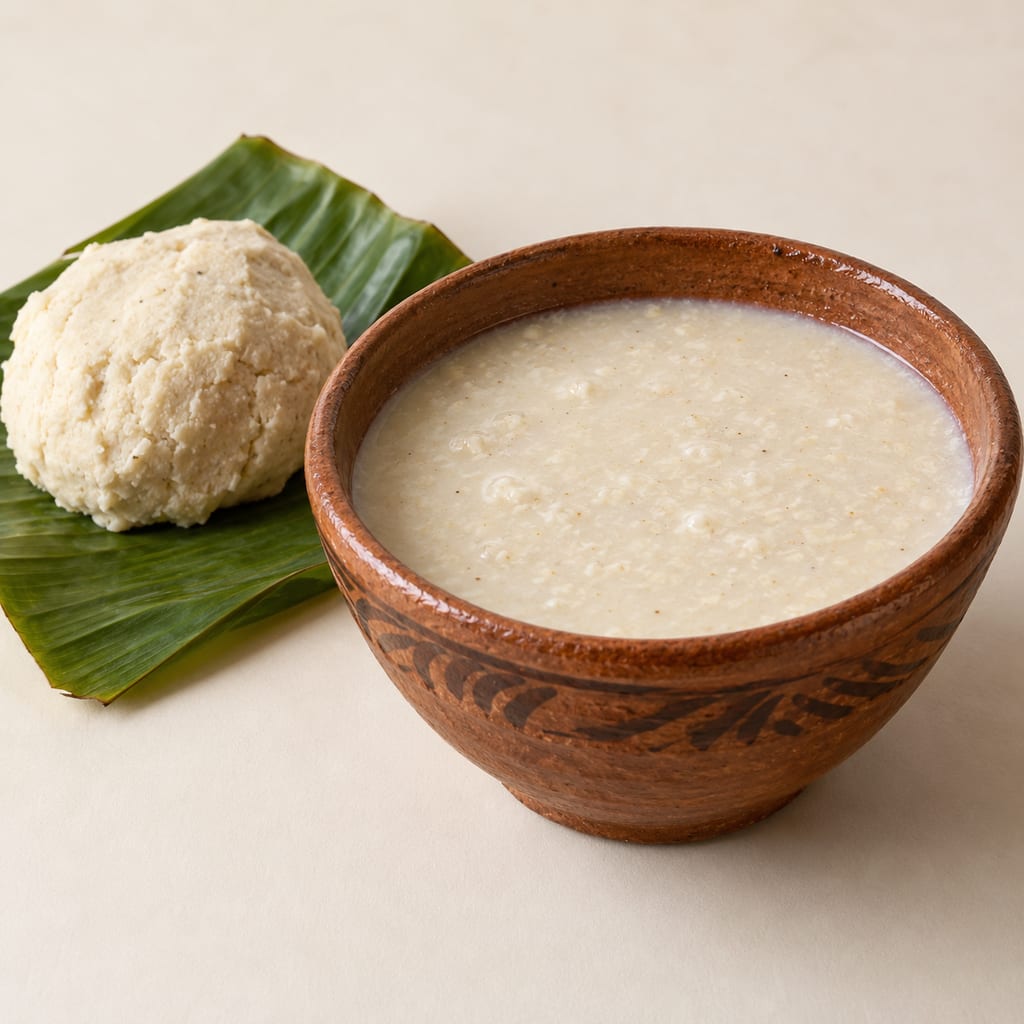
Pozol is lime-cooked maize ground to dough, shaped into balls, wrapped in banana leaves and fermented for days, then stirred into water as a sour drink in southeastern Mexico.
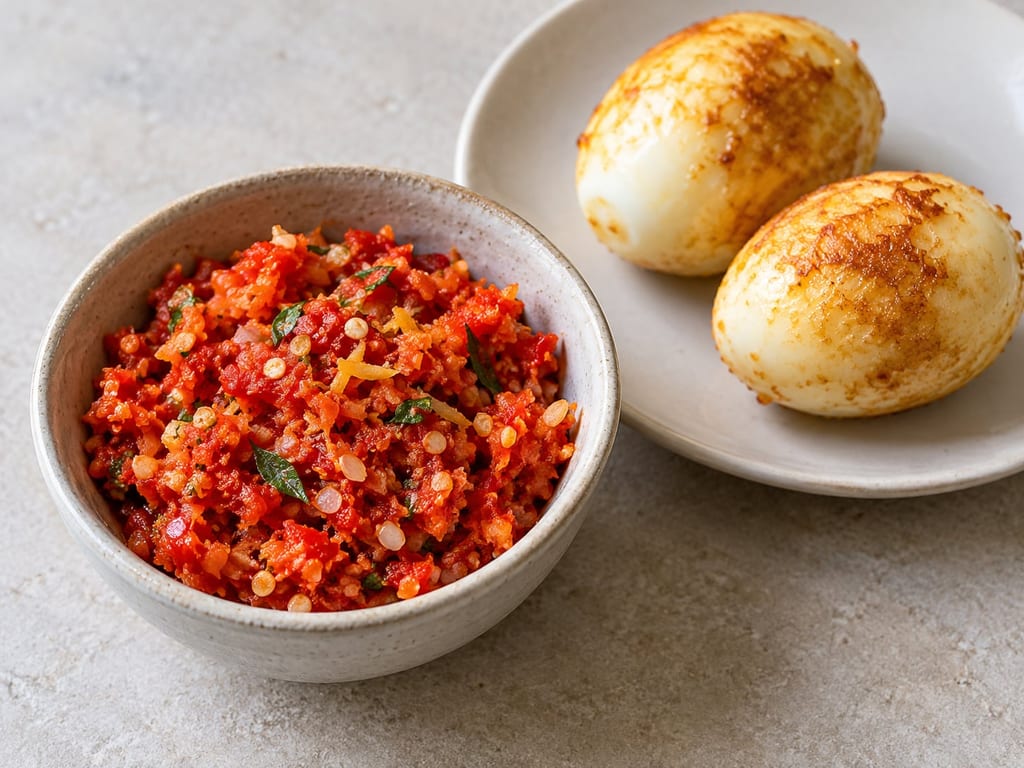
Ai-manas is described as a very hot chilli paste served with Timorese meals. One published version blends fresh chillies, shallots, garlic, Thai basil, ginger, lemon and salt, and serves it with eggs. Sources do not establish a standard formula, precise birthplace or earliest date.
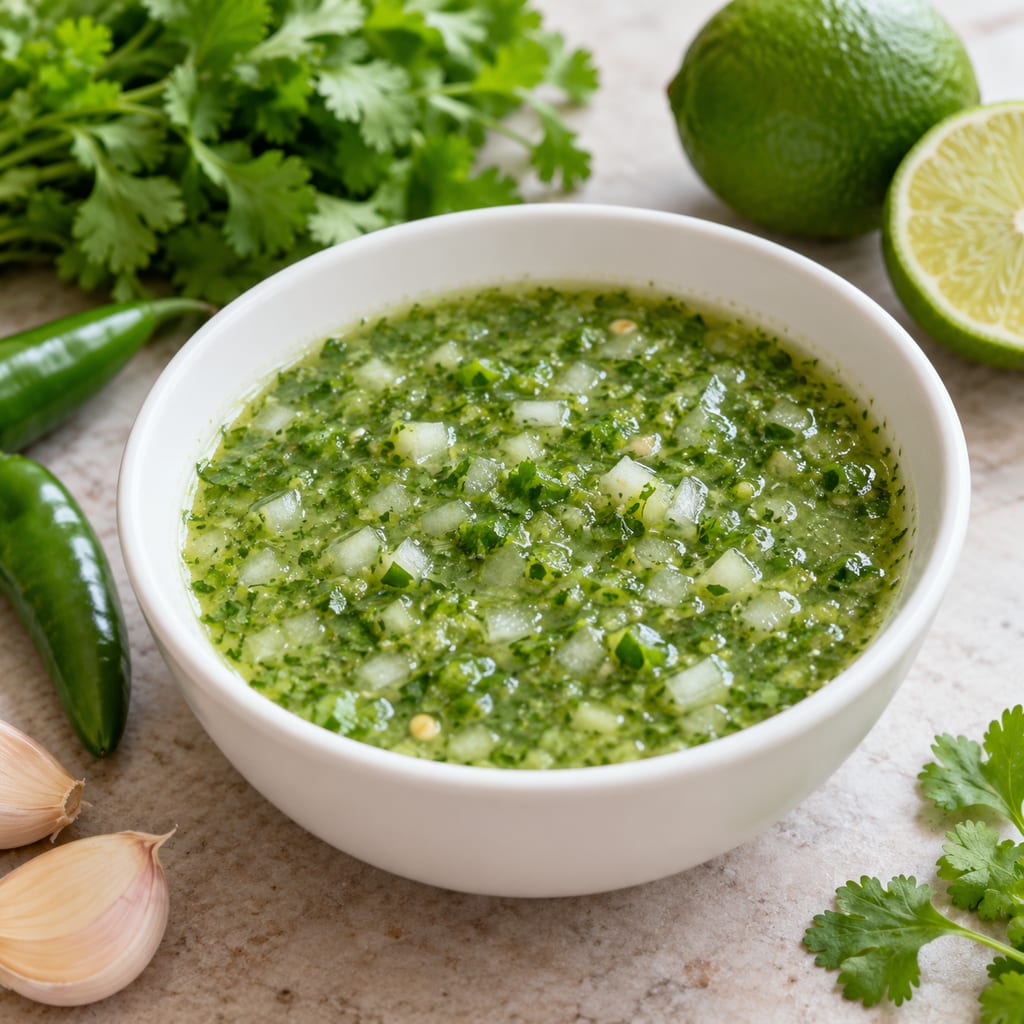
A fresh, uncooked Ecuadorian table sauce of hot pepper, cilantro, garlic and lime, served with most everyday dishes.
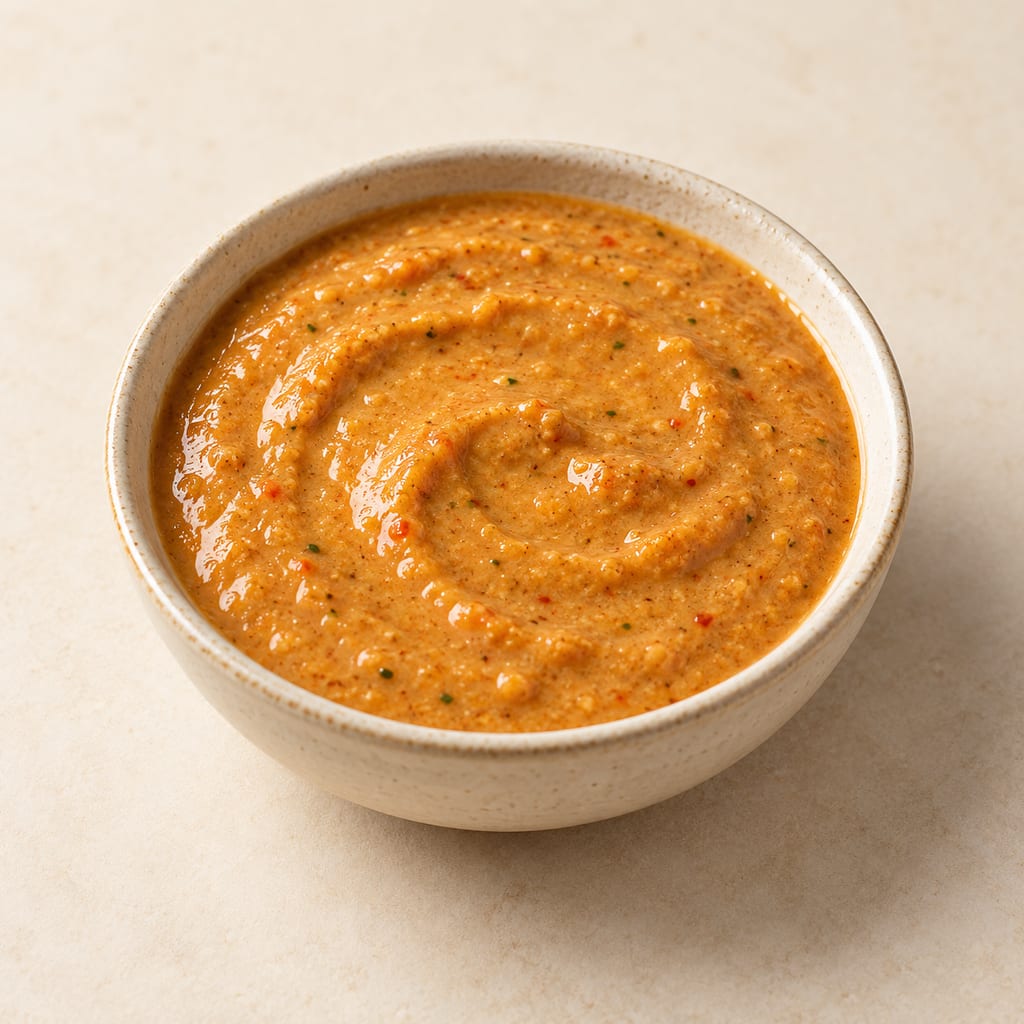
A spicy peanut hot sauce from the Popayán and Cauca region of Colombia, traditionally served with pipián empanadas and tamales.
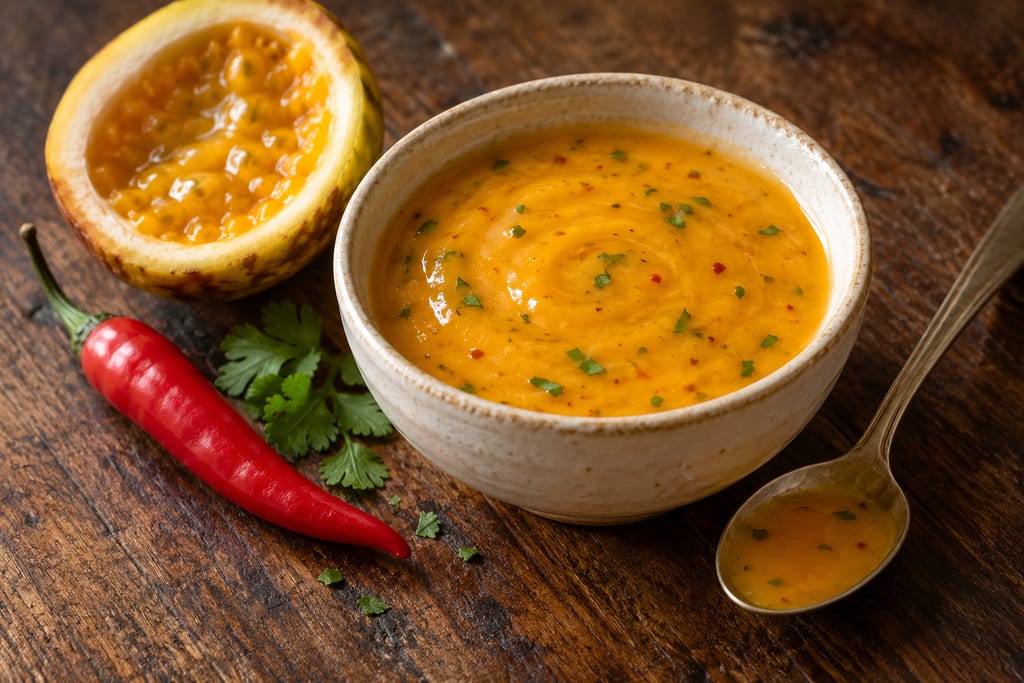
A contemporary Ecuadorian hot sauce that pairs passion fruit juice with boiled chile peppers, oil and lime.
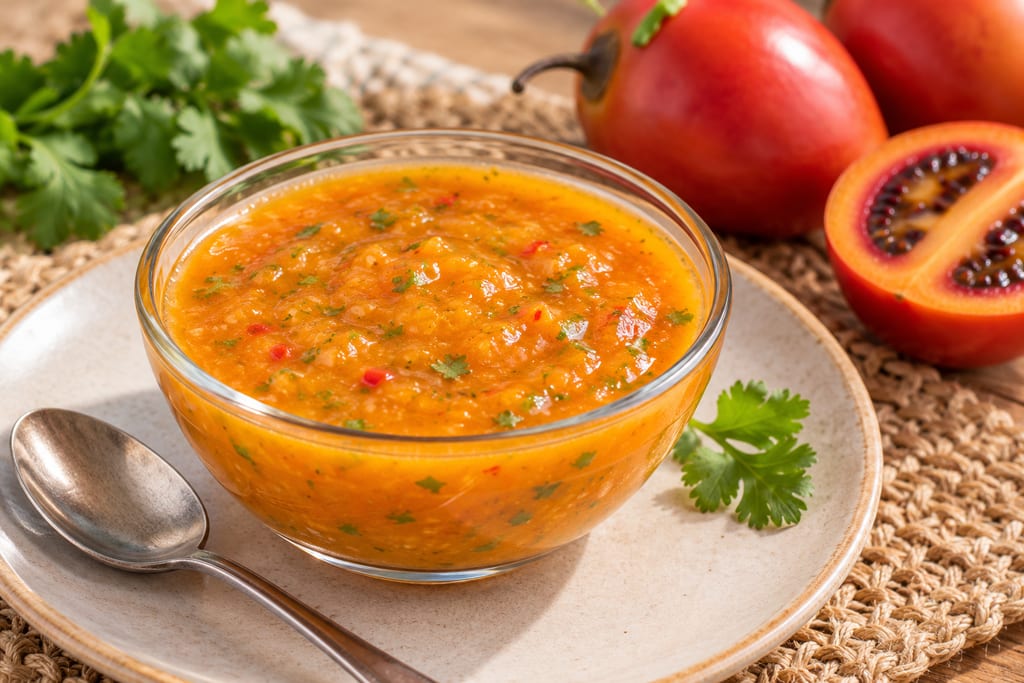
An Ecuadorian hot sauce built on tamarillo, a tart fruit that gives a sharper, fleshier base than ordinary tomato salsa.
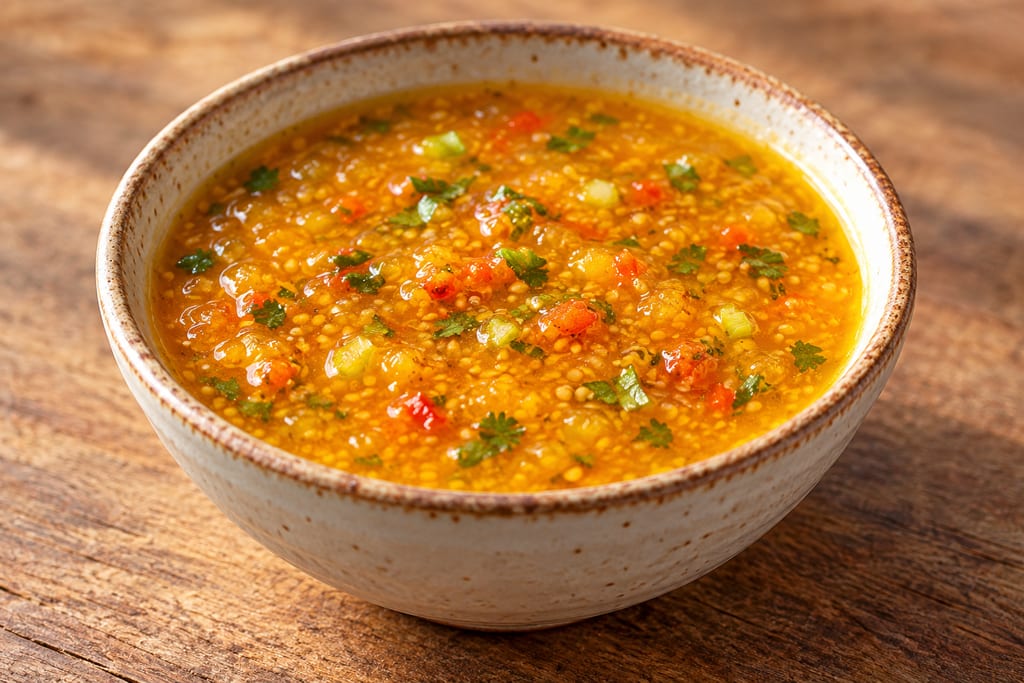
A sweet, tart and spicy Colombian sauce of uchuva, the yellow physalis fruit, with hot pepper, scallion, cilantro and lime.
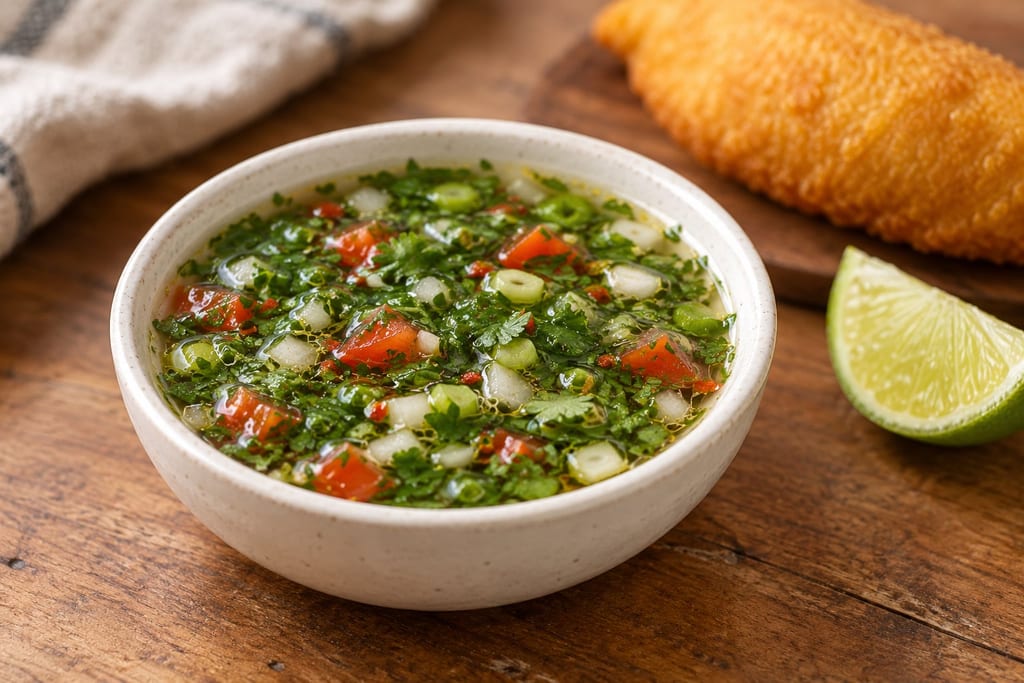
A fresh Colombian table condiment of chopped herbs, scallion and tomato in a vinegar and chile base, served beside fried and filled dishes.
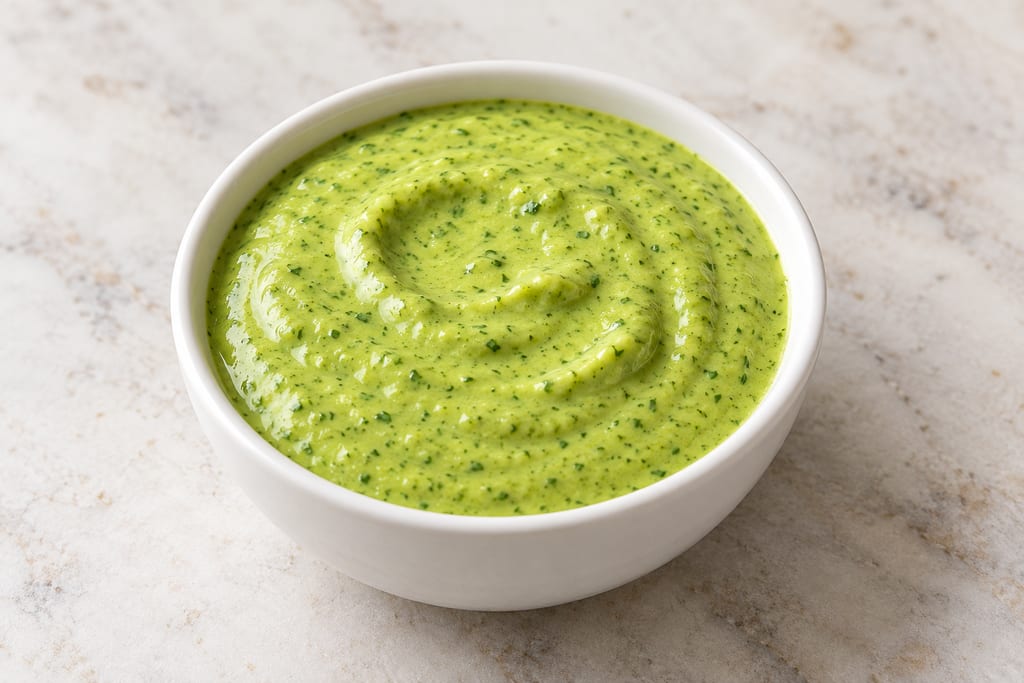
Ají verde is a Peruvian green sauce of coriander, chilli, onion and garlic in a mayonnaise or cheese base. It is best known through Peruvian restaurant cooking abroad.
No community contributions have been published for this entry yet.
Sign in to contribute. Published comments and photos are free to read.
Larousse Cocina, Diccionario enciclopédico de la Gastronomía MexicanaHistory · Regional variation · Use
Salsa machaDescribes a home paste made with fried serrano and morita chiles ground with garlic and salt in a molcajete.
Places the preparation chiefly in Orizaba, Veracruz.
Records optional fried peanuts, tortilla and bread use, paste and oil-containing liquid forms, and separation of oil from chile solids.
Cited in: A salsa that can be a paste or an oil; Veracruz roots and a changing national recipe; What gentle cooking does; Chiles, nuts, seeds and oil; A family of versions, not one universal formula; Serving the sauce; Watching the pan and choosing a texture; A freshly cooked condiment, not a fermentation
Larousse CocinaMethod · Regional variation · Use
Salsa machaNames morita and chipotle as Veracruz chiles and notes national popularity of chile de árbol variants.
Gives a distinct chile de árbol, peanut, sesame, garlic, vinegar, piloncillo and oil method.
Recommends using the sauce with totopos or to add heat to dishes.
Cited in: A salsa that can be a paste or an oil; Veracruz roots and a changing national recipe; What gentle cooking does; Chiles, nuts, seeds and oil; A family of versions, not one universal formula; A freshly cooked condiment, not a fermentation
Rick BaylessMethod · Ingredients · History · Use
Salsa MachaProvides the ingredient amounts and method used in the structured recipe.
Cooks garlic and raw peanuts gently for about ten minutes, then chiles and sesame for one or two minutes before adding vinegar, water and salt.
Describes blending to small pieces and discussing a Veracruz origin claim alongside his observations in western Mexico and Baja.
Cited in: A salsa that can be a paste or an oil; Veracruz roots and a changing national recipe; What gentle cooking does; Chiles, nuts, seeds and oil; A family of versions, not one universal formula; Watching the pan and choosing a texture; A freshly cooked condiment, not a fermentation
Culinary Institute of America, Healthy Kitchens, Healthy LivesRegional variation · Use
Plant-Forward Mexico: Live Cooking Demonstration, Recipe Packet — Salsa Macha with PeanutsDocuments a modern variant with canola oil, garlic, roasted peanuts, sesame, guajillo, ancho, chipotle, Mexican oregano, cider vinegar and agave or honey.
Directs coarse processing rather than smooth pureeing.
Suggests serving with grilled vegetables, fish, tacos, eggs and root vegetables.
Cited in: Chiles, nuts, seeds and oil; A family of versions, not one universal formula; Serving the sauce; Watching the pan and choosing a texture; A freshly cooked condiment, not a fermentation
McCormick Kitchens / El GuapoMethod · Use
Salsa MachaDescribes a contemporary guajillo and ancho version with olive oil, garlic, peanuts, sesame, cider vinegar, piloncillo and oregano.
Warns that over-browned chiles can make the sauce bitter.
Suggests serving with tacos, grilled fish, tostadas, eggs and pasta, and instructs refrigeration.
Cited in: A family of versions, not one universal formula; Serving the sauce; Watching the pan and choosing a texture
National Center for Home Food Preservation, University of GeorgiaSafety · Storage
Freezing Garlic-In-OilStates that garlic-in-oil stored at room temperature has botulism risk.
Recommends refrigeration at 40 °F or lower for no more than four days, or freezing for longer storage.
Cited in: Cooling, refrigeration and what not to infer; A freshly cooked condiment, not a fermentation
Centers for Disease Control and PreventionSafety
Home-Canned FoodsAdvises refrigeration of homemade oils made with garlic or herbs and discard after four days.
States botulinum toxin cannot be seen, smelled or tasted and advises never tasting food to assess safety.
Cited in: Cooling, refrigeration and what not to infer; A freshly cooked condiment, not a fermentation
