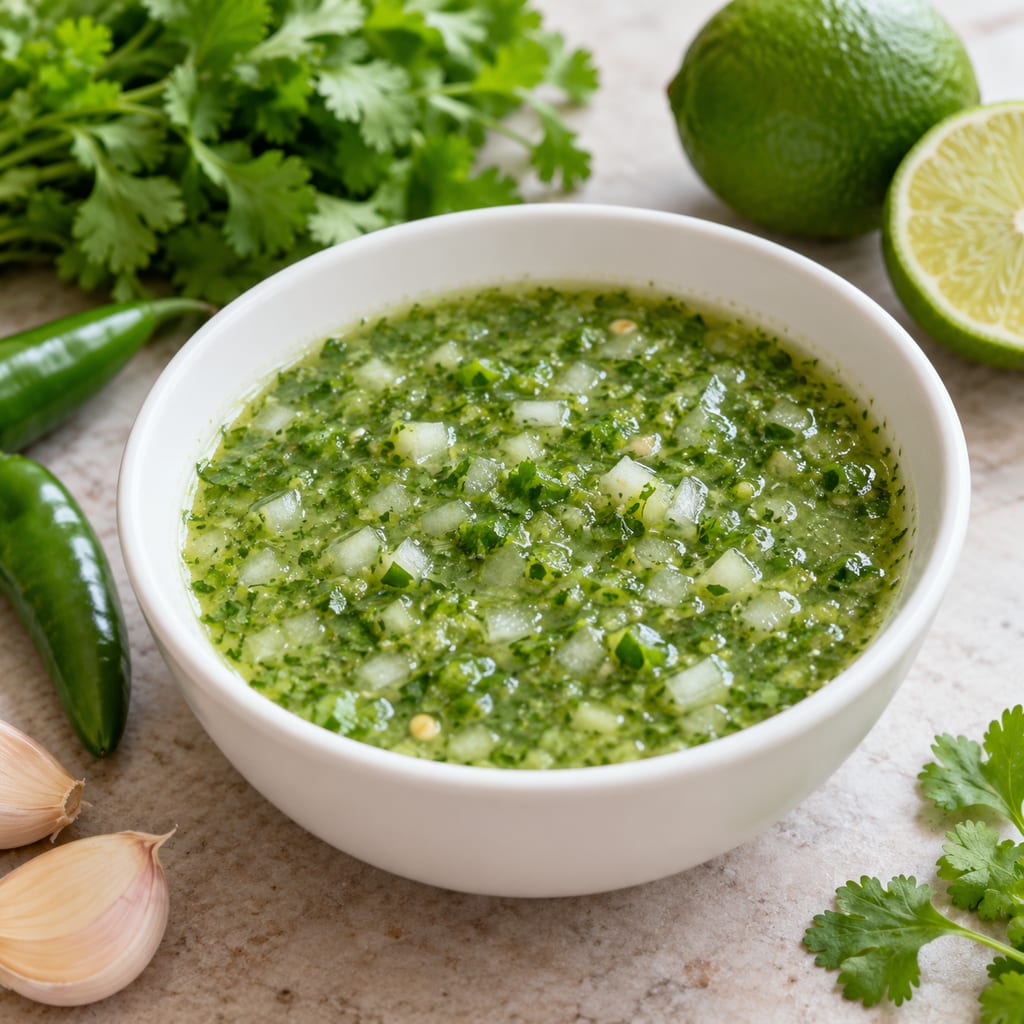
Ají criollo
A fresh, uncooked Ecuadorian table sauce of hot pepper, cilantro, garlic and lime, served with most everyday dishes.
 FermenteaWhere food goes to change
Traditional method
Tamarillo hot sauce · Tree tomato ají
An Ecuadorian hot sauce built on tamarillo, a tart fruit that gives a sharper, fleshier base than ordinary tomato salsa.
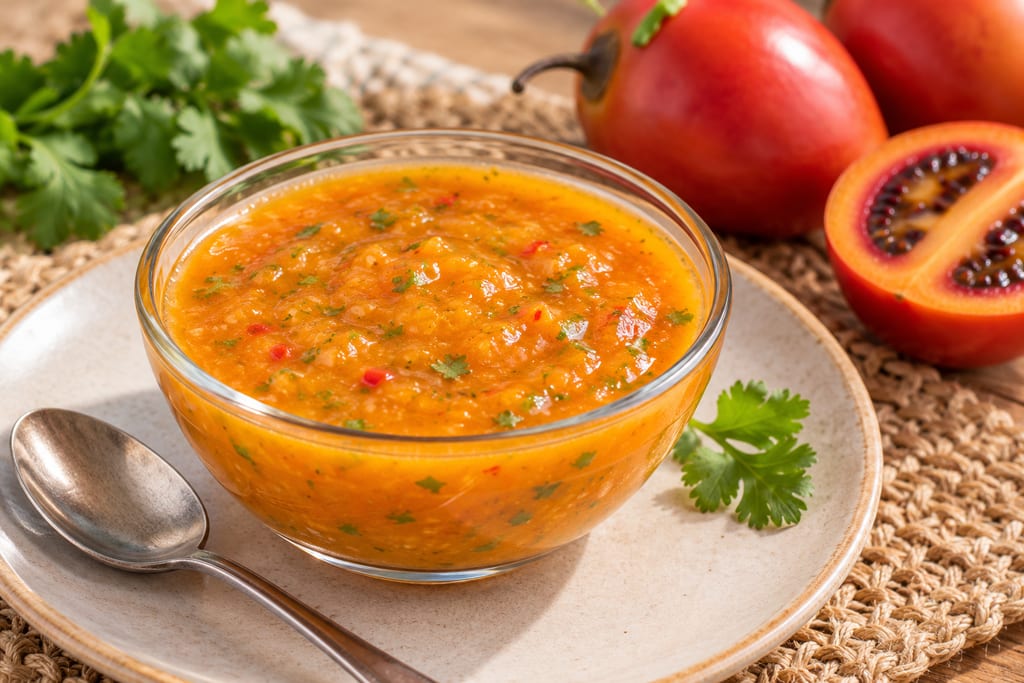
Ají de tomate de árbol is an Ecuadorian hot sauce made from tamarillo, a fruit that is not a true tomato although it is commonly called tree tomato. The fruit is much more tart than ordinary tomato, and the page describes it as tangy and slightly bitter, though another source it cites calls it sweeter than a common tomato.
Because its flavour is so different, the sauce is not simply tomato salsa with a different name. The fruit gives it a fleshy, sharp base that the peppers and lime then sharpen further.
The tamarillo resembles a roma tomato but is pointier and has a thicker skin. Skin can be yellowish-orange or dark red, and the flesh ranges from orange to dark red to nearly purple. It is very tart and the page advises eating it raw only when fully ripe.
Outside Ecuador the fruit is hard to find and is often imported from New Zealand. The page notes that frozen pulp works for juice but gives a weaker sauce, while frozen whole fruit gives a sauce close to fresh.
The fruit and peppers are blended first. Cooking is optional: a short simmer with water softens the sauce and keeps it longer, while an uncooked blend tastes fresher but keeps for less time.
Lime juice, onion, cilantro and salt are added at the end so that their flavour stays bright.
In Quito, cooks commonly add cooked, peeled lupins, called chochos. In Cuenca the sauce is blended with a mild oil instead of water and left uncooked, which makes it smooth and creamy.
Both styles are named by the page as local variants of the same sauce.
The page recommends the sauce with empanadas, yuca bread, plantain chips, tamales, humitas, potatoes, fish and meat. It notes that a cooked sauce keeps about a week and freezes well, and that the uncooked version should be eaten sooner.
The Laylita page presents the sauce as a common Ecuadorian hot sauce and names Quito and Cuenca styles, but gives no date for its origin.
Yield 1.25 cups · Scaling: source batch only
Habaneros are very hot; handle chilies with care and wash hands after seeding.
Documented as a common Ecuadorian hot sauce; regional styles are named in the source for Quito and Cuenca.
A fresh, uncooked Ecuadorian table sauce of hot pepper, cilantro, garlic and lime, served with most everyday dishes.
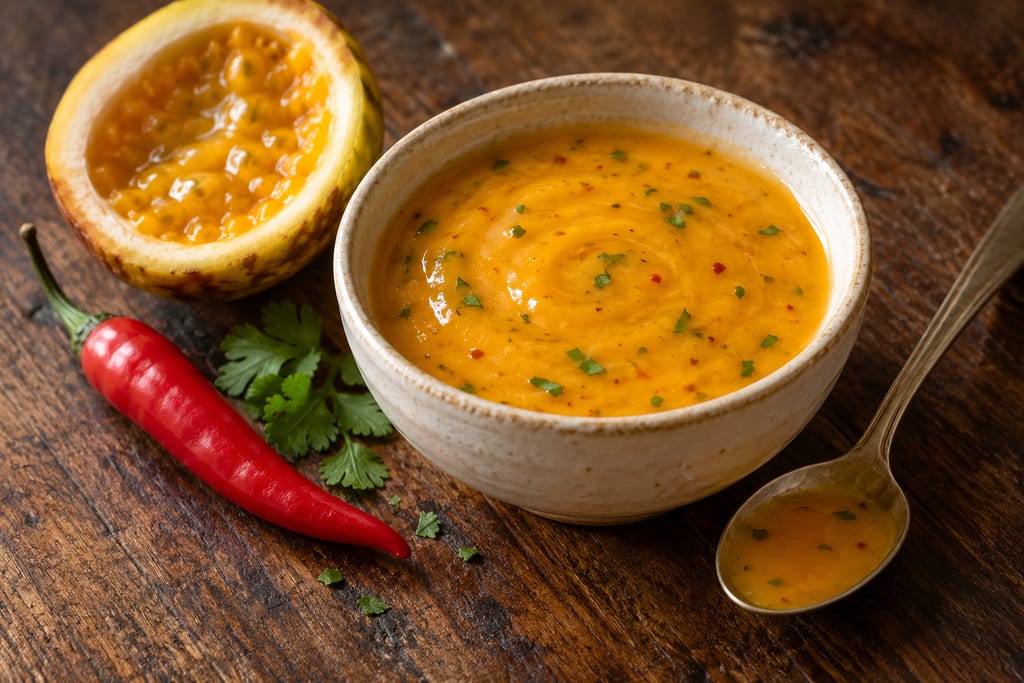
A contemporary Ecuadorian hot sauce that pairs passion fruit juice with boiled chile peppers, oil and lime.
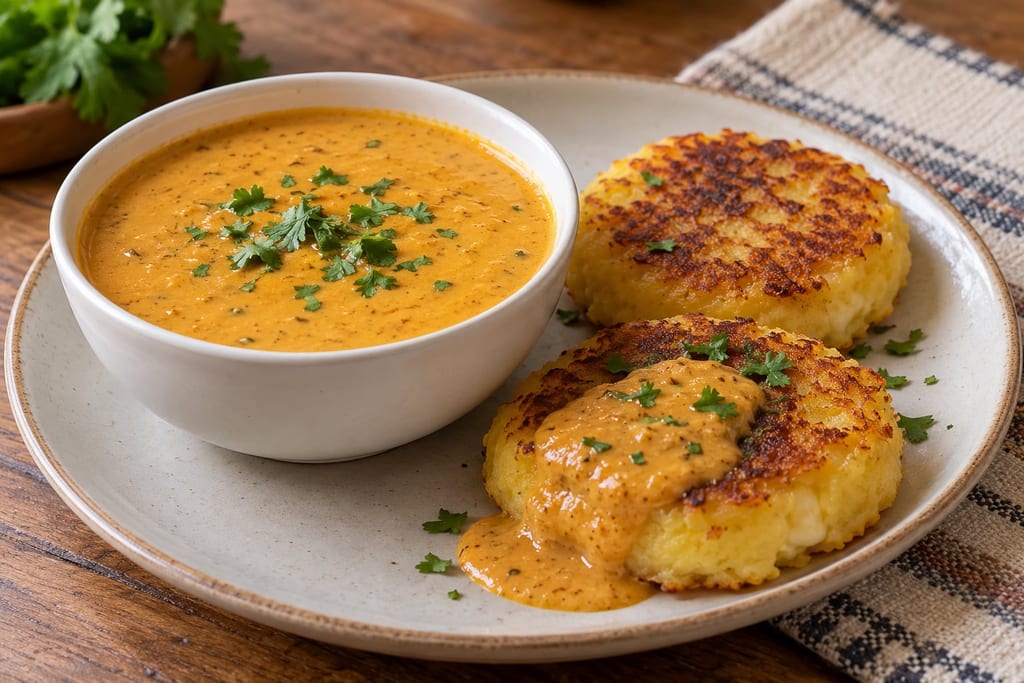
A warm, creamy peanut sauce thickened with milk and seasoned with onion, cumin and achiote, served over potatoes and llapingachos in Ecuador.
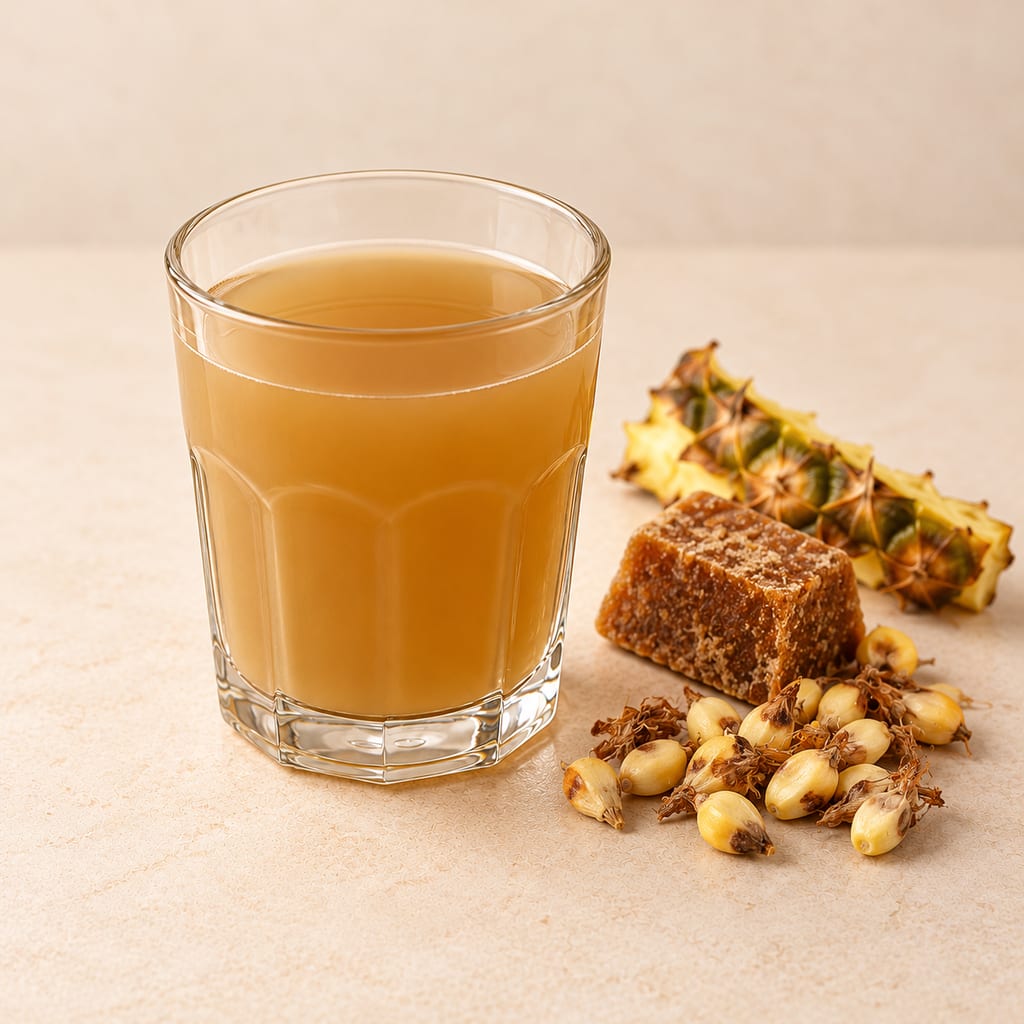
A contemporary Ecuadorian recipe simmers jora flour with spices, then adds panela and pineapple peel before a short spontaneous ferment. Its particular aromatics and measurements belong to this published adaptation.

Ecuadorian filled sweet bread figures with a rounded head and wrapped body, made from an enriched yeast dough. This home method shapes small filled ovals, proofs them on trays and serves them with colada morada.
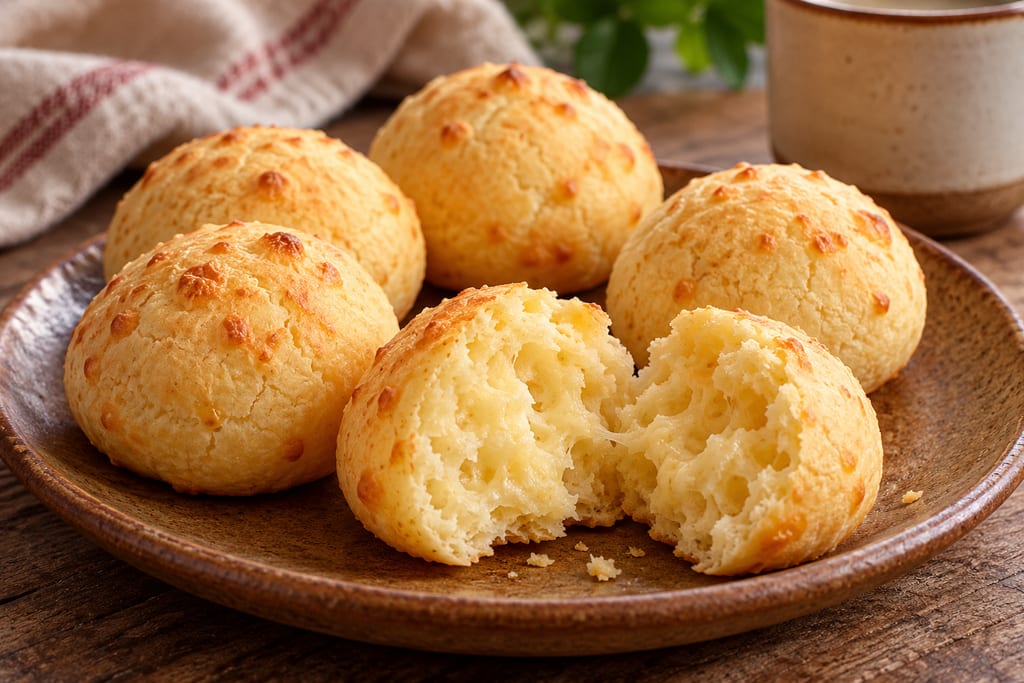
Small cassava-starch cheese breads mixed in a processor, chilled, baked and briefly browned under a broiler. This is Laylita's Ecuadorian-style formula.
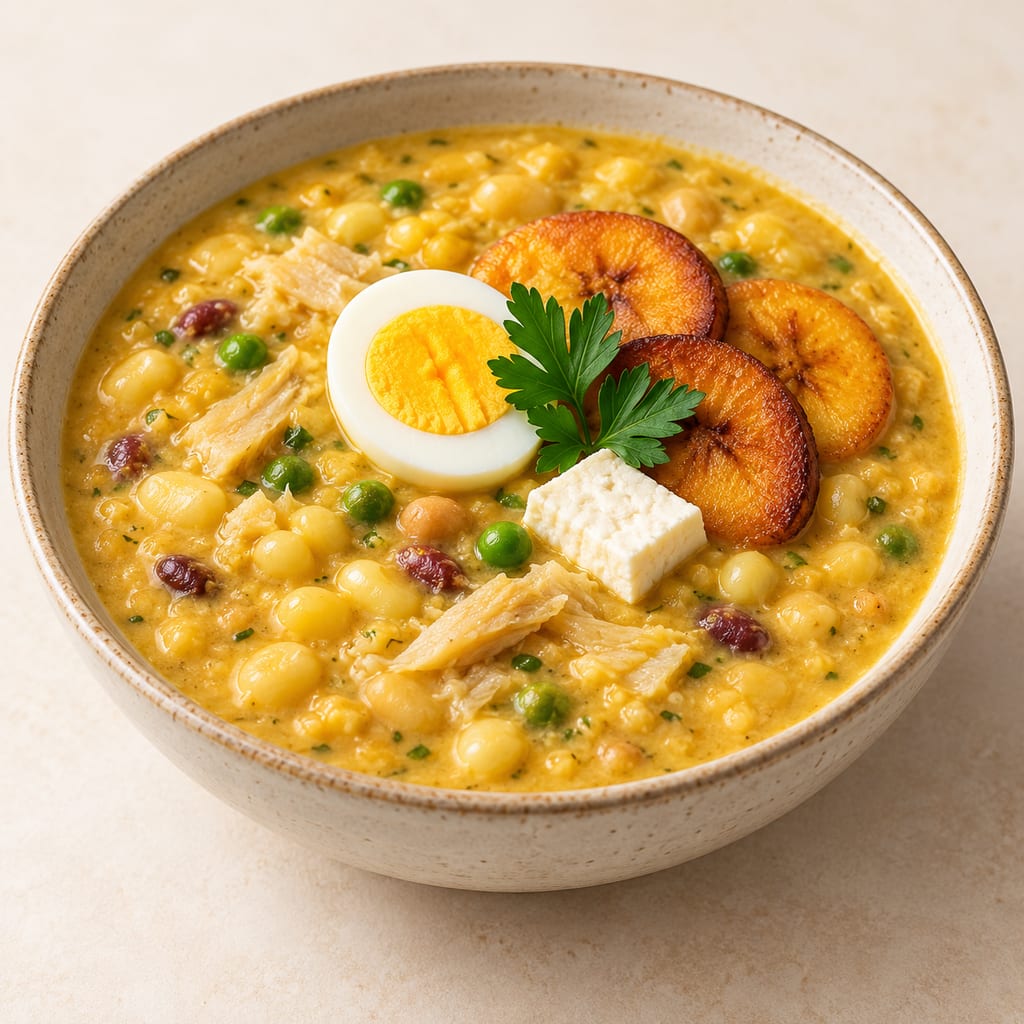
Ecuadorian Holy Week soup of tender grains and pulses, squash, milk and salted fish, thickened with peanut paste and served with contrasting garnishes.
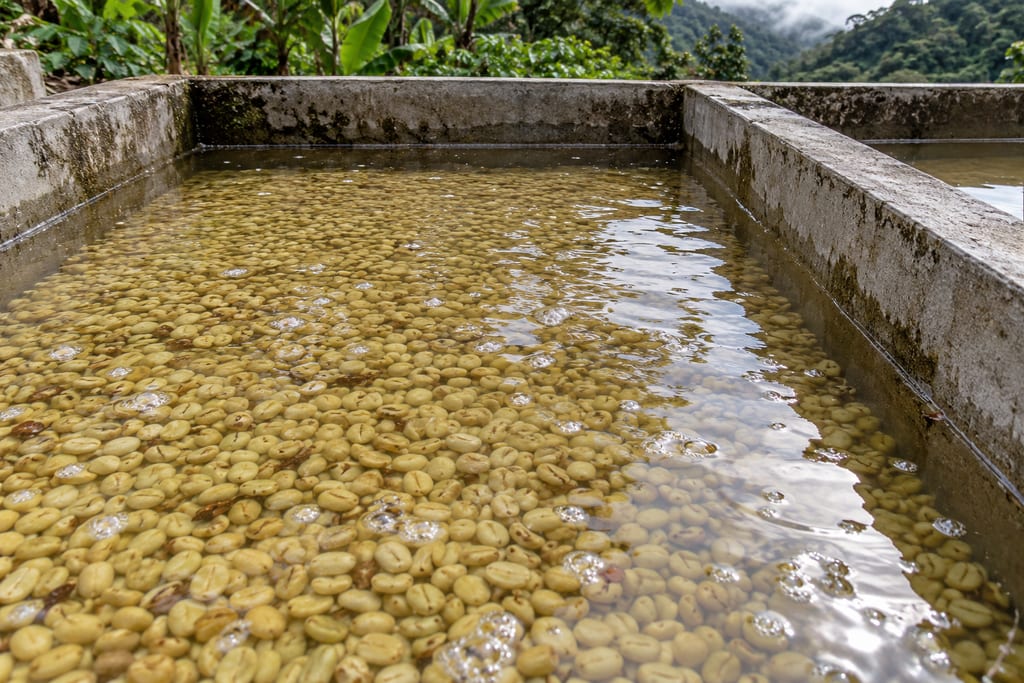
Washed Arabica coffee from Nanegal in Ecuador: depulped beans held under water while microbes and enzymes strip the mucilage, then washed, soaked and sun-dried to green coffee.
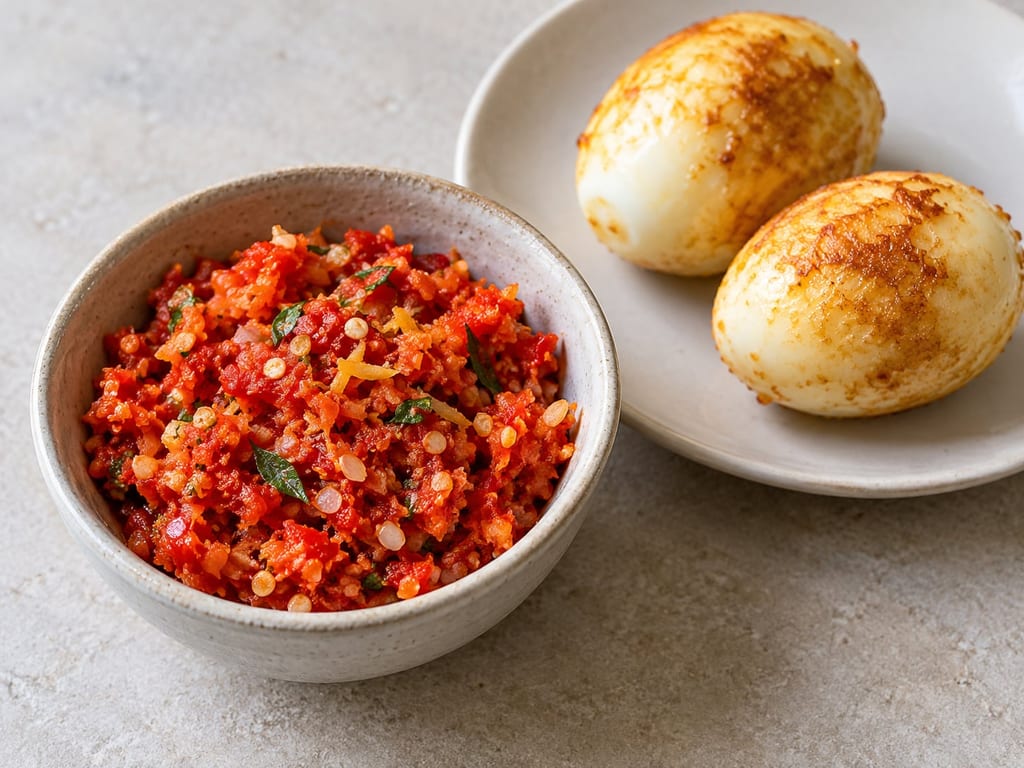
Ai-manas is described as a very hot chilli paste served with Timorese meals. One published version blends fresh chillies, shallots, garlic, Thai basil, ginger, lemon and salt, and serves it with eggs. Sources do not establish a standard formula, precise birthplace or earliest date.
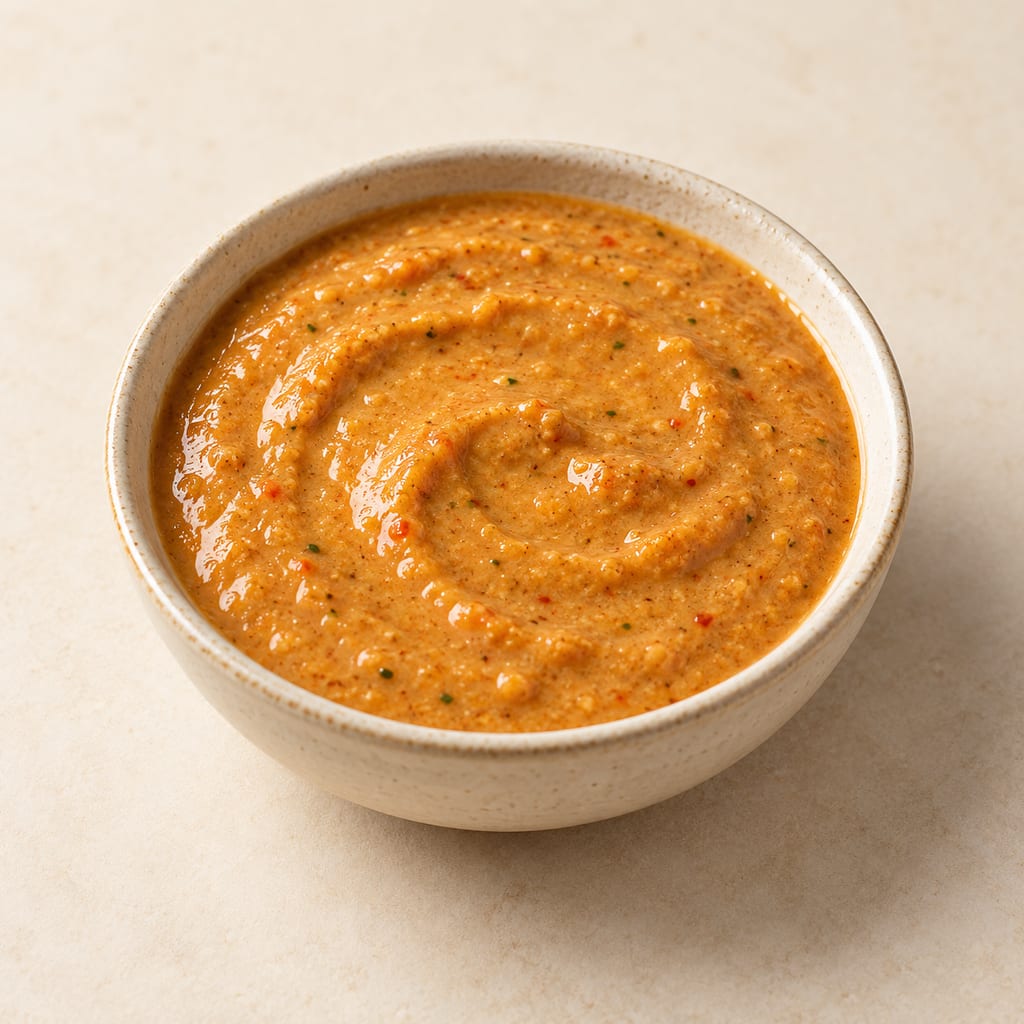
A spicy peanut hot sauce from the Popayán and Cauca region of Colombia, traditionally served with pipián empanadas and tamales.
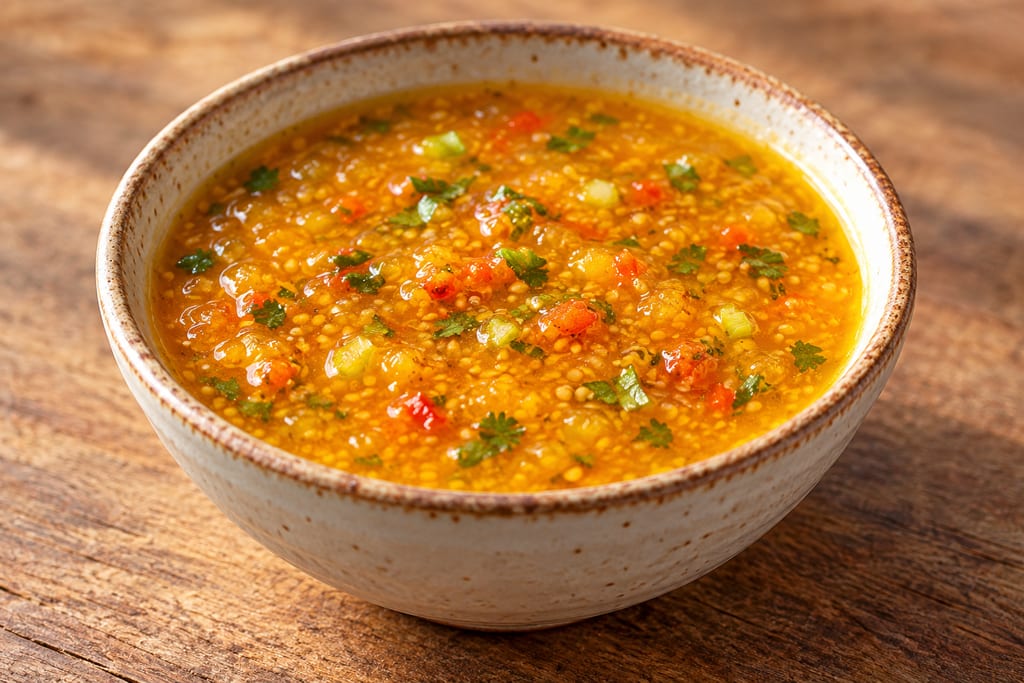
A sweet, tart and spicy Colombian sauce of uchuva, the yellow physalis fruit, with hot pepper, scallion, cilantro and lime.
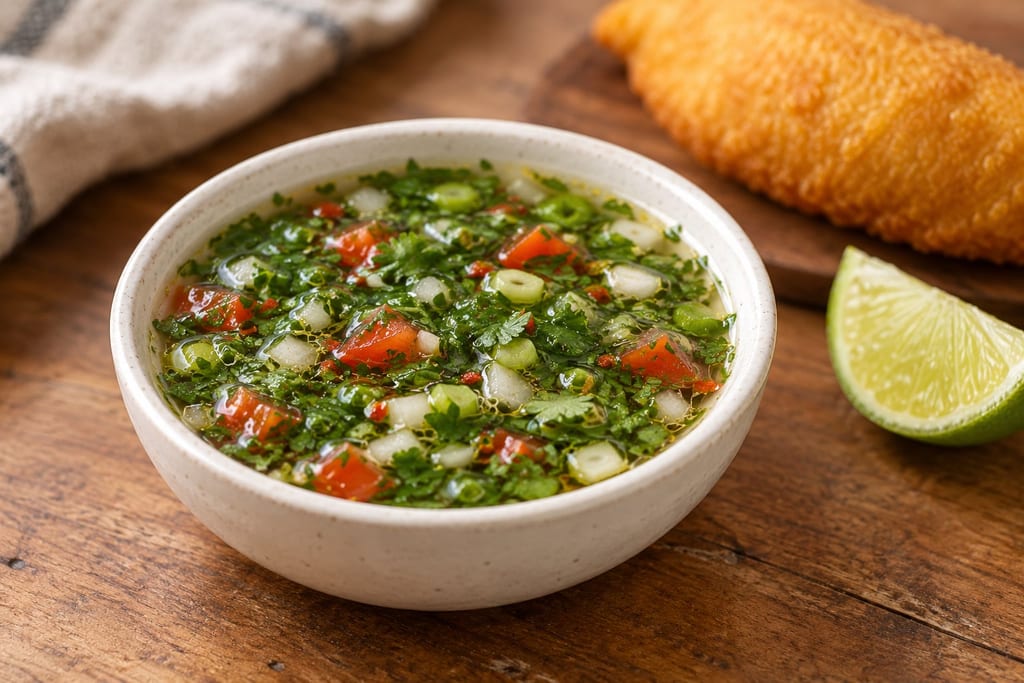
A fresh Colombian table condiment of chopped herbs, scallion and tomato in a vinegar and chile base, served beside fried and filled dishes.
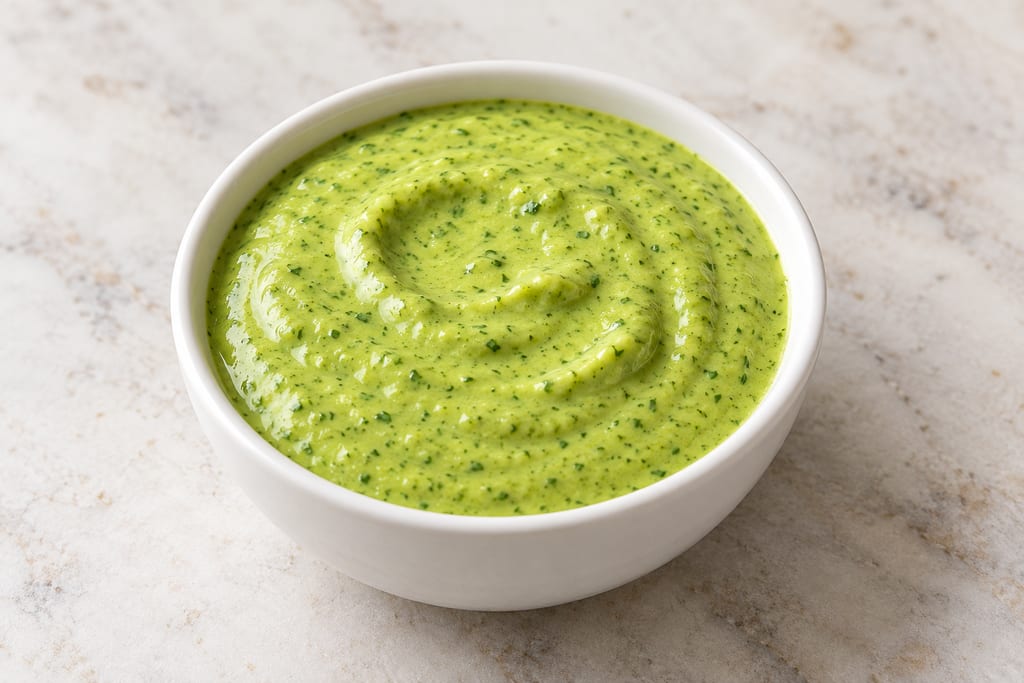
Ají verde is a Peruvian green sauce of coriander, chilli, onion and garlic in a mayonnaise or cheese base. It is best known through Peruvian restaurant cooking abroad.
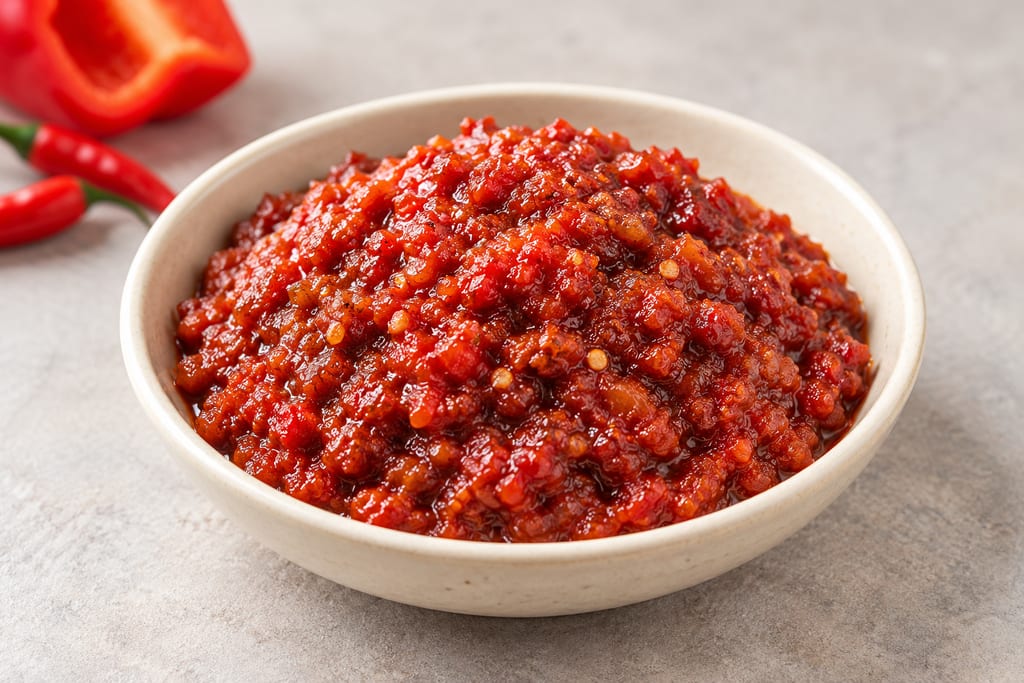
Ata dindin is the Yoruba fried pepper sauce: chillies, red bell pepper and onion blended and cooked down in oil until the oil separates. The same name is also given to a finished stew built on it.
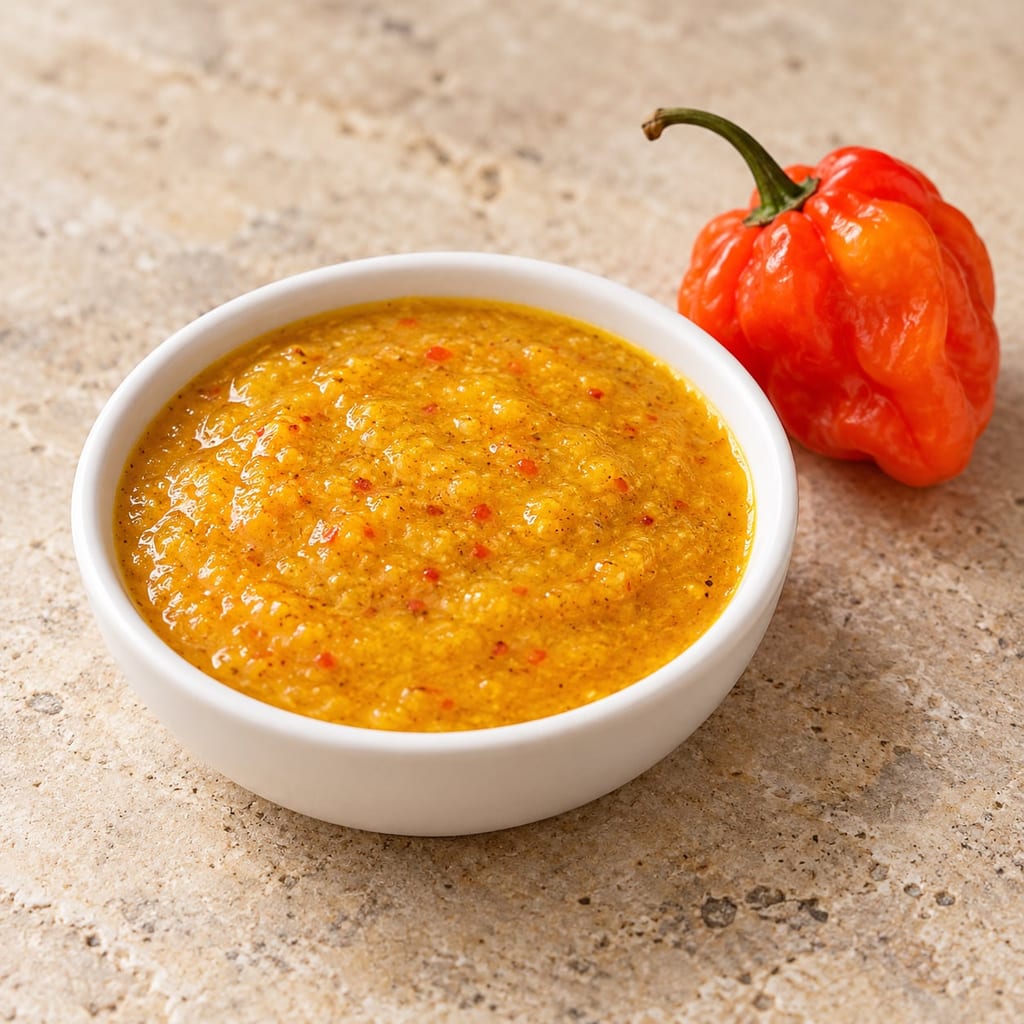
Bajan pepper sauce is a Barbadian hot sauce that blends Scotch bonnet peppers with mustard and vinegar, often with onion, turmeric and oil. Its heat and sharpness come from both the chile and the mustard, which sets it apart from a plain pepper vinegar.
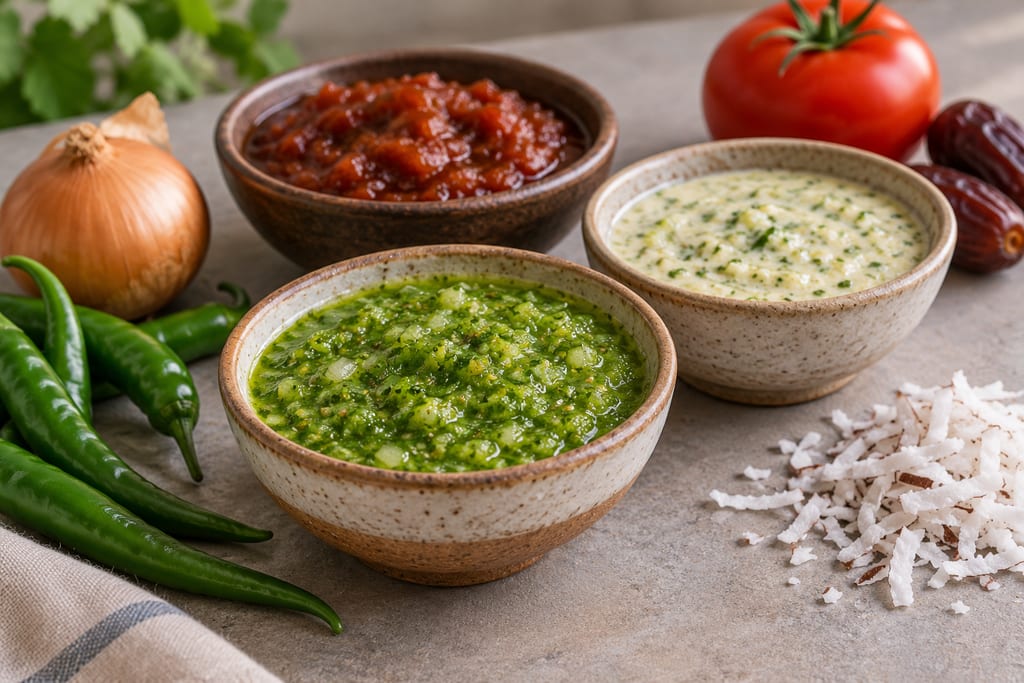
Basbaas is the Somali word for chilli and the name of a family of hot sauces served at the table, so each diner can set the heat. Green, coconut and tomato-based versions are all called basbaas.
No community contributions have been published for this entry yet.
Sign in to contribute. Published comments and photos are free to read.
Laylita's RecipesMethod · Background
Tamarillo or tree tomato aji hot sauceIngredients and method
Quito and Cuenca variants
Tamarillo description and frozen-fruit notes
Storage and serving
Cited in: A tart fruit sauce; The tamarillo; Method and the choice of cooking; Regional styles; Serving and storage