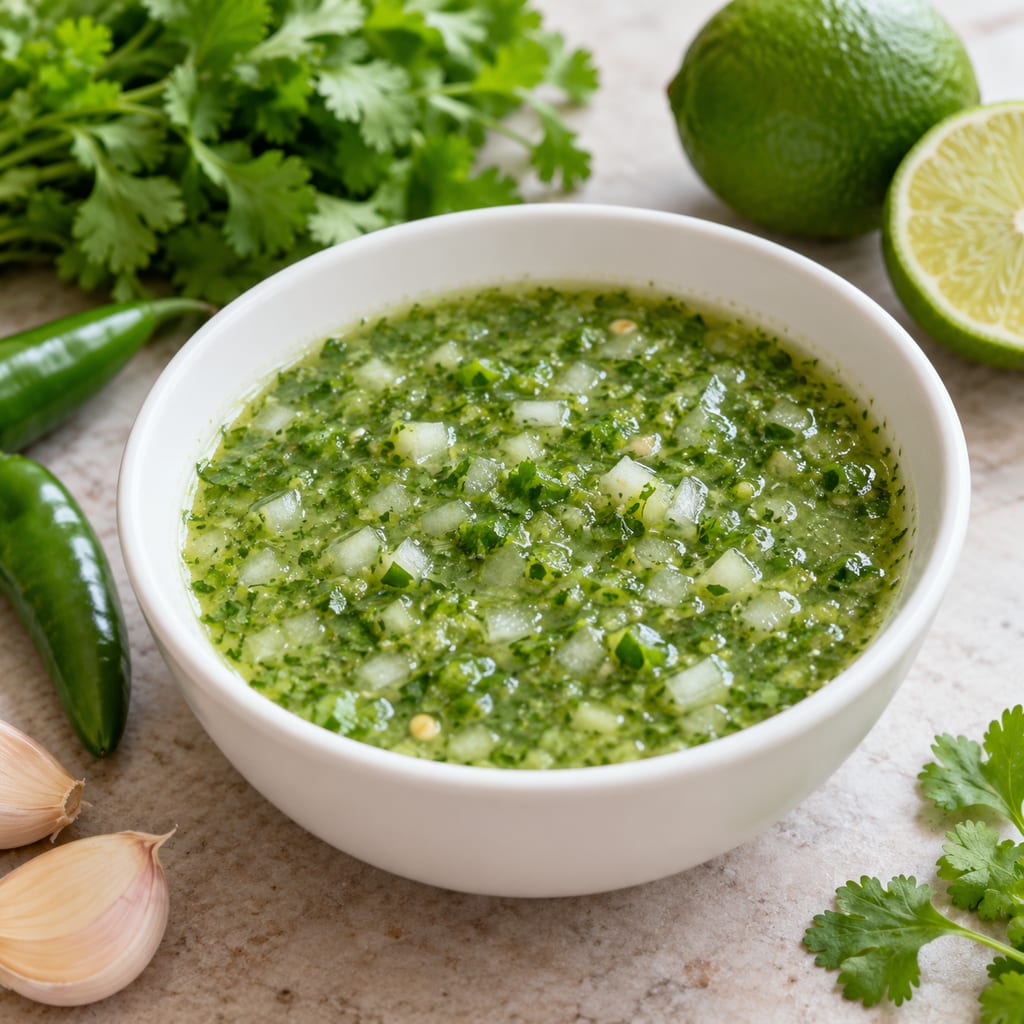
Ají criollo
A fresh, uncooked Ecuadorian table sauce of hot pepper, cilantro, garlic and lime, served with most everyday dishes.
 FermenteaWhere food goes to change
Modern method
Wet-processed Coffea arabica (Typica)
Washed Arabica coffee from Nanegal in Ecuador: depulped beans held under water while microbes and enzymes strip the mucilage, then washed, soaked and sun-dried to green coffee.
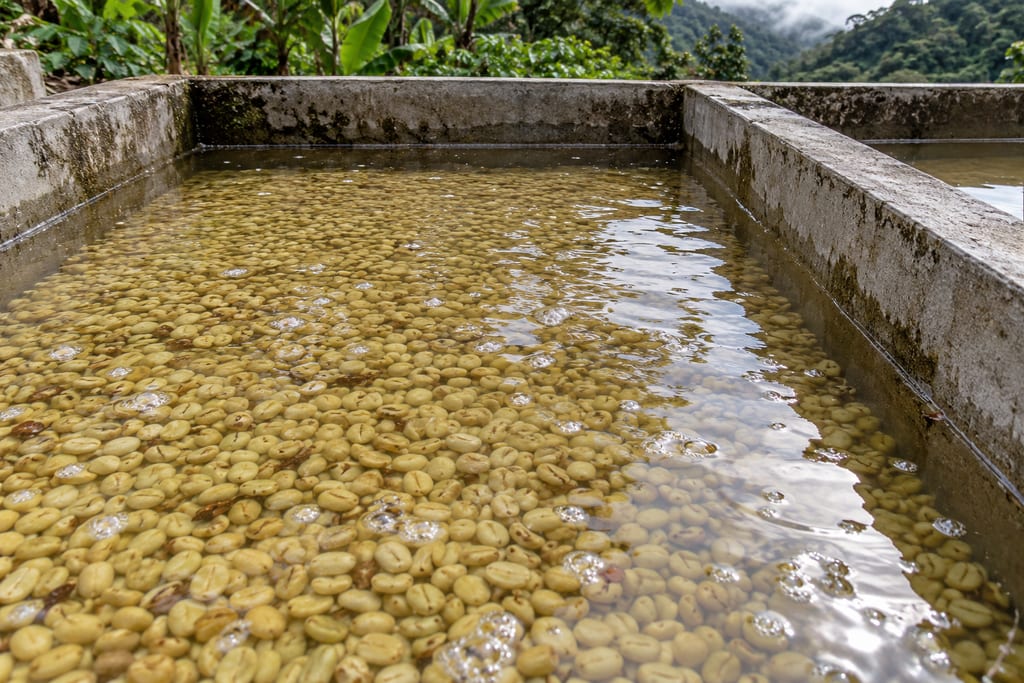
Wet-fermented Arabica coffee is produced by removing the outer fruit tissues from ripe coffee cherries, allowing the depulped beans to ferment in water, washing away the remaining mucilage and drying the beans before roasting.
The method is commonly associated with washed or wet-processed coffee.
The purpose of fermentation is principally to transform the mucilage that clings to the parchment-covered coffee beans after depulping.
That mucilage contains sugars, pectin and other plant-derived compounds.
Microorganisms use some of these materials as nutrients, generating acids, alcohols and other metabolites.
The process helps separate the mucilage from the parchment and may influence the later sensory characteristics of the coffee.
The record preserved here describes a measured research protocol carried out at a plantation near Nanegal, Ecuador, in June and July 2015.
It compares a standard 16-hour underwater fermentation with a much longer 64-hour experimental fermentation.
The original Fermentea record correctly focuses on the standard 16-hour method. The extended version is discussed as a comparison, not silently merged into the ordinary process.
Spanish — Café lavado
Spanish — Fermentación húmeda del café
Spanish — Café arábigo
English — Washed coffee, wet-processed coffee
Botanical — Coffea arabica L.
Cultivar — Typica
The experiment used Coffea arabica var. Typica.
Typica belongs to the historical genetic lineages of Arabica cultivated in various coffee-producing regions.
It is not a synonym for all Arabica coffee.
Other cultivars may differ in growth, fruit characteristics and flavour potential.
Nanegal is located in Pichincha Province, in the northwestern Andean region of Ecuador.
The experimental plantation was situated at an elevation of 1,329 metres.
The research documents a specific farming and processing operation at that site.
The location matters because the local environment affects fruit production and post-harvest processing conditions.
Temperature, water availability and agricultural infrastructure all influence fermentation.
However, the experiment's geographical location does not establish that wet coffee processing originated in Nanegal.
Coffee itself originated in Africa.
Arabica cultivation spread through the Arabian Peninsula and later across the world.
Coffee became an important commercial crop in Latin America during the colonial and post-colonial periods.
Wet processing developed as one of several methods for separating the seed from the surrounding fruit.
Ecuador uses a range of coffee-processing techniques today.
The measured Nanegal procedure is one specific example within that wider agricultural history.
A coffee cherry consists of multiple layers.
The outer skin surrounds the fruit pulp.
Inside are mucilaginous tissues associated with the parchment layer that encloses the seeds.
Most coffee cherries contain two seeds, although other configurations occur.
The seed is the part eventually roasted and brewed.
If the harvested cherries are left untreated, they can deteriorate.
Processing removes or transforms the perishable fruit material and prepares the seeds for drying.
The sequence of removal matters.
Natural or dry-processed coffee is dried with much of the whole fruit intact.
Honey or pulped-natural processing retains varying amounts of mucilage during drying.
Washed processing removes the skin and much of the pulp before fermentation, then washes away the remaining mucilage.
These techniques create different environments around the coffee seeds.
Coffee mucilage contains carbohydrates, pectin and water.
It forms a slippery layer around the parchment.
Pectin contributes to its adhesive structure.
This is why mechanical depulping does not always produce a clean, dry bean ready for roasting.
A sticky layer remains.
During fermentation, microbial enzymes and other activities help break down components of this material.
The resulting changes make the mucilage easier to remove through washing.
This is one practical reason for allowing depulped coffee to ferment.
It is not necessary for all desirable coffee flavour to be created during that stage.
The final brewed flavour depends on the plant, processing, drying, roasting and brewing.
The Nanegal study examined microbial communities using culture-based and molecular methods.
It revealed that the fermentation involved multiple groups of microorganisms, whose relative abundance changed over time.
At the beginning, the system contained enterobacteria, acetic acid bacteria and yeasts.
The fresh cherries, depulping equipment and processing environment can all contribute microorganisms.
As fermentation progressed, lactic acid bacteria became increasingly important.
Leuconostoc pseudomesenteroides was prominent during part of the process.
Later stages showed increasing representation of acid-tolerant lactobacilli, including organisms identified in the study as Lactobacillus vaccinostercus, Lactobacillus brevis and Lactobacillus plantarum.
Under current bacterial taxonomy, several traditional Lactobacillus names are assigned to more specific genera.
The scientific conclusions concern the organisms and their functions rather than the stability of older genus names.
Yeasts remained present during fermentation.
Starmerella bacillaris became more prominent in some samples as the process progressed.
Other species were detected sporadically.
During the 64-hour experiment, the microbial community changed further.
The research identified more than 150 microbial species in a later metagenomic investigation of the Nanegal fermentation system.
These findings show that coffee fermentation is a dynamic ecosystem.
It should not be reduced to the claim that one yeast “ferments the coffee.”
The microorganisms metabolise substances present in the mucilage.
Sugar metabolism can generate lactic acid, ethanol, carbon dioxide and other compounds, depending on the organisms and conditions.
Acid accumulation changes the pH of the surrounding liquid.
The chemical environment also changes as carbohydrates are consumed and microbial populations shift.
Some microorganisms can contribute enzymes involved in the breakdown of plant cell-wall materials.
The mucilage becomes easier to remove.
During prolonged fermentation, the relative concentrations of organic acids and other metabolites may continue changing.
Not all these compounds necessarily penetrate deeply into the coffee seed.
The relationship between fermentation chemistry and final cup flavour is complex.
The bean undergoes substantial additional chemical transformation during roasting.
The original research divided the depulped beans between the standard and extended fermentation experiments.
The 300 kg of starting cherries therefore did not all enter the 16-hour standard batch.
The research does not report a finished roasted-coffee yield.
It also does not provide a fixed green-coffee yield for this particular standard fermentation arm.
The research used a mechanical coffee depulper, storage bags, concrete fermentation tank, monitoring equipment and facilities for washing, soaking and sun drying.
The depulper was identified as a Penagos UCBE 500.
The concrete tank measured approximately 1 × 2 × 2 metres.
Water temperature and pH were monitored during fermentation.
The source does not give a numerical target temperature.
This is an agricultural research operation, not a domestic beverage recipe.
Handpick approximately 300 kg healthy, mature Typica cherries.
Avoid unsuitable fruit.
Maturity and fruit condition matter because damaged or unripe cherries may behave differently during processing.
Place the harvested cherries into bags of approximately 50 kg each.
The research describes their collection and handling before the depulping stage.
It does not provide a universal maximum holding duration.
Process the cherries mechanically.
Remove the exterior pulp while retaining the beans and their parchment layers.
The study obtained approximately 150 kg depulped beans.
Separate the depulped beans into two equal portions.
Each portion contains approximately 75 kg.
One follows the 16-hour standard fermentation.
The other is used for the 64-hour comparison.
Place the standard portion into the concrete tank.
Add enough clean water to submerge the beans.
The exact water volume is not reported.
Allow the beans to undergo spontaneous underwater fermentation for 16 hours.
No commercial starter culture is specified.
The source identifies 16 hours as the plantation's standard practice.
Measure water temperature and pH during the fermentation.
The scientific experiment collected microbial and chemical samples.
It does not publish a numerical temperature setpoint for general replication.
At the end of 16 hours, withdraw the standard batch.
The experimental timing is defined by the study design.
Wash the fermented beans to remove loosened mucilage and fermentation residues.
Use clean water.
The number of washing cycles is not specified.
Transfer the washed beans into clean water for 24 hours.
This is a separate post-fermentation soak, not part of the 16-hour fermentation duration.
Water temperature and pH were monitored during this stage.
Remove the beans from the soaking water and dry them in the sun.
The beans were sun-dried; the drying duration and the finished moisture content are not recorded.
These omissions should remain explicit.
After suitable drying, the coffee can enter the wider post-harvest chain.
Hulling, grading, roasting and brewing are separate operations.
The source does not supply a roasting profile or a cup-brewing recipe.
The longer fermentation used the second half of the depulped beans.
It continued for 64 hours.
That duration was selected as an experimental comparison because the researchers wanted to examine the effects of prolonged fermentation on microbial communities, metabolites and sensory quality.
It was not presented as a universal recommendation to extend washed-coffee fermentation.
The microbial community changed over the longer period.
Certain acid-tolerant lactic acid bacteria became more prominent.
The experiment helped demonstrate how fermentation duration can alter the post-harvest environment.
It did not establish that longer fermentation always produces better coffee.
Fermenting under water changes oxygen availability and dilutes soluble compounds.
The water also acts as a medium through which dissolved acids, sugars and other substances can move.
A dry fermentation vessel produces different conditions.
In a submerged system, the concentration of fermentation products in the surrounding liquid depends partly on how much water is present.
Two tanks containing identical coffee masses but different quantities of water may not develop the same chemical environment.
The Nanegal source describes submersion but does not provide a standard water-to-coffee ratio.
After fermentation and soaking, coffee beans must be dried appropriately.
The parchment-covered beans still contain water.
If stored with excessive moisture, mould growth and deterioration can occur.
Proper drying is essential for transport and later roasting.
The European Food Safety Authority identifies moisture control as important in limiting ochratoxin A contamination.
Its 2020 assessment discusses 11% moisture content as an important value for coffee drying.
That figure belongs to the broader safety assessment, not the experimental result from Nanegal.
The Nanegal record does not report a measured final moisture endpoint.
No one should replace that omission with a claim that the study itself dried its beans to exactly 11%.
Washed coffee often has a flavour profile that differs from coffee dried inside the whole fruit.
The removal of fruit pulp and mucilage changes the substances that remain in contact with the seed.
Fermentation can influence organic acids and other precursor compounds.
The final effect on a brewed cup depends on multiple variables.
Coffee species and cultivar are important.
Growing altitude, climate, ripeness, fermentation and drying all contribute.
Roasting transforms the green beans dramatically.
Heat causes Maillard reactions, caramelisation-related changes, degradation of chlorogenic acids and development of volatile aromatic compounds.
The resulting beverage may display fruity, floral, nutty, chocolate-like or other sensory notes.
It would be incorrect to assign one fixed tasting profile to all wet-fermented Typica coffee from Ecuador.
Washed, natural, honey and experimental fermentations are all encountered.
Individual farms may use different depulping equipment, fermentation vessels and drying systems.
Washed processing is widely associated with Colombian Arabica production.
Practices vary between conventional fermentation, mechanical demucilaging and newer controlled fermentations.
Wet processing has a long commercial history, particularly in regions producing Arabica for export.
Washed coffee is an important category alongside natural processing.
Fermentation and washing infrastructure differ among stations.
Kenyan washed processing often includes additional washing and soaking stages, but its customary procedures should not be assumed identical to the Nanegal research process.
These variations are useful comparisons but are not separate versions of the precise 16-hour Ecuadorian experiment.
Mucilage remains difficult to remove: Fermentation or mechanical processing may not have produced the intended separation.
The surrounding water becomes acidic: This may be part of normal microbial activity, but the measured acidity should be interpreted in context.
An unexpected putrid smell develops: The batch may be deteriorating.
Fermentation becomes excessively prolonged: The microbial community and metabolites may change in ways that affect quality.
Drying is uneven: Moisture can remain trapped in some beans while others are already dry.
Visible mould appears: The batch requires professional rejection or assessment.
The green coffee appears normal but mycotoxin status is unknown: Appearance alone cannot certify safety.
The fermented and dried beans are an intermediate ingredient.
They must undergo appropriate further processing before ordinary coffee preparation.
After hulling and roasting, the beans may be brewed using espresso, filter, immersion or other methods.
The Nanegal study did not prescribe one brewing recipe for everyday consumers.
Its objective was to investigate the relationship between fermentation biology, metabolites and the sensory properties of coffee.
Consequently, adding arbitrary espresso ratios or roast temperatures would misrepresent the source.
Wet coffee processing requires sound fruit, clean water, suitable equipment and hygienic handling.
Poor drying and storage can create conditions favourable to mould growth.
Ochratoxin A is an important hazard because it may be produced by certain fungi.
Roasting can reduce some mycotoxin contamination, but it must not be used as a justification for knowingly processing spoiled or mouldy beans.
The experiment's 16-hour fermentation does not validate arbitrary production conditions.
It also does not provide a complete domestic food-safety programme.
The process should be implemented commercially with appropriate quality and food-safety controls.
The Nanegal experiment provides unusually detailed evidence of microbial succession during washed coffee processing.
It demonstrates that the microbial community changes significantly with fermentation duration.
It also provides a useful distinction between a plantation's standard operational method and an extended scientific experiment.
For Fermentea, that distinction is central: the page can describe a real measured protocol without implying that every experimental comparison is a recommended production recipe.
A standardized wet-processing protocol was recorded at a plantation near Nanegal, Ecuador, which distinguishes the site’s 16-hour standard process from an experimental 64-hour comparison.
Yield 300 kg cherries; approximately 75 kg bean portion receives the 16-hour standard fermentation · Scaling: source batch only
Coffee can acquire ochratoxin A during harvest, wet processing, drying, storage and transport.
Hazard sourceUse sound cherries and clean water as specified in the study, and handle drying and storage under a documented coffee postharvest safety program. EFSA identifies proper drying as important; this study does not state its final moisture endpoint.
Control sourceThis is green-coffee postharvest processing, not a drink recipe. The study omits a drying duration and final moisture endpoint, and it does not prove that a given batch is free of ochratoxin A. Do not rely on smell or appearance.
The experimental farm near Nanegal is named in the paper; coordinates identify the study site, not a recipe birthplace.
A fresh, uncooked Ecuadorian table sauce of hot pepper, cilantro, garlic and lime, served with most everyday dishes.

A contemporary Ecuadorian hot sauce that pairs passion fruit juice with boiled chile peppers, oil and lime.

An Ecuadorian hot sauce built on tamarillo, a tart fruit that gives a sharper, fleshier base than ordinary tomato salsa.
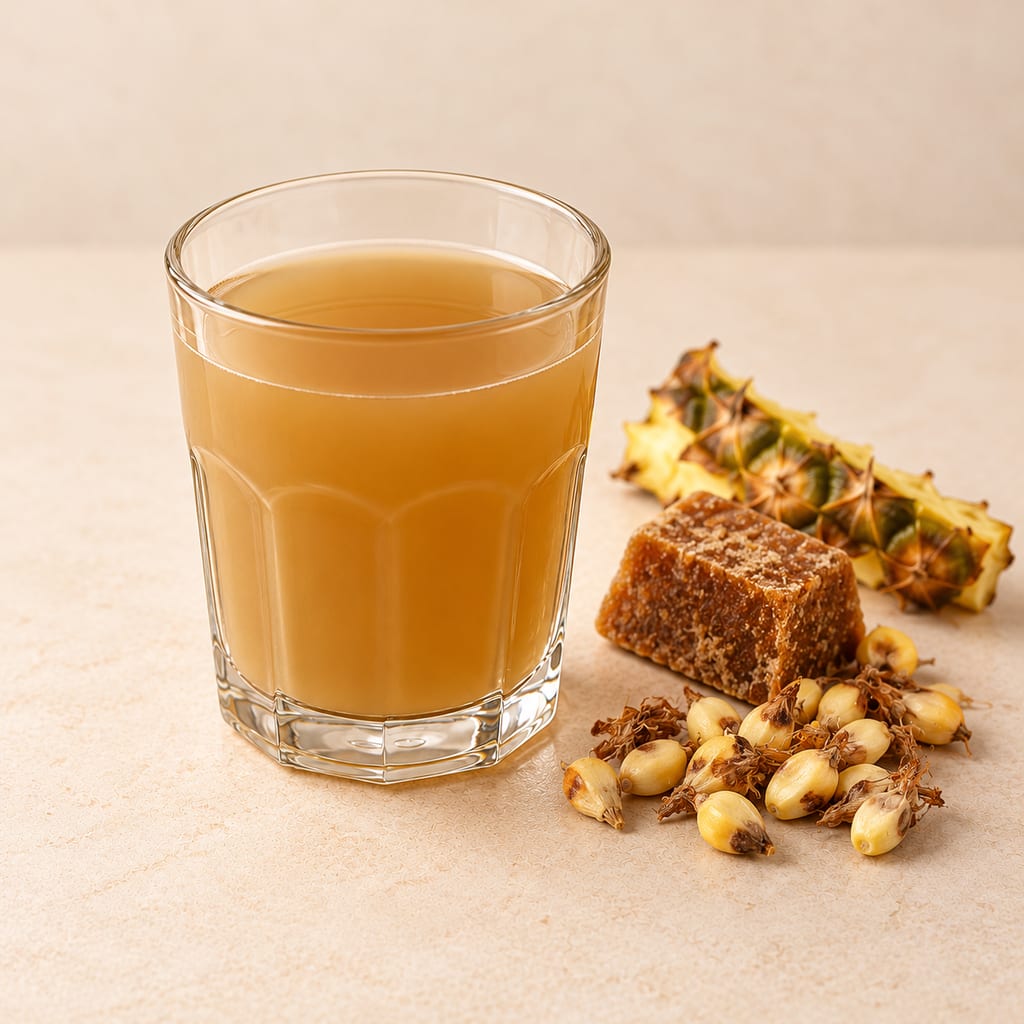
A contemporary Ecuadorian recipe simmers jora flour with spices, then adds panela and pineapple peel before a short spontaneous ferment. Its particular aromatics and measurements belong to this published adaptation.

Ecuadorian filled sweet bread figures with a rounded head and wrapped body, made from an enriched yeast dough. This home method shapes small filled ovals, proofs them on trays and serves them with colada morada.
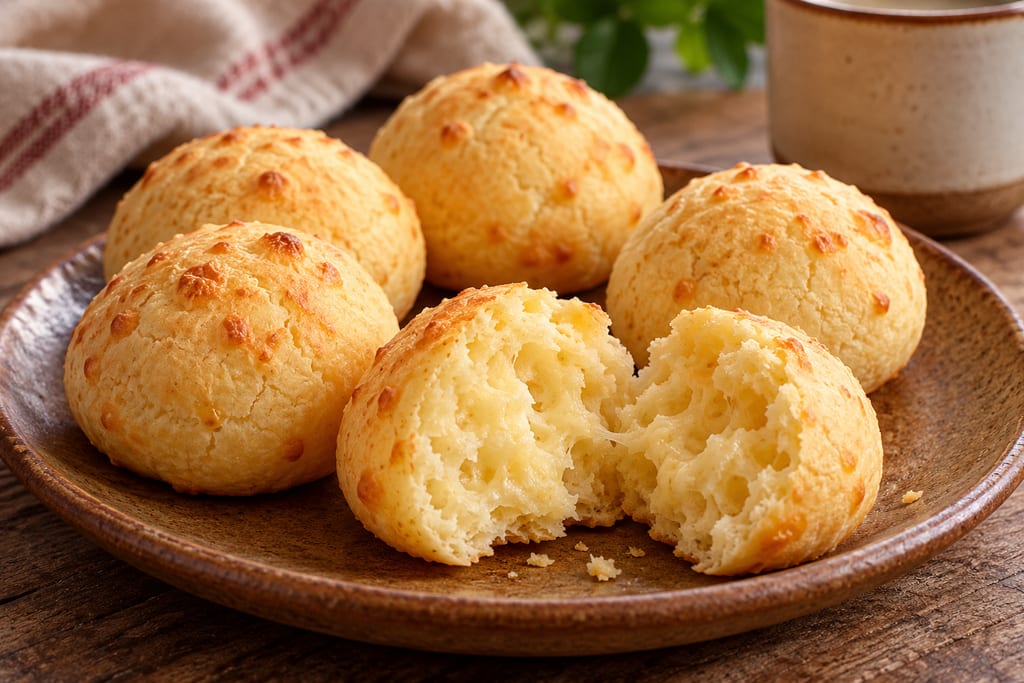
Small cassava-starch cheese breads mixed in a processor, chilled, baked and briefly browned under a broiler. This is Laylita's Ecuadorian-style formula.

A warm, creamy peanut sauce thickened with milk and seasoned with onion, cumin and achiote, served over potatoes and llapingachos in Ecuador.

Ecuadorian Holy Week soup of tender grains and pulses, squash, milk and salted fish, thickened with peanut paste and served with contrasting garnishes.

Farinha d’água is a coarse cassava flour associated with Brazil's Amazon and Pará. This page documents one published experiment; it is not a household recipe or validated safety guide.
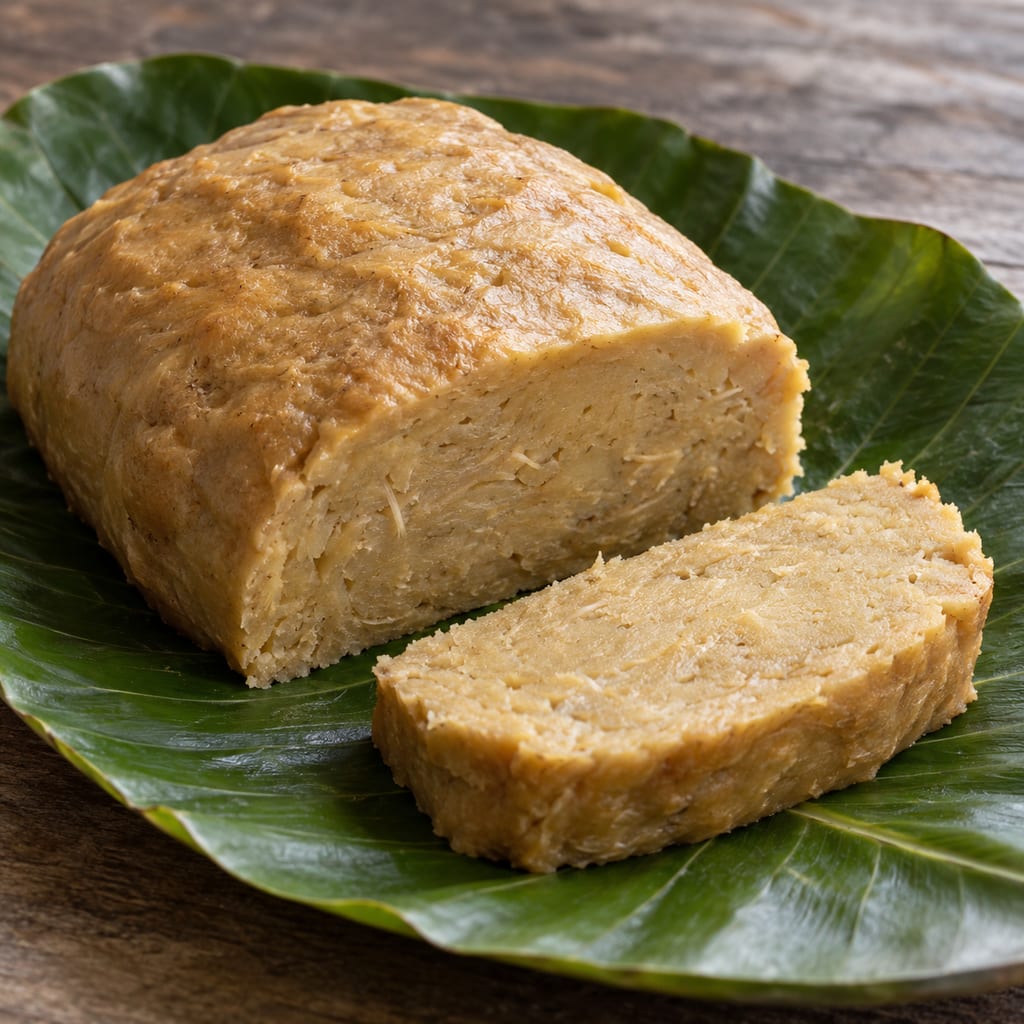
Pohnpeian mahr is breadfruit preserved in an earthen pit as an off-season reserve, then kneaded and prepared as bread. The FAO and NTBG accounts give no validated method or storage limit.
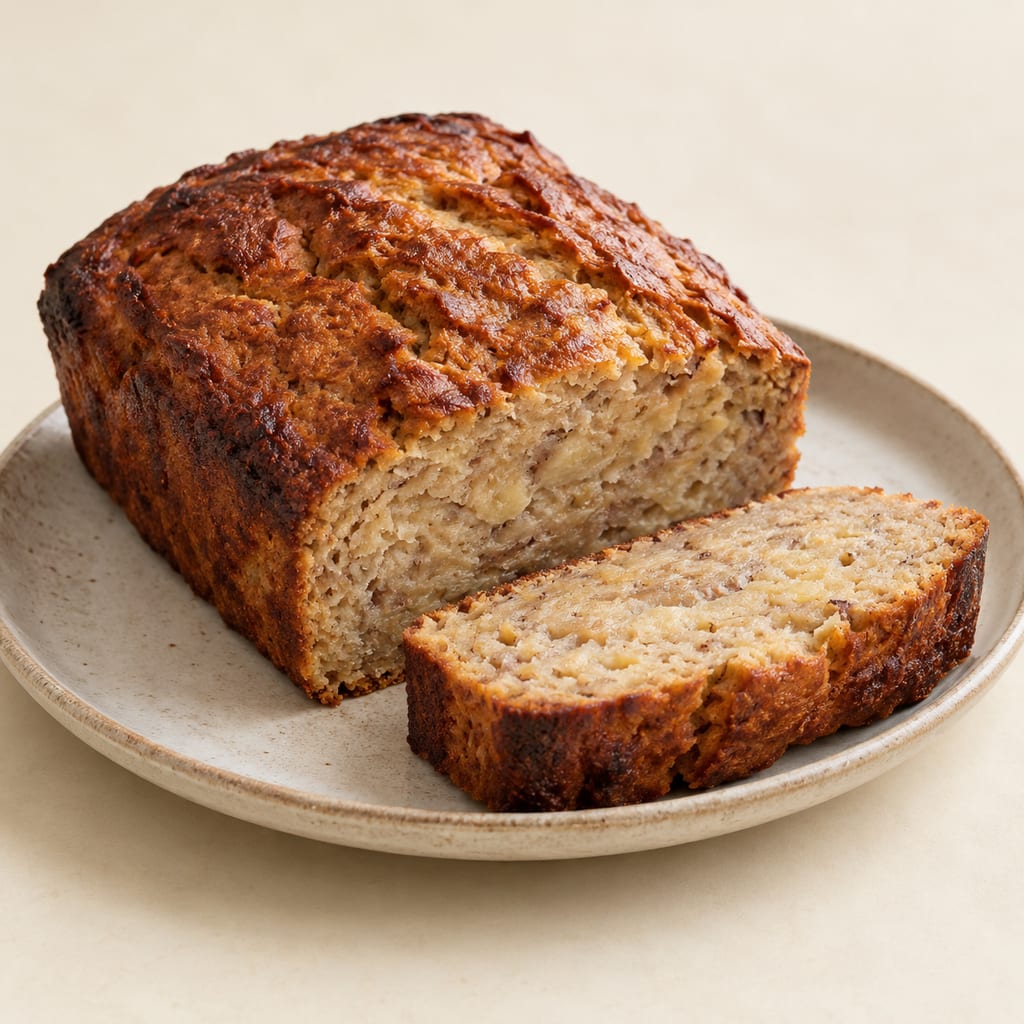
Masi faʻi is a Western Samoan food of unripe bananas preserved in a leaf-lined pit, later made into loaves and baked. The FAO account gives no storage conditions or validated process.
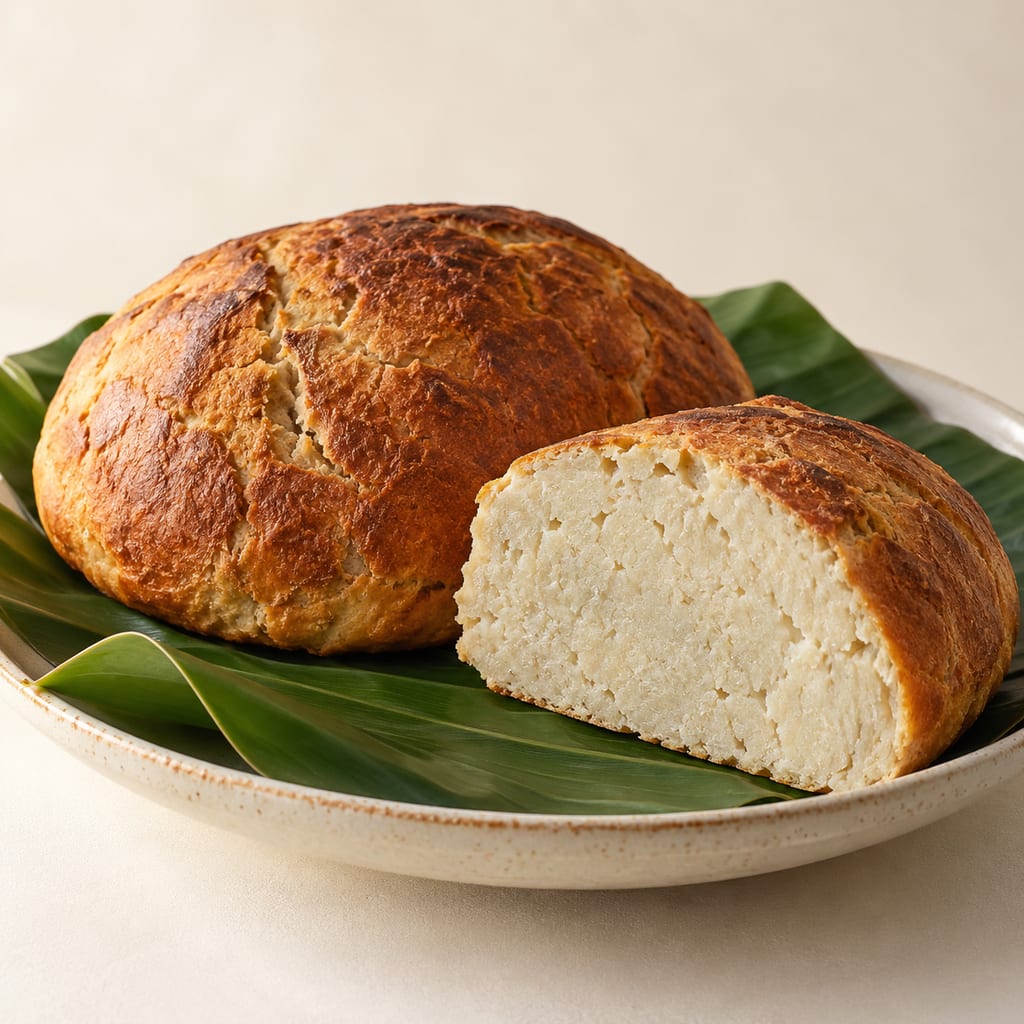
Samoan breadfruit masi is a preserved breadfruit paste kept in a leaf-lined pit, then kneaded, shaped into loaves and baked. FAO describes it at Western Samoa scale only.
In Burkina Faso, processors bury whole shea fruits in fosse pits before extracting nuts. Field research records varied pit sizes, coverings, durations and handling; it does not establish one standard design.
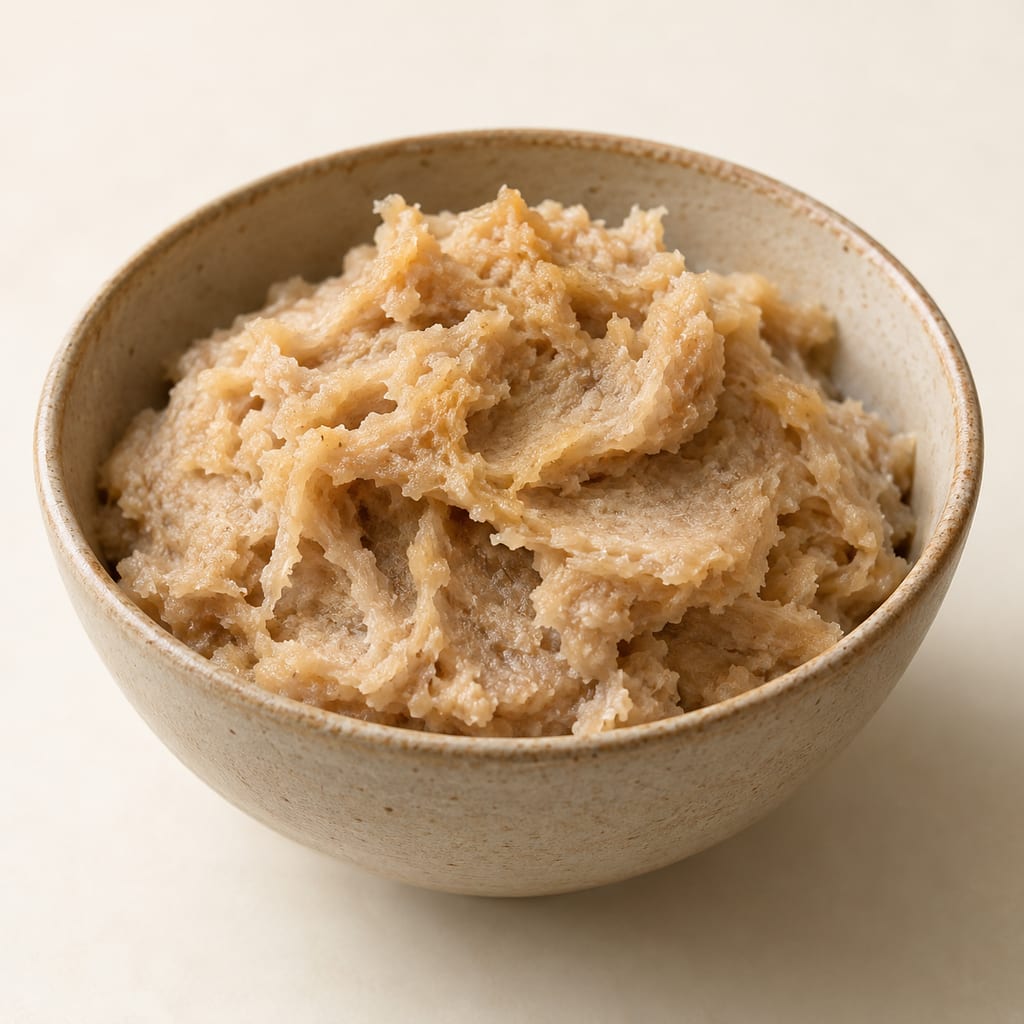
Tahitian mahi is a breadfruit paste wrapped in Cordyline leaves and kept in an earth-covered pit for several months, a scarcity food of French Polynesia. The heritage account gives no validated method.
No community contributions have been published for this entry yet.
Sign in to contribute. Published comments and photos are free to read.
Applied and Environmental MicrobiologyInspiration · Process · Geography
Following Coffee Production from Cherries to Cup: Microbiological and Metabolomic Analysis of Wet Processing of Coffea arabicaApproximately 300 kg cherries, about 150 kg depulped beans, tank geometry, 16-hour standard underwater fermentation, wash, 24-hour soak and sun-drying stages at a named Nanegal research farm.
European Food Safety AuthoritySafety
Risk assessment of ochratoxin A in foodCoffee wet processing and drying are relevant to ochratoxin A risk; proper drying is important.
Cited in: Safety
Applied and Environmental MicrobiologyMethod · Science
Applied and Environmental Microbiology — Following Coffee Production from Cherries to Cuporiginal Nanegal experiment
Cited in: What is wet-fermented Arabica coffee?; Names and botanical identity; Nanegal and the Ecuadorian coffee landscape; Why coffee cherries must be processed; What the mucilage contains; Microbiology of wet coffee fermentation; Initial phase; Lactic acid bacteria; Yeasts; Extended-fermentation changes; Fermentation chemistry; Ingredients — measured experimental batch; Equipment; Stage 1 — Harvest; Stage 2 — Hold before depulping; Stage 3 — Depulp; Stage 4 — Divide the batch; Stage 5 — Fill the fermentation vessel; Stage 6 — Ferment; Stage 7 — Monitor; Stage 8 — Remove the beans; Stage 9 — Wash; Stage 10 — Soak; Stage 11 — Sun-dry; Stage 12 — Subsequent processing; The 64-hour experimental variant; Why water immersion matters; Drying and green-coffee quality; How washed processing influences flavour; Ecuador; Colombia; Central America; Ethiopia; East Africa; Problems and quality indicators; How the finished coffee is consumed; Safety; Why the research matters
Science
Temporal shotgun metagenomics of an Ecuadorian coffee fermentation processmicrobial succession
Cited in: What the mucilage contains; Microbiology of wet coffee fermentation; Initial phase; Lactic acid bacteria; Yeasts; Extended-fermentation changes; Fermentation chemistry; Stage 2 — Hold before depulping; Stage 3 — Depulp; Stage 5 — Fill the fermentation vessel; Why the research matters
Method · Safety · Science
Brazilian Coffee Production and the Future Microbiome and Mycotoxin Profilecomparative coffee microbiology
Cited in: Why coffee cherries must be processed; What the mucilage contains; Microbiology of wet coffee fermentation; Initial phase; Lactic acid bacteria; Yeasts; Extended-fermentation changes; Fermentation chemistry; Ingredients — measured experimental batch; Equipment; Stage 1 — Harvest; Stage 2 — Hold before depulping; Stage 3 — Depulp; Stage 4 — Divide the batch; Stage 5 — Fill the fermentation vessel; Stage 6 — Ferment; Stage 7 — Monitor; Stage 8 — Remove the beans; Stage 9 — Wash; Stage 10 — Soak; Stage 11 — Sun-dry; Stage 12 — Subsequent processing; The 64-hour experimental variant; Drying and green-coffee quality; How washed processing influences flavour; Problems and quality indicators; Safety; Why the research matters
FAOMethod
FAO — Coffee post-harvest processingadditional processing context
Cited in: Why coffee cherries must be processed; Ingredients — measured experimental batch; Equipment; Stage 1 — Harvest; Stage 2 — Hold before depulping; Stage 3 — Depulp; Stage 4 — Divide the batch; Stage 5 — Fill the fermentation vessel; Stage 6 — Ferment; Stage 7 — Monitor; Stage 8 — Remove the beans; Stage 9 — Wash; Stage 10 — Soak; Stage 11 — Sun-dry; Stage 12 — Subsequent processing; The 64-hour experimental variant; Drying and green-coffee quality; How washed processing influences flavour; Problems and quality indicators