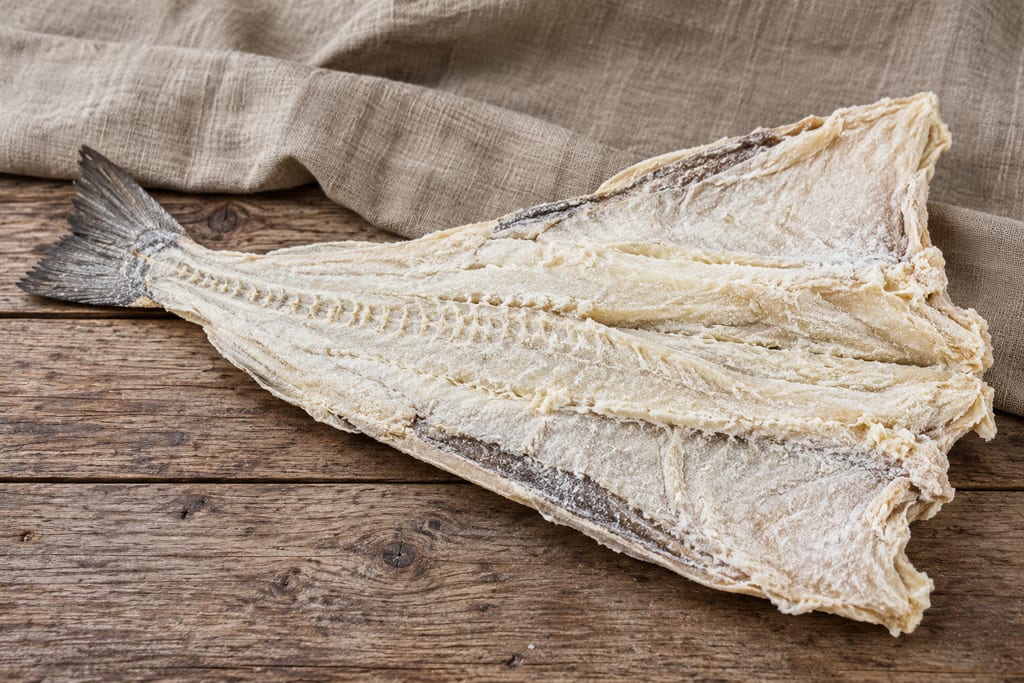
Dried salted cod
Cod split, salted and dried on flakes until hard, a long-keeping fish that must be desalted and rehydrated before use; the salting and the extensive drying together make it portable where light salting or partial drying does not.
 FermenteaWhere food goes to change
fanesca ecuatoriana
Ecuadorian Holy Week soup of tender grains and pulses, squash, milk and salted fish, thickened with peanut paste and served with contrasting garnishes.
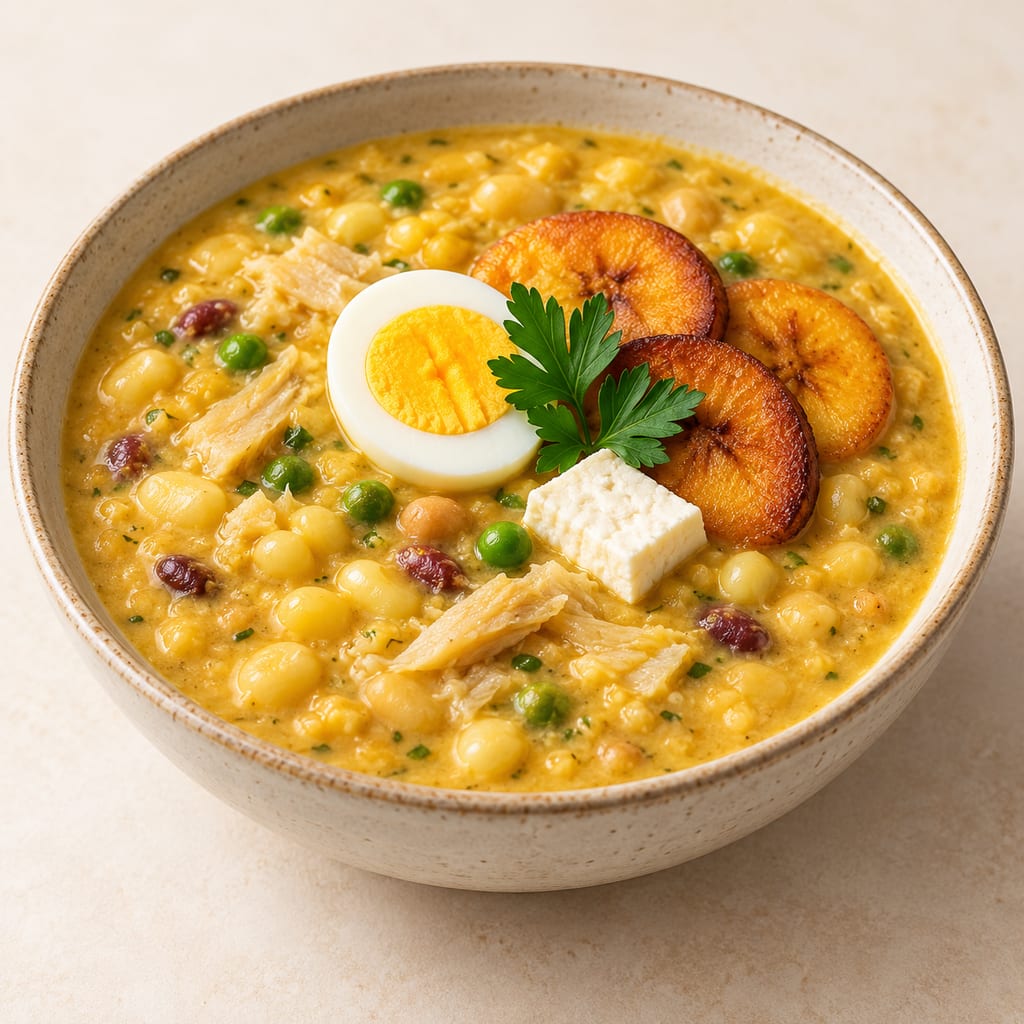
Fanesca is Ecuador’s thick, creamy soup of tender grains and pulses, squash, milk and salted fish. It is especially associated with Lent and Holy Week, most strongly in the Andean Sierra. A bowl brings together soft beans and kernels, sweet squash, dairy richness and pieces of bacalao, whose salt and savory flavor season the mild vegetables.
Its history is told in several ways. Contemporary Ecuadorian institutional accounts connect it with Catholic Lenten practice and Andean harvest-season foods. A UDLA gastronomic researcher presents a Kitu Kara harvest porridge and later colonial changes; another Ministry account speculates about shipboard ancestry based on salted fish and pulses. Those are interpretations, not a settled documentary origin. Fanesca should not simply be renamed uchukuta: PUCE describes them as distinct dishes with related seasonal and commemorative meaning.
The familiar symbolism of twelve grains is powerful, but it is not a fixed recipe rule. Quito Turismo says the dish does not universally contain twelve grains; households choose different combinations, and sources differ on whether rice is included. Shelling and podding seasonal beans, noted in historical accounts, helps explain why preparation could be shared family work as much as a cooking recipe.
Fanesca is assembled by cooking its ingredients rather than fermenting them. Grains and pulses are cooked ahead, while sambo and zapallo are cooked until soft and mashed or blended into the liquid. Their softened flesh thickens the milk base and carries the nut paste and refrito through the pot. Whole beans and corn remain distinct, giving the soup a creamy but varied texture.
The refrito—onion and garlic softened in fat with achiote and cumin—forms the aromatic foundation. Achiote colors the fat and the soup; the aromatics and spice are distributed through the fat before the milk and squash purée dilute them. Peanut paste supplies a nutty note and additional body. Bacalao brings concentrated salt and savor. Since salted fish varies in salinity, final seasoning belongs near the end.
Cooking grains separately gives control over tenderness and avoids letting quick-cooking ingredients disintegrate while firmer ones soften. It also lets them be drained before the final simmer. The recipe below follows one documented Chef Ecuador method: soak the fish in milk overnight, cook it in fresh milk, precook grains, mash the squash, then combine everything gradually. It is one approach, not a universal Ecuadorian method.
The quantities below follow Chef Ecuador’s published formulation. That recipe does not state whether every grain weight is dry, shelled fresh or already cooked, so the ingredient lines preserve its numbers and identify the grains as prepared, drained ingredients rather than pretending to resolve the ambiguity. Choose tender grains where available and cook them fully before adding them. Ecuador’s standards agency describes quality criteria for fish and produce; it does not replace safe handling.
Soaking bacalao in milk and discarding that milk is the chef’s method for preparing the salted fish. It is distinct from the fresh milk used to cook the fish. The refrito is cooked before the liquid is added so the onion softens and the achiote and cumin mingle with the fat. Sambo and zapallo are cooked and mashed to make the base smooth. During the long combined simmer, regular stirring helps prevent the dense milk-rich soup from catching on the pot bottom. Cream goes in near the end.
Serve the soup hot with sliced hard-boiled egg, fried ripe plantain and fresh cheese. Parsley, small fried masitas or empanadas, and chile are also documented accompaniments. Place them separately so diners can choose sweet, salty, crisp or fresh contrasts against the thick soup.
Fanesca varies by province, town and family. The Ecuadorian Ministry names choclo, peas, favas, chochos, red and white beans, lentils, sambo, zapallo and peanut paste, with bacalao; it notes that some cooks peel grains by hand and others include rice. Quito Turismo rejects a single mandatory count. The fish may be flaked into the pot, partly cooked in milk, or integrated another way; the Ministry says households differ.
The Andean setting matters because the soup draws on tender seasonal grains and squash, while preserved marine fish joins the harvest ingredients. Catholic fasting and Holy Week observance shaped its calendar; today it also marks family reunion and Ecuadorian identity. It is commonly served as a substantial main course, with garnishes and sides that vary between homes. These traditions are meaningful without requiring every bowl to satisfy a symbolic tally.
The finished soup holds grains and pulses in a thick squash-and-milk base. The documented route to body is the mashed squash, nut paste and slow combined simmer; adding more whole grains changes the balance and is a family choice rather than a correction. If the soup tastes too salty, the fish preparation and final seasoning are the first things to reconsider on a future batch. Smell, appearance and tasting cannot establish whether salted fish or dairy was safely stored.
The published chef recipe gives an overnight milk soak but no universal desalting test or storage duration. Follow the fish supplier’s handling directions, keep perishable fish and dairy refrigerated, and cook fish and grains thoroughly. Cool leftovers promptly, refrigerate them and reheat until steaming hot throughout. These are general kitchen practices, not a fanesca-specific shelf-life claim.
Ecuadorian accounts variously connect fanesca to colonial-era Catholic observance and Andean harvest-season foods; a shipboard origin is one speculation, not established chronology.
Scaling: source batch only
Fish and dairy are perishable; legumes require thorough cooking. Ingredient-specific desalting and storage limits are not established here.
Hazard sourceFollow supplier handling directions, keep perishable ingredients refrigerated, cook grains and fish thoroughly, cool leftovers promptly and reheat until steaming hot.
Control sourceDo not infer safe storage duration from taste, smell or appearance.
Country-level association; Ecuadorian accounts particularly identify the Andean Sierra.
Cod split, salted and dried on flakes until hard, a long-keeping fish that must be desalted and rehydrated before use; the salting and the extensive drying together make it portable where light salting or partial drying does not.
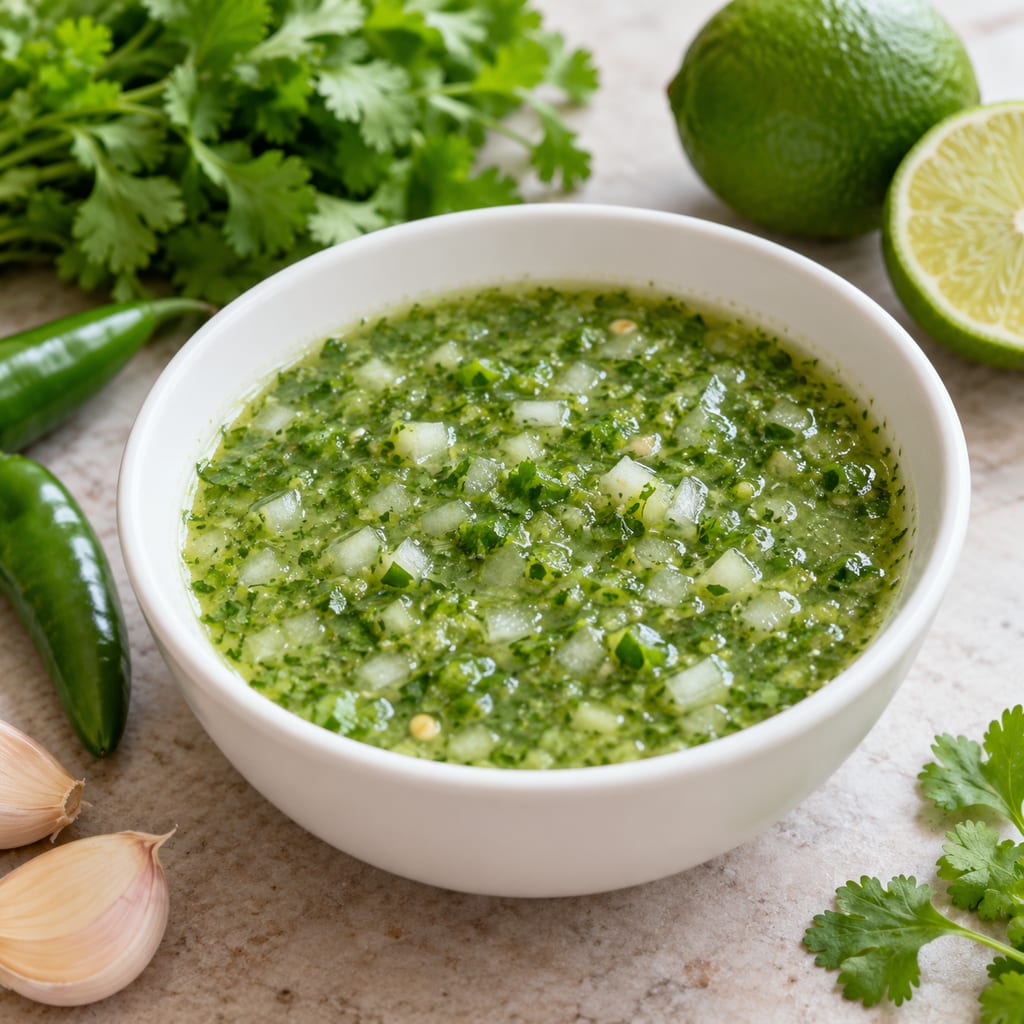
A fresh, uncooked Ecuadorian table sauce of hot pepper, cilantro, garlic and lime, served with most everyday dishes.
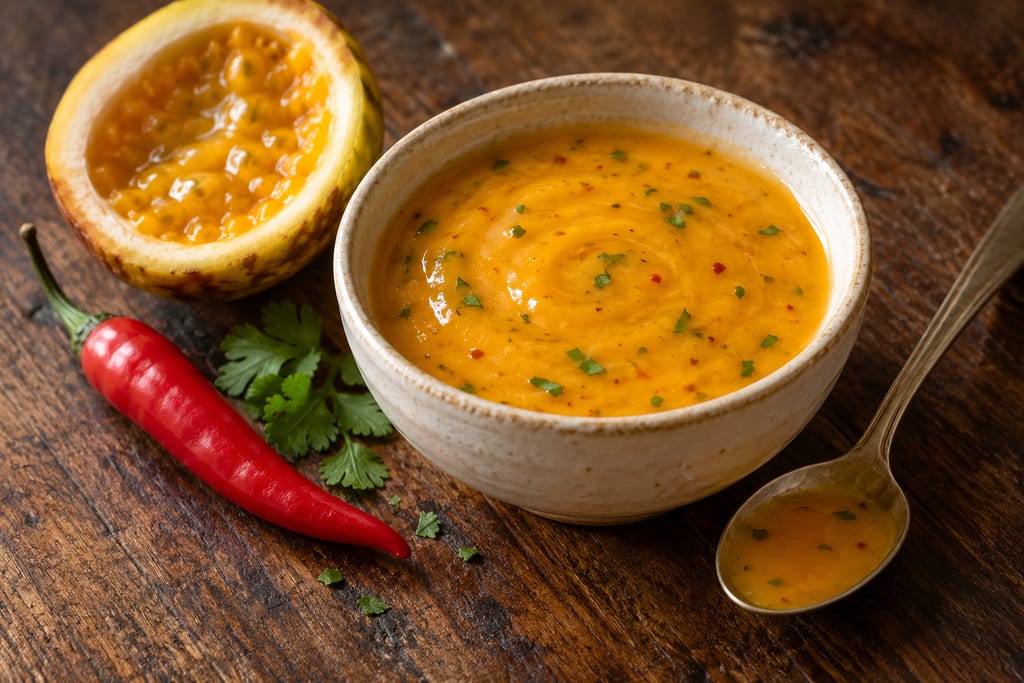
A contemporary Ecuadorian hot sauce that pairs passion fruit juice with boiled chile peppers, oil and lime.
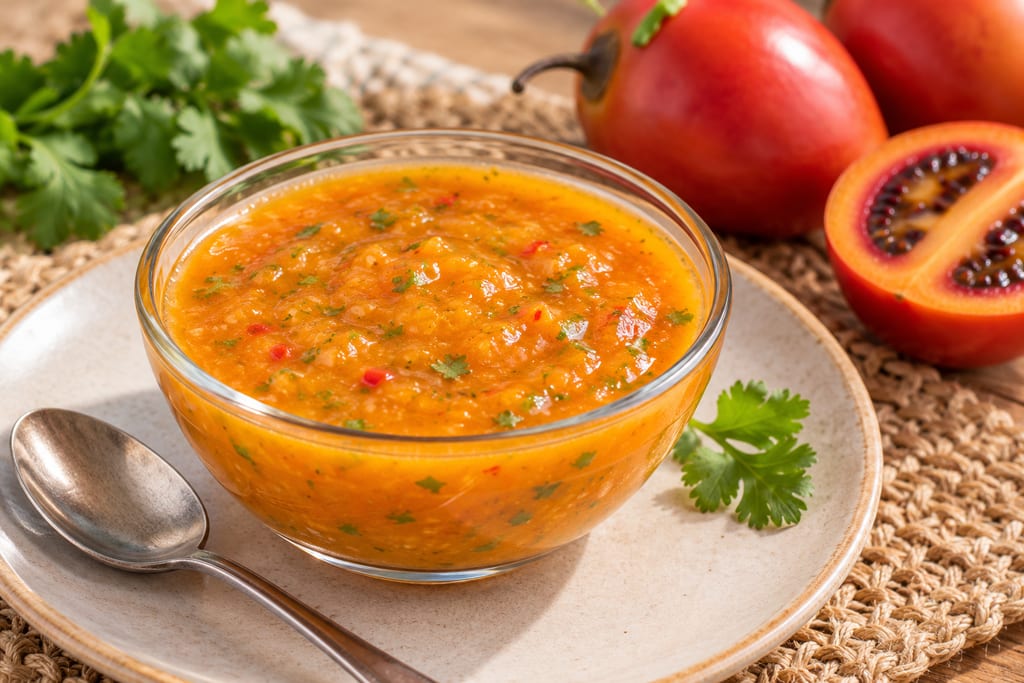
An Ecuadorian hot sauce built on tamarillo, a tart fruit that gives a sharper, fleshier base than ordinary tomato salsa.
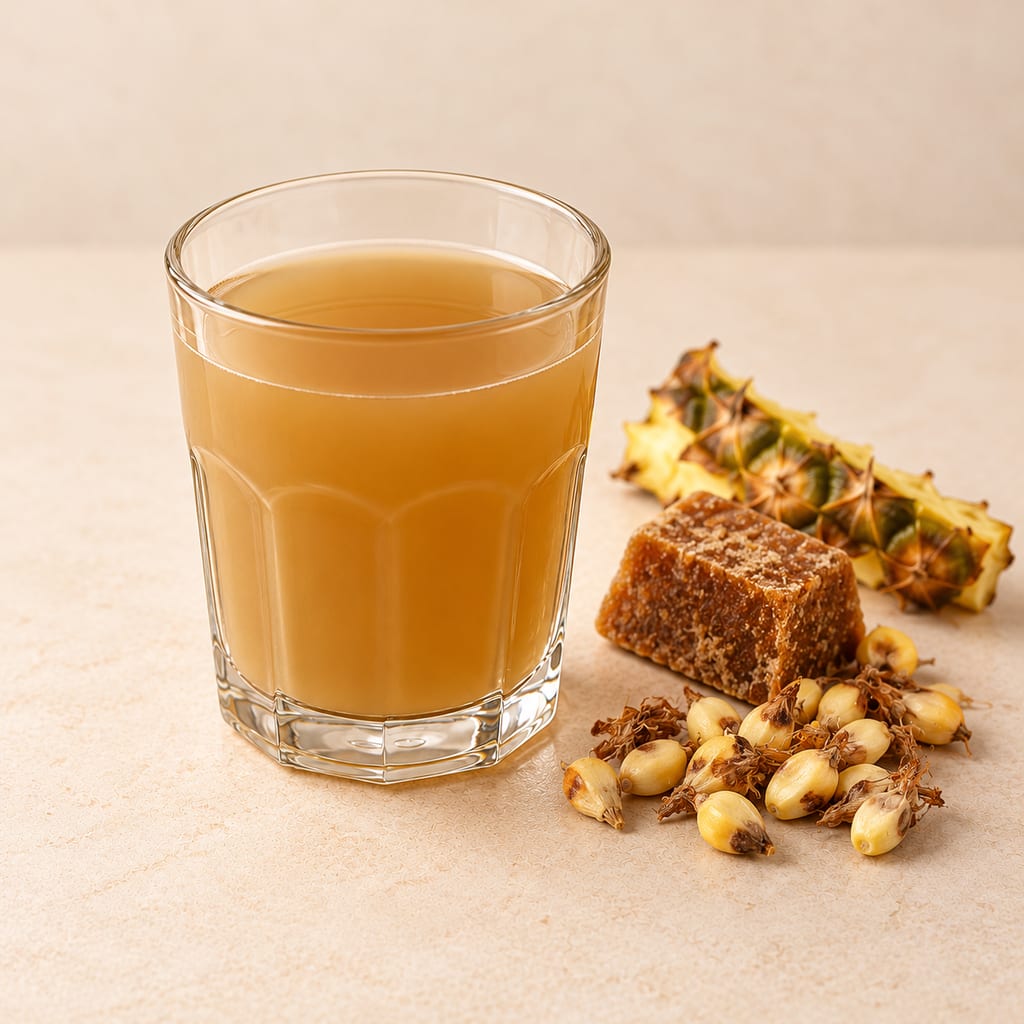
A contemporary Ecuadorian recipe simmers jora flour with spices, then adds panela and pineapple peel before a short spontaneous ferment. Its particular aromatics and measurements belong to this published adaptation.

Ecuadorian filled sweet bread figures with a rounded head and wrapped body, made from an enriched yeast dough. This home method shapes small filled ovals, proofs them on trays and serves them with colada morada.
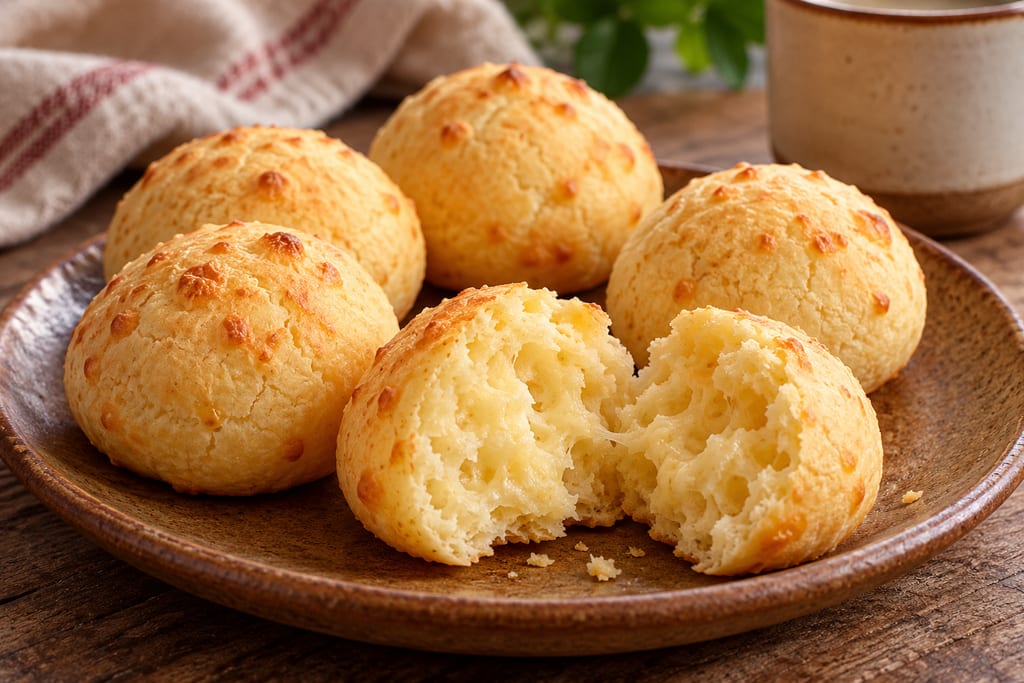
Small cassava-starch cheese breads mixed in a processor, chilled, baked and briefly browned under a broiler. This is Laylita's Ecuadorian-style formula.
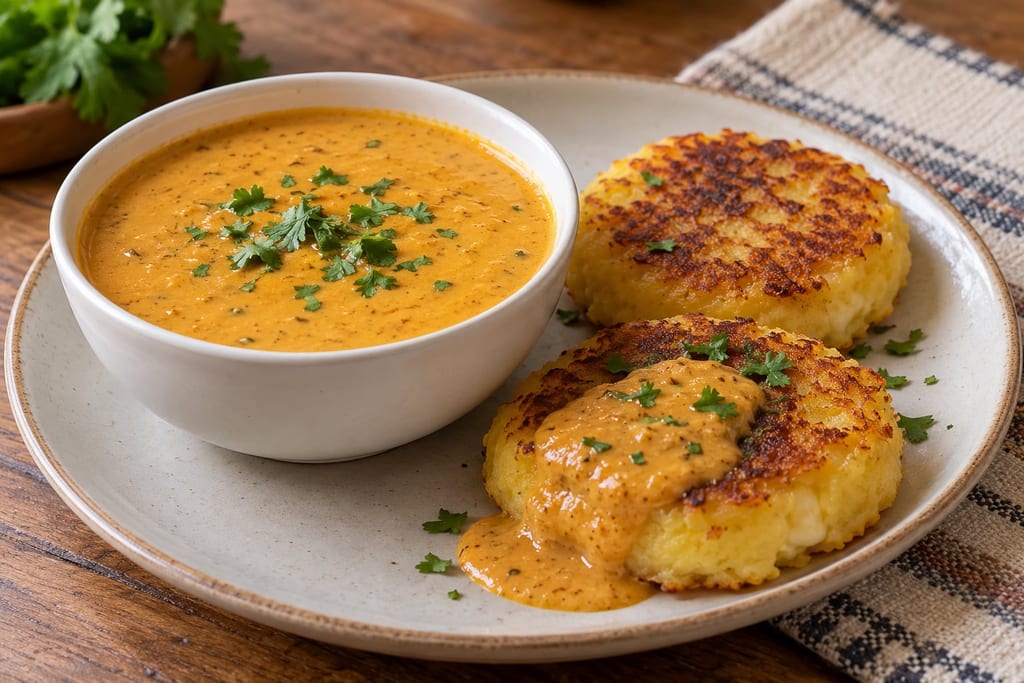
A warm, creamy peanut sauce thickened with milk and seasoned with onion, cumin and achiote, served over potatoes and llapingachos in Ecuador.
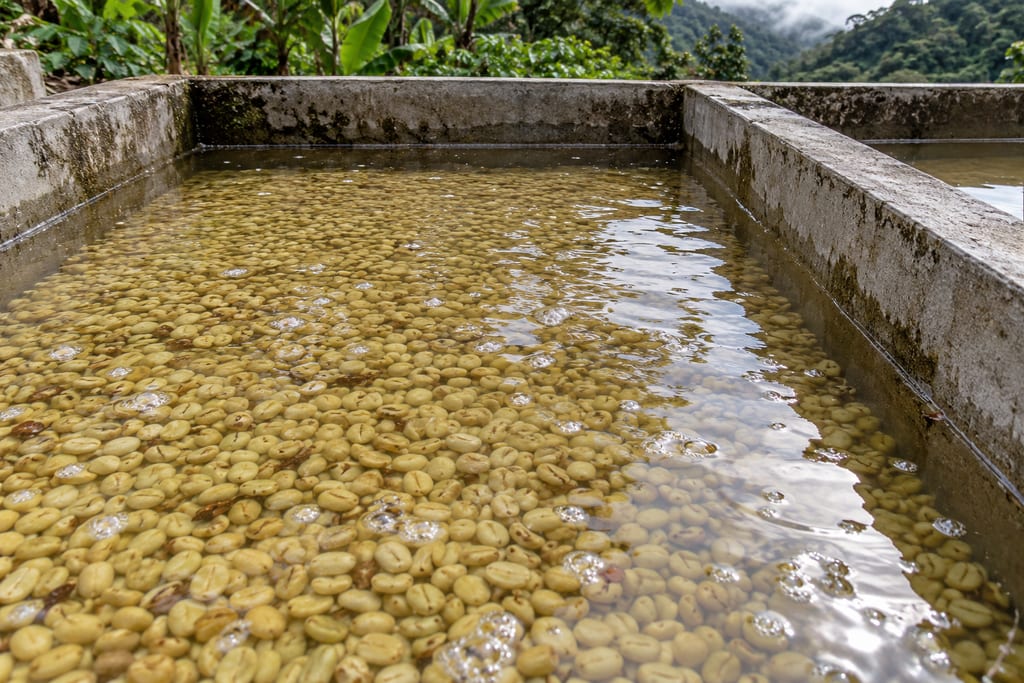
Washed Arabica coffee from Nanegal in Ecuador: depulped beans held under water while microbes and enzymes strip the mucilage, then washed, soaked and sun-dried to green coffee.
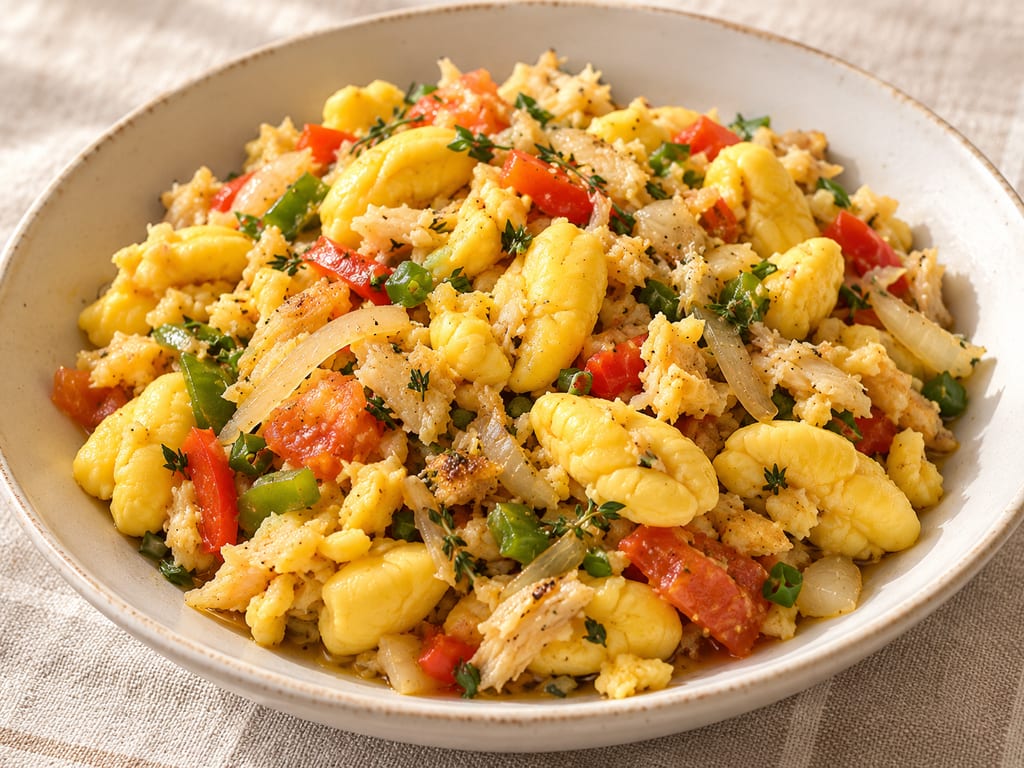
Jamaica's best-known dish: salt-cured cod desalted and flaked, then folded through ackee arils with onion, tomato, sweet pepper, thyme and Scotch bonnet.
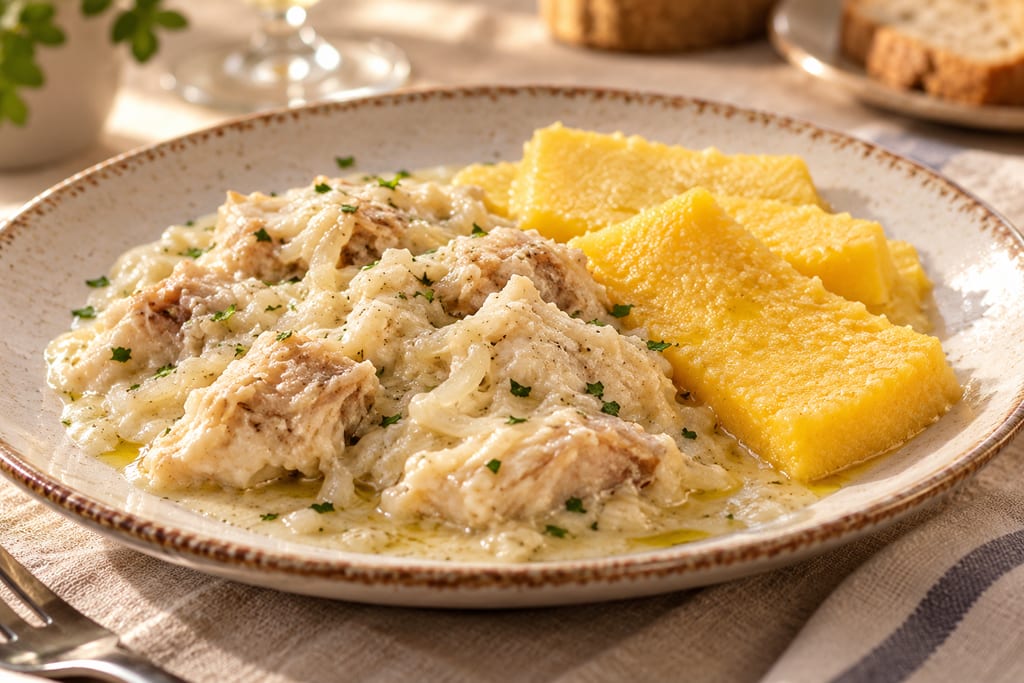
Stockfish from Vicenza, left barely bubbling for hours with onion, preserved anchovy, olive oil, milk and a little cheese until it is tender under a dense pale sauce, and eaten with polenta.
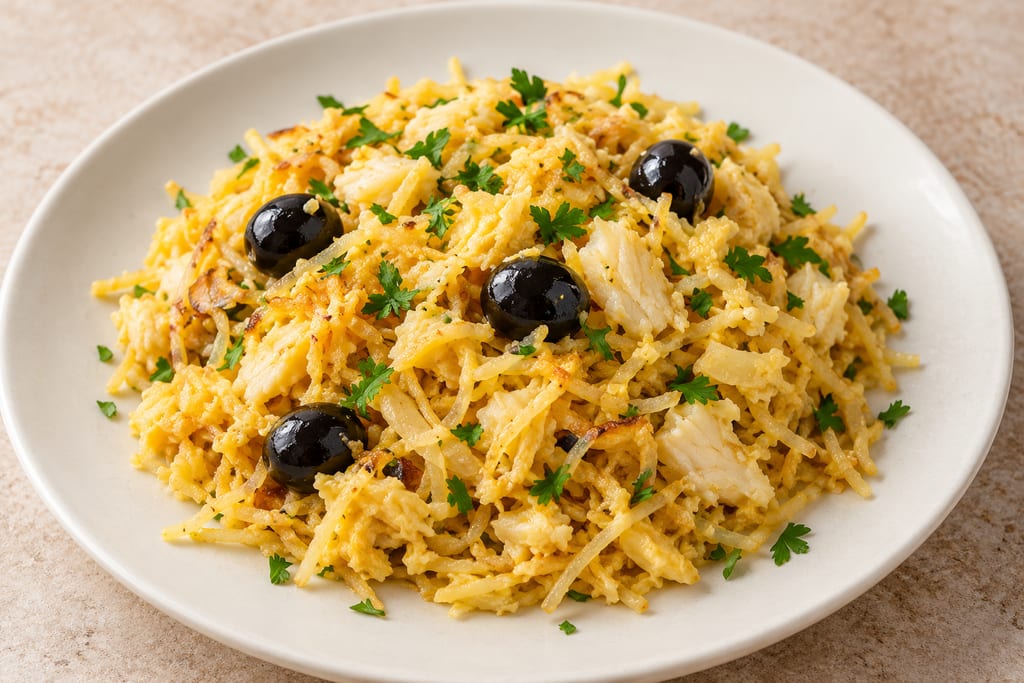
Lisbon's salt cod dish: shredded desalted cod and fine fried potato matchsticks folded through softened onion and bound with beaten egg, finished with parsley and black olives.
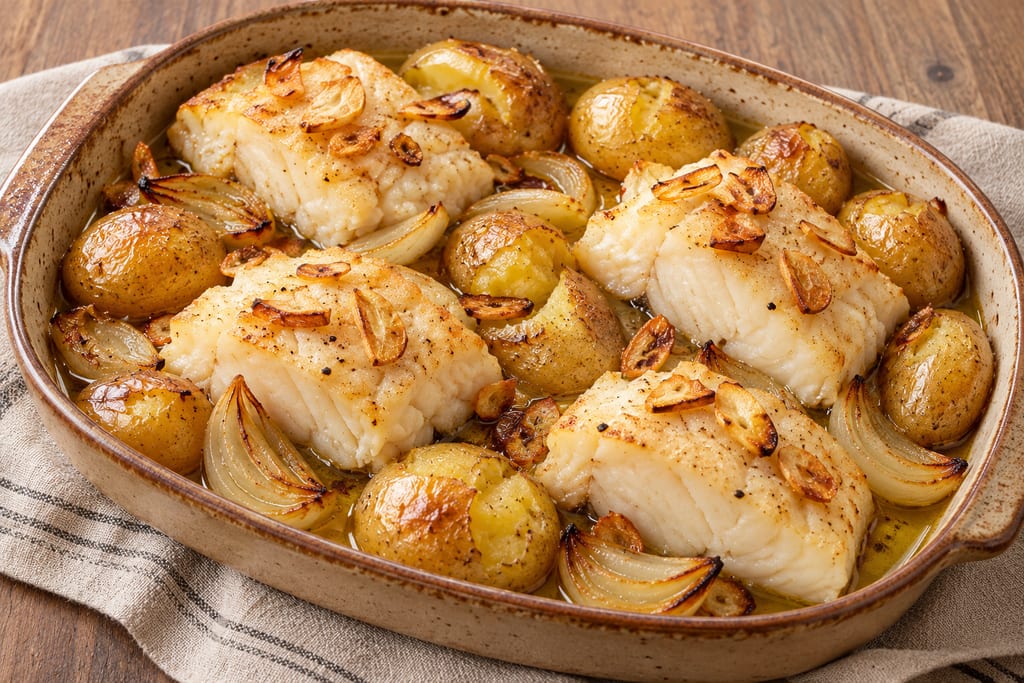
Thick pieces of desalted salt cod roasted in olive oil with garlic and onion, served with small potatoes cooked and then crushed until their skins split.
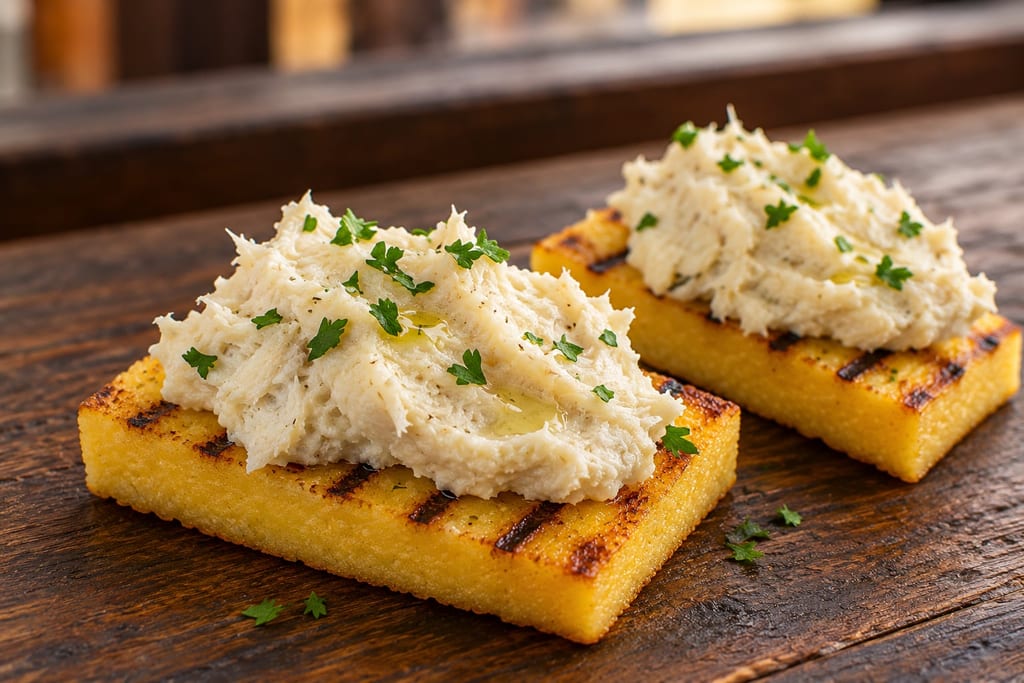
A Venetian cicchetto of cooked unsalted stockfish beaten with oil until it turns into a pale, aerated cream, spooned onto grilled polenta in the city's wine bars.
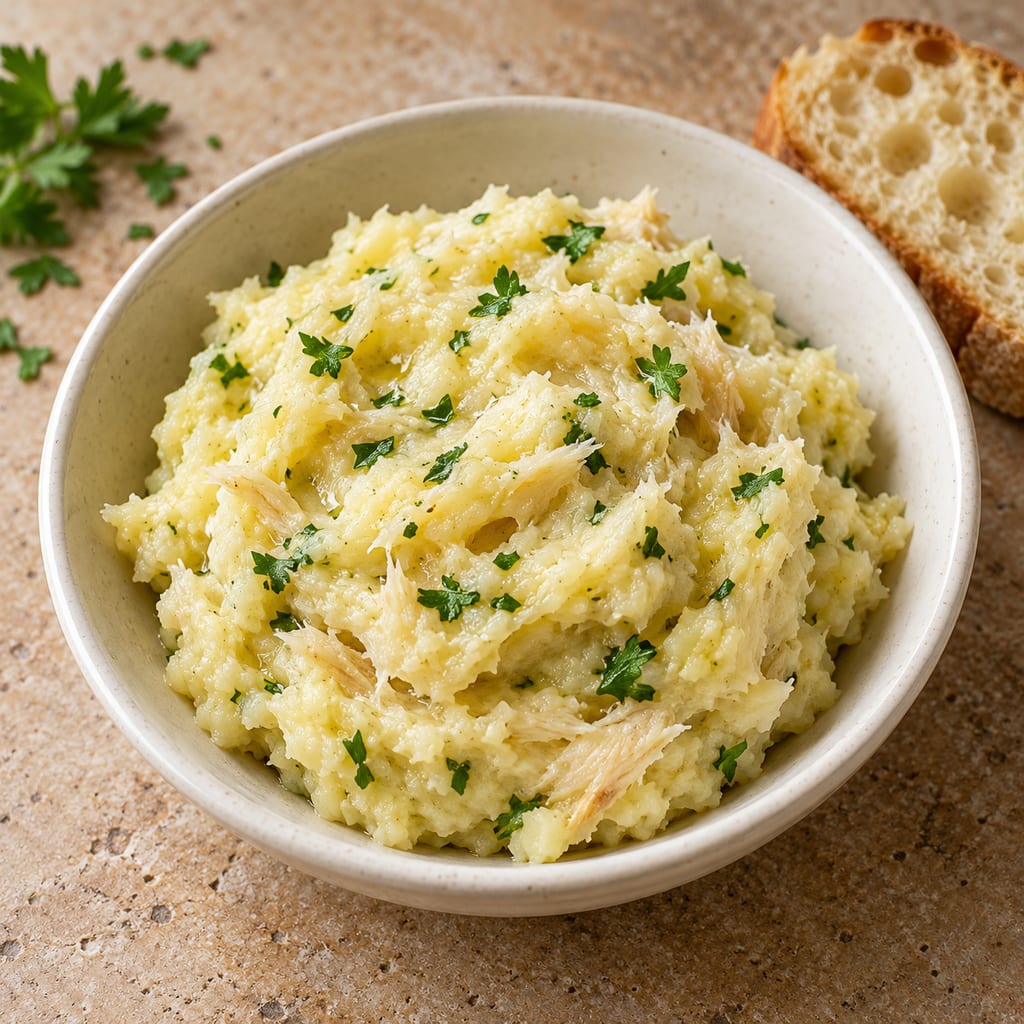
An Istrian festive spread of cooked stockfish beaten with olive oil and garlic until pale and cohesive, here bulked out with hand-mashed floury potato.
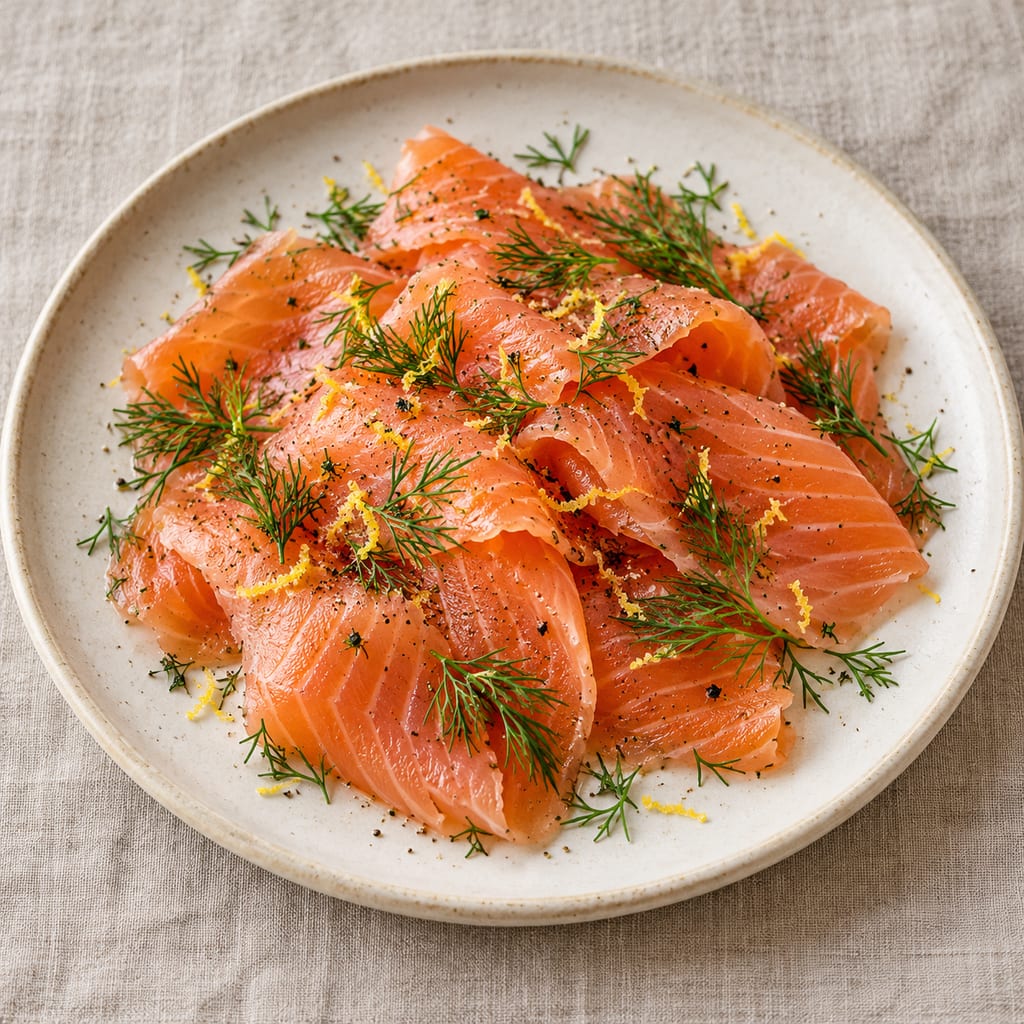
Salmon is cured with salt, sugar, pepper, dill and lemon zest under refrigeration.
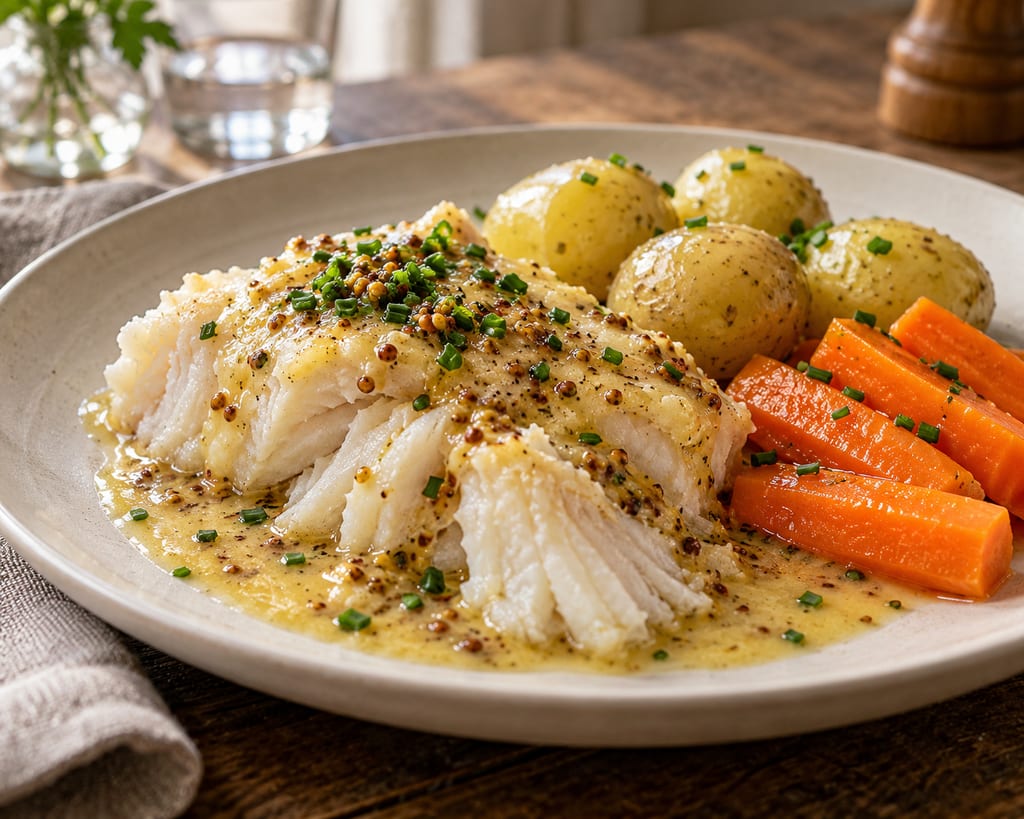
Rehydrated air-dried Norwegian cod simmered until it flakes, served with boiled potatoes and carrots under a wholegrain-mustard butter whisked from the fish's own poaching liquid.
No community contributions have been published for this entry yet.
Sign in to contribute. Published comments and photos are free to read.
Ecuadorian Ministry of Foreign AffairsHistory · Ingredients · Method · Regional variation
La fanesca: origenInstitutional overview describes Lent and Good Friday use, especially in the Sierra, and lists grains, pulses, squash, peanut paste and bacalao.
Cod integration varies by household; some include rice.
Shipboard origin is presented as a possibility, not a proven chronology.
Cited in: A Holy Week soup with more than one history; The thick, cohesive base; One documented kitchen version; Regional choices and the shared meal; Reading the result
Quito TurismoCulture · Variation
La Fanesca: tradición gastronómica en EcuadorFanesca is a Holy Week dish and family tradition in Quito.
The number twelve is symbolic in some accounts, not a universal grain count.
Cited in: A Holy Week soup with more than one history; Regional choices and the shared meal
Pontificia Universidad Católica del EcuadorHistory · Culture · Method · Serving
Fanesca, una deliciosa tradición de Semana SantaA PUCE culinary educator distinguishes fanesca from uchukuta and discusses seasonal and Lenten context.
PUCE describes family variation and grain-and-bacalao base.
Lists ripe plantain, fresh cheese, eggs and small masa fritters as accompaniments.
Cited in: A Holy Week soup with more than one history; Regional choices and the shared meal
Chef EcuadorRecipe · Method · Ingredients
FanescaThe contemporary recipe specifies 500 g bacalao soaked overnight in 1 L milk, then cooked in fresh milk until soft.
It precooks grains separately, mashes sambo and zapallo, prepares a refrito, combines and simmers; this is one documented version.
Provides quantities and garnish details.
Cited in: The thick, cohesive base; One documented kitchen version; Reading the result
Servicio Ecuatoriano de NormalizaciónIngredient handling · Quality
Elabora la fanesca con productos que cuentan con normas de calidadCites Ecuadorian standards for salted cod, sambo, fresh fava beans, chochos and onions.
Guidance calls for sound fish and clean salt, and describes quality features for produce.
Cited in: One documented kitchen version; Reading the result
Universidad de las AméricasHistory · Culture
UDLA narra la historia de la FanescaA gastronomic researcher presents a Kitu Kara harvest-season account and later colonial changes as an interpretation.
Name stories are reported as uncertain; communal shelling and podding is described in historical family and convent practice.
Cited in: A Holy Week soup with more than one history
Ecuadorian Ministry of Foreign AffairsHistory · Geography · Serving
Mapa Gastronómico del EcuadorPlaces fanesca in Catholic festive calendar alongside Andean harvest traditions; colonial/Iberian origin is framed as a possibility.
Describes a thick, creamy grain and bacalao soup with parsley, ripe plantain, egg, cheese and fried-dough accompaniments.
Cited in: A Holy Week soup with more than one history; Regional choices and the shared meal