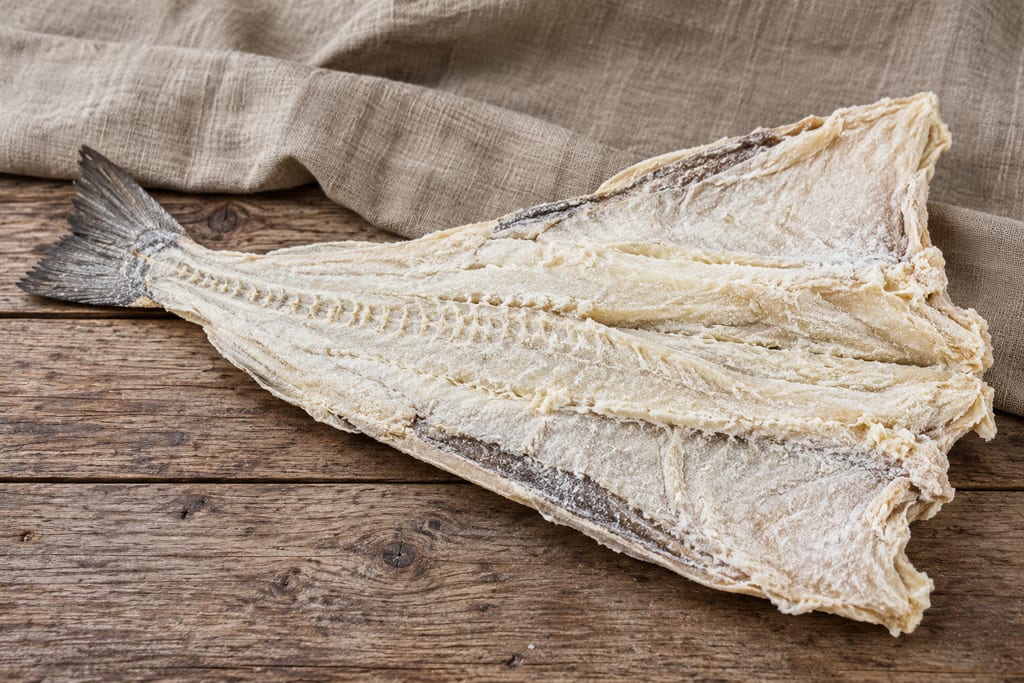
Dried salted cod
Cod split, salted and dried on flakes until hard, a long-keeping fish that must be desalted and rehydrated before use; the salting and the extensive drying together make it portable where light salting or partial drying does not.
 FermenteaWhere food goes to change
Traditional method
Lagareiro-style roast salt cod
Thick pieces of desalted salt cod roasted in olive oil with garlic and onion, served with small potatoes cooked and then crushed until their skins split.
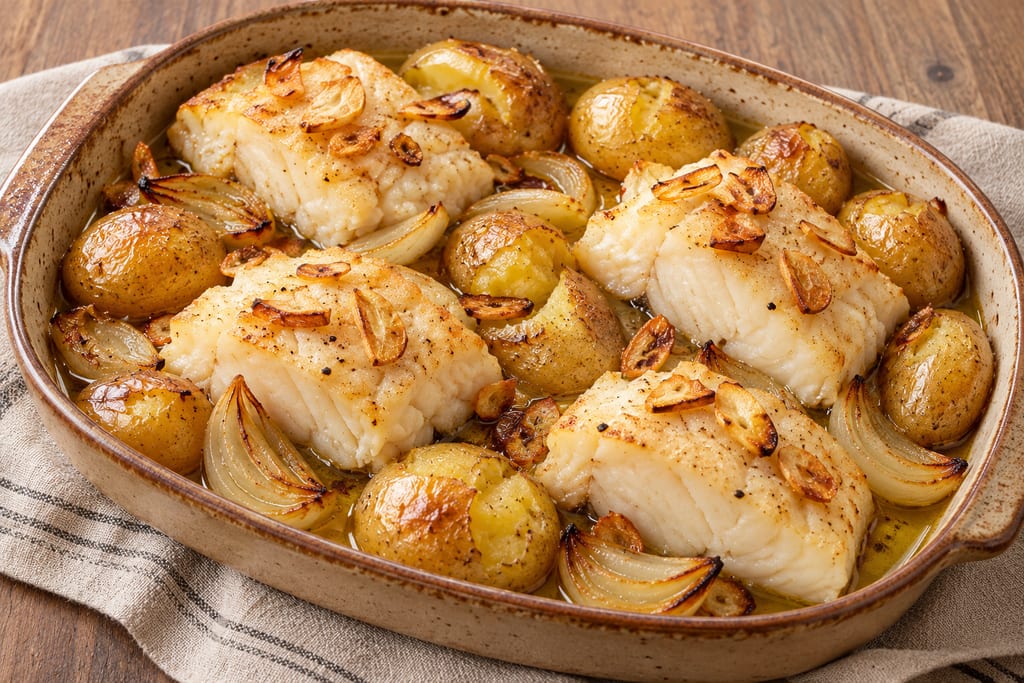
Bacalhau à lagareiro is one of the best-known ways to serve Portugal's preserved cod.
Thick pieces of desalinated salt cod are roasted with olive oil and garlic, traditionally accompanied by small potatoes that are cooked and then lightly crushed.
The preparation is deliberately simple.
Its character comes from the quality of the fish, the flavour of the olive oil and the balance between the tender cod and the potatoes.
Unlike a tomato-based bacalhau stew, the sauce is principally aromatic olive oil carrying juices from the fish, garlic and vegetables.
The name refers to the lagareiro, a person associated with an olive press or oil mill.
The connection is reflected in the generous use of olive oil, historically an important agricultural product in much of Portugal.
In this dish, bacalhau refers to salted preserved cod, not Norwegian unsalted stockfish.
The distinction is especially important because the product must lose sufficient salt before cooking.
The thick cod pieces used in many Portuguese preparations are sometimes referred to as postas.
The term describes portions rather than another fish species.
Portuguese — Bacalhau à lagareiro
Portuguese — Batatas a murro — lightly crushed potatoes
English — Lagareiro-style roast salt cod
Norwegian source product — Klippfisk
Scientific name — Usually Gadus morhua
Related Portuguese variation — Polvo à lagareiro — octopus prepared in the lagareiro style
Portugal's relationship with salted cod is centuries old, shaped by maritime trade, fishing, preservation and the development of an exceptionally varied domestic cuisine.
The wider history of Portuguese cod consumption does not establish a precise invention date for every named dish.
Bacalhau à lagareiro is associated with areas of northern and central Portugal, particularly Beira Alta and Minho.
The Centro Interpretativo da História do Bacalhau identifies competing traditions for its geographical origin.
One interpretation connects the dish to olive-press workers in the Beiras, who used newly produced olive oil during the autumn.
Other accounts associate its emergence with Minho.
The historical attribution is therefore debated.
It would be incorrect to assign an exact year or a single universally accepted inventor.
What is clear is that the preparation combines two products of considerable importance in Portuguese food culture: preserved cod and olive oil.
The combination also makes seasonal sense.
Freshly pressed olive oil, sometimes referred to as azeite novo, could become the central flavouring of a meal.
The potatoes supply a mild accompaniment capable of absorbing the aromatic oil.
Today the dish is served in restaurants and homes throughout Portugal, not only in the regions associated with its origins.
Salt cod preservation involves salting, often followed by drying.
Salt creates a strong concentration difference between the fish tissue and the surrounding environment.
During curing, water leaves the fish, while sodium and chloride ions move into the flesh.
This reduces water activity and makes the environment less favourable for many spoilage microorganisms.
The product is not sterile.
Its storage characteristics depend upon the degree of salting, drying, temperature, packaging and other conditions.
Research on salted cod describes final products with very substantial salt concentrations, but these values vary according to processing method.
One study describes traditionally salted cod with approximately 18–21% salt and 55–58% water after processing. These are analytical values for the products considered, not requirements that every retail product must meet.
The salt must be reduced before normal culinary use.
When salted cod is submerged in fresh water, salt begins moving out of the fish.
Water simultaneously enters the tissue.
These processes are driven largely by concentration gradients and diffusion, although physical changes within the fish structure can also affect mass transport.
The greatest changes often occur during the early stages, with the rate slowing as the concentration difference decreases.
Fish thickness is a major variable.
Salt in the centre of a thick portion must travel farther to reach the surrounding water than salt near the surface.
This is why changing the soaking water matters.
Fresh water maintains a concentration difference that encourages continued salt removal.
The Norwegian Seafood Council recommends rinsing loose surface salt, then soaking in cold water below 4°C.
Its general guidance suggests one day per centimetre of fish thickness, with water changed one or two times daily.
It also advises using approximately two parts water for each part of fish.
These are practical guidelines, not guaranteed desalting schedules.
The Portuguese tourism recipe for lagareiro provides a different minimum: at least 24 hours, changing the water every 8 hours.
That instruction should be understood within its own recipe and fish assumptions.
For very thick or heavily salted pieces, 24 hours may be insufficient.
Follow the product manufacturer's instructions and assess the fish without tasting it raw.
Olive oil is the defining cooking medium.
It transfers heat to the exposed surfaces, coats the fish and distributes aromatic compounds from garlic and onions.
The oil also changes the texture of each mouthful.
Because cod is naturally a relatively lean fish, generous oil creates a richer eating experience.
The oil absorbs flavours released during cooking, including those from the fish and vegetables.
It should not be treated merely as a final garnish.
In many traditional versions, it plays a major role both during roasting and at the table.
The historical interpretation of the name is connected precisely with this abundance of oil.
The adapted recipe below measures a comparatively restrained amount.
The phrase batatas a murro means potatoes given a blow or punch.
In practice, small cooked potatoes are pressed lightly until their skins split.
The aim is not to mash them completely.
Breaking the surface creates cracks that allow olive oil and seasonings to penetrate.
The potatoes remain identifiable and retain much of their structure.
Skin-on potatoes are especially characteristic of this serving style.
They can be roasted directly or partly cooked beforehand.
The source recipe from Visit Portugal roasts them together with the fish, while the editorial formulation parboils them before roasting.
This adaptation is intended to improve control over the different cooking times.
Serves 4 · Approximately 60 minutes after desalting · Not kitchen-tested
1. Prepare the oven. Preheat to 200°C.
2. Partly cook the potatoes. Simmer the small potatoes in water for approximately 12–15 minutes until almost tender.
Drain thoroughly.
3. Crush lightly. Press each potato gently with a spoon or other flat utensil until the skin splits.
Do not flatten the potato into a complete mash.
4. Roast the vegetables. Toss the potatoes and onions with 50 ml olive oil in a roasting dish.
Roast for approximately 20 minutes, turning once.
5. Add the fish. Arrange the desalted cod pieces among the potatoes and onions.
Scatter over the sliced garlic.
6. Add remaining oil. Drizzle with the final 30 ml olive oil.
7. Finish roasting. Return to the oven for approximately 15–25 minutes.
Check the thickest fish portion for doneness.
8. Prevent overcooking. If the cod finishes before the potatoes, remove the fish and continue roasting the vegetables separately.
9. Serve. Return the fish to the hot dish, add black pepper and spoon the garlicky cooking oil over the portions.
The source formulation does not give a single fixed quantity of olive oil. The 80 ml used here belongs to the adaptation.
Visit Portugal publishes a version supplied by the Lisbon Tourism and Hospitality School, based on traditional recipes associated with Maria de Lourdes Modesto.
It uses four cod portions, 1 kg small potatoes, two garlic cloves, four small onions and olive oil.
The cod is soaked for at least 24 hours, changing the water every eight hours.
The oven is heated to 180°C.
The cod is arranged above a bed of sliced onion, generously dressed with olive oil and roasted for approximately 30–35 minutes.
The potatoes are lightly crushed when soft.
Raw sliced garlic, freshly ground pepper and additional olive oil are added at serving.
The difference between that method and the editorial version is material.
One roasts the cod and potatoes together at 180°C. The other parboils the potatoes, starts them separately and adds the fish later at 200°C.
Neither should be silently substituted for the other.
Lagareiro-style preparations can vary in how the cod is cooked.
Some versions roast the fish directly.
Others use a preliminary cooking step or grill the fish before combining it with potatoes and oil.
Garlic may be incorporated early or added late to preserve a stronger pungent flavour.
Some versions include greens, particularly grelos, or sautéed cabbage.
The same general style is used for octopus, producing polvo à lagareiro.
This is a related named dish, not simply another name for bacalhau à lagareiro.
The characteristic elements are abundant olive oil, garlic and potatoes.
A version that substitutes a tomato sauce or creamy milk-based coating has moved away from the main lagareiro identity.
The cod should separate into large, moist flakes.
The surface may become lightly golden, but the fish should not become dry and stringy.
The potatoes should be completely tender and lightly broken.
Their split surfaces should carry the seasoned oil.
Garlic should be fragrant rather than blackened or bitter.
The dish should have enough oil to coat the ingredients, without becoming excessively greasy.
Because salt cod can retain variable amounts of salt after soaking, final seasoning must be conservative.
The cod remains too salty. Desalting was incomplete. Further roasting does not reliably correct this problem.
The fish becomes dry. Excessive heat exposure or prolonged roasting may be responsible. Remove portions individually when ready.
The potatoes are undercooked. Their size or initial cooking may have been insufficient. Continue cooking them separately if the fish is already done.
The garlic becomes bitter. Thin garlic slices can scorch in a hot oven. Monitor their colour and adjust their placement if necessary.
The oil tastes harsh. A very bitter or peppery olive oil can dominate the dish. Olive-oil selection is part of the recipe's flavour design.
Keep the cod and soaking water below 4°C.
Do not use room-temperature soaking for an extended period.
Cook the fish to the published 63°C reference, or until it is appropriately opaque and separates easily.
The dish contains fish and is unsuitable for people with fish allergy.
The olive oil does not make cooked fish shelf-stable.
Refrigerate leftovers promptly.
The name is the best clue to what the dish is about. A lagareiro works an olive press or oil mill, and the title points straight at the quantity of oil the preparation uses, historically a major agricultural product across much of Portugal. One origin tradition builds on exactly that: press workers in the Beiras cooking with azeite novo, the newly produced oil of the autumn, which makes the combination seasonal as well as regional. Another account places the dish in Minho instead, and the sources record the disagreement rather than resolving it. What is not in doubt is that the preparation brings together two foods of real importance in Portuguese cooking, preserved cod and olive oil, and that it has since spread well beyond the regions it is claimed from. The raw material needs saying plainly, because the dish's name misleads English readers. Bacalhau here means salted preserved cod, not Norwegian unsalted stockfish, and that changes the first step of the recipe from soaking to desalting. Salting works by concentration difference: water leaves the fish while sodium and chloride move in, water activity falls, and the environment becomes less hospitable to many spoilage organisms, though the product is never sterile and its keeping depends on how heavily it was salted and dried and on how it is stored. One study of traditionally salted cod reports roughly 18 to 21% salt and 55 to 58% water after processing, analytical values for the products examined rather than a standard every retail piece meets. Removing that salt again is a diffusion problem, fastest at the start and slowing as the difference narrows, and thickness dominates it, since salt in the middle of a thick posta has further to travel than salt near the surface. That is why the water is changed: fresh water keeps the gradient working. Two schedules circulate, one day per centimetre of thickness with one or two daily changes, and the Portuguese recipe's minimum of 24 hours with changes every eight; neither is a guarantee, and for very thick or heavily salted pieces 24 hours may simply not be enough. The potatoes have their own name and their own logic. Batatas a murro are potatoes given a blow: cooked, then pressed just until the skin splits, so that the cracks take up the seasoned oil while the potato keeps its shape and its skin.
Scaling: source batch only
Salting lowered water activity and made the fish stable; soaking puts the water back and takes the salt out, so from the first hour of soaking the cod is perishable seafood sitting in water for a day or more.
Hazard sourceA long soak left out of the refrigerator is specifically ruled out, and because the soak is measured in days for thick pieces the exposure is not brief.
Hazard sourceSalt cod is not a sterile food, and its keeping qualities depend on the degree of salting, the drying, the temperature, the packaging and other conditions rather than on the salt alone.
Hazard sourceThe obvious way to find out whether the salt has come out is to taste it, and that means eating raw cured fish; the fish has to be assessed without doing so.
Hazard sourceRinse the loose surface salt off, then soak in cold water under refrigeration with regular water changes
Control sourceFollow the product manufacturer's own desalting instructions rather than a general figure, and assess the fish without tasting it raw
Control sourceCook the fish through and check the thickest portion
Control sourceRefrigerate leftovers promptly, treating them as cooked perishable seafood
Control sourceThe raw material here is salted and dried cod, which has to be desalted; the 7 to 8 day plain soak used for unsalted air-dried stockfish is a different procedure for a different product.
An over-salty result means desalting was incomplete, and further roasting does not reliably correct it.
Do not use extended room-temperature soaking: the fish and its water belong in the refrigerator for the whole period.
The 18 to 21% salt and 55 to 58% water figures are analytical values from one study of particular products, not a specification every retail salt cod meets.
The 200°C in this version and the 180°C in the reference method belong to two different recipes, one of which parboils the potatoes and one of which does not; they should not be swapped into each other.
Olive oil does not make cooked fish shelf-stable, and this dish is unsuitable for anyone with a fish allergy.
This adaptation has not been kitchen-tested.
A country-level association: the dish is served in restaurants and homes throughout Portugal today, not only in the regions linked to its origins. The wider history of Portuguese cod eating does not fix an invention date for any one named dish.
A region-level association and one of two competing origin traditions: one interpretation connects the dish to olive-press workers in the Beiras who used newly produced oil during the autumn. The attribution is disputed and no locality or year is claimed.
The second of the two competing origin traditions. Recording both is the accurate position: the sources identify rival accounts rather than settling between them.
Cod split, salted and dried on flakes until hard, a long-keeping fish that must be desalted and rehydrated before use; the salting and the extensive drying together make it portable where light salting or partial drying does not.
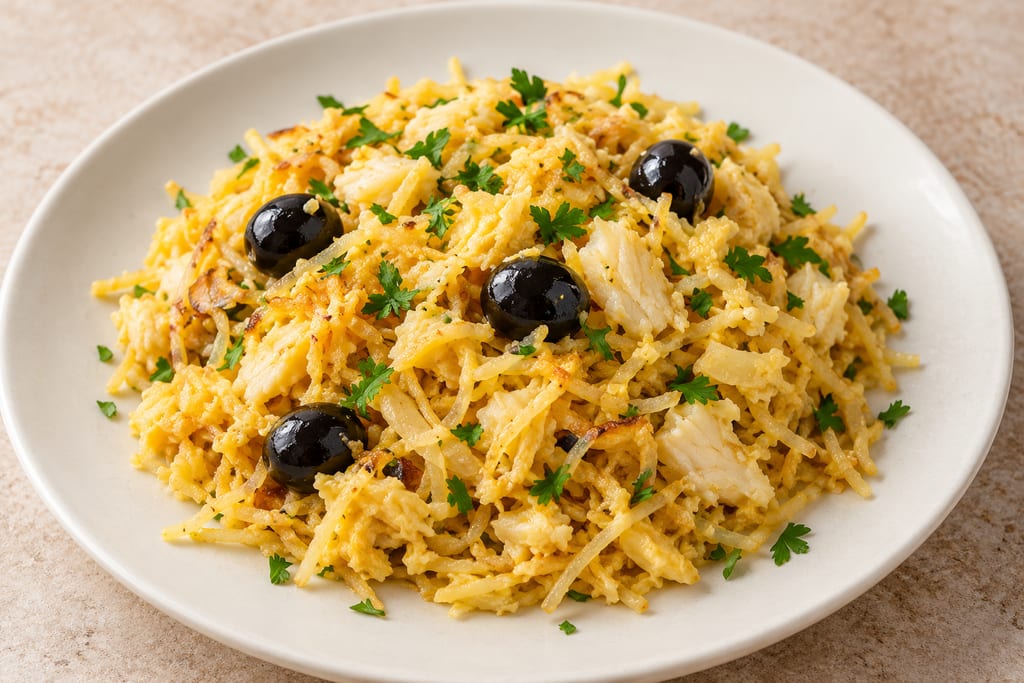
Lisbon's salt cod dish: shredded desalted cod and fine fried potato matchsticks folded through softened onion and bound with beaten egg, finished with parsley and black olives.
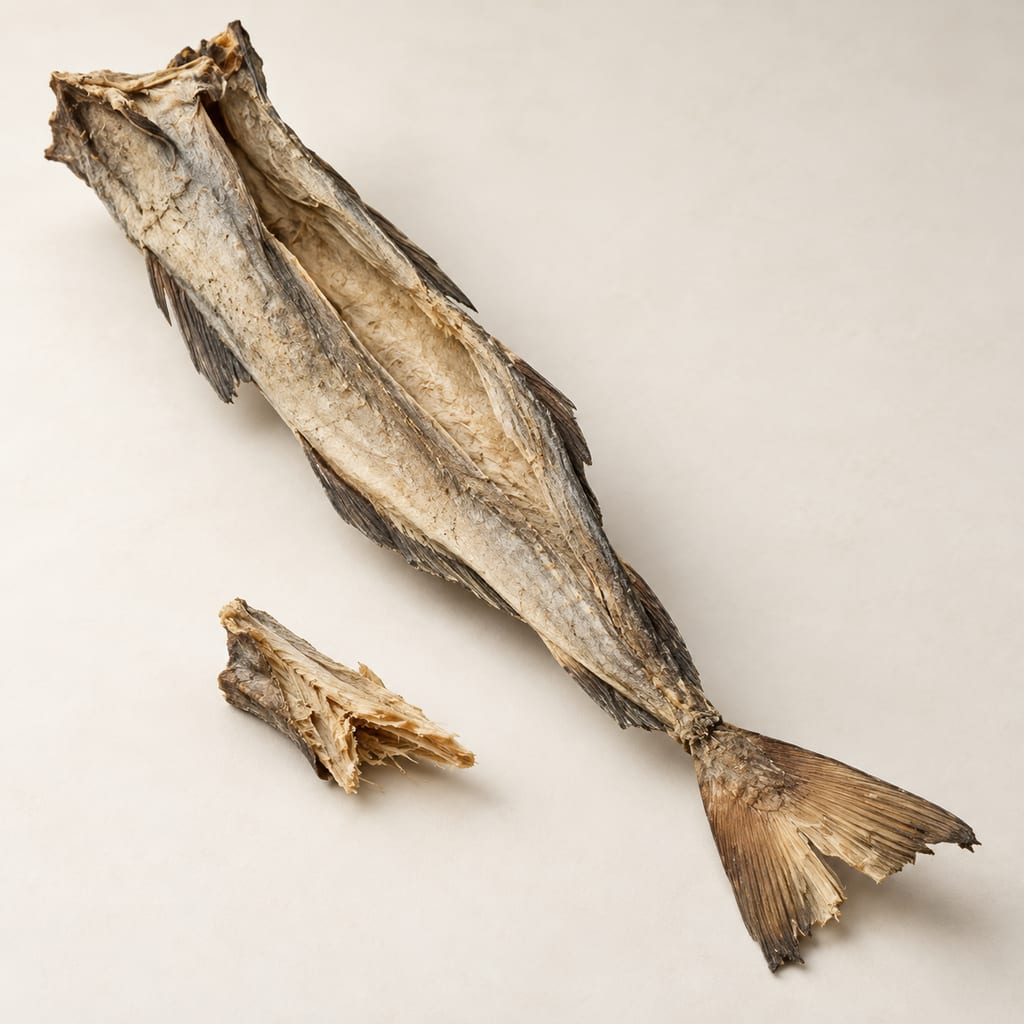
Cod hung on open racks in cold northern air until most of its water has gone, leaving a hard, light, unsalted fish that keeps and travels and must be soaked for days before cooking.
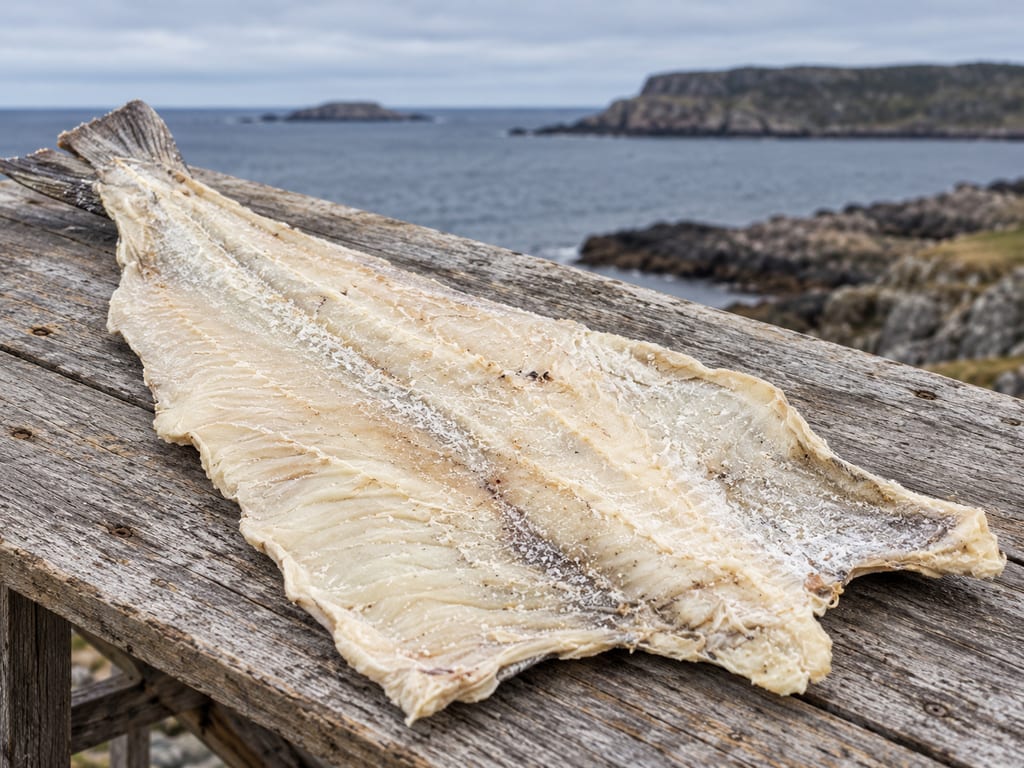
Atlantic cod split, salted and dried on raised flakes along the Newfoundland and Labrador shore, manufactured ashore for markets across the Atlantic.
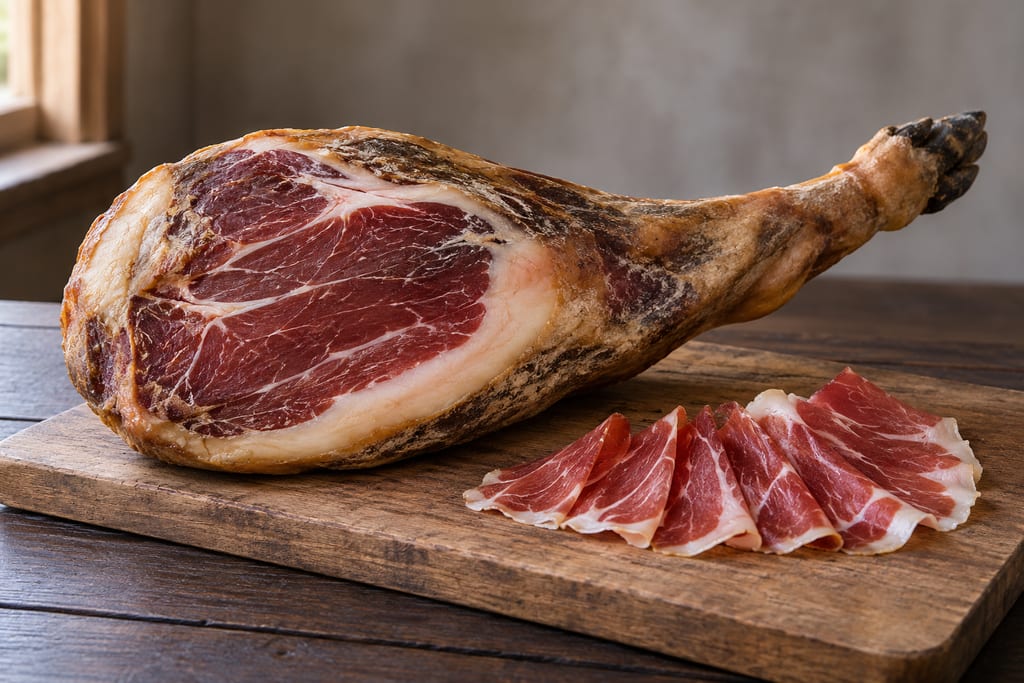
Smoked dry-cured pork ham of the Barroso highlands of northern Portugal: hand-salted, sometimes coated with olive oil and paprika, then smoked slowly over oak or broom in the cold mountain air.
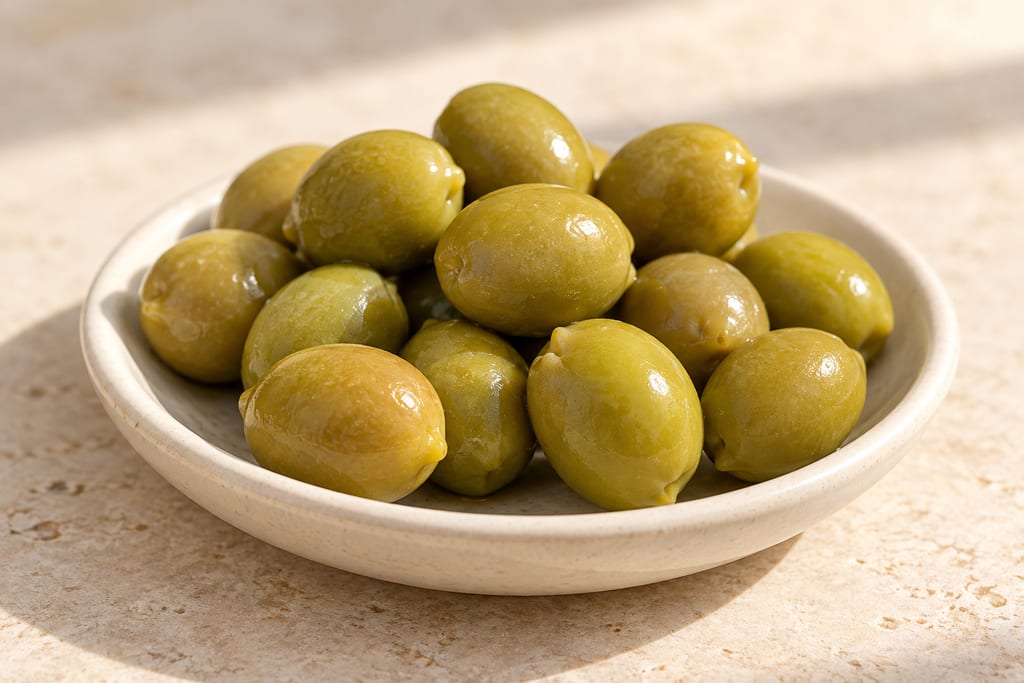
A Portuguese table-olive product from the Negrinha cultivar in northeastern Portugal, sold in three commercial styles, two of them brined fermentations and one oxidised to black.
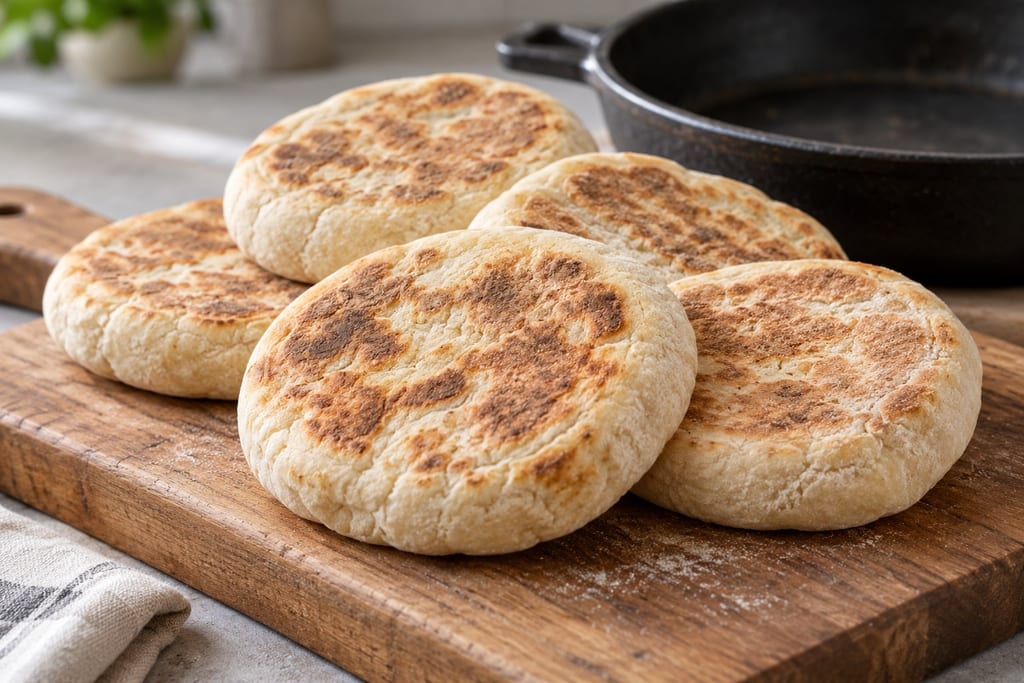
Sweet-potato wheat breads with fresh yeast, browned in a pan and finished in the oven. This is the bread component of Teleculinária's scrambled-egg dish.
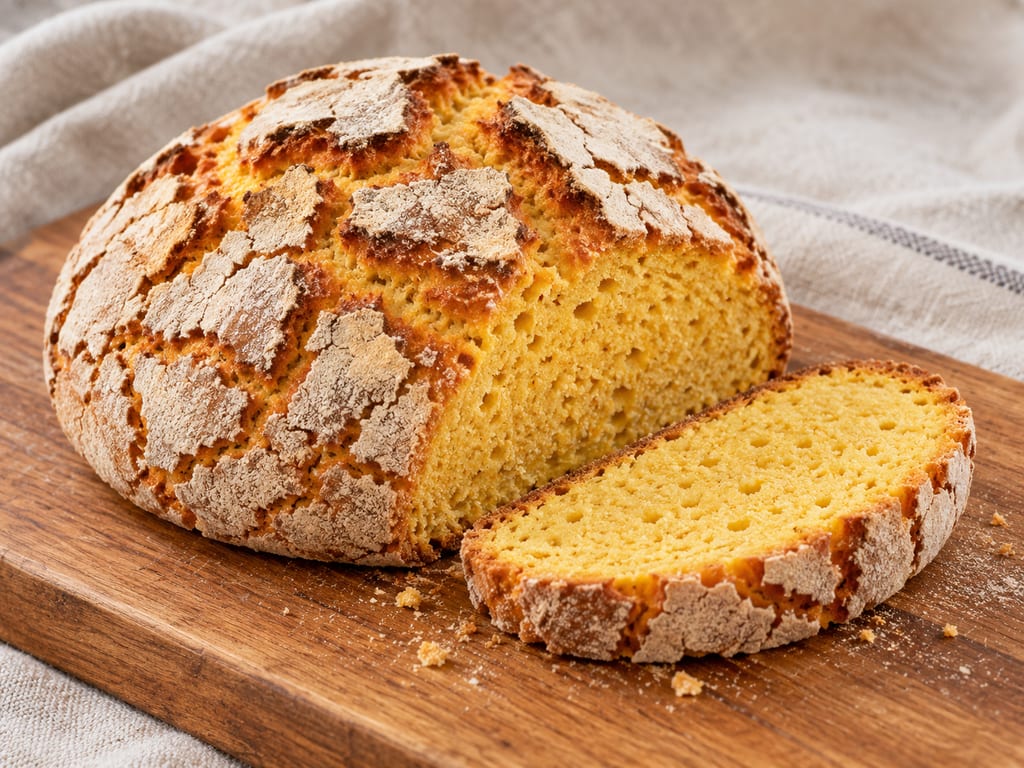
This modern home broa de milho uses scalded maize flour and a wheat-flour yeast sponge; it is distinct from Northern Portuguese maize-and-rye sourdough breads.
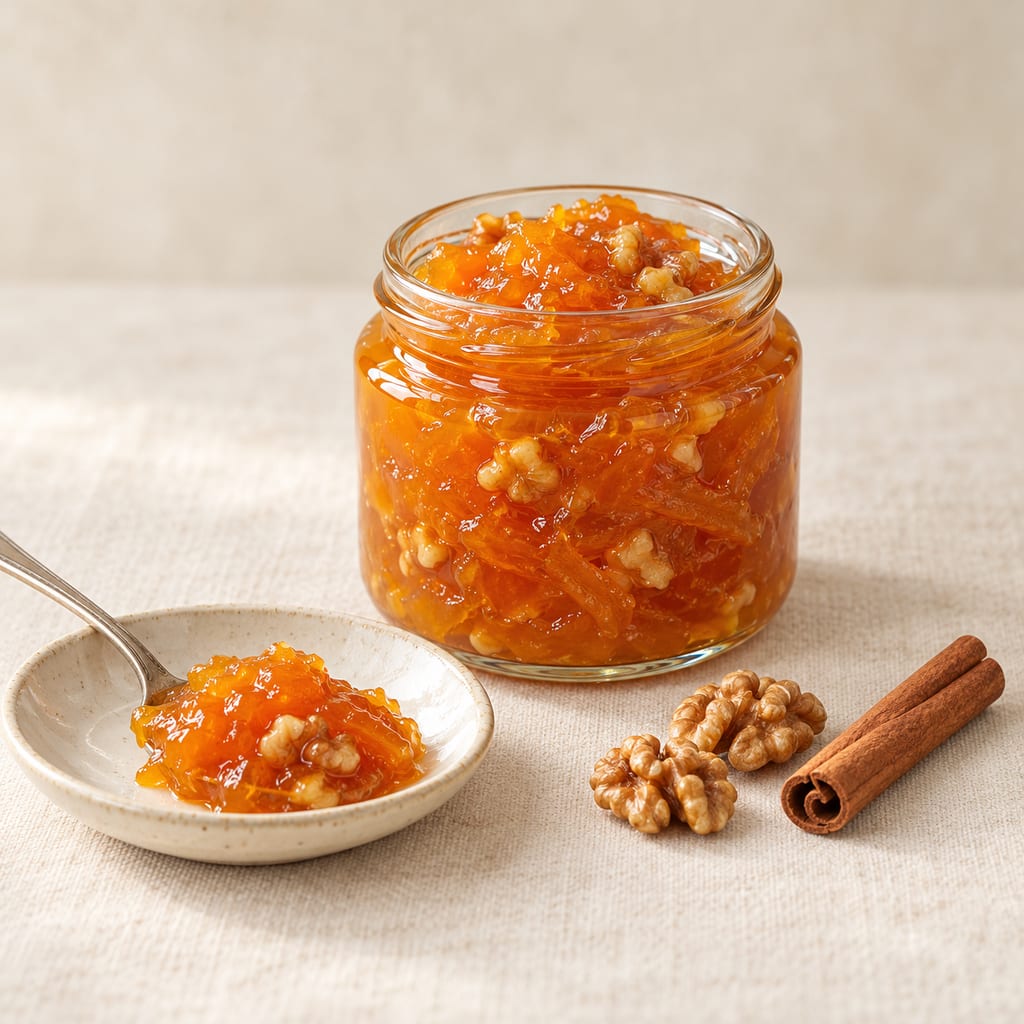
Portuguese pumpkin jam cooked with cinnamon and optional walnuts. A sweet spread to refrigerate or freeze, rather than a home-canned preserve.
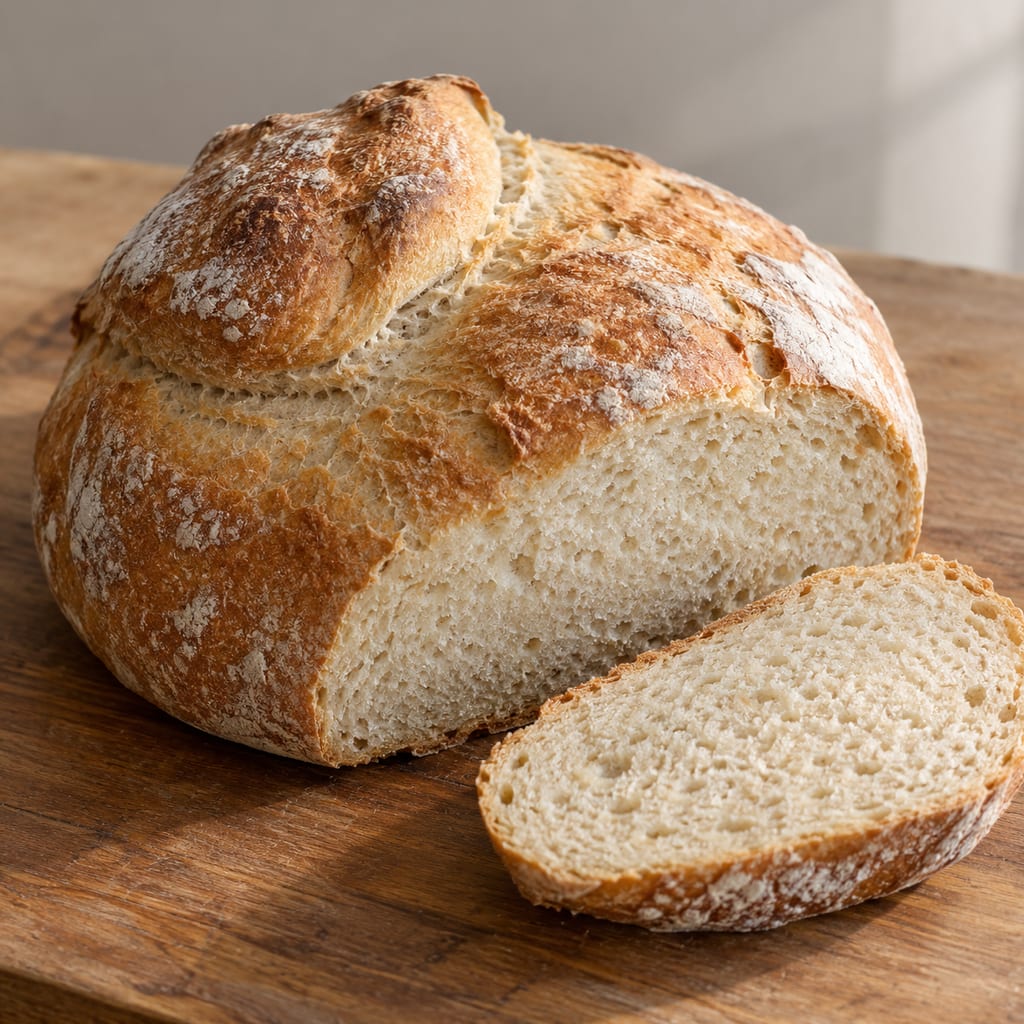
A rounded Alentejo wheat loaf with a raised folded head. This home adaptation uses a fresh-yeast preferment, then proofs the shaped loaf and bakes it with steam.
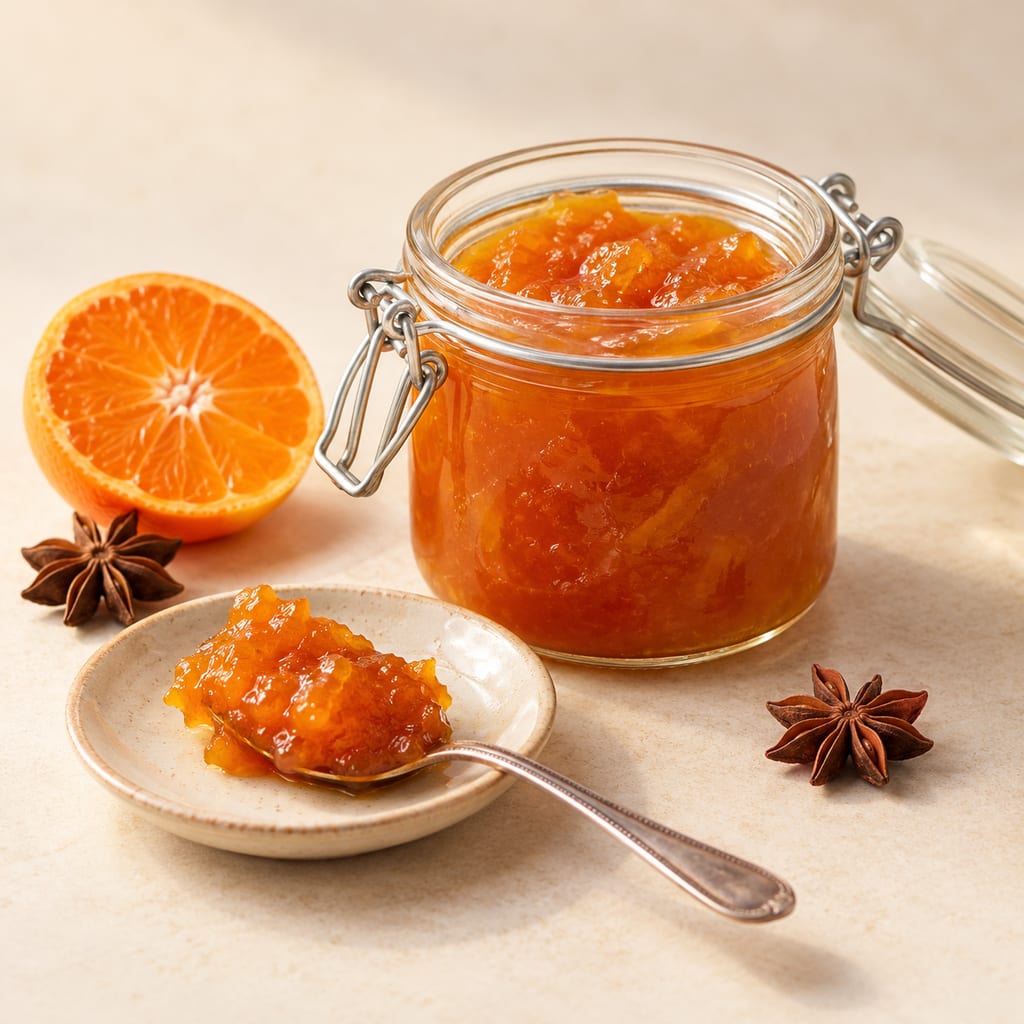
Portuguese pumpkin jam: Freeze for winter; small fresh portion refrigerated up to 48 hours.
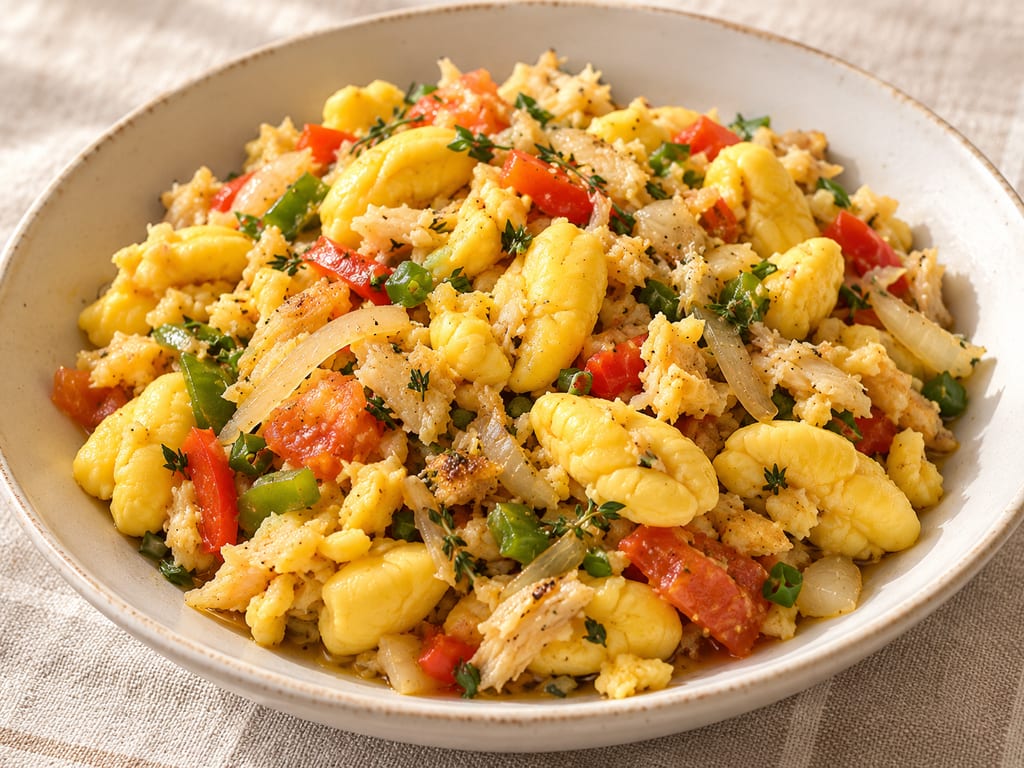
Jamaica's best-known dish: salt-cured cod desalted and flaked, then folded through ackee arils with onion, tomato, sweet pepper, thyme and Scotch bonnet.
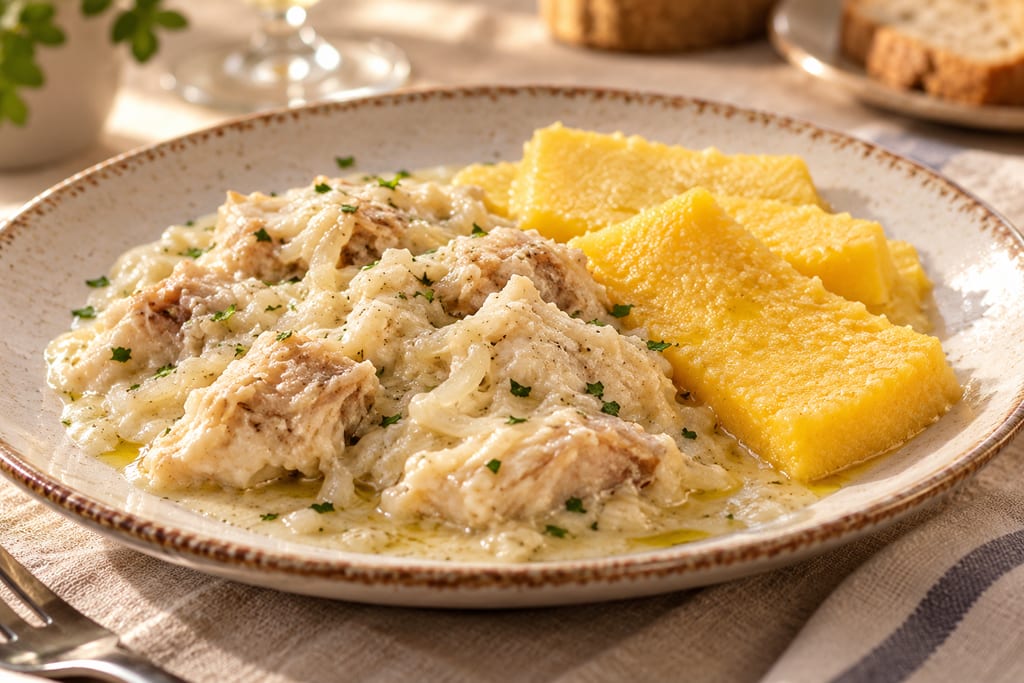
Stockfish from Vicenza, left barely bubbling for hours with onion, preserved anchovy, olive oil, milk and a little cheese until it is tender under a dense pale sauce, and eaten with polenta.
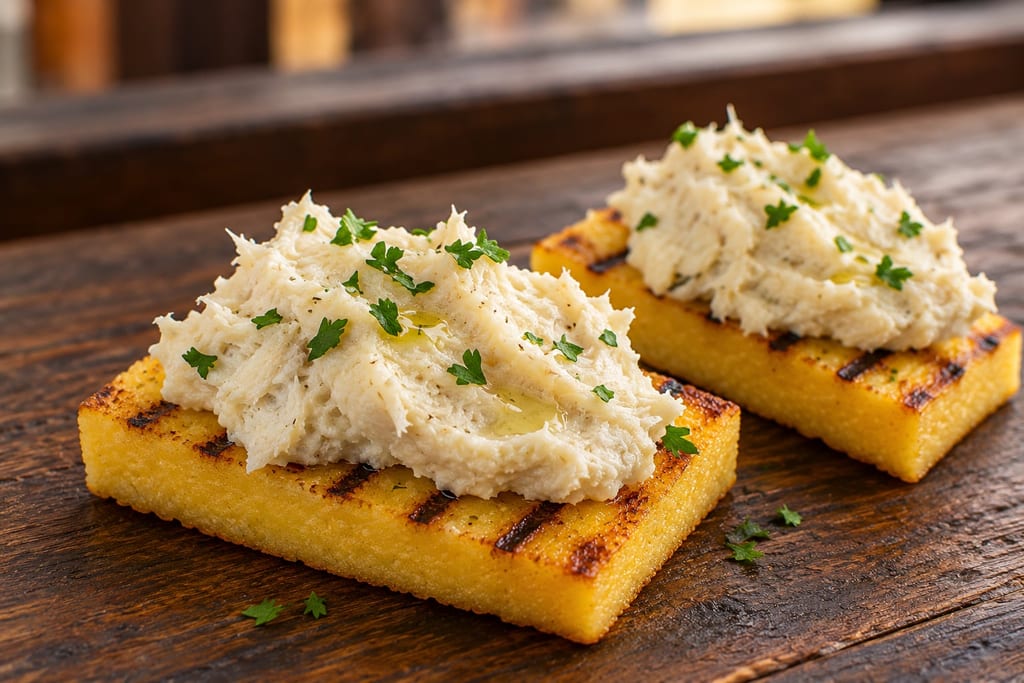
A Venetian cicchetto of cooked unsalted stockfish beaten with oil until it turns into a pale, aerated cream, spooned onto grilled polenta in the city's wine bars.
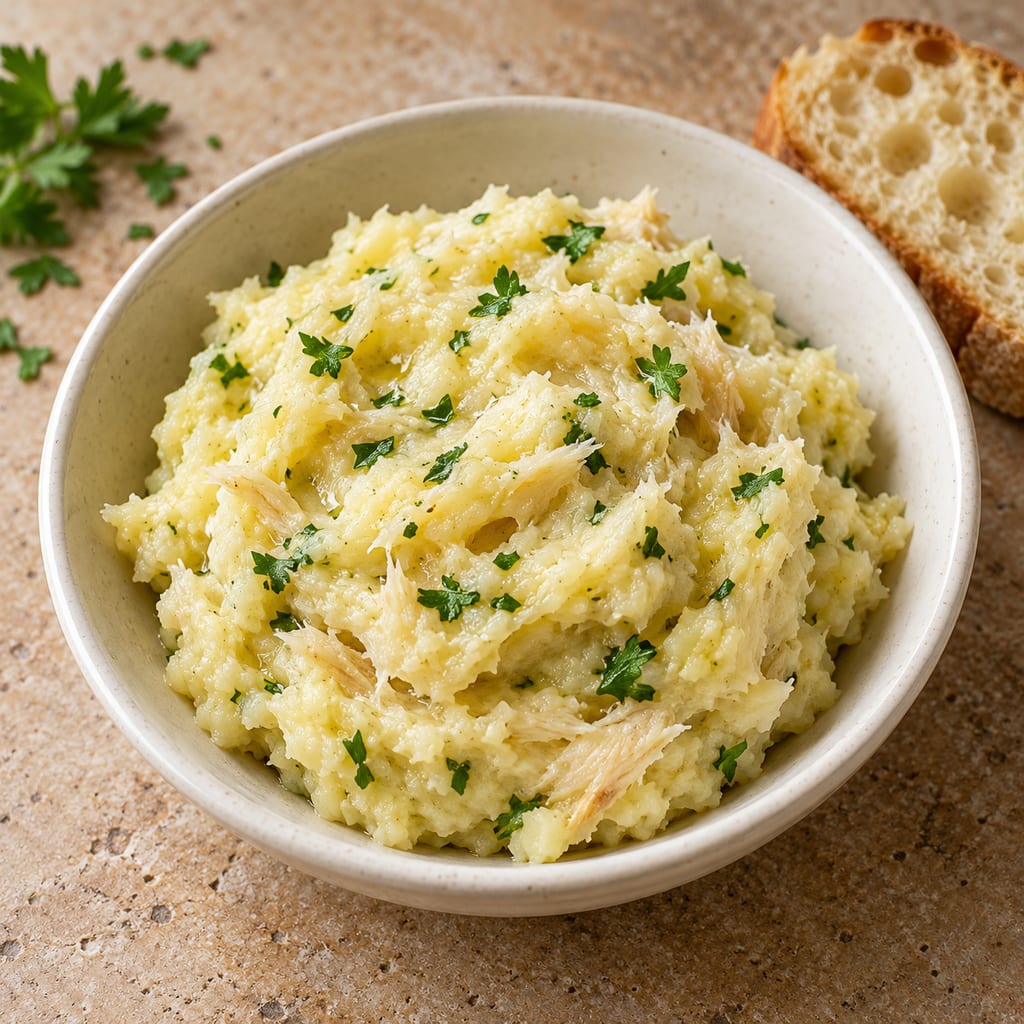
An Istrian festive spread of cooked stockfish beaten with olive oil and garlic until pale and cohesive, here bulked out with hand-mashed floury potato.
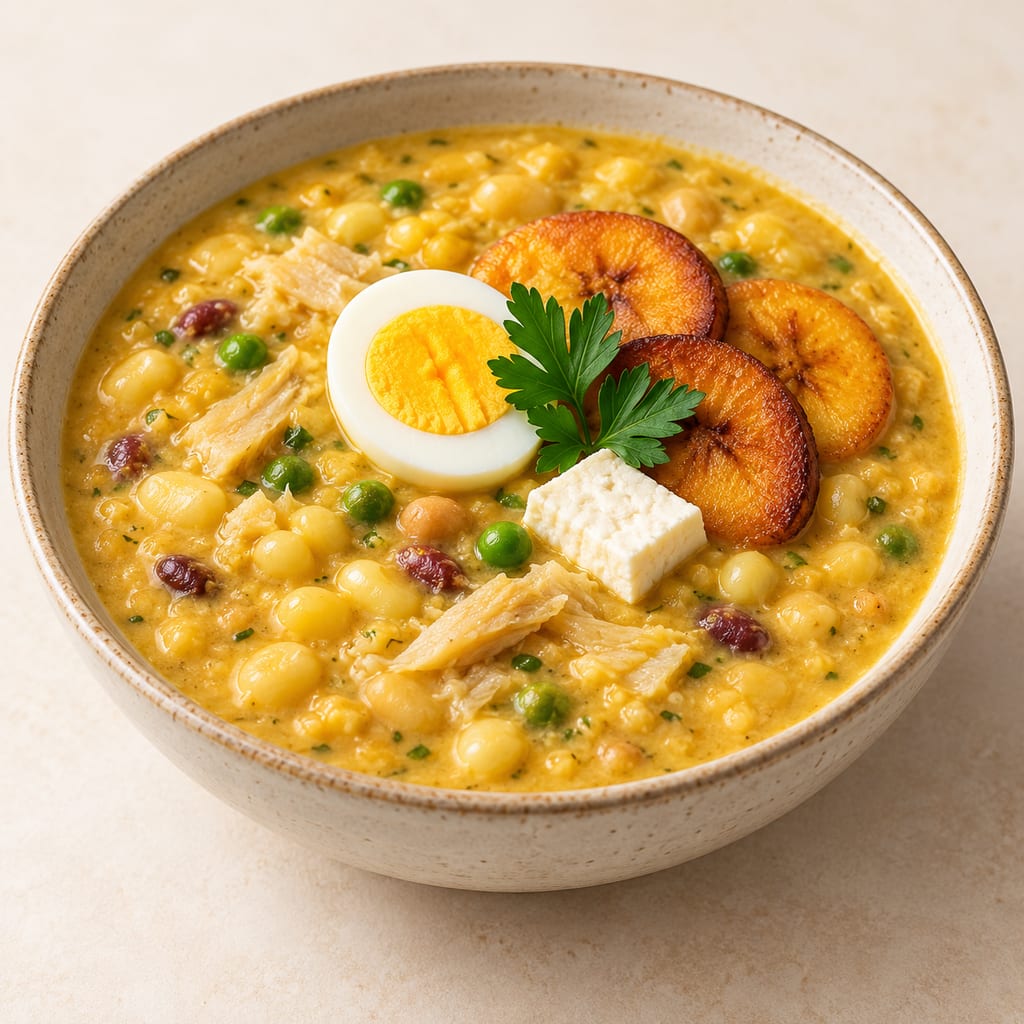
Ecuadorian Holy Week soup of tender grains and pulses, squash, milk and salted fish, thickened with peanut paste and served with contrasting garnishes.
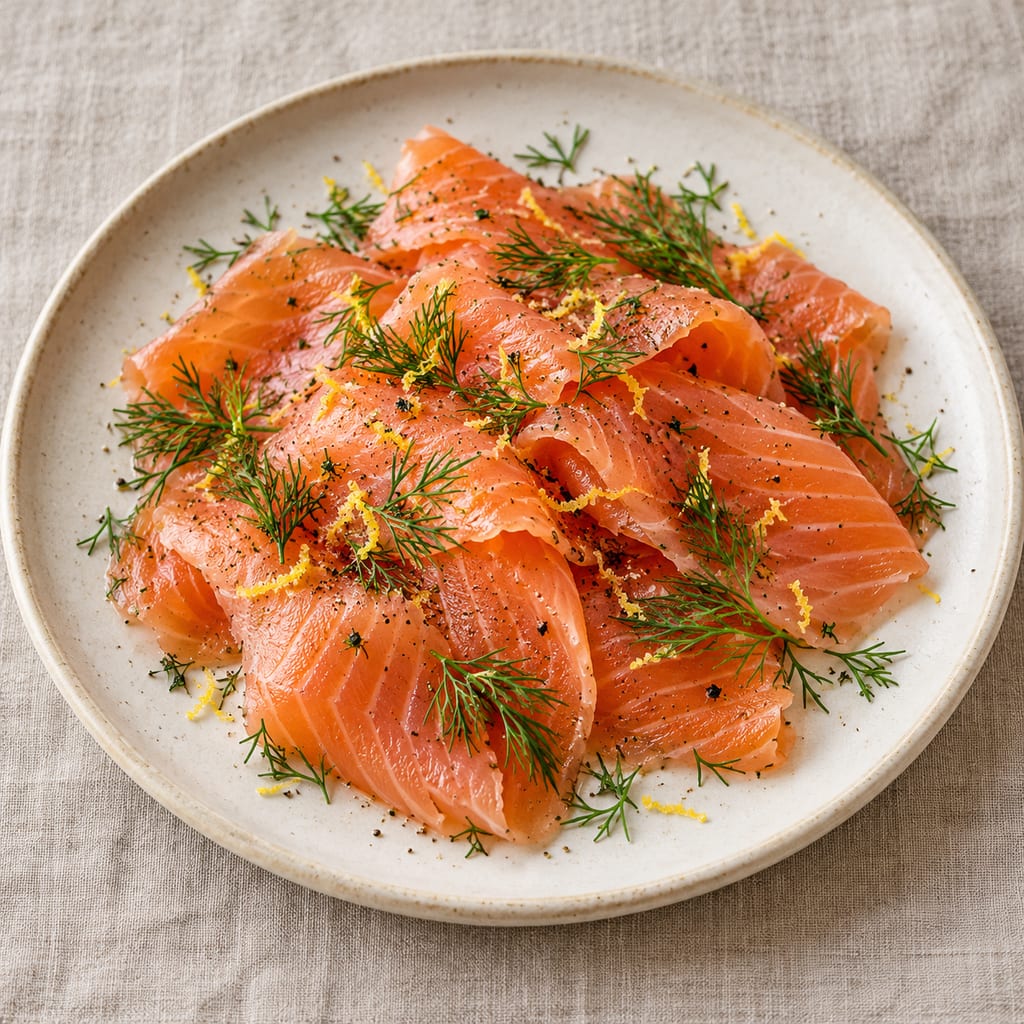
Salmon is cured with salt, sugar, pepper, dill and lemon zest under refrigeration.
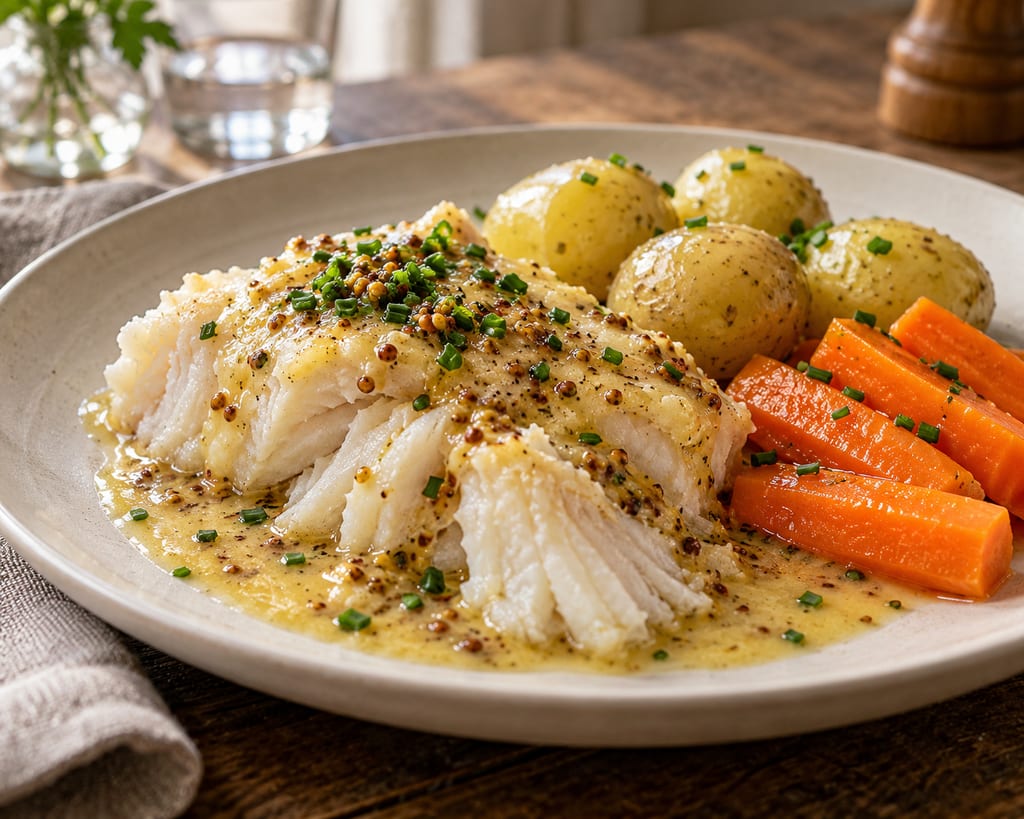
Rehydrated air-dried Norwegian cod simmered until it flakes, served with boiled potatoes and carrots under a wholegrain-mustard butter whisked from the fish's own poaching liquid.
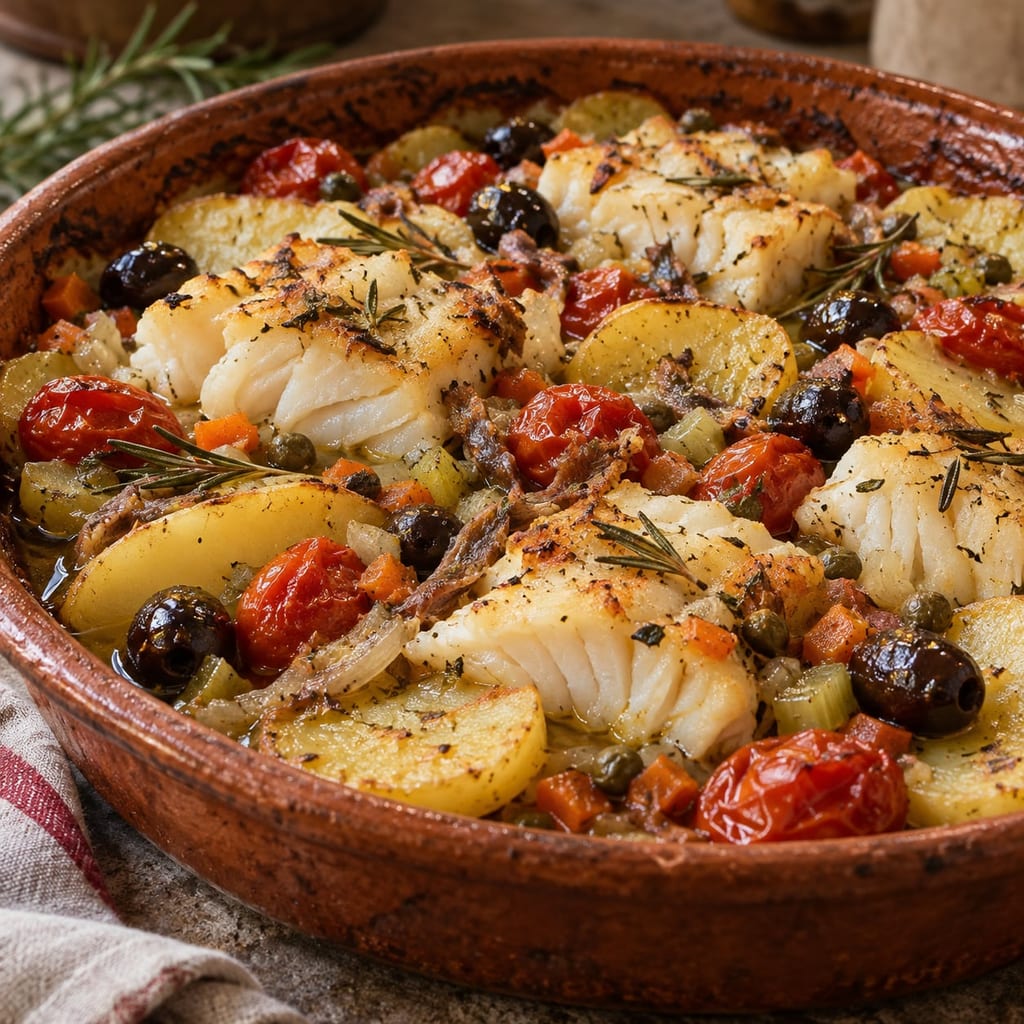
Ancona's baked stockfish: thick pieces layered with potatoes, tomatoes, olives, capers and anchovy under olive oil and white wine, cooked slowly in a covered dish.
No community contributions have been published for this entry yet.
Sign in to contribute. Published comments and photos are free to read.
Visit PortugalMethod
Visit Portugal — Traditional bacalhau à lagareiroA version supplied by the Lisbon Tourism and Hospitality School, based on traditional recipes associated with Maria de Lourdes Modesto: four cod portions, 1 kg small potatoes, two garlic cloves, four small onions and olive oil.
Its cod is soaked for at least 24 hours with the water changed every eight hours.
Its oven is heated to 180°C, the cod arranged above a bed of sliced onion, generously dressed with olive oil and roasted for approximately 30 to 35 minutes.
The potatoes are lightly crushed when soft, and raw sliced garlic, freshly ground pepper and additional olive oil are added at serving.
The potatoes are roasted together with the fish in this reference method.
Cited in: Salt cod and the oil press; What happens during desalting?; Potatoes a murro; Recipe: bacalhau à lagareiro; Method; The traditional reference method; What good results look like
Centro Interpretativo da História do BacalhauHistory
Centro Interpretativo da História do Bacalhau — Lagareiro historyCompeting traditions for the dish's geographical origin: one interpretation connects it to olive-press workers in the Beiras, who used newly produced olive oil during the autumn, while other accounts associate its emergence with Minho.
The name refers to the lagareiro, a person associated with an olive press or oil mill, which is reflected in the generous use of olive oil.
Freshly pressed olive oil, azeite novo, as a seasonal flavouring, and the dish's present-day presence in restaurants and homes across Portugal rather than only in the regions associated with its origins.
Polvo à lagareiro, octopus prepared in the same style, as a related named dish rather than another name for the cod version.
Cited in: Salt cod and the oil press; Names and identity; History and geographical associations; The importance of olive oil; Regional and modern variations
Norwegian Seafood CouncilMethod · Safety
Norwegian Seafood Council — Desalting klippfiskDesalting salted and dried cod: rinse off loose surface salt, then soak in cold water below 4°C.
General guidance of one day per centimetre of fish thickness, with the water changed one or two times daily, and approximately two parts water for each part of fish.
These are practical guidelines rather than guaranteed desalting schedules, and the product manufacturer's instructions should be followed.
Cited in: Names and identity; What happens during desalting?; What good results look like; Troubleshooting; Safety
Food and Agriculture Organization of the United NationsScience · Safety
FAO — Fish salting and preservationHow fish salting works: salt creates a strong concentration difference between the fish tissue and its surroundings, water leaves the fish while sodium and chloride ions move in, and water activity falls so that the environment becomes less favourable for many spoilage microorganisms.
The salted product is not sterile, and its storage characteristics depend on the degree of salting, the drying, temperature, packaging and other conditions.
Cited in: Salt cod and stockfish are different products
International Journal of Food Science & TechnologyScience
International Journal of Food Science & Technology — Salt concentrations in cod curingA study of salt concentrations in cod curing describing traditionally salted cod with approximately 18 to 21% salt and 55 to 58% water after processing. These are analytical values for the products examined, not requirements every retail product must meet, and reported values vary with processing method.
Cited in: Salt cod and stockfish are different products
TeleculináriaMethod
Teleculinária — Bacalhau à lagareiroA published Portuguese bacalhau à lagareiro, used for the range of versions: some roast the fish directly, others use a preliminary cooking step or grill it before combining it with potatoes and oil, and garlic may be incorporated early or added late to keep a stronger pungency. Some versions include greens, particularly grelos, or sautéed cabbage.
Cited in: Method; Regional and modern variations; Troubleshooting
FoodSafety.govSafety
FoodSafety.gov — Cooking temperaturesThe published safe minimum internal temperature for fish, 63°C, or fish that is appropriately opaque and separates easily.
Cited in: Safety