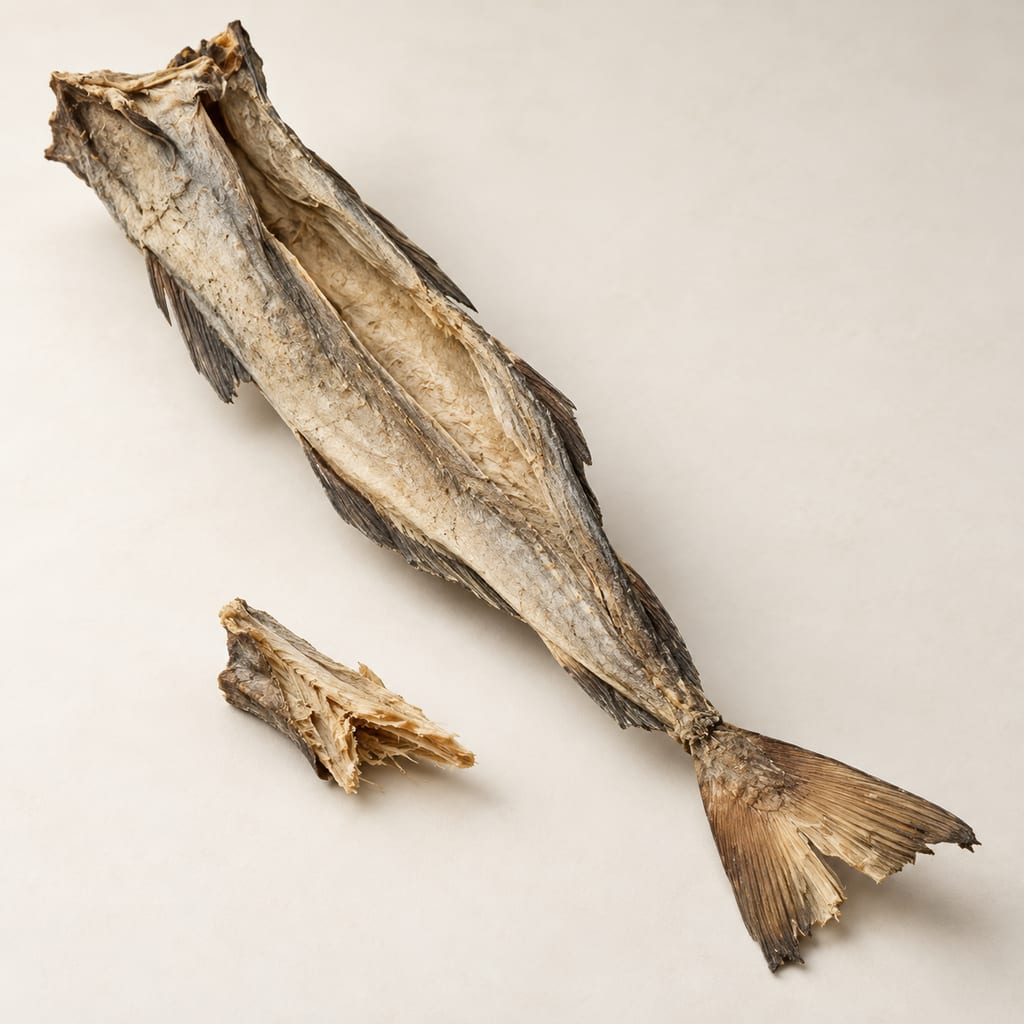
Stockfish
Cod hung on open racks in cold northern air until most of its water has gone, leaving a hard, light, unsalted fish that keeps and travels and must be soaked for days before cooking.
 FermenteaWhere food goes to change
Traditional method
Baccalà alla vicentina · Vicenza-style slow-cooked stockfish
Stockfish from Vicenza, left barely bubbling for hours with onion, preserved anchovy, olive oil, milk and a little cheese until it is tender under a dense pale sauce, and eaten with polenta.
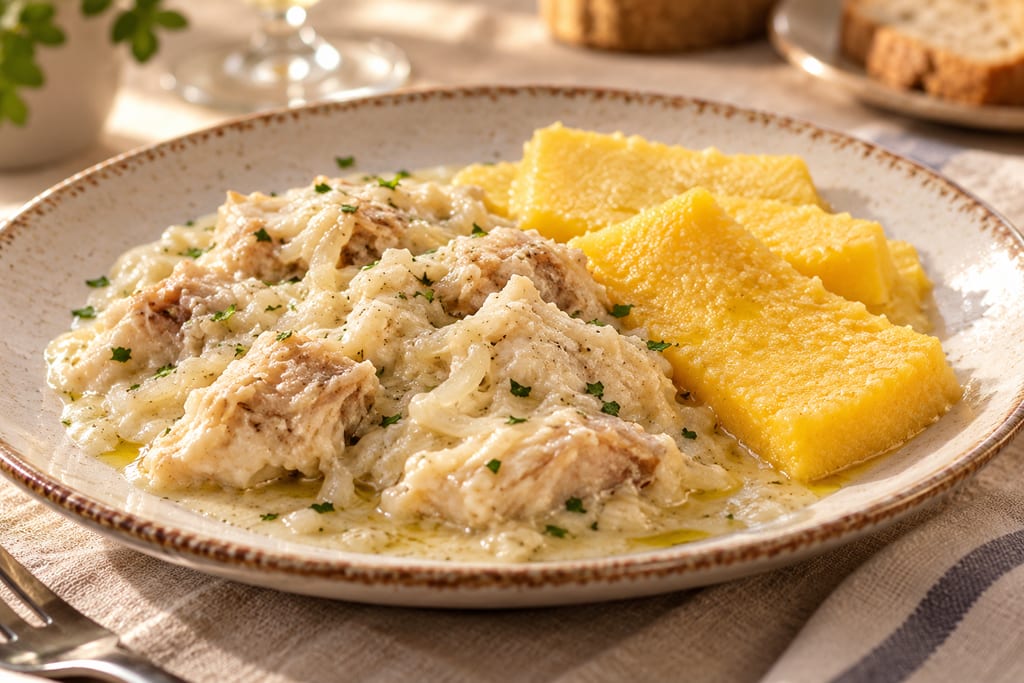
Few dishes illustrate the culinary potential of stockfish as clearly as bacalà alla vicentina.
The raw ingredient is hard, dried cod, transformed through soaking and prolonged cooking into a soft, richly seasoned dish. The final texture is neither an ordinary fish stew nor a fully whipped cream.
The fish is cooked slowly with onion, preserved anchovy or sardine, olive oil, milk and a little cheese. It becomes tender enough to break apart, while the liquid thickens and coats the pieces.
The defining traditional technique is called pipare. The contents should cook very gently, with minimal disturbance.
Unlike a conventional stew, which might be stirred repeatedly, Vicentine bacalà is generally left alone. The cooking vessel can be moved or rotated, but the fish should not be broken apart unnecessarily.
The accompaniment is polenta, making the finished dish a substantial expression of inland Veneto's relationship with imported northern fish.
The spelling bacalà, with one c, is especially significant locally.
In most of Italy, baccalà identifies salt-cured cod. The Vicentine dish traditionally uses unsalted air-dried stockfish.
This distinction must be preserved in recipes intended for an international readership. A reader purchasing ordinary salted bacalhau could otherwise end up using the wrong product.
Venetian/Vicentine — Bacalà alla vicentina
Standard Italian — Baccalà alla vicentina
English — Vicenza-style slow-cooked stockfish
Italian ingredient — Stoccafisso
Norwegian ingredient — Tørrfisk
Scientific name — Usually Gadus morhua
The story of Vicentine stockfish is tied to Venice's trade connections with northern Europe.
The 1432 shipwreck experience of Pietro Querini at Røst is the most famous episode in this history. Querini encountered Norwegian dried cod and brought knowledge of it back to the Venetian world.
The surviving historical evidence supports the voyage and encounter. It does not establish that the contemporary Vicentine recipe was invented in 1432.
Imported dried fish became part of northern Italian food culture over time, finding uses in both coastal and inland kitchens.
The successful incorporation of stockfish into Vicentine cooking is particularly interesting because Vicenza is not a maritime city. The ingredient had to arrive through trade, then be made palatable using locally familiar cooking methods and accompaniments.
Polenta eventually became the defining partner.
This combination illustrates a larger European pattern: preserved imported protein becoming integrated into regional cuisines through local starches, fats and seasonings.
The present-day recipe was not preserved unchanged as a single written formula across five centuries.
There is, however, a well-documented modern effort to maintain a recognized version.
The Venerabile Confraternita del Bacalà alla Vicentina was founded in Sandrigo on 1 March 1987.
Its published recipe was developed through comparison and study of versions served by restaurants and trattorias, particularly those associated with the 1930s–1950s.
That gives the modern recipe a documented basis without requiring the claim that every measurement goes back to the fifteenth century.
The Confraternita's formulation serves 12 people and specifies:
Its preparation calls for soaking the beaten stockfish for 2–3 days, changing the water every 4 hours.
Cooking takes approximately four hours over very gentle heat, the fractional part having not survived the handover of this research.
The dish may benefit from resting for 12–24 hours, although it must be cooled and refrigerated safely during that period.
The traditional recipe uses dry purchasing weight. The editorial adaptation below instead specifies the weight of already hydrated and cleaned fish. These figures cannot be compared directly as if they described the same state of the ingredient.
The official soaking schedule also differs from the Norwegian Seafood Council's general recommendation of 7–8 days for stockfish. Dryness, preparation and product type matter, so neither number should automatically replace the supplier's instructions.
Dry stockfish — 1 kg
Onions — 250–300 g
Extra-virgin olive oil — 500 ml
Salted sardines — 3
Fresh milk — 500 ml
Grated Grana cheese — 50 g
Plain flour — A little
Parsley, salt, pepper — Not quantified
There are several interacting processes.
First, the previously dried fish absorbs heat and moisture. Its muscle fibres soften, allowing it to separate more easily.
Second, onion cells break down during preliminary cooking and the long simmer. The onion contributes dissolved sugars, suspended solids and flavour to the sauce.
Third, preserved anchovies or sardines disperse into the fat and cooking liquid.
These fish provide salt, glutamate-rich savouriness and characteristic cured-fish flavour. They do not need to remain as recognizable pieces.
Fourth, milk contributes water, fat, proteins and lactose.
The liquid surrounds the fish while the milk solids and cheese contribute body and flavour.
A light dusting of flour contributes starch, which gelatinizes in the heated liquid and helps thicken the sauce.
Olive oil provides richness and carries aromatic compounds.
The system is not a simple oil-and-water mixture. It contains suspended fish particles, hydrated flour starch, milk proteins, softened onions and emulsified or dispersed fat.
Long, gentle cooking helps those components integrate while avoiding the mechanical damage caused by vigorous stirring.
The result is a soft fish dish coated in a dense, savoury sauce.
Serves 4 · Approximately three to four hours after soaking, the fractional upper bound having not survived the handover of this research · Not kitchen-tested
1. Prepare the onion. Warm 40 ml of the olive oil in a pan. Add the sliced onion and cook gently for 12–15 minutes until softened.
The onion should soften without becoming deeply browned. The finished sauce is intended to be pale rather than strongly caramelized.
2. Dissolve the anchovies. Add the chopped anchovy fillets and cook gently until they begin to break down into the onion mixture.
Stir in the parsley.
3. Coat the fish. Pat the prepared stockfish dry and lightly dust the pieces with the flour.
Shake off excess flour. Thick patches can form lumps in the sauce.
4. Assemble. Spread a little onion mixture across the bottom of a heavy casserole. Arrange the fish in a compact layer, distributing the remaining onion mixture around and over the pieces.
5. Add the liquids. Pour in the milk and remaining olive oil. Add the grated cheese and black pepper.
6. Cook very gently. Cover the casserole and heat until only occasional small bubbles are visible.
Avoid vigorous boiling.
The traditional dish should cook through a very slow process rather than rapid reduction.
7. Check progress. Begin checking tenderness after approximately two hours, the fractional part having not survived the handover of this research.
The original editorial formulation suggests adding hot water in 30 ml portions if the bottom begins to dry, up to the stated 200 ml allowance.
The goal is not to make a watery soup. Additional liquid should prevent scorching while allowing the eventual sauce to coat the fish.
8. Preserve the pieces. Rotate or gently shake the cooking vessel instead of stirring through the fish.
9. Finish. When the fish separates easily and the sauce is cohesive, remove from the heat. Taste before adding salt.
10. Serve. Spoon over freshly cooked polenta.
The total cooking period depends on the original fish and the effectiveness of its rehydration. The recipe's time range should not override the physical endpoint.
The word describes slow, restrained cooking, often compared to the gentle bubbling of something barely simmering.
In practice, the cook must control three factors: heat, available liquid and mechanical disturbance.
Excess heat produces rapid bubbling and can cause the milk-containing sauce to catch on the bottom.
Too little liquid permits the starch and milk solids to scorch.
Repeated stirring can fragment the fish, changing the texture from distinct tender pieces into a broken, uneven paste.
The casserole therefore needs a stable, low heat source. A heavy base helps distribute heat and reduce localized hot spots.
The cooking vessel must also contain the ingredients reasonably compactly. A very wide pan encourages evaporation and may require more attention.
Not every Vicentine household uses identical proportions.
The Confraternita itself acknowledges longstanding differences.
Some versions contain more milk and therefore produce a paler appearance. Others emphasize oil.
Some cooks use garlic and remove it partway through cooking. Others omit garlic completely.
The amount of onion and preserved fish varies.
Flouring is traditional in the published reference recipe, but some variants do not use it.
Cooking times also differ. The Confraternita describes opinions ranging from approximately three hours to four or five hours.
A thicker fish piece, a different grade of stockfish or a different soaking history can affect the cooking required.
These variations are not separate dishes. They belong on a single reference page because their central ingredients, techniques and regional identity are shared.
Soft, freshly cooked polenta is particularly suitable.
It receives the sauce and provides a mild, starchy contrast to the rich fish.
Firm polenta can also be cut into slices and grilled.
The dish is typically served hot as a main course. Because it is rich, relatively modest servings can be satisfying.
A rest period can improve the integration of flavours. If the dish is prepared ahead, cooling and refrigeration must be handled safely rather than leaving the casserole standing warm overnight.
A good finished dish contains very tender stockfish, although some pieces should still be identifiable.
The sauce should coat rather than separate.
It is normally creamy and slightly golden or ivory-coloured, with savoury depth from onion, preserved fish, milk and cheese.
If the fish is chewy, more gentle cooking may be necessary.
If the sauce is oily and separated, the balance of fat and water may be wrong or the sauce may have been heated too aggressively.
If the casserole smells scorched, inspect the bottom immediately. Do not scrape burnt material into the sauce.
If the product tastes very salty, verify the raw material and consider the combined salinity of anchovies and cheese.
The prescribed amounts do not justify adding salt automatically.
The original stockfish must be rehydrated under refrigerated conditions, below 4°C.
Cook fish to a safe internal temperature of 63°C.
This dish contains fish and milk, and the flour introduces wheat gluten.
The 12–24-hour rest described by the traditional recipe is a culinary rest period, not permission to hold a cooked fish-and-dairy dish at room temperature.
If making ahead, cool promptly, refrigerate and reheat thoroughly.
Vicentine stockfish is interesting precisely because Vicenza is not a maritime city. The fish had to arrive through Venice's trade with northern Europe, and once there it had to be made edible with what the local kitchen already knew: onion softened in oil, preserved anchovy or sardine for salt and savour, milk, a dusting of flour, a little cheese, and polenta underneath. That is a pattern visible across Europe, where imported preserved protein was absorbed into a regional cuisine through local starches, fats and seasonings, and here the polenta eventually became the defining partner. The naming carries a trap worth keeping in view: the local spelling bacalà, with one c, means the unsalted air-dried fish, while baccalà in most of Italy means salt-cured cod, so an international reader working from the dish's own name can easily buy the wrong product. What the modern record gives is codification rather than continuity. The Venerabile Confraternita del Bacalà alla Vicentina was founded in Sandrigo on 1 March 1987, and it built its reference recipe by studying what restaurants and trattorias actually served, particularly in the 1930s to 1950s. That gives the published formulation a documented basis without requiring anyone to claim that its measurements date from the fifteenth century, and the confraternity is candid that households differed and still differ: some versions carry more milk and come out paler, others lean on oil, garlic is used and lifted out partway or left out altogether, flouring is traditional in the reference recipe but absent from some variants, and even within the tradition opinions on cooking time run from about three hours to four or five. The defining technique has its own word. Pipare describes cooking so restrained that only occasional small bubbles break the surface, with the casserole rotated rather than stirred, so that the fish softens to the point of separating while the sauce thickens around pieces that are still recognisable.
Scaling: source batch only
Soaking reverses the drying that made the fish stable, and this dish's own soak runs for two to three days, or longer under the general directions, during which the fish is perishable raw seafood.
Hazard sourceThe traditional recipe allows a 12 to 24 hour rest to let the flavours settle, and the obvious way to do it, leaving the casserole on the stove, keeps a milk-based seafood dish in the worst possible condition.
Hazard sourceA piece whose centre is still rigid after soaking will stay chewy however long the casserole cooks, and the sources' cooking times disagree, so a clock reading cannot be used to decide the fish is done.
Hazard sourceMilk solids and flour starch catch on the bottom if the heat rises or the liquid runs low, and scraping that material into the sauce spoils the dish rather than rescuing it.
Hazard sourceRehydrate under refrigeration, following the product's own instructions rather than assuming one schedule fits every fish
Control sourceCook the fish through and check it rather than relying on the published cooking times
Control sourceIf the dish is made ahead for the traditional rest, cool it promptly, refrigerate it and reheat it thoroughly
Control sourceHold the pot low enough that only occasional small bubbles appear, and top up with hot water in small amounts if the bottom dries
Control sourceThe 12 to 24 hour rest in the traditional recipe is a culinary rest period, not permission to hold a cooked fish-and-dairy dish at room temperature.
This dish contains fish and milk, and the flour dusting introduces wheat gluten.
Buying salt-cured baccalà instead of the unsalted air-dried fish the Vicentine name actually means is the usual cause of an over-salted result, and salt cod needs desalting rather than plain soaking.
Three cooking figures in this research lost their fractional part in the handover and are recorded as illegible; do not reconstruct them, and judge the fish by whether it separates easily.
The confraternity's 1 kg of dry fish and this version's 650 g of hydrated fish are not the same measurement, and swapping one into the other's recipe will not work.
This adaptation has not been kitchen-tested.
A locality-level association: the dish carries the city's name, and Vicenza is inland, so the fish had to arrive by trade and was then made palatable with local methods and accompaniments. No claim is made that the present proportions go back five centuries.
Where the Venerabile Confraternita del Bacalà alla Vicentina was founded and where the published reference recipe comes from. This locates the modern codification, not the origin of the dish.
A region-level association for the household variations the confraternity itself records: more milk or more oil, garlic used and removed or omitted, flouring kept or dropped, and cooking times running from about three hours to four or five. These are variants of one dish rather than separate preparations.
Cod hung on open racks in cold northern air until most of its water has gone, leaving a hard, light, unsalted fish that keeps and travels and must be soaked for days before cooking.
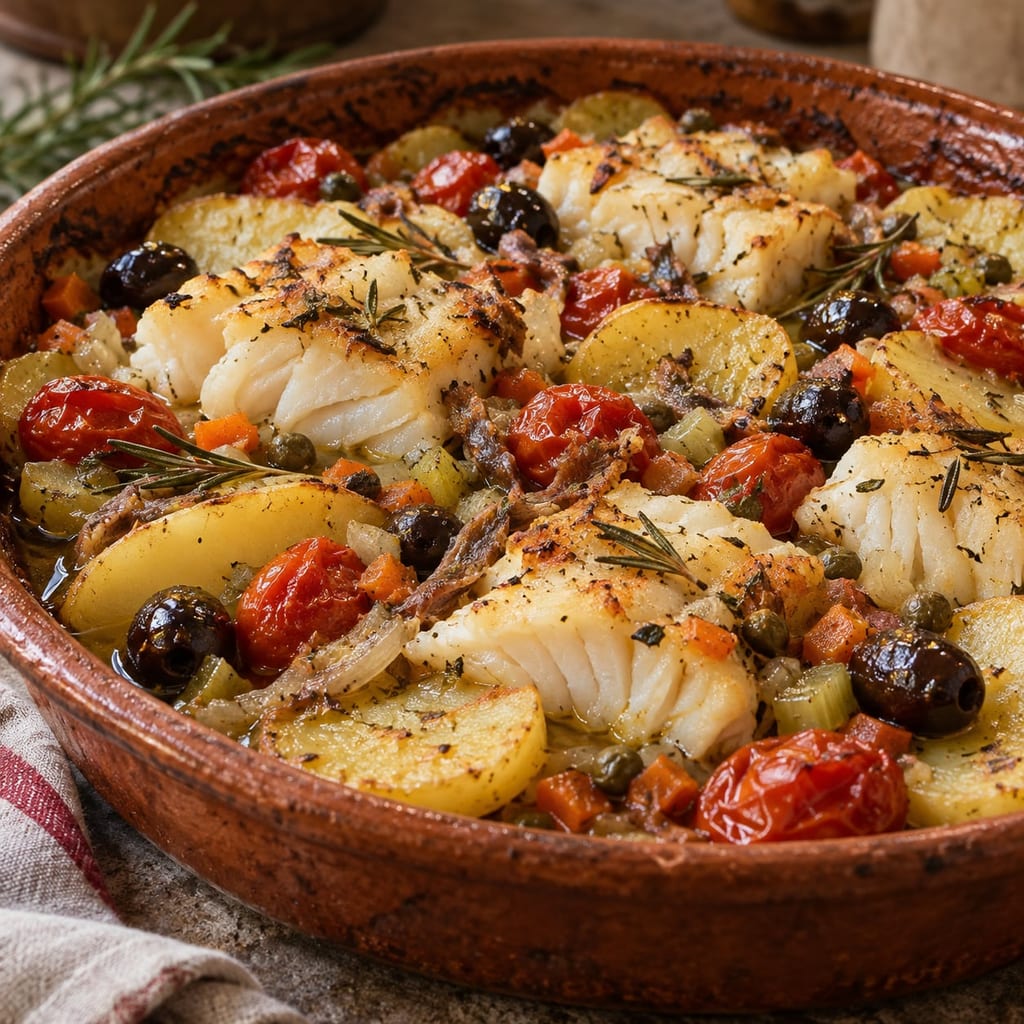
Ancona's baked stockfish: thick pieces layered with potatoes, tomatoes, olives, capers and anchovy under olive oil and white wine, cooked slowly in a covered dish.
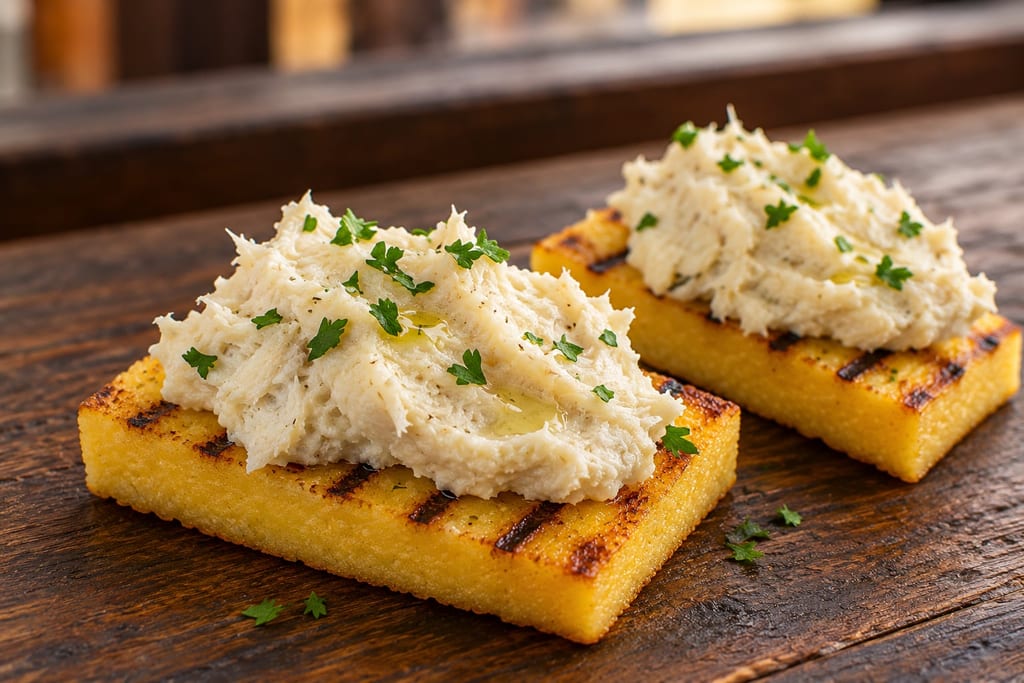
A Venetian cicchetto of cooked unsalted stockfish beaten with oil until it turns into a pale, aerated cream, spooned onto grilled polenta in the city's wine bars.
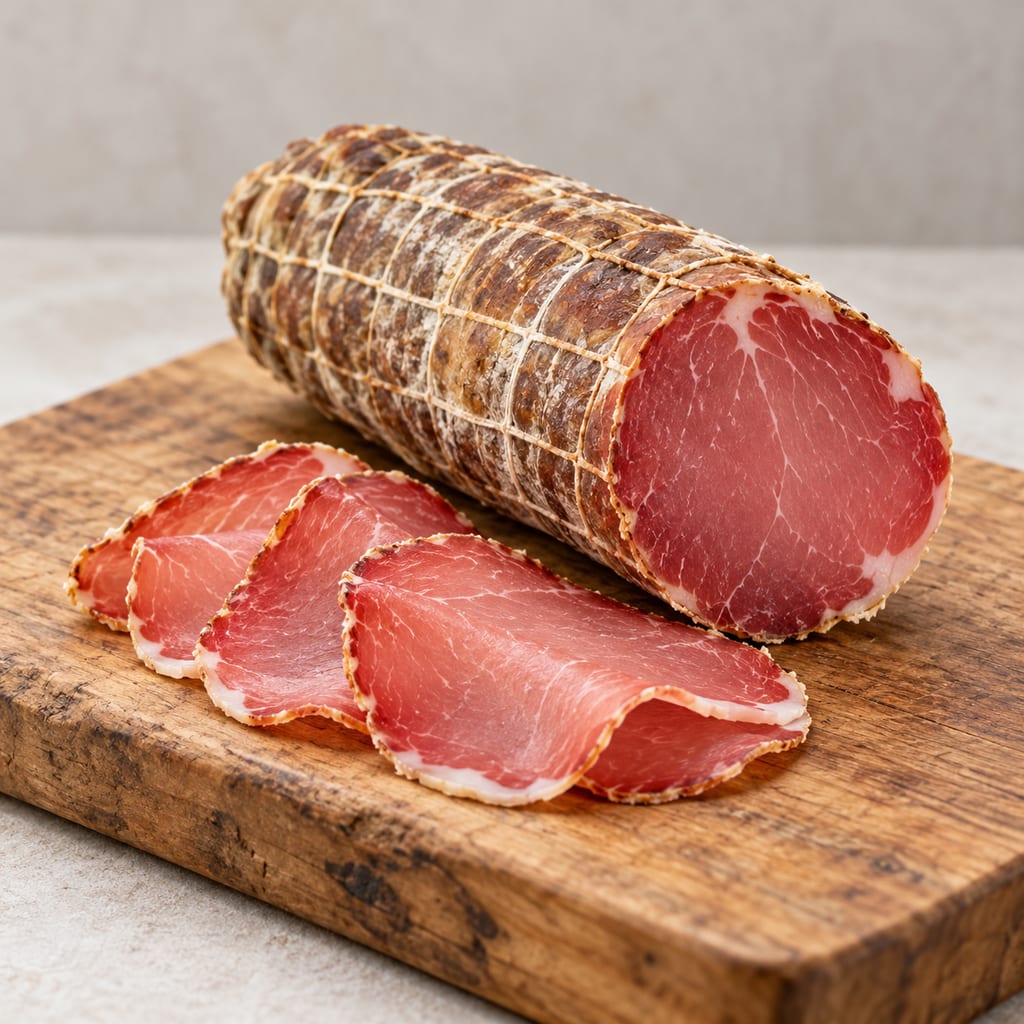
Documentary account of Italian regional cured-loin traditions, including Tuscan and Marche variations; no home-cure instructions are provided because the published professional methods lack validated safety controls.
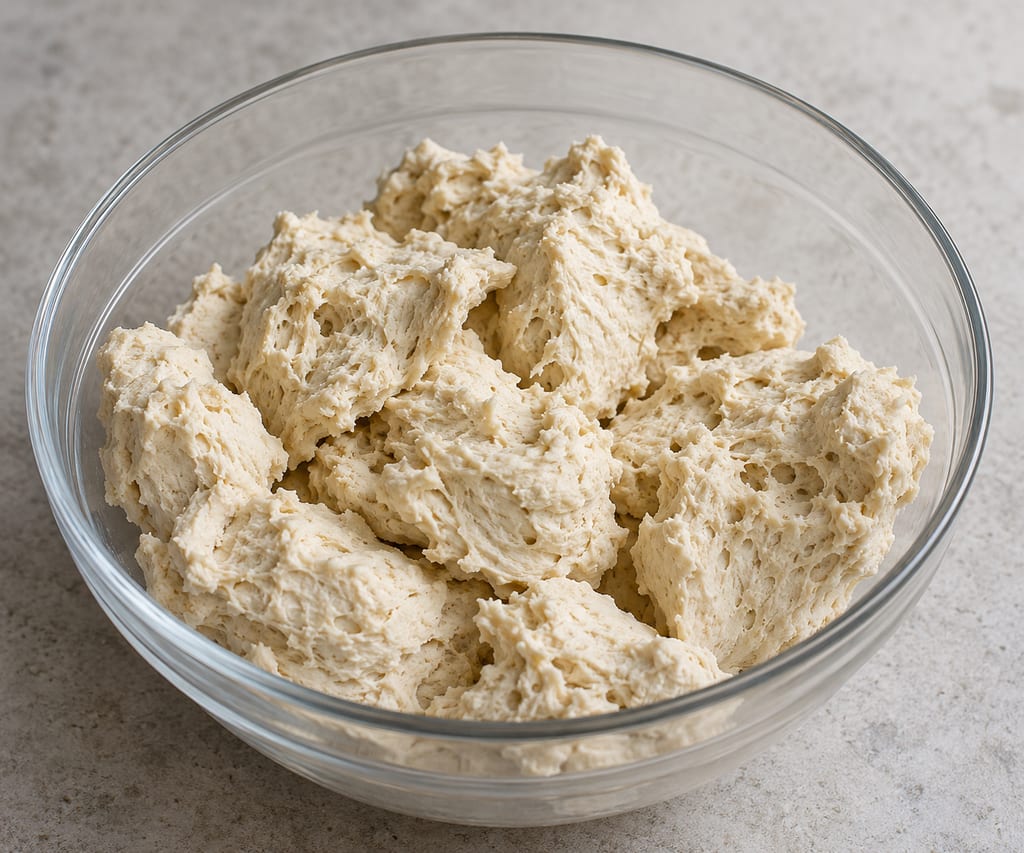
Biga is an Italian bread preferment of flour, water and a little yeast, usually a stiff unsalted mass of about 45 per cent water, fermented ahead and then mixed into the final dough.
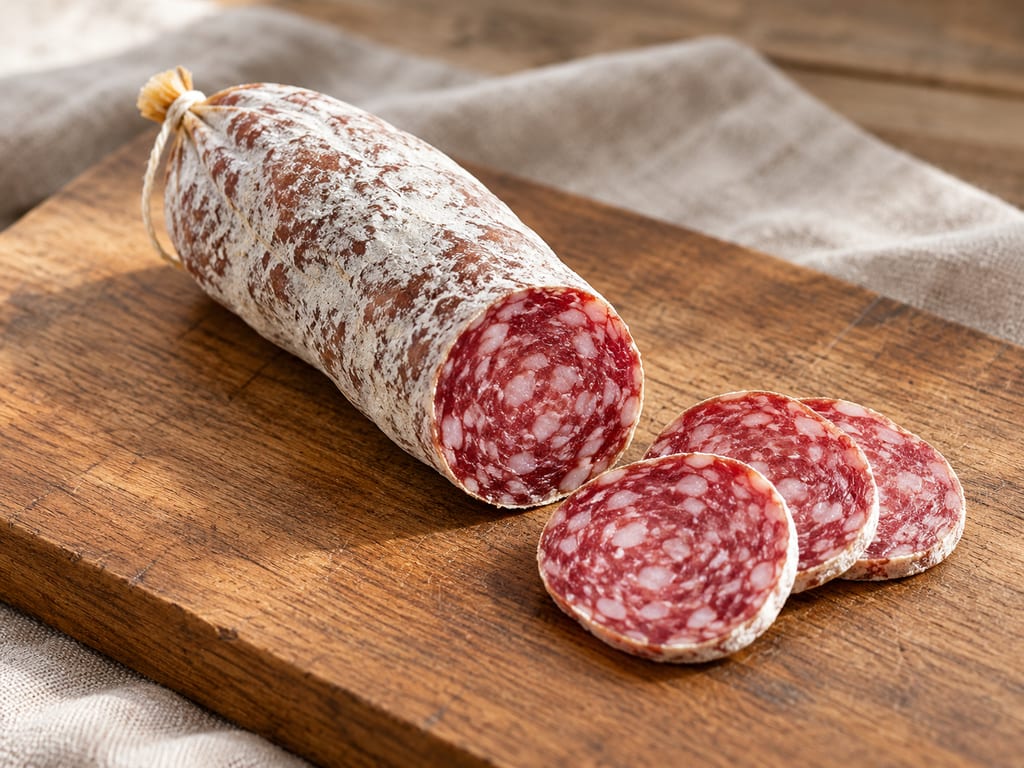
Small Italian hunter-style salami of lean pork, firm fat, salt, pepper and garlic, mildly acidified and dry-matured; protected as Salamini Italiani alla Cacciatora DOP.
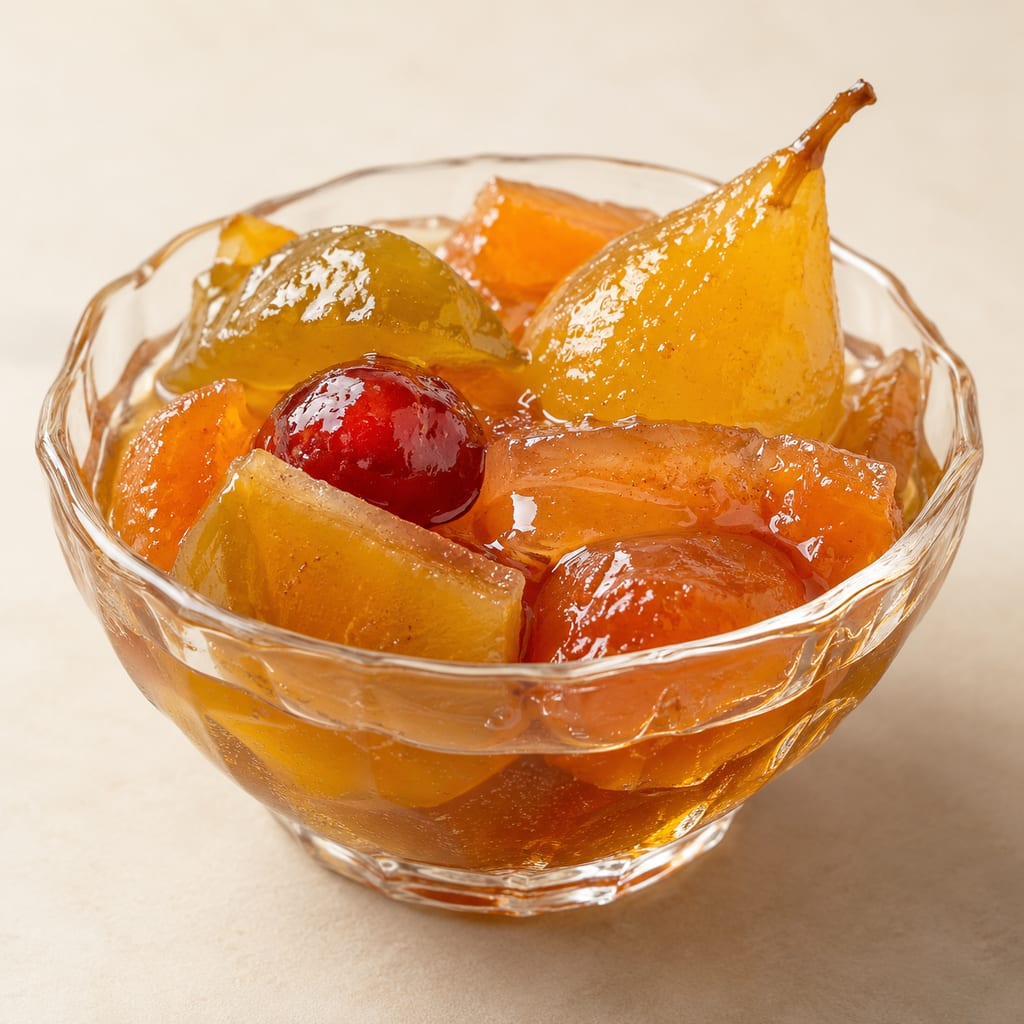
Mostarda is a northern Italian condiment of candied fruit in a mustard-flavoured syrup, served with boiled meats and cheeses.

A fruit-free Italian festive enriched bread, baked in a tall star-shaped mould and finished with powdered sugar. This home batch follows one published baker’s-yeast method; it does not represent every pandoro formula.
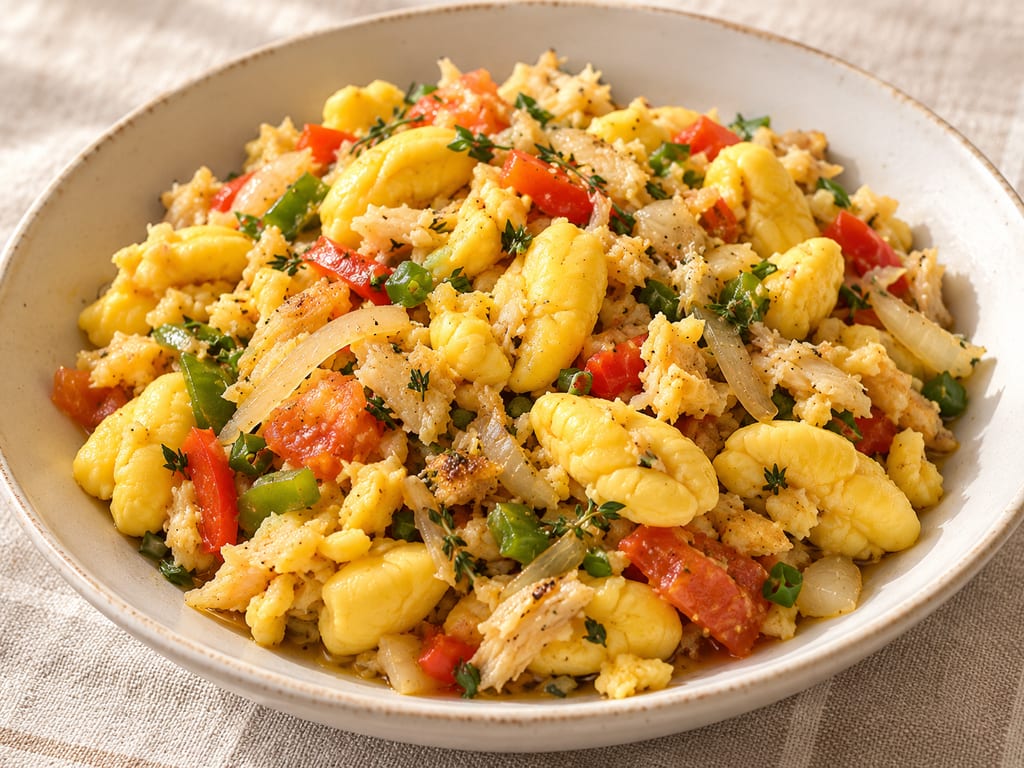
Jamaica's best-known dish: salt-cured cod desalted and flaked, then folded through ackee arils with onion, tomato, sweet pepper, thyme and Scotch bonnet.
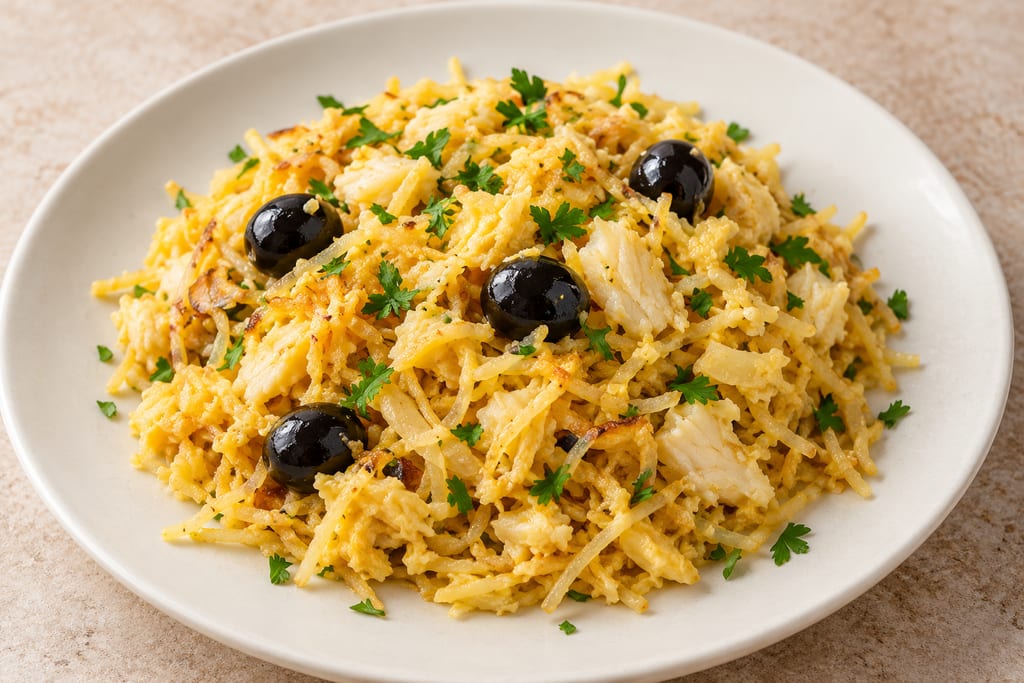
Lisbon's salt cod dish: shredded desalted cod and fine fried potato matchsticks folded through softened onion and bound with beaten egg, finished with parsley and black olives.
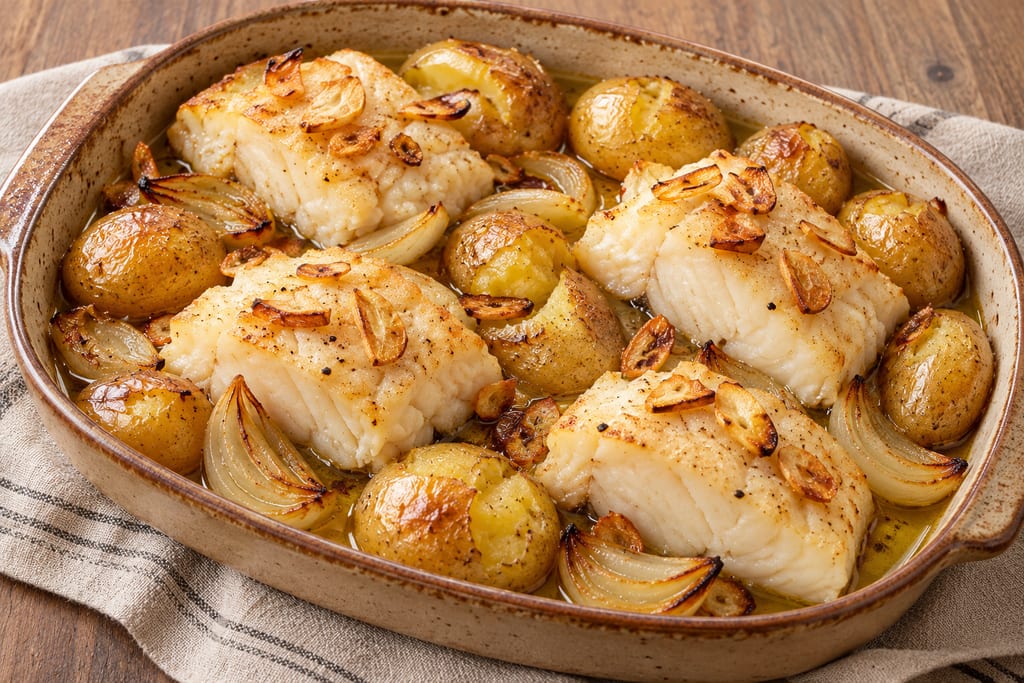
Thick pieces of desalted salt cod roasted in olive oil with garlic and onion, served with small potatoes cooked and then crushed until their skins split.
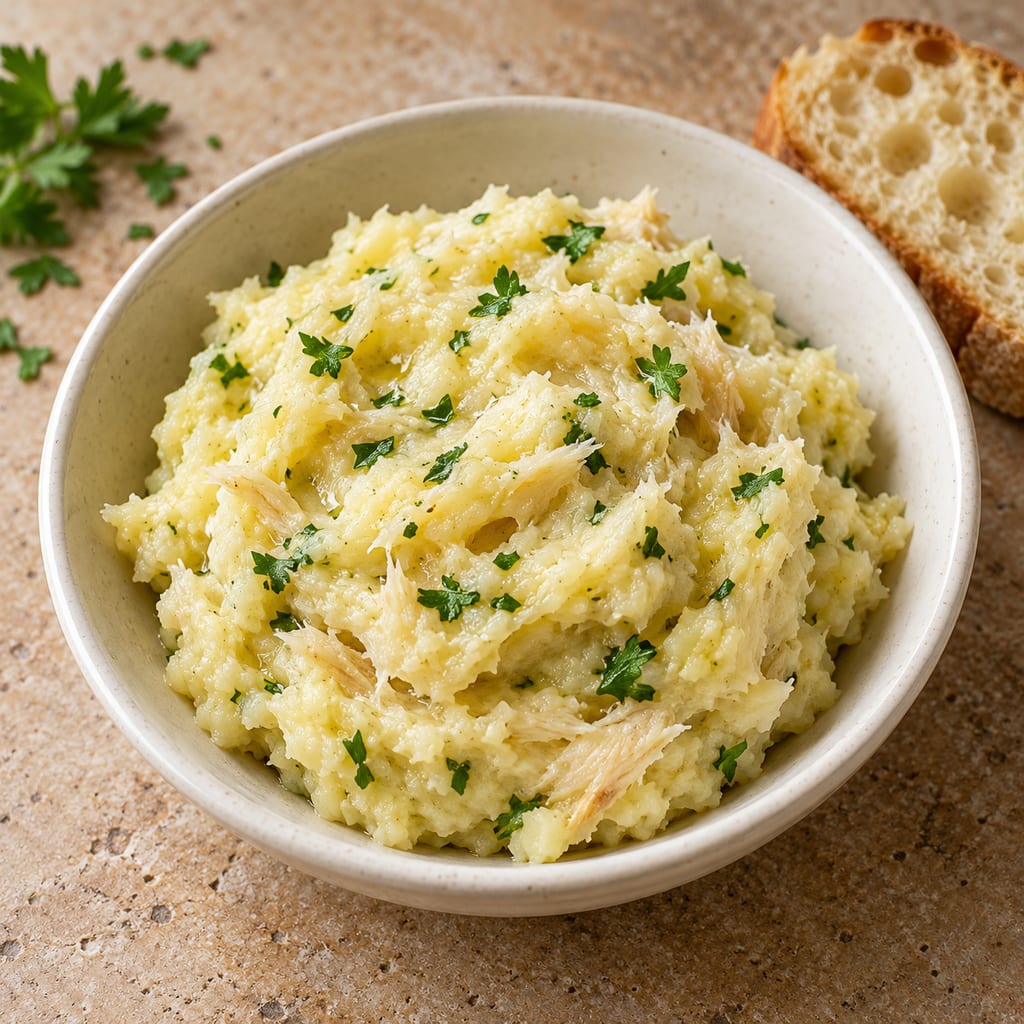
An Istrian festive spread of cooked stockfish beaten with olive oil and garlic until pale and cohesive, here bulked out with hand-mashed floury potato.
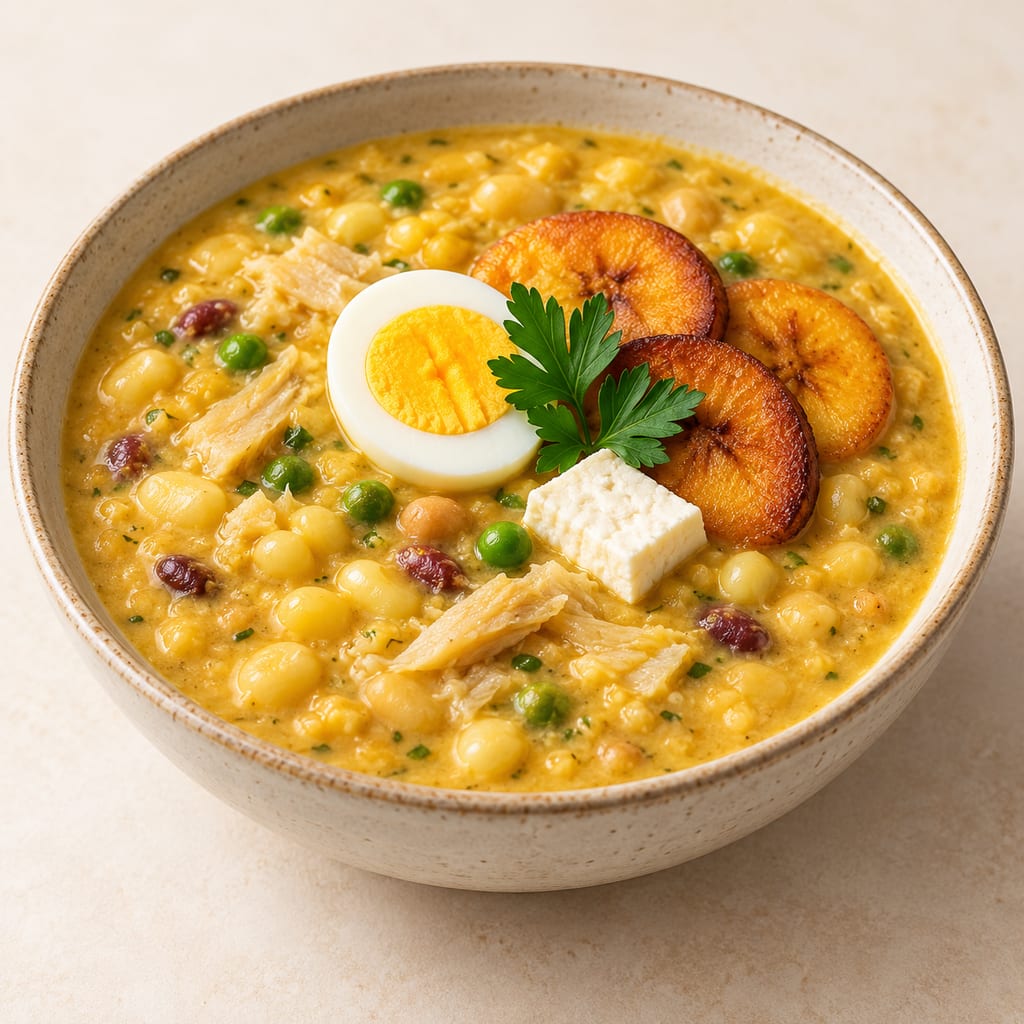
Ecuadorian Holy Week soup of tender grains and pulses, squash, milk and salted fish, thickened with peanut paste and served with contrasting garnishes.
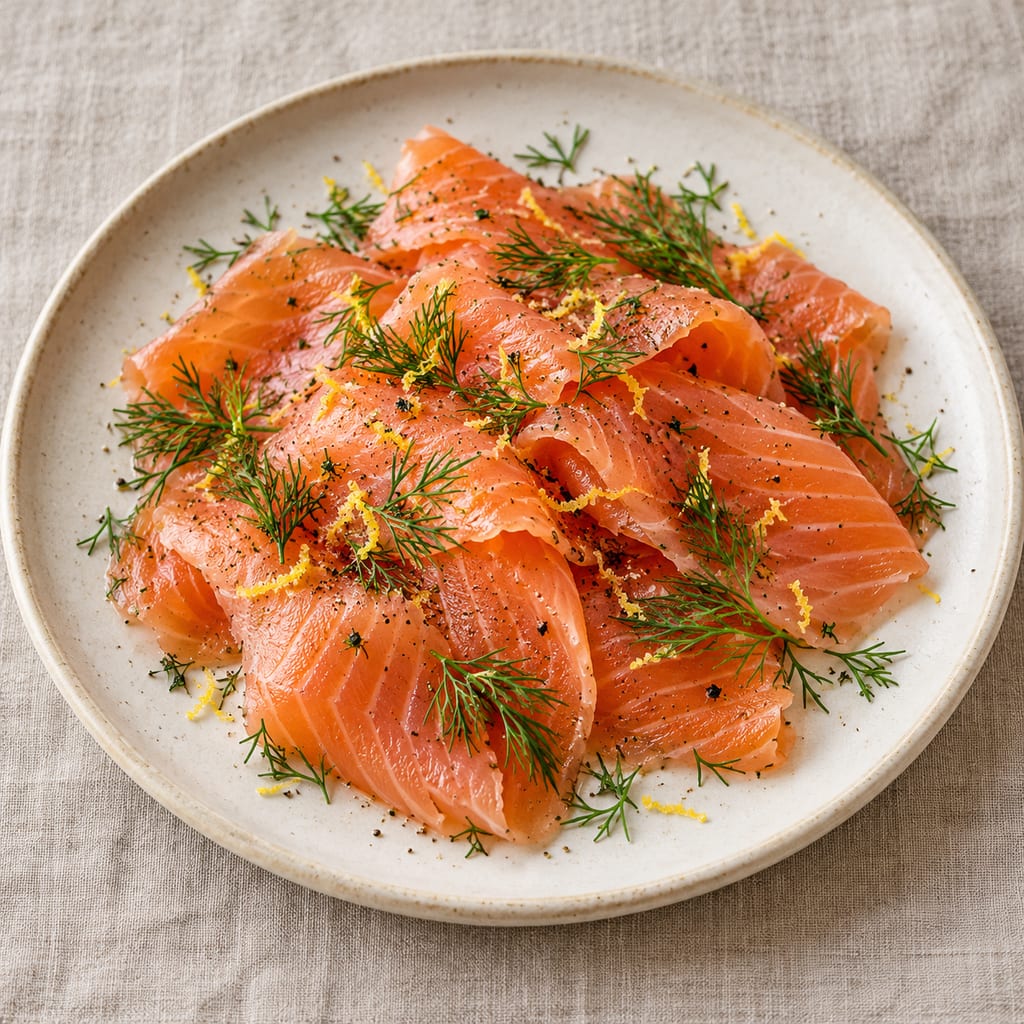
Salmon is cured with salt, sugar, pepper, dill and lemon zest under refrigeration.
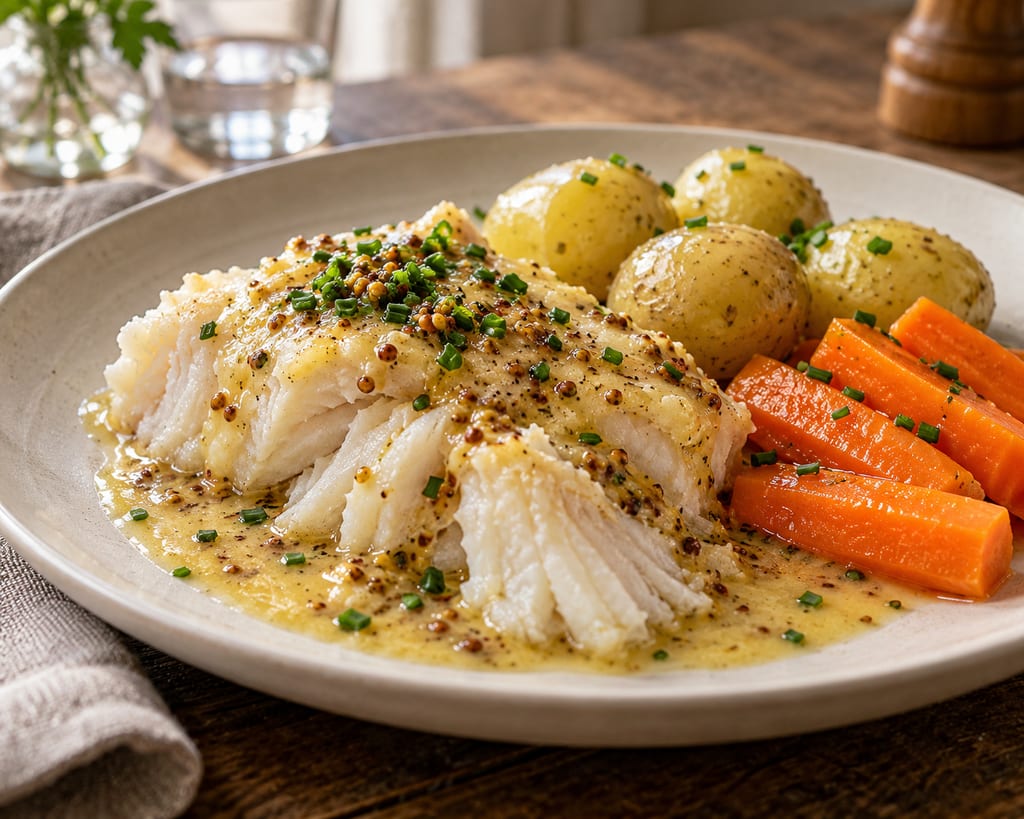
Rehydrated air-dried Norwegian cod simmered until it flakes, served with boiled potatoes and carrots under a wholegrain-mustard butter whisked from the fish's own poaching liquid.
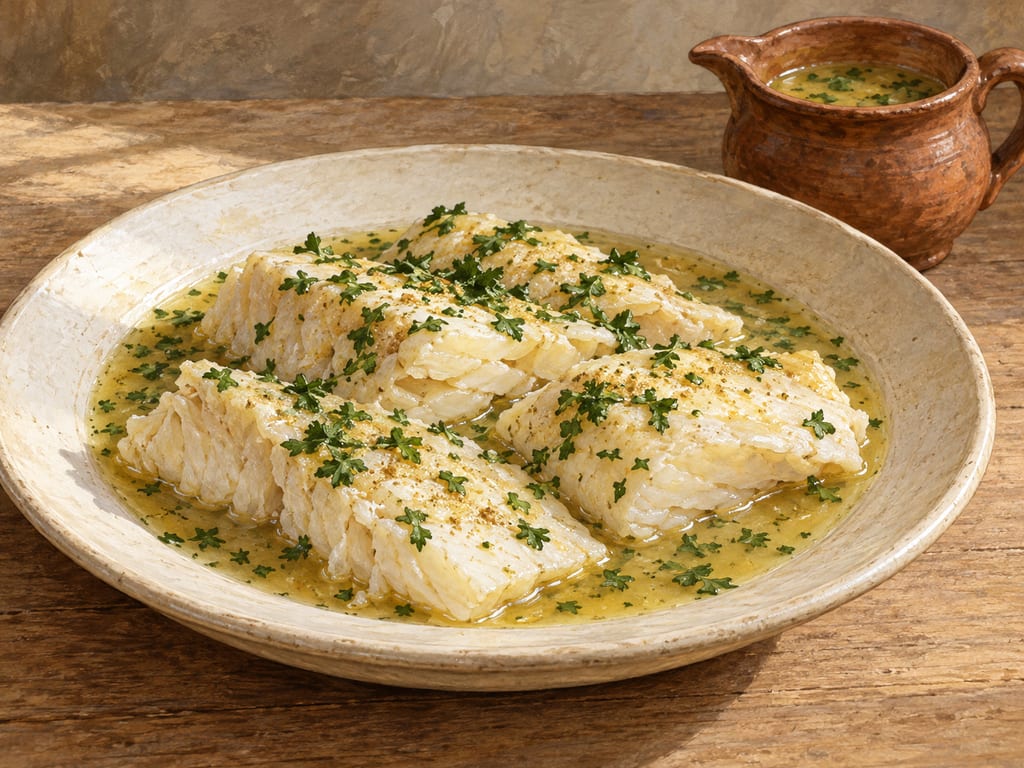
A fifteenth-century English way to serve cooked stockfish: strained fish broth boiled with chopped parsley, powdered ginger and a little verjuice, then poured hot over the fish.

A Cap-Pelé boucanière is an Acadian herring-smoking building. The documented Willie Niles example is a one-storey wood-frame structure with a ridge smoke vent and interior bays for hanging fish-bearing cannes.

Achcharu is a family of Sri Lankan vinegar pickles made with mixed vegetables or seasonal fruit and a piquant spice dressing. This version is a quick, refrigerated, non-fermented mixed-vegetable pickle.

The acocote is a long, hollowed and dried gourd used to draw aguamiel from a mature maguey. It is a harvesting tool: the sap is transferred to a separate vessel before it ferments into pulque.

Adrak murabba preserves young ginger in sugar syrup, a sweet South Asian preparation recorded in Indian cookery and food-processing sources.

Parkia biglobosa seeds are fermented into regional West African seasonings, including nététou, iru, dawadawa and soumbala. The yellow fruit pulp is a separate food, and names and methods vary by place.

Japanese reddish-brown vinegar from sake lees matured about three years, turned to vinegar by acetic bacteria; the vinegar of Handa and Edomae sushi rice.

A refined common-wheat flour blended for a broad range of baking; its protein and behavior vary with wheat, milling and market.

The almond mushroom, Agaricus subrufescens, was cultivated in eastern North America in the 1800s, lost its market, and returned as a cultivated mushroom from Brazil, where it is grown under several names.
No community contributions have been published for this entry yet.
Sign in to contribute. Published comments and photos are free to read.
Venerabile Confraternita del Bacalà alla VicentinaMethod
Venerabile Confraternita del Bacalà alla Vicentina — Official recipeThe confraternity's reference formulation for twelve people, in dry purchasing weight: 1 kg dry stockfish, 250 to 300 g onions, 500 ml extra-virgin olive oil, three salted sardines, 500 ml fresh milk, 50 g grated Grana cheese, a little plain flour, and parsley, salt and pepper unquantified.
Its soaking schedule: the beaten stockfish soaked for 2 to 3 days with the water changed every 4 hours.
Cooking over very gentle heat for a period whose fractional part did not survive the handover of this research, and an optional rest of 12 to 24 hours before eating.
Cited in: The patient art of pipare; The traditional reference recipe; Why the prolonged cooking works; Recipe: adapted bacalà alla vicentina; Method; How it is eaten; Recognizing success and failure
Venerabile Confraternita del Bacalà alla VicentinaMethod · History
Venerabile Confraternita — Classical reference recipeThe classical reference recipe and the confraternity's own account of longstanding differences between households: more milk giving a paler result, more oil in other versions, garlic used and removed partway through or omitted entirely, and varying amounts of onion and preserved fish.
Flouring the fish is traditional in the published reference recipe, while some variants do not use it.
Opinions on cooking time within the tradition range from approximately three hours to four or five hours.
Cited in: The patient art of pipare; Identity and local terminology; Method; Understanding pipare; Variations within Veneto
Confcommercio VicenzaHistory
Confcommercio Vicenza — History of the Confraternita and its 1987 foundationThe Venerabile Confraternita del Bacalà alla Vicentina was founded in Sandrigo on 1 March 1987, and its published recipe was developed by comparing and studying versions served by restaurants and trattorias, particularly those associated with the 1930s to 1950s.
Cited in: The history behind the dish
RaiNewsHistory
RaiNews — Sandrigo and the Vicentine stockfish traditionSandrigo and the Vicentine stockfish tradition, and the confraternity's present-day role in maintaining a recognised version of the dish.
Cited in: The history behind the dish; Variations within Veneto; How it is eaten
Norwegian Seafood CouncilMethod · Safety
Norwegian Seafood Council — Stockfish rehydrationGeneral directions for rehydrating dry unsalted stockfish: 7 to 8 days in cold water with daily changes, up to 10 days for particularly dry fish, with the fish and water kept below 4°C and the skin and bones removed after hydration.
Dryness, preparation and product type affect rehydration, so a published schedule should not automatically replace the supplier's instructions.
Cited in: Identity and local terminology; The traditional reference recipe; Safety and allergens
FoodSafety.govSafety
FoodSafety.gov — Safe cooking temperaturesThe published safe minimum internal temperature for fish, 63°C.
Cited in: Safety and allergens