
Ayran
Ayran is Turkey’s cold, savoury yogurt drink: plain yogurt is loosened with water and lightly salted, then whisked smooth or aerated into a soft cap of foam.
 FermenteaWhere food goes to change
Substrates
Cow milk in its whole-fat category supplies fat, proteins and lactose for cooking, cultured dairy and cheese. Heat treatment and homogenization are separate product choices.
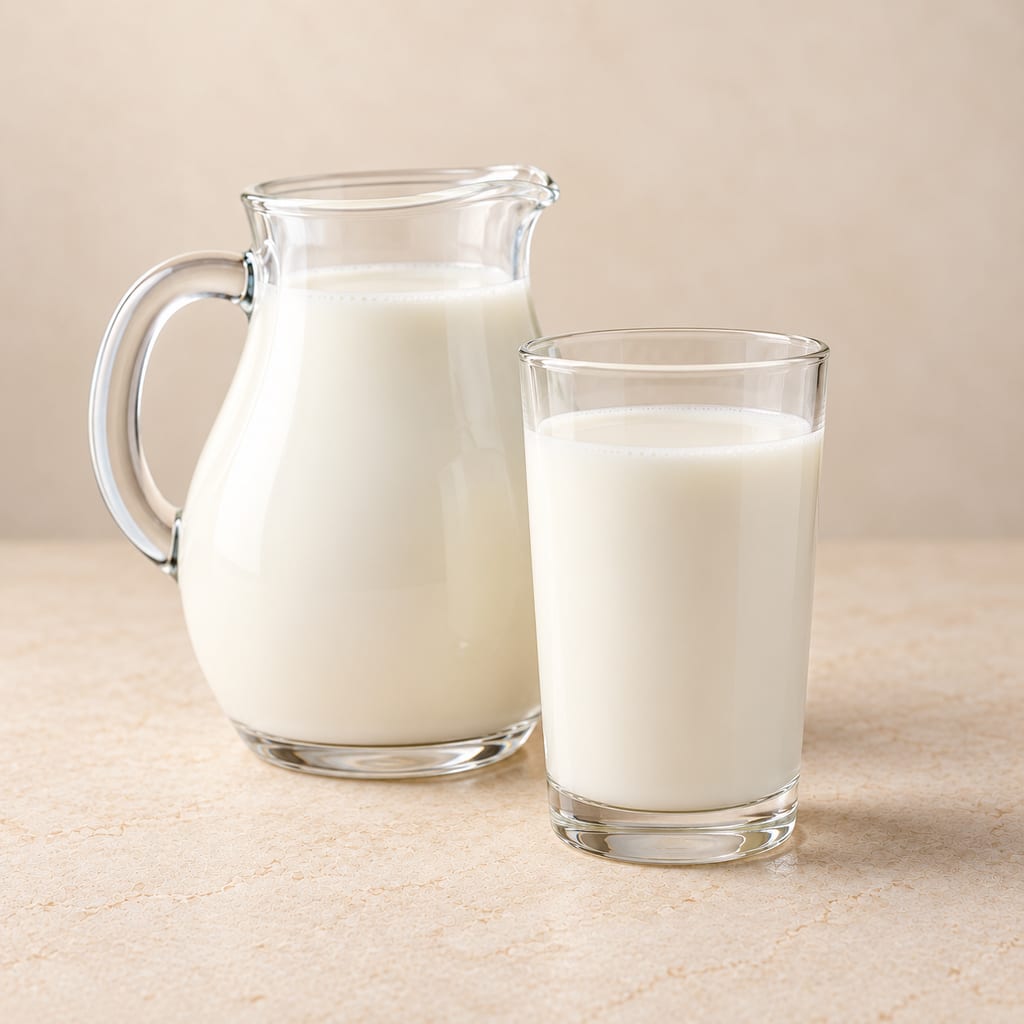
Whole cow milk is a liquid dairy ingredient carrying milk fat together with proteins, lactose, minerals and water. It is the raw material named in the linked Queso Andino account. The word whole describes the milk's fat category, while cow identifies the animal source. Neither word says whether the milk has been homogenized, how it has been heat-treated or which particular dairy produced it. Those additional details matter when the milk is intended for fermentation or cheese-making.
Fresh milk is a variable biological material. Breed, feed, season, health and stage of lactation can influence its composition. A commercial dairy can manage that variation by separating cream from skim milk and recombining the streams to a defined fat content. Whole milk on a shelf is consequently both an animal product and a prepared market ingredient. Its label provides a specification for that product, rather than a statement that every cow naturally supplies an identical liquid.
The structure of milk can be glimpsed in a cream line. Fat is dispersed as globules within the watery milk serum. In unhomogenized milk, those globules can gather toward the surface because the fat-rich phase is less dense. Skimming removes some of that cream; centrifugal separation accelerates the physical division. Dissolved lactose behaves differently and is not removed simply by separating cream. Reducing fat and reducing milk sugar are therefore different operations.
Homogenization changes another property. Mechanical treatment breaks fat globules into smaller ones and changes the material covering their enlarged total surface. The smaller globules rise more slowly, helping the milk remain evenly dispersed. Homogenized milk can look uniform without a pronounced cream line, while unhomogenized milk may visibly separate. These are physical differences within milk, not evidence that one has fermented or that the other is necessarily raw.
Milk's much longer food history is recovered partly through traces left in vessels. Archaeologists examine surviving fats and proteins to investigate dairying, rather than finding an intact ancient equivalent of a supermarket carton. A study published in 2023 investigated Late Neolithic pottery from Sławęcinek in Poland. Its protein evidence indicated both cattle-related and sheep-or-goat-related milk, showing that dairy processing at that site involved more than one animal group.
That work also shows the limits of reconstructing a kitchen from residues. Mixtures complicate the interpretation of fats, and the study's modern vessel experiments did not neatly distinguish every proposed processing sequence. Dairy evidence can establish that milk products were handled without identifying the fat standard, heat treatment or exact recipe. It gives this ingredient a deep context while leaving the modern category whole cow milk distinct from prehistoric dairying in general.
A nearer household record provides a different kind of evidence. Mrs Barringer's 1867 Dixie Cookery, published in Boston for Southern housekeepers, uses milk as the base of custards and molded desserts. In its Charlotte Russe, milk enters a custard before cream and other ingredients are combined with it. Its arrowroot blanc-mange thickens milk with starch. These are documented culinary uses in a particular cookbook, not a claim that its unnamed milk met a present-day whole-milk standard.
For a fermentation make, selection should connect the label to the complete method. Check the animal source, fat category, heat treatment, homogenization and any added ingredients. The FAO Queso Andino account names whole cow milk but does not identify a retail brand, breed or homogenization status. Those omissions should remain visible when selecting a modern input, rather than being filled by assuming that all whole-milk products will behave identically.
A product can also include a declared addition while remaining sold as whole milk. Organic Valley's whole-milk ingredient statement, for example, lists milk and vitamin D3. That is a statement about the named product, not a requirement that every whole milk contains the same addition. Reading the ingredient list alongside the fat and treatment information gives a more complete identity than the front label alone.
Milk supplies both food for microorganisms and material for a gel. Lactose is a fermentable sugar, while casein forms a major part of the protein structure involved in cultured milk and cheese. Fat contributes another dispersed phase that can become incorporated into the developing food. A starter changes this mixture through metabolism; the finished texture also depends on how proteins, fat and water respond to the make's physical and chemical conditions.
Lactic cultures convert part of the lactose into lactic acid. As acidity increases, casein particles become less stable and can aggregate into a network. In a cultured milk such as yogurt, that network creates the familiar thickened or gelled body. The process is more than making milk taste sour: it changes the organization of the material. The culture selected and the milk preparation help determine the particular texture and aroma that result.
Rennet-set cheese takes a related but distinct route. The enzyme acts on casein's stabilizing surface components, after which modified particles can aggregate under suitable conditions. The initial gel retains whey and fat within its structure. Cutting and subsequent drainage separate part of the watery phase, concentrating much of the cheese's protein and fat. Milk is thus transformed through enzyme action, fermentation and controlled physical separation, with the balance differing among cheeses.
Heat treatment influences that balance. Whey proteins are sensitive to heating and can unfold and associate with other proteins, including casein. In yogurt processing, suitable pre-fermentation heating can improve the eventual gel's body and water retention. The same treatment cannot simply be transferred to every cheese, because a rennet curd has different requirements for setting and releasing whey. The useful milk is the one suited to the intended process, rather than the one given the most intense treatment.
Homogenization also has a process-specific effect. Distributing smaller fat globules can help stabilize cultured milk products, but the dairy handbook warns that homogenized milk can give a softer, harder-to-drain curd in some semi-hard and hard cheeses. This is a suitability consideration, not a universal claim that homogenized milk cannot make cheese. Milk treatment, cheese type and the rest of the method have to be considered together.
The linked Queso Andino sequence brings several of these principles into one documented make. Milk receives a heat treatment before an aroma-forming and acid-producing starter and rennet are used. The curd is then cut, stirred and settled. Removing whey and replacing part of it with hot water washes the curd; the source associates this stage with its soft texture. Drainage, pressing, brining and ripening follow. Each stage changes the material received by the next.
The starter in that account is described through older mixed-culture terminology. It should not be silently assigned the species of a modern yogurt, Brie or sirene starter. Different products can use different microbial communities even when they all begin with cow milk. Whole milk supplies a substrate, while the culture supplies particular organisms and the recipe establishes their working conditions. The ingredient's broad identity does not specify the microbiology of every food made from it.
Cow milk contains milk proteins and is a milk allergen source. Pasteurization does not remove those proteins. A person selecting milk for an allergy-related requirement therefore needs to treat both raw and pasteurized cow milk as milk-containing ingredients. Changing the fat category or the way the fat is dispersed does not make the underlying dairy ingredient disappear from a recipe.
Lactose intolerance concerns a different component and mechanism. Lactose is milk sugar, and lactase is the digestive enzyme that breaks it down. The NIDDK distinguishes difficulty digesting lactose from an immune response to milk proteins. The distinction matters when reading food descriptions: a claim about sugar content is not a claim that milk proteins are absent. An ingredient or cheese should not be represented as suitable for milk allergy merely because some lactose has been removed or fermented.
Raw milk also presents a microbiological question separate from fat category. It has not undergone pasteurization, and good farm practices cannot guarantee that it is free of harmful germs. CDC recommends choosing pasteurized milk and dairy products. Fermentation is a transformation to be carried out through an appropriate complete process; the word whole does not describe a safety treatment, and a fresh appearance does not establish freedom from pathogens.
Pasteurized milk still needs careful handling. Pasteurization targets harmful organisms without making an ordinary chilled carton permanently sterile; spoilage organisms can remain, and contamination can occur after processing. Keep the milk refrigerated as its package directs and maintain the cold chain during transport and use. The date and opened-package instructions belong to that particular product. There is no single keeping period established here for all whole cow milk.
A dairy make intentionally takes milk through changing temperatures, but that is different from leaving an unused carton warm. Prepare the needed quantity within the complete method, use clean equipment and protect the remaining milk from unnecessary handling. The linked Queso Andino account is a documented production description, not a general shelf-life test or a modern validation of every possible home-scale process. Its reported steps should remain attached to that make.
Cow milk is used across many dairy settings, while individual products and practices have more specific geographies. The Polish pottery study concerns one archaeological site and a mixed dairy economy. Barringer's cookbook concerns a particular Southern household-cookery tradition presented to readers in the nineteenth century. Neither record establishes the birthplace of whole cow milk, and neither provides an uninterrupted lineage to the cheese linked here.
Queso Andino supplies a more immediate regional connection. The FAO account places it in the mountains of Peru and Ecuador and describes technical development in the Lima mountain area with Swiss involvement during the early 1970s. Whole cow milk is named as its starting material. This is a documented use and a history of that cheese-making technology; it should not become a claim that cow milk itself originated in the Andes.
Outside fermentation, milk's liquid form makes it useful as a base, a dispersing medium and a dairy component of composite dishes. The cookbook examples show milk receiving eggs, sugar and flavoring for custards, or starch for a thickened molded dessert. Their textures come from the added ingredients and cooking as well as the milk. This is another route from the same broad raw material to a spoonable food, alongside the microbial and enzyme-driven routes of cultured dairy.
Contemporary uses can be much simpler. Arla's whole-milk product page suggests drinking it or adding it to cereal and coffee. Those uses retain the milk as a liquid component, while cheese concentrates selected parts of it and fermented milk changes its acidity and structure. Cream, butter, concentrated milk and milk powder illustrate still other directions of dairy processing. They are related foods, but each has a different composition or physical form and should retain its own ingredient identity.
The breadth of these uses comes from milk's mixture of components. Water carries dissolved substances; fat is dispersed through it; proteins can take part in networks; lactose can support fermentation. Choosing a particular whole cow milk for a particular food means paying attention to which of those properties the method needs. The familiar white liquid is a working material whose treatment and composition help shape the food it becomes.
Milk
Documented Queso Andino use, not origin of cow milk.
Documented Queso Andino use, not origin of cow milk.
Ayran is Turkey’s cold, savoury yogurt drink: plain yogurt is loosened with water and lightly salted, then whisked smooth or aerated into a soft cap of foam.
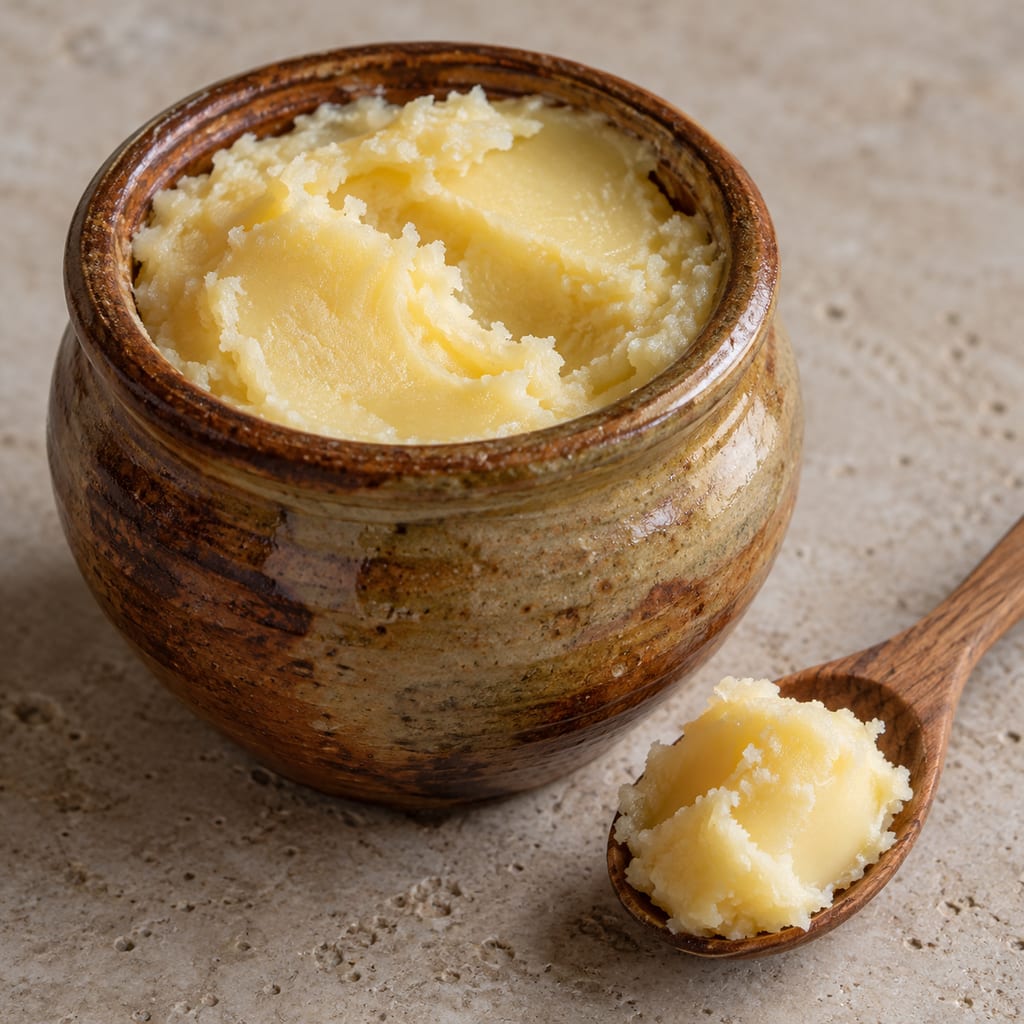
North Africa's matured butter: soured milk churned, the butter washed, heavily salted and left for months until lipolysis turns it into a pungent, cheese-like seasoning used a spoonful at a time.
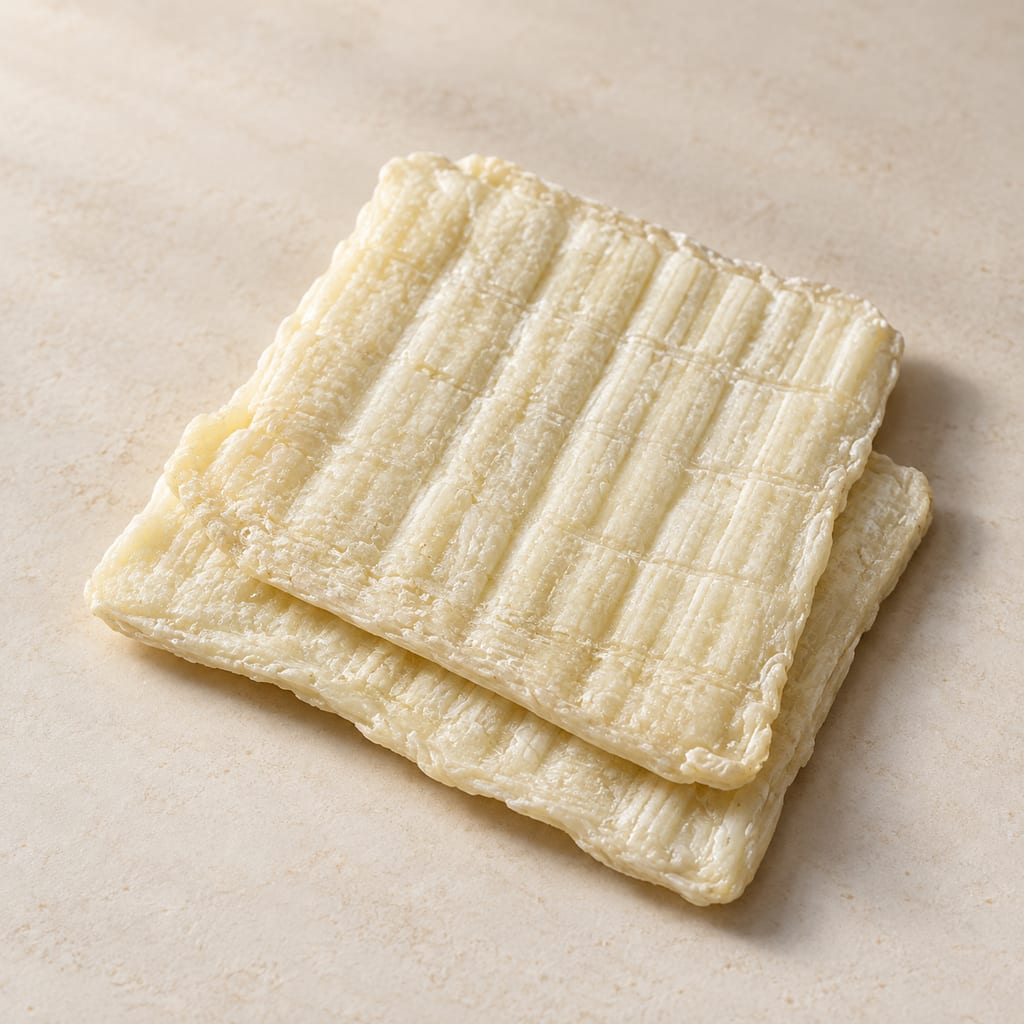
Tchoukou, also called Tikomart, is a thin, dry Nigerien cheese made to keep seasonal milk for later use. Documented methods use animal rennet, shape drained curd into sheets and dry it.
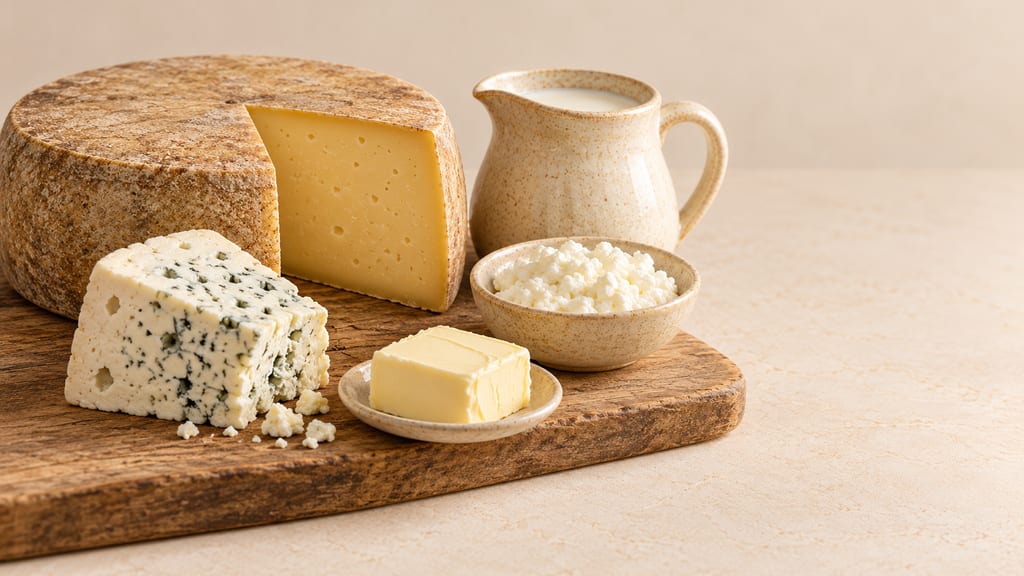
Follow milk into cheese, cultured drinks, butter, dried curds and sweets: a journey through the animals, seasons and household decisions behind the world's dairy foods.

Ají amarillo is the orange-yellow Peruvian chilli cultivar group of Capsicum baccatum, used to colour and season huancaína sauce and ají de gallina. Published heat estimates do not establish one range for the named cultivar.
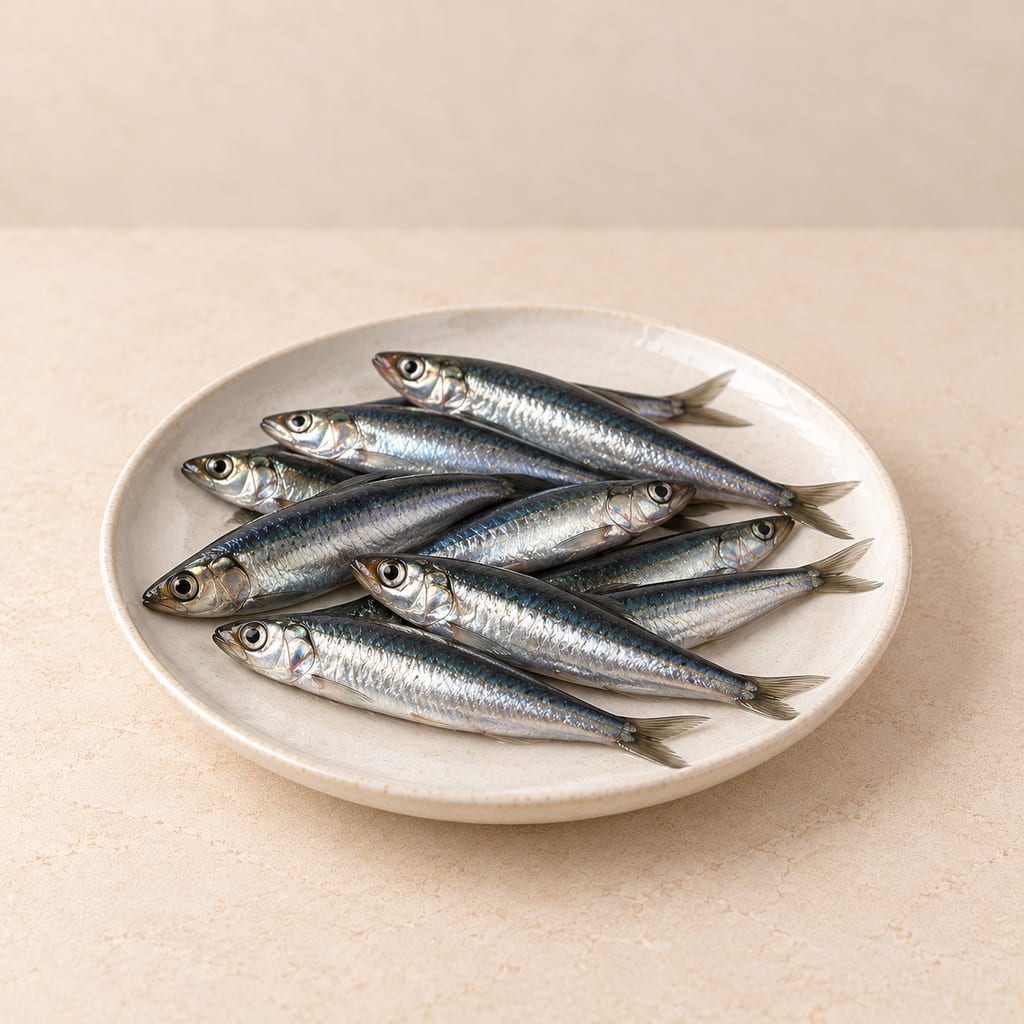
Anchovies are small schooling sea fish of the family Engraulidae, eaten fresh or dried and above all salted: as fillets in oil, whole salted fish or fish sauce.
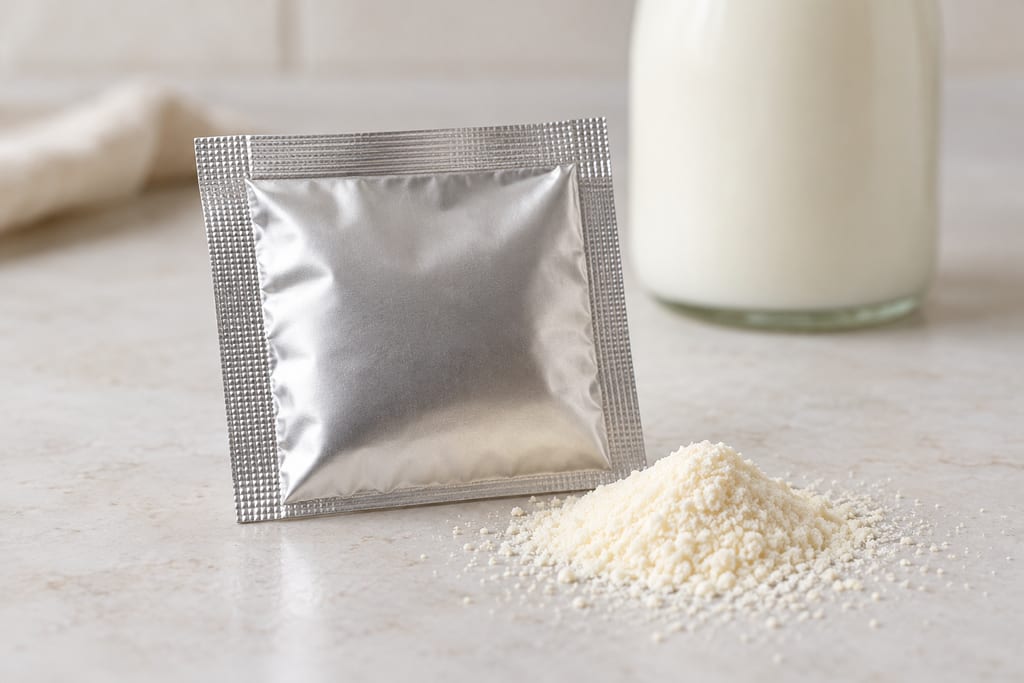
A mixed dairy starter selected for acidification and aroma. The documented Queso Andino culture has no identified modern strain blend or commercial formulation.

Ripe avocado flesh is the soft, buttery, fat-rich pulp of Persea americana, eaten raw. It is low in acid, so it is a fresh ingredient that needs care in chilled dishes.
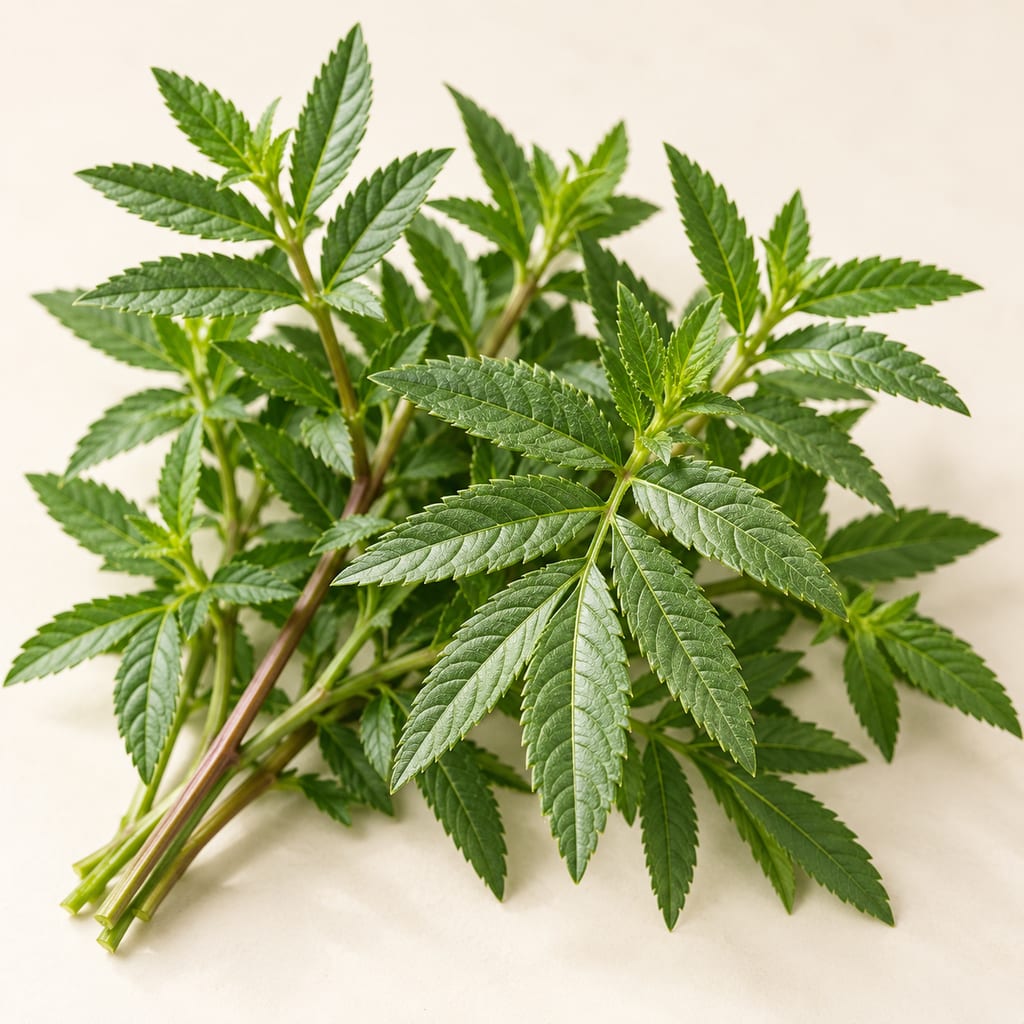
Chincho is the aromatic leaf of Tagetes elliptica, a perennial Andean herb used especially to season pachamanca in Peru's central highlands.
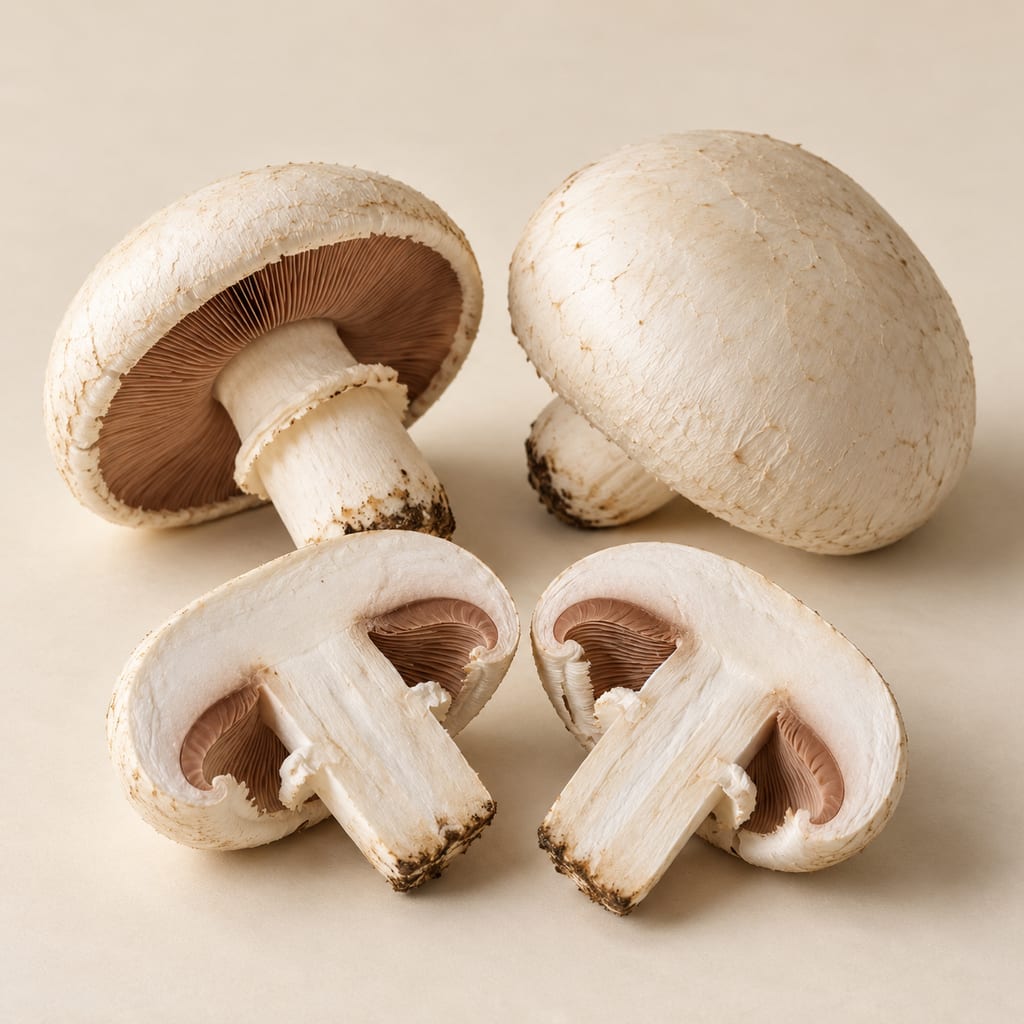
The field mushroom (Agaricus campestris) is a wild grassland fungus with a long record of cooked food use in several regions. Local names, seasons and practices belong to particular communities.
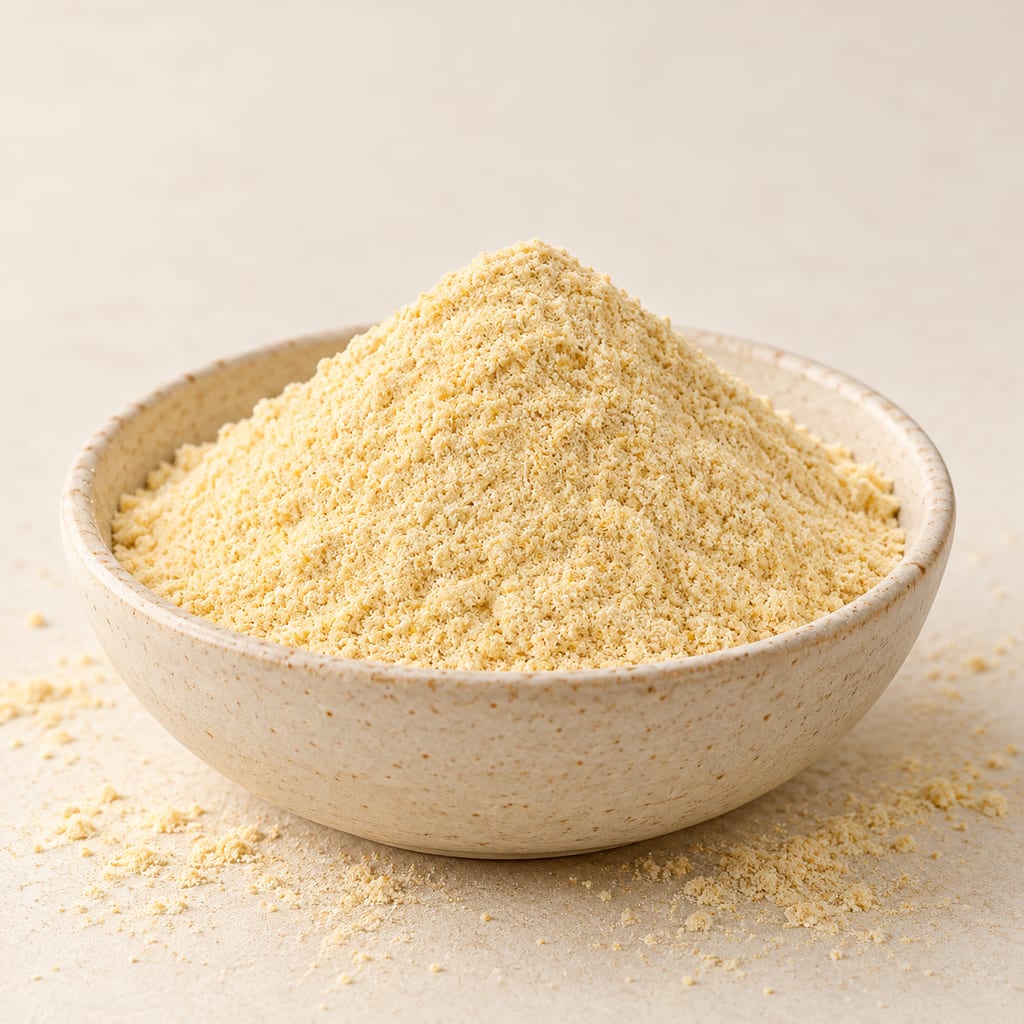
Jora flour is ground malted maize, produced by germinating, drying and milling corn kernels. It provides the enzymatic starch breakdown essential for chicha de jora.
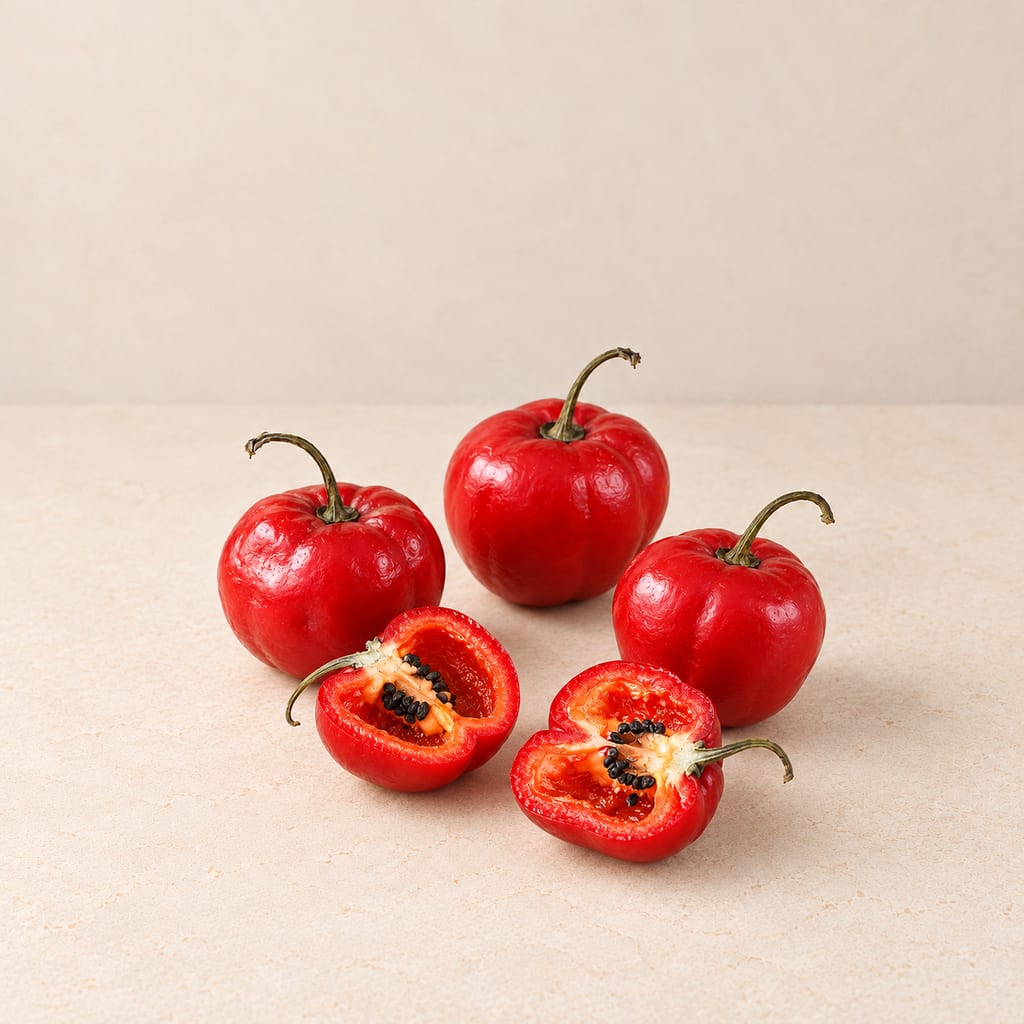
Locoto is the Bolivian name for Capsicum pubescens, an Andean chilli with thick-walled fruit, distinctive dark seeds and heat that varies between plants and harvests.
No community contributions have been published for this entry yet.
Sign in to contribute. Published comments and photos are free to read.
FAOIdentity · Science · Handling · Use
Milk compositionMilk composition varies with animal, feed, lactation, season and environment.
Cited in: Cow milk, cream lines and the dairy record
Tetra Pak Dairy Processing HandbookIdentity · Science · Handling · Use
The chemistry of milkMilk contains dispersed fat, casein particles, dissolved constituents and heat-sensitive whey proteins.
Cited in: Cow milk, cream lines and the dairy record; How milk becomes a gel and a curd
Tetra Pak Dairy Processing HandbookIdentity · Science · Handling · Use
Centrifugal separators and milk standardizationCream separation uses density differences, while lactose remains dissolved; milk and cream can be recombined to a target fat content.
Cited in: Cow milk, cream lines and the dairy record
Tetra Pak Dairy Processing HandbookIdentity · Science · Handling · Use
HomogenizersHomogenization creates smaller fat globules and new protein-coated interfaces, changing creaming, cultured-product stability and some cheese-curd properties.
Cited in: Cow milk, cream lines and the dairy record; How milk becomes a gel and a curd
Tetra Pak Dairy Processing HandbookIdentity · Science · Handling · Use
Pasteurized and ESL dairy productsDrinking-milk processing separates standardization, optional homogenization, heating, cooling and filling, with fat content specified for the product.
Cited in: Cow milk, cream lines and the dairy record
Tetra Pak Dairy Processing HandbookIdentity · Science · Handling · Use
Fermented milk productsYoghurt fermentation converts lactose into acid and develops a casein network; preheating and whey-protein interactions affect that cultured-milk gel.
Cited in: How milk becomes a gel and a curd
Royal Society Open ScienceHistory · Science
Detection of dairy products from multiple taxa in Late Neolithic pottery from Poland: an integrated biomolecular approachBovinae and Caprinae milk signals, mixed residues and modern vessel experiments illustrate the analytical limits of interpreting archaeological dairy residues.
Cited in: Cow milk, cream lines and the dairy record; From household milk cookery to Queso Andino
Loring, Boston; Library of Congress digitized copyHistory · Use
Dixie Cookery; or, How I Managed My Table for Twelve YearsThe 1867 cookbook contains milk custards, Charlotte Russe and arrowroot blancmange; its milk predates modern whole-milk specifications.
Cited in: Cow milk, cream lines and the dairy record; From household milk cookery to Queso Andino
FAOIdentity · Science · Handling · Use
The technology of traditional milk products in developing countries,3.18 Queso AndinoThe Queso Andino account names whole cow milk, Peruvian and Ecuadorian mountain production, early 1970s Swiss involvement and a sequence of heating, culture, rennet, cutting, washing, pressing, brining and ripening.
Cited in: Cow milk, cream lines and the dairy record; How milk becomes a gel and a curd; From household milk cookery to Queso Andino
US Centers for Disease Control and PreventionIdentity · Science · Handling · Use
Raw MilkThe public-health guidance explains raw-milk contamination risks and recommends pasteurized milk and refrigeration.
Cited in: Milk proteins, lactose and the cold chain
US Food and Drug AdministrationIdentity · Science · Handling · Use
Raw Milk Questions & AnswersPasteurization kills pathogens while milk proteins, lactose and some spoilage organisms remain.
Cited in: Milk proteins, lactose and the cold chain
NIDDK, US National Institutes of HealthIdentity · Science · Handling · Use
Symptoms & Causes of Lactose IntoleranceLactase digestion and lactose intolerance differ from an immune response to milk proteins.
Cited in: Milk proteins, lactose and the cold chain
FAOIdentity · Science · Handling · Use
Small-Scale Dairy Farming Manual, Technology Unit10.3Casein coagulation and mechanical whey drainage are separate operations involving milk as a dispersed substrate.
Cited in: How milk becomes a gel and a curd
FAOIdentity · Science · Handling · Use
Types and characteristics of milk productsMilk fermentation, coagulation, separation, butter-making, concentration and drying are distinct processing routes.
Cited in: From household milk cookery to Queso Andino
Organic ValleyIdentity · Science · Handling · Use
Organic Whole MilkThe named whole-milk product lists milk and vitamin D3.
Cited in: Cow milk, cream lines and the dairy record
Arla UKIdentity · Science · Handling · Use
Arla Cravendale Whole MilkThe named product is used for drinking, cereal and coffee and declares milk as an allergen.
Cited in: From household milk cookery to Queso Andino