
Water
Water carries dissolved ingredients, transfers heat and forms the liquid environment of many ferments; its minerals and treatment influence how it behaves.
 FermenteaWhere food goes to change
Traditional method
Dhan · Samn · Samna · Semna · Smen beldi
North Africa's matured butter: soured milk churned, the butter washed, heavily salted and left for months until lipolysis turns it into a pungent, cheese-like seasoning used a spoonful at a time.
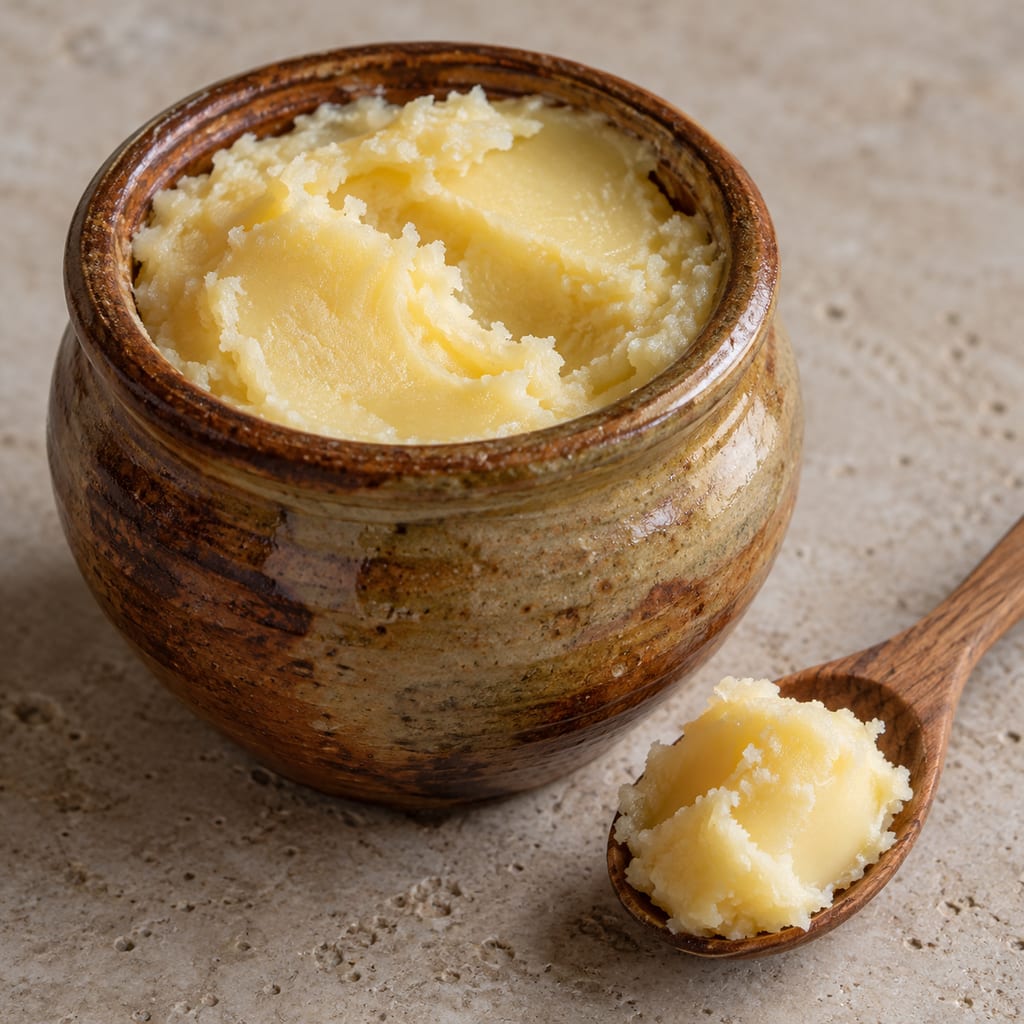
Smen is a traditional matured butter used across North Africa, particularly in Morocco and Algeria.
It is valued for a pronounced aroma that can range from buttery and creamy to cheese-like, sharp, fruity and intensely aged.
Rather than being eaten primarily in large portions, smen is often added in small amounts to foods where its distinctive flavour transforms the finished dish.
In Algeria, the related name dhan is also used. Both names are associated with traditional butter preservation, but local production methods differ substantially.
The wider Arabic vocabulary includes samn, samna, semna and related forms. These terms can also refer to clarified butter or cooking fat elsewhere in the Arabic-speaking world.
They are not all precise synonyms for Moroccan or Algerian matured butter.
That distinction is essential.
A fresh clarified butter and a salted, microbiologically matured butter can have very different compositions, flavours and storage characteristics even when both are called smen.
The principal raw material is milk from domestic dairy animals. Cow, sheep and goat milk are all documented.
The animal species influences fatty-acid composition, flavour and texture.
There is no single botanical ingredient or scientific species name for smen because it is a manufactured dairy food rather than a plant or animal taxon.
Butter preservation has a long history across North Africa and other pastoral regions.
Producing butter separates much of the milk fat from the watery, carbohydrate-rich fraction of milk.
That physical transformation can provide a basis for storage, particularly when combined with salting, heating and maturation.
Smen developed within dairy systems in which milk production and food availability varied seasonally.
It offered a way to preserve valuable milk fat and to produce a concentrated seasoning from a perishable resource.
The food also became an important part of regional cuisine.
In Morocco, strongly matured smen is associated with traditional dishes, including couscous, certain soups and special-occasion preparations.
In Algeria, household production remains particularly important in some rural and pastoral communities.
A published Moroccan review refers to a tradition extending over many centuries, but the evidence does not establish one precise invention date for the modern range of smen preparations.
Nor should the development of every current recipe be assigned to a single Amazigh or Arab origin.
The product exists within overlapping North African culinary histories, with regional ingredients, names and methods.
The clearest modern evidence comes from field surveys and microbiological studies.
A survey conducted between May 2017 and March 2018 covered 880 households across seven Algerian regions.
Among respondents, 96.47% knew smen or dhan, 75.22% consumed it and 47.61% reported preparing it at home.
Those figures describe the surveyed population. They are not national prevalence estimates for all of Algeria.
The study demonstrates that smen remains a living food tradition rather than a product known only from historical descriptions.
One characteristic North African production route begins with the spontaneous fermentation of milk.
Fresh milk is left until it coagulates into sour milk known as raib or rayeb.
Lactic acid bacteria metabolise lactose, producing lactic acid and changing the structure of milk proteins.
As acidity increases, casein micelles become unstable and the milk thickens.
The resulting soured milk is not yet smen.
It is an intermediate food that can be consumed directly or processed into other dairy products.
In Morocco and Algeria, fermented milk may also be used to produce buttermilk, fresh cheese and butter.
This creates a chain of transformations in which several foods emerge from the same starting material.
The particular microbial community involved depends on raw-milk quality, household equipment, environment and any material carried over from earlier batches.
Modern laboratory work has identified Lactococcus lactis and Streptococcus thermophilus among important organisms in the initial milk-fermentation stage of studied smen production.
These bacteria are associated with acidification and the development of cultured dairy characteristics.
Their presence in one household preparation does not guarantee that all raw-milk fermentations will proceed safely.
Once the milk has soured and coagulated, it can be churned.
Churning is primarily a physical transformation.
Milk fat is present as microscopic globules surrounded by membranes.
Agitation disrupts the stability of the emulsion.
Fat globules collide, partly coalesce and form larger butter grains.
The remaining liquid becomes buttermilk.
This is why sour-milk butter has a different starting flavour from sweet-cream butter.
The fermentation has already produced acids and other compounds before the fat is separated.
A detailed Algerian laboratory study documented churning for 55 minutes in one household process.
Warm milk was added during churning to encourage butter-grain formation.
The researchers recovered approximately 750 g of butter.
Those figures describe one observed batch, not a universal yield or churning schedule.
The original milk quantity and its fat content must be considered before converting the observation into a reproducible formula.
After churning, the recovered butter can contain residual buttermilk and suspended material.
Washing helps remove these components.
This matters because residual aqueous material contains lactose, proteins and microorganisms that can support further biochemical activity.
Removing buttermilk changes the balance between water and fat.
Butter is not completely water-free, however.
The amount and distribution of remaining moisture influence its microbiology and keeping characteristics.
Repeated washing is documented in an Algerian household process studied in 2022.
The butter was washed several times before salting.
A modern manufacturer would need to control the quality of any wash water.
Adding contaminated water to butter can reintroduce microorganisms even when the earlier milk processing has been satisfactory.
A particularly important finding from the household survey is that Algerian smen cannot be reduced to one formula.
The research identified two broad methods.
Households in Batna, Khenchela and Sétif were documented using a method in which recovered butter is salted directly.
One scientific description gives a salt concentration of 50–80 g per kilogram of butter for this route.
That is equivalent to 5–8% salt by butter weight.
The salted butter is mixed thoroughly and transferred into a suitable container for maturation.
A separate observed household process used approximately 6% salt, covered the butter for one week to allow water removal, then packed it in glass and matured it at room temperature for six months.
This is useful documentation of a real method.
It is not a validated recommendation for leaving household butter unrefrigerated for six months.
The amount of water retained, salt distribution, milk quality and microbial community all influence the result.
Households in Biskra, Jijel, El Oued and Ouargla were more commonly associated with a process involving heating the butter before adding other ingredients.
The additions can include salt, coarse semolina or herbs, depending on locality.
Heating changes the butter's composition.
Water can evaporate, milk solids can be altered and much of the vegetative microbial population may be reduced.
The degree of change depends on how much heat is applied.
If a process removes substantial water and solids, the final product begins to resemble clarified butter.
If appreciable moisture and microbial activity remain, maturation can continue differently.
This is why the heat-treated and directly salted routes must not be merged into a single undifferentiated method.
The 2020 survey does not establish one universal heating temperature or duration across the surveyed households.
A precise figure should not be invented.
Traditional Moroccan smen also begins with dairy butter, often recovered from fermented milk.
A published description identifies the main stages as souring milk, churning to obtain butter, adding salt and maturing the product in a dark environment with restricted oxygen exposure.
One documented Moroccan formulation describes 8–10 g salt per 100 g butter, corresponding to 8–10% salt by weight.
A maturation range of three to six months is given for that preparation.
This differs from the Algerian 5–8% salting range.
Neither figure should be silently substituted for the other.
Moroccan producers may also use particular herbs or other additions.
The terminology smen beldi identifies a traditional or local-style product in commercial and culinary contexts.
Beldi is not itself a laboratory specification or proof that a particular jar has undergone a defined fermentation.
Commercially available products may contain clarified salted butter rather than the same microbial profile as a long-matured household preparation.
The ingredient label and manufacturing process are therefore important.
Containers are part of smen's preservation technology.
An Algerian traditional ceramic storage vessel is known as an ezzir.
Other containers include glass vessels and locally available food-storage equipment.
Ceramic vessels can provide a stable environment, but their suitability depends on cleanliness, glazing, porosity and physical condition.
A container previously used for food may also retain microorganisms.
The storage vessel is therefore not merely decorative.
It influences exposure to air, moisture loss, contamination and the environment in which maturation takes place.
Historically, storing valuable butterfat in a durable container also made practical sense in households without modern refrigeration.
The presence of a traditional vessel does not mean its contents are automatically safe.
Smen's maturation is chemically different from fermenting a sugary beverage.
Most of its mass is milk fat.
It contains relatively little fermentable carbohydrate compared with milk, because much of the lactose remains in the buttermilk removed during churning.
The main transformations therefore involve the remaining microorganisms, fat molecules and residual aqueous material.
A central reaction is lipolysis.
Milk fat consists largely of triglycerides, molecules containing fatty acids attached to glycerol.
Lipases can hydrolyse triglycerides and release free fatty acids.
Some released fatty acids have intense aromas.
Short-chain fatty acids are especially important.
Butyric acid, or butanoic acid, can produce a sharp, cheese-like odour.
Hexanoic acid contributes a powerful fatty, pungent character.
Other aroma compounds can arise through microbial activity and oxidation.
These include methyl ketones, esters and various alcohols.
The balance determines whether a particular smen smells pleasantly aged, strongly cheesy, fruity, buttery or excessively harsh.
A 2021 Moroccan investigation used gas chromatography, mass spectrometry and olfactometry to examine the aroma of traditional smen.
The researchers identified 34 volatile compounds.
Different analytical extraction methods revealed 22 and 19 aroma-active compounds, respectively.
The principal potent odour compounds included ethyl butanoate, ethyl lactate, ethyl hexanoate, butanoic acid and hexanoic acid.
These contributed characteristics described as fruity, creamy, whey-like, overripe, ripened-cheese-like and rancid-buttery.
This helps explain an apparent paradox.
A smell that would be undesirable in fresh sweet-cream butter can be central to the identity of matured smen.
The difference lies in the intended product and the pattern of compounds produced.
Nevertheless, desirable aged flavour and microbiological safety are separate questions.
A pleasant aroma does not guarantee that a traditionally matured butter is safe.
A 2022 study examined 15 finished household smen samples from different Algerian regions.
It also followed microbial and chemical changes during the preparation of one batch.
Lactic acid bacteria and yeasts were important members of the microbial communities.
The organisms detected varied between products and maturation stages.
Culture-based analysis recovered lactobacilli and enterococci in some samples.
Among the recorded bacteria were Enterococcus faecium, Enterococcus durans, Lacticaseibacillus paracasei, L. rhamnosus and Lactiplantibacillus plantarum.
Fungal organisms detected included Geotrichum candidum, Moniliella species and other yeasts.
These organisms are not all doing exactly the same thing.
Some contribute to milk acidification, while others may take part in the metabolism of remaining nutrients and the generation of aroma compounds.
The difference between DNA-based detection and culturing is also important.
DNA analysis can detect organisms that were present during production even when they are no longer viable.
Culturing detects organisms that can grow under the selected laboratory conditions.
Consequently, the detection of a species in finished smen does not automatically prove that it remains alive and metabolically active throughout maturation.
The 2022 study found that all 15 sampled products met the hygiene and safety criteria used in its analysis.
Salmonella was not detected.
Coagulase-positive staphylococci were below 2 log CFU/g in the tested samples.
Total and thermotolerant coliforms, along with sulfite-reducing anaerobic bacteria, were below the respective detection thresholds.
These are useful positive findings.
They do not establish that all household smen production is inherently safe.
The study also identified microorganisms whose significance depends on their strain characteristics.
For example, some enterococci are associated with traditional dairy fermentation, while certain strains can carry virulence characteristics or antimicrobial resistance.
Species identification alone does not resolve that question.
Commercial producers therefore need a controlled process and appropriate testing rather than relying on the presence of traditional fermentation organisms.
Across the Maghreb, the most important variations concern the animal source of the milk, whether the butter was made from soured milk, whether it is heated, how much salt is added and how long it is matured.
Sheep's and goat's milk can produce butter with different fatty-acid profiles from cow's milk.
This can substantially affect aroma development.
Directly salted butter may retain more active microbial transformation than butter subjected to substantial heating.
Herbs and semolina may be present in some regional formulas but absent in others.
Container choice and storage environment introduce further differences.
A fresh, mild salted butter intended for near-term cooking is not the same sensory product as a strongly matured smen stored for months.
The correct approach is to describe these as variations within a family, not force them into one standard recipe.
Smen is principally a flavouring fat.
In Moroccan cuisine it can be added to couscous, soups, stews and other dishes where its aged aroma is desirable.
A small amount can make a substantial difference because the principal aroma compounds are potent.
It is also eaten with breads and traditional flatbreads.
One familiar pairing is with msemmen, a layered Moroccan pan-fried bread.
The preserved butter can also be incorporated into preparations for celebrations and family occasions.
Its culinary function is comparable to a strongly matured cheese or other concentrated fermented seasoning: intensity is the point.
There is no requirement that every dish use a particular age of smen.
Some cooks favour milder products; others seek a very mature, pungent flavour.
Traditional medicinal uses have also been recorded in Algeria.
Such uses are part of ethnographic documentation, not proof that consuming smen treats illness.
A well-made mature smen should exhibit a consistent texture and a recognisable aroma for the intended regional style.
Colour varies with the starting butter, animal diet and processing.
A sharp, aged-butter scent can be normal.
Some separation of fat or changes in texture can occur.
However, visible mould growth, abnormal coloured patches, gross contamination, putrefactive odours or unexpected gas production should not be dismissed as ordinary maturation.
The distinction between desirable lipolysis and uncontrolled spoilage cannot always be made by smell.
Laboratory characterisation can include moisture, salt content, acidity, fat degradation and microbiological analysis.
A product from an unknown source with a long unrefrigerated history should not automatically be considered safe because it is labelled traditional smen.
The raw-milk stage presents an important potential hazard.
Raw milk can carry pathogens that are not reliably eliminated by spontaneous acidification.
Starting with pasteurised milk and controlled dairy cultures can reduce some of those risks in a modern manufacturing process.
Butter washing, salting and heating also affect microbiological quality.
Salt concentration matters, but percentages taken from traditional studies are not universal safety guarantees.
Moisture content and water activity are especially relevant because they determine how much water is available for microbial growth.
A high-fat product is not necessarily free of microbiological hazards if it contains pockets of contaminated moisture.
Heating may reduce viable microorganisms, but it can also alter flavour and remove the microbial contribution expected in some traditional smen.
Long maturation at room temperature should therefore be attempted only with a validated process.
For a consumer using a purchased product, the manufacturer's storage instructions and use-by information should take priority over historical descriptions of household storage.
Butter preservation has a long history across North Africa and other pastoral regions. Making butter separates much of the milk fat from the watery, carbohydrate-rich fraction of the milk, and that physical change becomes a basis for storage when combined with salting, heating and maturation. Smen developed within dairy systems where milk production and food availability varied by season, offering a way to keep valuable milk fat and to turn a perishable resource into a concentrated seasoning. It also became a significant part of regional cuisine: in Morocco strongly matured smen belongs to couscous, certain soups and special-occasion dishes, while in Algeria household production remains particularly important in some rural and pastoral communities. A survey of 880 households across seven Algerian regions between May 2017 and March 2018 found that 96.47% of respondents knew smen or dhan, 75.22% consumed it and 47.61% prepared it at home, which describes the surveyed population rather than the country, and shows a living tradition rather than a food known only from historical description.
Yield 750 g · Scaling: source batch only
The spontaneous souring stage depends on raw-milk quality, household equipment, environment and any material carried over from earlier batches, and the identification of Lactococcus lactis and Streptococcus thermophilus in one household preparation does not guarantee that all raw-milk fermentations proceed safely.
Hazard sourceOne documented household matured the butter at room temperature for six months. That is documentation of a real method, not a validated recommendation, and the water retained, the salt distribution, the milk quality and the microbial community all change the outcome.
Hazard sourceAdding contaminated water to butter reintroduces microorganisms even when the earlier milk processing was satisfactory.
Hazard sourceSome enterococci are associated with traditional dairy fermentation while certain strains can carry virulence characteristics or antimicrobial resistance, and species identification alone does not resolve which is present.
Hazard sourceCeramic vessels can give a stable environment but their suitability depends on cleanliness, glazing, porosity and condition, and a container previously used for food may retain microorganisms. A traditional vessel does not make its contents safe.
Hazard sourceSalt the washed butter thoroughly at a documented level for the route being followed
Control sourceWash the butter with water of controlled quality to remove residual buttermilk, lactose, proteins and microorganisms
Control sourceMature in a clean, sound container with restricted oxygen exposure
Control sourceFor commercial production, use a controlled process and appropriate testing rather than relying on the presence of traditional fermentation organisms
Control sourceA pleasant aroma does not guarantee that traditionally matured butter is safe: desirable aged flavour and microbiological safety are separate questions, and a smell that would be a fault in fresh sweet-cream butter is central to the identity of matured smen.
The heat-treated and directly salted routes must not be merged into one undifferentiated method, and no heating temperature or duration should be invented for the heat-treated route.
That all 15 sampled products met the study's hygiene and safety criteria does not establish that all household smen production is inherently safe.
A product sold as smen beldi is not thereby a long-matured household preparation: beldi is not a laboratory specification, and commercially available products may be clarified salted butter with a different microbial profile, so the ingredient label and manufacturing process matter.
Detecting a species in finished smen does not prove it stays alive and metabolically active through maturation, because DNA-based detection finds organisms that were present even when no longer viable.
A country-level association, where strongly matured smen is linked to couscous, certain soups and special-occasion dishes. No locality is claimed, and the product sits within overlapping North African culinary histories rather than one origin.
A country-level association where the name dhan is also used and household production remains particularly important in some rural and pastoral communities. The survey's seven regions are named in the text with the method each was associated with; the row claims no single Algerian method.
Water carries dissolved ingredients, transfers heat and forms the liquid environment of many ferments; its minerals and treatment influence how it behaves.
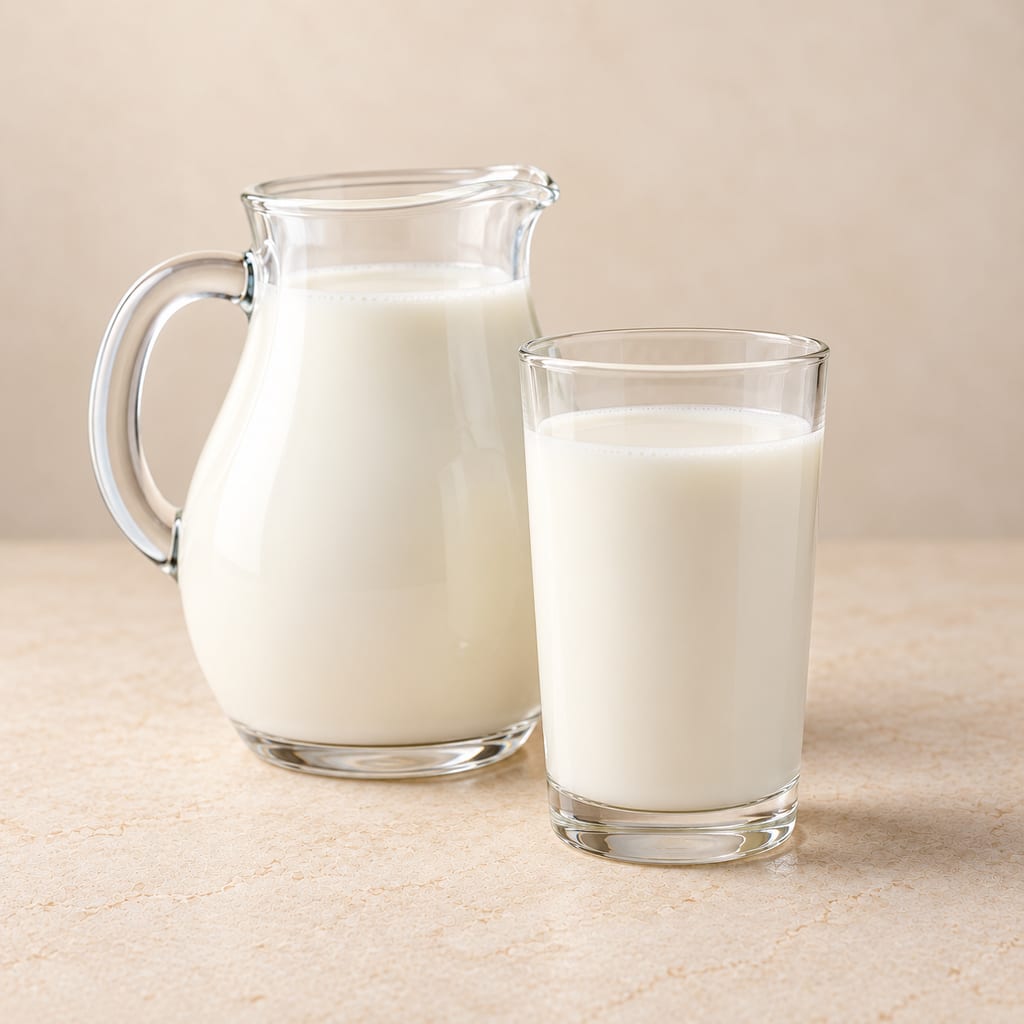
Cow milk in its whole-fat category supplies fat, proteins and lactose for cooking, cultured dairy and cheese. Heat treatment and homogenization are separate product choices.

From sour breads and milk to savoury seeds, cassava staples and living beers, African fermentation follows the crop, the community and the work of transformation.

Follow milk into cheese, cultured drinks, butter, dried curds and sweets: a journey through the animals, seasons and household decisions behind the world's dairy foods.
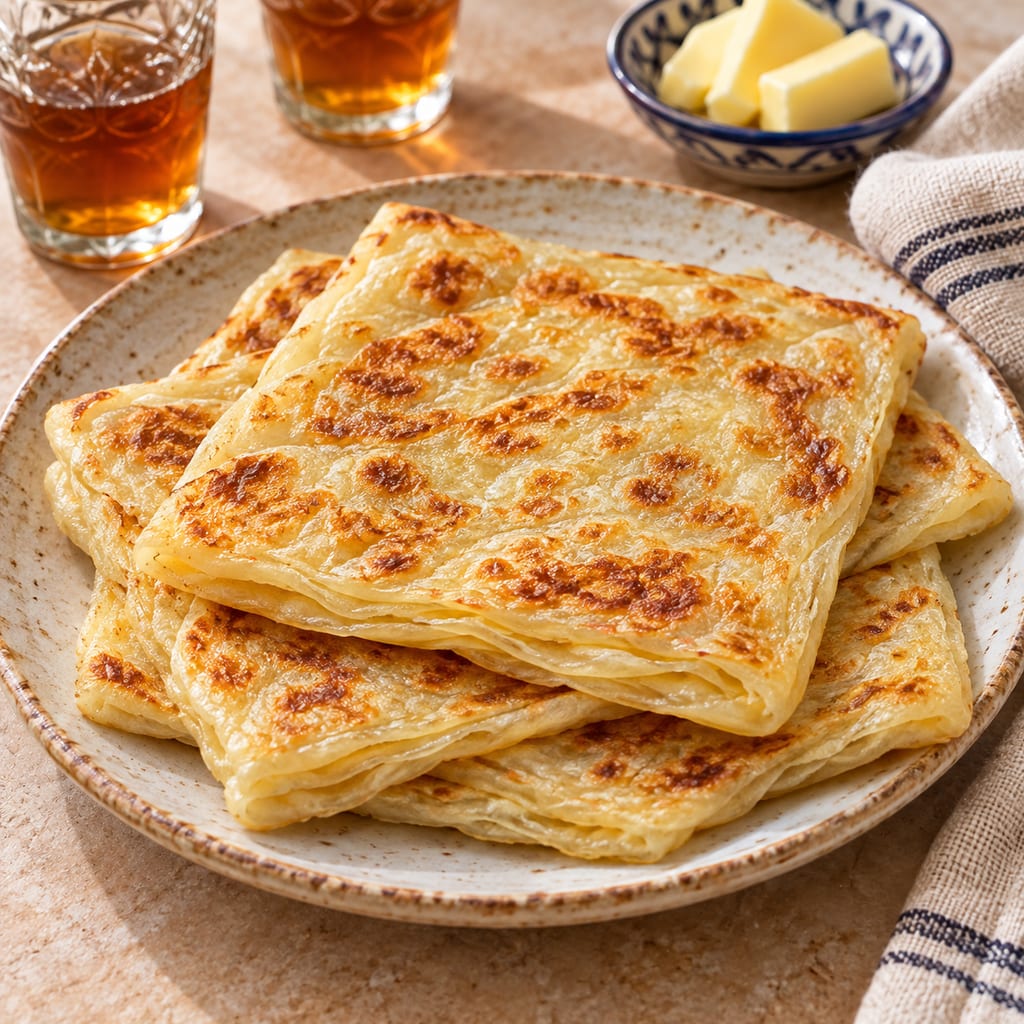
A square Moroccan layered griddle bread made from lightly yeasted wheat dough, stretched thin, folded with semolina and butter, and cooked until crisp and golden.
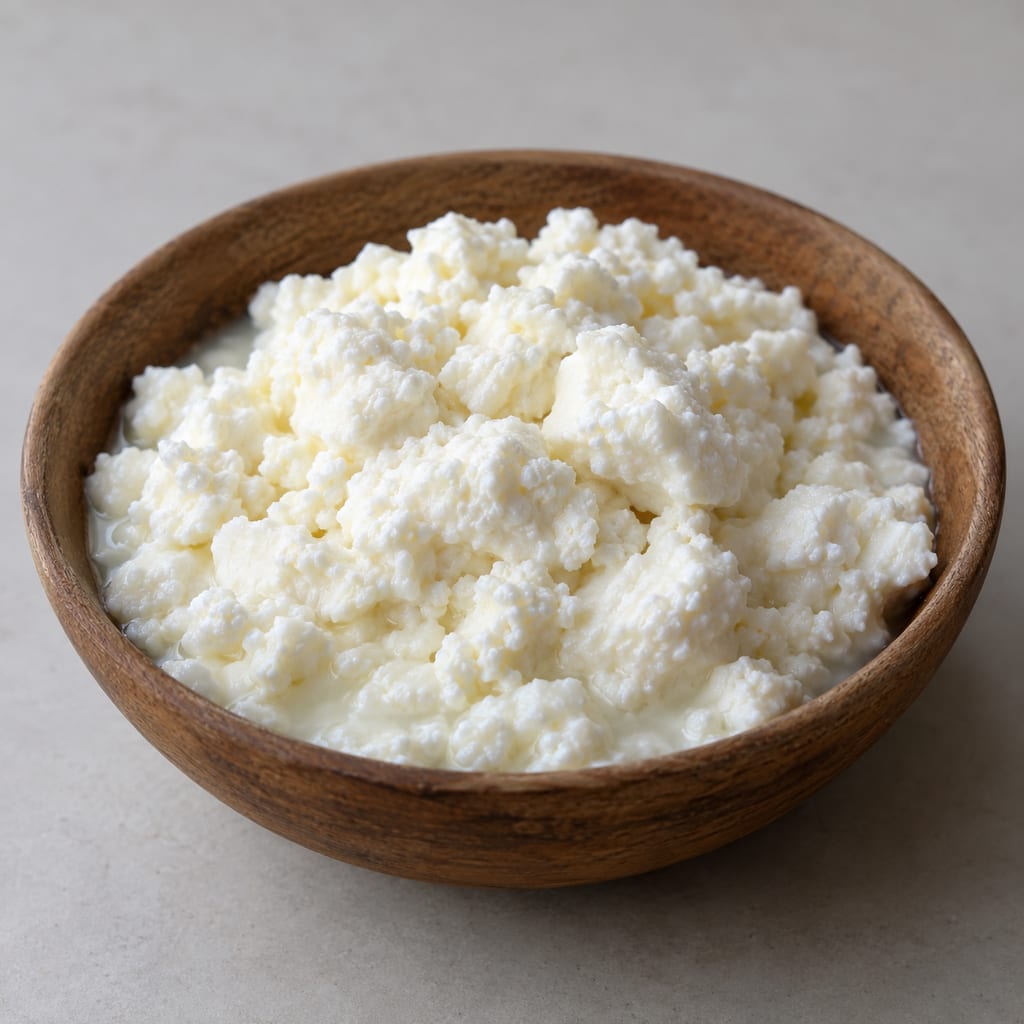
Aarts is a soft Mongolian curd made by draining boiled fermented yogurt; it remains wet, unlike aaruul, which is dried.
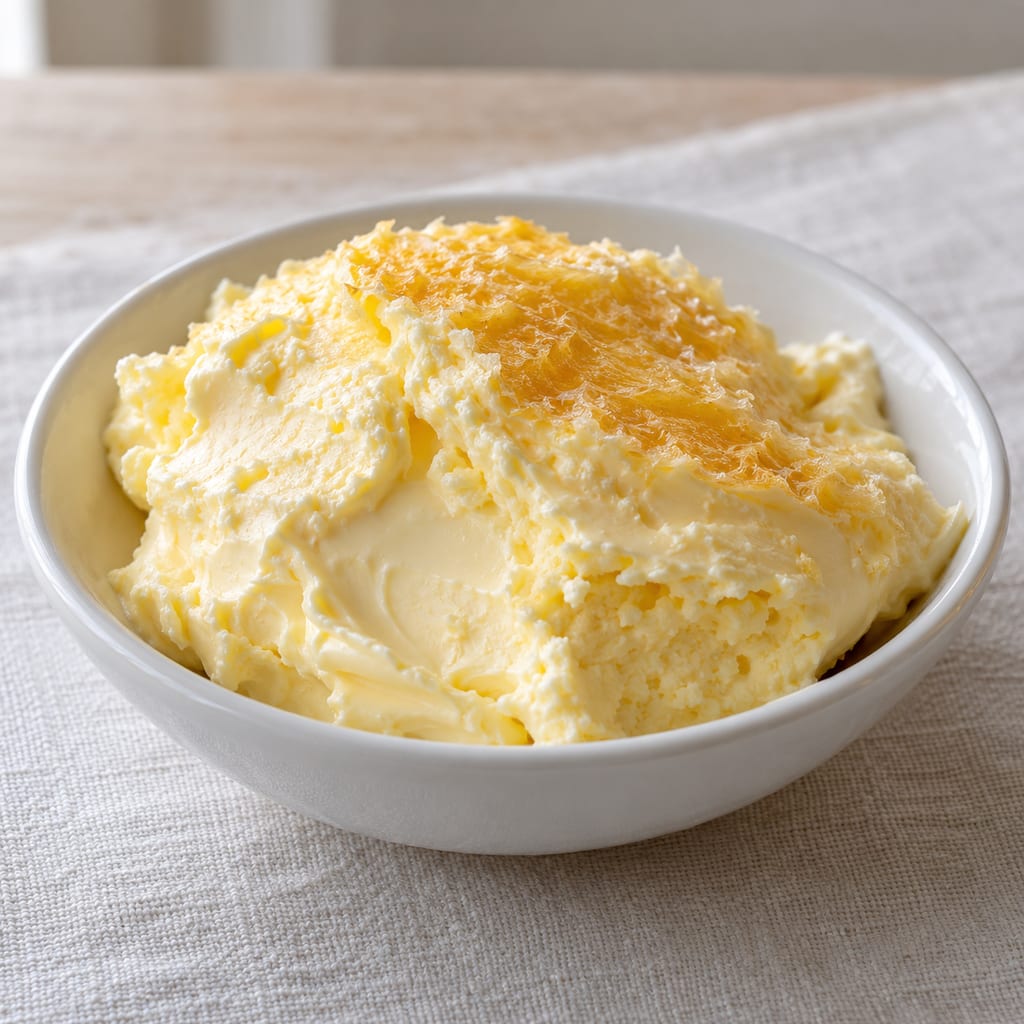
High-fat cream scalded below boiling for at least an hour until a thick crust forms, then cooled hard so the crust sets and the cream beneath thickens.
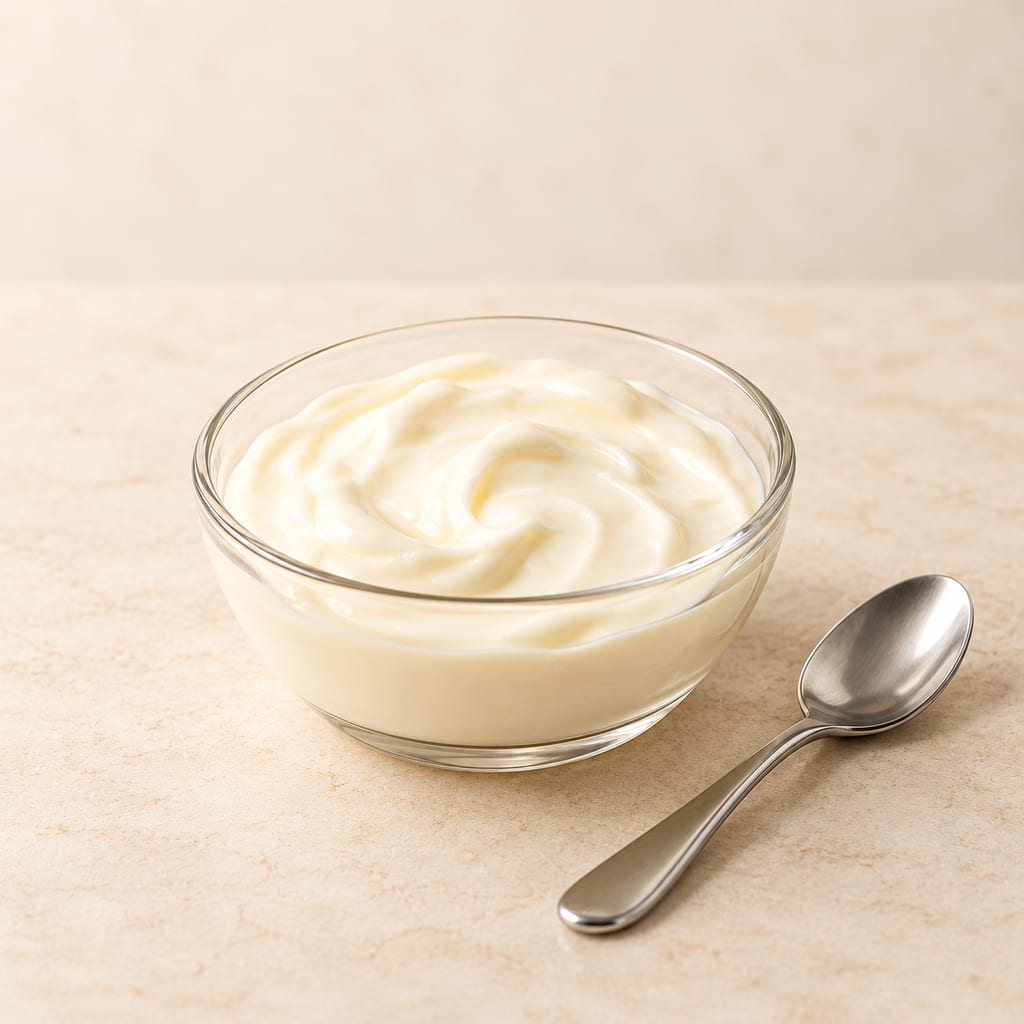
Crème fraîche is cream soured by lactic cultures into a thick, mild topping. It suits fruit and desserts as well as soups, sauces and other savoury dishes.
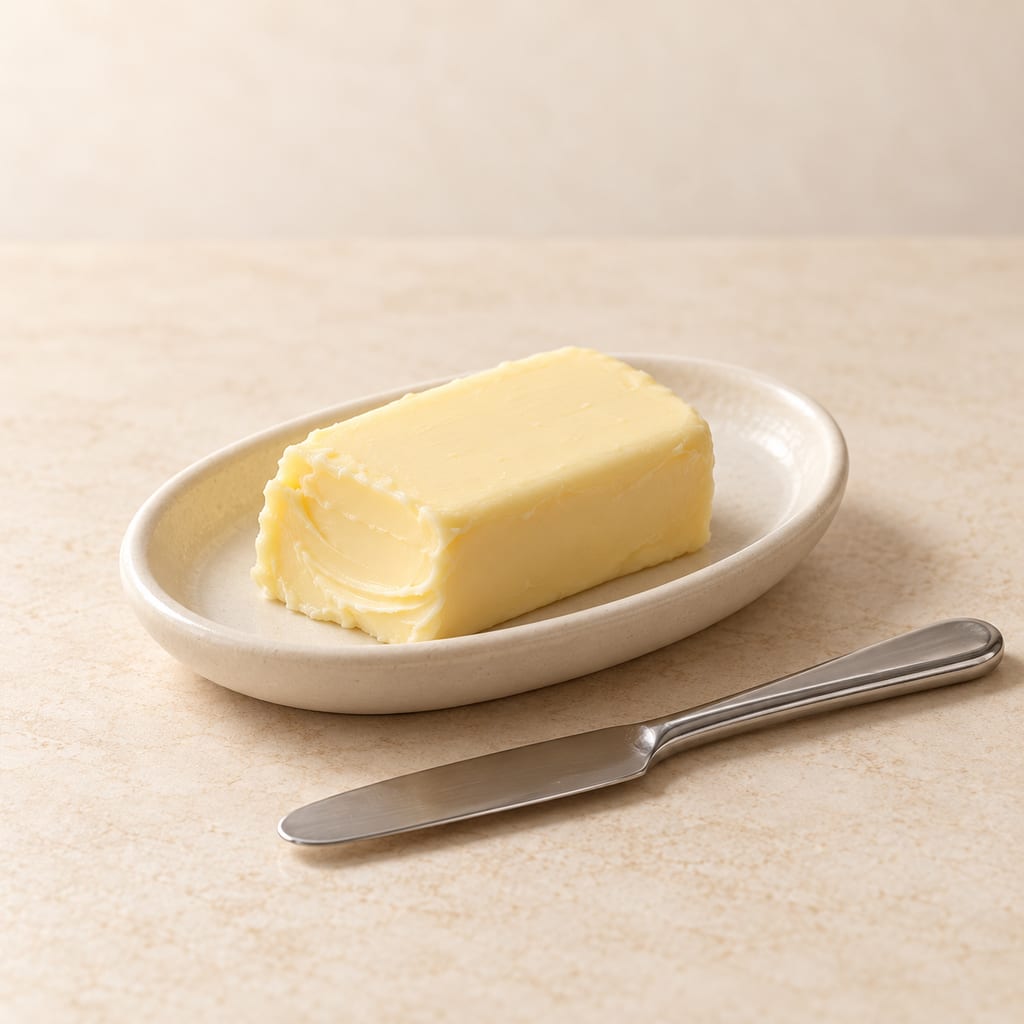
Cultured butter is churned from cream soured with lactic cultures. Its lightly tart flavour comes from the cultured cream, which separates into butter grains and buttermilk.
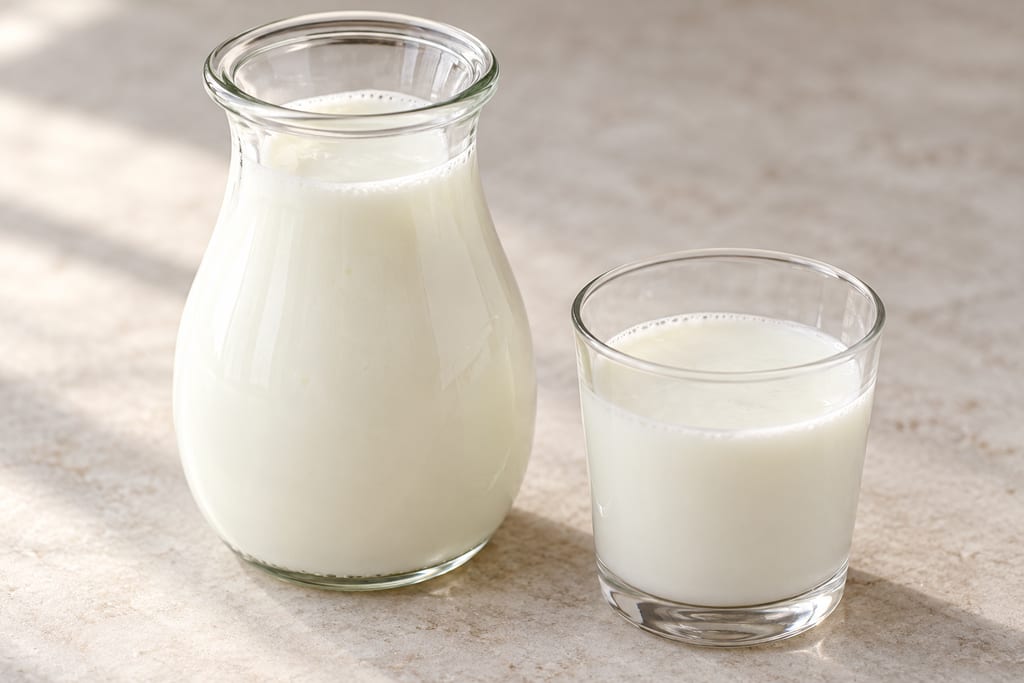
Cultured buttermilk is skim milk soured with a lactic starter into a tangy drink. This Canadian home method sets the milk without churning cream.
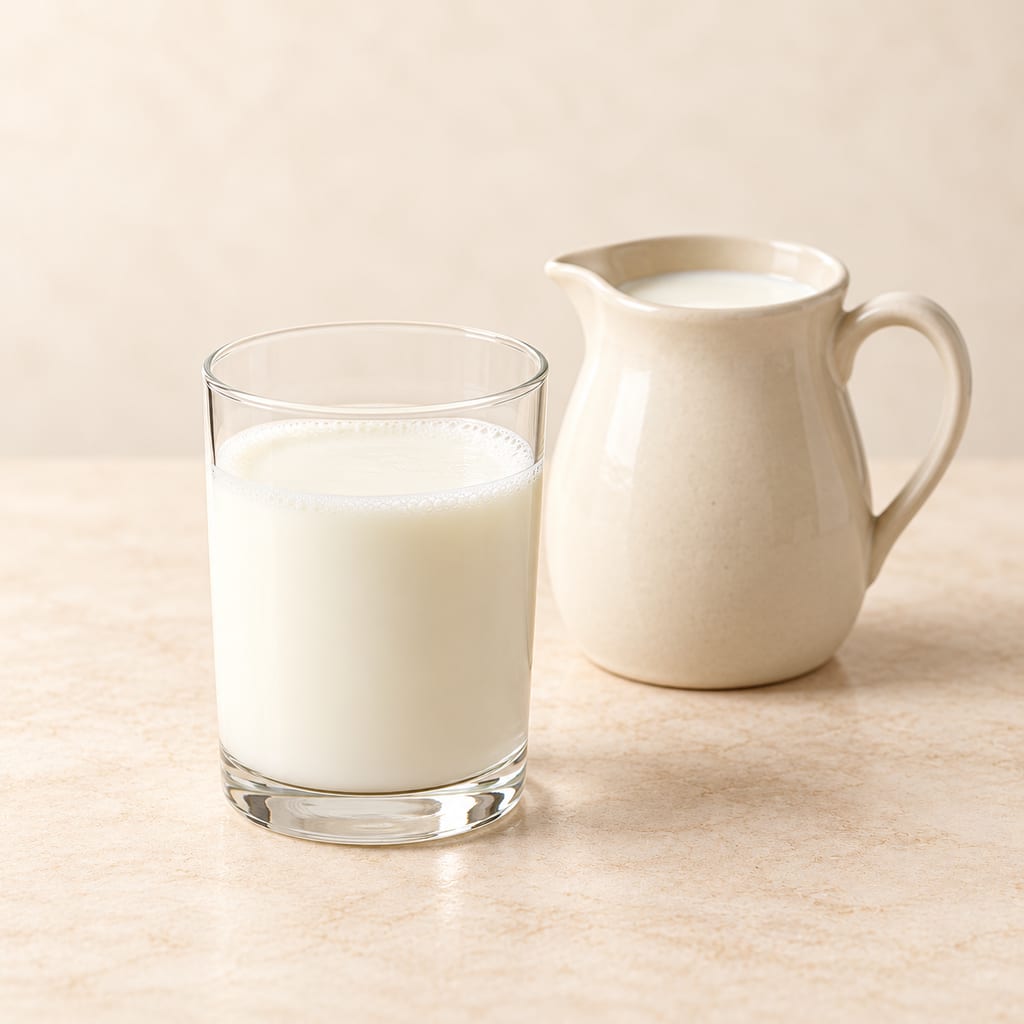
Milk thickened with a packet of buttermilk culture makes a tangy drink and a baking ingredient. This warm-incubated version uses whole milk.
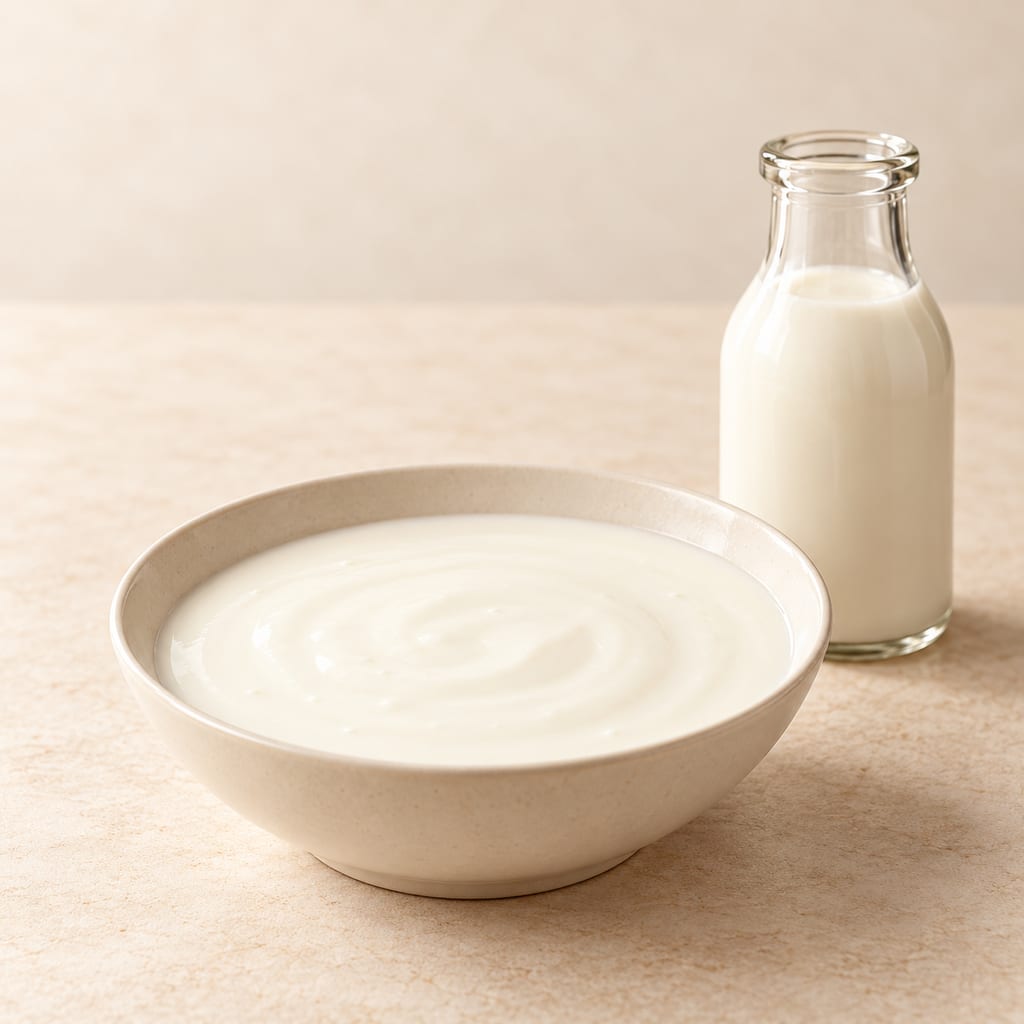
Filmjölk is a Swedish cultured milk with mild acidity and a spoonable body. This recurring batch uses filmjölk from the previous batch to culture fresh milk.
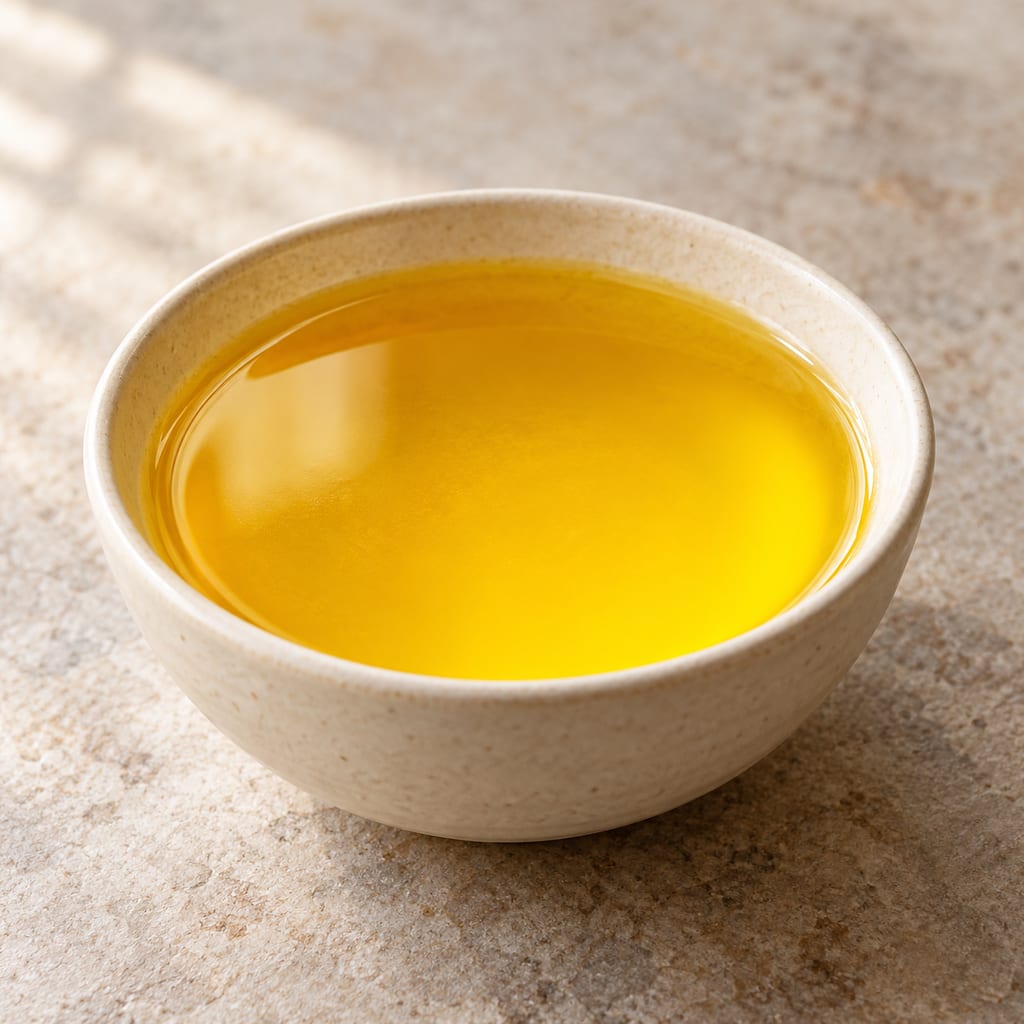
Butter heated until most water leaves and the milk solids separate, giving a fat that keeps far longer than butter. Rendering applies the same heat to animal tissue to make lard and tallow.
No community contributions have been published for this entry yet.
Sign in to contribute. Published comments and photos are free to read.
Journal of Food ResearchHistory · Method
Traditional Fermented Butter Smen/Dhan: Current Knowledge, Production and Consumption in AlgeriaA survey conducted between May 2017 and March 2018 covering 880 households across seven Algerian regions: 96.47% of respondents knew smen or dhan, 75.22% consumed it and 47.61% reported preparing it at home. Those figures describe the surveyed population and are not national prevalence estimates.
Two broad Algerian methods. Households in Batna, Khenchela and Setif were documented salting the recovered butter directly, at a salt concentration of 50-80 g per kilogram of butter, equivalent to 5-8% by butter weight. Households in Biskra, Jijel, El Oued and Ouargla were more commonly associated with heating the butter before adding salt, coarse semolina or herbs depending on locality; the survey establishes no universal heating temperature or duration.
An Algerian traditional ceramic storage vessel known as an ezzir, alongside glass and other locally available food-storage containers.
Cited in: Historical context; Two major Algerian preparation routes; Salted butter without a separate heating stage; Heat-treated butter; Traditional vessels; Regional variations; Safety and storage
PubMed CentralScience · Safety · Method
Deciphering the Microbiota and Volatile Profiles of Algerian SmenA 2022 study of 15 finished household smen samples from different Algerian regions, which also followed microbial and chemical changes through one batch: churning for 55 minutes in one household process, with warm milk added during churning to encourage butter-grain formation, recovering approximately 750 g of butter, and the butter washed several times before salting.
One observed household process used approximately 6% salt, covered the butter for one week to allow water removal, then packed it in glass and matured it at room temperature for six months.
Lactic acid bacteria and yeasts were important community members, with Enterococcus faecium, Enterococcus durans, Lacticaseibacillus paracasei, L. rhamnosus and Lactiplantibacillus plantarum among the recorded bacteria and Geotrichum candidum, Moniliella species and other yeasts among the fungi. Lactococcus lactis and Streptococcus thermophilus were identified in the initial milk-fermentation stage.
All 15 sampled products met the hygiene and safety criteria used: Salmonella was not detected, coagulase-positive staphylococci were below 2 log CFU/g, and total and thermotolerant coliforms along with sulfite-reducing anaerobic bacteria were below the respective detection thresholds.
Cited in: What is smen?; Milk fermentation comes first; Churning and butter separation; Washing the butter; Salted butter without a separate heating stage; What happens during maturation?; Microbiology of Algerian smen; What the safety testing found; Recognising good maturation; Safety and storage
Journal of Food Composition and AnalysisMethod · Science
Fingerprint of Aroma-Active Compounds in Traditional Moroccan SmenA published Moroccan description identifying the main stages as souring the milk, churning to obtain butter, adding salt and maturing the product in a dark environment with restricted oxygen exposure. One documented Moroccan formulation describes 8-10 g salt per 100 g butter, corresponding to 8-10% by weight, with a maturation range of three to six months.
Cited in: Historical context; Moroccan smen; Regional variations; How smen is used in cooking
Journal of Food Composition and AnalysisScience
Traditional Moroccan Smen: microbiological and physicochemical characteristicsA 2021 Moroccan investigation using gas chromatography, mass spectrometry and olfactometry identified 34 volatile compounds, with two analytical extraction methods revealing 22 and 19 aroma-active compounds respectively. The principal potent odour compounds included ethyl butanoate, ethyl lactate, ethyl hexanoate, butanoic acid and hexanoic acid, contributing fruity, creamy, whey-like, overripe, ripened-cheese-like and rancid-buttery characteristics.
Cited in: What happens during maturation?; What the aroma research found
Wikimedia CommonsInspiration
Wikimedia Commons: SmenPhotographic documentation of smen and its storage containers, with individual licences per image.
Cited in: How smen is used in cooking