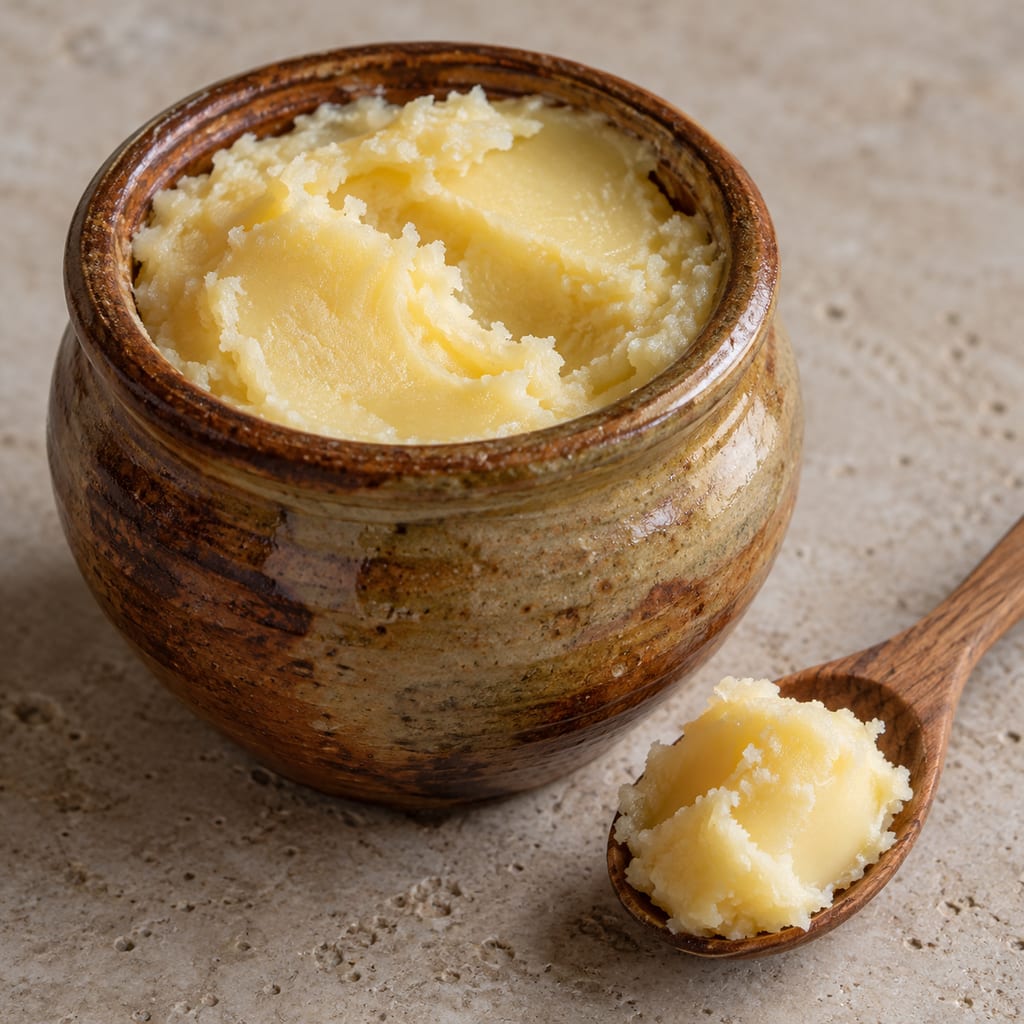
Smen
North Africa's matured butter: soured milk churned, the butter washed, heavily salted and left for months until lipolysis turns it into a pungent, cheese-like seasoning used a spoonful at a time.
 FermenteaWhere food goes to change
Equipment · Jars, pots and crocks
chekoua · Ezzir
A ceramic Ezzir jar holds salted butter during smen maturation in Algeria; a goatskin Chekoua is documented for churning the sour milk beforehand. Sources also report animal-skin containers, but do not establish a single shared form.
Smen, also called Dhan in Algeria, is matured butter made after milk has soured and been churned. In an Algerian household survey, the traditional ceramic storage vessel is called an Ezzir. The study also records glass and plastic containers, and these categories matter: a modern substitution does not erase the ceramic form, but neither does the word “traditional” mean every household used the same vessel. The authors found that Ezzir represented 12.5% of the containers reported by the surveyed smen-making households and was more preferred in rural settings.
The Chekoua belongs first to the preceding churning operation. The survey describes it as a goatskin bag used to churn Rayeb, the coagulated fermented milk, so butter separates from the liquid. It shows a Chekoua beside wooden and electric churns. The archive and a later Algerian storage study also discuss skin among maturation-container categories. These are related uses of animal skin, but the names should not collapse them into one universal object: a churning bag and a container holding salted butter after churning are different equipment and process stages. The sources do not provide a reliable single silhouette for the skin storage form.
After butter is separated and prepared, it is salted or, in some regions, heated and combined with other ingredients, then packed for maturation. The survey reports compacting the butter to remove air and filling the container to minimize free space; some respondents described a semolina paste over the top to prevent air entry. It describes maturation in a dry, dark place, generally at room temperature in some households and in a refrigerator in many southern households where summer heat was a concern. The reported maturation duration ranged from one month to several years.
The ceramic wall holds a dense fat-rich product rather than a liquid ferment. A closed vessel can help keep the contents in darkness and reduce exposure to air, while the compacted butter and headspace management shape the storage environment. A Moroccan study of smen chemistry investigated changes during maturation; the material dossier identifies compositional change and aroma development, including lipolysis, as part of the subject. This does not establish that clay itself causes a particular flavour or that a clay jar is always superior. A 2026 Algerian study compares household samples associated with different maturation and storage conditions, but material and age vary together, so its observations cannot be read as a controlled clay-versus-skin trial.
Burial appears as one storage practice, not a defining construction feature of every smen vessel. In the 2020 Algerian survey, 1.59% of producing respondents reported burying smen underground. The research dossier also notes an earlier report of buried smen pots in several Moroccan regions, where burial was described as a way to maintain darkness and reduce temperature variation. These accounts support depicting an earthenware container below ground when that specific practice is being explained; they do not supply a universal depth, pit shape, soil type, lid design or burial arrangement.
The pot remains equipment because it is made as a movable object. Any permanent pit or prepared cavity would be a separate built structure if documented as a specific installation. Here, the sources do not describe a standard constructed pit, so the jar should not be merged with an invented underground chamber.
The 2020 survey covered 880 households in southern and eastern Algeria, naming Batna, Biskra, El Oued, Jijel, Khenchela, Sétif and Ouargla. It records different butter-preparation practices across those areas as well as varied storage vessels. The Moroccan chemical study concerns Moroccan smen; its evidence should not be treated as proof that Algerian recipes, storage conditions or vessel use are identical. The available record supports country-level associations with Algeria and Morocco, not a single birthplace or a map point.
Neither the jar's capacity nor its dimensions are given in the inspected research. The sources do not specify a standardized Ezzir shape, potter, clay source, glaze, sealing method for every household, or modern acquisition route. The observed storage arrangements also do not validate ambient shelf stability or establish a safety guarantee. A reader can identify the principal traditional ceramic container and the distinction between maturation and churning, while recognizing how much local variation remains.
The inspected sources document modern Algerian and Moroccan use but do not establish the earliest attestation of the Ezzir or skin storage vessel.
The studies do not establish a universal Ezzir shape, capacity, glaze, porosity, or performance advantage over skin, glass or plastic; do not infer these from the word ceramic.
Source →The 2026 household comparison is observational: storage material and maturation conditions or age can vary together, so it cannot isolate a causal effect of vessel material.
Source →The survey covers southern and eastern Algerian households; it does not establish a single origin or locality for the Ezzir.
Country-level association only; the sources do not define a universal Moroccan vessel shape or a single place of origin.
North Africa's matured butter: soured milk churned, the butter washed, heavily salted and left for months until lipolysis turns it into a pungent, cheese-like seasoning used a spoonful at a time.

From sour breads and milk to savoury seeds, cassava staples and living beers, African fermentation follows the crop, the community and the work of transformation.
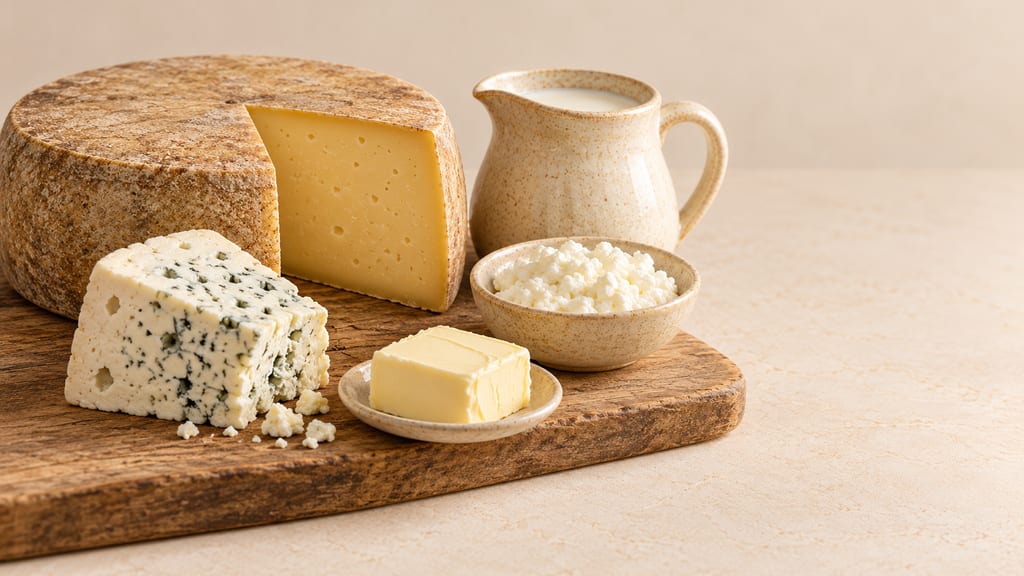
Follow milk into cheese, cultured drinks, butter, dried curds and sweets: a journey through the animals, seasons and household decisions behind the world's dairy foods.
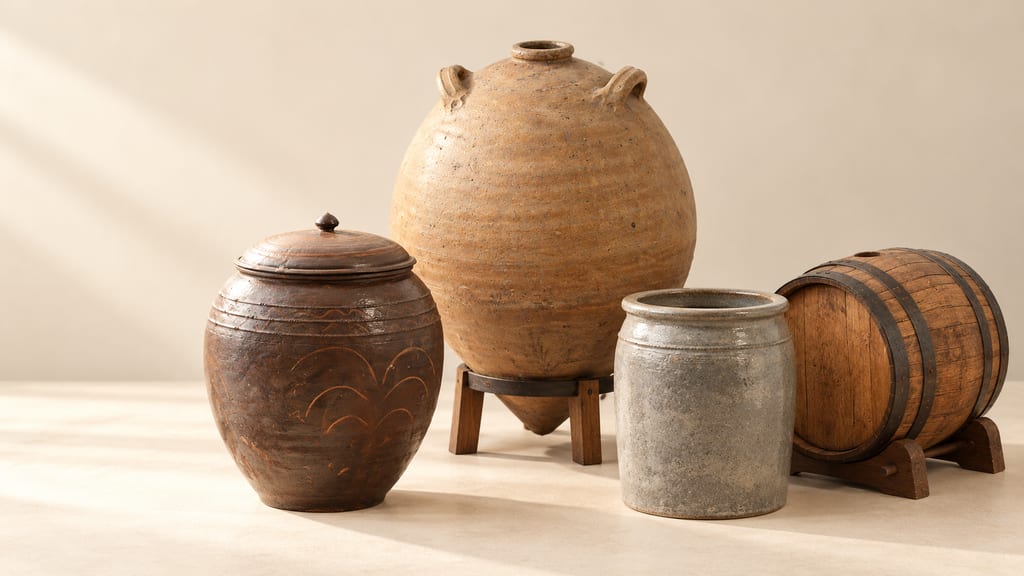
Jars, barrels, skins, leaves, pits and whole rooms decide much of what happens to fermented and cured food. This is how a container works on its contents, and how people in different places chose theirs.
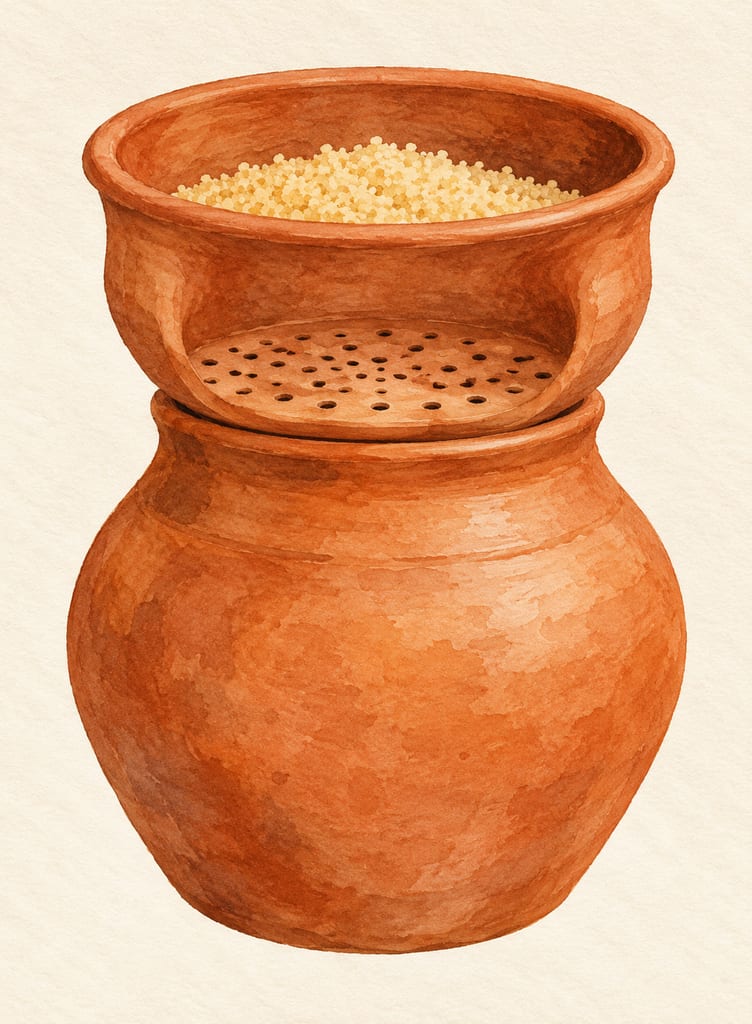
A two-part steamer for couscous: a perforated upper chamber sits over a lower pot that produces steam. Clay, basketry and metal forms are documented in different places and periods.
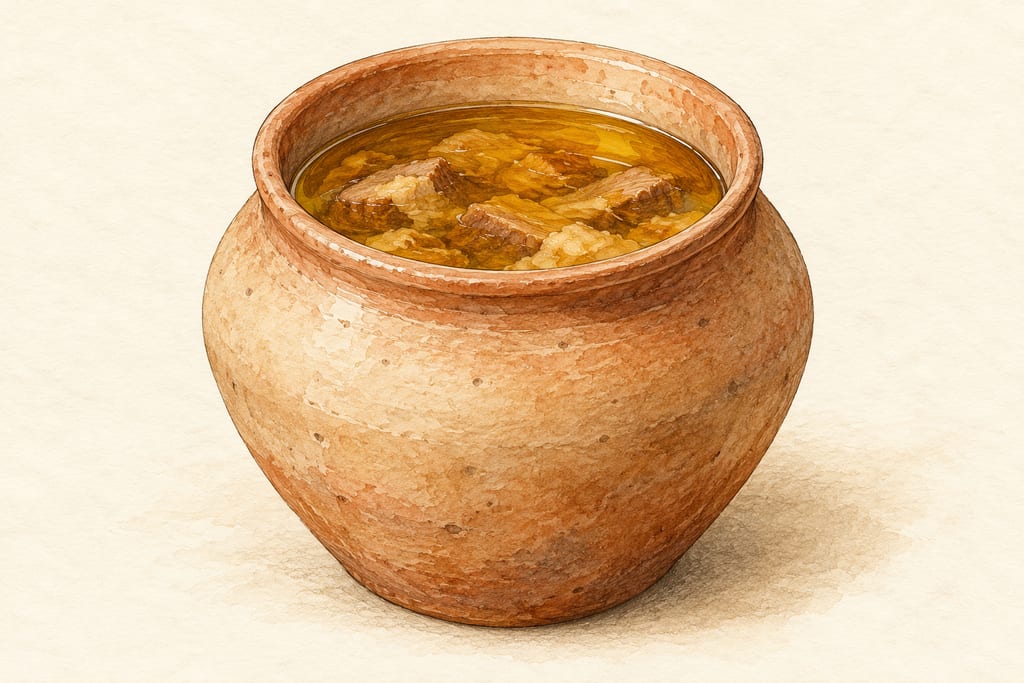
Ezir is the earthenware jar used in northeastern Algeria to ripen Khliaa ezir, a cooked meat kept in olive oil and rendered fat. Its standard shape, capacity and construction are not documented.
A historical animal-skin container for Btana, described in southern Algerian accounts as clean sheepskin or old goatskin; sources distinguish it from later cloth and plastic bags.
No community contributions have been published for this entry yet.
Sign in to contribute. Published comments and photos are free to read.
Le LaitHistory · Method
Étude chimique du smen marocainOriginal Moroccan chemical study of smen; supports maturation chemistry, not a universal jar silhouette.
Cited in: What the container does; Burial is documented but not universal; Regional evidence and limits
Journal of Food Research / Canadian Center of Science and EducationMethod · History
Traditional Fermented Butter Smen/Dhan: Current Knowledge, Production and Consumption in Algeria880-household survey in southern and eastern Algeria; Ezzir ceramic container, glass and plastic storage; compacting butter and minimizing air space; maturation durations and environments; small reported share buried smen; Chekoua goatskin bag used for churning Rayeb. Article states CC BY 4.0.
Cited in: A jar for maturation, a skin for churning; What the container does; Burial is documented but not universal; Regional evidence and limits
International Dairy JournalMethod
Physicochemical, microbiological, and volatile characteristics of smen in relation to maturation conditions and storage containers2026 online/2027 issue observational Algerian study reports household samples and storage-container categories; container and age/conditions may vary together; distinguishes Chekoua churning.
Cited in: A jar for maturation, a skin for churning; What the container does; Regional evidence and limits