Built structures
Moroccan farm grain matmora
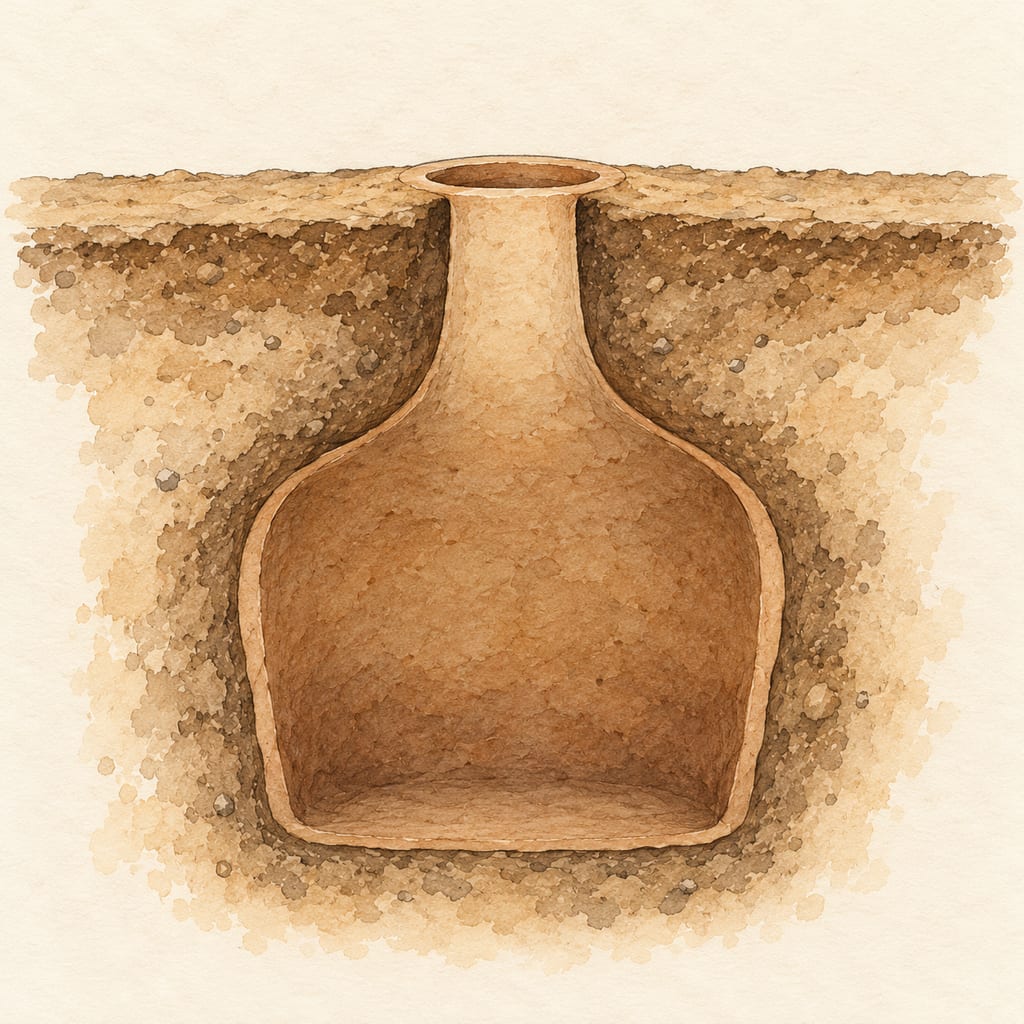
A Moroccan small-farm underground grain store, described as a matmora: a pit generally dug near the house for household grain or seed.
 FermenteaWhere food goes to change
626 sourced equipment pages: vessels, tools, appliances and built structures.
A Moroccan small-farm underground grain store, described as a matmora: a pit generally dug near the house for household grain or seed.
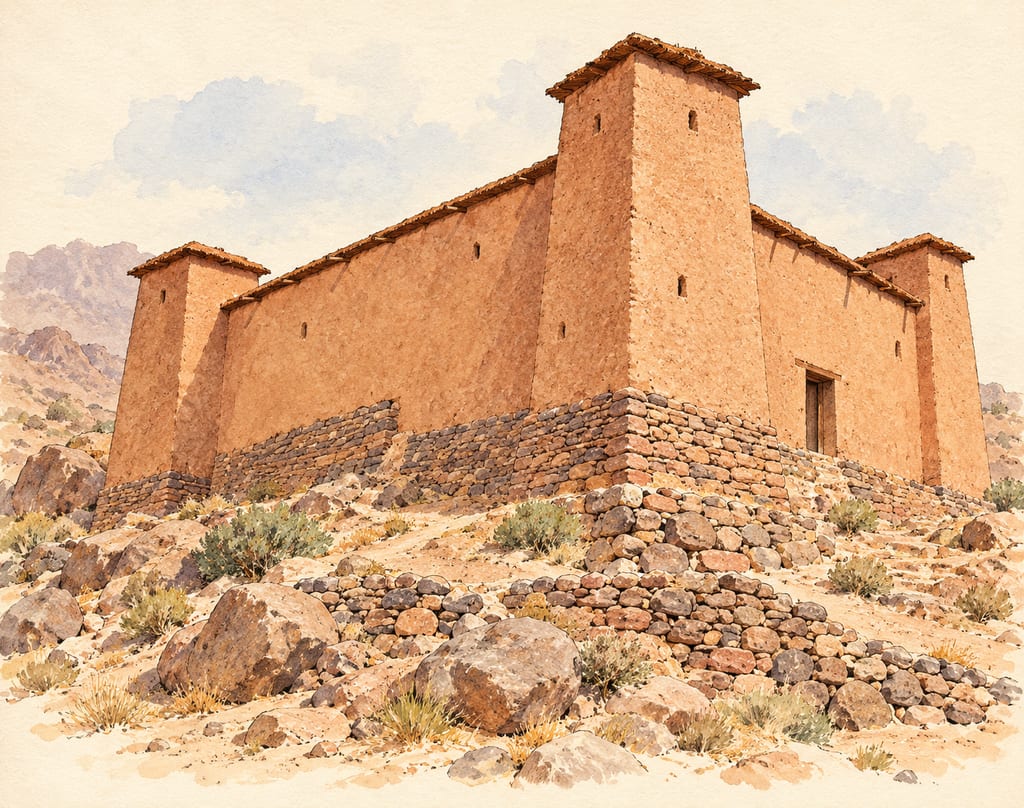
An agadir (plural igoudar) is a fixed Amazigh communal storehouse in Morocco for harvests and other valuables. Layout, materials and community rules vary by site; no single plan describes every granary.
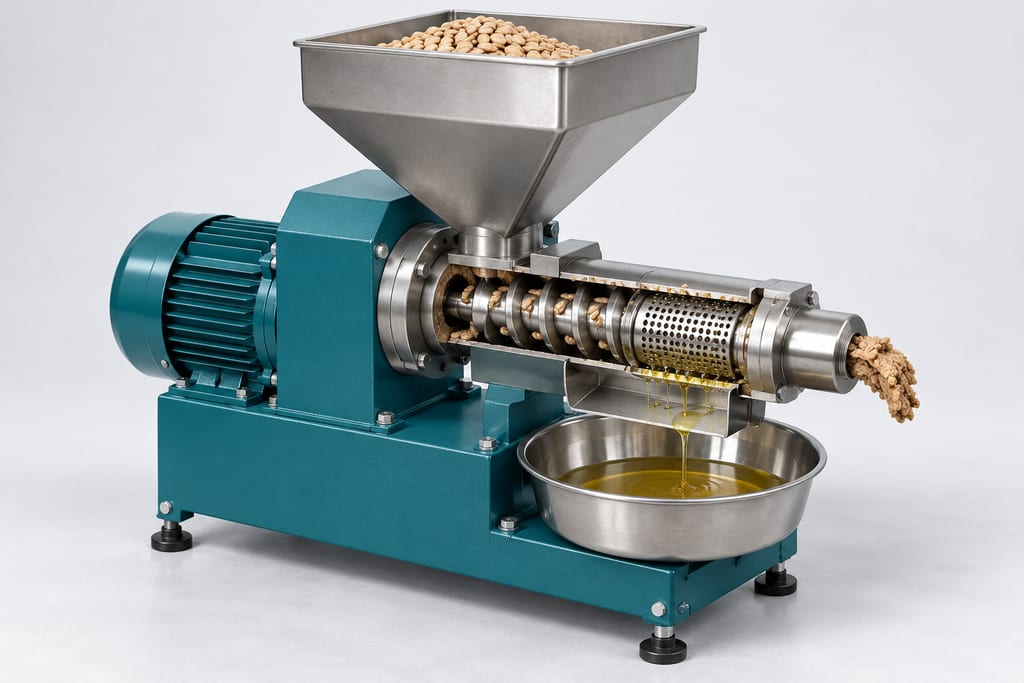
A screw press advances prepared material through a cage, squeezing out oil while solid press cake leaves separately.
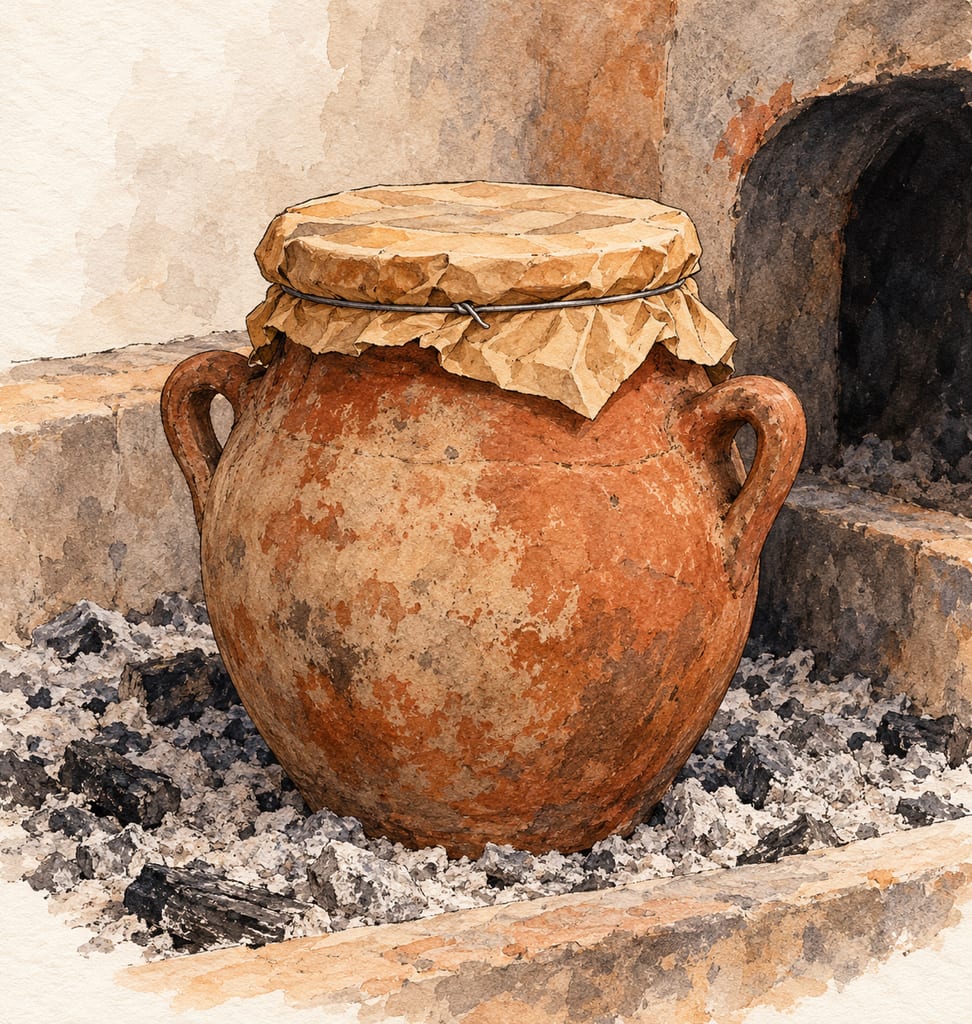
A purpose-made terracotta vessel, also called tangia or kallouch, for Marrakech’s slow-cooked tanjia. Potters make it mainly in Marrakech; a fernatchi cooks the closed jar among managed furnace embers.
A ceramic Ezzir jar holds salted butter during smen maturation in Algeria; a goatskin Chekoua is documented for churning the sour milk beforehand. Sources also report animal-skin containers, but do not establish a single shared form.
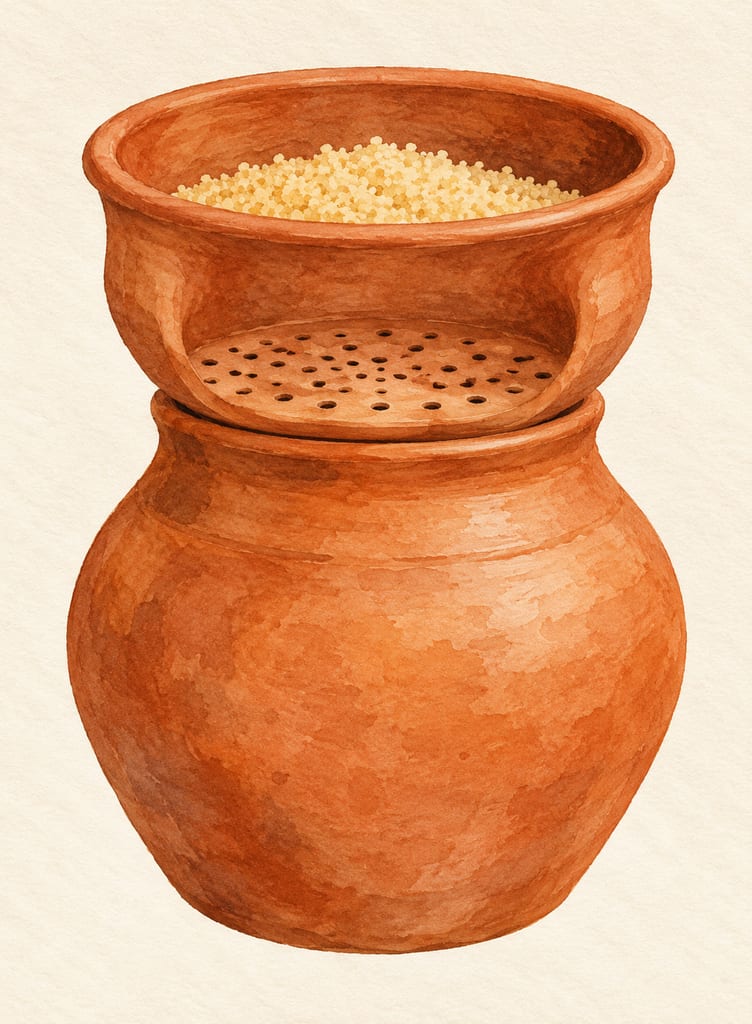
A two-part steamer for couscous: a perforated upper chamber sits over a lower pot that produces steam. Clay, basketry and metal forms are documented in different places and periods.
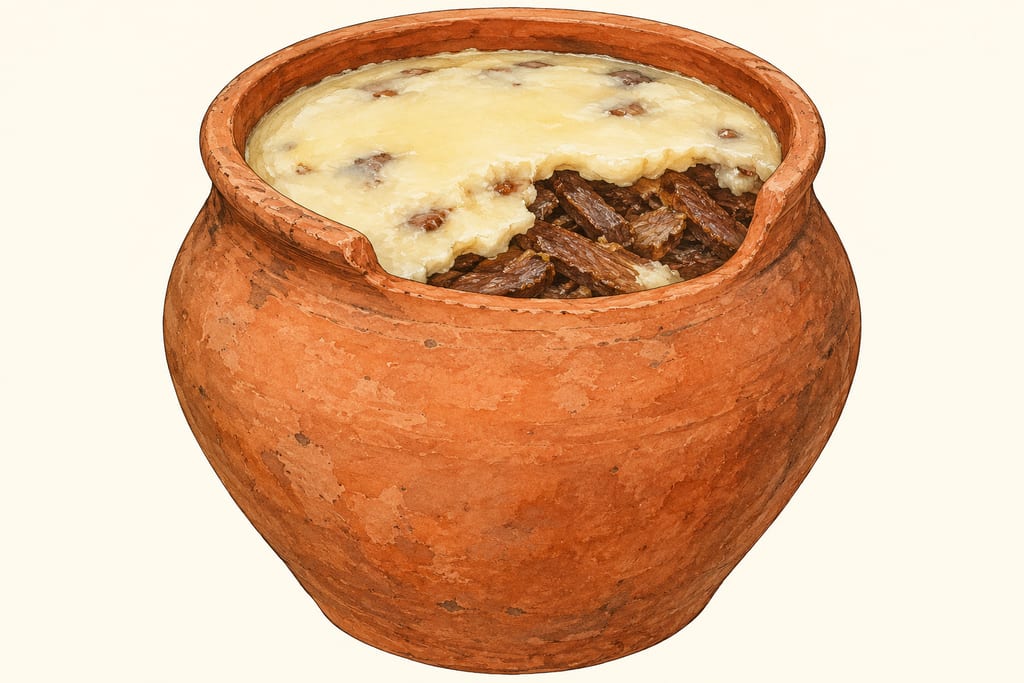
Khlii storage vessels hold prepared meat beneath rendered fat or oil. Traditional terracotta jars and present-day plastic tubs are both recorded forms in Morocco.