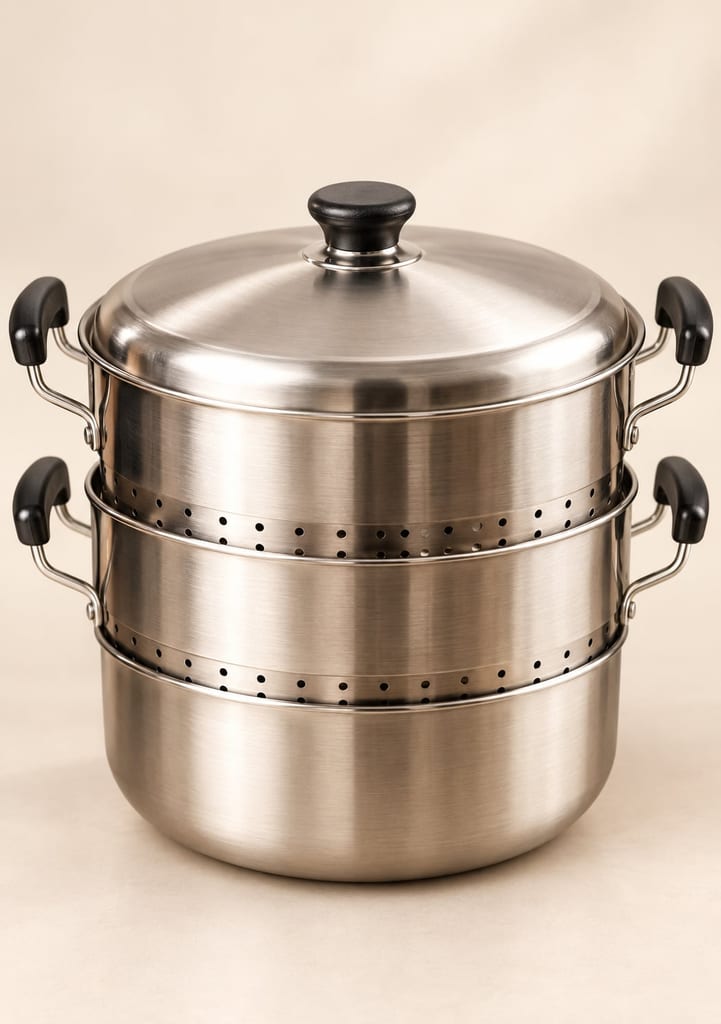
Steamer
A steamer cooks food above heated water under a cover. The broad term includes improvised pot-and-rack setups, metal tiers and basket steamers; individual forms have different designs and uses.
 FermenteaWhere food goes to change
Equipment · cooking-steamers
couscoussier · kaskes · keskes · kiskas · taseksut · couscous pot
A two-part steamer for couscous: a perforated upper chamber sits over a lower pot that produces steam. Clay, basketry and metal forms are documented in different places and periods.
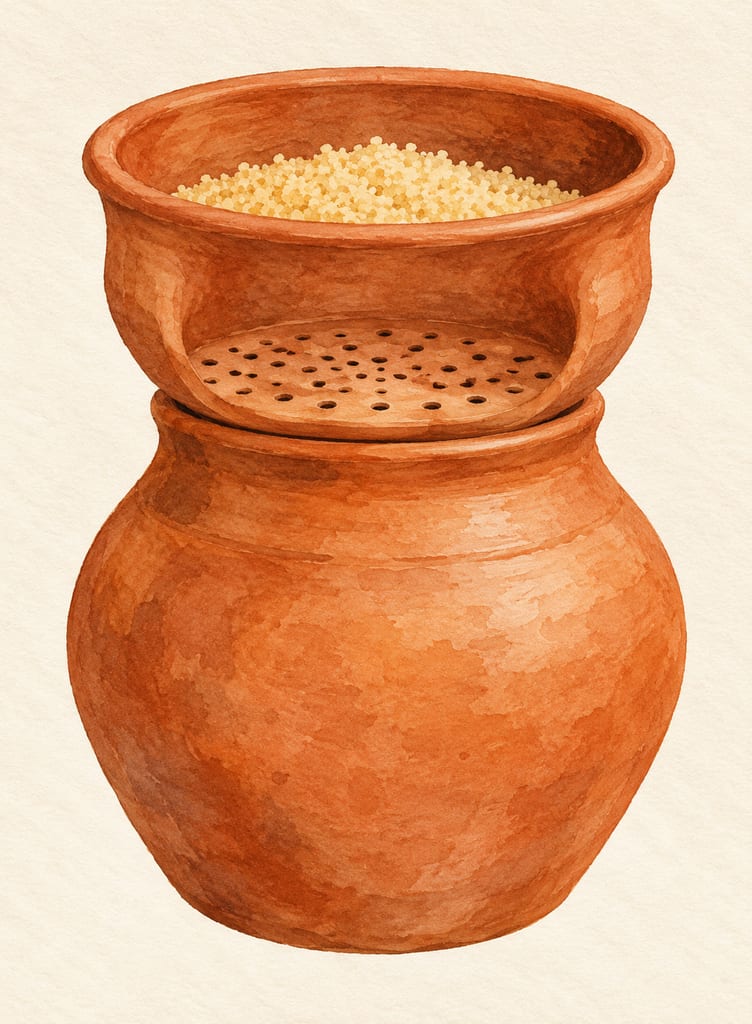
A couscous steamer is a paired cooking vessel, not just a perforated basket. The research review describes a smaller upper chamber (kaskes) with holes, fitted above a larger lower pot (borma). The lower vessel holds stew or liquid and produces steam; the upper chamber lets that steam rise into semolina. The joint is arranged so steam passes through the grains. UNESCO describes the wider sequence as hand-rolling moistened semolina, steaming it, then cooking it, alongside the utensils and knowledge associated with couscous.
The lower pot can cook broth while the upper chamber steams the grains, using the same heat source for two parts of a meal. Sources do not establish one fixed chamber shape, hole count, seal, capacity or size. Those details vary by vessel and are not a universal specification.
The two-part steamer is used to cook couscous grains, not a completed meal or a packaged quick-cooking product.
A current pottery-maker’s photograph from Nabeul shows one present-day earthenware steamer in a kitchen. It is a contemporary example, while historical claims here rest on the heritage and research sources. Its handles, glaze, proportions and stovetop setting are not specifications for older equipment.
UNESCO’s multinational inscription names Algeria, Mauritania, Morocco and Tunisia. It records couscous as knowledge that includes growing and milling grain, rolling semolina by hand, steaming and preparing the dish, and making and using its tools. This geographic evidence does not show that every household or region uses an identical steamer. Names for the upper chamber also differ; the research review records kaskes and the Berber-language term taseksut.
The steamer is linked on this site to the preparation called Couscous. It is used for couscous grains, not a completed meal or a packaged quick-cooking product.
Durmelat discusses a terracotta couscous pot from Tipasa, Algeria, dated 1880, and reports a registered aluminum model in Algiers in 1923. These dates anchor specific documented objects and designs; neither marks the first use of a steamer or the beginning of couscous. The sources give no standard size, hole pattern, seal, maker’s technique, maintenance routine or heating instruction for the whole class.
This page therefore does not prescribe a modern clay pot for open flame or infer capacity from a seller’s photograph. Use and care depend on the actual vessel and its maker’s instructions. The generated image is editorial art of a source-supported two-part clay form, not a photograph of a dated museum object.
Sylvie Durmelat describes rural Algerian terracotta couscous pots, with upper chambers in terracotta or basketry, and a museum couscous pot from Tipasa dated 1880. The same article reports a registered aluminum couscous-pot model in Algiers in 1923. These are dated examples, not an origin date.
UNESCO includes Algeria in the multinational couscous knowledge inscription; it does not imply one vessel form across the country. A separate history article describes rural Algerian terracotta and basketry forms and an 1880 Tipasa object.
UNESCO includes Mauritania in the multinational couscous knowledge inscription; this page does not claim the same vessel material or construction everywhere.
UNESCO includes Morocco in the multinational couscous knowledge inscription; this page does not claim the same vessel material or construction everywhere.
UNESCO includes Tunisia in the multinational couscous knowledge inscription. A current Nabeul pottery maker offers one contemporary clay model; the listing is not evidence of a national or historical standard.
A steamer cooks food above heated water under a cover. The broad term includes improvised pot-and-rack setups, metal tiers and basket steamers; individual forms have different designs and uses.
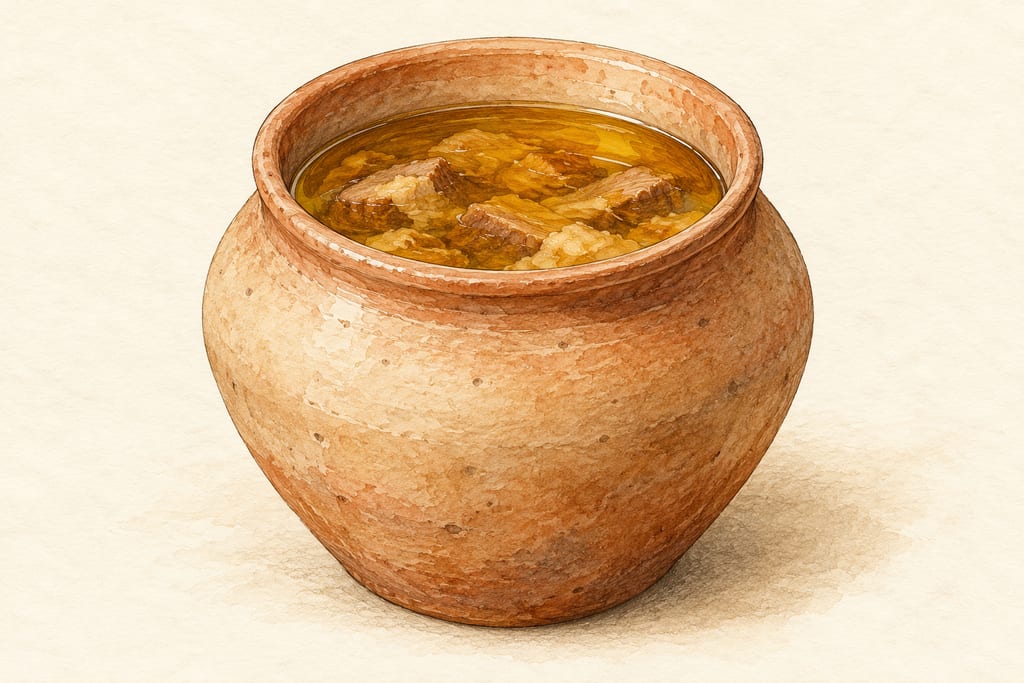
Ezir is the earthenware jar used in northeastern Algeria to ripen Khliaa ezir, a cooked meat kept in olive oil and rendered fat. Its standard shape, capacity and construction are not documented.
A historical animal-skin container for Btana, described in southern Algerian accounts as clean sheepskin or old goatskin; sources distinguish it from later cloth and plastic bags.
A ceramic Ezzir jar holds salted butter during smen maturation in Algeria; a goatskin Chekoua is documented for churning the sour milk beforehand. Sources also report animal-skin containers, but do not establish a single shared form.

A Cap-Pelé boucanière is an Acadian herring-smoking building. The documented Willie Niles example is a one-storey wood-frame structure with a ridge smoke vent and interior bays for hanging fish-bearing cannes.

Achcharu is a family of Sri Lankan vinegar pickles made with mixed vegetables or seasonal fruit and a piquant spice dressing. This version is a quick, refrigerated, non-fermented mixed-vegetable pickle.

The acocote is a long, hollowed and dried gourd used to draw aguamiel from a mature maguey. It is a harvesting tool: the sap is transferred to a separate vessel before it ferments into pulque.

Adrak murabba preserves young ginger in sugar syrup, a sweet South Asian preparation recorded in Indian cookery and food-processing sources.

Parkia biglobosa seeds are fermented into regional West African seasonings, including nététou, iru, dawadawa and soumbala. The yellow fruit pulp is a separate food, and names and methods vary by place.

Japanese reddish-brown vinegar from sake lees matured about three years, turned to vinegar by acetic bacteria; the vinegar of Handa and Edomae sushi rice.

A refined common-wheat flour blended for a broad range of baking; its protein and behavior vary with wheat, milling and market.

The almond mushroom, Agaricus subrufescens, was cultivated in eastern North America in the 1800s, lost its market, and returned as a cultivated mushroom from Brazil, where it is grown under several names.
No community contributions have been published for this entry yet.
Sign in to contribute. Published comments and photos are free to read.
UNESCO Intangible Cultural HeritageGeography · Practice · Tools · Materials
Knowledge, know-how and practices pertaining to the production and consumption of couscousThe 2020 multinational inscription covers Algeria, Mauritania, Morocco and Tunisia and describes grain growing and milling, hand-rolling moistened semolina, steaming, cooking, tools and social knowledge.
UNESCO notes clay utensils made by potters; it does not say all steamers are clay or share one design.
Cited in: Two chambers joined by steam; Clay is a documented traditional material; A shared practice across distinct places
Foods (MDPI)Form · Operation · Materials · Terminology
Durum Wheat Couscous Grains: An Ethnic Mediterranean Food at the Interface of Traditional Domestic Preparation and Industrial ManufacturingThe review describes a ceramic or metal double-chamber couscoussier: a smaller perforated upper kaskes passes steam while the larger lower borma holds stew or soup and produces it.
The review records domestic terminology and variation; it does not establish one universal size or construction.
Cited in: Two chambers joined by steam; Clay is a documented traditional material; A shared practice across distinct places
e-Phaïstos: Revue d’histoire des techniquesHistory · Materials · Form
Can the Couscous Pot speak? History of the Introduction of a North-African Dish into the French Culinary PantheonThe article describes rural Algerian couscous pots in terracotta, with upper chambers of terracotta or basketry; it distinguishes these from urban copper and later aluminum models.
It identifies a Tipasa terracotta couscous pot dated 1880 and reports a registered aluminum model in Algiers in 1923. These are dated examples, not an origin date.
Cited in: Two chambers joined by steam; Clay is a documented traditional material; What the dates do and do not establish
Nabeul CeramiqueModern example · Image · Material
Couscous steamer potThe Nabeul, Tunisia maker presents a current pottery couscous steamer made from natural clay. This specific product listing supports a modern example and linked image, not a historical or national standard.
Cited in: Clay is a documented traditional material; What the dates do and do not establish